
GRADING RUBRICS
Because I use detailed grading rubrics, I can spend less time providing feedback when handing back
grades. Students sometimes feel overwhelmed when they first see the rubrics because they see so
many words, but the grading rubics answer virtually all student questions about where they lost
points on an assignment.
The following grading rubrics can help you as you develop your course. They are a modified version
of the work of a great retired mentor and researcher in the communication discipline, David Worley.
P
Pitching Speech
Name _______________________________________________ Class day and time __________
Position desired (job title) _________________________________________________________
Major (if undecided, select one possible major) _________________________________________
Speech time ___________________________________ Grade (maximum 45 points) __________
Materials Required
Prepared notecards (maximum 5 points) ______________________________________________
Introduction, Body, and Conclusion (15 points)
Characteristics
5 Identified two unique characteristics and provided specific examples of how those qualities have
been demonstrated
4 Identified one characteristic and provided specific examples of how that quality has been
translate into the qualifications desired for the
j
ob
3 Identified one personal OR professional accomplishment and described how it translates into
the qualifications desired for the
j
ob
2 Identified one personal OR professional accomplishment but did NOT describe how it
translates into the qualifications desired for the
j
ob
1 No specific future goals given
Delivery (25 points)
Vocal variety
5 Natural, conversational tone, vocal variation
4 Evident variety, pleasant rate; good volume
Gestures
5 Natural movement and gestures that seem to be engaging to audience
4 Natural gestures and movement; minimal distracting behaviors
Eye contact
5 Comfortable transition between notes and eye contact with the entire audience
4 Direct eye contact with much of the audience
Appearance and attire
5 Appropriate business casual attire worn (equivalent to buttoned business shirts, khakis, and
knee-length skirts or dresses)
4 Appropriate business casual attire (could use less wrinkles)
Practice and time
5 Between two to three minutes; polished presentation that shows evidence of practice
4 Between two to three minutes; presentation lacks poise and evidence of practice
I
Informative Speech
Name _______________________________________________ Class day and time __________
Topic ________________________________________________________________________
Speech time __________________________________ Grade (maximum 100 points) __________
Introduction (10 points)
Attention-getter
5 The attention-getter is unique and creative, grabs the attention of the audience, and flows easily
into the orientation phase (discusses audience adaptation, credibility, and preview of main
points).
4 The attention-getter is not unique and creative, but the orientation phase exists.
3 The attention-getter is not unique or creative and does not flow easily into the orientation phase.
2 The attention-getter consists of a self-introduction (“My name is …”) or starts with a topic
statement (“My topic is …”).
1 No attention-getter is present.
Orientation phase
5 Includes a clear statement of topic, the importance of the topic to audience (audience
adaptation), clear speaker credibility, and a clear preview of the main points to be discussed
(thesis)
Body (40 points)
Topic
5 The topic is informative in nature, is of interest to the audience, and fits the requirements of the
assignment.
4 The topic is informative in nature and of interest to the audience but does not fit all of the
requirements of the assignment.
3 The topic is informative in nature but is not of interest to a general audience and does not fit the
requirements of the assignment.
2 The topic is more persuasive in nature.
1 No clear topic is stated.
Clear thesis
Narrowing of topic
5 Topic narrowed sufficiently and creatively, allowing the speaker to develop content adequately
4 Topic narrowed sufficiently allowing the speaker to develop content adequately
3 Topic narrowed sufficiently but content not developed adequately for the time allowed
2 Focused topic but tried to cover too much or too little information in the time allowed
1 Unfocused topic
Two or three main points
5 Two or three main points clearly stated and directly linked to the topic
Transitions
5 Clear, interesting transitions between all main points and subpoints in speech
4 Clear, interesting transitions between main points
3 The transitions previewed the next point or reviewed previous point but not both.
2 Implied transitions but unclear
1 No evident use of transitions
Organization
5 Ideas are well organized, there is a clear pattern of thought, and creative language and parallelism
are used.
4 Ideas are organized with a clear pattern of thought and creative language OR parallelism is used.
3 Ideas are loosely organized.
2 There is evidence of an attempt to organize speech, but it is still hard to follow.
1 There is no organization; the speech wanders without structure.
Evidence
5 Various types of evidence; three different sources types were used to support ALL ideas.
4 Various types of evidence were used to support SOME ideas.
Five sources and citations
5 Five sources were clearly cited verbally.
4 Five sources may have been cited but were difficult to identify, OR all five were cited but were
not found within EACH main point of speech.
3 Three or four sources were cited.
2 One or two sources were cited.
1 No sources were cited.
Conclusion (10 points)
Summary
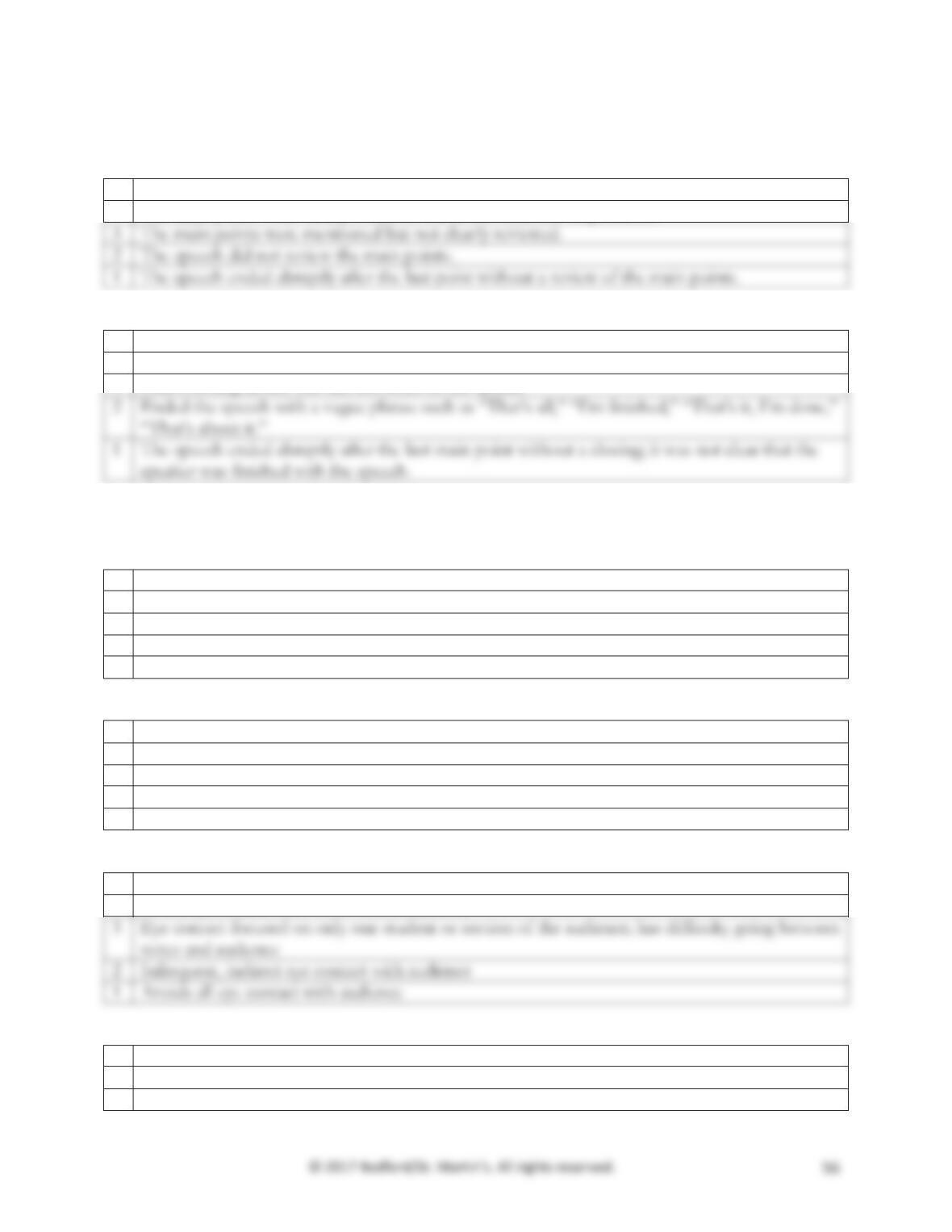
5 The main points were clearly reviewed in an interesting manner.
4 The main points were clearly reviewed but not in an interesting manner.
Concluding device
5 Had a creative closing that related to the speech
4 Had a basic closing that related to the speech
3 Had a closing device that did not relate to the speech
Delivery (40 points)
Vocal variety
5 Natural, conversational tone, vocal variation, shows involvement with topic
4 Evident variety, pleasant rate; good volume
3 Limited variety; noticeable problems with rate or volume
2 Monotone OR too fast or too slow or volume issues
1 Monotone AND too fast or too slow and volume issues
Gestures
5 Natural movement and gestures that are a result of involvement with topic
4 Natural gestures and movement; no distracting behaviors
3 Minimal gestures and movement; distracting behaviors
2 No gestures or movement; no distracting behaviors
1 No gestures or movement; distracting behaviors
Eye contact
5 Comfortable transition between notes and eye contact with the entire audience
4 Direct eye contact with much of the audience
Extemporaneous delivery
5 Poised, evidence of preparation, very little reliance on note cards; conversational in nature
4 Minimal reliance on note cards
3 Heavy reliance on note cards, but some extemporaneous delivery
2 Read a large portion of the speech from note cards
1 Read entire speech from note cards
Language
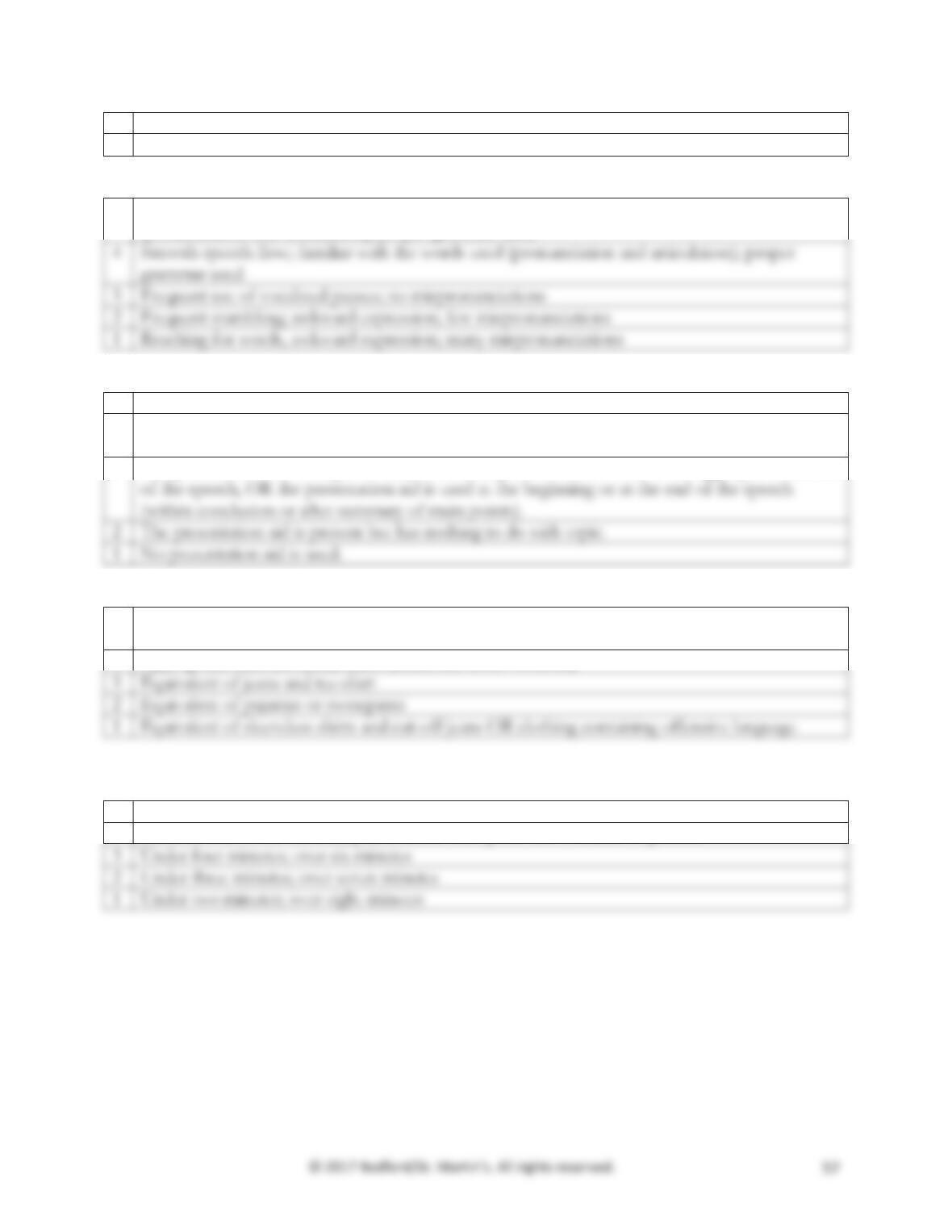
5 Uses vivid, powerful language, along with a smooth speech flow; familiar with the words used
(pronunciation and articulation); proper grammar used
Visual aid
5 The presentation aid enhances at least one main point of the speech.
4 The presentation aid enhances a main point but is not visually appealing (for example, it is
difficult to see, blurry, and so on).
3 The presentation aid attempts to enhance a main point but is not used at the appropriate section
Appearance and attire
5 Appropriate business casual attire worn (equivalent to buttoned business shirts, khakis, knee-
length skirts or dresses)
4 Appropriate business casual attire (could use fewer wrinkles)
Practice and time
Video clips are to be one minute or less and will not be counted toward speech time.
5 Between four to six minutes; polished presentation that shows evidence of practice
4 Between four to six minutes; presentation lacks poise and evidence of practice
I
Informative Outline
Name _______________________________________________________ Class time __________
Topic __________________________________________________________________________
Grade (maximum 60 points) _________________________________________________________
Required Materials
Two-pocket folder (maximum 5 points) ________________________________________________
Printed and highlighted sources (maximum 5 points) ______________________________________
Development and Organization (26 points)
General purpose
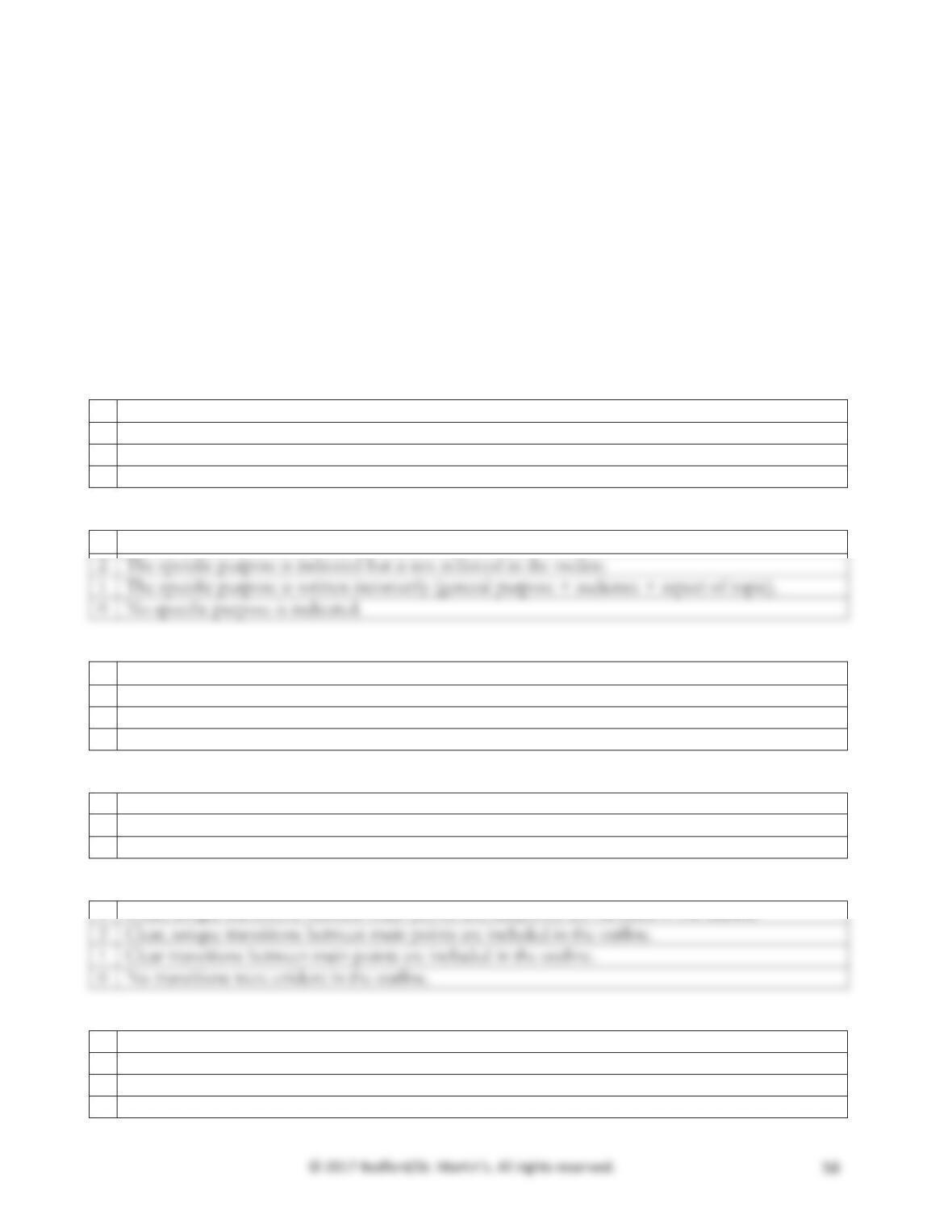
3 The general purpose is written correctly and is reflected in the outline.
2 The general purpose is indicated but is not reflected in the outline.
1 The general purpose is written incorrectly (to inform, to persuade, OR to entertain).
0 No general purpose is indicated.
At least three levels
2 Three levels were used in the outline.
1 Two levels were used in the outline.
0 The outline was not in outline form.
Transitions
Complete sentences
3 Complete sentences were used throughout the entire outline.
2 Key phrases were used.
1 Only key words were used.
0 The outline is less than 25 words long.
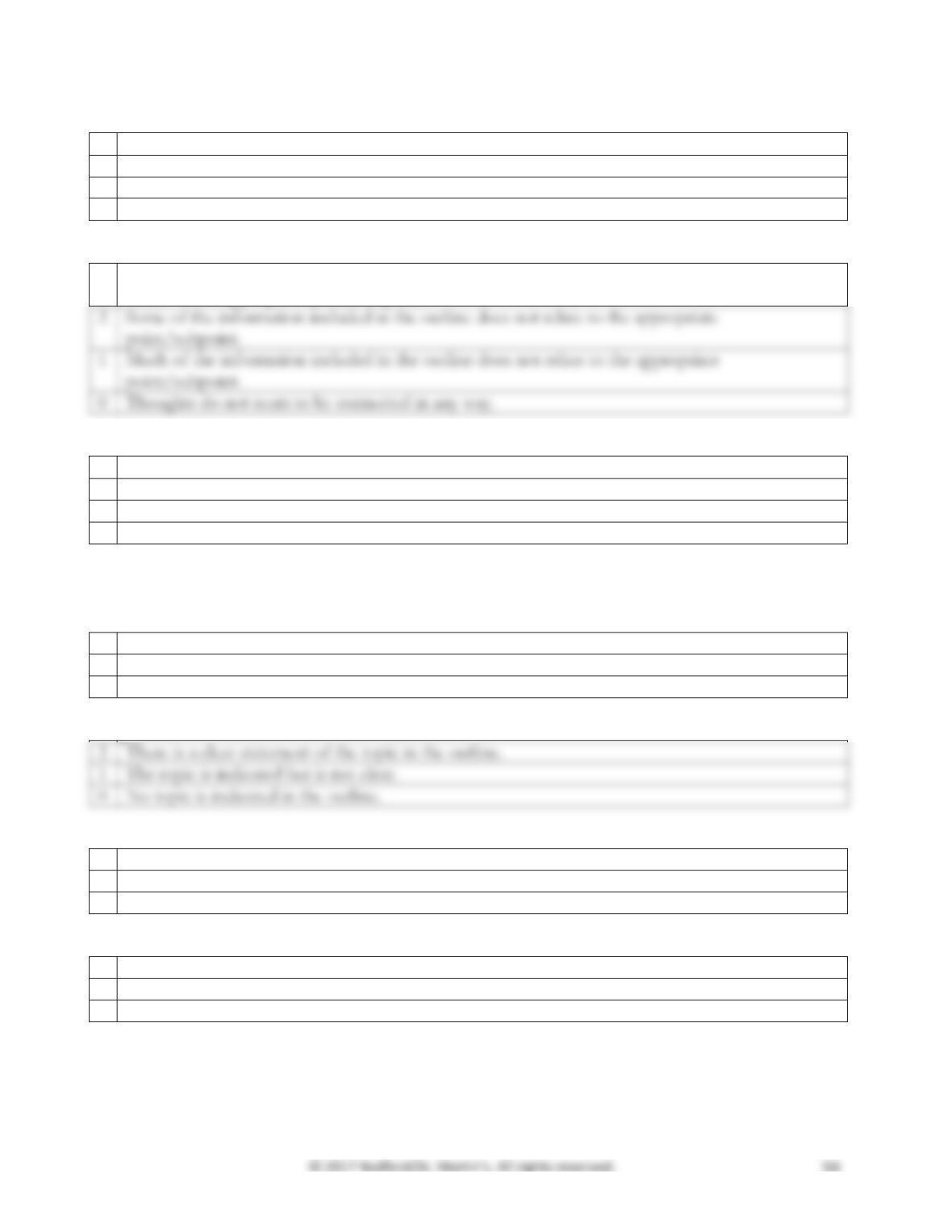
2 Each main point has some evidence to support thoughts.
1 Much of the information included in the outline does not contain supporting evidence.
0 No supporting evidence exists.
Introduction and Orientation Phase (8 points)
Attention-Getter
0 No adaptation is indicated.
Thesis statement (preview of main points)
2 The outline includes a clear thesis statement.
1 Thesis statement is indicated, but it is not clear.
0 No thesis statement is indicated.
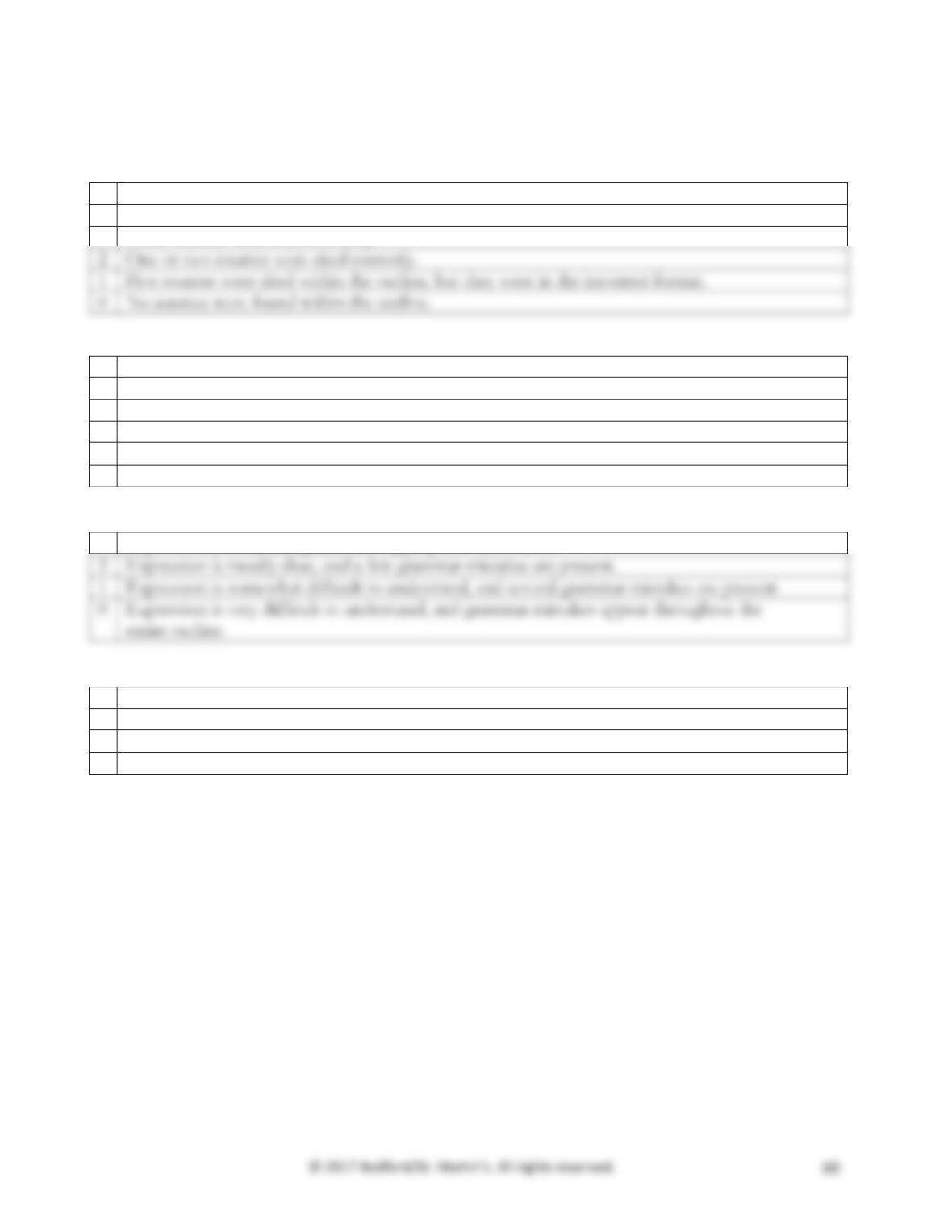
Sources (16 points)
Five in-text citations within the outline (MLA format)
5 Five sources were cited correctly.
4 Four sources were cited correctly.
3 Three sources were cited correctly.
Five citations within the Works Cited list (MLA format)
5 Five sources were cited correctly.
4 Four sources were cited correctly.
3 Three sources were cited correctly.
2 One or two sources were cited correctly.
1 Five sources were cited within the Works Cited list, but they were in the incorrect format.
1 Some errors, typos, or spelling errors appear in the outline.
0 Multiple errors, typos, and spelling errors appear in the outline.
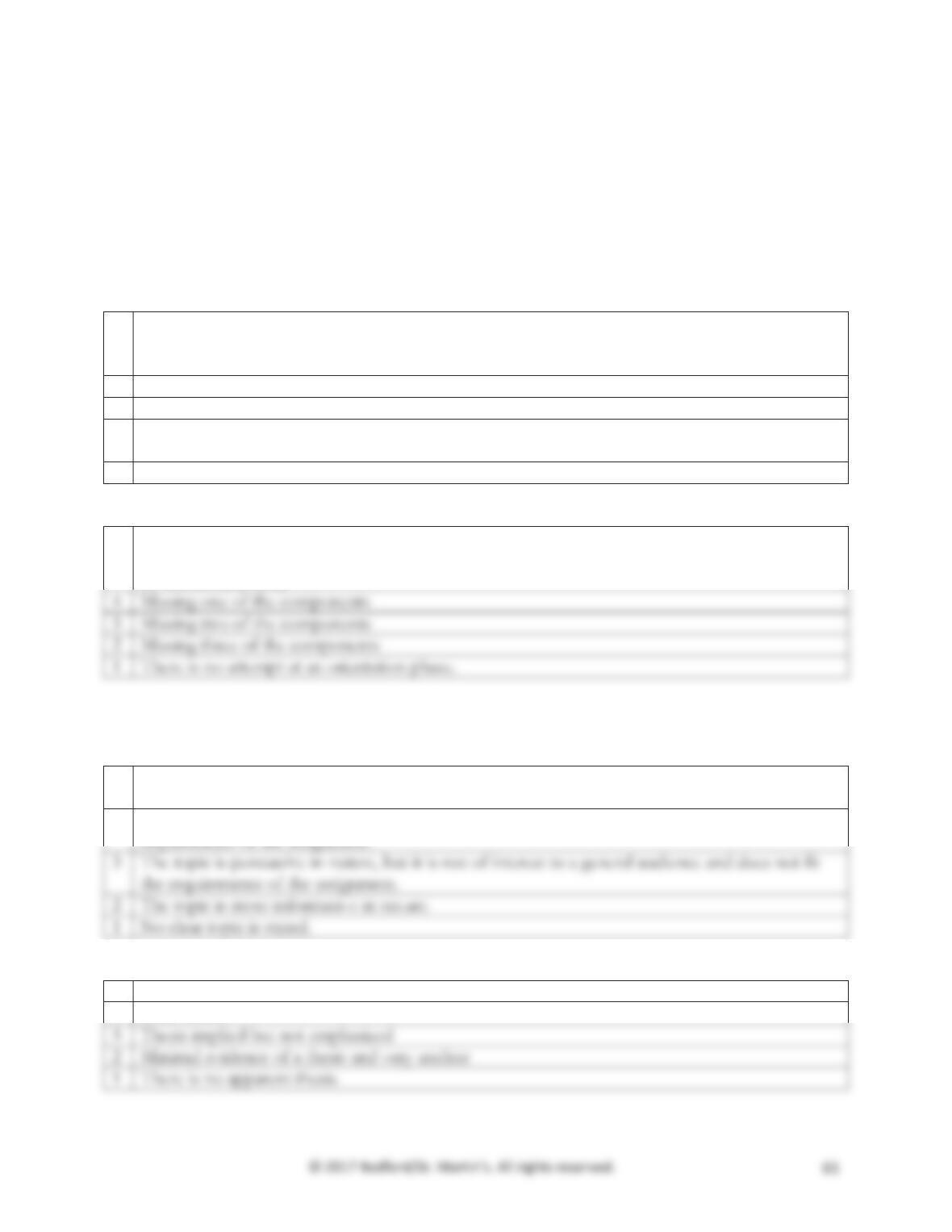
P
Persuasive Speech
Name______________________________________________________ Class time __________
Topic_________________________________________________________________________
Speech time __________________________________ Grade (maximum 100 points) __________
Introduction (10 points)
Attention-getter
5 The attention-getter is unique and creative, grabs the attention of the audience, and flows easily
into the orientation phase (audience adaptation, credibility, and preview of main points to be
discussed).
4 The attention-getter is not unique or creative but still flows into orientation phase.
3 The attention-getter is not unique or creative and does not flow easily into the orientation phase.
2 The attention-getter consists of a self-introduction (“My name is …”) or starts with a topic
statement (“My topic is …”).
1 No attention-getter is present.
Orientation phase
5 Includes a clear statement of topic, indicates the importance of the topic to the audience
(audience adaptation), establishes credibility, and provides a clear preview of the main points to
requirements of the assignment.
3 The topic is persuasive in nature, but it is not of interest to a general audience and does not fit
the requirements of the assignment.
2 The topic is more informative in nature.
1 No clear topic is stated.
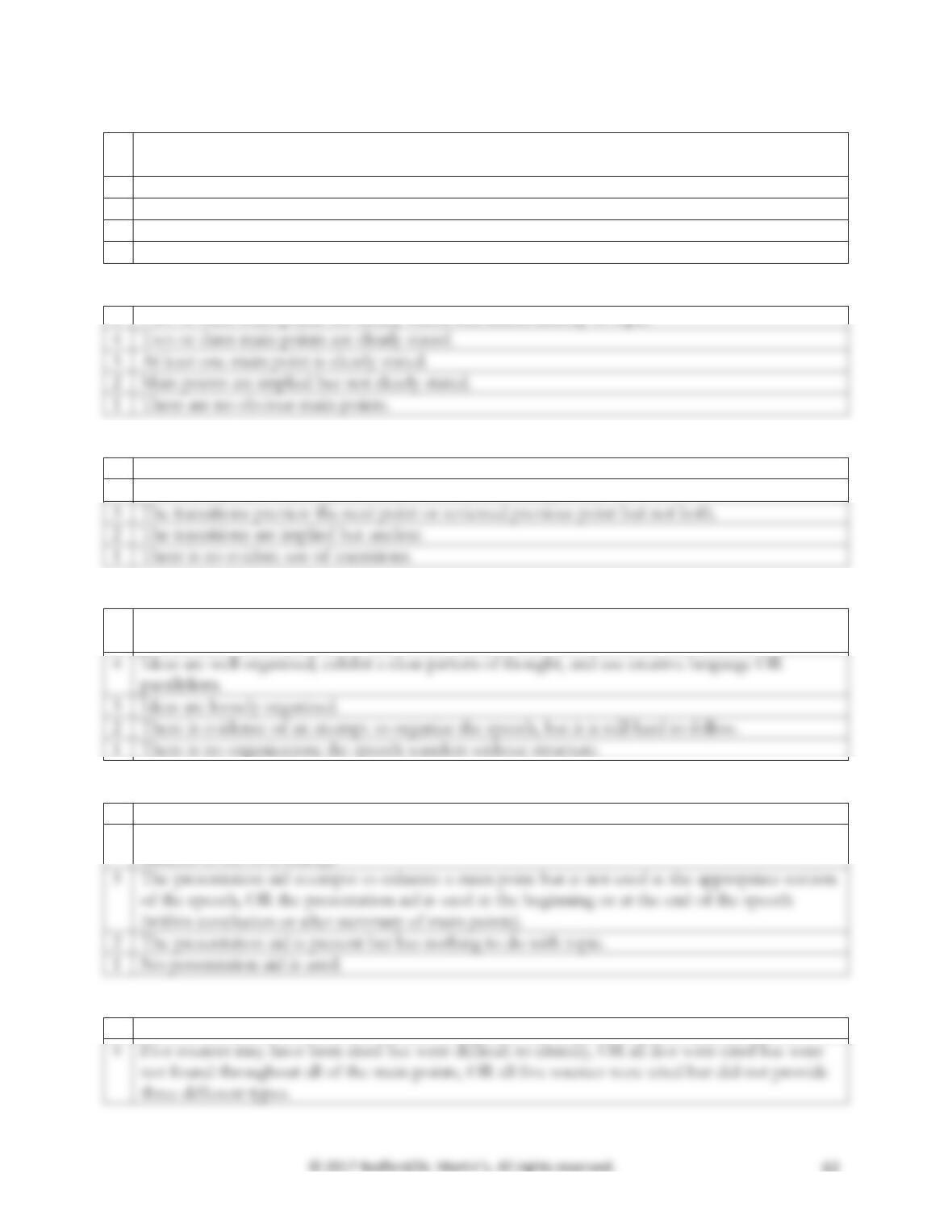
4 The topic is narrowed sufficiently, allowing the student to develop content adequately.
3 The topic is narrowed sufficiently for the time allowed.
2 The topic is focused but tries to cover too much or too little information in the time allowed.
1 The topic is unfocused.
Two or three main points
1 There is no evident use of transitions.
Organization
5 Ideas are well-organized, exhibit a clear pattern of thought, use creative language, and use
parallelism.
4 Ideas are well organized, exhibit a clear pattern of thought, and use creative language OR
(within conclusion or after summary of main points).
2 The presentation aid is present but has nothing to do with topic.
1 No presentation aid is used.
Oral citations
5 Five sources were clearly cited verbally; three of them were different source types.
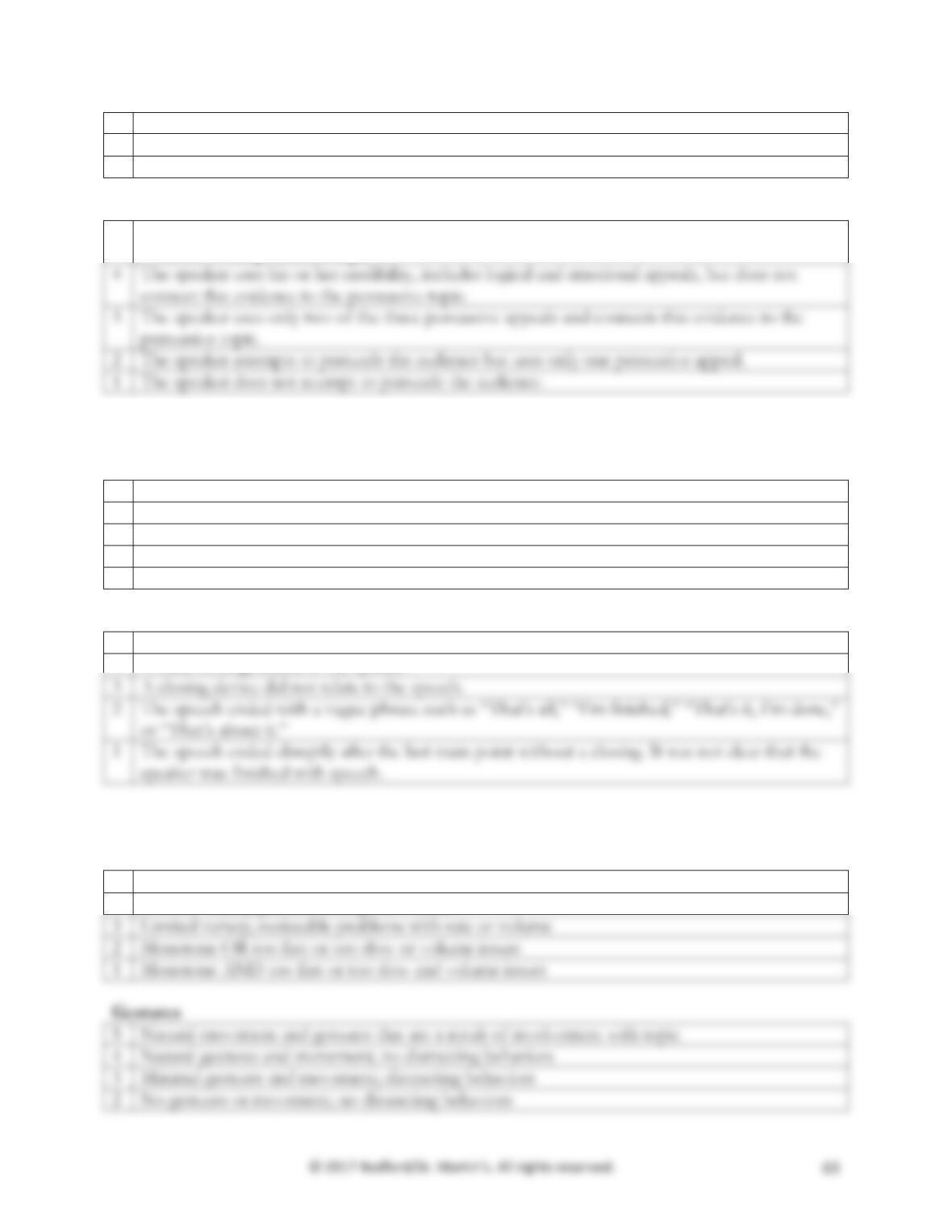
4 The speaker uses his or her credibility, includes logical and emotional appeals, but does not
connect this evidence to the persuasive topic.
3 The speaker uses only two of the three persuasive appeals and connects this evidence to the
persuasive topic.
2 The speaker attempts to persuade the audience but uses only one persuasive appeal.
4 A basic closing related to the speech.
3 A closing device did not relate to the speech.
2 The speech ended with a vague phrase such as “That’s all,” “I’m finished,” “That’s it, I’m done,”
or “That’s about it.”
1 The speech ended abruptly after the last main point without a closing. It was not clear that the