Chapter 3: Working with Families of children with Autism
Chapter Summary
A parent has a picture of what their child will grow up to be. Once parents receive the diagnosis
of autism for their child, many begin a grieving process for the child they will never have. Elizabeth
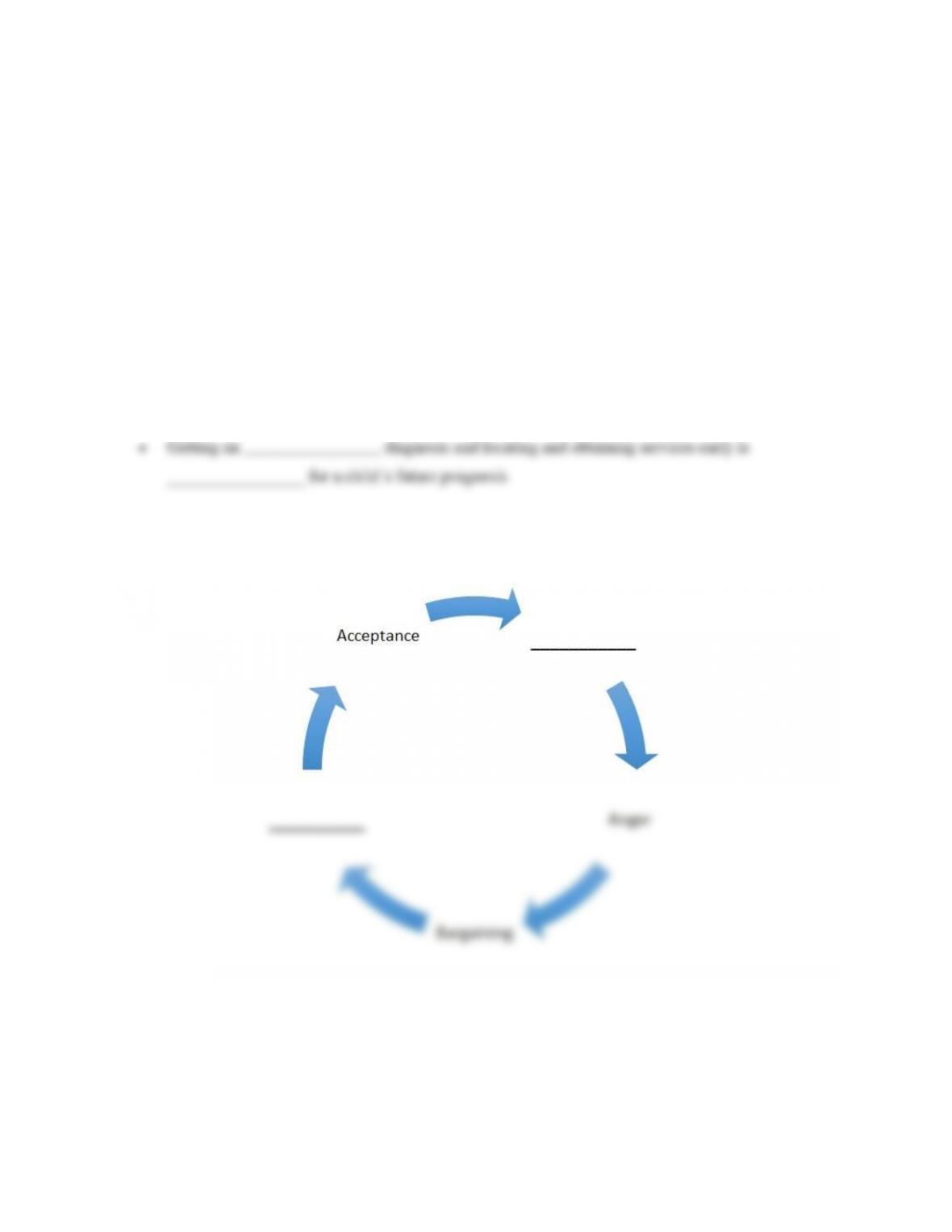
Kubler-Ross’ (1969) describes stages of grief as: denial, anger, bargaining, depression and finally
acceptance. Emily Kingsley’s (1987) essay, “Welcome to Holland.” tells the story of a mother coming to
terms with her inability to reach Italy, ending up in Holland on vacation instead. Kingsley uses this story
to draw comparison to that of having a child with autism. Laura Krueger-Crawford wrote a rebuttal titled,
“Welcome to Schmolland.” The essay states that having a child with autism is not a holiday and paints a
picture of a nation where the citizens “lick walls,” “line up toys” and “bounce on the couch for hours.”
Both essays paint a picture and reveal the many emotions a parent, of a child with autism, faces.
There are however, positive outcomes of having a child with autism. Both parents and siblings
can express great joy in having a child with autism in the house.
Chapter Objectives
1. Discuss the impact of autism on all members of a family.
2. Describe the selection of interventions in home-based services.
4. Discuss transition issues and their impact on the family.
Focus Questions
1. How does autism impact siblings and parents?
2. What are the parent’s options for supplemental services for a child with autism?
3. What effect does autism have on the family during infancy? Once the child is ready for
elementary school? As a teenager?
4. What impact does transition from high school to adult life have on the family?
5. What support services are available for family members of a child with autism?
Chapter Key Terms
Cost-benefit analysis
Part C of IDEA
Early Intervention
Stages of grief
Individualized Family Service Plan (IFSP)
Transition
Longitudinal research
Vocational
Part B of IDEA
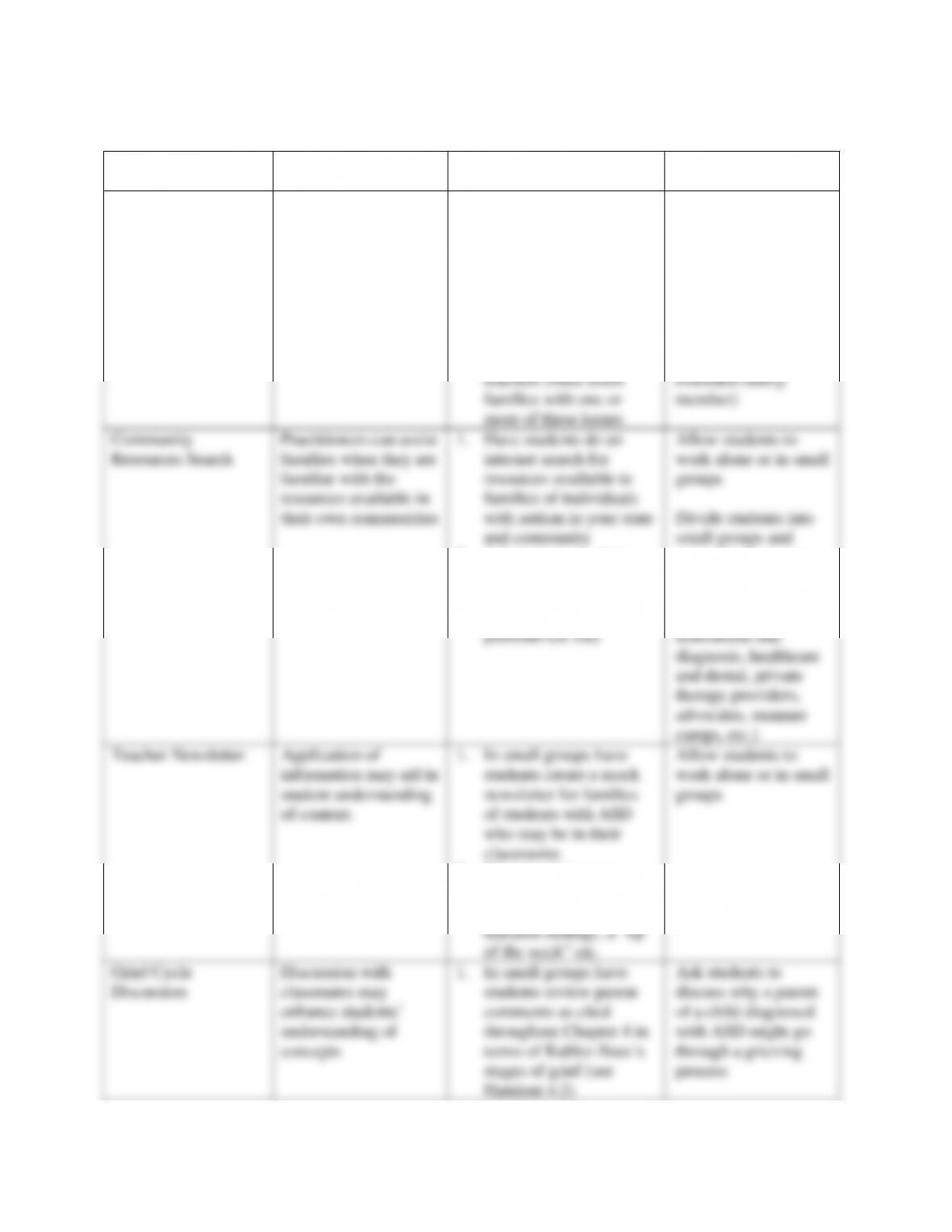
Instructional Strategies/Activities
Strategy
Rationale
Description/Steps
Modifications/
Alternative Options
Family Issues
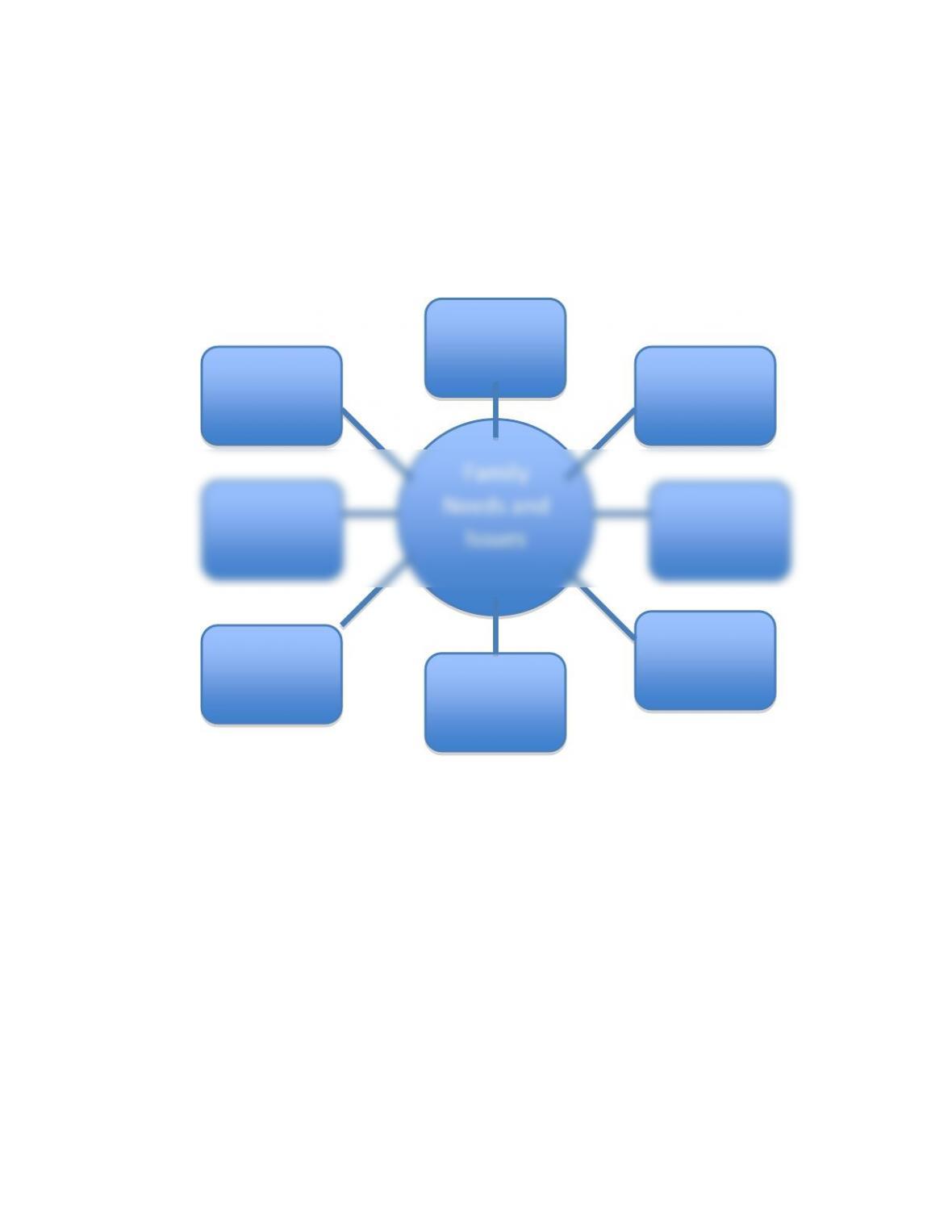
Concept Mapping
Discussion and
visually mapping
concepts can aid in
student understanding
of content
1. Ask students to
complete the concept
map (Handout 4.1) with
the issues that families
of individuals with
autism may face
2. Following identification
of various issues, have
students brainstorm how
teachers could assist
families with one or
more of these issues
Divide students into
groups and have each
group take a different
family member’s
perspective when
brainstorming (e.g.,
mother, father,
sibling, stepparent,
grandparent, other
extended family
member)
Community
Resources Search
Practitioners can assist
families when they are
familiar with the
resources available in
their own communities
1. Have students do an
internet search for
resources available to
families of individuals
with autism in your state
and community
2. Ask students to share
what they find through a
presentation or through
creation of a resources
portfolio (or list)
Allow students to
work alone or in small
groups
Divide students into
small groups and
assign each group a
different area to
research (e.g., respite
care, adult services,
assessment and
diagnosis, healthcare
and dental, private
therapy providers,
advocates, summer
camps, etc.)
Teacher Newsletter
Application of
information may aid in
student understanding
of content.
1. In small groups have
students create a mock
newsletter for families
of students with ASD
who may be in their
classrooms
2. The newsletter may
include a featured
community resource, a
featured strategy, a “tip
of the week” etc.
Allow students to
work alone or in small
groups
Grief Cycle
Discussion
Discussion with
classmates may
enhance students’
understanding of
concepts
1. In small groups have
students review parent
comments as cited
throughout Chapter 4 in
terms of Kubler-Ross’s
Ask students to
discuss why a parent
of a child diagnosed
with ASD might go
through a grieving
2. Ask students to identify
examples of one or more
stage as evidenced by
the comments in the text
Have students
research the literature
on the different ways
that parents of
individuals with
disabilities,
particularly ASD,
grieve, paying
particular attention to
differences between
mothers and fathers
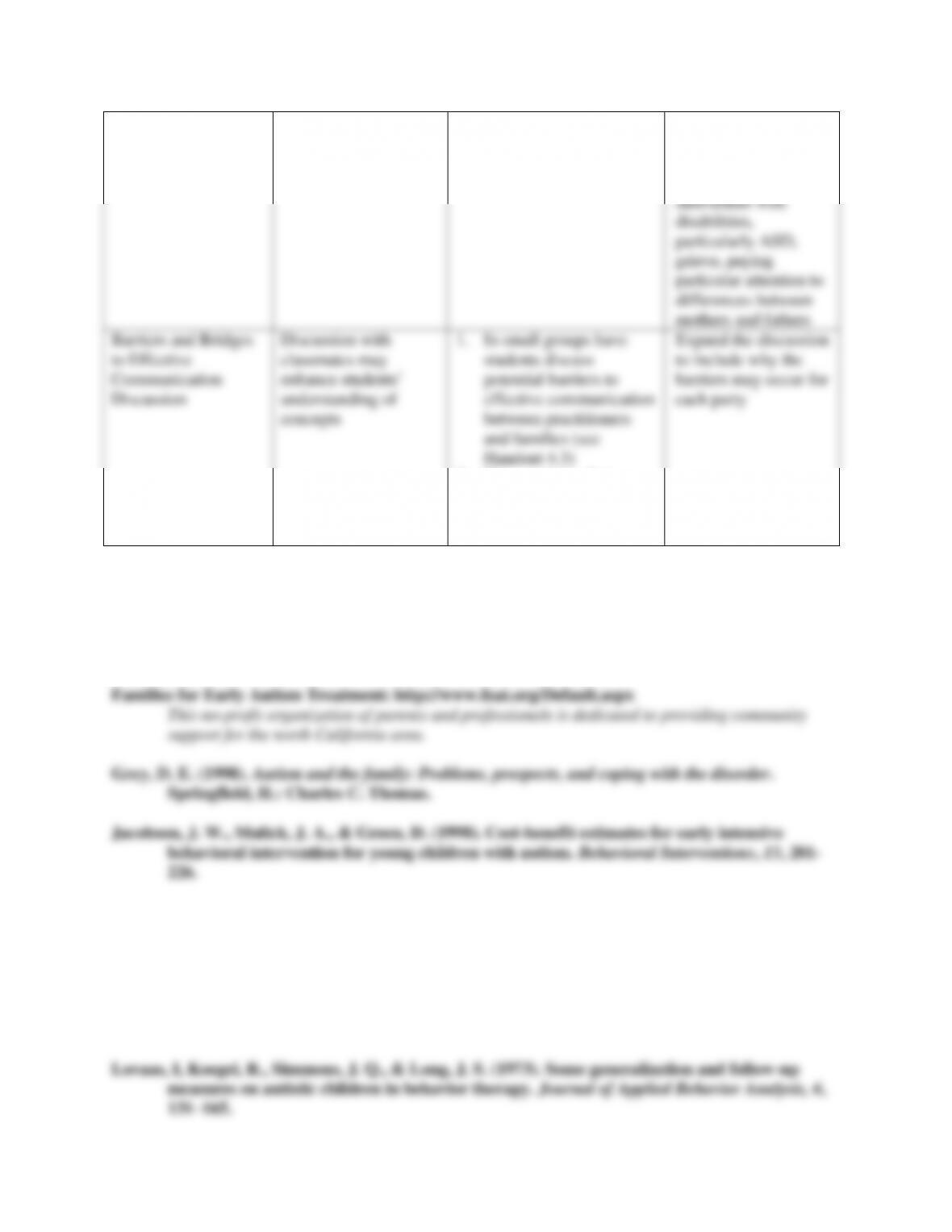
Barriers and Bridges
to Effective
Communication
Discussion
Discussion with
classmates may
enhance students’
understanding of
concepts
1. In small groups have
students discuss
potential barriers to
effective communication
between practitioners
and families (see
Handout 4.3)
2. Have students then
discuss possible bridges
(or preventions) for
these barriers
Expand the discussion
to include why the
barriers may occur for
each party
Suggested Chapter Readings/Resources
Autism Society of America: http://www.autism-society.org/site/PageServer
A resource designed for all who might be affected by autism offering links to research, programs
and community groups.
Kingsley, E. (1987). Welcome to Holland. From
http://www.upkidsoflawrencecounty.com/POEM.html, retrieved April, 10, 2008.
Koubler-Ross, E. (1969). On Death and Dying. New York: MacMillan.
Krueger-Crawford, L. (2008) Holland Schmolland. From
National Dissemination Center for Children with Disabilities:
http://www.nichcy.org/Pages/Home.aspx
This site is a wealth of information on children with disabilities. Research, information on laws
and best practices.
Rivers, J. W., & Stoneman, Z. (2003). Sibling relationships when a child has autism: Marital stress
and support coping. Journal of Autism and Developmental Disorders, 33(4), 383-394.
Chapter 3: Working with Families of Children with Autism
Guided Notes
Outline
• Cost-Benefit Analysis
• Stages of Grief
• Parental Priorities
• Impact of Autism on Parents
• Legal Mandates
• Collaboration
• Impact of Autism on Siblings
Cost-Benefit Analysis
• Estimates are that early intensive behavioral intervention may save $______________ on average
per child
Stages of Grief
Parental Priorities
• Play with classmates
• Have ________________
• Receive an invitation to a birthday party
• ________________ language skills
• Have adequate vocational and ________________ skills
Impact of Autism on Parents
• Stress
• Depression
• Positive Impact
• Lifespan Needs
− Financial Support
− Emotional Support
Legal Mandates
Early Intervention
Special Education
• “Part C”
• Birth-to-3 Services
• Requires Individualized
________________ Service Plan (IFSP)
• Addresses both Child and
________________ Needs
• Services Typically Delivered in the
Child’s ________________
Environment (e.g., Home)
• “Part B”
• 3-through-21 Services
• Requires Individualized
________________ Plan (IEP)
• Addresses ________________ Child
Needs
• Services Typically Delivered in Schools
Collaboration
− Struggle for Diagnosis
− Fight for ________________
− Poor Communication
− Lack of Trust
− Improved ________________
− Build a Trusting Relationship
− Get to Know the Child and Family
Impact of Autism on Siblings
Possible Negative Impact
Possible Positive Impact
• Poor Adjustment
• Higher Rates of ________________
• Poor Social Competence
• Well-Adjusted
• Positive ________________
• More Maturity
Instructional Activity Handouts
Handout 3.1 Concept Map: Family Issues and Needs
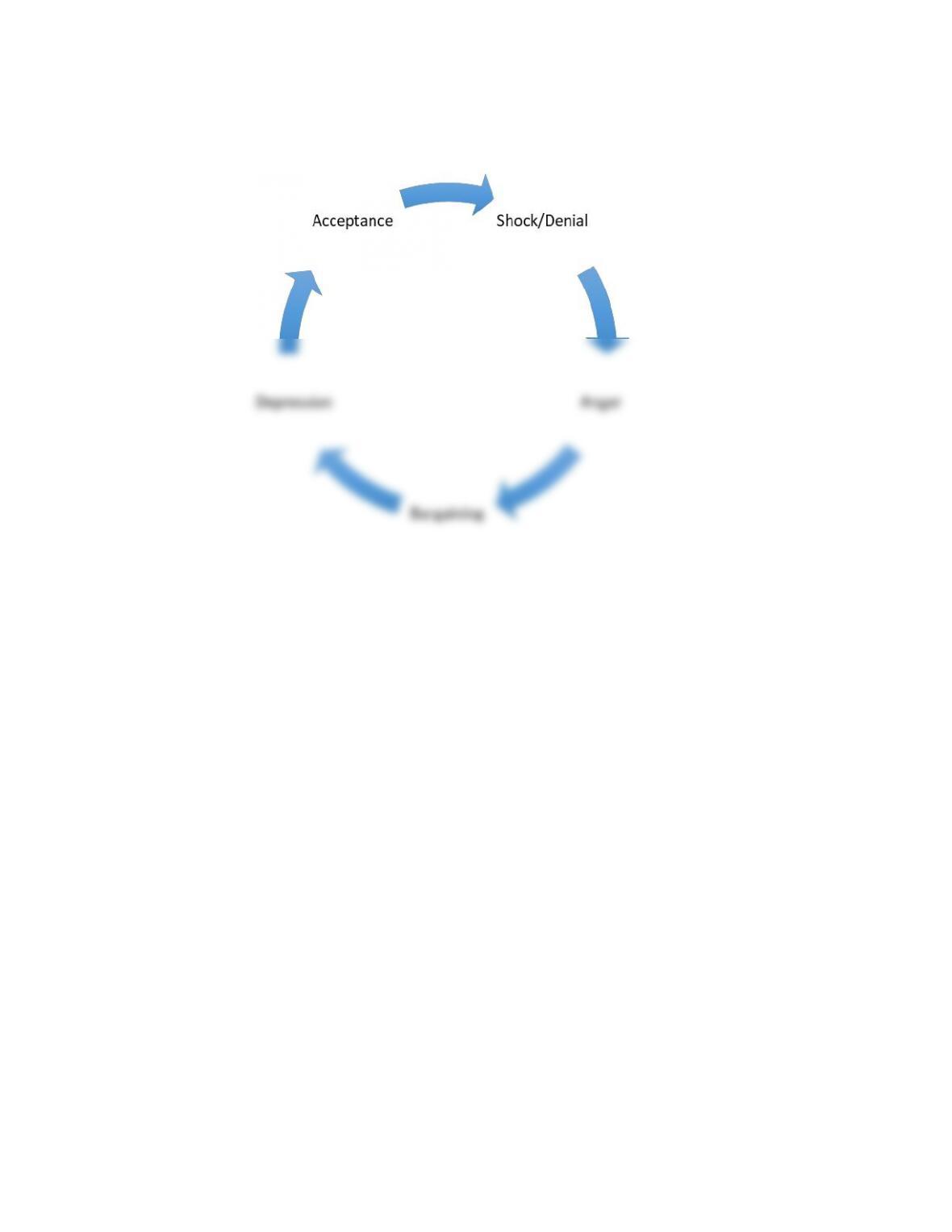
Handout 3.2 Stages of Grief