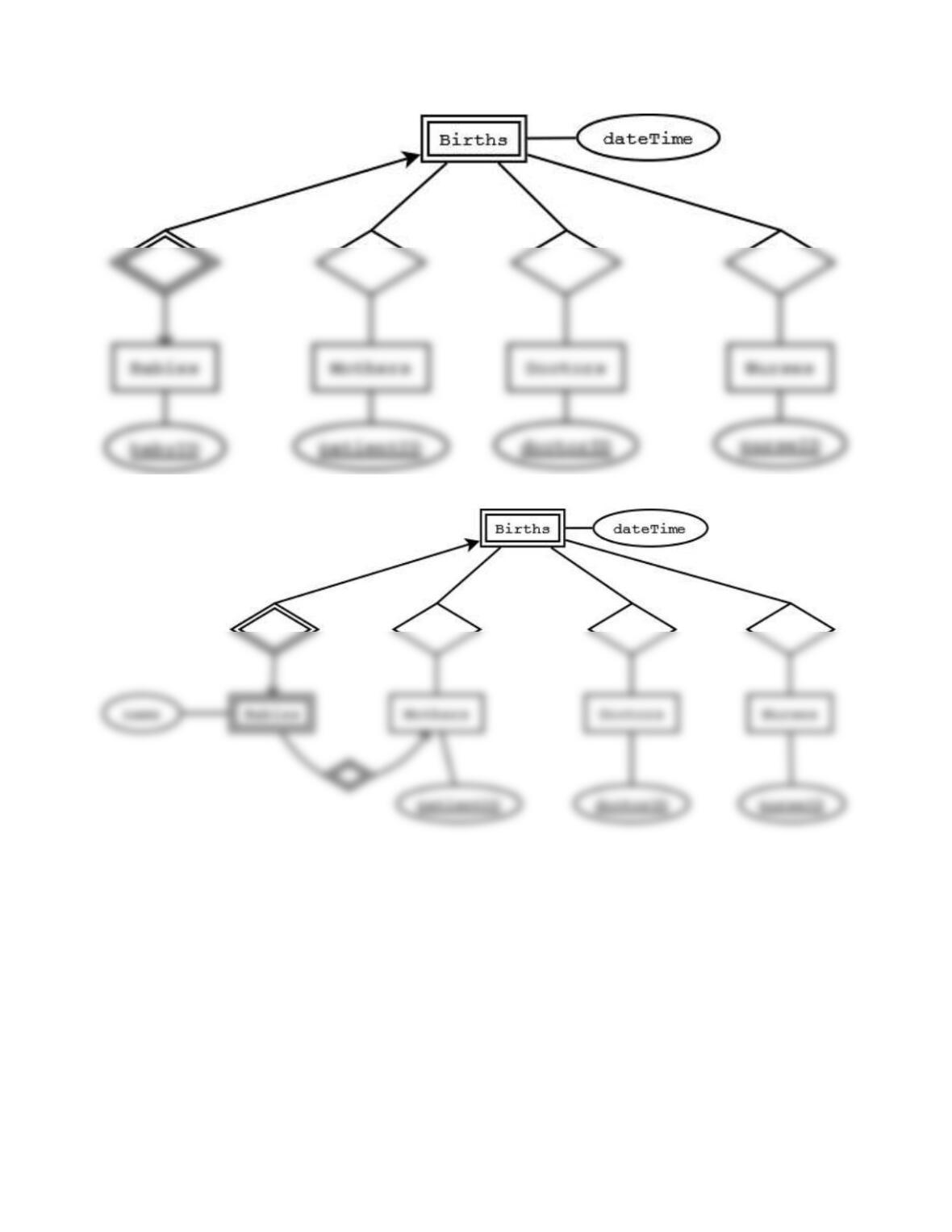
4.4.3
a)
b)
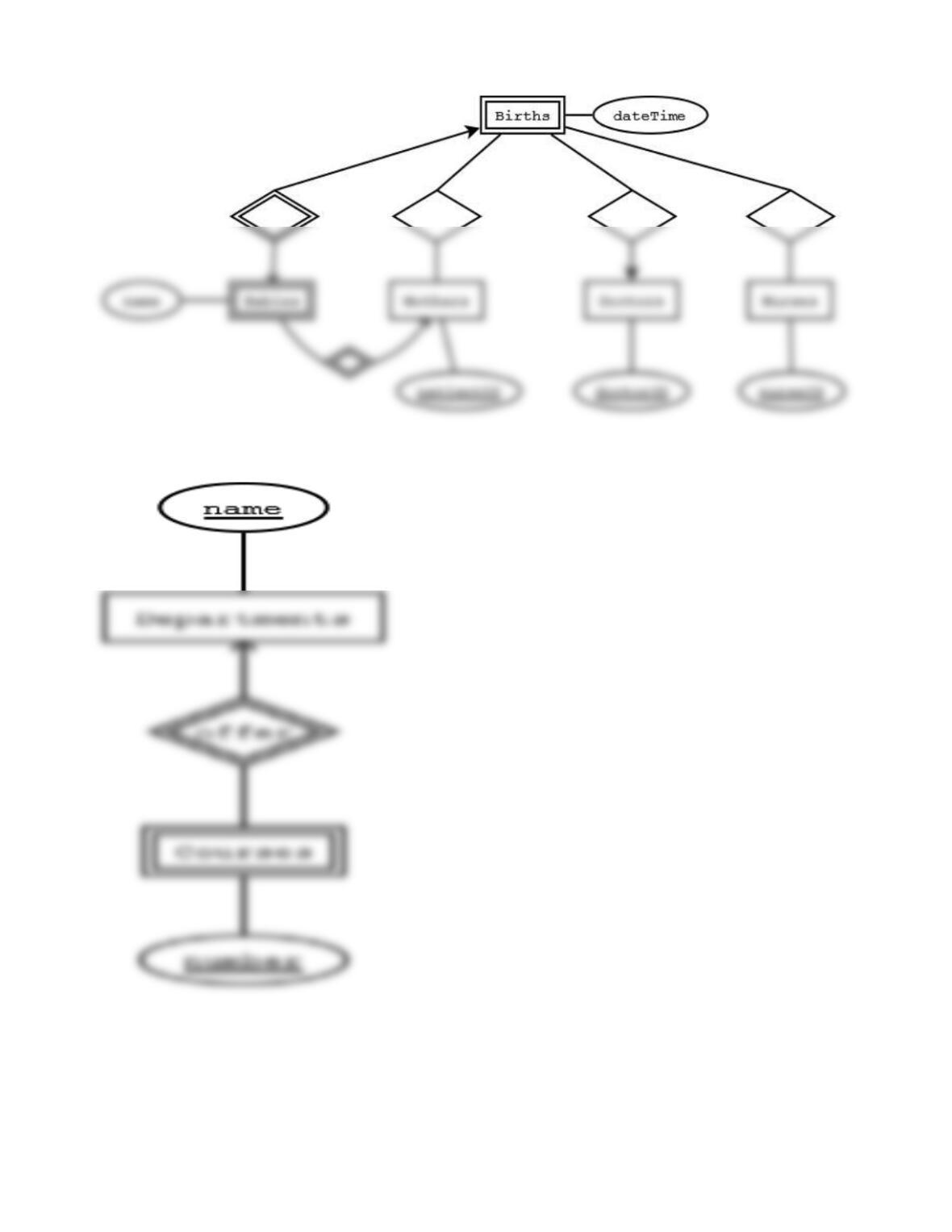
c)
4.4.4
a)
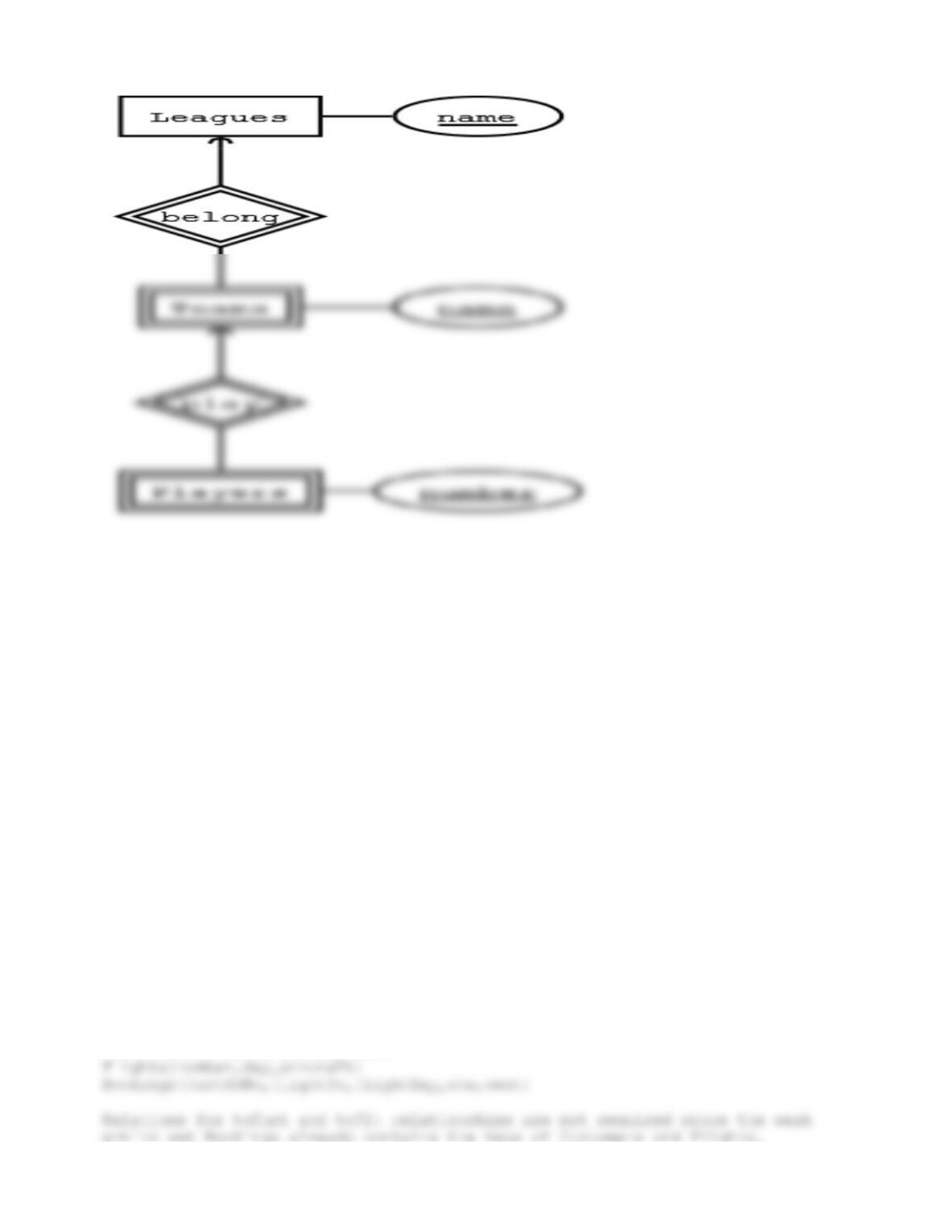
b)
4.5.1
Customers(SSNo,name,addr,phone)
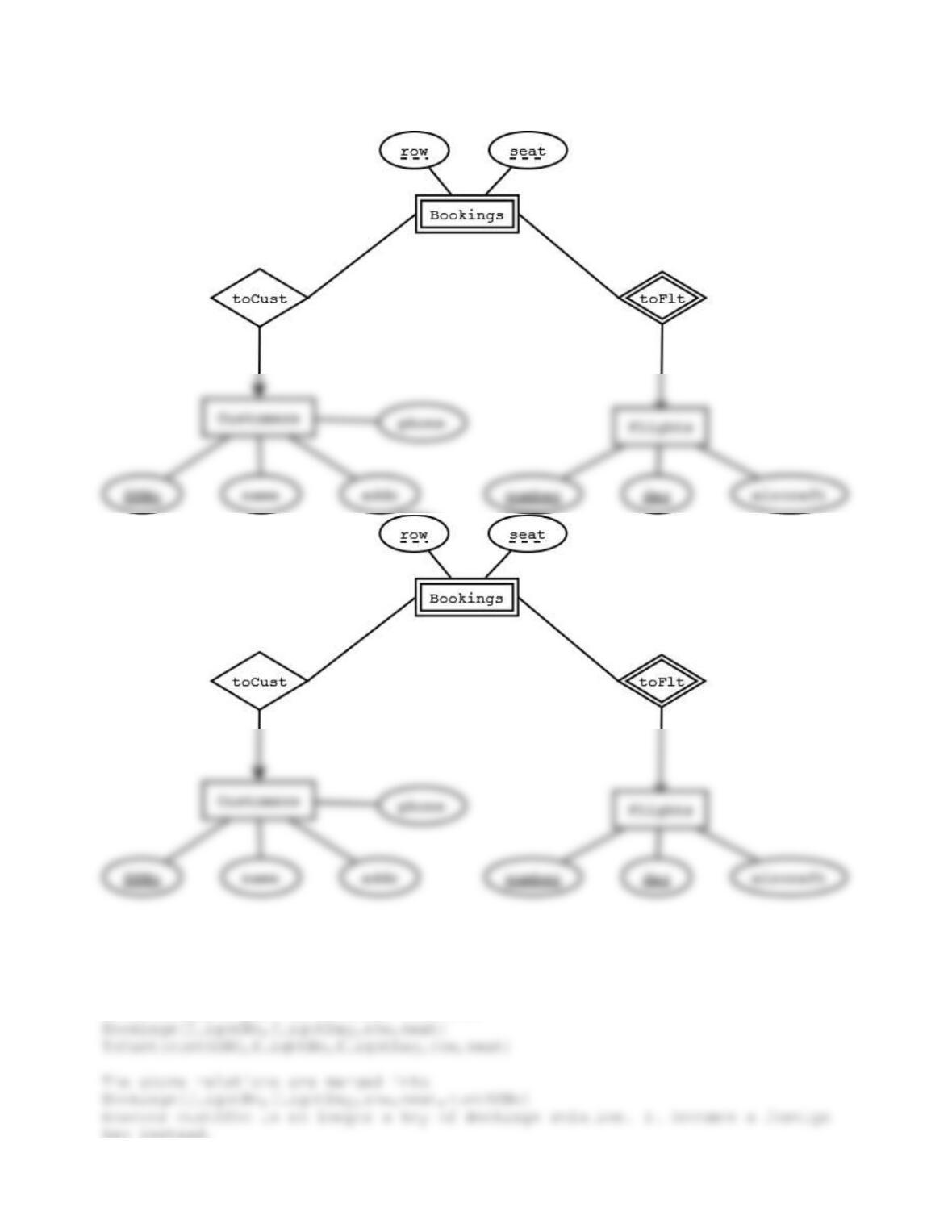
4.5.2
(a)
(b)
Schema is changed. Since toCust is no longer an identifying relationship, SSNo
is no longer a part of Bookings relation.
4.5.3
4.5.4
(a)
Stars(name,addr)
Studios(name,addr)
(b)
Students(studentID)
(c)
Departments(name)
Courses(deptName,number)
(d)
Leagues(name)
4.6.1
The weak relation Courses has the key from Depts along with number. Hence there
is no relation for GivenBy relationship.
(a)
Depts(name, chair)
4.6.2
(a)
Person(name,address)
ChildOf(personName,personAddress,childName,childAddress)
Child(name,address,fatherName,fatherAddress,motherName,motherAddresss)
(b)
A person cannot be both Mother and Father.
Person(name,address)
PersonChild(name,address)
The many-many ChildOf relationship again requires a relation.
An entity belongs to one and only one class when using object-oriented approach.
4.6.3
(a)
People(name,fatherName,motherName)
Males(name)
(b)
People(name)
PeopleMale(name)
PeopleMaleFathers(name)
(c)
People(name,fatherName,motherName)
ChildOf(personName,childName)
4.6.4
(a)
Each entity set results in one relation. Thus both the minimum and maximum
number of relations is e.
The root relation has a attributes including k keys. Thus the minimum number of
(b)
The relation for root will have a attributes. The relation representing the
whole tree will have e*a attributes.
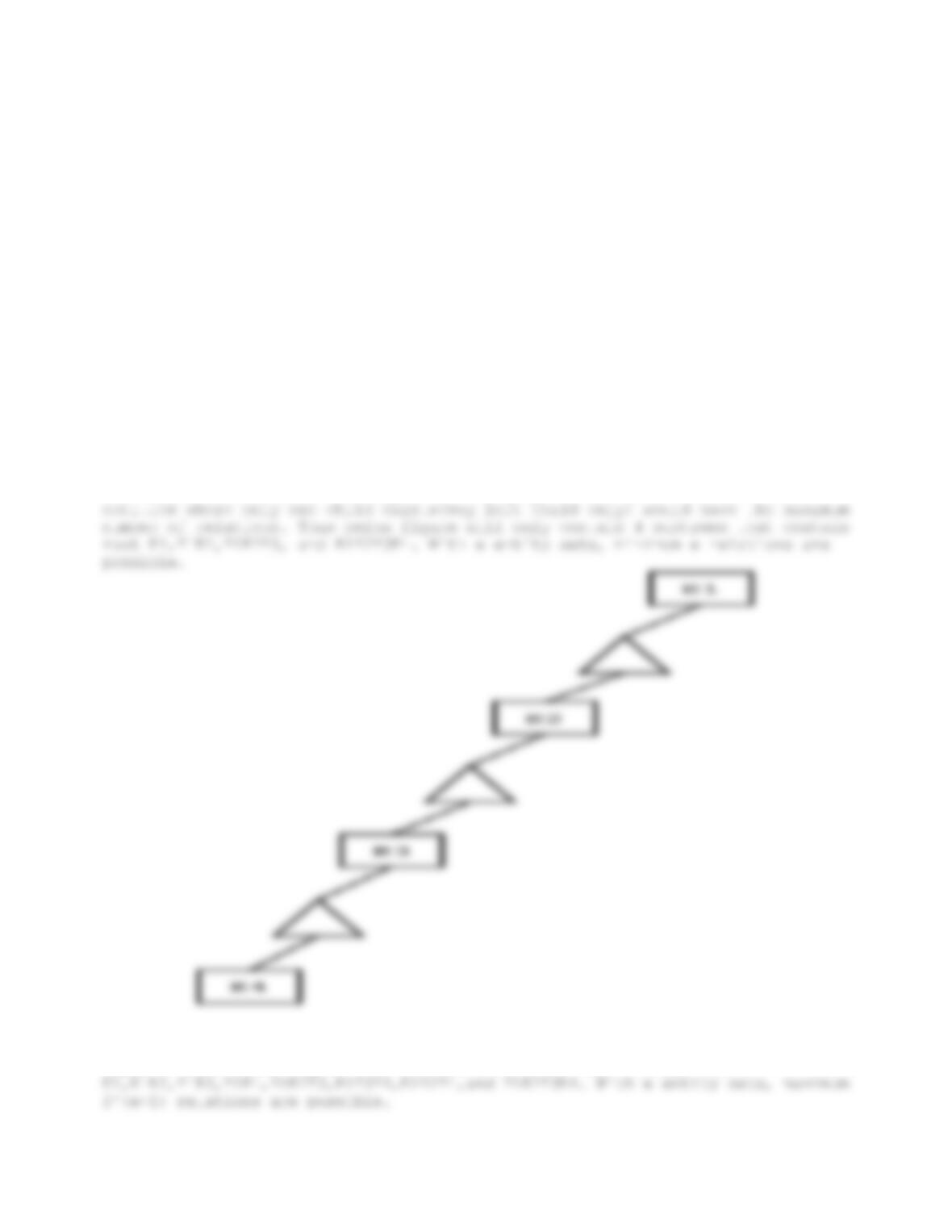
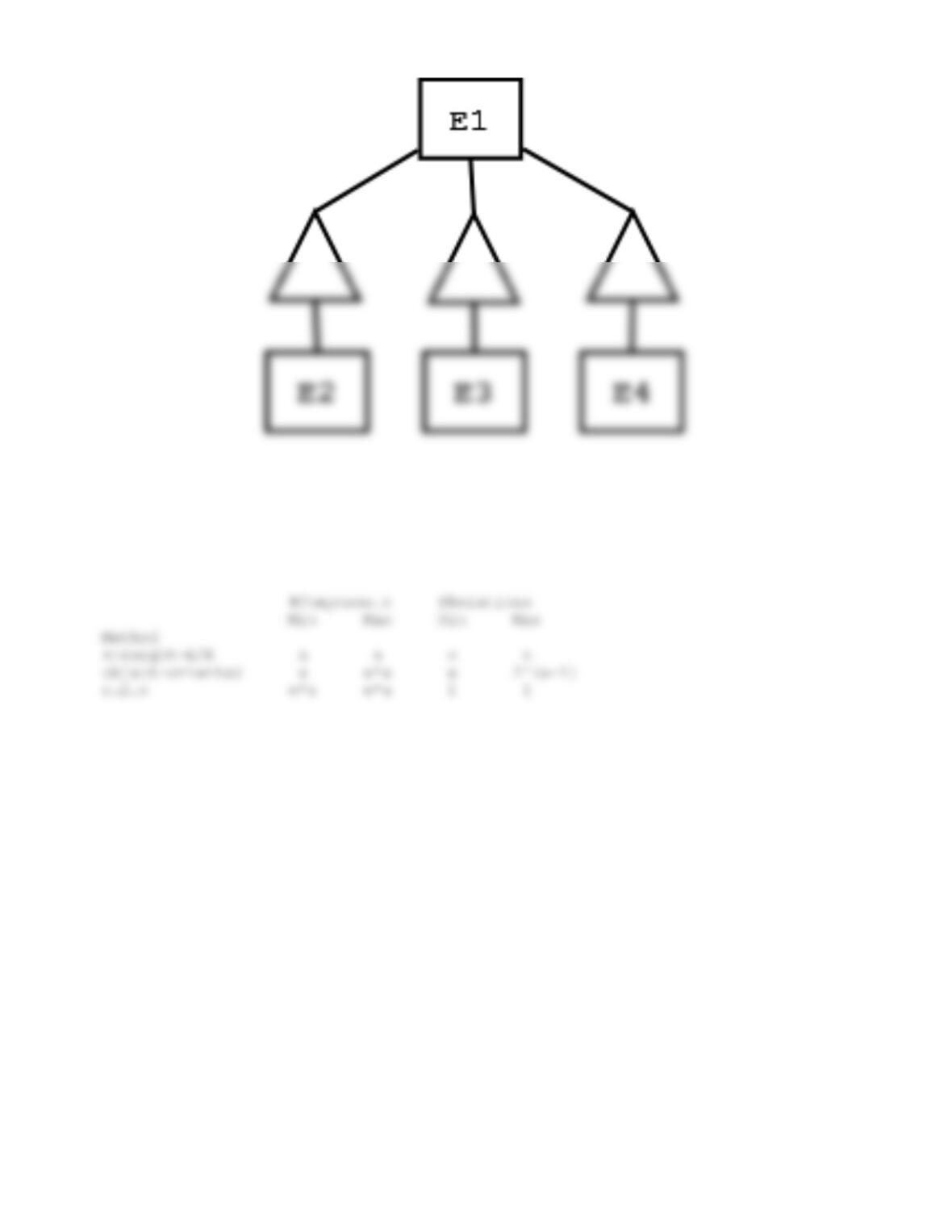
The number of relations will depend on the shape of the tree. A tree of e
The maximum number of subtrees result when all the entities(except root) are at
depth 1. Thus below figure will contain 8 subtrees that contain root
(c)
The nulls method always results in one relation and contains attributes from
all e entities i.e. e*a attributes.
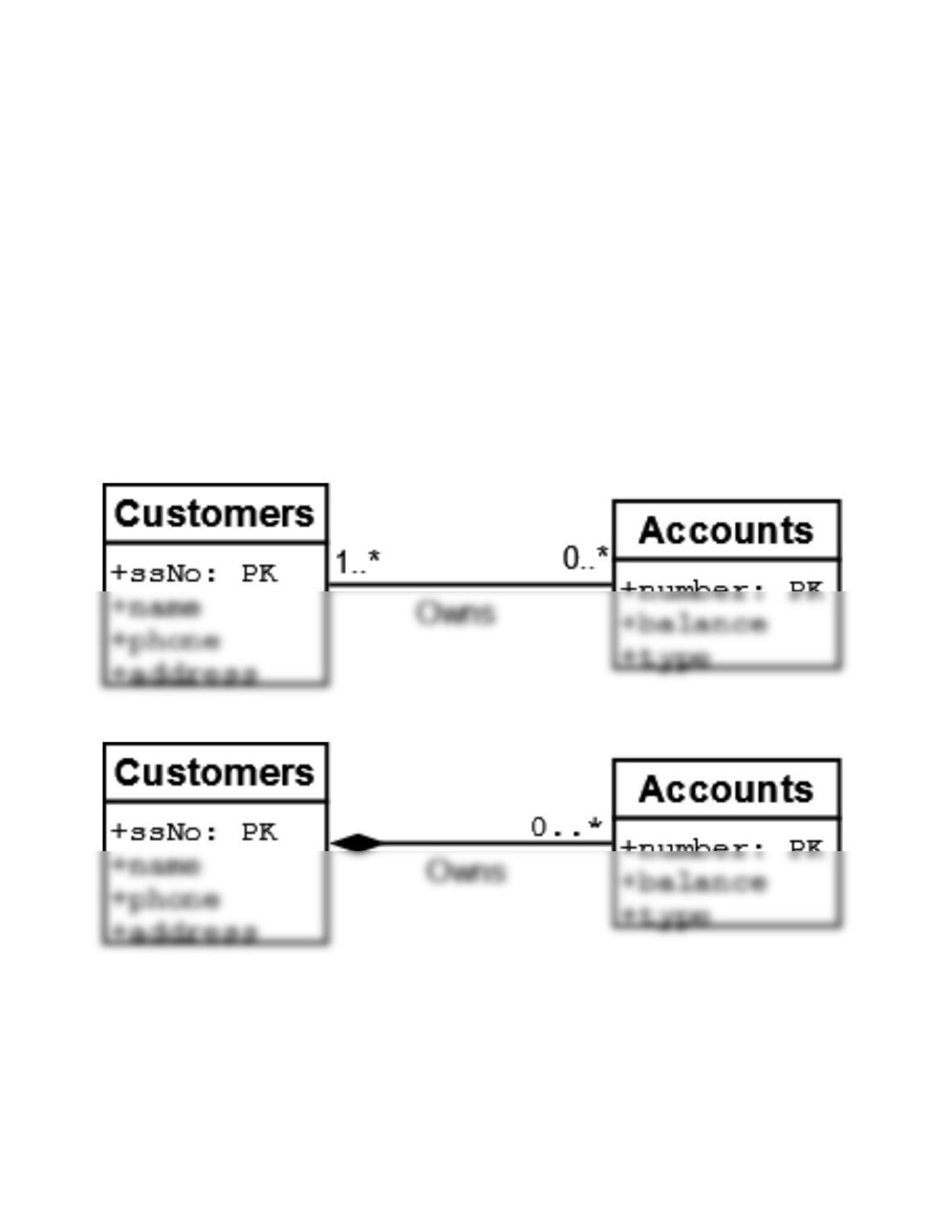
Summarizing for a,b, and c above;
4.7.1
4.7.2
a)
b)
c)
d)
4.7.3
4.7.4
4.7.5
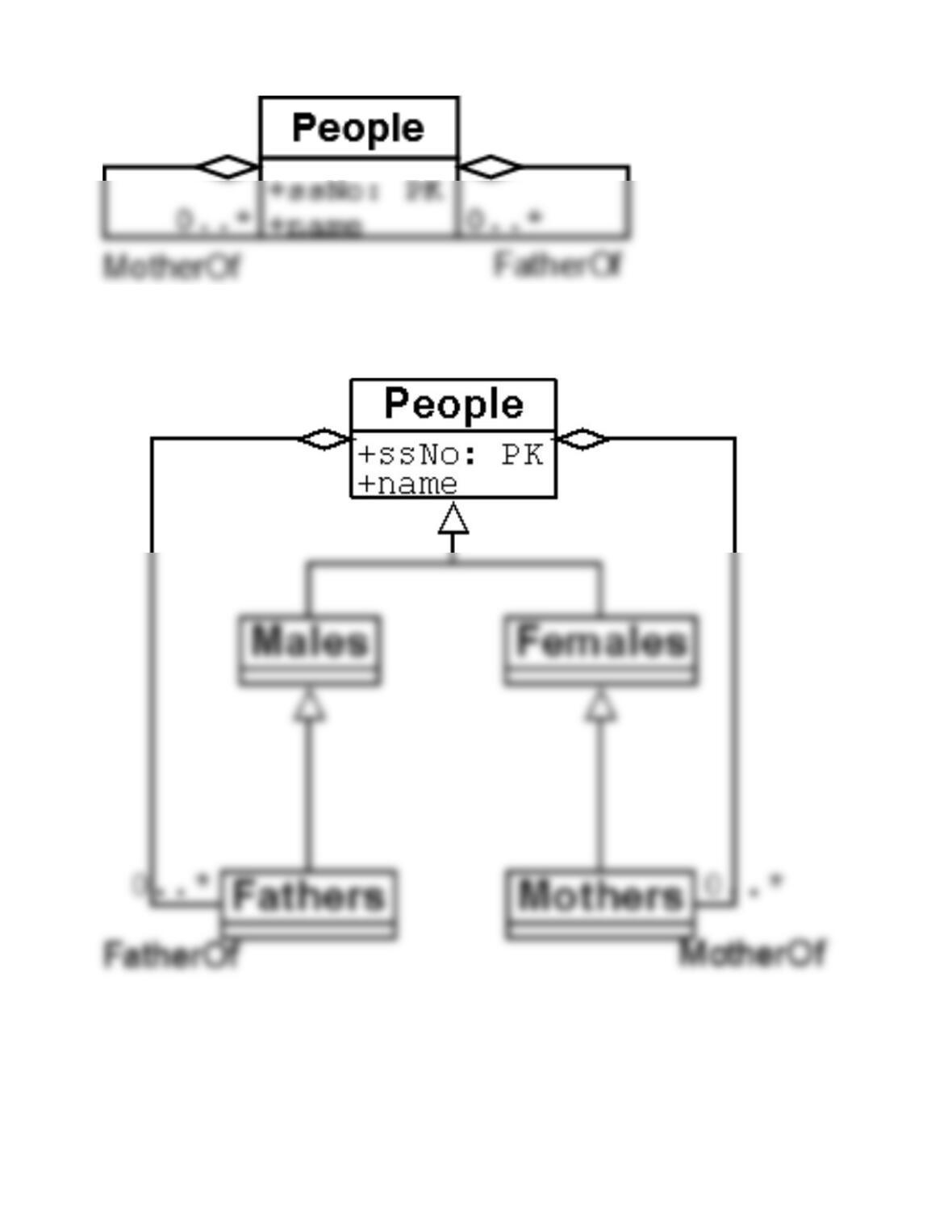
Males and Females subclasses are complete. Mothers and Fathers are partial. All
subclasses are disjoint.