Solutions to Problems in
Chapter 4: Binding energy and the Liquid Drop Model
4.1. We use equation (4.13) with the following values
aC = 0.72 MeV
asym = 23.2 MeV
and the masses
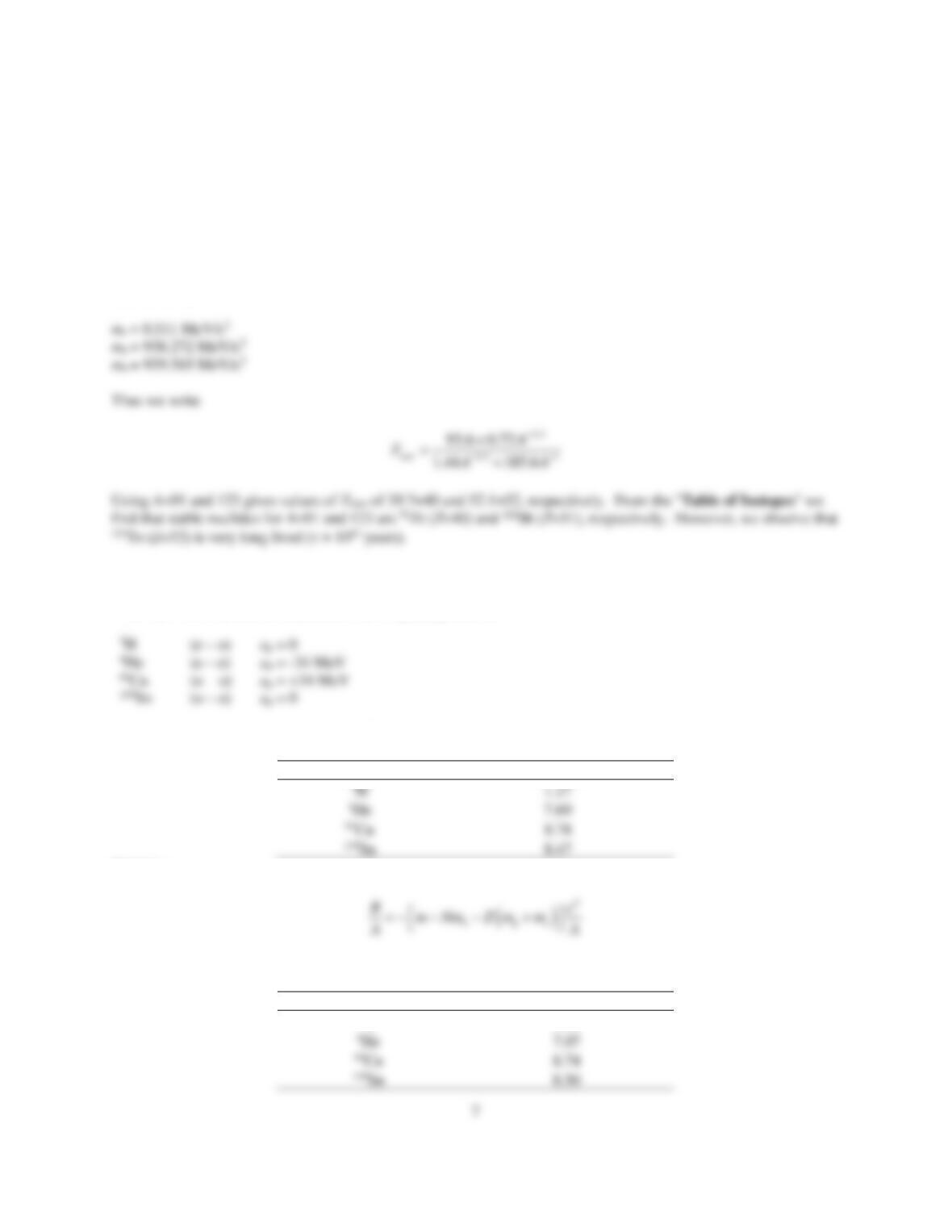
4.2. (a) We use equation (4.10) with values of the constants aV = 15.5, as = 16.8, aC = 0.72, asym = 23.2 and ap = 0, ±
34 in MeV. For the nuclei considered here the pairing term is
A simple computer analysis gives the following
nuclide
(B/A)SEM
(b) Using
and measured particle masses and atomic masses from the table gives
nuclide
(B/A)measured
3H
2.83
8
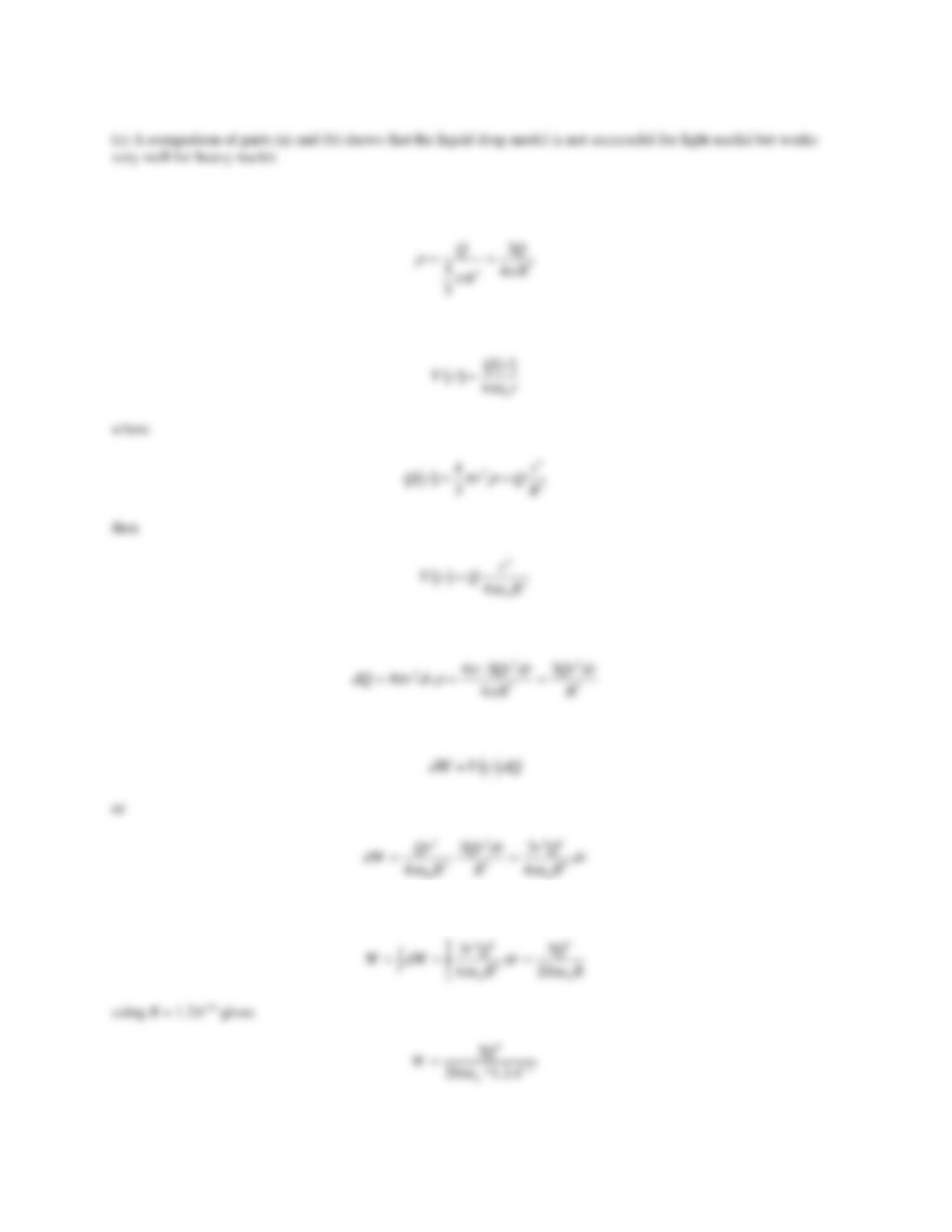
4.3. For a sphere of charge Q and radius R the charge density is
The electrostatic potential inside the sphere is
A differential layer of charge at radius r has a charge
The work required to remove that layer of charge is
Integrating from 0 to R gives the total energy.
where Q2 = Z2e2 and equating this to the Coulomb term in the semiempirical mass formula gives
in good agreement with the empirical value (0.72 MeV).
4.4. (a) Ignoring the electronic binding we write
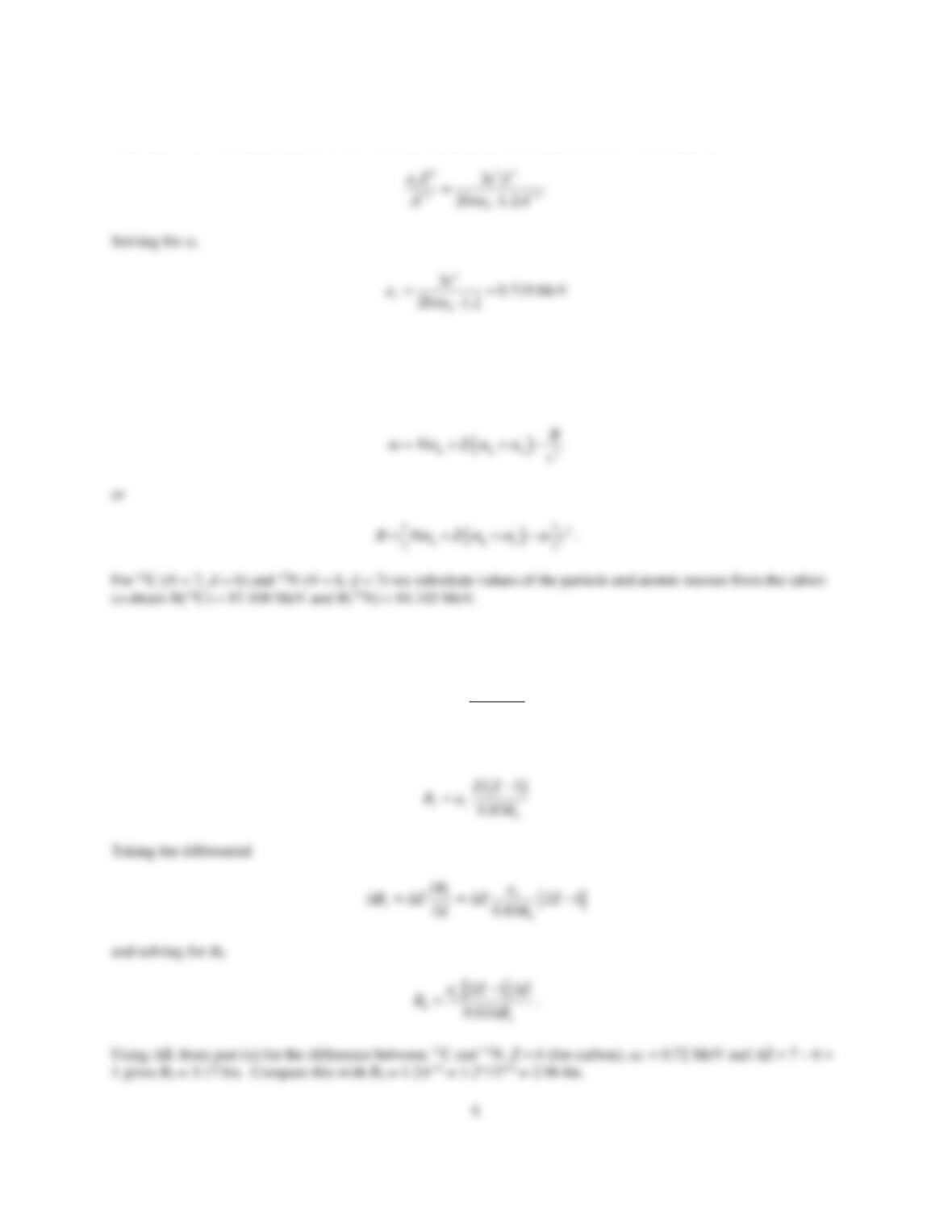
(b) For the semiempirical mass expression for the binding energy all terms are the same for 13C and 13N except the
Coulomb term. This is written as
( )
1/ 3
1
cc
ZZ
Ba A
−
=
.
Using R0 = 1.2A1/3 (fm) gives A1/3 = 0.83R0. Then
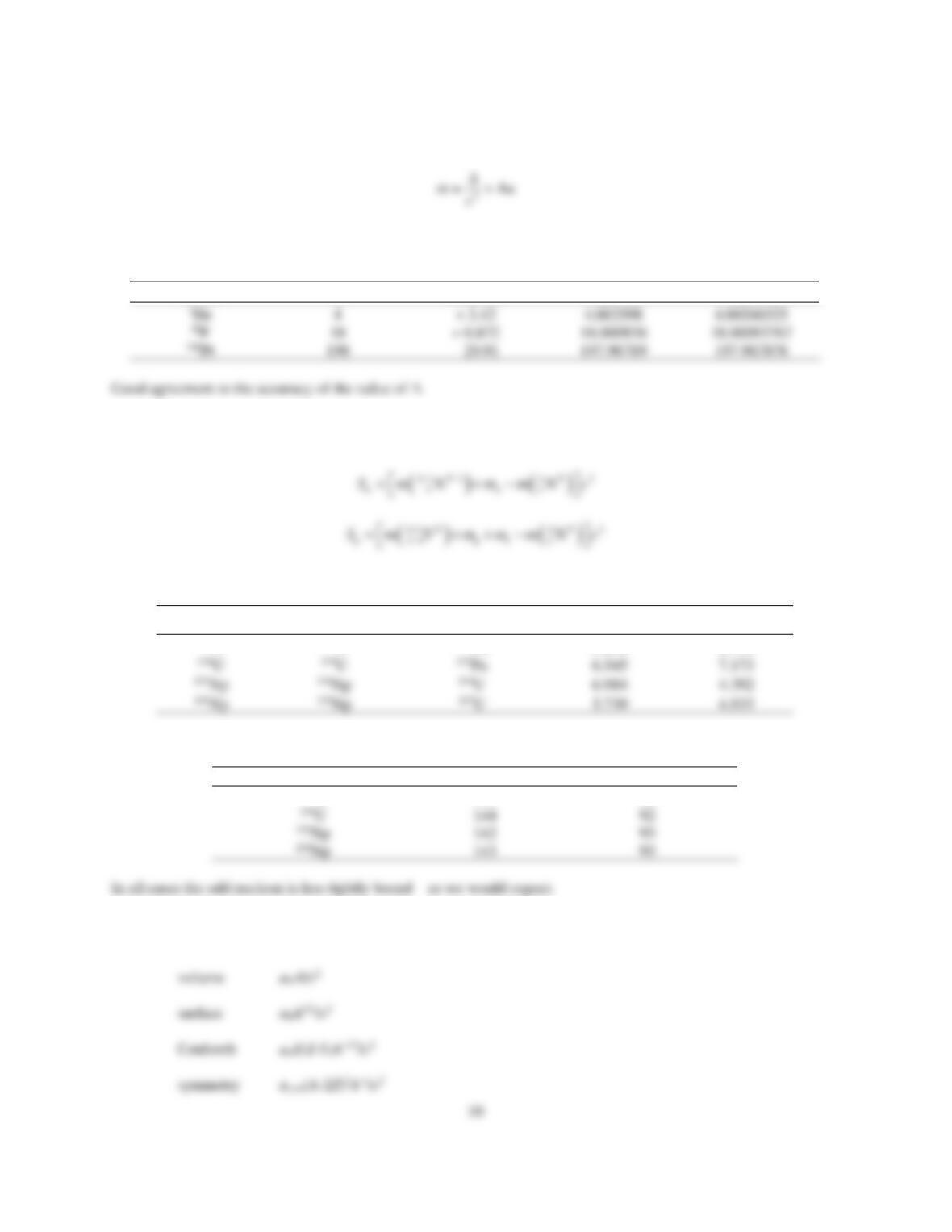
4.5. The mass is given in terms of the mass excess, , from equation (4.4) as
So we find the following values
nuclide
A
(MeV)
mcalc (u)
mtable (u)
4.6. From equations (4.19) and (4.21);
where the masses are atomic masses. Using tabulated mass values we find
NA
ZX
11 X−− NA Z
NA
ZY
1
1
−
−
Sn (MeV)
Sp (MeV)
235U
234U
234Pa
5.298
6.711
236U
235U
235Pa
6.545
7.173
234U
6.984
4.392
Consider these in the context of the number of neutrons and protons in the parent nucleus.
nuclide
N
Z
235U
143
92
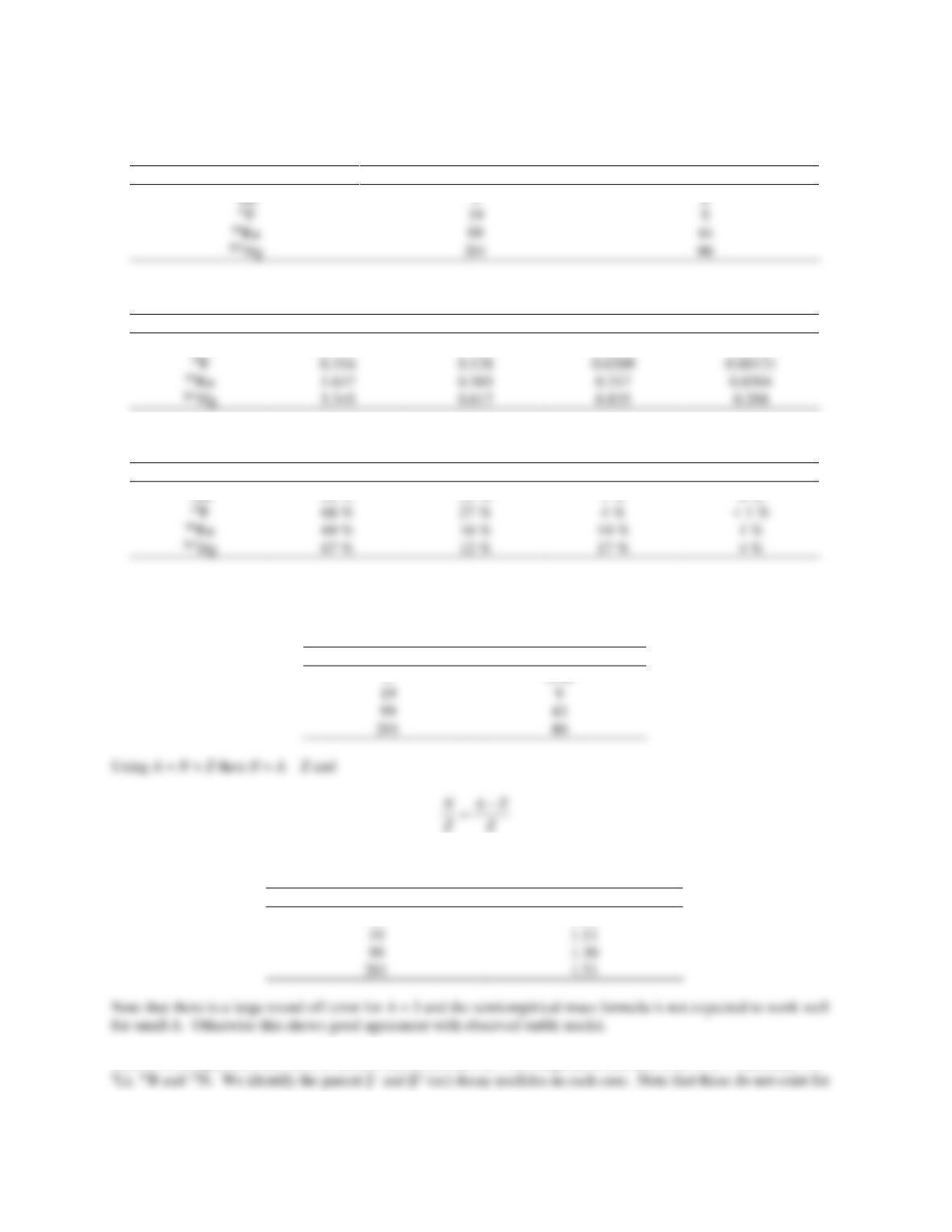
4.7. These terms are given from equation (4.12) as
11
We choose the following (stable) nuclei as examples for the various values of A.
nuclide
A
Z
3He
Using these values of A and Z and the values of the coefficients from equation (4.11) we find (in u)
nuclide
volume
surface
Coulomb
symmetry
3He
0.0499
0.0375
0.00107
0.0083
These may be expressed as a fraction of the total of the four terms.
nuclide
volume
surface
Coulomb
symmetry
3He
52 %
39 %
1 %
8 %
4.8. Using equation (4.13) we calculate Zmin for various A as shown.
A
Zmin
3
1.48
giving the following values
A
N/Z
3
1.03
1.11
1.30
1.51
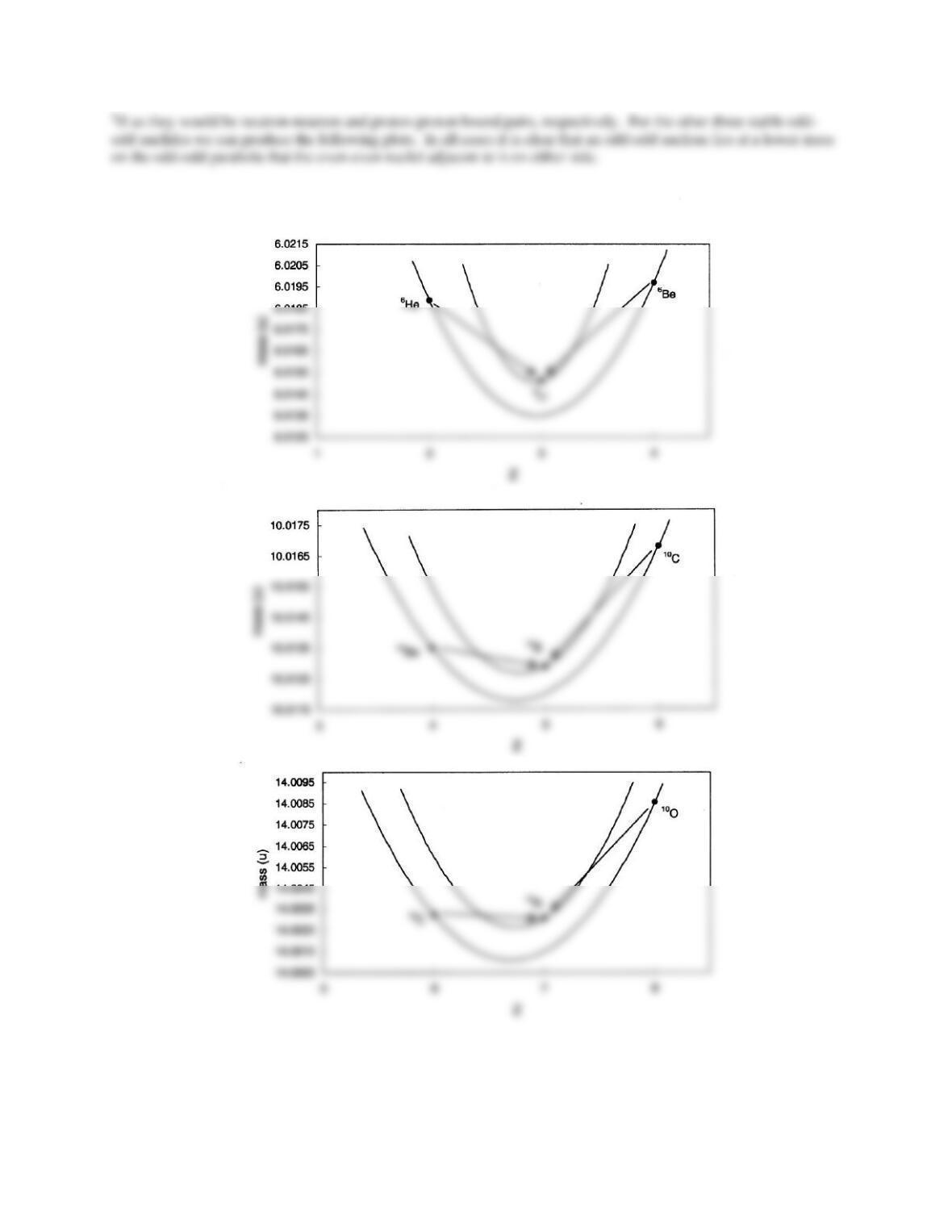
4.9. An investigation of the table of atomic masses reveals the following stable nuclides with N, Z = odd, odd: 2H,
12
13
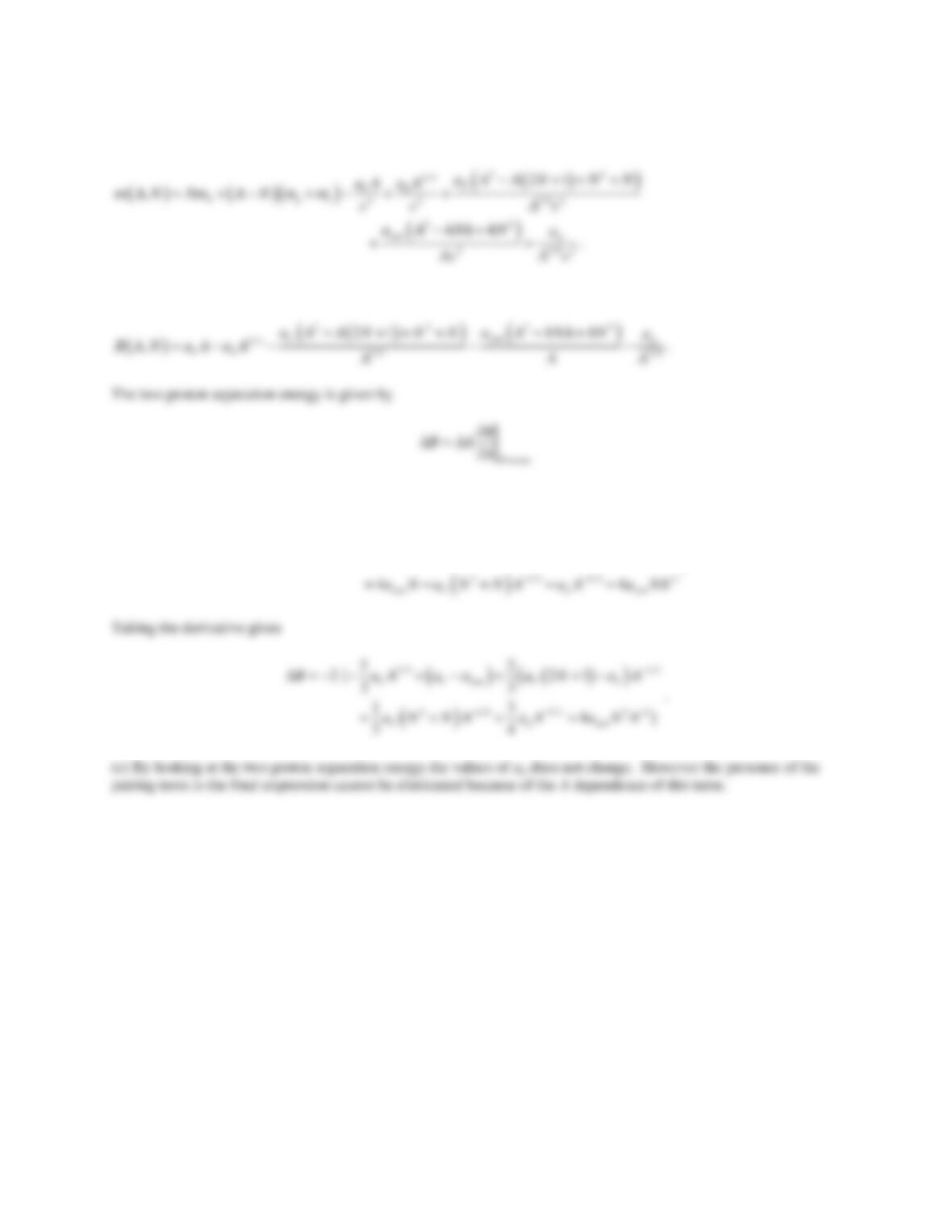
4.10. (a) Beginning with equation (4.12) we convert the expression for A and Z to A and N by substituting Z = A – N.
This gives
(b) The binding energy may be determined from the above expression as
where A = -2 (i.e. A decreases by 2 while N remains unchanged). We combine terms according to powers of A in
order to calculate the derivative;
( )
( )
( )
( )
5/3 2/3
, 2 1
C V sym C S
B A N a A a a A a N a A
= − + − + + −
14
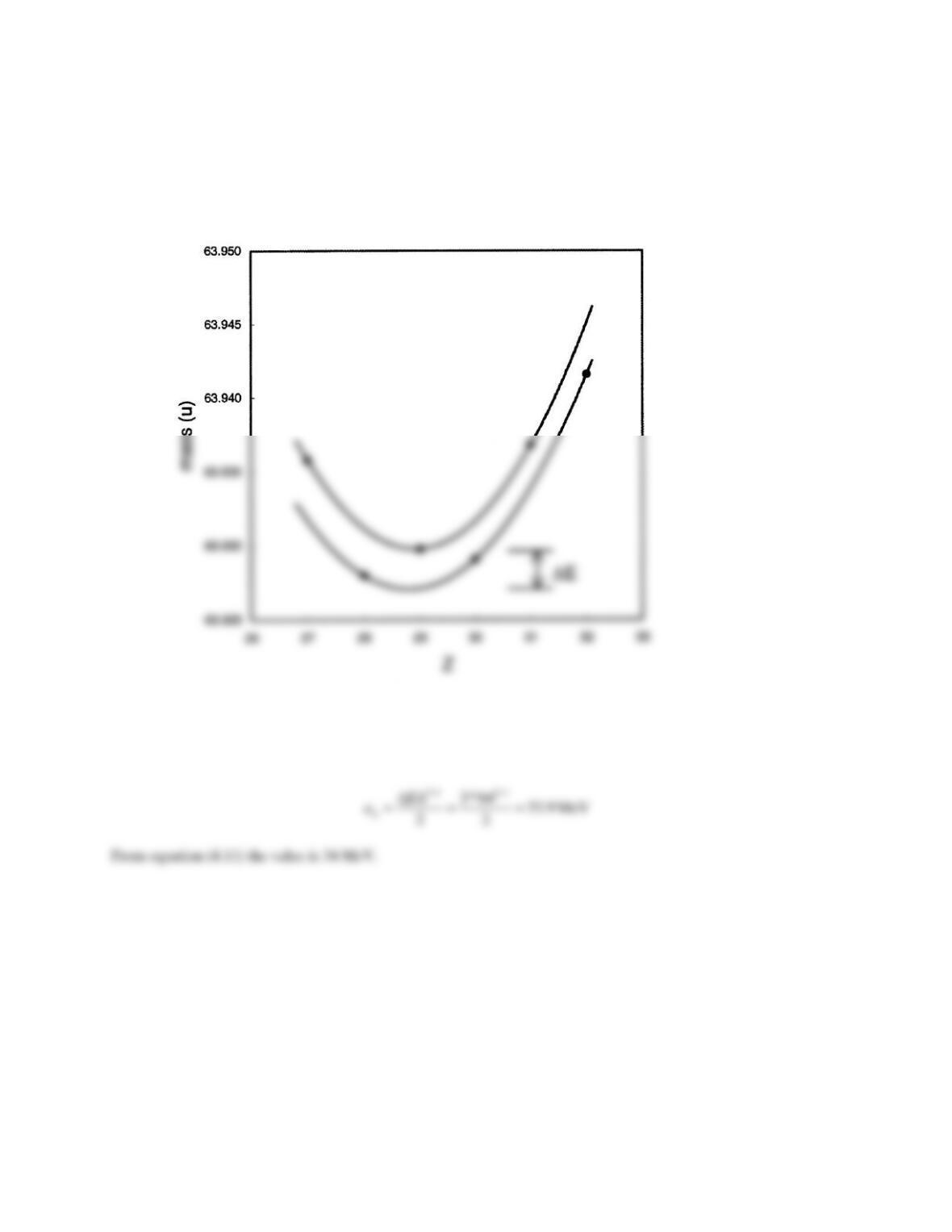
4.11. (a) The plot of the measured atomic masses is shown below.
(b) The two mass parabola are separated by an energy 2ap/A3/4. This energy is measured on the graph to be E 3
MeV. So solving for ap