1.
D .
74.e1
Exploring Tissues
CHAPTER
4
EXERCISE 1. LABEL, IDENTIFY, AND CLASSIFY
EPITHELIAL TISSUE
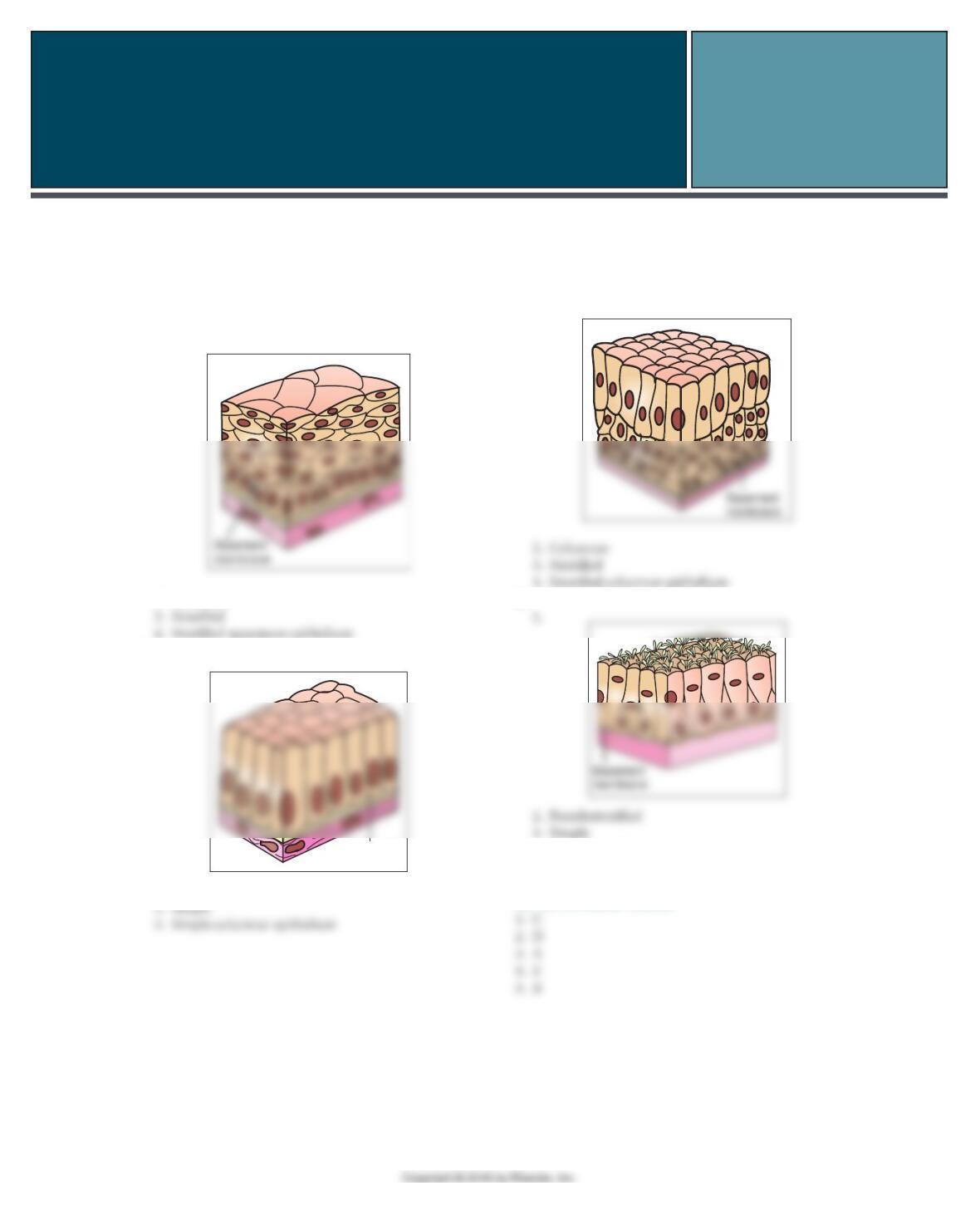
A .
2. Squamous
B .
1.
Basement
membrane
2. Columnar
C .
1.
4 . P s e u d o s t r a t i fi ed epithelium
EXERCISE 2. MATCH FIGURES TO TYPE
OF EPITHELIAL TISSUE
CHAPTER 4 Exploring Tissues
74.e2
EXERCISE 3. EXOCRINE GLAND
CLASSIFICATION
1 . E
EXERCISE 4. CLASSIFY, IDENTIFY,
AND LOCATE CONNECTIVE TISSUE
A .
1. Specialized connective tissue
B .
1. Connective tissue proper
C .
1. Specialized connective tissue
D .
1. Connective tissue proper
EXERCISE 5. IDENTIFY, LOCATE,
AND CLASSIFY MUSCLE TISSUE
A .
1. Cardiac muscle
2 . H e a r t
EXERCISE 6. LABEL AND DESCRIBE NERVOUS
TISSUE
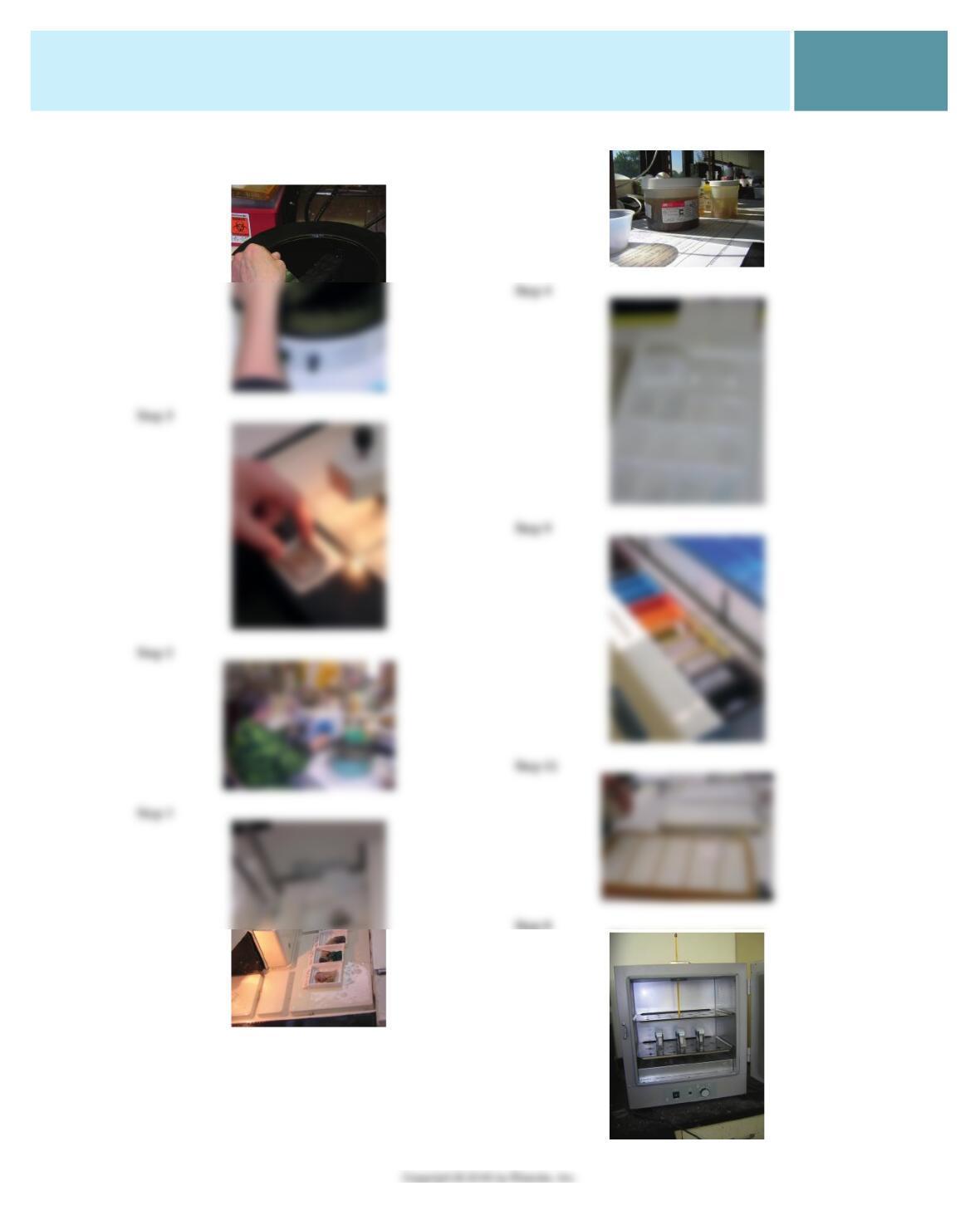
A .
Dendrites
74.e3
CHAPTER 4 Exploring Tissues
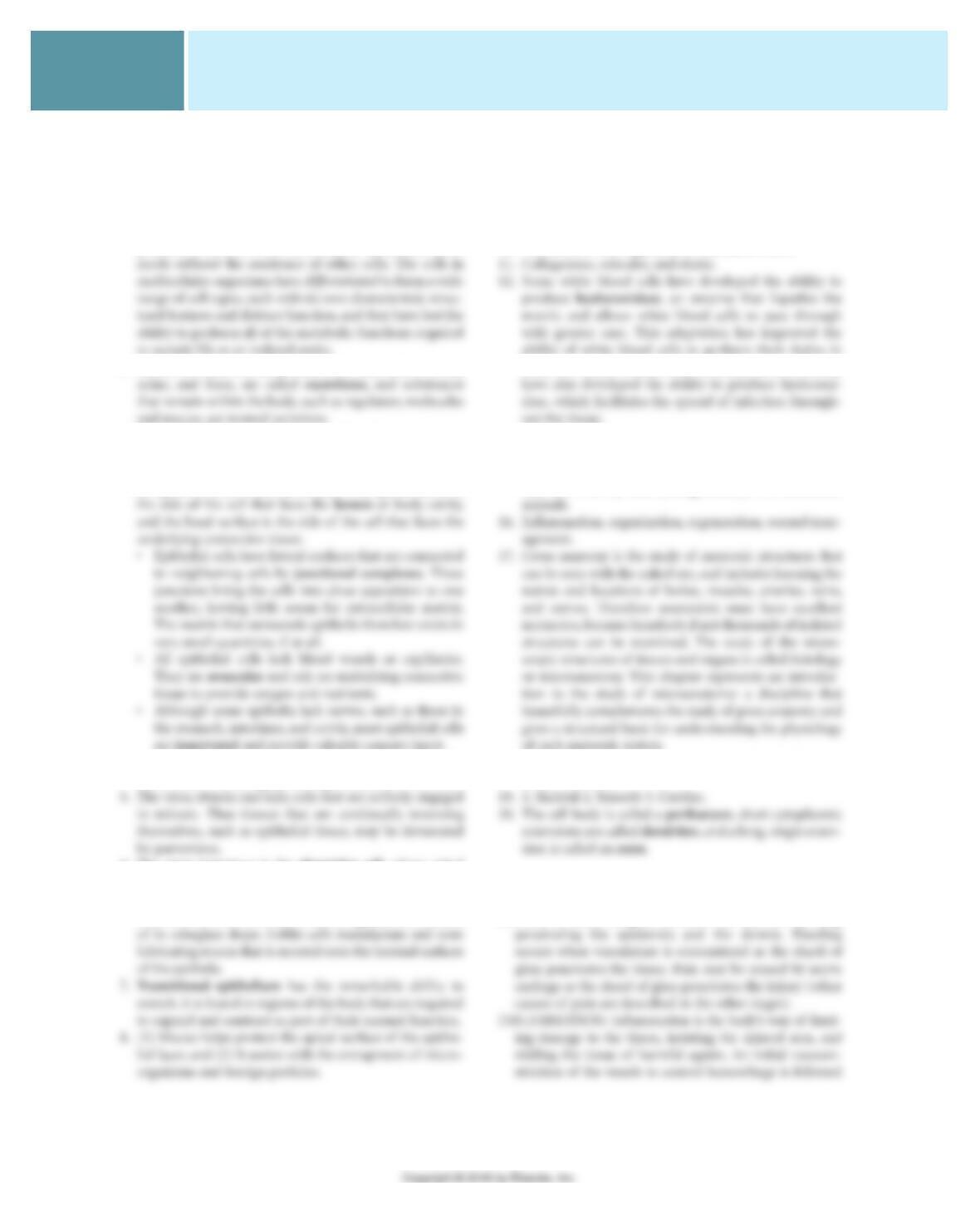
EXERCISE 8. HISTOLOGIC PREPARATION
OF TISSUES
S t e p 7
S t e p 1
CHAPTER 4 Exploring Tissues
74.e4
EXERCISE 9. MICROSCOPE EXERCISE
Students should complete the exercise as instructed. Answers
will vary.
EXERCISE 10. CLINICAL THINKING CHALLENGE
1. A unicellular organism can feed itself, respire, grow, and
produce or fi nd all of the biochemical substances that it
2. Substances that ultimately leave the body, such as sweat,
3. Epithelial cells are polar , that is, they have a sense of
direction relative to surrounding structures. Each epithe-
lial cell has an apical surface and a basal surface , which
are quite different from one another. The apical surface is
4. The brush border greatly increases the surface area of the
cell, thereby increasing the absorptive ability of the cell.
6. The most numerous is the absorptive cell , whose apical
surface is blanketed by dense microvilli that maximize
absorption by increasing surface contact with the nutrient-
fi lled lumen. The other cell is called a goblet cell because
9. (1) By glandular duct structures— simple or com-
pound . (2) By secretory cells— tubular , alveolar , aci-
nar , tubuloalveolar or tubuloacinar . (3) By the way in
which they secrete their products—merocrine, apo-
crine, or holocrine. (4) By the type of secretion they
produce— serous, mucous, or mixed .
10. Extracellular fi bers, ground substance, and cells.
loose connective tissue. Unfortunately, some microbes
13. It does not contain nerves.
14. It is avascular.
15. Old, immunocompromised, debilitated or sick animals
heal more slowly than young, healthy, well-nourished
18. 1. Epithelial tissue 2. Connective tissue 3. Muscle tissue
4. Nervous tissue
EXERCISE 11. CASE APPLICATION—THE
HEALING PROCESS
INJURY: A shard of glass lacerates the skin of the dog,
74.e5
CHAPTER 4 Exploring Tissues
EXERCISE 12. MUCOUS MEMBRANES AND CLUES IN DIAGNOSES
PHYSICAL CONDITION RESULT OBSERVATION OF MUCOUS MEMBRANES TERMINOLOGY
Vomiting, diarrhea, no intake
EXERCISE 13. CAPILLARY REFILL TIME
OBSERVATION OF GINGIVAL COLORATION CRT POSSIBLE CAUSE(S)
2-second delay in gingiva returning to normal coloration P Compromised cardiac output, low blood pressure,
severe peripheral vasoconstriction