2. Functions to allow blood vessels to pass through, result-
478e.1
Avian Anatomy
FEATHER TYPES AND STRUCTURE
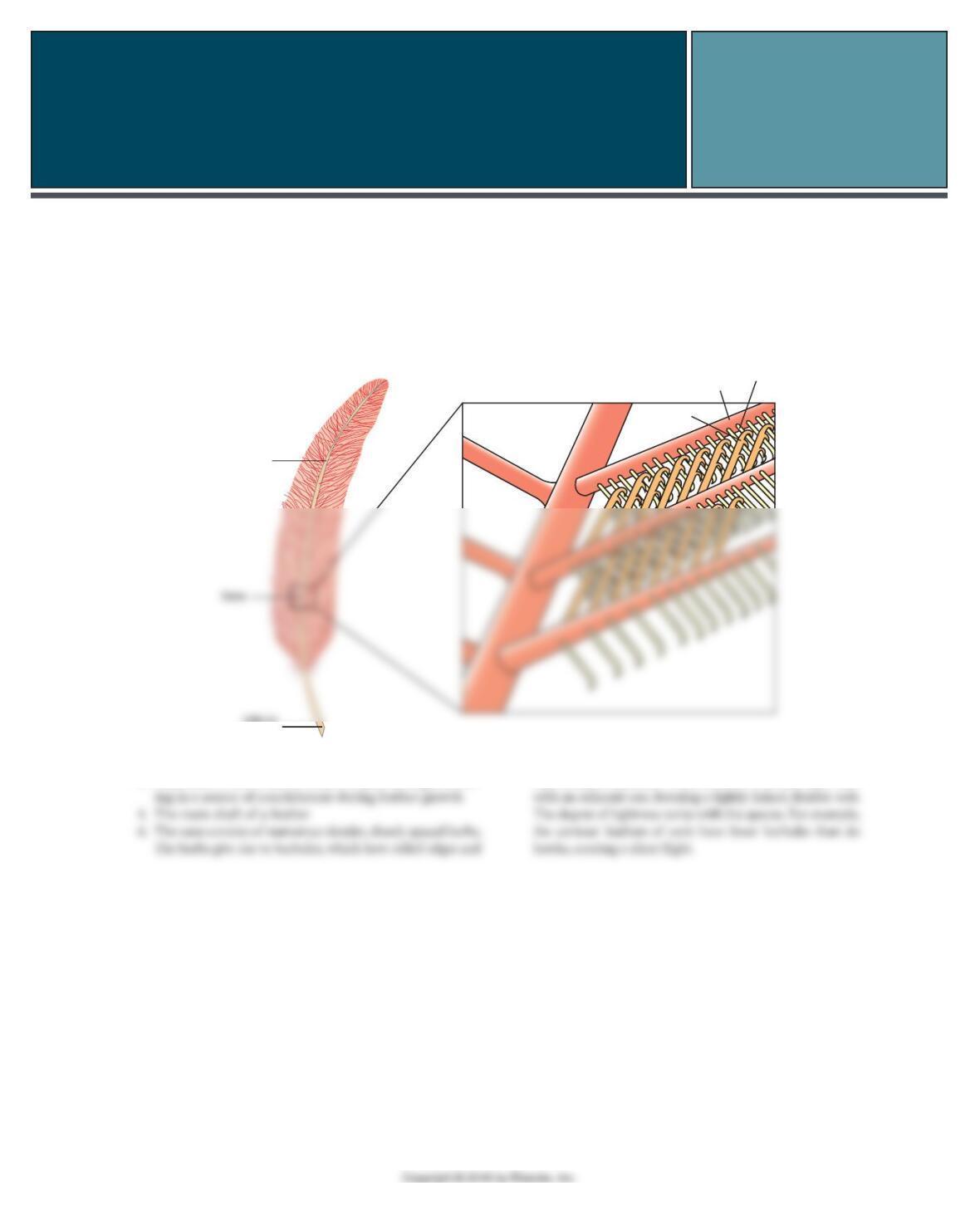
EXERCISE 1. LABEL AND DESCRIBE FEATHER STRUCTURE
1., 3., 5.
Hooklet
Barb Barbule
Rachis
Inferior
umbilicus
CHAPTER
18
tiny hooklets (hamuli). These hooklets interlock each barb
CHAPTER 18 Avian Anatomy
478.e2
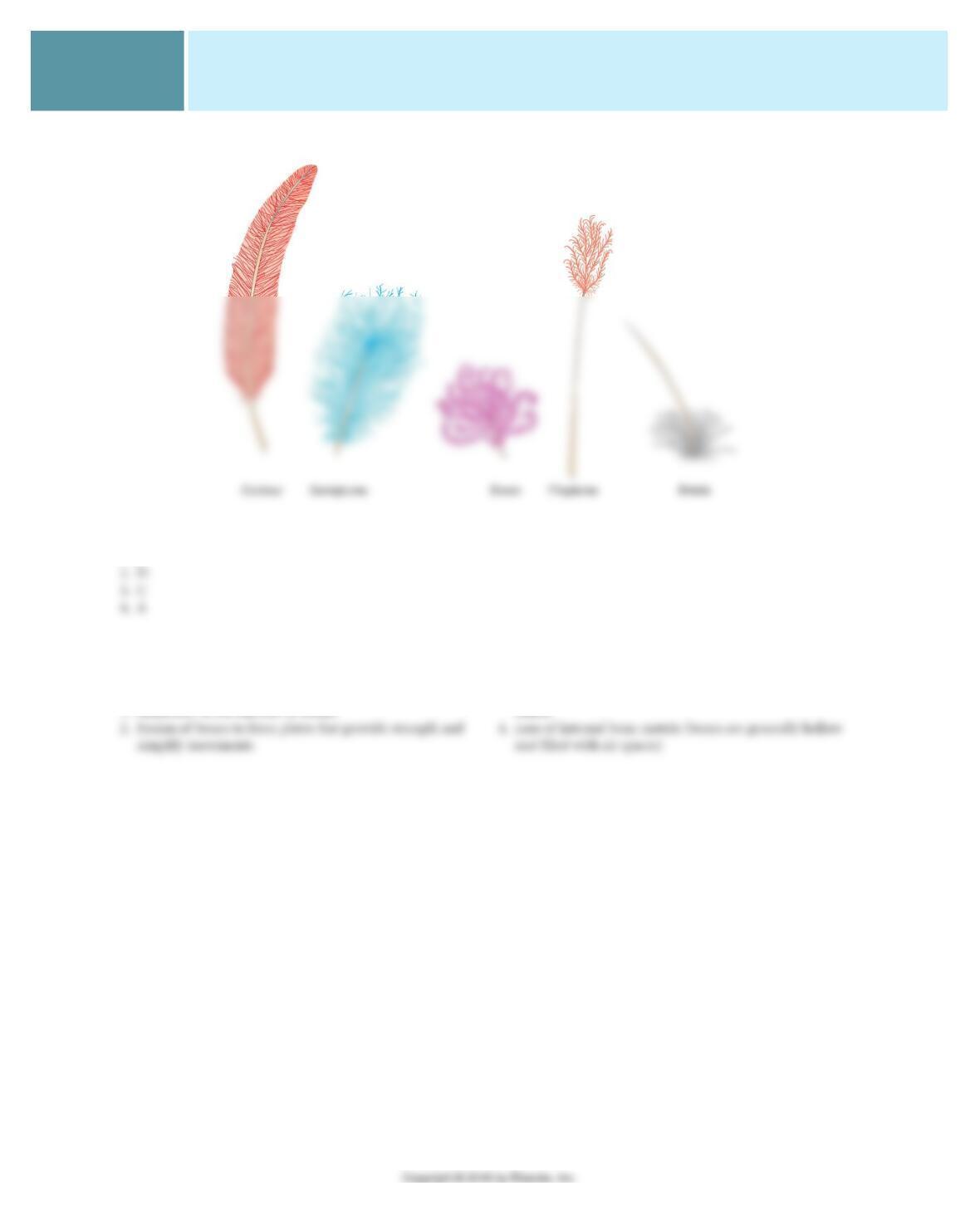
EXERCISE 3. FEATHER IDENTIFICATION
1 . B
SKELETAL ANATOMY
EXERCISE 4. EXPLORE THE AVIAN
LIGHTWEIGHT SKELETAL STRUCTURE
1. Reduction in the number of bones
EXERCISE 2. DRAW FEATHER TYPES
3. Reduction in the density of bones, which are relatively
thin but strengthened by a network of internal bony
braces
478.e3
CHAPTER 18 Avian Anatomy
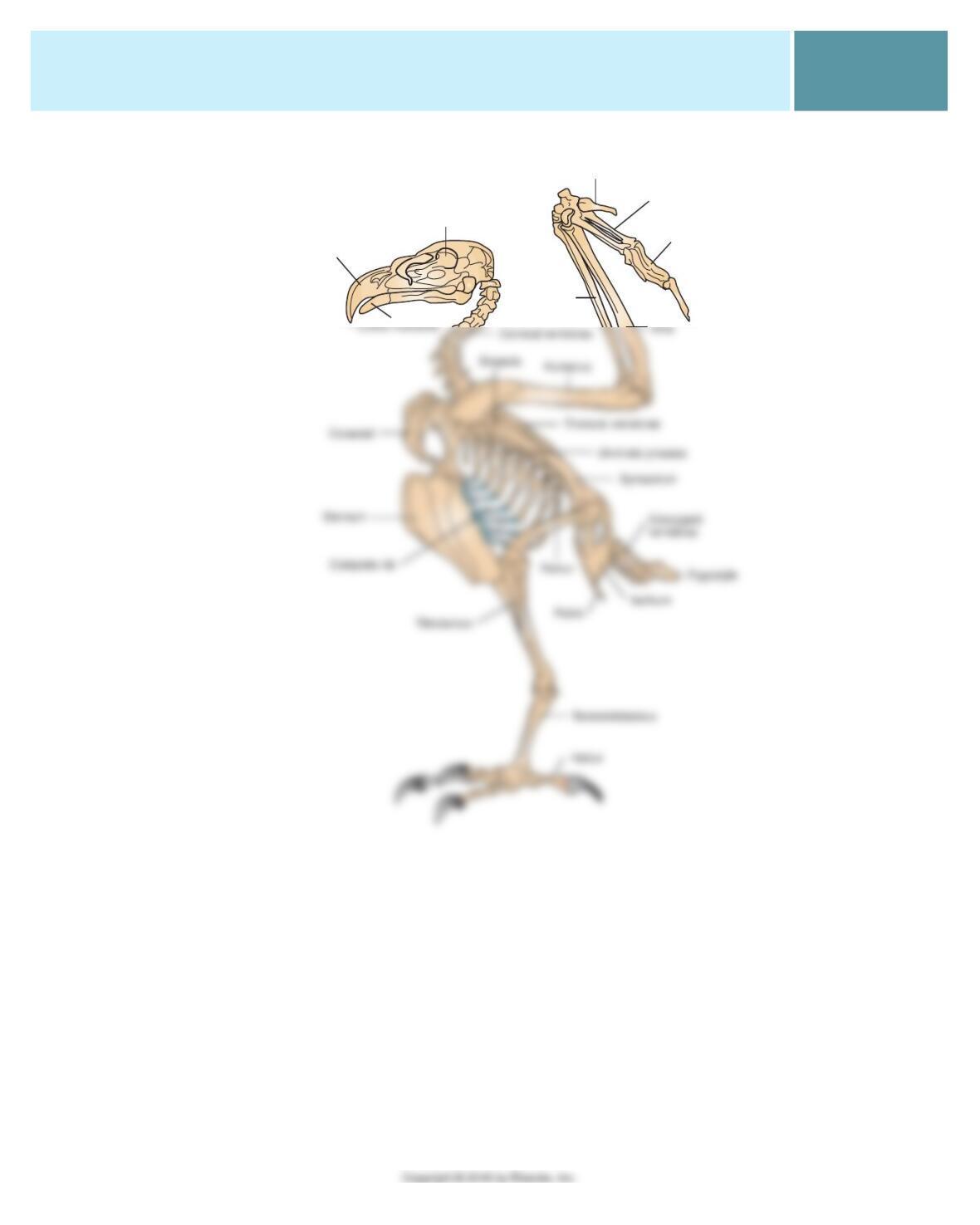
Major metacarpal
Alula (first digit)
Orbit
Upper mandible
Radius
Second digit
EXERCISE 5. LABEL AN AVIAN SKELETON
CHAPTER 18 Avian Anatomy
478.e4
WING ANATOMY
EXERCISE 6. EXPLORE AN AVIAN PECTORALIS MUSCLE
1 . S t e r n u m
2. Underside of the humerus
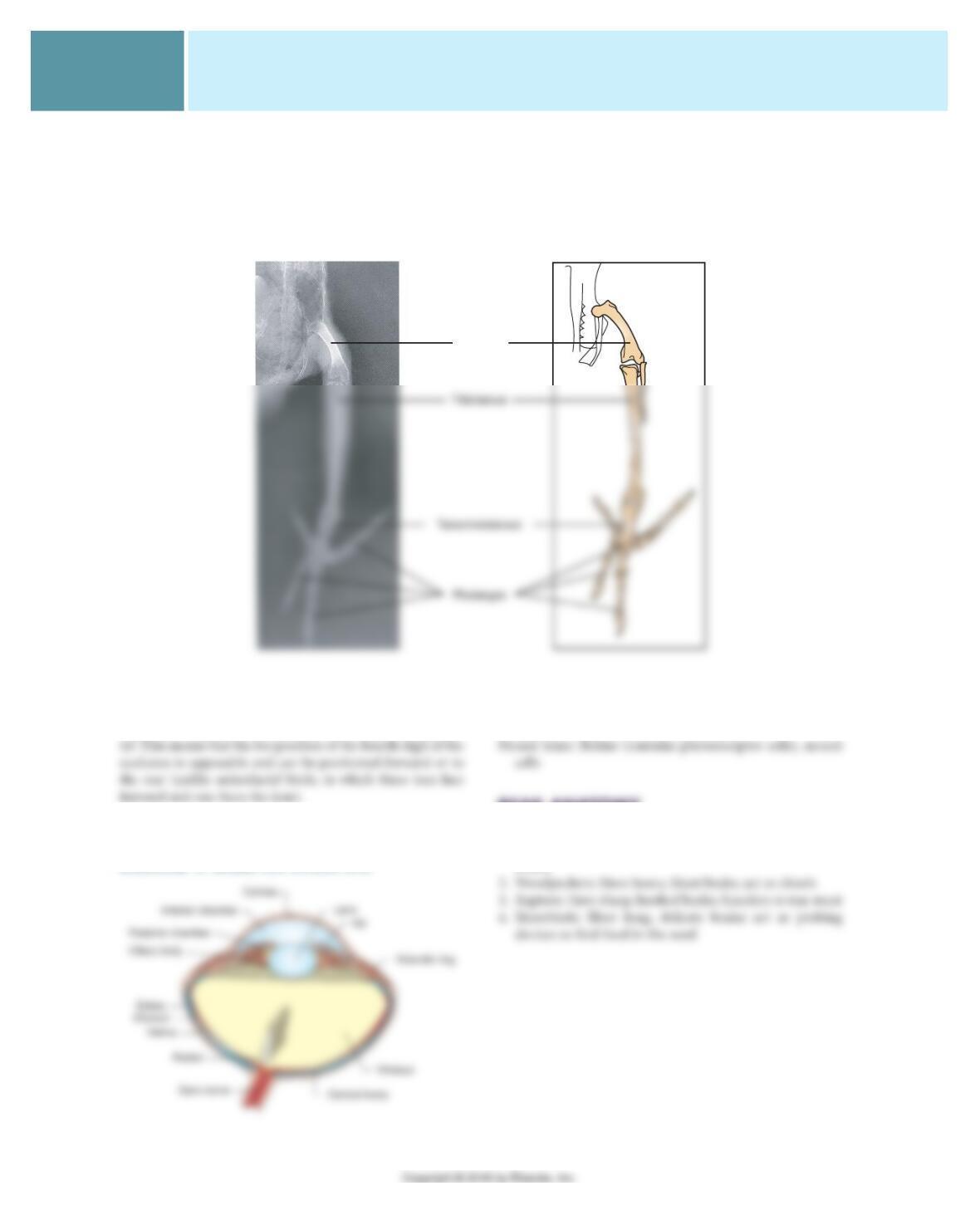
EXERCISE 7. CLINICAL APPLICATION: LABEL AN AVIAN LEG SKELETON
Femur
EXERCISE 8. CLINICAL APPLICATION: IDENTIFY
AVIAN FOOT TYPE
Cockatoos are parrots and are therefore considered zygodac-
OCULAR ANATOMY
EXERCISE 9. LABEL AN AVIAN EYE
EXERCISE 10. EXPLORE AN AVIAN EYE
Fibrous tunic: Sclera, cornea
Uveal tunic: Choroid, iris, ciliary muscles
BEAK ANATOMY
EXERCISE 11. EXPLORE AN AVIAN BEAK
1. Seedeaters: Have thick beaks; act as forceps; crushing
action
478.e5
CHAPTER 18 Avian Anatomy
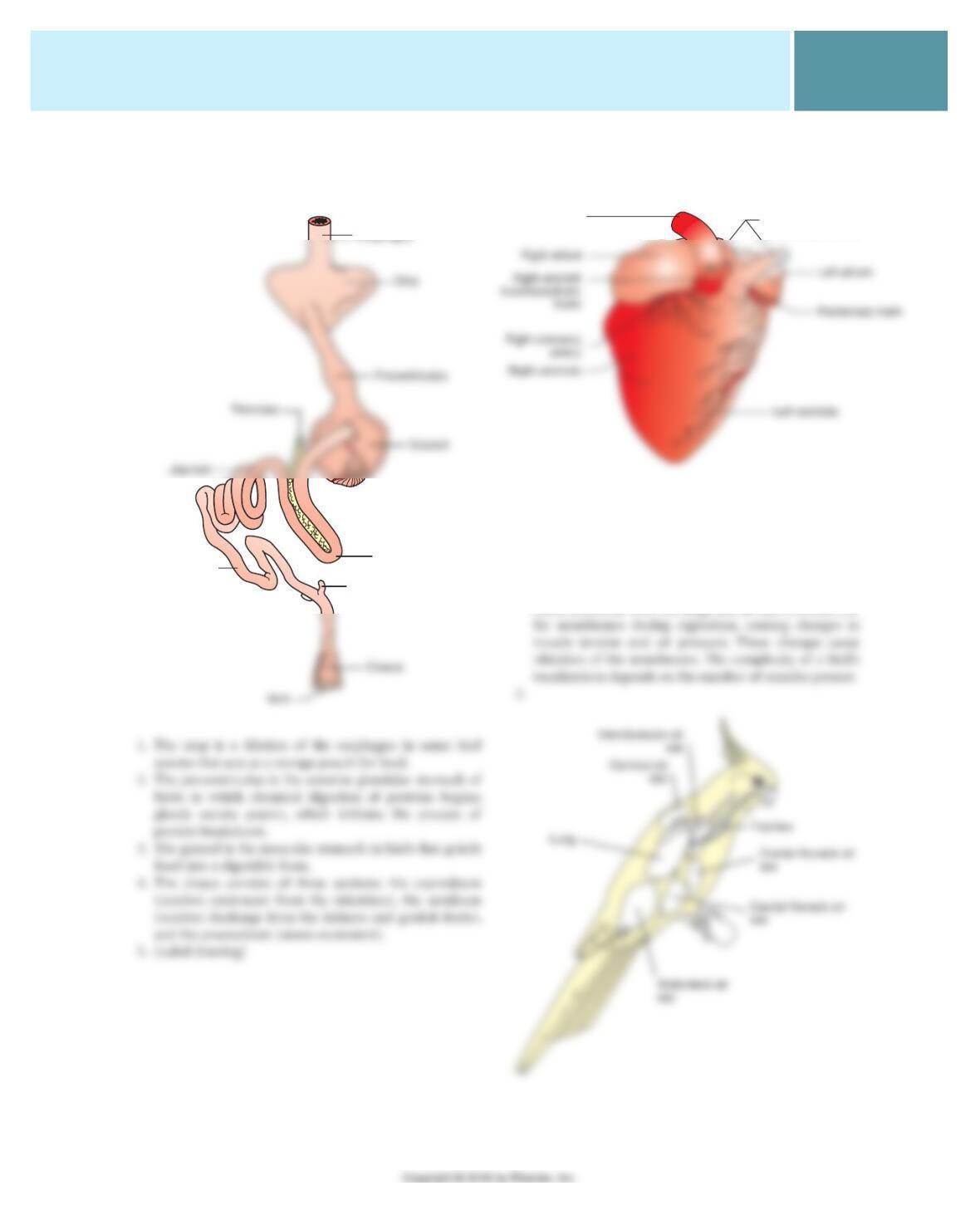
DIGESTIVE ANATOMY
EXERCISE 12. LABEL AND DESCRIBE AN AVIAN
DIGESTIVE SYSTEM
Ileum
Esophagus
Duodenum
Rudimentary ceca
CARDIAC ANATOMY
EXERCISE 13. LABEL AN AVIAN HEART
Aorta
Right and left
pulmonary arteries
RESPIRATORY ANATOMY
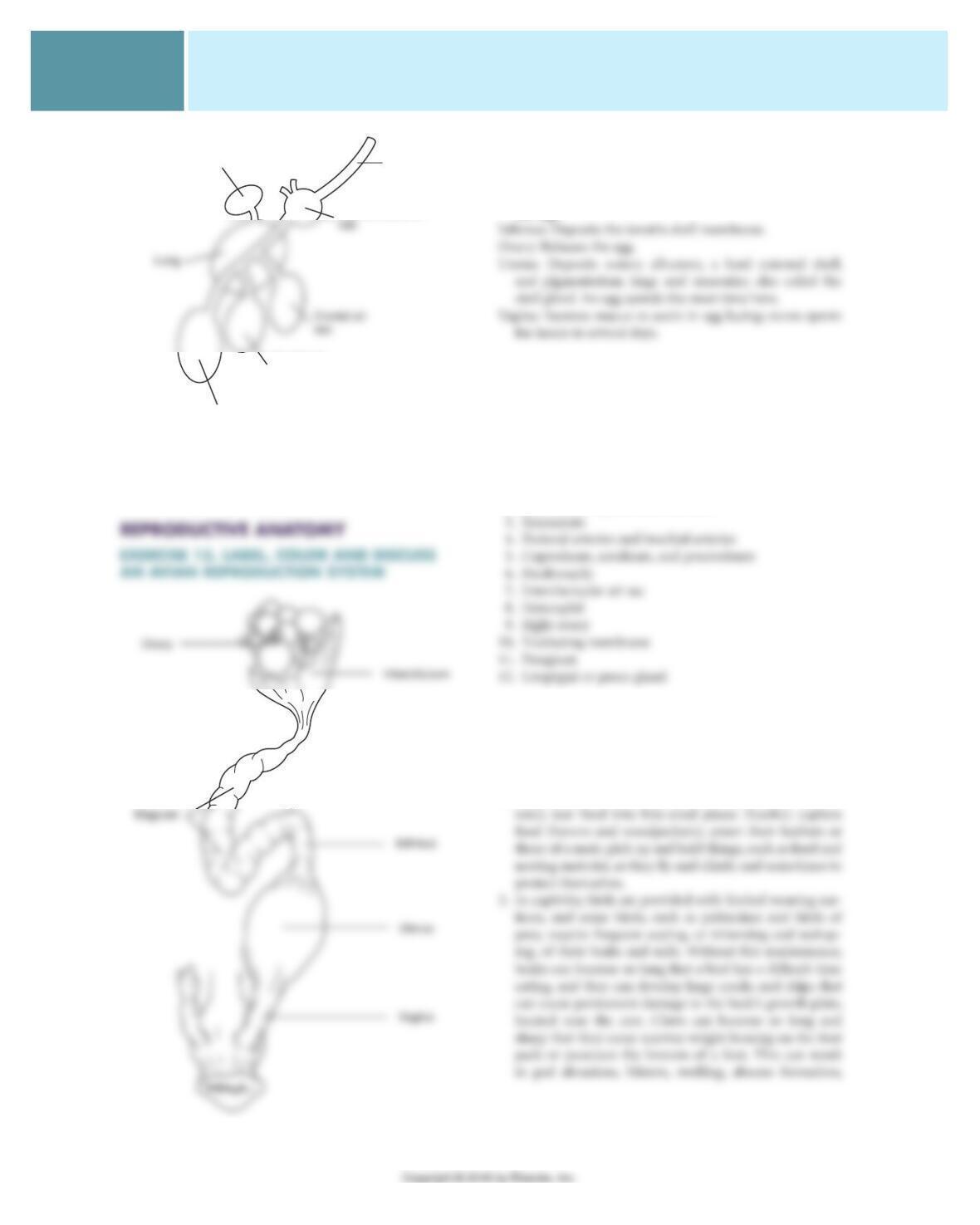
EXERCISE 14. LABEL, COLOR, AND DESCRIBE
AN AVIAN RESPIRATORY SYSTEM
1. The syrinx is essentially the voice box of birds and
contains muscles, air sacs, and vibrating membranes. To
create sound, air from the lungs and air sacs is forced over
CHAPTER 18 Avian Anatomy
478.e6
3. a. Act as a reservoir for air
b. Aid in thermoregulation
c. Aid in buoyancy for water birds
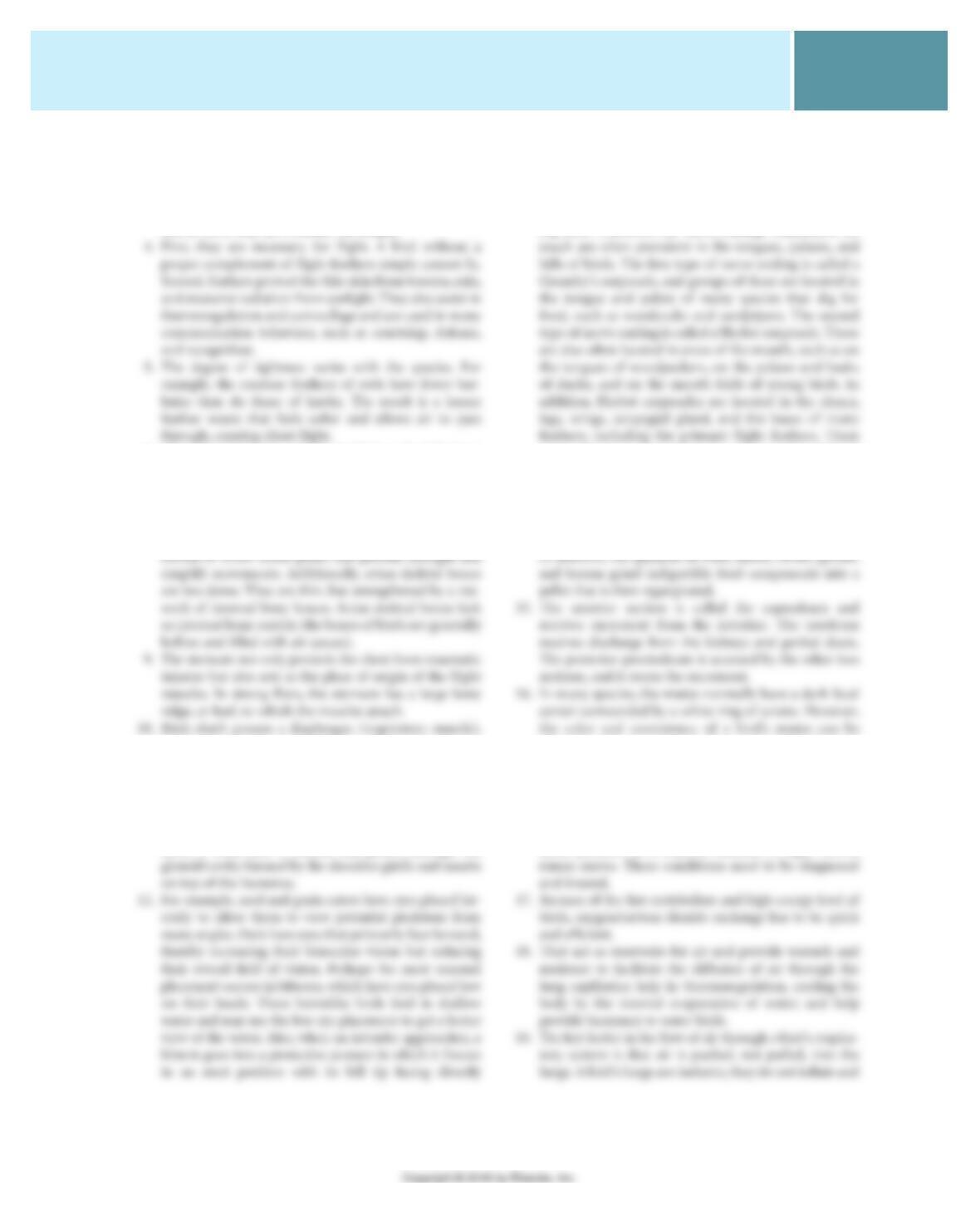
EXERCISE 16. DESCRIBE AVIAN OVULATION
Infundibulum: Possesses folds that grab an ovum as it comes
out of the ovary.
Magnum: Secretes layers of albumen (egg white) around
the egg.
CRITICAL AND CLINICAL THINKING
EXERCISE 17. DEFINE THE TERM NECROPSY
A postmortem examination of an animal cadaver
EXERCISE 18. EXPLORE THE ANATOMIC
STRUCTURE OF THE AVIAN SPECIES
1. External, middle, and inner ear
2. Coracoids, scapulas, and clavicles
EXERCISE 19. CLINICAL THINKING CHALLENGE
1. During hot weather, depressor muscles press the feathers
against the body. This action will promote heat loss.
Feathers cover such a large portion of a bird’s body that
sweat glands would not be effective.
2. Some birds use their beaks to: crack seeds and nuts (par–
Interclavicular air
Cervical air
sac
Trachea
Caudal air
sac
Abdominal air
sac
478.e7
CHAPTER 18 Avian Anatomy
6. Often, the lighter tips of a bird’s fl ight and tail feathers
are worn off by the roughness of daily activities, giving
the feathers a more iridescent appearance.
7. Blood can be seen in the proximal part of the feather
shaft during the entire growth phase.
8. In the avian skeleton, the number of bones is reduced.
and air is pushed, not pulled, into the respiratory sys-
tem. Thus, it is important not to press down on the keel
too hard or this will prevent the passage of air.
11. The larger, more superfi cial muscle is called the pecto-
ralis; it inserts on the underside of the humerus. The
smaller, deeper fl ight muscle is called the supracoracoi-
deus; it turns into a tendon that passes through the
up. This puts its eyes in the best position to view the
intruder.
13. The skin of birds contains two types of sensory nerve
ending that respond to pain, heat, cold, and touch. For
many species, the sense of touch is important for fi nd-
ing food. Therefore the nerve endings responsible for
corpuscles are very responsive to even the slightest
feather movement.
14. Grain eaters, such as turkeys, have the thickest gizzard
walls and can pulverize hard objects, such as steel nee-
dles and walnuts. The gizzard walls in carnivores are
relatively thin, and those in omnivores are quite variable.
altered by diet, parasites, or disease, and any change in
an individual bird’s normal excreta should be investi-
gated to discover the cause. Birds suffering from the
actions of some intestinal parasites, such as coccidia,
often have a tinge of green in their output, and some-
times blood. An infection with clostridial bacteria
often presents as a copious amount of light brown
and, in severe cases, degeneration of the bones in the feet
(osteomyelitis). The term often used to describe these
conditions of the avian foot is bumblefoot. Coping
beaks and claws must be done with care, because both of
these structures contain blood vessels and nerves that
can be hit if they are trimmed too deeply.
CHAPTER 18 Avian Anatomy
478.e8
defl ate as in mammals. Fresh air fl ows in a continuous,
unidirectional path in the lungs and does not get mixed
with dirty air containing waste products.
20. Uric acid is more effi cient in eliminating nitrogen; each
waste products must be stored in the egg throughout the
embryo’s development. Because urea requires a relatively
large volume of water for excretion, the egg would not have
enough room to house it. Also, high quantities of urea are