62
Solutions to Problems in
Chapter 14: Classification of Particles and Interactions
14.1. The + decay
e
p n e
+
→ + +
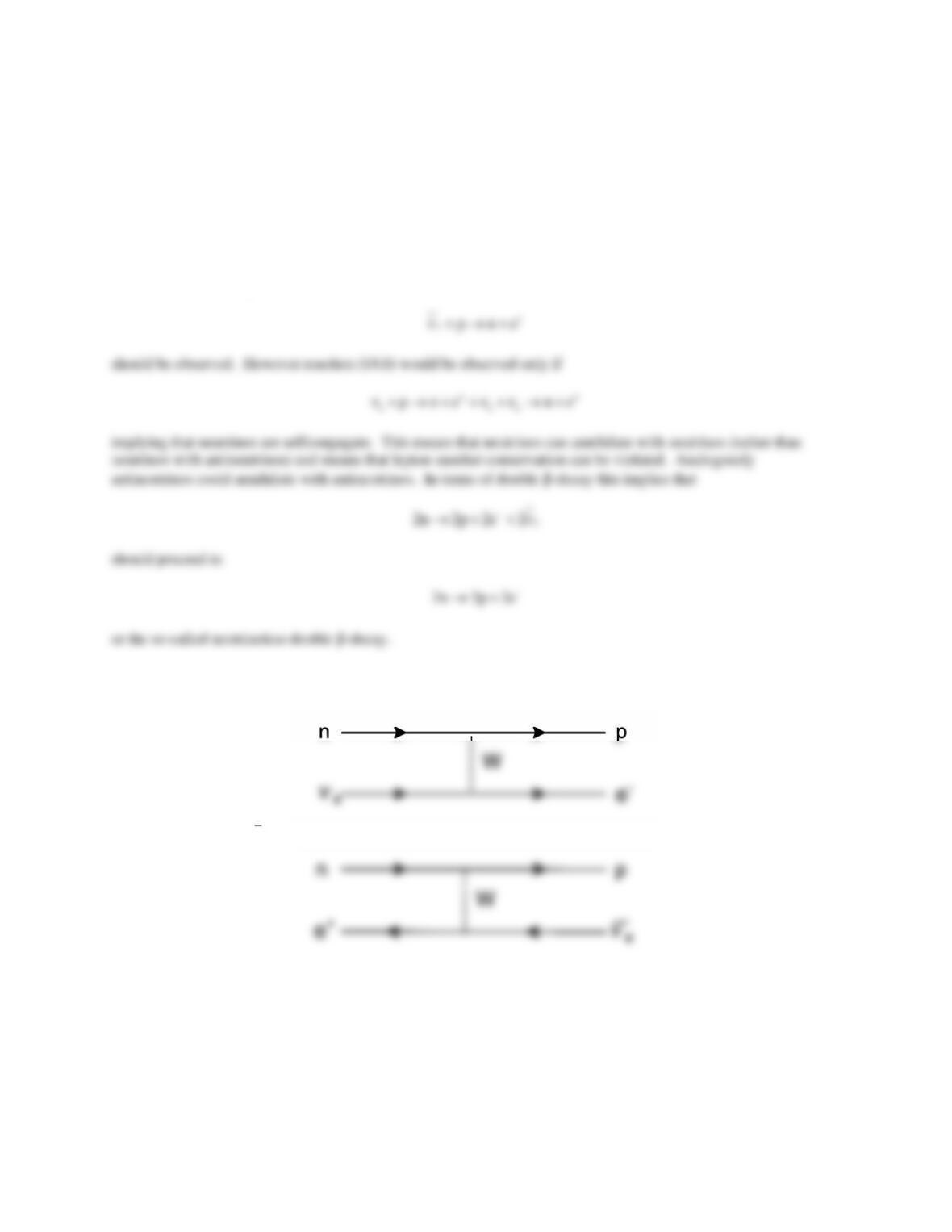
would imply, assuming conservation of lepton number, that the reaction
14.2. (a)
−
+→+ epnνe
(b)
e
νpne +→+
+
63
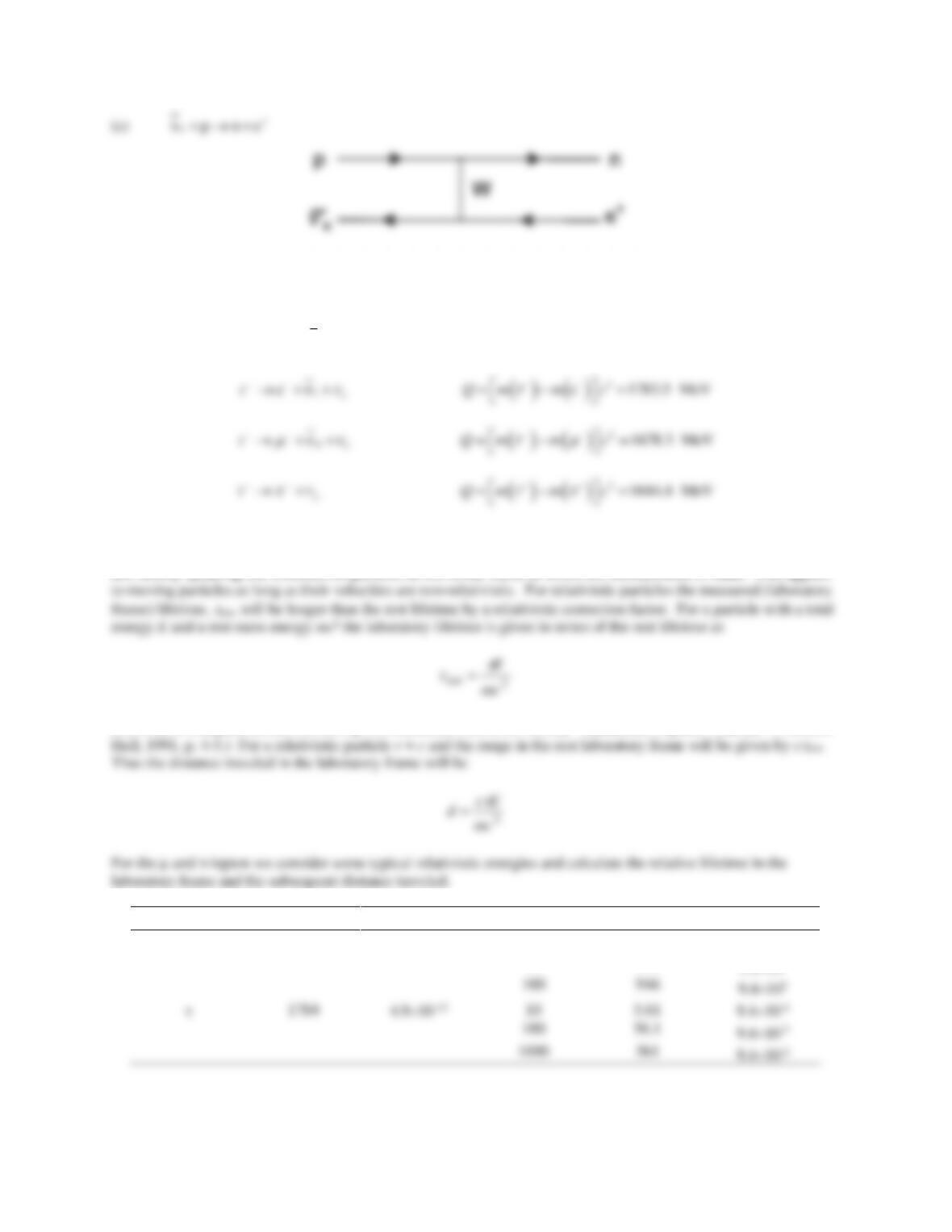
14.3. For the one muon and three -lepton decays we find (using the tabulated masses):
e
e
−−
→ + +
( ) ( )
2
e 105.2 MeVQ m m c
−−
= − =
14.4. The lifetime of a particle,
, is the lifetime in its own reference frame. Thus the lifetimes given for particles
are, strictly speaking, the lifetimes for particles at rest in the frame in which the measurement is made. This applies
(For a more complete discussion see e.g. H. Fraunfelder and E.M. Henley “Subatomic Physics – 2nd ed.”, Prentice-
particle
mc2 (MeV)
(s)
E (GeV)
lab/
d (m)
105.7
3.310-6
1
9.46
9.4103
10
94.6
9.4104
9.4105
9.410-4
9.410-3
9.410-2
64
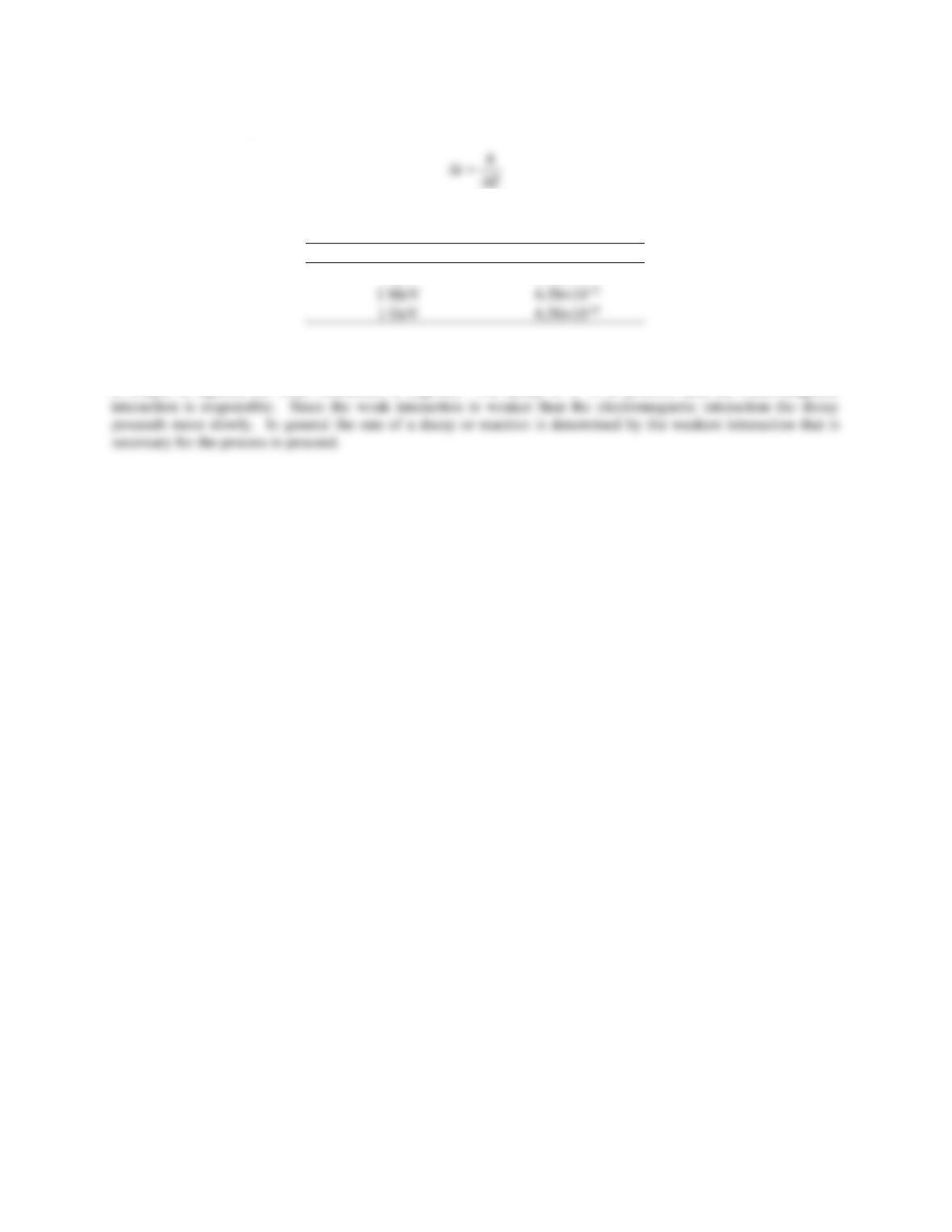
14.5. From Heisenberg’s uncertainty relation
using
= 6.58×10⁻¹⁶ eV·s we find the following:
E
t (s)
1 keV
6.58×10⁻¹⁹
6.58×10⁻²²
6.58×10⁻²⁵
14.6. The decays of + and – produce byproducts that are lepton-antilepton pairs. In order for a hadron (the pions)
to couple to leptons, the weak interaction is required. The decay of ° is to photons thus the electromagnetic