54
Solutions to Problems in
Chapter 12: Fission Reactions
12.1. The excess energy available when a neutron is absorbed by 238U to create 239U is
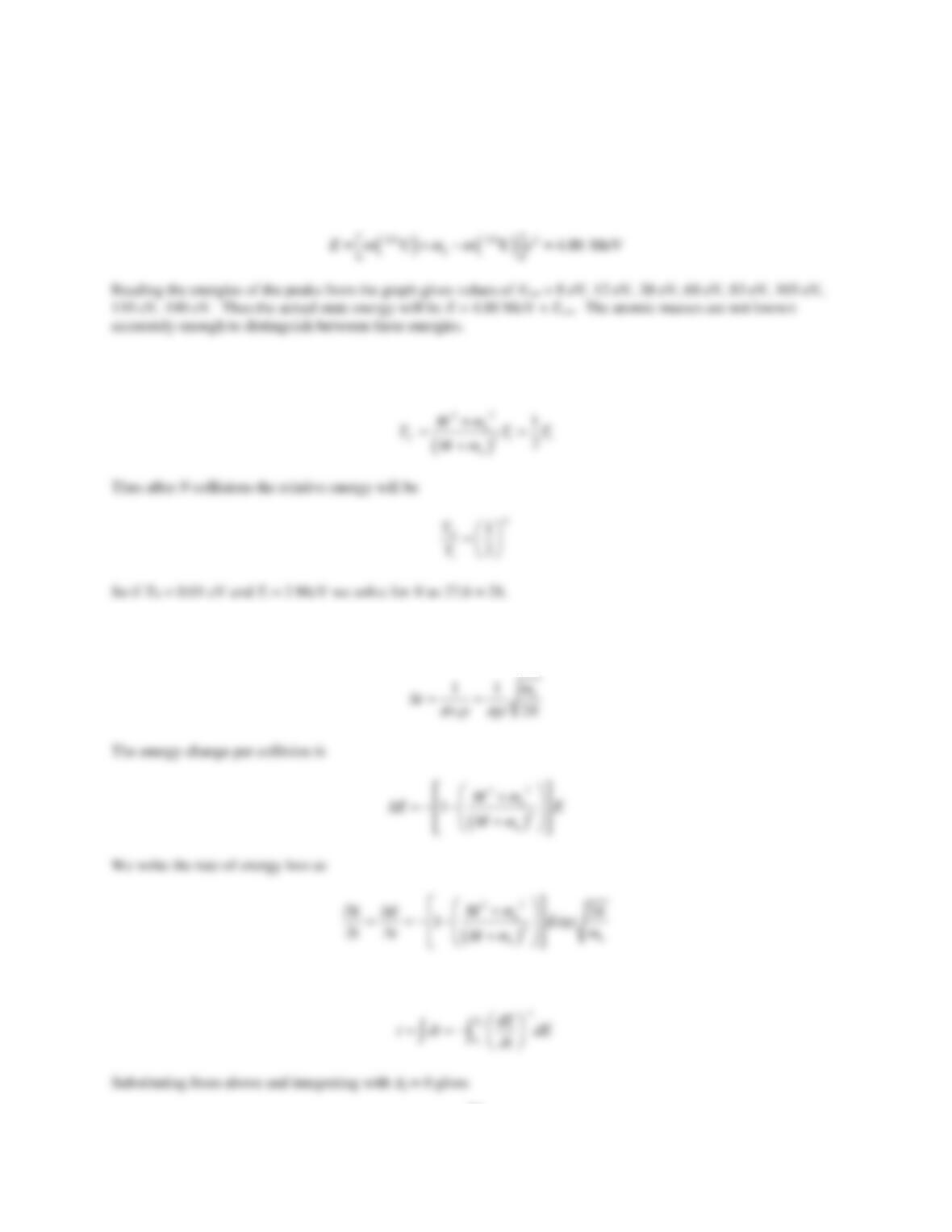
12.2. (a) In this case mn 1 u and M 1 for the 1H nucleus then
(b) For a particle of cross section
and velocity v the volume swept out per unit time is v. In a medium of density
the mean time between collisions is
Integrating from Ei to Ef gives the time as
55
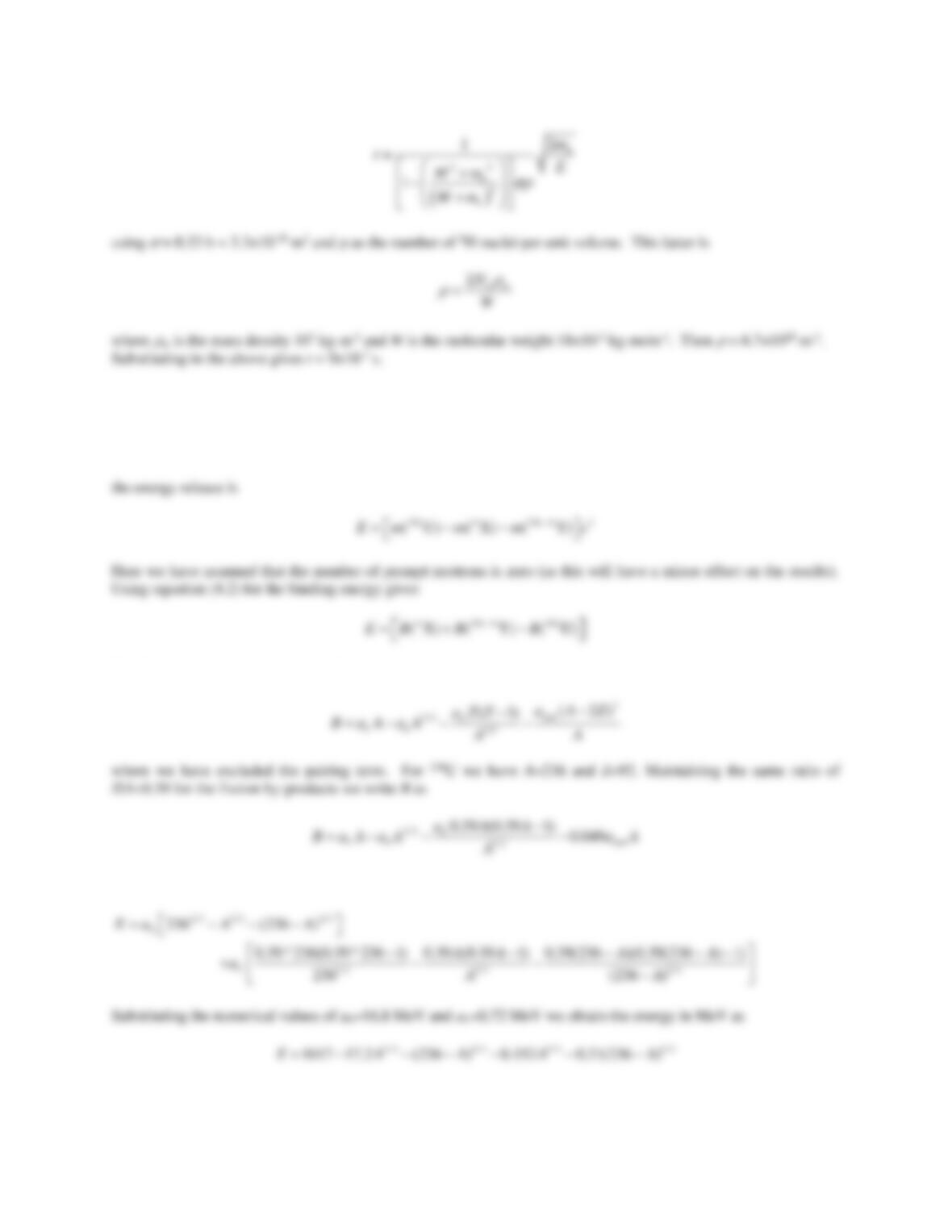
12.3. For the fusion process
236 236
U X Y
AA−
→+
The liquid drop model gives the binding energy from equation (4.10) as
From the equation for E we can write
56
where we have assumed A>>1.
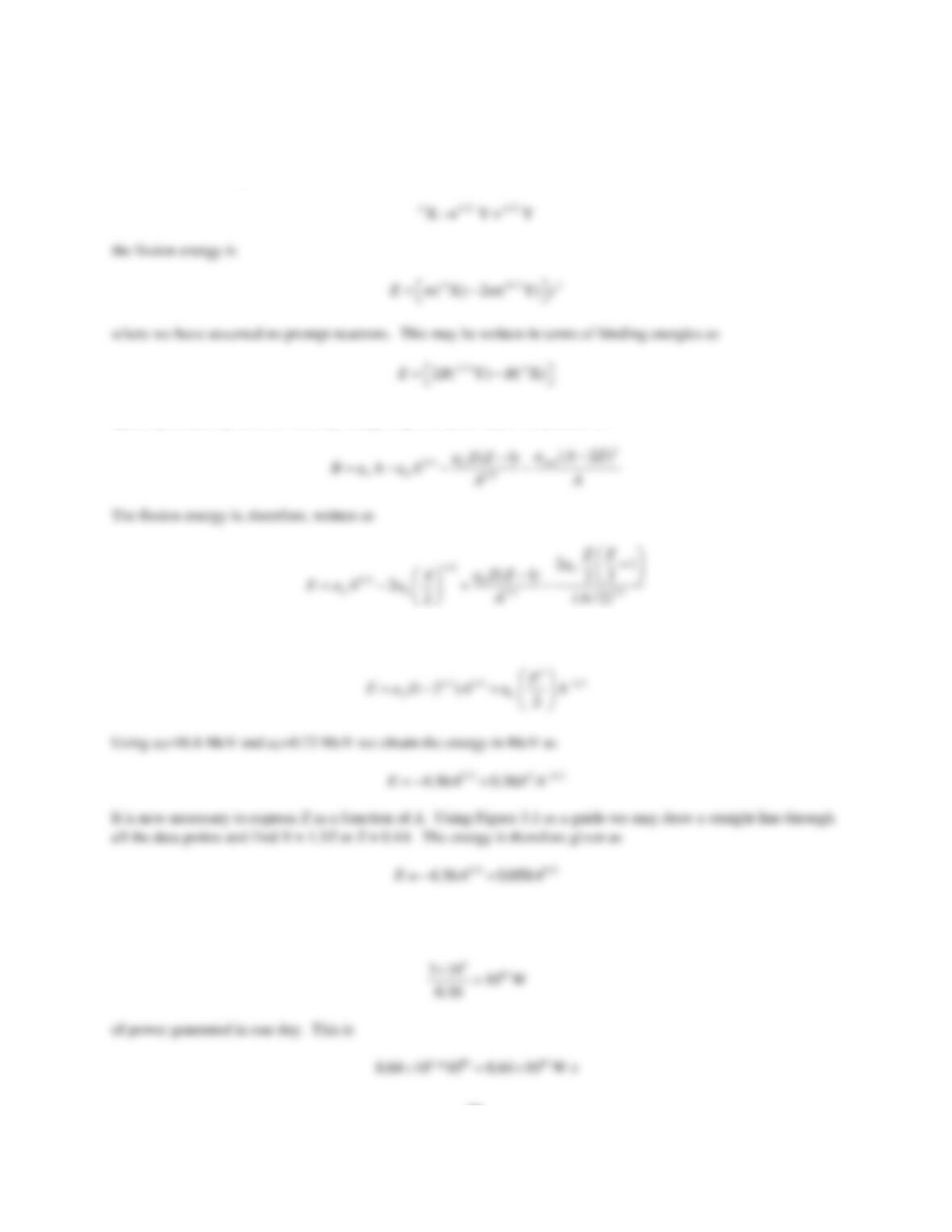
12.4. For the fission process
Ignoring the paring term the binding energy is given by the liquid drop model as
Combining terms in powers of A gives
12.5. Accounting for the generator efficiency we require
57
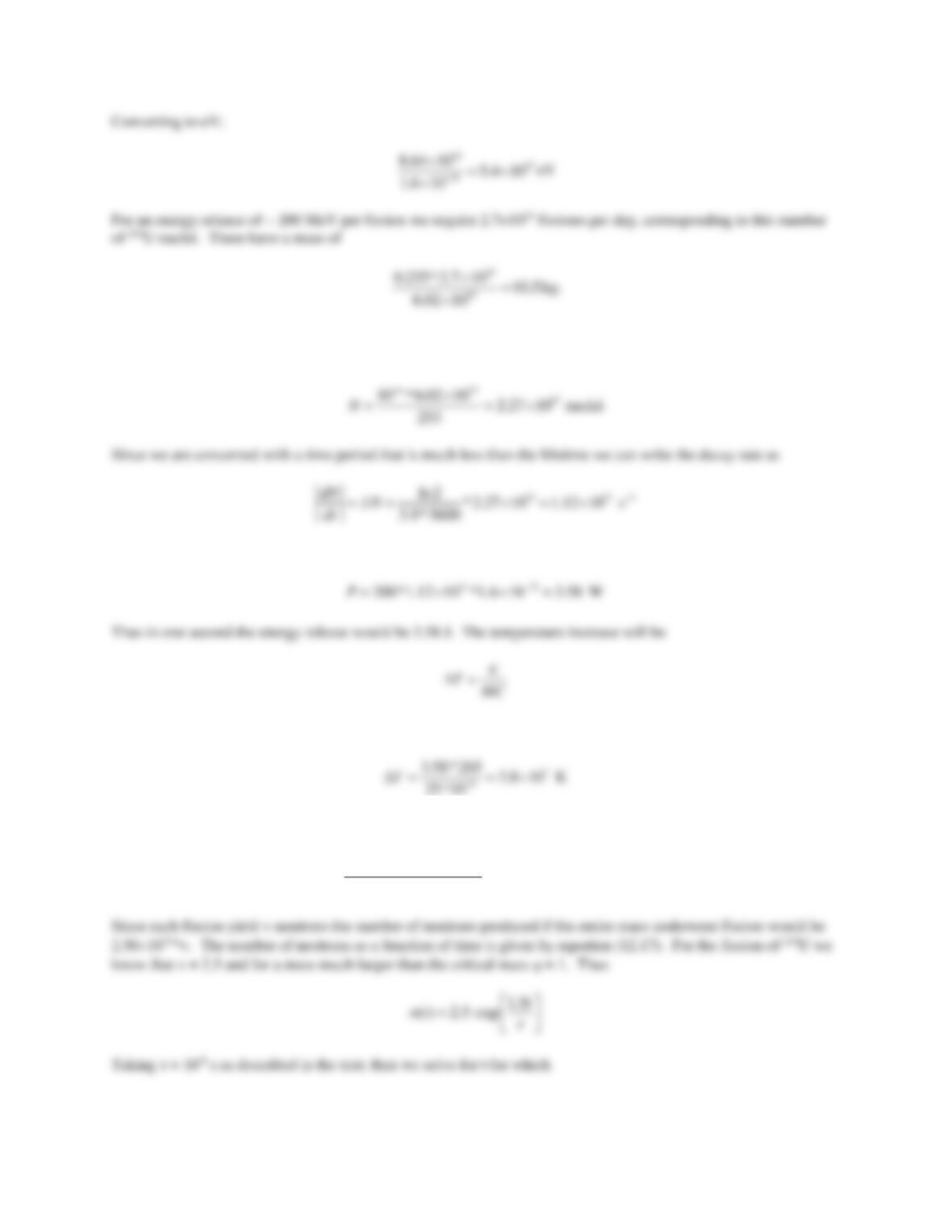
12.6. The number of 265Fm nuclei present in a 1 g sample is
Assuming an energy release of 200 MeV per fission the energy release per unit time is
where M is the number of moles and C is the molar specific heat. Substituting appropriate values gives
12.7. The sample will contain
3 23 27
1000*10 *6.02 10 2.56 10 nuclei
235
=
58
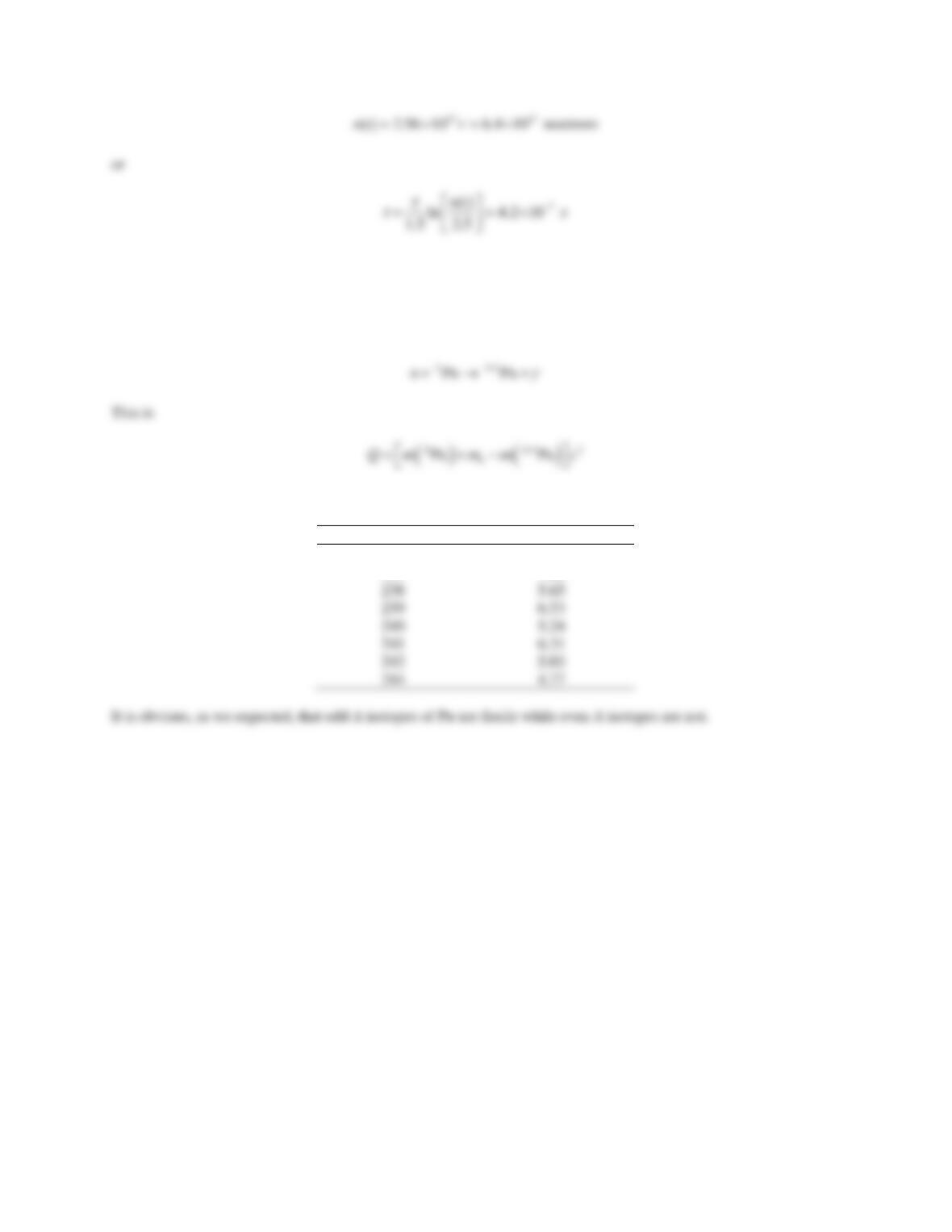
12.8. The possible nuclides are 236Pu, 237Pu, 238Pu, 239Pu, 240Pu, 241Pu, 242Pu and 244Pu. Those that are fissile have Q
for a thermal neutron absorption reaction that is greater than the fission Coulomb barrier. For A = 235 this is 6.2
MeV so we will use this as a guide and calculate Q for the reaction.
Results are tabulated below.
A
Q (MeV)
236
5.88
237
7.00
238
5.65
239
6.53
240
5.24
241
6.31
242
5.03
244
4.77