A. Questions for Review | 87
NAME:
A. QUESTIONS FOR REVIEW
1. What is species counterpoint? What is first species? What is second species? What
is fourth species?
2. In first species, what harmonic intervals are allowed between the two voices? What
harmonic intervals are forbidden?
3. In second species, where can dissonances appear? How must they be approached
and left?
chapter
8Species Counterpoint
88 | CHAPTER 8 | Species Counterpoint
B. FIRST SPECIES
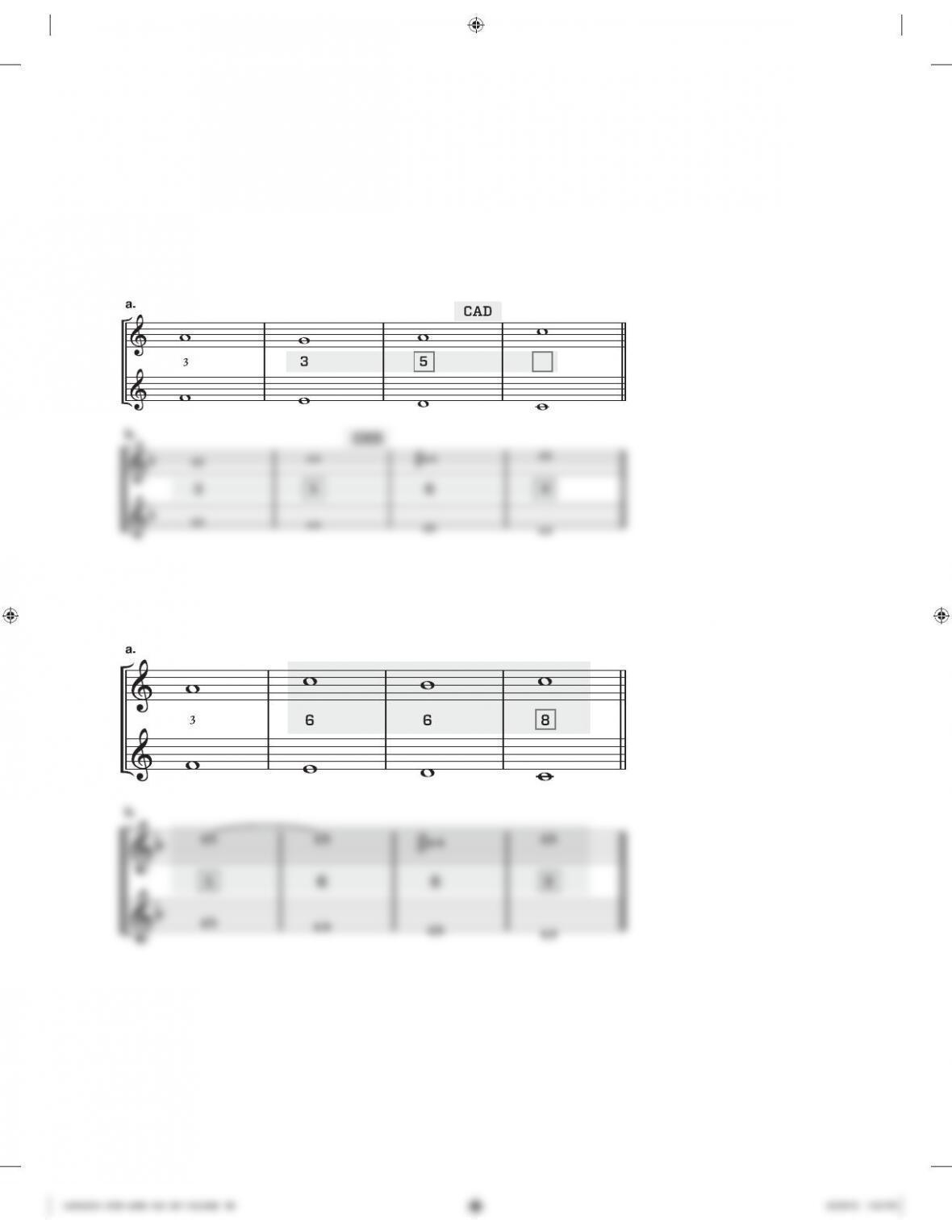
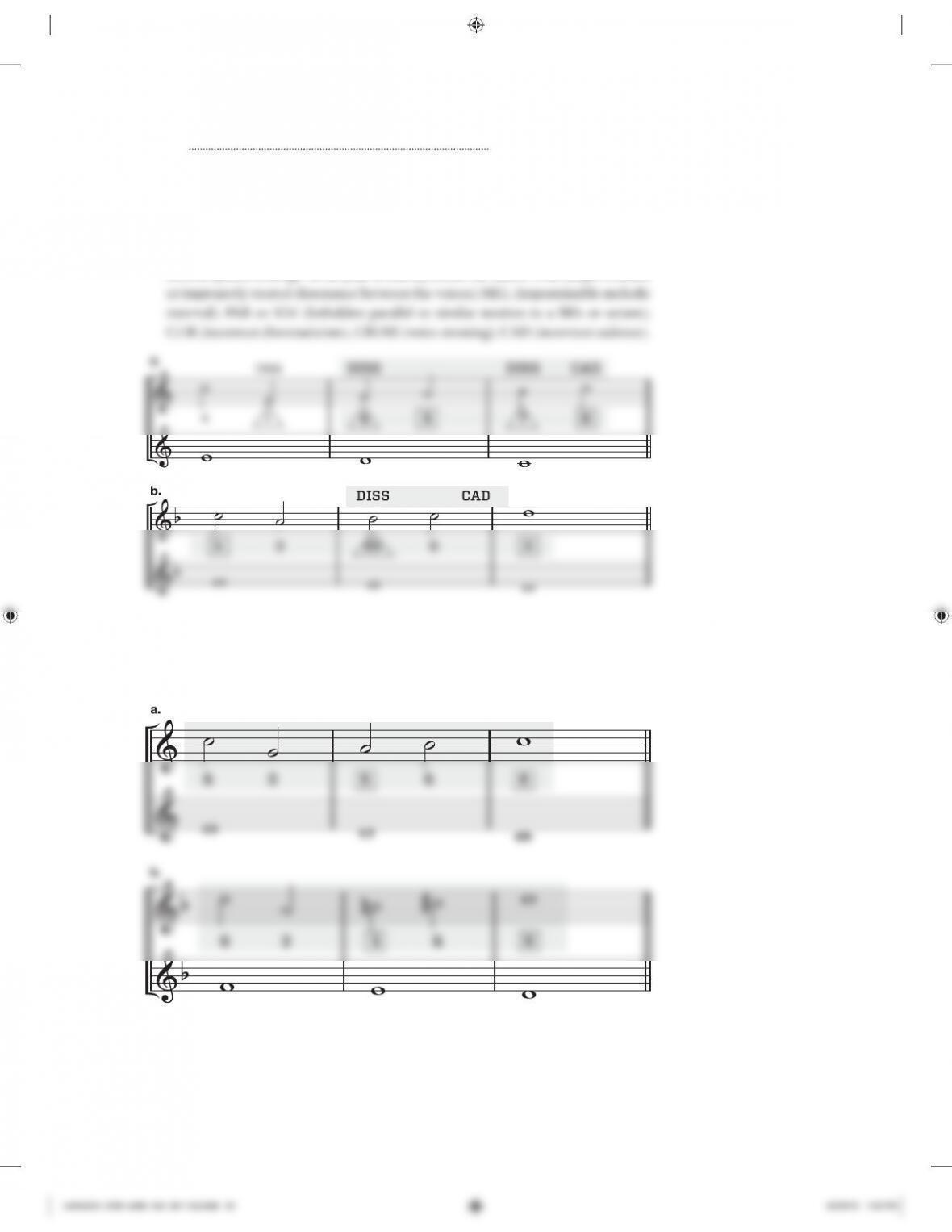
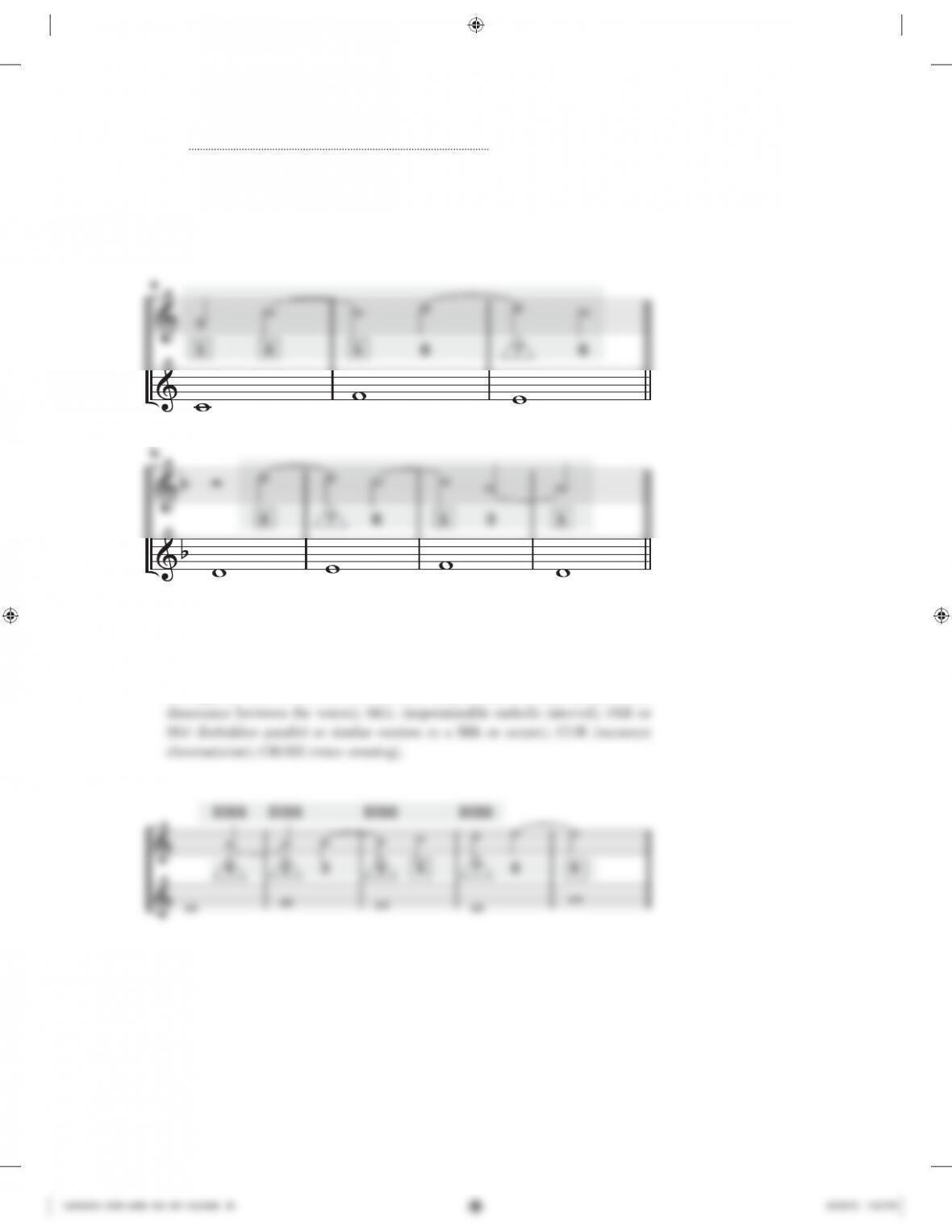
1. Ending: Labeling intervals and voice leading. Label the intervals between the staves
(perfect intervals go in boxes, dissonances in triangles). Find the voice-leading
errors. Write your answer(s) above the staves using the following abbreviations:
DISS (impermissible or improperly treated dissonance between the voices); MEL
(impermissible melodic interval); PAR or SIM (forbidden parallel or similar motion
to a fifth or octave); CHR (impermissible chromaticism); CAD (incorrect cadence).
8
2. Ending: Completing the counterpoint. Below are the last four notes of two cantus
firmi. For each, write the ending of a first-species counterpoint on the upper sta.
Label the intervals between the staves (perfect intervals go in boxes, dissonances
in triangles).
B. First Species | 89
NAME:
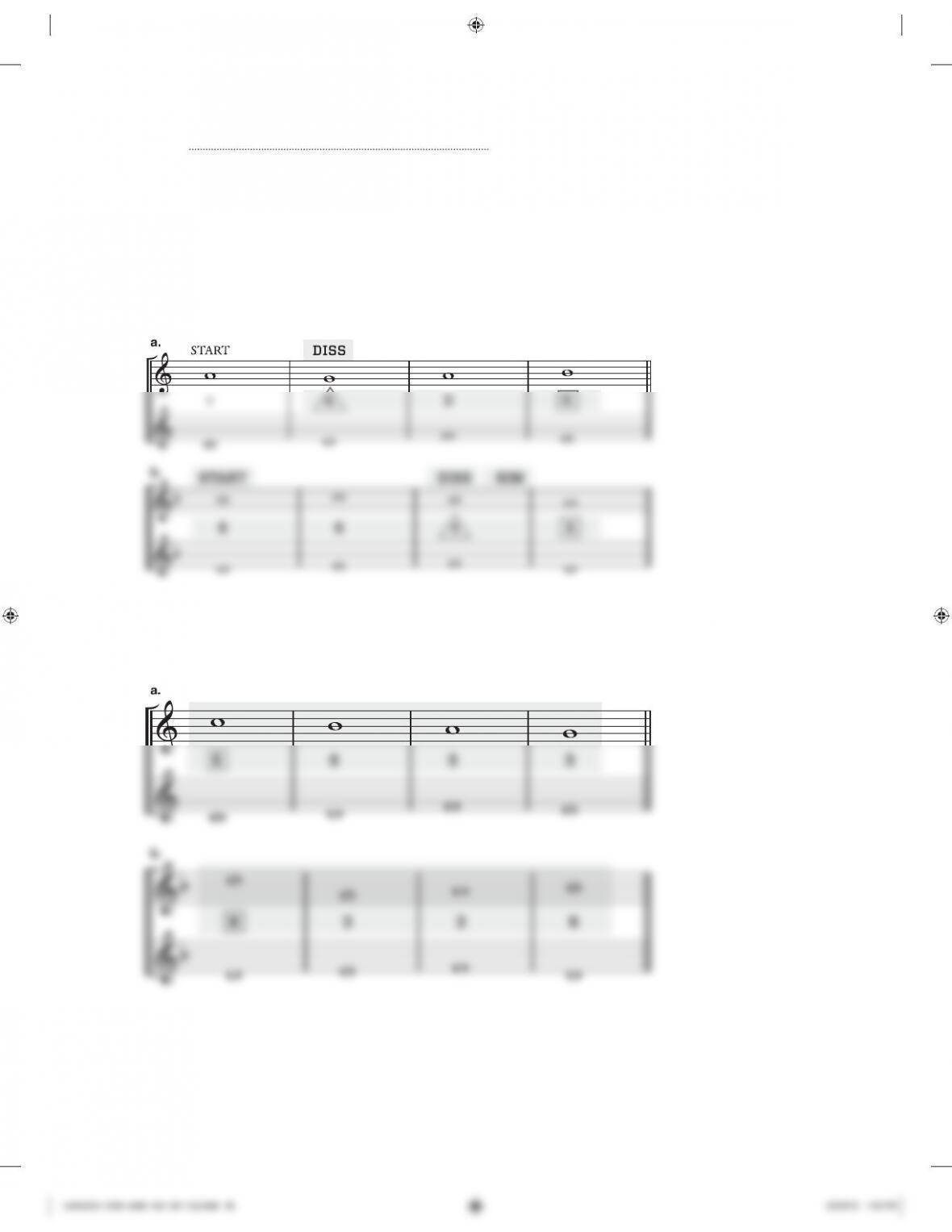
3. Beginning: Labeling the intervals and voice leading. Label the intervals between the
staves (perfect intervals go in boxes, dissonances in triangles). Find the errors
in these first-species beginnings. Write your answer(s) above the staves: DISS
( impermissible or improperly treated dissonance between the voices); MEL
( impermissible melodic interval); PAR or SIM (forbidden parallel or similar motion
to a fifth or octave); CHR (incorrect chromaticism); CROSS (voice crossing);
START (wrong way to begin).
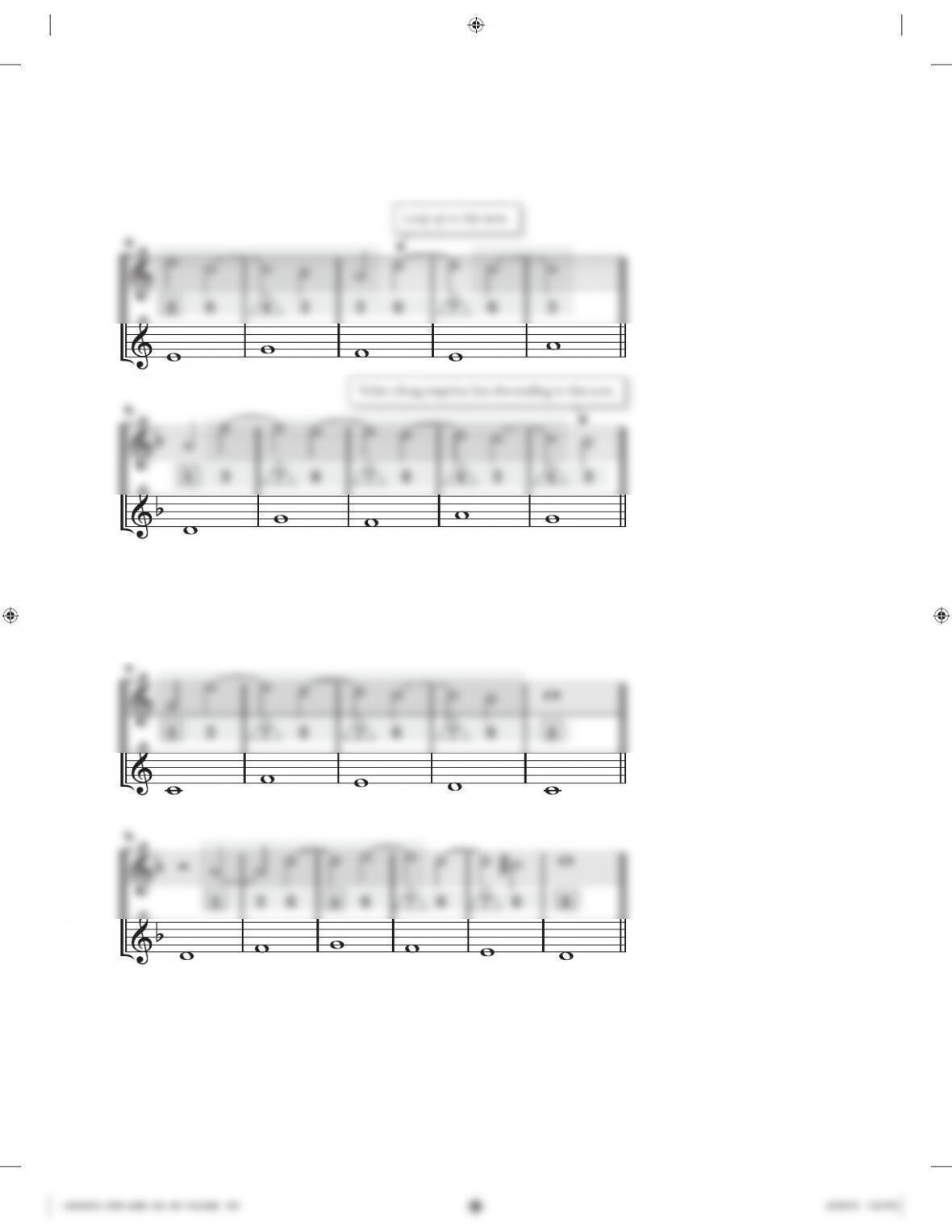
4. Beginning: Completing the counterpoint. Below are the first four notes of two cantus
firmi. Write the beginning of a first-species counterpoint above each. Label the
intervals between the staves.
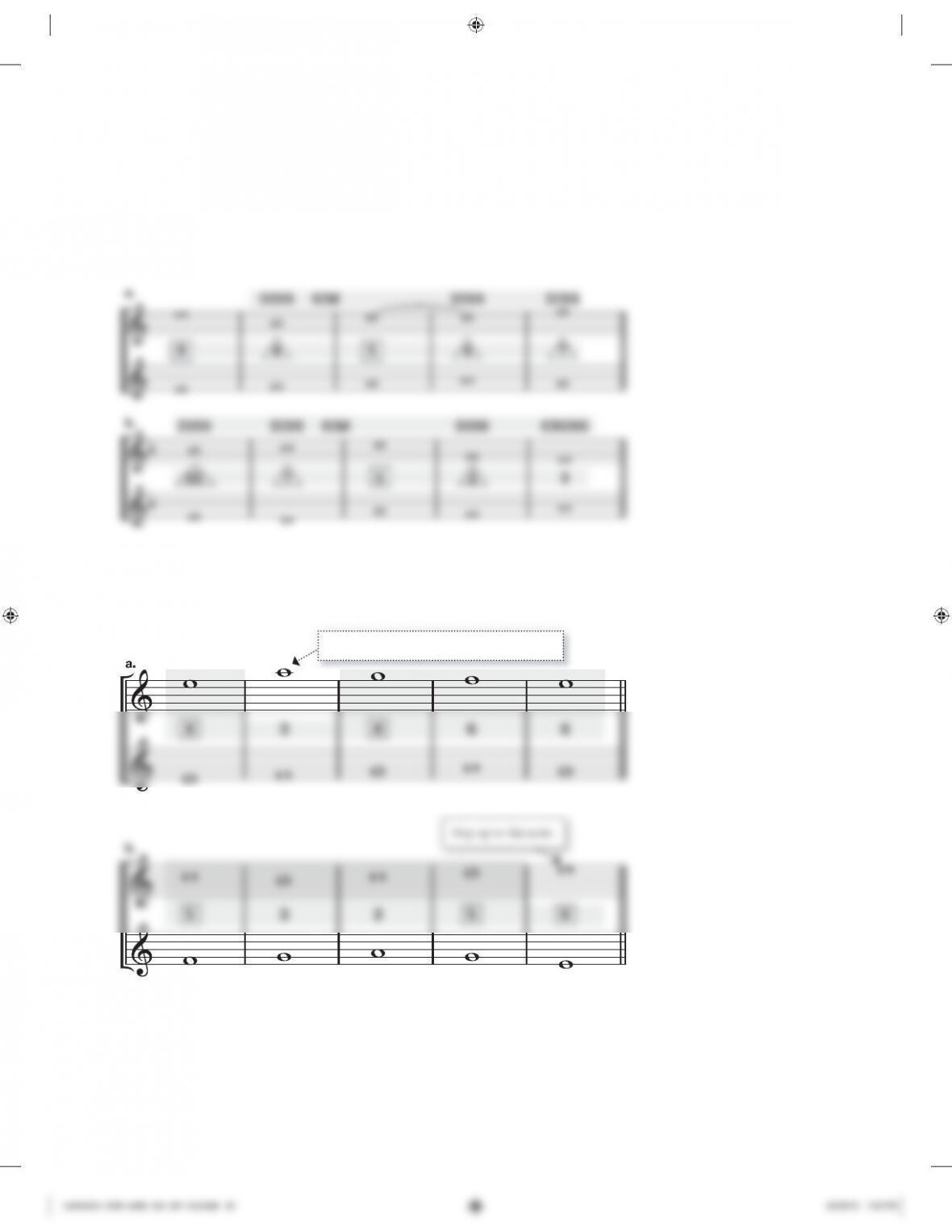
5. Middle: Labeling the intervals and voice leading. The examples below represent a
middle portion: not including the beginning or the ending. Label the intervals
between the staves. Then find the errors. Write your answer(s) above the staves:
DISS (impermissible or improperly treated dissonance between the voices); MEL
(impermissible melodic interval); PAR or SIM (forbidden parallel or similar motion
to a fifth or octave); CHR (incorrect chromaticism); CROSS (voice crossing);
START (wrong way to begin); CAD (incorrect cadence).
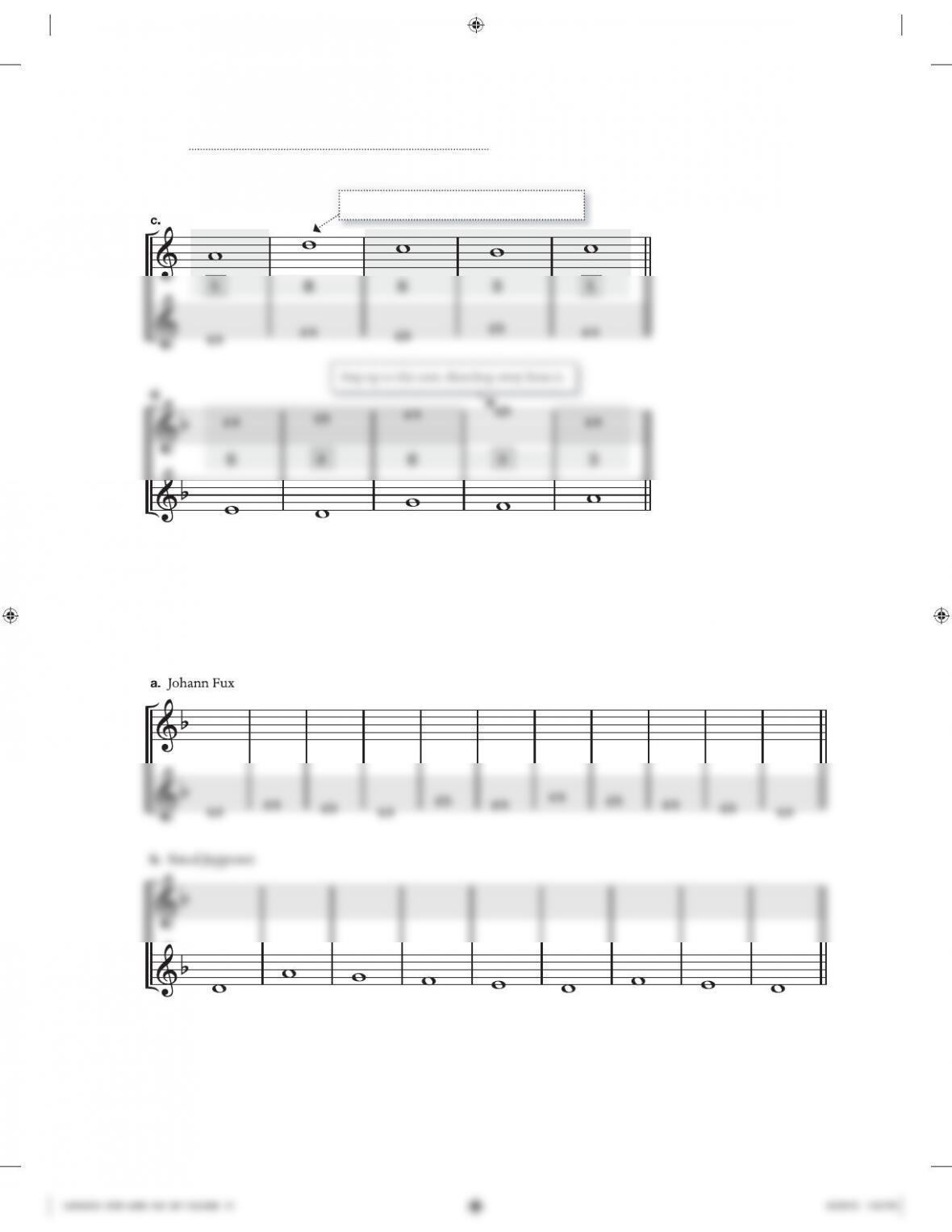
6. Middle: Completing the counterpoint. Below are five notes from the middle of four
cantus firmi. Write first-species counterpoint for each, following any instructions
written above the sta. Label the intervals between the staves.
Leap up to this note, then step away from it.
B. First Species |91
NAME:
Leap up to this note, then step away from it.
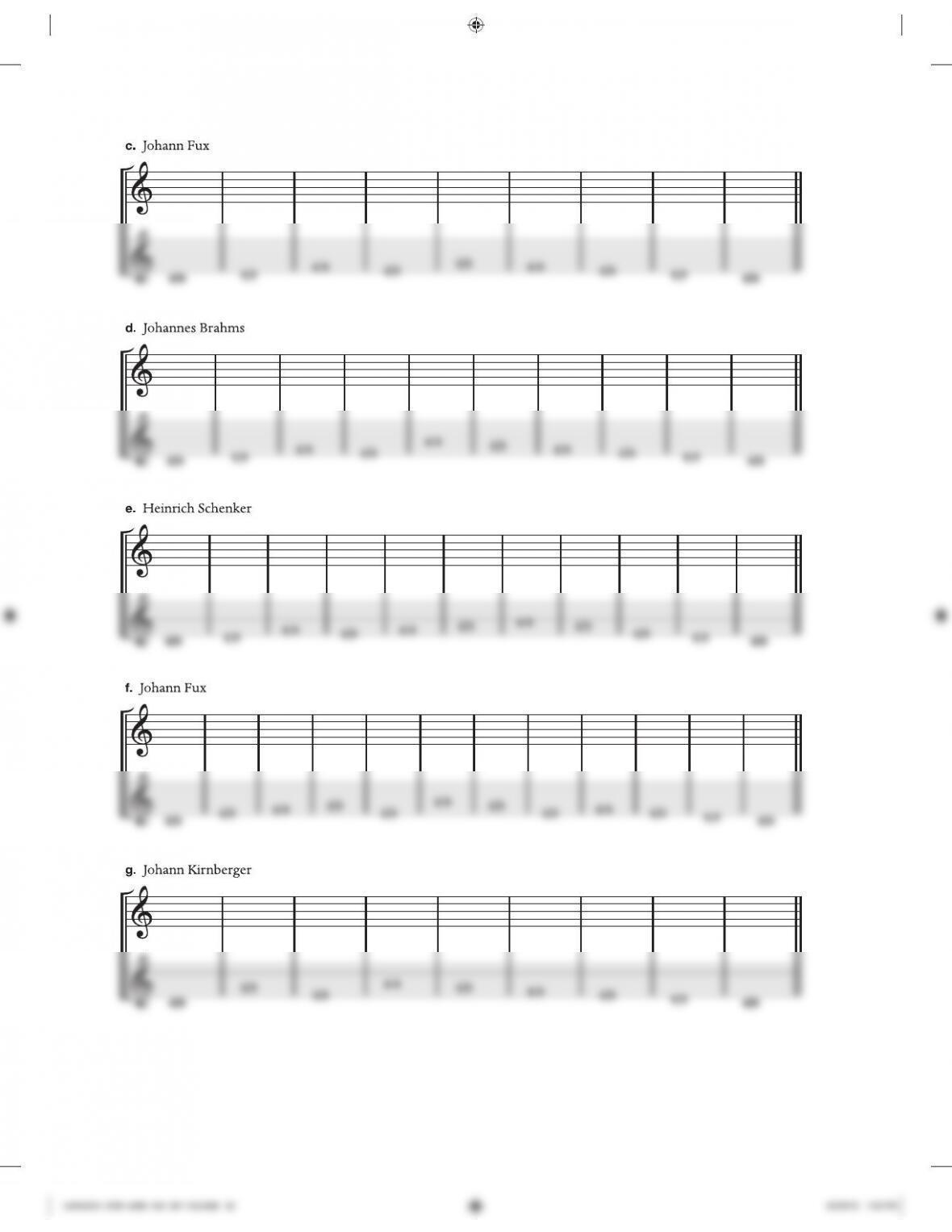
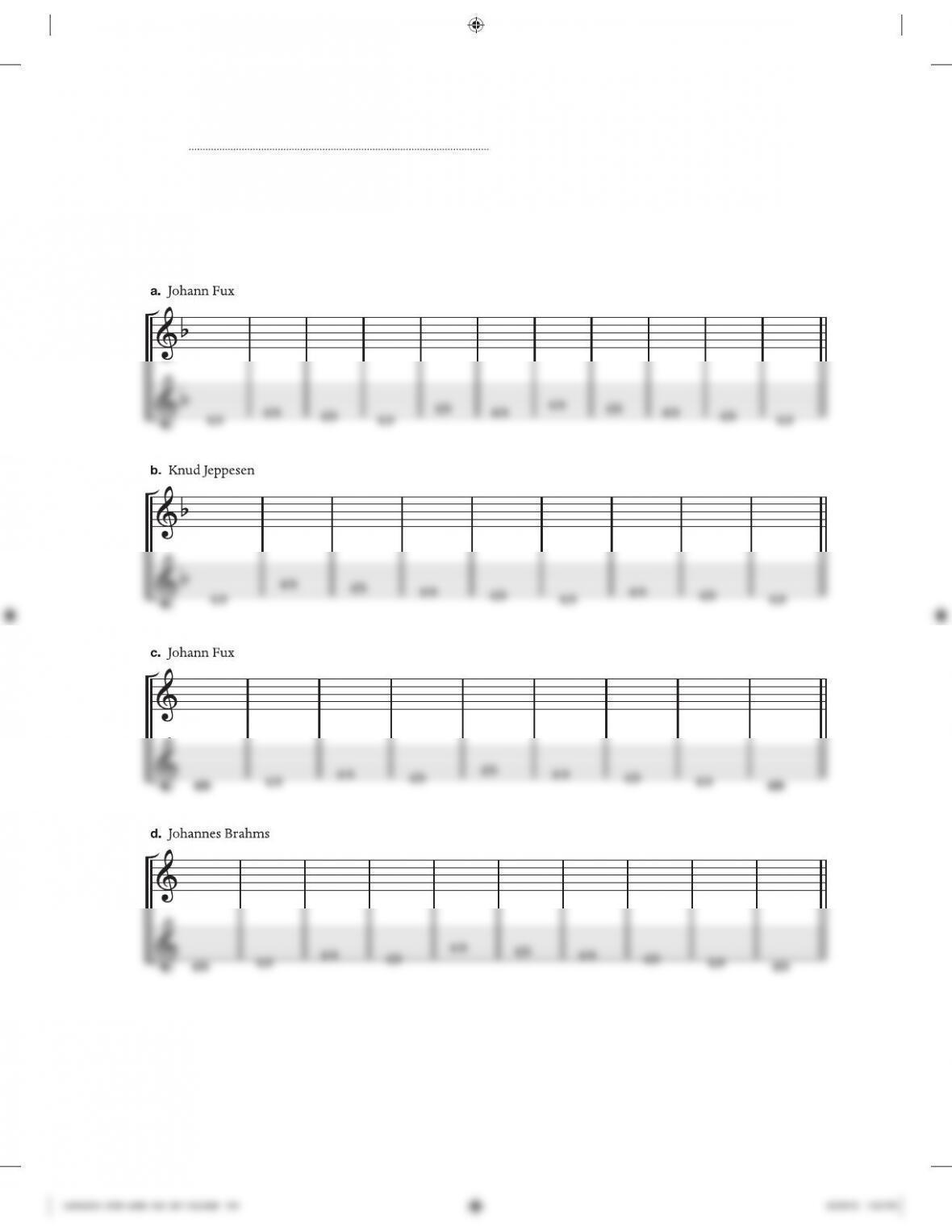
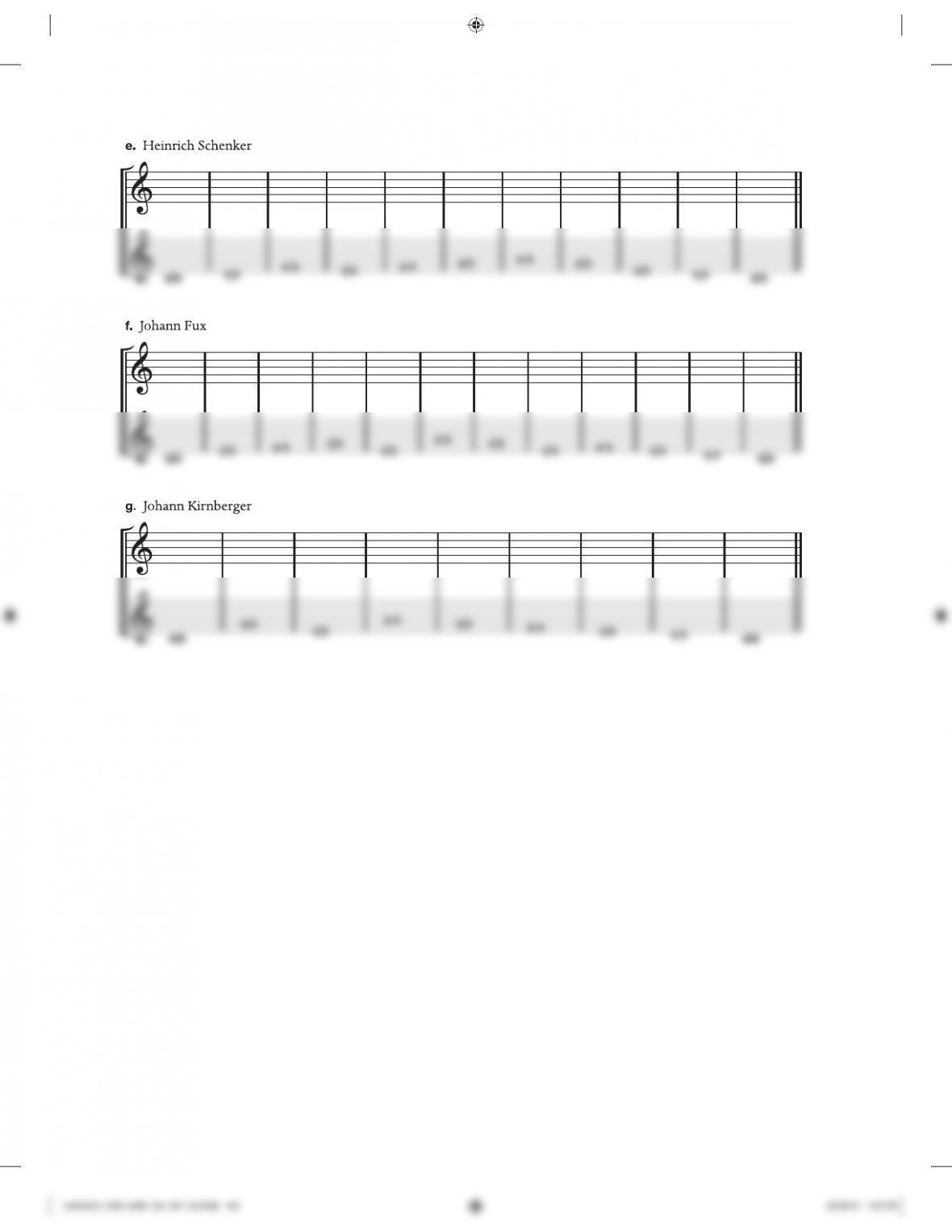
7. First species, full counterpoint. Write a complete first-species counterpoint above
each cantus firmus. Label the intervals between the staves (perfect intervals go
in boxes, dissonances in triangles). These cantus firmi were composed by impor-
tant figures in the history of counterpoint. Strategies for composing counterpoint
appear in A Closer Look in the ebook.
92 | CHAPTER 8 | Species Counterpoint
C. Second Species | 93
NAME:
C. SECOND SPECIES
1. Ending: Labeling intervals and voice leading. Label the intervals between the staves
(perfect intervals in boxes; dissonances in triangles). Then find the errors in these
second-species endings. Write your answer(s) above the staves: DISS (impermissible
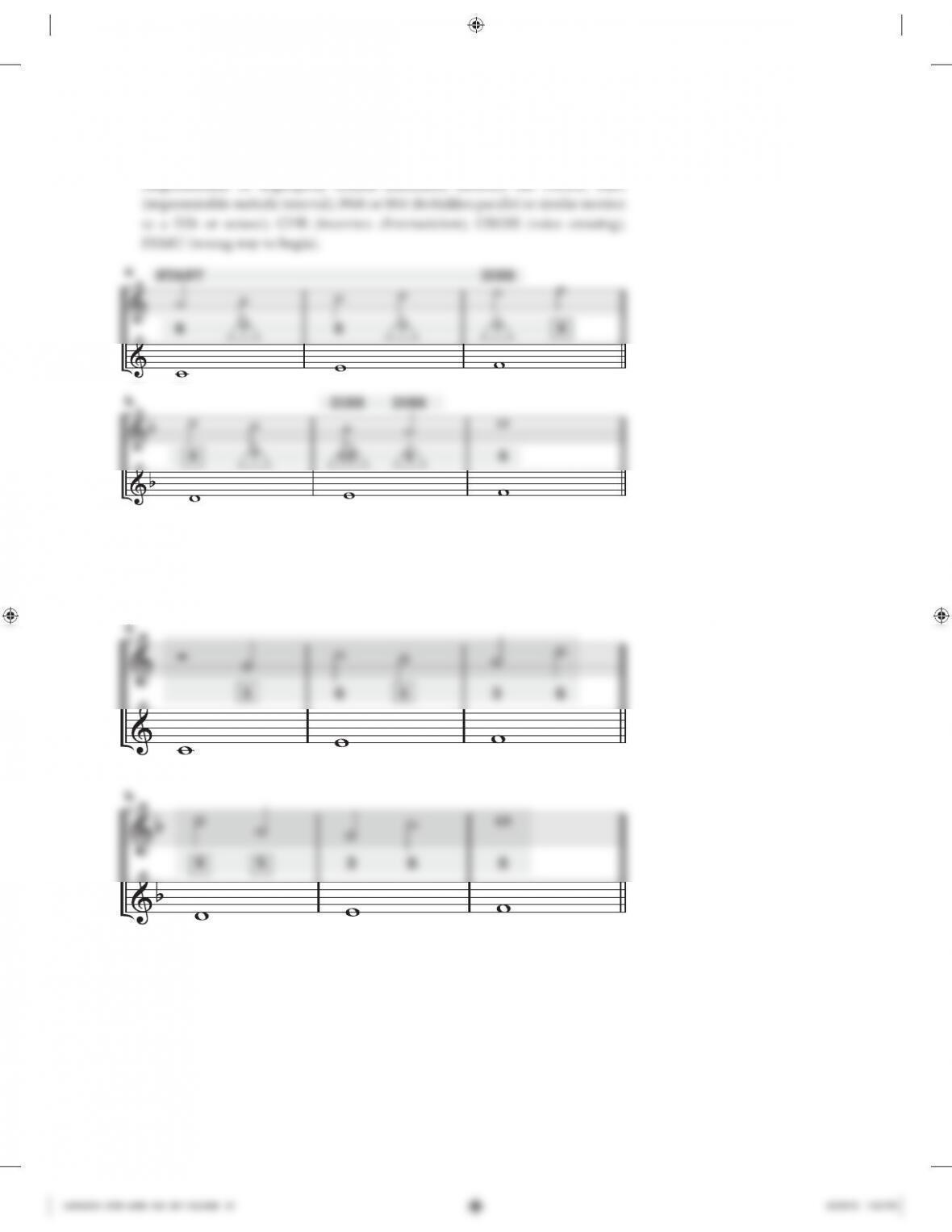
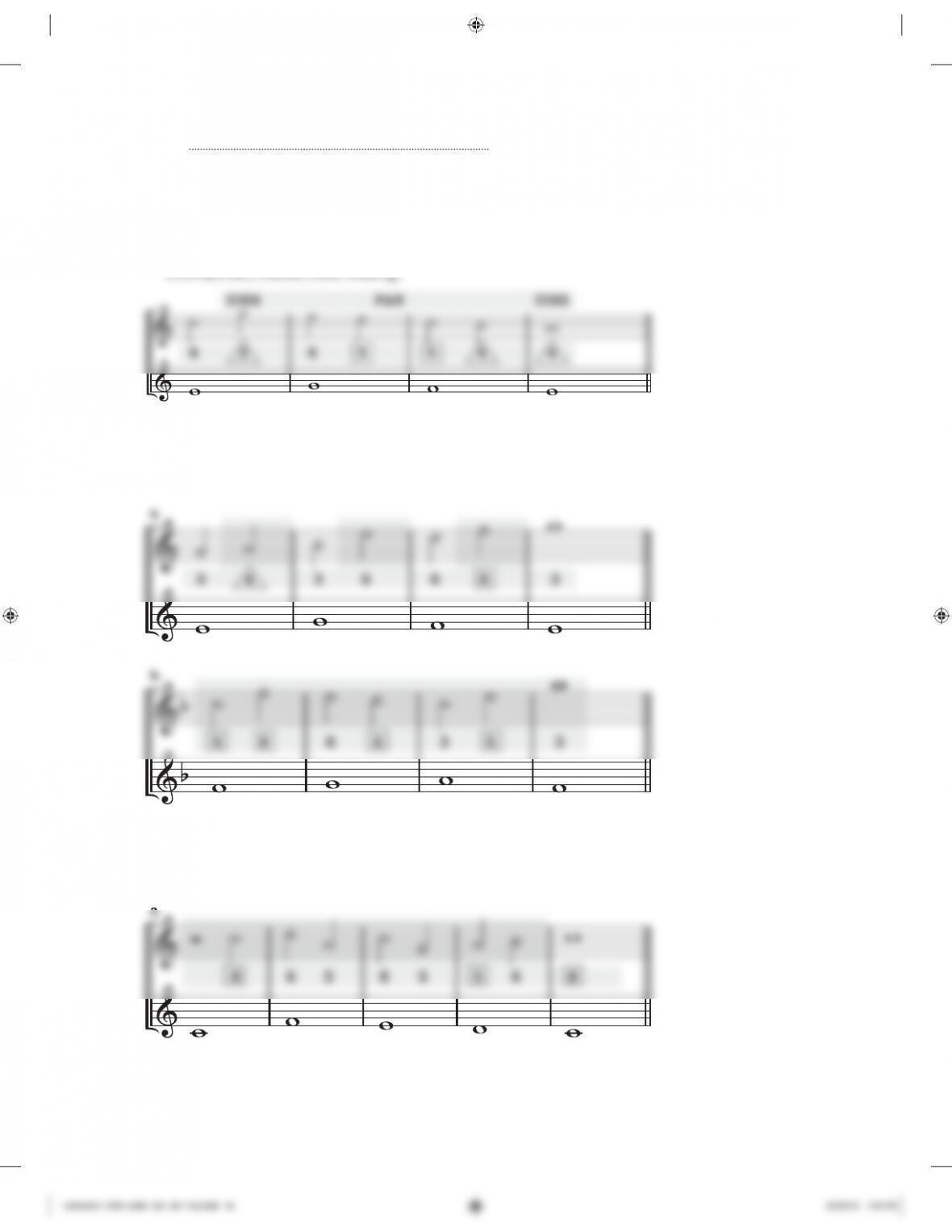
2. Ending: Completing the counterpoint. Below are the last three notes of two cantus
firmi. Write the end of a second-species counterpoint above each. Label the
intervals between the staves.
94 | CHAPTER 8 | Species Counterpoint
3. Beginning: Labeling intervals and voice leading. Label the intervals between the
staves of these second-species beginnings. Then find and label the errors: DISS
4. Beginning: Completing the counterpoint. Below are the first three notes of two cantus
firmi. Write the beginning of a second-species counterpoint above each. Label the
intervals between the staves.
C. Second Species | 95
NAME:
5. Middle: Labeling intervals and voice leading. Label the intervals between the staves.
Then find and label the errors: DISS (impermissible or improperly treated
dissonance between the voices); MEL (impermissible melodic interval); PAR or
SIM (forbidden parallel or similar motion to a fifth or octave); CHR (incorrect
chromaticism); CROSS (voice crossing).
6. Middle: Completing the counterpoint. Below are four notes from the middle of two
cantus firmi. Some notes are provided in the upper voice; fill in the rest using
second-species counterpoint. Label the intervals between the staves.
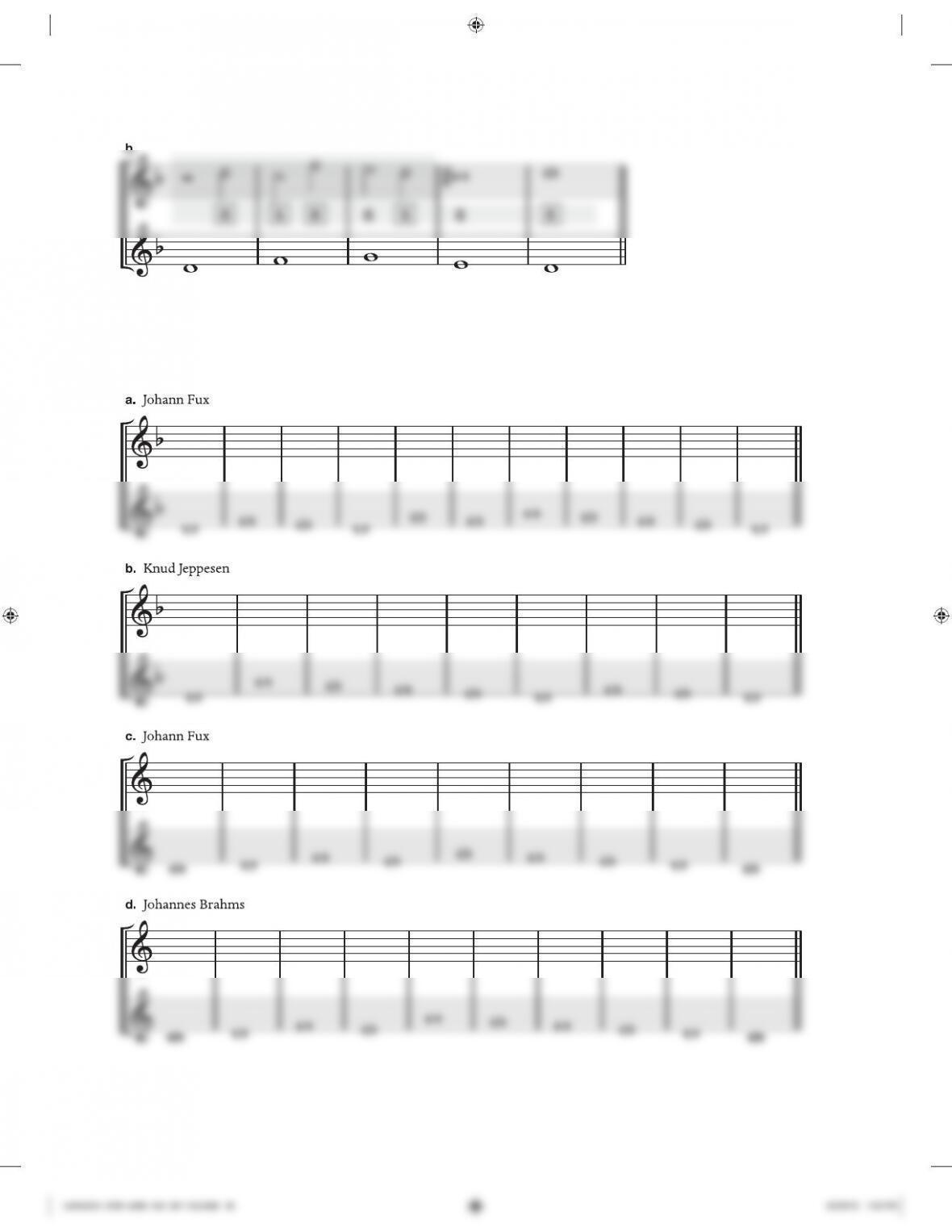
7. Second species, short full counterpoint. Below are short cantus firmi. Write a second-
species counterpoint to each with a good beginning, middle, and end. Label the
intervals between the staves.
96 | CHAPTER 8 | Species Counterpoint
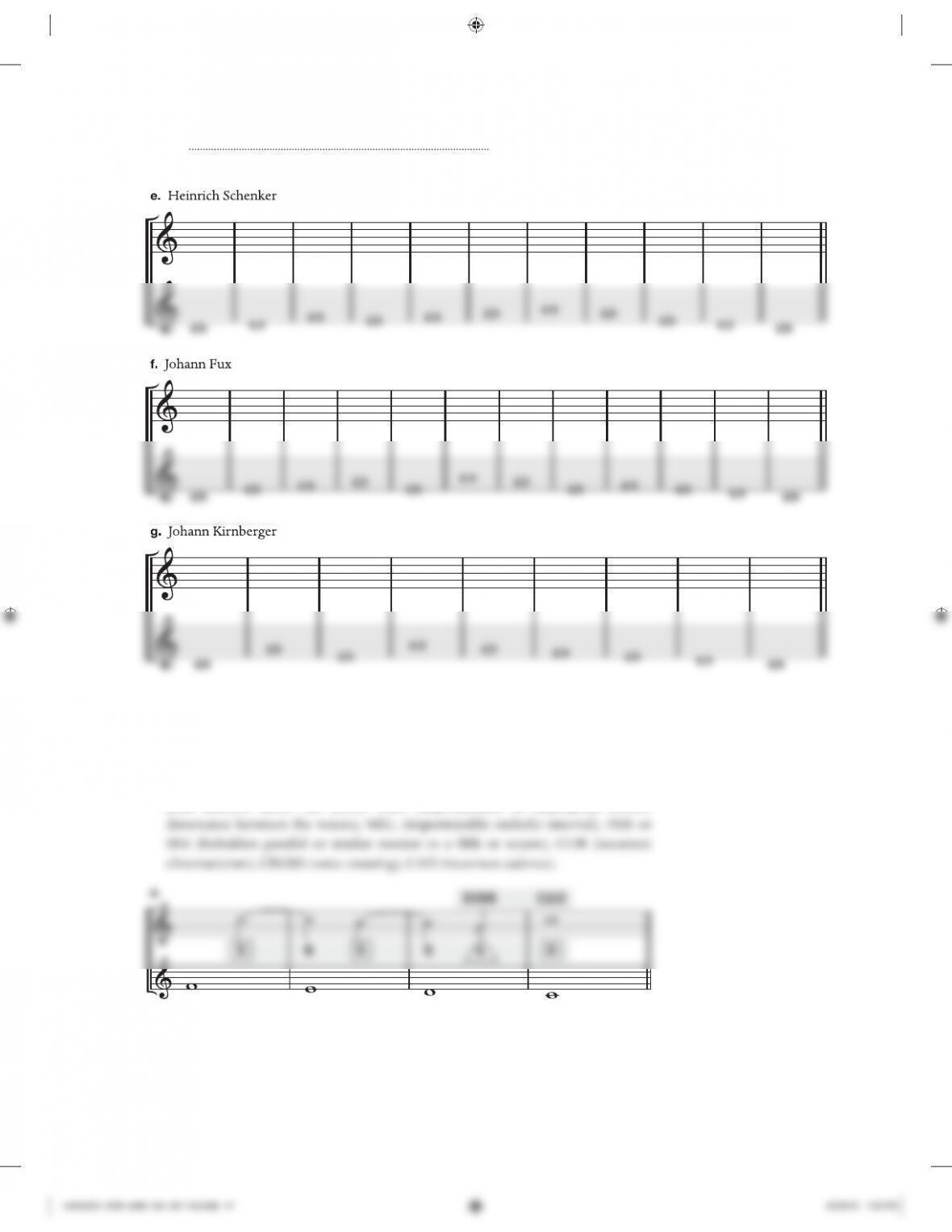
8. Second species, long full counterpoint. Write a complete second-species counterpoint
for each cantus firmus. Label the intervals between the staves (perfect intervals in
boxes; dissonances in triangles). Strategies for composing counterpoint appear in
A Closer Look in the ebook.
NAME:
D. FOURTH SPECIES
1. Ending: Labeling intervals and voice leading. Label the intervals between the staves
(perfect intervals in boxes; dissonances in triangles). Then find the errors, writing
your answers above the staves: DISS (impermissible or improperly treated
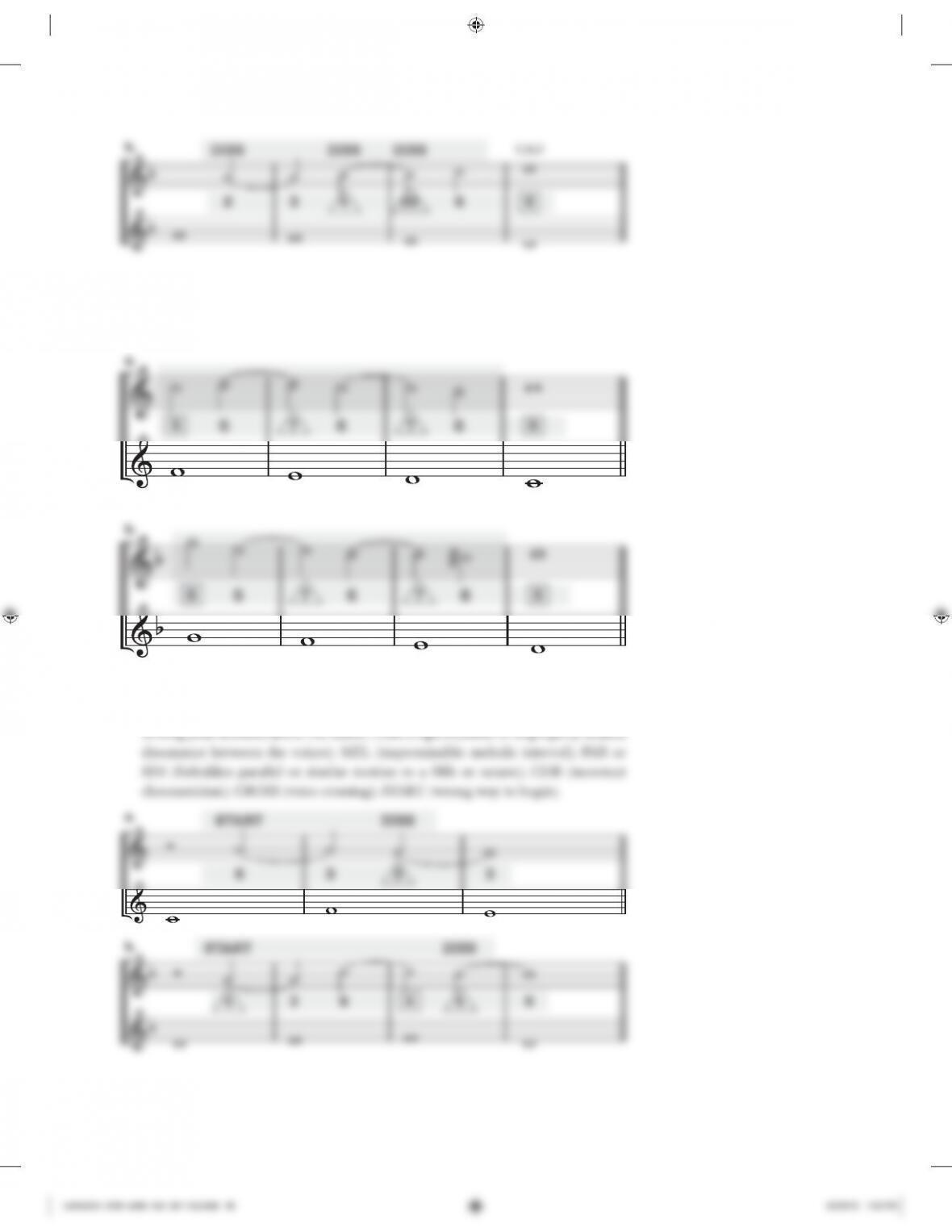
2. Ending: Completing the counterpoint. Below are the last four notes of two cantus
firmi. Write the end of a fourth-species counterpoint above each. Label the
intervals between the staves.
3. Beginning: Labeling intervals and voice leading. Label the intervals between the
staves (perfect intervals go in boxes, dissonances in triangles). Find the errors,
NAME:
4. Beginning: Completing the counterpoint. Below are the first notes of two cantus firmi.
Begin a fourth-species counterpoint above each. Label the intervals between the
staves.
5. Middle: Labeling intervals and voice leading. Label the intervals between the staves
(perfect intervals go in boxes, dissonances in triangles). Then find the errors,
writing your answers above the staves: DISS (impermissible or improperly treated
100 |CHAPTER 8 |Species Counterpoint
6. Middle: Completing the counterpoint. Below are five notes from the middle of
two cantus firmi. Write fourth-species counterpoint above each, following the
instructions. Label the intervals between the staves.
7. Fourth-species, complete short counterpoint. Below are short cantus firmi. Write
a fourth-species counterpoint to each with a good beginning, middle, and end.
Label the intervals between the staves.
D. Fourth Species | 101
NAME:
8. Fourth species, complete long counterpoint. Write a complete fourth-species
counterpoint for each cantus firmus. Label the intervals between the staves
(perfect intervals go in boxes, dissonances in triangles). Strategies for composing
counterpoint appear in A Closer Look in the ebook.
102 | CHAPTER 8 | Species Counterpoint