B. Arpeggiation | 79
NAME:
A. QUESTIONS FOR REVIEW
1. What is an arpeggiation?
2. What is octave doubling? Does it create forbidden parallel octaves?
3. In what three ways may an embellishing tone be approached or left?
4. What is a passing tone? A neighbor tone? A suspension?
B. ARPEGGIATION
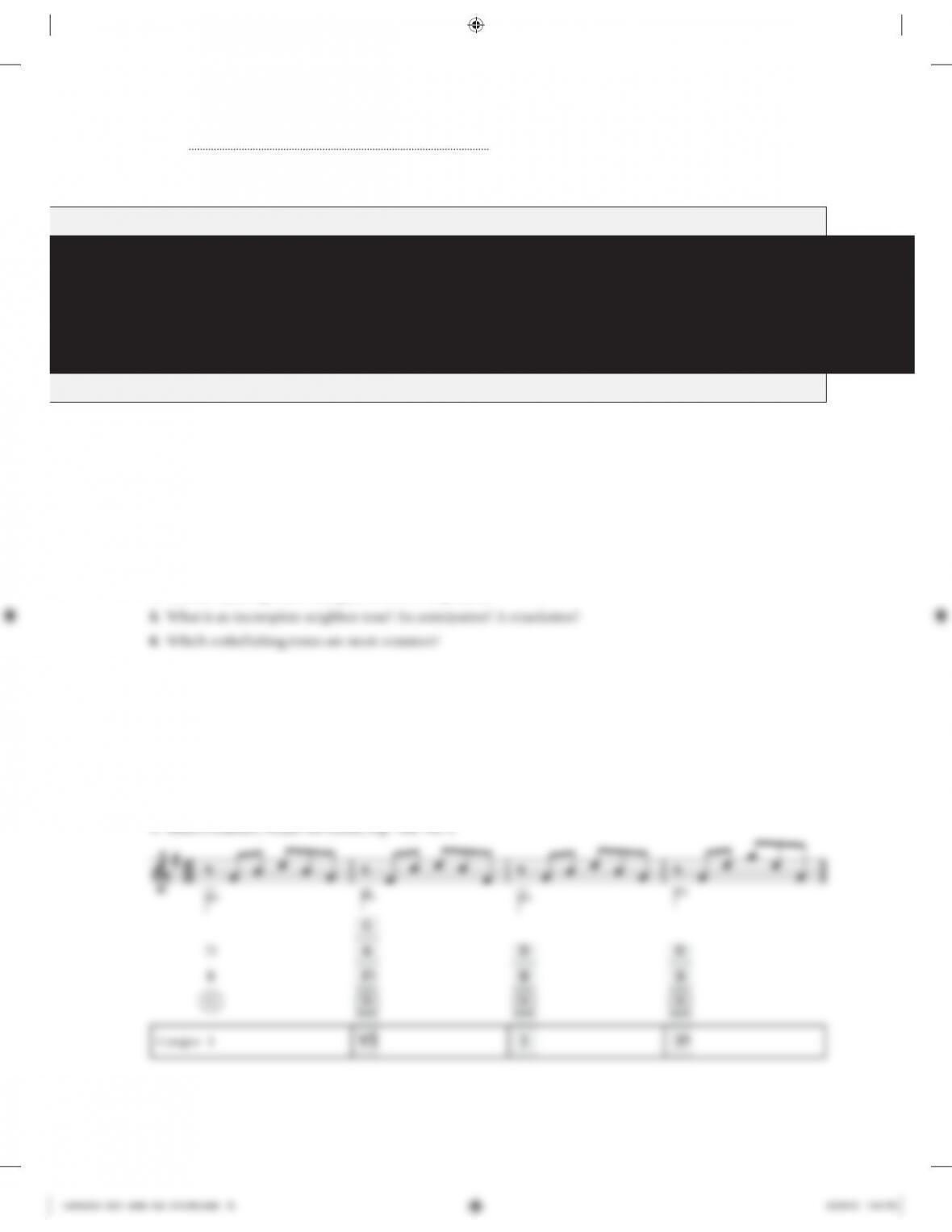
• In the blanks beneath each measure, list the note names of the arpeggiated
chord. (Some chords are triads, and others are seventh chords.)
• Circle the note name that is the root.
• Then in the boxes below the chords, provide the Roman numeral for each chord.
G major: I V4
3 I I6
chapter
7Melodic Elaboration
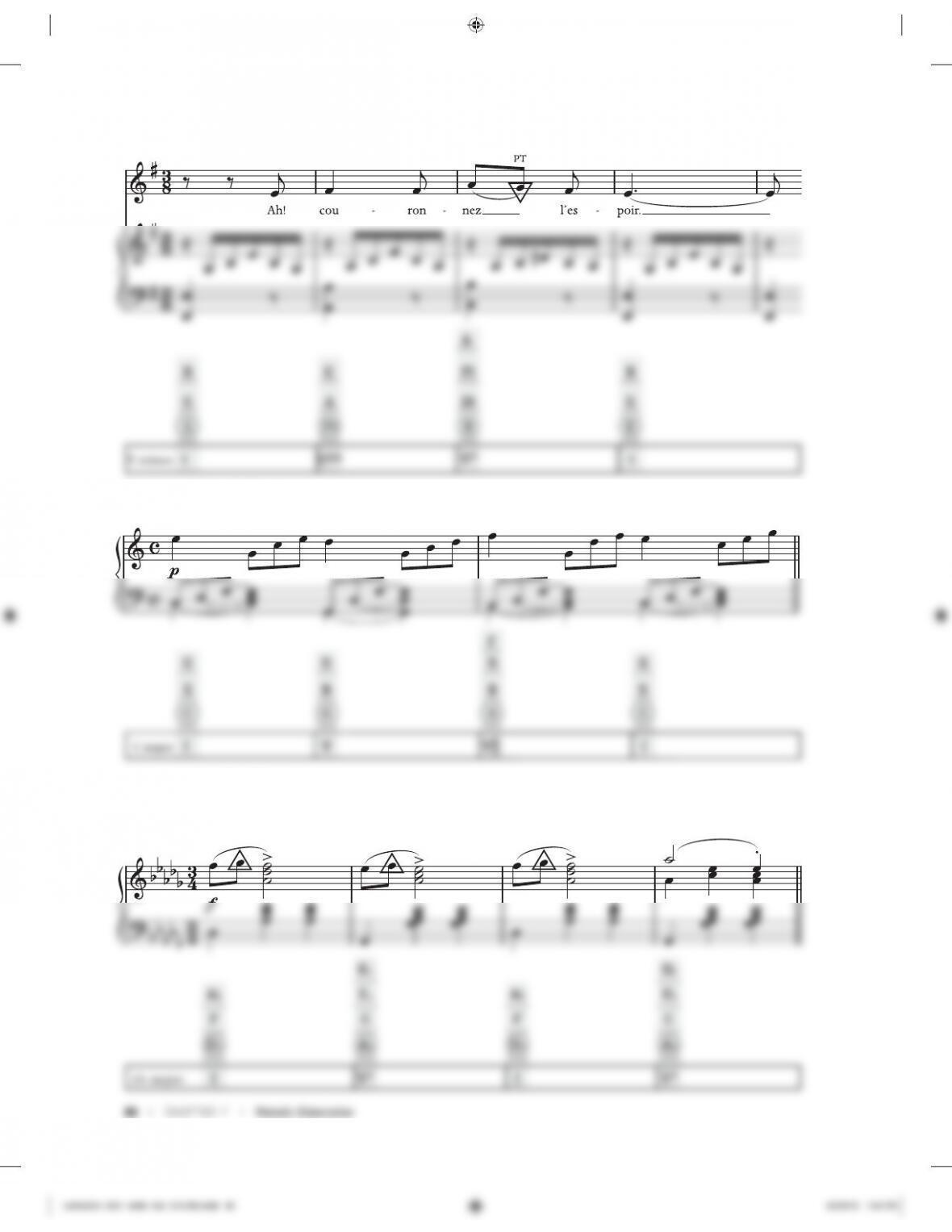
2. André Grétry, Serenade from L’amant jaloux
E minor: i ii06 V
7 i
A
B C F#B
G A D#G
EF#B E
Translation: Ah! wreathed hope.
3. Louise Ferrenc, Étude Op. 30, No.1
C major: I V V6
5 I
F
G D D G
E B B E
C G G C
4. Antonin Dvorˇák, Waltz, Op. 54, No. 4
Treat the note on each downbeat as the bass of the chord. Notes in triangles are
embellishing tones.
Gb Gb
___ ___
Ab E
b A
b Eb
___ ___ ___ ___
F C F C
___ ___ ___ ___
Db Ab Db A
b
___ ___ ___ ___
NAME:
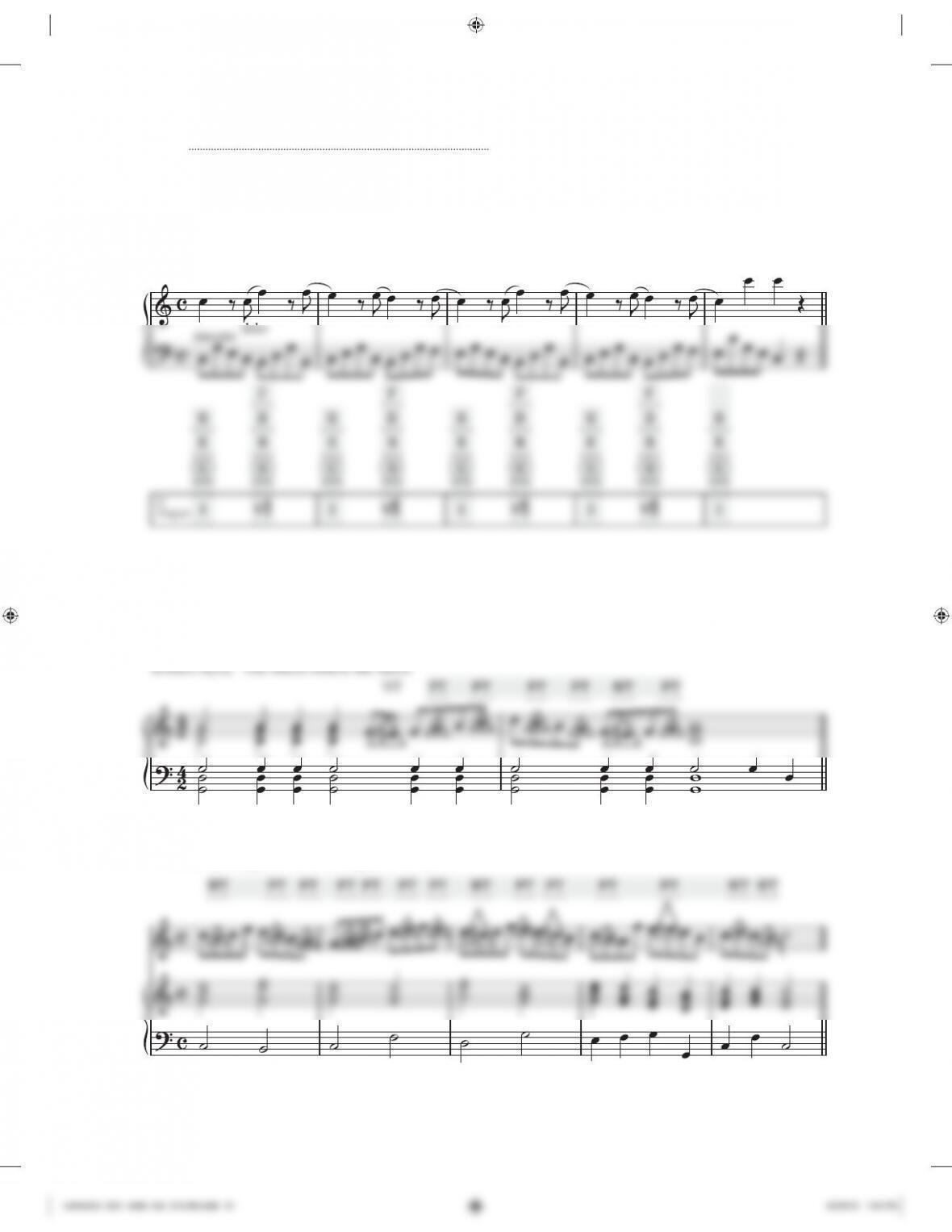
5. Ludwig van Beethoven, Duet for Clarinet and Bassoon No. 1
Note: Each chord lasts for two quarter notes except for the final chord, which lasts
for a whole measure. For each chord, the lowest note is to be understood as the
bass note for the entire length of the chord.
I V6
5 I V6
5 I V6
5 I V6
5 I
C
major:
F F F F
___ ___ ___ ___
G D G D G D G D G
___ ___ ___ ___ ___ ___ ___ ___ ___
E B E B E B E B E
___ ___ ___ ___ ___ ___ ___ ___ ___
C G C G C G C G C
___ ___ ___ ___ ___ ___ ___ ___ ___
C. IDENTIFYING EMBELLISHING TONES
1. In the excerpt below, a triangle appears around each embellishing tone. Label each
as a passing tone (PT), neighbor tone (NT), or suspension (SUS).
2. The embellishing tones below are each indicated with a triangle. Label each as
either a passing tone (PT) or neighbor tone (NT).
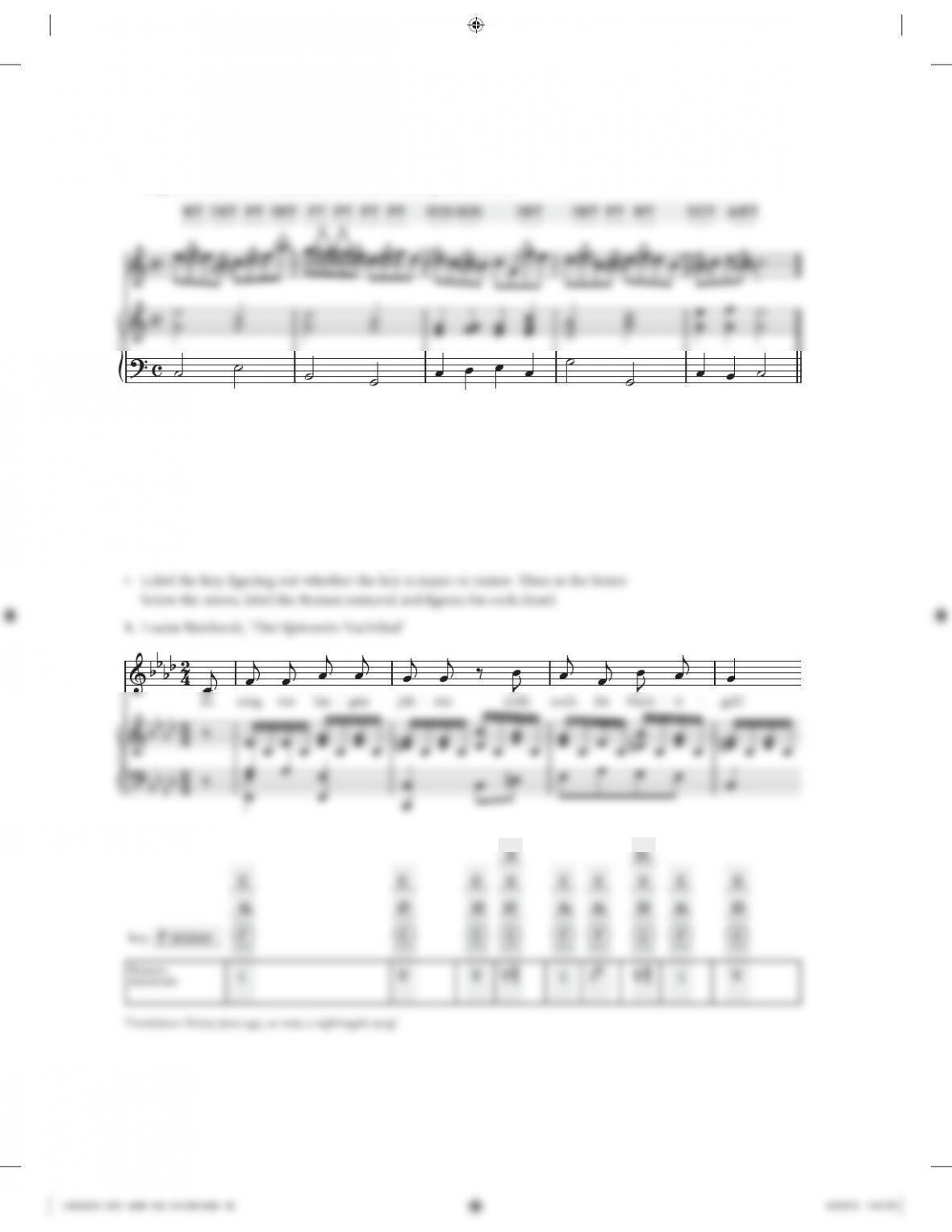
3. The embellishing tones below are each indicated with a triangle. Label each as
either a passing tone (PT), neighbor tone (NT), suspension (SUS), incomplete
neighbor tone (INT), retardation (RET), or anticipation (ANT).
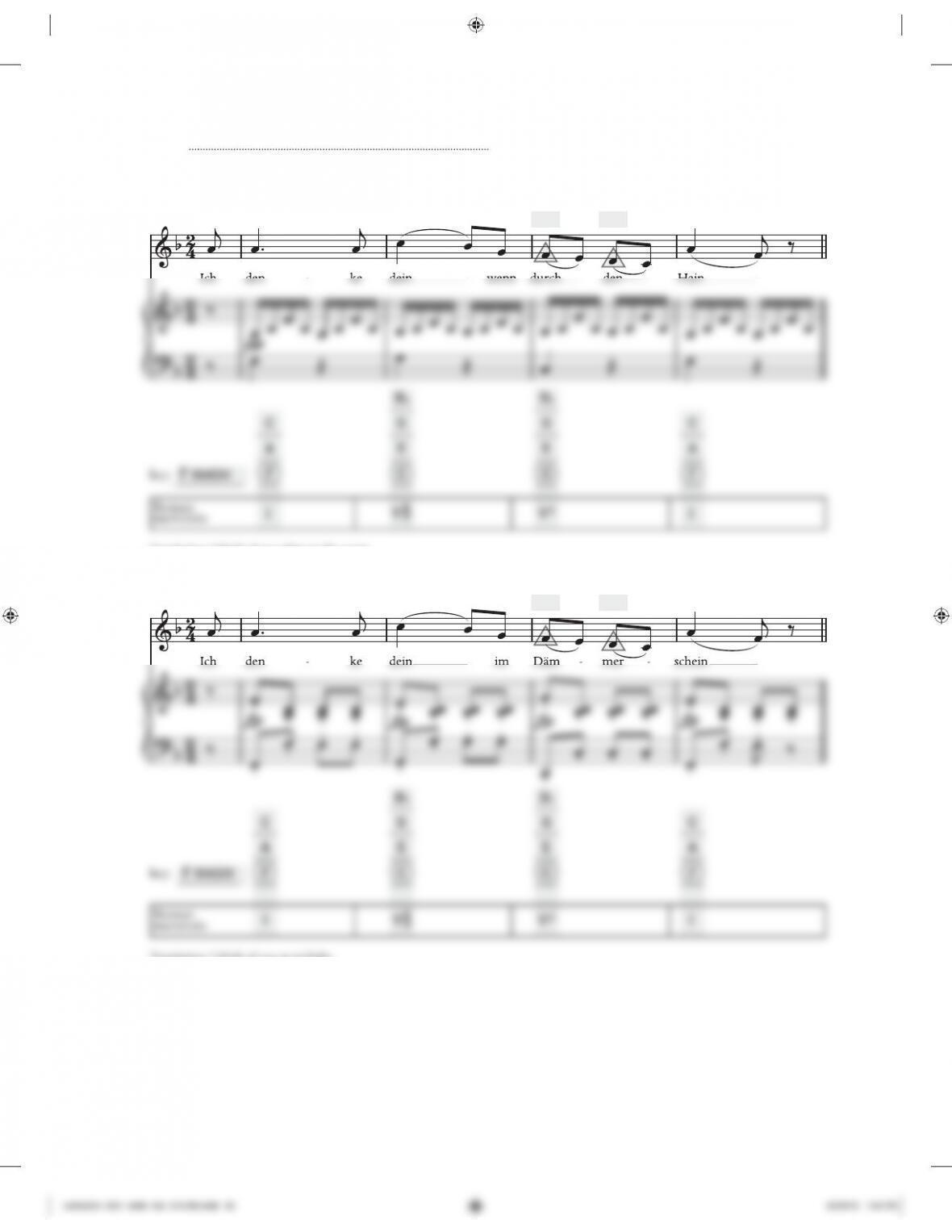
D. ANALYSIS
For each example:
• List the note names of each chord in the blanks beneath the measure. Circle the
note name that is the root.
• Place a triangle around each embellishing tone in the melody in the top sta, and
label it as either a passing tone (PT) or neighbor tone (NT).
D. Analysis | 83
NAME:
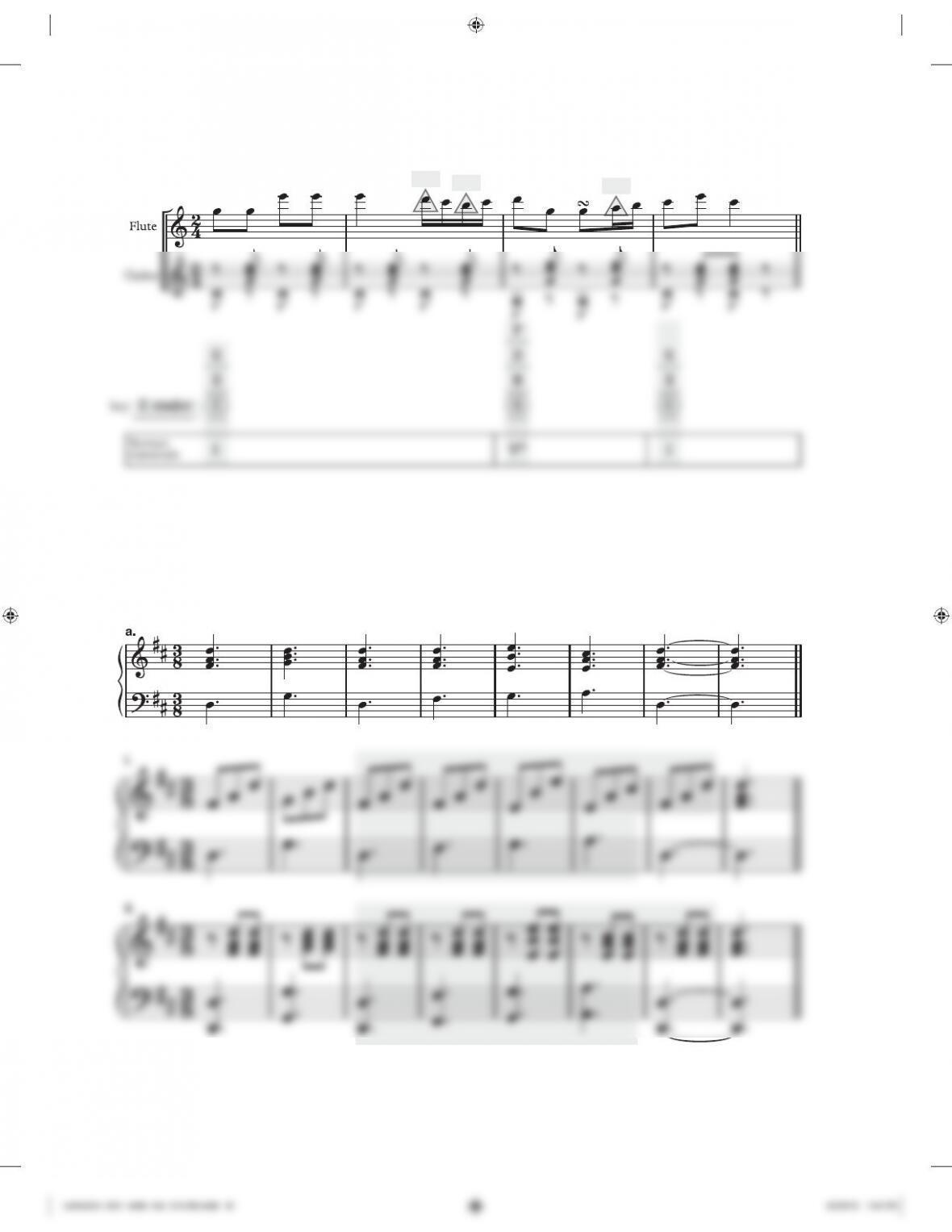
2. Franz Schubert, “Andenken” (“Remembrance”)
Roman
PT PT
Translation: I think of you when in the grove.
3. Franz Schubert, “Andenken” (“Remembrance”)
Roman
PT PT
Translation: I think of you at twilight.
How do the harmonies in the two excerpts by Schubert, (2) and (3), compare?
84 | CHAPTER 7 | Melodic Elaboration
4. Mauro Giuliani, Pièces faciles et agréables, Op. 74, No. 4
I V7 I
Roman
numerals:
F
___
G D G
___ ___ ___
E B E
___ ___ ___
key: C major C G C
________ ___ ___ ___
PT NT PT
E. ACCOMPANIMENT PATTERNS
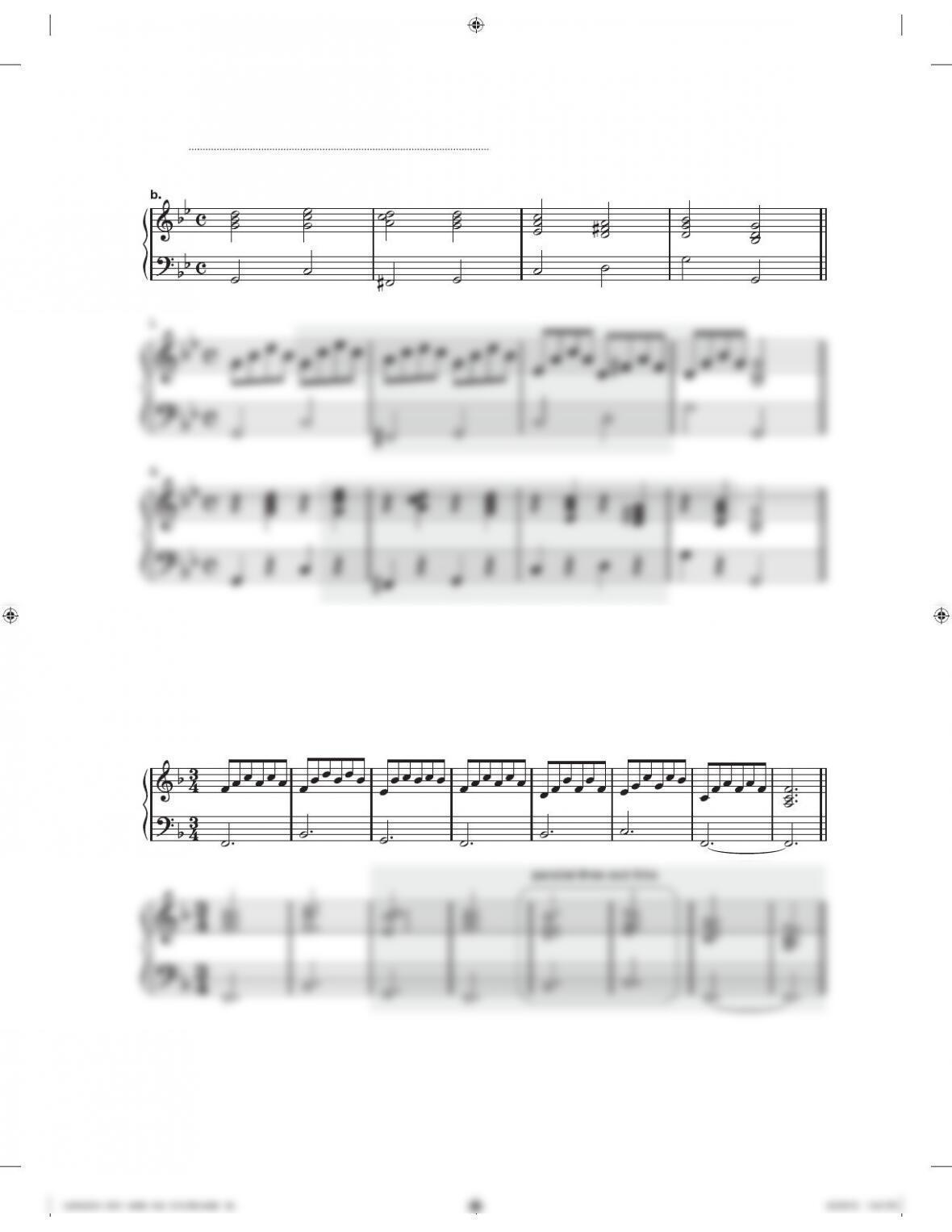
1. Below are two chord progressions, each followed by the beginning of two accom-
paniment patterns. Complete the accompaniment patterns using the pitches of the
progression.
E. Accompaniment Patterns | 85
NAME:
2. Below is a passage for keyboard with arpeggiations in the right hand.
• Rewrite the passage in four-part harmony keyboard format so that the notes of
each chord appear simultaneously.
• There is a voice-leading problem in this passage. Circle and identify the
voice-leading error.
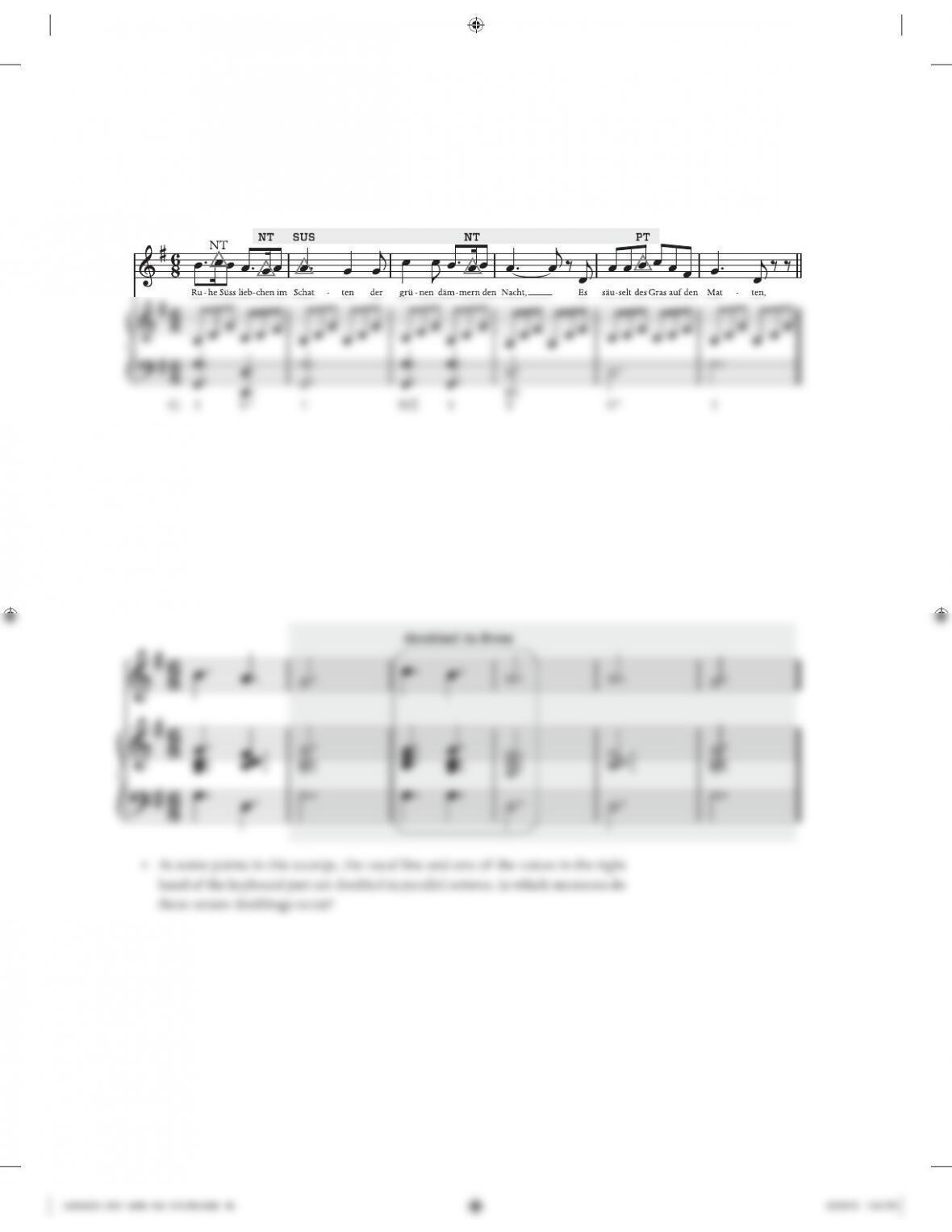
3. Below is an excerpt from the song “Poesie von Tieck” (“Poem by Tieck”) by Louise
Reichardt. The dissonant embellishing tones in the melody are marked by trian-
gles. Label each embellishing tone as either NT (neighbor tone), PT (passing tone),
or SUS (suspension).
Translation: Rest, sweet love, in the shade of the green twilight. The grass rustles in the meadow . . .
• On the bottom two staves below, write a simplified harmonic model of the
piano accompaniment of this excerpt, removing the octave doublings and
arpeggios so that the four notes of the chords all appear simultaneously.
• On the top sta, write a simplified version of the vocal melody by removing all
the embellishing tones and chords skips.
• This model should use all dotted-half notes, except in measures 1 and 3, which
should use dotted-quarter notes.