A. Questions for Review | 73
NAME:
A. QUESTIONS FOR REVIEW
1. What is a musical phrase?
2. With what chord does a phrase normally begin? With what chords does a phrase
usually end?
3. What is a half cadence (HC)? What is an authentic cadence (AC)?
4. What is the difference between a perfect authentic cadence (PAC) and an imperfect
authentic cadence (IAC)?
5. What are the two most conventional harmonic patterns involving the functional
chapter
6Harmonic Progression
74 | CHAPTER 6 | Harmonic Progression
B. BEGINNING AND ENDING A PHRASE
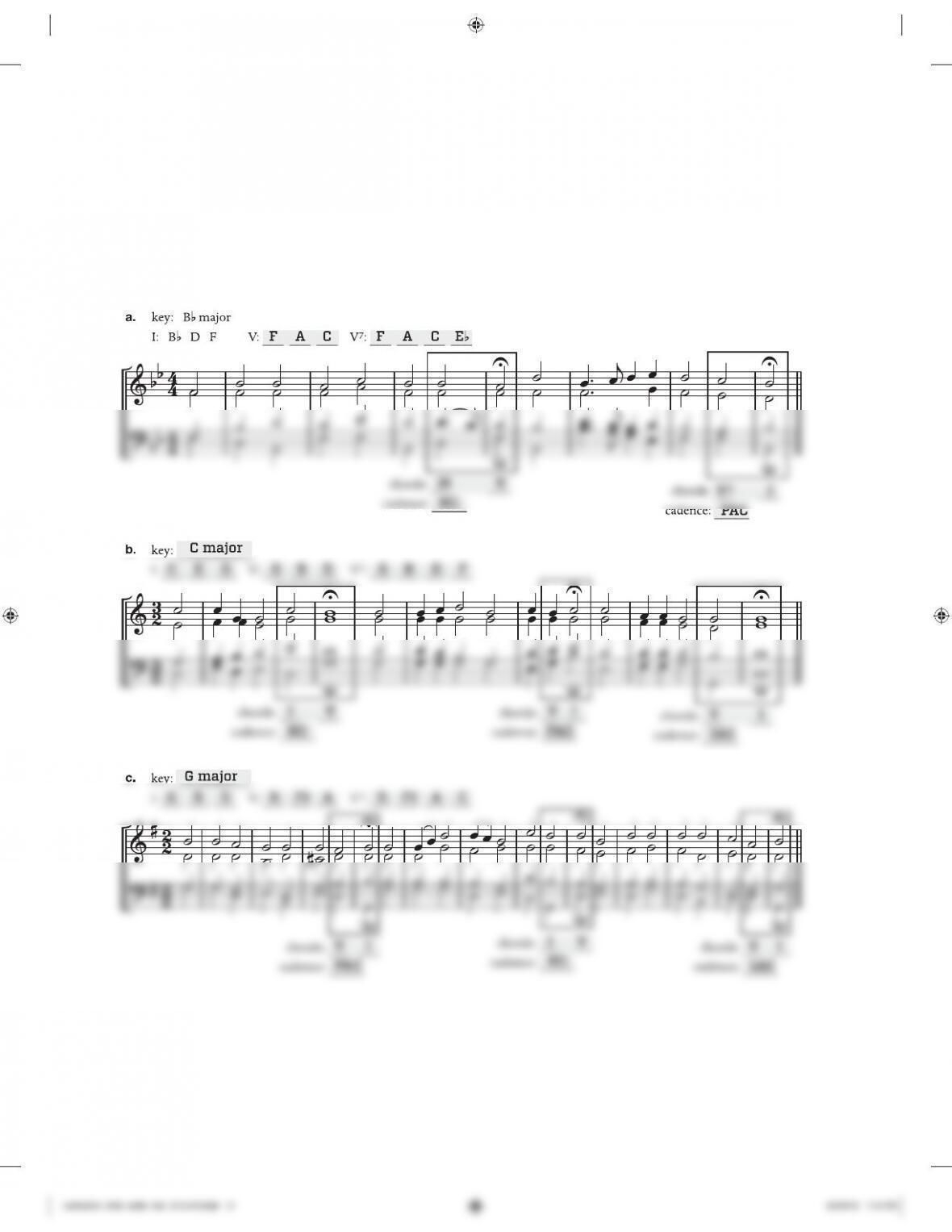
1. In each of the following chorale excerpts:
• Identify the key, and write the note names of the I, V, and V7 chords in the
blanks.
• Label the two chords of the cadences (indicated by boxes) by Roman numeral.
• Label each boxed cadence as HC, PAC, or IAC.
NAME:
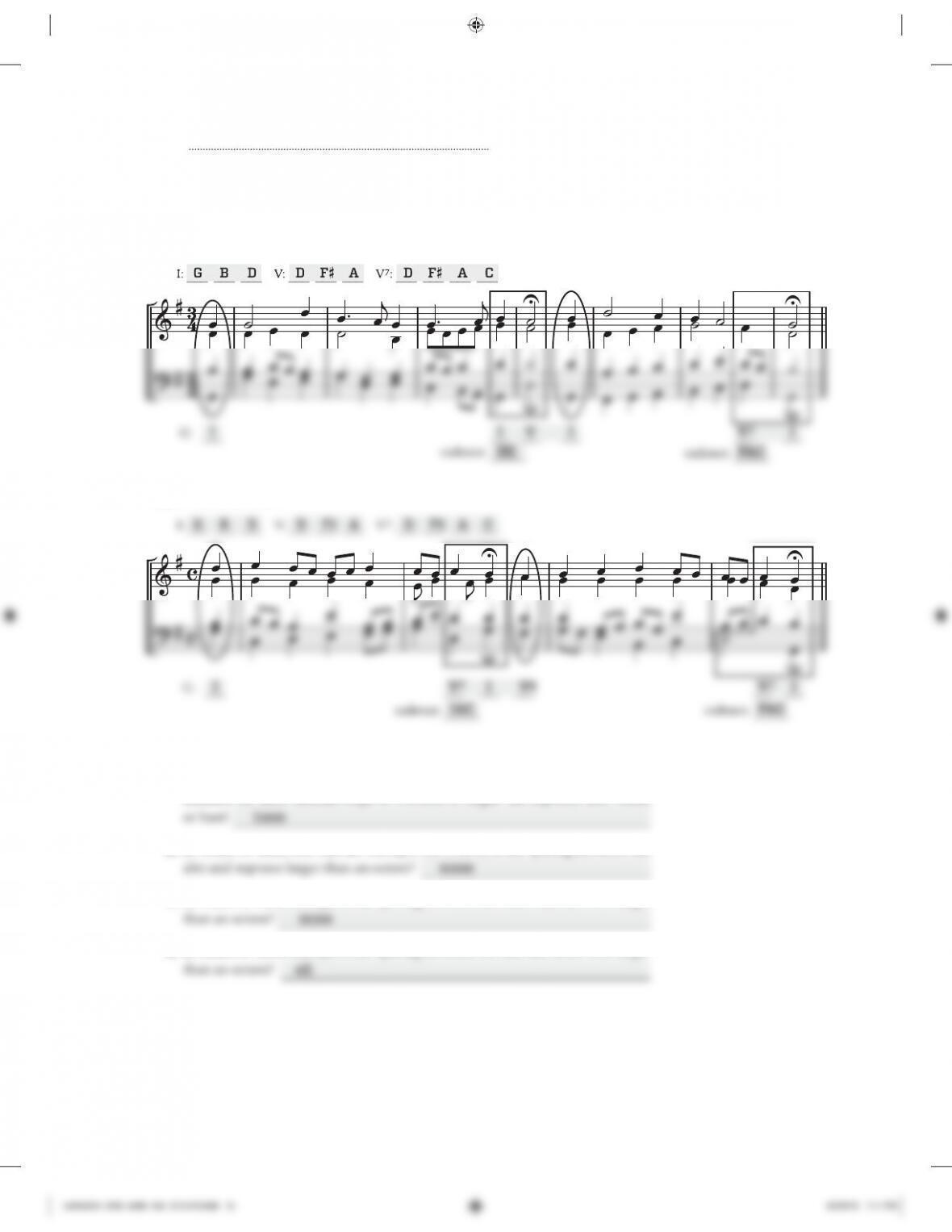
2. Spell the I, V, and V7 chords and identify the boxed cadences of the following
chorales. Also identify the first chord of each phrase (circled).
a. J. S. Bach, Chorale 1
b. J. S. Bach, Chorale 5
3. Answer the following questions about the excerpts above.
a. Taking the five chorale excerpts of (1a
–
c) and (2a
–
b) as a group, which voice
includes the most melodic leaps of a fourth or larger: the soprano, alto, tenor,
b. In which of these five chorale excerpts (1a
–
c, 2a
–
b) is the spacing between the
______________________________
c. In which of these excerpts is the spacing between the tenor and alto ever larger
________________________________________________
d. In which of these excerpts is the spacing between the bass and tenor ever larger
C. HARMONIZING MELODIES:
PREPARATORY EXERCISES
1. In the key of D major, write the note names of the chords in the blanks below.
Which of the chords above could be used to harmonize the notes below?
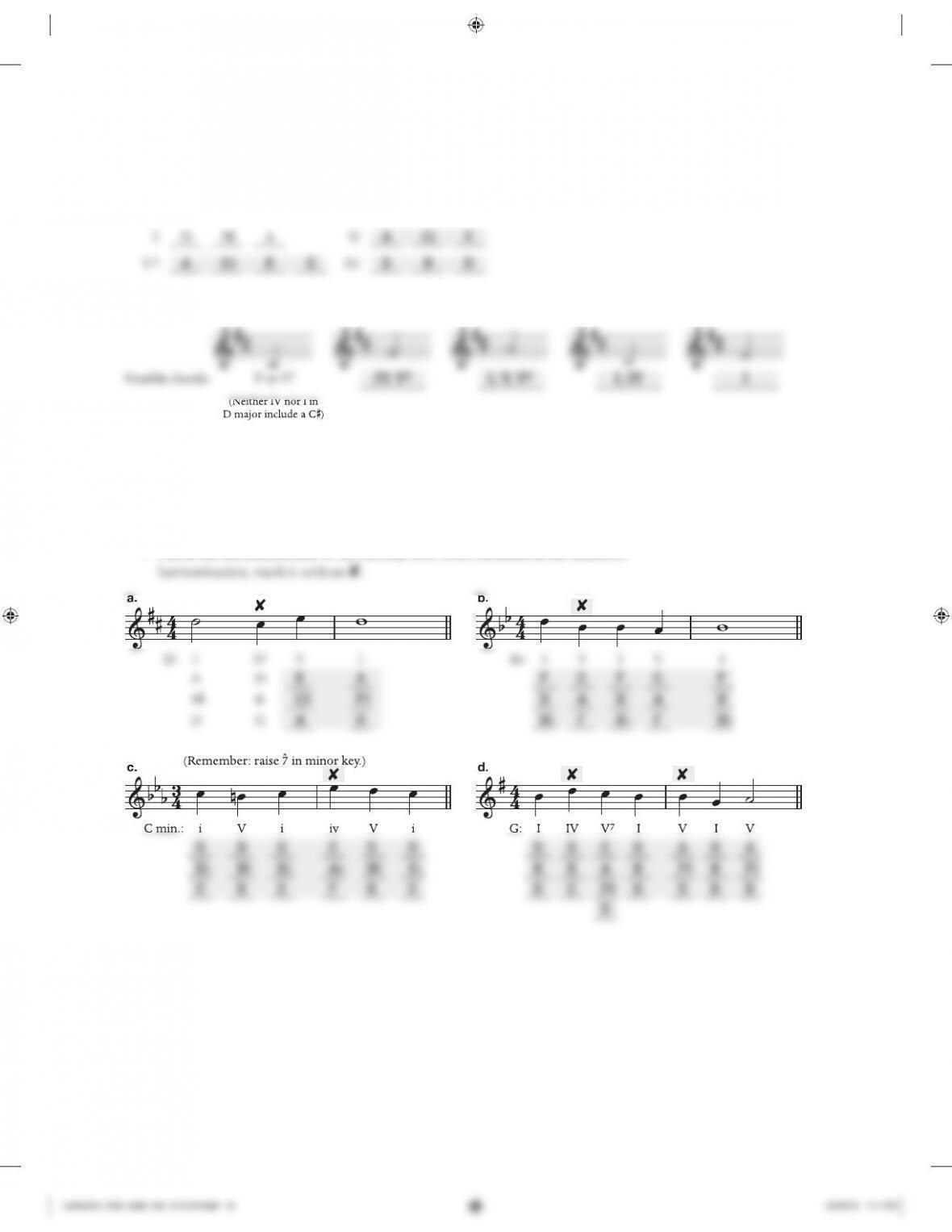
2. Underneath each melody below, Roman numerals suggest a possible harmonization.
For each melody:
• Write the note names of the chords on the blanks underneath the Roman
numerals.
• Check the harmonizations. If the melody note is not included in the indicated
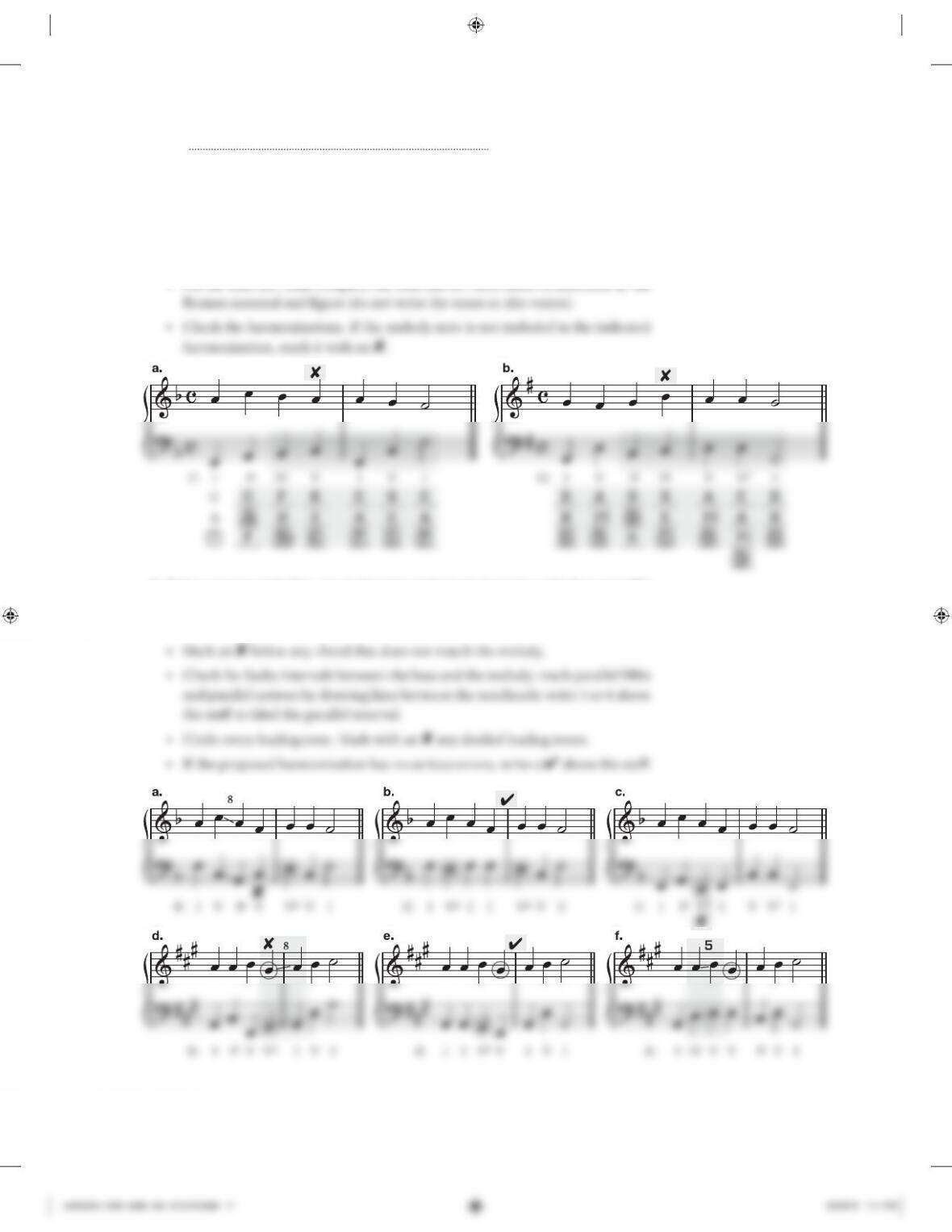
NAME:
3. Underneath each melody below, Roman numerals suggest a possible harmonization.
For each melody:
• Below each Roman numeral, write the note names of the chord. Circle the note
that belongs in the bass.
• On the bass-clef staff, complete the bass line for each chord as indicated by the
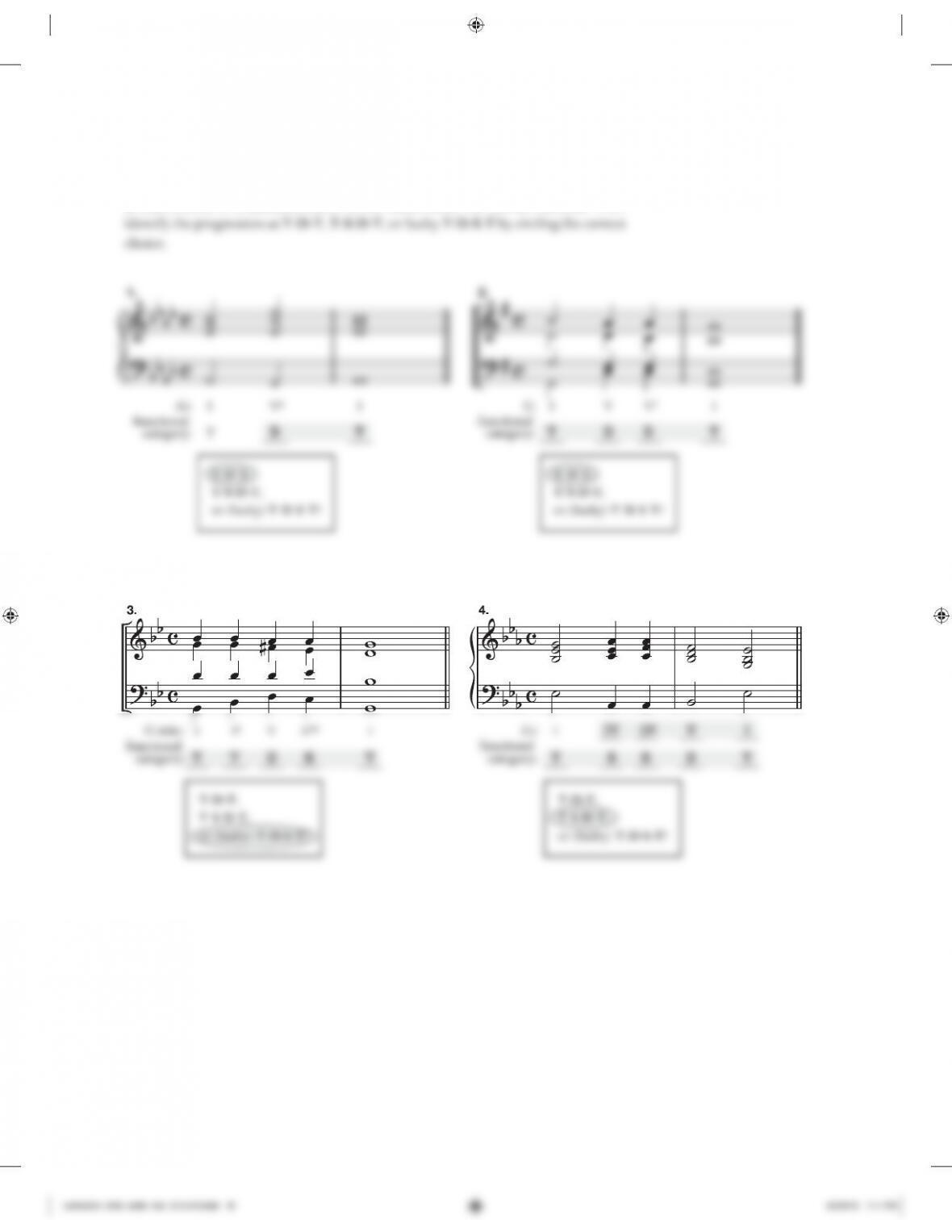
4. Below are two melodies, one in F major and one in A major, with three possible
harmonizations indicated by Roman numerals and a bass line. In each case (a
–
c and
d
–
f ), one of the harmonizations is acceptable, and the other two have problems.
D. HARMONIC FUNCTIONAL CATEGORIES: T, S, D
For the following chord progressions, write the function of each chord
—
T (Tonic),
D (Dominant), or S (Subdominant)
—
in the blank below the Roman numeral. Then