B. Motion between Intervals | 61
NAME:
A. QUESTIONS FOR REVIEW
1. What melodic intervals are most common in upper voices? What is the largest
melodic interval allowed (occasionally) in an upper voice? What melodic intervals
should be avoided in any voice, including the bass?
2. What are the types of motion used to approach intervals?
3. In four-part harmony, what intervals may not be approached in parallel motion?
4. Does a leading tone tend to resolve up or down? Does it resolve by step or leap? In
B. MOTION BETWEEN INTERVALS
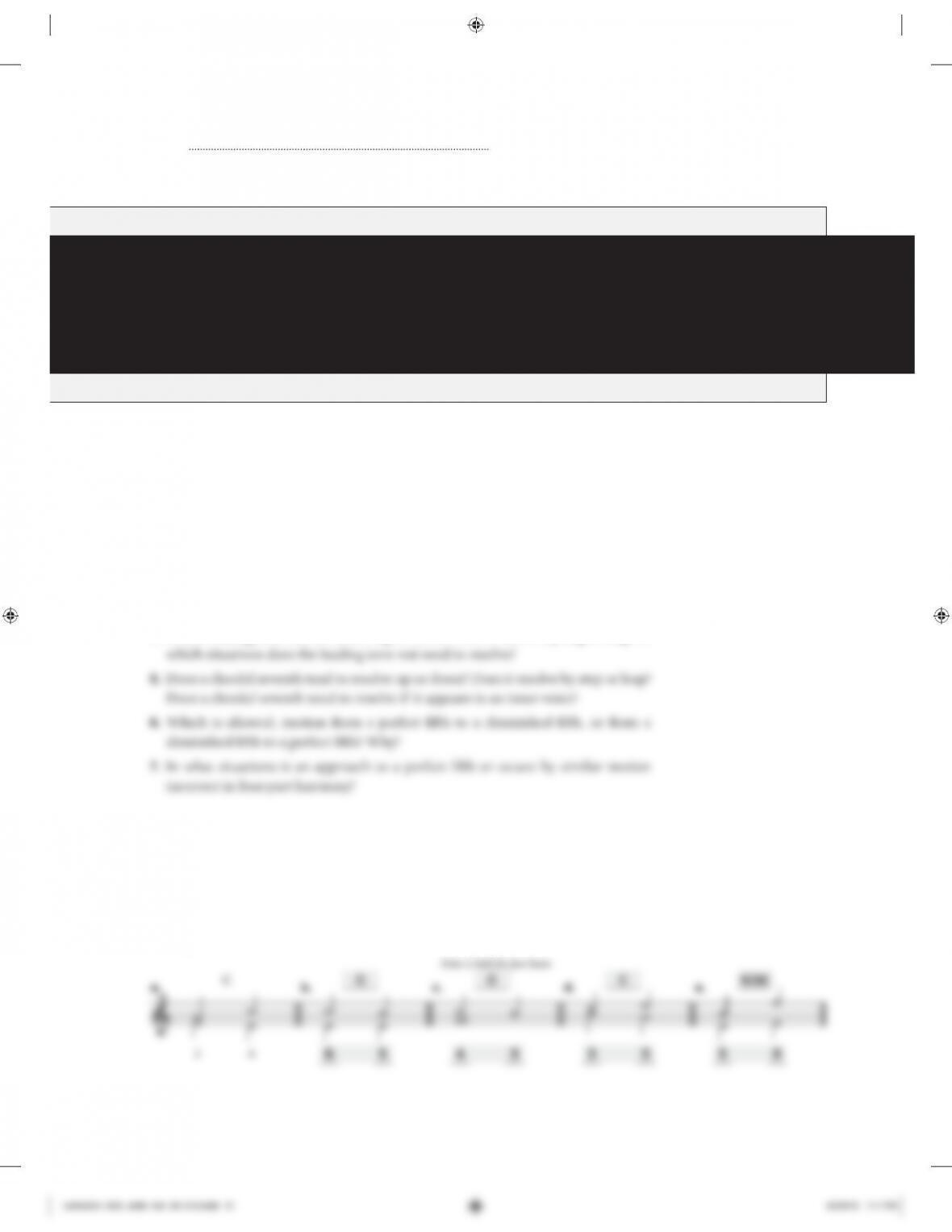
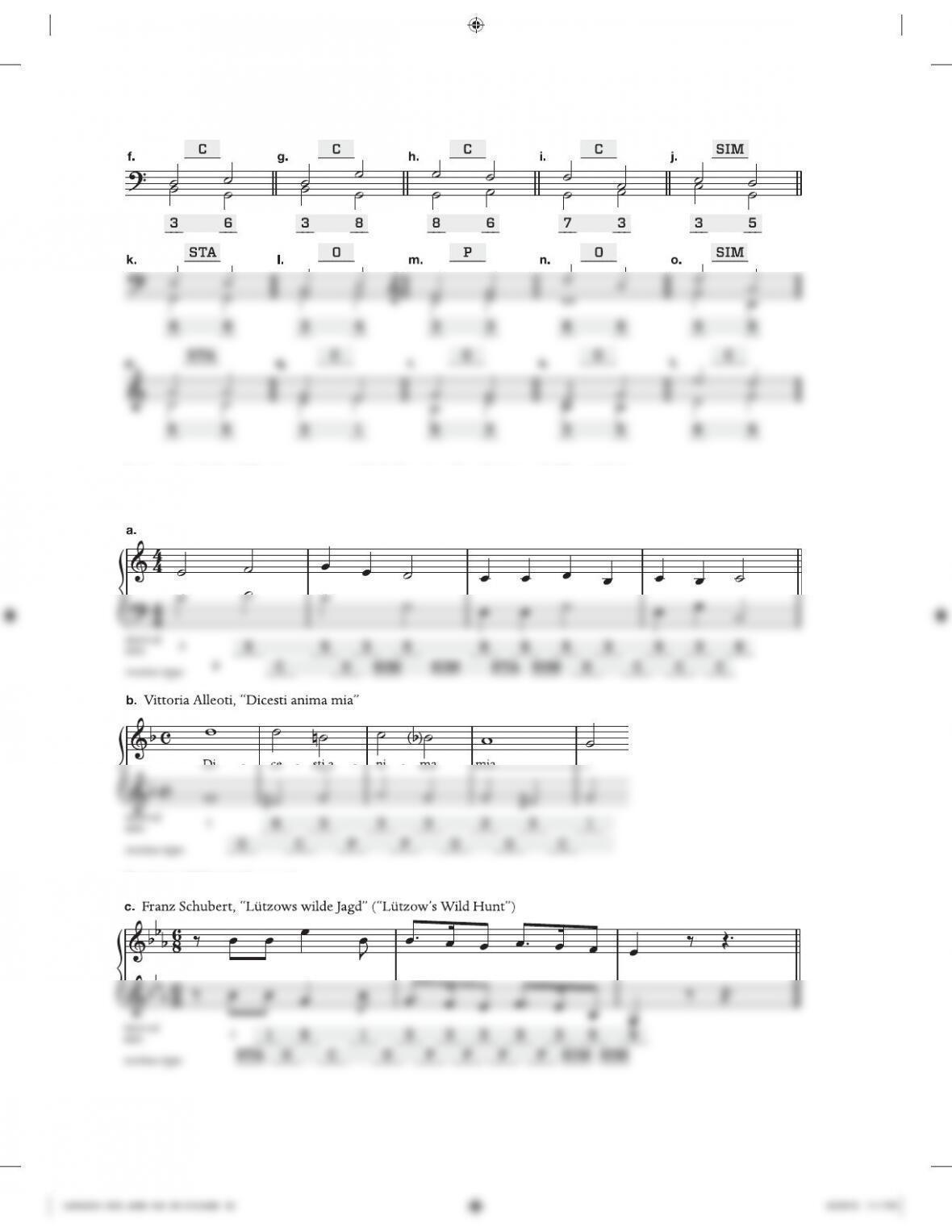
1. On the blank lines below each staff, label the interval numbers. On the blank lines
above each staff, label whether the second of each pair of intervals in each measure
is approached in contrary motion (C), parallel motion (P), similar motion (SIM),
oblique motion (O), or stationary motion (STA).
chapter
5Voice Leading
62 | CHAPTER 5 | Voice Leading
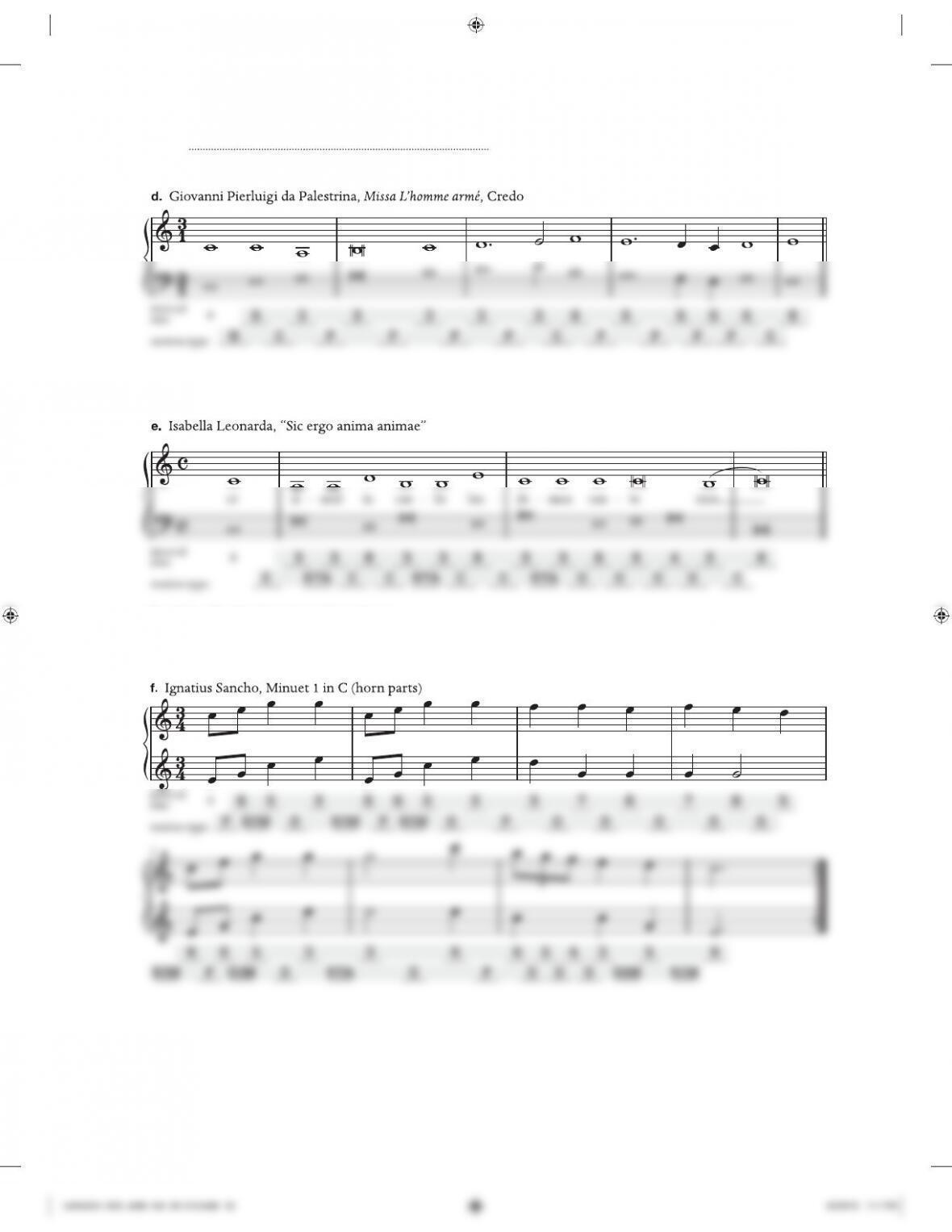
2. In each of the following passages, label the size of each interval. Then, label
how each interval is approached with the abbreviations P (parallel), C (contrary),
O (oblique), SIM (similar), and STA (stationary).
Translation: [Did you] tell, my soul
B. Motion between Intervals | 63
NAME:
Translation: Together, let us sing praises to heaven.
64 | CHAPTER 5 | Voice Leading
C. LOCATING PERFECT OCTAVES AND FIFTHS
WITHIN CHORDS
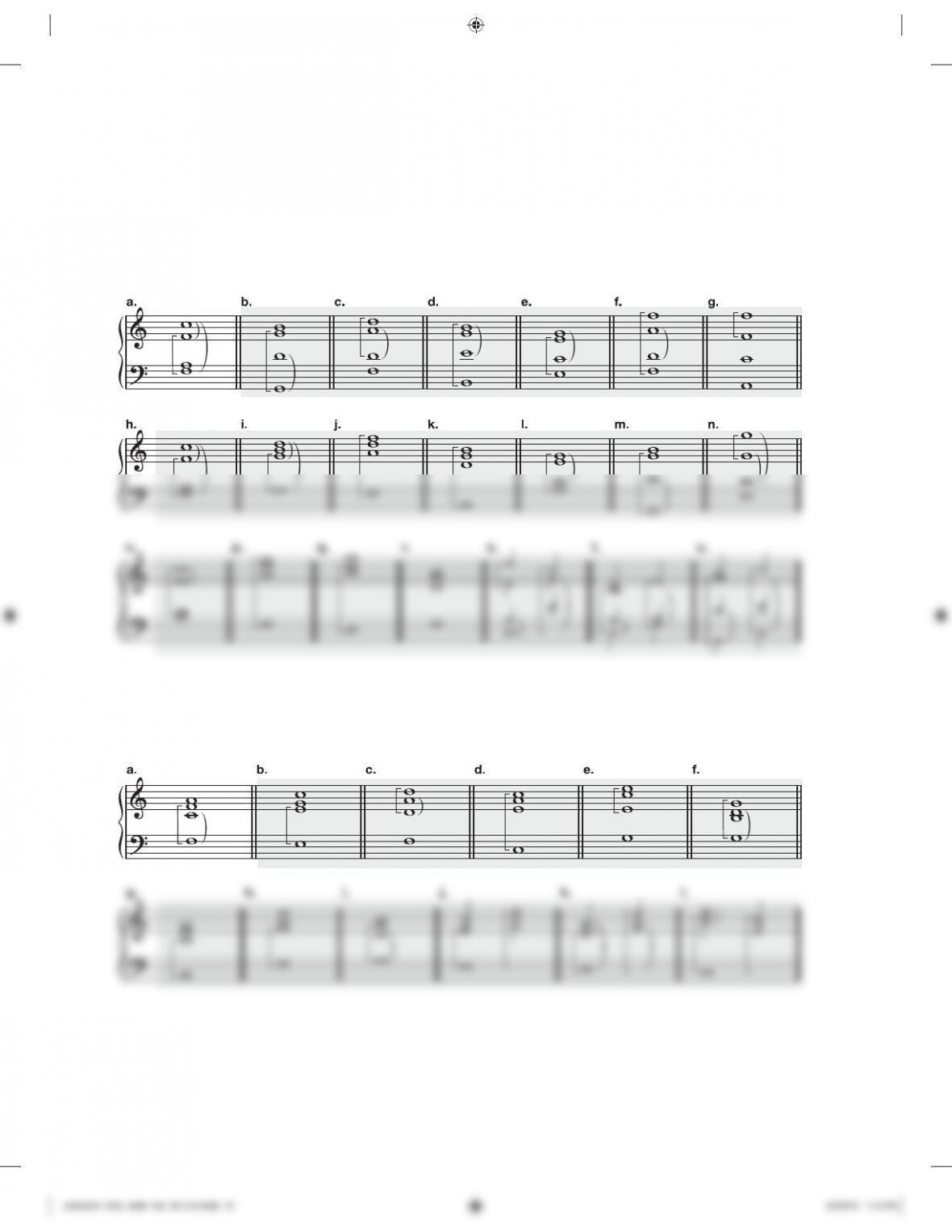
1. In each chord below, locate the perfect octaves and fifths. Mark the octaves with a
square bracket and fifths with a curved bracket. Note that either of these intervals
may appear between more than one pair of voices (or they may not appear at all),
and that the intervals may be simple or compound.
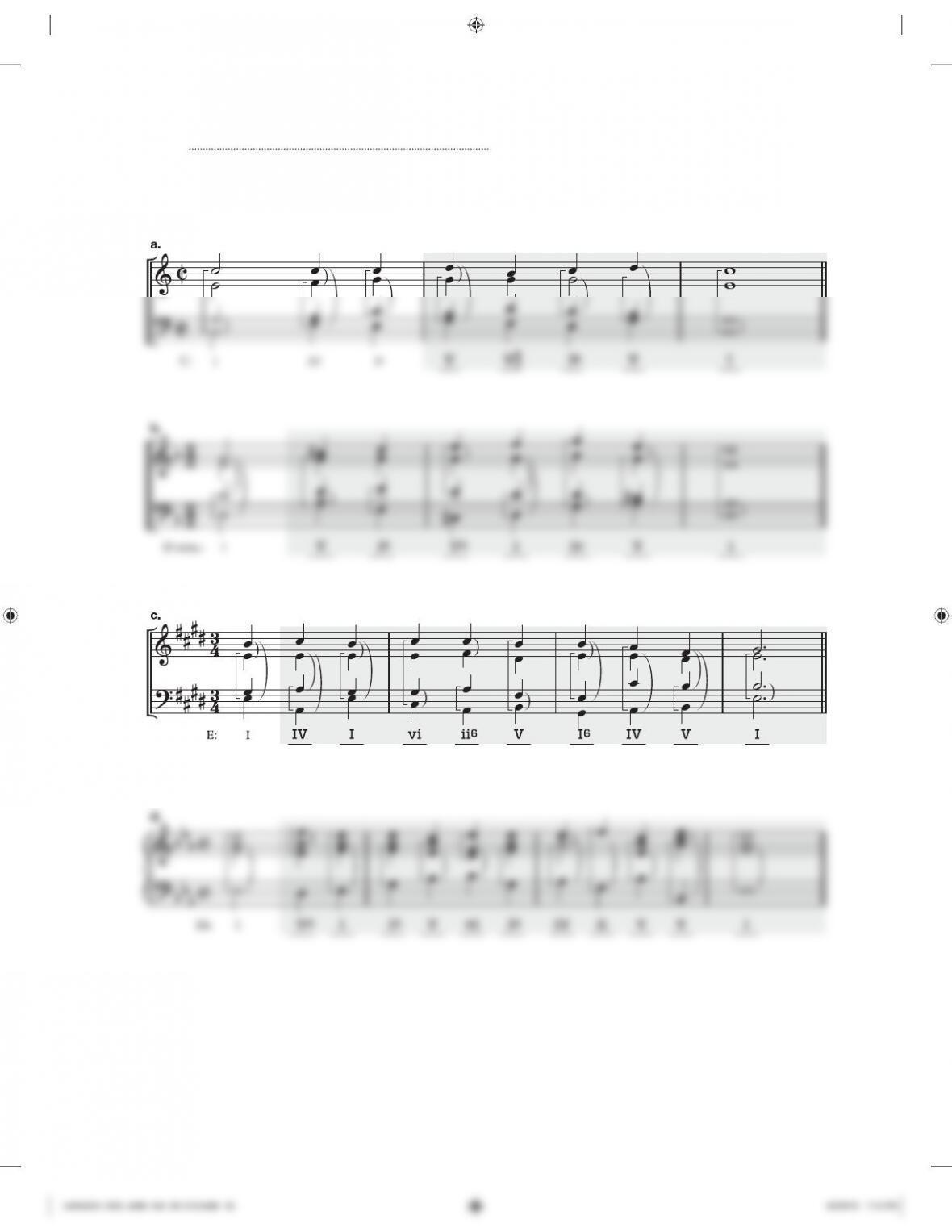
2. Below are a series of chords notated in keyboard format. Label the octaves with a
square bracket and fifths with a curved bracket.
C. Locating Perfect Octaves and Fifths within Chords | 65
NAME:
3. For each chord in the following passages, label octaves with square brackets and fifths
with curved brackets. Then, label each chord with a Roman numeral and inversion.
66 | CHAPTER 5 | Voice Leading
D. APPROACHING PERFECT OCTAVES AND FIFTHS
1. Determine how the octaves and fifths are approached in each of the following
pairs of chords. Use the abbreviations P (parallel), C (contrary), O (oblique), SIM
(similar), and STA (stationary).
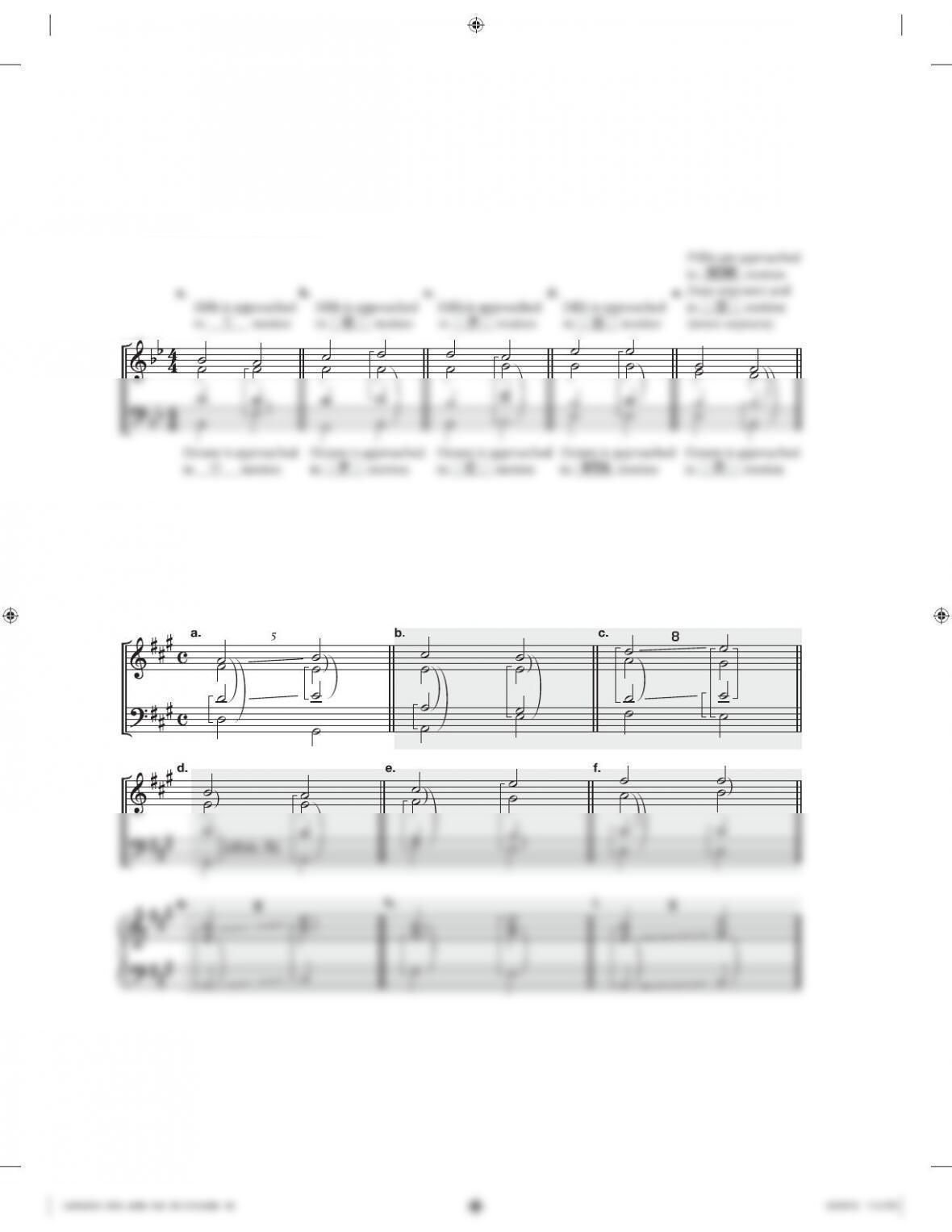
2. In each of the following chords, label fifths with curved brackets, and octaves or
unisons with square brackets. Then check for parallel fifths or octaves (if there are
any); mark parallel fifths and parallel octaves by drawing lines between the note-
heads; write 5 or 8 above the staff to label the parallel interval.
NAME:
3. In each chord below, indicate the fifths with curved brackets and the octaves with
square brackets. Label each chord with a Roman numeral. Then check for parallel
fifths and octaves, marking them with lines between the noteheads; write 5 or 8
above the staff to label the parallel interval.
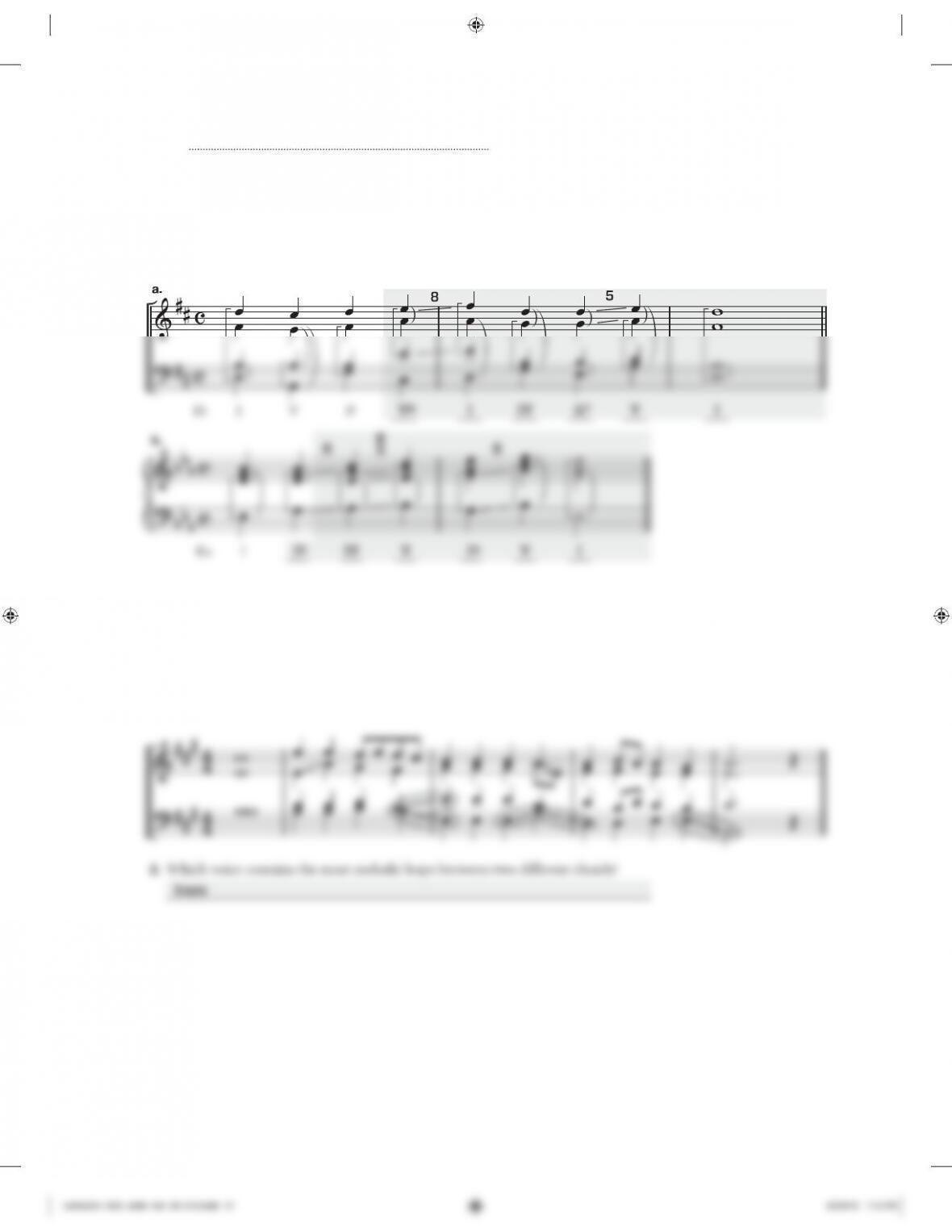
E. SMOOTH VOICE LEADING
1. In the excerpt below, mark with a squiggly line each leap of a fourth or larger.
Then circle any leap that occurs when the chord changes.
F. RESOLVING THE LEADING TONE AND CHORDAL SEVENTHS
1. Identify the leading tone of each of the following major keys, then find and circle it
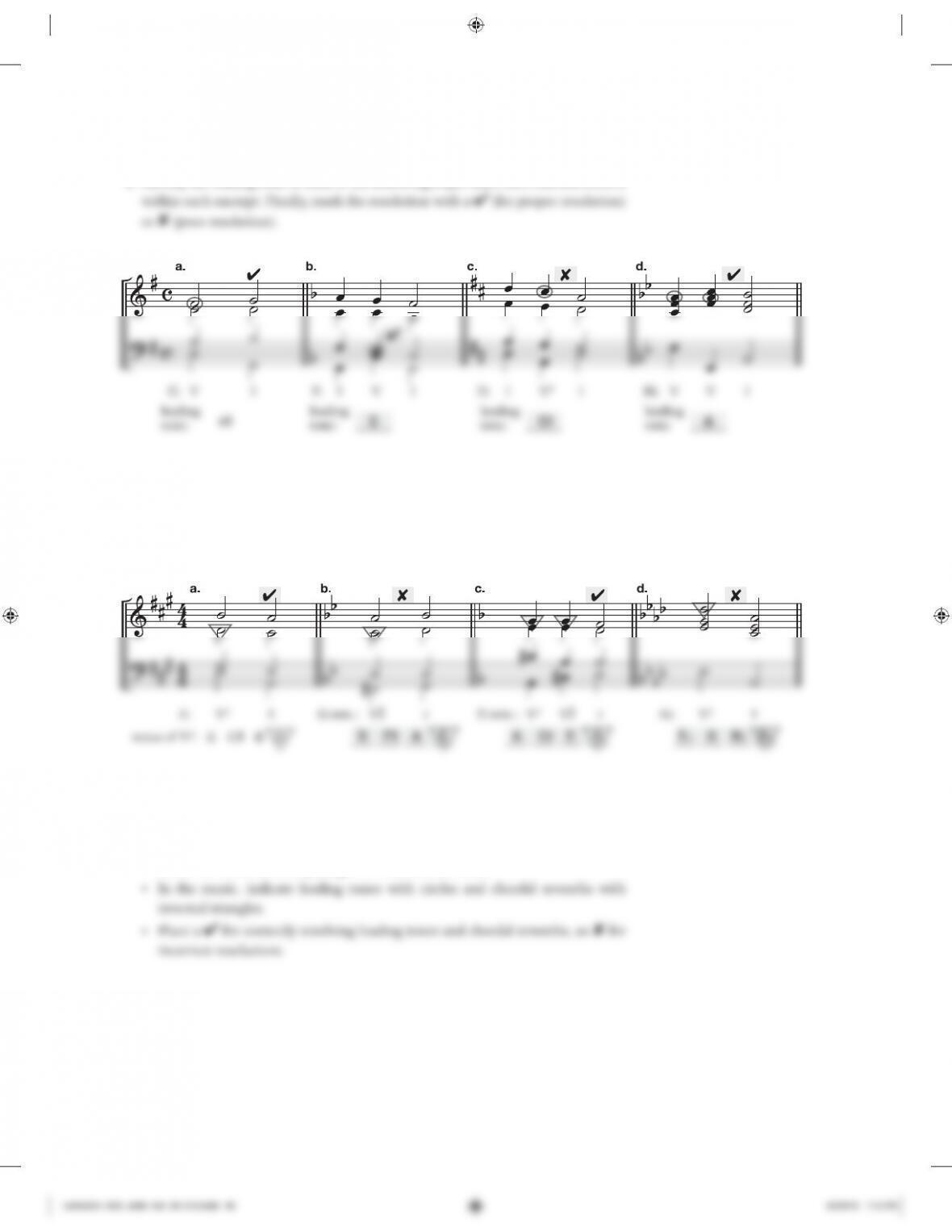
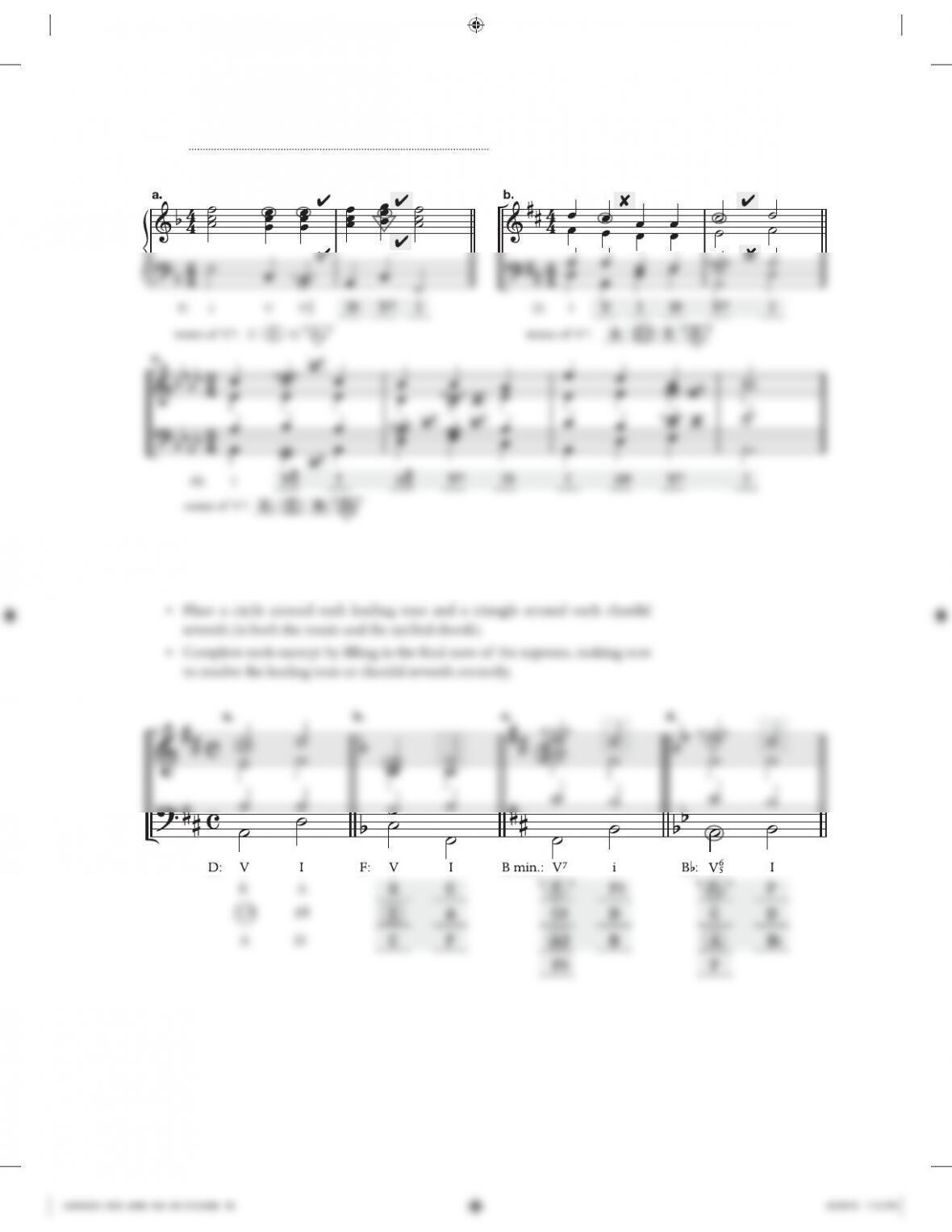
2. In each of the following, spell the V7 chord. Place an inverted triangle around the
chordal seventh (both in the spelled chord and in the music itself). Then mark
the resolution of the chordal seventh with a (for proper resolution) or (poor
resolution).
3. For each of the passages below:
• Spell the V7 chord in the given key, then identify the leading tone (circle) and
chordal seventh (inverted triangle).
• Label the chords in each passage with Roman numerals.
NAME:
4. Below are short chord progressions in which the final note of the soprano is missing.
• Write the note names of each chord in the blanks below the staff.
G. RECOGNIZING ERRORS APPROACHING
PERFECT INTERVALS
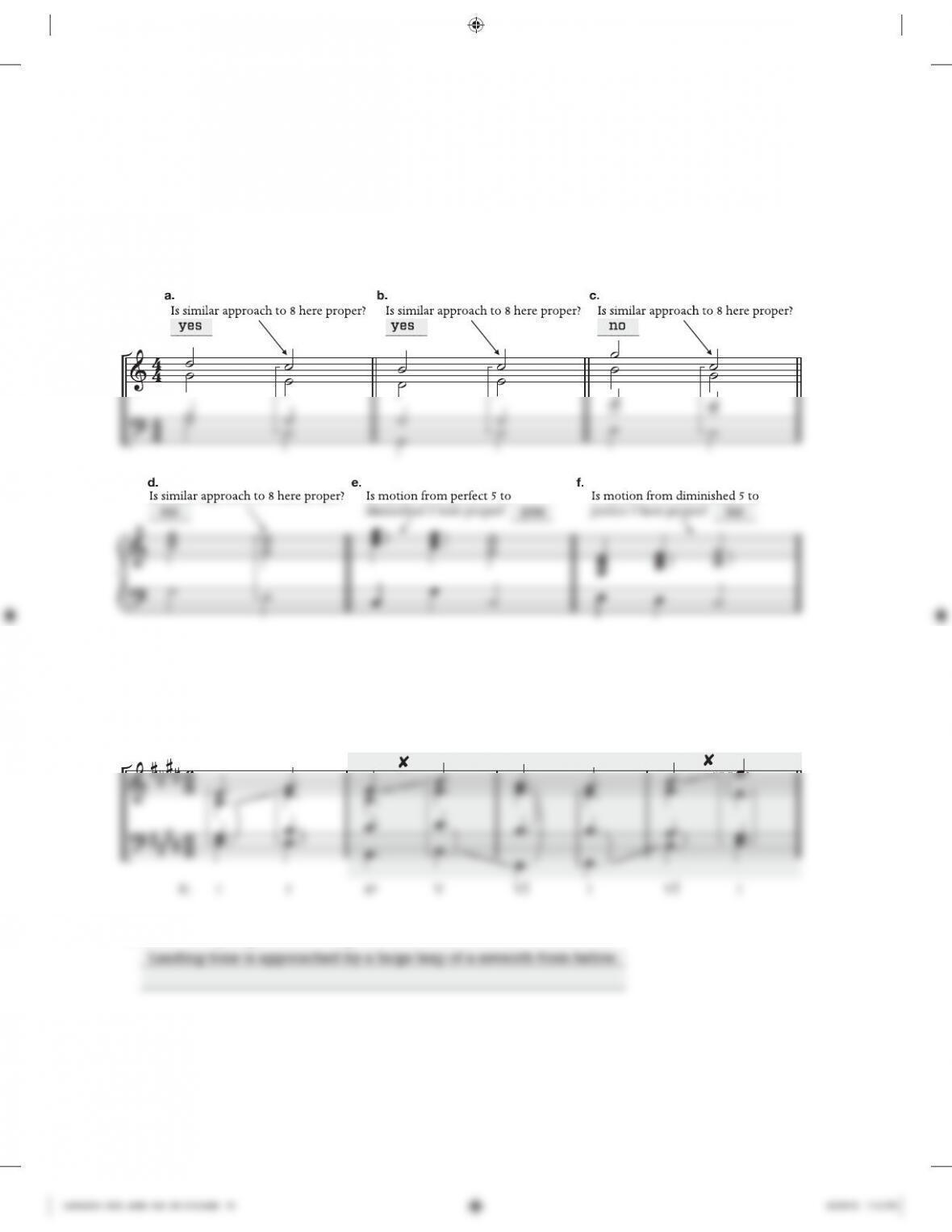
1. In each of the following exercises, a perfect interval is approached in similar
motion, a diminished fifth is followed by a perfect fifth, or a perfect fifth is followed
by a diminished fifth. Which of these are acceptable, and which involve improper
voice leading?
2. In the passage below:
• Use squiggly lines to indicate each melodic leap of a fourth or larger.
• Indicate fifths and octaves within each chord with curved and square brackets.
• Mark with an any instance in which an octave is improperly approached.
3. In the above passage, what is wrong with the bass line in the last two measures?
H. Error Detection | 71
NAME:
H. ERROR DETECTION
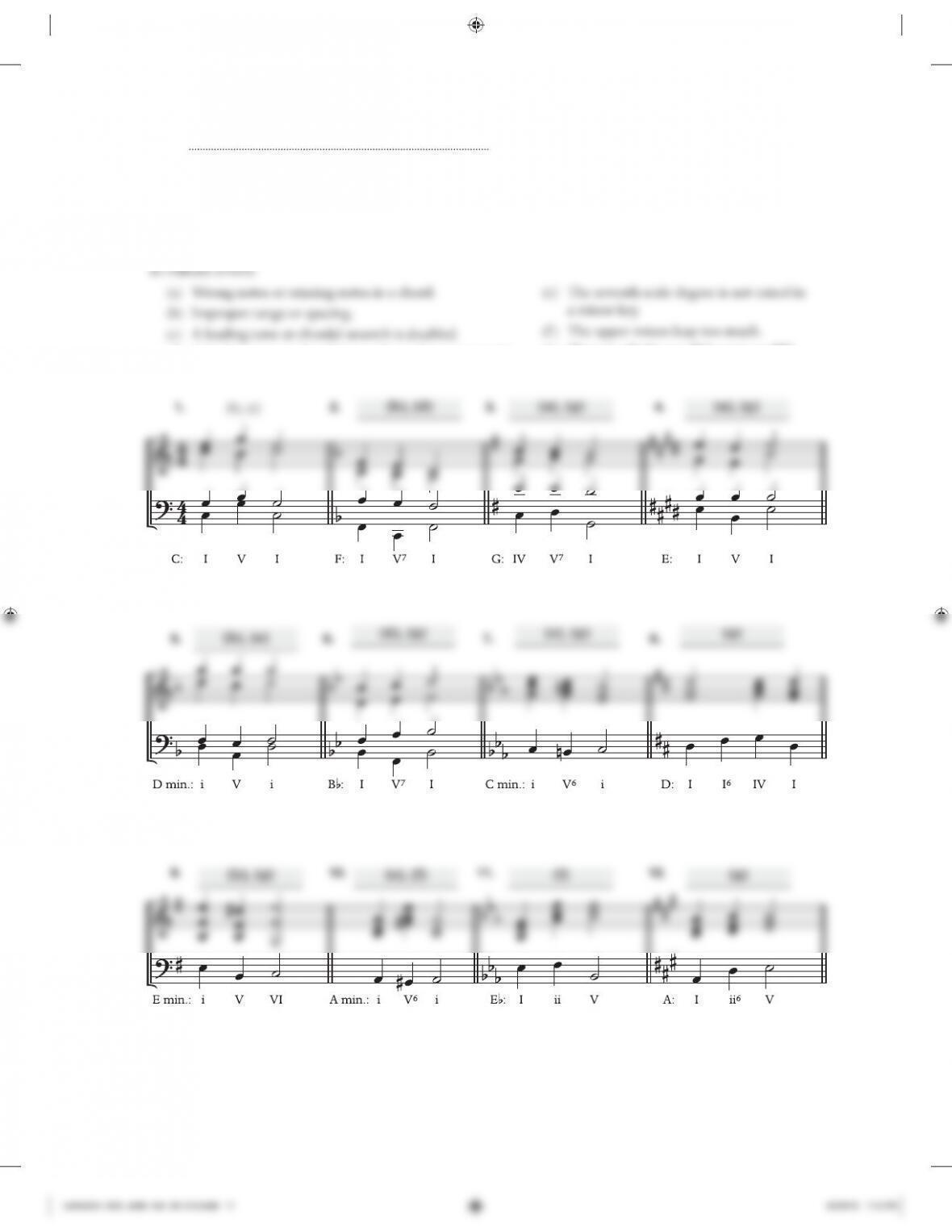
The following fragments each have one or more errors of chord construction (as
discussed in Chapter 4) or voice leading. In the spaces above the staff, use these letters
(d) A leading tone or chordal seventh resolves improperly.
(g) There is a faulty parallel octave or fifth.