
A. Questions For Review | 683
NAME:
A. QUESTIONS FOR REVIEW
1. What is a traditional tonal sentence? How are post- tonal sentences different from
tonal sentences? What is a dissolving sentence? An immobilized sentence?
2. What is a traditional tonal period? Which aspects of a traditional period are main-
tained in post- tonal practice? Which may be changed?
3. Which features of traditional sonata form are maintained in post- tonal practice?
Which may be changed?
4. What is moment form?
5. What is collage form?
6. What does it mean to say that form is process?
chapter
47 Form
684 | CHAPTER 47 | Form
B. ANALYSIS: SENTENCES
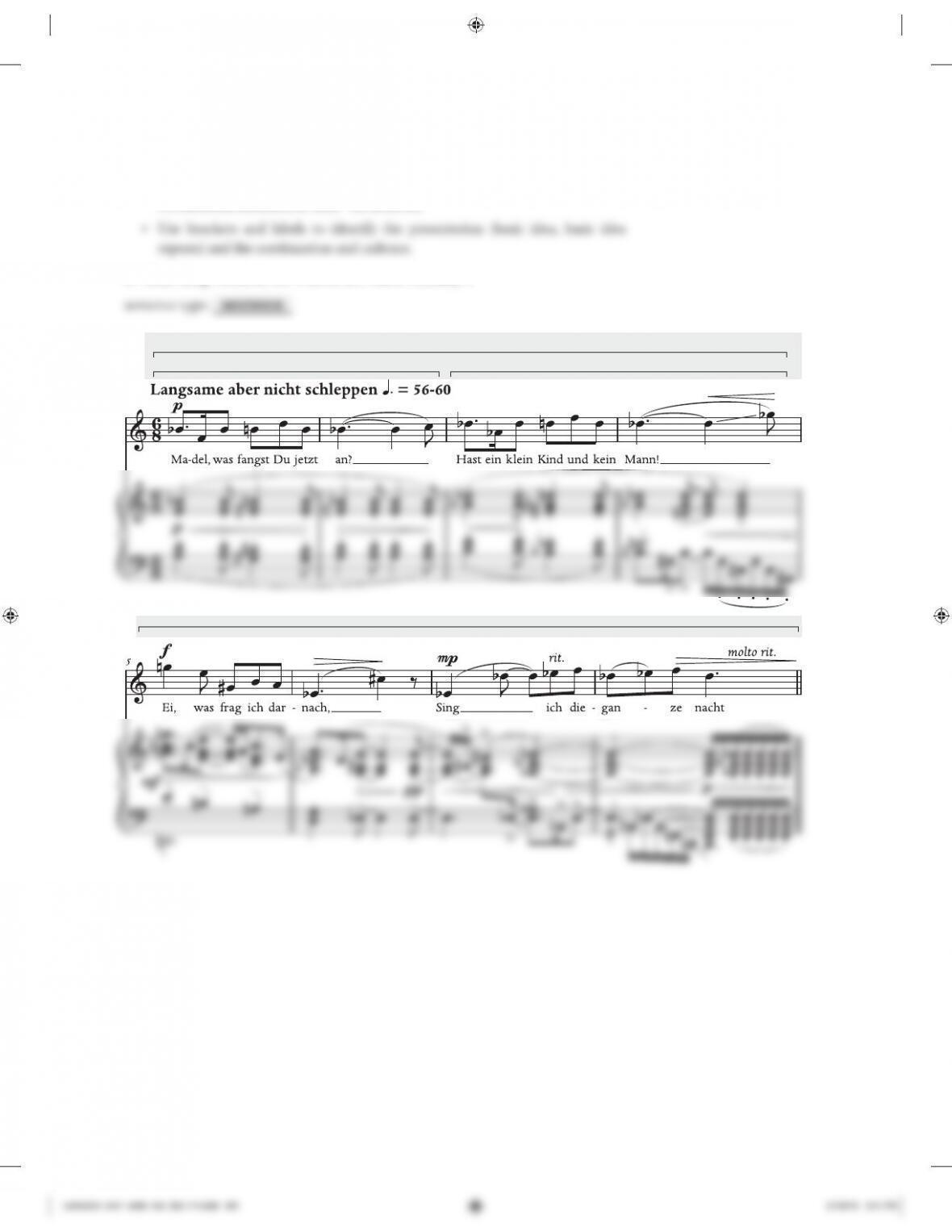
• Identify the sentence type of these examples (sentence, dissolving sentence,
immobilized sentence) or note “no sentence.”
1. Alban Berg, Wozzeck, Act 1, scene iii (“Marie’s Lullaby”)
basic idea
continuation cadence
basic idea repeats
presentation
B. Analysis: Sentences | 685
NAME:
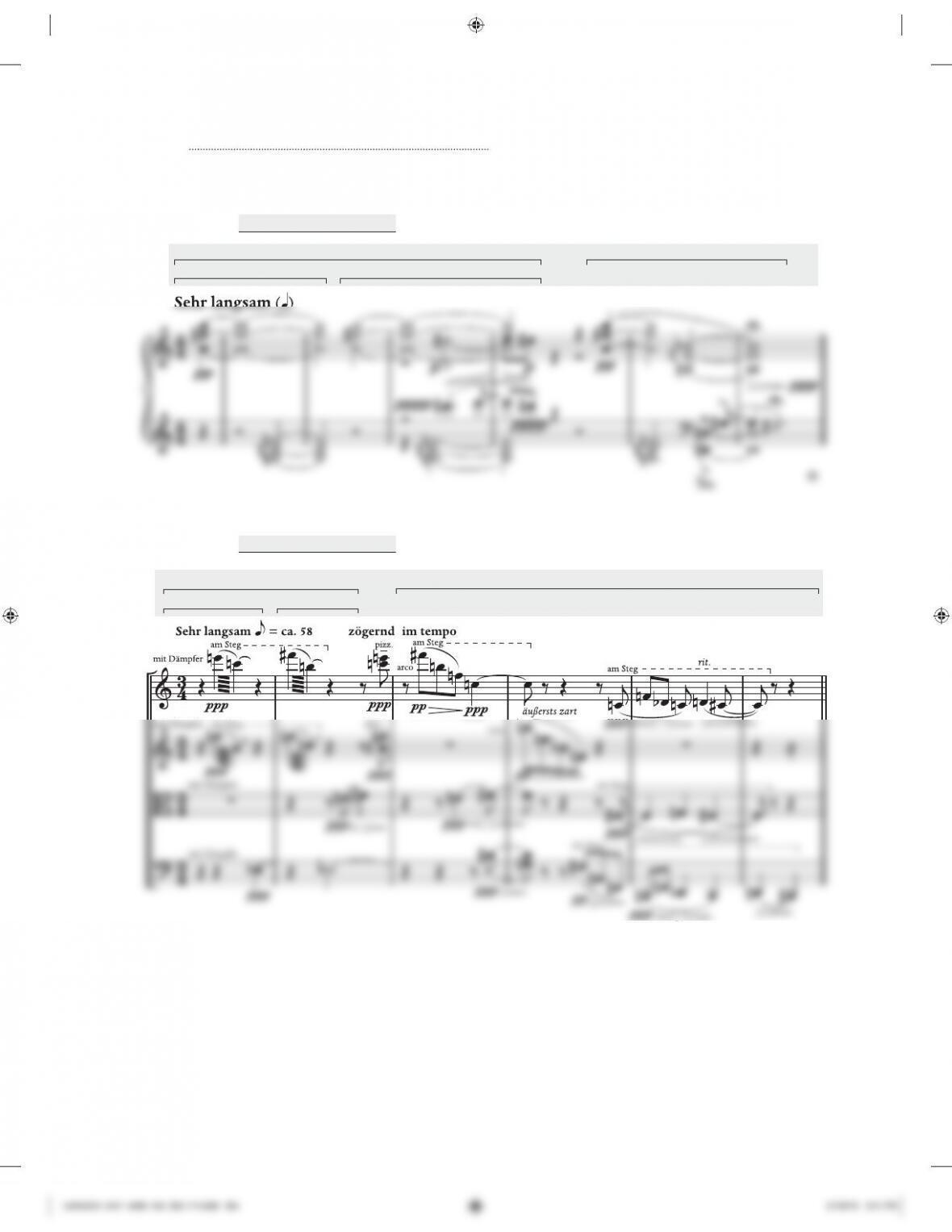
2. Arnold Schoenberg, Little Piano Pieces, Op.19, No. 6
sentence type: dissolving sentence
basic idea basic idea repeats
continuation cadence
presentation
3. Anton Webern, Movements for String Quartet, Op.5, No. 4
sentence type: dissolving sentence
basic idea basic idea repeats
cadence
continuation
presentation
686 | CHAPTER 47 | Form
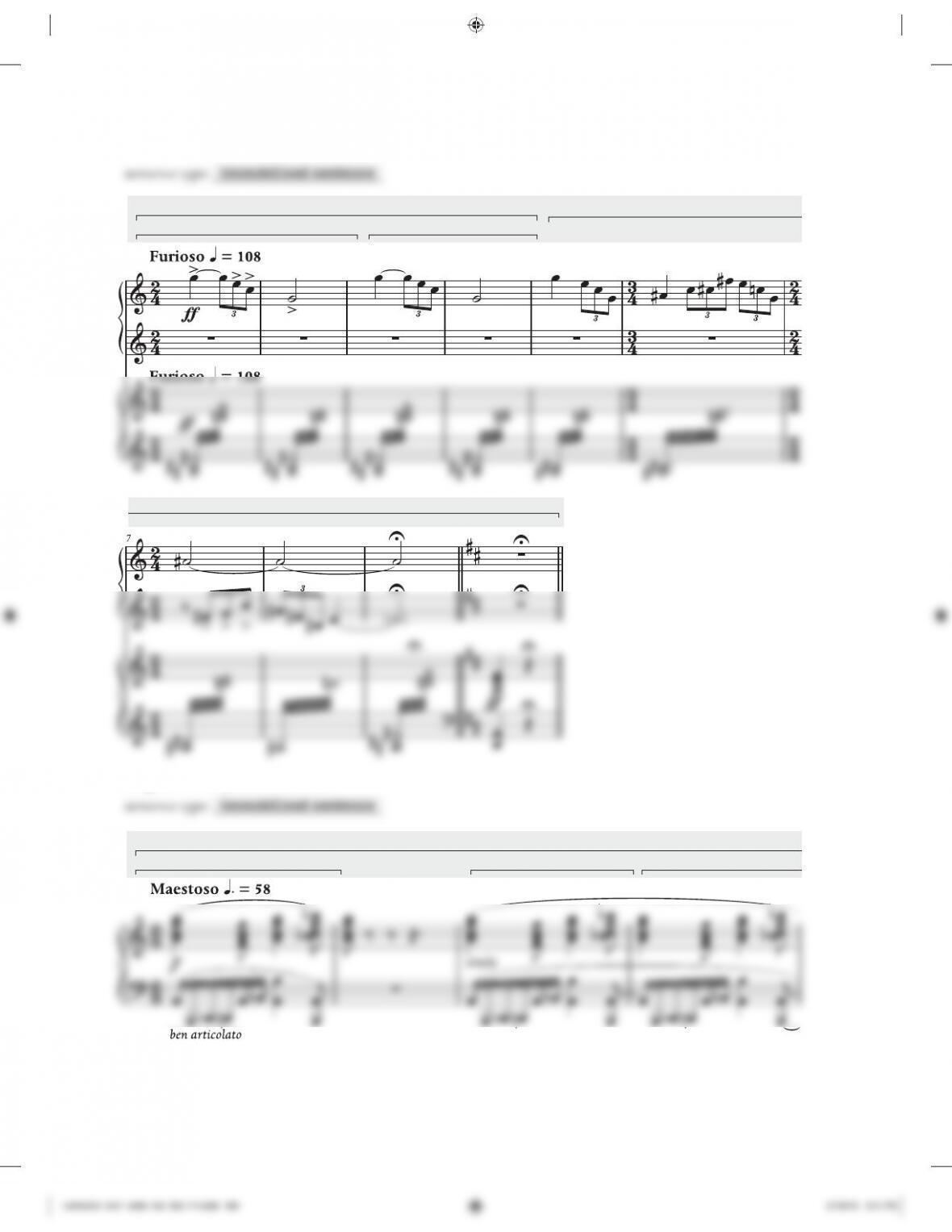
4. Igor Stravinsky, Petrushka, Second Tableau, “Petrushka’s Curses”
basic idea basic idea repeats
presentation continuation
cadence
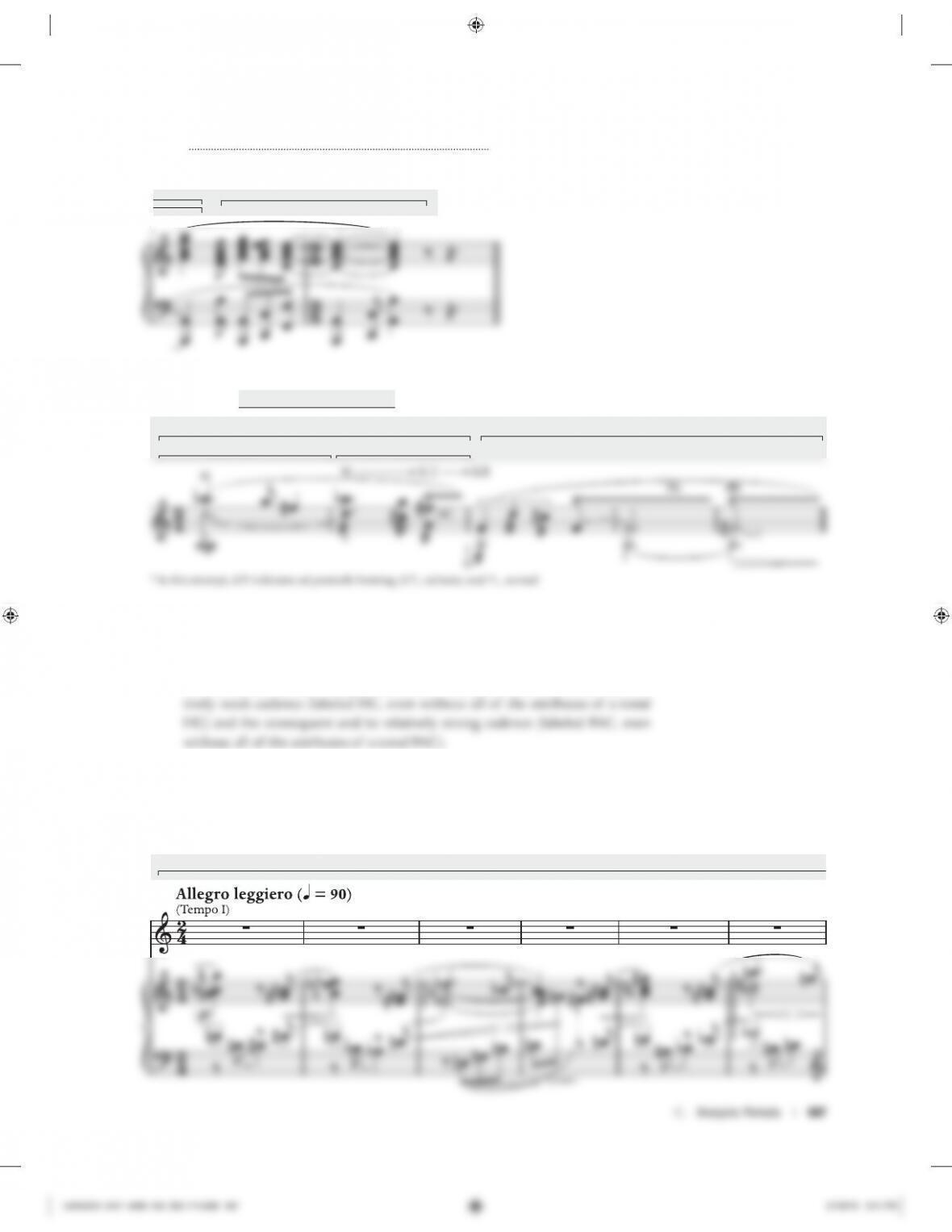
5. Igor Stravinsky, Serenade in A, i
basic idea basic idea repeats basic idea repeats
presentation
NAME:
cadence
continuation
6. Kaija Saariaho, Sept papillons (for solo cello), iii
sentence type: dissolving sentence
basic idea basic idea repeats
presentation continuation cadence
C. ANALYSIS: PERIODS
• Note whether these passages should be analyzed as periods.
• Use brackets and labels as appropriate to identify the antecedent and its rela-
1. Alban Berg, Wozzeck, Act 2, scene i
The composer identified this passage as a period with an antecedent and a conse-
quent. Can you figure out what he had in mind? Hint: Focus on the instrumental
accompaniment— the vocal melody cuts across the phrase boundaries.
antecedent
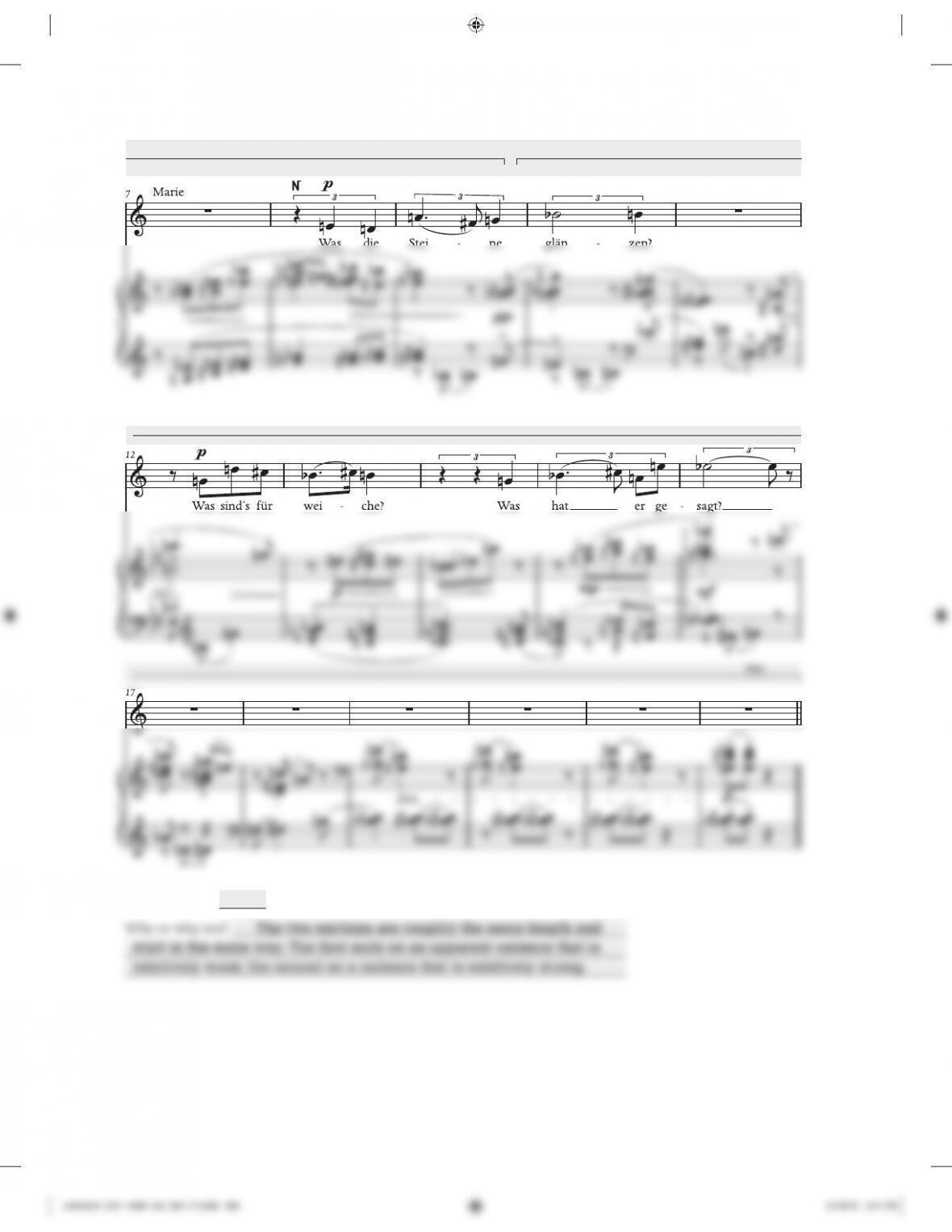
consequentHC
Is this a period? yes
C. Analysis: Periods | 689
NAME:
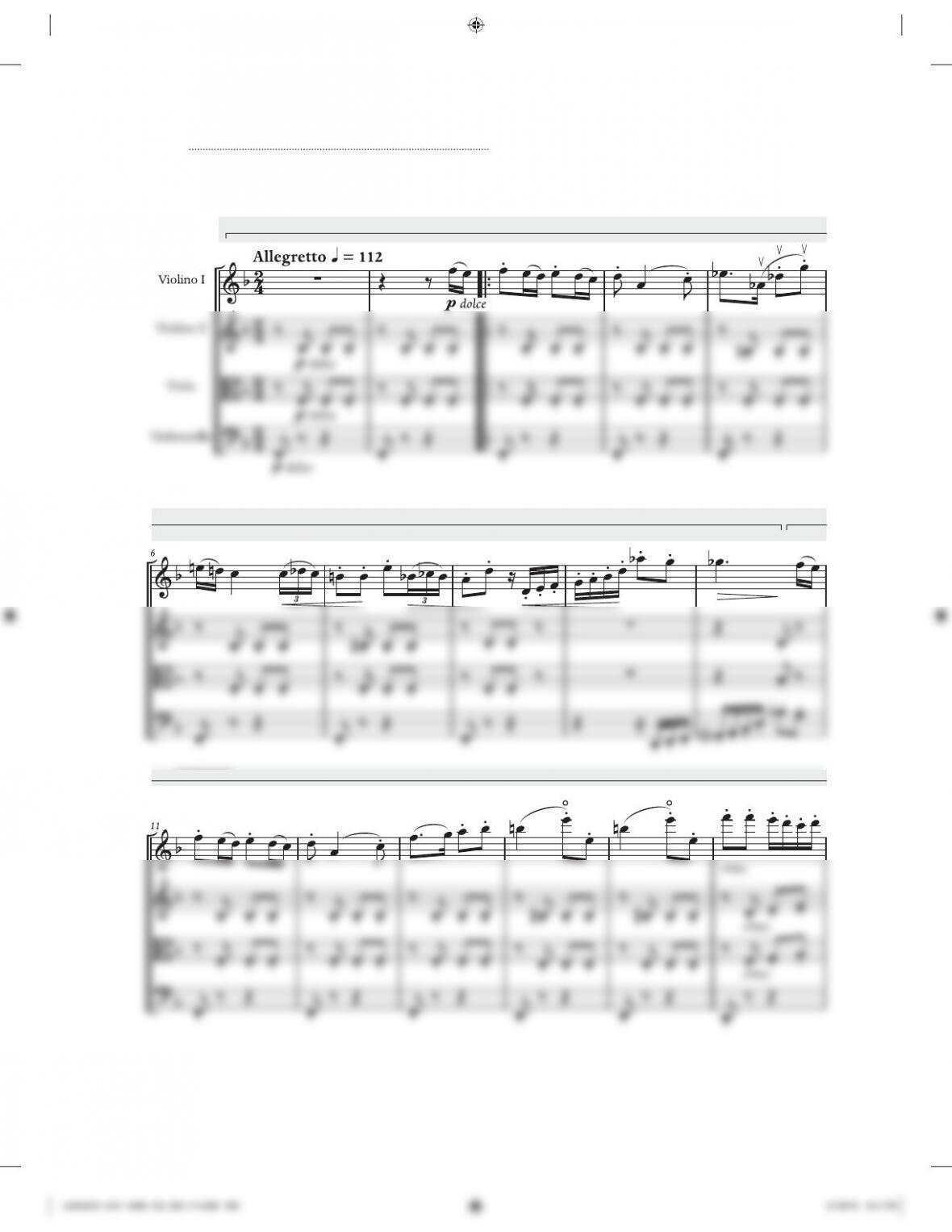
2. Dmitri Shostakovich, String Quartet No. 3, i
antecedent
HC
consequent
690 | CHAPTER 47 | Form
PAC
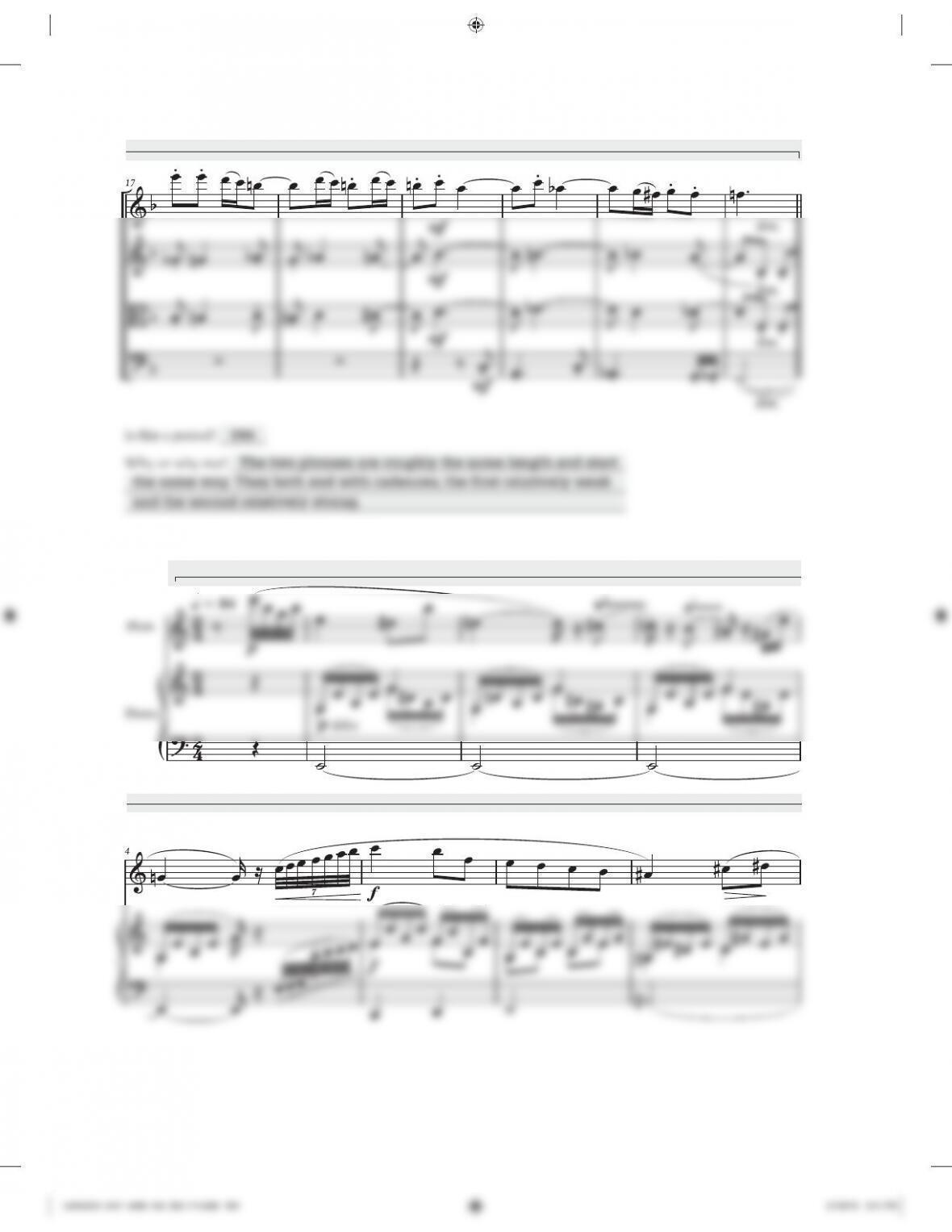
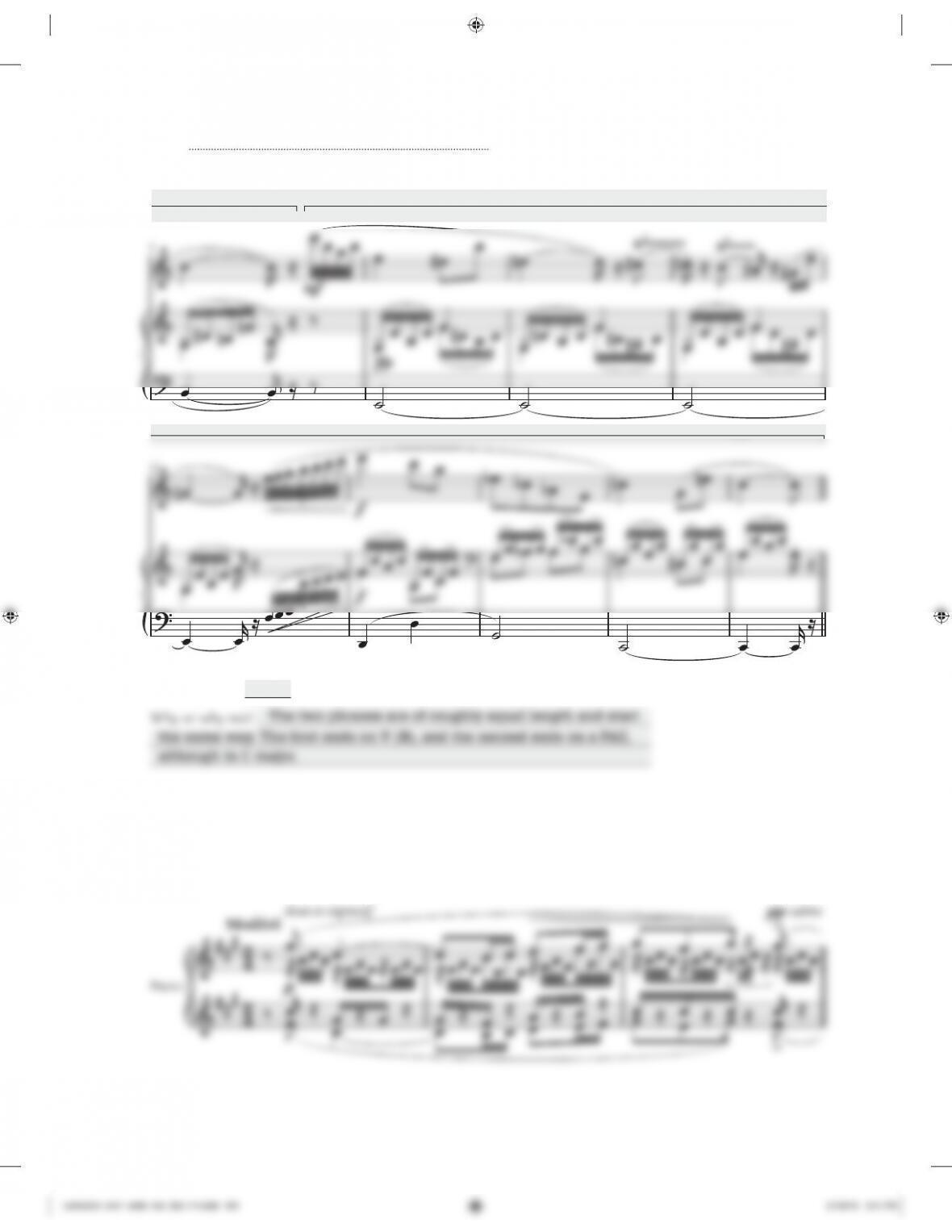
3. Francis Poulenc, Sonata for Flute and Piano, i
antecedent
D. Analysis: Sonata Form | 691
NAME:
HC consequent
PAC
Is this a period? yes
D. ANALYSIS: SONATA FORM
Answer the questions following each example.
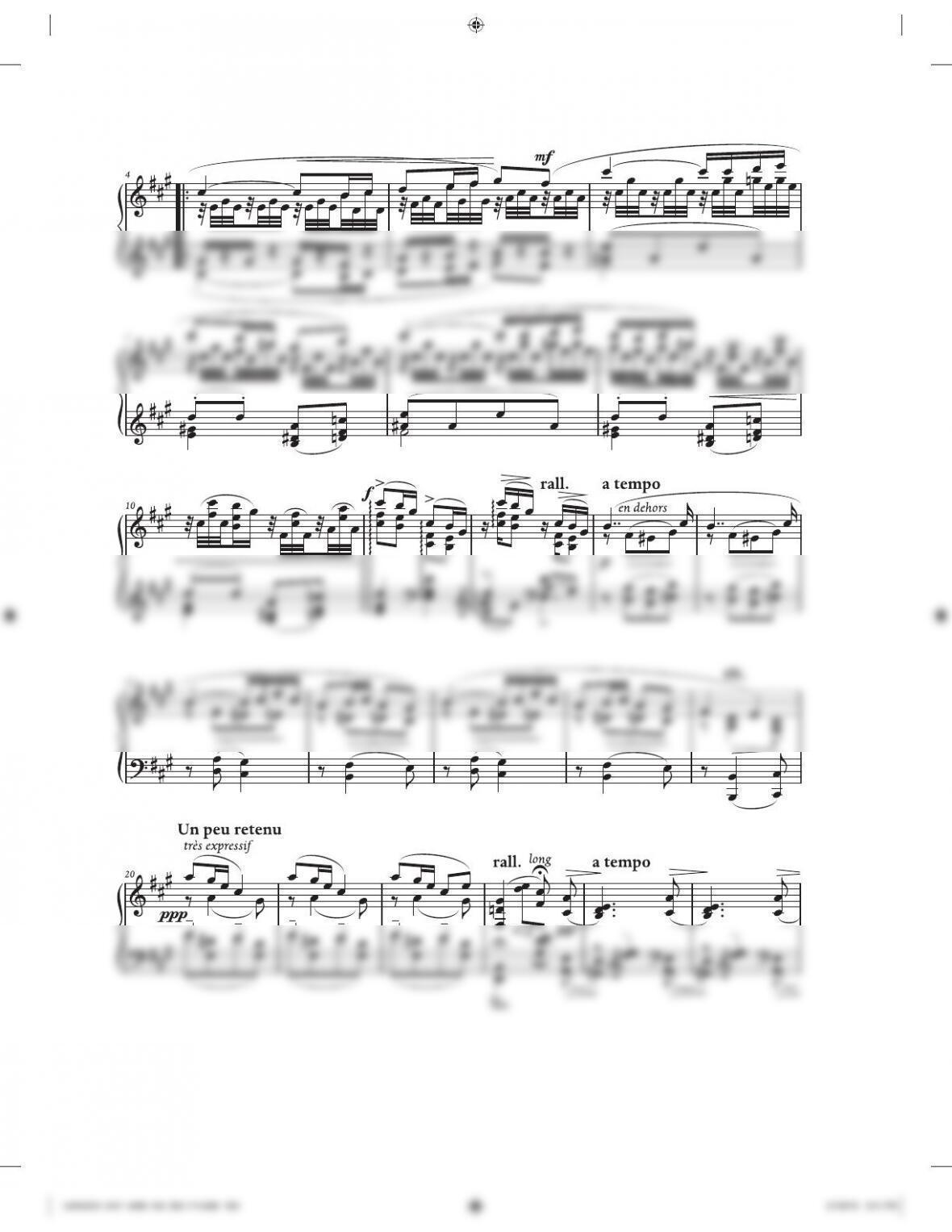
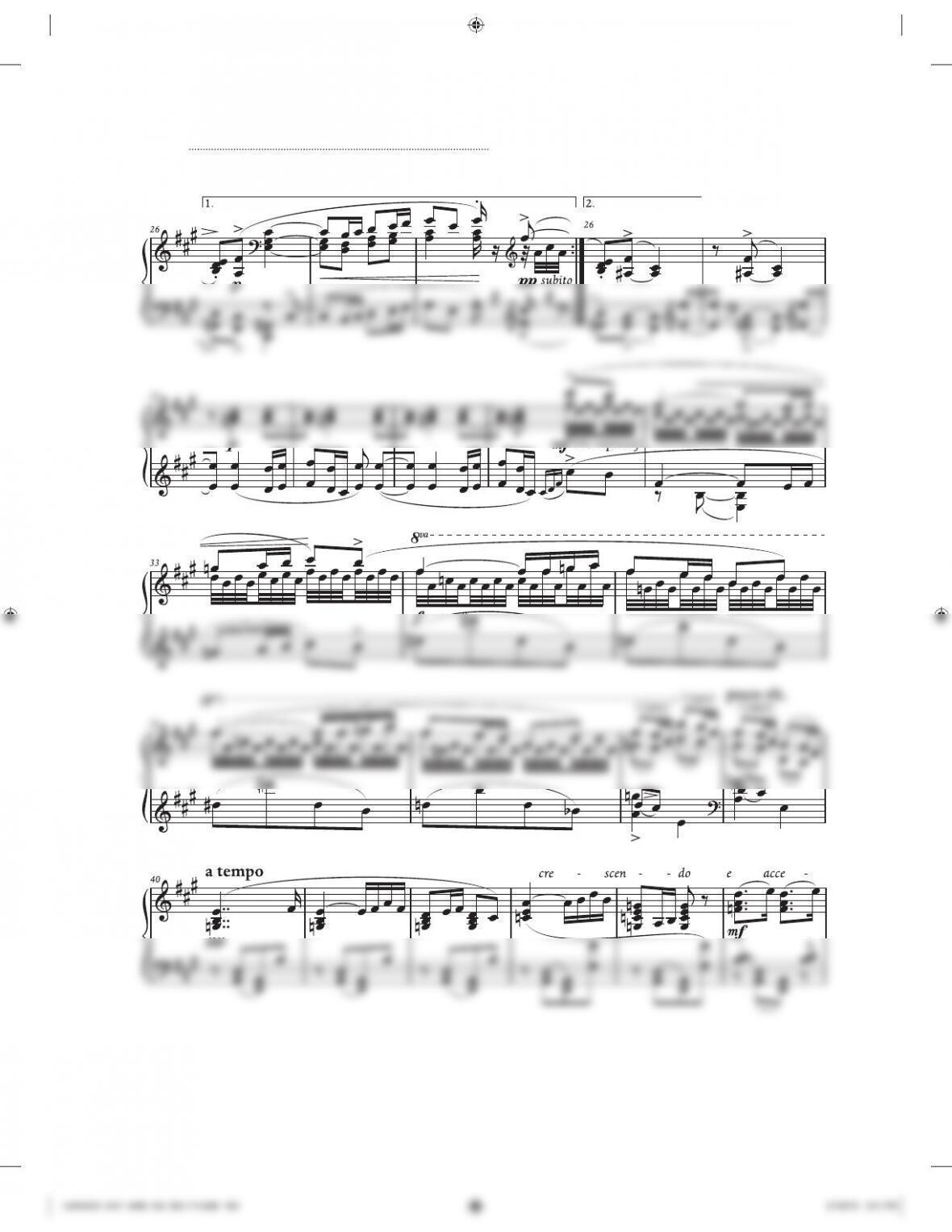
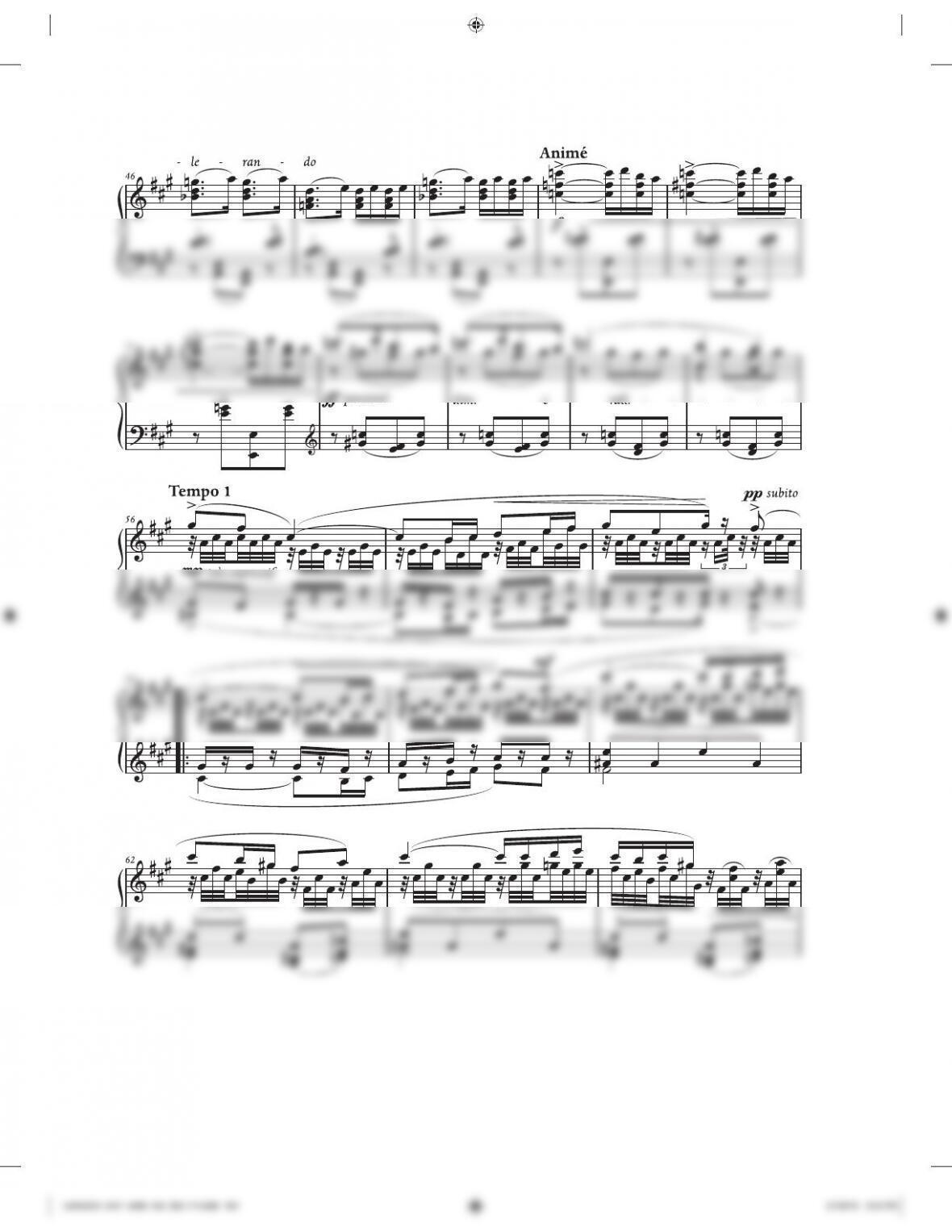
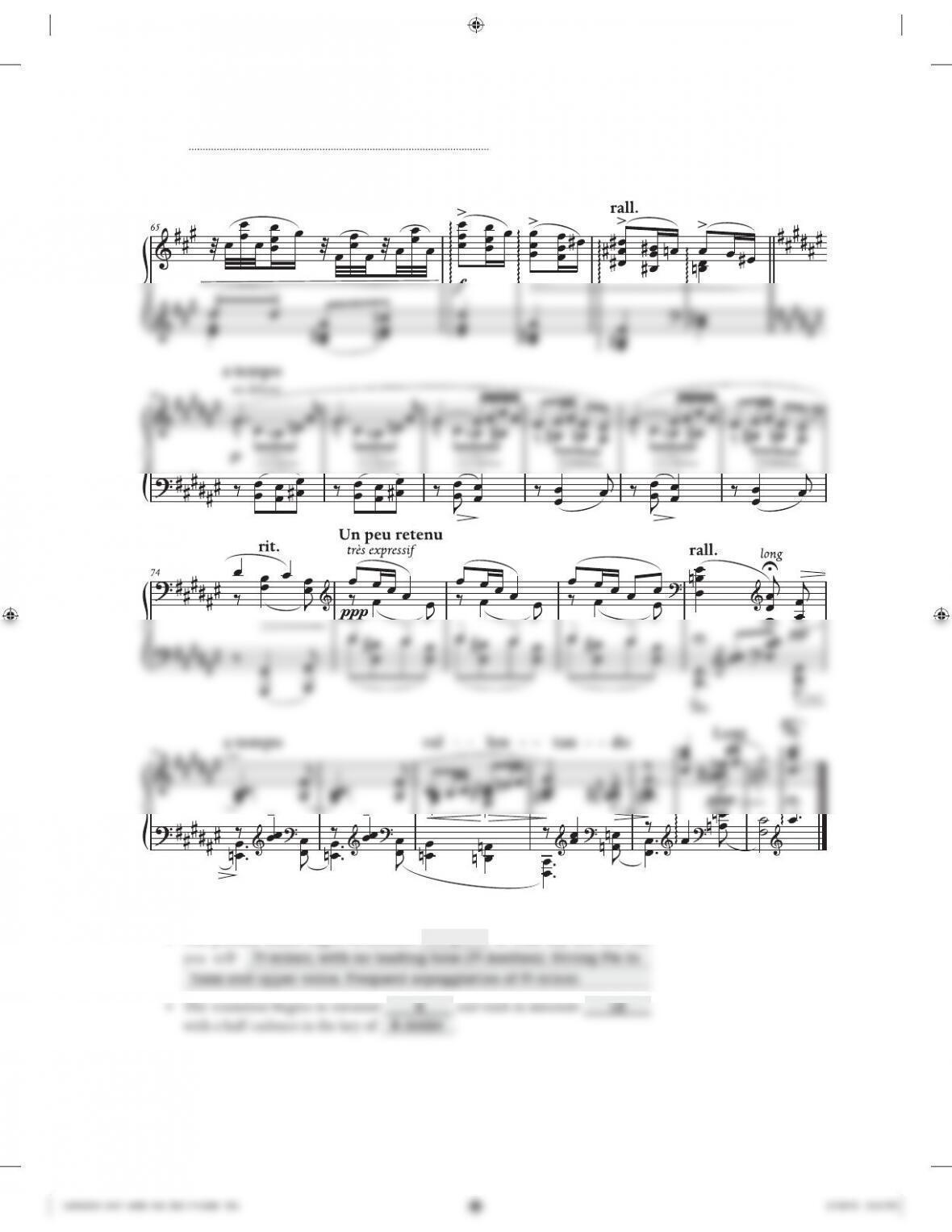
1. Maurice Ravel, Sonatine, i
692 | CHAPTER 47 | Form
D. Analysis: Sonata Form | 693
NAME:
694 | CHAPTER 47 | Form
NAME:
Exposition
• The primary theme begins in measure 1. In what key, and how can
696 | CHAPTER 47 | Form
• The secondary theme begins in measure 13 . In what key(s) is it in?
Development
• The development begins in measure 26 .
• Which theme returns in measure 31 and in what key? primary theme in B
• Which theme returns in measure 40, and in what key does it begin?
• The theme that begins in measure 40 is rapidly transposed upward. Name
the measures in which it is transposed, identify the starting melodic note, and
Recapitulation
• The recapitulation begins in measure 56 . Which theme? primary
How does the key compare to the secondary theme in the exposition?
• The closing section begins in measure 75 .
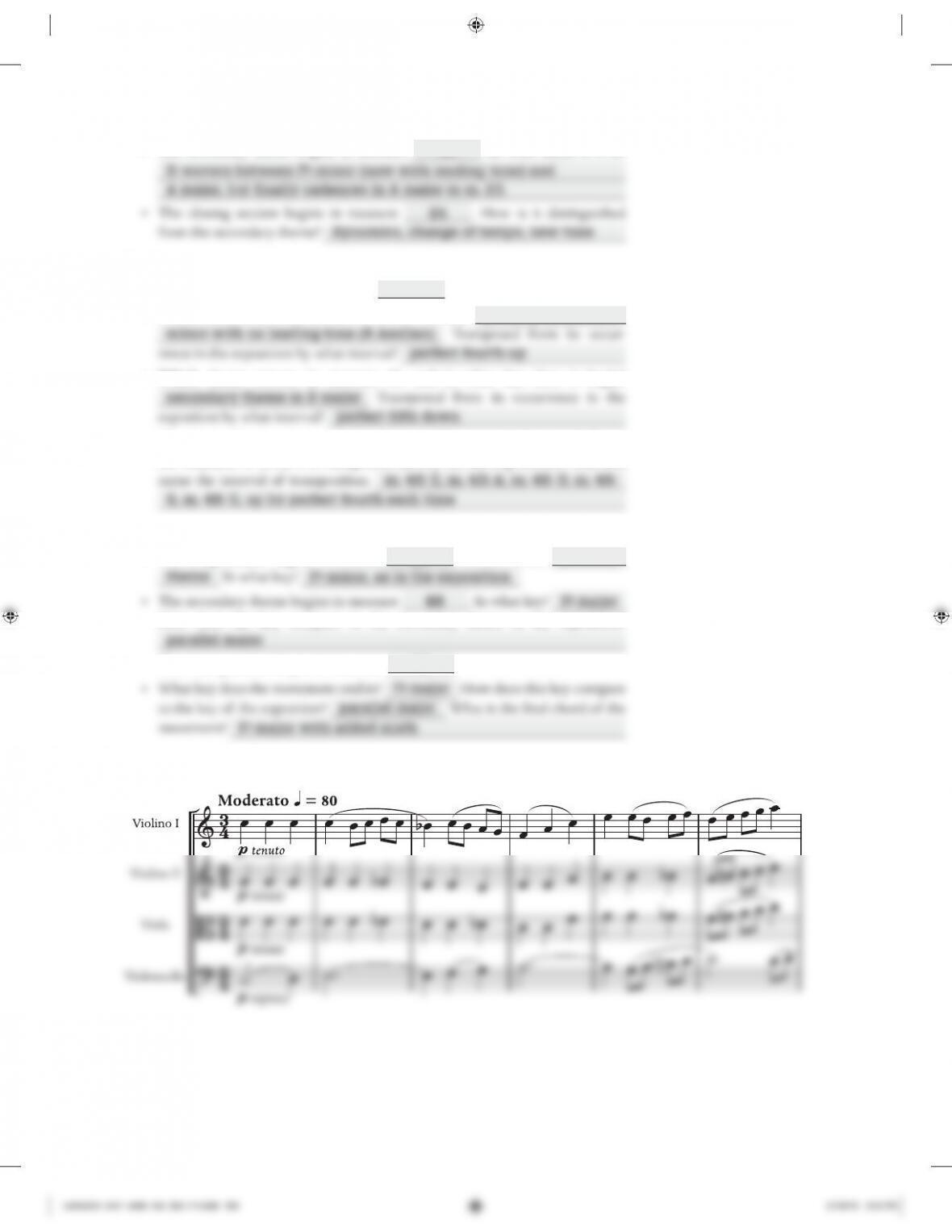
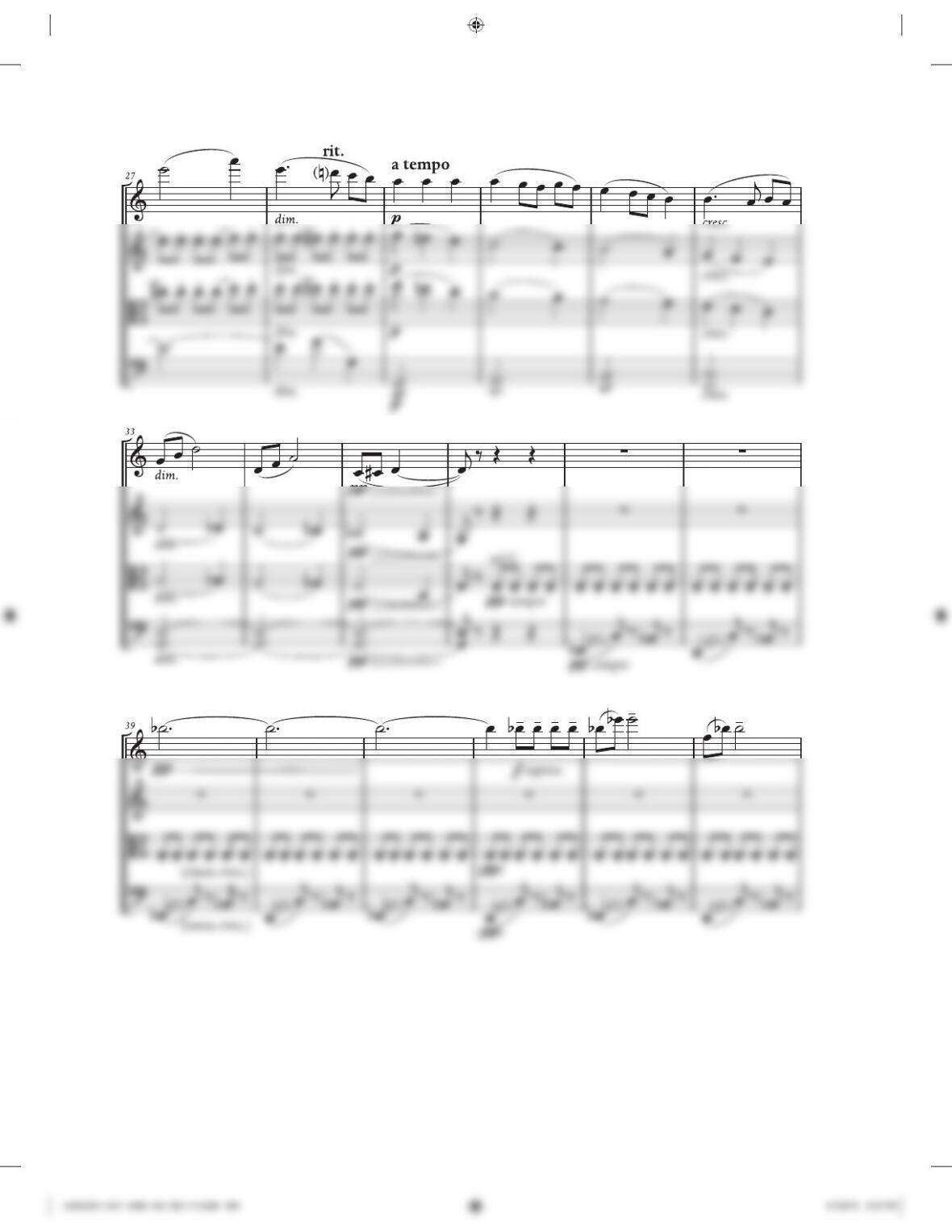
2. Dmitri Shostakovich, String Quartet No. 1, i
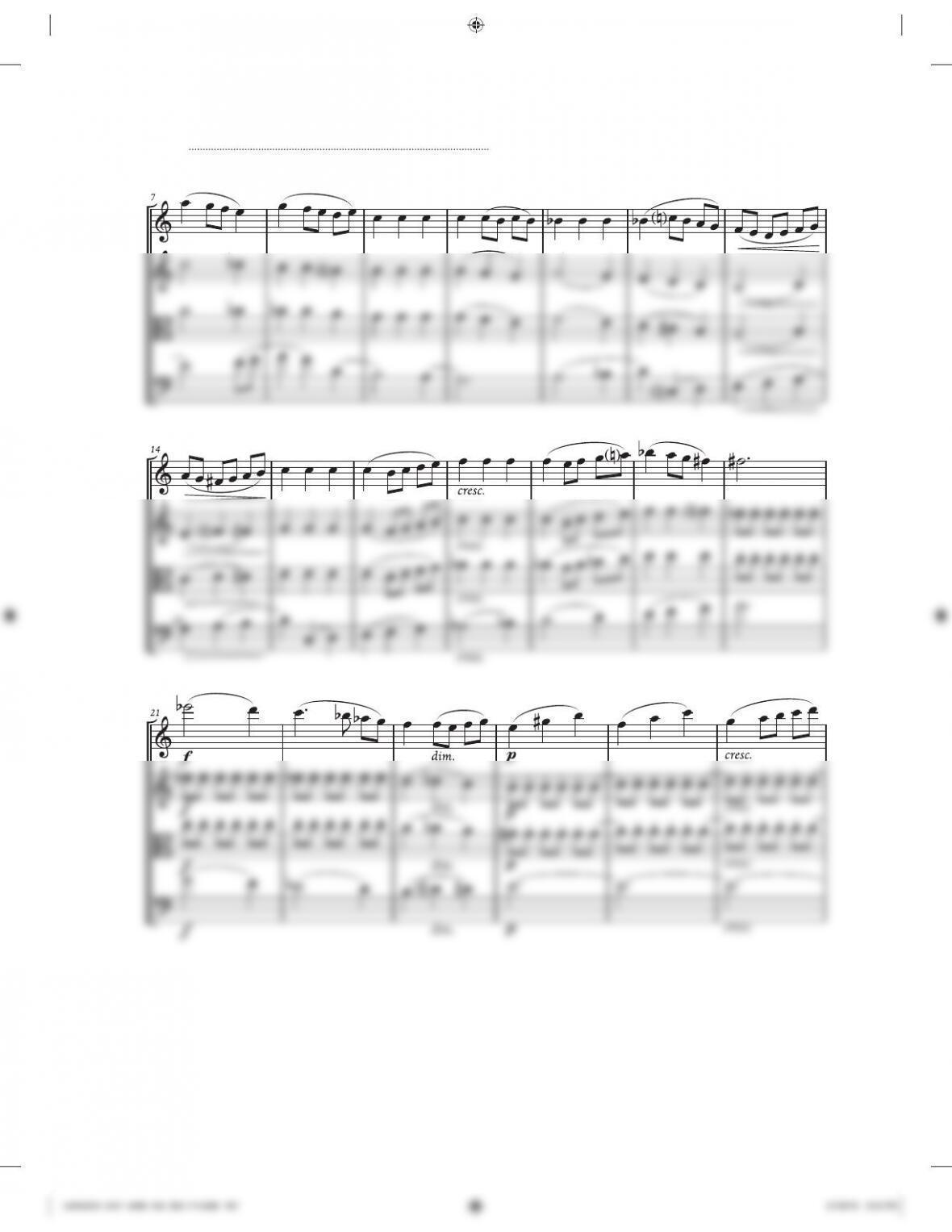
D. Analysis: Sonata Form | 697
NAME:
698 | CHAPTER 47 | Form