NAME:
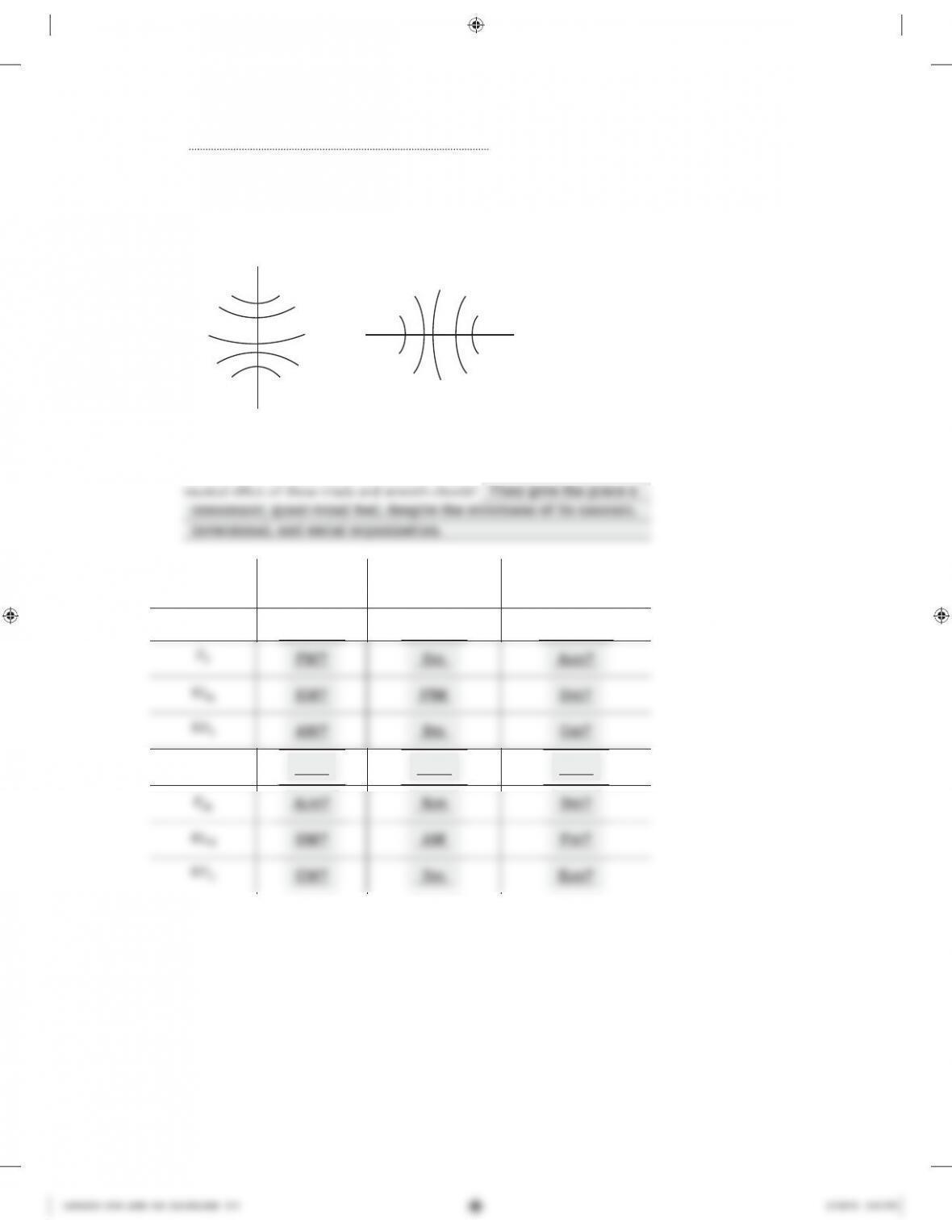
• The two halves of the piece have different axes of inversional symmetry: T0I
and T6I. Draw those axes on these pitch-class clockfaces. How are the axes of
symmetry manifested in the music? Do they receive any special treatment?
T0IT6I
CC#
F#
G#
D#
B
A
GF
E
BbD
CC#
F#
G#
D#
B
A
GF
E
D
Bb
• The series is notable for its inclusion of traditional tonal harmonies, including
two seventh chords and a triad with an added semitone. Complete the table below
with the triads and seventh chords that are featured in each row form. What is the
Row
form
First four
notes
Middle four
notes
Last four
notes
IGAbM7 BbMF
#m7
IBbBM7 DbM Am7
672 |CHAPTER 46 |Twelve-Tone Serialism
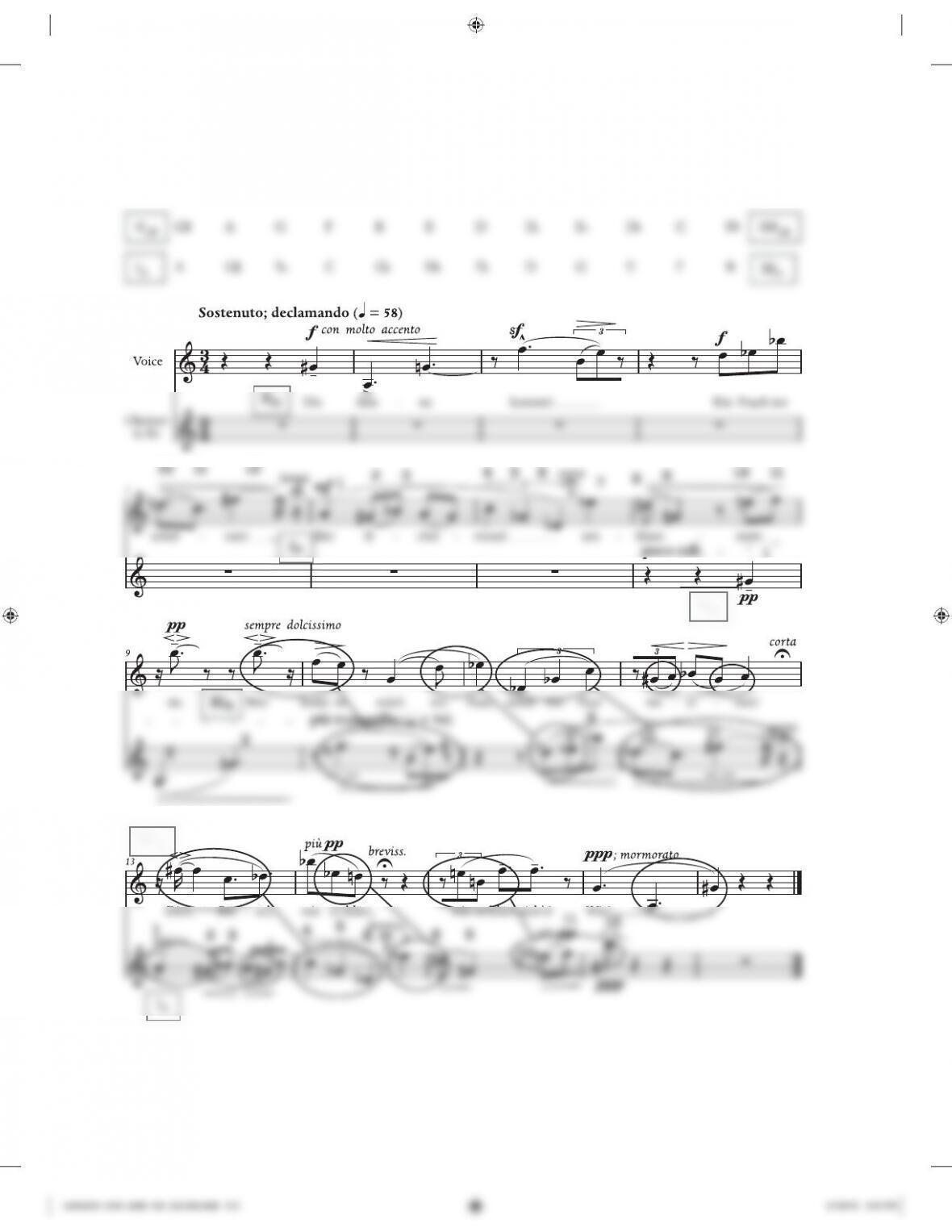
6. Luigi Dallapiccola, Goethe Lieder, No. 2, “Die Sonne kommt!”
• Provide a twelve-count of the passage. The music is based on two series forms
(PG# and IA) and their retrogrades (RPG# and RIA).
1
1
10
11
12 12
2
3
4
5
6
7
8
9
9
RIA
2
PG#
RPG#
1
10
11
12
2
3
4
5
6
7
8
9
Translation: The sun comes! A shining splendor! The crescent moon embraces it. Who could unite such
a pair? This riddle, how can it be explained? How?
NAME:
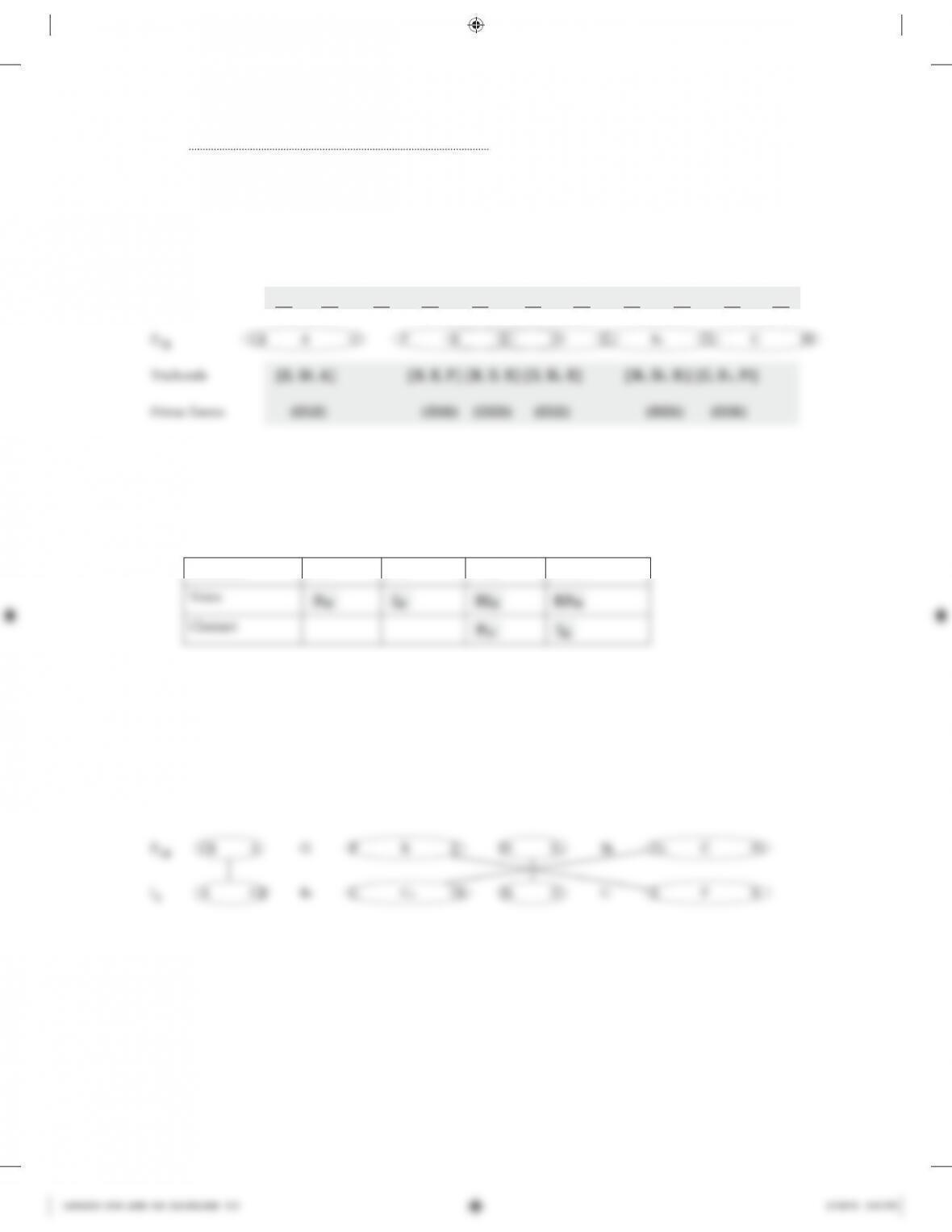
• Identify the ordered pitch-class intervals in PG#. Circle and label (with normal
and prime forms) any trichord-types that occur more than once in the row
(bearing in mind the possibility that trichords may overlap.
opci 1 10 10 6 5 10 1 7 3 11 6
# A G F B E D Eb B
• Describe the intervallic and trichordal organization of the series and its realiza-
tion in the vocal melody.
• PG#, IA, and their retrogrades are the only series forms used in the piece. Fill in
the chart below, showing where and in which part the series appear.
Measures 1–5 6–9 9–12 13–17
• How do the row forms organize the vocal line? What is the relationship between
the clarinet melody and the vocal melody in their row forms? Their pitches?
Their rhythms?
• Compare the two series forms and look for invariant dyads and trichords (groups
of two or three notes that are the same in both series). Circle them and connect
them with lines. Circle these invariants in mm. 9–17 of the score, and connect
them with lines. What is the musical effect of these invariants?
# A G F B E D Eb B
674 |CHAPTER 46 |Twelve-Tone Serialism
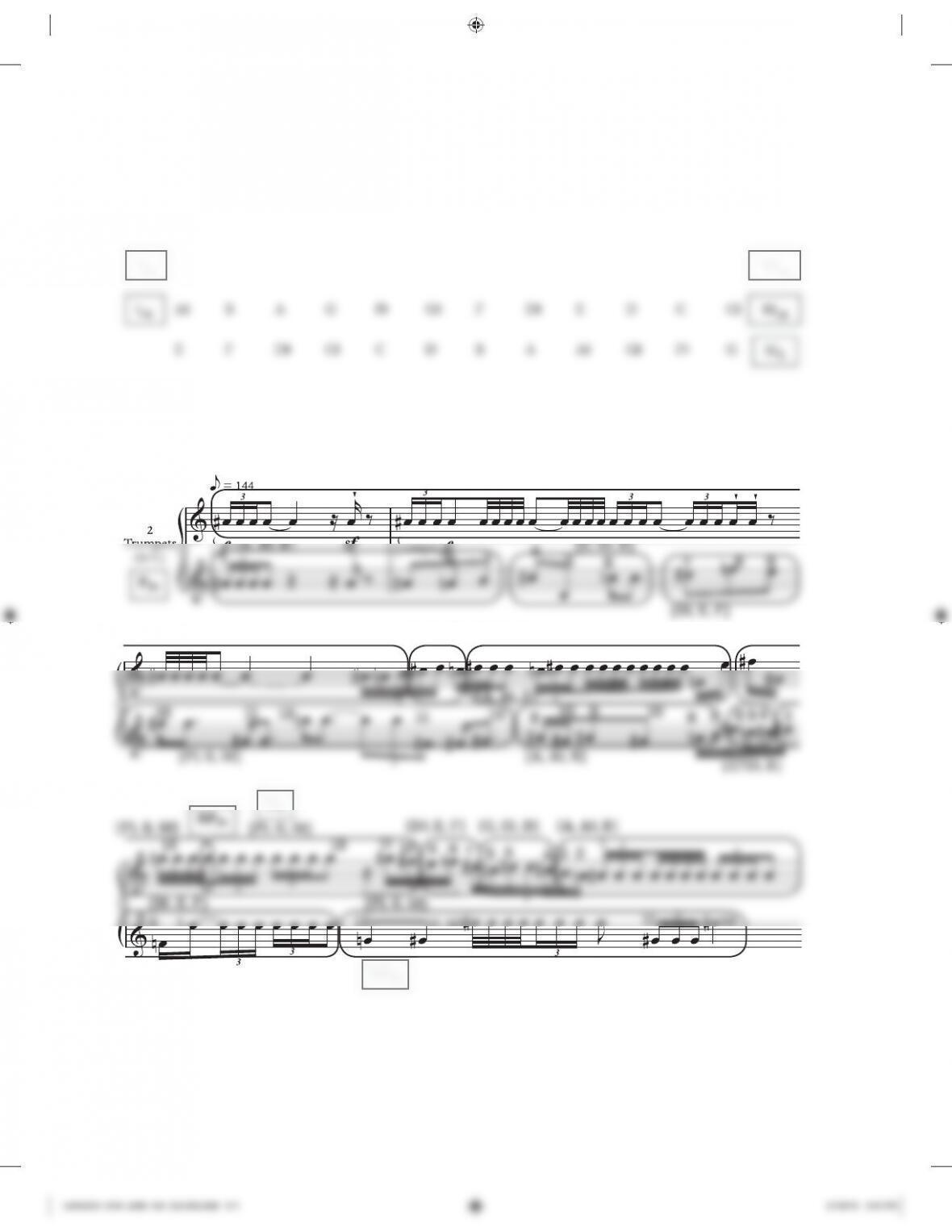
7. Igor Stravinsky, Fanfare for a New Theatre
This piece uses four series forms: PA#, its retrograde (RPA#), the inversion that starts
on A# (IA#), its retrograde (RIA#), and the retrograde of the inversion that ends on G,
which is the last note of PA# (RIE).
PA#A# A B C# D C D# F E F# G
# G
RPA#
# B A G F# G
# F D# E D C C#
#
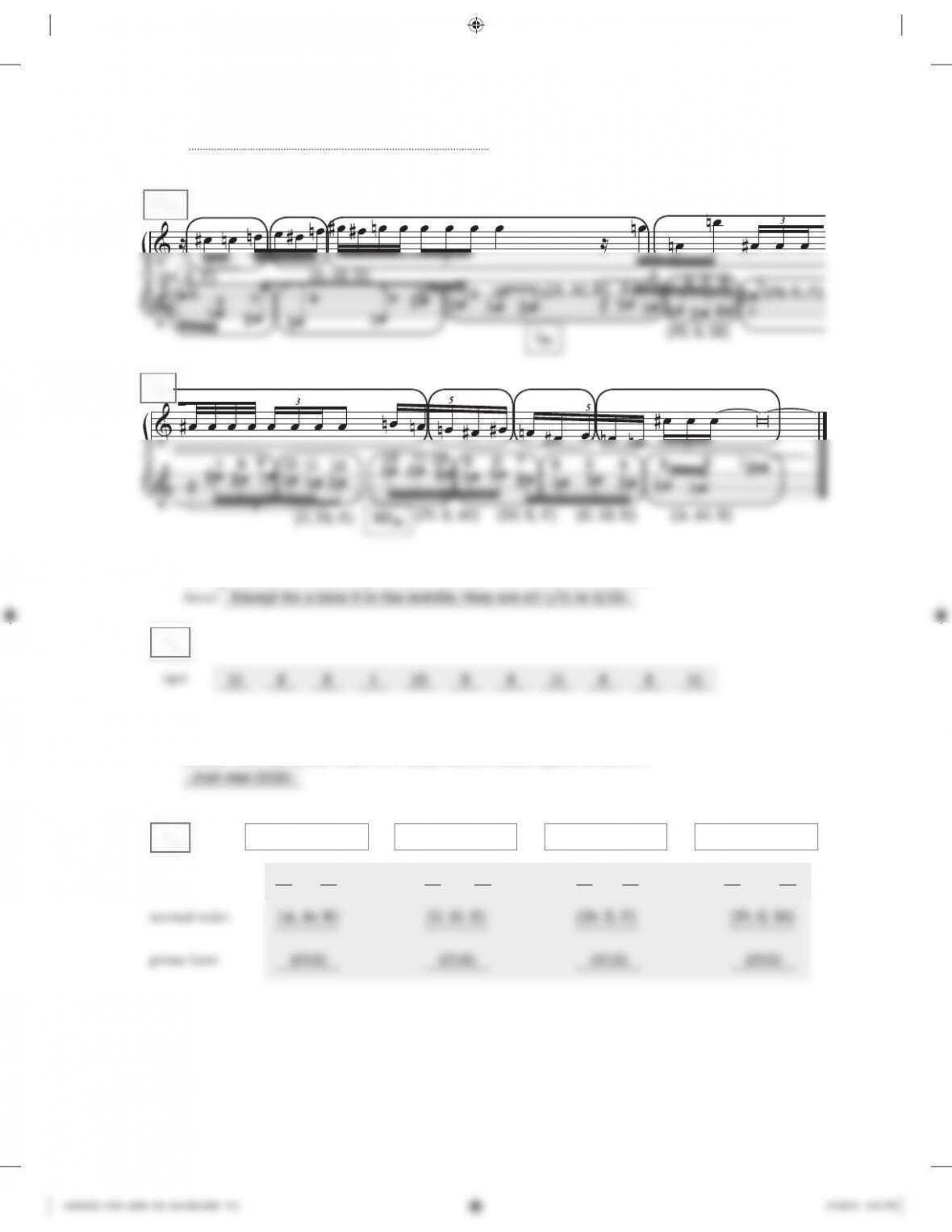
• Do a twelve-count (label the series forms and number the pitches within each
series form 1–12, or in the case of R and RI, 12–1). Note that the last note of one
series is frequently the first note of the next.
[A, A#, B]
[C, C#, D]
[D#, E, F]
[F#, G, G#]
21
3
4
11 11
10 10
12
RPA#
NAME:
[A, A#, B]
[C, C#, D]
[D#, E, F]
[F#, G, G#]1
2
3
4
5
6
7
8
9
11 10
12
[C
1
1
RIA#
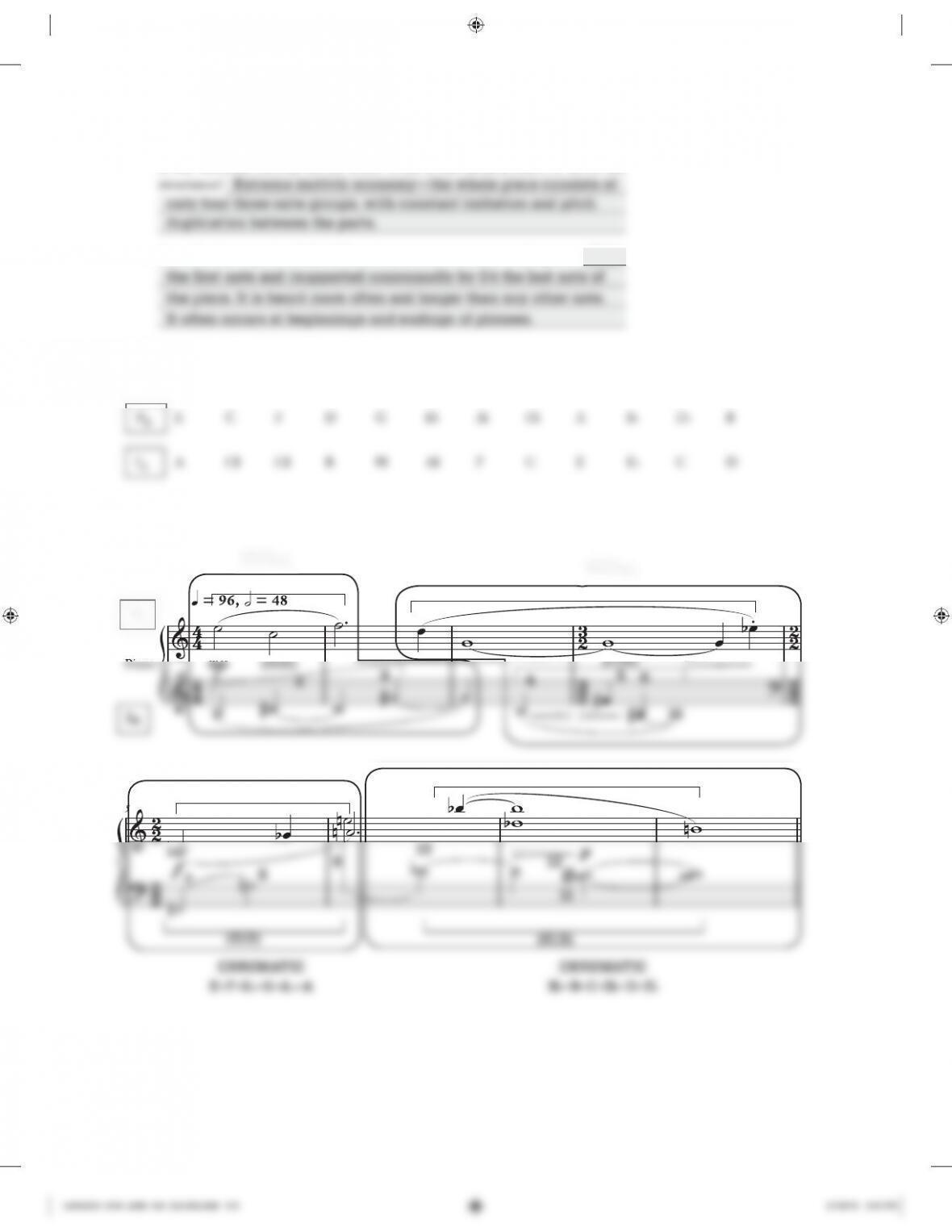
• On PA#, identify the ordered pitch-class, intervals. How would you describe
PA#A# A B C# D C D# F E F# G
# G
• The row can be divided into four trichords, as shown below. Identify the
ordered pitch-class intervals in each trichord, and label each trichord with its
normal order and prime form. How many trichord classes appear in the row?
PA#A# A B C# D C D# F E F# G
# G
opci
11 2 1 10 2 11 2 11
676 |CHAPTER 46 |Twelve-Tone Serialism
• There is extensive invariance among the series forms. Label the normal forms
ofthe trichords directly on the score. What is the musical effect of all of this
• Describe the ways in which A# functions as a centric tone in this piece. It is
8. Charles Wuorinen, Twelve Pieces, No. 3
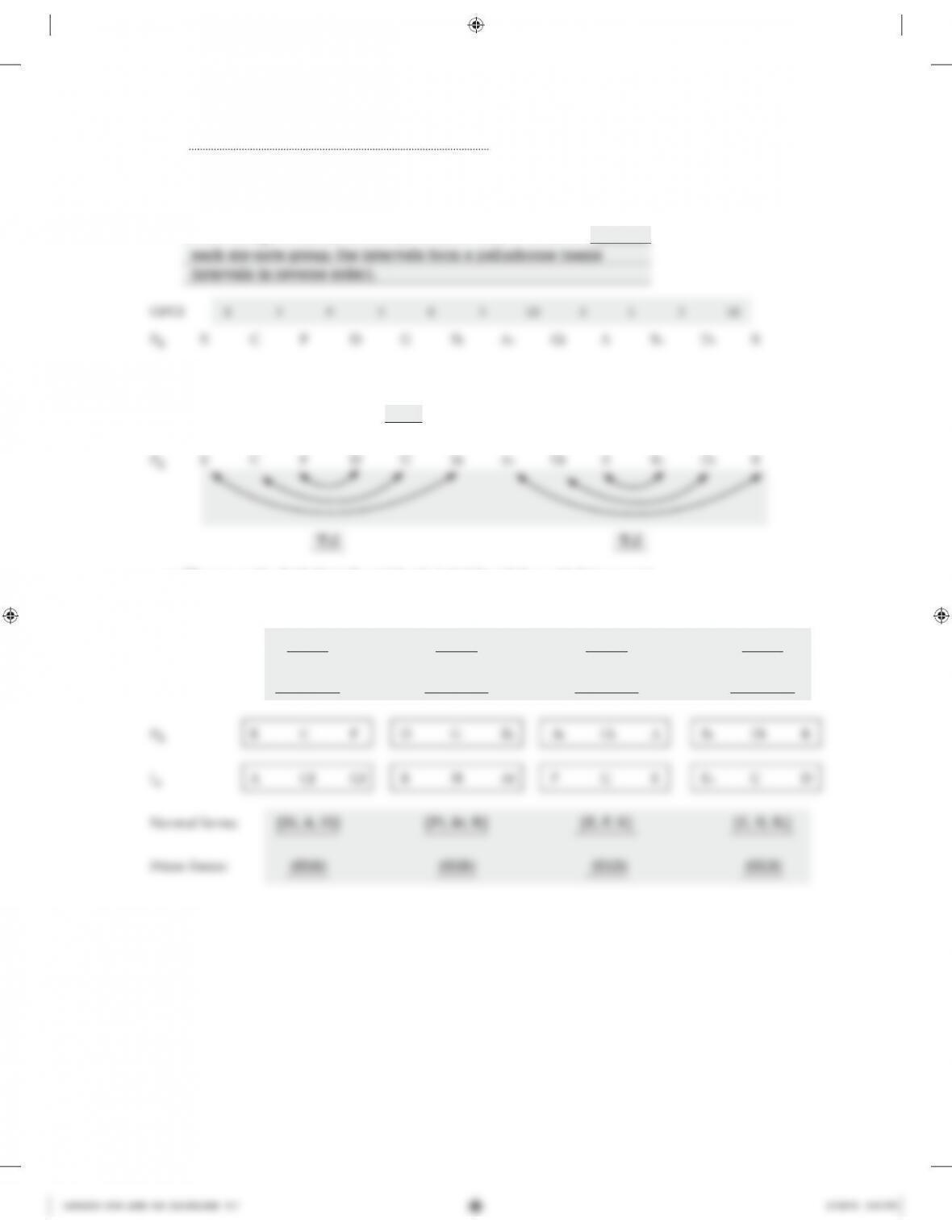
This short piece uses a pair of inversionally related series forms:
IA A C# G
• Provide a twelve-count directly on the score, noting series forms and number-
ing the pitches in each series.
(015)
(015)
1
2
3
4
5
6
(013)
(013)
7
8
9
10
12
11
PE
HEXCDbHEXDEb
NAME:
• Write the ordered pitch-class intervals between adjacent pitch classes in PE.
Are there any patterns among the intervals formed by the first six notes of the
series? Among the intervals formed by the last six notes of the series? Within
• The interval pattern suggests that each six-note group is related to itself by
inversion. Identify the Tnl that inverts each six-note group onto itself, and slur
together the inversional partners. T7I
• The row can be divided into four trichords. Label them below with their normal
order and prime form. Then label the trichords on the score.
Prime forms: (015) (015) (013) (013)
Normal forms: [C, E, F] [D, Eb, G] [Gb, Ab, A] [Bb, B, Db]
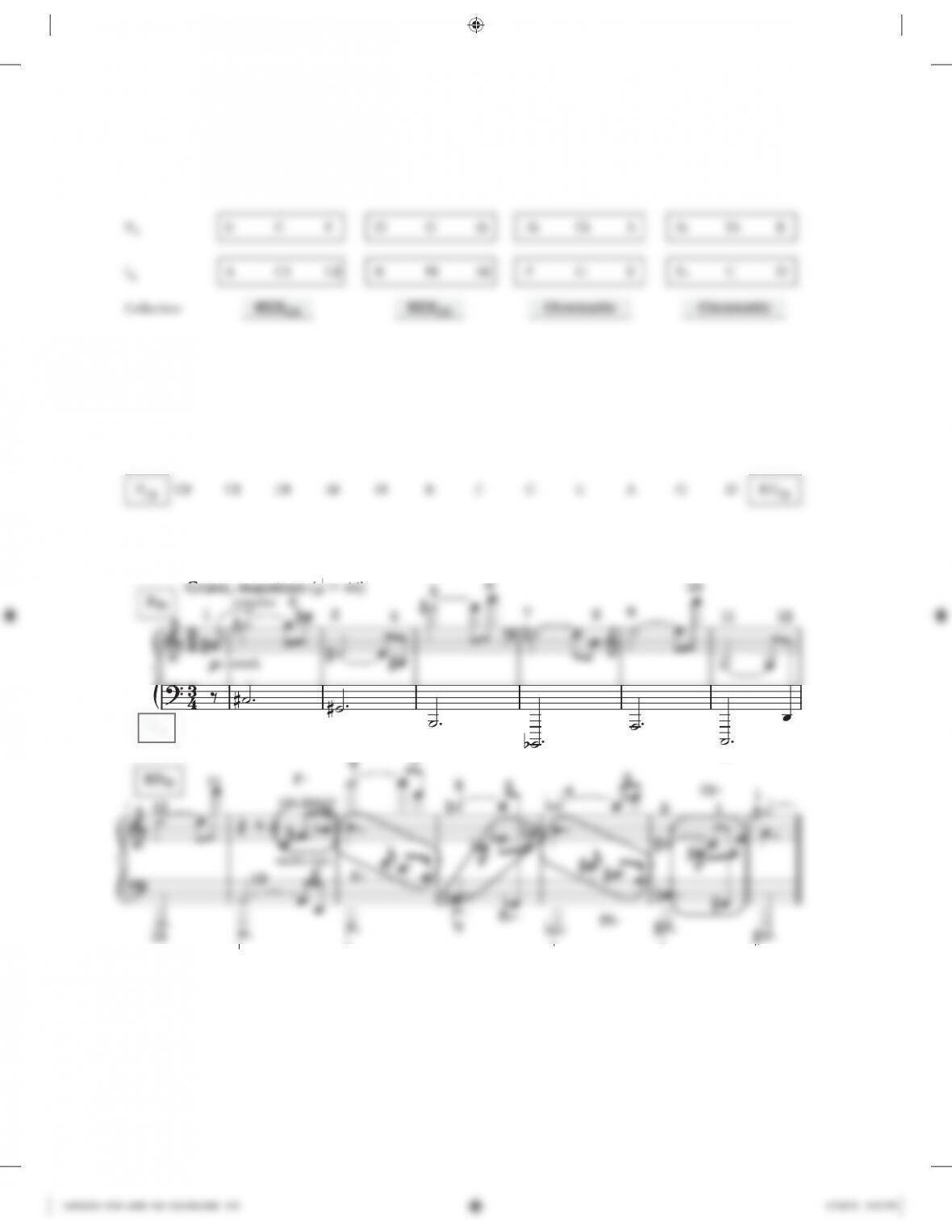
• When PE and IA are combined, the combined trichords form familiar six-note
collections, either hexatonic or chromatic (a string of six adjacent notes in the
chromatic scale). Label them on the chart below, and in the score.
• How do the series, trichords, and collections work together to organize the
piece?
9. Thomas Adès, Third Mazurka
The melody expresses a twelve-tone series, first in Prime and then in Retrograde
ordering:
# D
# A
# F
# B F C E A G D
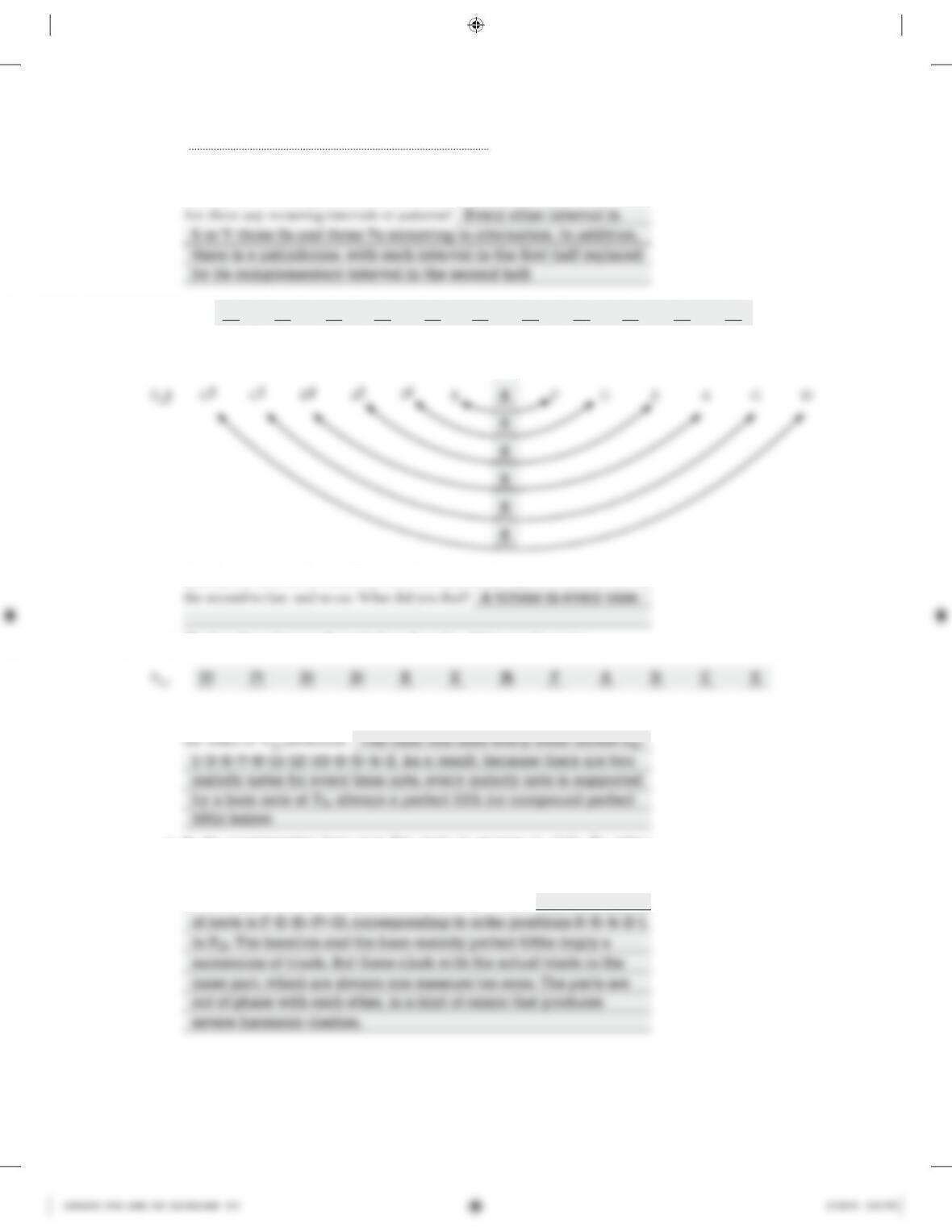
• Provide a twelve-count of just the melody on the score, labeling the series forms
and numbering each pitch in the series.
1
3
5
7
11
9
PC#
NAME:
• Identify the ordered pitch-class intervals in the series, and write them below.
opci 5 2 7 8 5 6 7 4 5 10 7
PG# G
# C
# D
# A
# F
# B F C E A G D
# C
# D
# A
# F
# B 6 F C E A G D
• Identify the interval formed from the first note to the last, the second note to
• The bass line relates to the melody as T5 or PC#. Write out the series.
# G
# D
# B E Bb F A D C G
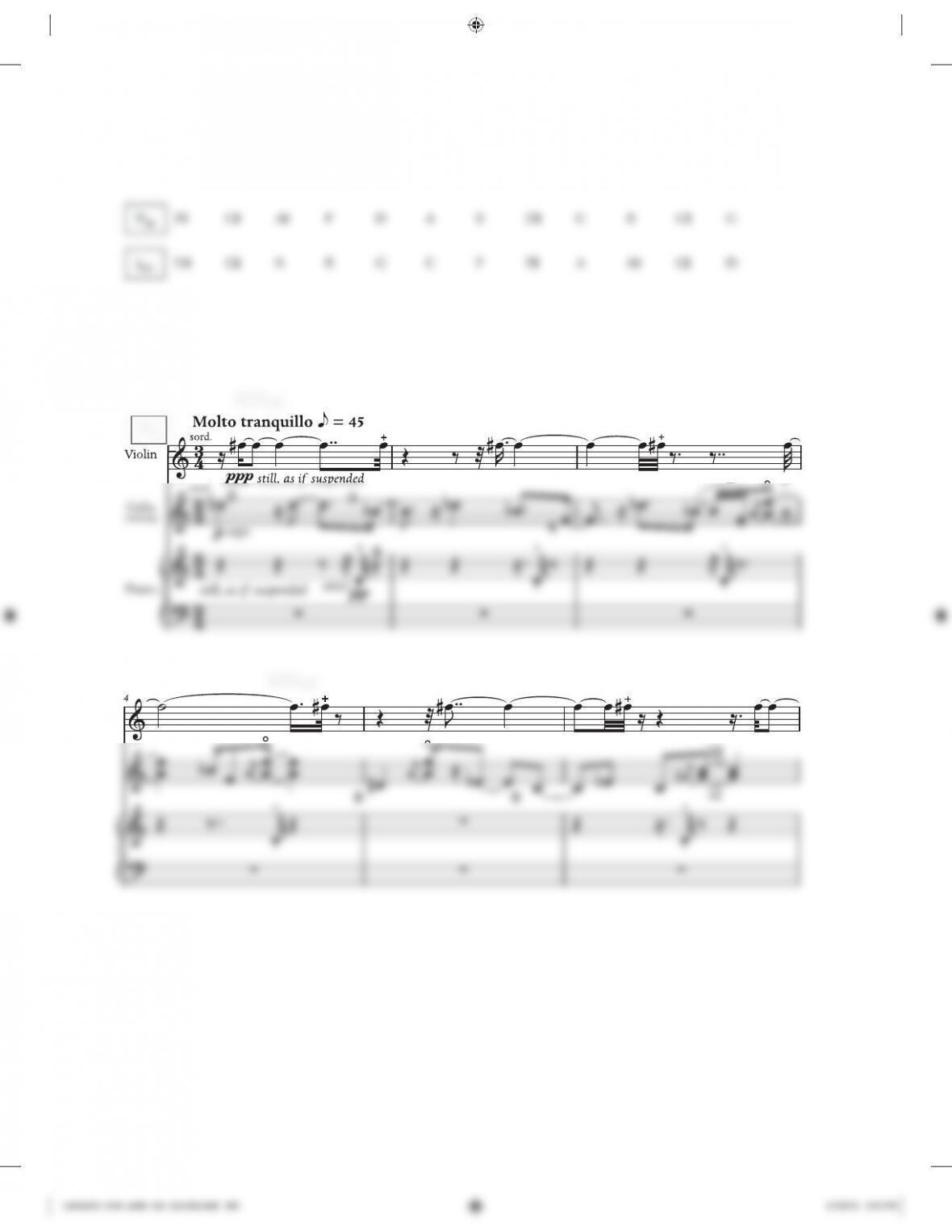
• Give a twelve-count of the bass line with reference to PC#. In what order are
• In the accompanying inner part that starts in measure 8, circle the minor
triads and identify each triad root. How does that sequence of roots relate
to PC#? How does the sequence relate to the actual bass line? To the perfect
fifths formed between melody and bass on each downbeat? The sequence
10. Ursula Mamlok, Panta Rhei, iii
This passage is based on two inversionally related series forms:
# A
# F D A E D# C B G# G
ID# D
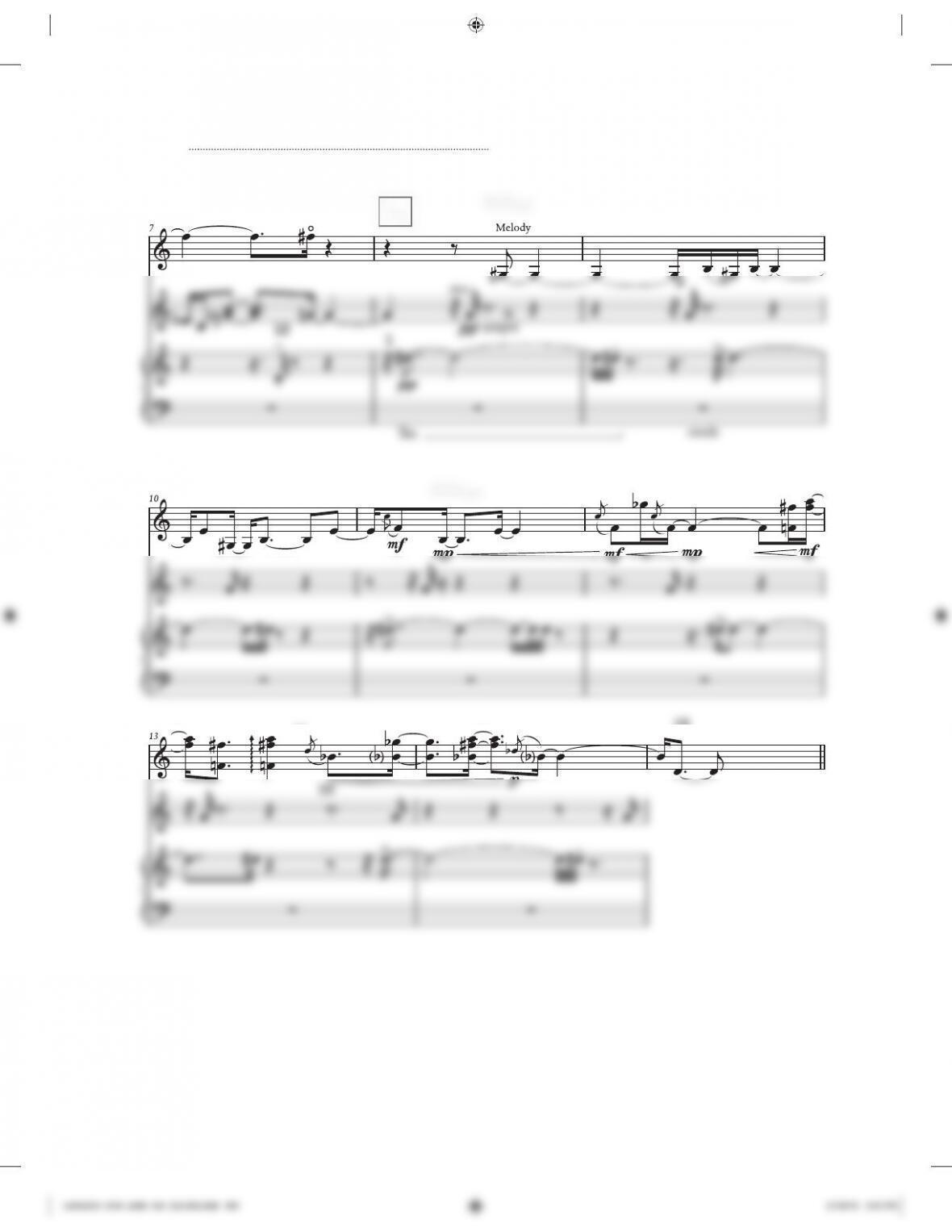
• Provide a twelve-count of the passage, indicating row forms on the score and
numbering the pitches of each series. Note that the ostinatos (violin and piano
in the first half, cello and piano in the second half ) contribute the first and fifth
notes to each series.
HEXC#D
1
7
PF#
10
HEXD#E
D. Analysis |681
NAME:
2
ID#HEXD#E
467
9
11 12
HEXC#D
b
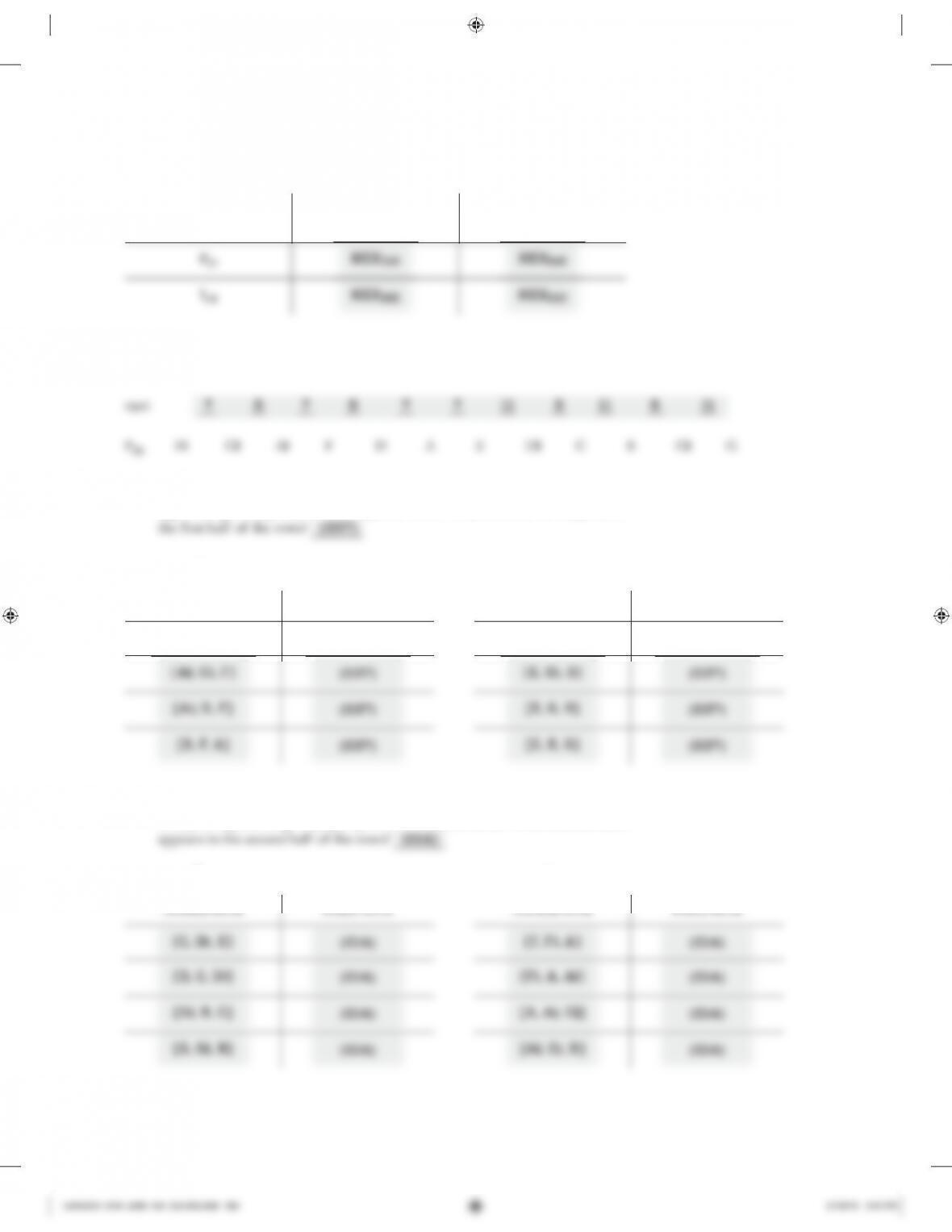
• The six-note groups within the series are hexatonic collections. Identity them
here and label them on the score.
Row
form
First hexatonic
collection
Second hexatonic
collection
• Label the ordered pitch-class intervals in PF#. Are there any patterns?
PF# F
• Find the normal form and prime form of the trichords in the first half of PF# and
ID#, labeling every group of three adjacent notes. What trichord class appears in
PF#
Normal form Prime form
[F#, A#, C#](037)
ID#
Normal form Prime form
[G#, B, D#](037)
• Now find the normal order and prime form of the trichords in the second half
of PF# and ID#, labeling every group of three adjacent notes. What trichord class
PF#
Normal form Prime form
ID#
Normal form Prime form