B. Wedge Progressions | 645
NAME:
A. QUESTIONS FOR REVIEW
1. What is a wedge progression? What is an expanding wedge progression? A con-
tracting wedge progression?
2. What is an axis of pitch inversion? What must be true about the pitches that lie
above the axis in relation to the pitches that lie below it? What is the relationship
B. WEDGE PROGRESSIONS
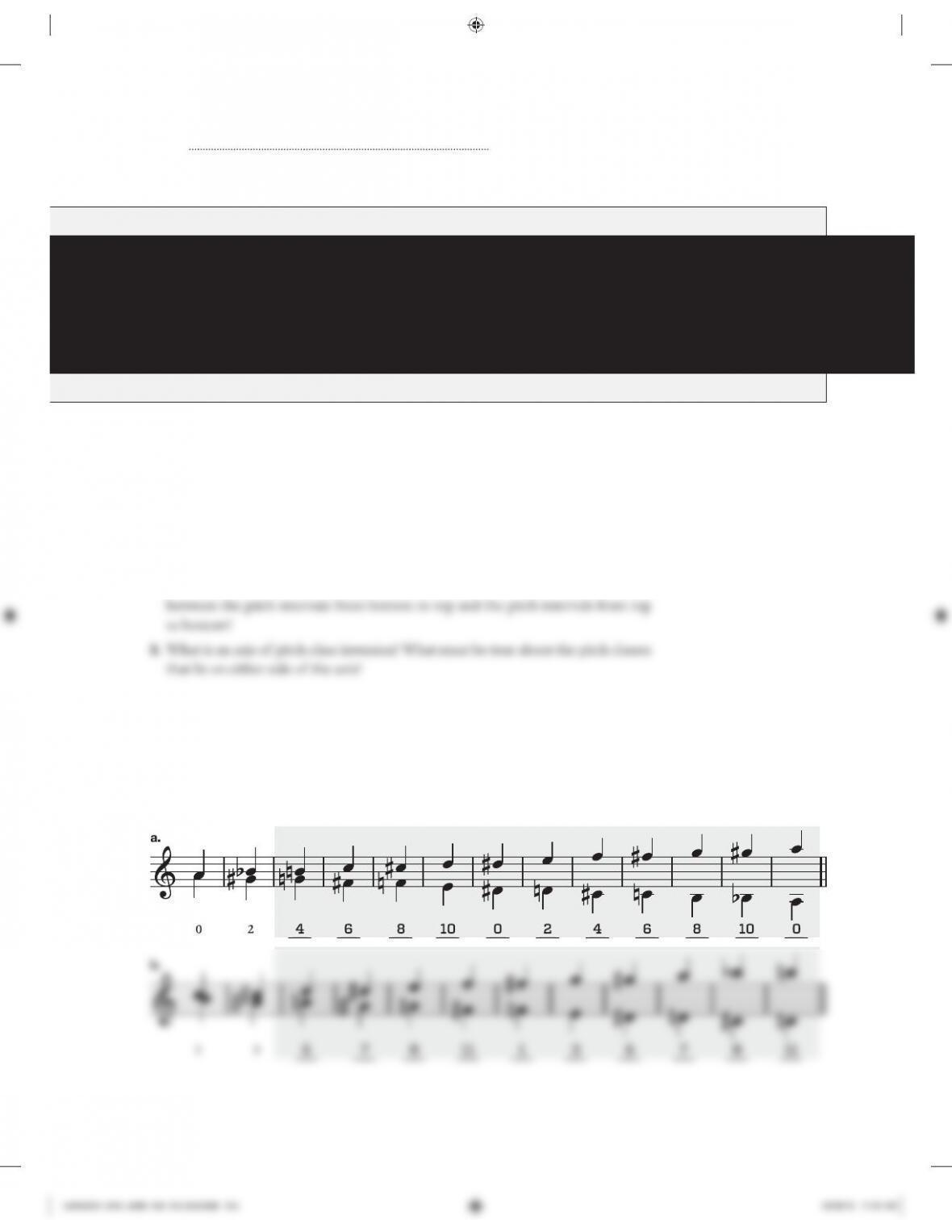
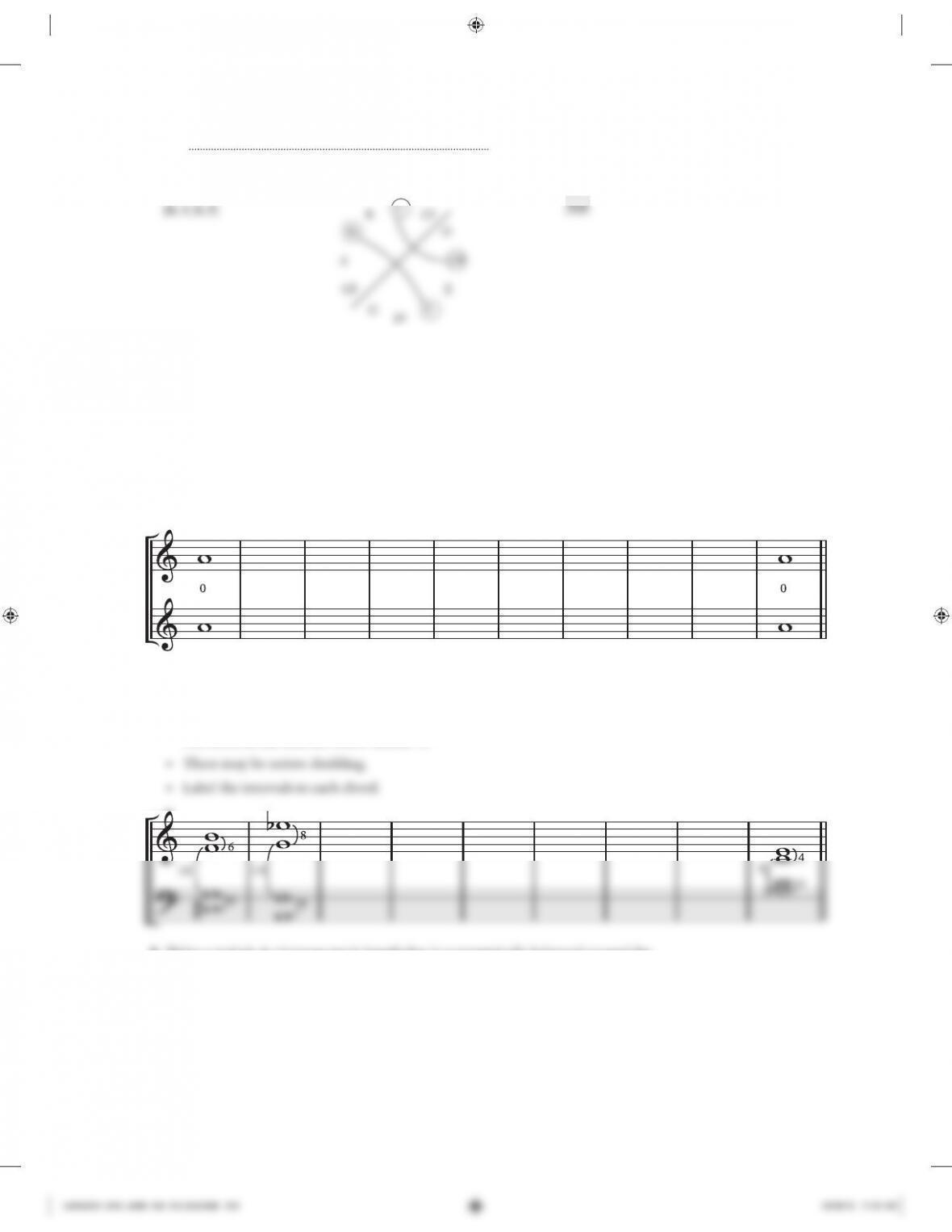
1. Continue these expanding wedges until you get back to the pitch class(es) you
started on. Identify the intervals formed between the two lines (ordered pitch-class
interval from lower to higher note), and write them beneath the staff.
chapter
45 Inversional Symmetry
646 | CHAPTER 45 | Inversional Symmetry
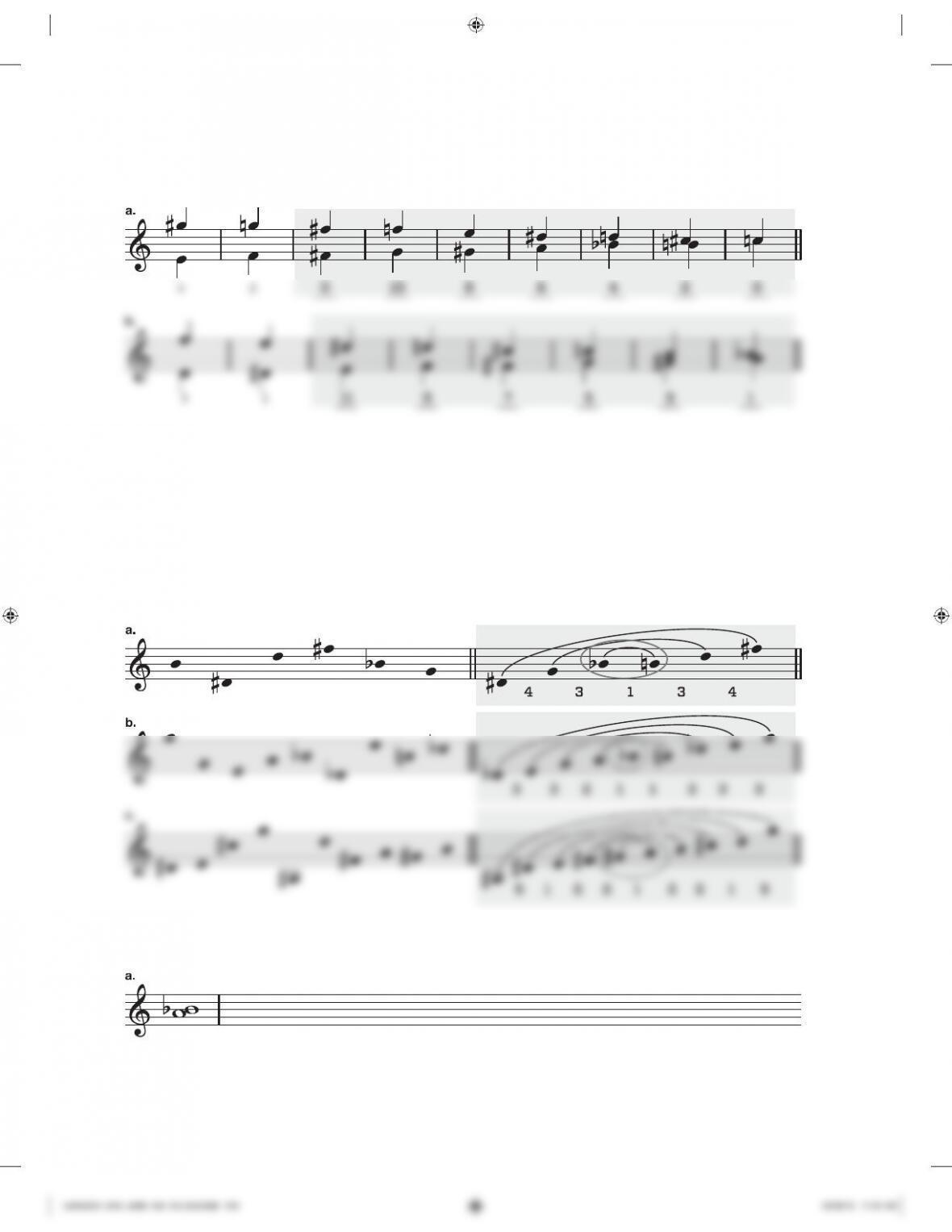
2. Continue these contracting wedges until they reach the central pitch or pitches.
Identify the intervals formed between the two lines (ordered pitch-class interval
from lower to higher note).
C. INVERSIONAL SYMMETRY IN PITCH
1. Find the axis of symmetry in the following collection of pitches.
• Arrange the pitches in registral order from lowest to highest.
• Identify the intervals between adjacent pitches.
• Circle the pitch (or pair of pitches) that serve as the axis of symmetry.
• Slur each note to its inversional partner around the axis.
2. Write four pairs of notes that are inversionally symmetrical around the given axis.
Use a slur to connect each note to its inversional partner.
NAME:
D. SYMMETRICAL PITCH-CLASS SETS
• Circle the notes of the given symmetrical sets on the pitch-class clockface, and
draw the axis of inversion.
• On the clockface, connect each note in the set to its inversional partner (which
may be itself).
• Name the index of inversion (TnI) that maps the set onto itself.
SET CLOCKFACE TnI
[F, G, A] CC#
F#
G#
D#
B
A
GF
E
D
Bb
T2I
F#
G#
D#
A
GF
E
D
Bb
T4I
[G#, B, D] CC#
F#
G#
D#
B
A
GF
E
D
Bb
T10I
D#
A
D
Bb
T2I
648 | CHAPTER 45 | Inversional Symmetry
(minor 7th chord)
B
F#
G#
GF
E
D
Bb
[D, E, F, G]
F#
G#
GF
E
T9I
E. Composition | 649
NAME:
[Bb, C, Eb, F] CC#
F#
G#
D#
B
A
GF
E
D
Bb
T3I
E. COMPOSITION
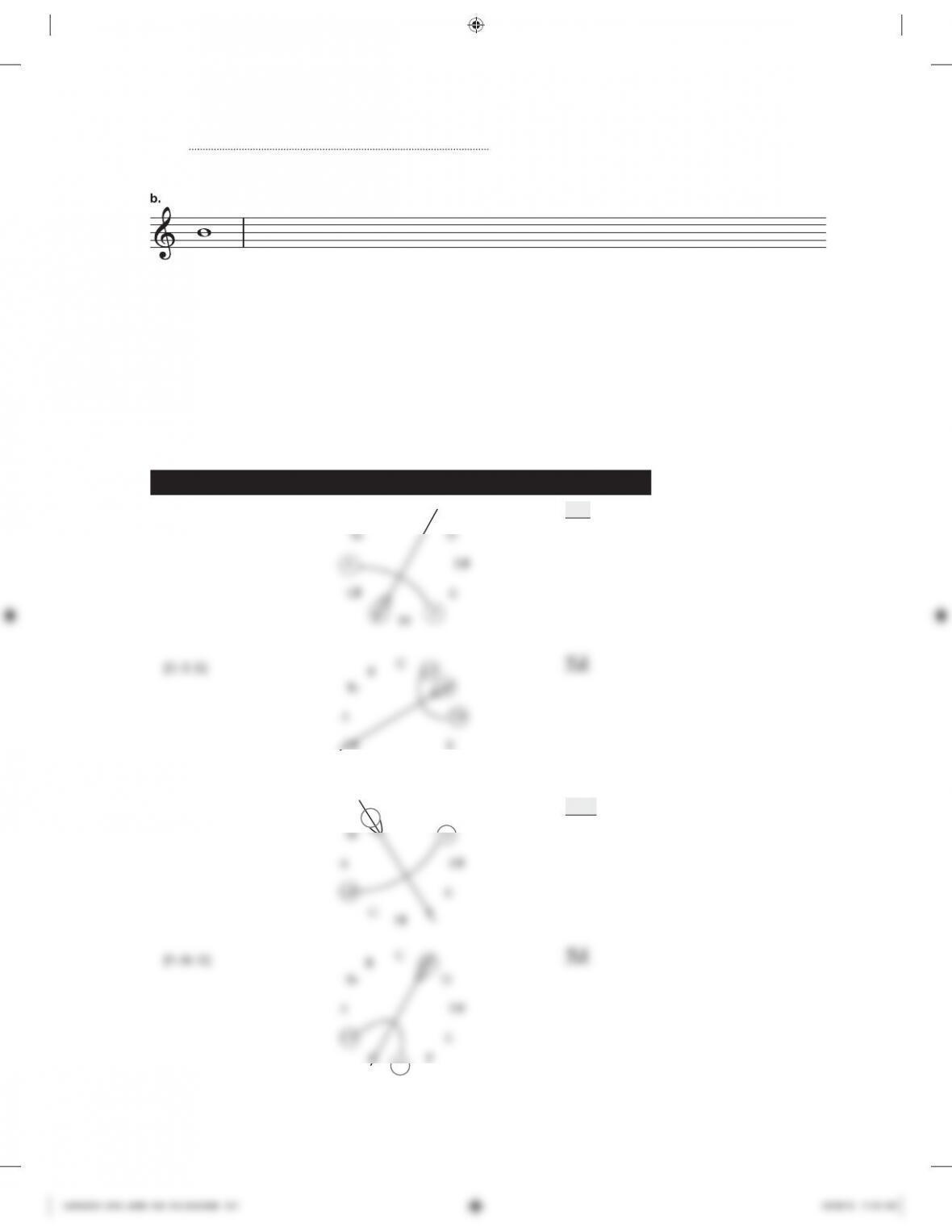
1. Complete this duet by filling in measures 2–9 using whole notes only.
• Every harmonic interval should be pitch-symmetrical around the A in the first
and last measures.
• Between the staves, write the interval between the melodies (counted in
semitones).
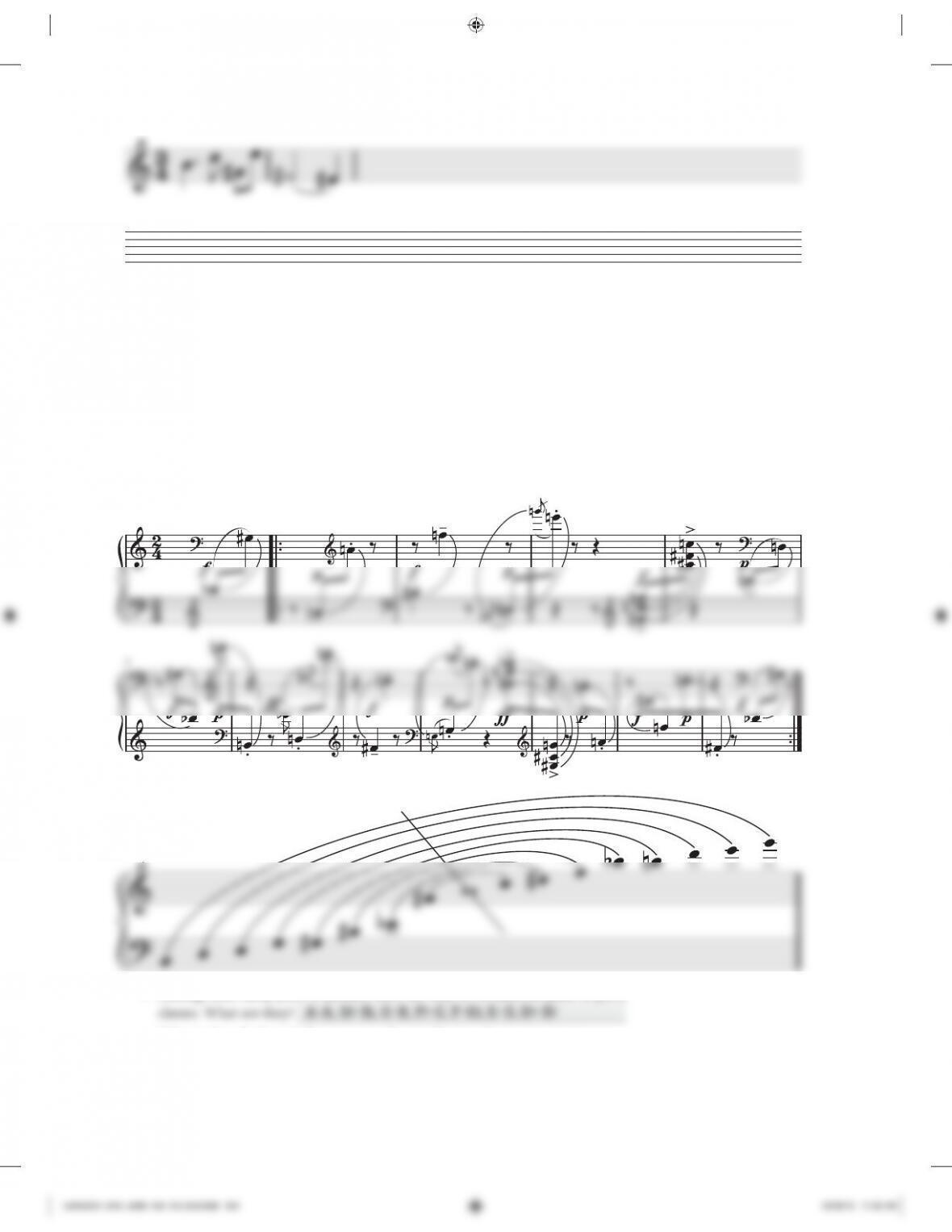
2. Complete this progression of four-note chords where all of the chords are
symmetrical around middle C.
• The two notes in the treble should be the same intervals above middle C as the
two notes in the bass are below middle C.
3. Write a melody 8–12 measures in length that is symmetrically balanced around the
B above middle C.
• Each note should be heard in close proximity to, but not necessarily adjacent to,
its inversional partner.
• End the melody with a wedge-like convergence on B.
650 | CHAPTER 45 | Inversional Symmetry
F. ANALYSIS
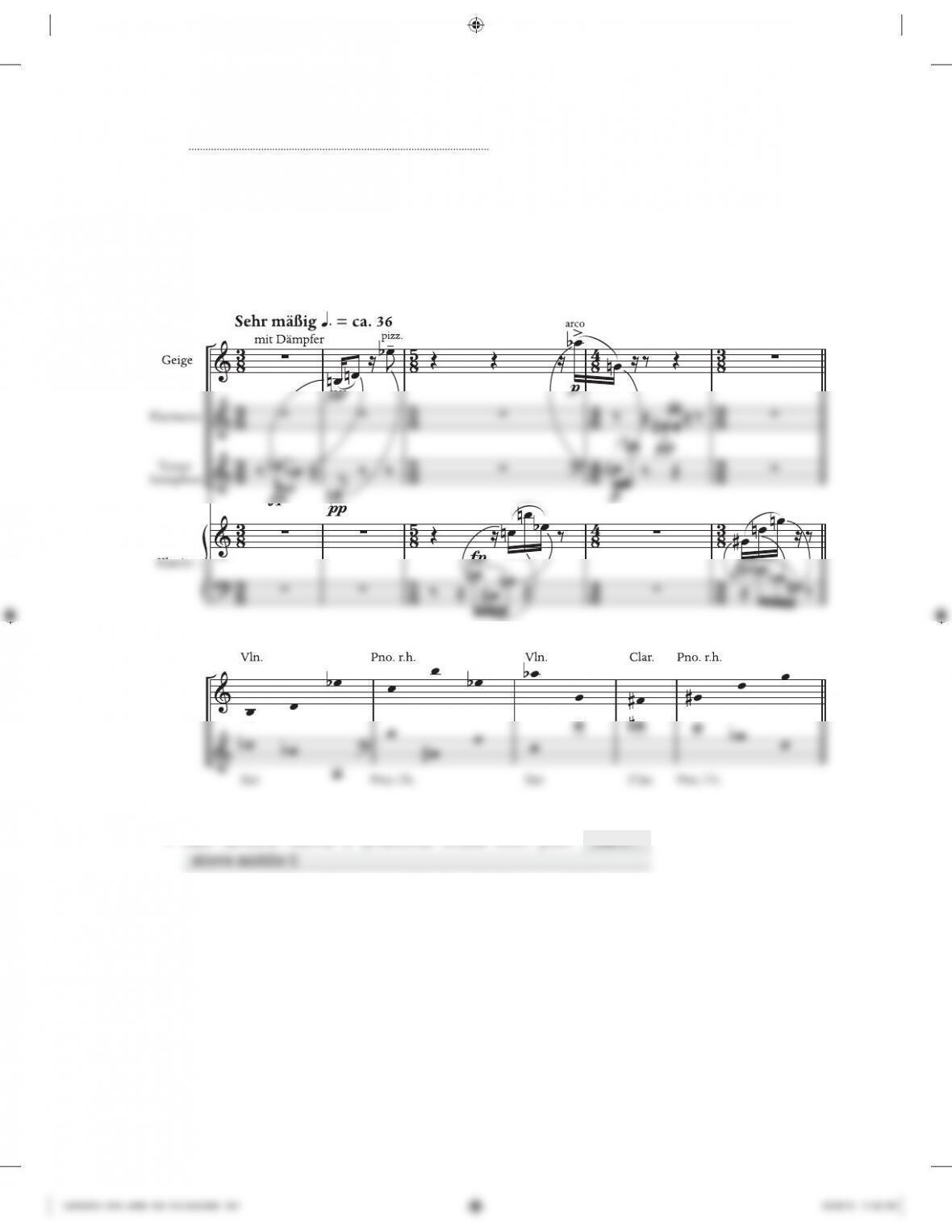
1. Anton Webern, Piano Variations, Op. 27, ii
• On the staff below the excerpt, write the notes used in this passage in registral
order, from lowest to highest.
• Use slurs to connect the pitches that are inversional partners.
• Draw a line through the axis of inversion.
• All parts are notated at pitch.
• Directly on the score, use slurs to connect the notes that are inversional partners.
• Among these many pairs of pitches, there are only seven different pairs of pitch
• What is the role that pitch symmetry plays in this piece’s organization?
F. Analysis | 651
NAME:
2. Anton Webern, Quartet, Op. 22, i
Beneath the score you will find a simplified version dividing the music into two voices
in note-against-note counterpoint. Each harmonic interval consists of a pair of inver-
sional partners.
• Each harmonic interval is symmetrical around which pitch? The F#
• On the score itself, use slurs to connect the inversional partners with respect to
that central pitch axis.
• What is the role of inversional symmetry in organizing this piece?
3. Morton Feldman, Crippled Symmetry
Beneath the score, write out the notes of the ute and vibraphone melodies in regis-
tral order from lowest to highest, identify the intervals between adjacent notes, and
determine the axis of pitch symmetry.
• What is the relationship between these two pitch axes? They are an octave
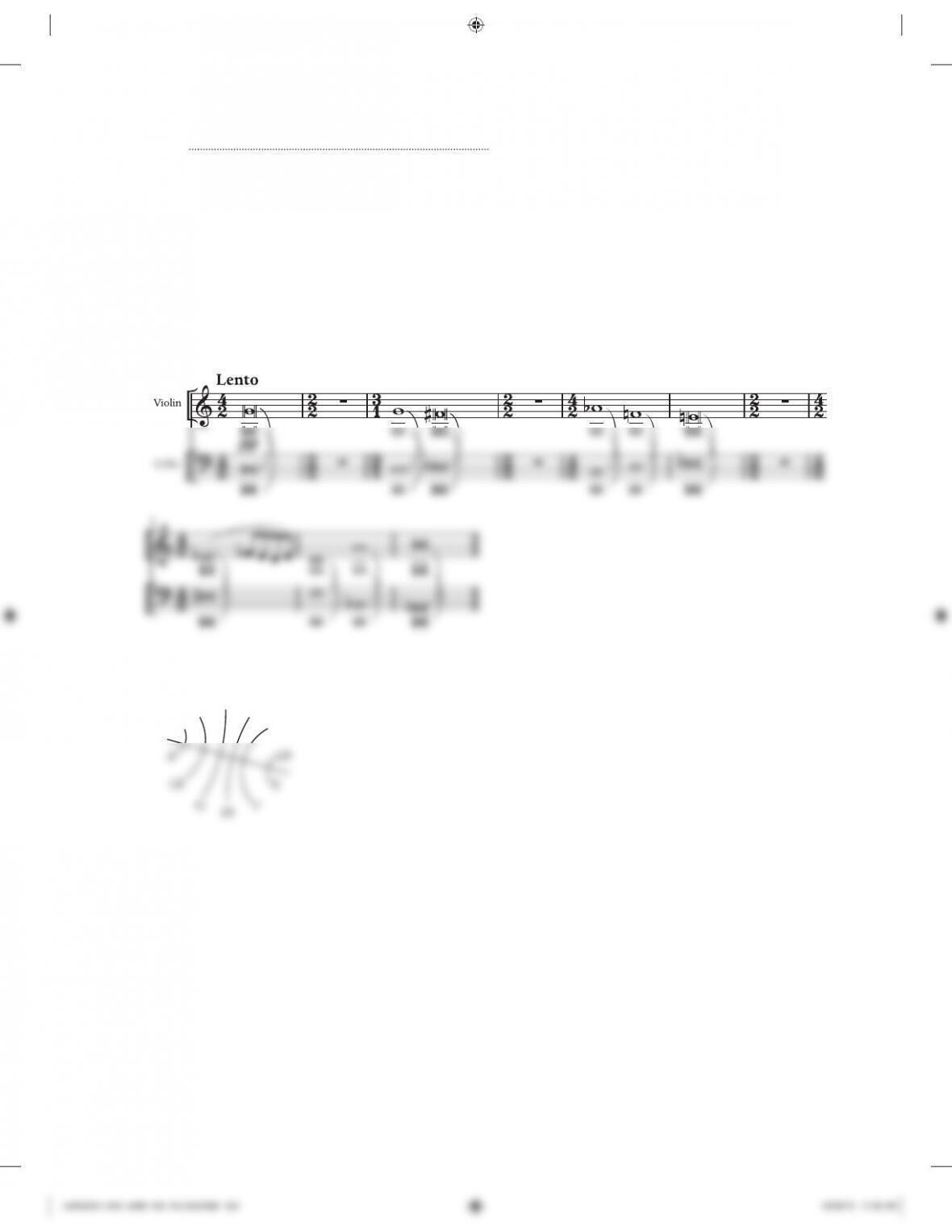
NAME:
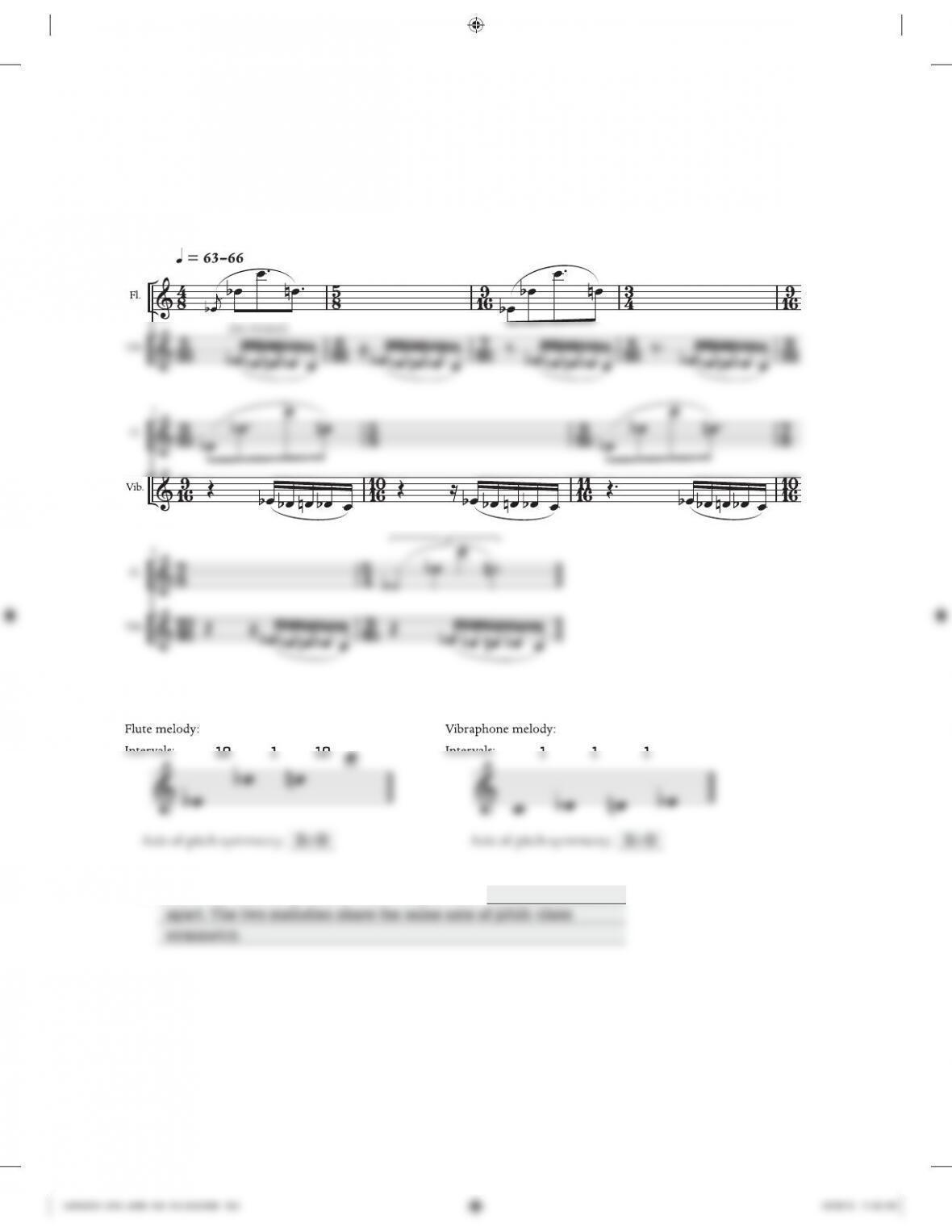
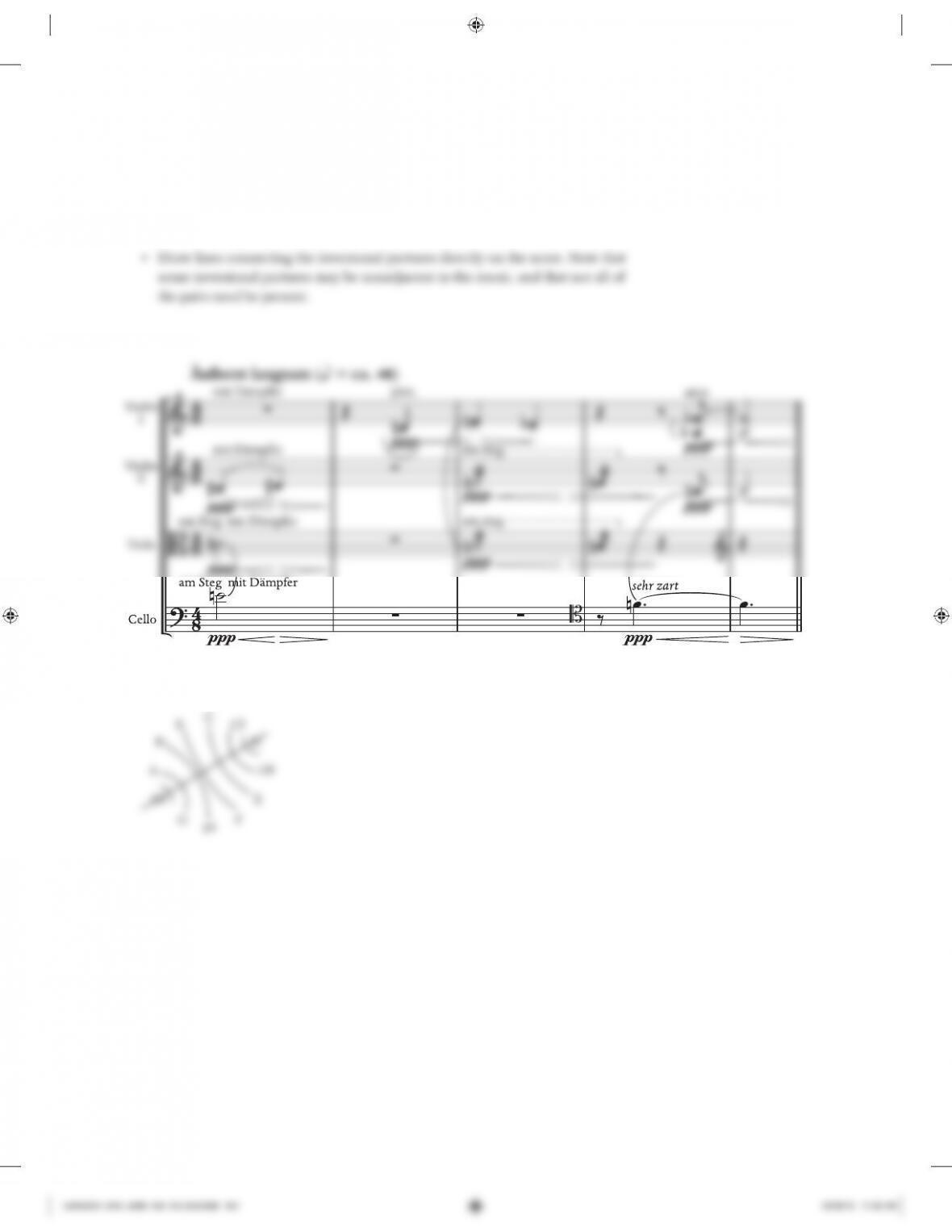
4. Alfred Schnittke, Stille Musik
• Assume that C and G are inversional partners. Connect them on the pitch-class
clockface below the score.
• Identify the inversional axis and draw a line through the clockface, then connect
all of the remaining inversional partners.
• Draw lines connecting these pairs of notes on the score.
CC#
#
B
GF
D
Bb
654 | CHAPTER 45 | Inversional Symmetry
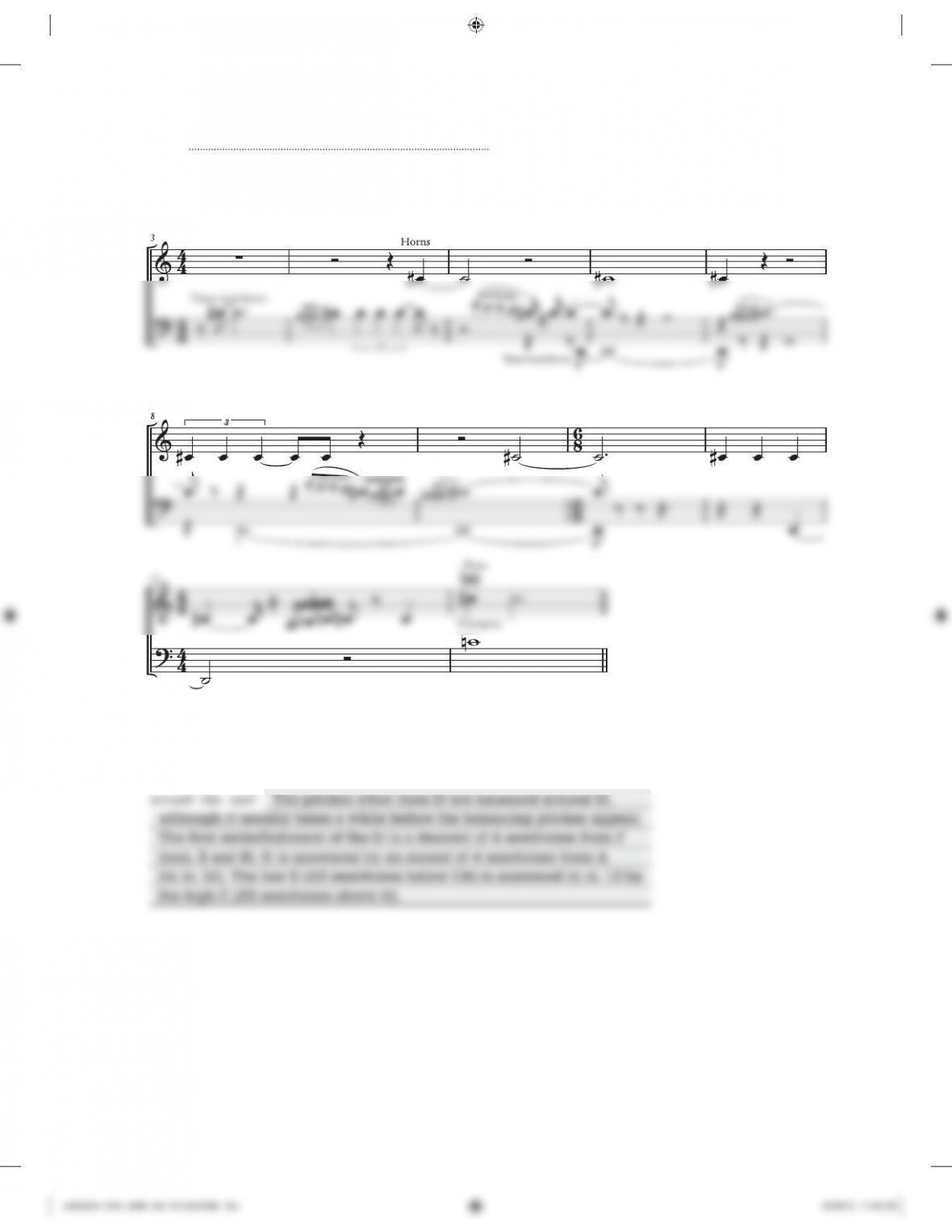
5. Anton Webern, Six Bagatelles, Op. 9, No. 5
• Assume that E and C, the first two notes in viola and cello, are inversional
partners. Connect them on the pitch clockface below the score.
• Identify the inversional axis and draw a line through the clockface, then connect
the remaining inversional partners.
F#
G#
D#
A
GF
E
• How does symmetry around D shape this passage?
NAME:
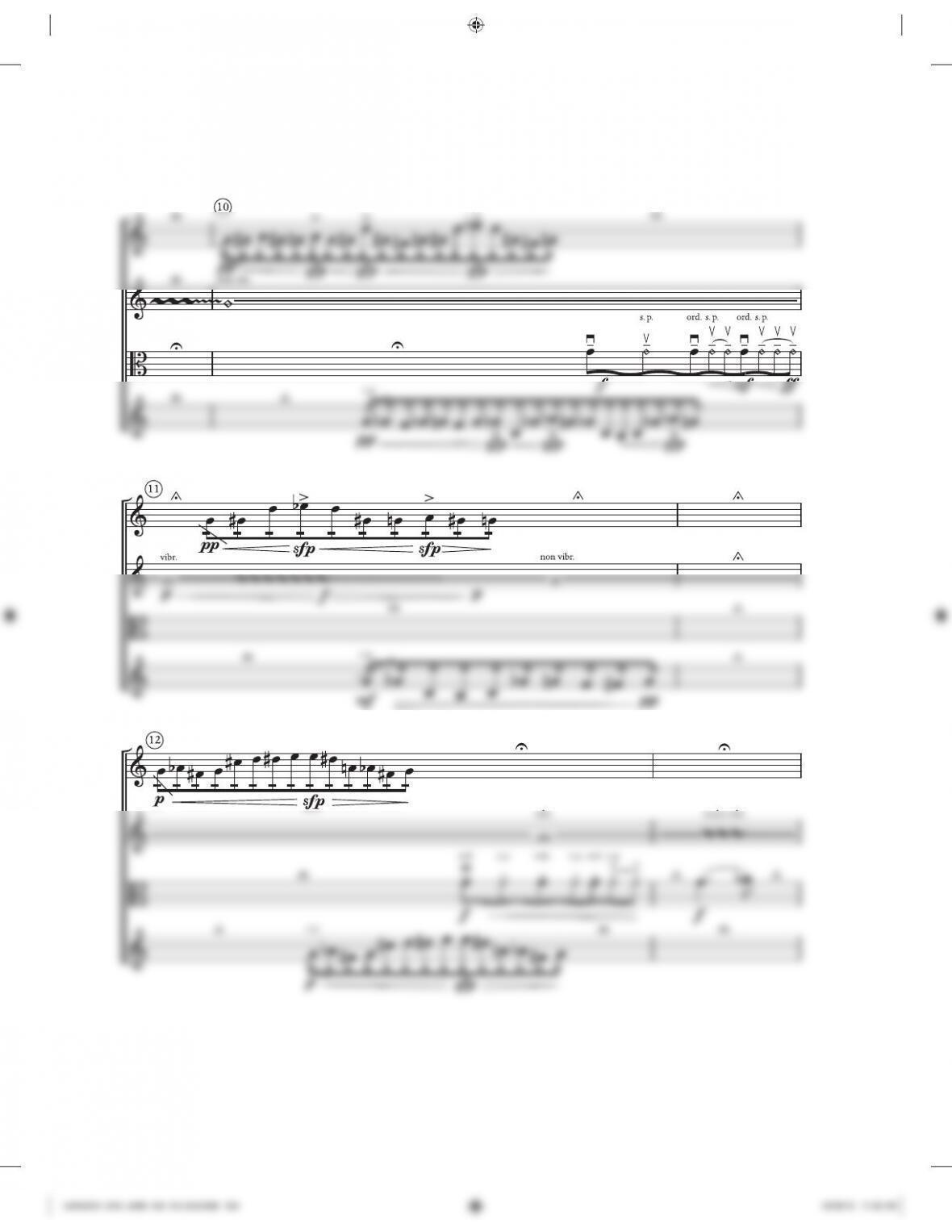
6. Edgard Varèse, Hyperprism
The C# above middle C is heard almost continuously in this passage. In what ways
does it function as an axis of pitch symmetry? To what extent are pitches balanced
656 | CHAPTER 45 | Inversional Symmetry
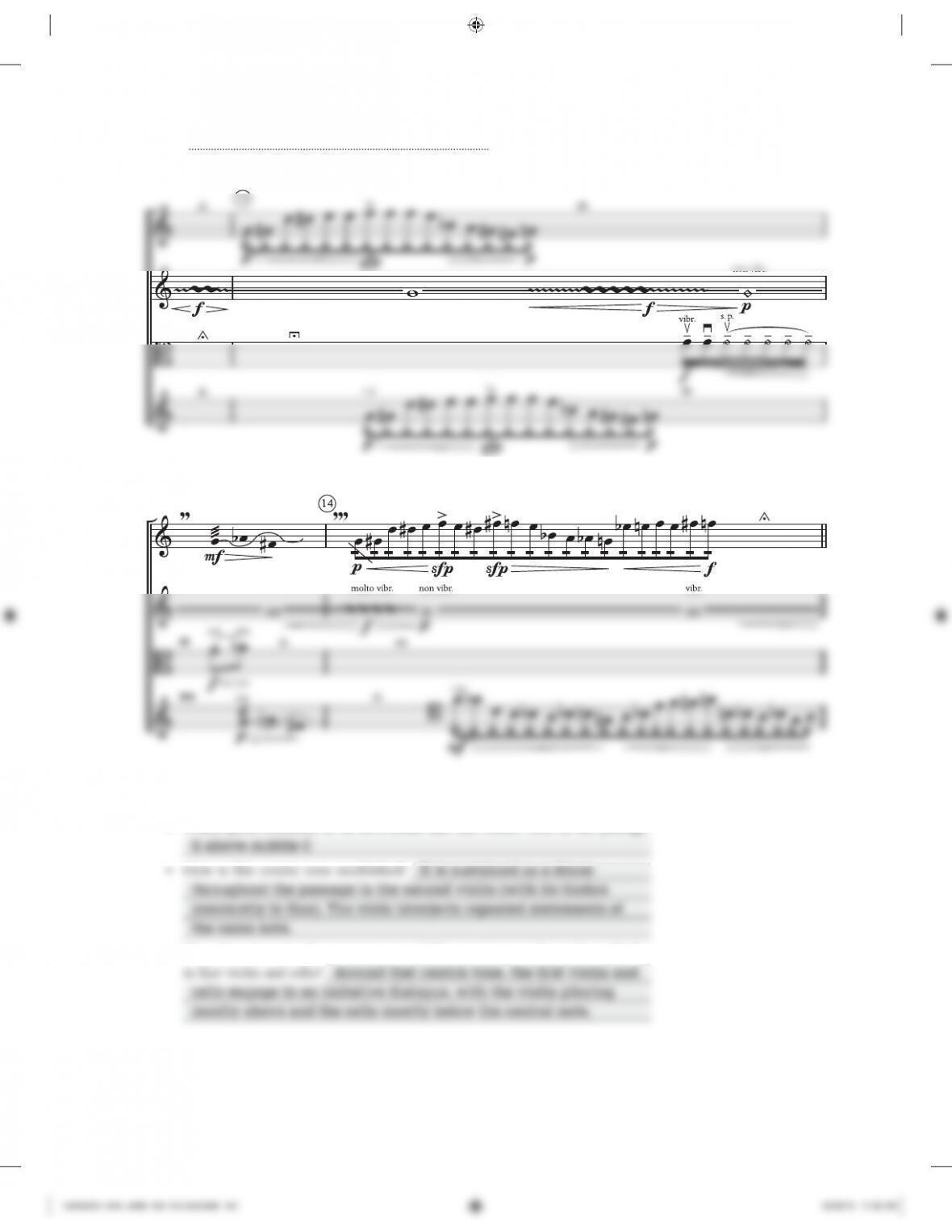
7. Sofia Gubaidulina, String Quartet No. 2
Answer the questions beneath the score.
NAME:
• Which pitch functions as an inversional axis and centric tone in this passage?
• How does inversional symmetry around the centric tone shape the melodies