B. Normal Form | 627
NAME:
A. QUESTIONS FOR REVIEW
1. What is a pitch-class set? What is a trichord?
2. What is a normal form? How do you find it?
3. How do you transpose a set? How do you tell if two sets are related by transposi-
tion? How do you figure out the interval of transposition?
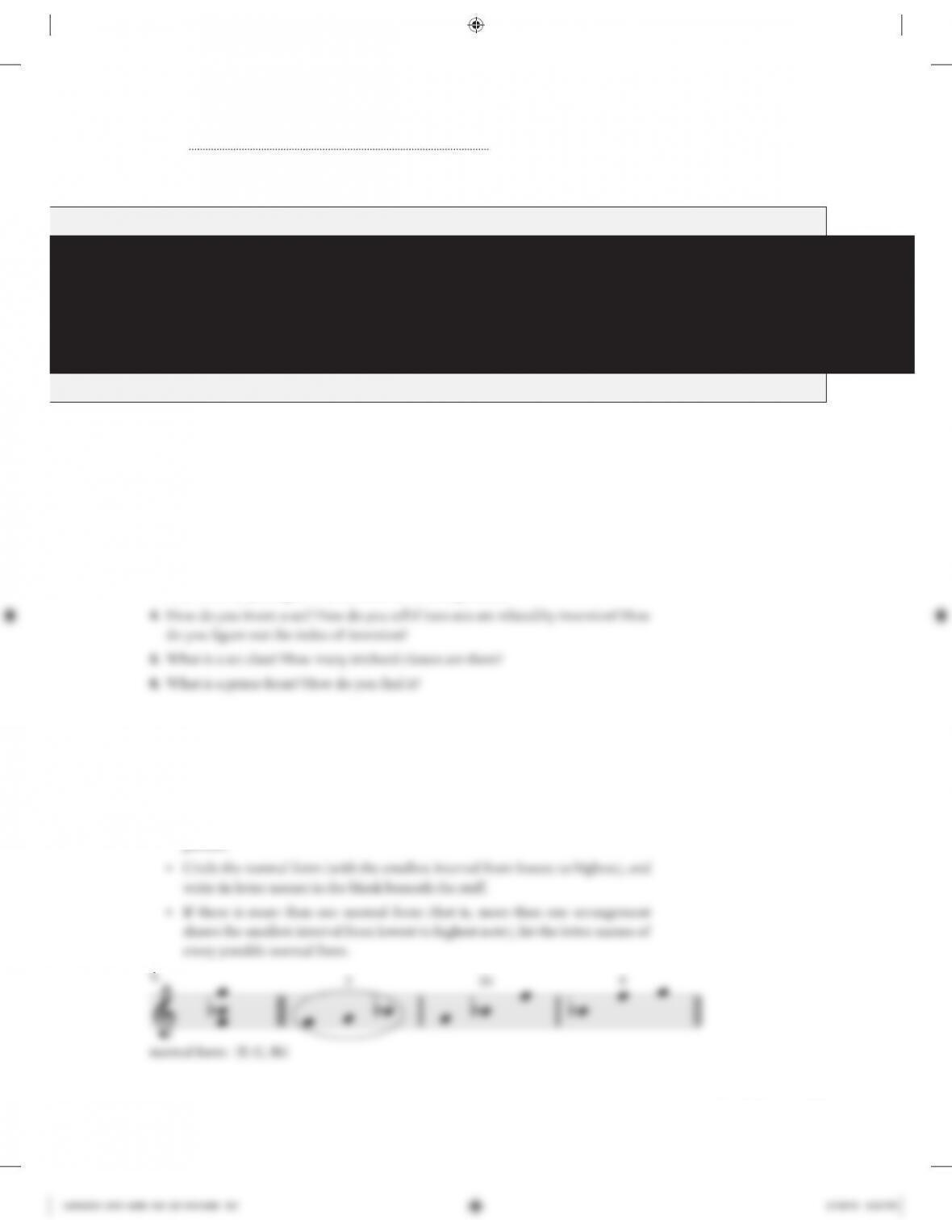
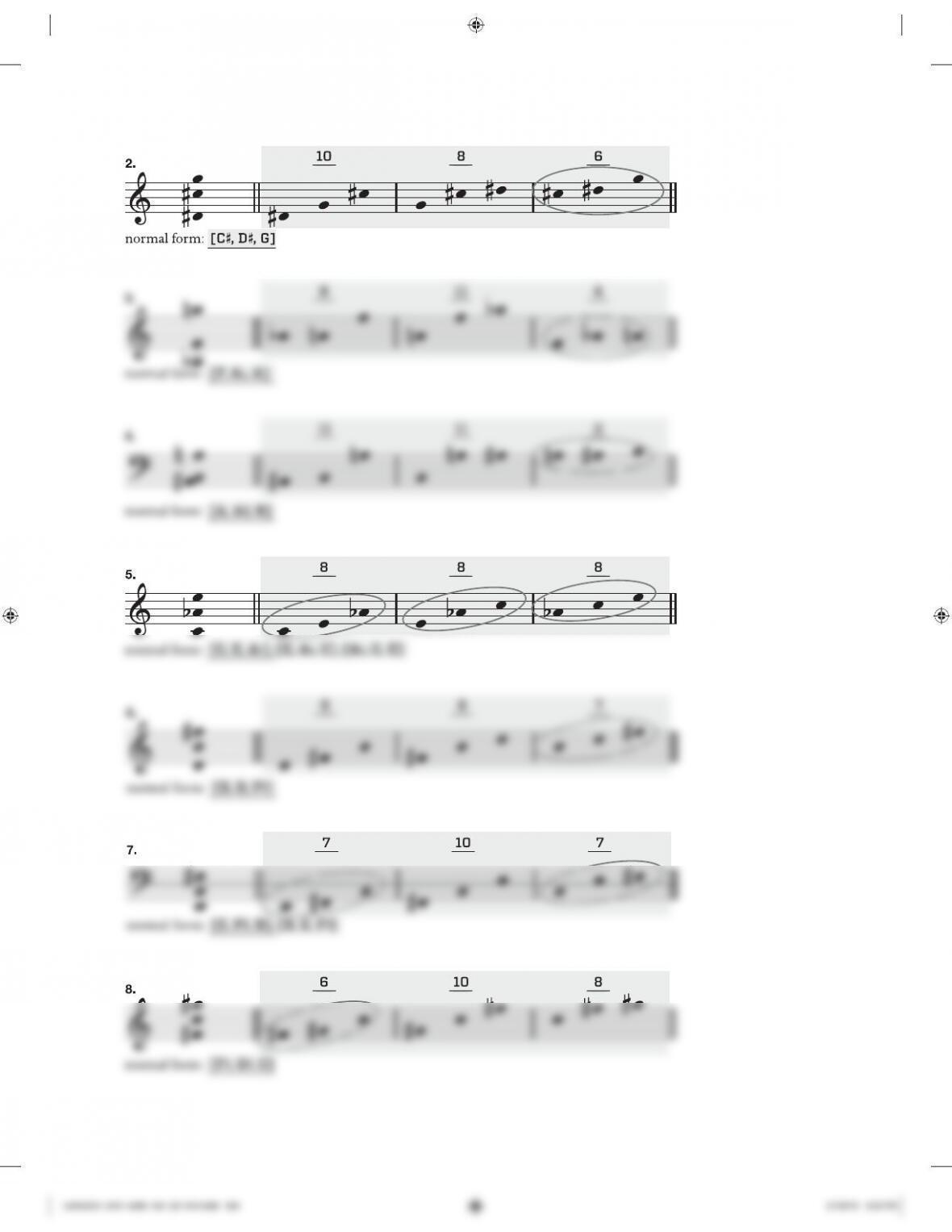
B. NORMAL FORM
• Write each trichord ascending within an octave, starting in turn on each of the
three notes.
• Above the staff write the number of semitones from the lowest to the highest
pitches.
chapter
44 Pitch-Class Sets: Trichords
628 | CHAPTER 44 | Pitch-Class Sets: Trichords
C. Transposition | 629
NAME:
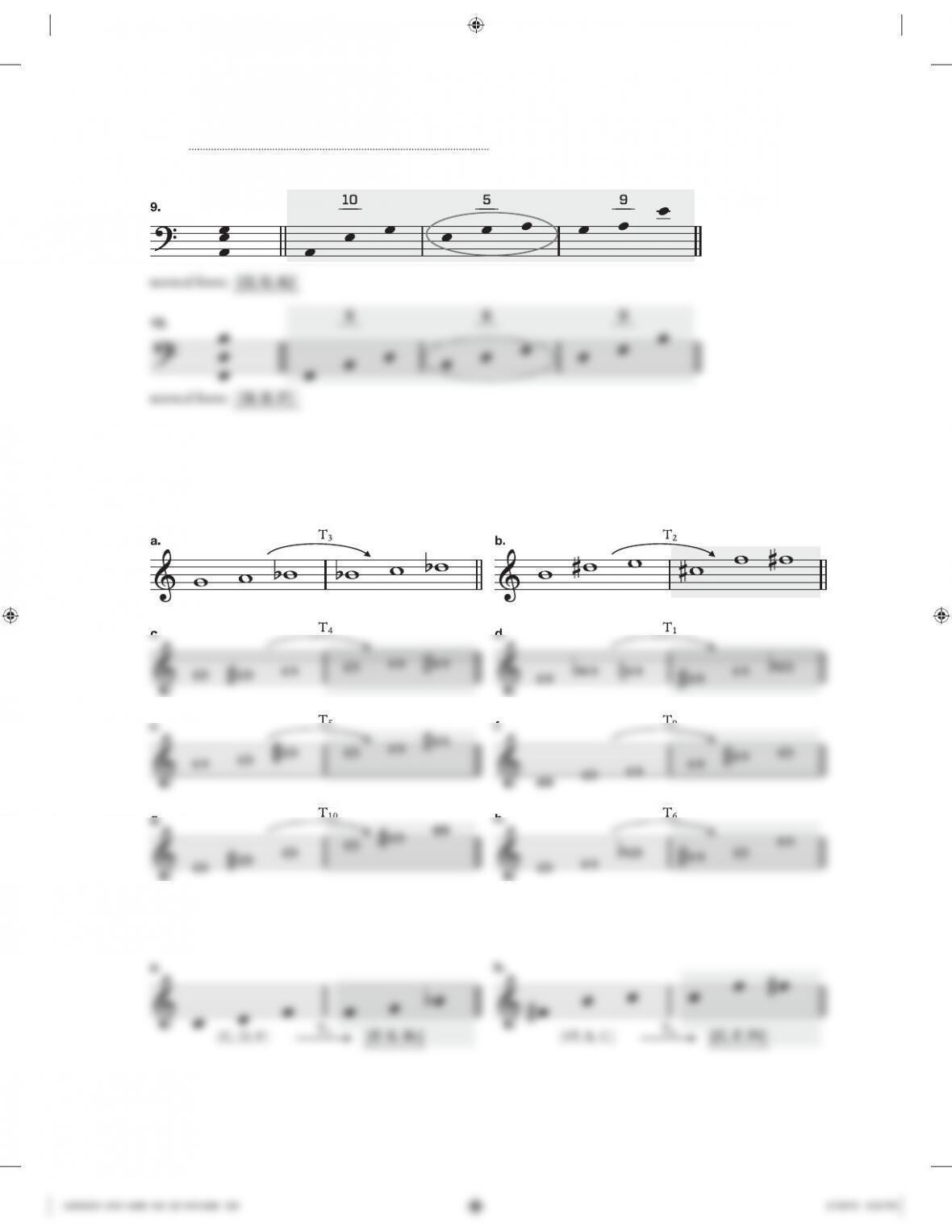
C. TRANSPOSITION
1. Transpose these sets as indicated, writing your answer on the staff.
2. Transpose these sets as indicated, writing your answer on the staff and giving the
note names of the trichord below it.
630 | CHAPTER 44 | Pitch-Class Sets: Trichords
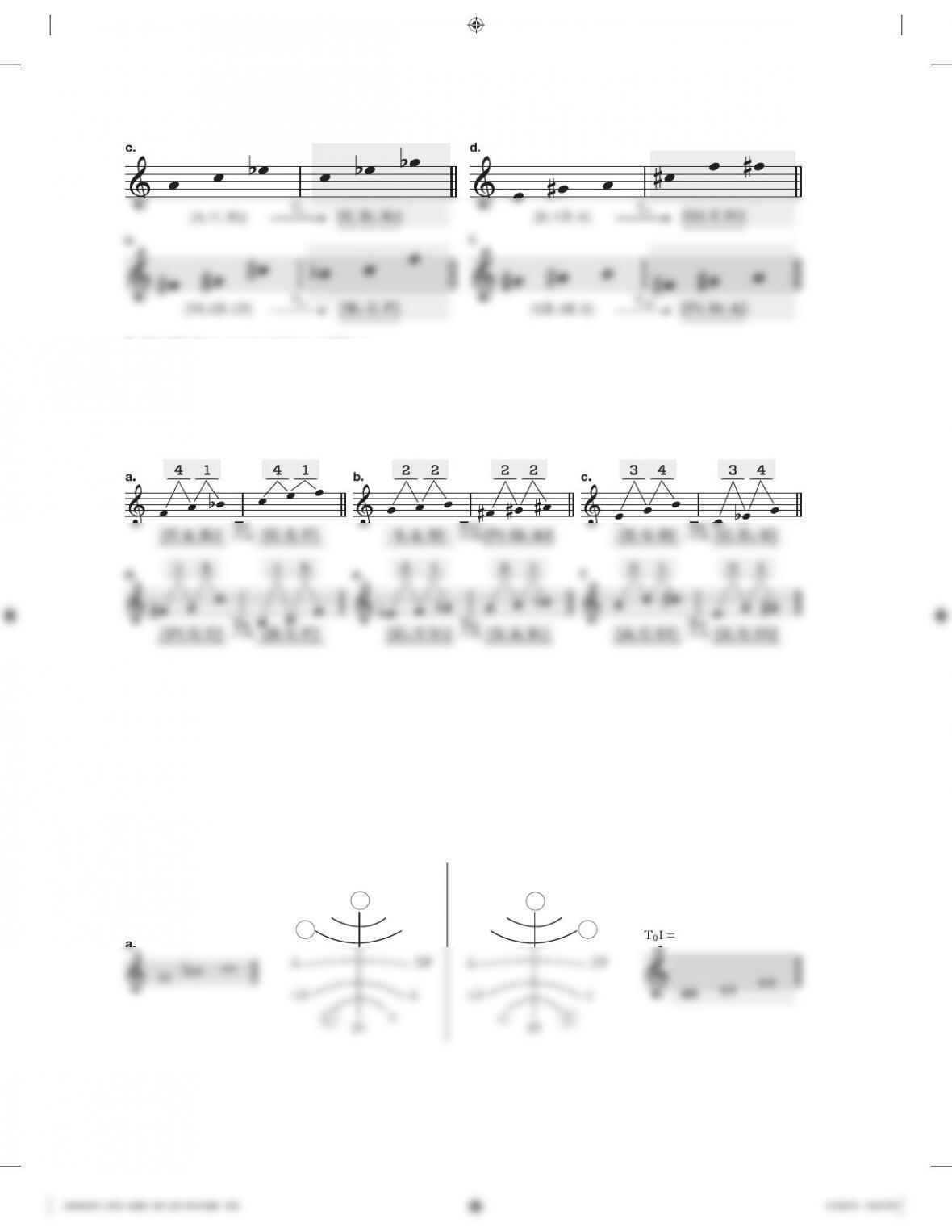
3. Identify these transpositions as follows:
• The following pairs of sets are related by transposition (Tn). Verify that by
writing the intervals.
• Then write the letter names of the pitch classes in normal form beneath the
staff and identify the interval of transposition.
D. INVERSION
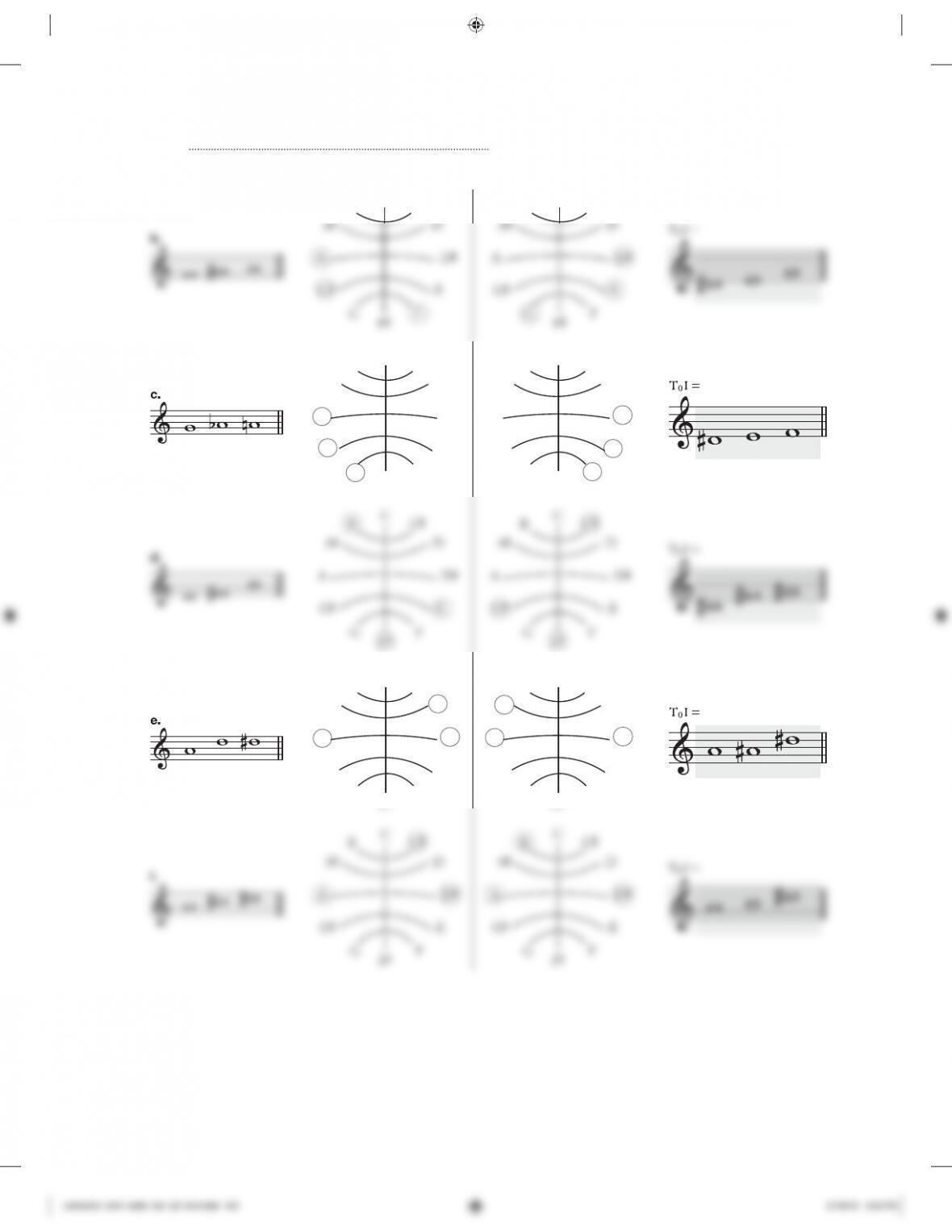
1. Invert the trichords by T0I.
• In the first column, you will find trichords in normal form. Circle the notes of
the trichord on the left-hand clockface.
• Then, circle the notes of the inversion on the right-hand clockface.
• In the last column, write the notes of the inverted set in normal form.
Trichords Inversions
CC#
F#
B
GF
A#D
CC#
F#
B
GF
A#D
NAME:
CC#
F#
G#
D#
B
A
GF
E
A#D
CC#
F#
G#
D#
B
A
GF
E
A#D
CC#
F#
G#
D#
B
A
GF
E
A#D
CC#
F#
G#
D#
B
A
GF
E
A#D
F#
G#
D#
A
GF
E
F#
G#
D#
A
GF
E
CC#
F#
G#
D#
B
A
GF
E
A#D
CC#
F#
G#
D#
B
A
GF
E
A#D
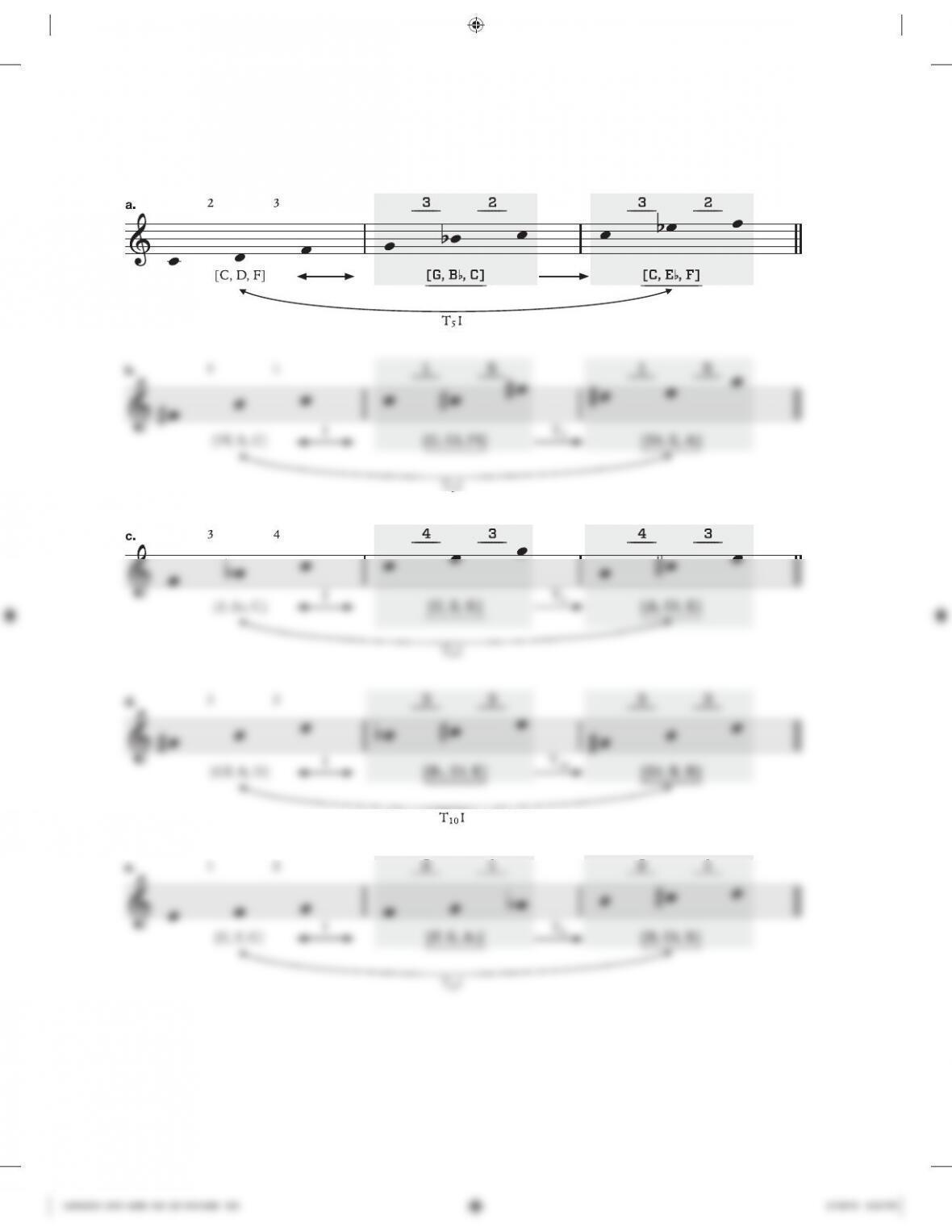
2. Invert these sets as indicated. Write your answers both on the staff and in letter
names below the staff. Indicate intervals above the staff.
I
T5
D. Inversion | 633
NAME:
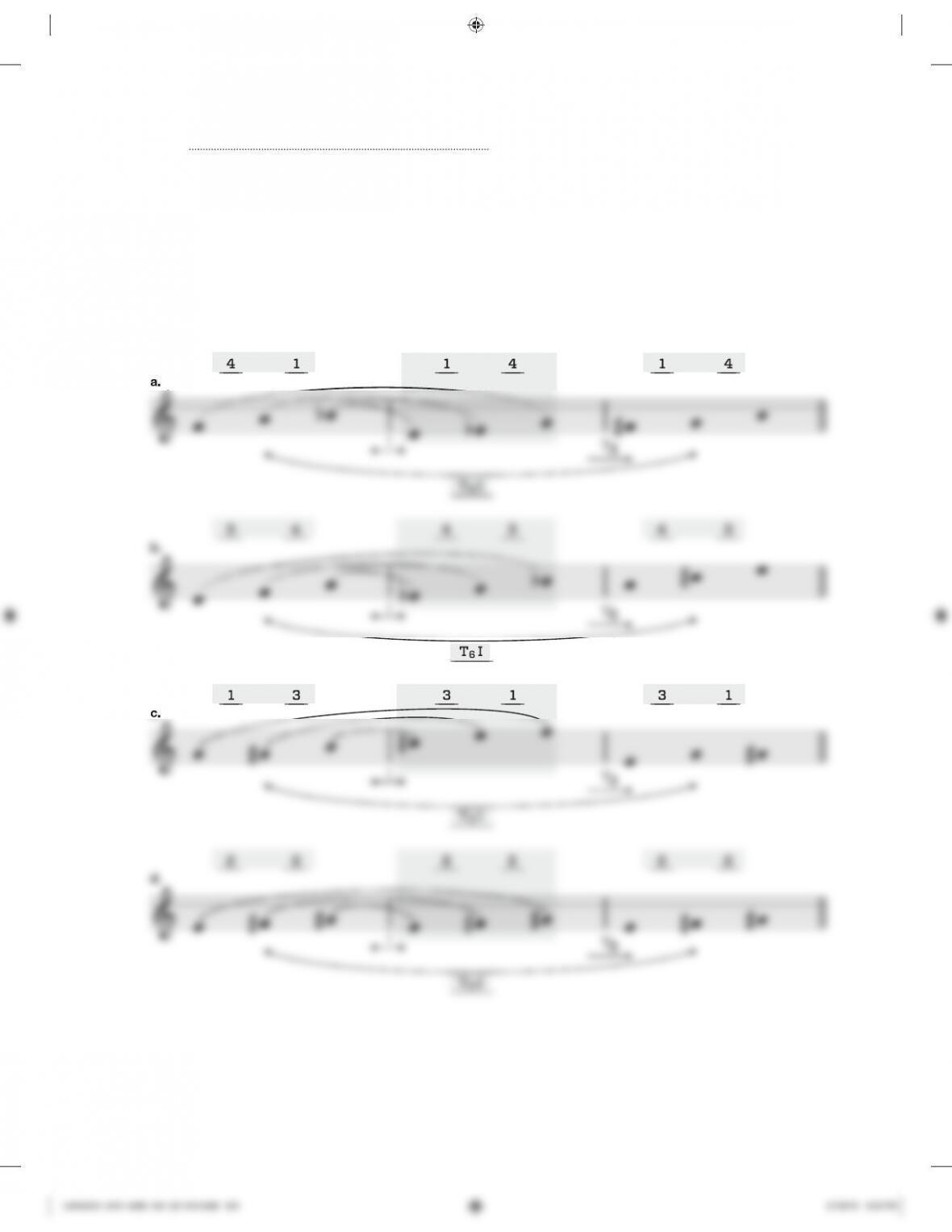
3. Identifying inversion
• The following pairs of sets are related by inversion (TnI). Verify by writing the
intervals over the staff.
• On the staff in the space between the two sets, write out the inversion of the
left-hand set, with the intervals indicated above the staff.
• Determine the transposition (Tn).
• Identify the inversion that connects the two sets.
634 | CHAPTER 44 | Pitch-Class Sets: Trichords
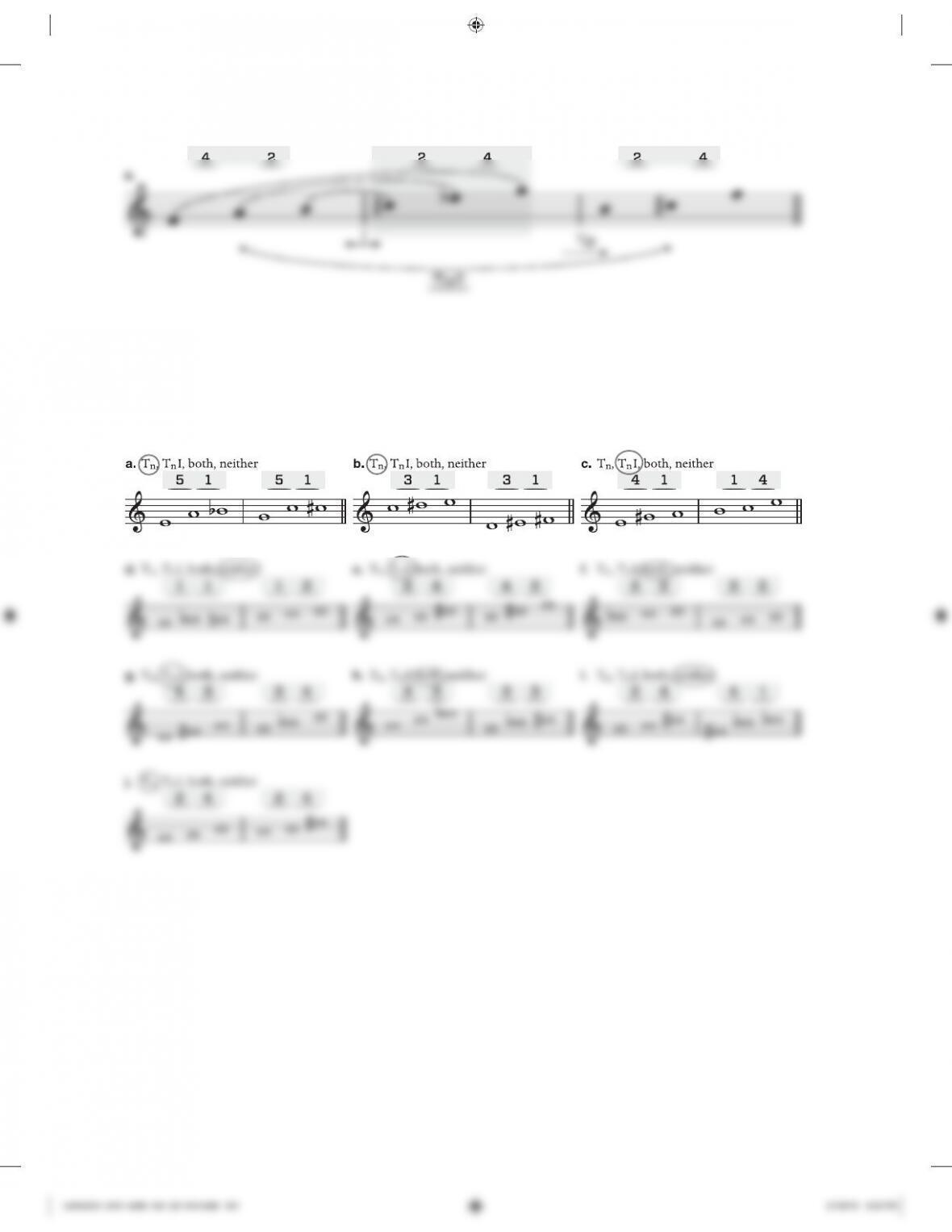
E. TRANSPOSITION AND INVERSION
Below are pairs of trichords written in normal form. Write the intervals over the
staff, then identify whether the sets are related by transposition, by inversion, by both
transposition and inversion, or by neither.
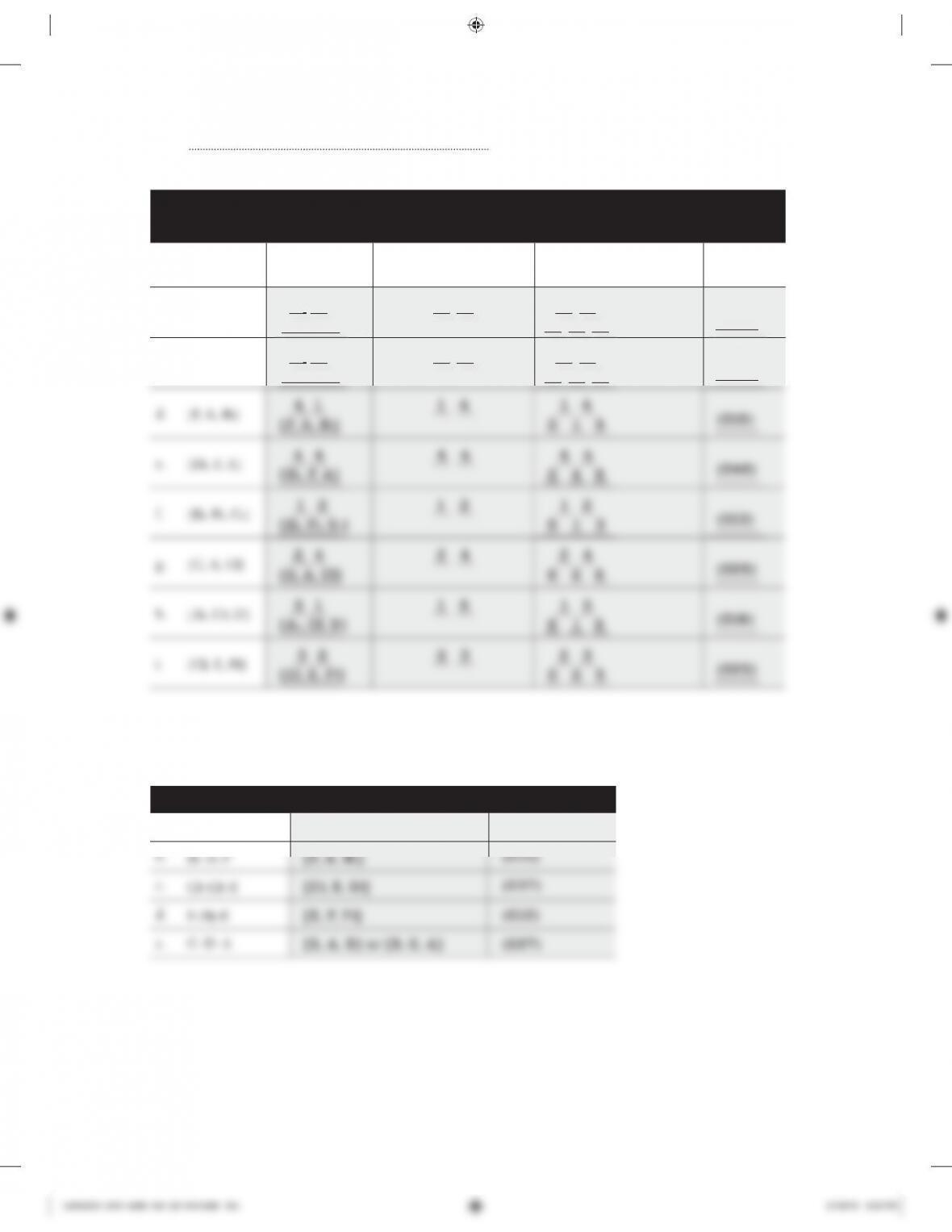
F. PRIME FORM
1. The following sets are in normal form. Put them into in prime form.
• Start by extracting the succession of intervals.
• Then, if necessary, rearrange the intervals so the smaller interval is on the left.
• Finally, replicate that interval succession starting on pitch-class 0.
F. PRIME FORM |635
NAME:
NORMAL
FORM
NORMAL
FORM WITH
INTERVALS
INTERVALS ARRANGED
WITH SMALLER ON
THEfiLEFT
INTERVAL SUCCESSION
STARTING ON PITCH-
CLASS 0
PRIME
FORM
a. [G, B, D] 4 3
[G, B, D]
3 4 3 4
0 3 7 (037)
b. [A, C, Eb] 3 3
[A, C, Eb]
3ff3 3ff3
0ff3ff6 (036)
c. [F#, B, C#] 5 2
[F#, B, C#]
2ff5 2ff5
0ff2ff7 (027)
1ff4 1ff4
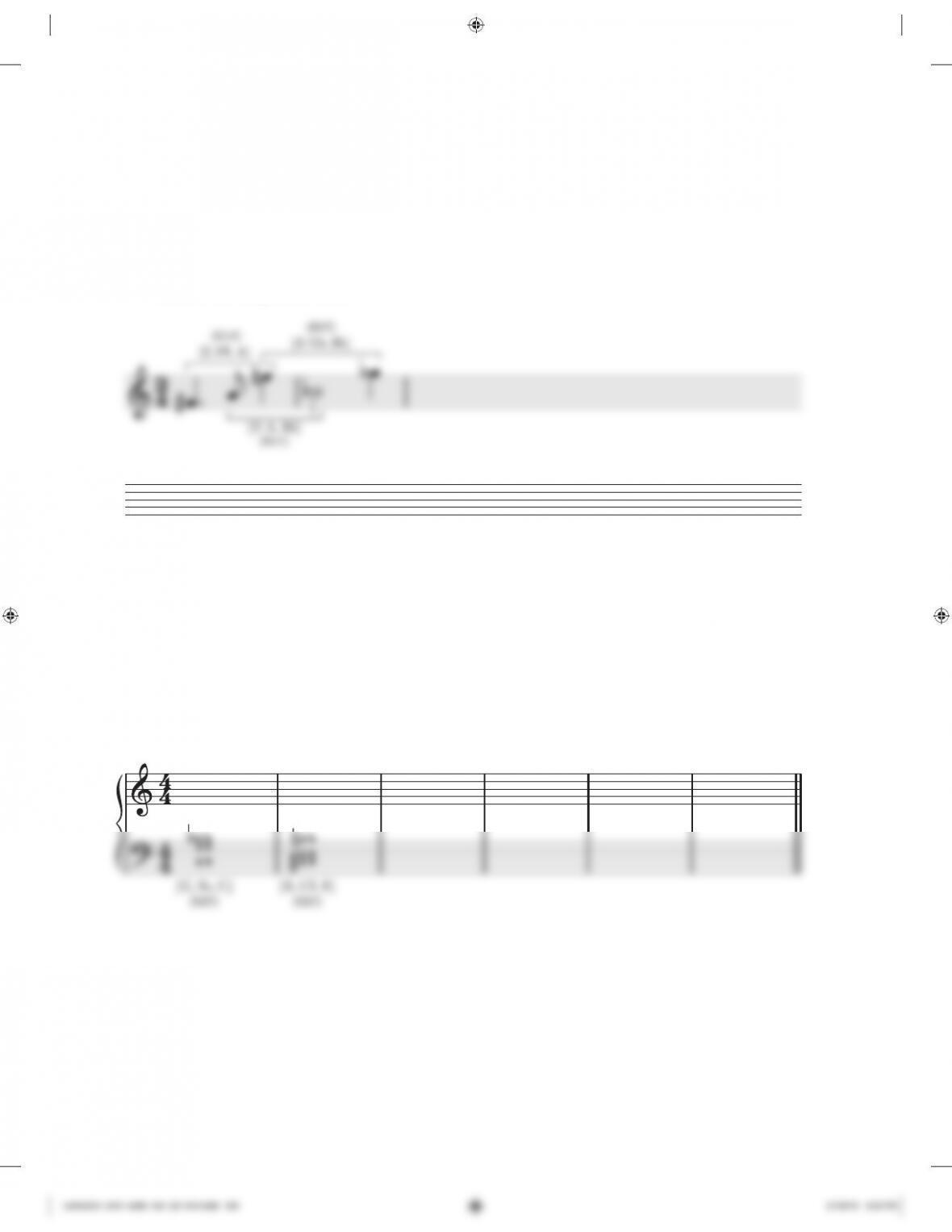
2. Put the following sets into normal form and then into prime form.
NORMAL FORM PRIME FORM
a. C#–G–A [G, A, C#](026)
3
[A
A
b
CE
b
3
C
C
E
b
C
[A
,
C
,
E
b
]
3ff
3
3ff
0
0
0ff
3ff
6
6
3
36
3
3
36
3
3
(0
36
)
5
[F
#
F
#
#
BC
2
B
B
BC
B
B
[F
#
,
B,
C
#
]
2ff
5
2ff
0
0
0ff
2ff
7
7
27
5
2
2
27
2
2
(027)
4
1
1ff
4
1ff
4
conharm2_ch44_wkbk_inst_627-644.indd 635 21/08/19 3:38 PM
4
4
4ff
4
636 | CHAPTER 44 | Pitch-Class Sets: Trichords
G. COMPOSITION
1. Continue and complete a melody 8–12 measures in length in which most or all of
the three-note groups represent set-classes (014) or (015).
• Before you begin, think about the intervals that will be available to you within
these set classes.
• When you are done, analyze your melody by identifying the normal and prime
forms of the sets you have used.
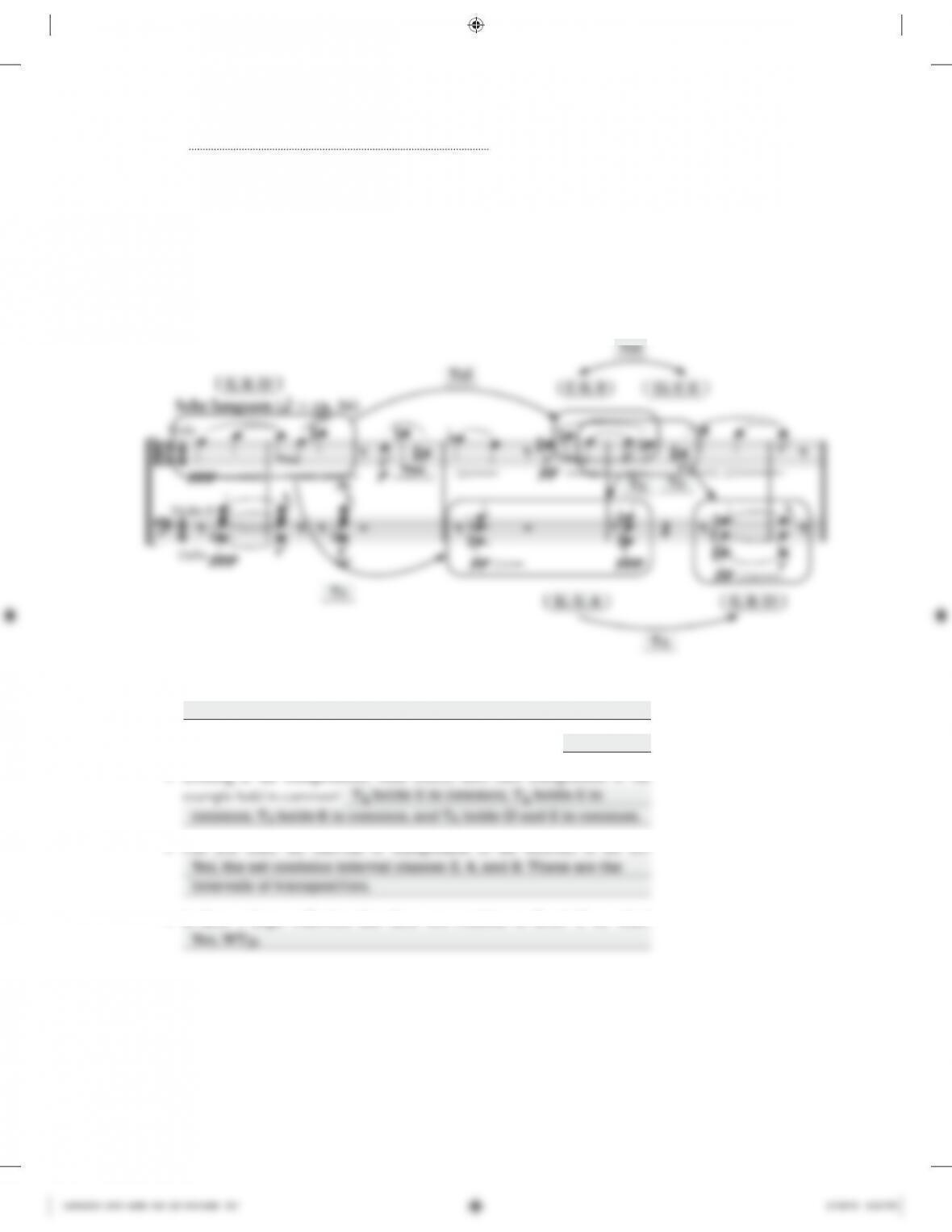
2. Write a six-measure progression and melody.
• Continue and complete a progression of six chords for the left-hand part.
• All chords should contain three different notes and lie within an octave, and all
should be members of set-class (025).
• Then add a melody in the right hand that either arpeggiates the chords or elab-
orates them with passing or neighboring notes.
NAME:
H. ANALYSIS
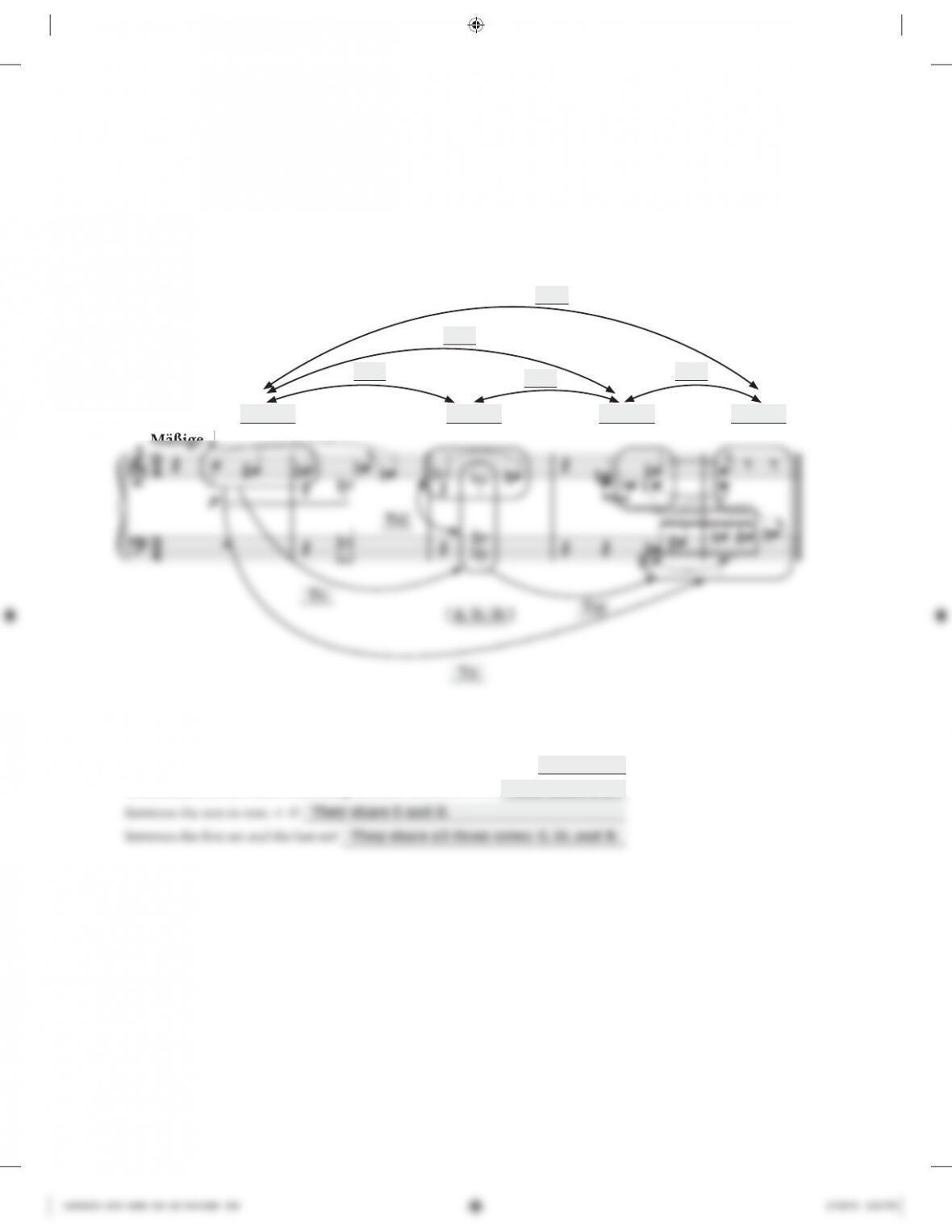
1. Anton Webern, Pieces for String Quartet, Op. 5, No. 2
• Determine the normal form for each circled set and write it in the blank
provided.
• Label the arrows with the appropriate Tn and TnI between sets.
T4
T6I
T0I
[G, B, C#]
• The circled sets all belong to the same set class. What is its prime form?
(026)
• Do all five circled sets share a note in common? If so, what note? Yes, G.
• Looking at the transpositions, what tone(s) does each transposition in the
• Is there a larger collection that these sets combine to form? If so, what?
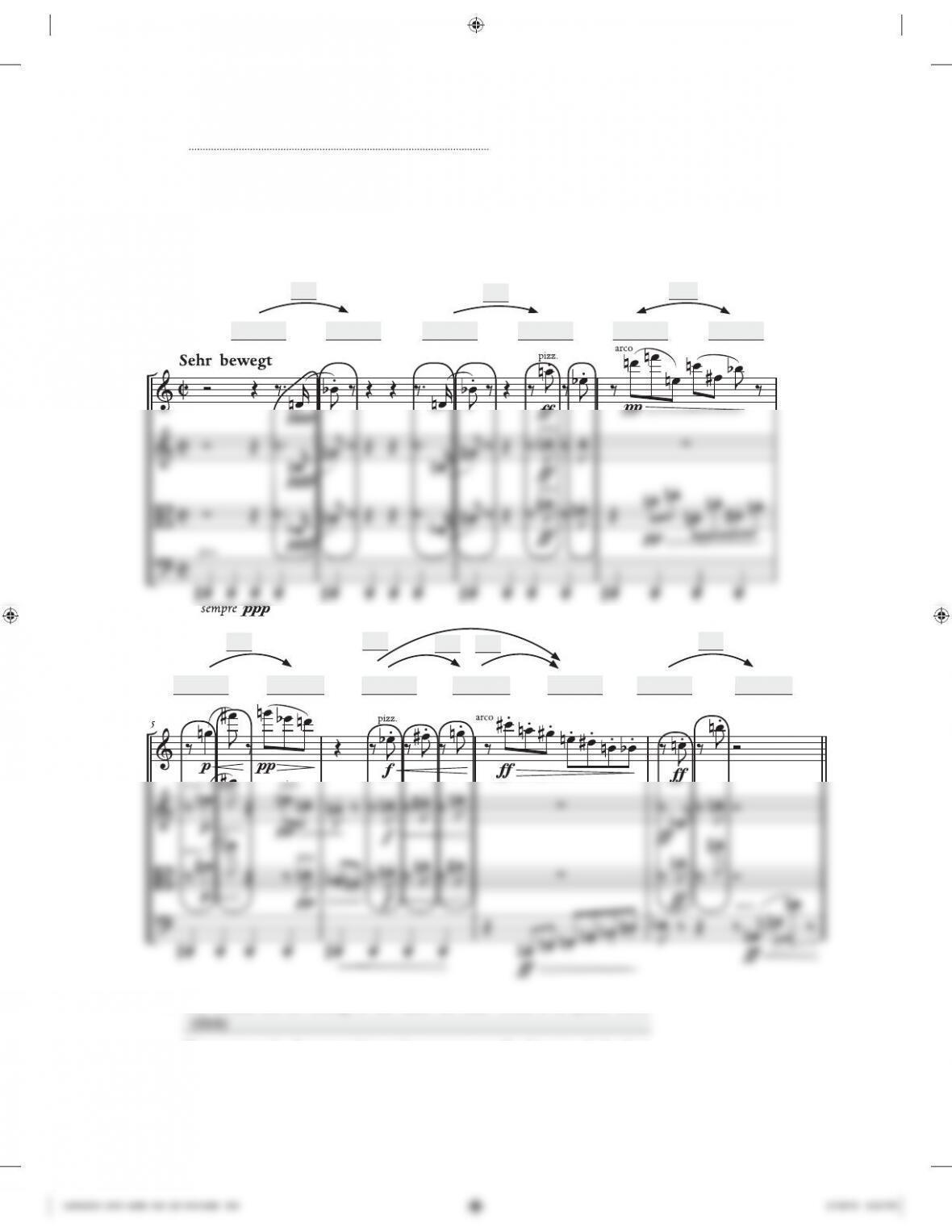
2. Arnold Schoenberg, Piano Pieces, Op. 11, No. 1
• Determine the normal form for each set, and write it in the blank provided.
• Label the arrows with the appropriate Tn and TnI between sets.
T0I
T0
T0
T10
T2
T6I
T6I
T6
[G, G#, B ][ G, G#, B ][
Db, E, F ]
[G, Bb, B ]
The circled sets all belong to the same set class. What is its prime form? (014)
What is the common-tone relationship between the sets in m. 3? They share a Db.
H. Analysis | 639
NAME:
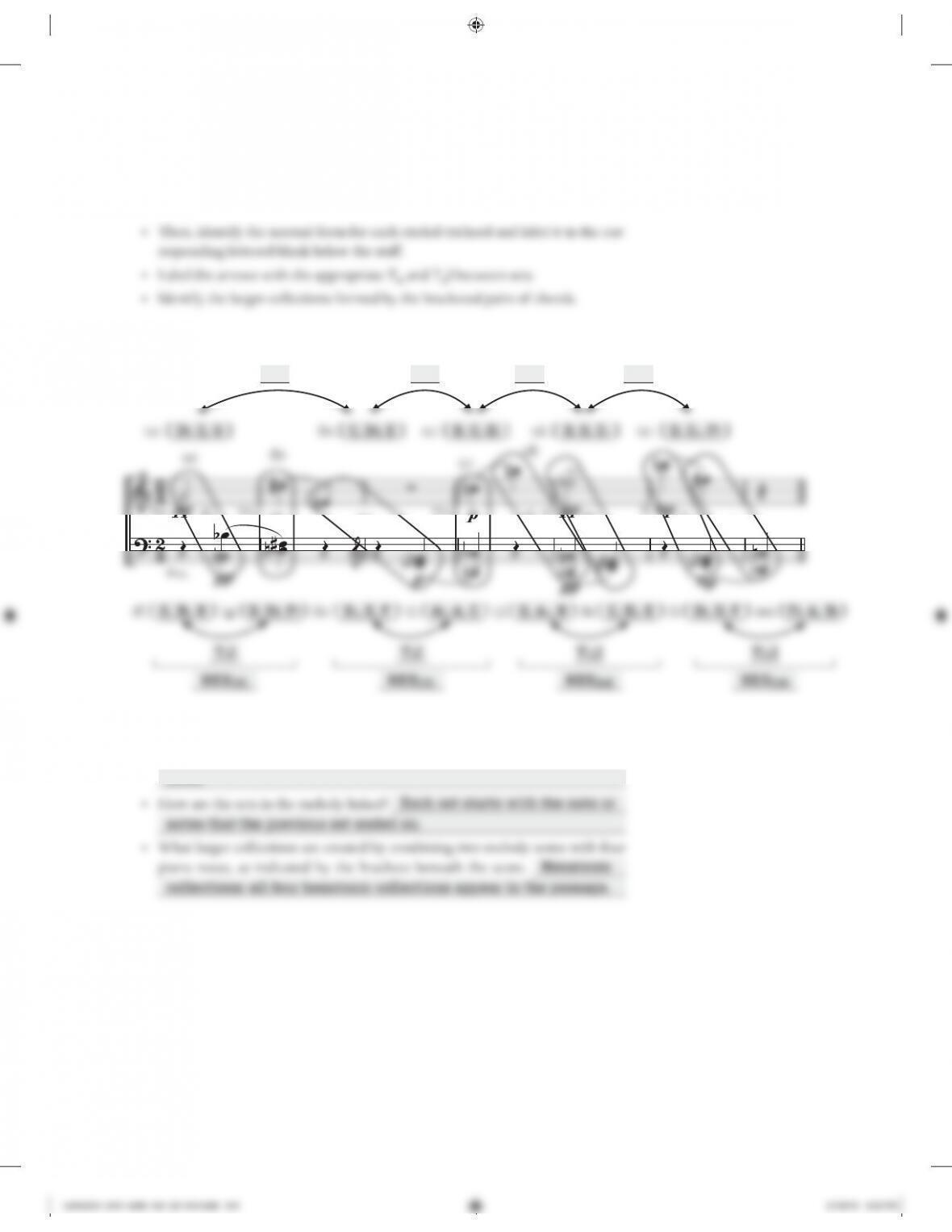
3. Anton Webern, Movements for String Quartet, Op. 5, No. 3
• Determine the normal form for each circled set, and write it in lettered blank
provided.
• Label the arrows with the appropriate Tn and TnI between sets.
[B, D, Eb][
G, Bb, B ]
[C, Eb, E ]
[G, Bb, B ][
C, Eb, E ][ B, D, Eb][
G#, A, C ]
[E, G, G#][
D#, F#, G ][D#, F#, G ][
G#, B, C ]
[E, G, G#][A, C, Db]
T8T8T0I
T4T3T1
T11 T11
(a)
(g)
(g) (h) (i) (j) (k) (l) (m)
(h) (i) (j) (k) (l) (m)
(a) (b) (c) (d) (e) (f )
(b) (c) (d) (e) (f )
• The circled sets all belong to the same set class. What is its prime form?
• Discuss intervals of transposition and common tones for the pairs of chords in
mm. 1–5 and 8, as well as for the three chords in m. 6. What might have moti-
vated the choice of intervals of transposition between the chords?
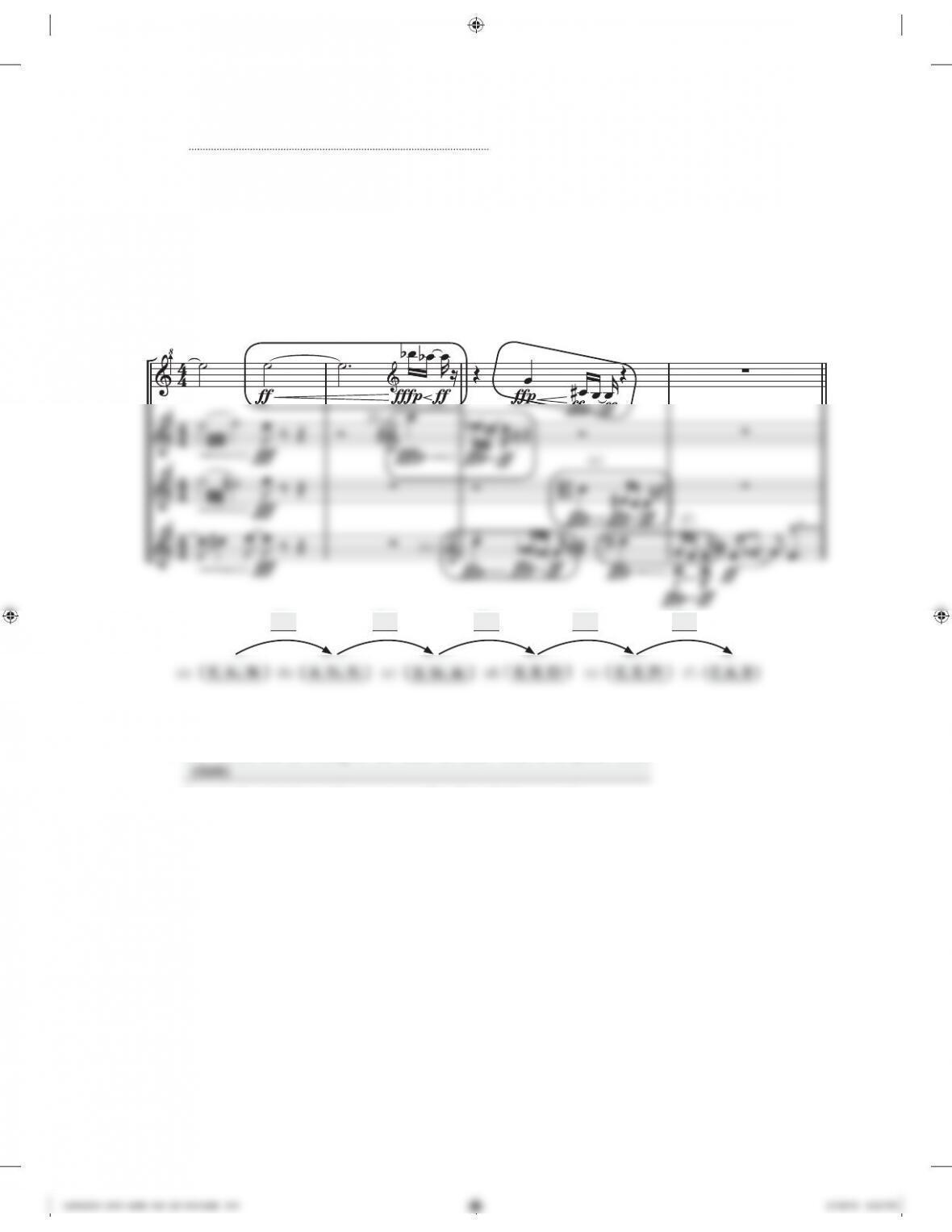
4. Anton Webern, Concerto for Nine Instruments, ii
• The melody of this example (in the treble staff ) can be segmented into trichords,
each consisting of three consecutive notes. The first note of each trichord is
labeled with a letter.
T1I
HEXDEbHEXCDbHEXD#EHEXC#D
T1I T11I T11I
• The circled sets all belong to the same set class. What is its prime form?
(014)
H. Analysis | 641
NAME:
5. Sofia Gubaidulina, Refiections on the Theme B-A-C-H
• Determine the normal form for each circled set, and write it in the lettered
blank provided.
• Label the arrows with the appropriate Tn and TnI between sets.
T5T5T5T5T5
(a)
(b)
(d)
• The circled sets all belong to the same set class. What is its prime form?
• How do the circled sets relate to one another through the excerpt?
642 | CHAPTER 44 | Pitch-Class Sets: Trichords
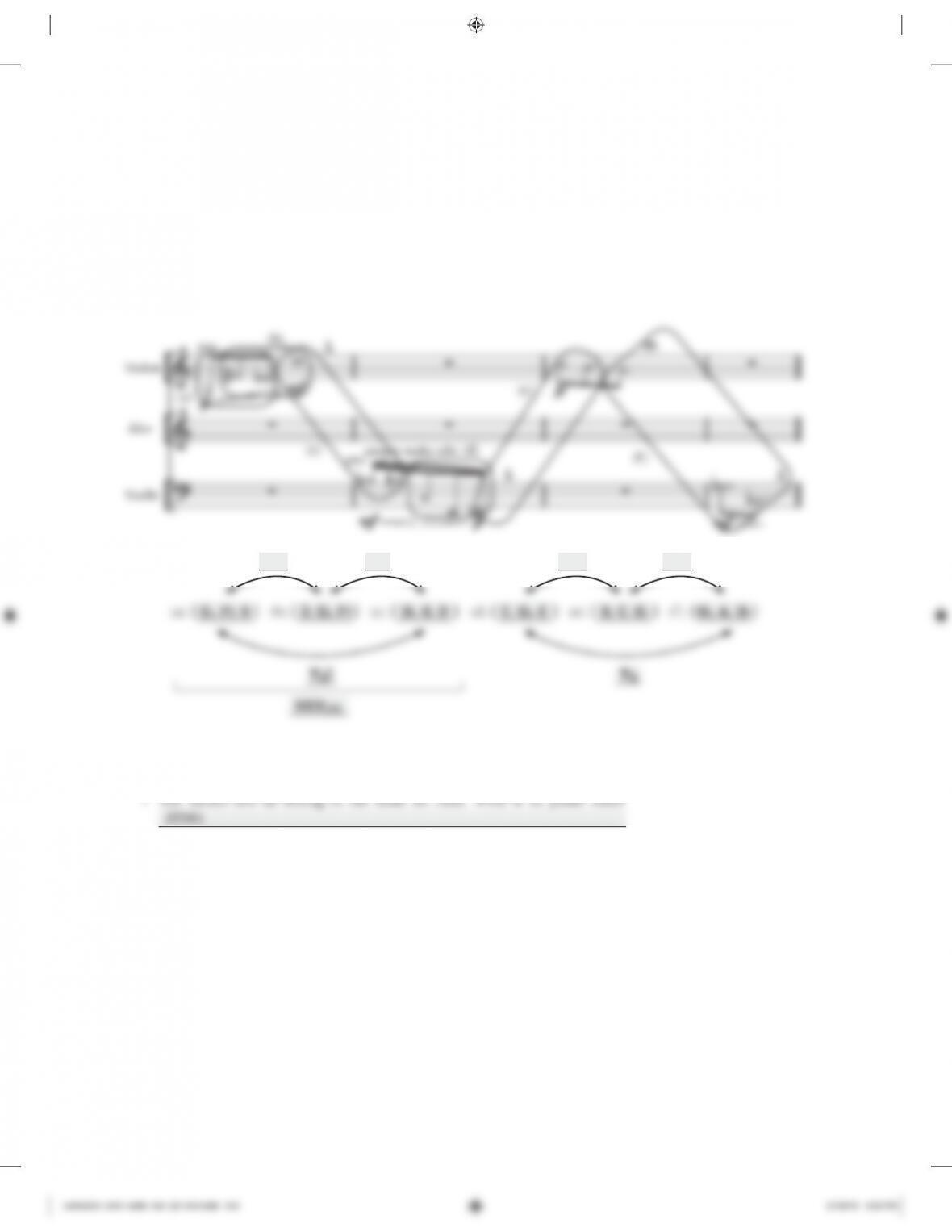
6. Sofia Gubaidulina, String Trio, ii
• Determine the normal form for each circled set, and write it in the lettered
blank provided.
• Label the arrows with the appropriate Tn and TnI between sets.
• Identify the larger collection formed by the first three sets, and label it under
the bracket.
T9I
T9IT3IT8
(a)
(b)
(c) (d)
(e)
(f )
• What is the role of common tones in the first three sets? Compare the progres-
sion of the last three sets to the first three.
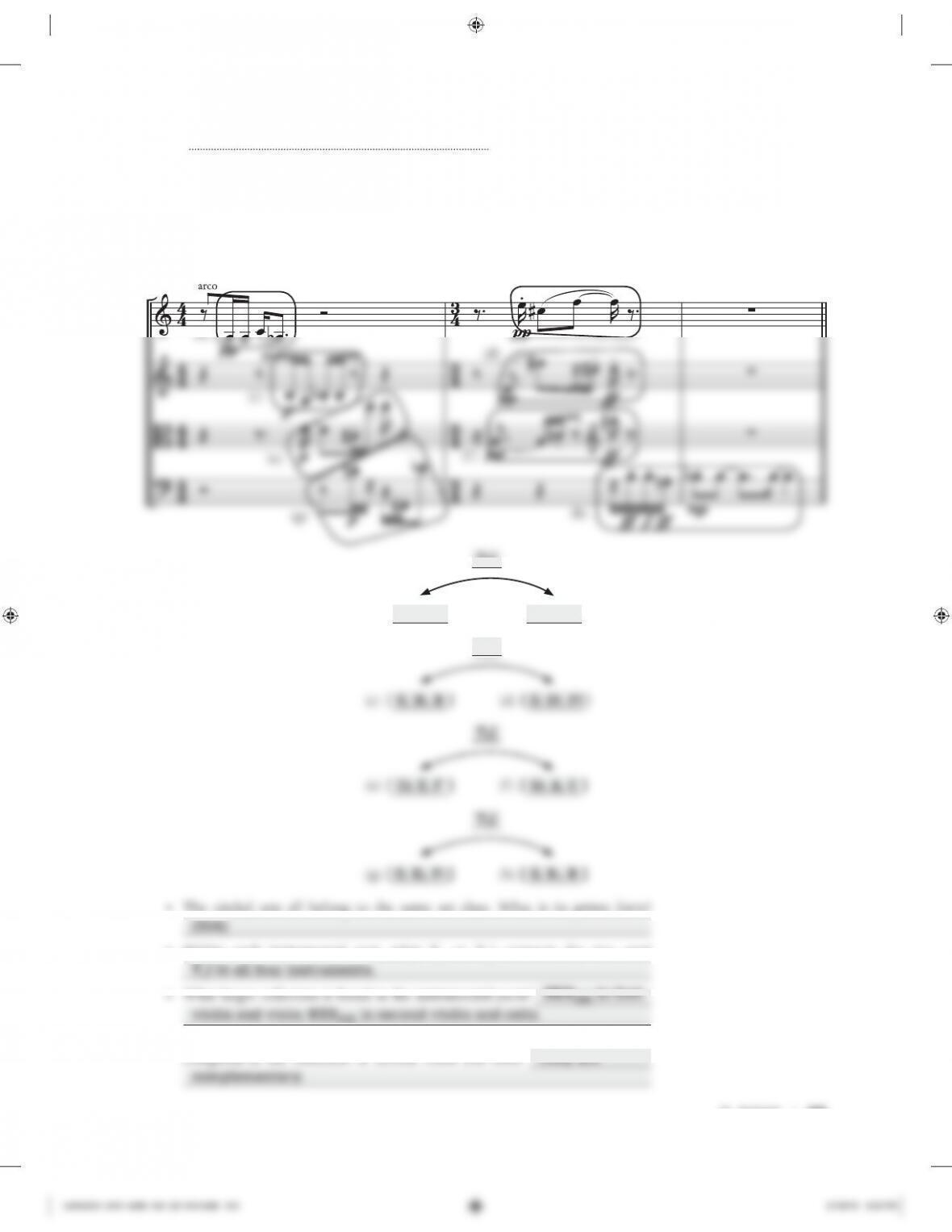
NAME:
7. Milton Babbitt, String Quartet No. 2
• Determine the normal form for each circled set, and write it in the lettered
blank provided.
• Label the arrows with the appropriate Tn or TnI between sets.
(b)
[C#, E, F ][ Ab, A, C ]
T1I
T1I
(a)
(b)
• The circled sets all belong to the same set class. What is its prime form?
• Within each instrumental part, what Tn or TnI connects the two sets?
• What is the relationship between the collection in first violin and viola
644 | CHAPTER 44 | Pitch-Class Sets: Trichords
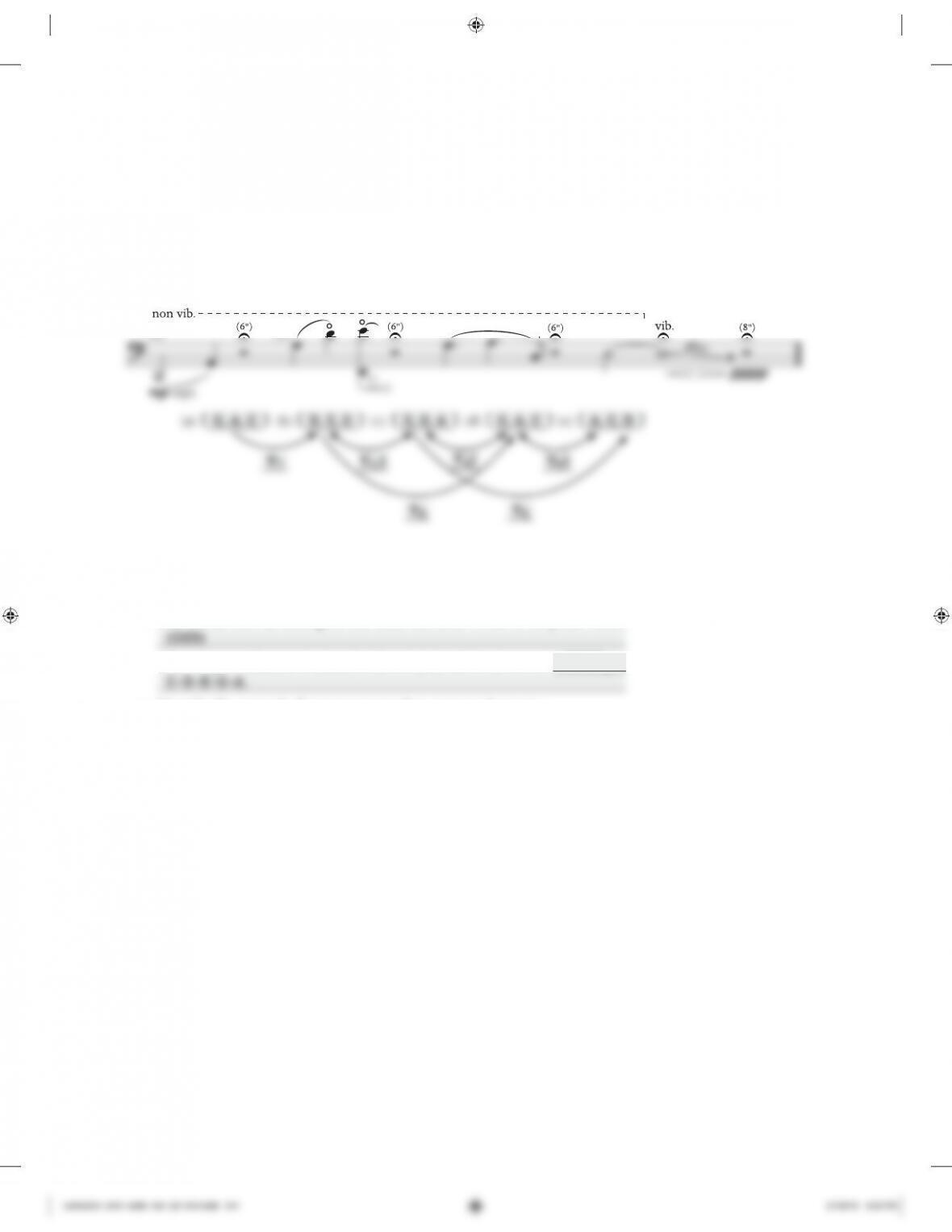
8. Tan Dun, Intercourse of Fire and Water (for solo cello)
• Determine the normal form for each trichord consisting of three consecutive
notes and write it in the blank provided.
• Label the arrows with the appropriate Tn or TnI between sets.
T5T5
(a)
(b)
(c)
(d) (e)
• The circled sets all belong to the same set class. What is its prime form?
• What larger collection is formed collectively by all of these sets? PENTC:
• Describe the network of common tones that connects these sets.