
B. Writing Triadic Transformations | 589
NAME:
A. QUESTIONS FOR REVIEW
1. What is a triadic transformation? What is L? P? R? SLIDE? What effect does a
triadic transformation have on the quality of a major triad? On a minor triad?
2. In a complete L–P chain, how many triads are there? How many different L–P
chains are there? What familiar collection is created by an L–P chain?
3. In a complete P–SLIDE chain, how many triads are there? How would you describe
the root motion of the triads?
4. When triads are used in parallel motion, do the traditional voice-leading rules
B. WRITING TRIADIC TRANSFORMATIONS
Provide the missing chord(s) in these progressions.
1. Perform a P transformation of the following triads, and label the root and quality
(maj, min) of each triad.
chapter
42 Triadic Post-Tonality
590 | CHAPTER 42 | Triadic Post-Tonality
2. Perform a SLIDE transformation of the following triads, and label the root and
quality (maj, min) of each triad.
3. Perform an L transformation of the following triads, and label the root and quality
(maj, min) of each triad.
4. Perform an R transformation of the following triads, and label the root and quality
(maj, min) of each triad.
5. Provide the pitches and names of the missing chords.
D. Triadic Transformation Chains | 591
NAME:
C. IDENTIFYING TRIADIC TRANSFORMATIONS
Identify the transformation that connects these pairs of chords.
D. TRIADIC TRANSFORMATION CHAINS
Fill in and name the missing chords and, where requested, the missing transforma-
tions. From chord to chord, notes either are held in common or move by semitone or
whole tone. Chords may be written in inversion.
1. P–SLIDE partial cycle. Fill in and name the four missing chords.
2. P–SLIDE complete cycle. There is only one P–SLIDE cycle, and it contains all
twelve major and all twelve minor triads.
3. L–P cycle. Fill in and name the four missing chords.
4. L–P cycle. Fill out the complete L–P cycle that starts and ends on a B-minor triad.
5. R–P cycle. Fill in and name the ve missing chords.
NAME:
6. R–P cycle. Write out the complete R–P cycle that starts and ends on D major.
7. L–R partial cycle. Fill in and name the four missing chords.
8. L–R cycle. Complete the L–R cycle, which contains all twelve major and all twelve
minor triads.
E. COMPOSITION
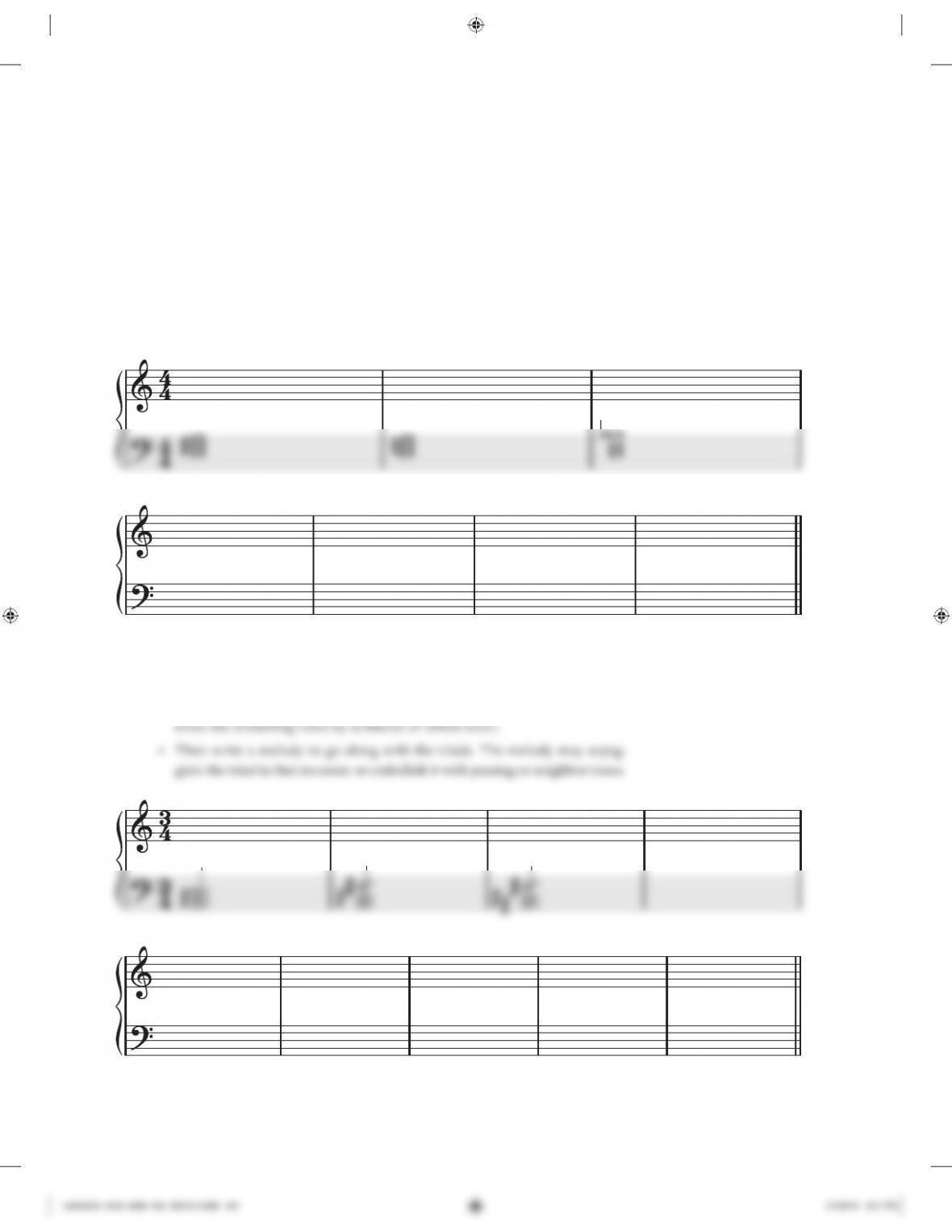
1. Transformation chains
a. P–L chain
• Write out a full P–L chain in the left hand, starting and ending with a D
major triad.
• Use the smoothest voice leading possible (keep two common tones and
move the remaining voice by semitone).
• Then write a melody to go along with the triads. The melody may arpeg-
giate the triad in that measure or embellish it with passing or neighbor tones.
b. R–P chain
• Write out a full R–P chain in the left hand, starting and ending with an A
major triad.
• Use the smoothest voice leading possible (keep two common tones and
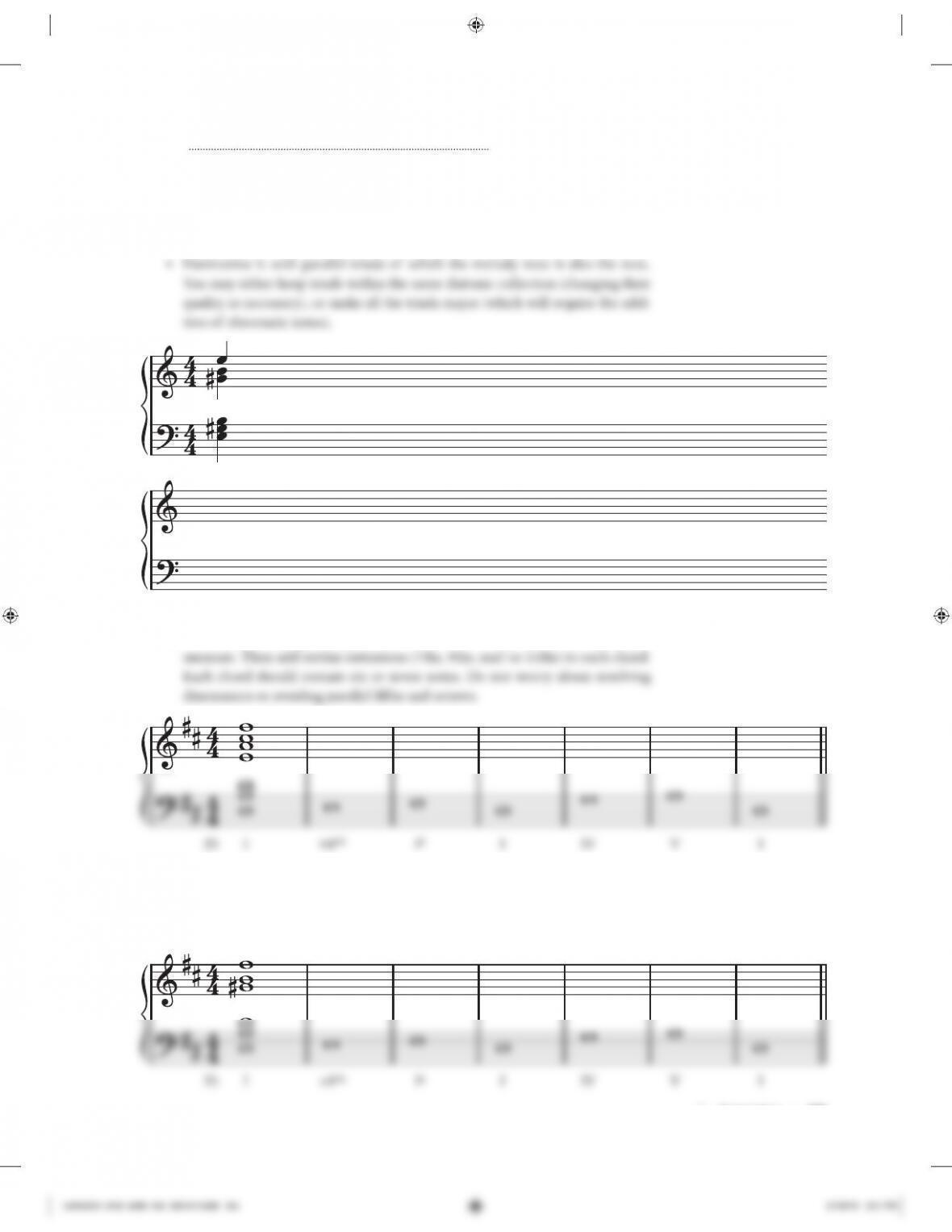
E. Composition | 595
NAME:
2. Parallel triads.
• Write a pentatonic melody in quarter and half notes, starting on E, roughly
eight measures long
3. Triads with added notes
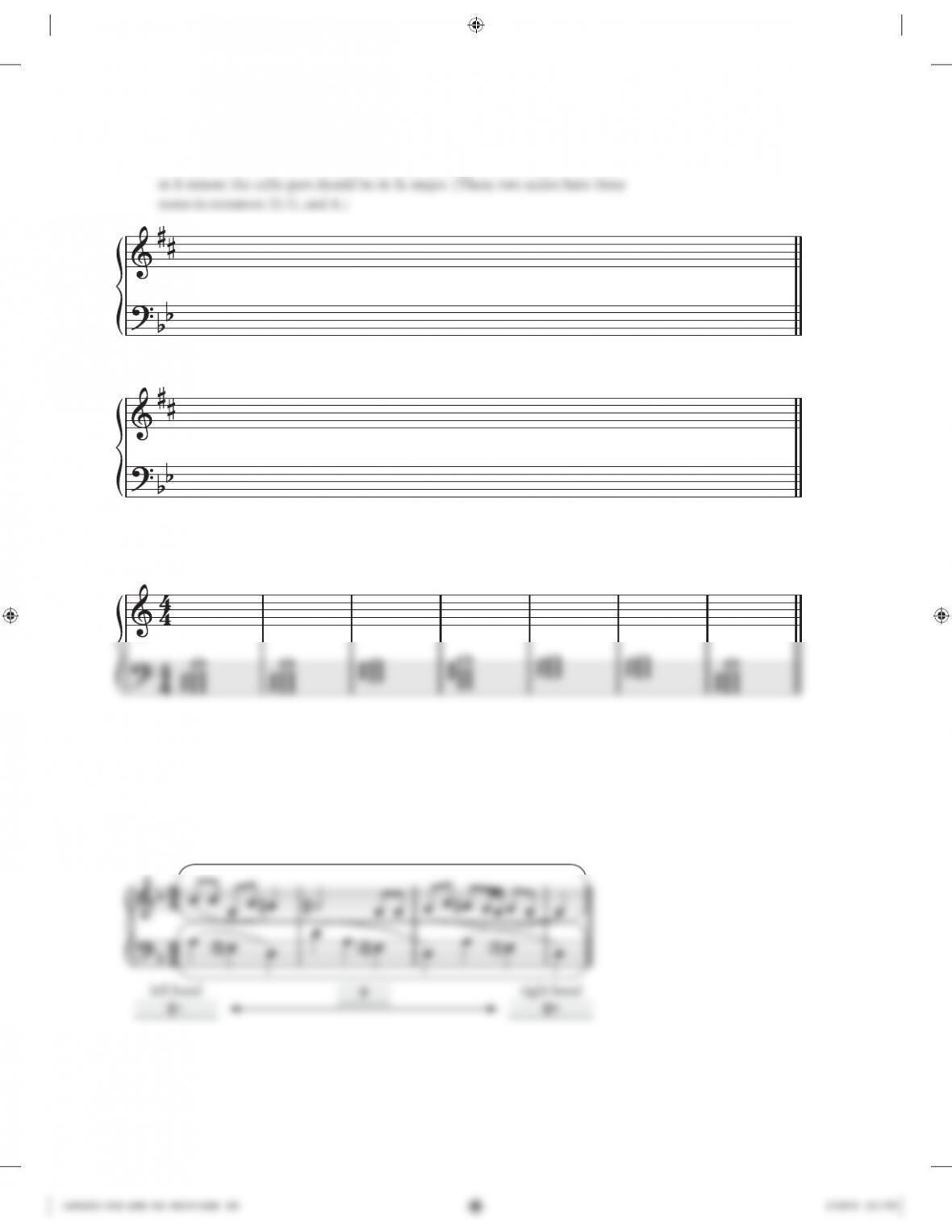
a. Write out the simple progression in D major as indicated, one chord per
b. Using the same progression as in (a), this time add tones (diatonic or chromatic)
that cannot be easily explained as tertian extensions. Each chord should contain
six or seven notes. Do not worry about resolving dissonances or avoiding par–
allel fths and octaves.
4. Bitonal and bi-triadic music
a. Write a duet for violin and cello, 8–16 measures long. The violin part should be
b. Given the progression of triads in the left hand, add triads in the right hand that
are related by P, SLIDE, or transposition at the tritone. Do not repeat a chord
in adjacent measures.
F. ANALYSIS
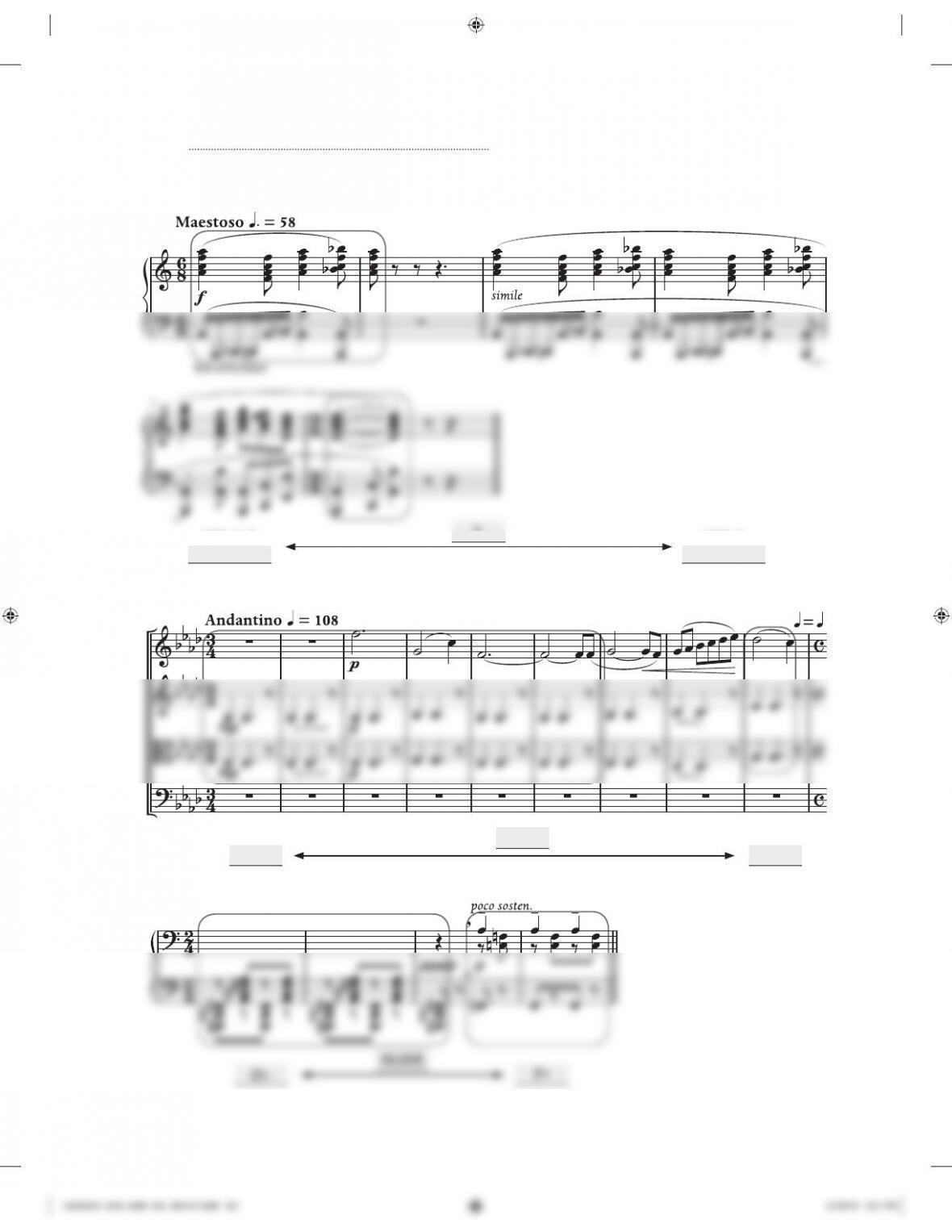
1. Triadic transformations
Label the boxed chords and identify the transformation that connects them.
Ignoreany embellishing tones.
a. Igor Stravinsky, Five Fingers, Lento
P
left hand
right hand
NAME:
b. Igor Stravinsky, Serenade in A, i
L
F+
mm. 1–2
A–
mm. 6
c. Dmitri Shostakovich, String Quartet No. 4, ii
F–
R
Ab+
d. Béla Bartók, Allegro barbaro
SLIDE
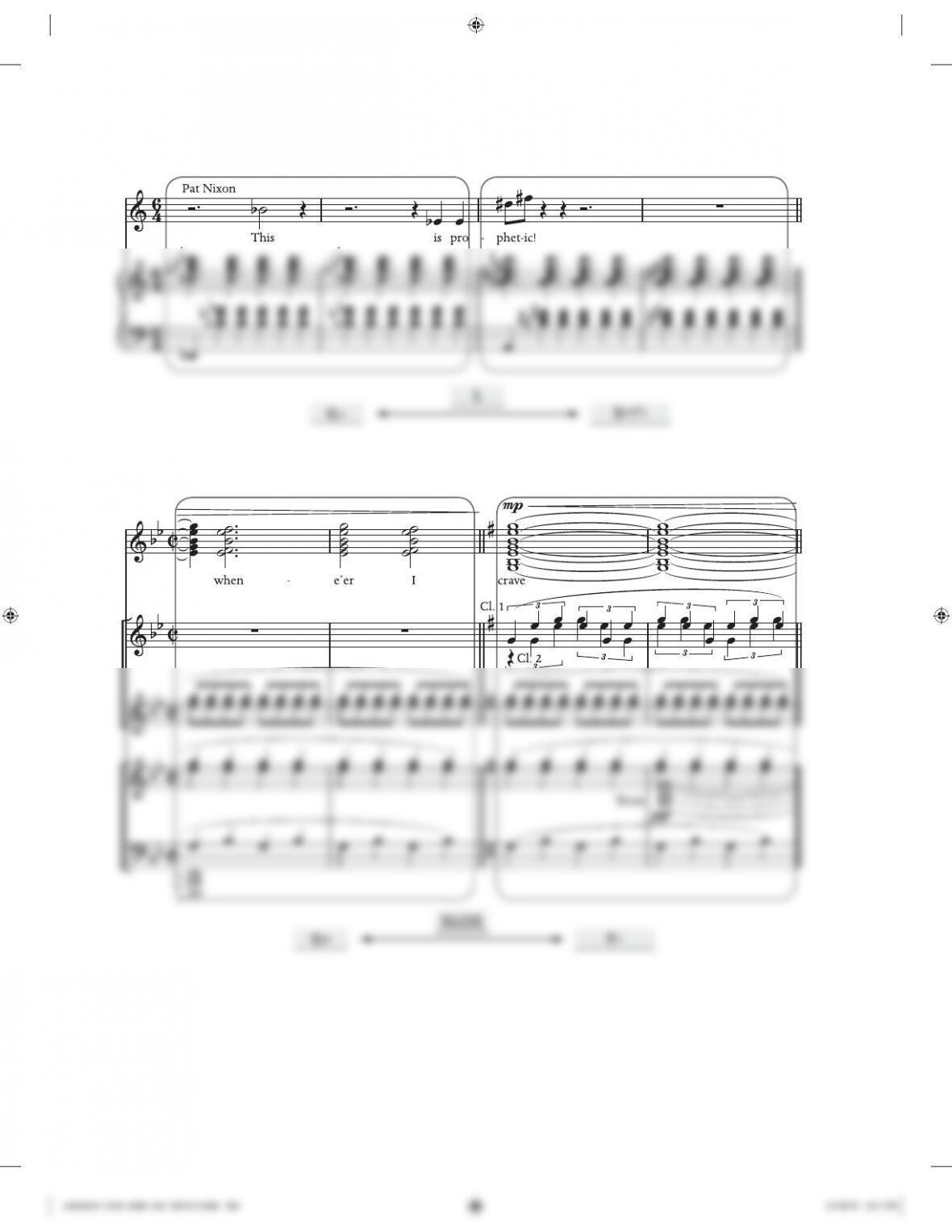
e. John Adams, Nixon in China, Act II
L
f. John Adams, Harmonium, Part I
SLIDE
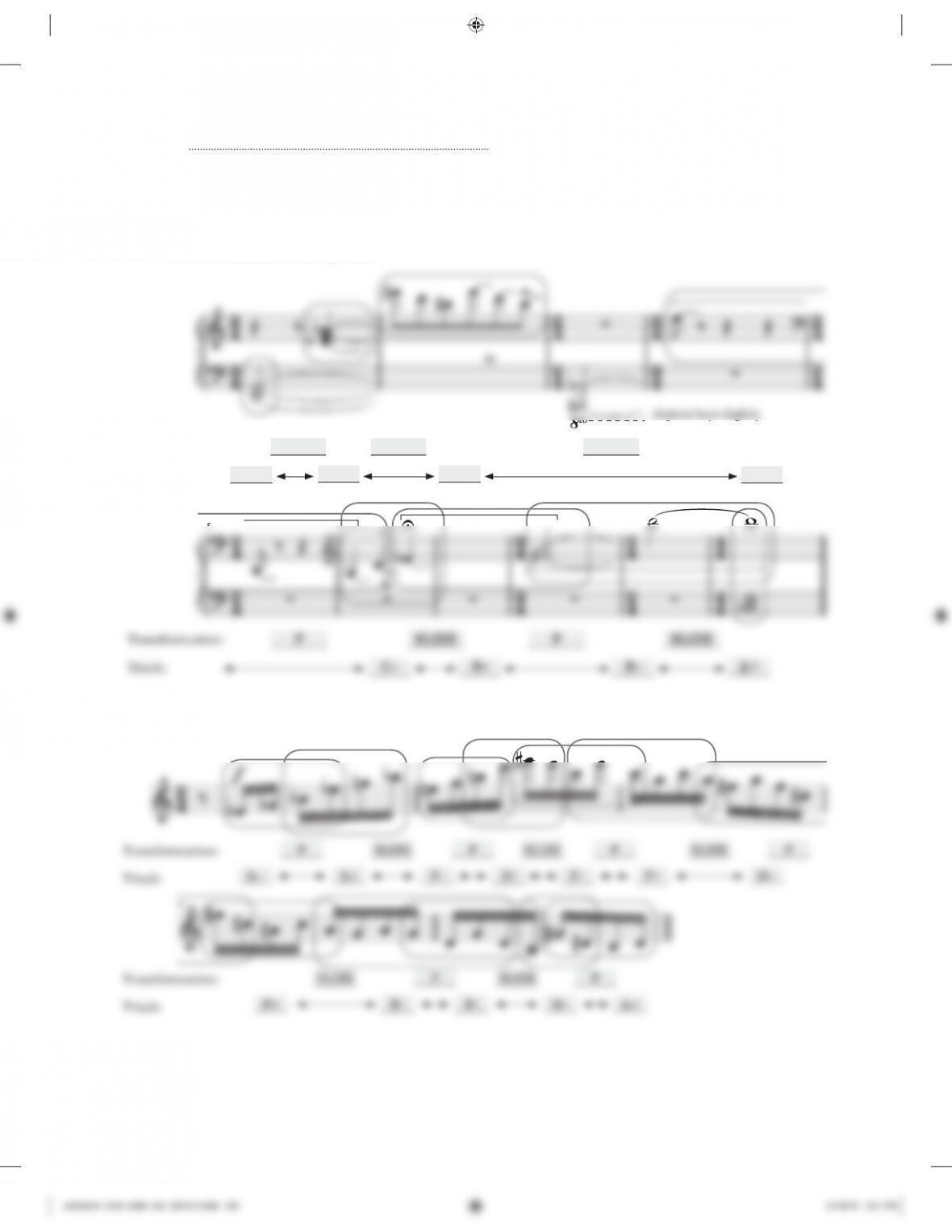
NAME:
2. Transformation chains
Identify the boxed triads and the transformations that connect them.
a. Alfred Schnittke, Piano Quintet, i
Transformation: SLIDE P SLIDE
Triads: D– Db+ C#– C+
b. Alfred Schnittke, Concerto Grosso No. 2, i
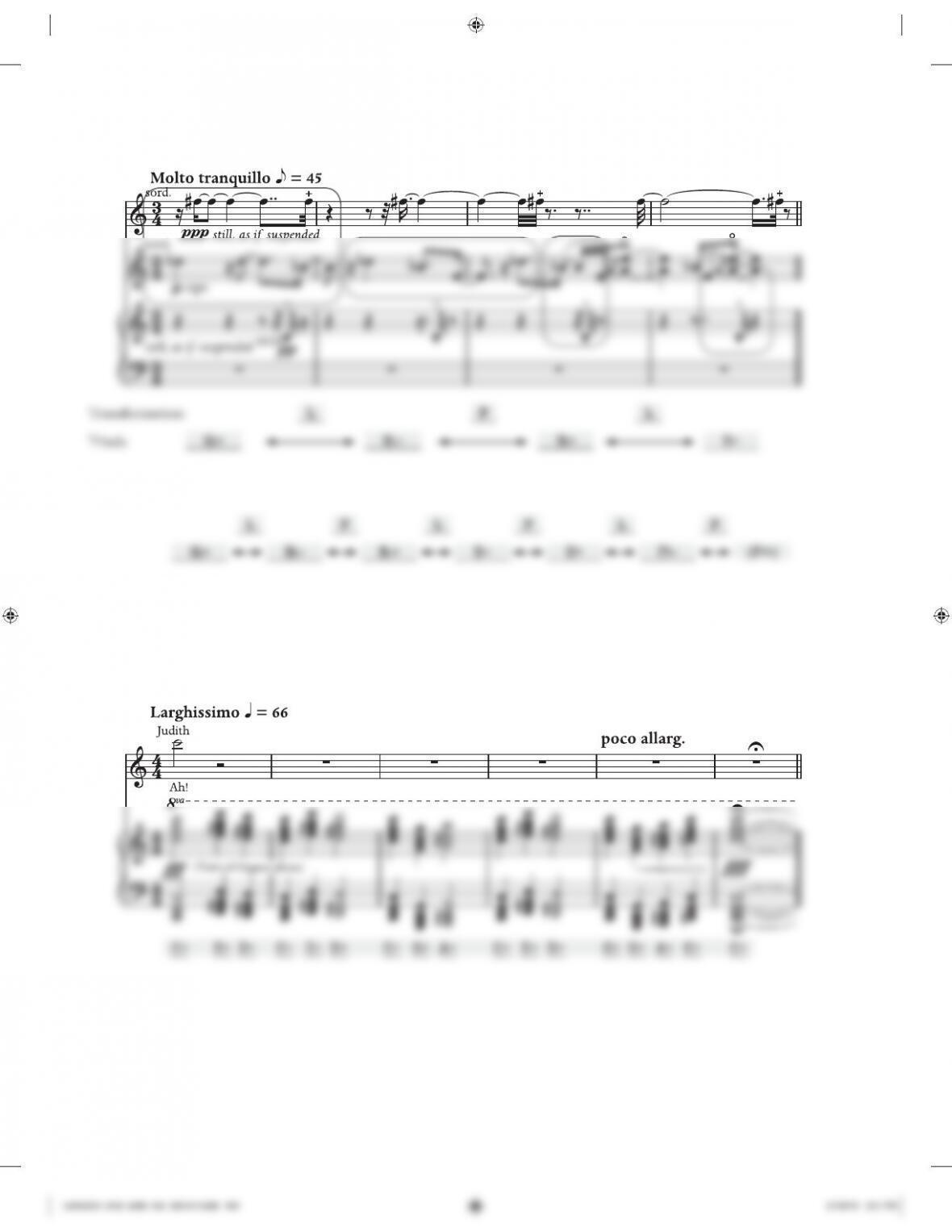
c. Ursula Mamlok, Panta Rhei, iii
Write out the complete chain of which these triads are part and identify the
transformations.
3. Parallel triads
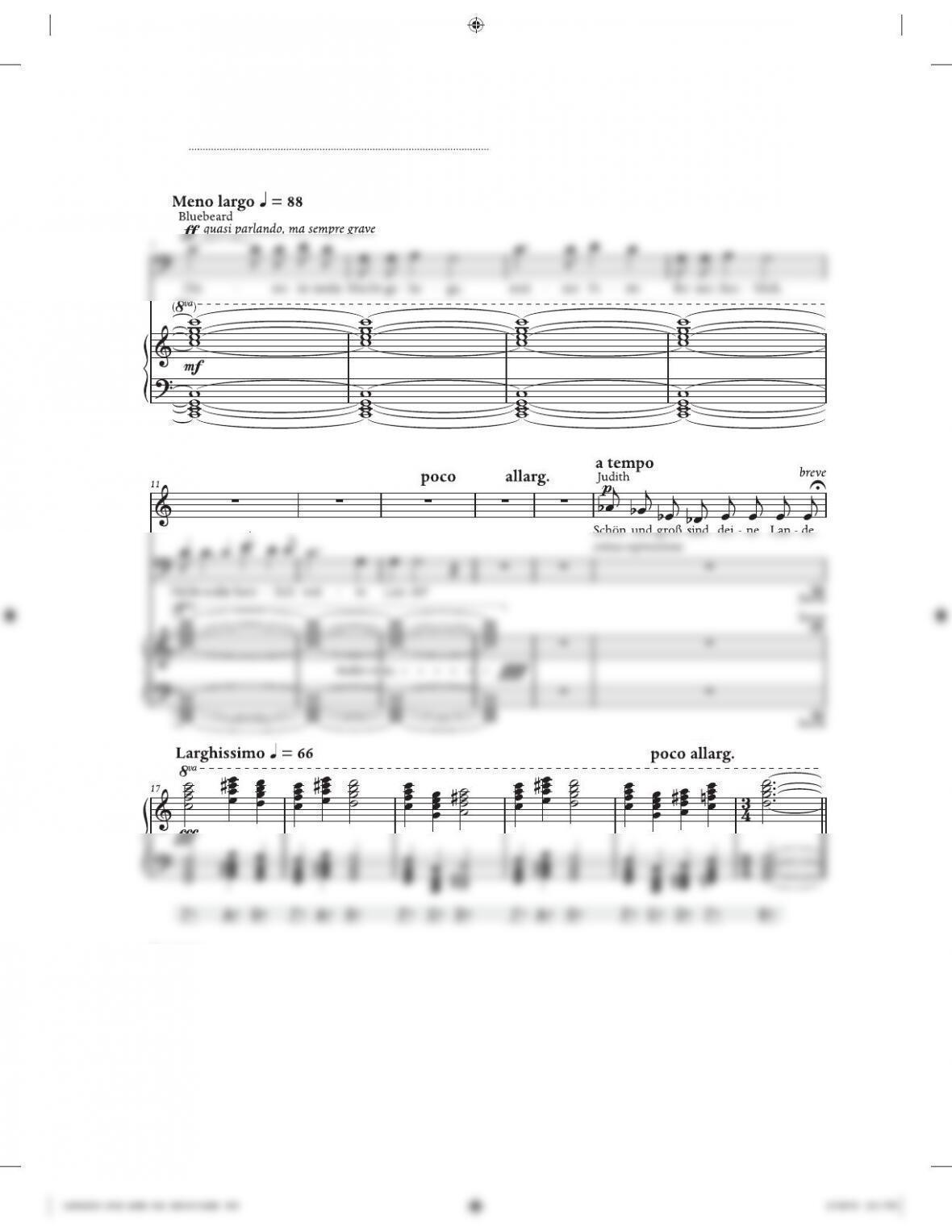
a. Béla Bartók, Bluebeard’s Castle
Label the triads at the beginning (in mm. 1–6) and end (mm. 17–22) of the
excerpt in the blanks provided with root and quality. Then answer the questions
below.
F. Analysis | 601
NAME:
Translation:
Judith: Ah!
Bluebeard: Behold my spacious kingdom. Gaze upon its distant vistas. Is it not a noble country?
Judith: Fair and spacious is your country.