
A. QUESTIONS FOR REVIEW | 573
NAME:
A. QUESTIONS FOR REVIEW
1. What is an octatonic collection? How many octatonic collections are there? How
are they labeled? What is the interval pattern for an octatonic scale? How many
scalar orderings are there?
2. Which familiar four-note chord is the complement of the octatonic collection?
Which familiar chords does the octatonic collection contain?
3. What is a hexatonic collection? How many hexatonic collections are there? How
are they labeled? What is the interval pattern for a hexatonic scale? How many
scalar orderings are there?
4. What is the complement of a hexatonic collection? Which familiar chords does the
hexatonic collection contain?
chapter
41 Collections and Scales II:
Octatonic, Hexatonic, and
Whole-Tone
574 | CHAPTER 41 | Collections and Scales II: Octatonic, Hexatonic, and Whole-Tone
B. WRITING SCALES
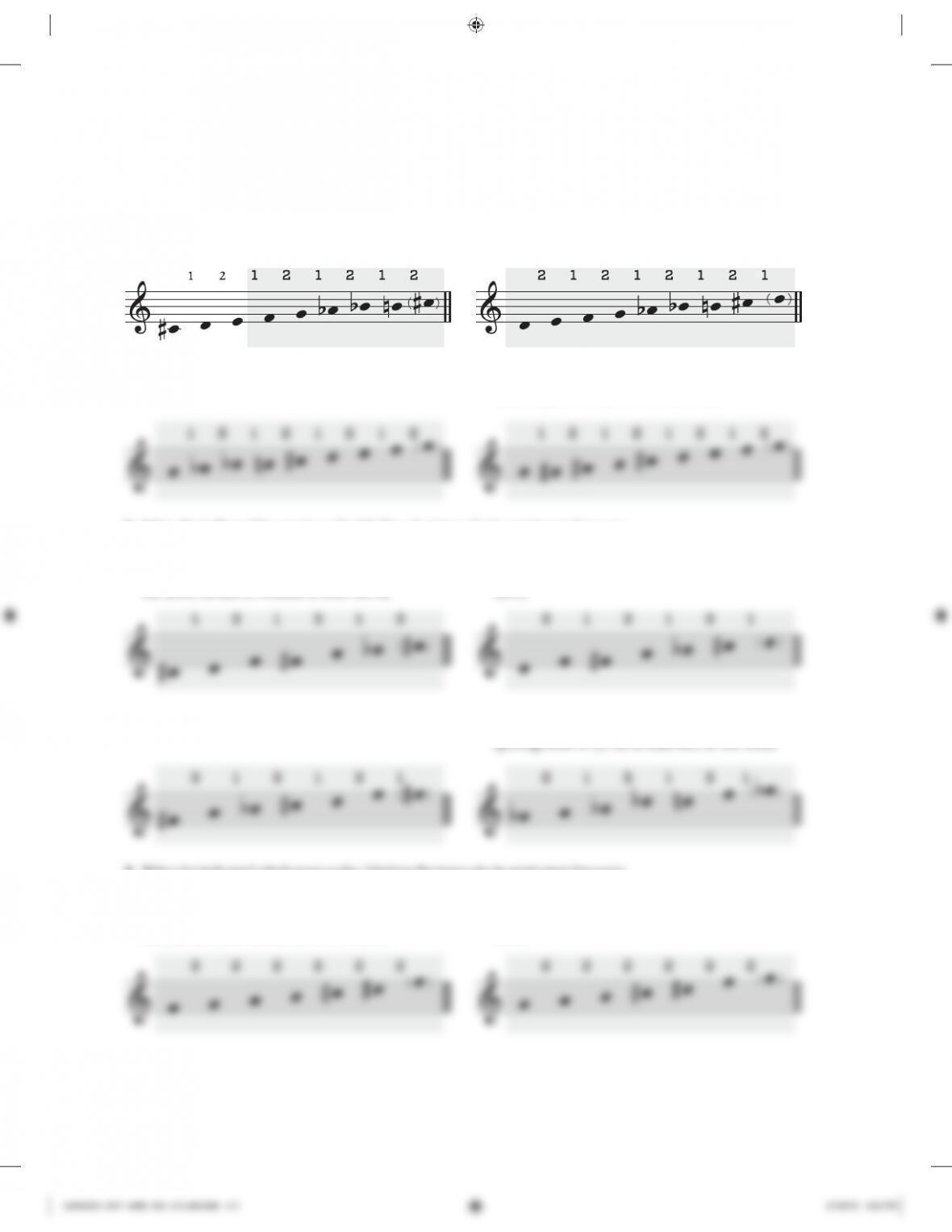
1. Write the indicated octatonic scales, labeling the intervals (in semitones) between
adjacent notes.
a. OCTC#D on C# (octatonic collection that includes b. OCTC#D on D (same notes as in (a)
the notes C# and D written to start on C#) but starting on D)
c. OCTC#D on G d. OCTC#D on G, using different enharmonic spellings
than in (c) for at least two of the notes
2. Write the indicated hexatonic scales labeling the intervals (in semitones) between
adjacent notes.
a. HEXC#D on C# (hexatonic collection that includes b. HEXC#D on D (same notes as in (a) but starting
the notes C# and D, written to start on C#) on D)
c. HEXC#D on F# d. HEXC#D on F#, using different enharmonic
spellings than in (c) for at least two of the notes
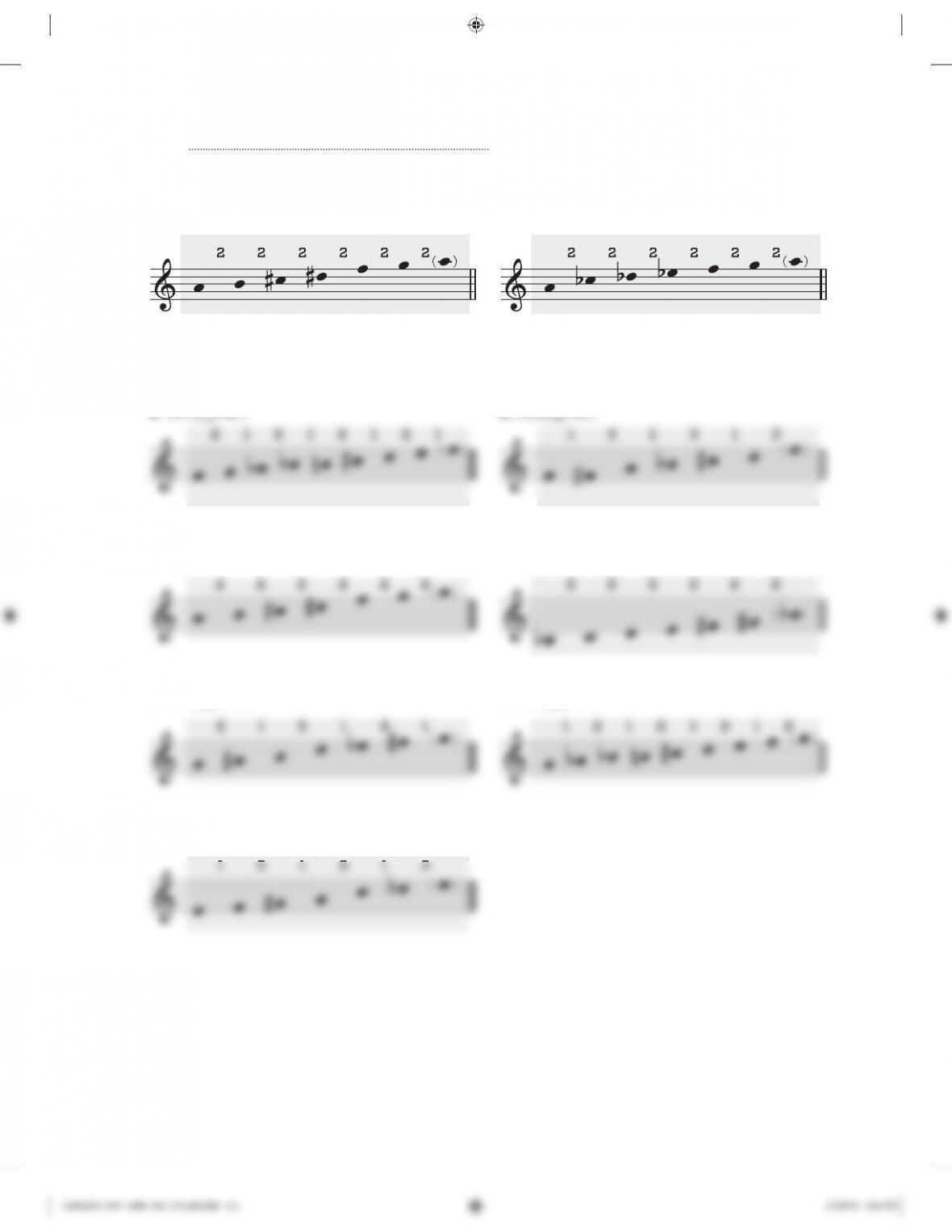
3. Write the indicated whole-tone scales, labeling the intervals (in semitones) between
adjacent notes.
a. WTC# on F (whole-tone collection that b. WTC# on G (same notes as in (a) but starting
includes the note C# written to start on F) on G)
B. Writing Scales | 575
NAME:
c. WTC# on A d. WTC# on A, using different enharmonic spellings
than in (c) for at least two of the notes
4. Write the indicated scales (octatonic, hexatonic, or whole tone), labeling the
intervals (in semitones) between adjacent notes.
a. OCTC#D on F b. HEXC#D on F
g. HEXCDb on E
e. HEXDEb on G f. OCTC#D on G
c. WTC# on A d. WTC on Bb
C. IDENTIFYING SCALES
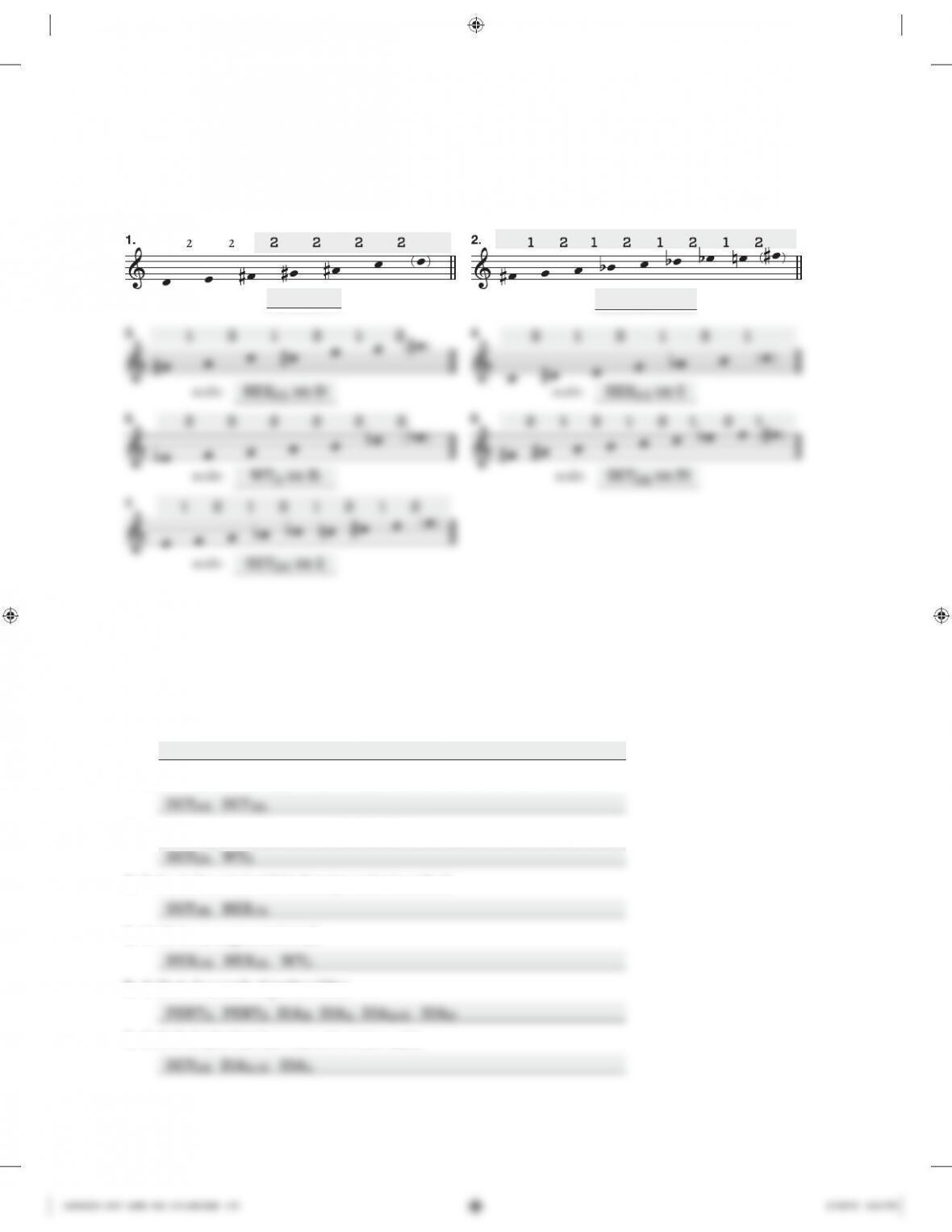
For each of these scales, write the intervals between adjacent notes (in semitones)
and identify the scale.
OCTCDb on F#
WTC on D
scale: scale:
scale:
scale:
scale:
scale: scale:
OCTDEb on F#
OCTC#D on E
WTC# on Eb
HEXCDb on G#HEXD#E on C
D. INTERACTION BETWEEN SCALES
Name as many collections (diatonic, pentatonic, octatonic, hexatonic, or whole-tone)
as you can that contain the following groups of notes (there are at least two correct
answers for each question).
1. D–F#–A–C (a dominant seventh chord)
DIA1#ffOCTDEb
2. D–F–Ab–B (a diminished seventh chord)
3. Gb–Bb–C–E (a French augmented sixth chord)
4. F–Ab–A–C (a triad with both major and minor third)
5. D–F#–Bb (an augmented triad)
6. G–D–A–E (a stack of perfect fifths)
7. D–E–F–G (the first four notes of a minor scale)
E. Composition | 577
NAME:
E. COMPOSITION
Write melodies as indicated. Choose a meter and write a melody of between 8 and 16
measures, in whatever style and mood you like.
1. Use only notes from OCTC#D on E: E–F–G–Ab–Bb–B–C#–D–(E).
2. Use only notes from HEXC#D on F: F–F#–A–Bb–C#–D–(F).
3. Use only notes from WTC#, starting and ending on A.
4. Start with OCTCDb on Eb (Eb–E–F#–G–A–Bb–C–Db) and modulate smoothly to
DIA2b on G (G–A–Bb–C–D–Eb–F–G), using common tones as a pivot between the
collections.
578 | CHAPTER 41 | Collections and Scales II: Octatonic, Hexatonic, and Whole-Tone
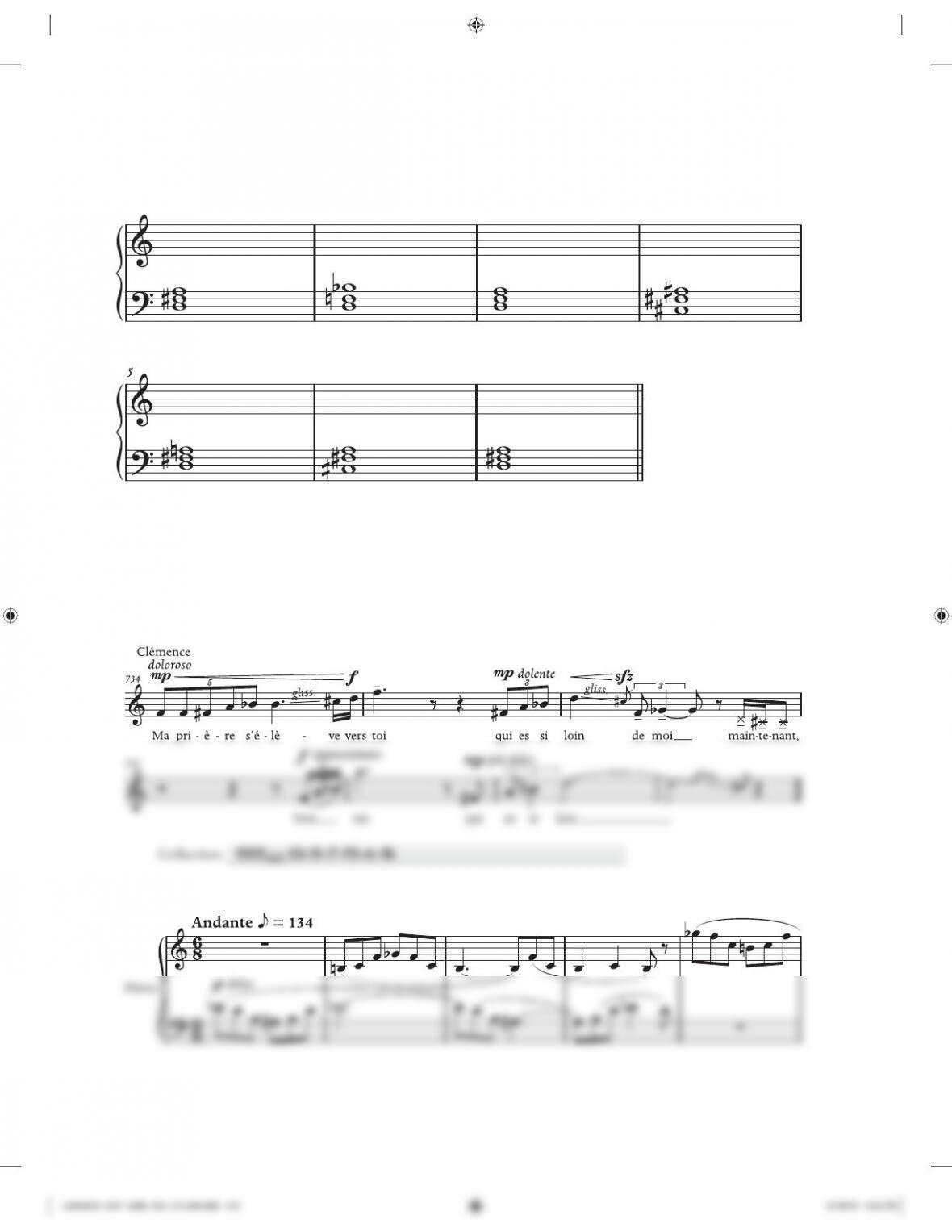
5. Start with HEXC#D on D (D–F–F#–A–Bb–C#) and end with D Ionian (D–E–F#–G–
A–B–C#). A simple chordal accompaniment is provided using triads from HEXC#D,
some of which are also found in D Ionian.
F. ANALYSIS
Identify the collections used in these examples and list their notes. Then answer any
further questions.
1. Kaija Saariaho, L’Amour de loin
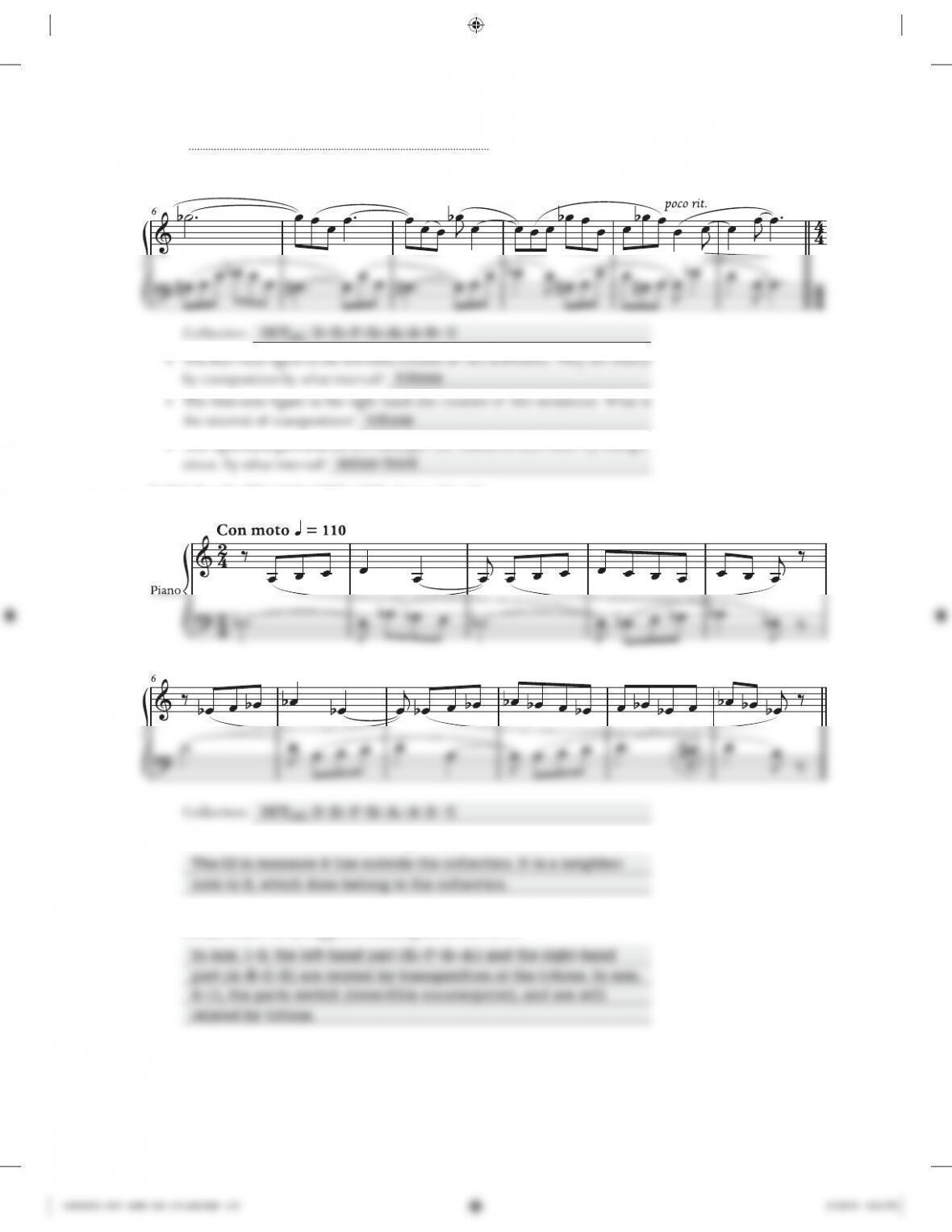
2. Béla Bartók, “From the Island of Bali,” Mikrokosmos No. 109
NAME:
3. Béla Bartók, “Diminished Fifth,” Mikrokosmos No. 101
• There is one note that does not belong—circle it. How can you account for it?
• Compare the right-hand and left-hand parts in mm. 1–5. How are they related
to each other? What happens to those parts in mm. 6–11?
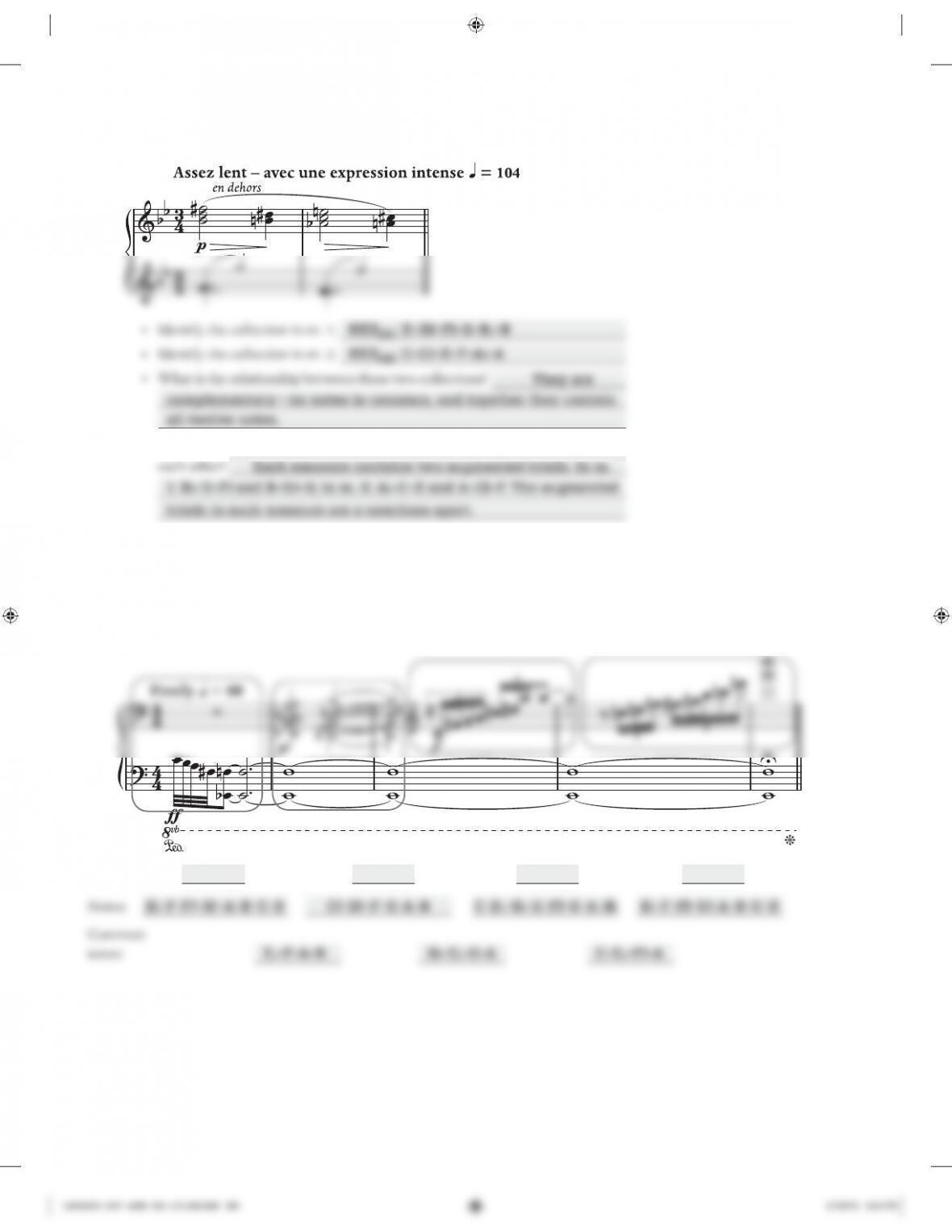
4. Maurice Ravel, Valses nobles et sentimentales, No. 2
• Which familiar chords are found in each measure? How are they related to
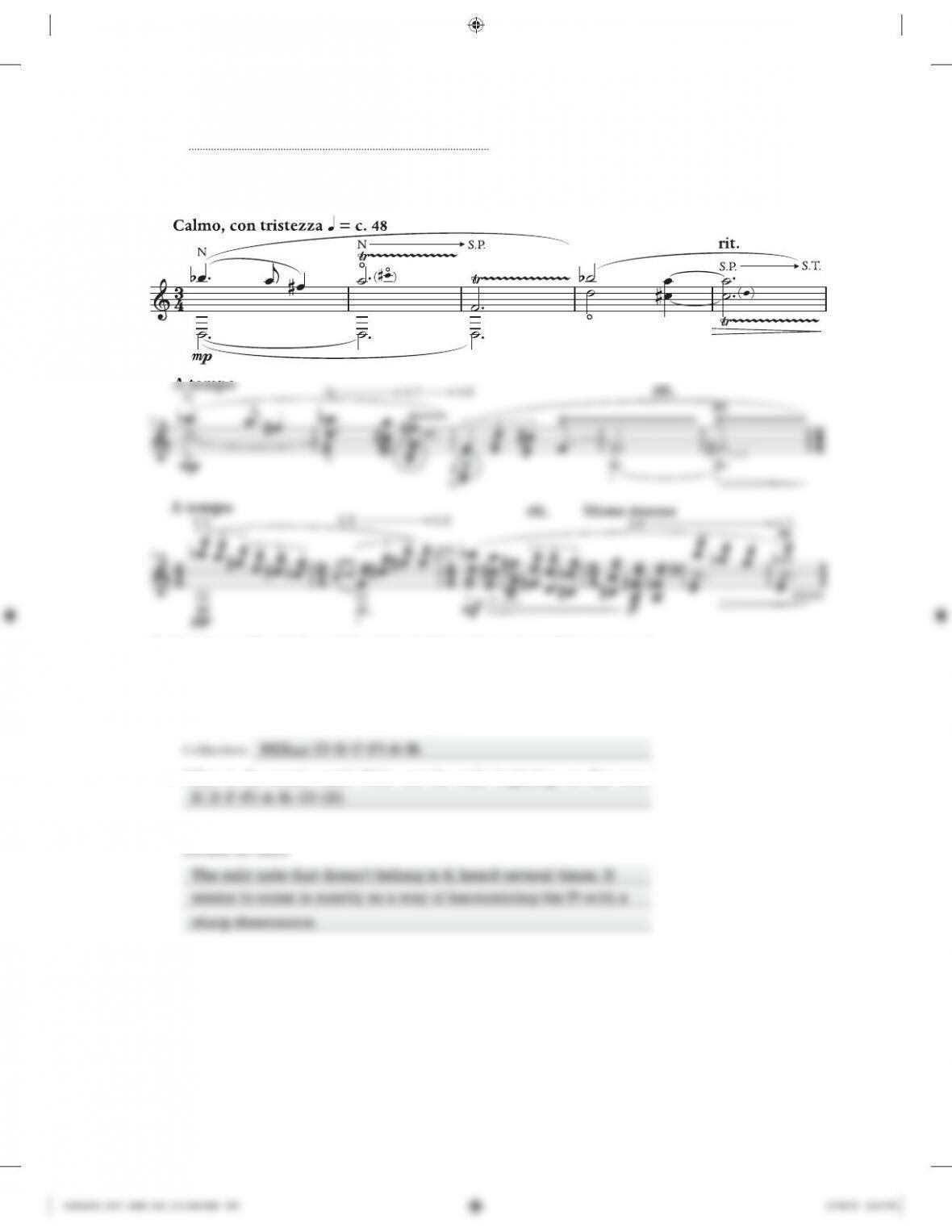
5. Chen Yi, Northern Scenes
Identify the collection for each boxed group of notes and write it in the blank below
the staff. Note that collections might be missing a note. Notes that do not belong to
the prevailing collection are in parentheses. Once you have identified the collections,
identify any common tones between adjacent collections.
Collection: OCTDEb WTC# OCTCDb OCTDEb
NAME:
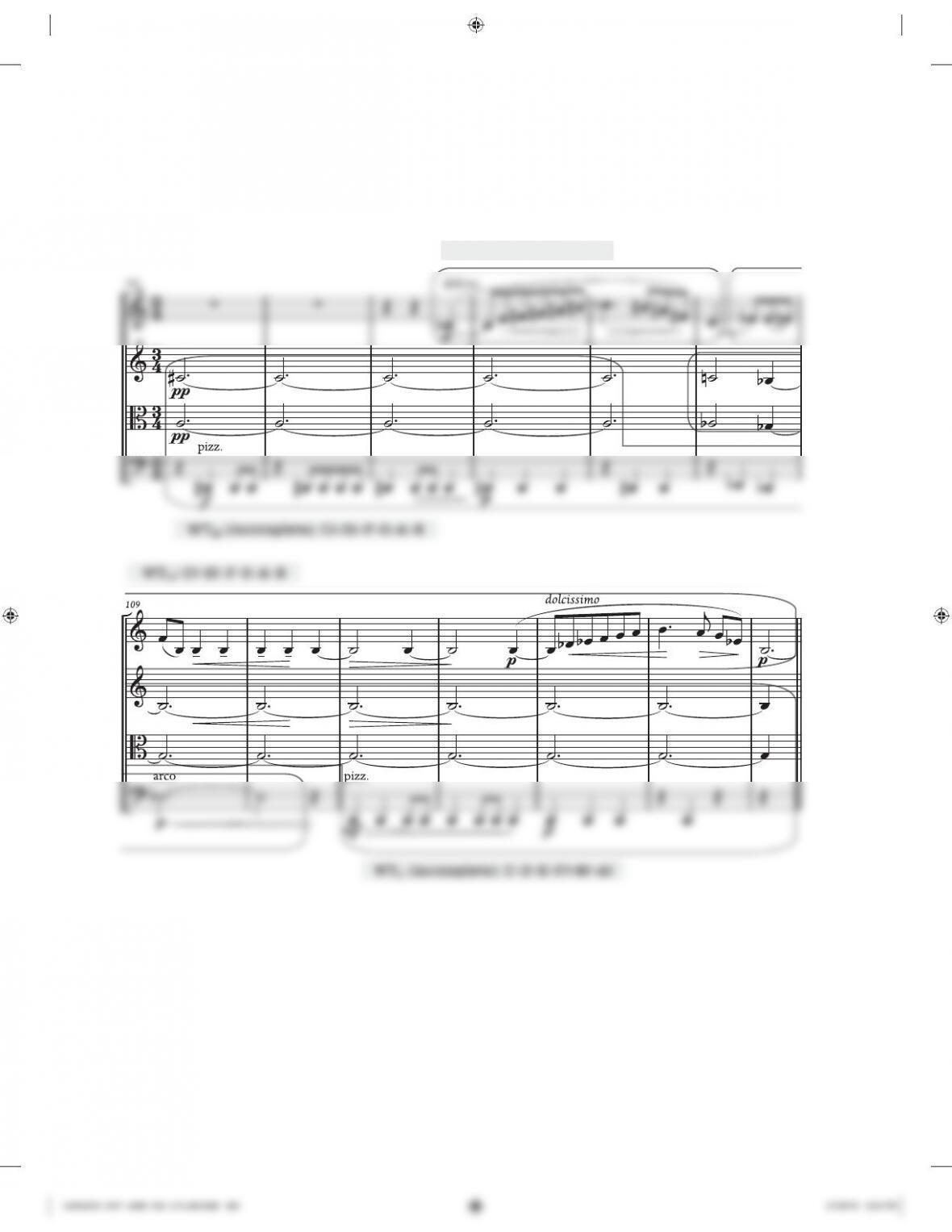
6. Kaija Saariaho, Sept papillons (for solo cello), iii
*In this excerpt, A trills with C#, F with F#, and C# with D. S.P. indicates sul ponticello bowing, S.T., sul
tasto, and N., normal.
• Identify the collection in use in this short piece.
• What is the centric tone? Write out the scale beginning on that tone.
• Circle any notes that do not belong to the prevailing collection. How can you
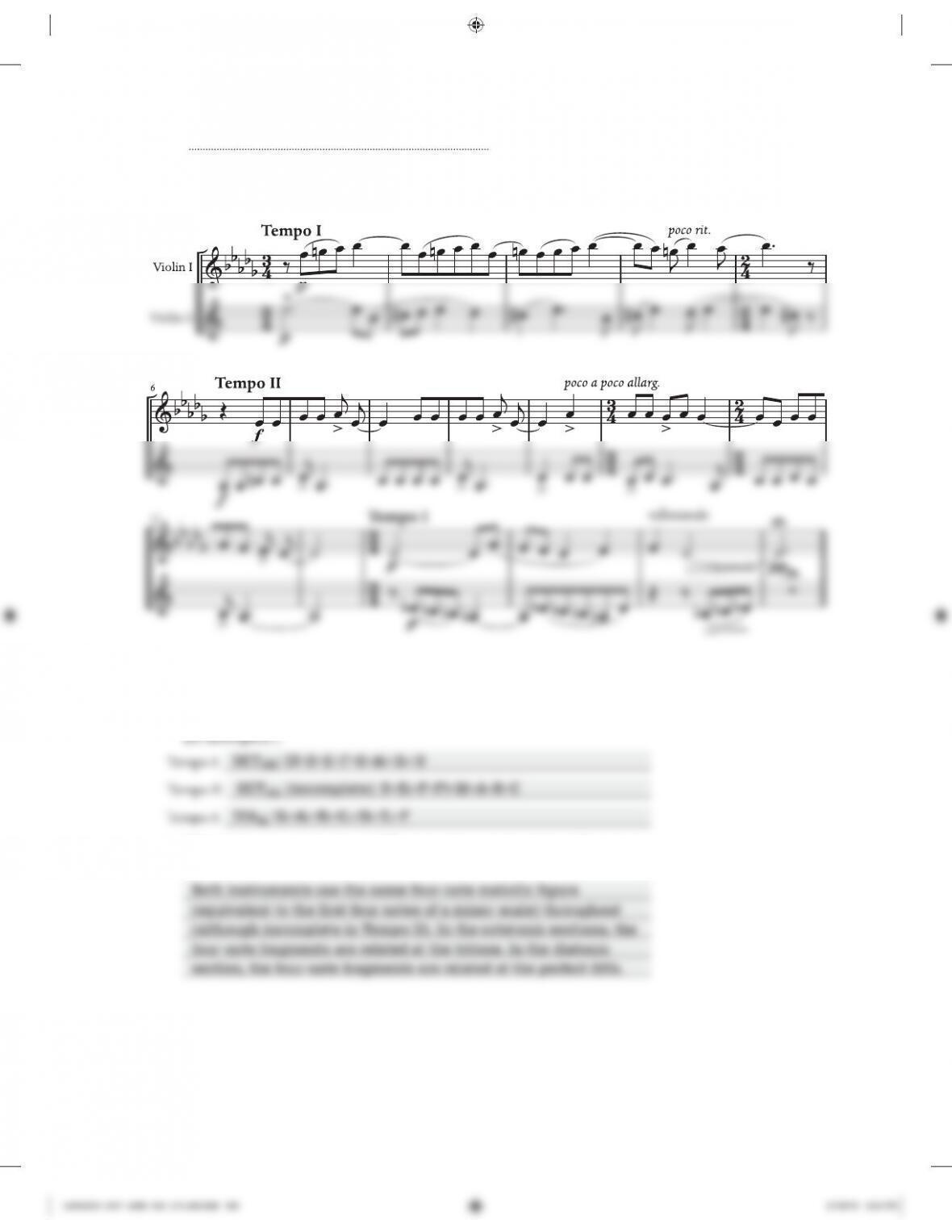
7. Béla Bartók, String Quartet No. 1, ii
Identify the whole-tone collections in each boxed segment of this passage, writing
your answers next to each segment and listing the notes in each collection. (Not every
collection is complete, but each includes enough notes to be identified.)
WTC: C–D–E–F#–G#–A#
NAME:
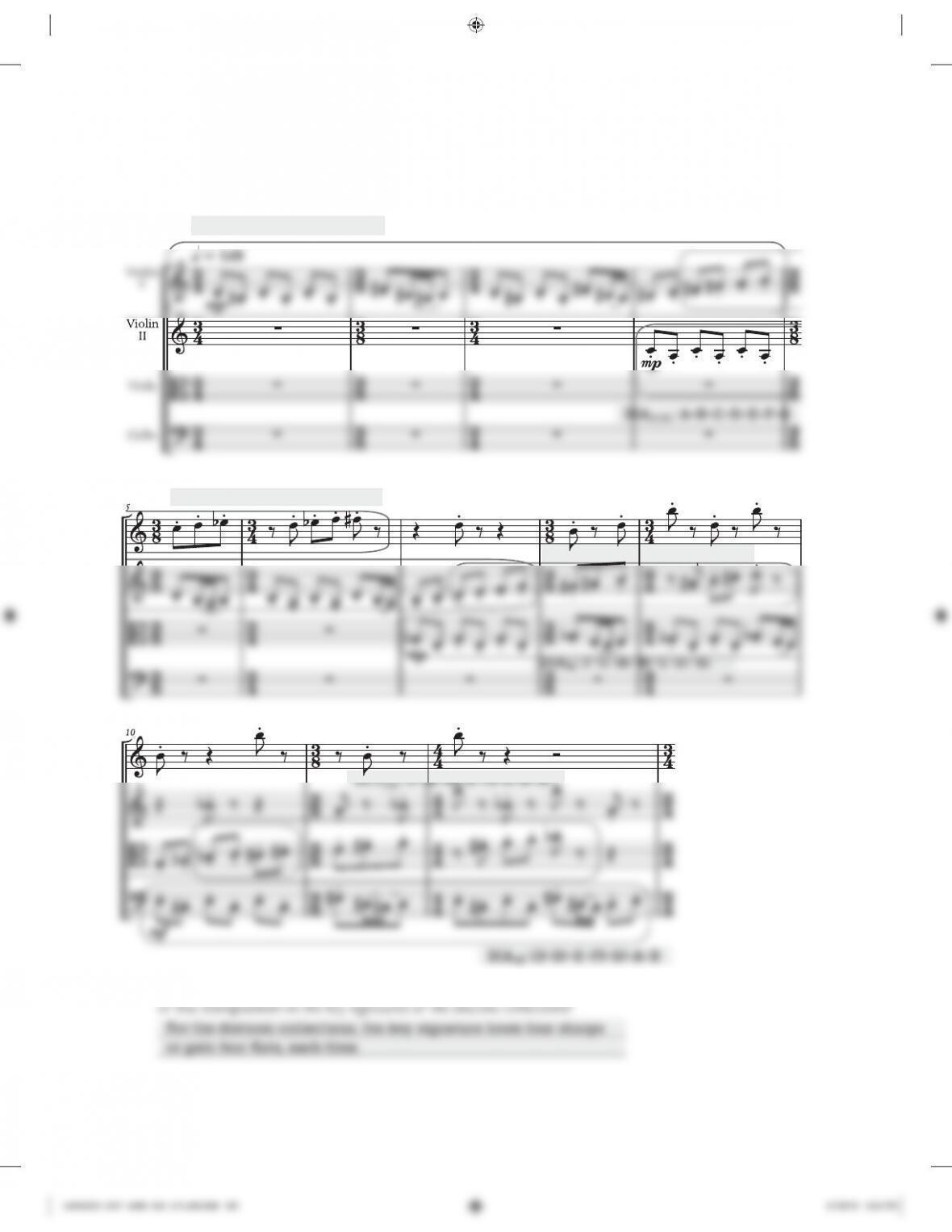
8. Béla Bartók, Forty-Four Duos for Two Violins, No. 33, “Harvest Song”
• The markings Tempo I and Tempo II divide this excerpt into three sections.
Identify the collections in each section and list their notes. (Some collections
• What is the same and what is different in the way the three collections are
presented?
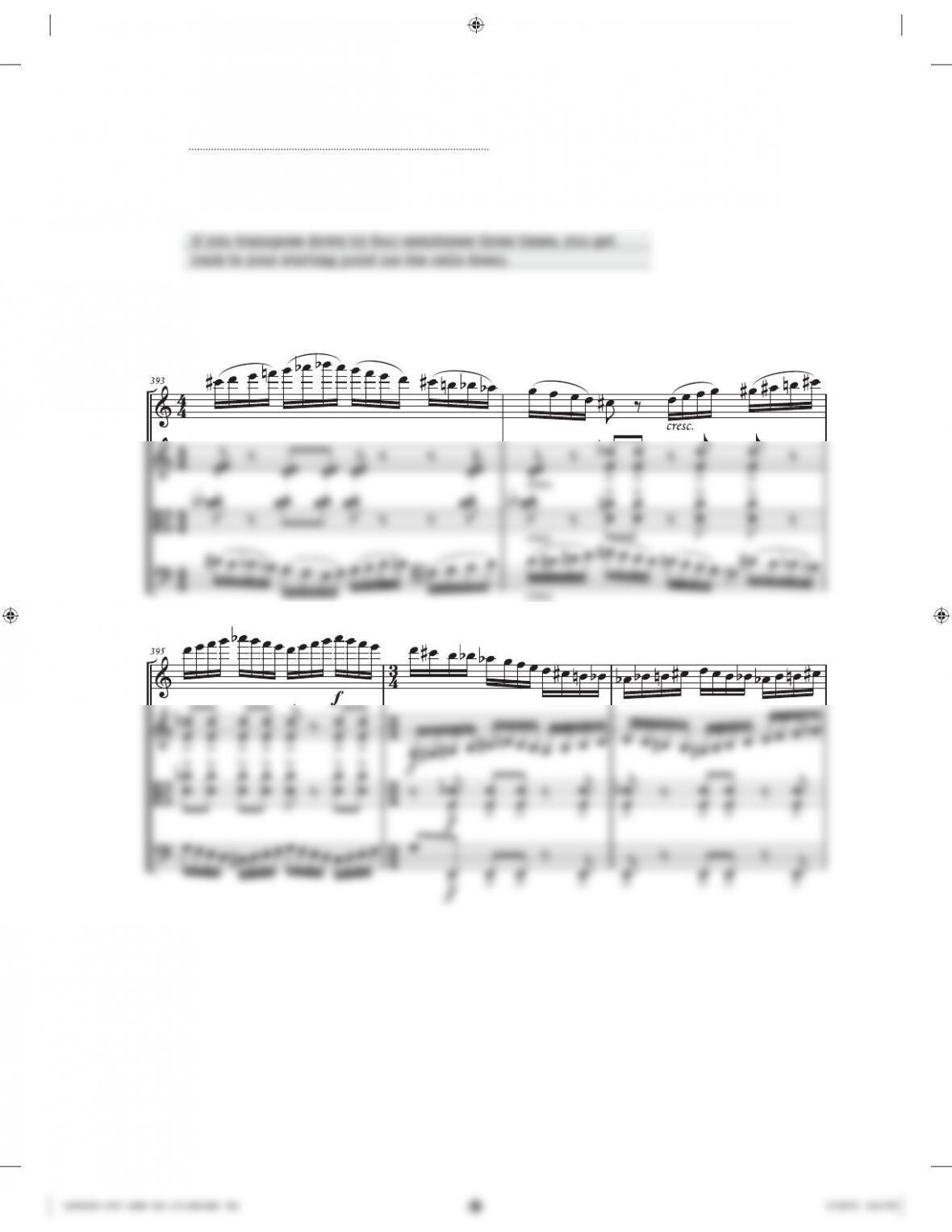
9. Ellen Taaffe Zwilich, String Quartet No. 2, ii
Identify the collection for each boxed segment in this passage and list the notes in
each collection.
DIA4#: C#–D#–E–F#–G#–A–B
OCTC#D: C#–D–E–F–G–Ab–Bb–B
OCTDEb: D–Eb–F–Gb–Ab–A–B–C
• Each instrument enters four semitones below its predecessor. What is the effect
F. Analysis | 585
NAME:
• The cello starts by repeating what the first violin had at the beginning. What is
it about the transpositional pattern that makes that happen?
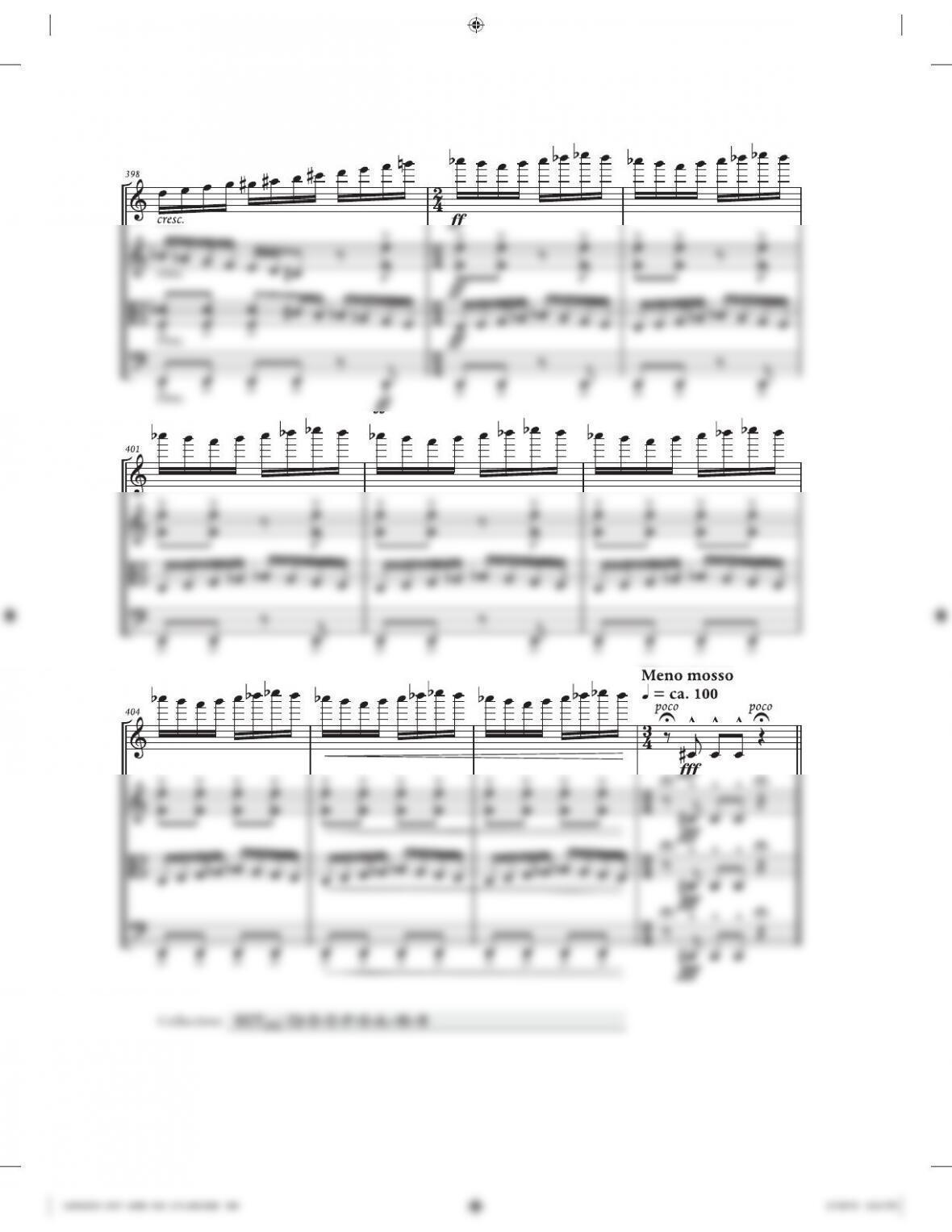
10. Joan Tower, In Memory (for string quartet)
NAME:
• What is the centric tone? Does it change over the course of the passage?
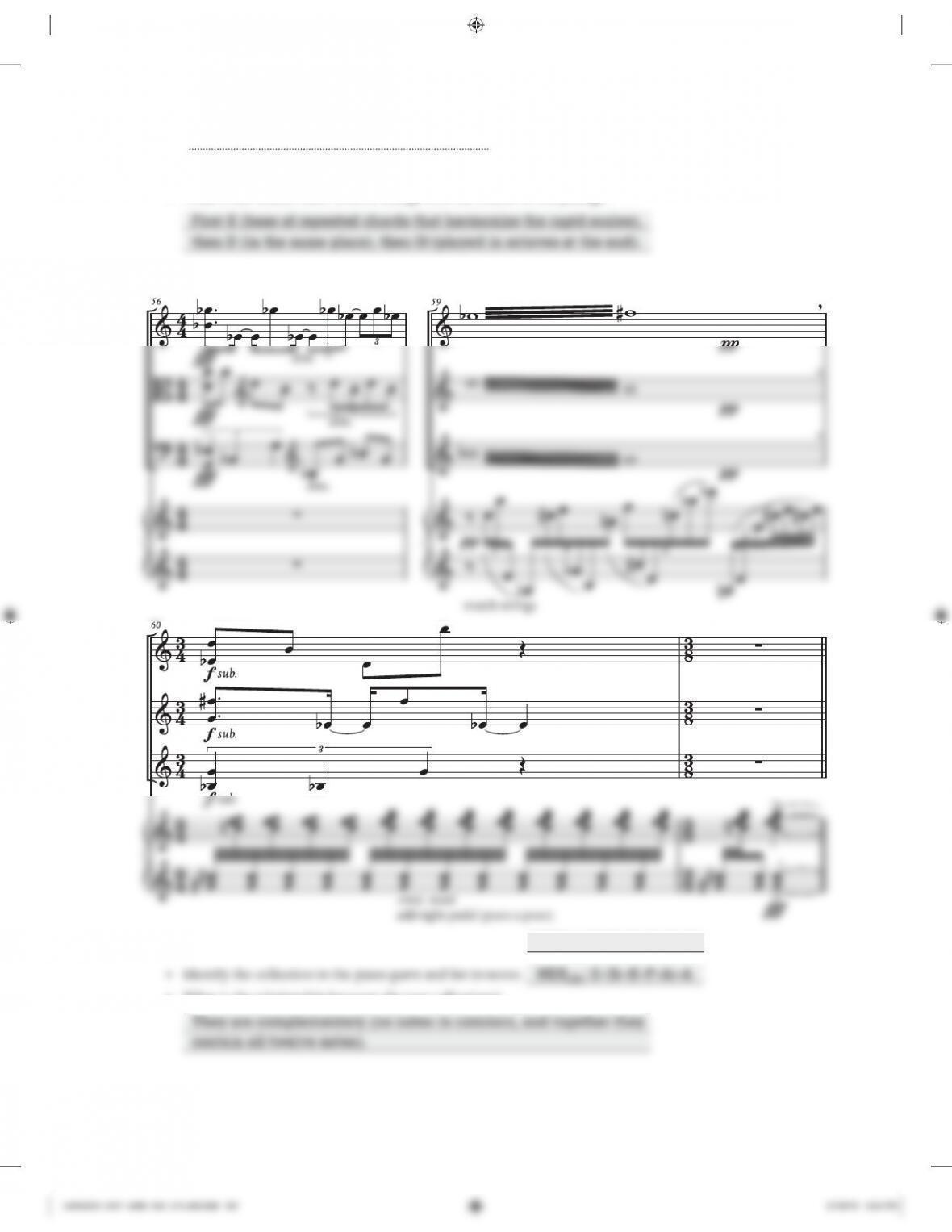
11. Mario Davidovsky, Quartetto No. 3 (for violin, viola, cello, and piano)
• Identify the collection in the string parts and list its notes. HEXDEb: D–Eb–Gb–G–Bb–B
• What is the relationship between the two collections?
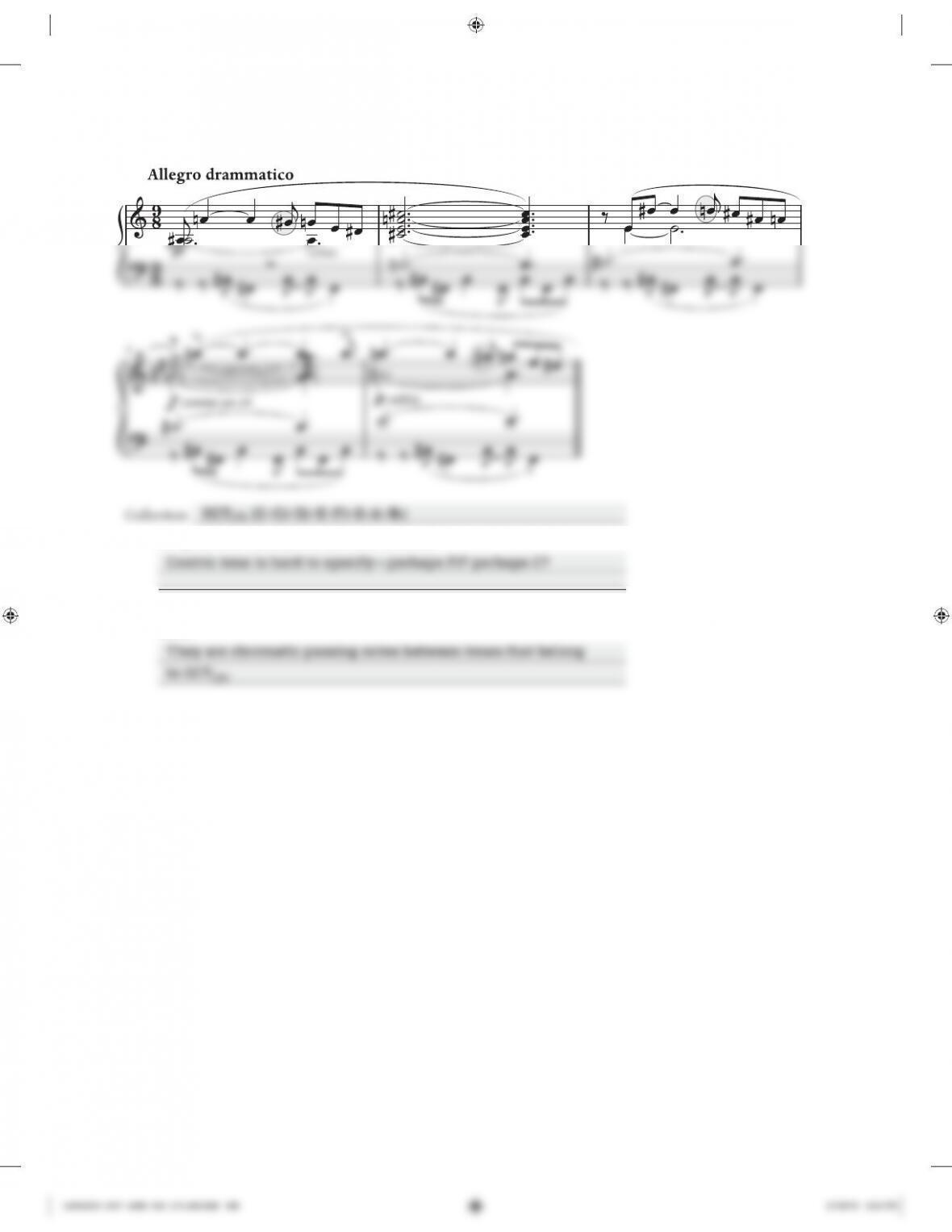
12. Aleksandr Scriabin, Prelude, Op. 74, No. 3
• Is it possible to identify a centric tone or tones?
• Circle any notes that lie outside the collection. How might you account for
them?