B. Writing Scales | 563
NAME:
A. QUESTIONS FOR REVIEW
1. What is a collection? What is a scale?
2. What is a diatonic collection? How many are there? How are they labeled? How
many scalar orderings are there? How are they labeled? What is a “centric tone”?
3. What is a pentatonic collection? How many are there? How are they labeled? How
many scalar orderings are there? How are they labeled?
4. What is the relationship between the pentatonic and diatonic collections? What
is the complement of a given pentatonic collection? A given diatonic collection?
How many pentatonic collections are included in a diatonic collection?
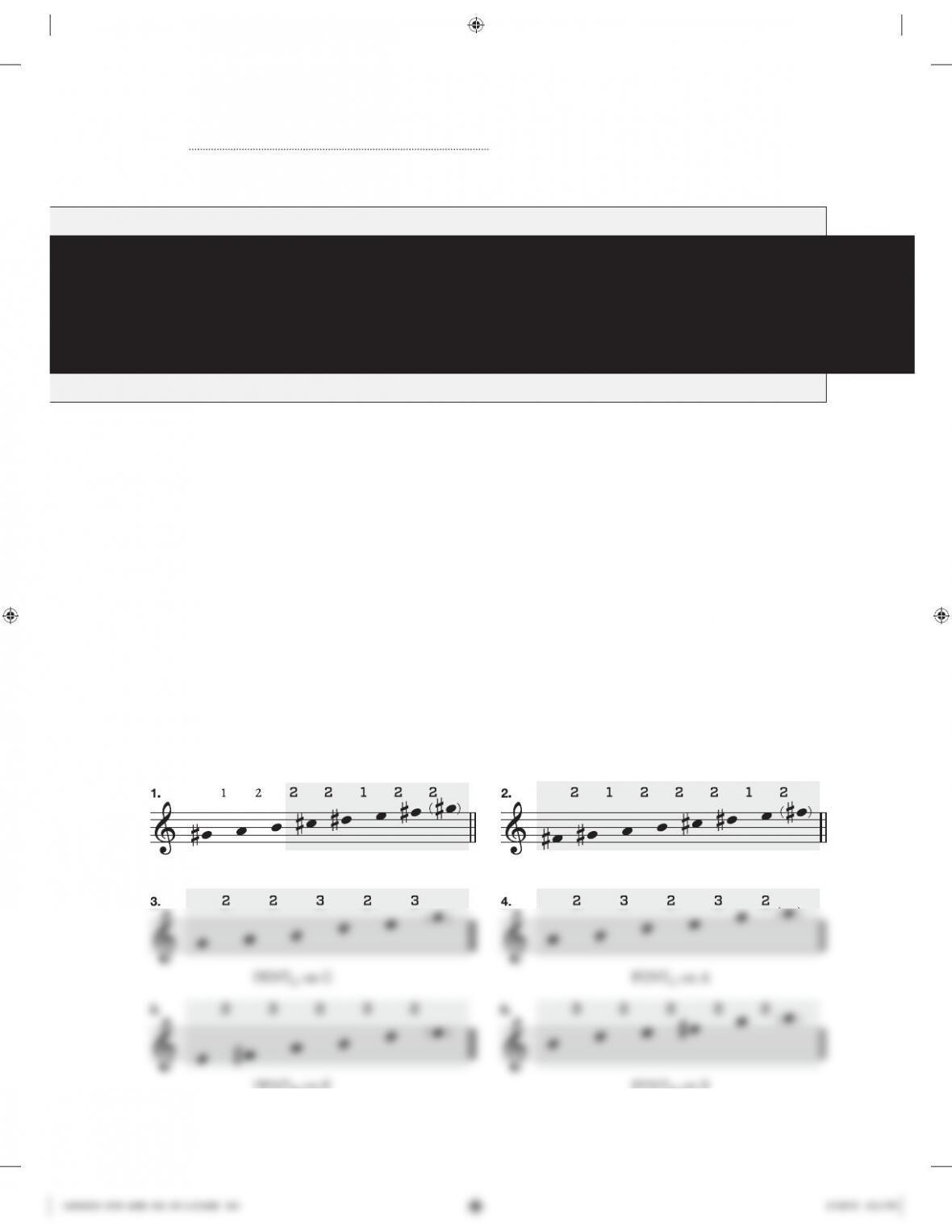
B.ffWRITING SCALES
Write the indicated scales and write in the intervals (in semitones).
DIA4# on G# (G# Phrygian) DIA4# on F# (F# Dorian)
PENTD on E PENTD on B
chapter
40 Collections and Scales I:
Diatonic and Pentatonic
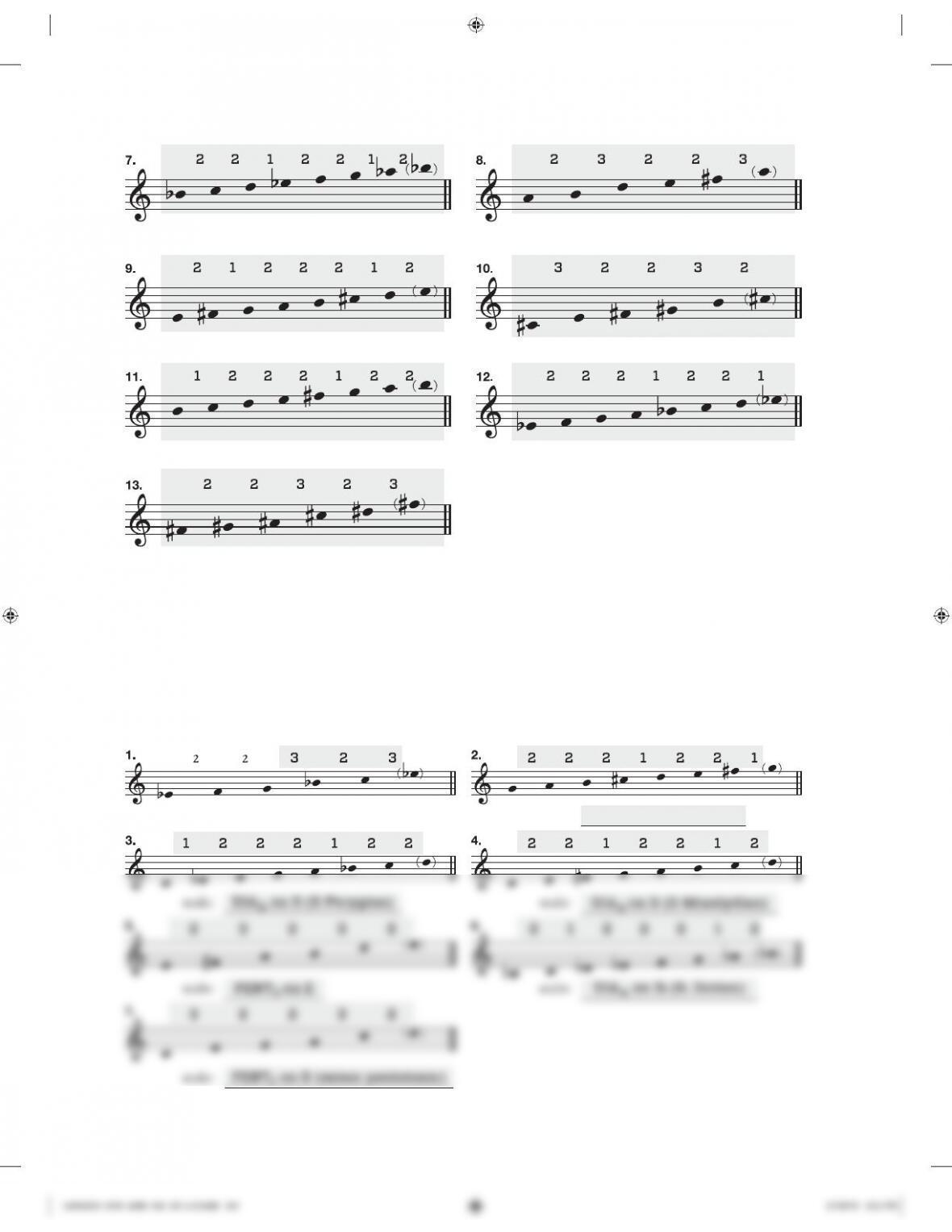
DIA3b on Bb (Bb Mixolydian) PENTD on A
DIA2# on E (E Dorian) PENTE on C#
DIA1# on B (B Phrygian) DIA2b on Eb (Eb Lydian)
PENTF# on F#
C. IDENTIFYING SCALES
• Write the intervals (in semitones) above each staff.
• Identify the collection and centric tone (for example, PENTC on A, or DIA1b on F).
• For diatonic collections, provide the scale name (for example, F# Mixolydian).
• For pentatonic collections, identify those that are major or minor.
scale:
PENTEb on Eb (major pentatonic)
DIA2# on G (G Lydian)
D. COMPOSITION | 565
NAME:
D. COMPOSITION
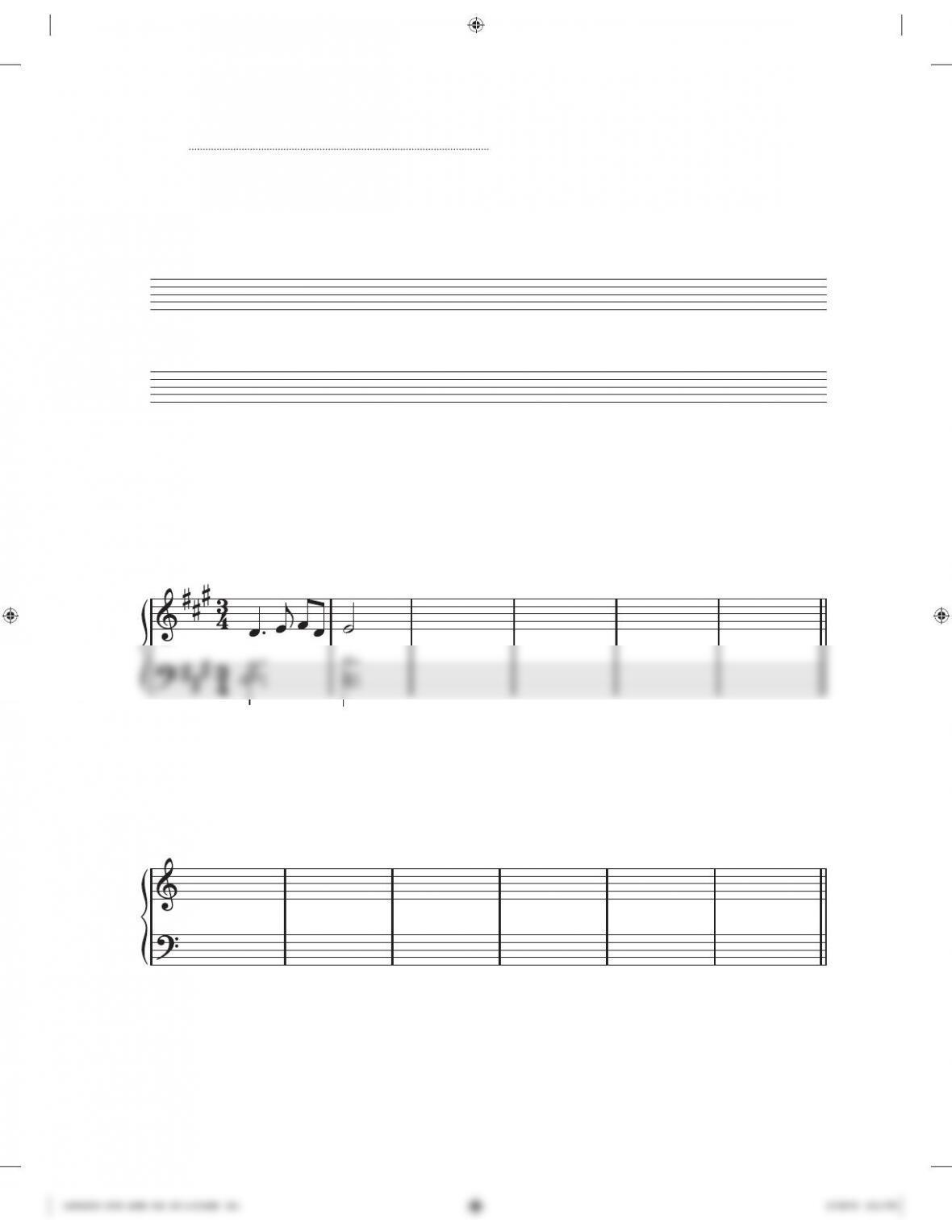
1. Compose a short melody in F Phrygian. Begin by writing the correct key signature.
2. Using only the notes from DIA3# on D (D Lydian), write a progression of three-
note chords for piano left hand, one per measure, without using any triads. Then
write a melody for piano right hand to go with it, again using only the notes of D
Lydian.
3. Using only the notes of PENTBb on G ( G– Bb– C– D– F), write a simple melody with
chordal accompaniment. All of the chords must either be triads, or 3rds or 6ths
with one of the two notes doubled.
E. ANALYSIS
For each example, follow instructions that precede the example, and answer the
questions that follow.
1. Béla Bartók, “Evening in Transylvania”
• Identify the collection that is formed by the melody alone, and write out its
• Identify the collection formed by the passage as a whole and write out its
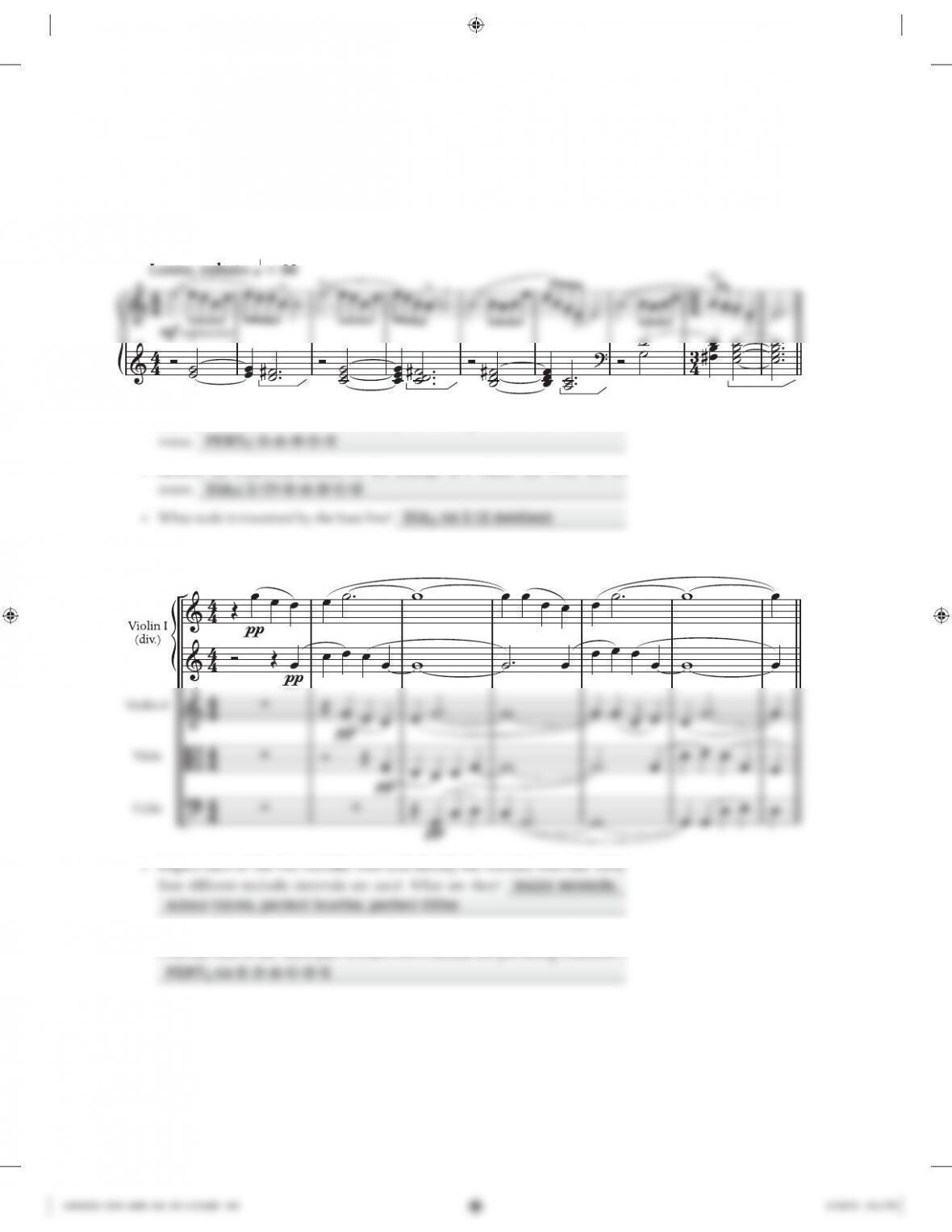
2. Béla Bartók, Piano Concerto No. 3, ii, strings only
• Identify the collection and centric tone for this passage and write out its note.
NAME:
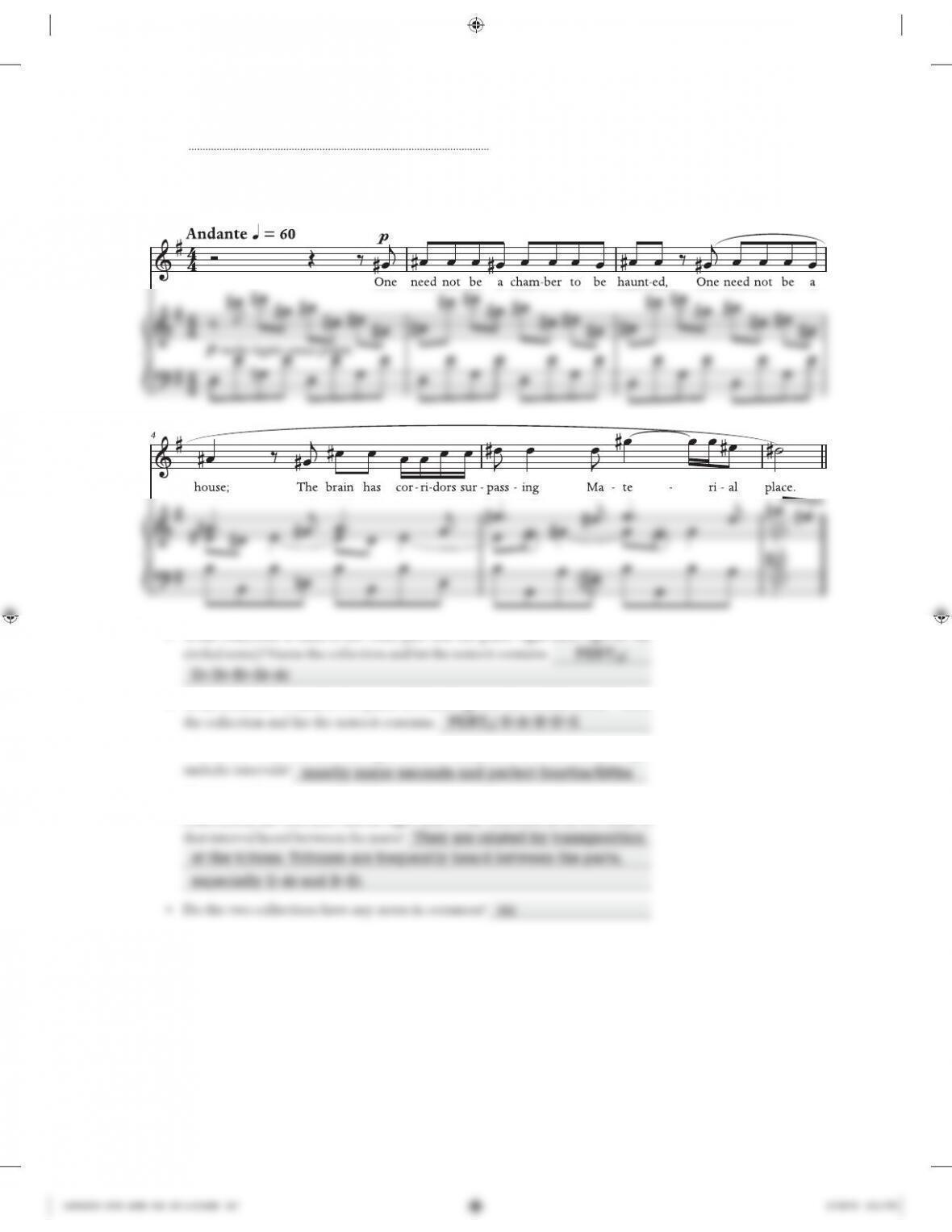
3. Louise Talma, “One Need Not Be a Chamber to Be Haunted”
• What collection is used in the voice part and the piano right hand (ignore the
• What collection is used in the piano left hand (ignore the circled notes)? Name
• Within the vocal line and the right hand of the piano, what are the principal
• The two collections are related by transposition. What interval transposes the
collection in the voice part and the right hand to the collection in the left hand? Is
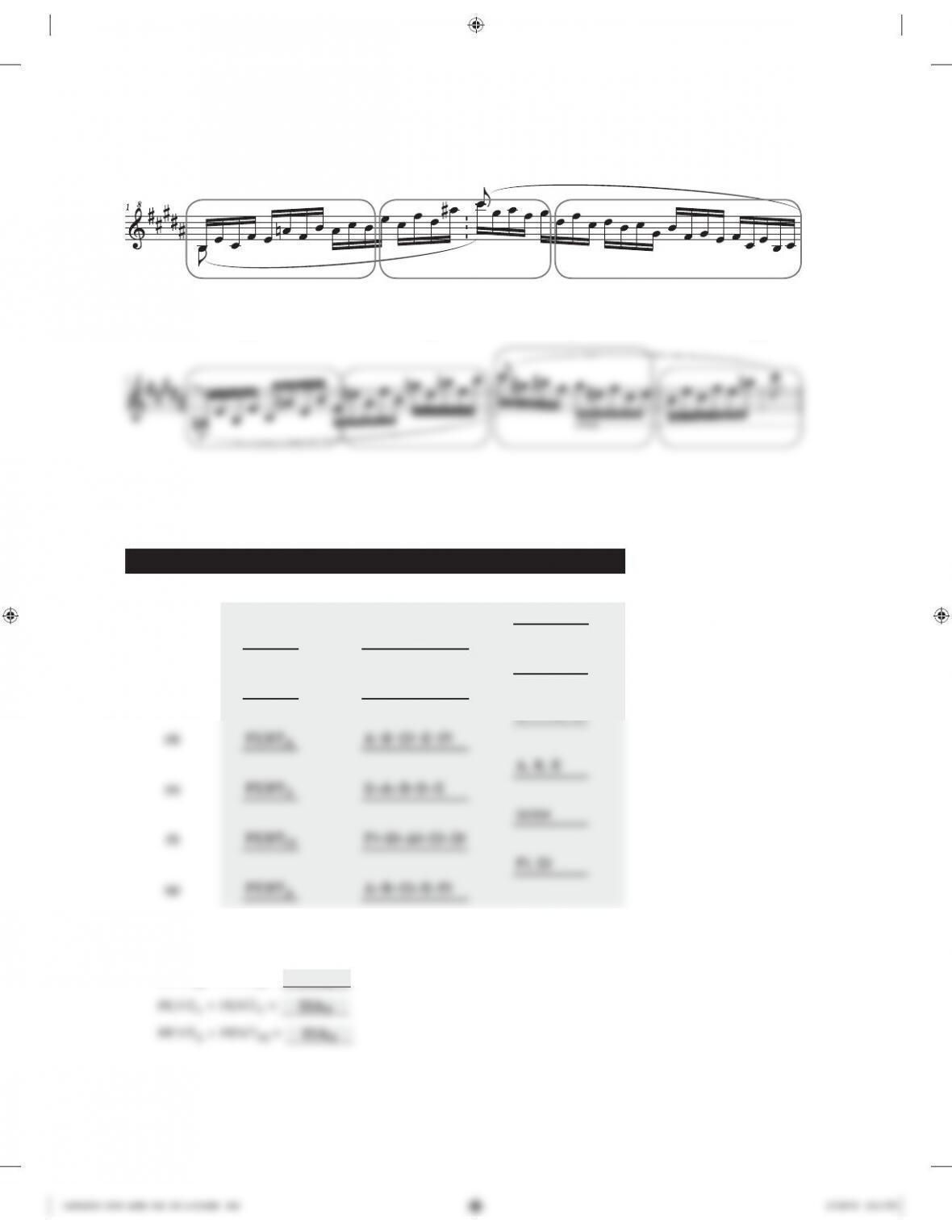
4. Xiaoyong Chen, “Wind, Water, and Shadow”
(a) (b) (c)
(d) (e) (f) (g)
• For each boxed passage, identify the pentatonic collection and write out the
notes as a scale in the “major” ordering.
• Name the common tones shared by the adjacent collections.
COLLECTION NOTES COMMON TONES
(a) PENTA A– B– C#– E– F#
F#, C#
(b) PENTF#F#–G#–A#–C#–D#
F#, G#, C#
(c) PENTE E– F#–G#– B– C#
E, F#, B, C#
• Which diatonic collections are created by each of the following pairs of
pentatonic collections?
PENTG + PENTA = DIA2#
NAME:
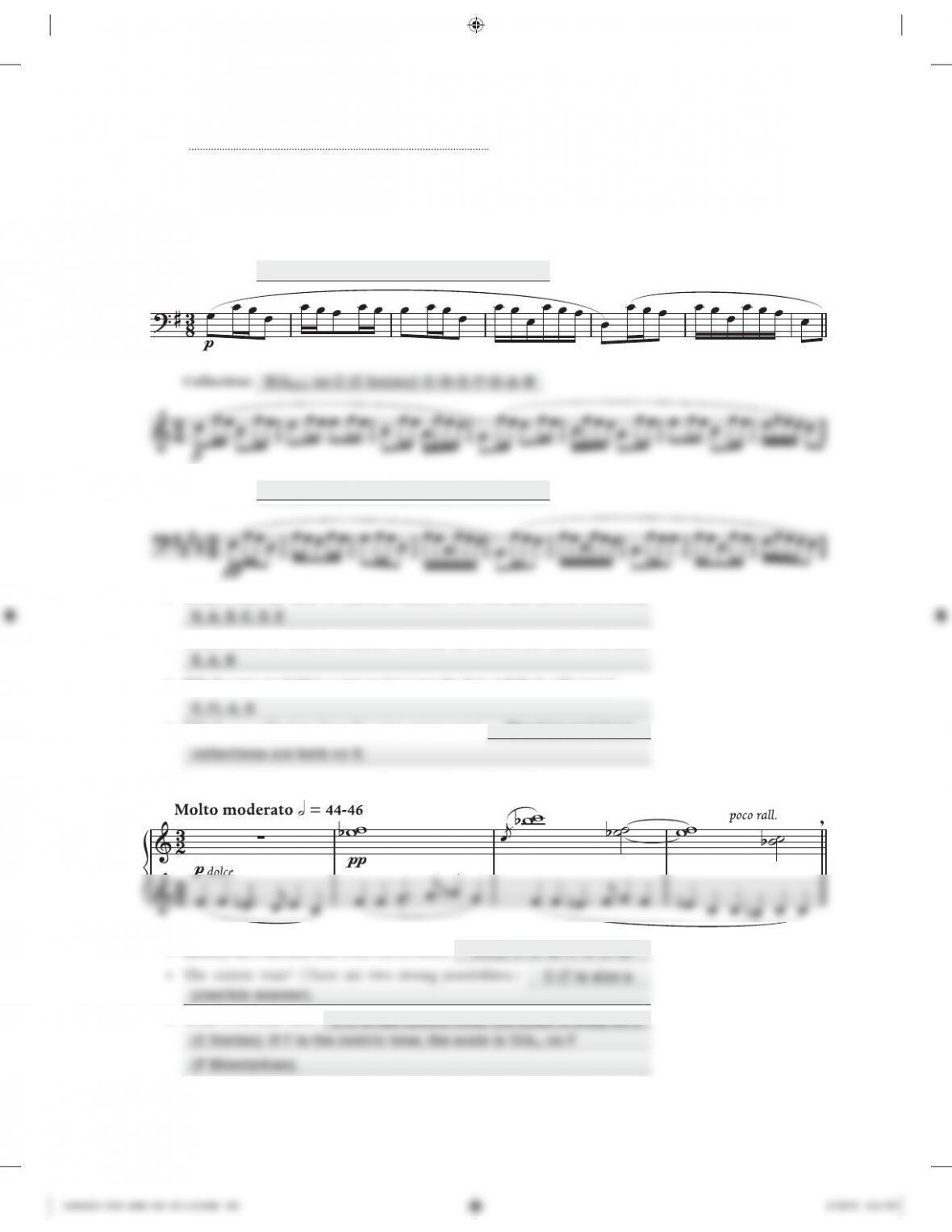
5. Erik Satie, Parade
For each melodic excerpt, identify the collection and the centric tone. Then write
out the notes in the collection.
Collection: DIA1# on E (E Aeolian): E–F#–G–A–B–C–D
Collection: DIA4# on E (E Ionian): E–F#–G#–A–B–C#–D#
• Which notes are held in common between the first and second collections?
• Which notes are held in common between the second and third collections?
• Which notes are held in common between the first and third collections?
• Which two collections have the same centric tone? The first and third
6. Béla Bartók, Eight Improvisations on Hungarian Peasant Songs, No. 1
• Identify the collection and write out its notes. DIA2b: C–D–Eb–F–G–A–Bb
• What is the scale used? If C is the centric tone, the scale is DIA2b on C
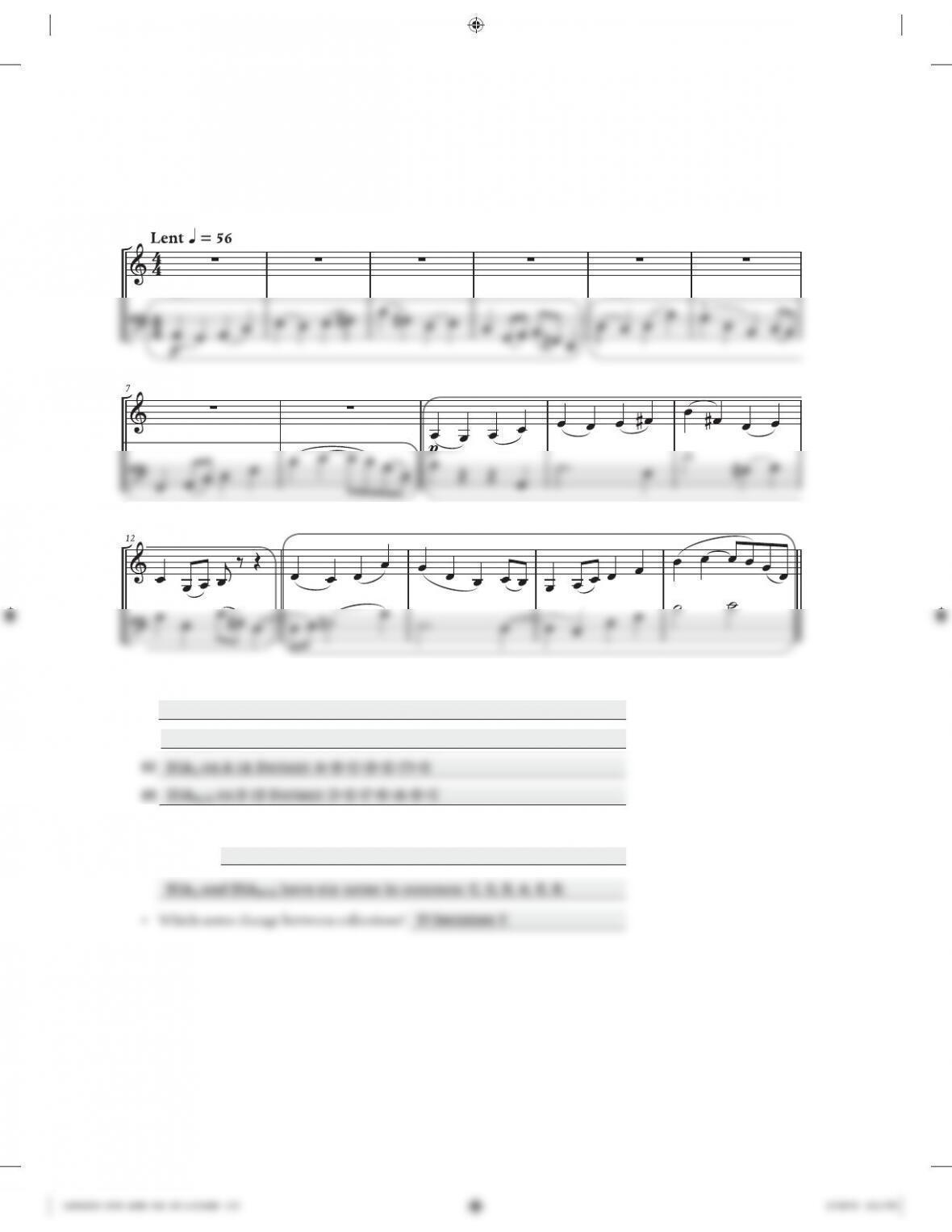
7. Maurice Ravel, Sonata for Violin and Cello, iii
For each boxed passage identify the collection and centric tone, and label it in the
lettered blank. Then list the notes in the collection.
(a) (b)
(c)
(d)
(a) DIA1# on A (A Dorian): A–B–C–D–E–F#–G
(b) DIA0#/0b on D (D Dorian): D–E–F–G–A–B–C
• As the music moves from collection to collection, which notes are held in
common?
NAME:
8. Kaija Saariaho, L’Amour de loin, Act IV, scene i
• What is the collection and scale? Write out the notes.
• What are the most common harmonic intervals?