B. Composition | 527
NAME:
A. QUESTIONS FOR REVIEW
1. What are the three large sections of sonata form?
2. How is sonata form similar to rounded binary form?
3. What are the parts of a sonata exposition? What keys are they in and what types of
cadences occur at the end of each?
4. What is the medial caesura?
5. Where in the exposition does phrase overlap commonly occur? Where does it usu-
ally not occur?
B. COMPOSITION
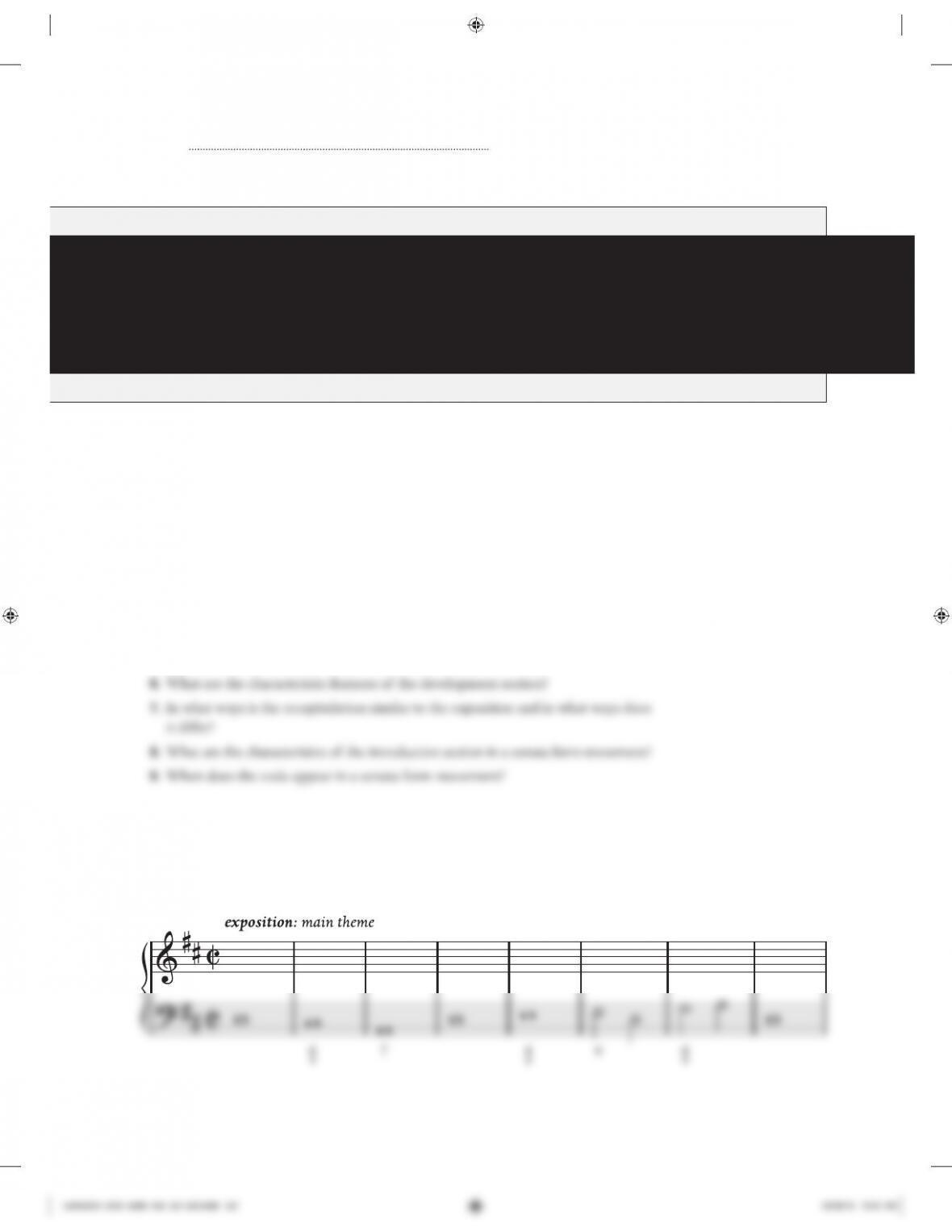
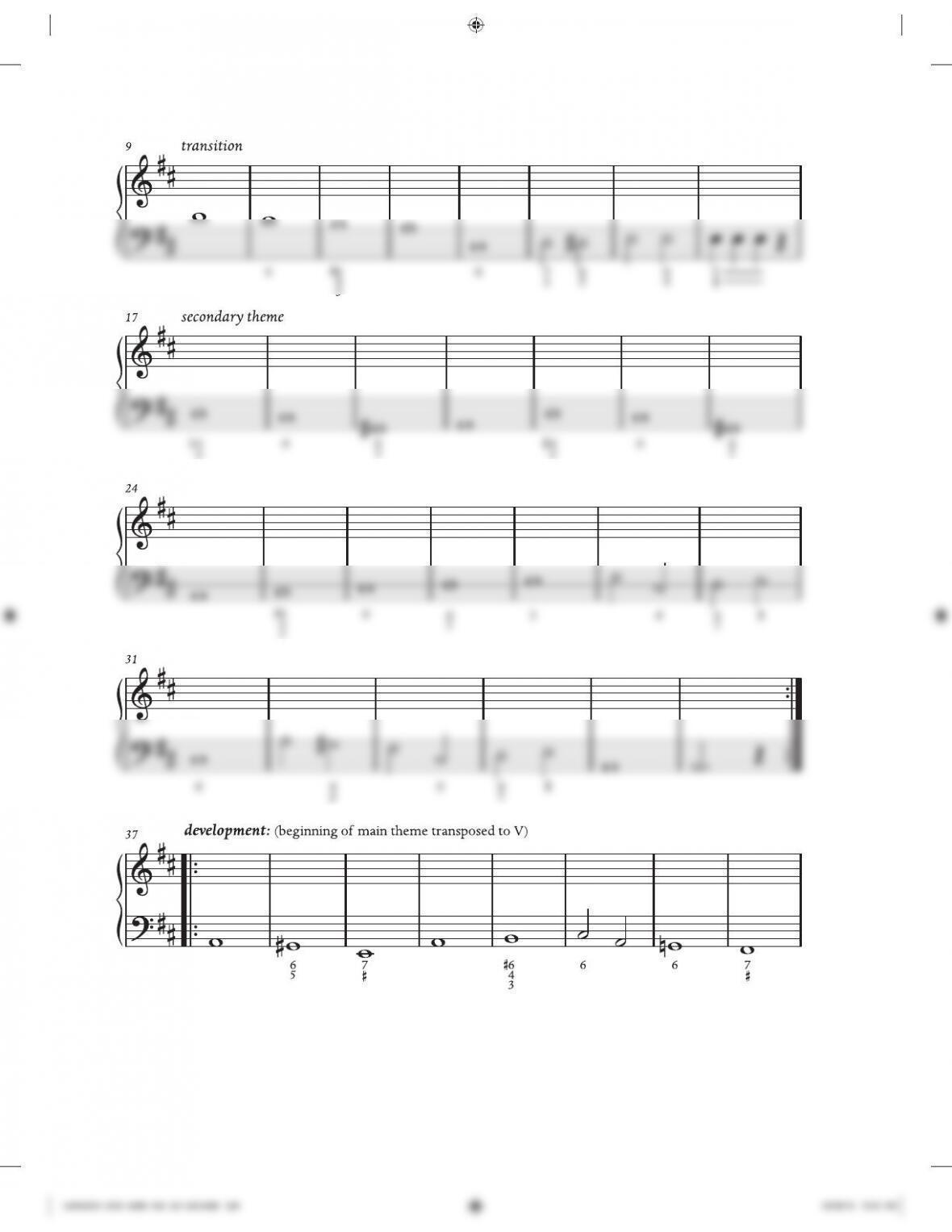
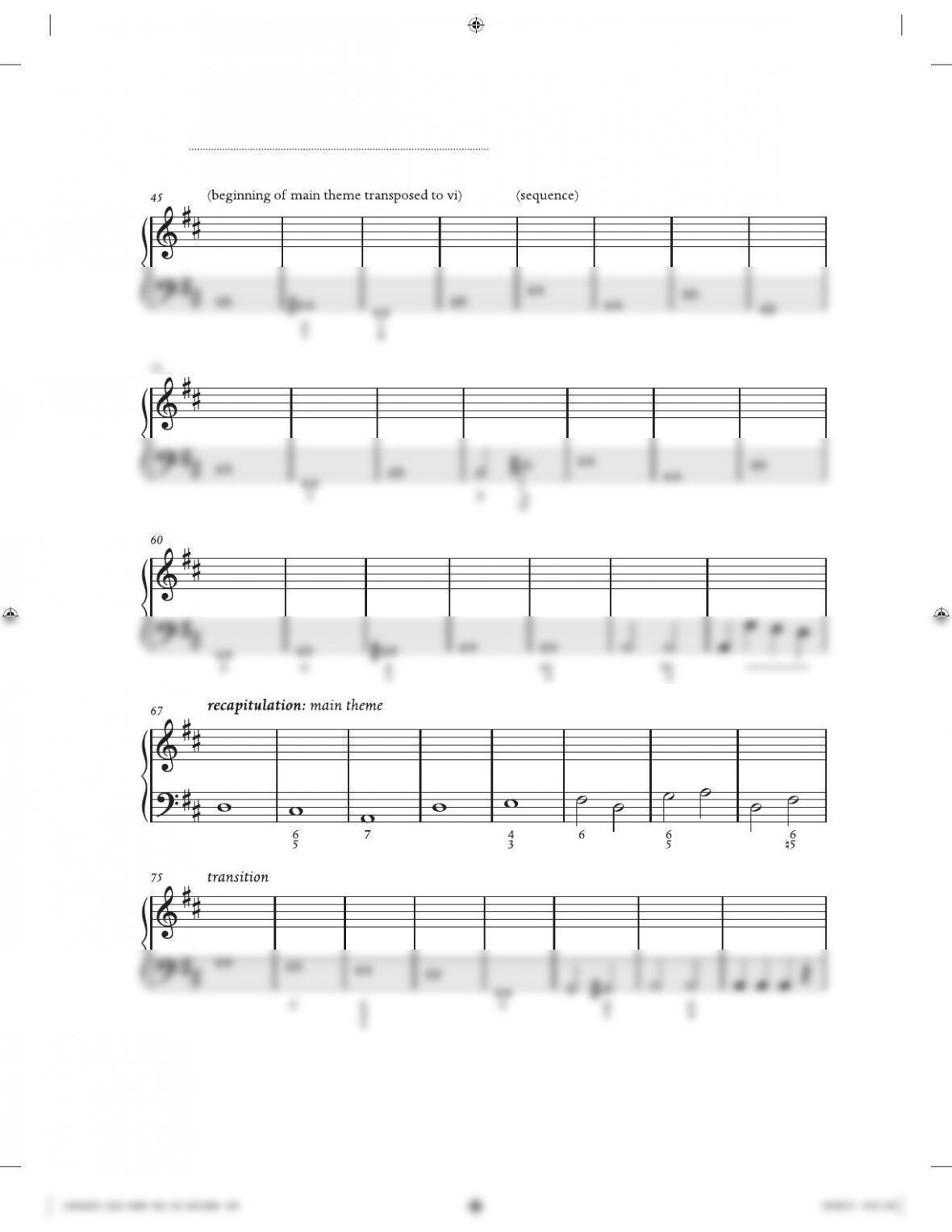
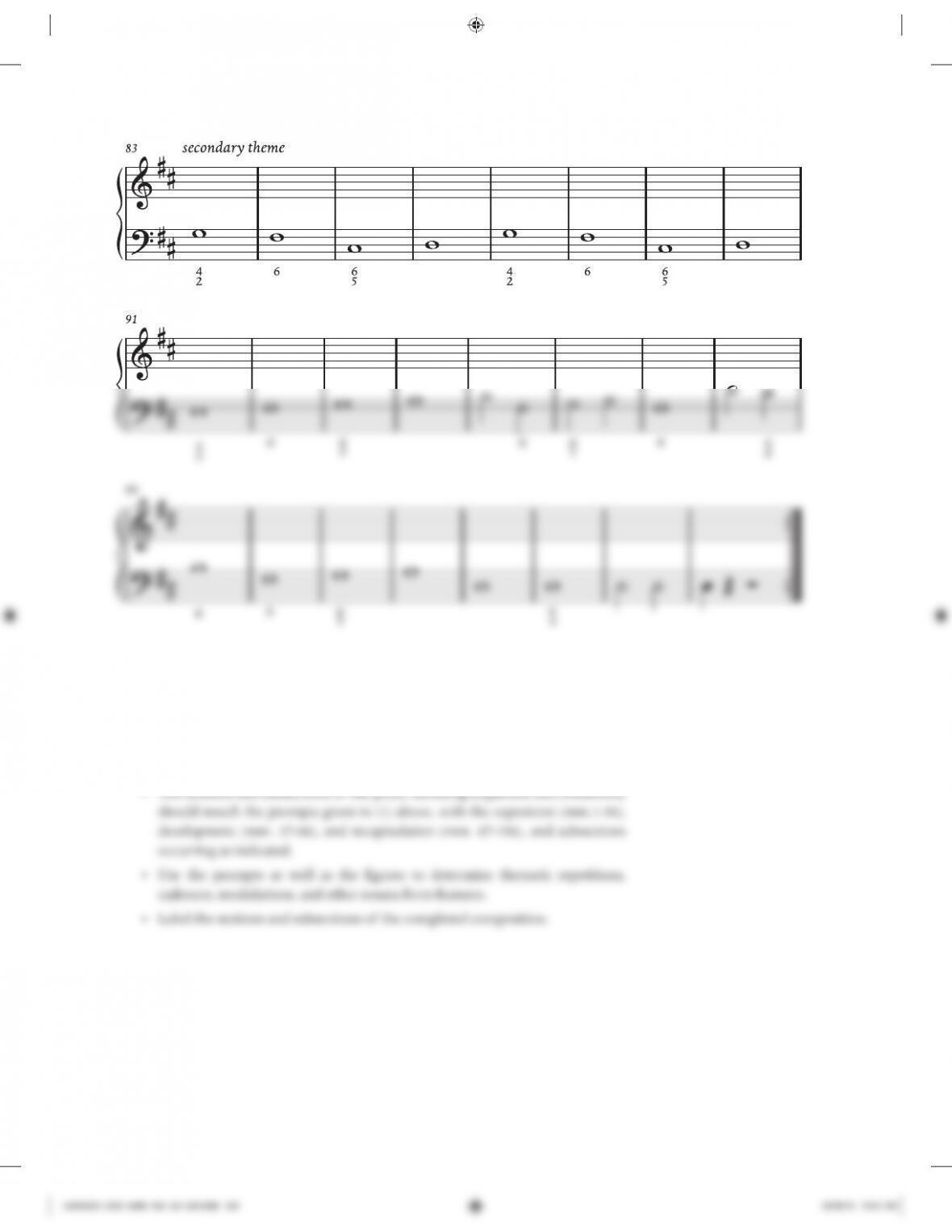
1. Realize the figured bass in keyboard format. This will be the basis of a work in
sonata form, as indicated by the labels for the sections.
chapter
39 Sonata Form
528 | CHAPTER 39 | Sonata Form
B. Composition | 529
NAME:
2. Based on your figured bass realization, on your own music manuscript paper
compose a work in sonata form, with thematic repetitions.
• The piece can be written for (a) solo melodic instrument; (b) keyboard, with the
melody in the right hand; (c) keyboard, with a varied texture; (d) solo instru-
ment accompanied by keyboard; or (e) ensemble of three or more instruments.
• Use the same bass line and harmonies as above.
NAME:
C. ANALYSIS
Identify the measures and keys as indicated for the following pieces.
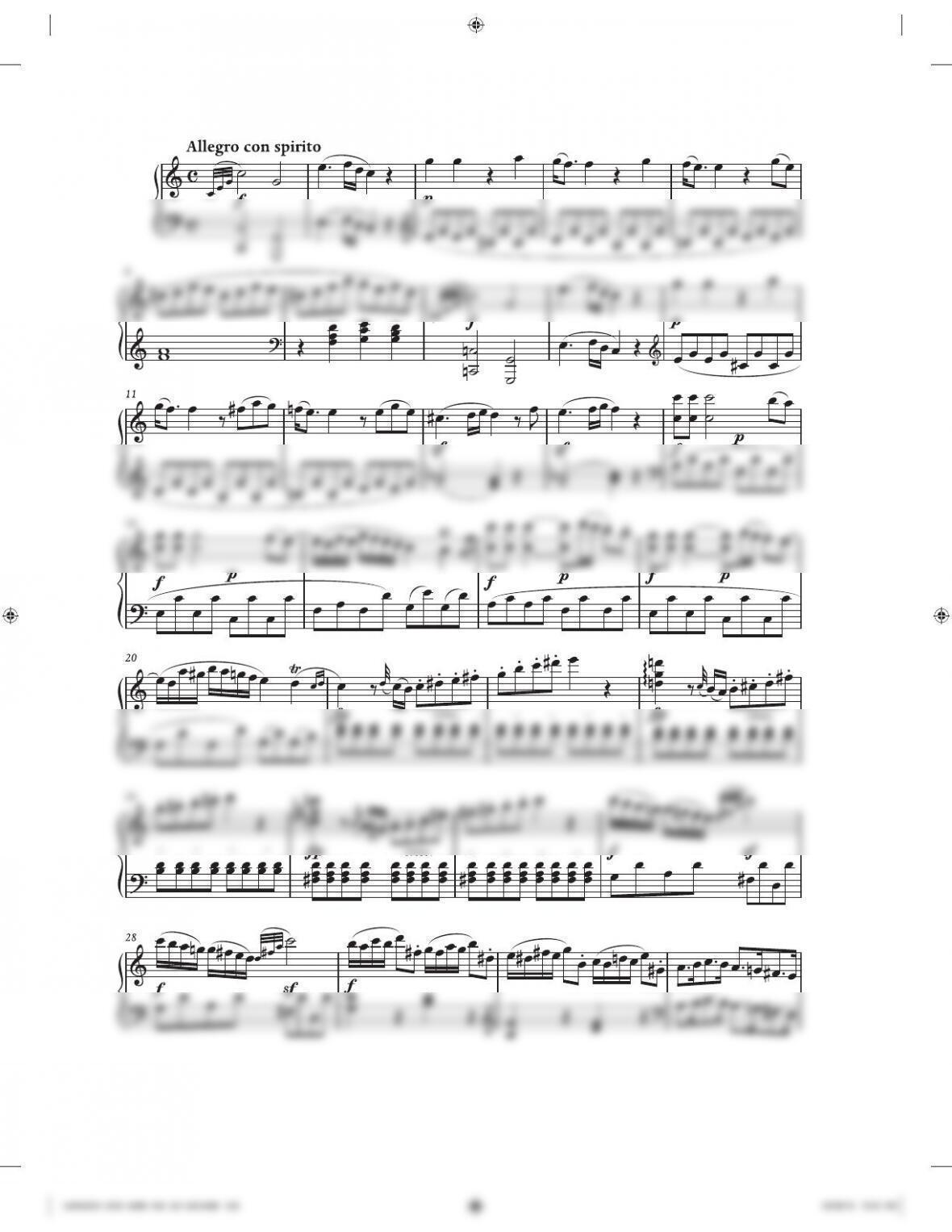
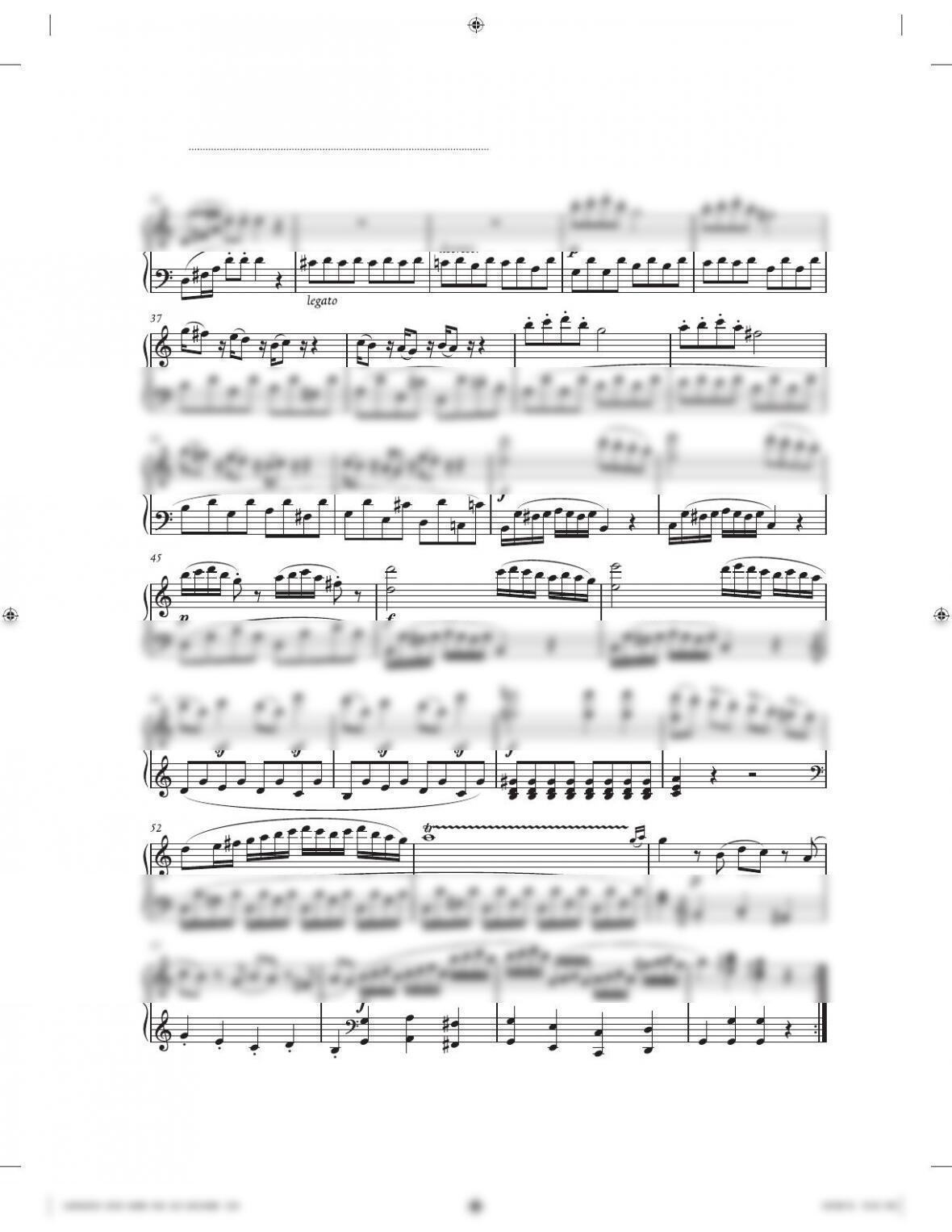
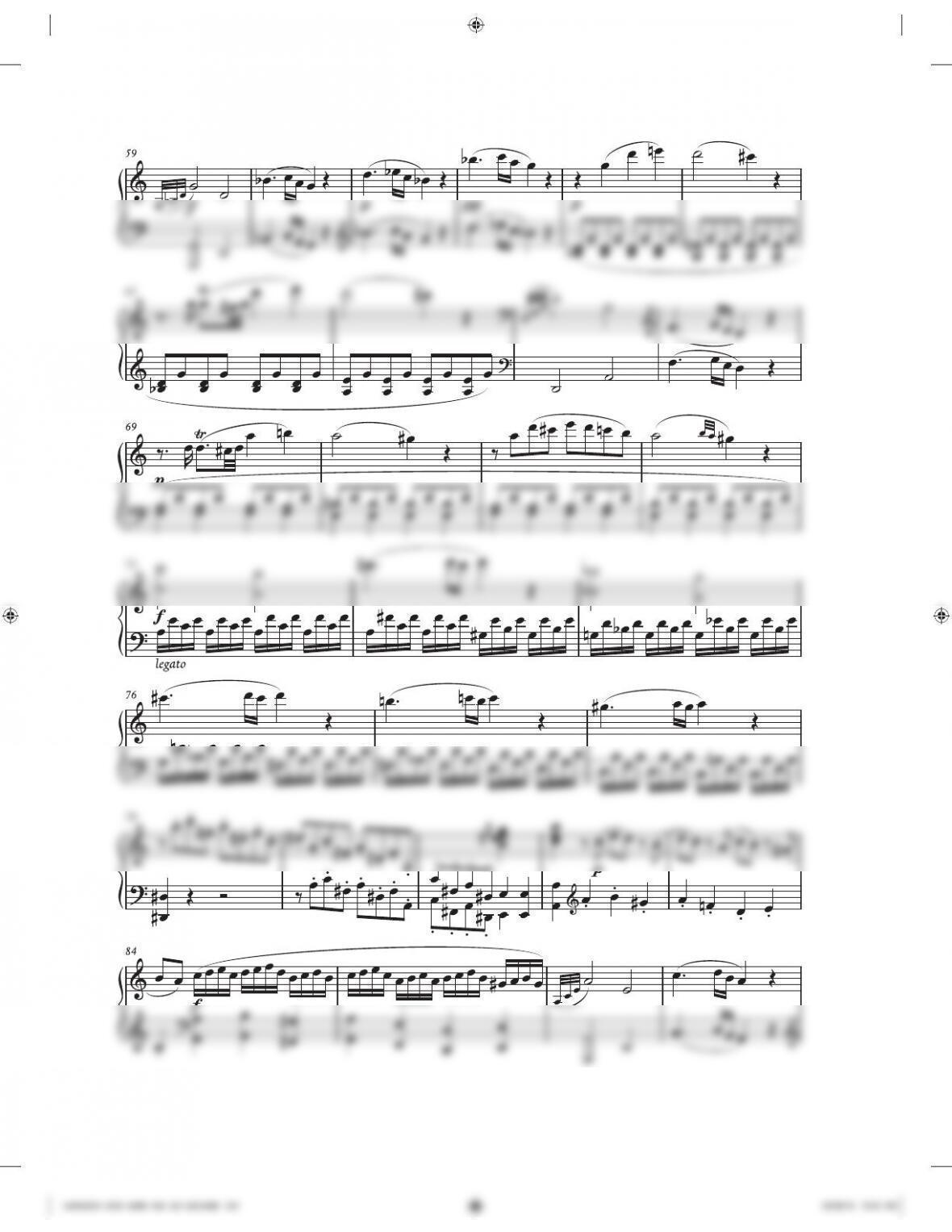
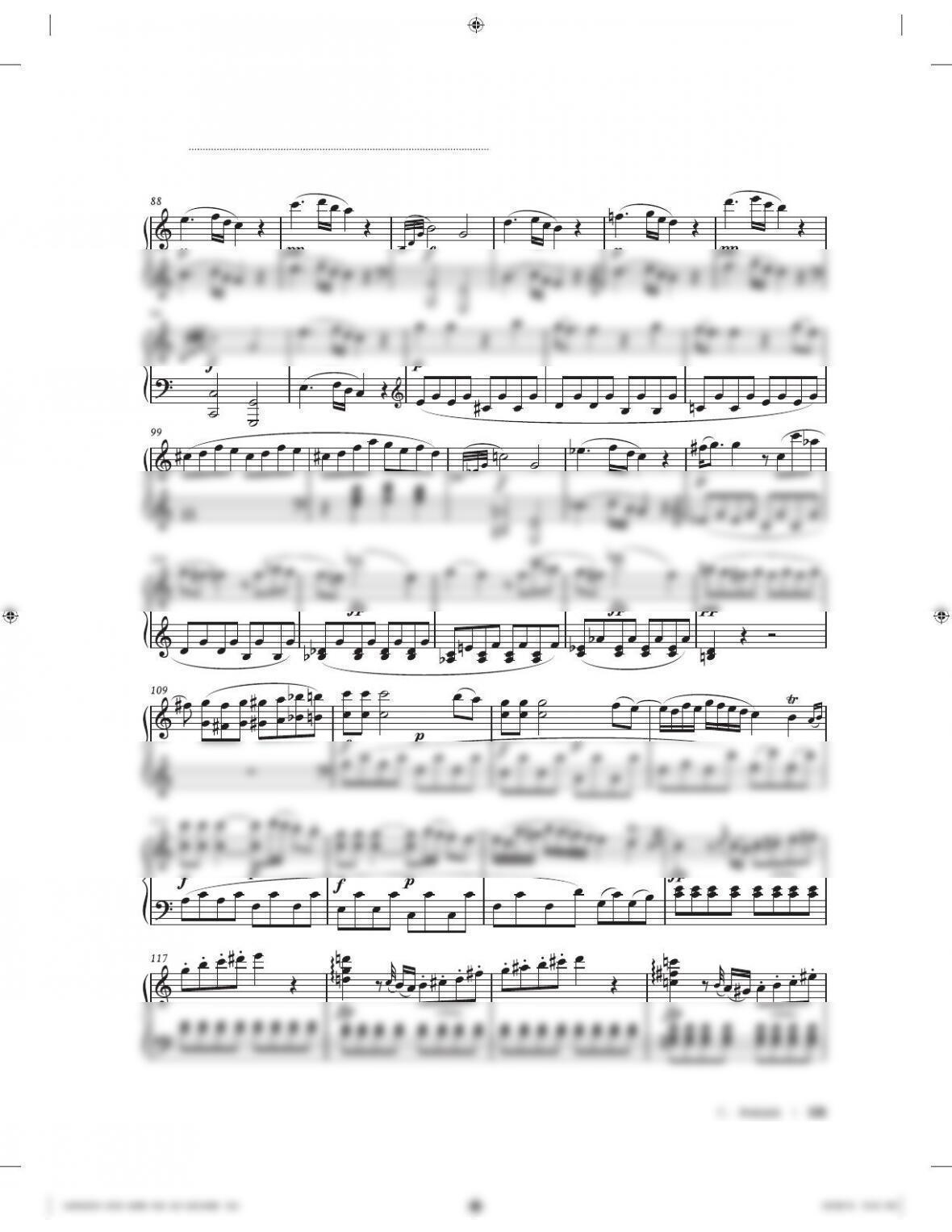
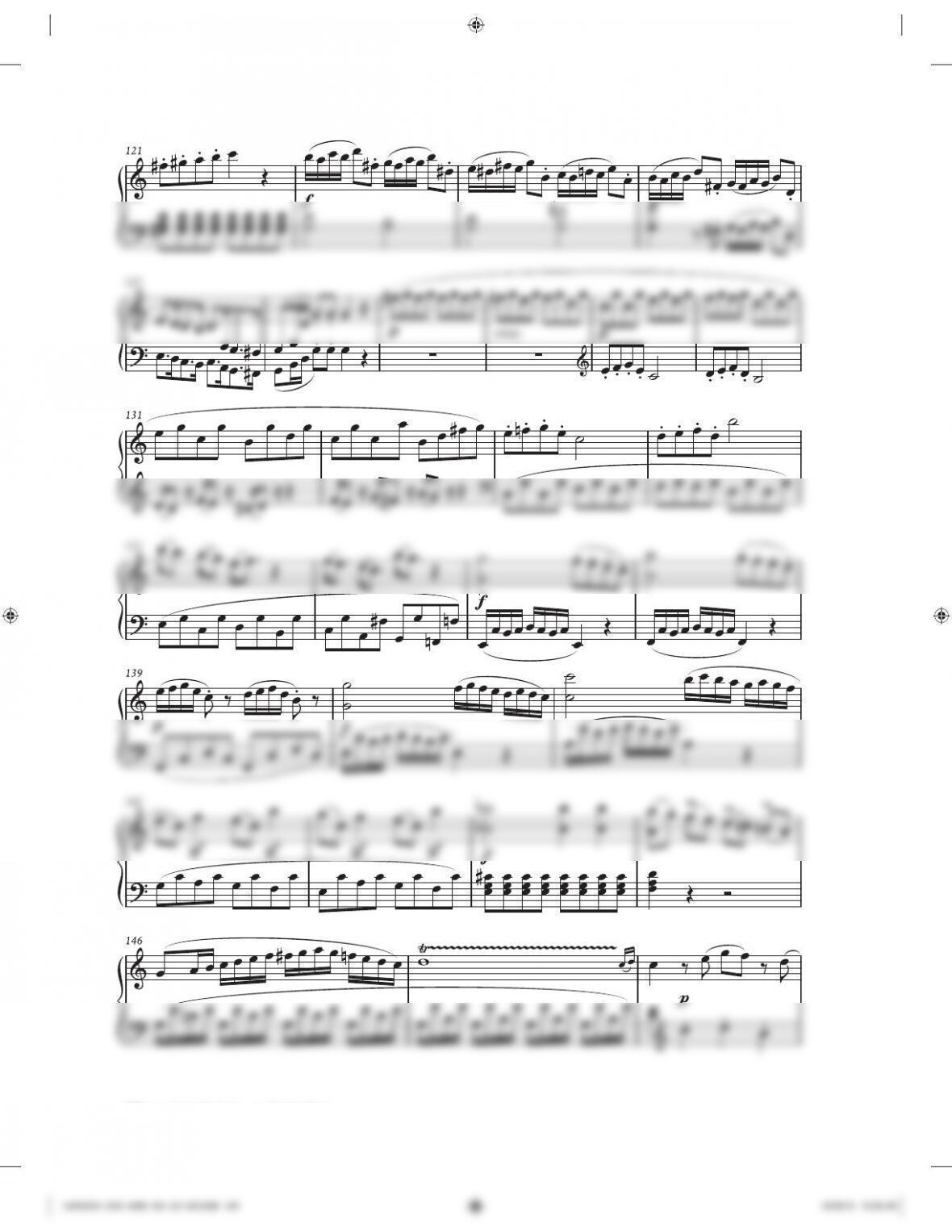
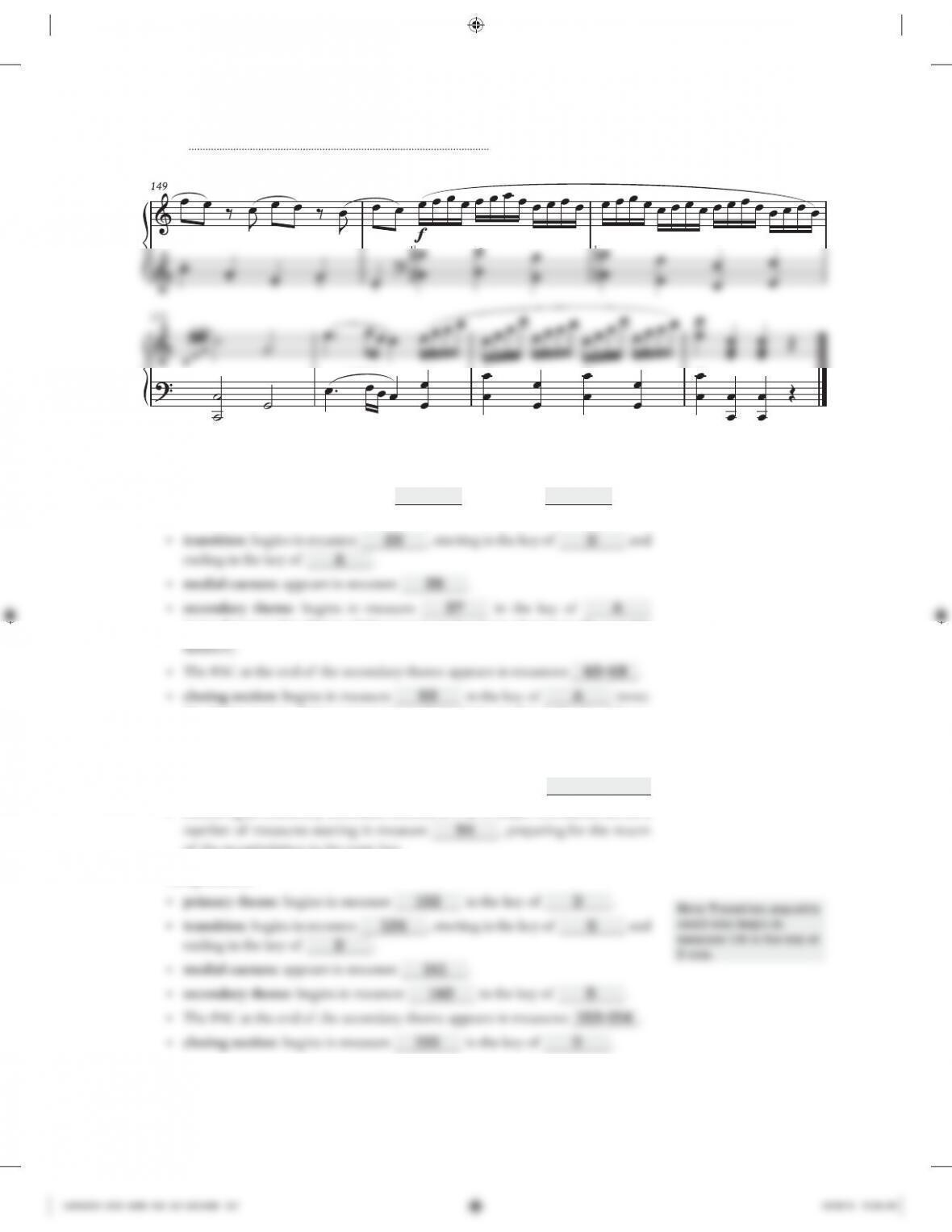
1. W. A. Mozart, Piano Sonata in C, K. 309, i
Exposition
• The exposition begins in measure 1.
• primary theme: begins in measure 1 in the key of C (note:
the main theme in this movement lasts for two phrases).
Development
• The development begins in measure 59 .
• Which theme returns at the start of the development section, and in what key?
Recapitulation
• The recapitulation begins in measure 94 .
• primary theme: begins in measure 94 in the key of C.
532 | CHAPTER 39 | Sonata Form
C. Analysis | 533
NAME:
534 | CHAPTER 39 | Sonata Form
NAME:
536 | CHAPTER 39 | Sonata Form
NAME:
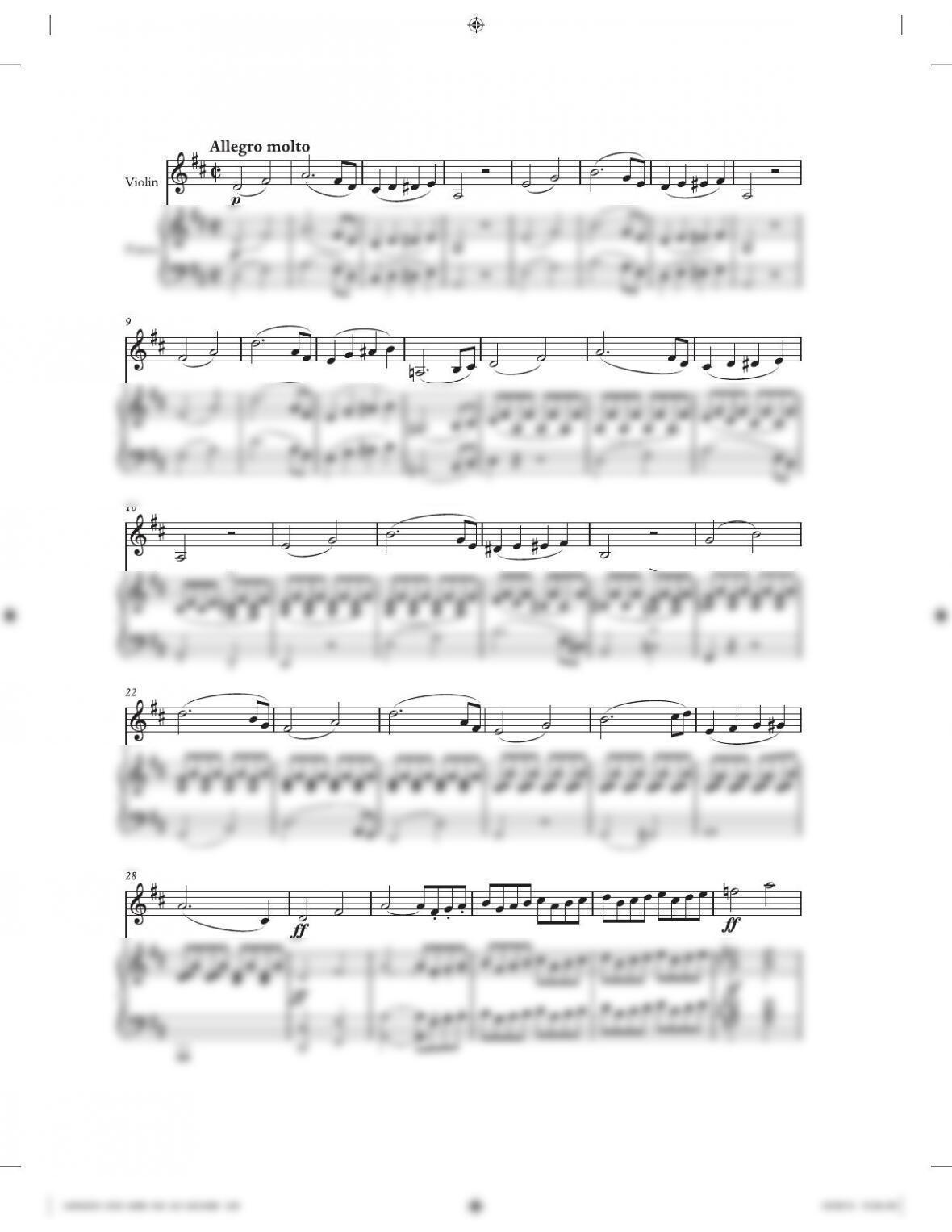
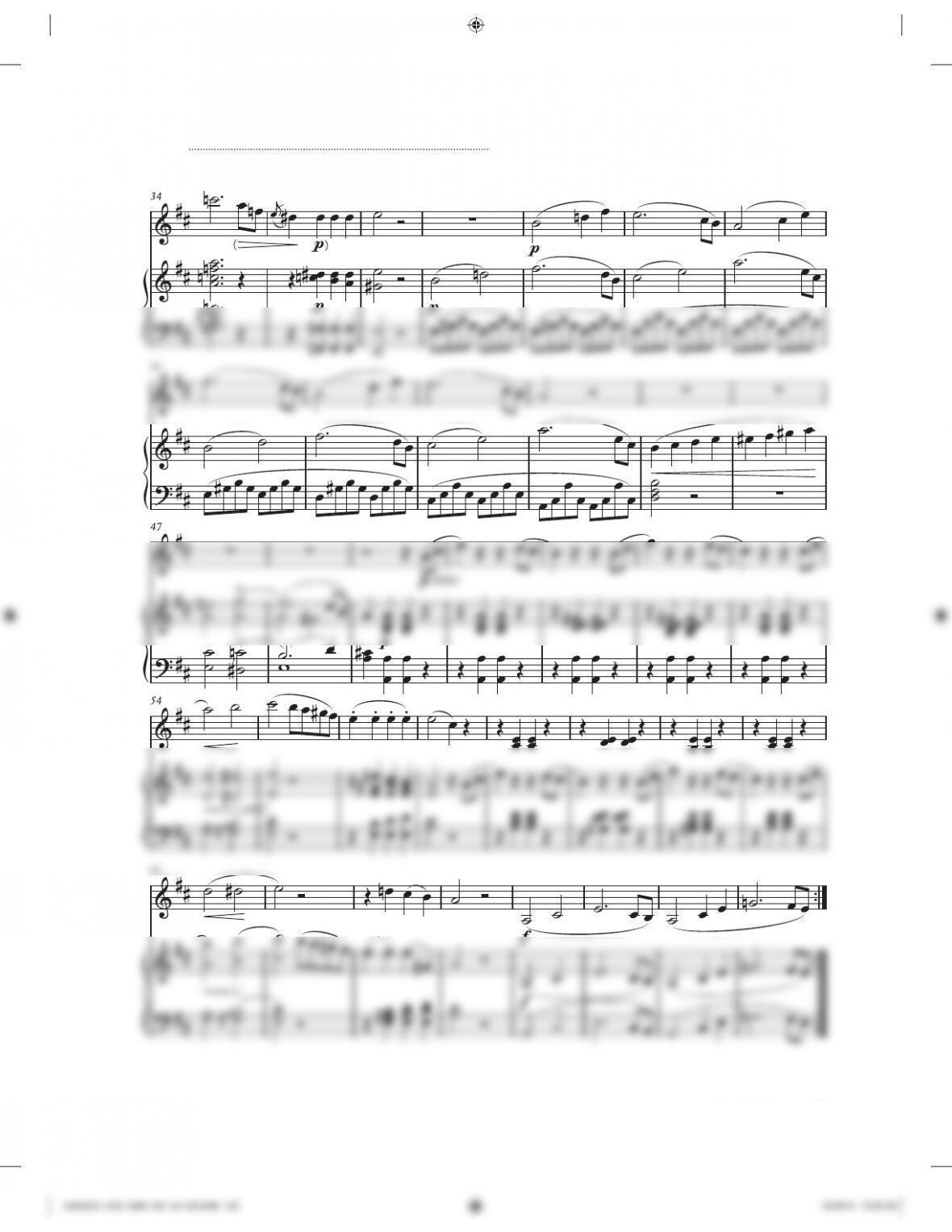
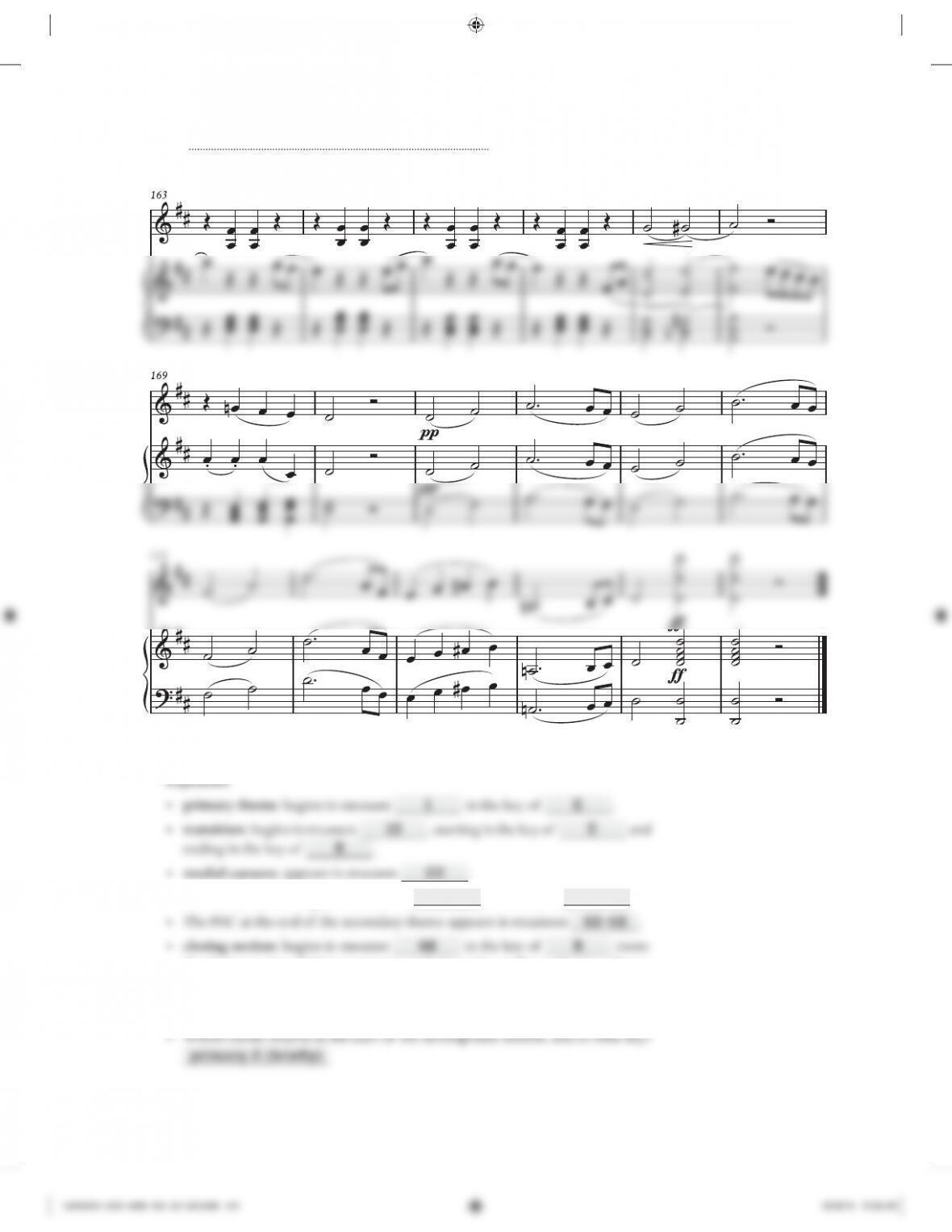
2. Franz Schubert, Sonata for Violin and Piano in D, D. 384, i
Exposition
• primary theme: begins in measure 1 in the key of D (note:
the primary theme in this movement lasts for two phrases).
(note: the secondary theme of this movement begins in a harmonically unstable
the closing section of this movement concludes with a perfect authentic cadence,
followed by a retransition in measures 66
–
69 that leads to the following section).
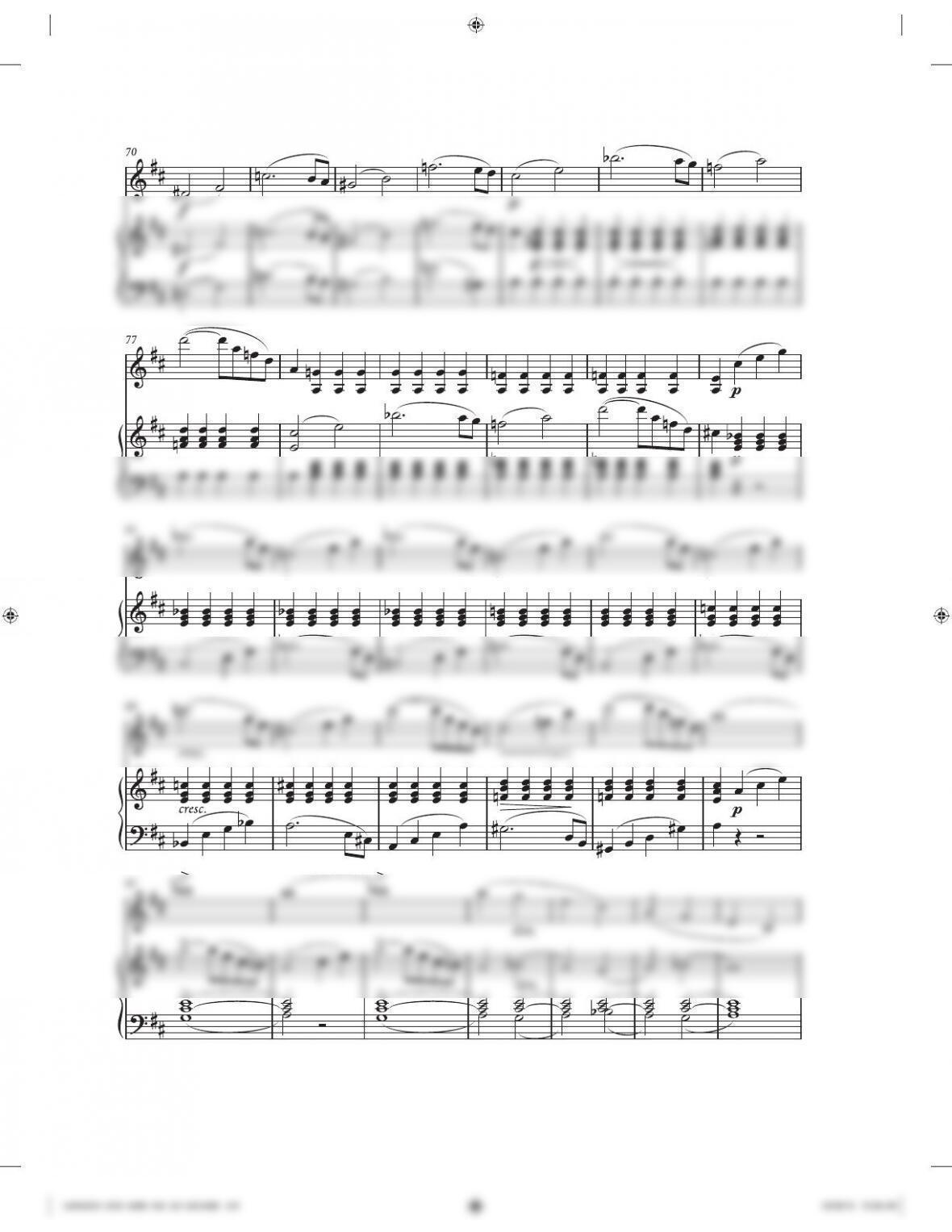
Development
• Which theme returns at the start of the development section? primary
• Following an extremely chromatic section, a V of D major is embellished for a
of the recapitulation in the tonic key.
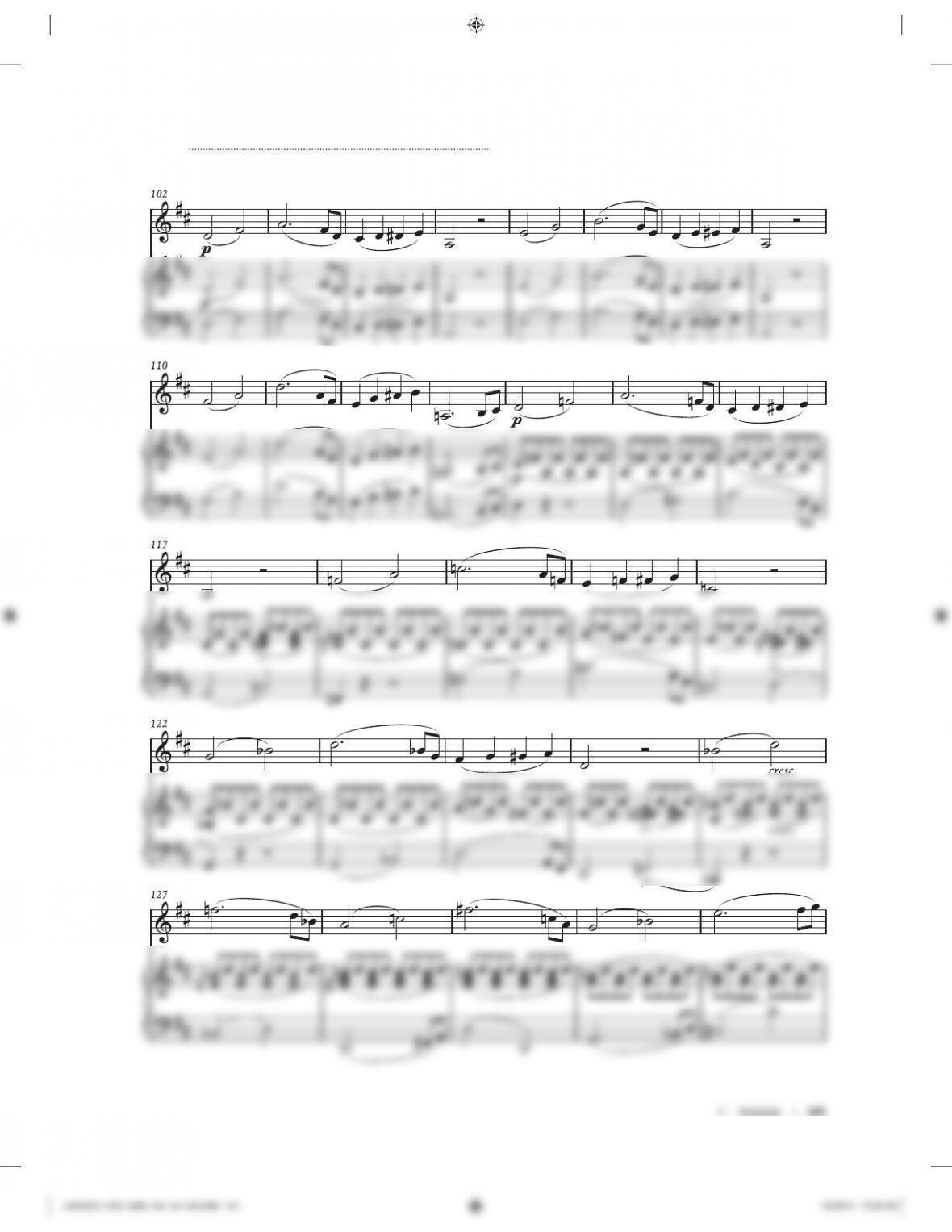
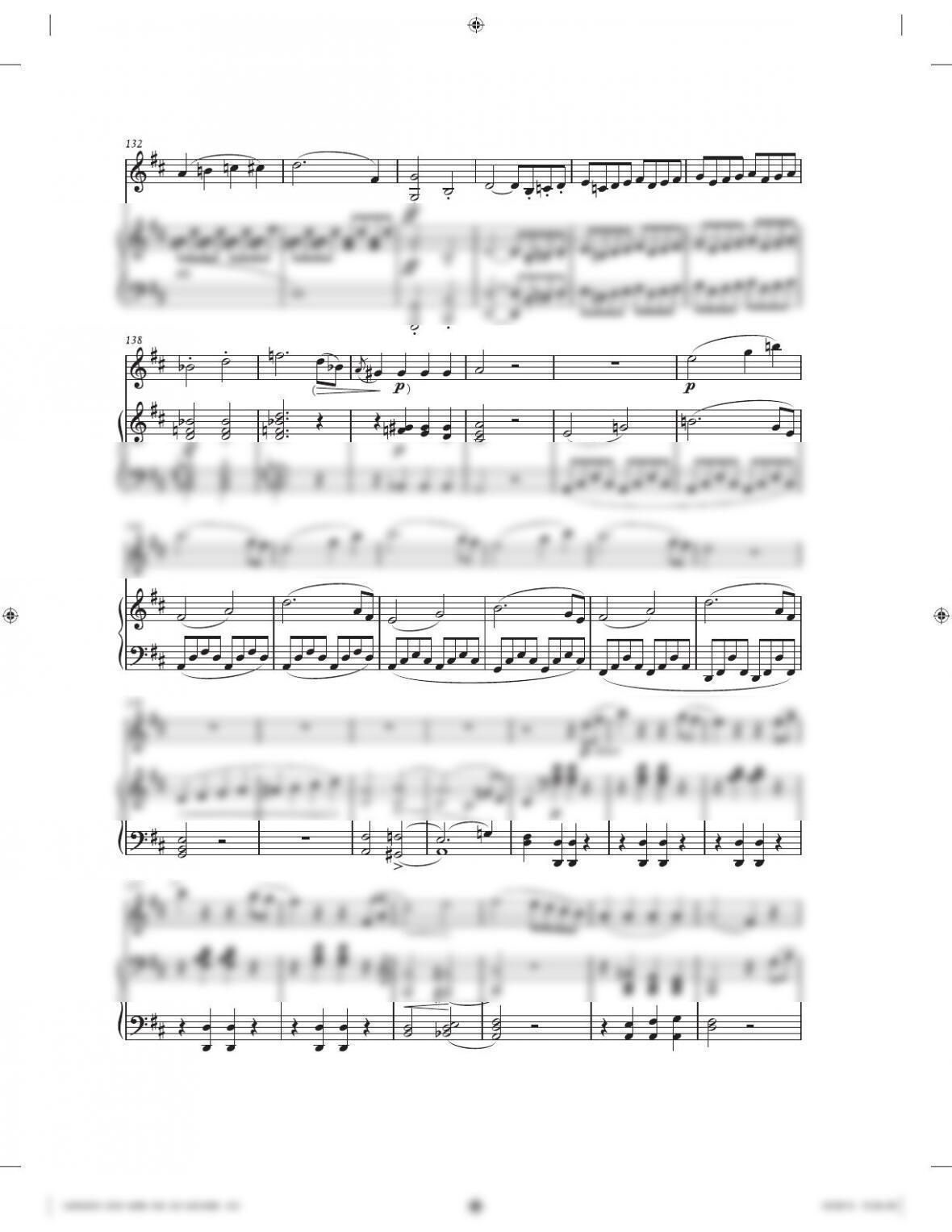
Recapitulation
538 | CHAPTER 39 | Sonata Form
C. Analysis | 539
NAME:
540 | CHAPTER 39 | Sonata Form
NAME:
542 | CHAPTER 39 | Sonata Form
NAME:
3. Ludwig van Beethoven, Piano Sonata in E, Op. 14, No. 1, i
• secondary theme: begins in measures 22
–
23 in the key of B.
the closing section of this movement concludes with a perfect authentic cadence,
followed by a retransition in measures 57
–
60 that leads to the following section).
Development