B. Composition | 501
NAME:
A. QUESTIONS FOR REVIEW
1. What is binary form?
2. What is the difference between rounded, balanced, and simple binary forms?
3. In what ways are rounded, balanced, and simple binary forms analogous to parallel,
sequential, and contrasting periods, respectively?
B. COMPOSITION
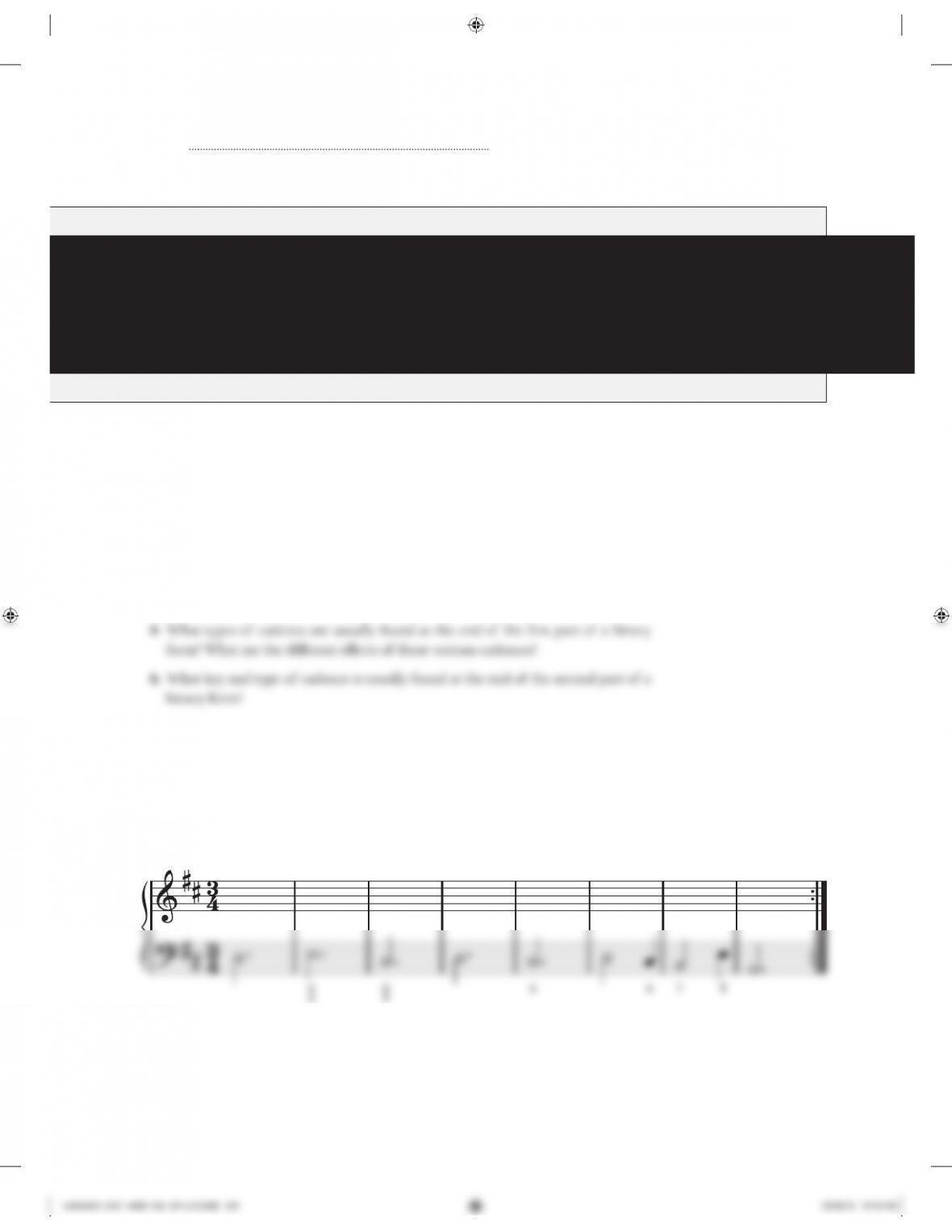
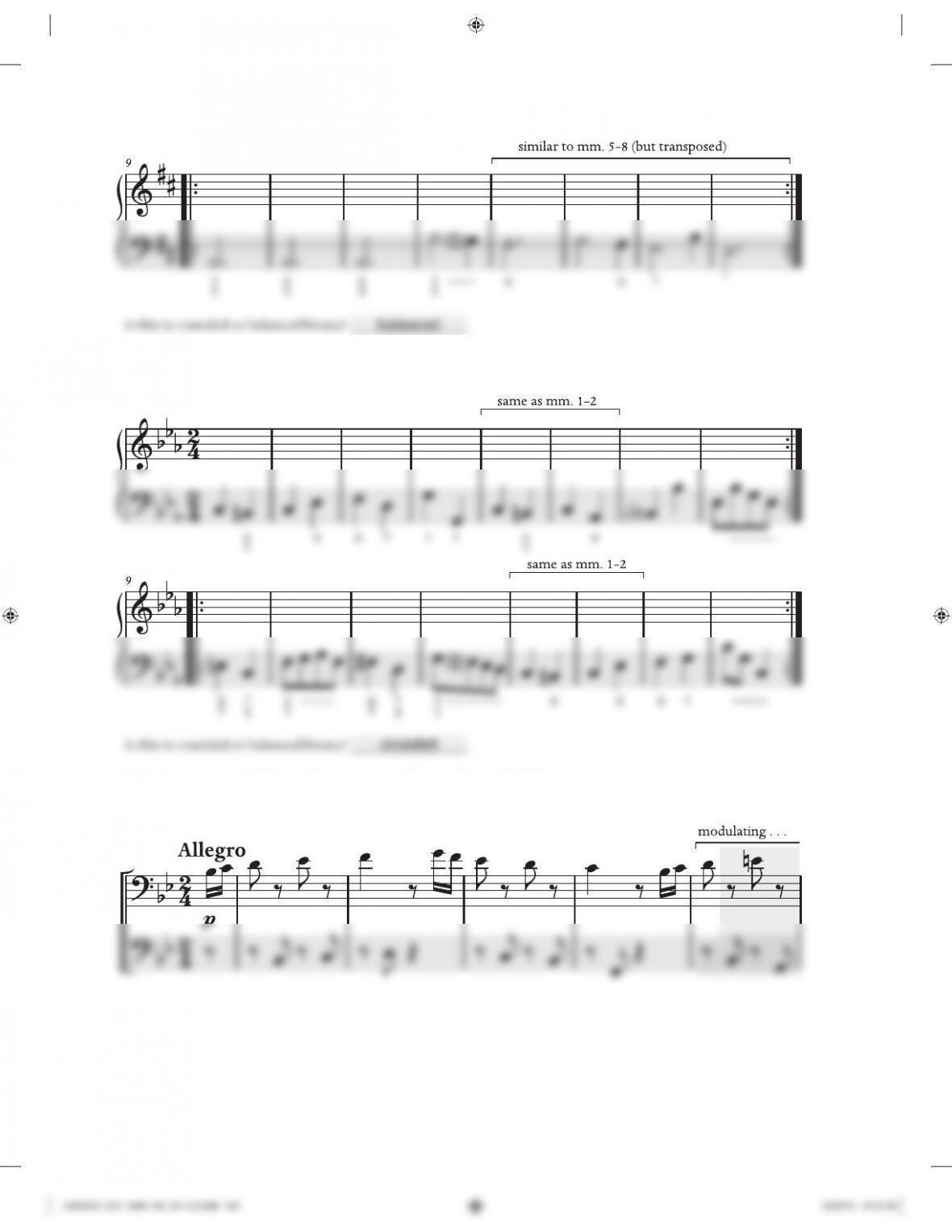
Compose melodies against the given bass lines, using the harmonies suggested by the
figured bass and following the instructions where given in the score.
1.
chapter
37 Binary Form
502 | CHAPTER 37 | Binary Form
2.
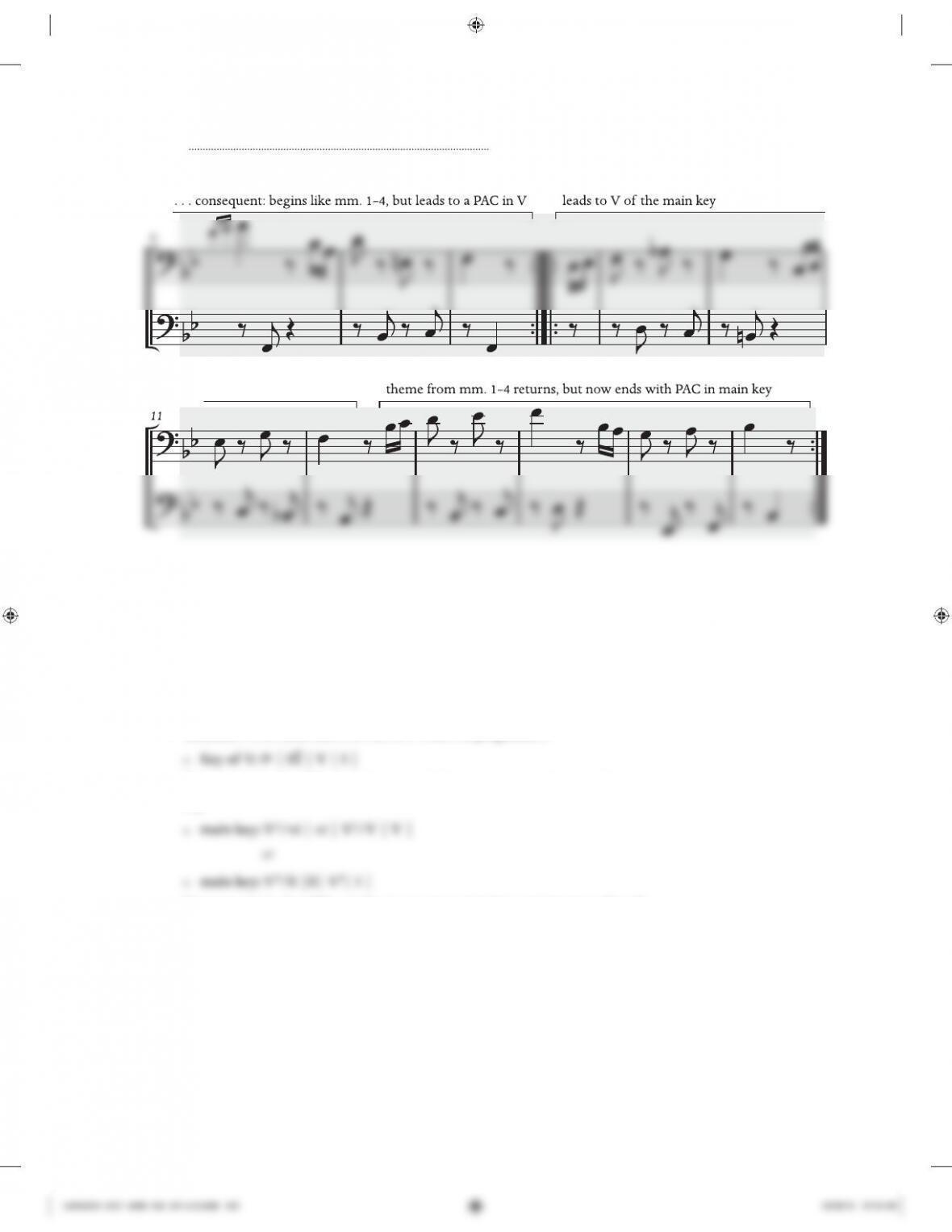
3. Compose a rounded binary form movement by completing the following excerpt
(from a cello sonata by Pleyel), following the instructions in the score.
B. Composition | 503
NAME:
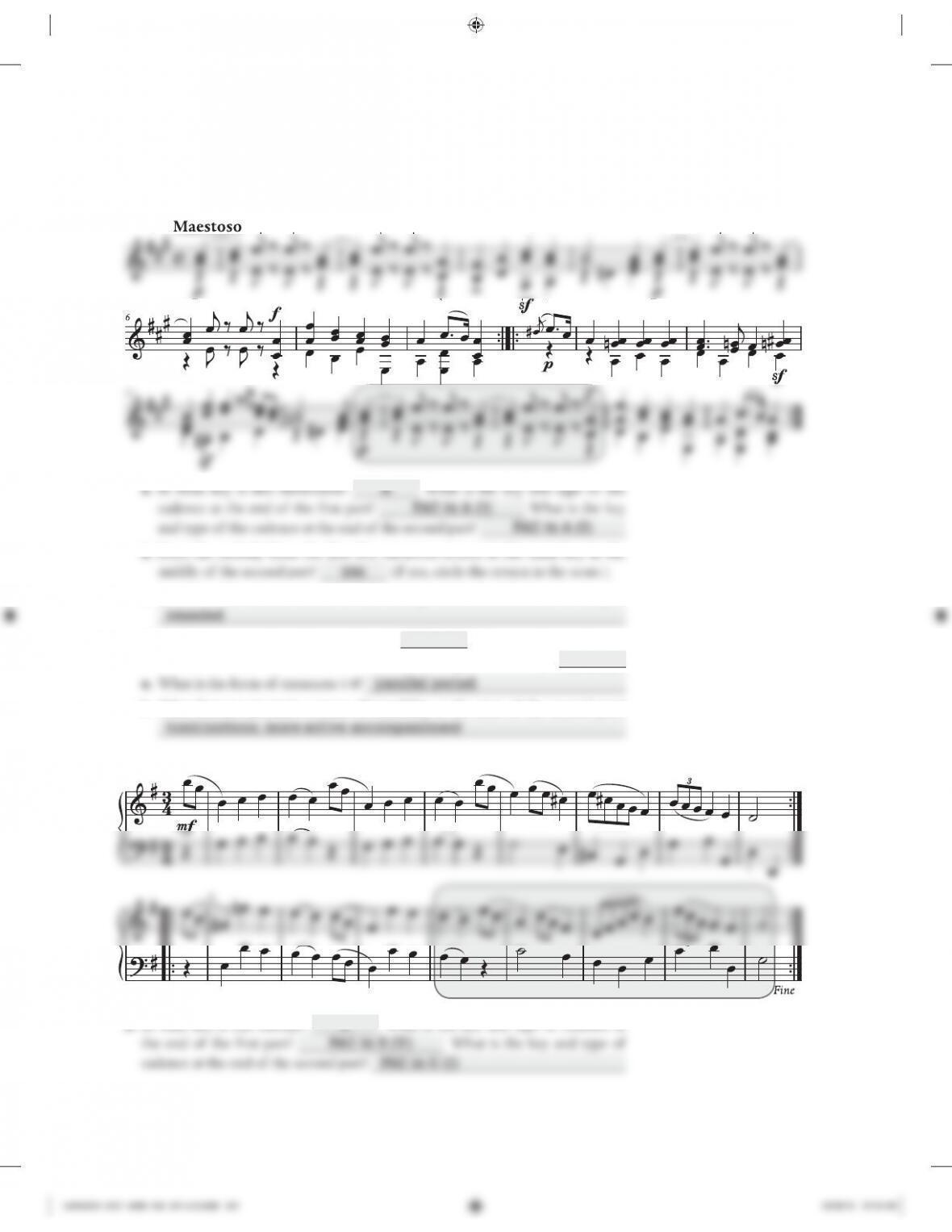
4. Compose a 16-measure piece in balanced binary form, following these guidelines:
• Write for keyboard, guitar, a solo instrument, or a solo instrument with piano
accompaniment.
• Choose a major key and meter.
• Measures 1
–
4 should embellish tonic harmony with a T
–
D
–
D
–
T or T
–
S
–
D
–
T
progression.
• Measures 5
–
8 should lead to a PAC in V with this progression:
• Measures 9
–
12 should be based on one of these two progressions, in the main
key:
• Measures 13
–
16 should be similar to measures 5
–
8, but now transposed to the
main key, ending with a PAC.
C. ANALYSIS
Answer the questions about each of the following pieces.
1. Mauro Giuliani, Variations for Guitar, Op. 2
b. Does the melody from the first few measures return in the main key in the
c. Based on the answer above, is this excerpt rounded, balanced, or simple?
d. Are the two parts about the same length? yes If the second part is longer
than the first, by how much (about 1.5 times as long, twice as long)? n/a
f. What features promote a sense of instability at the start of the second part?
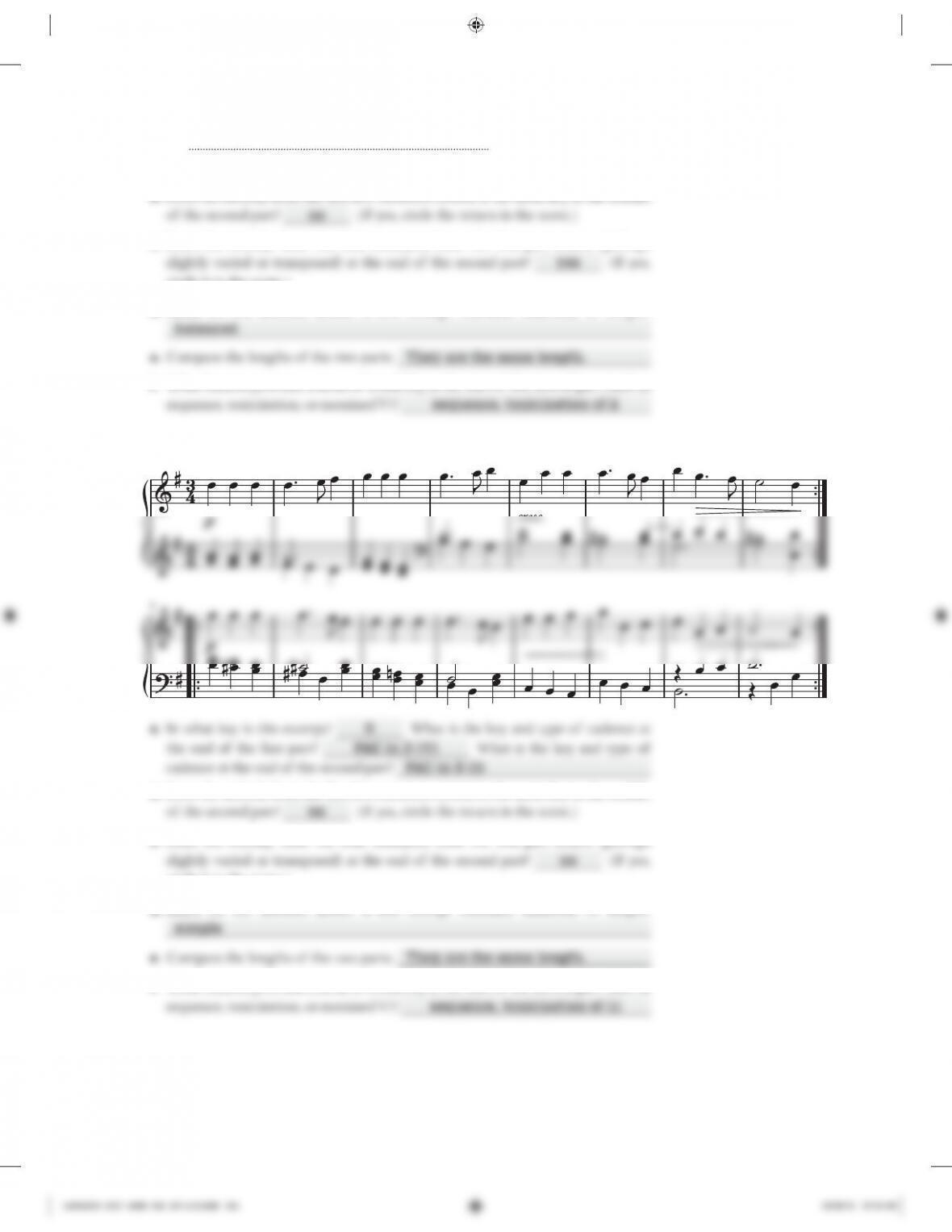
2. W. A. Mozart, Minuet, K. 1e
a. In what key is this excerpt? G What is the key and type of cadence at
NAME:
b. Does the melody from the first few measures return in the main key in the middle
c. Does the melody from the final measures from the first part return (perhaps
circle it in the score.)
d. Based on the answers above, is this excerpt rounded, balanced, or simple?
f. What features promote a sense of instability at the start of the second part (such as
3. Henry Purcell, Harpsichord Suite, Z. 660, Minuet
b. Does the melody from the first few measures return in the main key in the middle
c. Does the melody from the final measures from the first part return (perhaps
circle it in the score.)
d. Based on the answers above, is this excerpt rounded, balanced, or simple?
f. What features promote a sense of instability at the start of the second part (such as
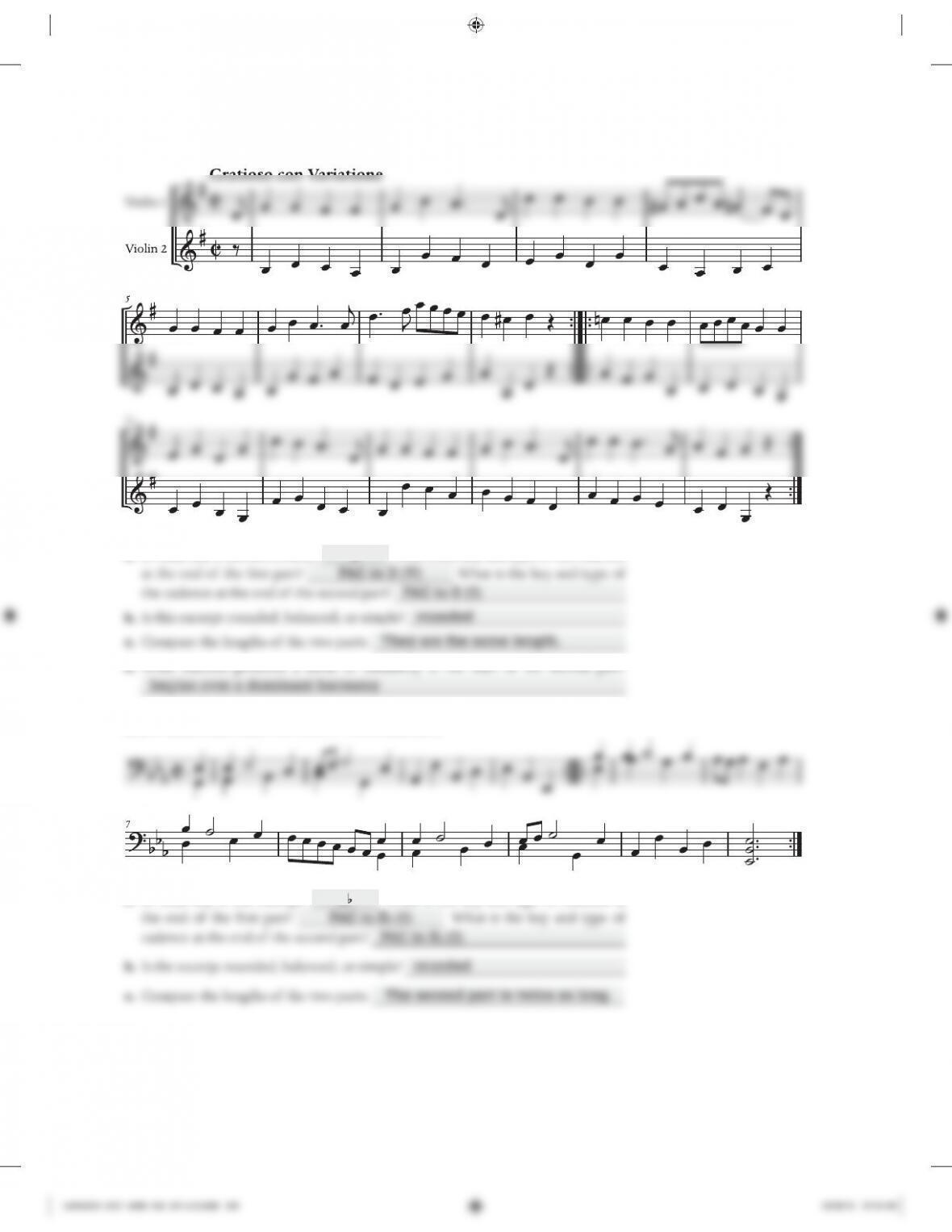
4. Joseph Bologne Saint-Georges, Sonata for Two Violins, Book II, No. 1, ii
a. In what key is this movement? G What is the key and type of the cadence
5. J. S. Bach, Cello Suite No. 4, BWV 1010, Bourrée 2
a. In what key is this excerpt? E What is the key and type of cadence at
NAME:
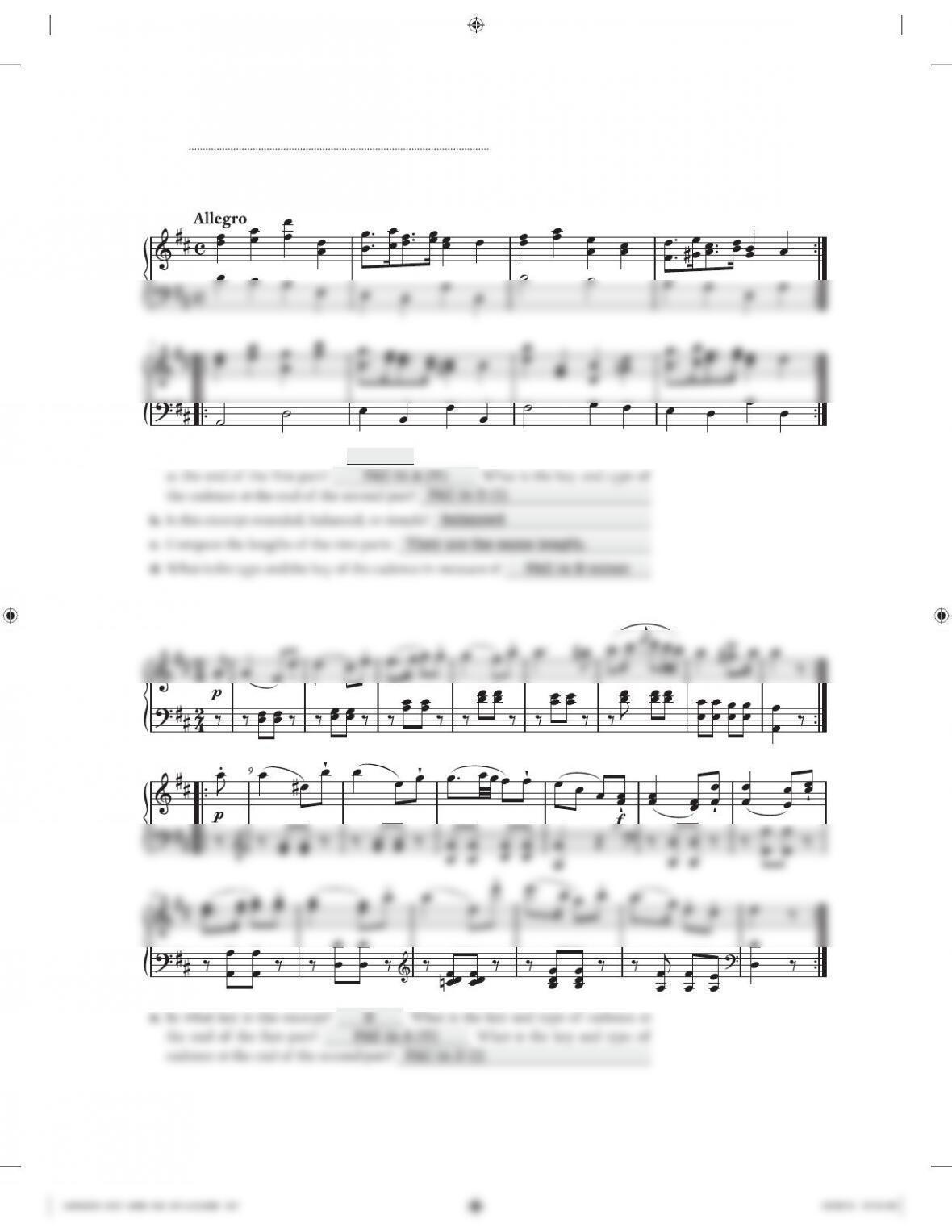
6. Arcangelo Corelli, Chamber Sonata Op. 2, No. 1, Gavotte
a. In what key is this movement? D What is the key and type of the cadence
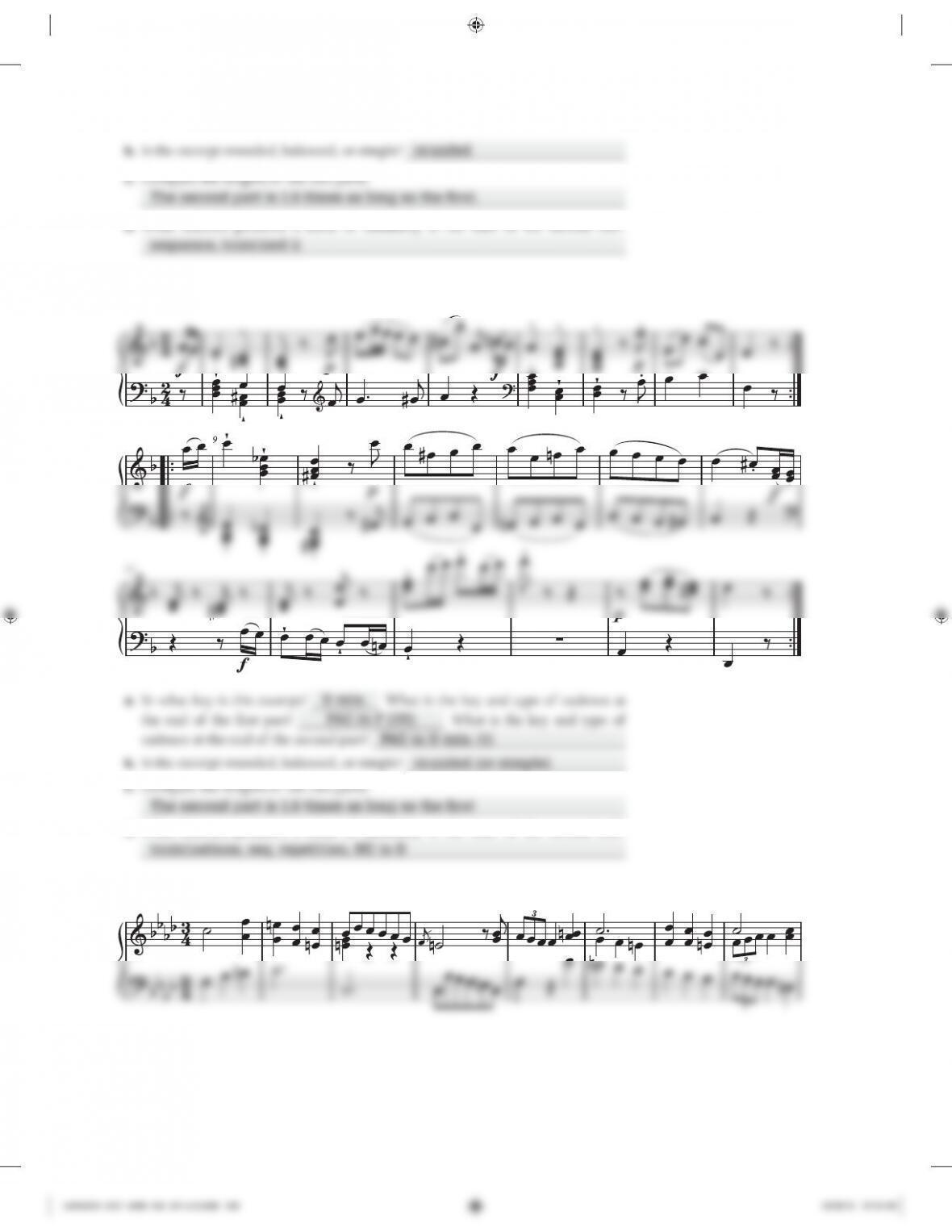
7. Joseph Haydn, Piano Sonata, Hob. XVI:37, iii
508 | CHAPTER 37 | Binary Form
d. What features promote a sense of instability at the start of the second half ?
8. Joseph Haydn, Piano Sonata, Hob. XVI:37, iii
d. What features promote a sense of instability at the start of the second half ?
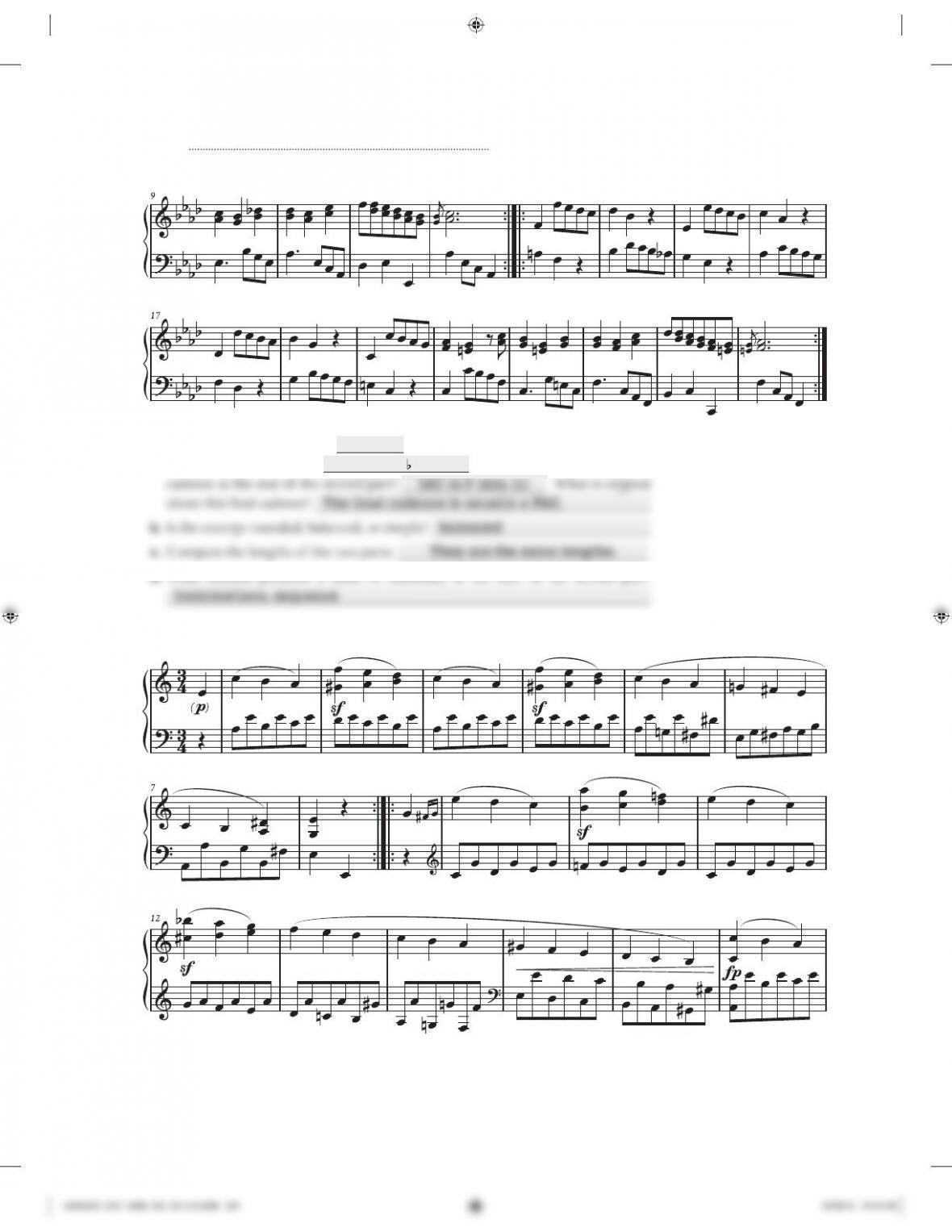
9. Anna Bon, Harpsichord Sonata in F, Op. 2, No. 3, Trio
C. Analysis | 509
NAME:
a. In what key is this excerpt? F min. What is the key and type of cadence at
the end of the first part? IAC in A (III) What is the key and type of
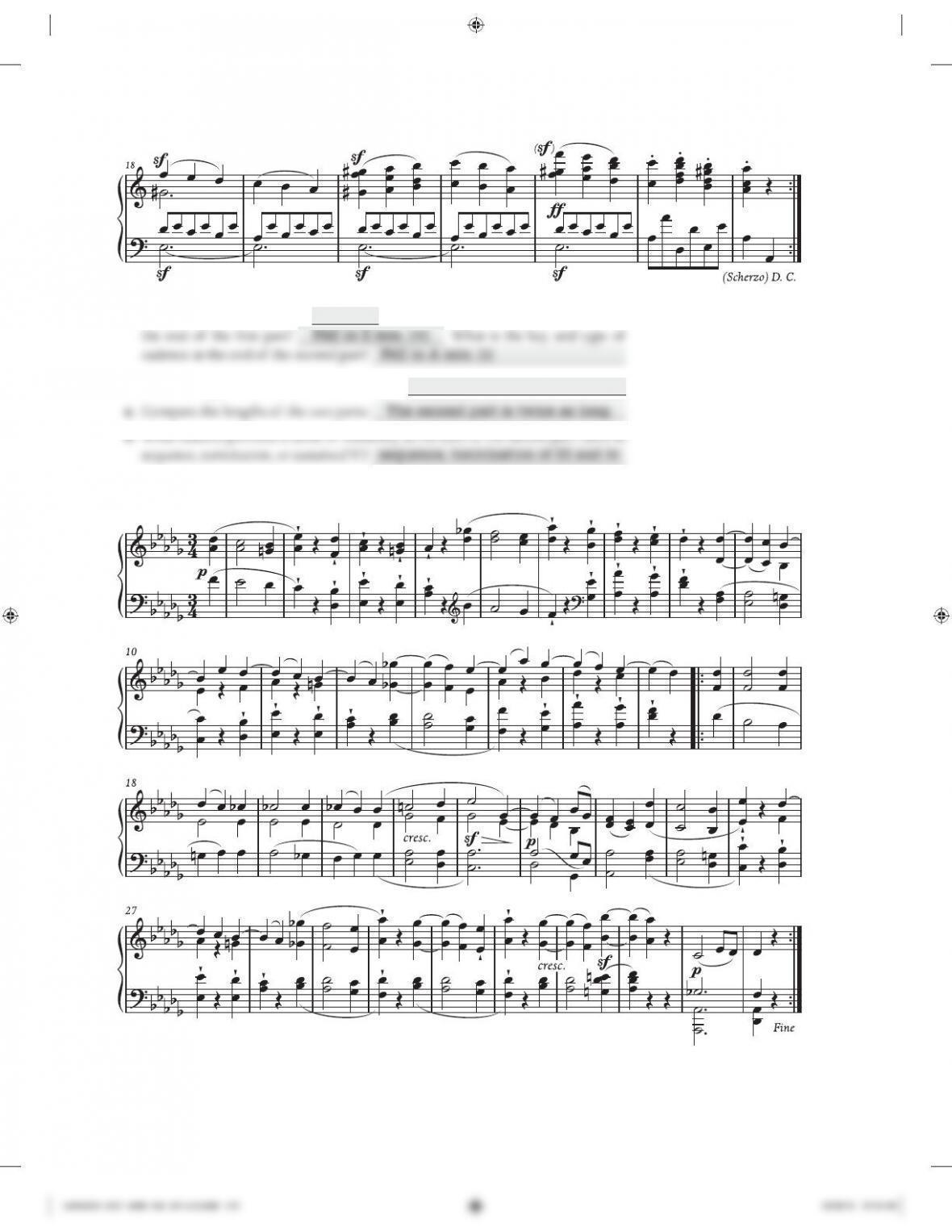
10. Beethoven, Piano Sonata, Op. 2, No. 2, iii
510 | CHAPTER 37 | Binary Form
a. In what key is this excerpt? A min. What is the key and type of cadence at
b. Is this excerpt rounded, balanced, or simple? rounded
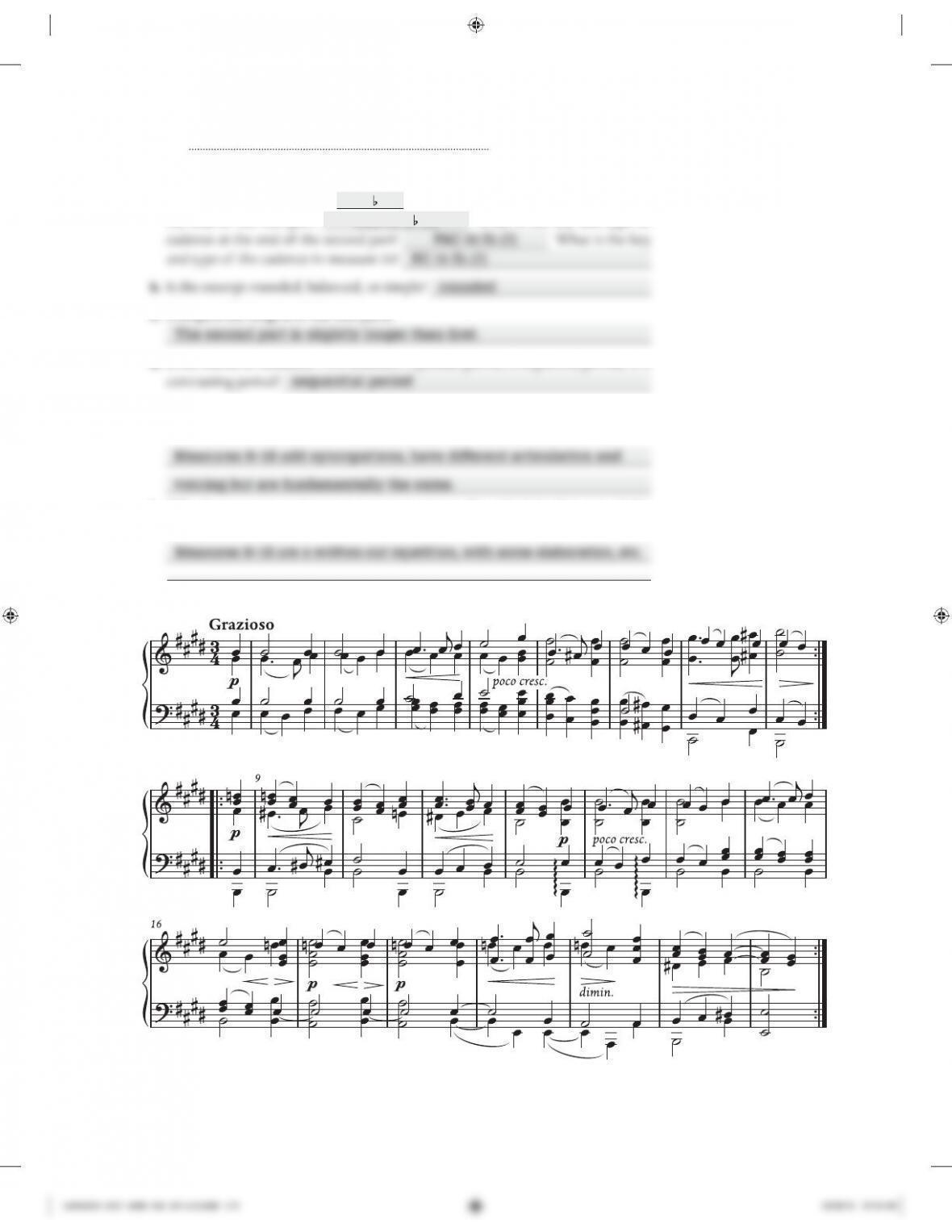
11. Ludwig van Beethoven, Piano Sonata, Op. 27, No. 2 (“Moonlight”), ii
C. Analysis | 511
NAME:
a. In what key is this excerpt? D What is the key and type of cadence at
the end of the first part? PAC in D (I) What is the key and type of
c. Compare the lengths of the two parts:
d. Is the theme in measures 1
–
8 a sentence, a parallel period, a sequential period, or a
e. How do measures 1
–
8 and 9
–
16 compare? In what ways are they similar, and in
what ways are they different?
f. Why do you suppose there are no repeat signs at the end of the first part of this
binary form movement?
12. Johannes Brahms, Waltz, Op. 39, No. 5
a. In what key is this excerpt? E What is the key and type of cadence at
d. What is unusual about the harmonization of the return of opening theme
within the second part?