B. Composition | 477
NAME:
A. QUESTIONS FOR REVIEW
1. What is a parallel period? How is it different from a sequential period? From a
contrasting period?
2. What is an antecedent? What types of cadences may be found at the end of the
antecedent? What is a consequent, and what types of cadences may be found at
the end of it?
B. COMPOSITION
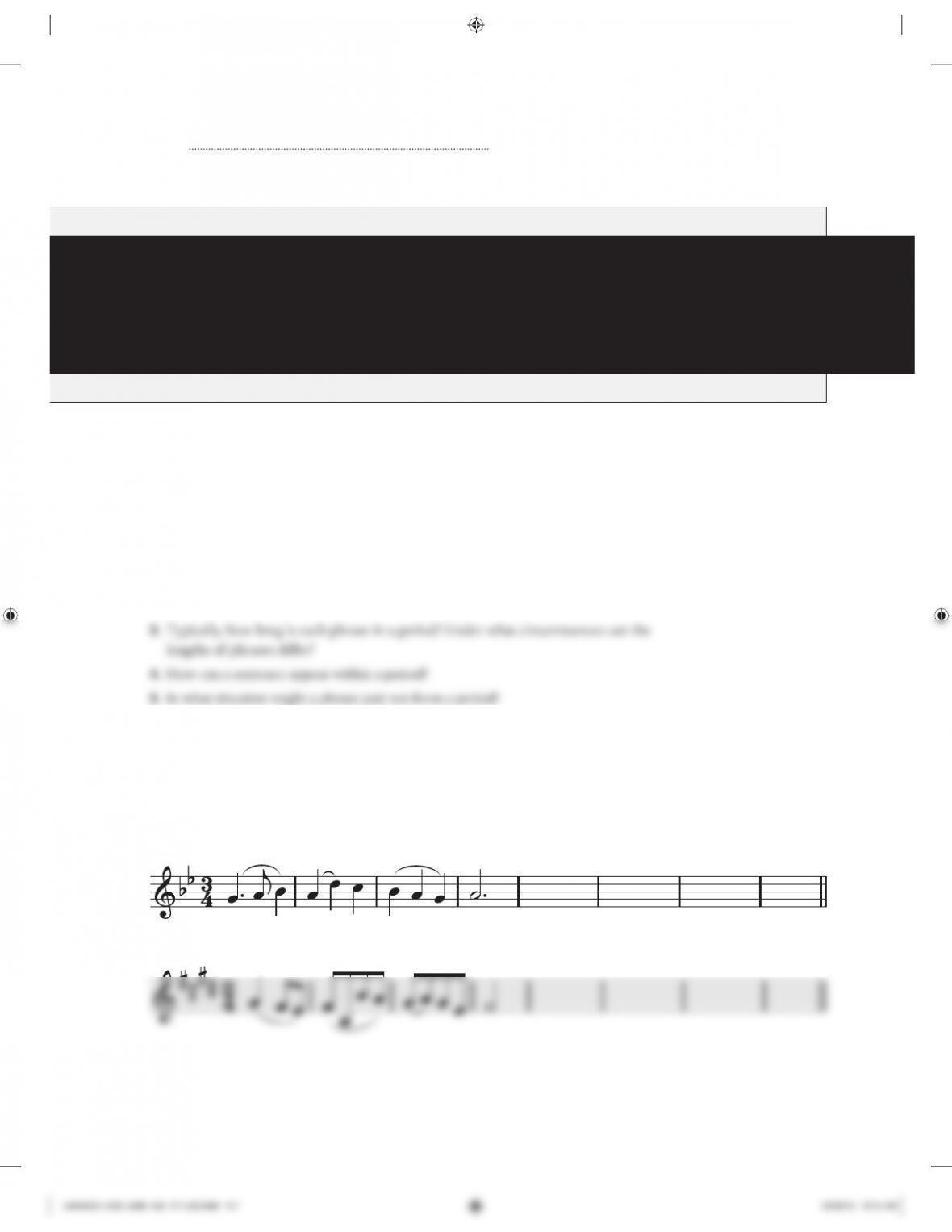
1. Complete each period as indicated. For parallel periods, the second phrase should
begin the same way as the first (mm. 5
–
6 should be the same as mm. 1
–
2).
a. Parallel period, ending with PAC
b. Parallel period, ending with PAC
chapter
36 Periods and
Other Phrase Pairs
478 | CHAPTER 36 | Periods and Other Phrase Pairs
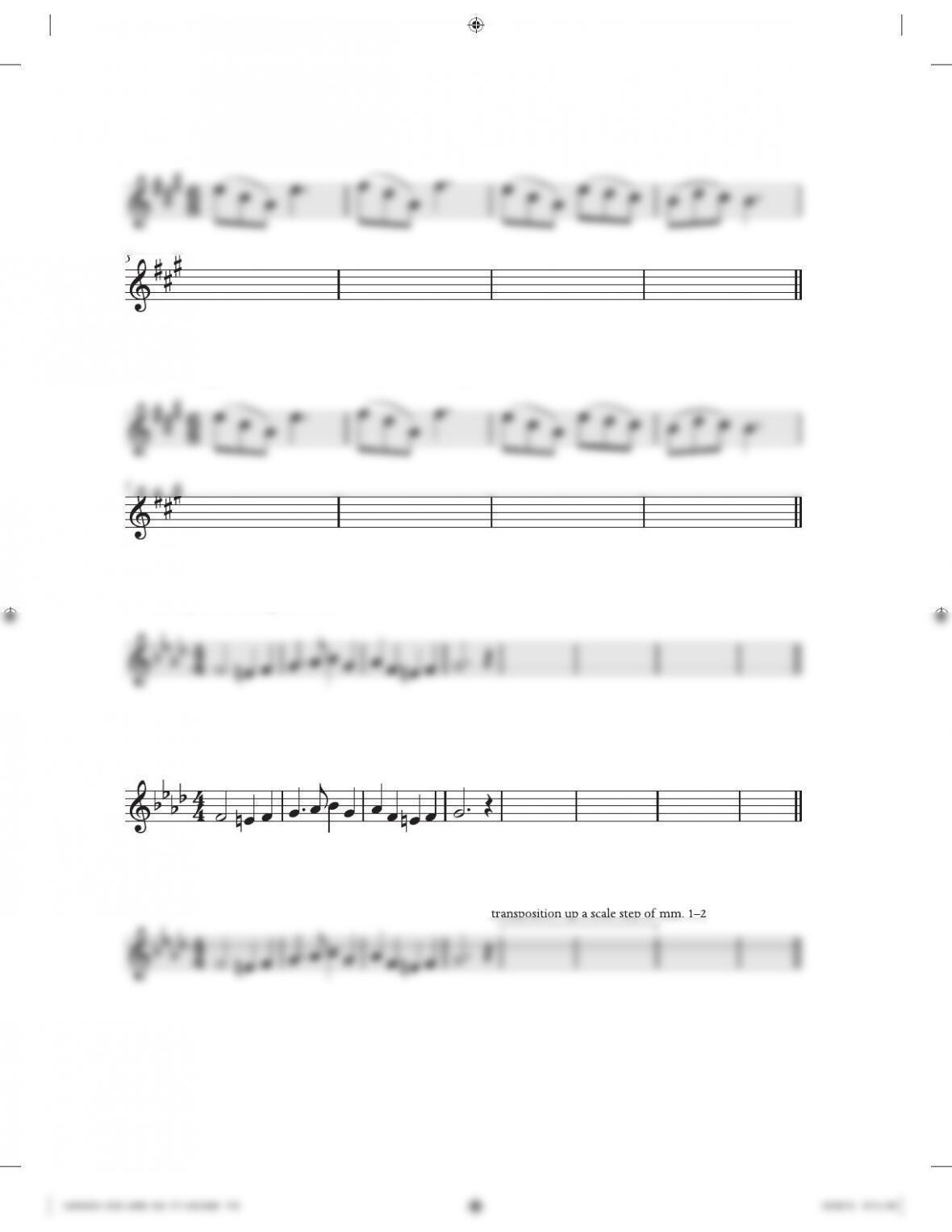
c. Parallel period, ending with PAC
d. Contrasting period (m. 5 is different from m. 1), ending with PAC
e. Parallel period, ending with PAC
f. Parallel period, ending with PAC in key of relative major
g. Sequential period, ending with PAC in tonic key
B. Composition | 479
NAME:
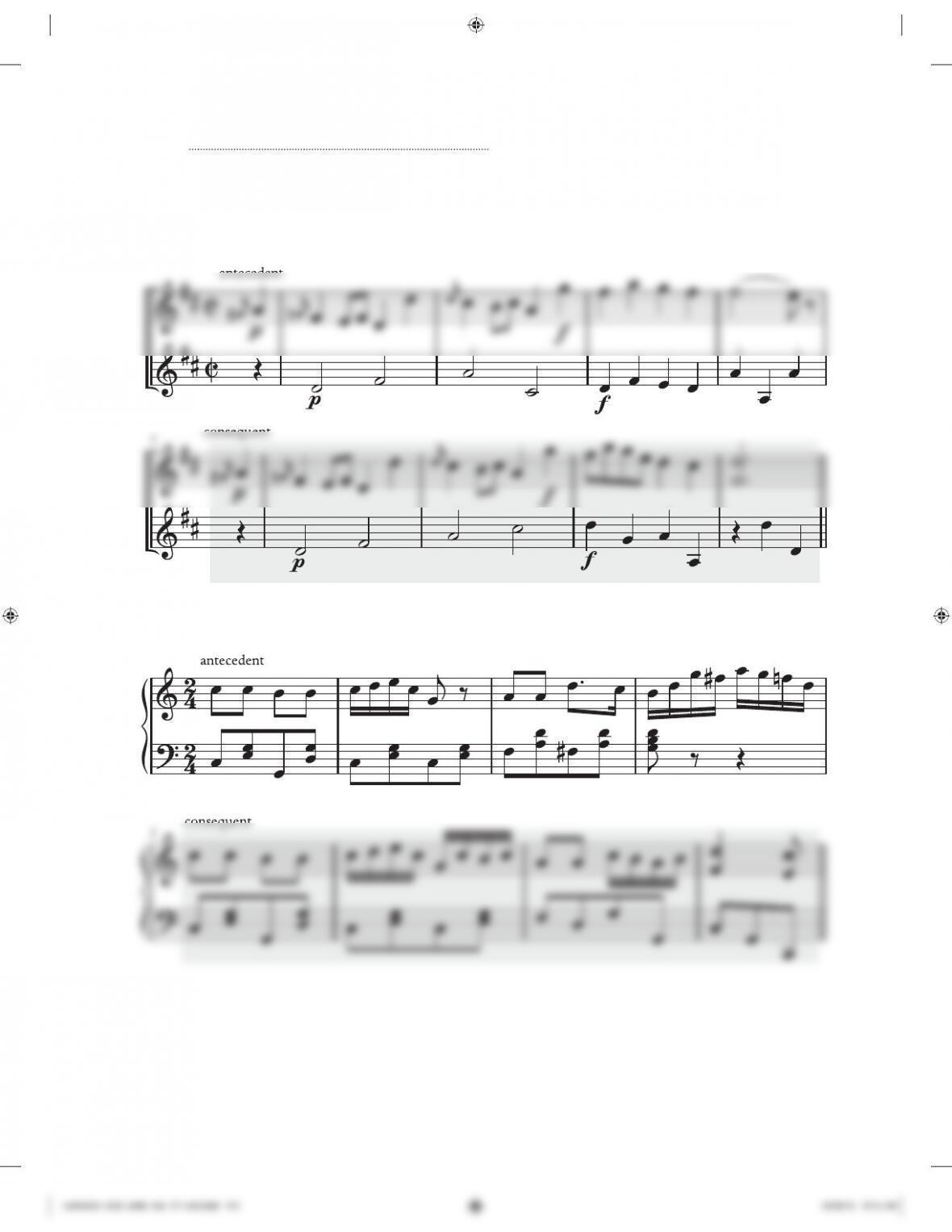
2. Compose parallel periods by completing the following excerpts, in each case
ending with a PAC.
a. Antonio Rosetti, Violin Duet in D
b. Francis Johnson, “Philadelphia Fireman’s Cotillion”
480 | CHAPTER 36 | Periods and Other Phrase Pairs
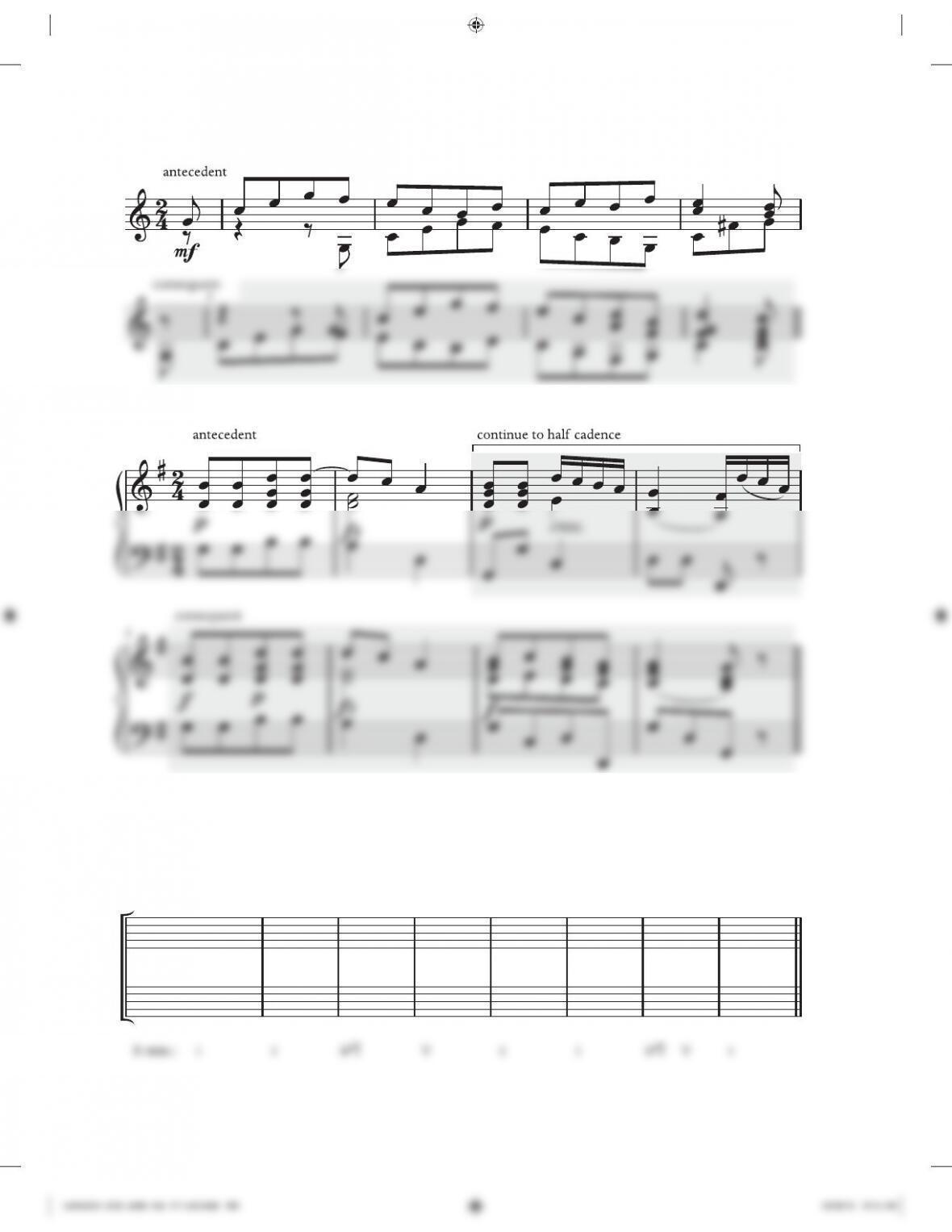
c. Ferdinando Carulli, Petites Bagatelles for Guitar, Op. 130, No. 10
d. Wilhelmine von Troschke und Rosenwerth, “Eine Hand voll Erde”
3. Compose periods based following the given instructions.
a. Compose an eight-measure parallel period in E minor, 2
4 time, based on the
harmonies indicated.
• The piece should be either for keyboard or for two instruments.
• Make sure to write the clefs, key signature, and time signature.
NAME:
b. Compose an eight-measure sequential or contrasting period in E minor, 2
4 time,
based on the harmonies indicated.
• The antecedent can be the same as (a) above.
• The piece should be either for keyboard or for two instruments.
• Make sure to write the clefs, key signature, and time signature.
c. Compose a parallel period in a key and time signature of your choice, for either
keyboard, guitar, or instrument with keyboard accompaniment, following these
guidelines:
• The antecedent begins on the tonic and leads to a half cadence.
C. ANALYSIS
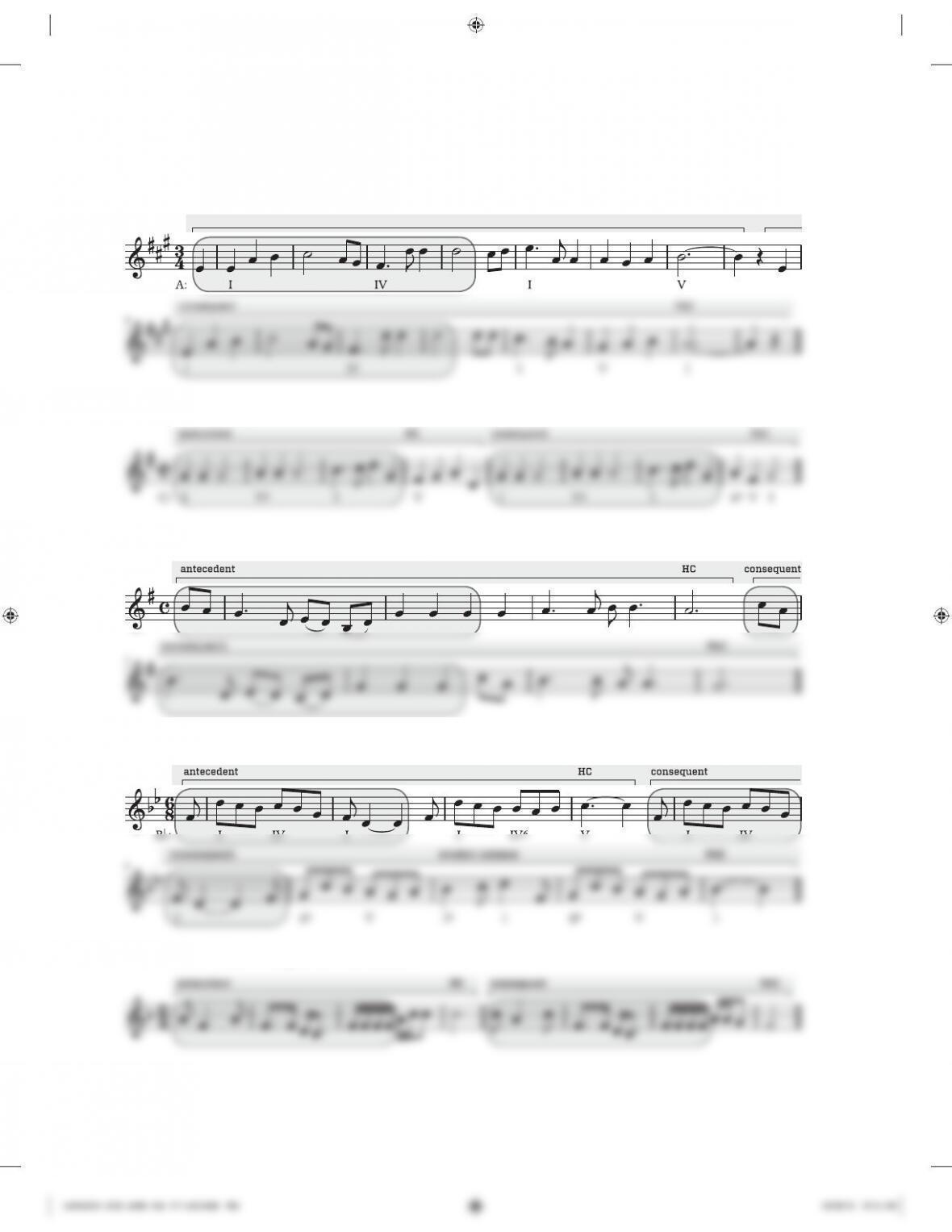
1. The following passages are each parallel periods.
482 | CHAPTER 36 | Periods and Other Phrase Pairs
• Circle the measures at the start of the antecedent and consequent that are the
same (or nearly the same, with only a slight variation).
a. “Home on the Range”
antecedent
HC
b. “Sur le pont d’Avignon”
c. “Roll the Cotton Down”
d. “My Bonnie Lies over the Ocean”
e. Wallace Willis, “Swing Low, Sweet Chariot”
NAME:
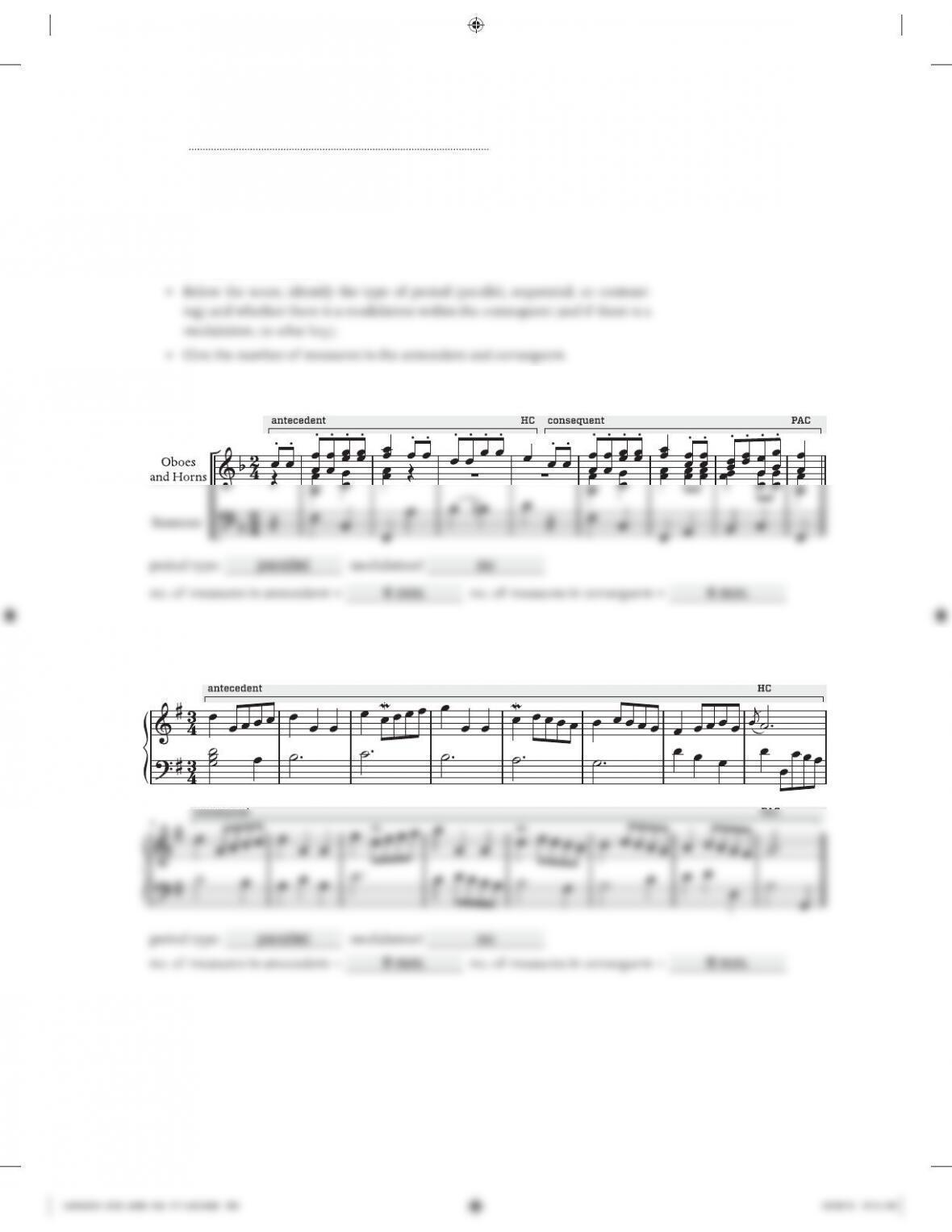
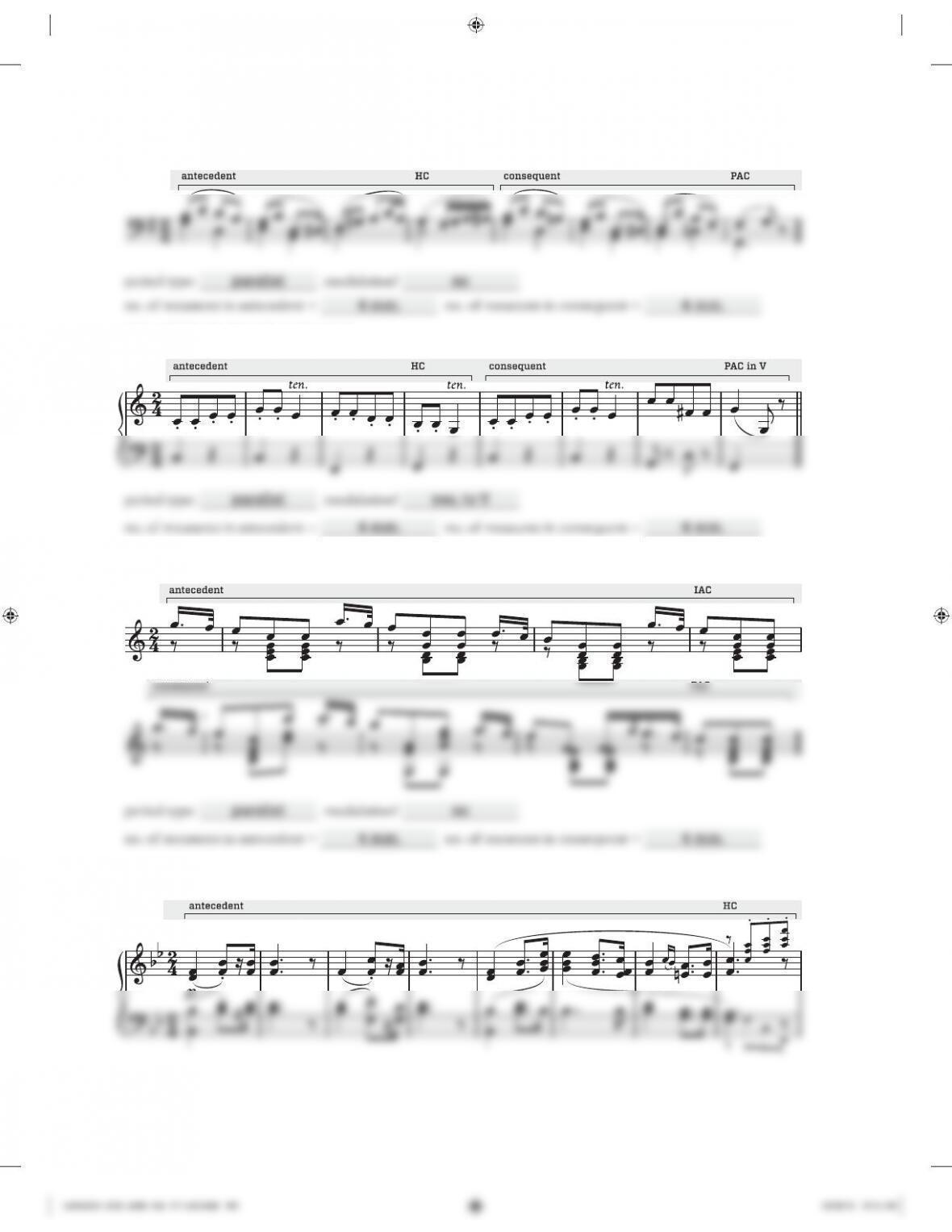
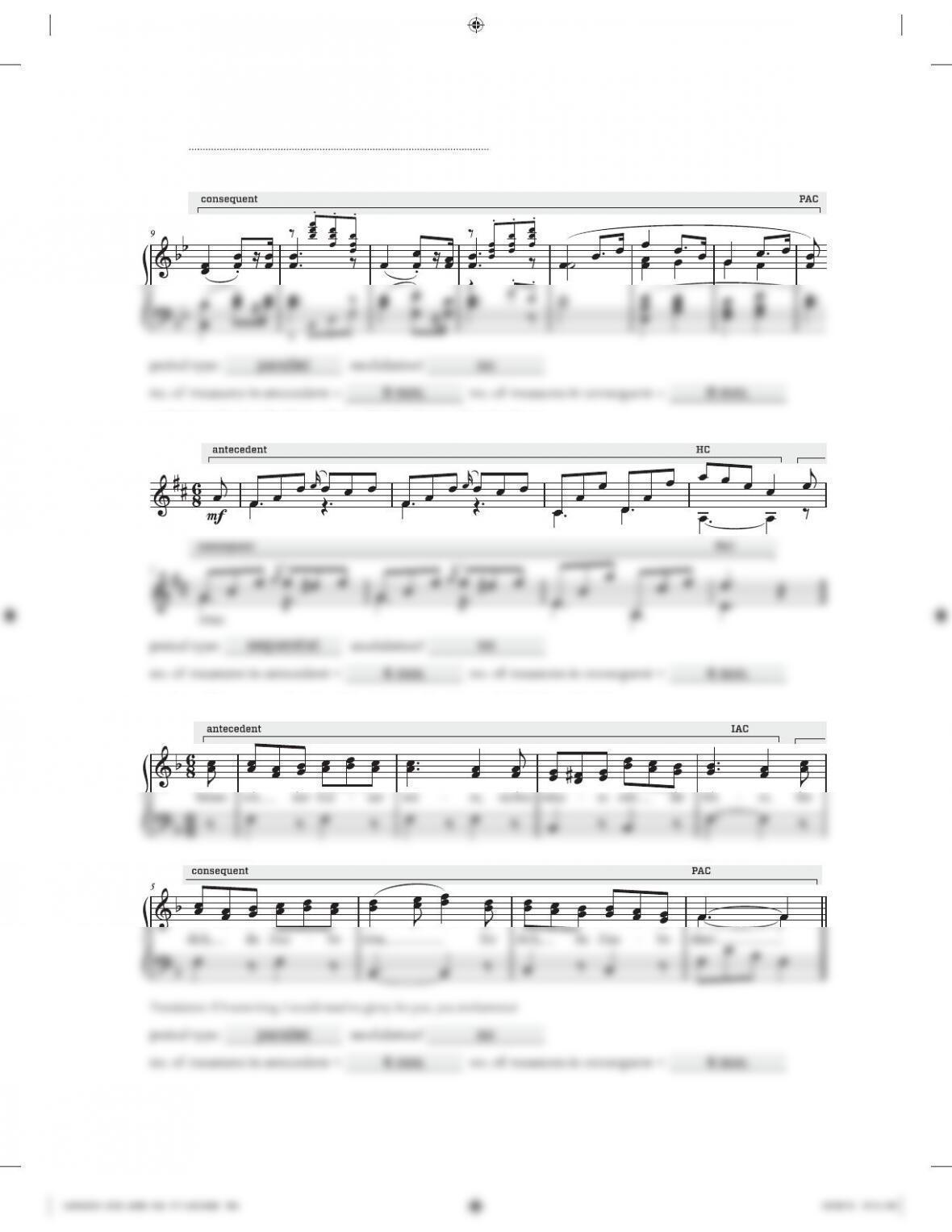
2. The following passages are each periods. Label as indicated.
• On the score, bracket and label the antecedent and consequent.
• Label the cadences, indicating the type of each. If there is a modulation, indicate
the key of the cadence.
a. W. A. Mozart, Divertimento, K. 213, iv
b. J. S. Bach, Minuet in G
484 | CHAPTER 36 | Periods and Other Phrase Pairs
c. Joseph Haydn, Piano Trio, Hob. XV/20, ii
d. Joseph Haydn, Symphony No. 94, ii
e. Justin Holland, Andante for Guitar
f. Richard Wagner, Bridal Chorus, from Lohengrin, Act III
NAME:
g. Ferdinando Carulli, Petites Bagatelles for Guitar, Op. 130, No. 3
h. Maria Theresia von Paradis, “Wenn ich der Kaiser wäre” (“If I Were King”)
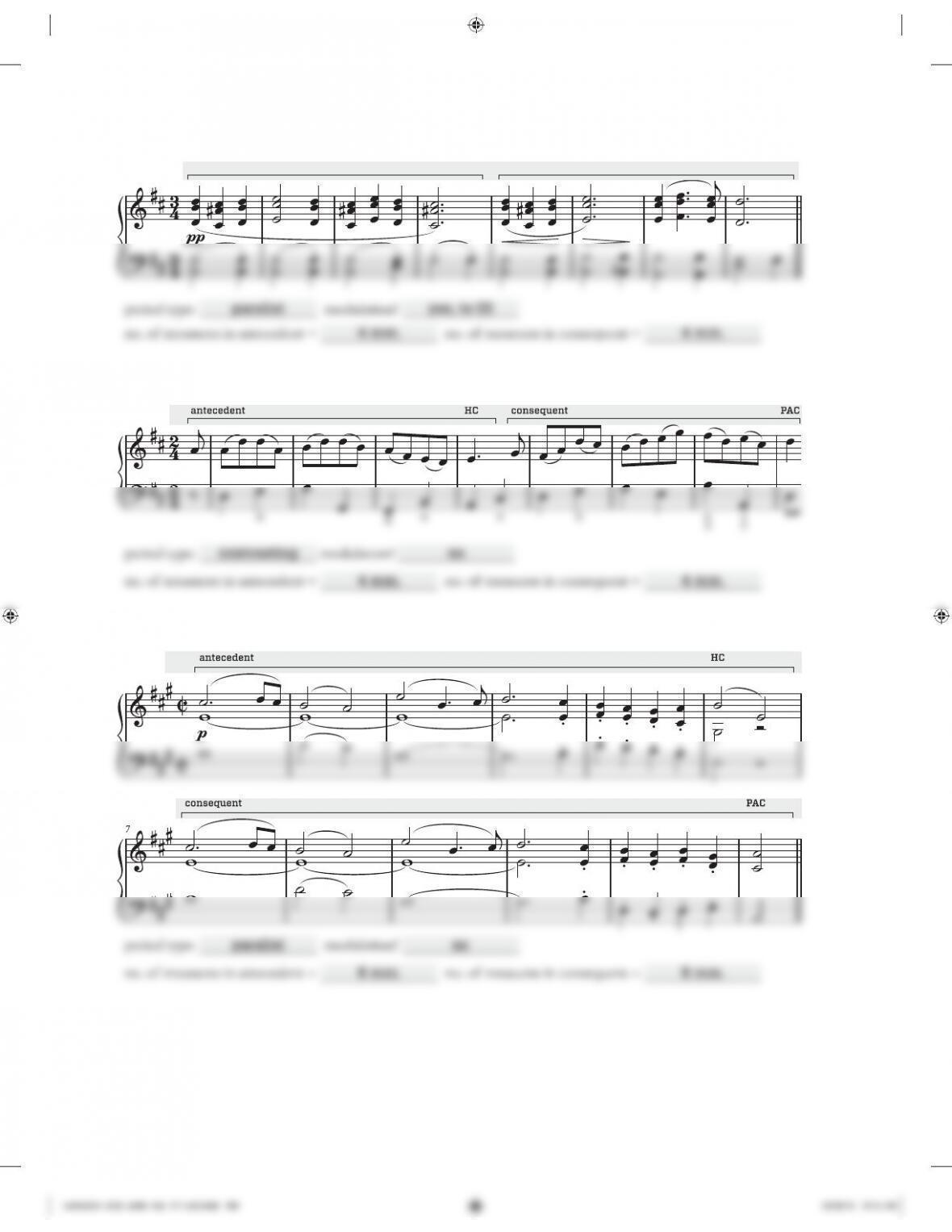
i. Franz Schubert, Waltz, Op. 18, No. 10
antecedent HC PAC in IIIconsequent
j. Ignatius Sancho, “Friendship Source of Joy”
k. Joseph Haydn, Symphony No. 64
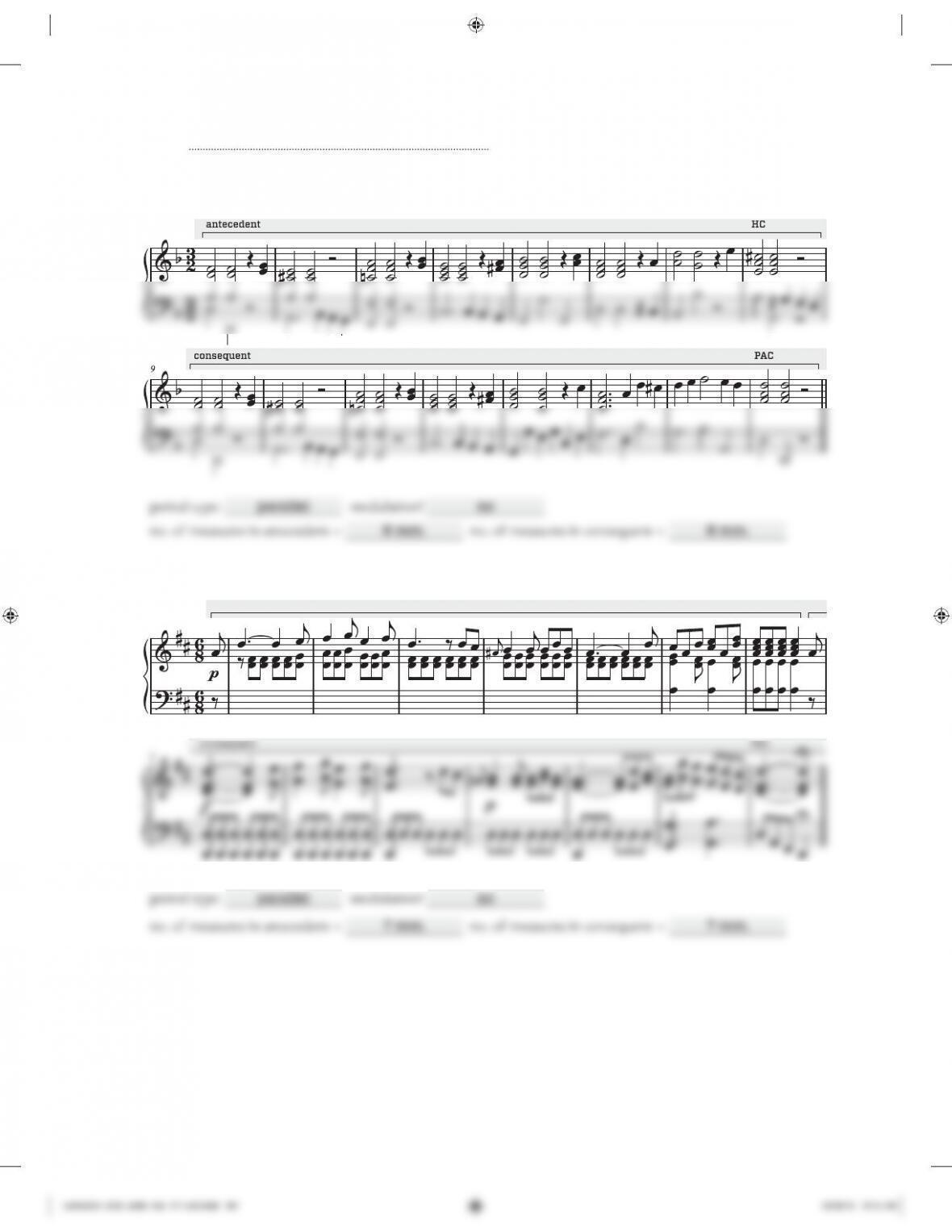
NAME:
l. G. F. Handel, Suite in D Minor, Sarabande, HWV 437
m. Étienne Méhul, Piano Sonata in D, Op. 1, i
antecedent HC
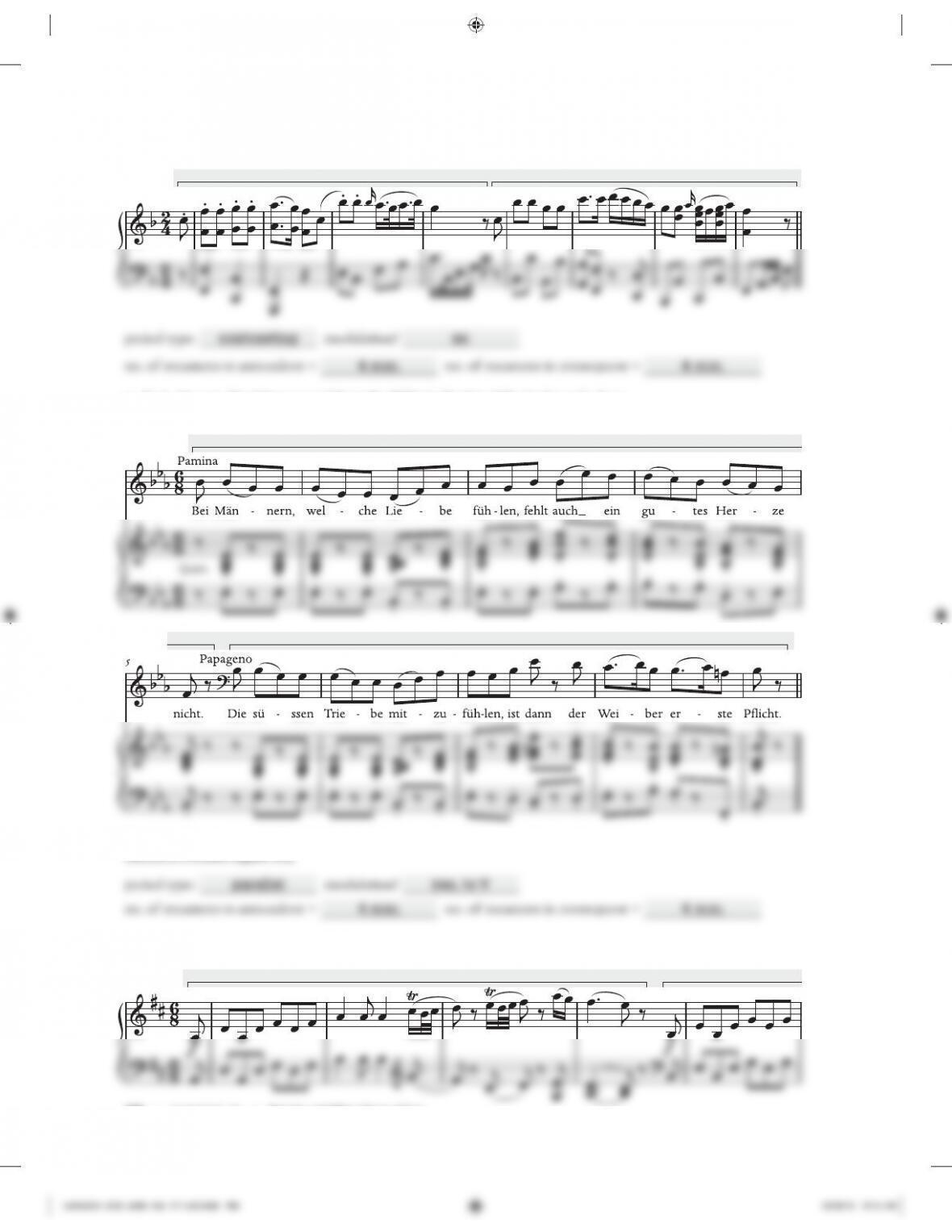
488 | CHAPTER 36 | Periods and Other Phrase Pairs
n. W. A. Mozart, “Ein Mädchen oder Weibchen” (arr. Beethoven, Op. 66, piano part only)
antecedent HC PACconsequent
o. W. A. Mozart, “Bei Männern welche Liebe fühlen” (“In Men Who Feel Love”), from
The Magic Flute
antecedent
consequent PAC in VHC
Translation: Pamina: In men who feel love, a good heart is not lacking. Papageno: To share that sweet
emotion is a woman’s highest duty.
p. W. A. Mozart, Piano Sonata in D, K. 576, i
antecedent HC consequent