B. Composition | 461
NAME:
A. QUESTIONS FOR REVIEW
1. What is a sentence? What are its sections?
2. What does a presentation consist of ? How does it differ from the segment that
follows it?
3. In a typical eight-measure sentence, how long is the presentation? How long is the
basic idea? How long is the repetition (or varied repetition) of the basic idea?
B. COMPOSITION
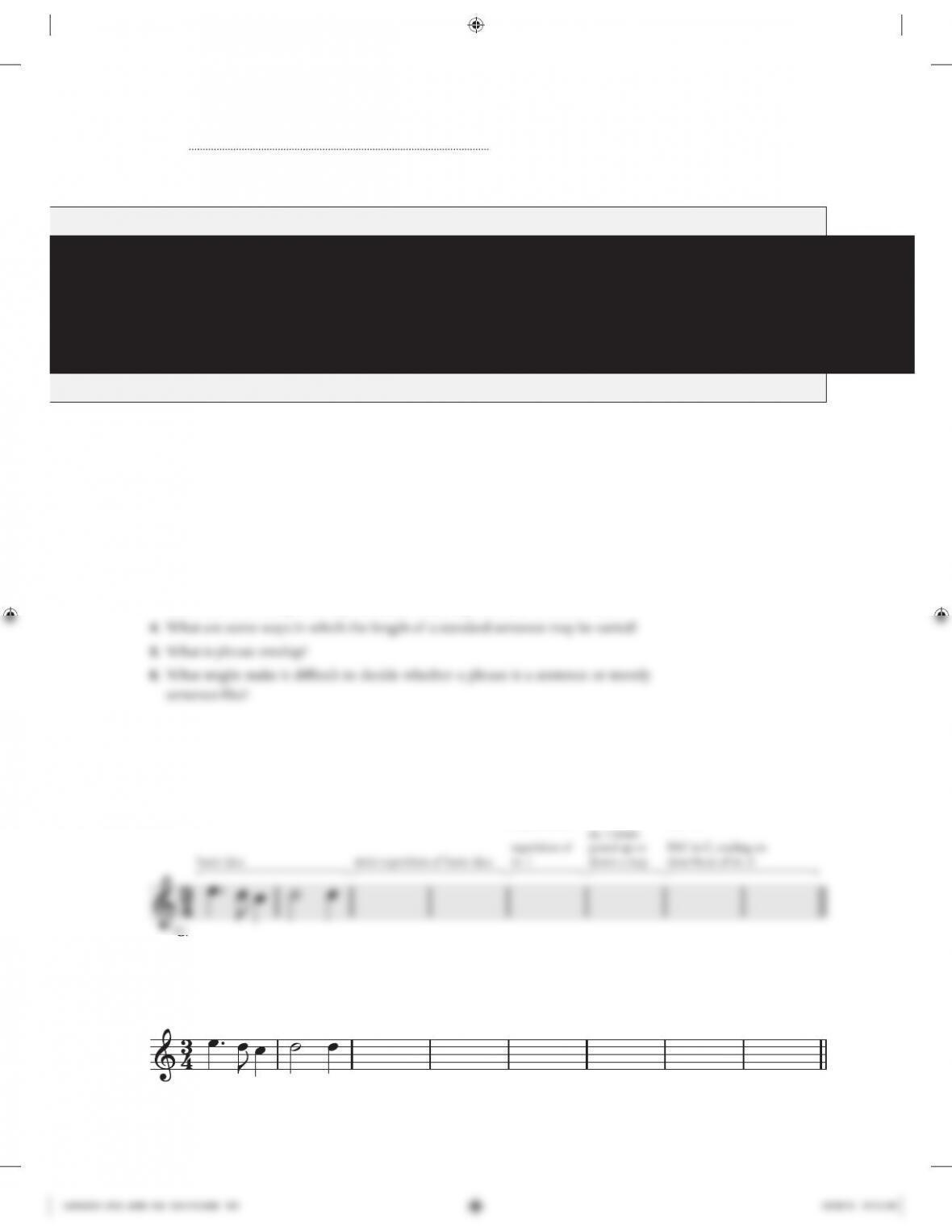
1. Compose melodies following the instructions given.
a.
presentation
continuation
fragmentation
m. 1 trans-
cadence
b. Same as (a), except that measures 3
–
4 should be a varied repetition of measures
1
–
2, with the same rhythm and melodic contour but transposed up or down a
scale step.
chapter
35 Sentences and
Other Phrase Types
462 | CHAPTER 35 | Sentences and Other Phrase Types
c. Same as (a), except that measures 3
–
4 should be a contrasting idea (not a repeti-
tion or variation of measures 1
–
2).
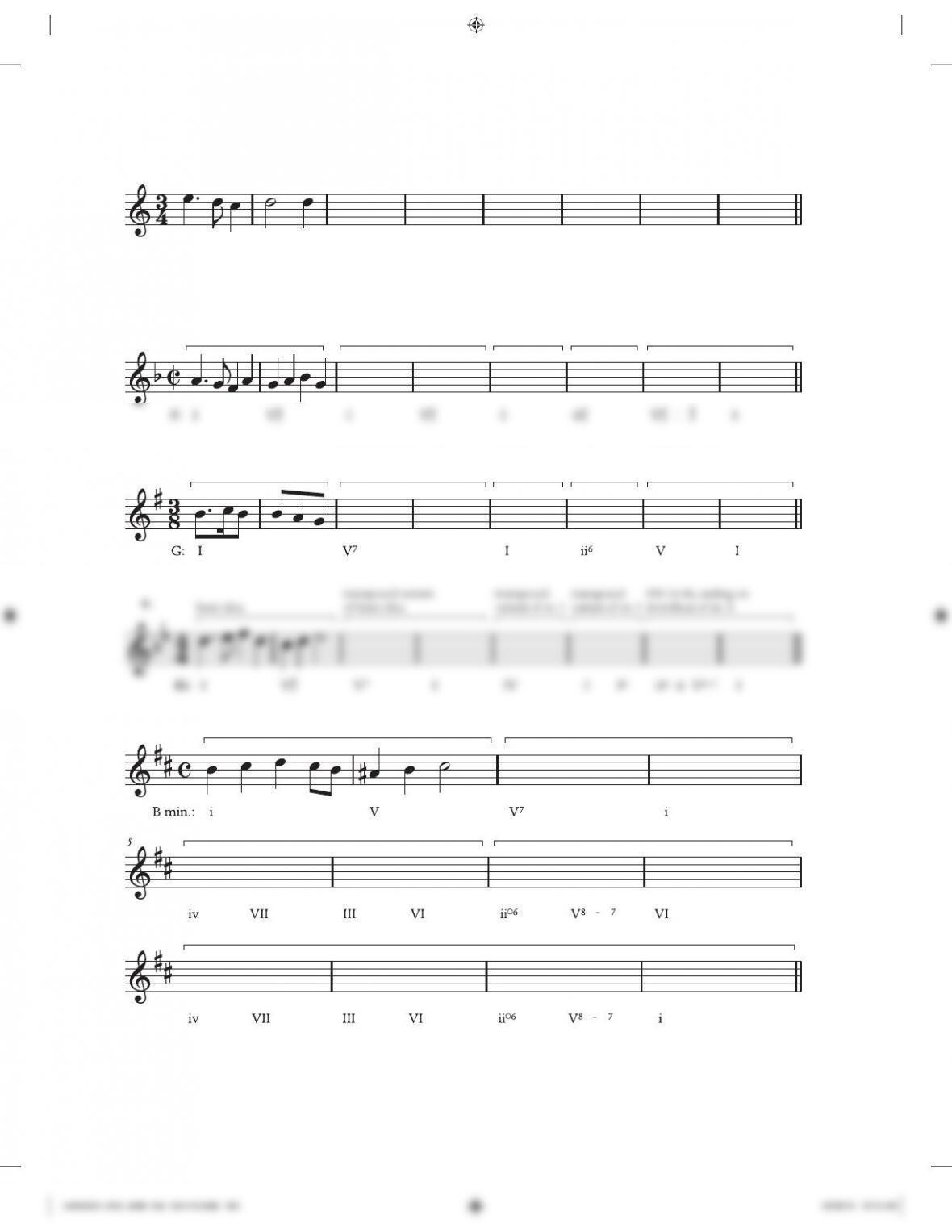
2. Compose melodies following the instructions given. In each case, make sure the
melody fits with the harmonies indicated by the Roman numerals.
a. strict repetition of basic ideabasic idea
repetition
of m. 1
m. 1
transposed
PAC in F, ending on
downbeat of m. 8
b. basic idea transposed up
or down a scale stepbasic idea
repetition
of m. 2
m. 2
transposed
PAC in G, ending on
downbeat of m. 8
transposed
transposed
PAC in B , ending on
d. basic idea transposed variant of basic idea
sequence deceptive cadence with tonic on downbeat of m. 8
repetition of mm. 5
–
8, varied at end to lead to PAC on downbeat of m. 12
9
B. Composition | 463
NAME:
e. transposed variant
of basic ideabasic idea
build momentum leading to PAC
ending on 2nd half of m. 4
f. basic idea (compose your own) transposed variant of basic idea sequence, build momentum . . .
. . . leading to evaded cadence in m. 8
repeat m. 7, then conclude with PAC
ending on downbeat of m. 10
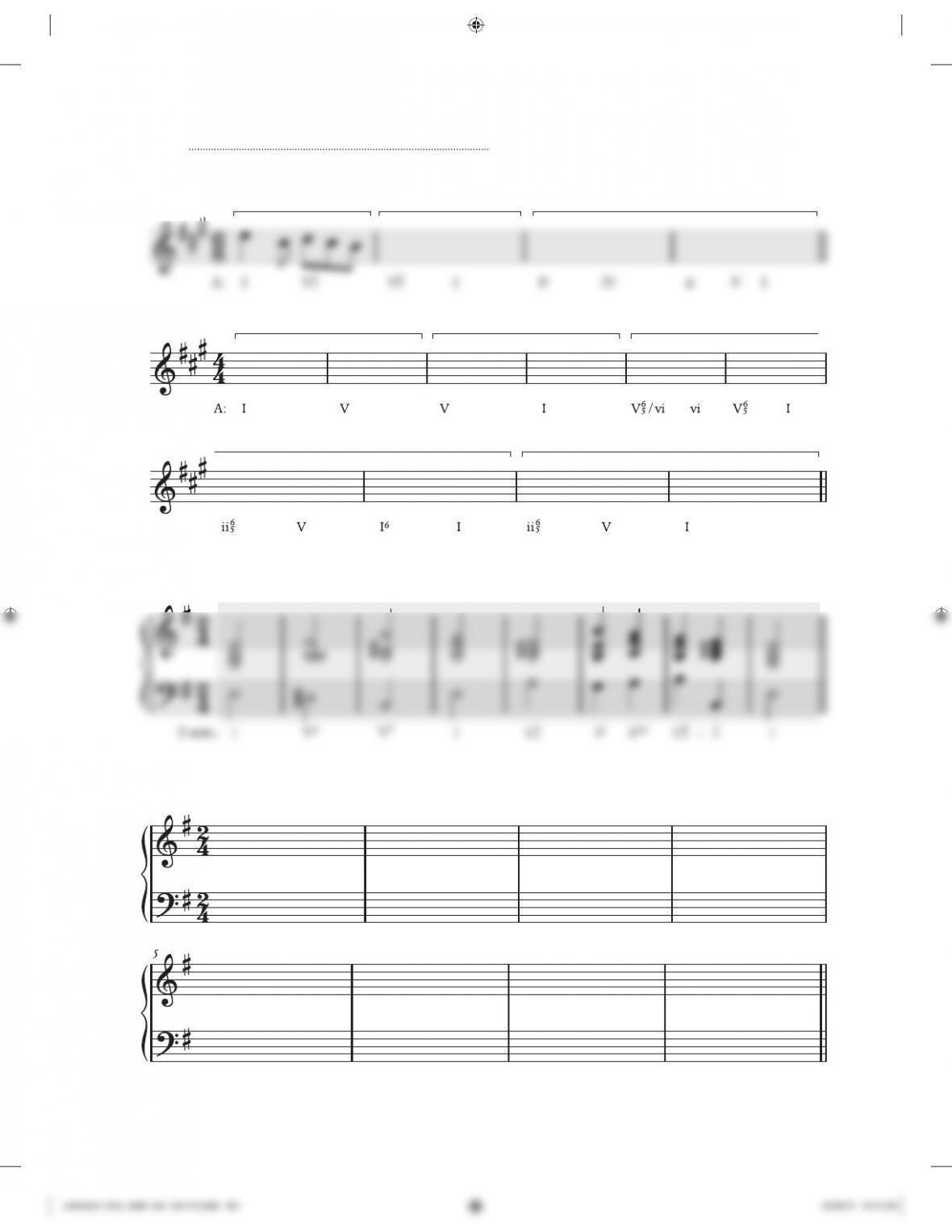
3. Compose a phrase in sentence form.
a. First, realize the Roman numerals in keyboard format:
b. Using the harmonies of the progression in (a) above, compose a short piece
in sentence form either for two instruments or for piano. The bass line can be
exactly the same as in (a) above, or it can be a variant of the bass line in (a).
7
464 | CHAPTER 35 | Sentences and Other Phrase Types
4. Below are the first two measures of a sentence from a string trio by Haydn.
Complete this passage in sentence form. It should be playable either by a trio or
by keyboard.
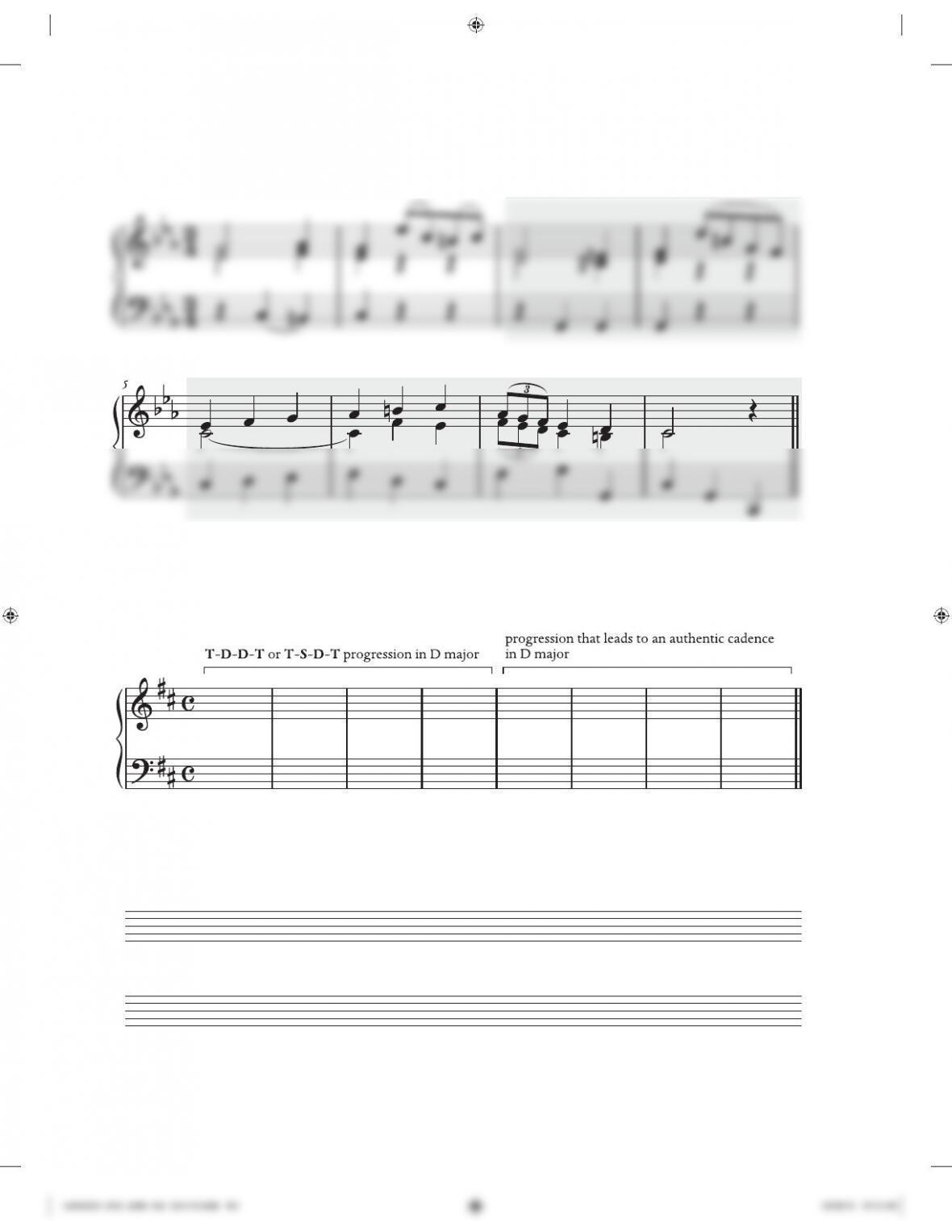
5. Compose a short passage in D major with a meter of your choice, for keyboard,
guitar, or an ensemble of your choice.
a. Start by composing an eight-measure harmonic model in four-part harmony,
keyboard format, following the outline below.
b. Compose a passage in sentence form based on the harmonic outline in (a), with
a basic idea repeated in varied form in measures 1
–
4, followed by a continuation
leading to a perfect authentic cadence in measures 5
–
8.
NAME:
C. ANALYSIS
1. The following passages are sentences.
• In the score, identify the presentation, the basic idea, the repetition of the basic
idea, and the continuation.
• Identify the type and key of the cadence at the end.
• On the blank lines below the staff, describe features of repetition, variation, and
continuation.
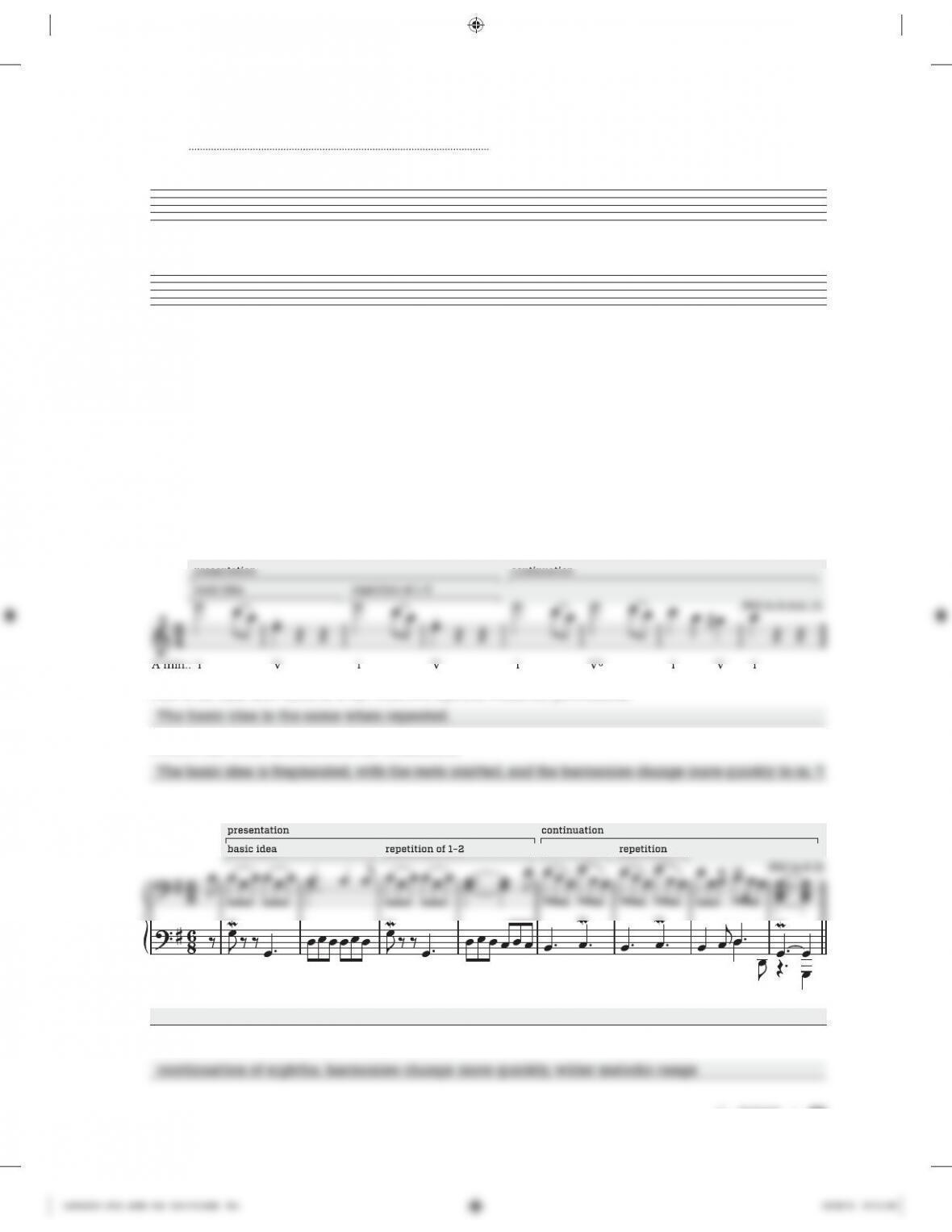
a. Joseph Haydn, Quartet Op. 2, No. 1, ii
How is the basic idea varied (if at all) when it is repeated within the presentation?
Features that create momentum in the continuation:
b. Louis-Claude Daquin, “La guitare”
How is the basic idea varied (if at all) when it is repeated within the presentation?
slight rhythmic differences and bass at end of m. 4
Features that create momentum in the continuation:
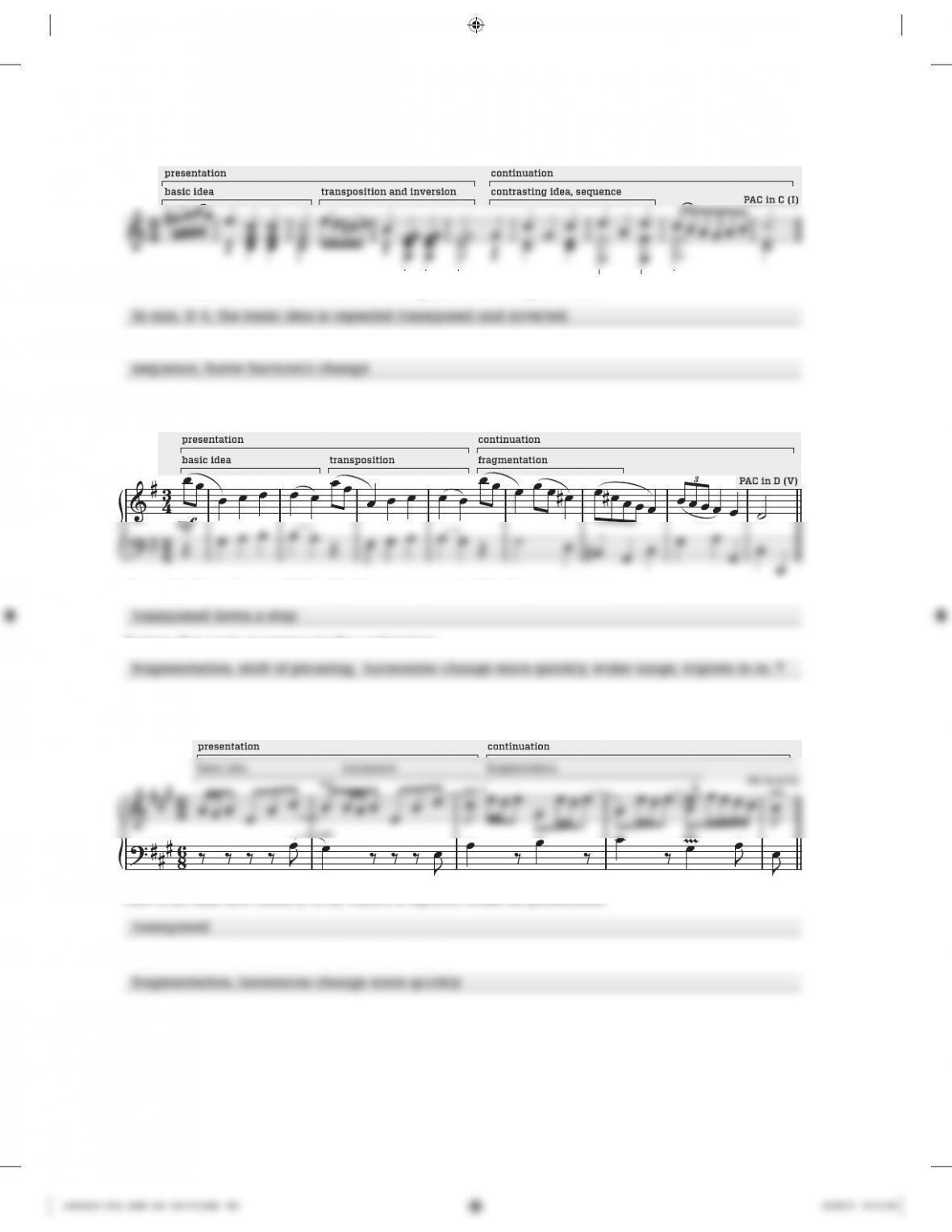
c. Fernando Sor, Grand Sonata for Guitar, Op. 22, Minuet
How is the basic idea varied (if at all) when it is repeated within the presentation?
Features that create momentum in the continuation:
d. W. A. Mozart, Minuet, K. 1
How is the basic idea varied (if at all) when it is repeated within the presentation?
Features that create momentum in the continuation:
e. François Couperin, “Les brinborions”
How is the basic idea varied (if at all) when it is repeated within the presentation?
Features that create momentum in the continuation:
C. Analysis | 467
NAME:
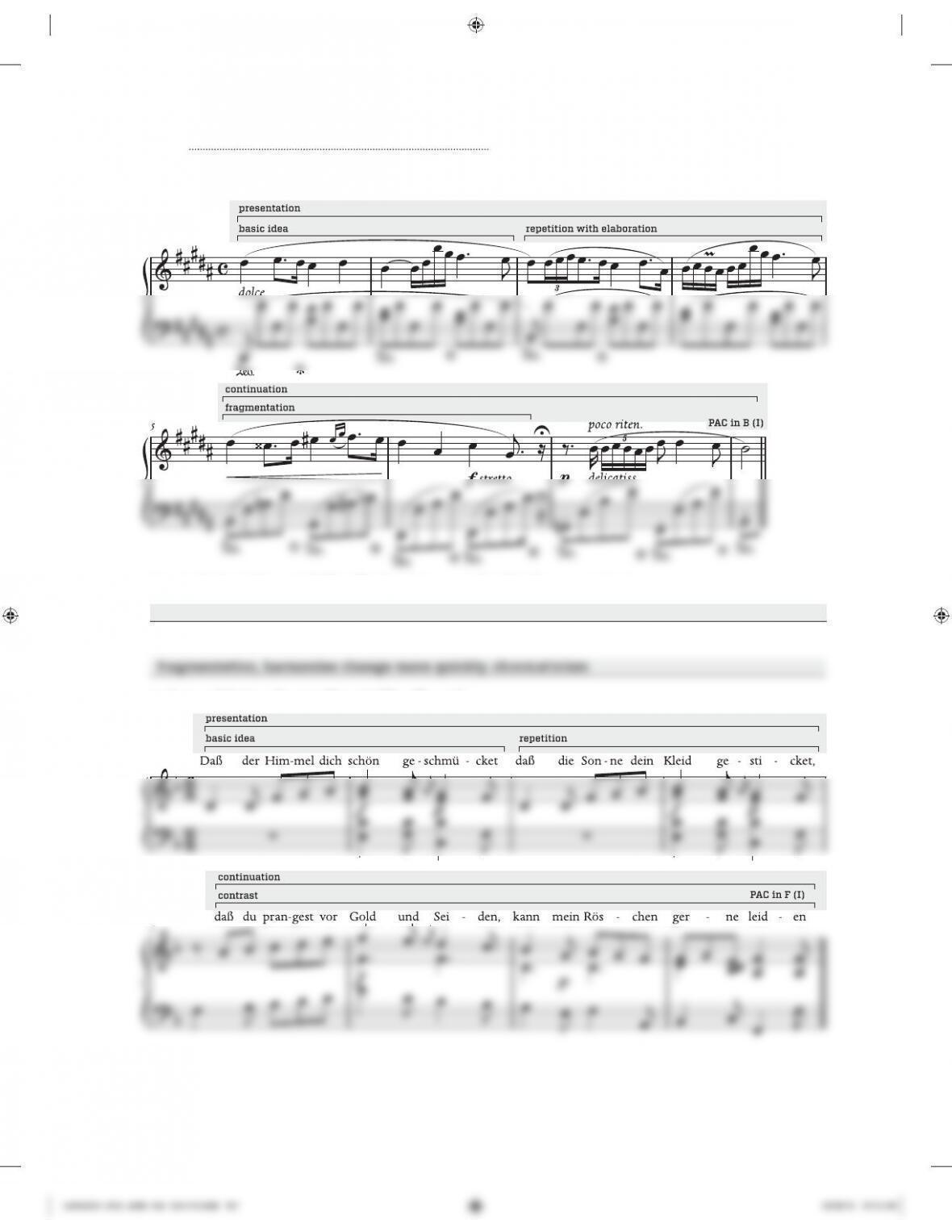
f. Frédéric Chopin, Nocturne, Op. 32, No. 1
How is the basic idea varied (if at all) when it is repeated within the presentation?
elaborated
Features that create momentum in the continuation:
g. Corona Schröter, “An eine Blume” (“To a Flower”)
Translation: As the heavens have so beautifully adorned you, as the sun sews your garments, as you glitter with
gold and silk, may my rose gladly suffer.
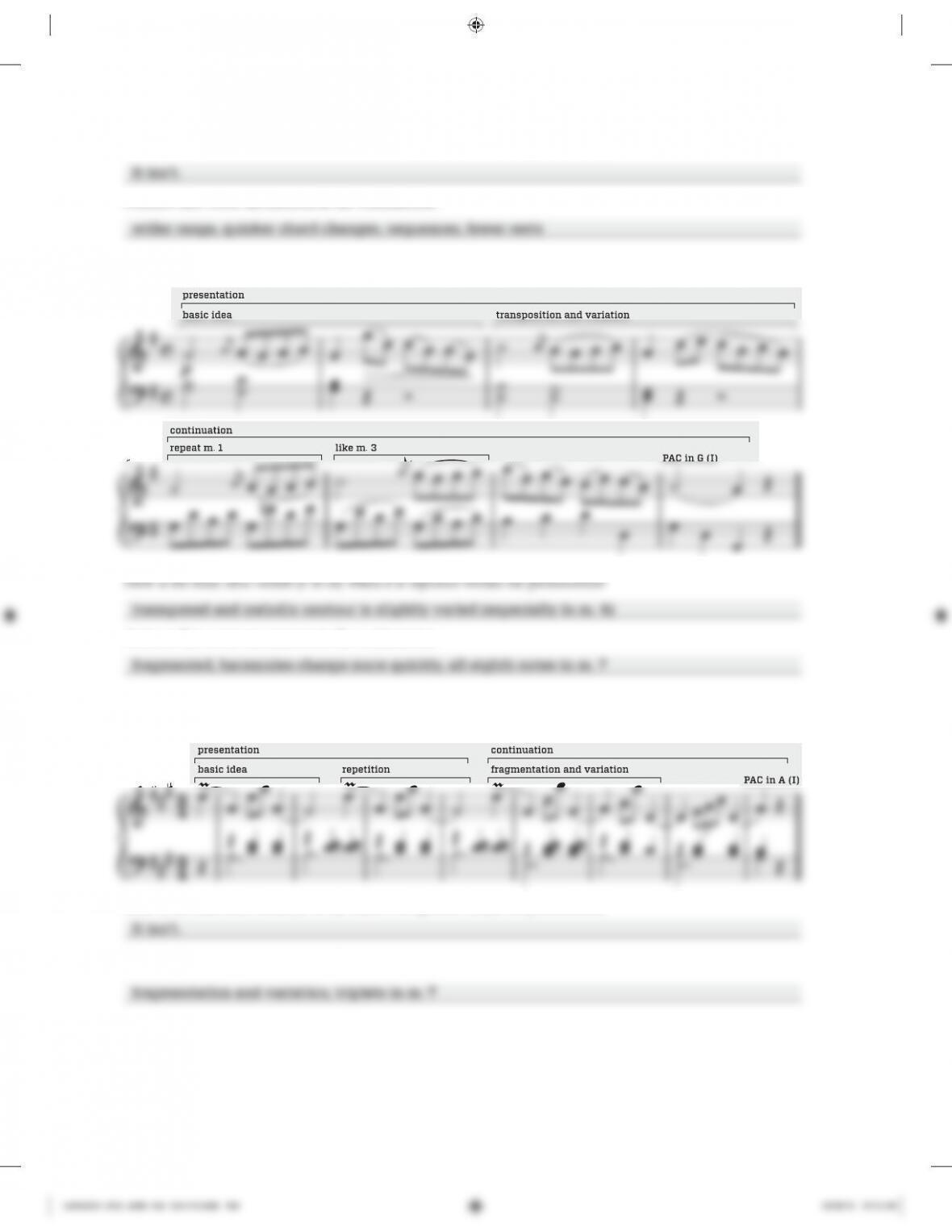
How is the basic idea varied (if at all) when it is repeated within the presentation?
Features that create momentum in the continuation:
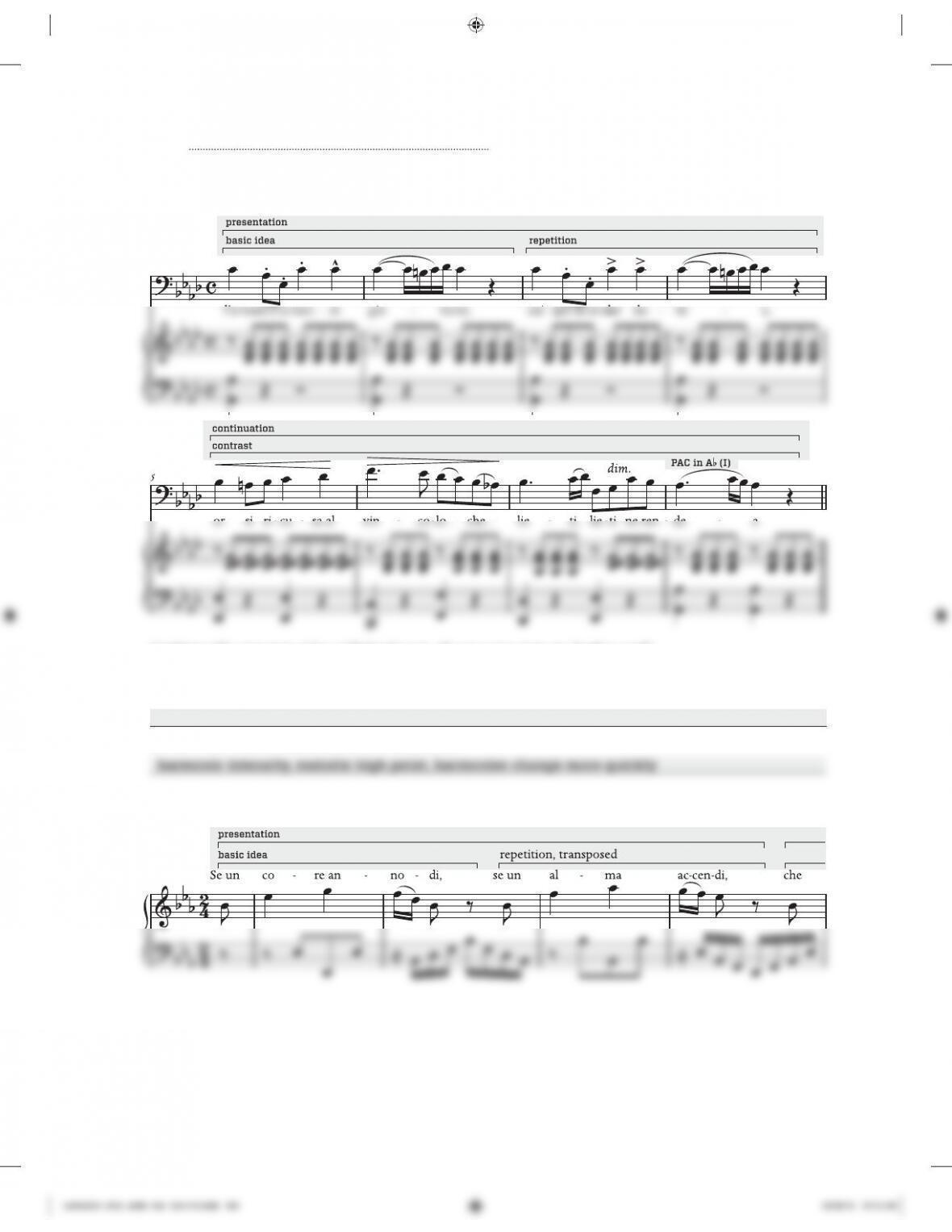
h. Ludwig van Beethoven, Sonatina in G, Anh. 5, i
Features that create momentum in the continuation:
i. Franz Schubert, Waltz, Op. 9, No. 17
How is the basic idea varied (if at all) when it is repeated within the presentation?
Features that create momentum in the continuation:
C. Analysis | 469
NAME:
j. Giuseppe Verdi, “Pura siccome un angelo” (“As Pure as an Angel”), from La Traviata
Translation: [The young man], in love and beloved in turn, who was soon to marry my daughter, would
now withdraw his pledge and ruin our happiness.
How is the basic idea varied (if at all) when it is repeated within the presentation?
It isn’t.
Features that create momentum in the continuation:
k. Domenico Sarro, Achille in Sciro
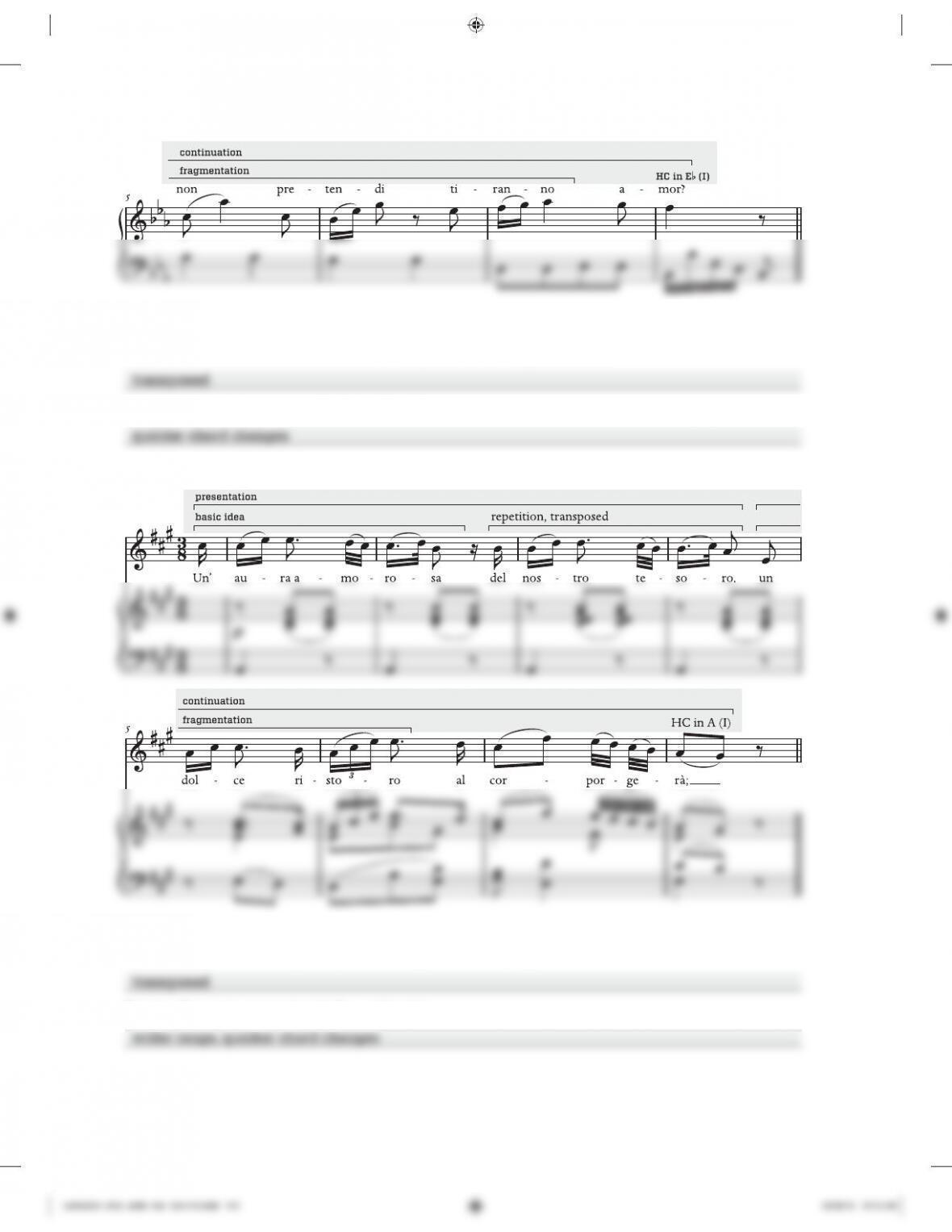
Translation: If you tie a heart in knots, if you set a soul aame, oh tyrannical love, is there something you don’t
demand from me?
How is the basic idea varied (if at all) when it is repeated within the presentation?
Features that create momentum in the continuation:
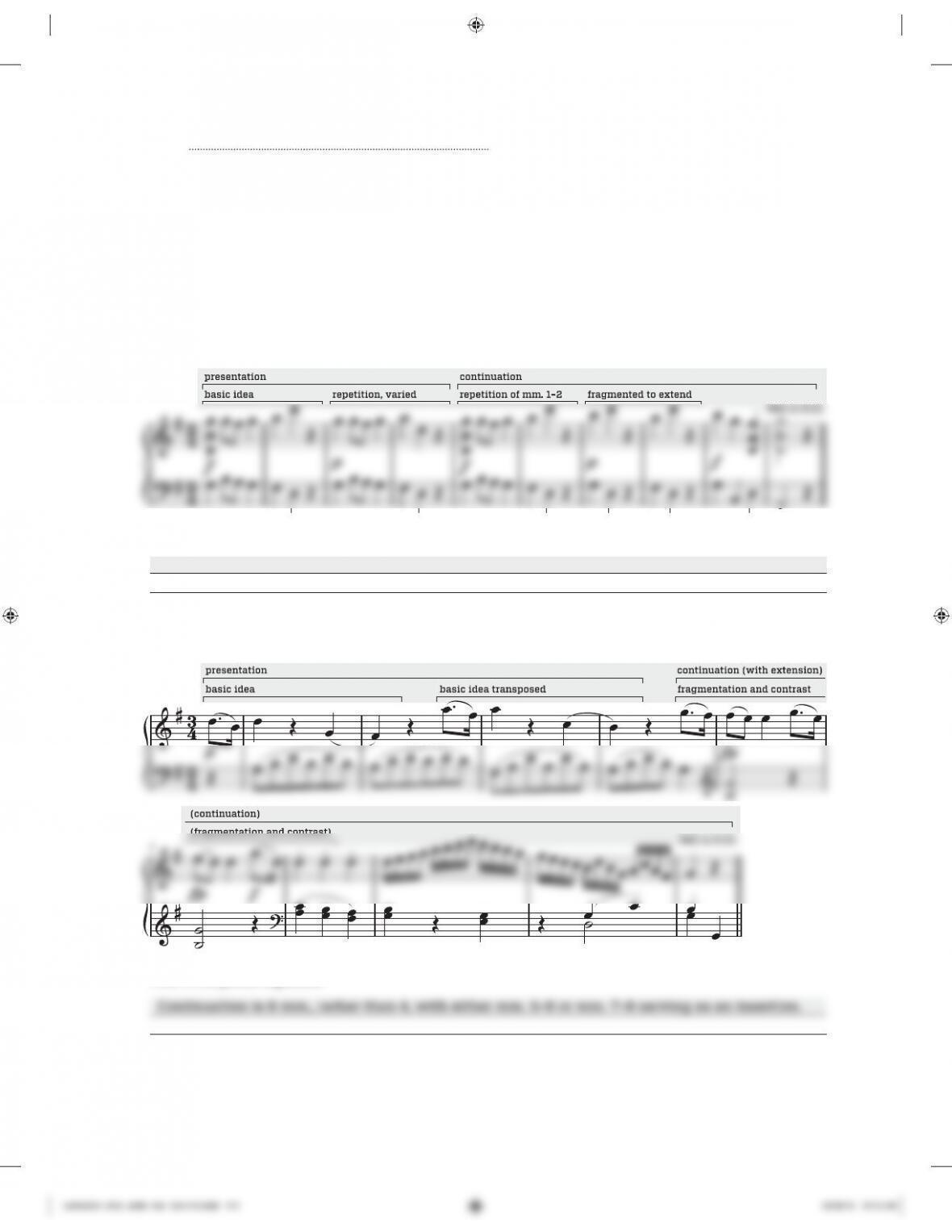
l. W. A. Mozart, “Un aura amorosa,” from Così fan tutte
Translation: A loving aura from my beloved will sweetly refresh my heart.
How is the basic idea varied (if at all) when it is repeated within the presentation?
Features that create momentum in the continuation:
C. Analysis | 471
NAME:
2. The following passages are sentences that are expanded from the eight-measure
model.
• On the score, identify the presentation (including the basic idea and its repetition)
and continuation.
• Label the type and key of the cadence at the end.
• On the blank lines below the staff, describe how the phrase is expanded.
a. W. A. Mozart, Symphony No. 15, K. 124, iii (violins and basses only)
How is this phrase expanded?
fragmented to add 2 measures
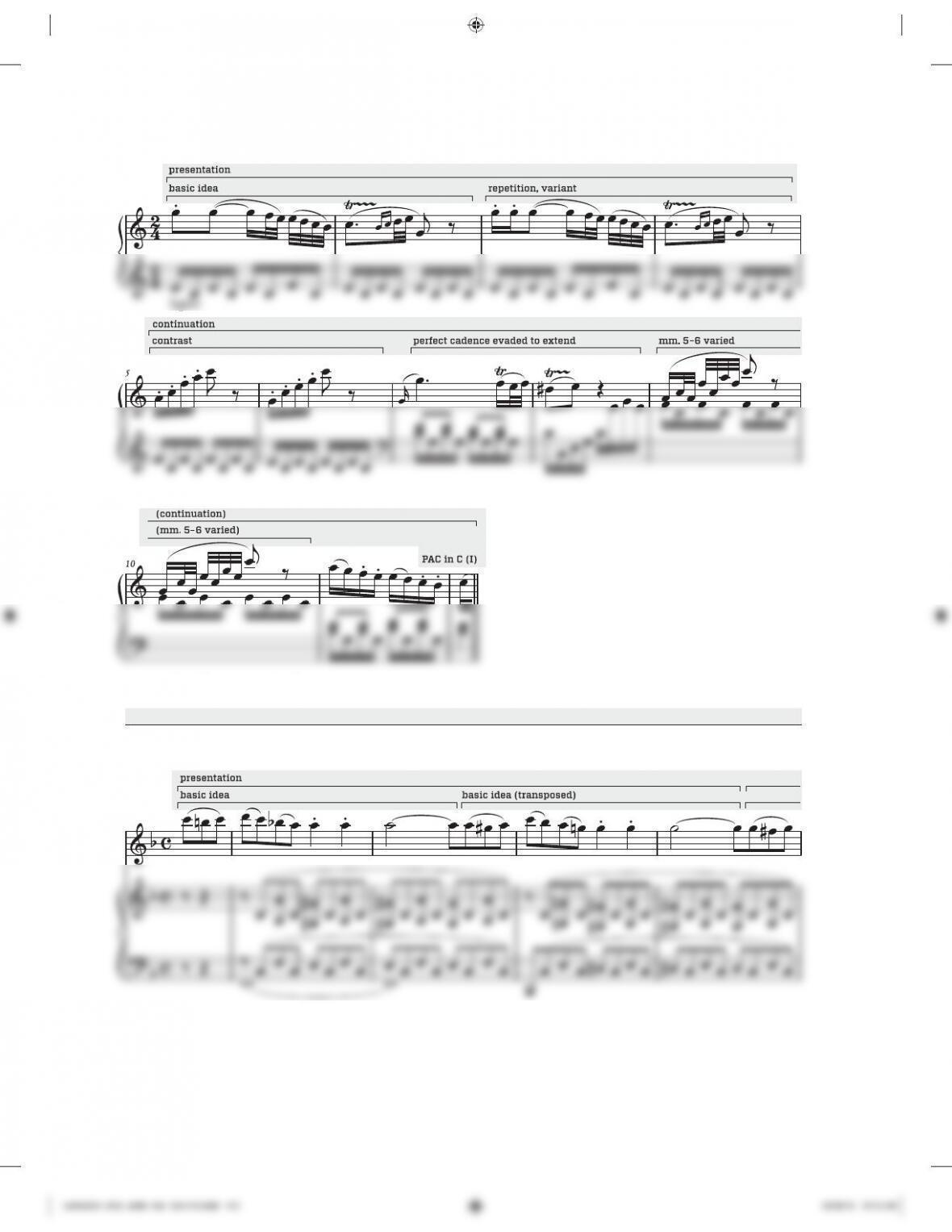
b. W. A. Mozart, Piano Sonata in G, K. 283, i
How is this phrase expanded?
472 | CHAPTER 35 | Sentences and Other Phrase Types
c. W. A. Mozart, Piano Sonata in C, K. 330, i
How is this phrase expanded?
Evaded cadence extends, leading to varied repetition of mm. 5
–
6 and the second cadence.
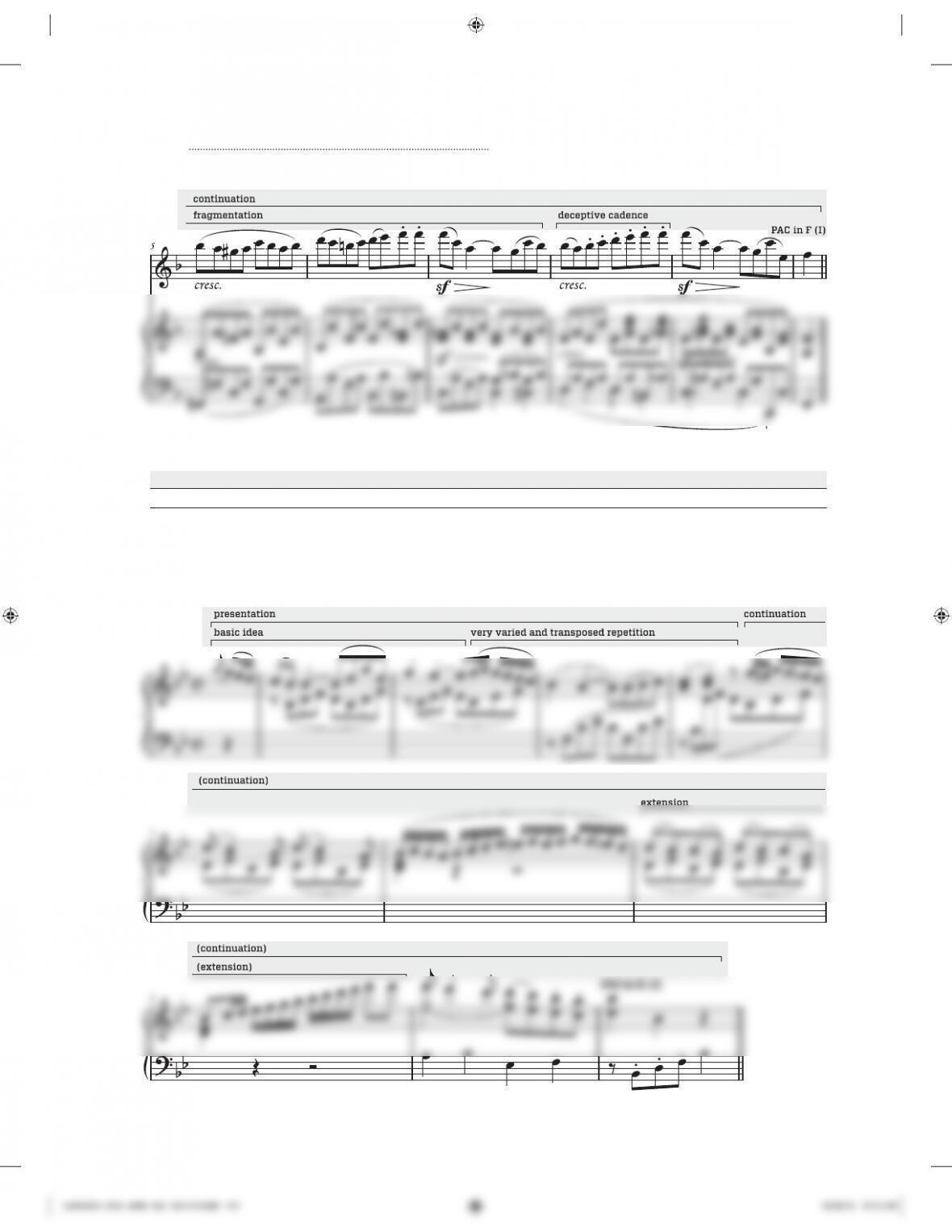
d. Ludwig van Beethoven, Sonata for Violin and Piano, Op. 24 (“Spring”), iv
C. Analysis | 473
NAME:
How is this phrase expanded?
Deceptive cadence requires 2 more measures.
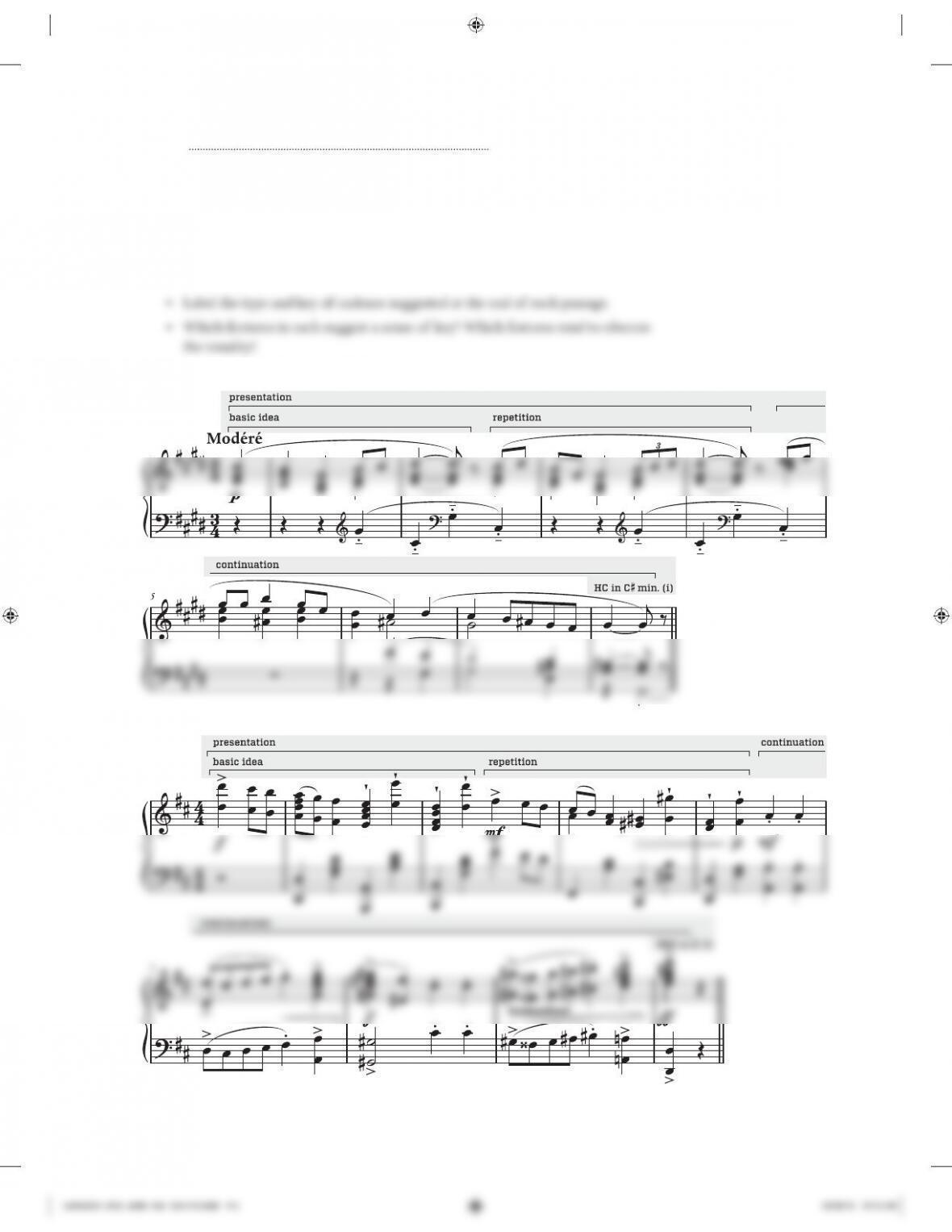
3. Analyze the following excerpts by labeling the parts of the phrase and cadences on
the score, then answer the questions below the staff.
a. W. A. Mozart, Piano Sonata in Bb, K. 333, i
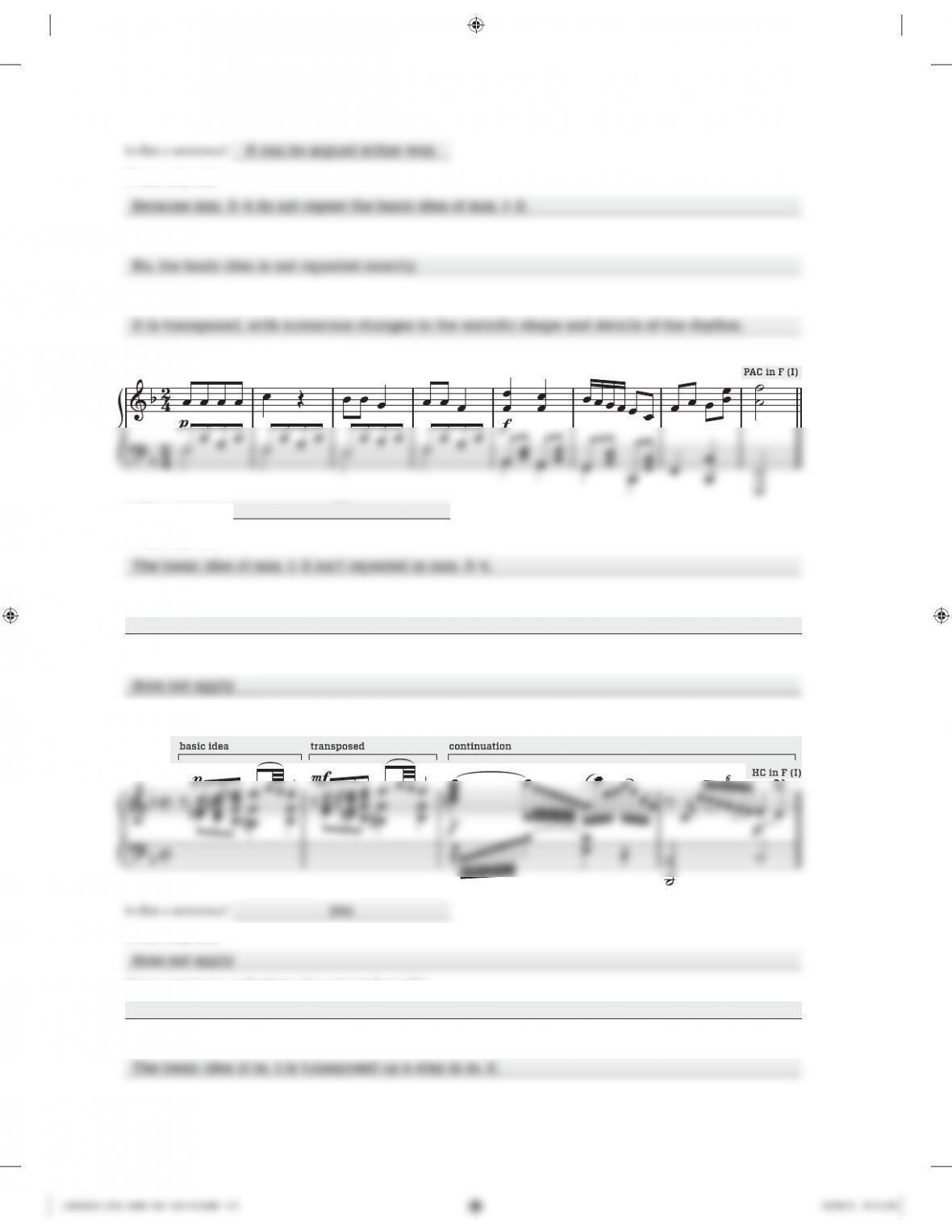
If not, why not?
If it is a sentence, is the basic idea repeated exactly?
If not, how is it varied?
b. Stephen Foster, “Some Folks Like to Sigh”
Is this a sentence? no
If not, why not?
If it is a sentence, is the basic idea repeated exactly?
does not apply
If not, how is it varied?
c. C. P. E. Bach, Sonata for Keyboard in F, i
If not, why not?
If it is a sentence, is the basic idea repeated exactly?
no
If not, how is it varied?
C. Analysis | 475
NAME:
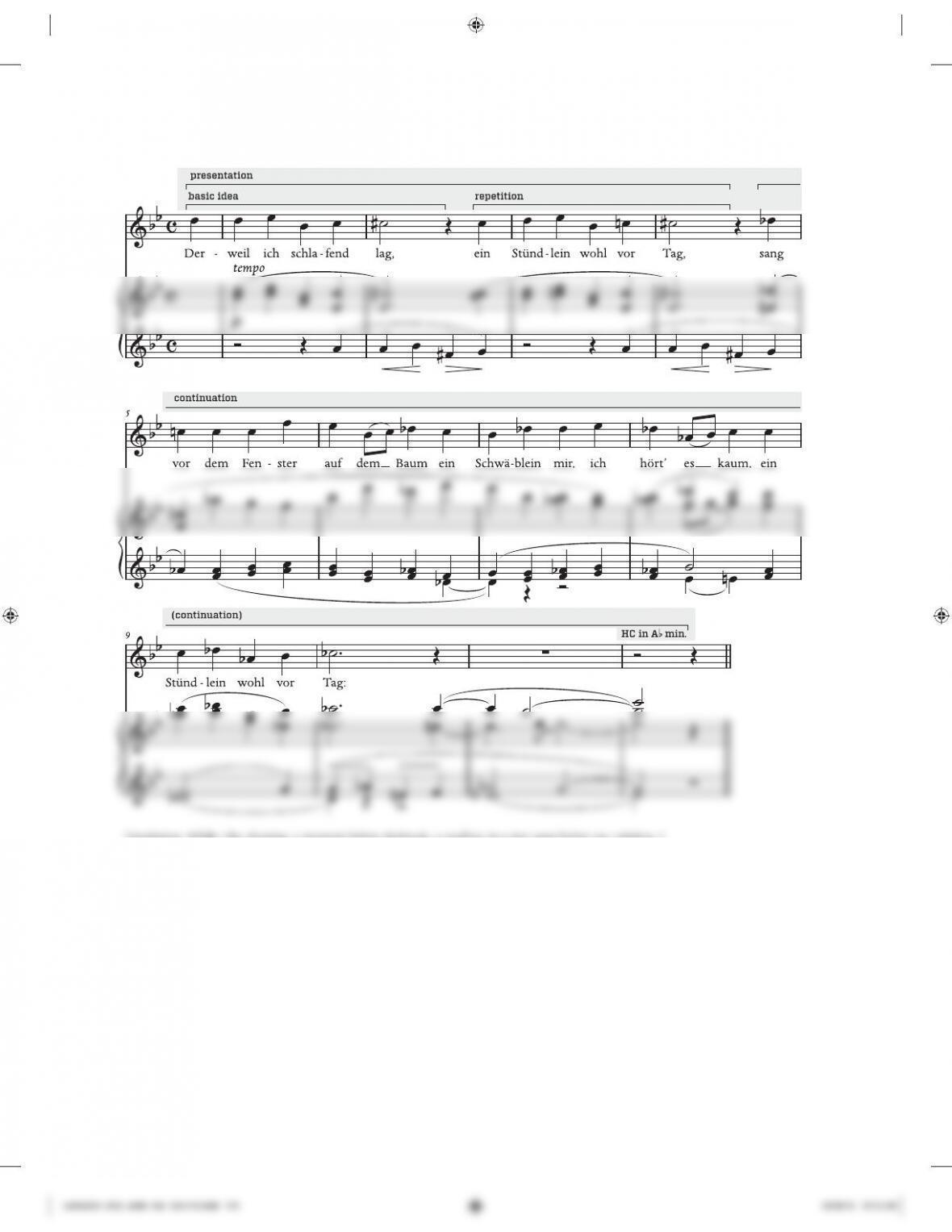
4. The following passages
—
all composed during the later nineteenth century or early
twentieth century
—
treat harmony and tonality freely. Each of these are either
sentences or sentence-like (see also Chapter 47).
• On the score for each passage, label the basic idea, the repetition of the basic
idea, the presentation, and the continuation.
a. Maurice Ravel, Menuet in C# Minor
b. Sergey Prokofiev, Gavotte from Classical Symphony, Op. 25
476 | CHAPTER 35 | Sentences and Other Phrase Types
c. Hugo Wolf, “Ein Stündlein wohl vor Tag,” from Mörike Lieder
Translation: While I lay sleeping, a moment before daybreak, a swallow in a tree sang before my window, I
barely could hear it.