B. Notating Chromatic Pivot Chords | 445
NAME:
A. QUESTIONS FOR REVIEW
1. What are distantly related keys?
2. What are some examples of chromatic pivot chords?
3. What is a common- tone modulation?
B. NOTATING CHROMATIC PIVOT CHORDS
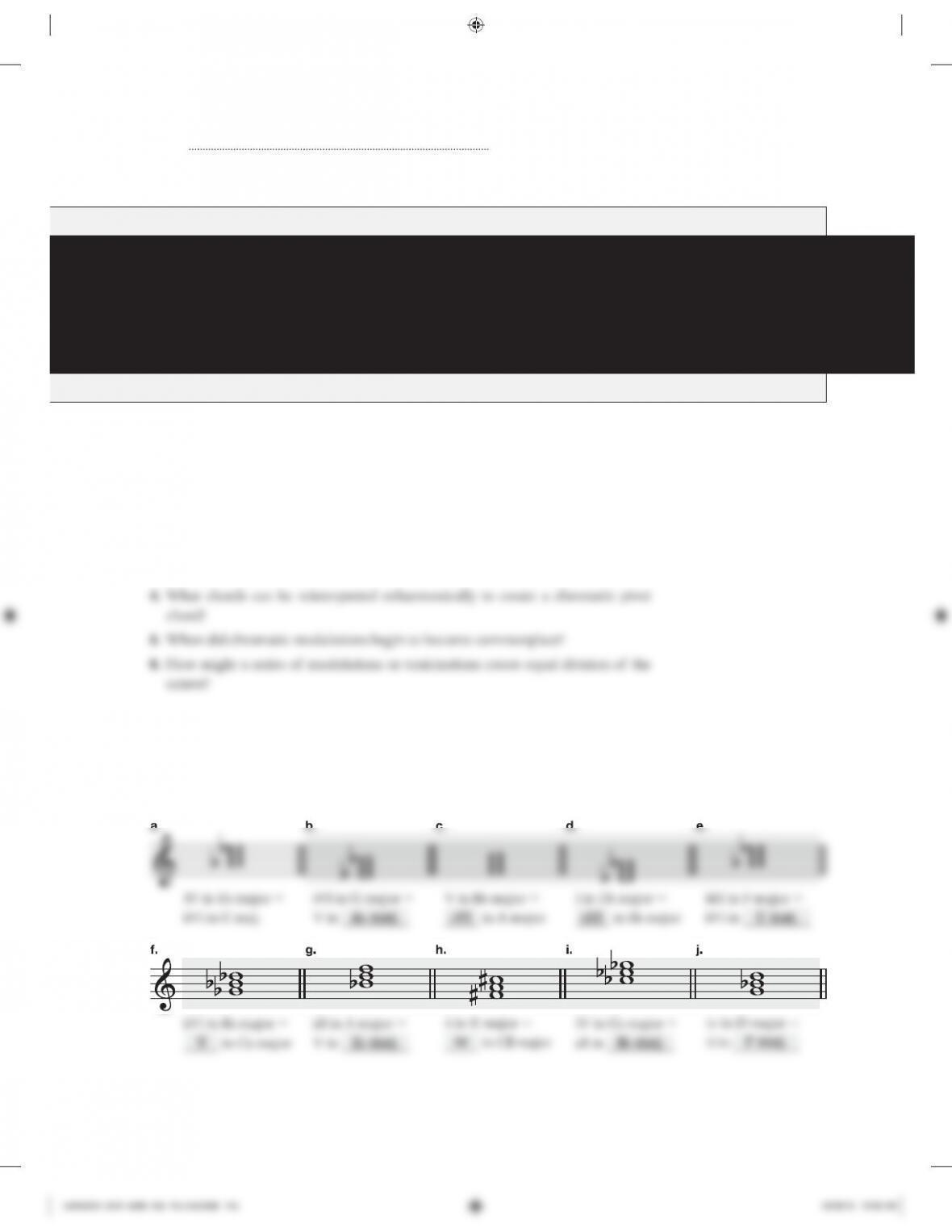
1. Pivot chords involving mixture: Write the indicated chord, and complete the chord
identification below the sta.
chapter
34 Chromatic Modulation
446 | CHAPTER 34 | Chromatic Modulation
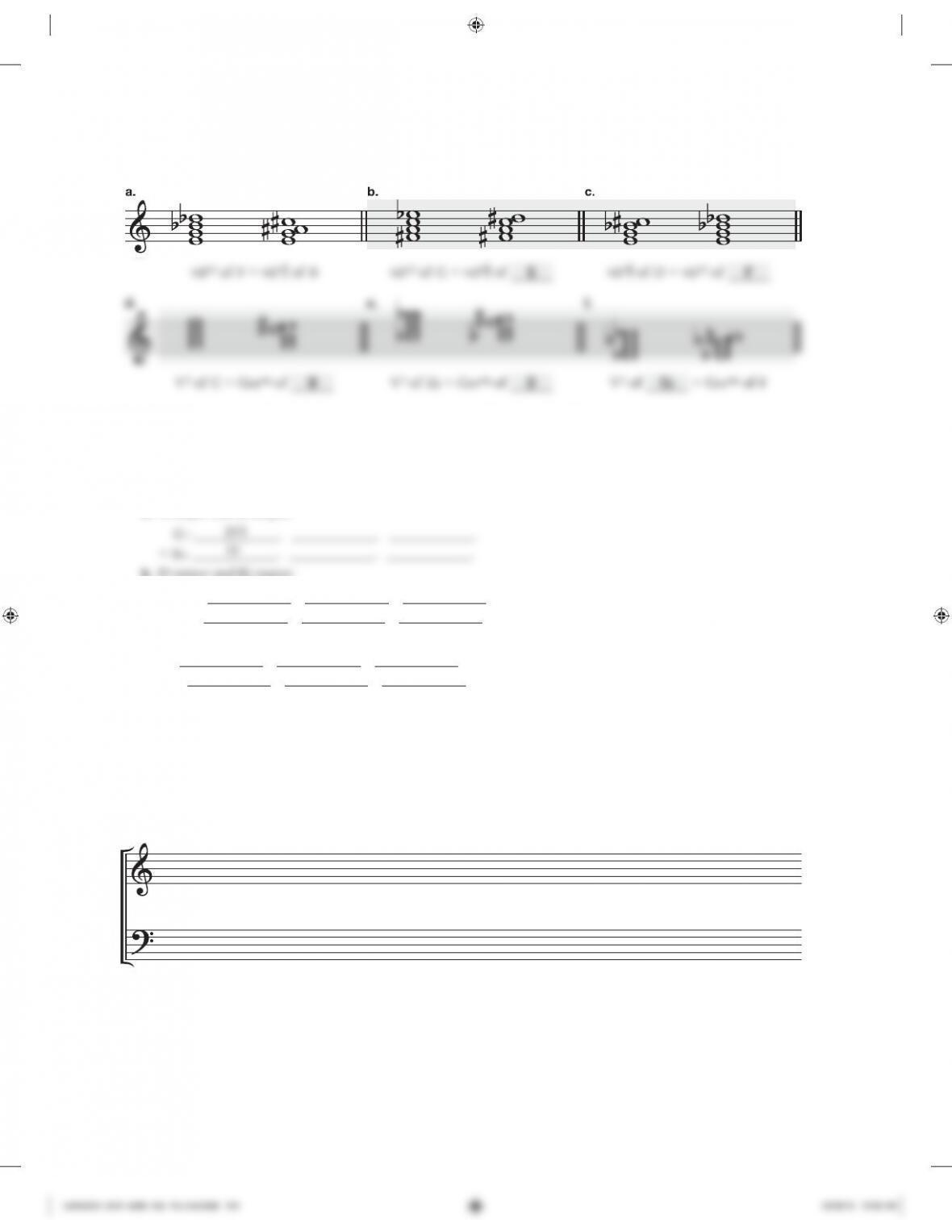
2. Pivot chords involving enharmonic reinterpretation: Write the pairs of enharmonically
equivalent chords, and complete the chord identification below the sta.
3. Name at least three chords that can be used as pivot chords between the following
pairs of keys.
• Indicate the Roman numeral of the chord in each key.
• Circle any chord that involves enharmonic reinterpretation.
a. G major and Bb major:
b. D minor and Eb major:
D min.: . . .
= Eb: . . .
c. Ab major and F major:
Ab: . . .
= F: . . .
4. Compose a short progression that modulates between one of the pairs of keys
listed above in question (3).
• The progression should be two or three measures long, in SATB format.
• Write a time signature and the key signature of the starting key.
• Modulate between the two keys using one of the chromatic pivot chords
identified above.
C. Realizing Roman Numerals | 447
NAME:
C. REALIZING ROMAN NUMERALS
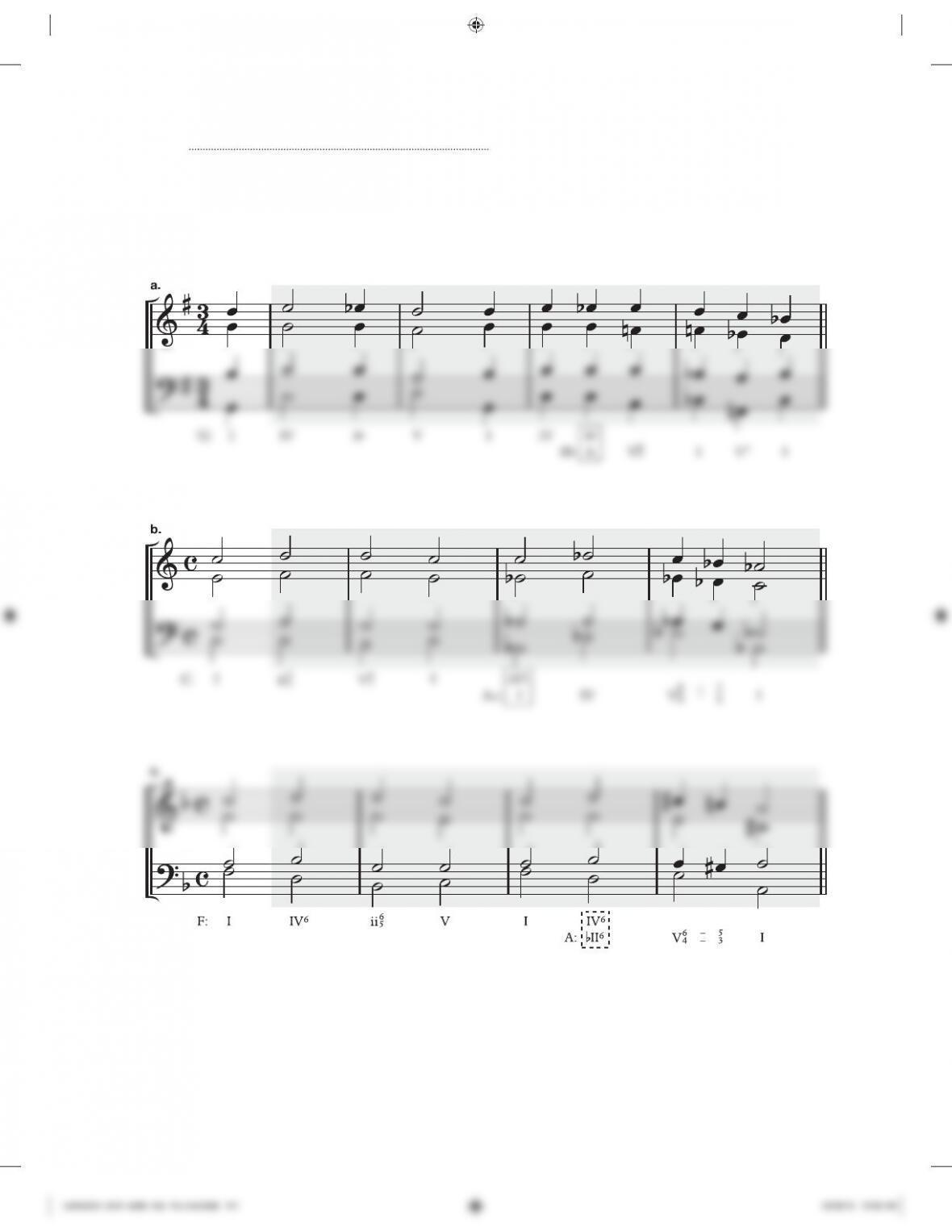
1. Realize the Roman numerals for these progressions, each of which uses a chro-
matic pivot chord, in SATB format. Make sure to include the necessary accidentals.
448 | CHAPTER 34 | Chromatic Modulation
2. Each of these passages uses an enharmonically reinterpreted pivot chord. Realize
the Roman numerals, in keyboard format.
Also circle the Roman numerals of the enharmonically equivalent chords.
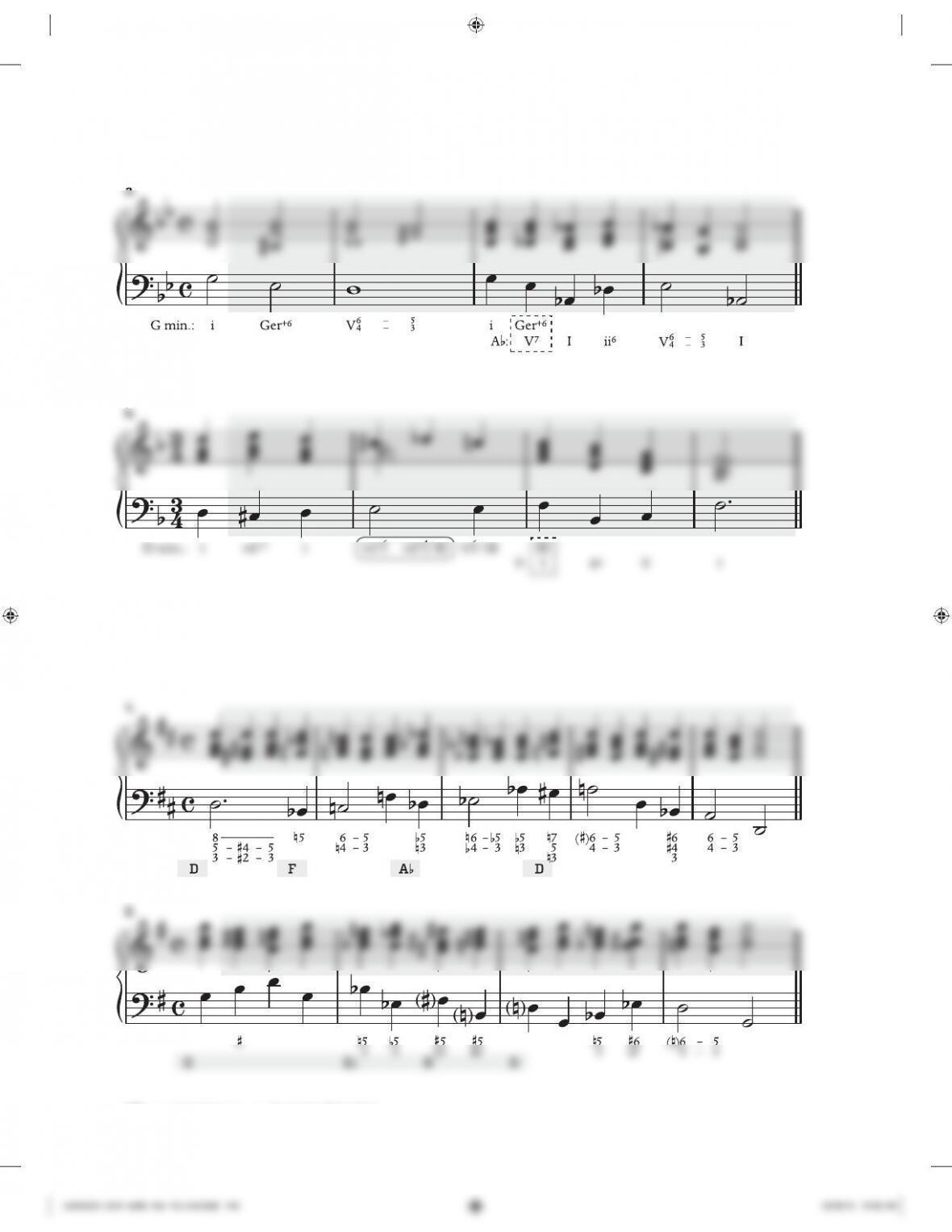
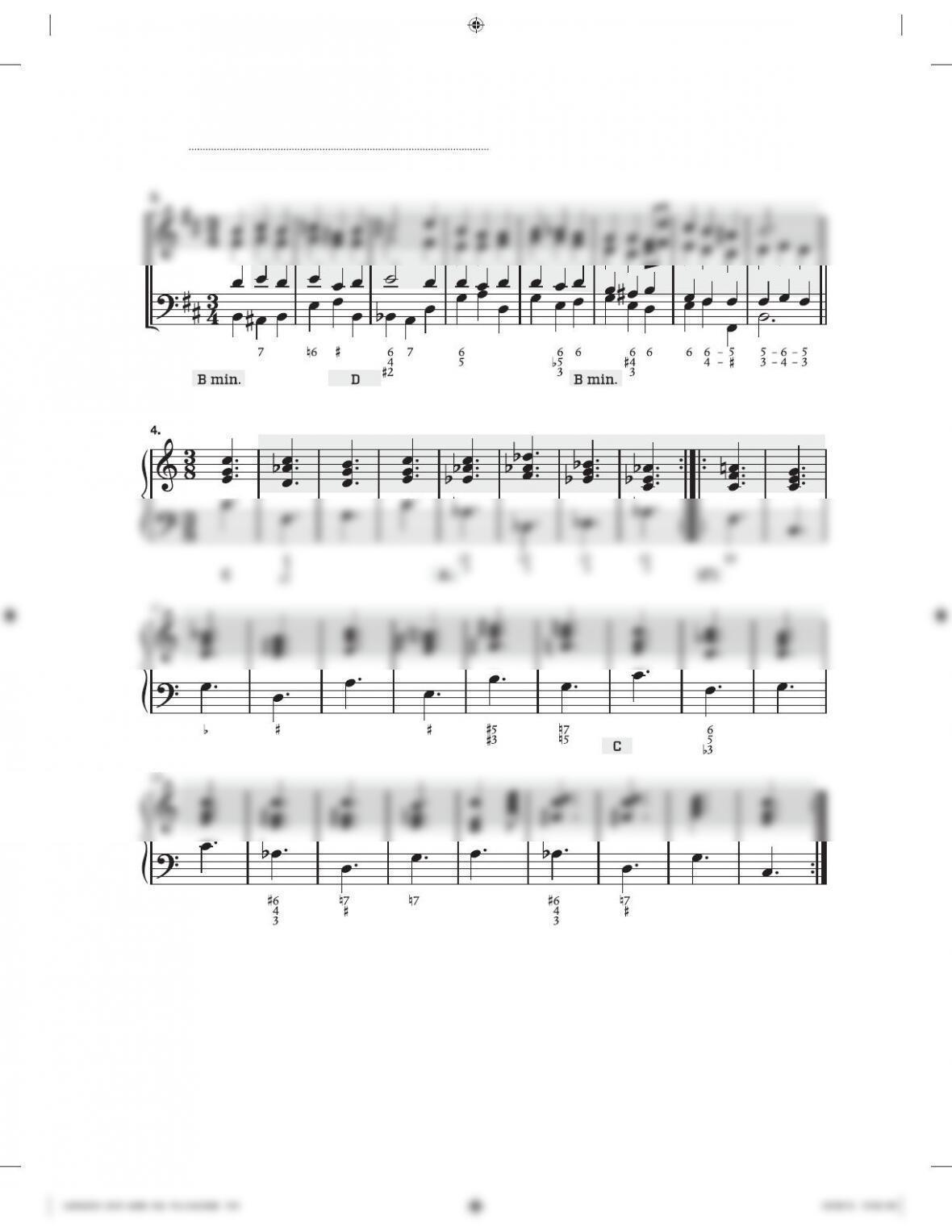
D. REALIZING FIGURED BASS
• Realize the following figured basses.
• Then indicate the keys of the tonicizations below the sta.
D. Realizing Figured Bass | 449
NAME:
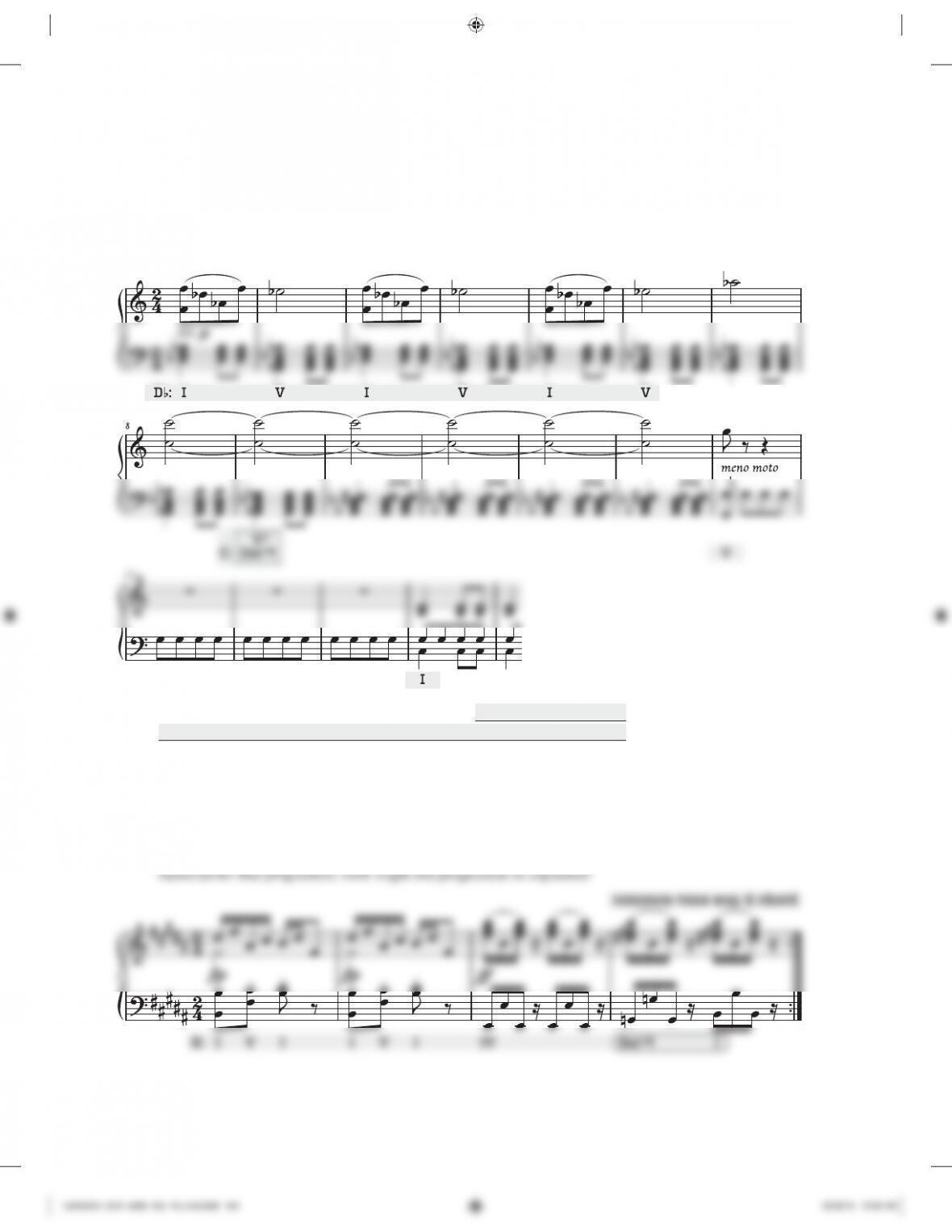
5. Using Exercise 4 as a simplified harmonic model, compose a piece. The piece could
be for keyboard or for keyboard and another instrument.
E. ANALYSIS
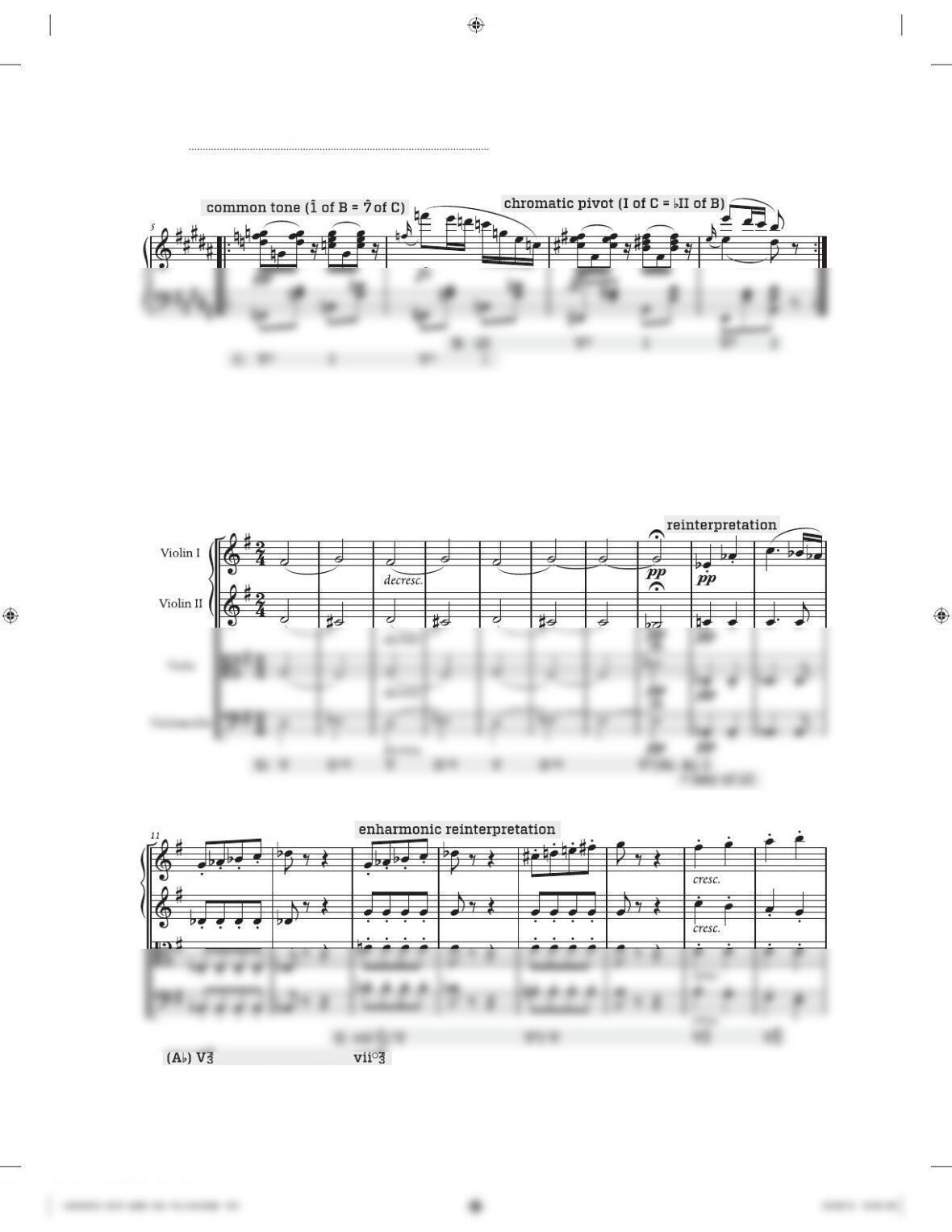
1. Friedrich von Flotow, Martha, overture.
• Identify the key this passage begins in, and the key to which it modulates.
• Label the keys and Roman numerals on the score. Note that most chords last
for several measures.
• What modulatory technique is used in this example? enharmonic
reinterpretation of V7
2. Franz Schubert, Ecossaise,D.145
• Label the key of this piece and any keys that are tonicized.
• Label the Roman numerals.
• Name the modulatory technique used to move to each new key.
• There is an unusual chord progression in the first phrase. Circle the Roman
E. Analysis | 451
NAME:
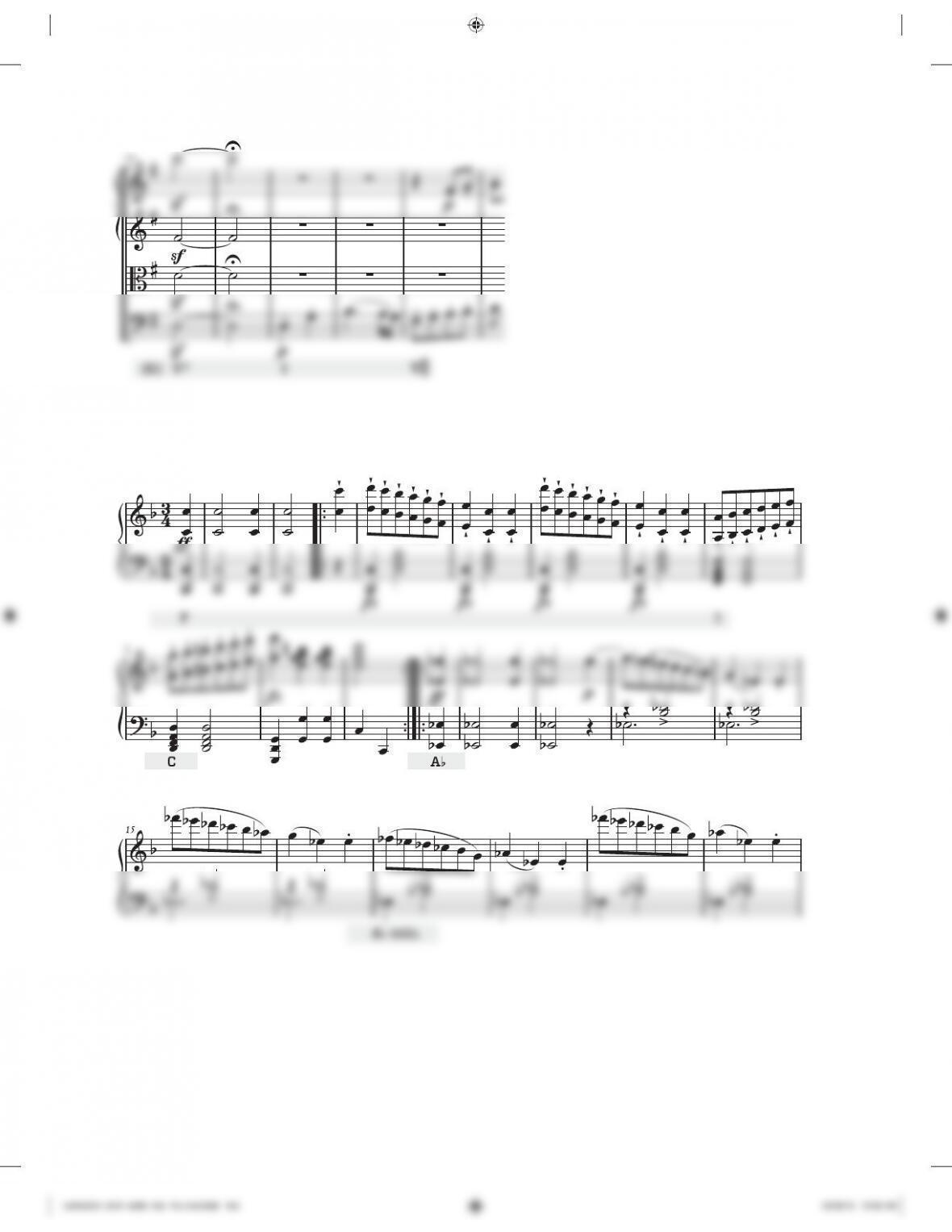
3. Ludwig van Beethoven, String Quartet, Op.18, No. 2, iv
• Label the starting key and the key to which there is a modulation, indicating its
relationship to the main key, and the modulatory technique used.
• Label the return to the main key, indicating the modulatory technique used.
• Label the Roman numerals (at most one chord per measure).
452 | CHAPTER 34 | Chromatic Modulation
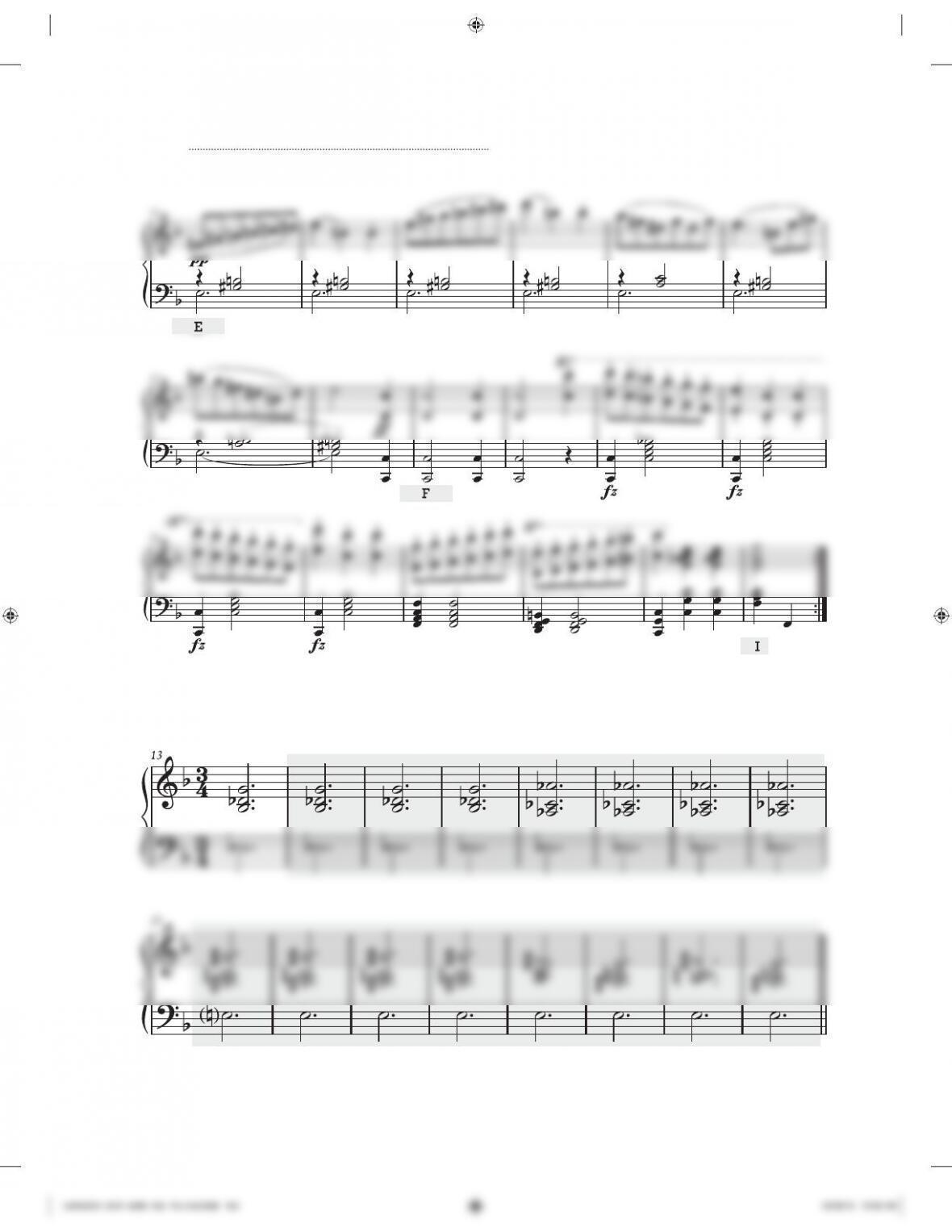
4. Franz Schubert, 20 Waltzes,D.146, No. 10
Label the main key and any other keys that are tonicized. (Note that in some cases
the V of the key might be more emphasized that its tonic.)
E. Analysis | 453
NAME:
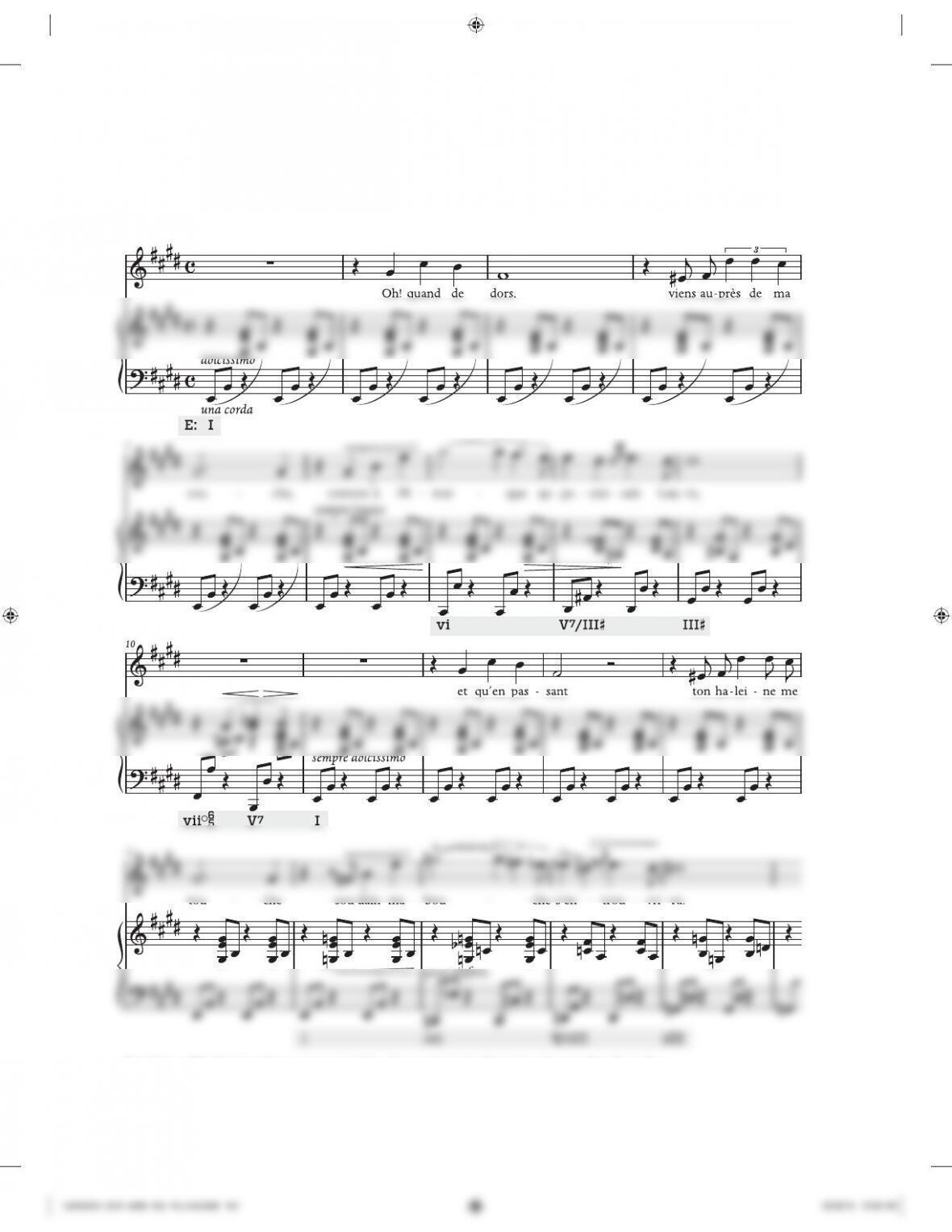
Complete a harmonic model of measures 13–28 in four- part harmony, using at
most one chord per measure. When moving between chords all the voices should
either move by step or stay on the same note (perhaps enharmonically respelled).
454 | CHAPTER 34 | Chromatic Modulation
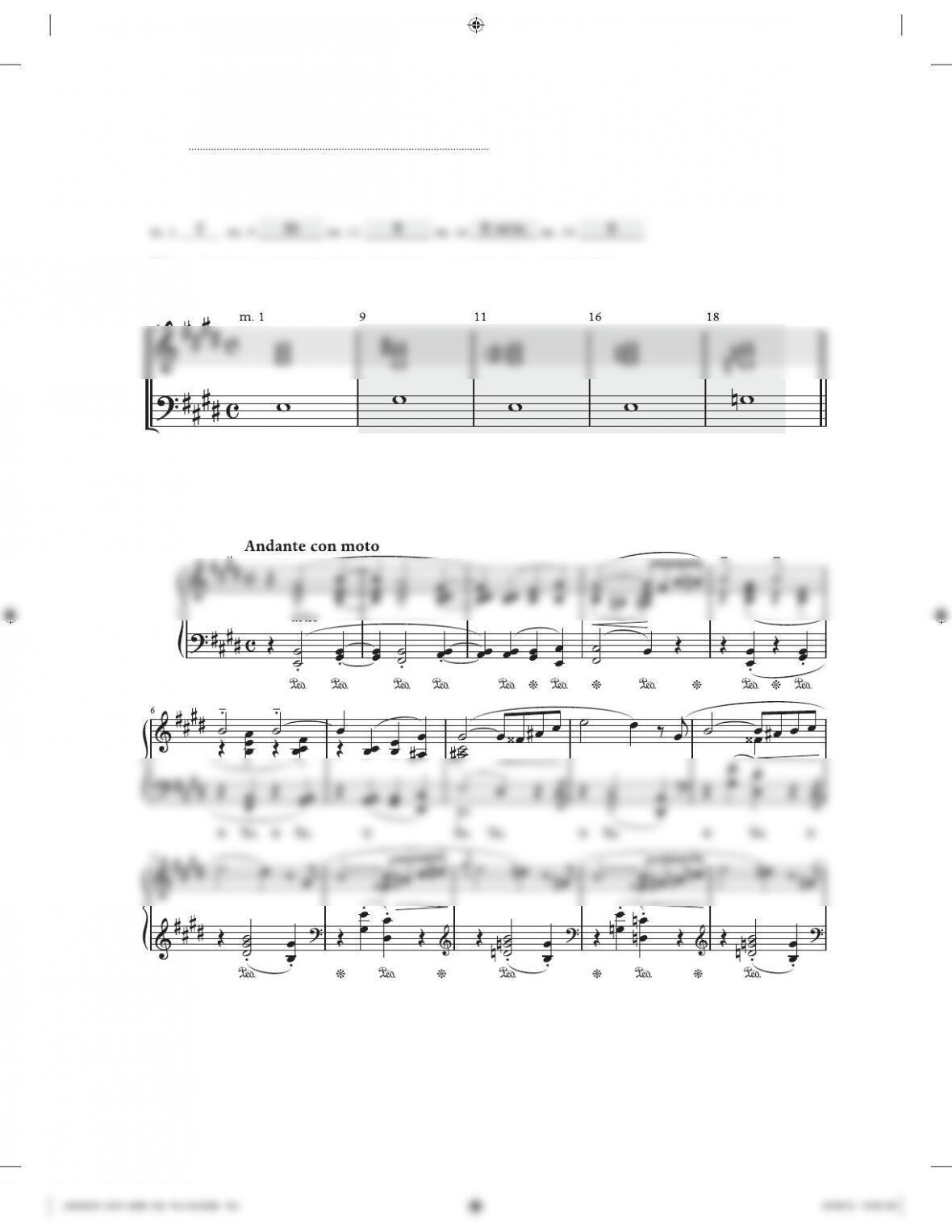
5. Franz Liszt, “Oh! Quand je dors”
Label the key and Roman numerals with one Roman numeral for each implied
bass note (thus, for instance, the first Roman numeral should extend from mea-
sure 1 through measure 6, since the note E is the implied bass throughout these
measures).
Translation: Oh! when I’m asleep, come to my bed, as Laura appeared to Petrarch, and as your breath touches
me when you pass, suddenly my lips will open!
E. Analysis | 455
NAME:
This piece begins in E major. What keys arrive in the following measures?
Write a chord progression based on these keys, connecting the tonic chords in root
position, with smooth motion in the upper voices:
What might explain the logic of this succession of keys?
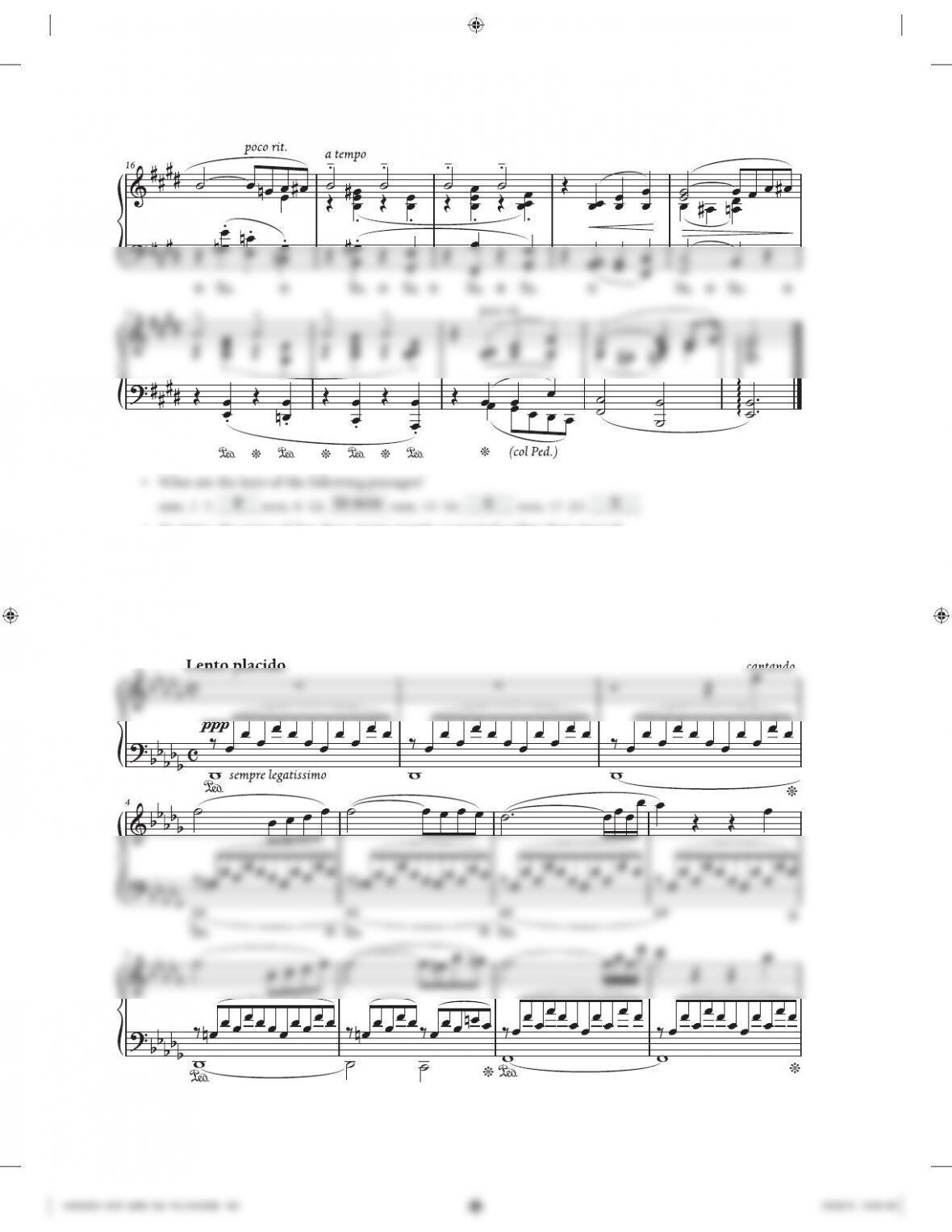
6. Franz Liszt, Consolation No. 1
Answer the questions that follow the excerpt.
456 | CHAPTER 34 | Chromatic Modulation
• At times, the sense of key here seems merely suggested rather than strongly
asserted. What features in the music create this impression?
• How does the harmonic structure of this piece compare to the harmonic
structure of Liszt’s song “Oh! Quand je dors” in the previous question?
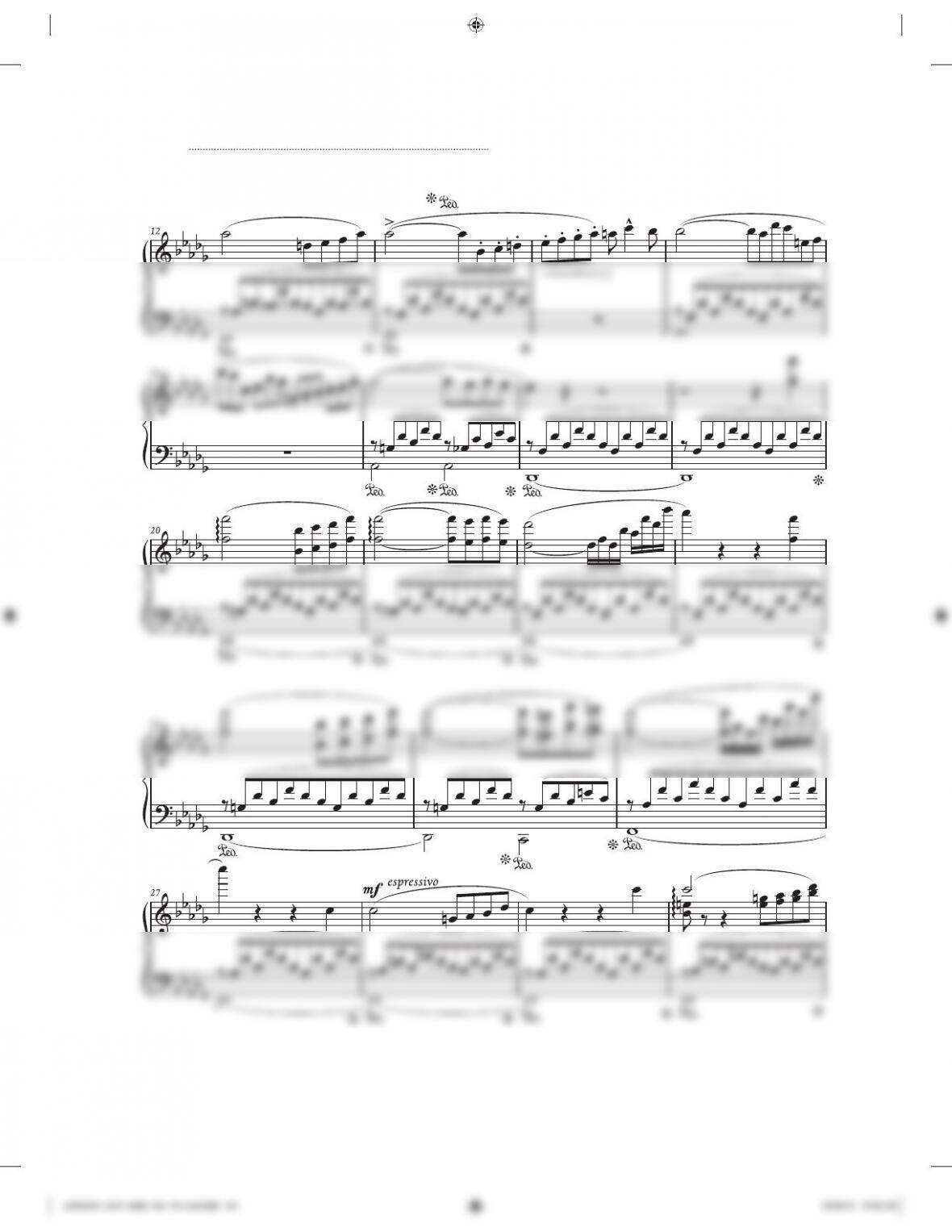
7. Franz Liszt, Consolation No. 3
Answer the questions that follow the excerpt.
E. Analysis | 457
NAME:
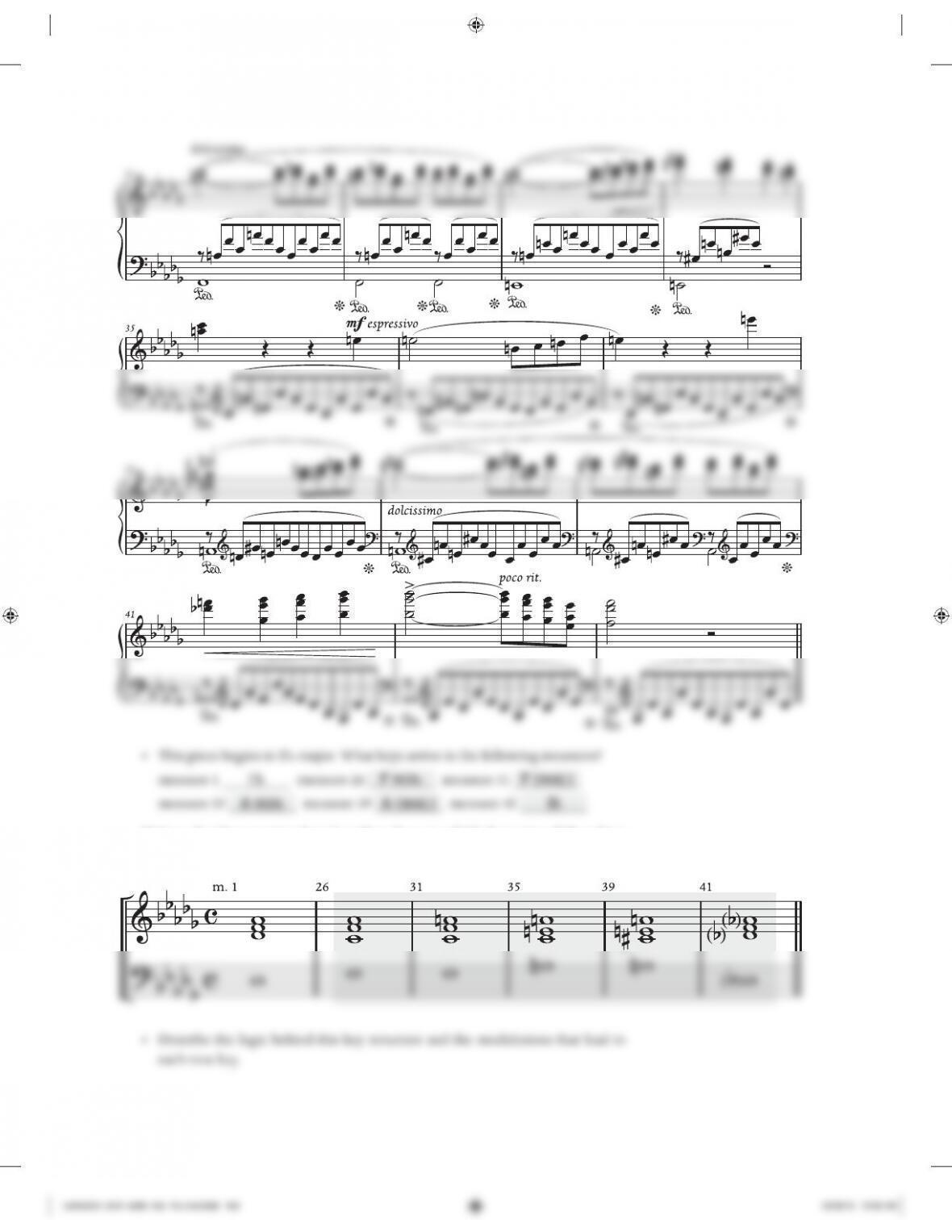
Write a chord progression based on these keys, in which the tonics of these keys
are root position chords, with smooth motion in the upper voices: