B. Realizing Roman Numerals | 431
NAME:
A.ffQUESTIONS FOR REVIEW
1. In a sequence, why can V/V follow V/ii?
2. In a sequence consisting entirely of dominant seventh chords, how do leading
tones move? Chordal sevenths?
3. How do strict chromatic sequences differ from other types of sequences?
B. REALIZING ROMAN NUMERALS
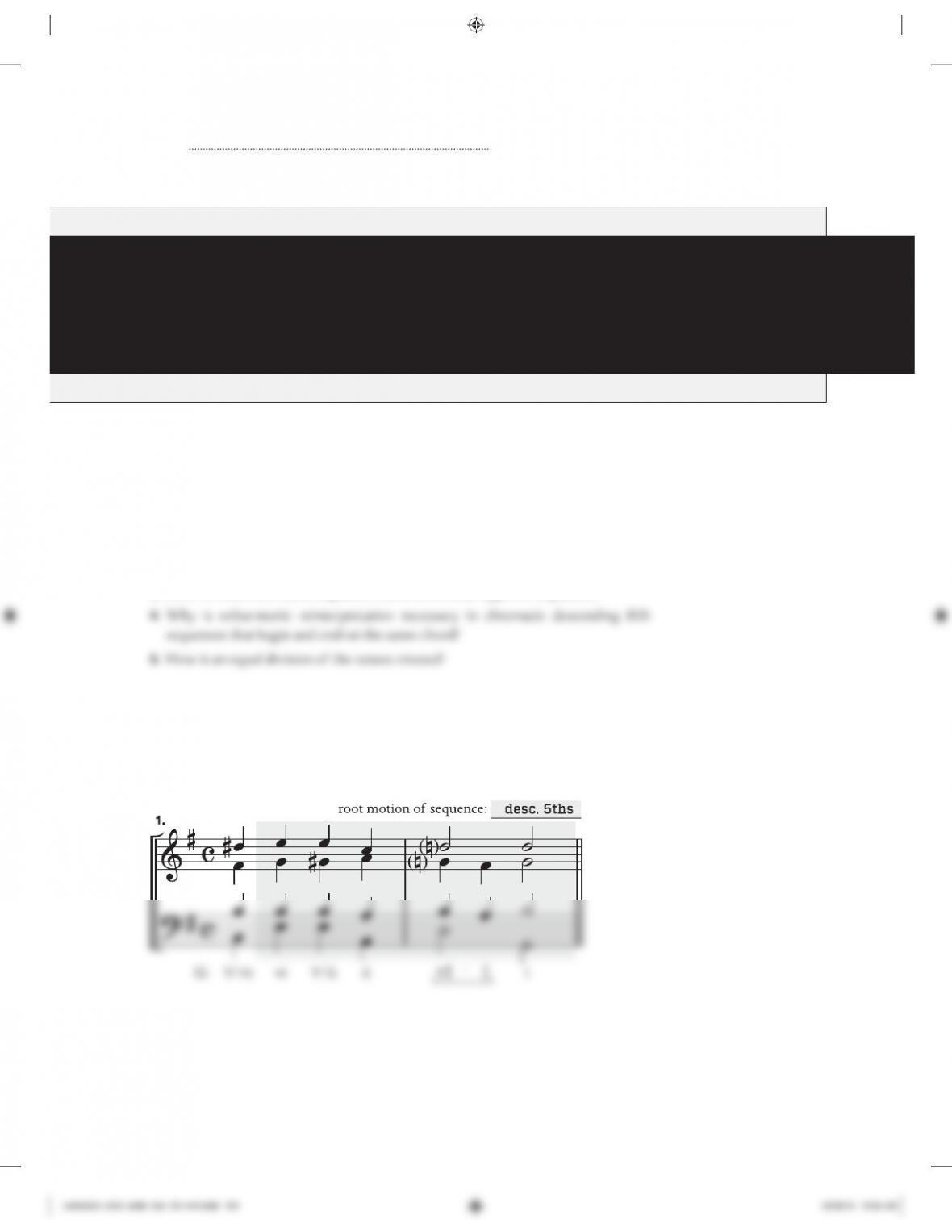
Realize the Roman numerals of the following sequences in SATB format, and describe
the root motion of the sequences (such as descending fths; down 3, up 4; etc.).
chapter
33 Chromatic Sequences
432 | CHAPTER 33 | Chromatic Sequences
C. COMPLETING CHROMATIC SEQUENCES
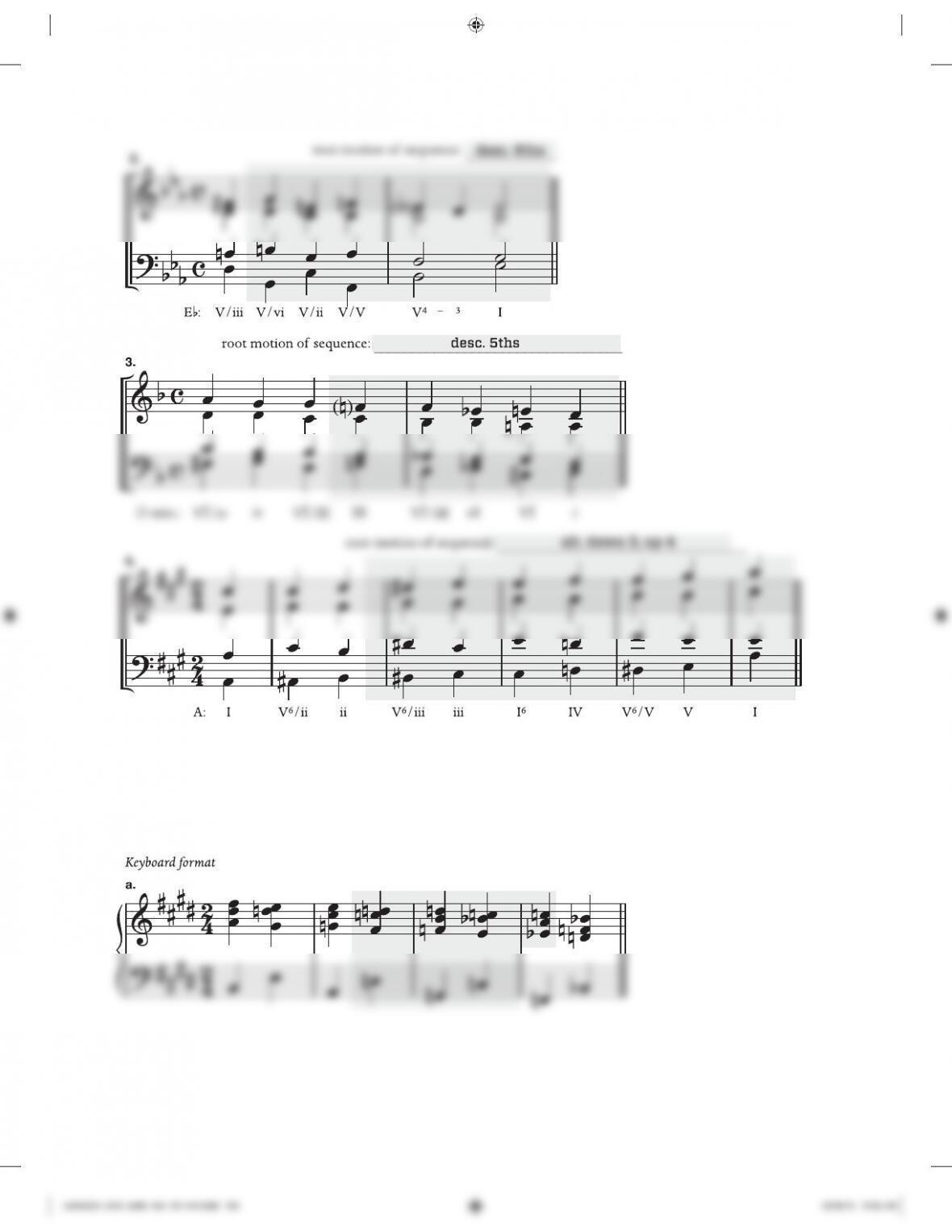
1. Complete these descending fth sequences by continuing the pattern presented in
the opening chords. Each uses applied chords.
C. Completing Chromatic Sequences | 433
NAME:
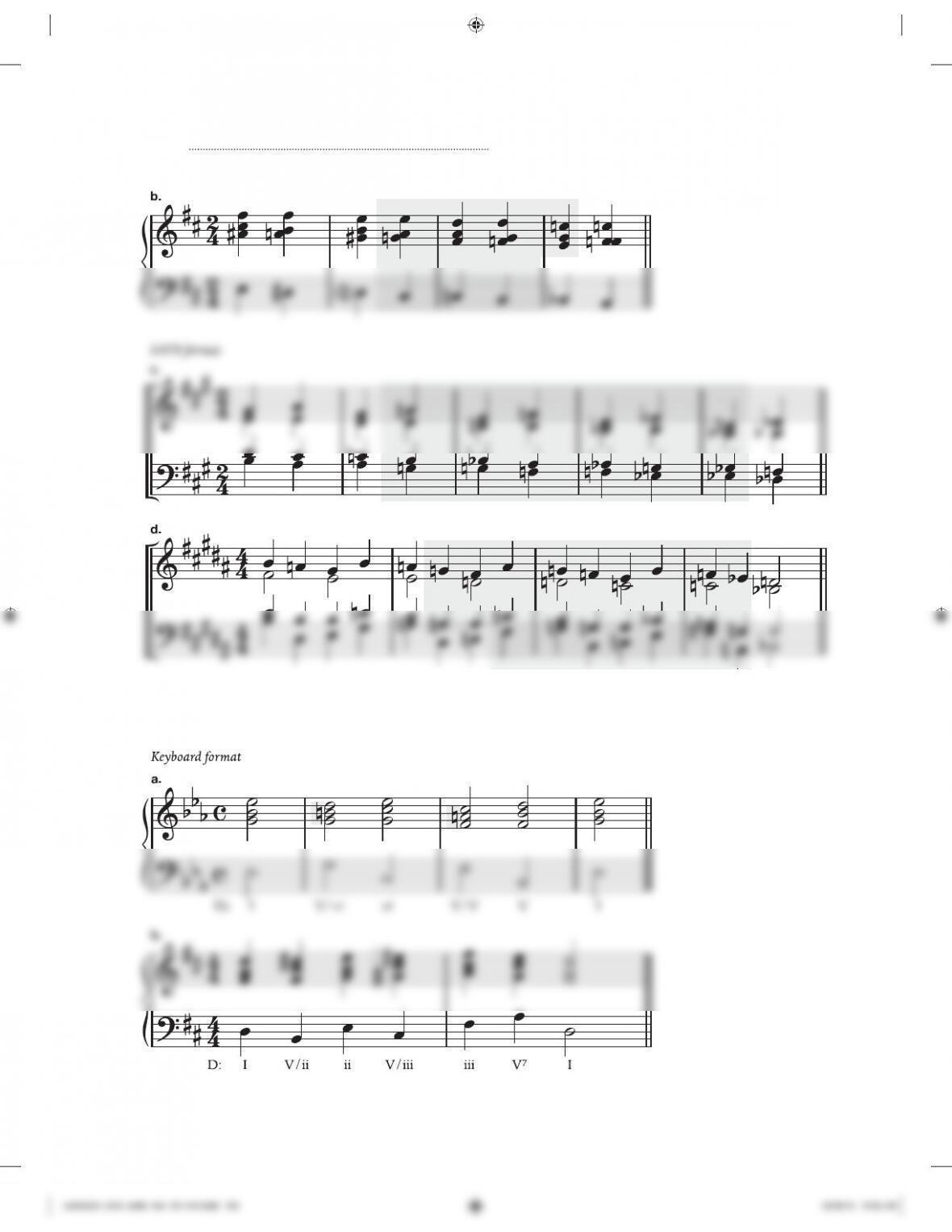
2. Change the given diatonic sequences to chromatic sequences by adding accidentals
where necessary to form the chords indicated by the Roman numerals below
thestaff.
434 | CHAPTER 33 | Chromatic Sequences
D.ffREALIZING FIGURED BASS
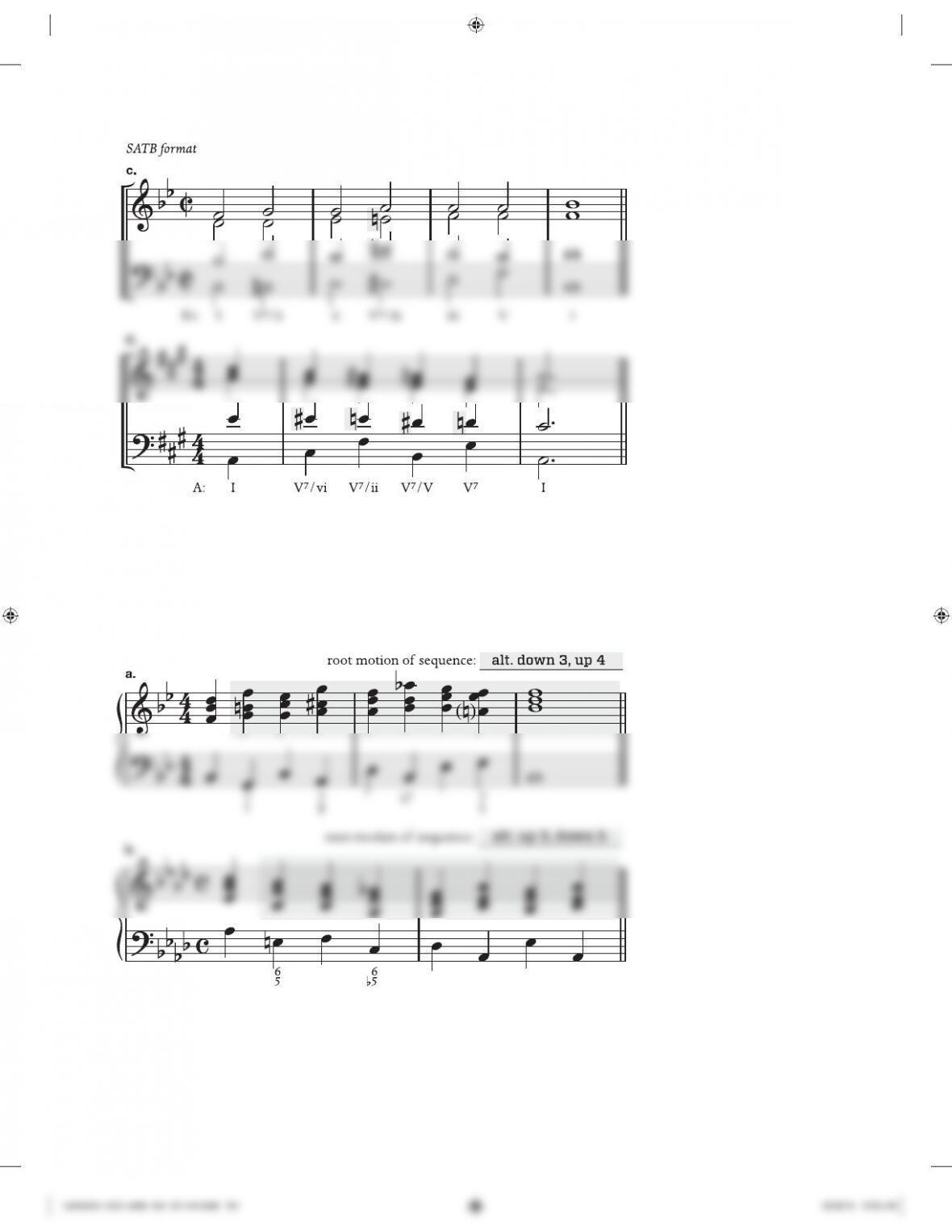
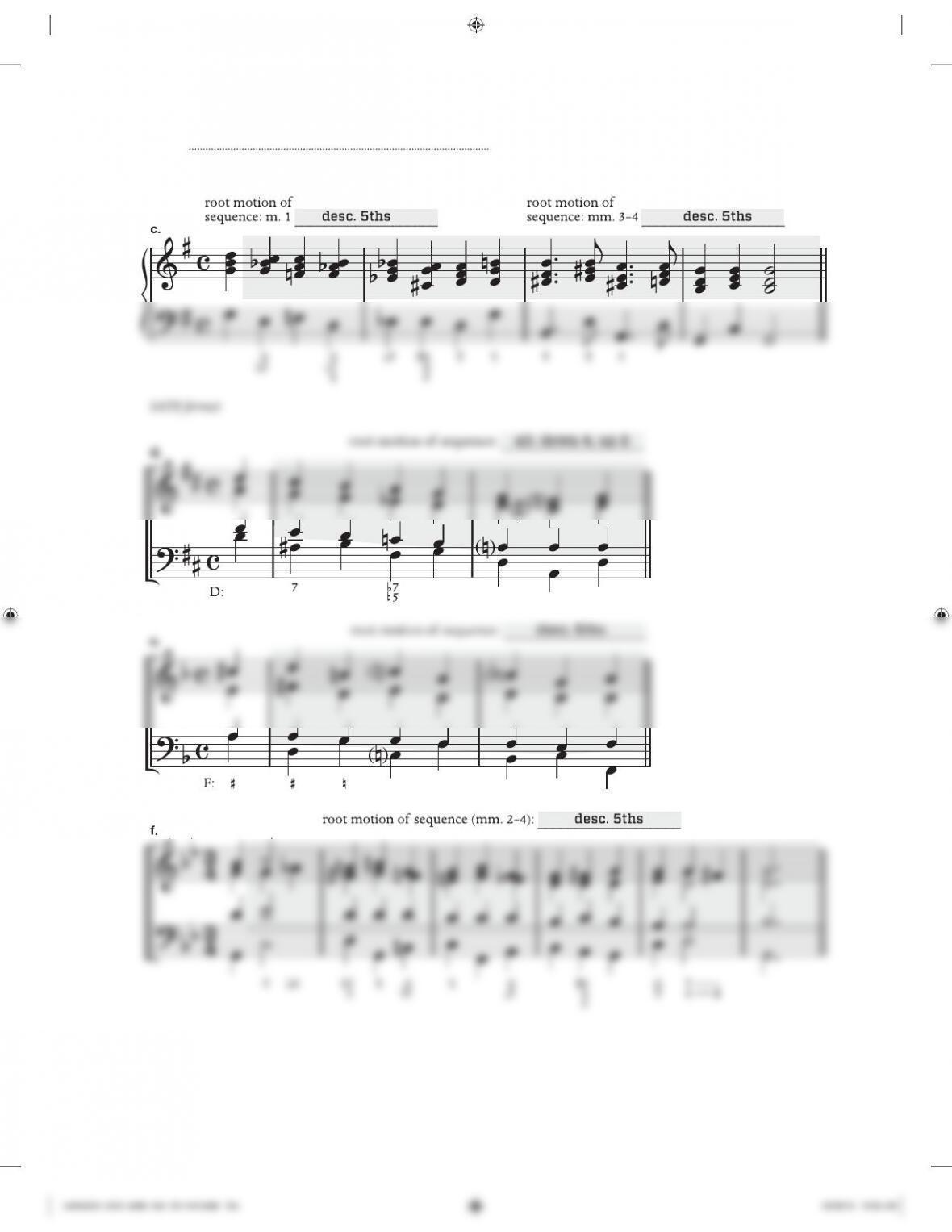
1. Realize the gured basses, and identify the root motion of each sequence (such as
descending fths; alternating down 3, up 4; and so on).
Keyboard format
NAME:
436 | CHAPTER 33 | Chromatic Sequences
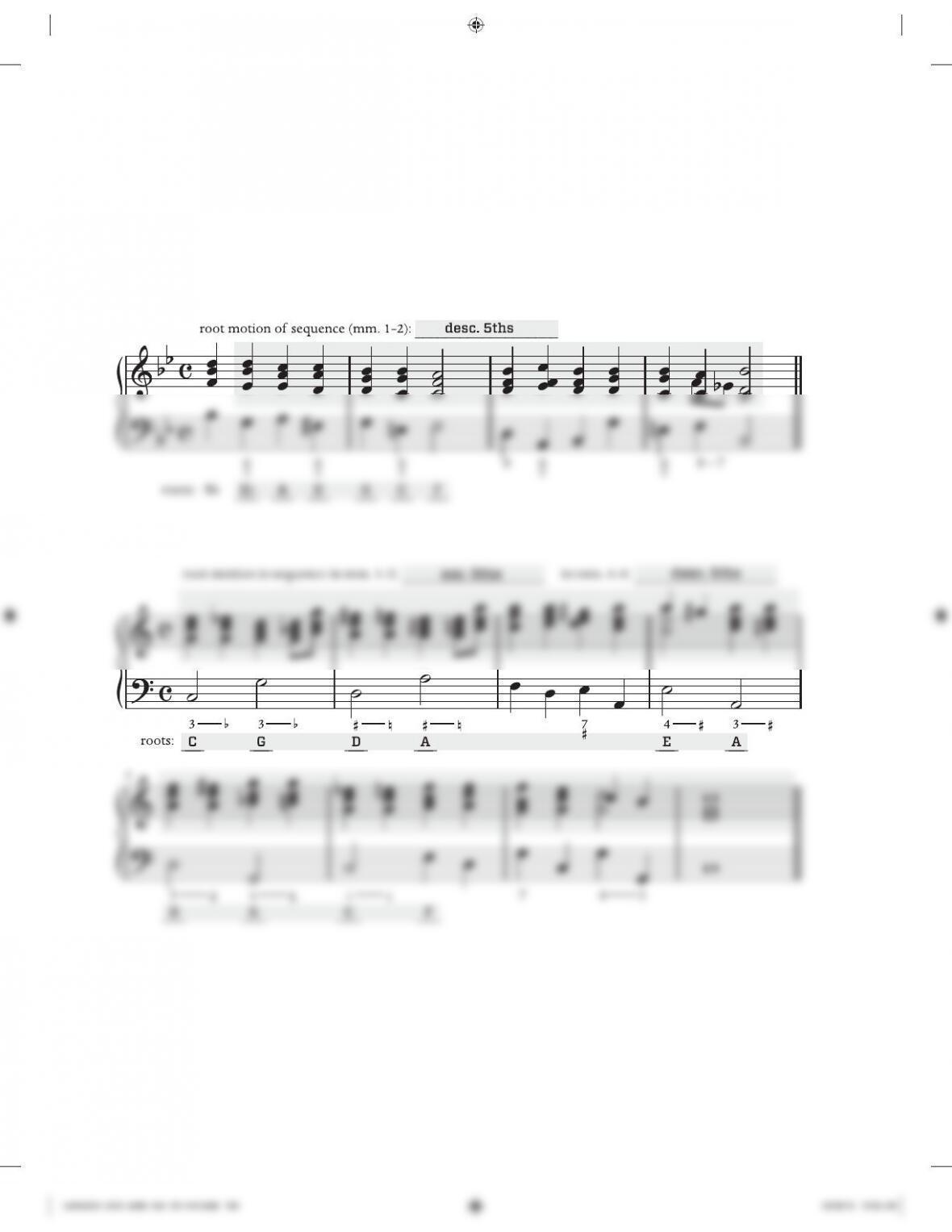
2. The following are gured bass exercises from historical sources.
• Realize the gured basses in four- part harmony.
• Write the roots for the chords indicated.
• Identify the root motion of the sequences (such as descending fth; alternating
down 3, up 4; etc.).
keyboard format
a. Exercise by Johann Gottlieb Vierling
b. Exercise byG.F.Handel, for Princess Anne
D. Realizing Figured Bass | 437
NAME:
for string quartet
c. Exercise byW.A.Mozart, for Barbara Ployer
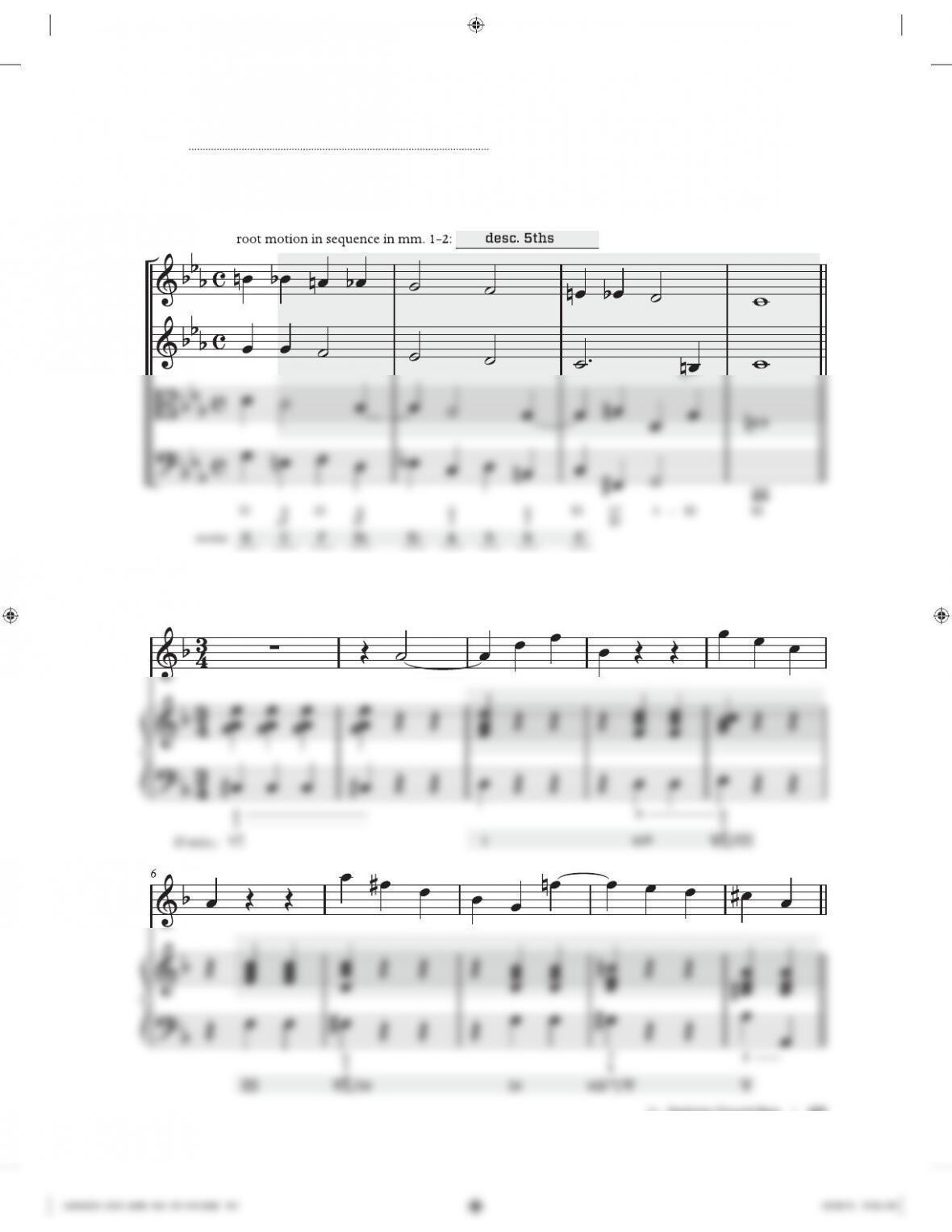
3. Provide gured bass accompaniments in keyboard format for the following excerpts.
a. G.F.Handel, Water Music, Adagio e staccato
Also label the Roman numerals.
438 | CHAPTER 33 | Chromatic Sequences
b. Tomaso Albinoni, Violin Sonata Op.4, No. 4, iv
Label the roots of the chord in spaces provided.
E.ffEQUAL DIVISION OF THE OCTAVE
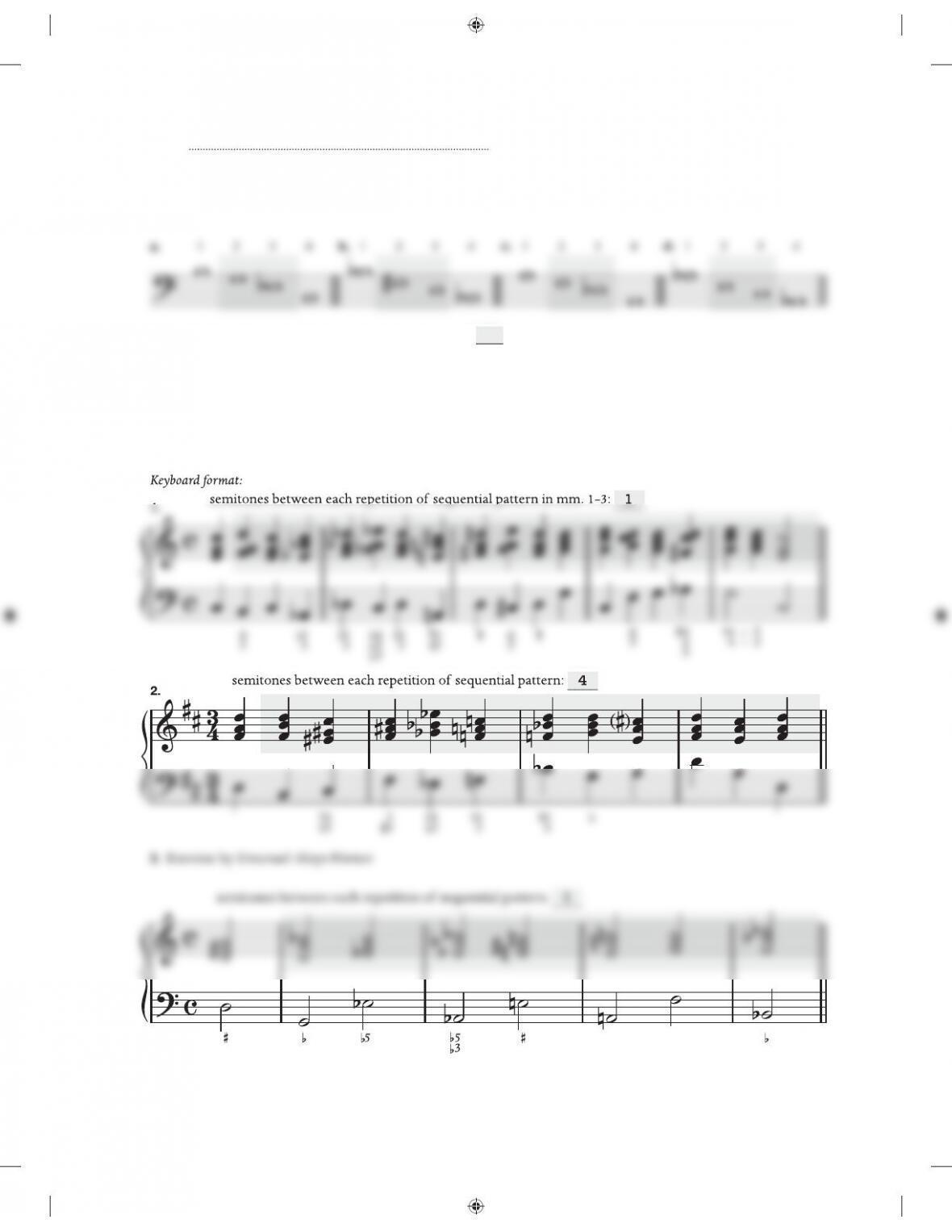
1. Add ve other notes between the given pairs of notes so as to divide the octave
into six equal parts; each note should be a whole step (two semitones) higher than
the previous one.
2. Add three other notes between the given pairs of notes so as to divide the octave
into four equal parts.
conharm2_ch33_wkbk_inst_431-444.indd 438 21/08/19 10:05 AM
F. Strict Chromatic Sequences | 439
NAME:
3. Add two other notes between the given pairs of notes so as to divide the octave
into three equal parts.
How many semitones are between the adjacent notes? 4
F.ffSTRICT CHROMATIC SEQUENCES
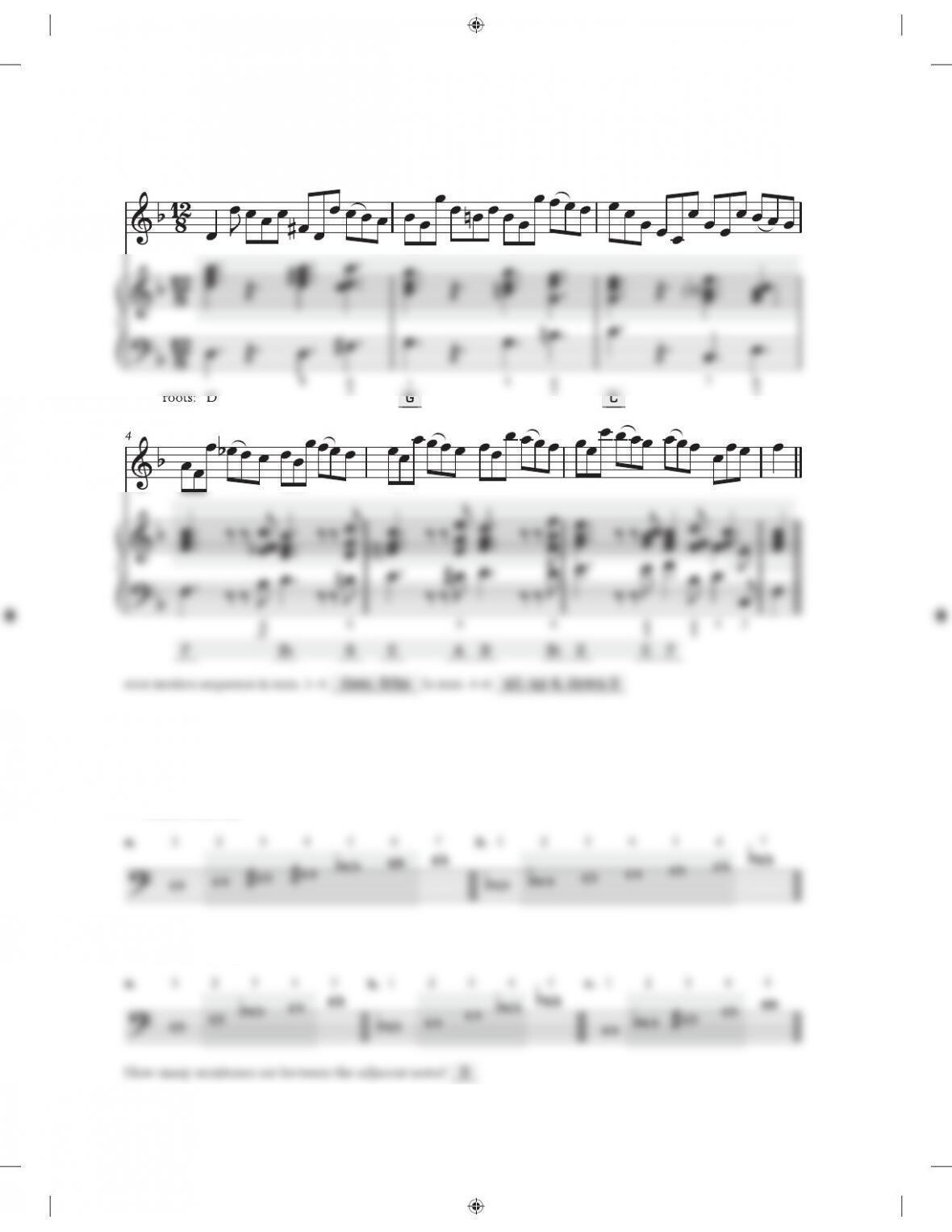
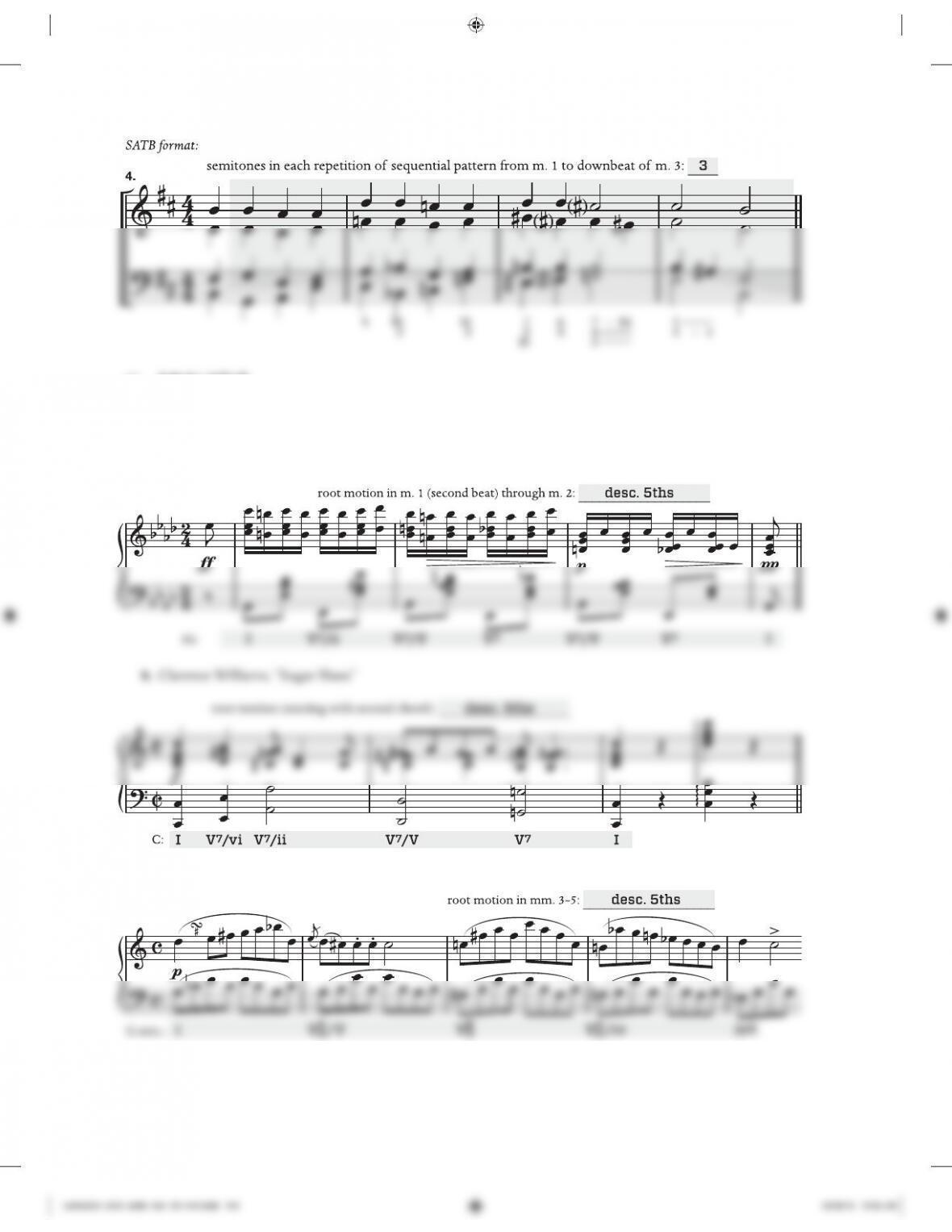
Realize these gured basses; then indicate the number of semitones between each
repetition of the strict chromatic sequential pattern.
conharm2_ch33_wkbk_inst_431-444.indd 439 21/08/19 10:05 AM
440 | CHAPTER 33 | Chromatic Sequences
G.ffANALYSIS
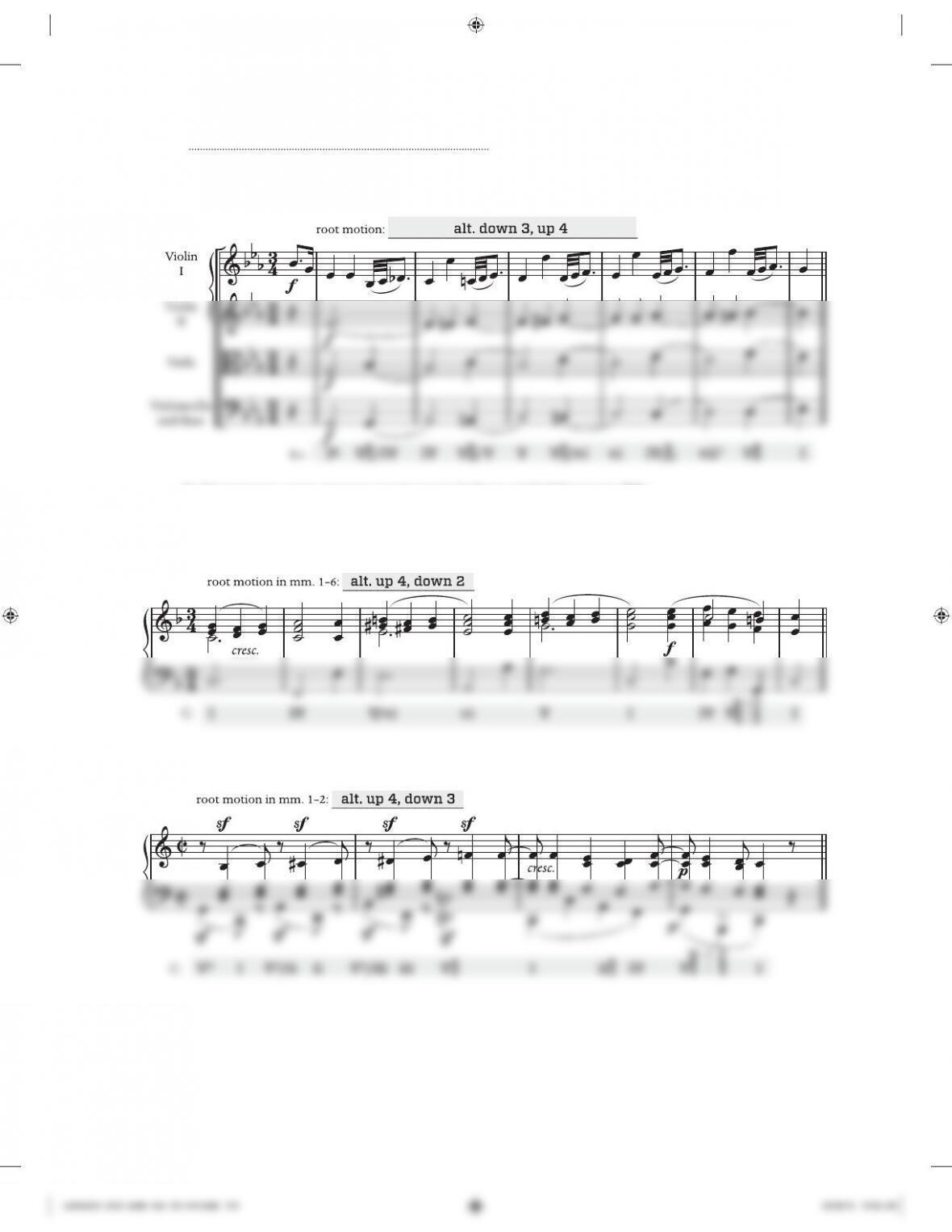
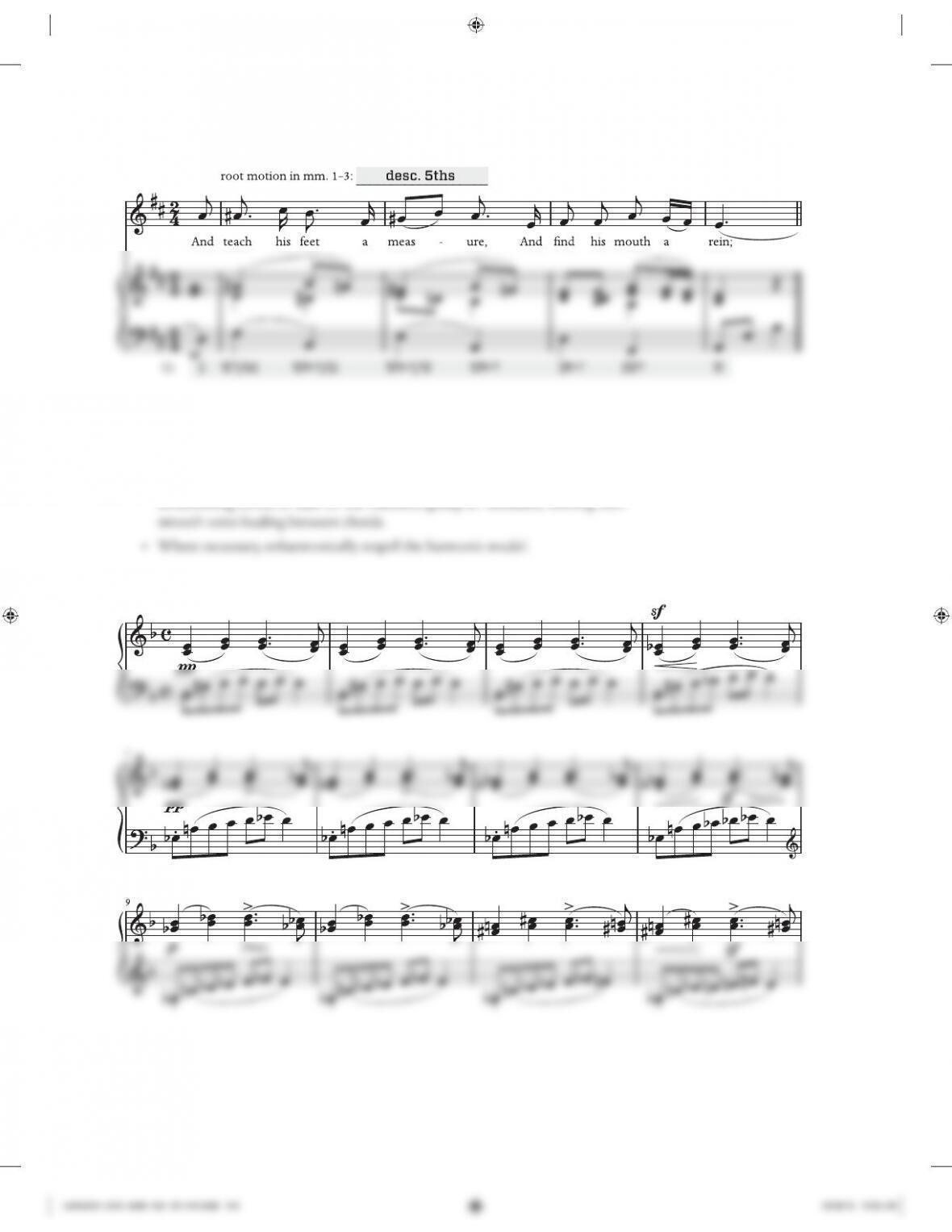
1. Label the Roman numerals and identify the root motion of the sequences (such as
descending fth; alternating down 3, up 4; and so on).
a. Chris Smith and Elmer Bowman, “Good Morning Carrie”
c. Ludwig van Beethoven, Piano Sonata, Op.2, No. 3, i
G. Analysis | 441
NAME:
d. Joseph Haydn, Symphony No. 36, iii
In this sequence, every measure except one includes an applied dominant. Why
do you suppose an applied dominant is not used in that measure?
e. Sigismund Neukomm, Morceaux, Book II, No. 6
f. Ludwig van Beethoven, Piano Sonata, Op.14, No. 2, ii
442 | CHAPTER 33 | Chromatic Sequences
g. Clara Rogers, “A Match”
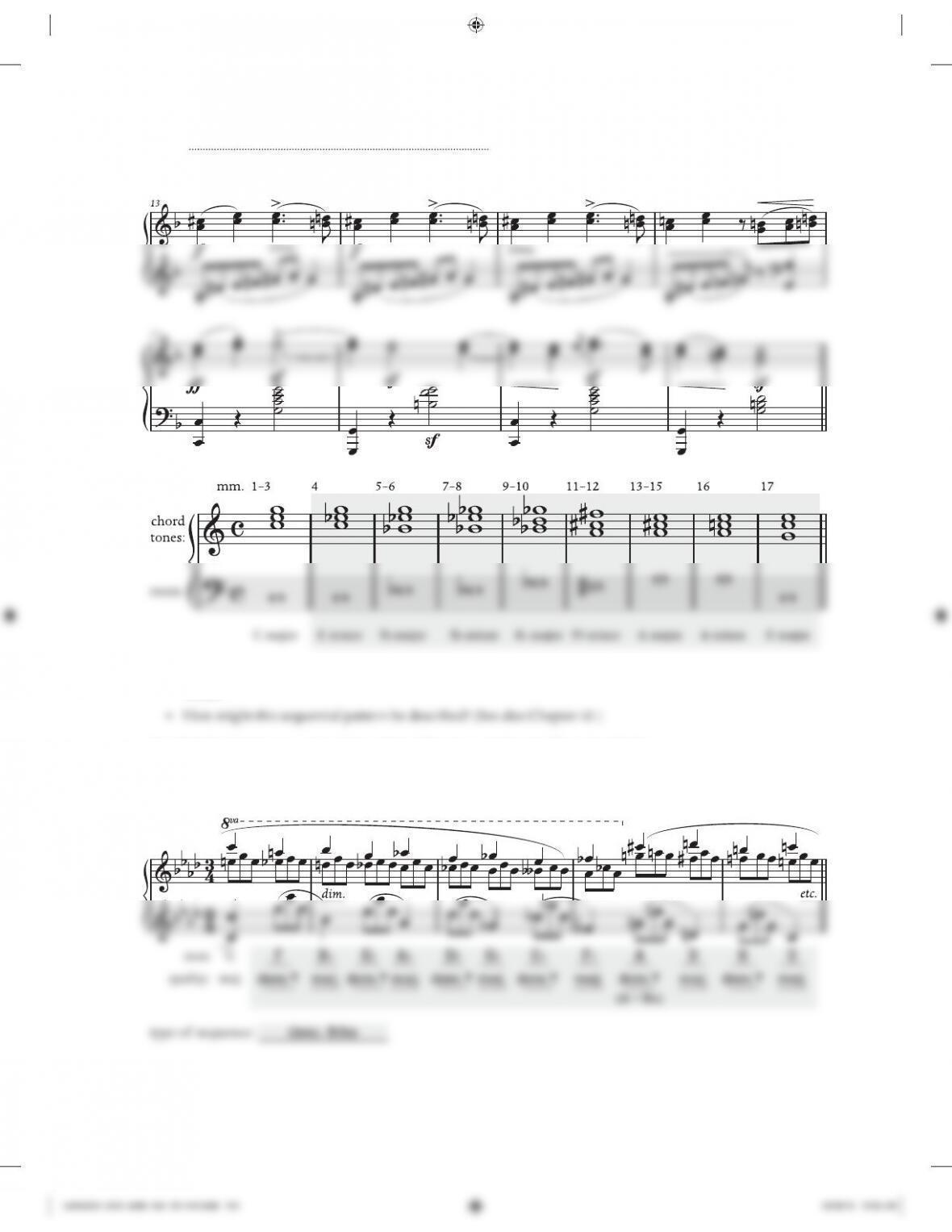
2. Provide a simplied harmonic model of this passage on the staff below the score.
• The bass of each measure of the model should match the lowest note in each
of the indicated group of measures.
• The upper voices in the model should match the notes of the chord (omitting
embellishing tones) in each of the indicated group of measures, moving with
Bedˇrich Smetana, Overture to The Bartered Bride
NAME:
• Why do mm. 137–138 include ats in the lower voice and sharps in the upper
voices?
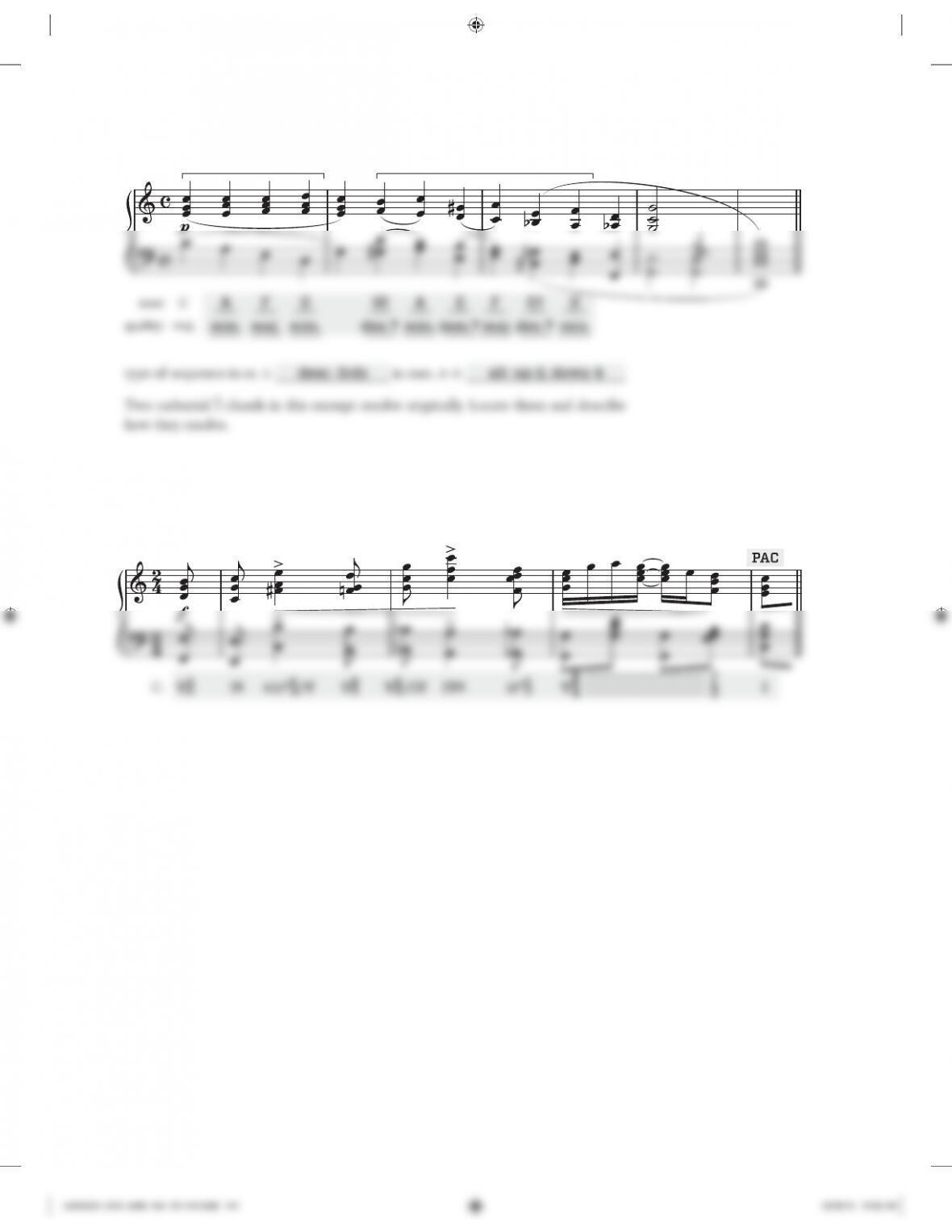
3. Label the chord roots and qualities of the following as indicated. Then identify the
root motion of the sequences.
a. Frédéric Chopin, Concerto in F Minor, Op.21, iii
444 | CHAPTER 33 | Chromatic Sequences
b. Clara Schumann, Prelude No. 2
4. James Scott, “Eciency Rag”
Label the roman numerals and cadences.