B. Spelling Augmented Sixth Chords | 407
NAME:
A. QUESTIONS FOR REVIEW
1. What are the scale degrees of the tendency tones in an augmented sixth chord? In
which voice(s) can they each appear (soprano, alto, tenor, bass)? In which direction
do they each resolve?
2. What are the scale degrees in the Italian augmented sixth? The French augmented
sixth? The German augmented sixth?
3. What is an alternate spelling for the German augmented sixth chord? Why is this
alternate spelling used in major keys, but not minor keys?
4. In four-part harmony, what tone should be doubled in the Italian augmented sixth?
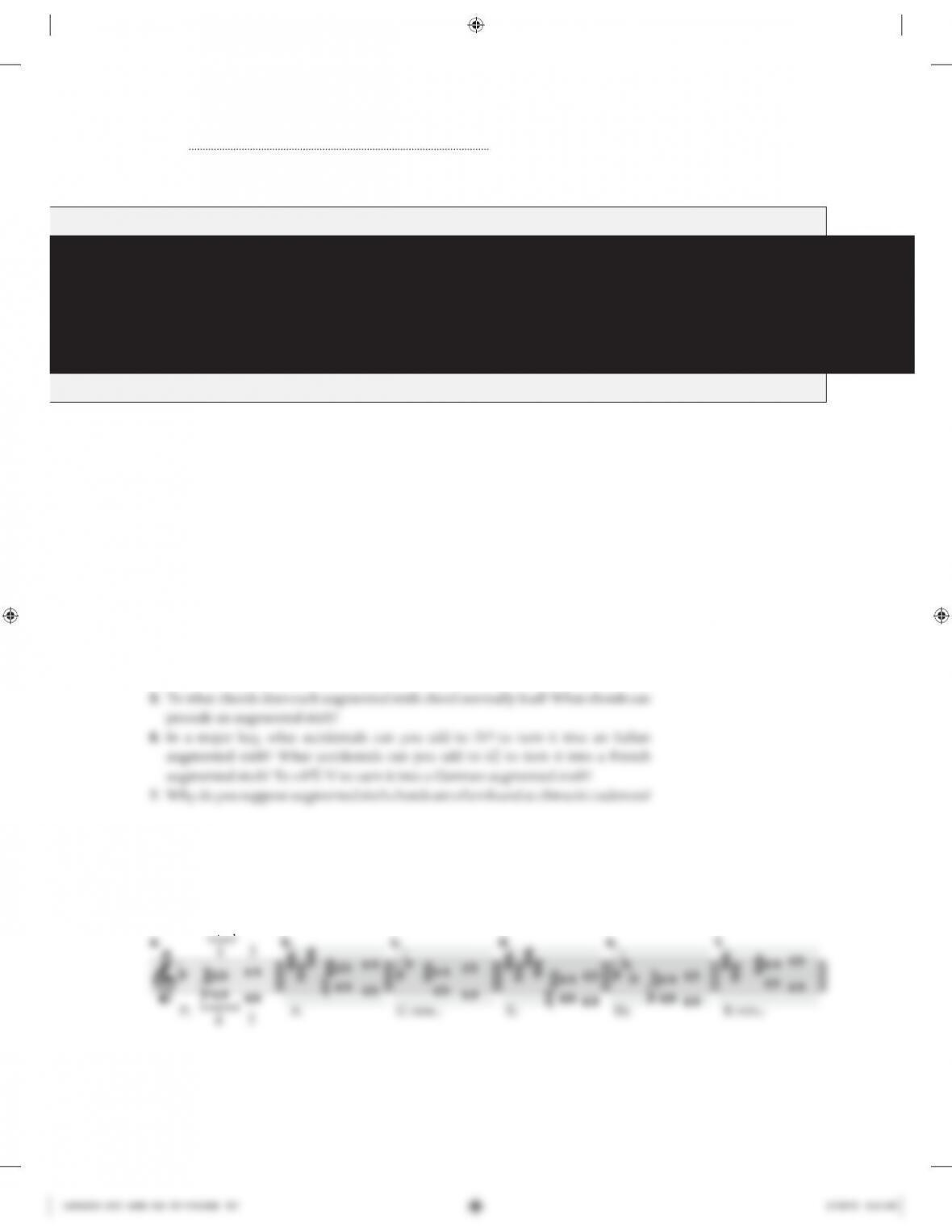
B. SPELLING AUGMENTED SIXTH CHORDS
1. For each key, provide the key signature; then write the tendency tones minor ˆ
6 and
raised ˆ
4, followed by their resolutions to ˆ
5.
chapter
31 Augmented Sixth Chords
408 | CHAPTER 31 | Augmented Sixth Chords
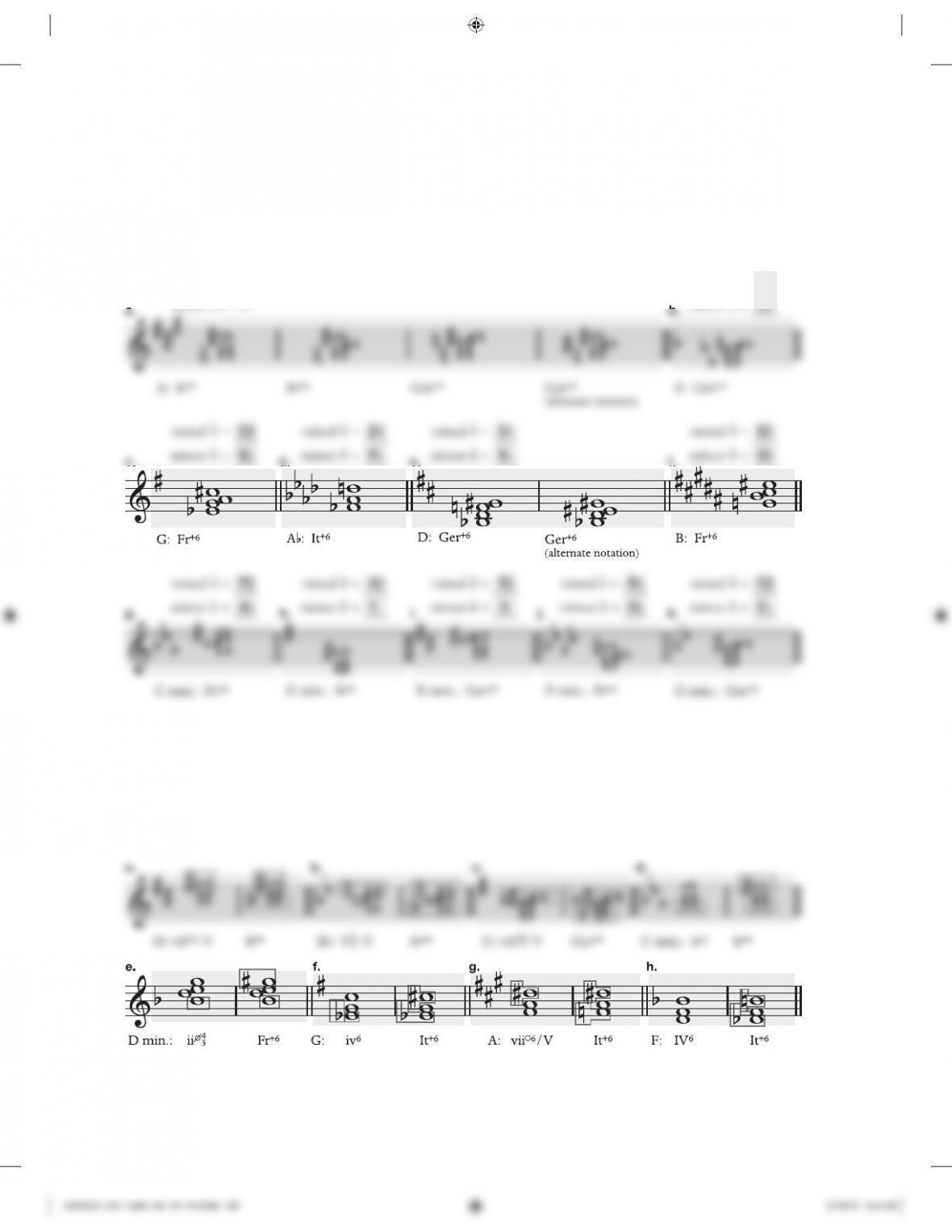
2. For each of the following:
• Write the key signature for the indicated key.
• Above the sta, name raised ˆ
4 and minor ˆ
6 in that key.
• On the sta, write the indicated augmented sixth chord, with the proper note
in the lowest voice.
raised ˆ
4 = Bn
___
raised ˆ
4 = D#
3. For each of the following:
• Provide the key signature.
• Write the two indicated chords.
• Place a square around raised ˆ
4 and minor ˆ
6.
C. Realizing Roman Numerals | 409
NAME:
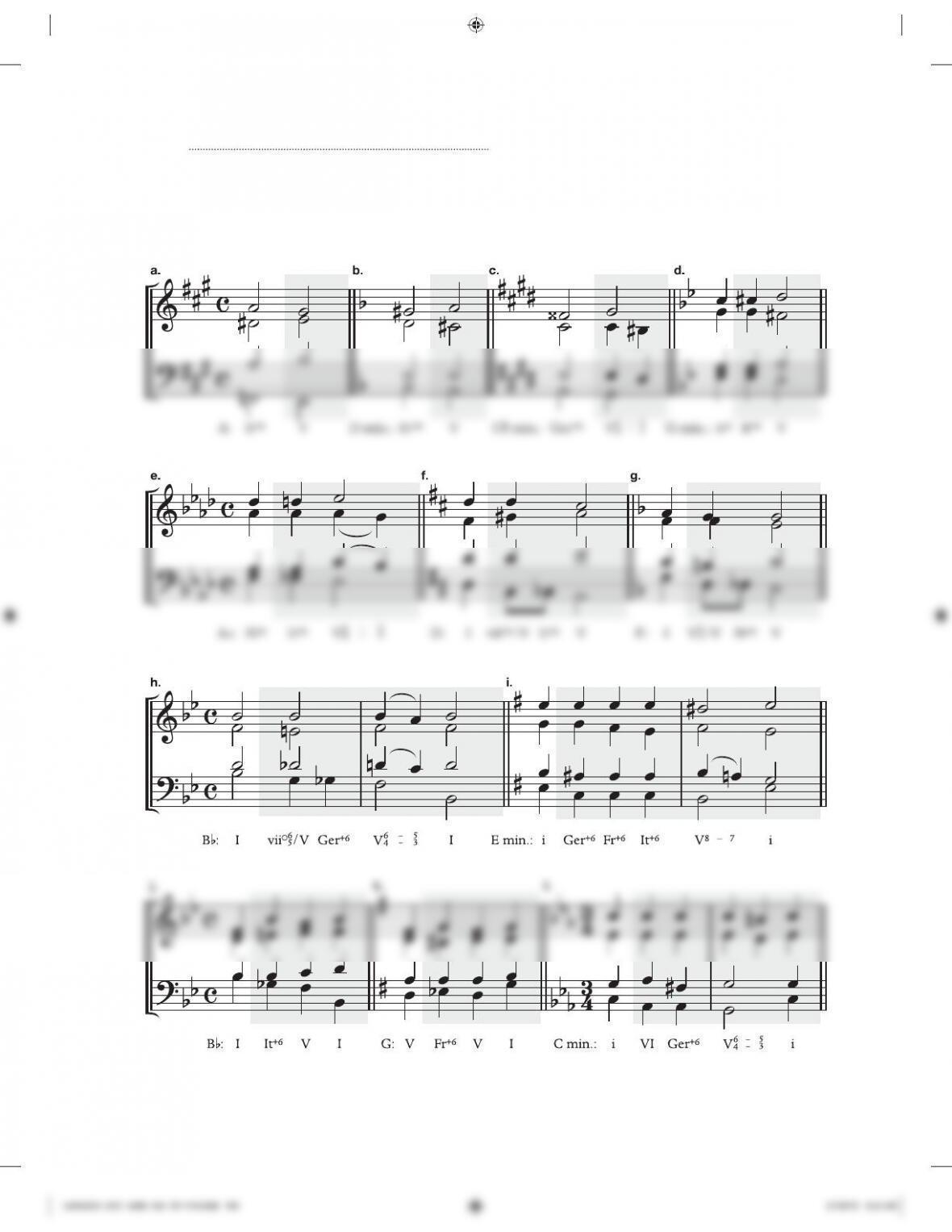
C. REALIZING ROMAN NUMERALS
1. Realize the following Roman numerals in SATB format.
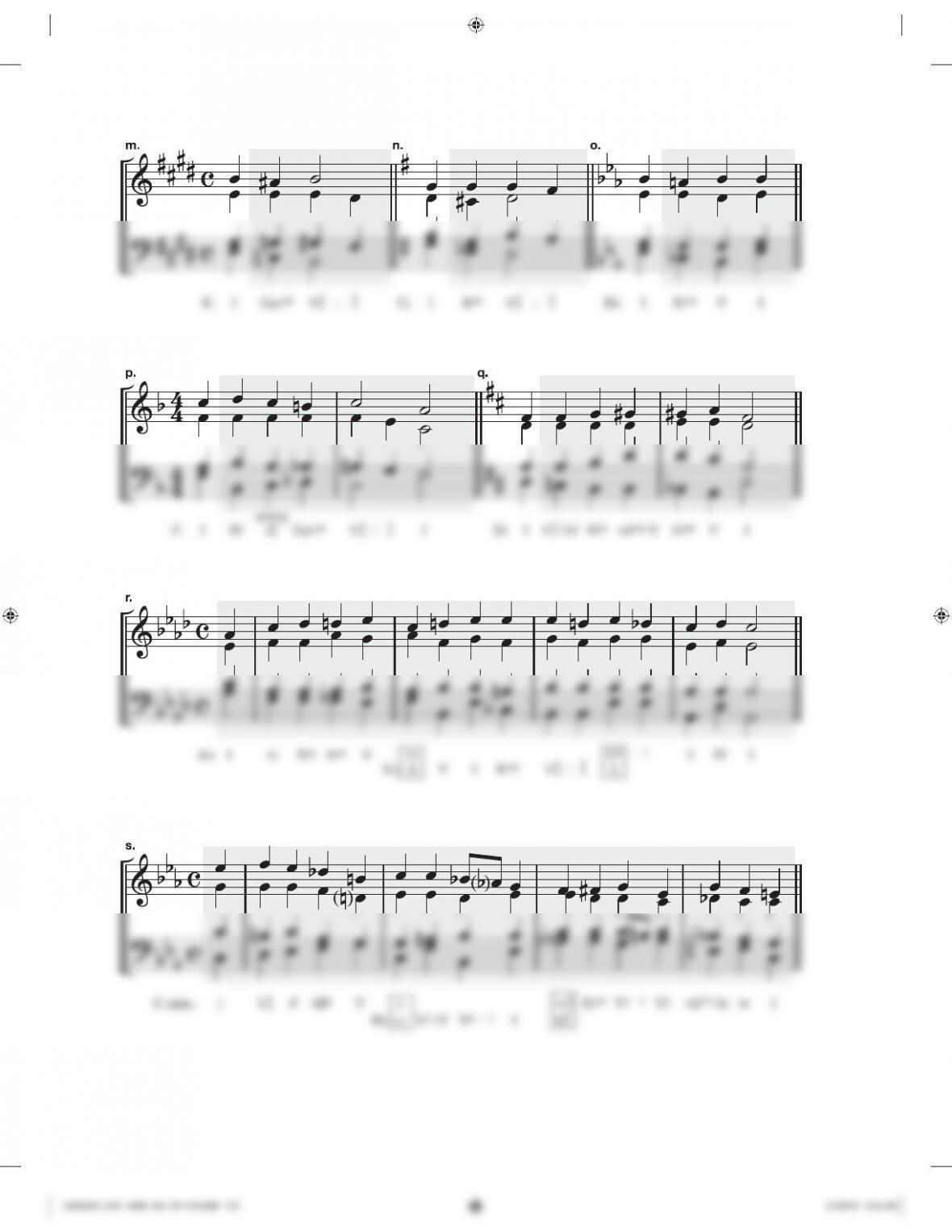
410 | CHAPTER 31 | Augmented Sixth Chords
NAME:
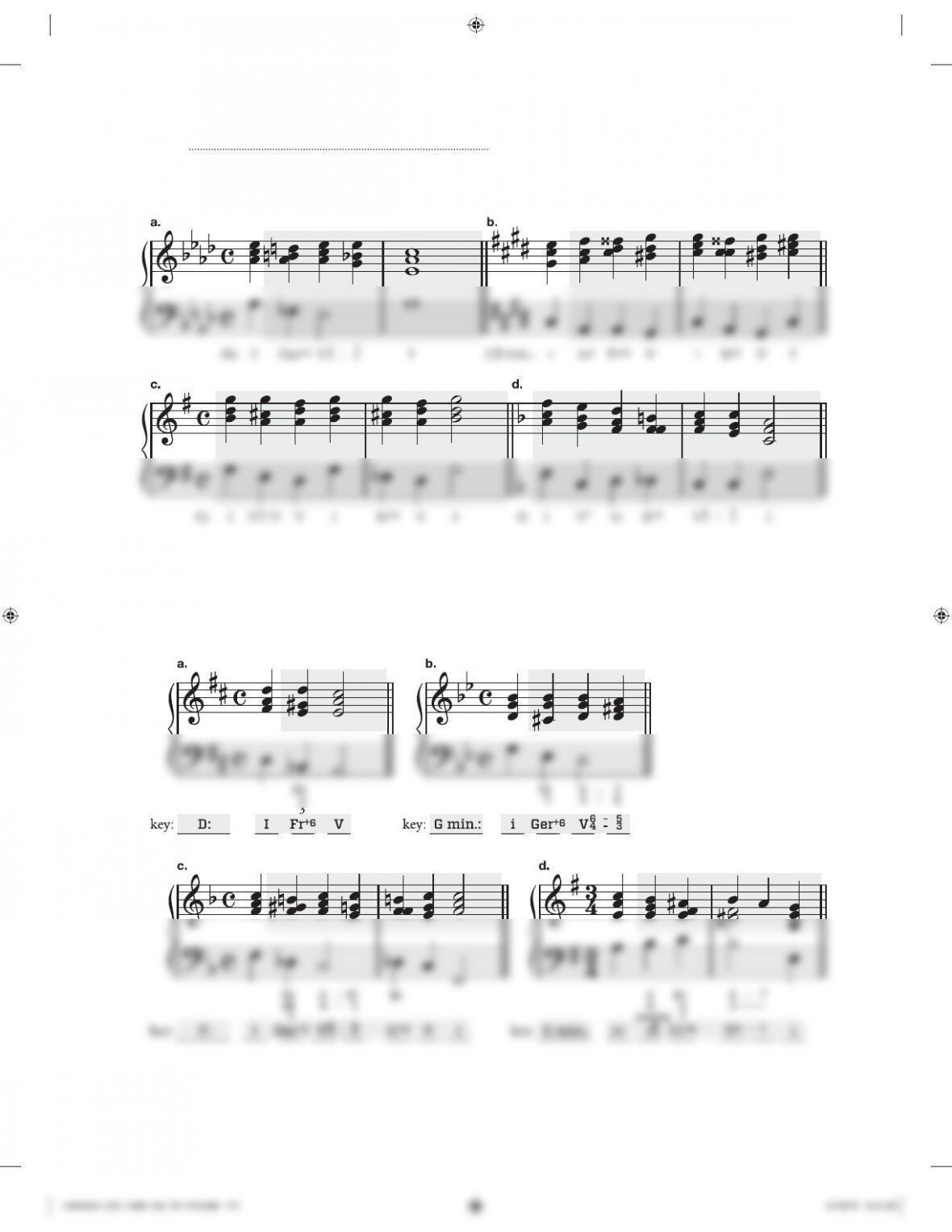
2. Realize the following Roman numerals in keyboard format.
D. REALIZING FIGURED BASS
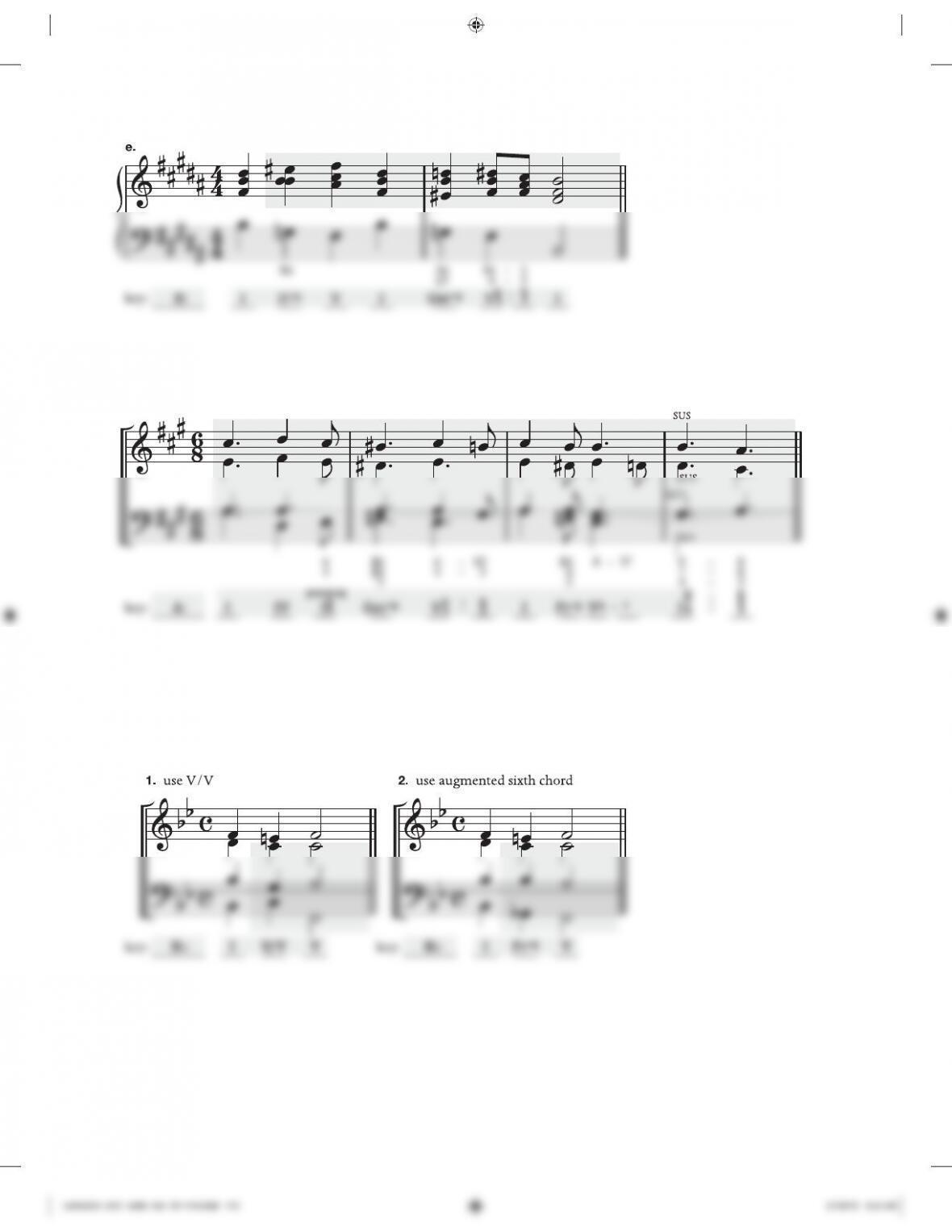
1. Realize the figured basses in keyboard format. Then label the keys and Roman
numerals.
412 | CHAPTER 31 | Augmented Sixth Chords
2. Realize the figured bass in SATB format. Then label the key and Roman numerals.
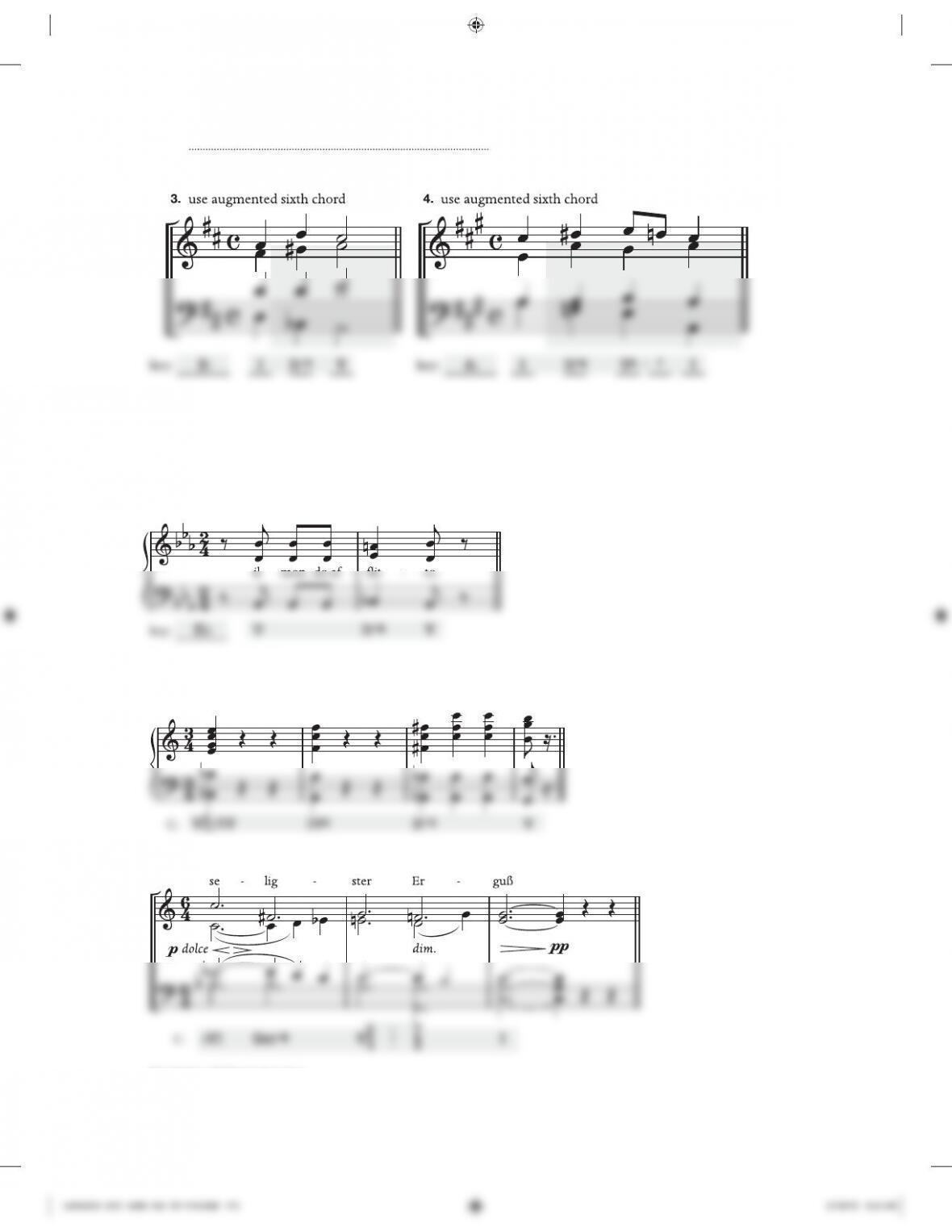
E. HARMONIZING MELODIES
Label the key and harmonize each of the following melodic fragments in SATB
format, using the indicated chromatic chord and labeling the Roman numerals.
F. Analysis | 413
NAME:
F. ANALYSIS
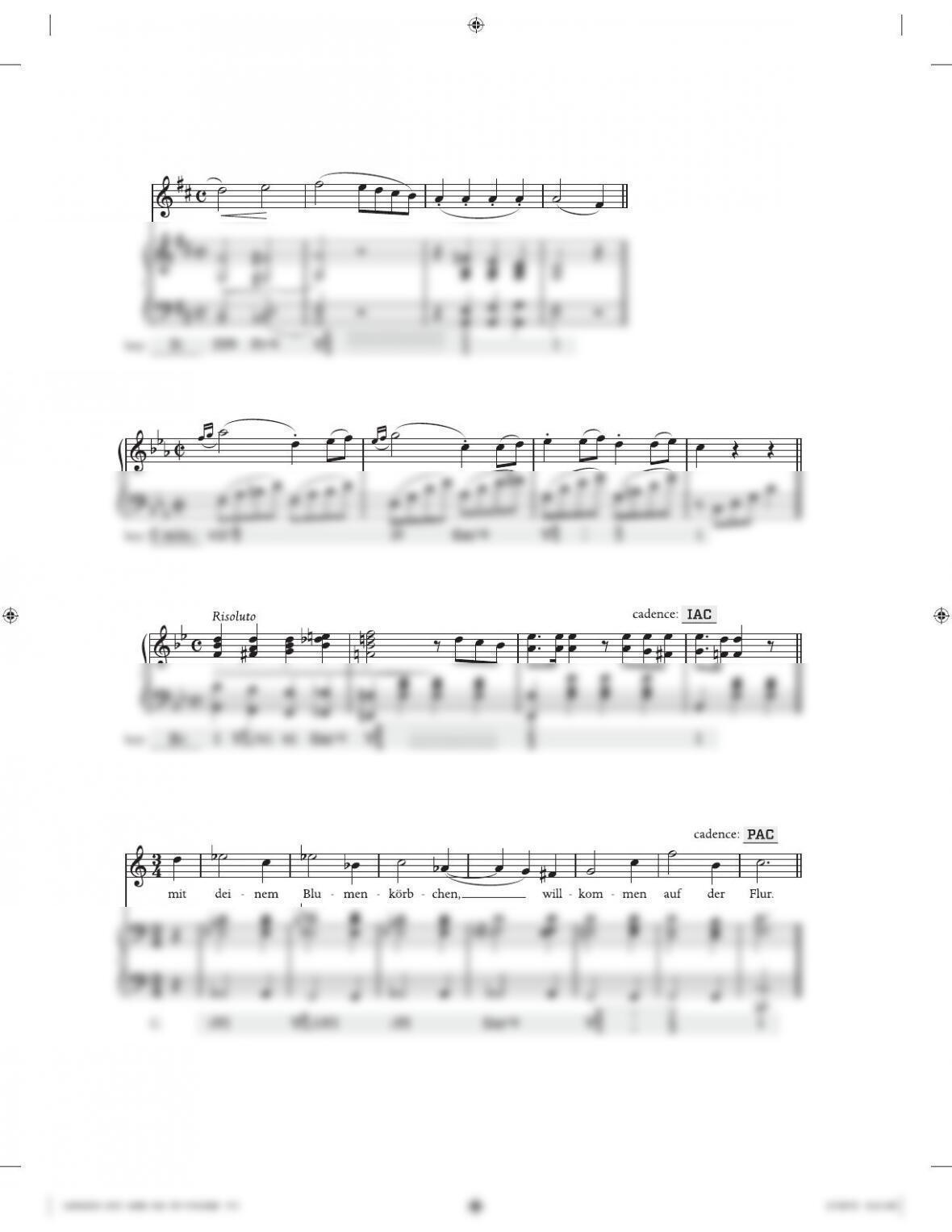
Label the keys and the harmonies in the following passages. Identify cadences where
requested.
1. Giovanni Paisiello, Passione di Gesù Cristo (The Passion of Jesus Christ)
Translation: The aicted world.
2. Ludwig van Beethoven, Overture to the Creatures of Prometheus, Op. 43
3. Johannes Brahms, “Im Herbst” (“In Autumn”)
Translation: Holiest outpouring.
414 | CHAPTER 31 | Augmented Sixth Chords
4. Franz Schubert, Sonata for Violin in D, D. 384, i
5. Ludwig van Beethoven, Piano Sonata, Op. 13 (“Pathétique”), iii
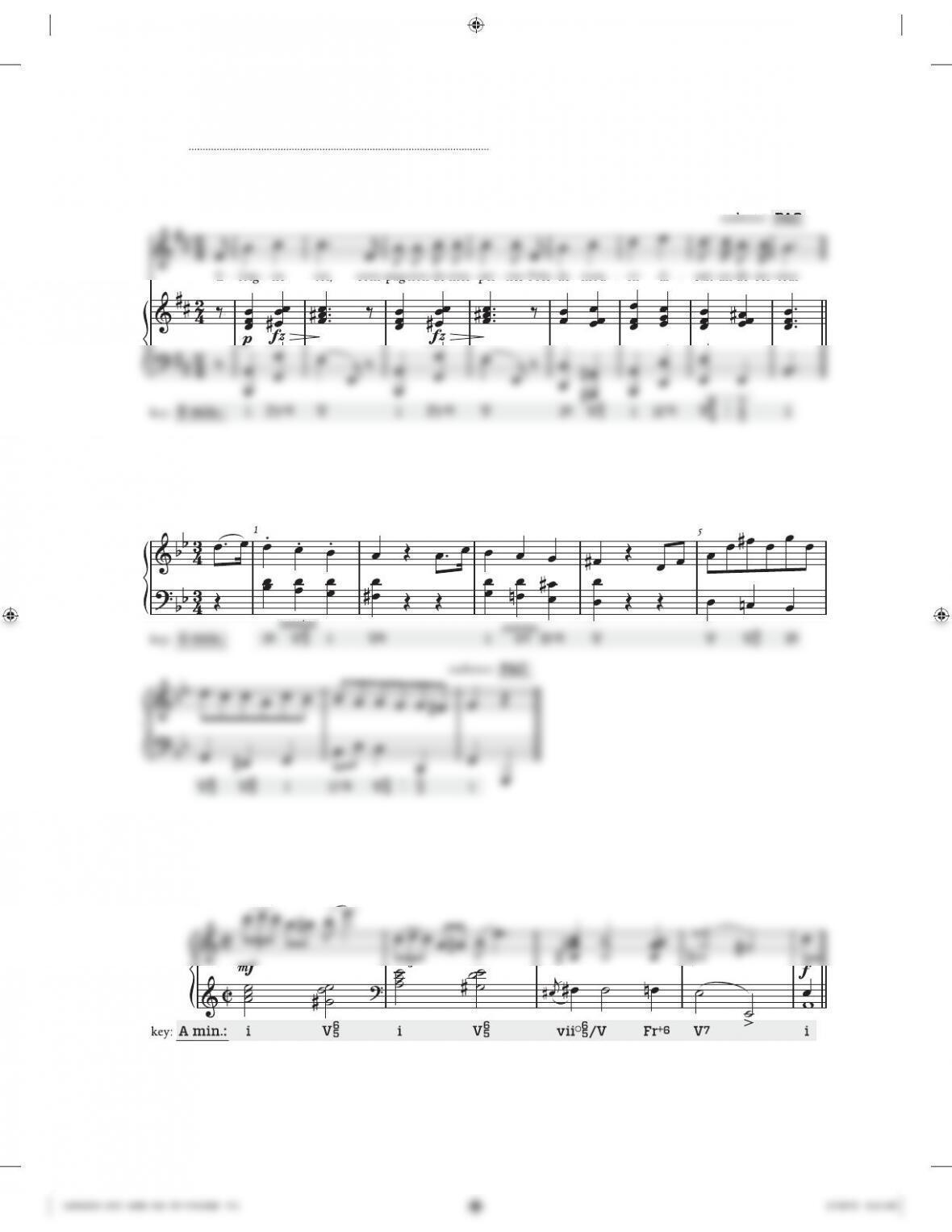
6. Jacob Sawyer, “Seventh Exposition Grand March”
7. Josephine Lang, “An den Frühling”
Hint: This excerpt includes an applied chord.
Translation: With your ower basket, welcome to the meadow.
F. Analysis | 415
NAME:
8. Hortense de Beauharnais, “Eloigne toi” (“Move Away”)
Translation: Move away, companion of my pain near death, said a deserter.
9. Ludwig van Beethoven, Bagatelle, Op. 119, No. 1
Label the cadence as well as the key and harmonies.
How is repetition used in measures 1
–
4? What features increase the momentum in
measures 5
–
8 compared to measures 1
–
4?
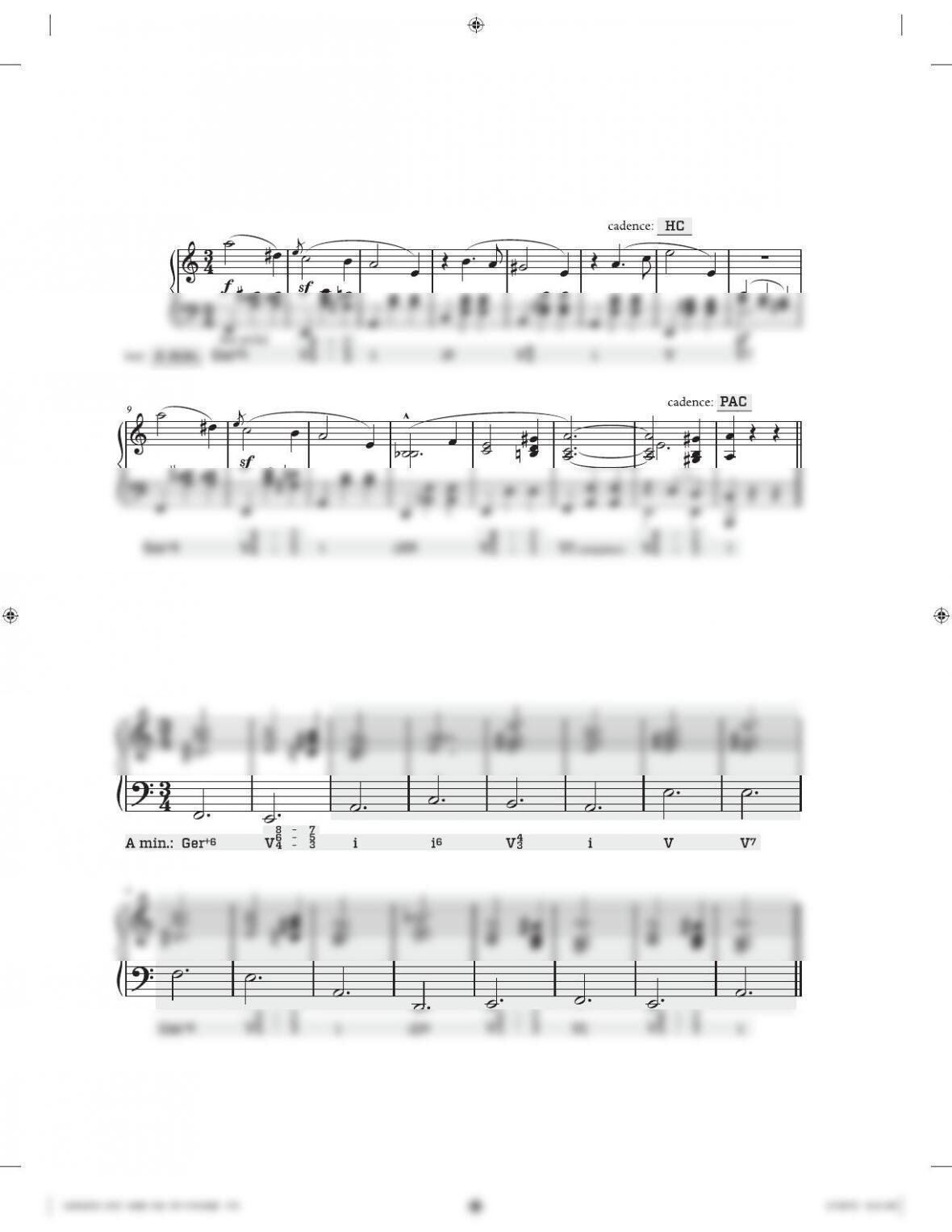
10. George Gershwin and Will Donaldson, “Rialto Ripple Rag”
416 | CHAPTER 31 | Augmented Sixth Chords
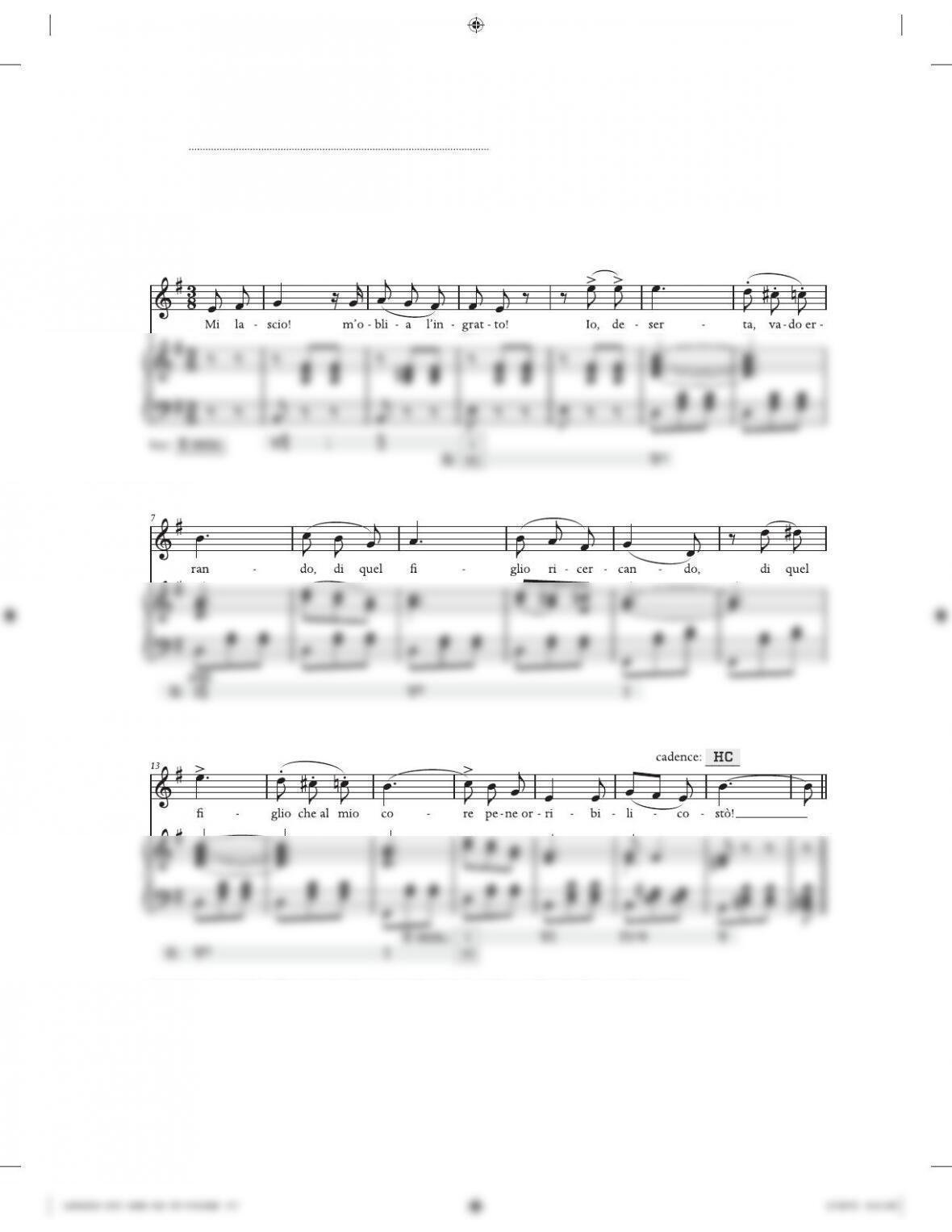
11. Robert Schumann, Waltz, Op. 124, No. 4
Label the cadences as well as the harmonies. (Hint: In each measure, the bass note on
the downbeat serves as the bass for the entire measure.)
In what ways are the two phrases in this excerpt similar to one another, and how do
they dier? What creates a sense of blurring between the end of the first phrase and
the start of the next one?
Complete the simplified harmonic model of Schumann’s Waltz in four-part harmony,
keyboard format.
F. Analysis | 417
NAME:
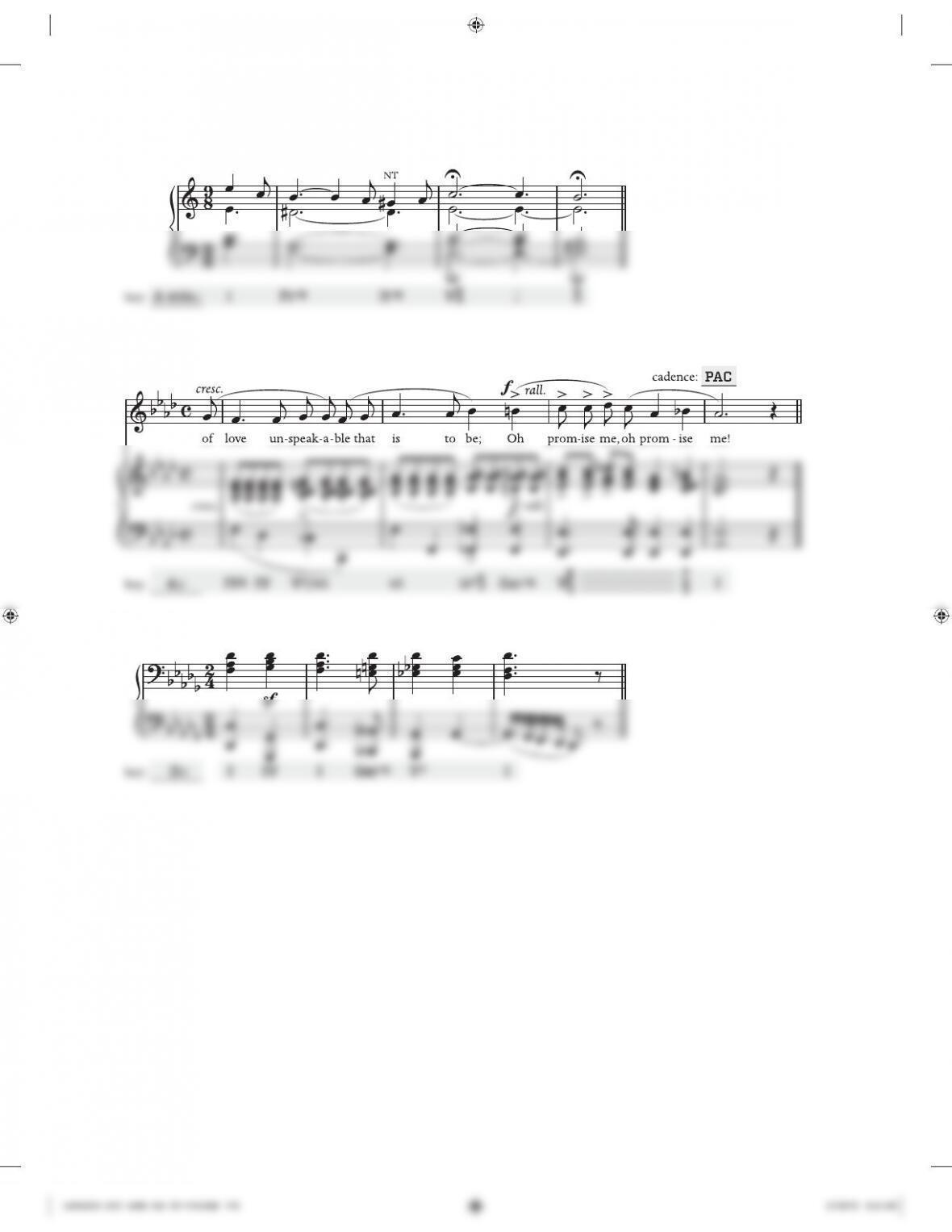
12. Giuseppe Verdi, Il Trovatore, Act III, scene iv
Label the key, the modulations or tonicizations, and the Roman numerals (at
most one chord per measure).
Translation: I was left and forgotten by that ingrate! Deserted, I wander searching for that son who cost my
heart horrible pain!
418 | CHAPTER 31 | Augmented Sixth Chords
13. Fanny Mendelssohn Hensel, “Abschied von Rom” (“Farewell to Rome”)
14. Reginald De Koven, “O Promise Me”
15. Ludwig van Beethoven, Piano Sonata, Op. 57 (“Appassionata”), ii
What is unusual about the resolution of the augmented sixth chord in this passage?
Why do you suppose Beethoven opted to use the spelling with raised ˆ
2 rather than
the minor form of ˆ
3 for this chord?