NAME:
B. Spelling
bII6 Chords | 393
A. QUESTIONS FOR REVIEW
1. What is another name for the bII6 chord?
2. Does bII6 have a Tonic, Dominant, or Subdominant function?
3. What scale degree is the root of a bII6? What note of the chord is in its bass? What
note should be doubled? What notes are usually not doubled, and why? Is bII6 a
major or minor triad?
4. Why does bII6 appear more frequently in minor keys than major keys?
B. SPELLING bII6 CHORDS
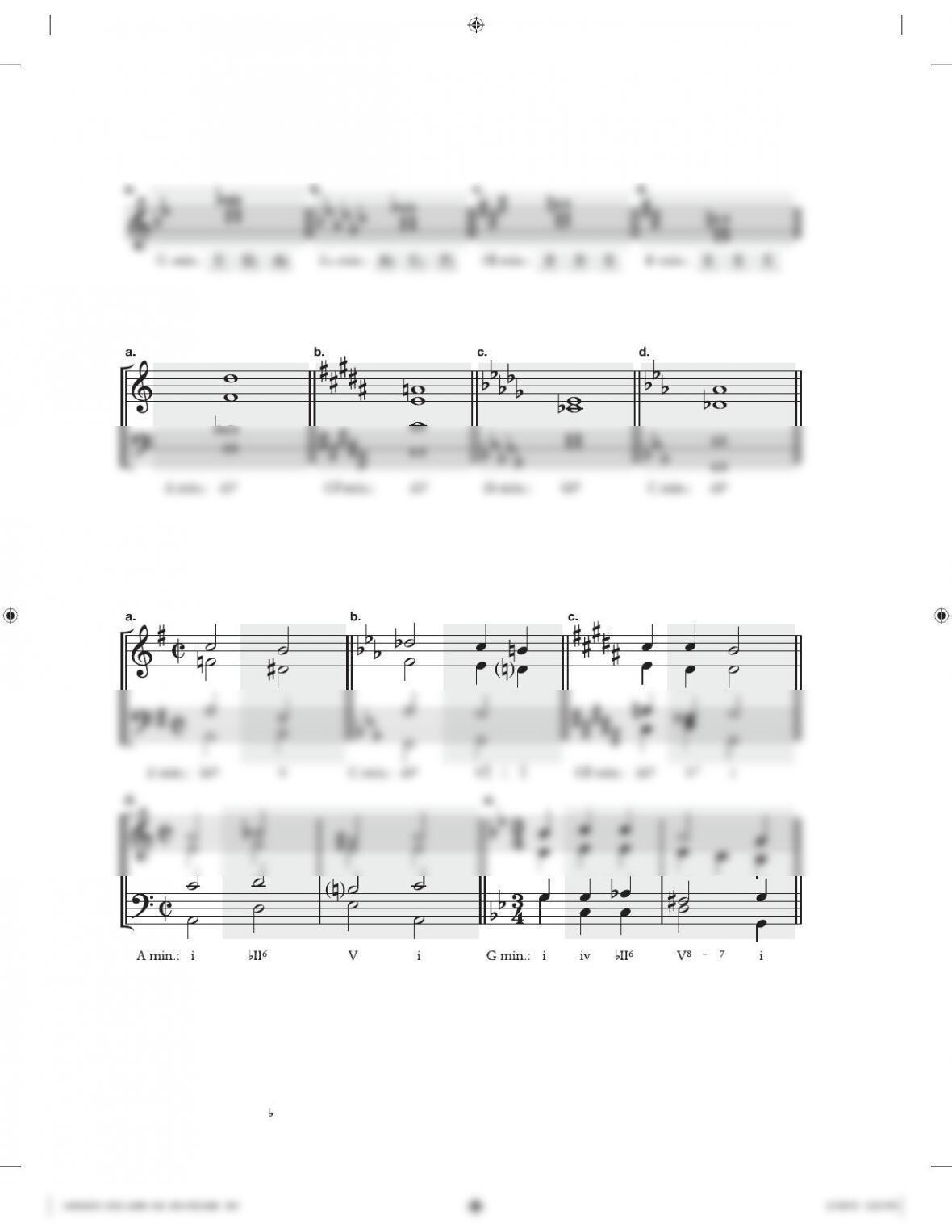
1. For each of the following:
• Write the key signature.
• Indicate lowered
ˆ
2.
• Then write the ii.6 and bII6 chords.
chapter
30 II6: The Neapolitan Sixth
394 | CHAPTER 30 | II6: The Neapolitan Sixth
2. Below the sta spell bII6 in each of the given keys. Then write the key signature
and the notes of the chord on the sta.
3. For each of the following keys, write the key signature. Then write bII6 in SATB
format, with proper doubling.
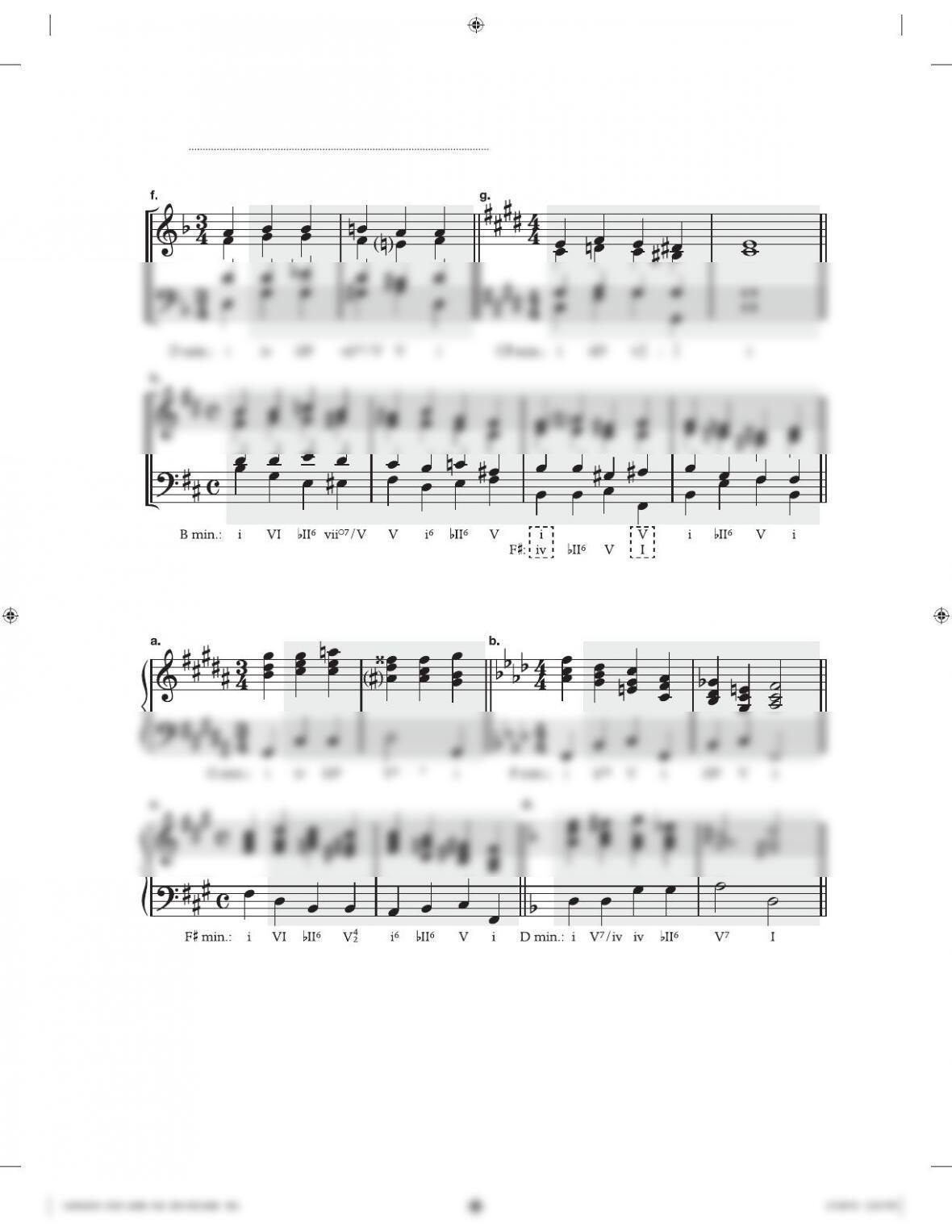
C. REALIZING ROMAN NUMERALS
1. Realize the Roman numerals in SATB format.
C. Realizing Roman Numerals | 395
NAME:
2. Realize the Roman numerals in keyboard format.
396 | CHAPTER 30 | II6: The Neapolitan Sixth
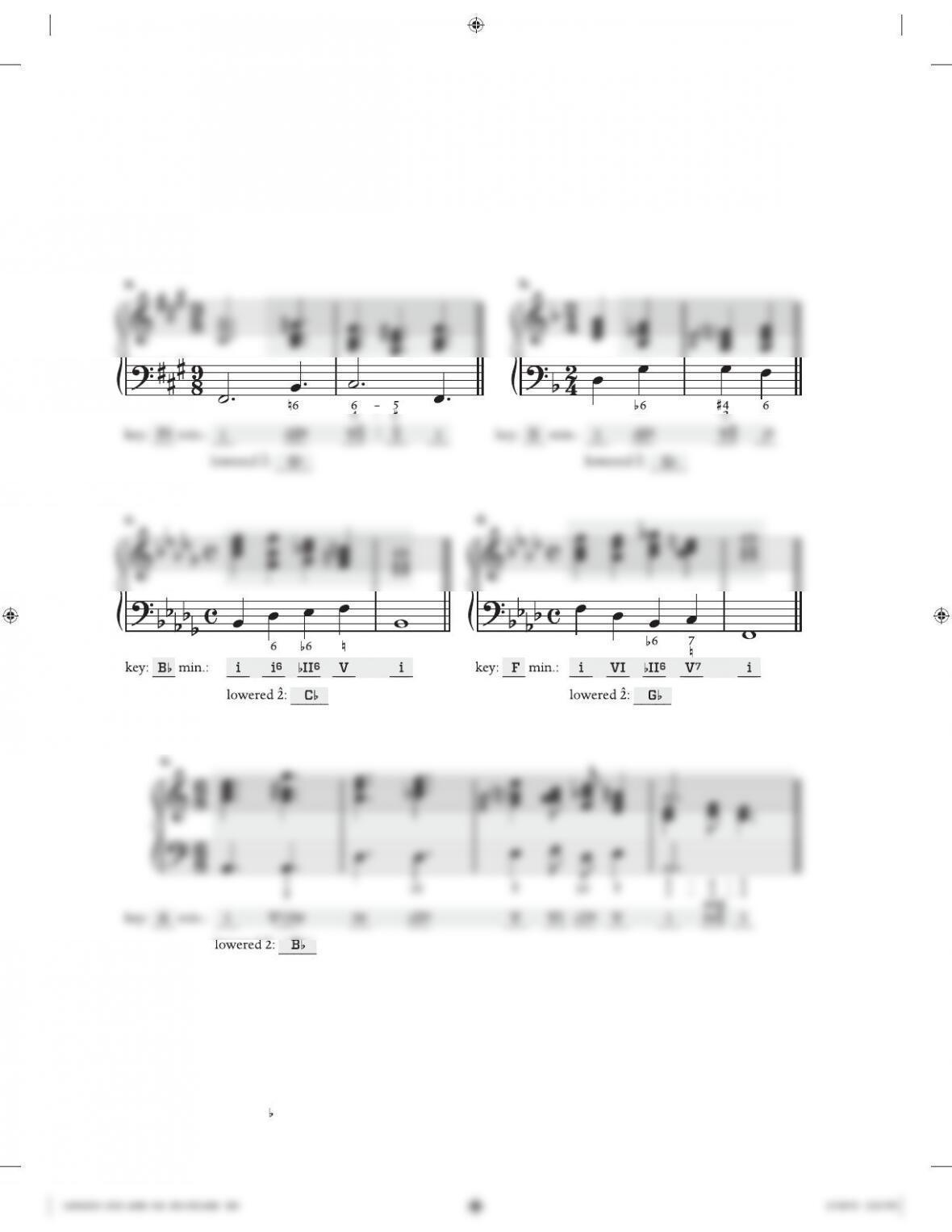
D. REALIZING FIGURED BASS
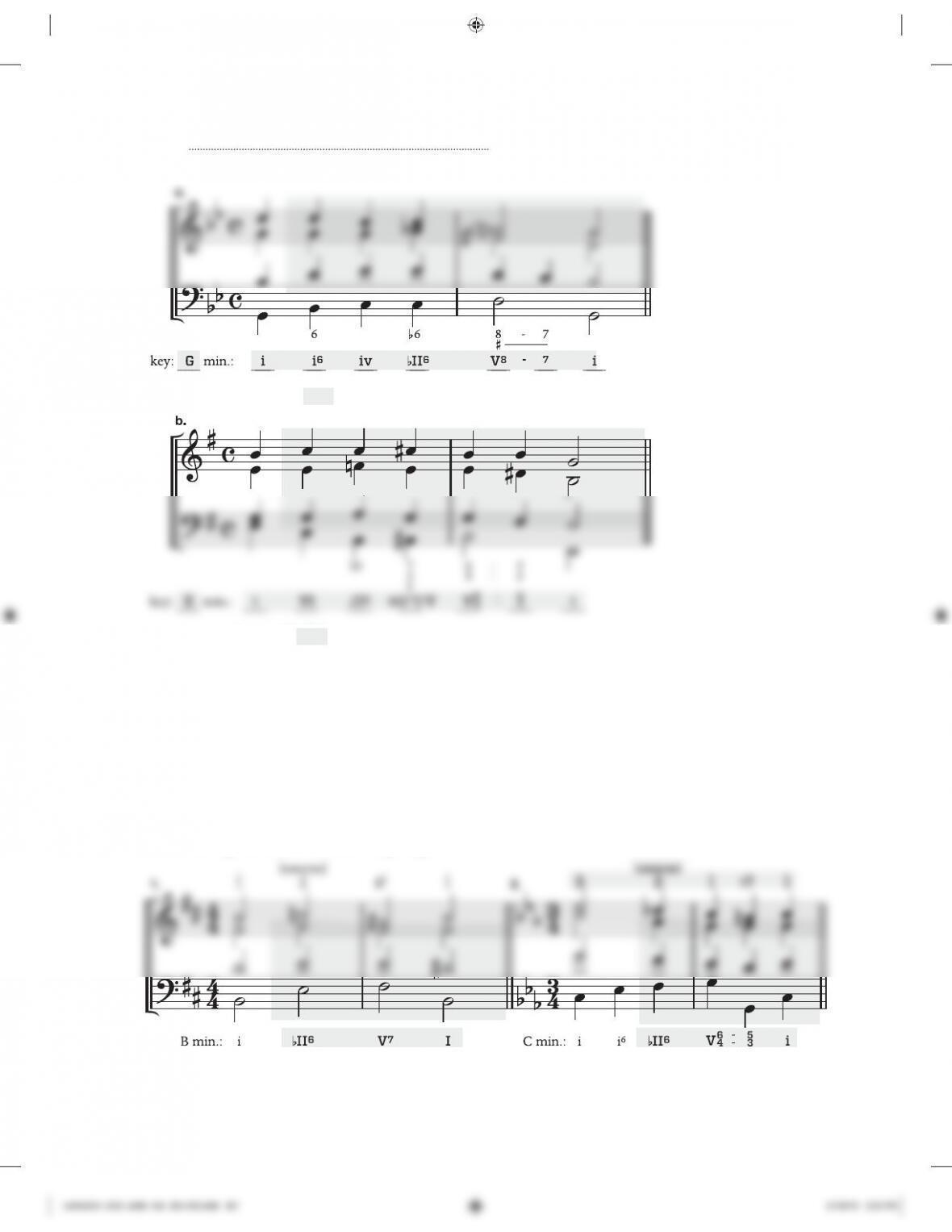
1. For each of the following:
• Realize the figured bass in keyboard format.
• Then identify the minor keys and the lowered ˆ
2.
• Finally, label the Roman numerals.
2. For each of the following:
• Realize the figured bass in SATB format.
• Then identify the minor keys and the lowered ˆ
2.
• Finally, label the Roman numerals.
E. Harmonizing Melodies | 397
NAME:
lowered ˆ
2 Fn
____
lowered ˆ
2 Ab
____
E. HARMONIZING MELODIES
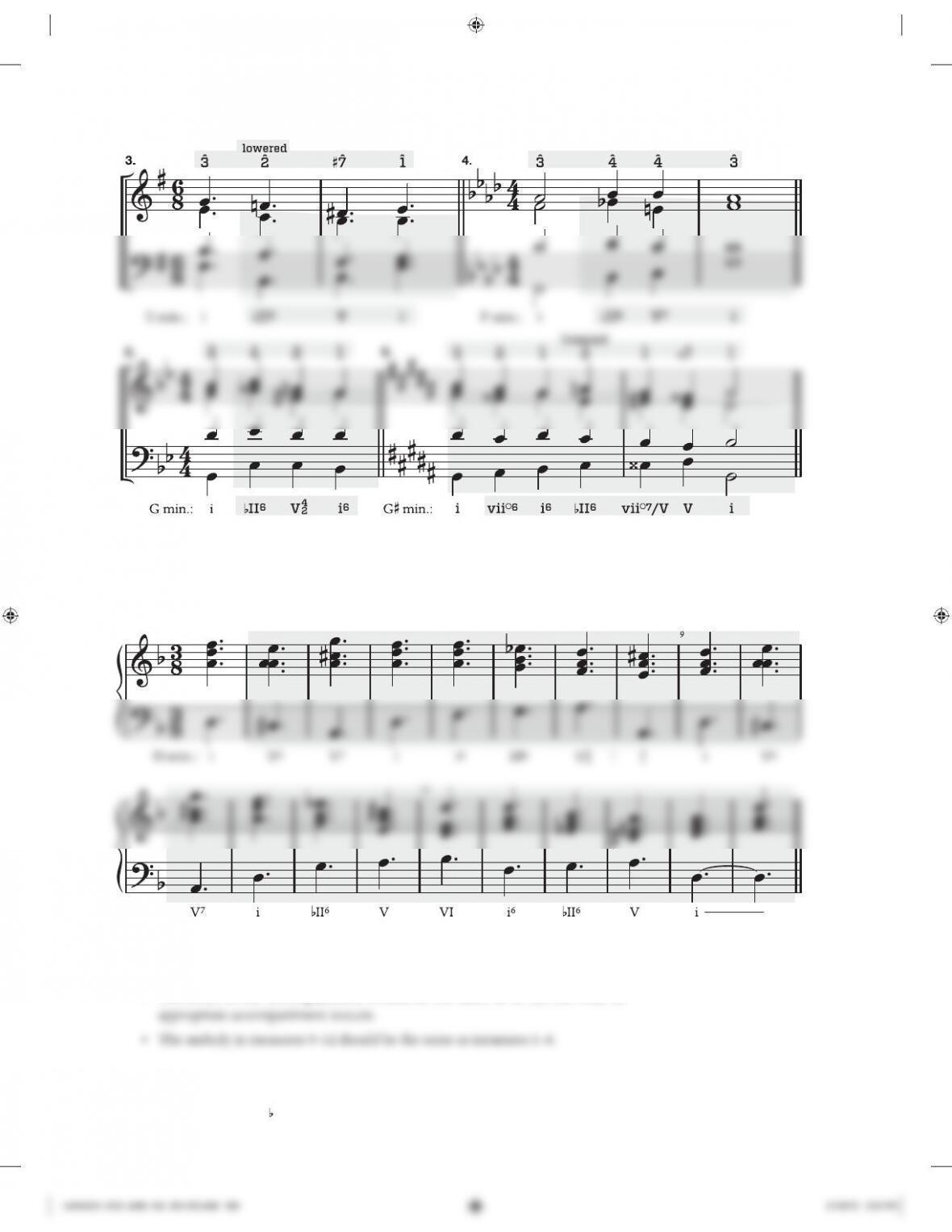
For each of the following:
• Label the scale degrees for each note of the melodies.
• Then suggest a harmonization in SATB format by providing a bass line and Roman
numerals.
• Fill in the inner voices.
• Use a Neapolitan sixth chord in each passage.
F. COMPOSITION
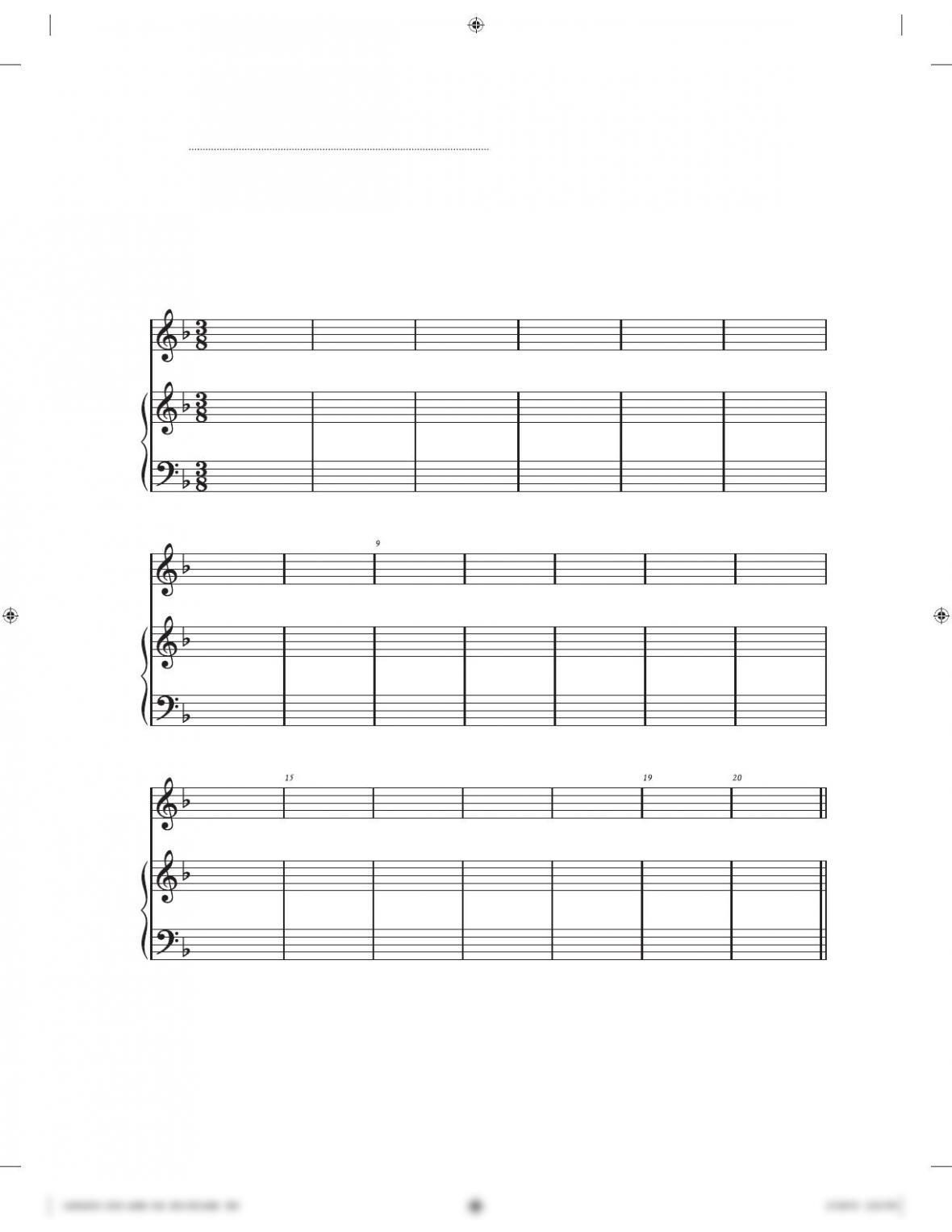
1. Realize these Roman numerals in keyboard format.
2. On the following staves, compose a piece for violin and piano, using the harmonies
in (1).
• The notes in the accompaniment should be the same as in (1), but with an
F. Composition | 399
NAME:
• There should be no parallel octaves between the violin part and the bass of the
piano.
• Note the deceptive cadence in measure 15.
• End the violin melody on the downbeat of measure 19; end the piano
accompaniment on the downbeat of measure 20.
400 | CHAPTER 30 | II6: The Neapolitan Sixth
G. ANALYSIS
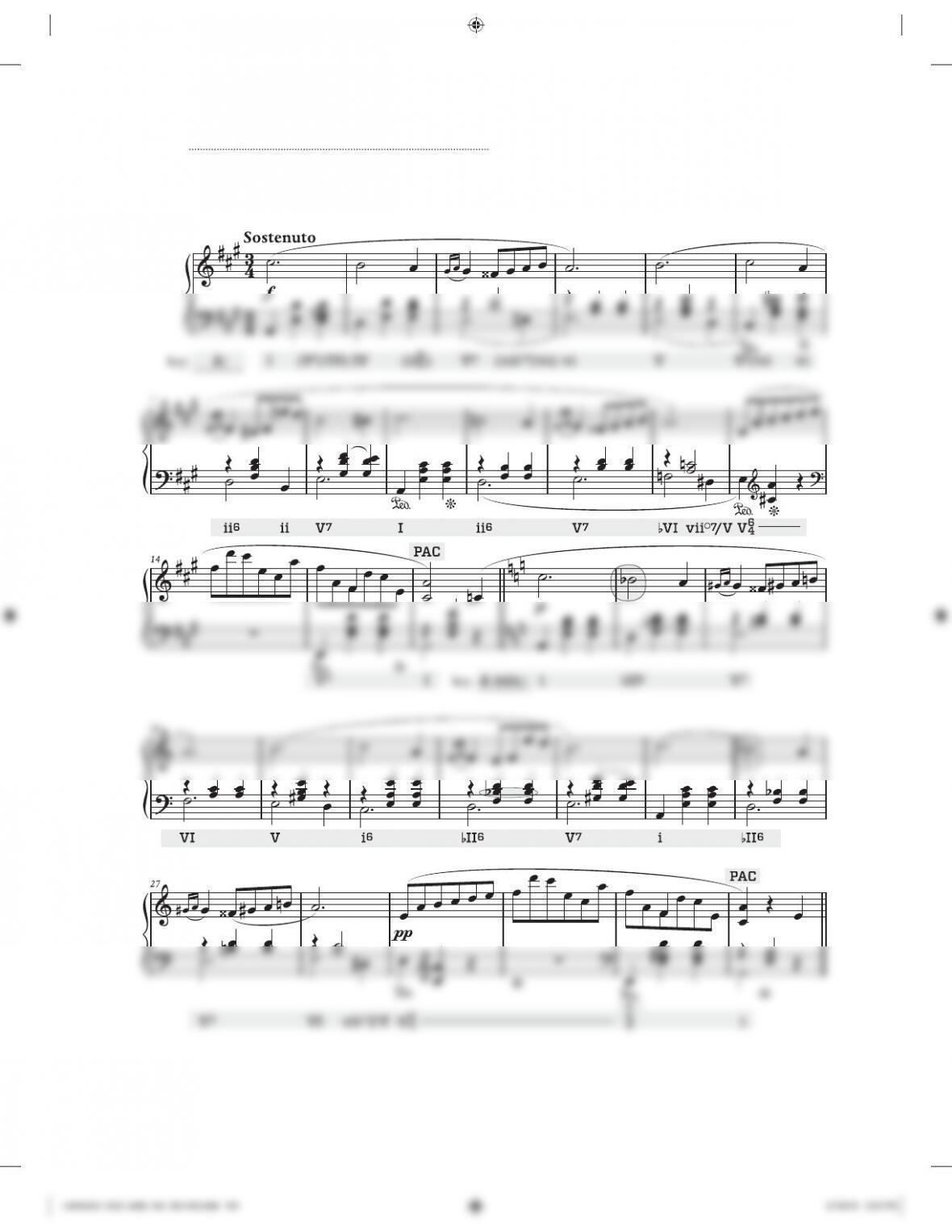
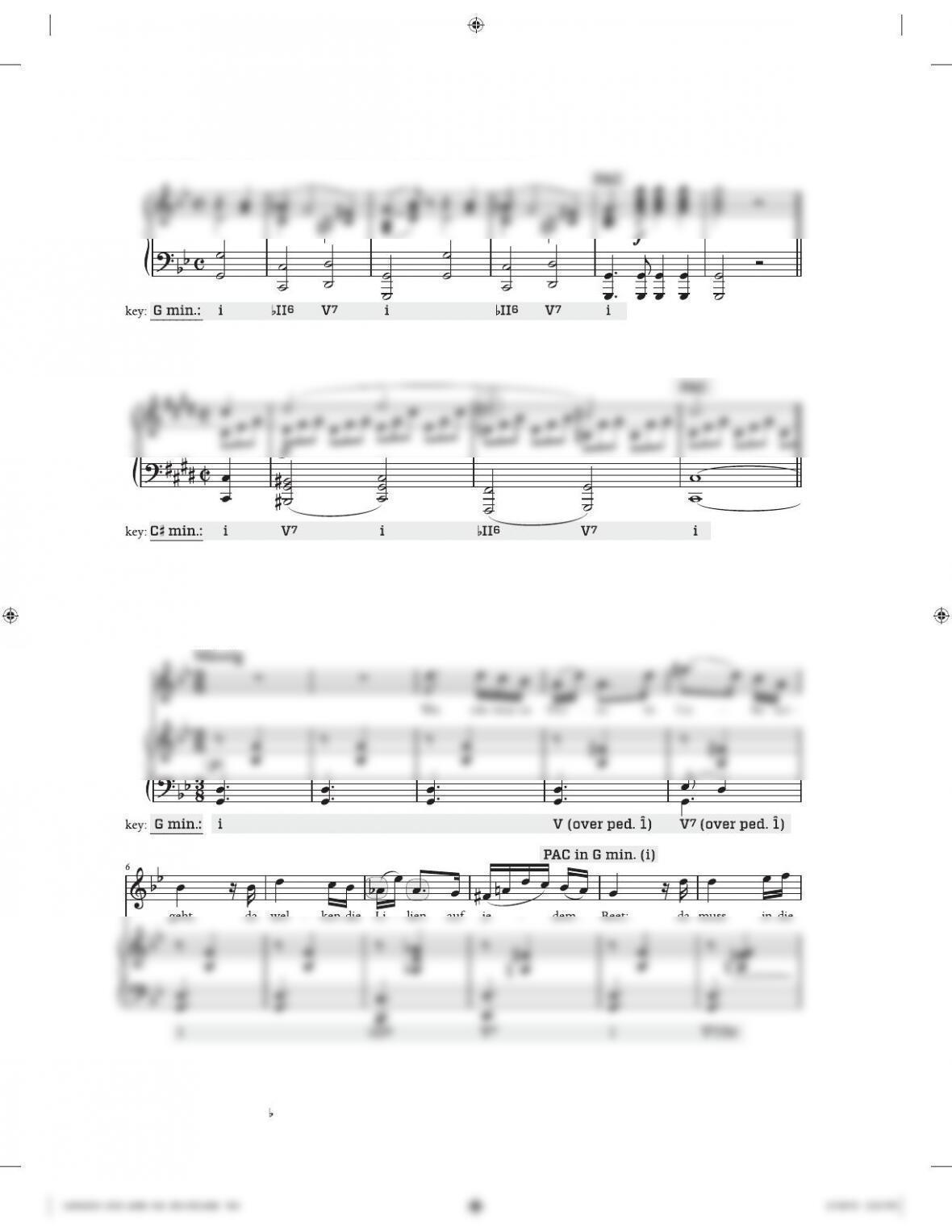
Analyze the following examples.
• Label the keys, cadences, and Roman numerals.
• Circle every instance of lowered ˆ
2 in the melody. In which of these pieces is
lowered ˆ
2 embellished before it leads down?
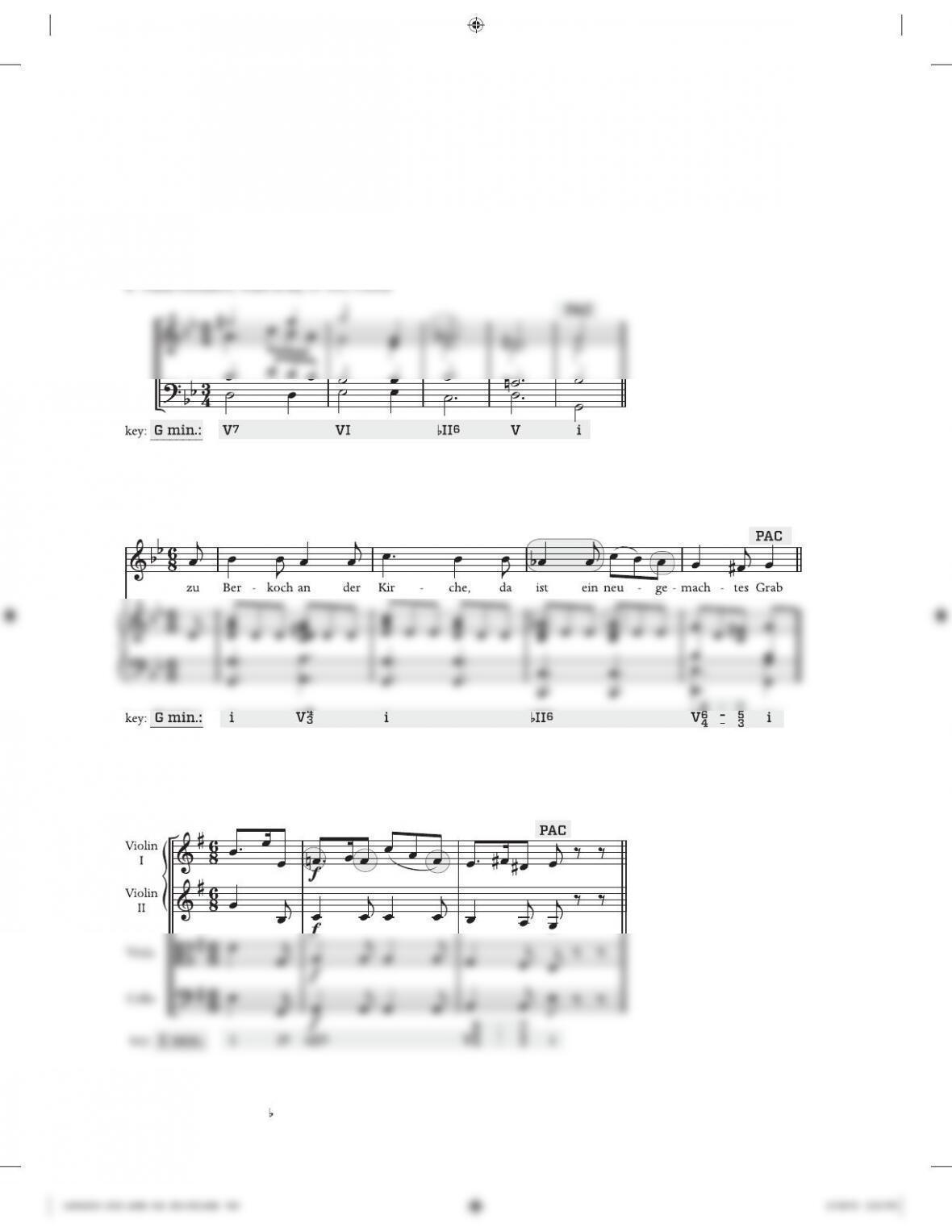
2. Louise Reichardt, “Vaters Klage” (“The Father’s Lament”)
Label only one chord in measure 2. Which notes in measure 2 are embellishing tones?
Translation: In Berkoch, next to the church, there is a newly dug grave.
3. Joseph Haydn, String Quartet, Op. 17, No. 1, iii
G. Analysis | 401
NAME:
4. Frédéric Chopin, Waltz, Op. 34, No. 2
402 | CHAPTER 30 | II6: The Neapolitan Sixth
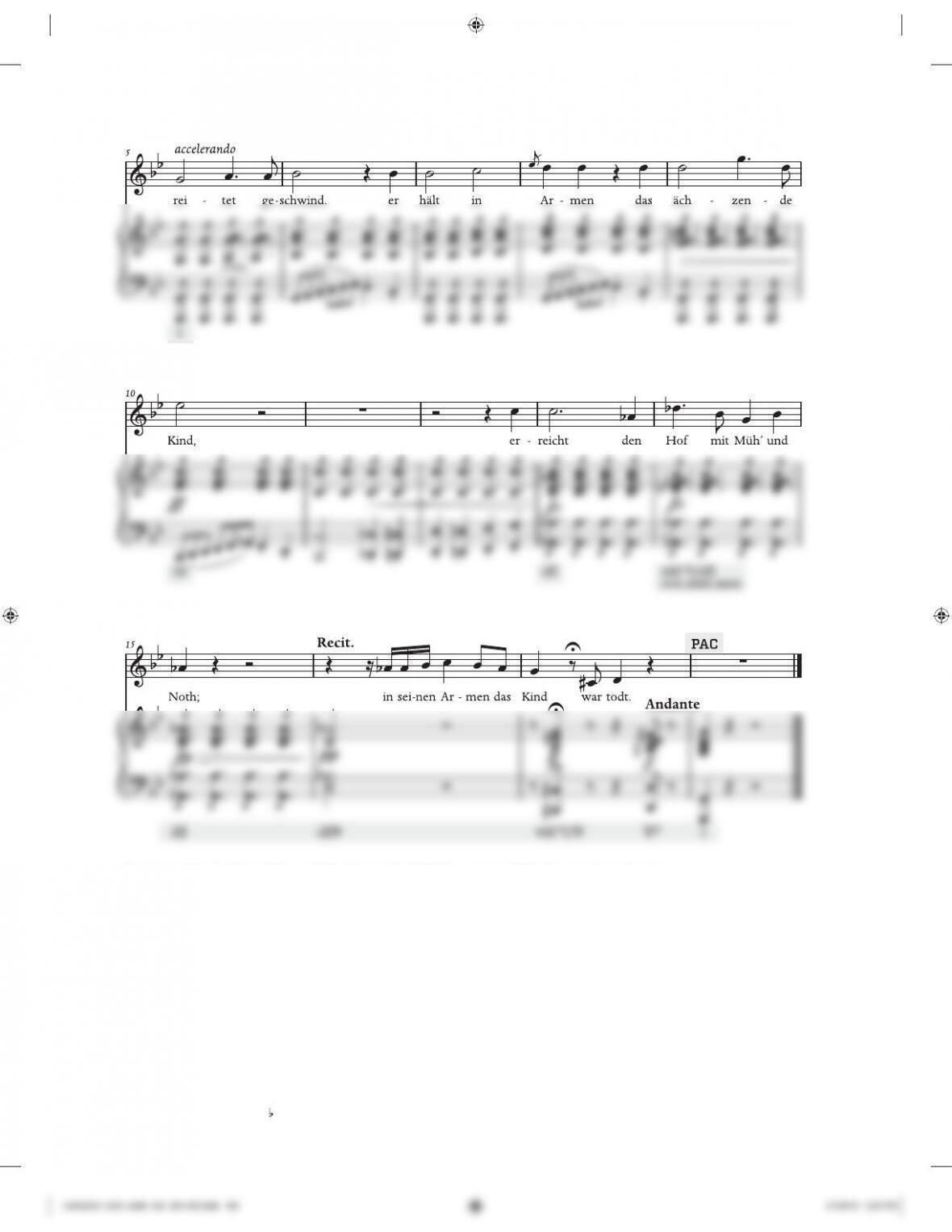
5. Christoph Willibald Gluck, “O malheureux Admète,” from Alceste
6. Ludwig van Beethoven, Sonata for Piano, Op. 27, No. 2, i
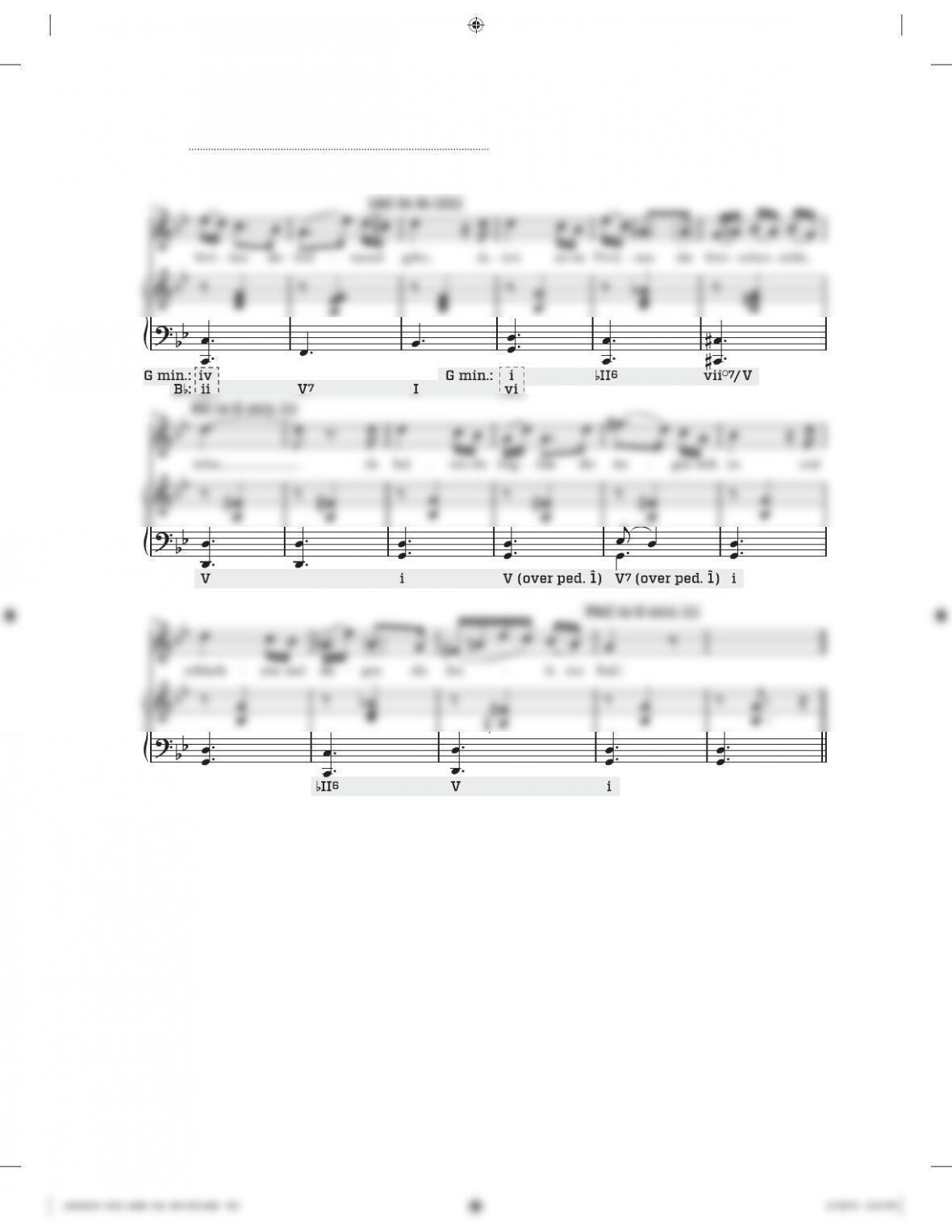
7. Franz Schubert, “Der Müller und der Bach” (“The Miller and the Brook”)
Label at most one chord per measure. Note that some harmonies are over a pedal
in the bass.
G. Analysis | 403
NAME:
Translation: Where a true heart dies from love, the lilies wither in every field. The moon goes behind the clouds
so that no one can see its tears. The angels close their eyes and weep and sing as they bring the soul to rest.
• In one appearance of a bII6, lowered ˆ
2 in the top voice is doubled in an inner
voice. In which measure does this doubling occur? Which voice (the top voice
or the inner voice) moves down to the leading tone in the next chord?
• Describe ways that the musical setting reflects the text.
404 | CHAPTER 30 | II6: The Neapolitan Sixth
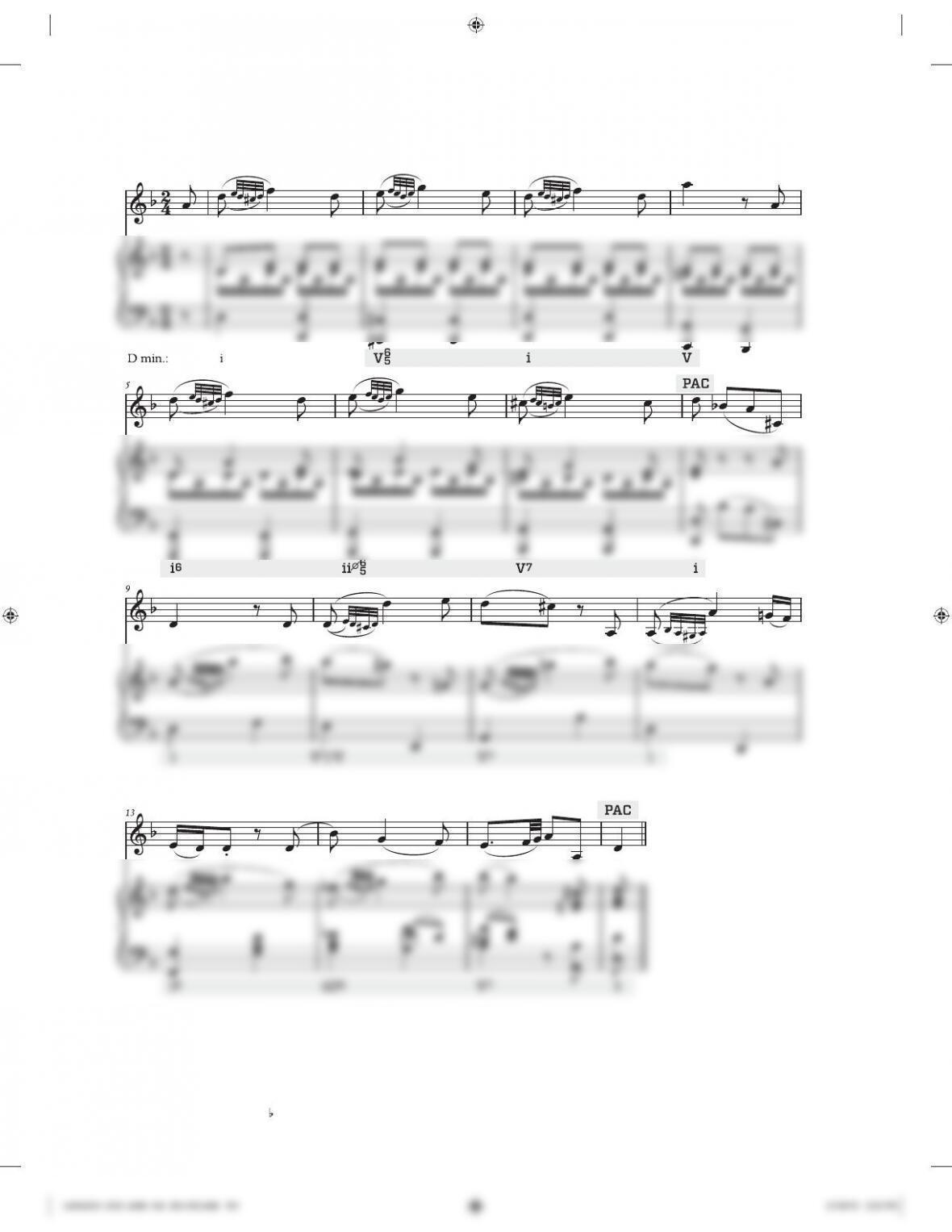
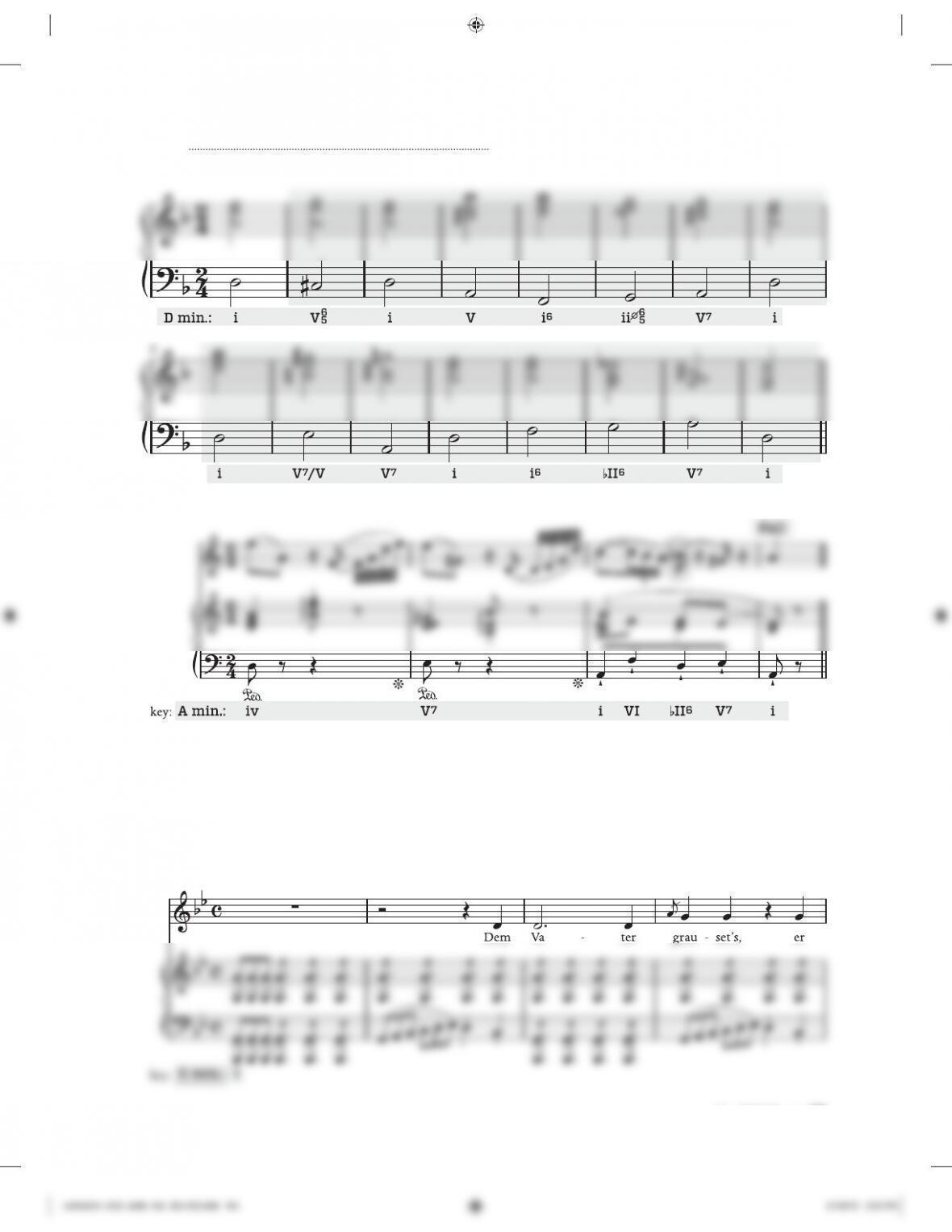
8. W. A. Mozart, Sonata for Violin and Piano, K. 377, ii
On the staves below, complete a simplified harmonic model in four-part harmony,
keyboard format, using at most one chord per measure.
G. Analysis | 405
NAME:
9. Saint-Saëns, Introduction and Rondo Capriccioso for Violin and Orchestra (arr. Bizet)
10. Franz Schubert, “Erlkönig” (“Elf-king”)
• Label at most one chord per measure, except for the second-to-last measure
(which uses two chords).
• Note that many of the chords extend for a number of measures, and the harmo-
nies in some measures simply consist of passing tones in the bass.
• One measure in this excerpt consists of an applied chord that appears over a
pedal point in the bass.
406 | CHAPTER 30 | II6: The Neapolitan Sixth
Translation: The shuddering father rode like the wind, he holds his groaning child in his arms. Struggling, he
reaches his courtyard, in his arms his child lay dead.