B. Identifying Triad Quality | 35
NAME:
A. QUESTIONS FOR REVIEW
1. Name each of the triad qualities. What are the qualities of the thirds and fifths
they contain?
2. What note of the chord (root, third, or fifth) is in the bass of a root-position triad?
A first-inversion triad? A second-inversion triad? What are the figures for each of
these inversions? What are common abbreviations for these symbols?
3. What is the quality of a triad identified by an uppercase Roman numeral? An
uppercase Roman numeral with a plus sign (c)? A lowercase Roman numeral? A
lowercase Roman numeral with a degree symbol (.)?
4. How does raising ˆ
7 in minor keys affect the triad whose root is ˆ
5? The triad whose
root is ˆ
7?
B. IDENTIFYING TRIAD QUALITY
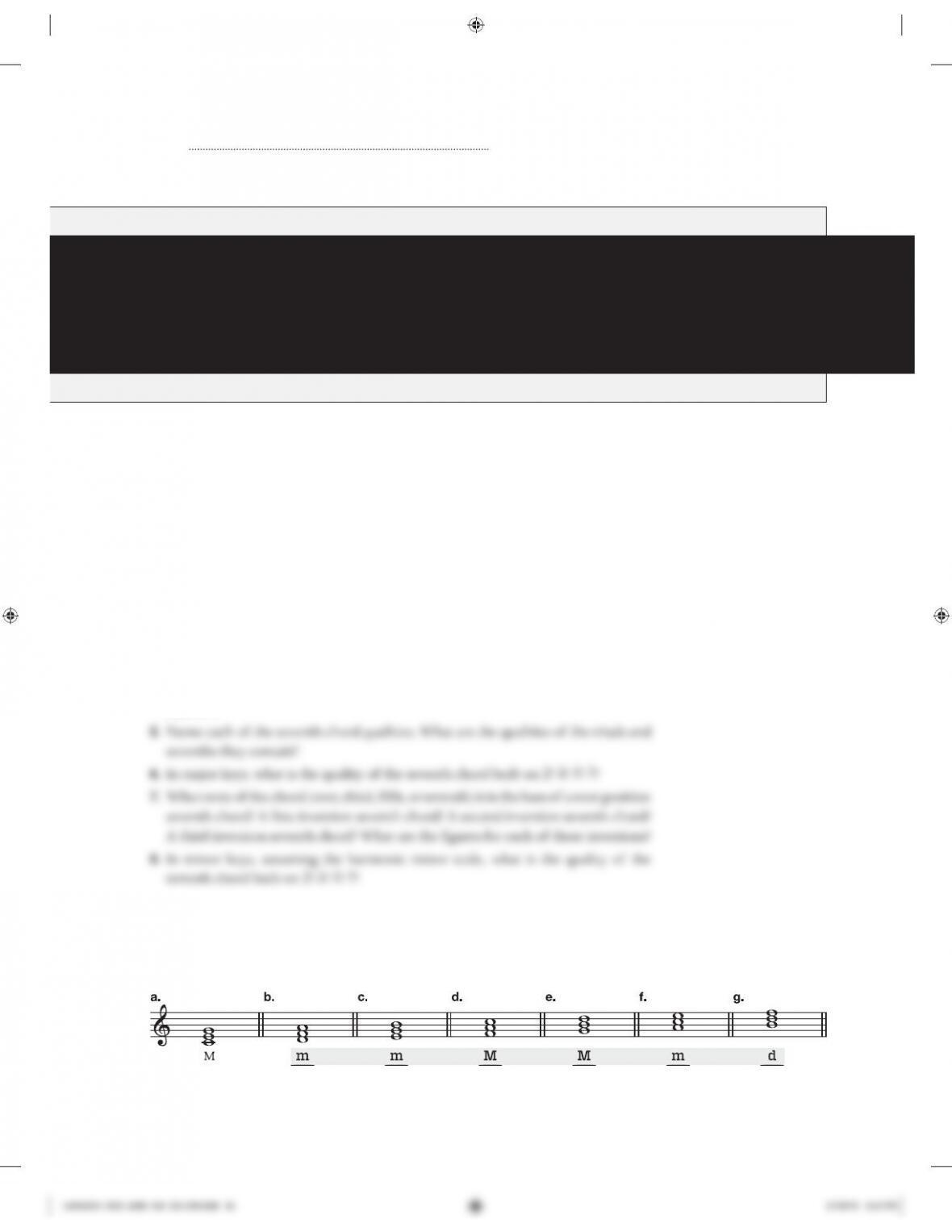
1. Identifying natural triads: Identify the quality of each triad (d = diminished;
m = minor; M = major; A = augmented).
chapter
3Triads and Seventh Chords
36 | CHAPTER 3 | Triads and Seventh Chords
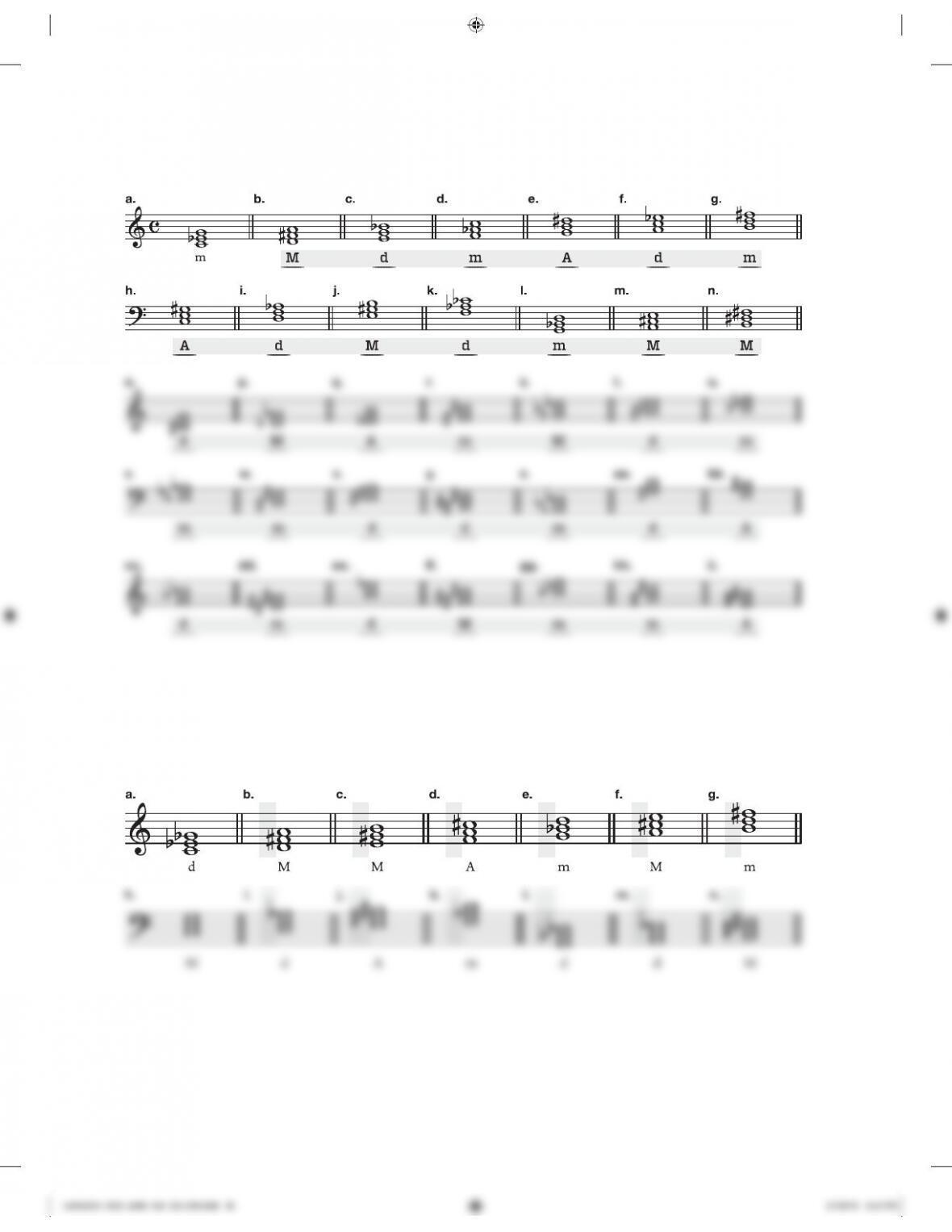
2. Identifying triad quality for all triads: Identify the quality of each triad
(d = diminished; m = minor; M = major; A = augmented).
C. WRITING TRIADS
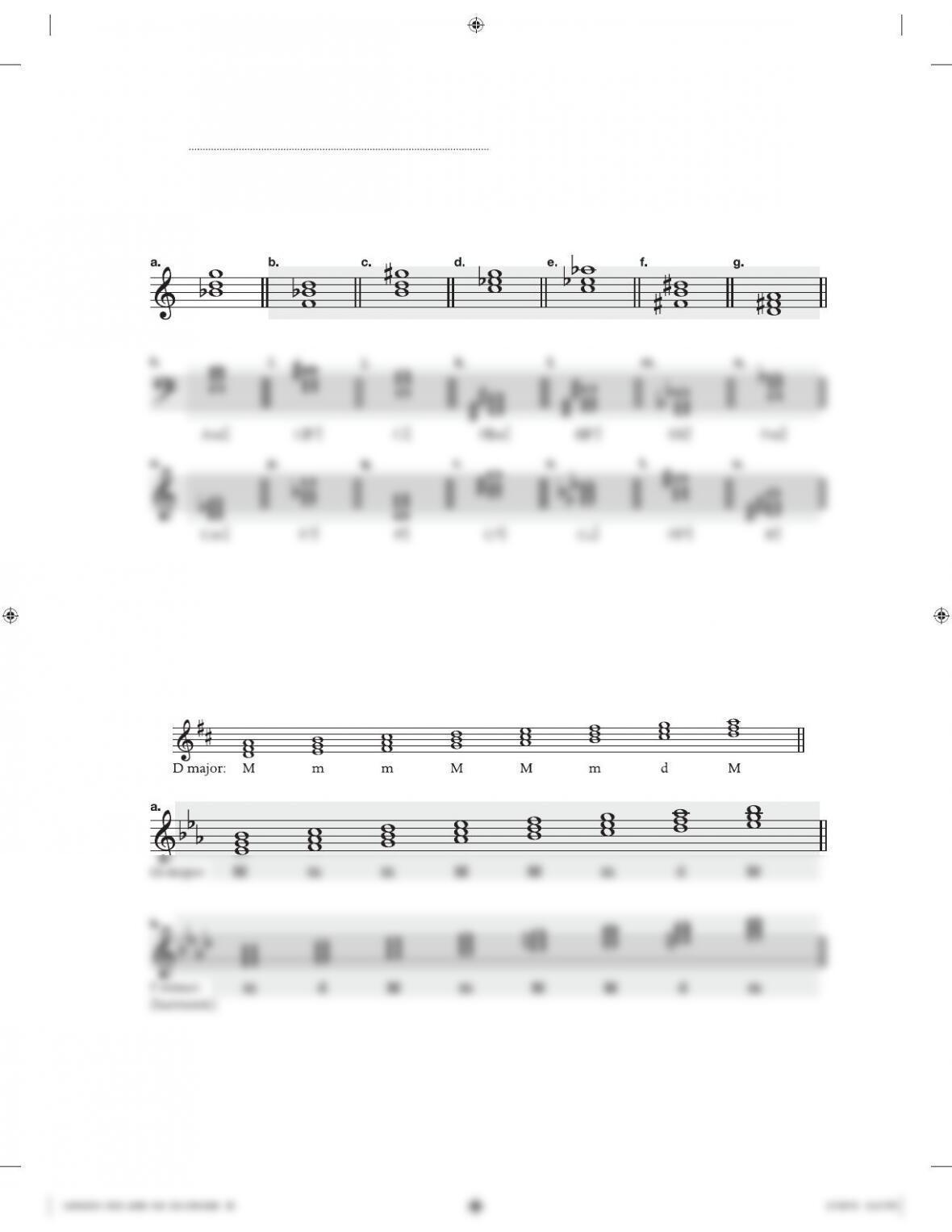
1. Add accidentals to the upper note(s) of each natural triad to produce the chord
quality indicated. Do not alter the root.
D. Triad Inversions | 37
NAME:
2. Write each triad in root position.
3. Given the root, third, or fifth, add two notes to complete the triad. Do not alter
the given note.
D. TRIAD INVERSIONS
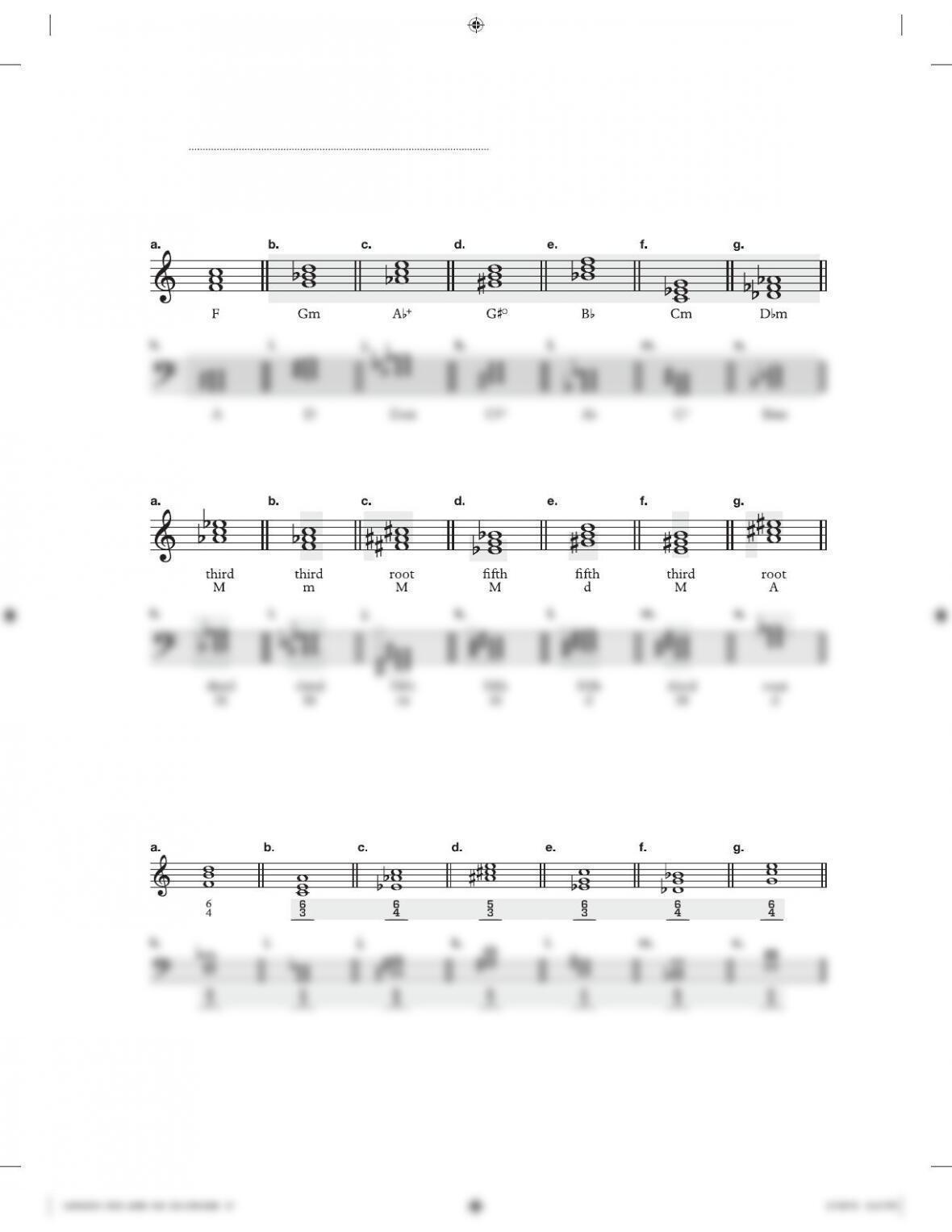
1. Identifying inversions: Identify the position of each triad (root position = 5
3; first
inversion = 6
3; second inversion = 6
4).
38 | CHAPTER 3 | Triads and Seventh Chords
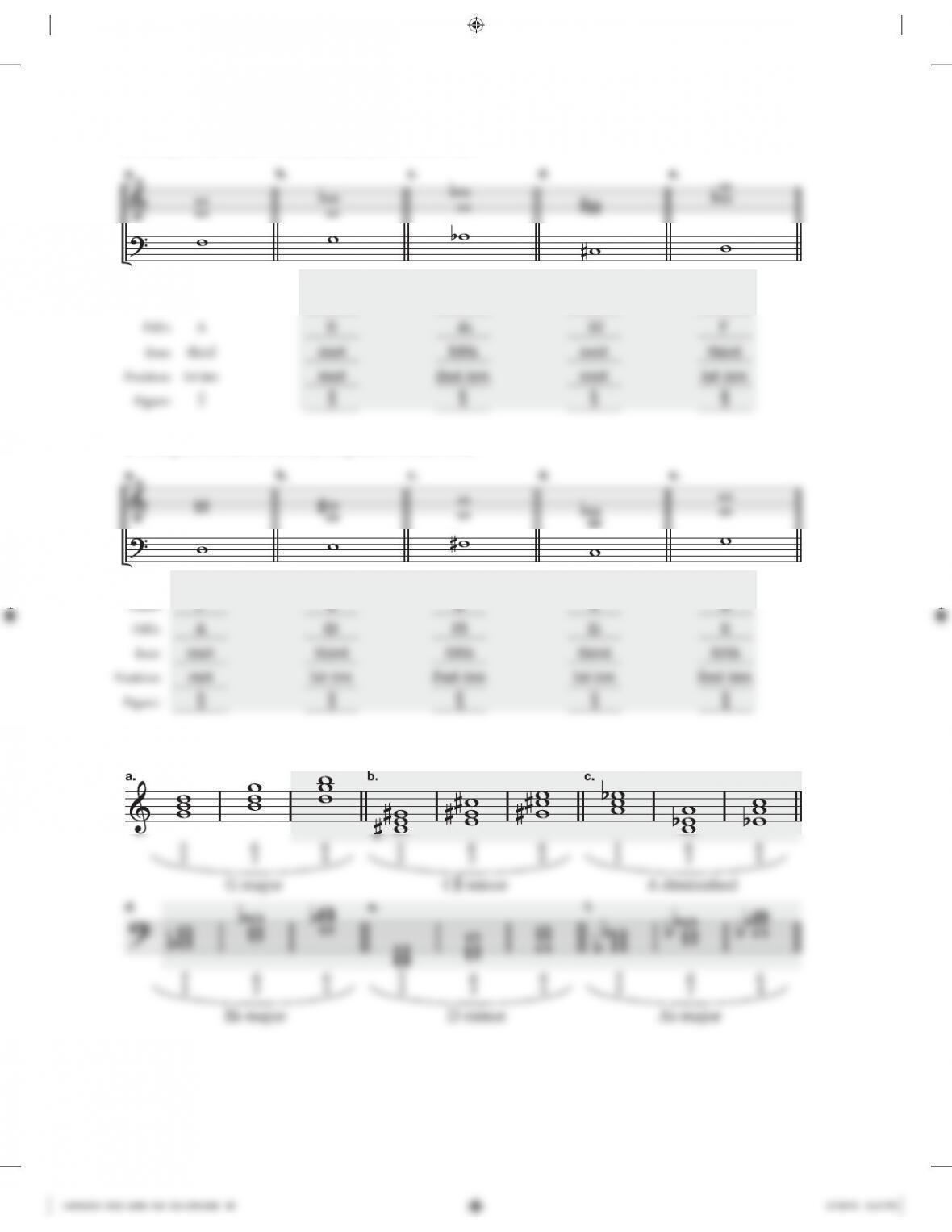
2. Complete the table to identify the position of each triad.
Root: D G Db C
# B
b
_______ _______ _______ _______
Third: F B
b F E D
_______ _______ _______ _______
# F
3. Complete the table to identify the position of each triad.
Root: D C B A C
_______ _______ _______ _______ _______
4. Writing triad inversions: Write each triad in all three positions.
E. Triads in Major and Minor Keys | 39
NAME:
5. Writing triad inversions: Write each triad (keep the spacing between the pitches as
close as possible).
Gm6
3 B
b6
4 G
#.6
3 Cm5
3 A
b6
3 B
6
4 D
5
3
#.6
6
#m5
#.6
E. TRIADS IN MAJOR AND MINOR KEYS
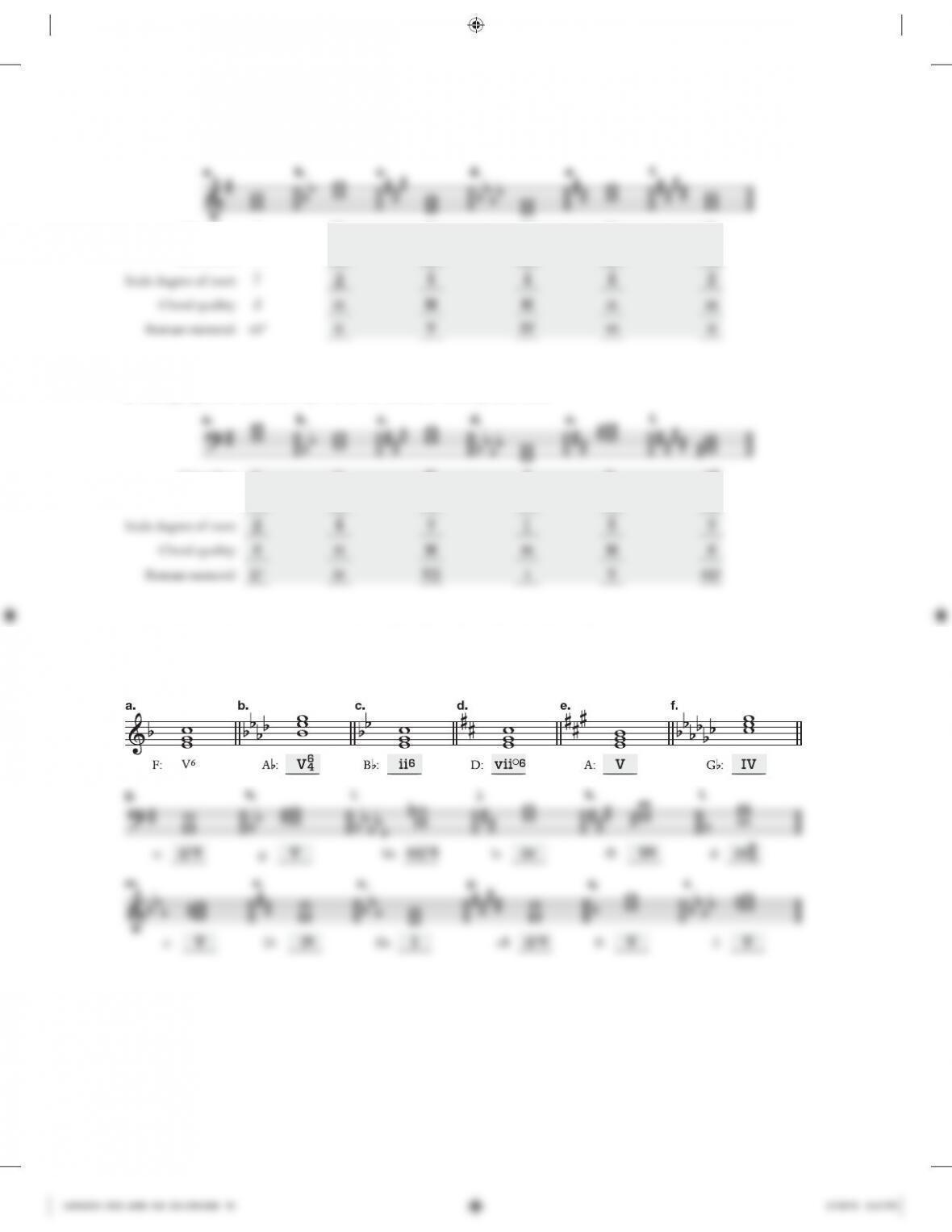
1. Writing triads in a key: Write the key signature and the scale. Then write the seven
triads in that scale, and identify the quality of each. (Note: The leading tone should
not be raised in building the III triad.)
40 | CHAPTER 3 | Triads and Seventh Chords
2. Identifying triads in a major key: Fill in the blanks to identify each triad.
Major key: G B
b A Ab D E
___ ___ ___ ___ ___
Chord root: F# C E Db B F#
___ ___ ___ ___ ___
^
^
^
^
3. Identifying triads in a minor key: Fill in the blanks to identify each triad.
Minor key: e g f# f b c#
___ ___ ___ ___ ___ ___
Chord root: F# C E F F# B
#
___ ___ ___ ___ ___ ___
^
^
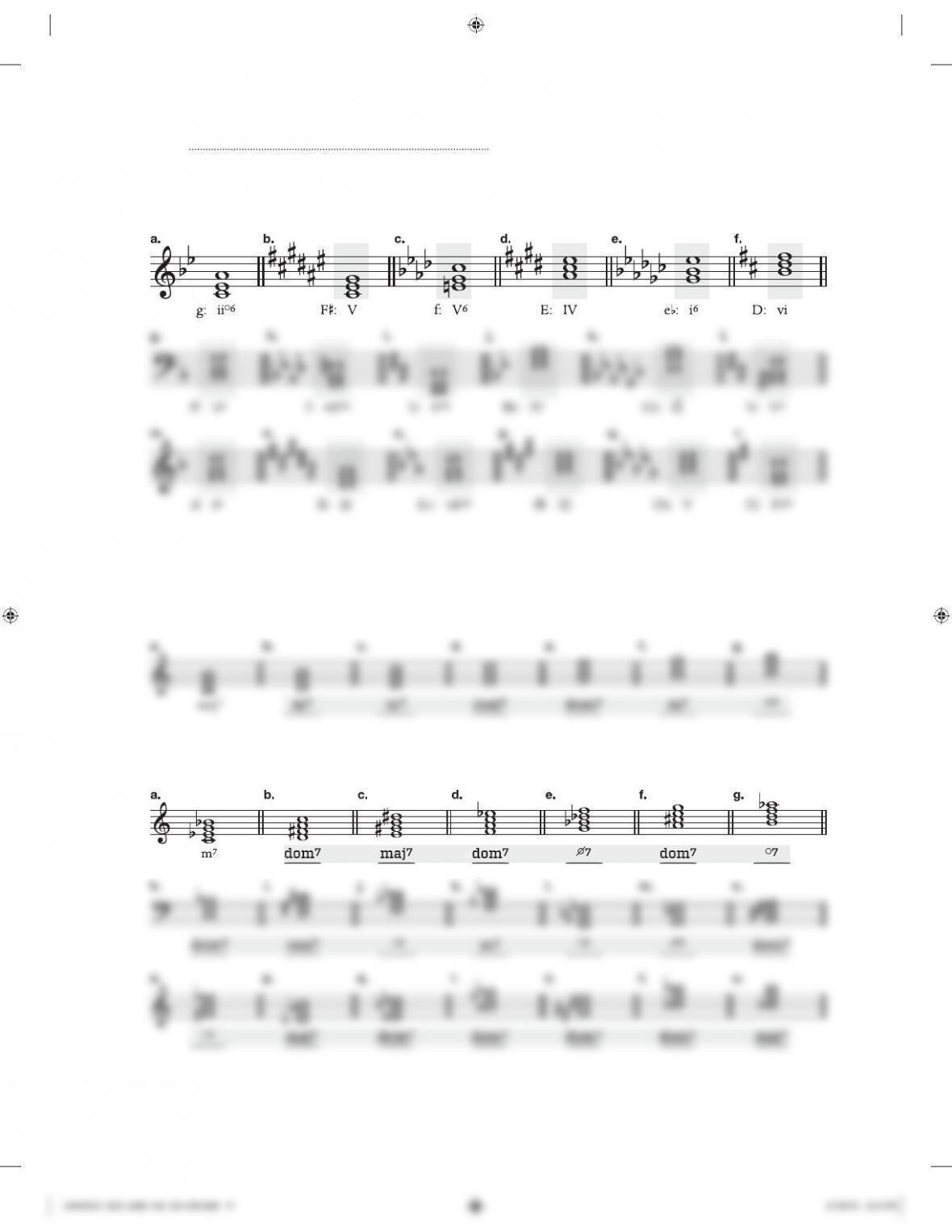
4. Identifying triads in major and minor keys: Identify each triad in the key indicated
with a Roman numeral and figures (uppercase letters = major keys; lowercase
letters = minor keys).
F. Identifying Seventh-Chord Qualities | 41
NAME:
5. Writing triads in major and minor keys: Write each triad in the key indicated.
F. IDENTIFYING SEVENTH-CHORD QUALITIES
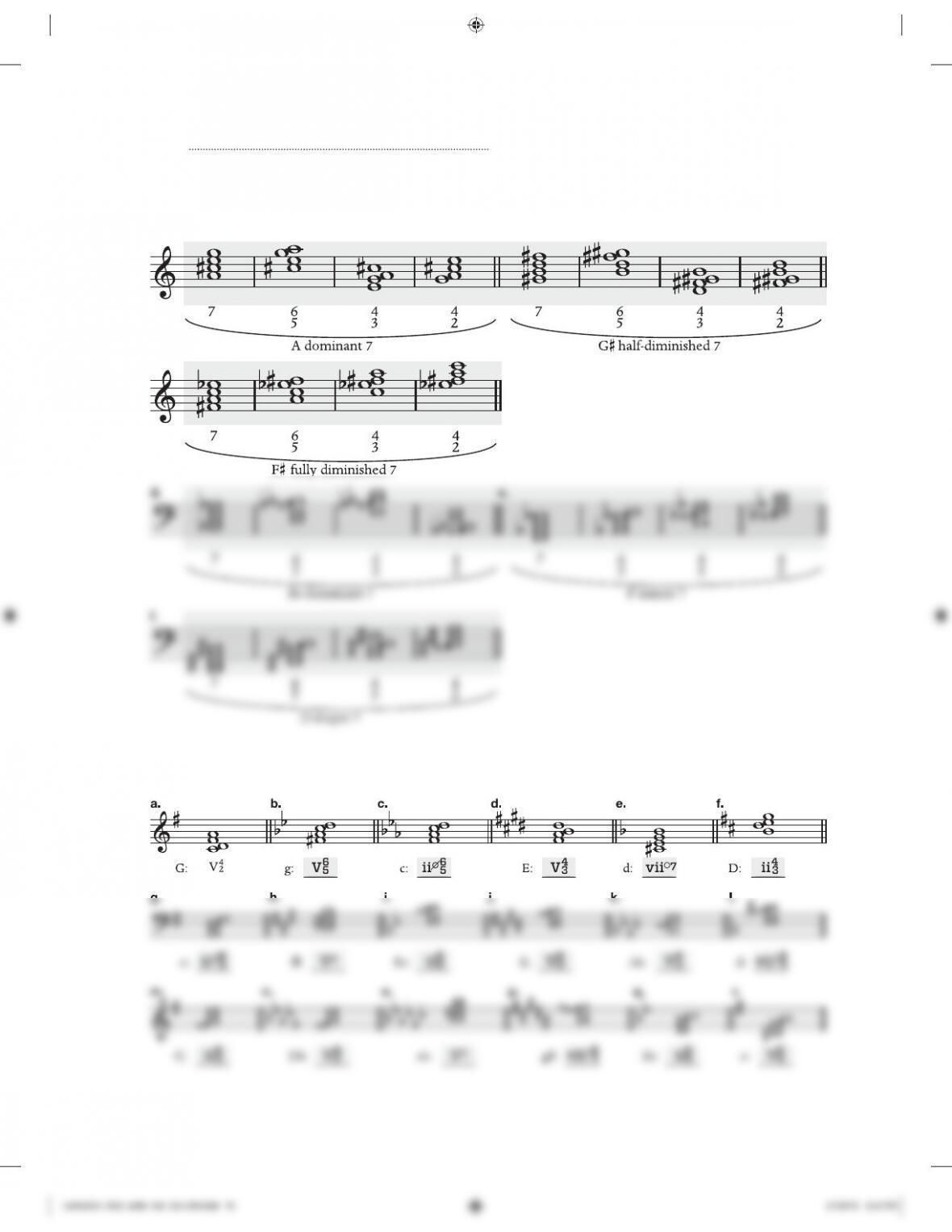
1. Natural seventh-chord qualities: Identify the quality of each seventh chord (.7 = fully
diminished; 7 = half-diminished; m7 = minor; dom7 = dominant; maj7 = major).
2. All seventh-chord qualities: Identify the quality of each seventh chord (.7 = fully
diminished; 7 = half-diminished; m7 = minor; dom7 = dominant; maj7 = major).
G. SEVENTH CHORDS BY ROOT AND QUALITY
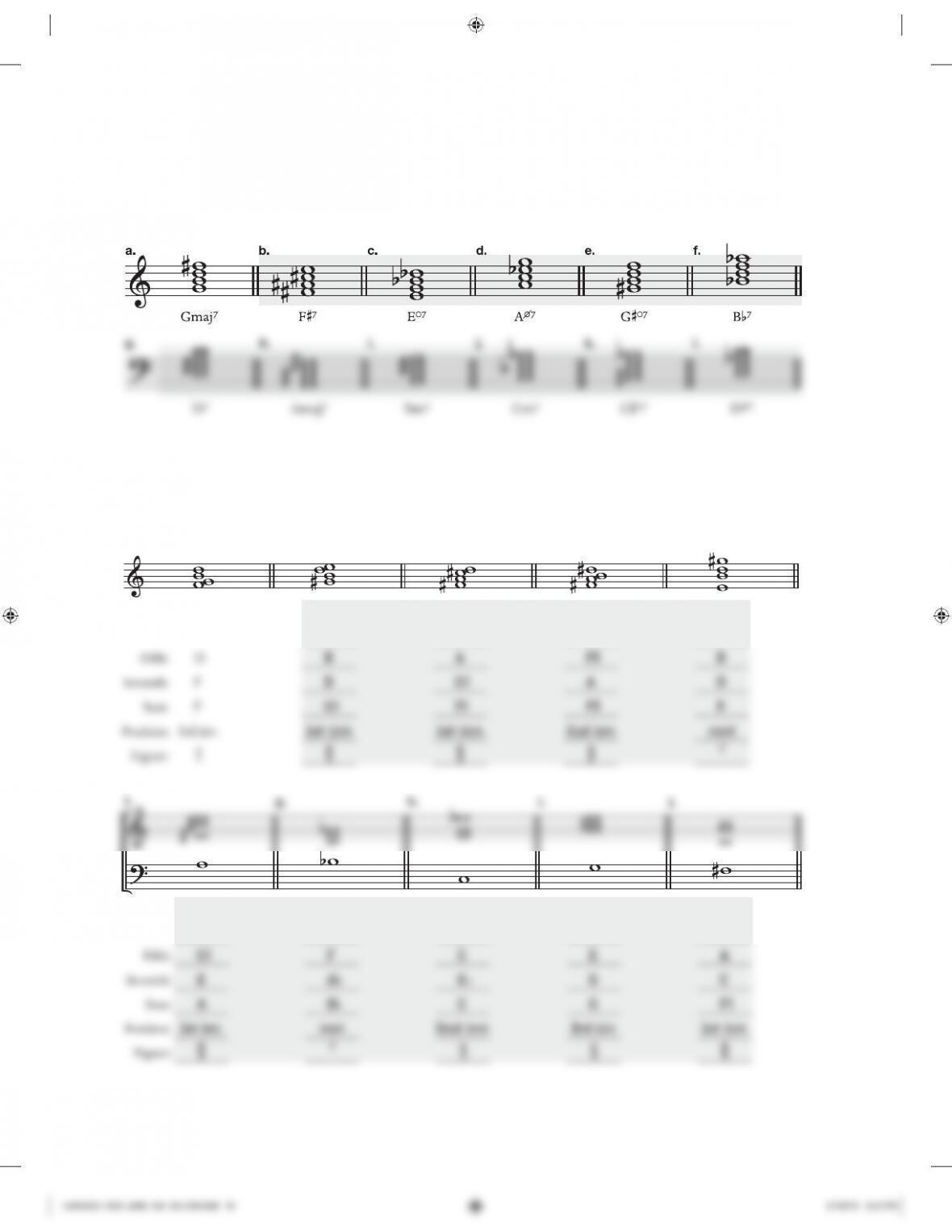
1. Writing seventh chords: Write each seventh chord in root position, with the cor-
rect quality: maj7 (major seventh); m7 (minor seventh); 7 (dominant seventh);
7 (half-diminished seventh); .7 (diminished seventh).
H. SEVENTH-CHORD INVERSIONS
1. Identifying seventh-chord inversions: Complete the table to identify the position of
each seventh chord.
a. b. c. d. e.
Root: G E D B E
_______ _______ _______ _______
Third: B G
# F
# D
# G
#
_______ _______ _______ _______
H. Seventh-Chord Inversions | 43
NAME:
2. Writing seventh chords in inversion: Write each seventh chord in all four positions.
a. b.
c.
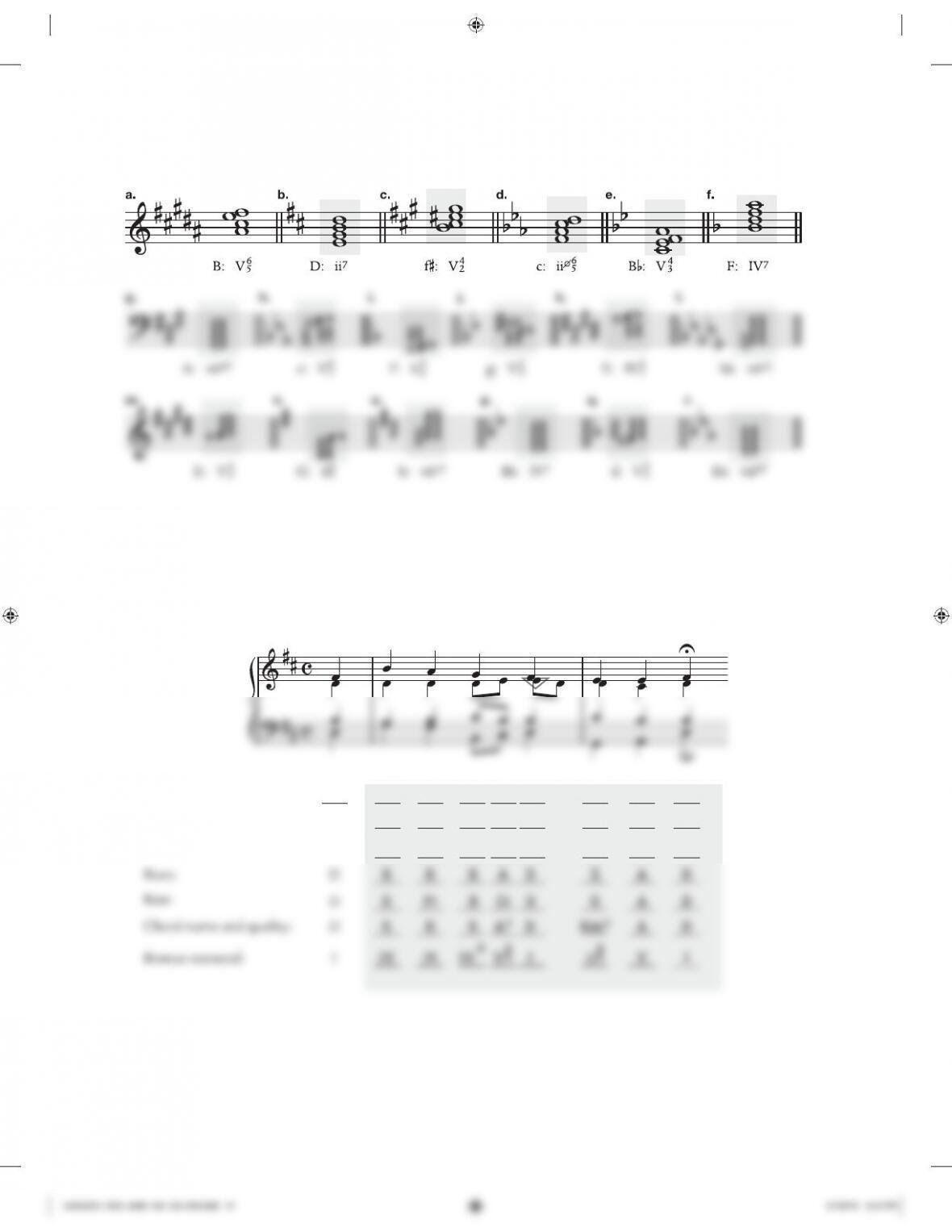
3. Identifying seventh-chord inversions: Use a Roman numeral and figure to identify
each seventh chord in the major (uppercase) or minor (lowercase) key indicated.
4. Writing seventh chords in inversion: Write each seventh chord in the major ( uppercase)
or minor (lowercase) key indicated.
I. ANALYSIS
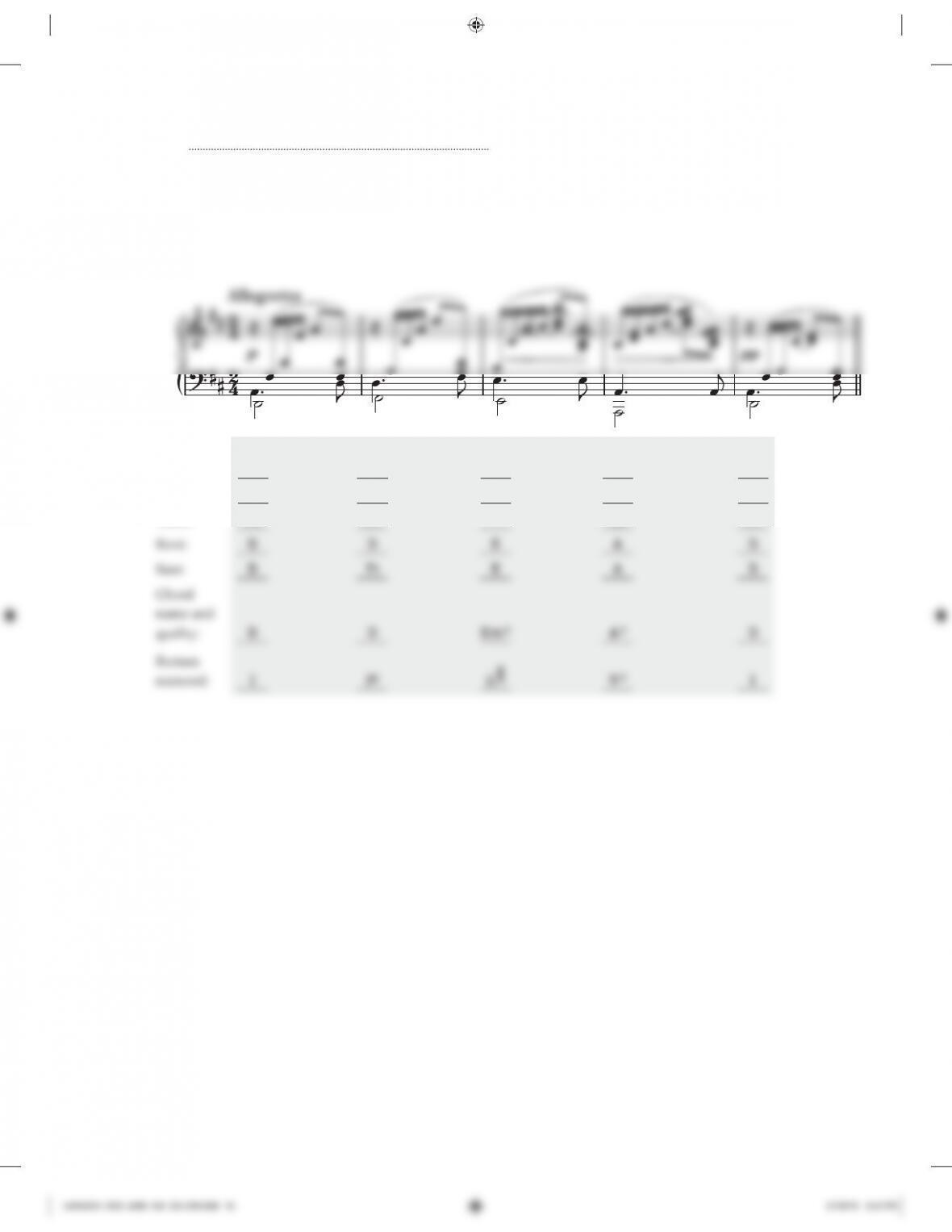
1. J. S. Bach, Chorale80
Identify the chords by filling in the chart.Ignoreany notes in triangles, which are
not part of the prevailing chord.
Seventh (if present): G D
Fifth: ADADEA B E A
Third: F#BF
#BC
#F#GC
#F#
NAME:
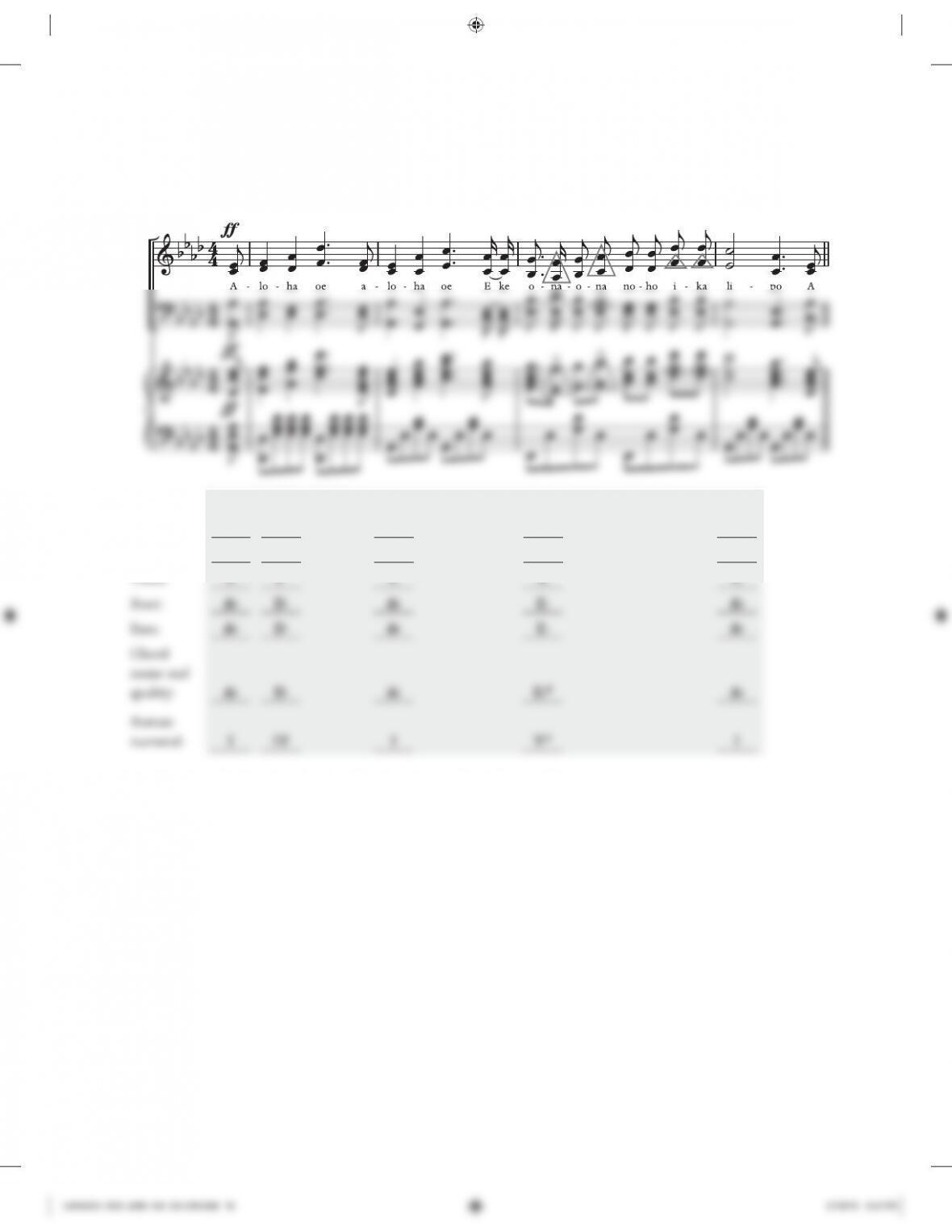
2. Josephine Lang, “Ich liebe dich” (“I Love You”)
Identify the chord in each measure. The third is missing from one of these chords.
Ignore any notes in triangles, which are not part of the prevailing chord.
Seventh
(if present): D G
Fifth: A A B E A
Third: F#F# C#F#
46 | CHAPTER 3 | Triads and Seventh Chords
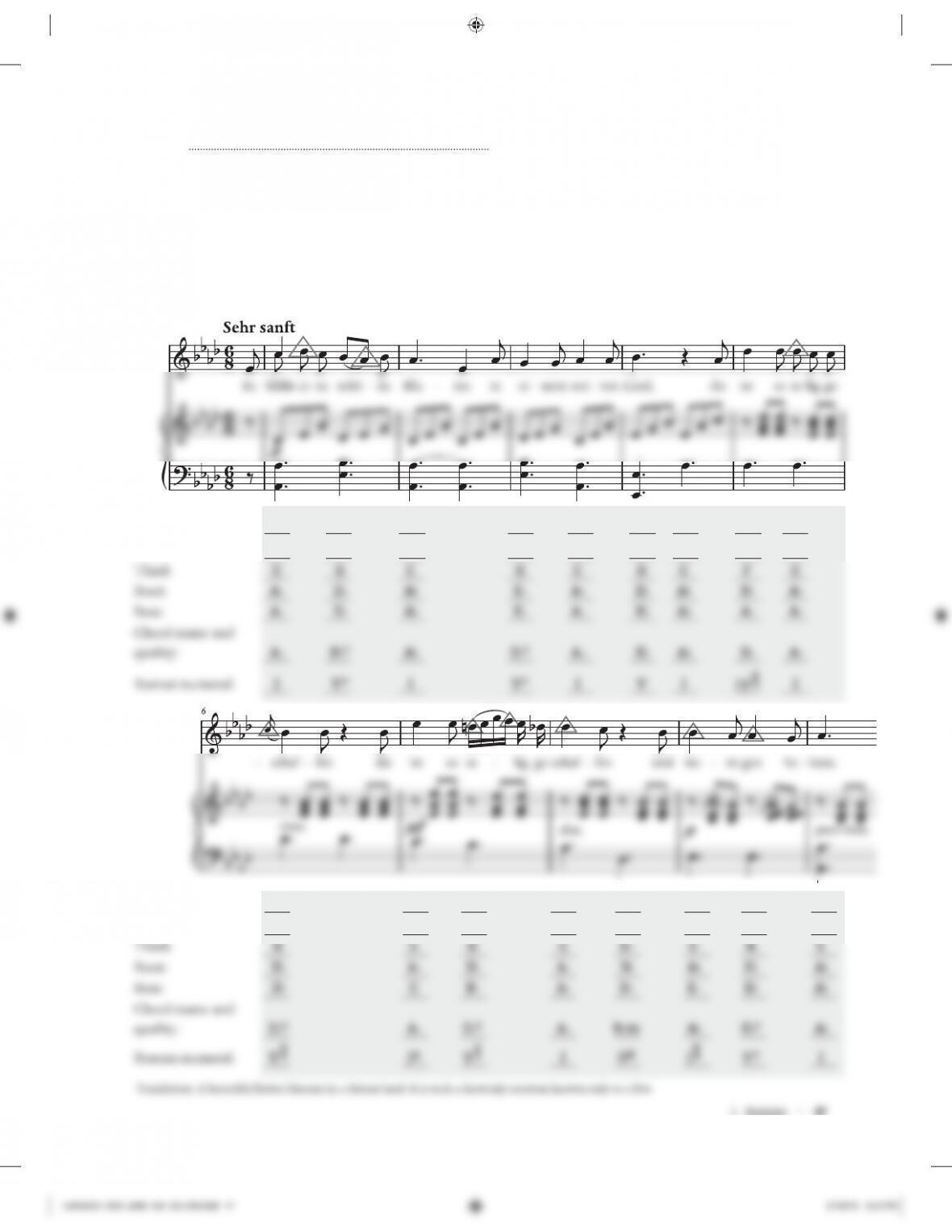
3. Queen Lili’uokalani, “Aloha Oe”
Identify the chord in each measure. The lowest note in each measure is the bass of
the chord. Ignore any notes in triangles, which are not part of the prevailing chord.
Seventh (if
present): Db
Fifth: EbAbEbBbEb
Translation: Farewell to thee, farewell to thee, Thou charming one who dwells among the bowers.
NAME:
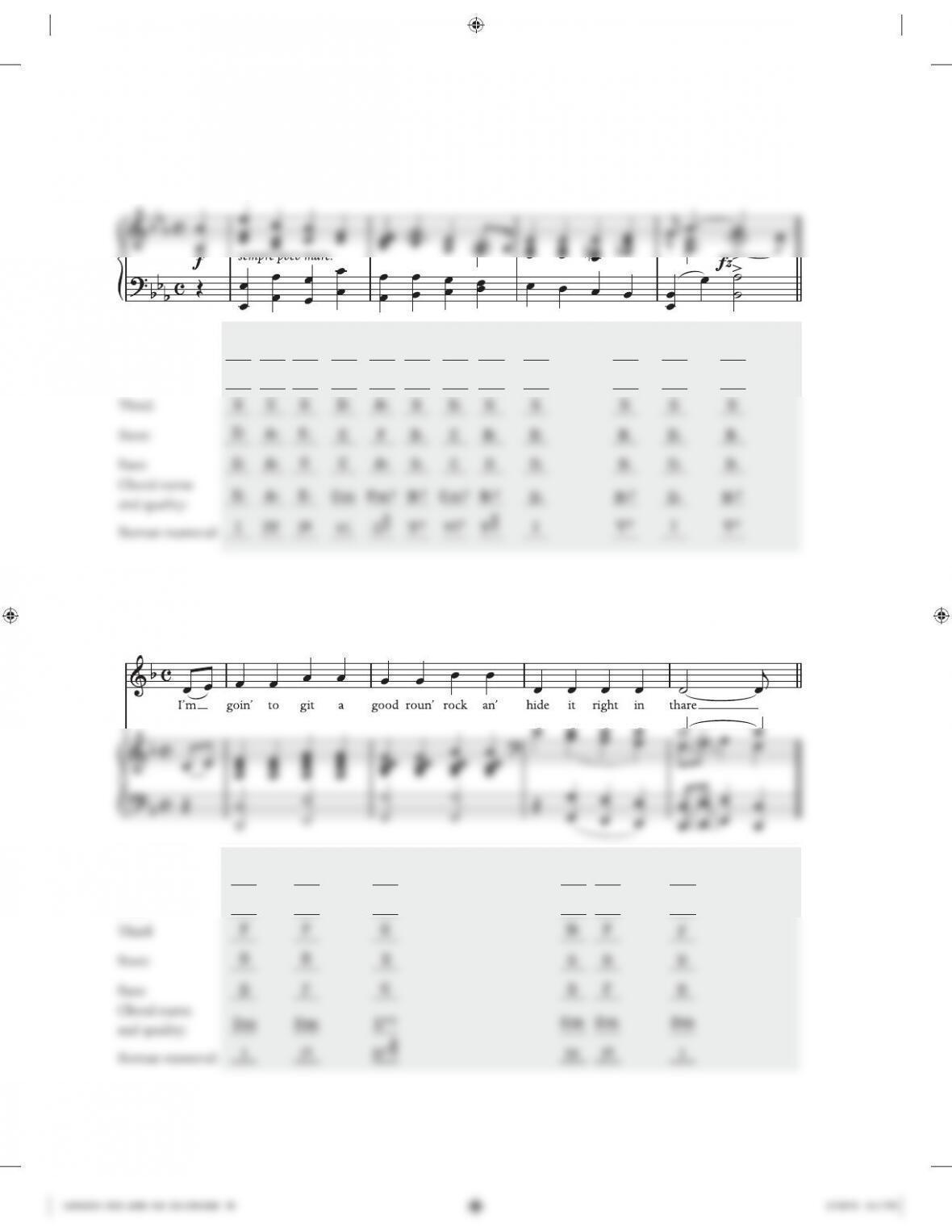
4. Louise Reichardt, “Die Blume der Blumen” (“The Flower of Flowers”)
Identify the chords. Each measure contains two chords, except for measures 2, 6,
and 10, which contain only one chord. The lowest note should be regarded as the
bass of the chord. The fifth is omitted in one chord. Ignore any notes in triangles,
which are not part of the prevailing chord.
Seventh (if present): D
b D
b
Fifth: EbBbEbBbEbBbEbAbEb
Seventh (if present): Db Db D
b
Fifth: BbEbBbEbFE
b E
b
5. Alex Rogers, “I May Be Crazy, but I Ain’t No Fool”
Identify the chords by filling in the chart. Ignore any notes in triangles, which are
not part of the prevailing chord. The fifth is omitted in one chord.
Seventh (if
present): E
bAbBbAb A
b A
b
Fifth: BbEbBbGC GF B
bFB
bF
Roman numeral: IIVI
6. Bert Williams, “Believe Me”
Identify the chords by filling in the chart. Ignore any notes in triangles, which are not
part of the prevailing chord.
Seventh (if
present): D
Fifth: AA BbD A A