B. Determining Closely Related Keys and Pivot Chords | 363
NAME:
A. QUESTIONS FOR REVIEW
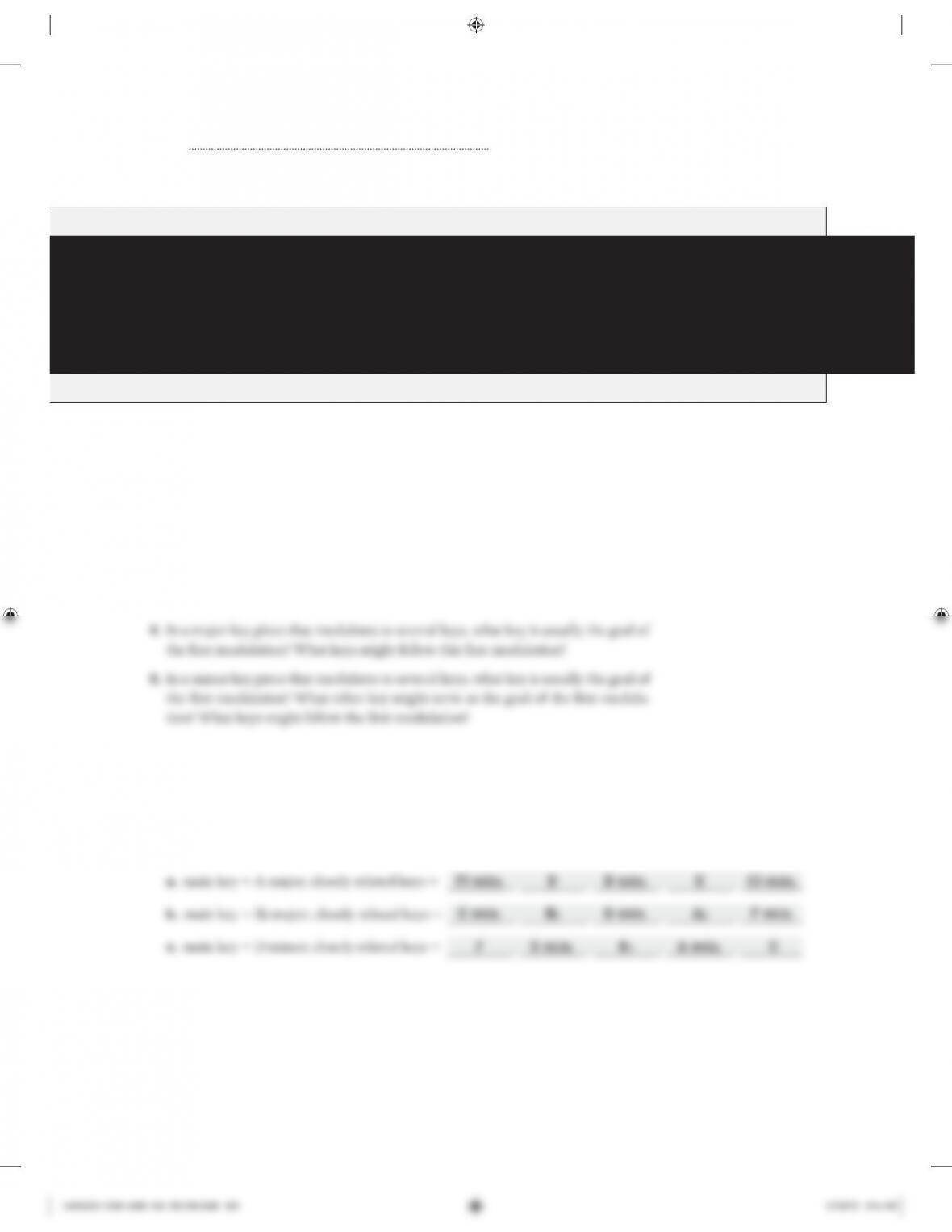
1. What is a closely related key?
2. How can you tell that a modulation to a new key has occurred?
3. What changes when the music modulates from a minor key to its relative major?
From a major key to its relative minor?
B. DETERMINING CLOSELY RELATED KEYS
AND PIVOT CHORDS
1. List the closely related keys of the following:
chapter
28 Modulation to
Closely Related Keys
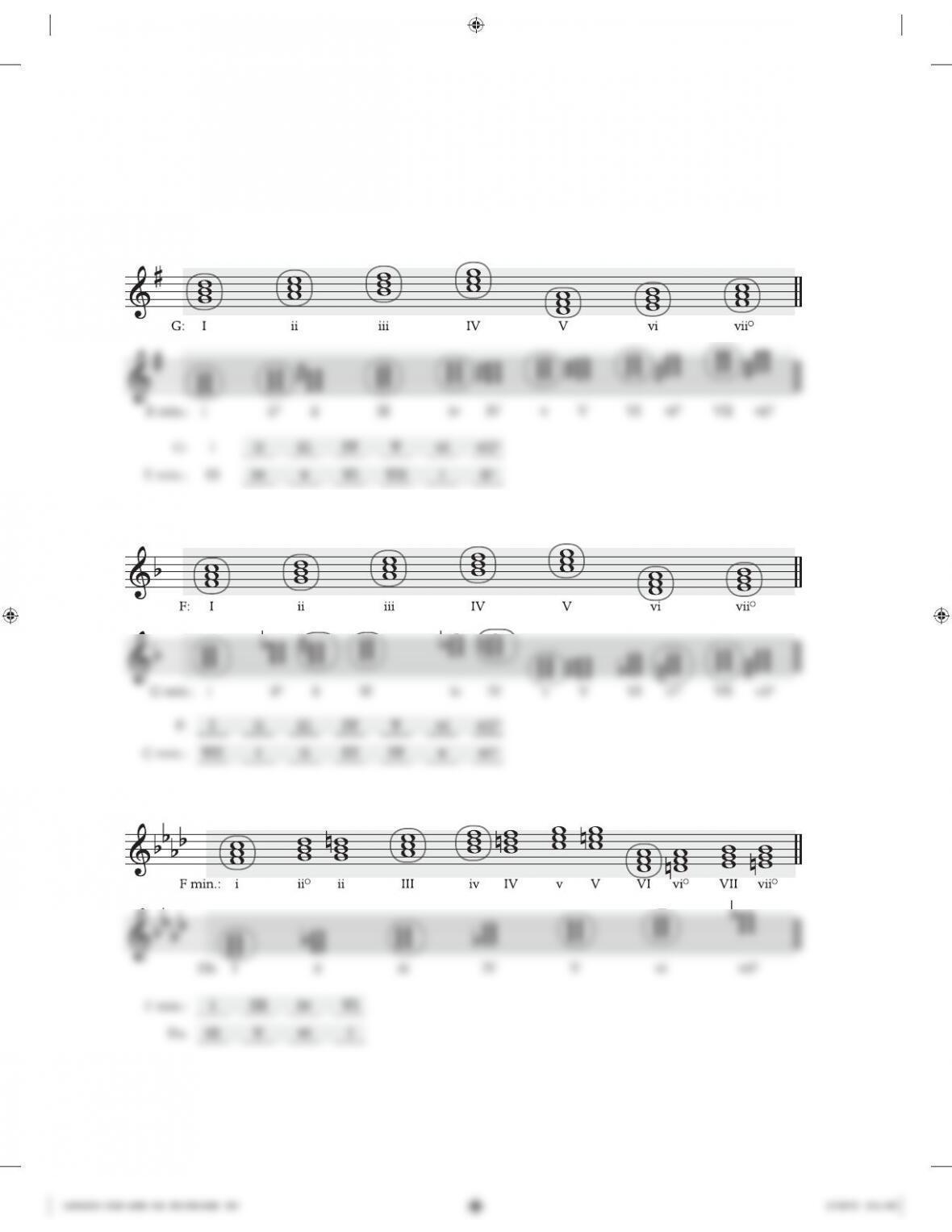
2. For each of the following:
• Write the chords in the indicated keys. Use the key signature of the first key, and
make sure to add accidentals where needed.
• Circle the chords that could serve as pivots between the two keys. List them
beneath the sta, giving Roman numerals in both keys.
a.
b.
c.
C. Realizing Roman Numerals | 365
NAME:
C. REALIZING ROMAN NUMERALS
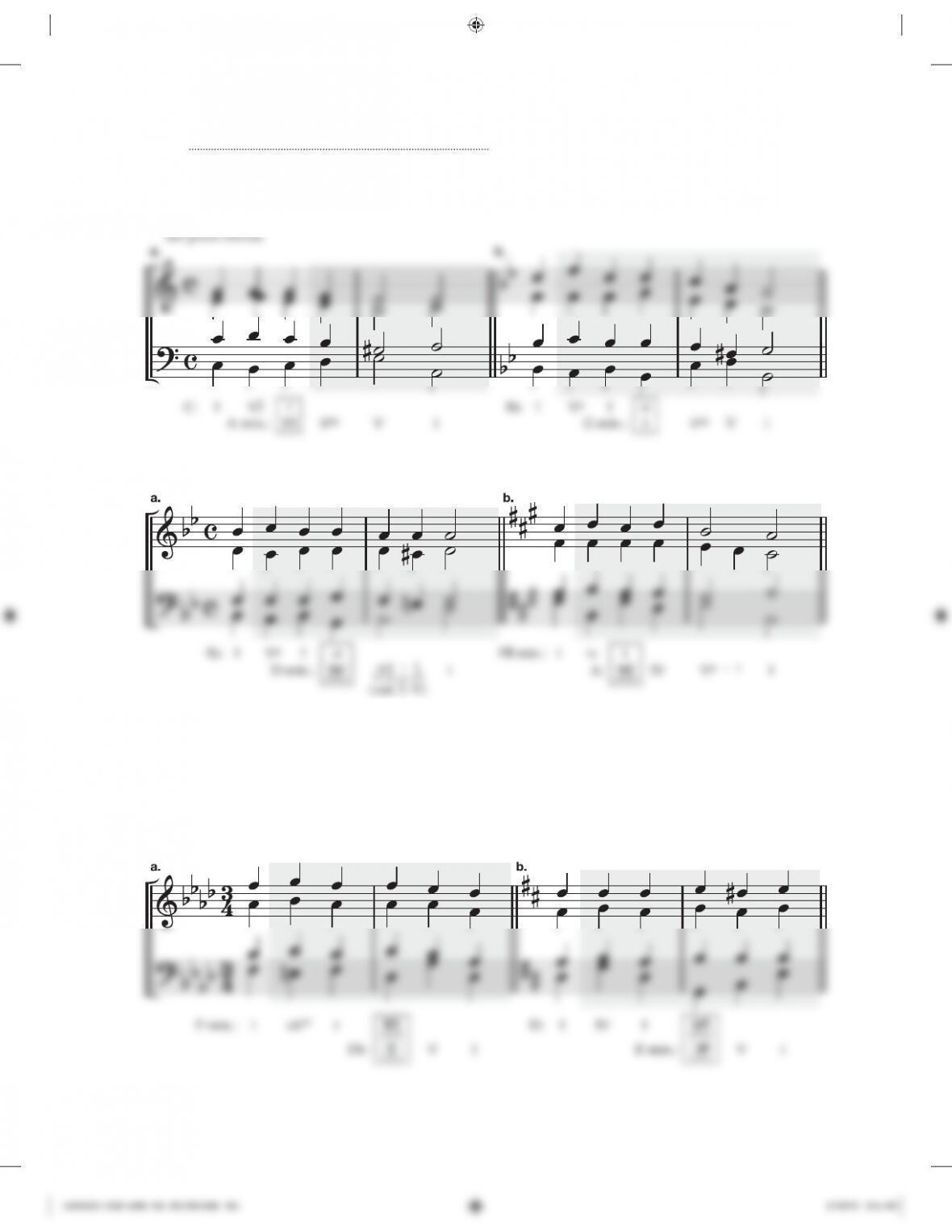
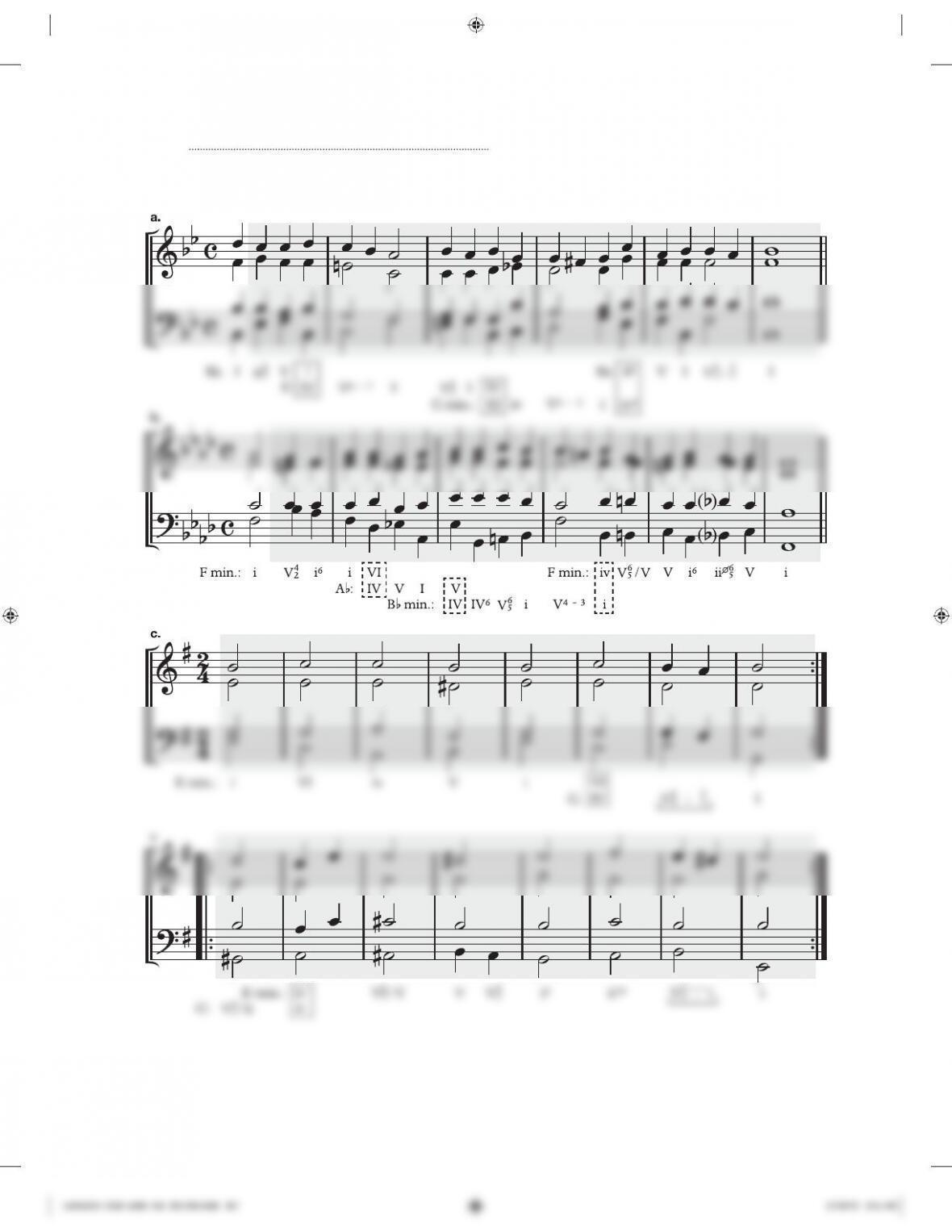
1. Realize these Roman numerals in SATB format. The chords in the dotted boxes
2. Complete each set of Roman numerals by supplying the pivot chord in the new
key. Then realize the Roman numerals in SATB format.
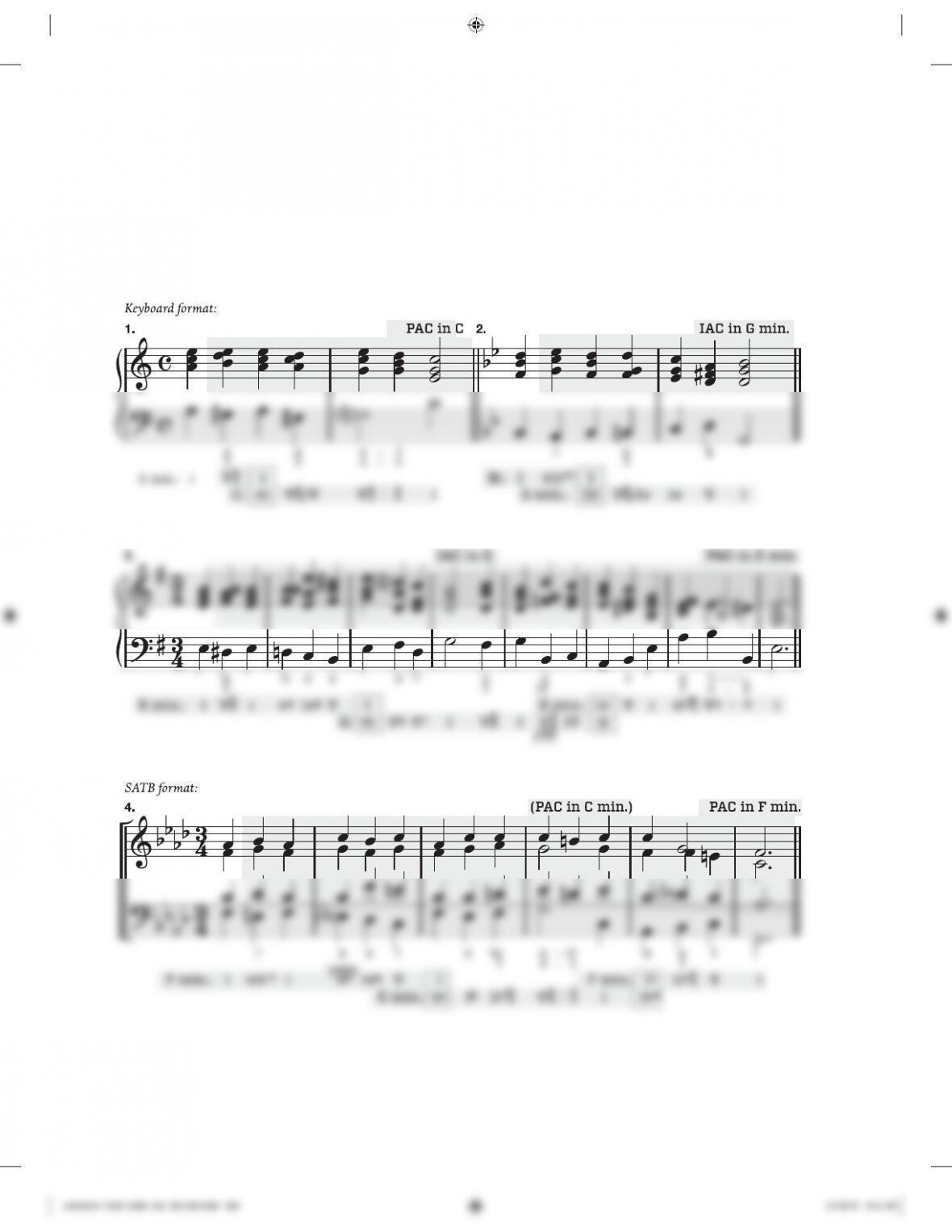
3. For each of the following:
• Choose a pivot chord that can modulate between the two keys and write its
Roman numerals in the dotted box.
• To find the options for each pair of keys, you can create the same kind of list
used in B2; in fact, the key relationship for the first exercise, F minor and Db, is
the same as worked out in B2(c).
• Finally, realize the Roman numerals.
366 | CHAPTER 28 | Modulation to Closely Related Keys
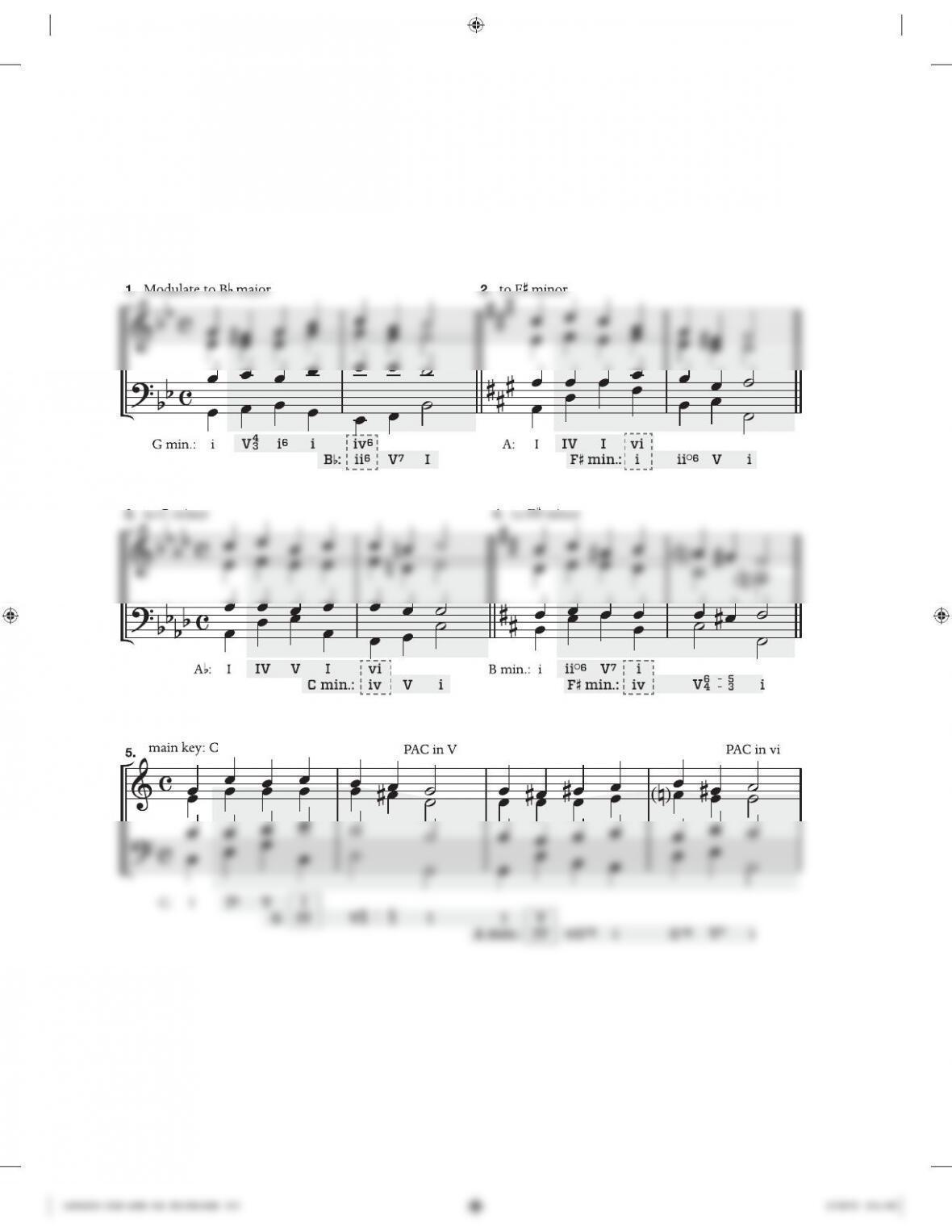
4. Realize the Roman numerals, completing the indication of pivot chords by filling
in the missing Roman numerals.
C. Realizing Roman Numerals | 367
NAME:
5. Realize the Roman numerals in SATB format.
368 | CHAPTER 28 | Modulation to Closely Related Keys
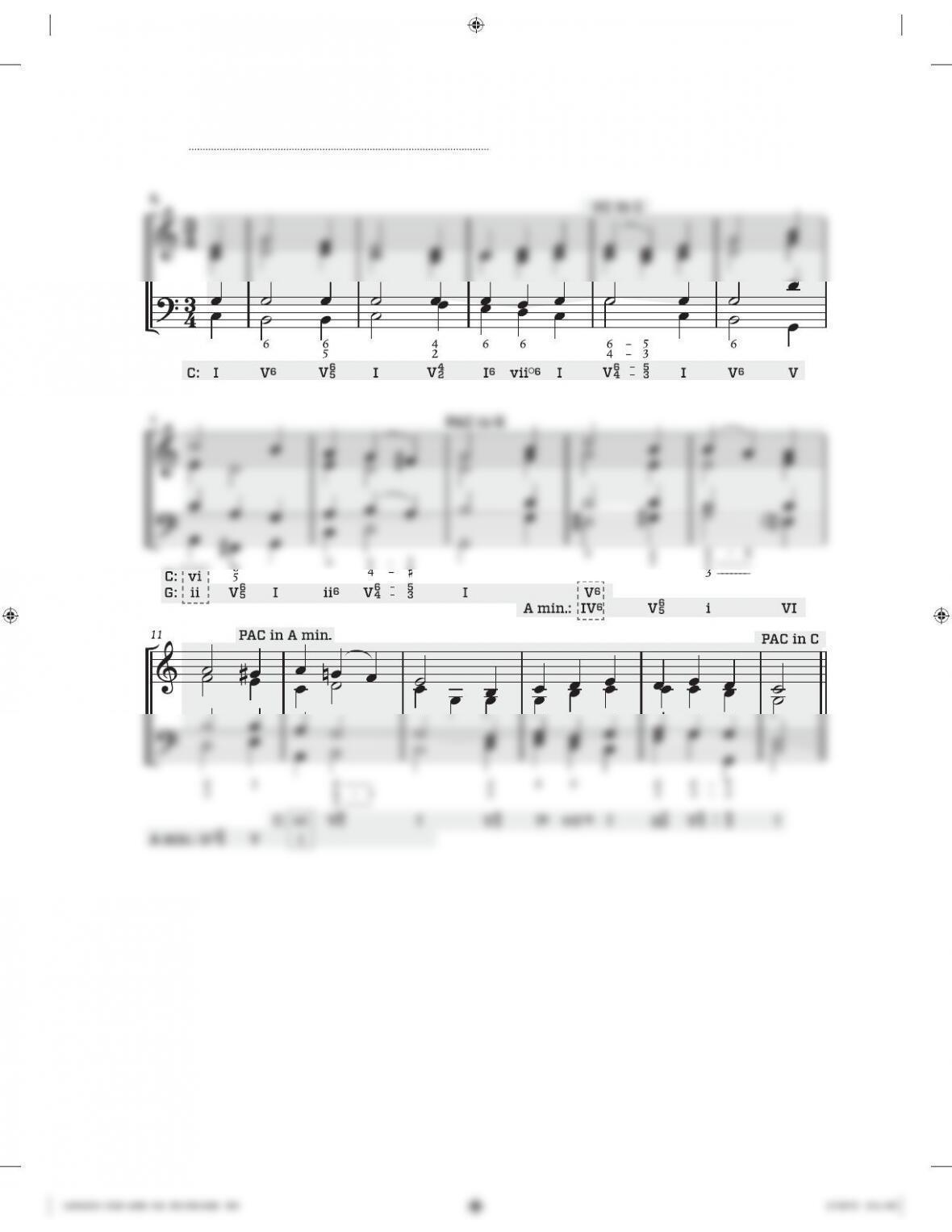
D. REALIZING FIGURED BASS
For each of the following:
• Realize the figured bass in the indicated format.
• Then label the keys and Roman numerals, making sure to indicate the modulations.
• Mark pivot chords with dotted boxes.
• Finally, above the sta, label the key and type of cadences.
D. Realizing Figured Bass | 369
NAME:
370 | CHAPTER 28 | Modulation to Closely Related Keys
E. HARMONIZING MELODIES
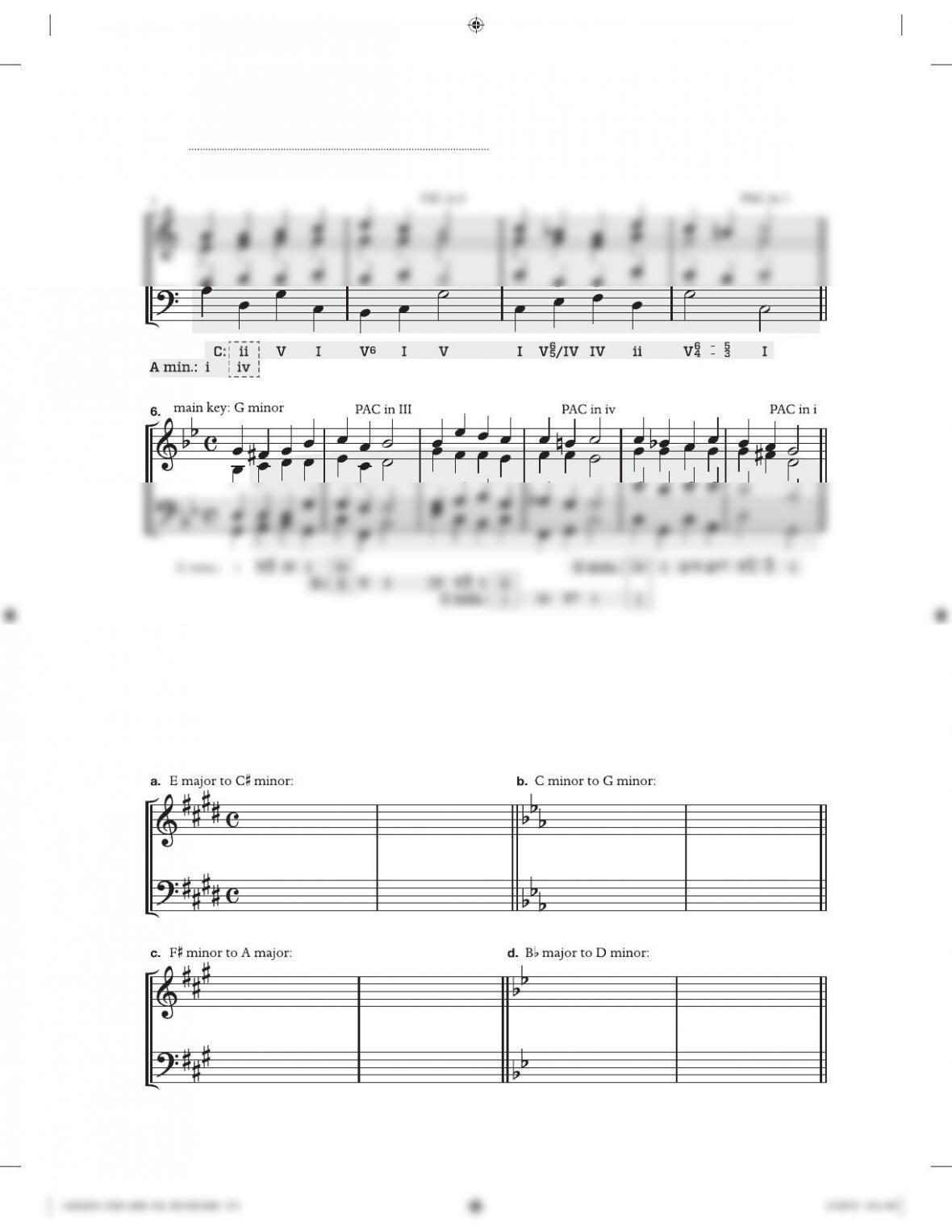
Harmonize each of the following melodies:
• Write a bass line and Roman numerals, modulating to the keys indicated.
• Indicate the pivot chords.
• Then fill in the inner voices in SATB format.
F. Composition | 371
NAME:
F. COMPOSITION
1. Compose progressions in SATB format:
• Modulate from the main key to the second key via a pivot chord.
• Include at least one Dominant–Tonic progression in each key.
• Label the chords using Roman numerals.
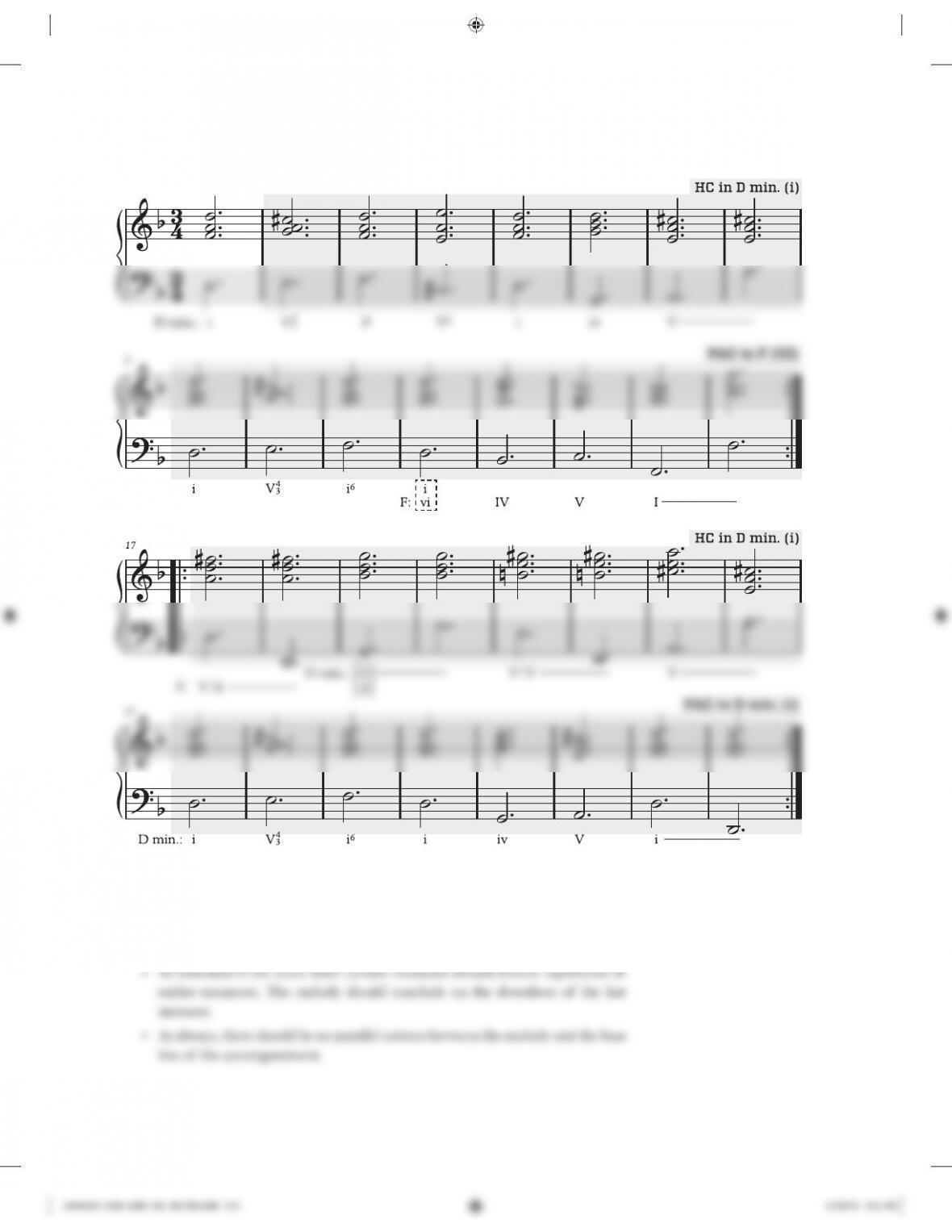
2. Realize these Roman numerals in keyboard format and label the key and type of
cadences.
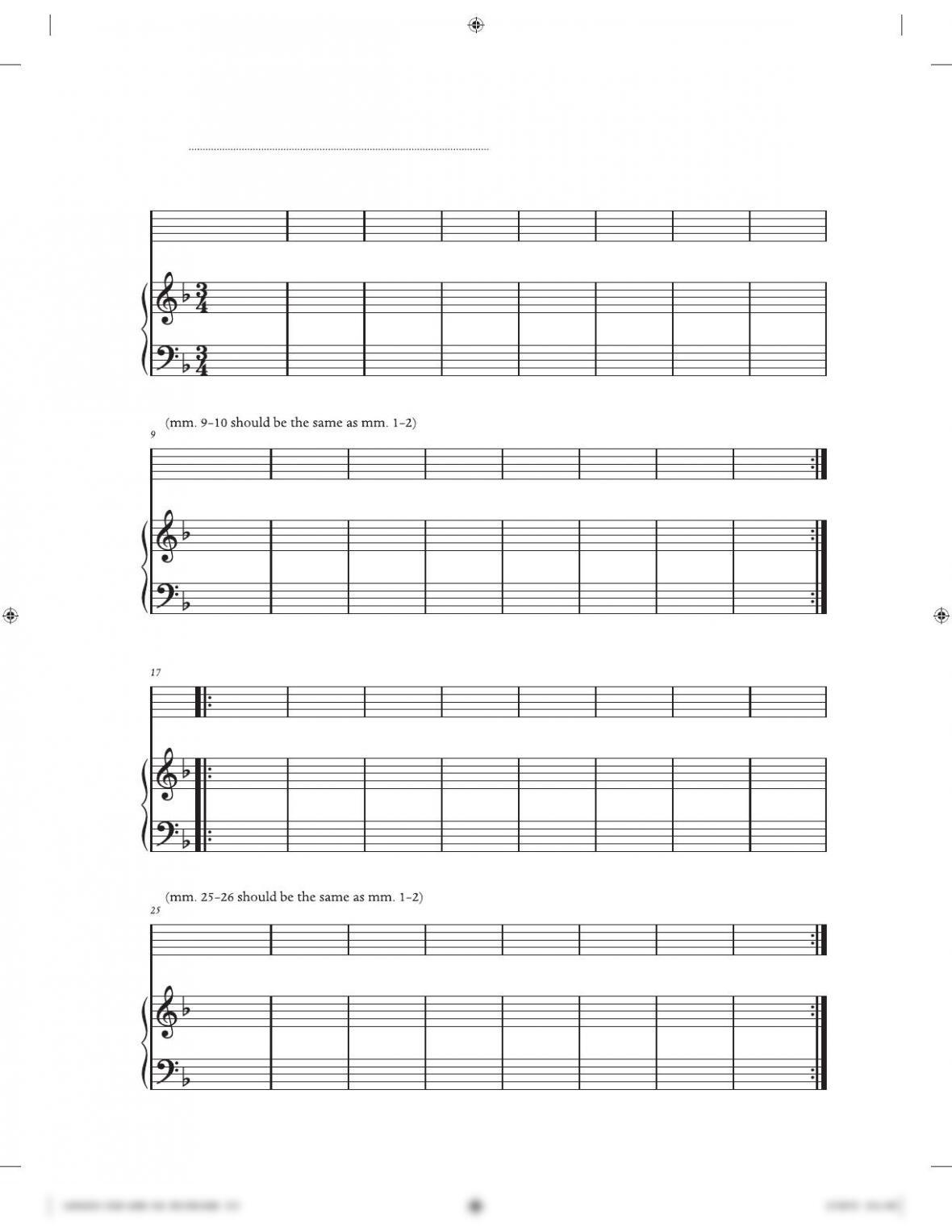
3. Compose a piece for keyboard and another instrument.
• Use the same harmonies as in (2).
• Be sure to add the clef and key signature of the melody instrument.
F. Composition | 373
NAME:
374 | CHAPTER 28 | Modulation to Closely Related Keys
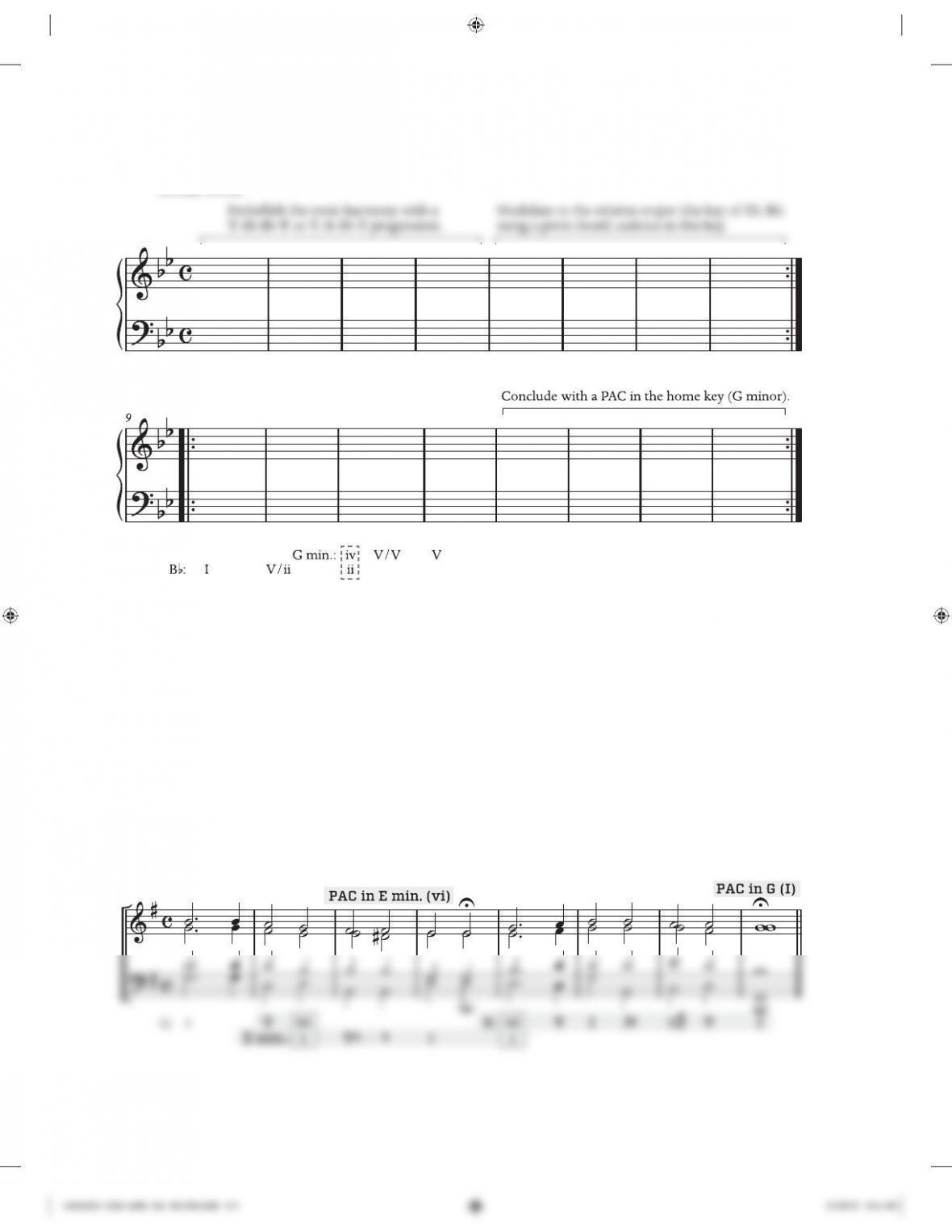
4. Write a short composition in G minor, following these guidelines:
• Write a harmonic outline for your composition in four-part harmony, keyboard
format, below.
5. Using the harmonies from the outline above (4), compose a piece for keyboard,
guitar, or an ensemble of your choice, using a meter of your choice.
G. ANALYSIS
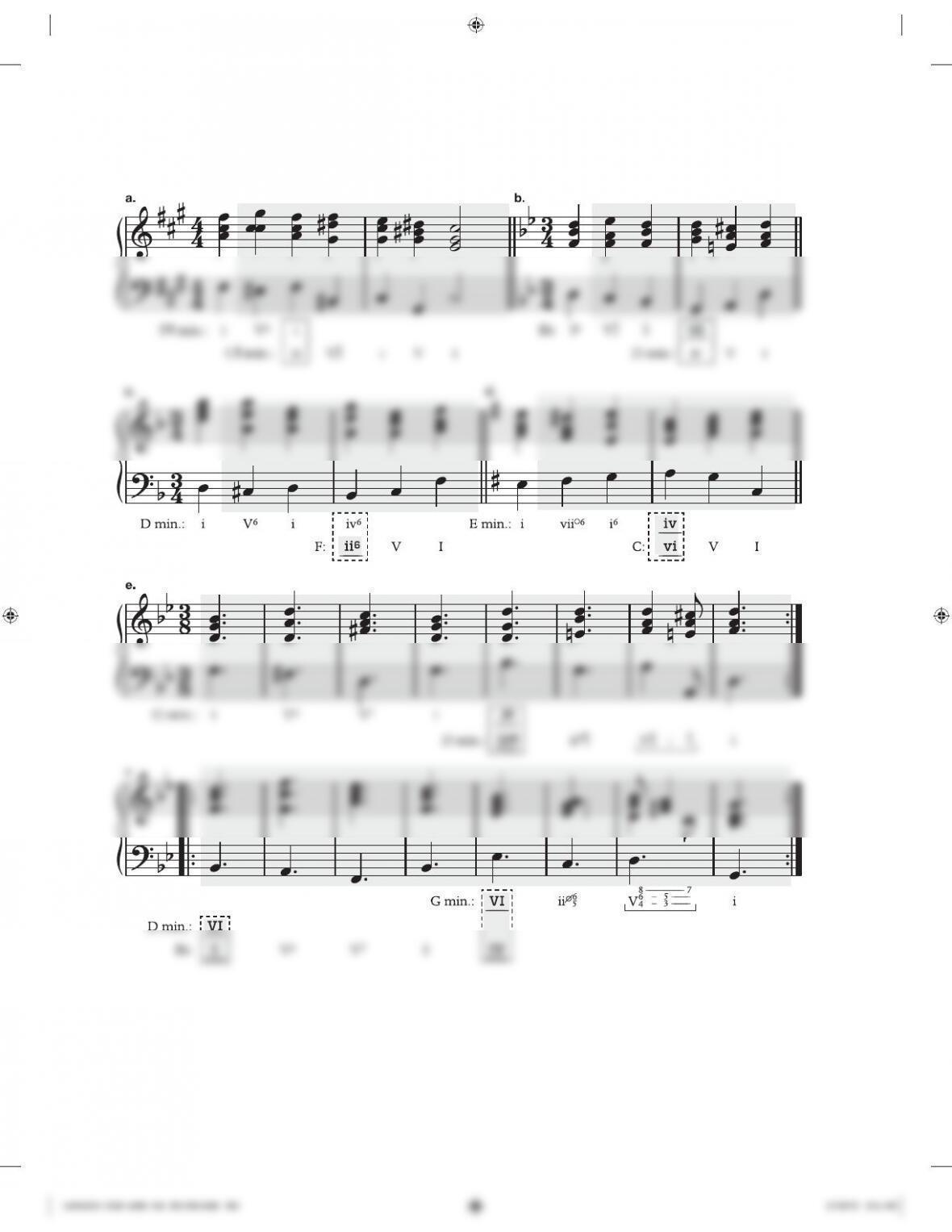
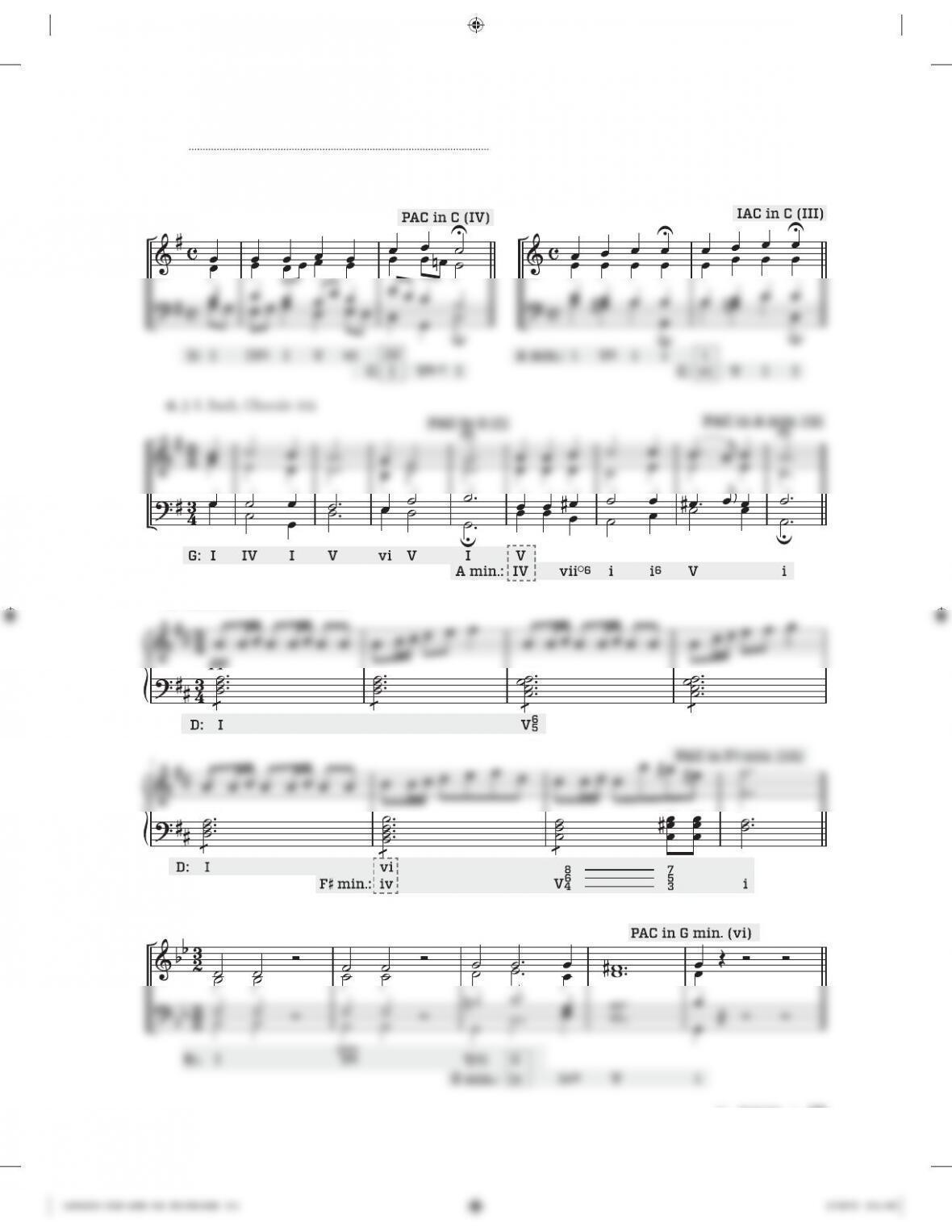
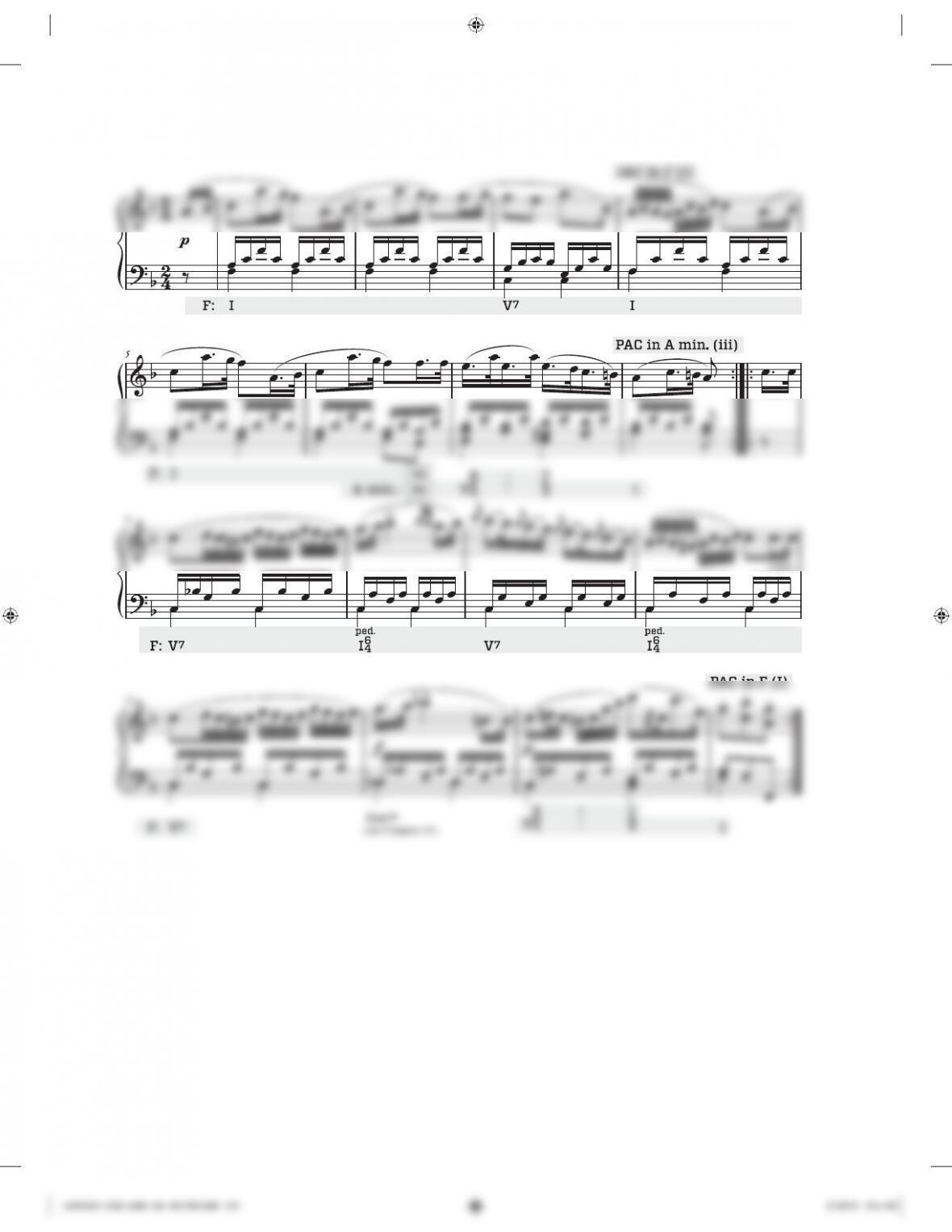
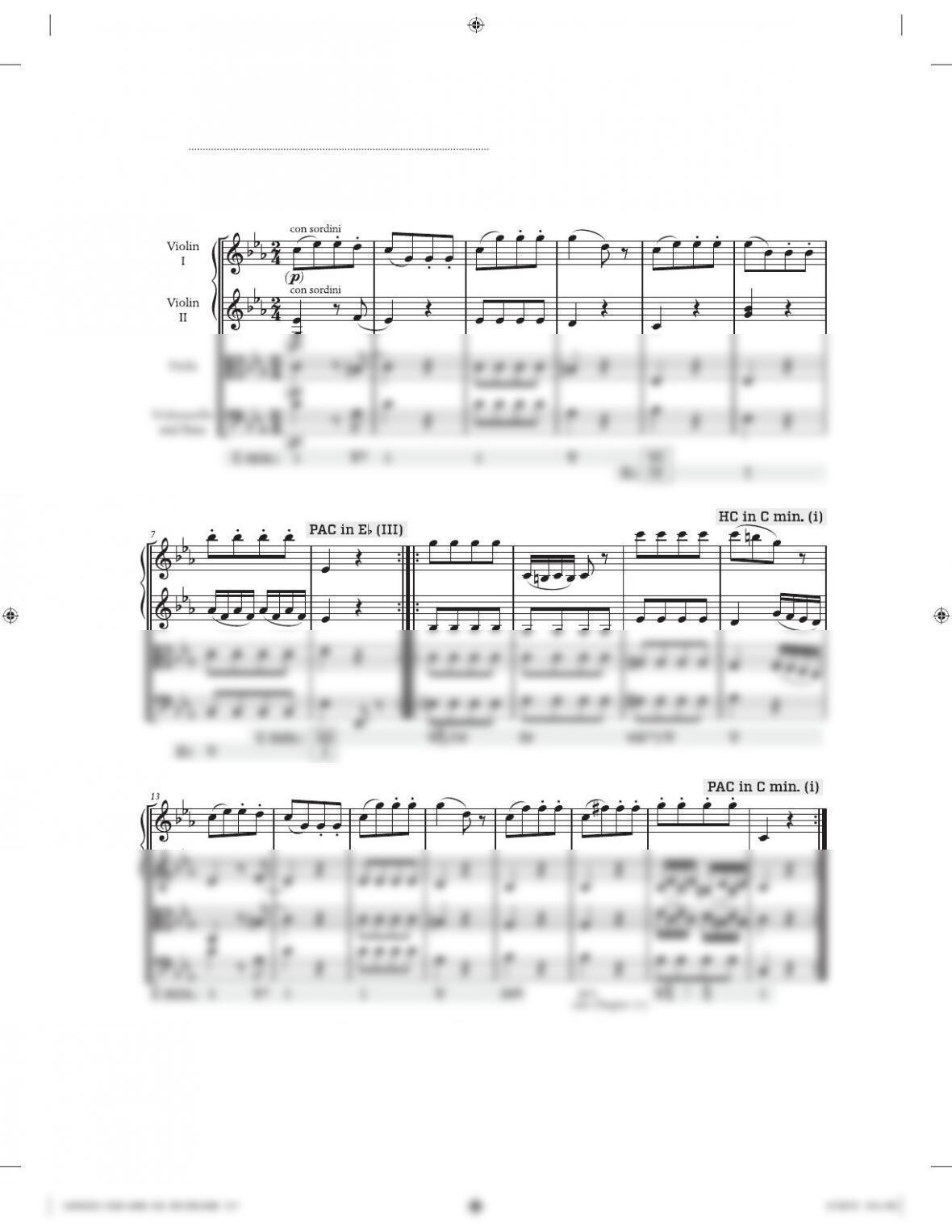
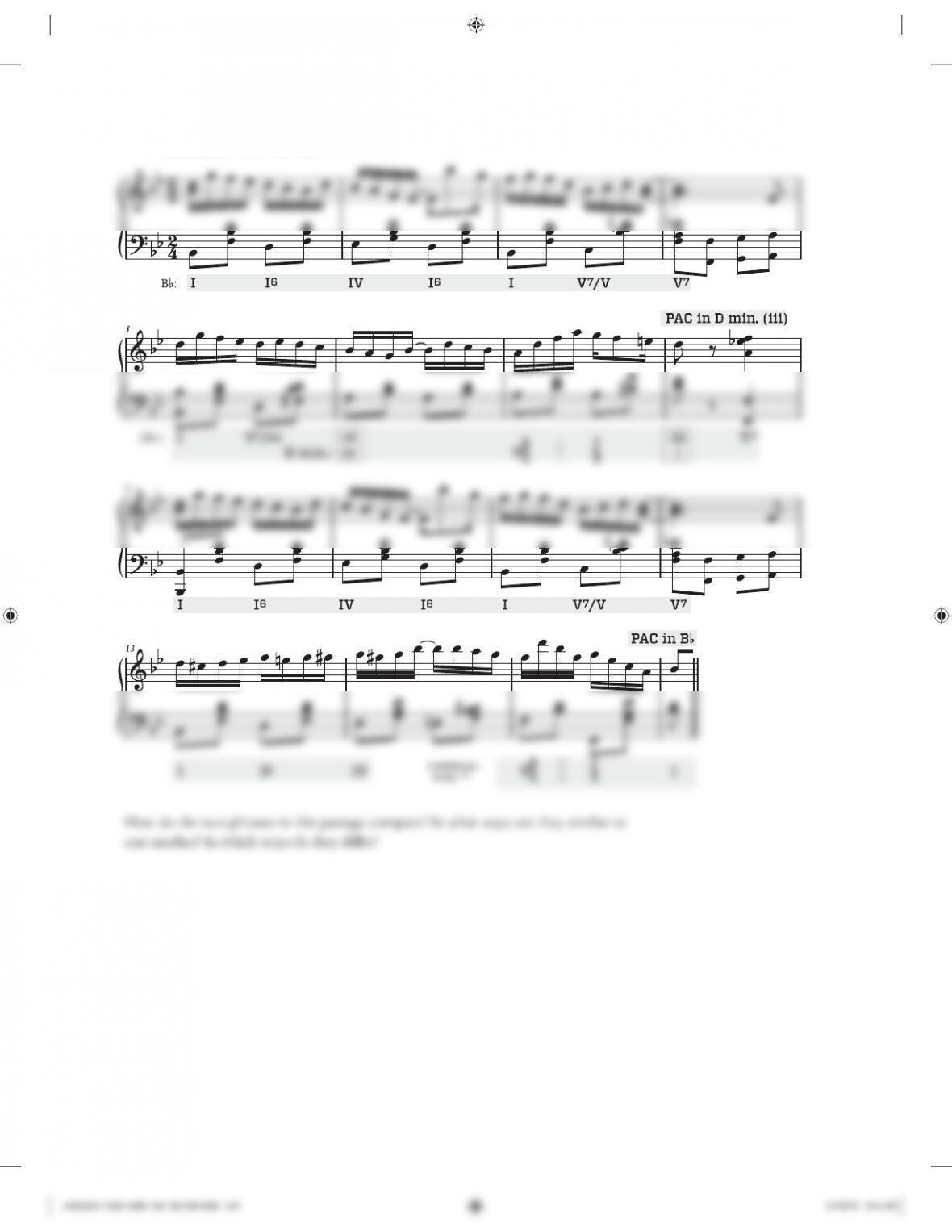
1. In the following excerpts:
• Identify the main key and the keys of modulation.
• Label the chords using Roman numerals.
• Indicate pivot chords with a dotted box.
• Above the sta, label the type of cadences within the key.
a. “Freuet euch” (hymn)
G. Analysis | 375
NAME:
b. J. S. Bach, Chorale 51 c. J. S. Bach, Chorale 48
e. Gioachino Rossini, Tancredi
f. Ludwig van Beethoven, Equali for Four Trombones, WoO 30, No. 3
376 | CHAPTER 28 | Modulation to Closely Related Keys
g. Gaetano Donizetti, Anna Bolena, Act I (arr. Czerny)
Compare the two halves of this excerpt. What are some ways in which they are
similar to one another, and what are some ways in which they are dierent?
G. Analysis | 377
NAME:
h. Joseph Haydn, Symphony No. 63, ii
What keys are tonicized rather than modulated to? In which measure does the series
of tonicizations appear most rapid? In what measure does the theme from the open-
ing four measures return?
i. Scott Joplin, “Elite Syncopations”
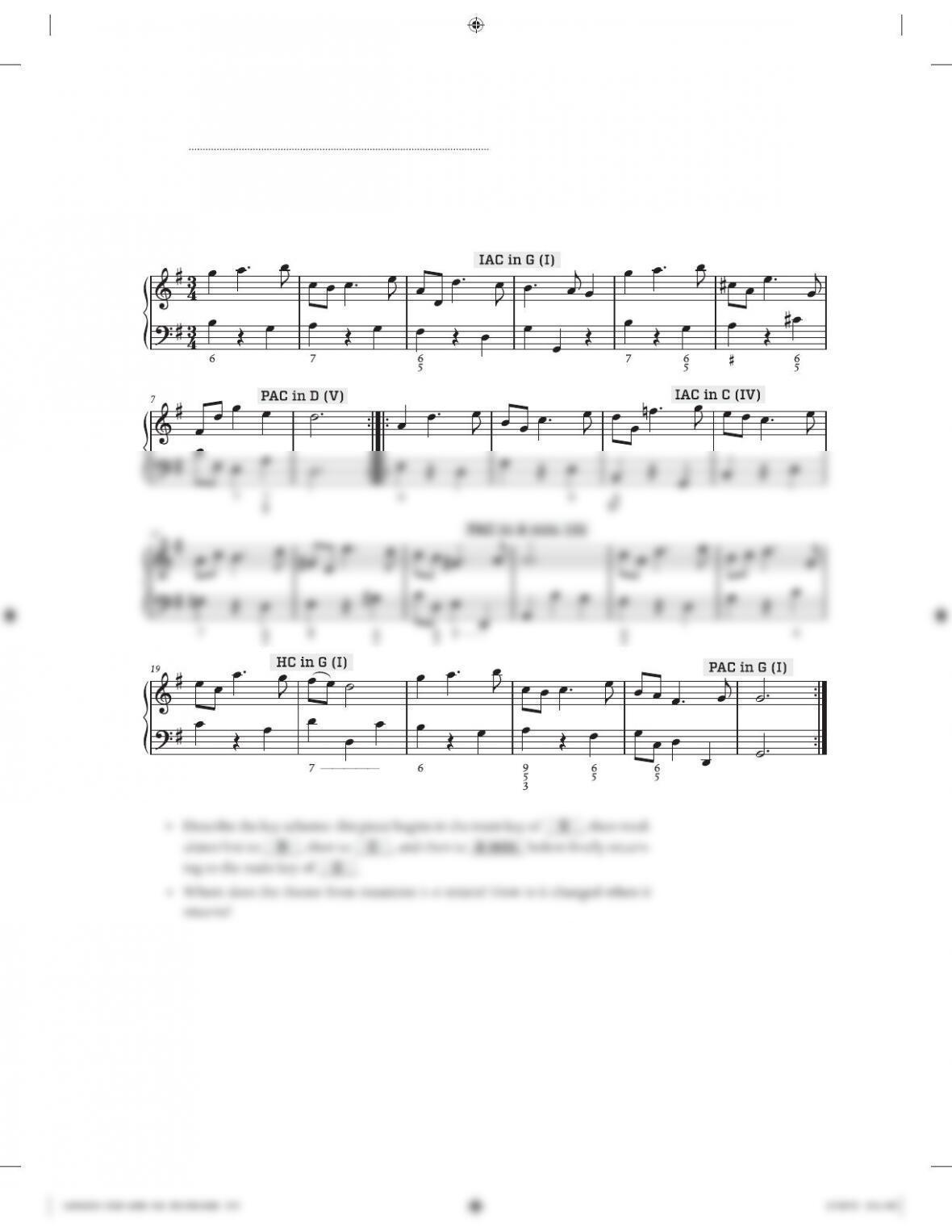
G. Analysis | 379
NAME:
2. In each example, label the cadences above the sta, indicating both the key and the
cadence type. Then answer the questions.
a. Johann Adolph Hasse, Flute Sonata, Op. 1, No. 6, iii
• In a number of places, the chordal dissonance implied in the figured bass is
either embellished or transferred to the bass voice before resolving. Can you
locate any instance of this?
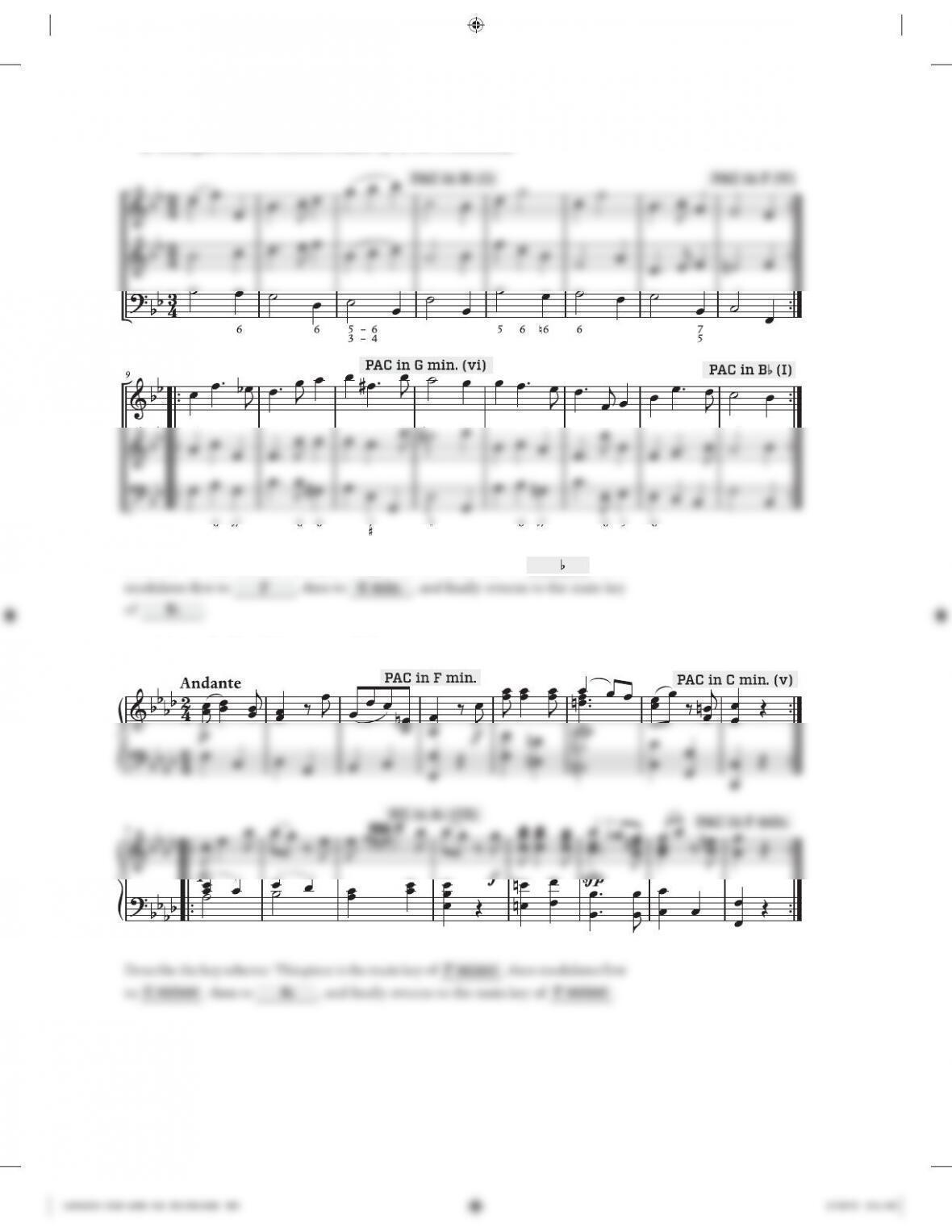
b. Arcangelo Corelli, Chamber Sonata Op. 2, No. 5, Sarabanda
Describe the key scheme: this piece begins in the main key of ________, then
B
c. Margarethe Danzi, Variations in F Minor