B. Determining Possible Pivot Chords | 343
NAME:
A. QUESTIONS FOR REVIEW
1. What is a modulation?
2. What is a main key?
3. When modulating to the key of V, what scale degree should you raise? This raised
note is equivalent to what scale degree in the new key?
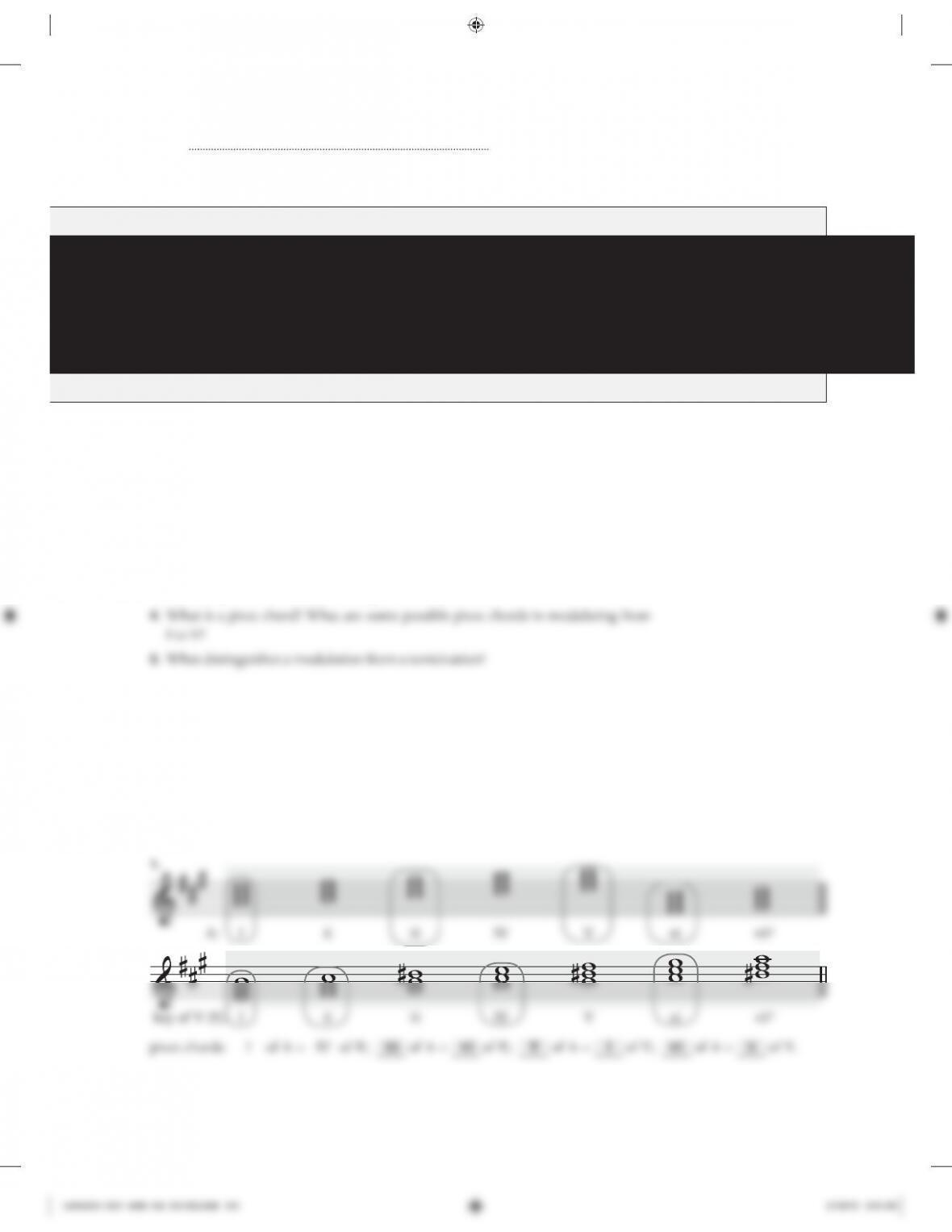
B. DETERMINING POSSIBLE PIVOT CHORDS
• Write the chords in the indicated major key.
• Then write the chords in the dominant key, adding accidentals where necessary.
• Circle the chords that could serve as pivots between the main key and the key
of V (that is, the chords that are found in both keys) and list them beneath the
staves.
chapter
27 Modulation to
the Dominant Key
344 | CHAPTER 27 | Modulation to the Dominant Key
C. REALIZING ROMAN NUMERALS
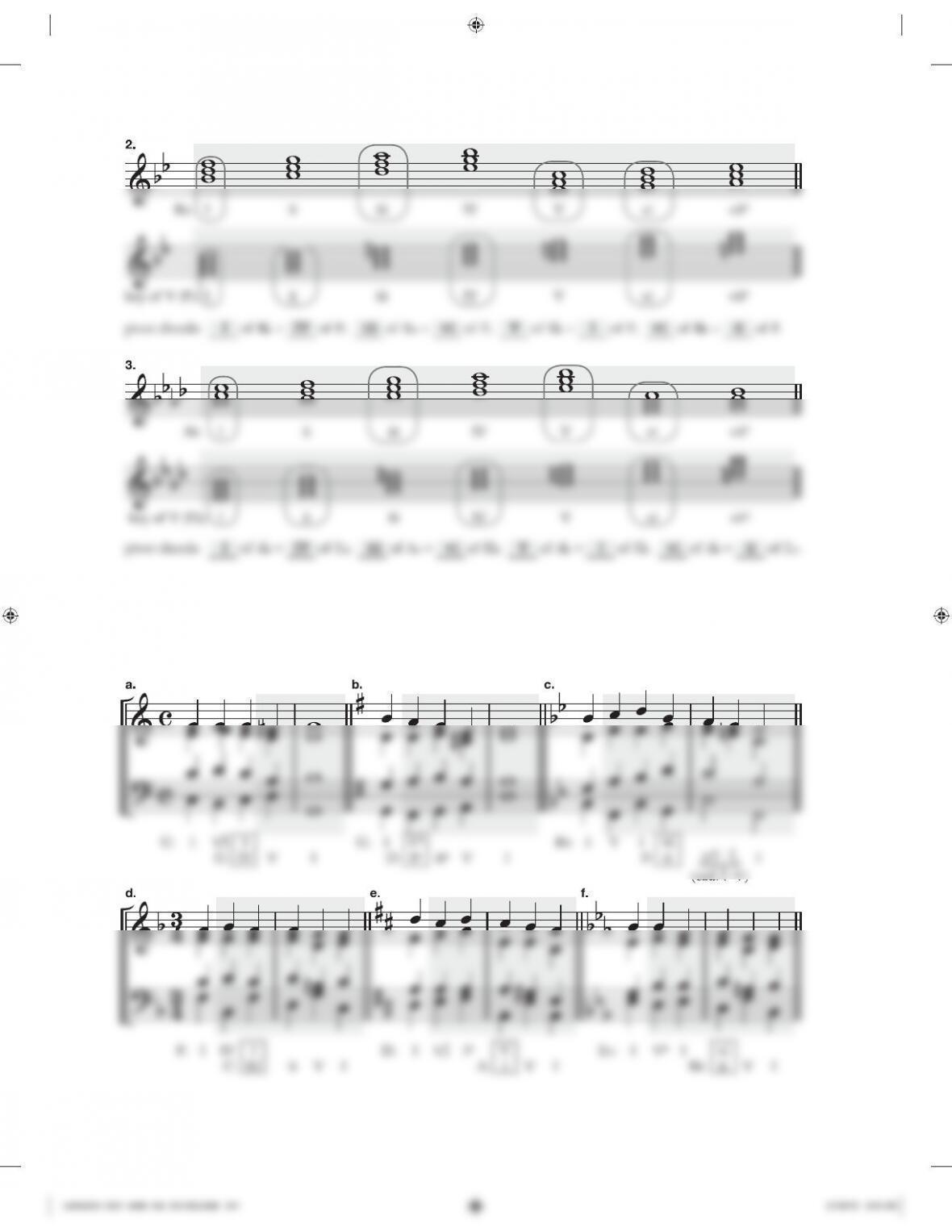
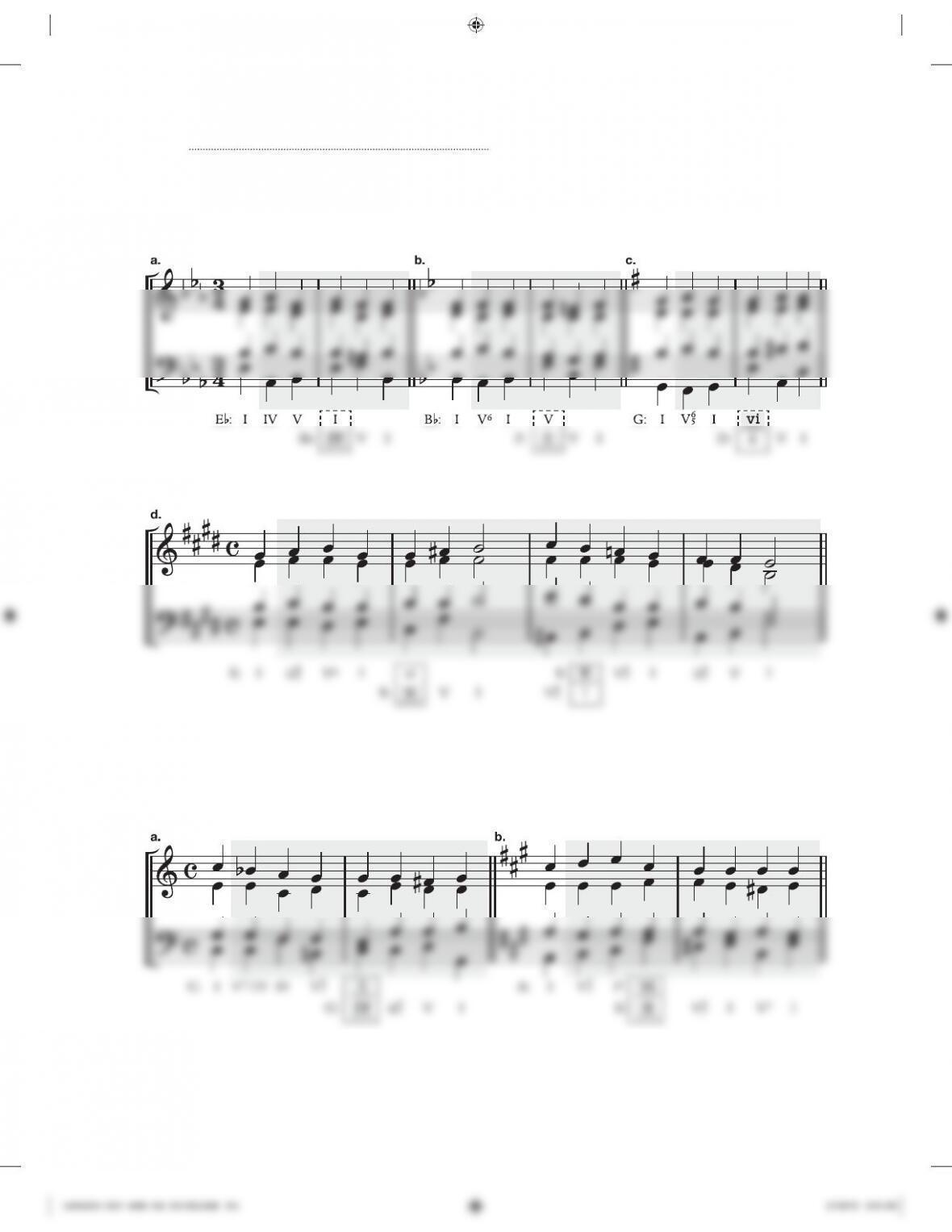
1. Realize these Roman numerals in SATB format. Dotted boxes indicate the pivot
chords. Remember to include accidentals where necessary.
C. Realizing Roman Numerals | 345
NAME:
2. Realize these Roman numerals in SATB format. In each case, the pivot chord is
indicated in only one of the keys; on the blank line give the Roman numeral label
of this pivot chord in the other key. Remember to add accidentals where necessary.
3. Realize the Roman numerals in SATB format, choosing a harmony that can serve
as a pivot chord between these keys and labeling its Roman numeral (within both
keys) on the blank lines provided.
346 |CHAPTER 27 |Modulation to the Dominant Key
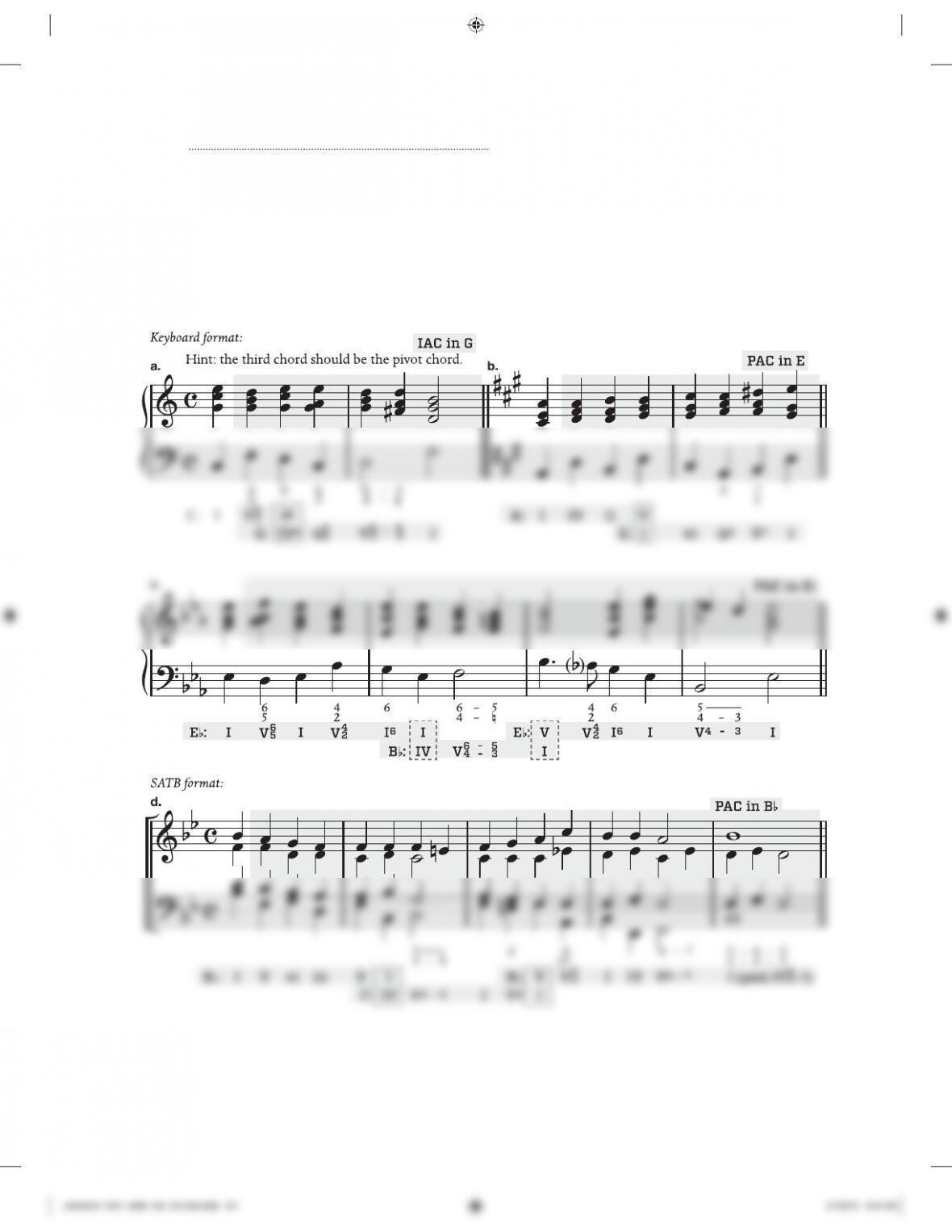
4. Realize the Roman numerals in keyboard format. Where a blank line is provided,
complete the labeling of the pivot chord. Where one of the pivot chords is not
labeled, fill in the blank.
Though “vi6” is rare in diatonic settings, it may substitute for I when used as a pivot chord.
NAME:
D. Realizing Figured Bass | 347
D. REALIZING FIGURED BASS
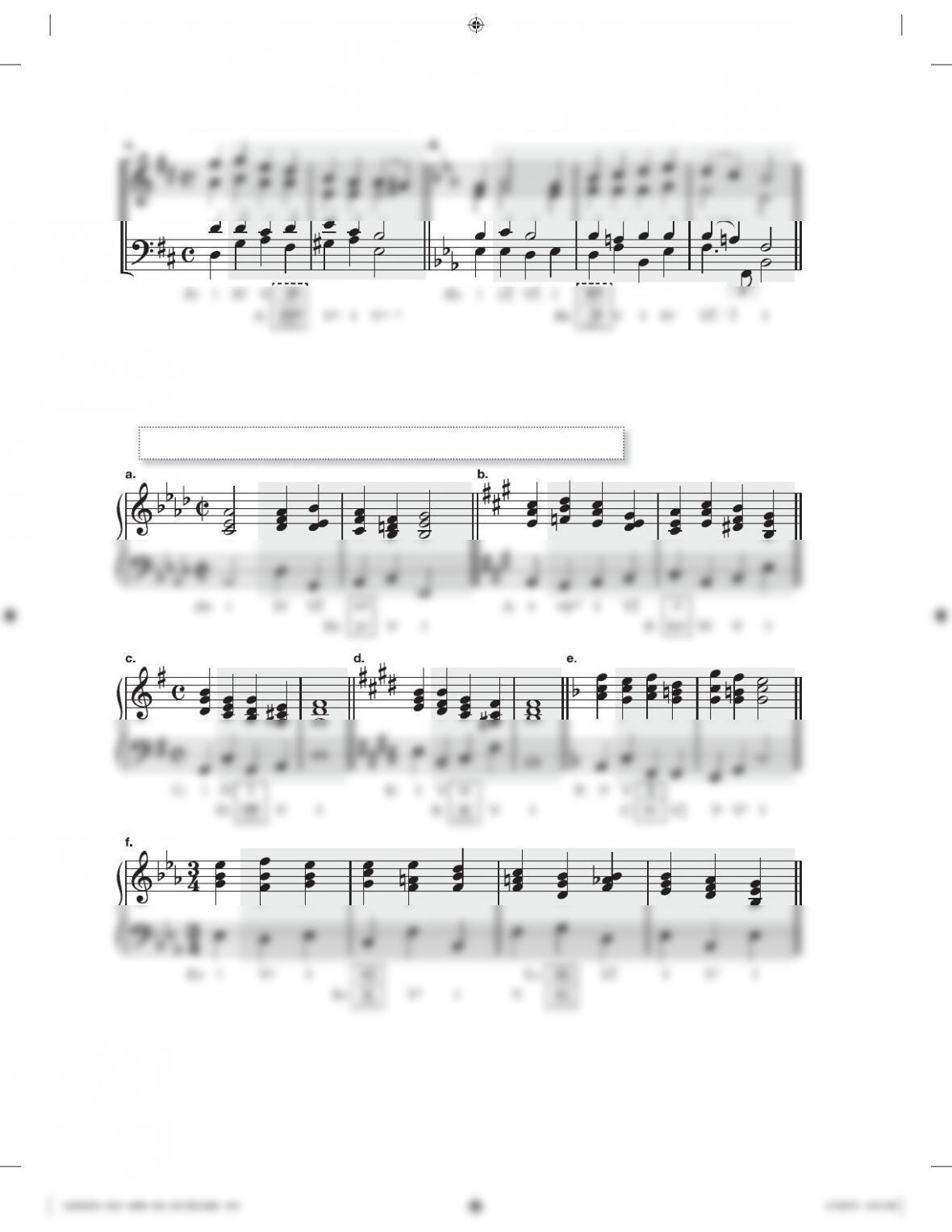
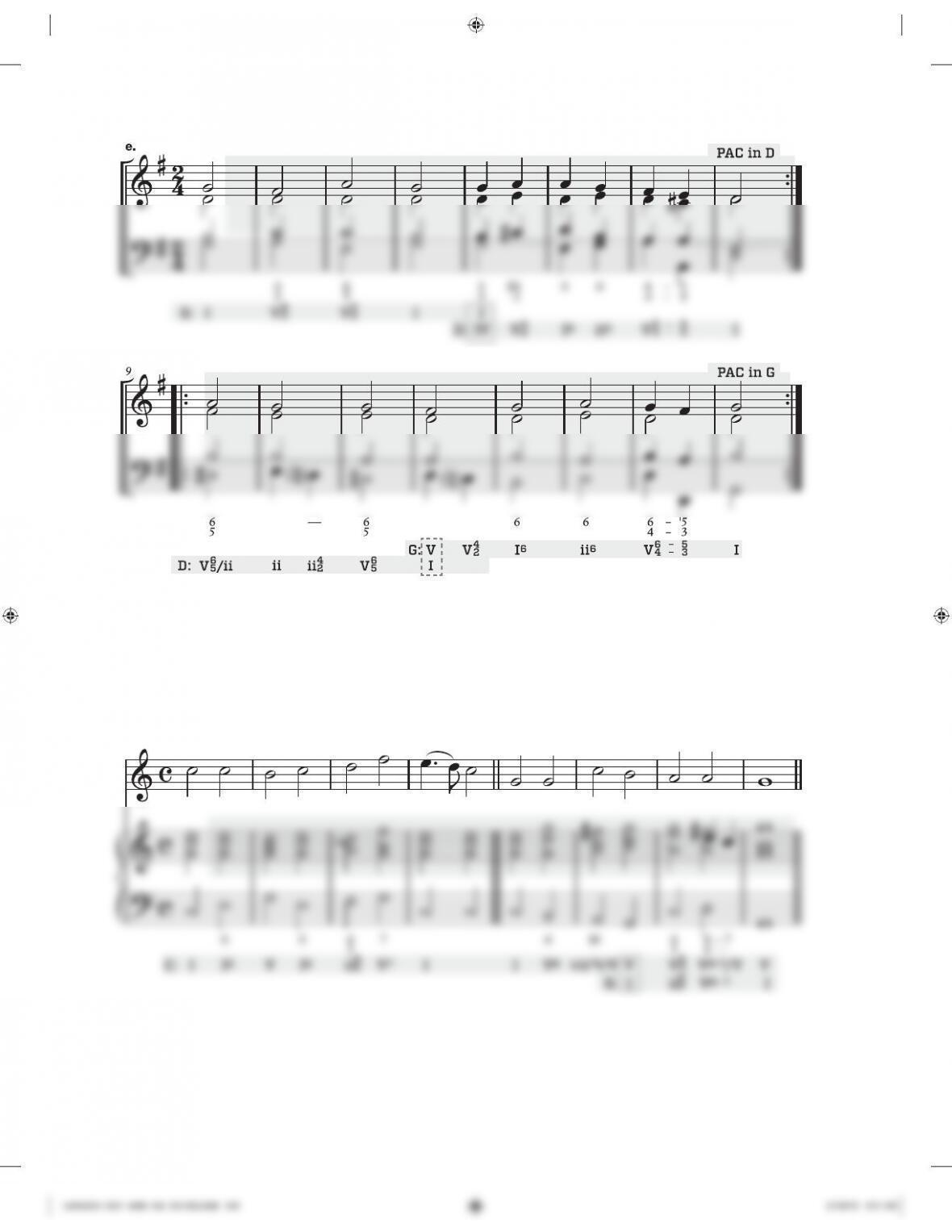
1. For each of the following:
• Realize the figured bass in the indicated format, then label the keys, Roman
numerals, and cadences, making sure to indicate the modulations.
• Indicate pivot chords with a dotted box.
348 | CHAPTER 27 | Modulation to the Dominant Key
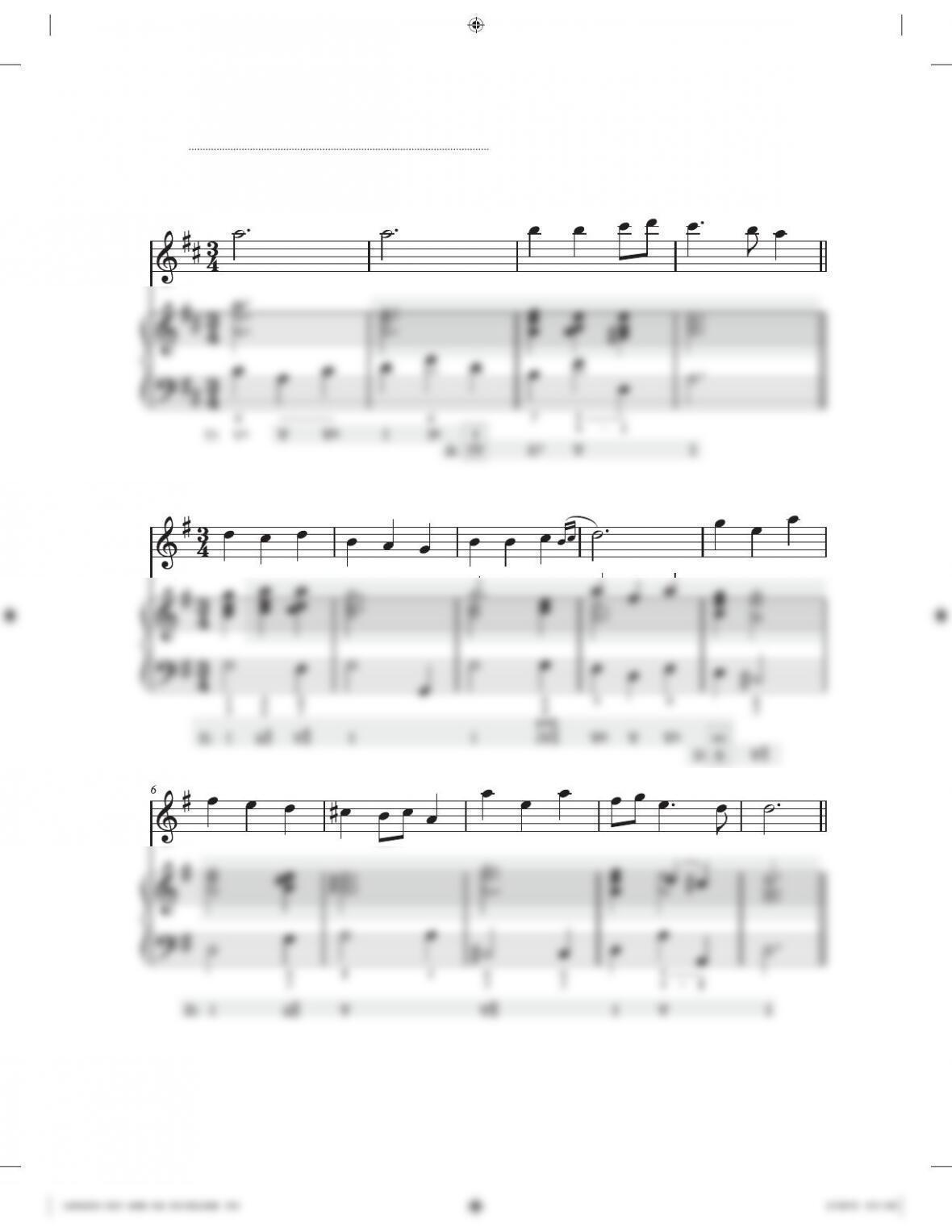
2. Realize each of the figured bass accompaniments in four-part harmony, keyboard
format, indicating Roman numerals beneath the sta. Do not worry about any
parallel perfect intervals that may arise between your figured realization and the
given melody.
a. Theophania Cecil, “St. Ignatius” (hymn)
NAME:
D. Realizing Figured Bass | 349
b. J. J. Quantz, Flute Sonata in D
c. Jacques-Martin Hotteterre, Flute Sonata, Op. 2, Rondeau, “Le Baron”
350 | CHAPTER 27 | Modulation to the Dominant Key
E. HARMONIZING MELODIES
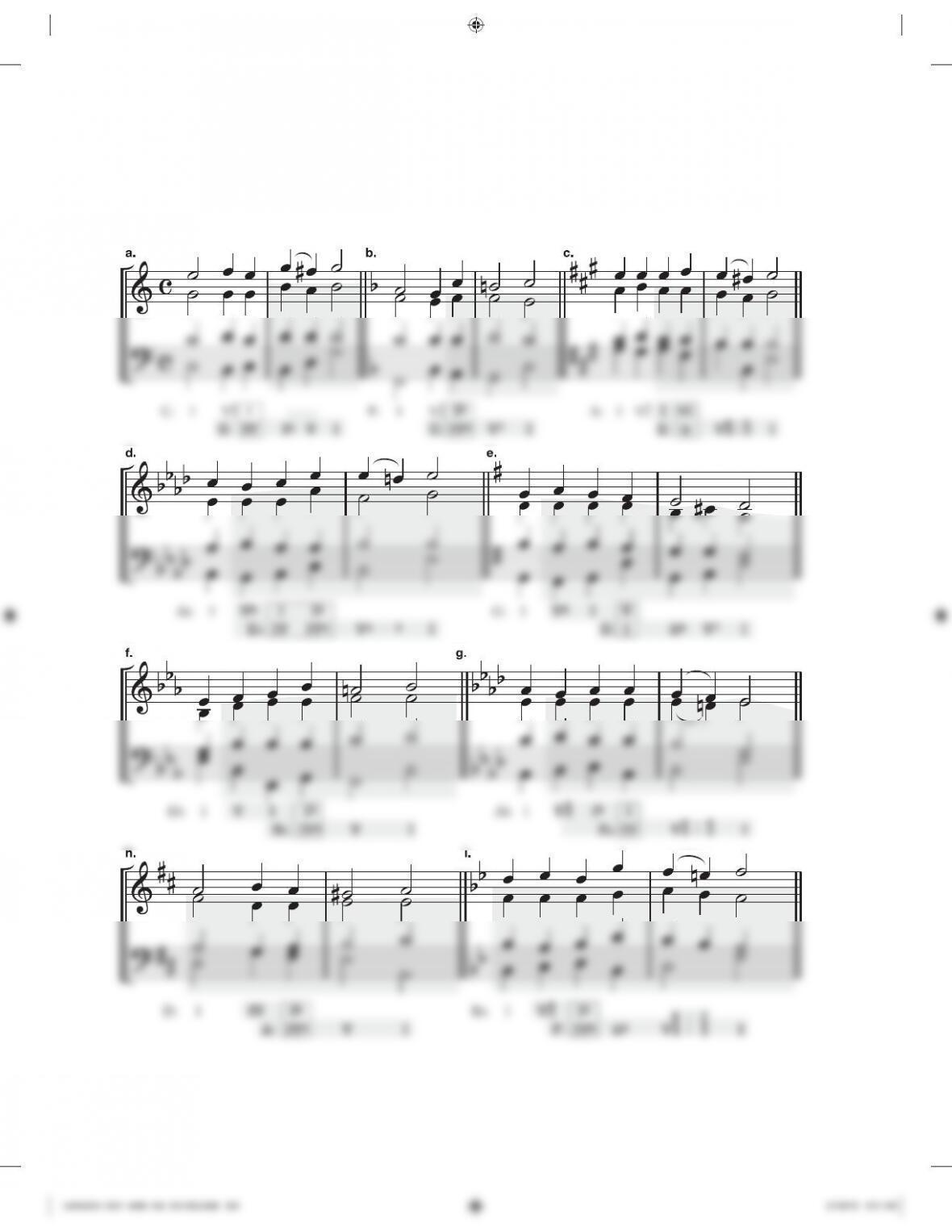
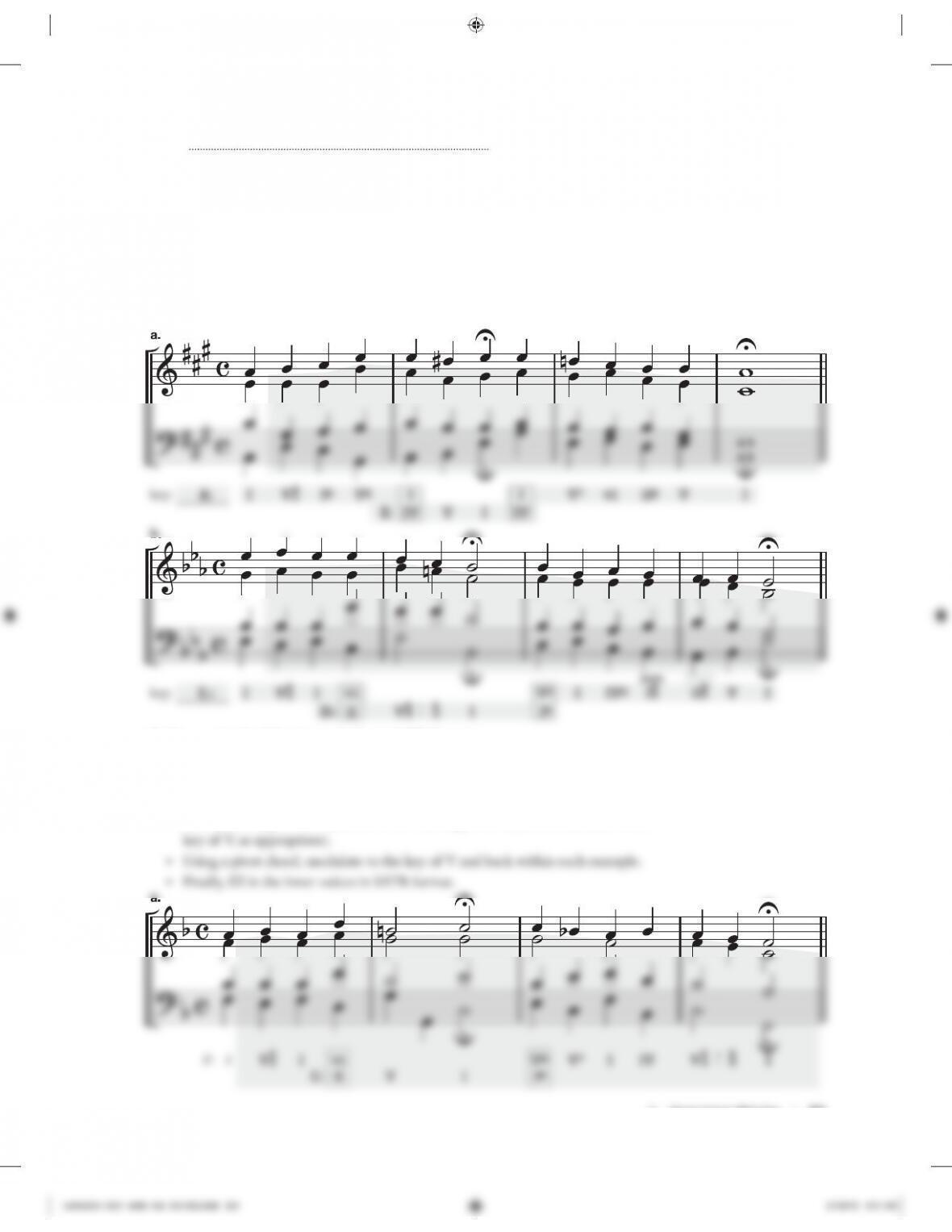
1. Complete the harmonization of each melody by providing a bass line and Roman
numerals and filling in the inner voices. In each case, modulate to the key of V
using a pivot chord, and end with a cadence in the key of V.
NAME:
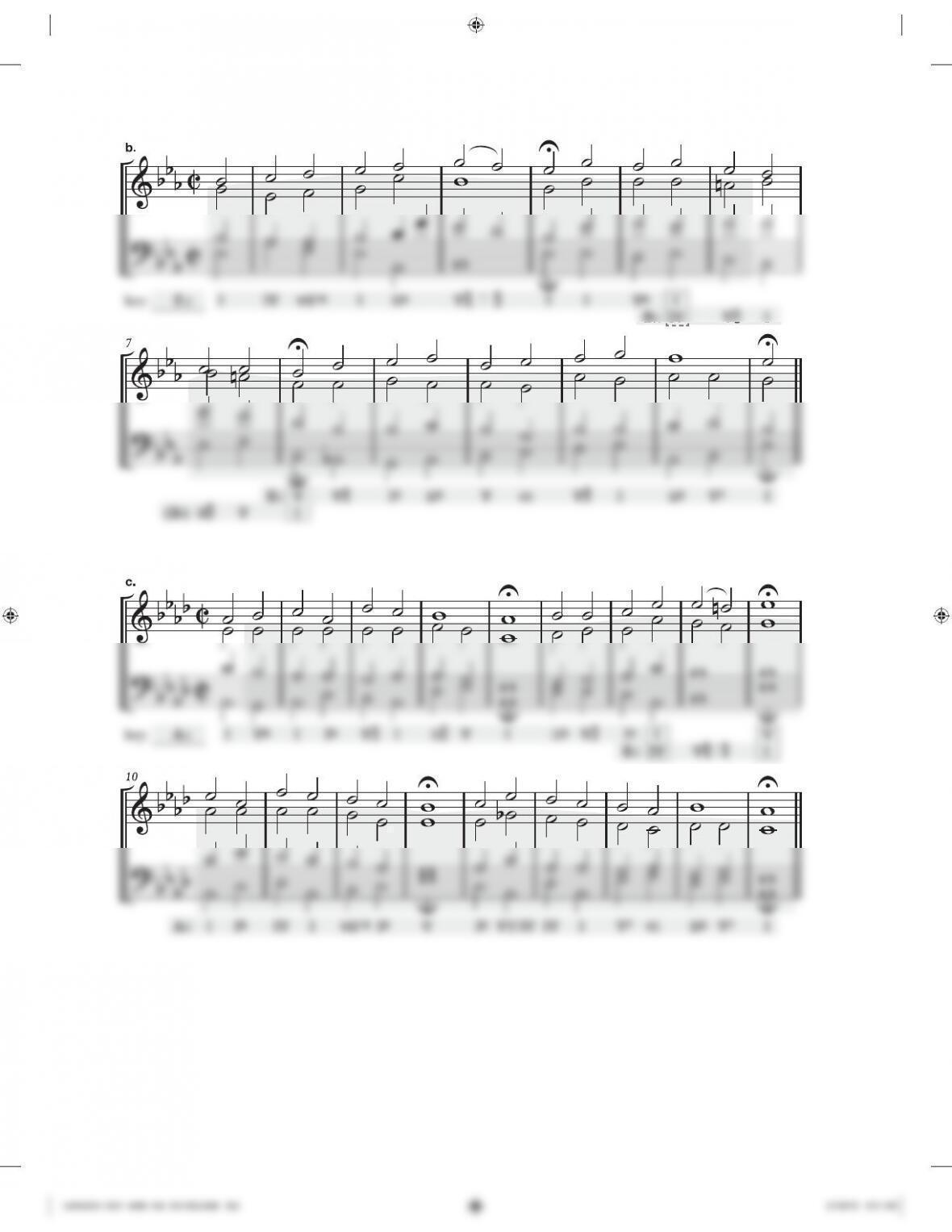
2. Harmonize the following melodies in SATB format:
• Identify the key and harmonize the following melodies by providing a bass line
and Roman numerals.
• Using a pivot chord, modulate to the key of V by the end of the first phrase,
then back to the main key by the end of the second phrase. What in the melody
hints that there will be a modulation to V in each of these?
• Finally, fill in the inner voices in SATB format.
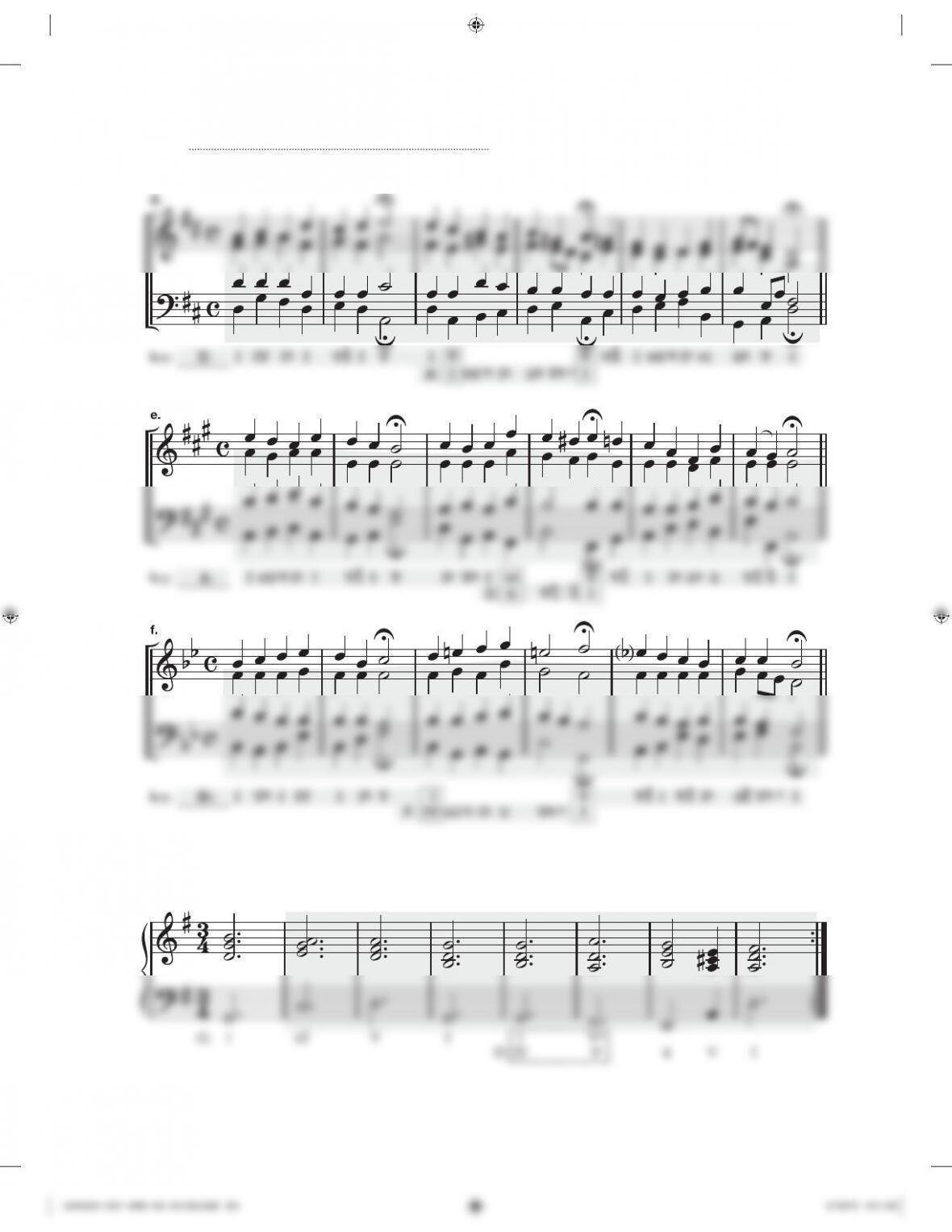
3. Harmonize the following melodies in SATB format:
• Determine the key and add a bass line and Roman numerals, providing each
note of the melody with a separate harmony.
• The fermatas indicate the location of the cadences (either an authentic cadence
in the main key, a half cadence in the main key, or an authentic cadence in the
352 | CHAPTER 27 | Modulation to the Dominant Key
F. Composition | 353
NAME:
F. COMPOSITION
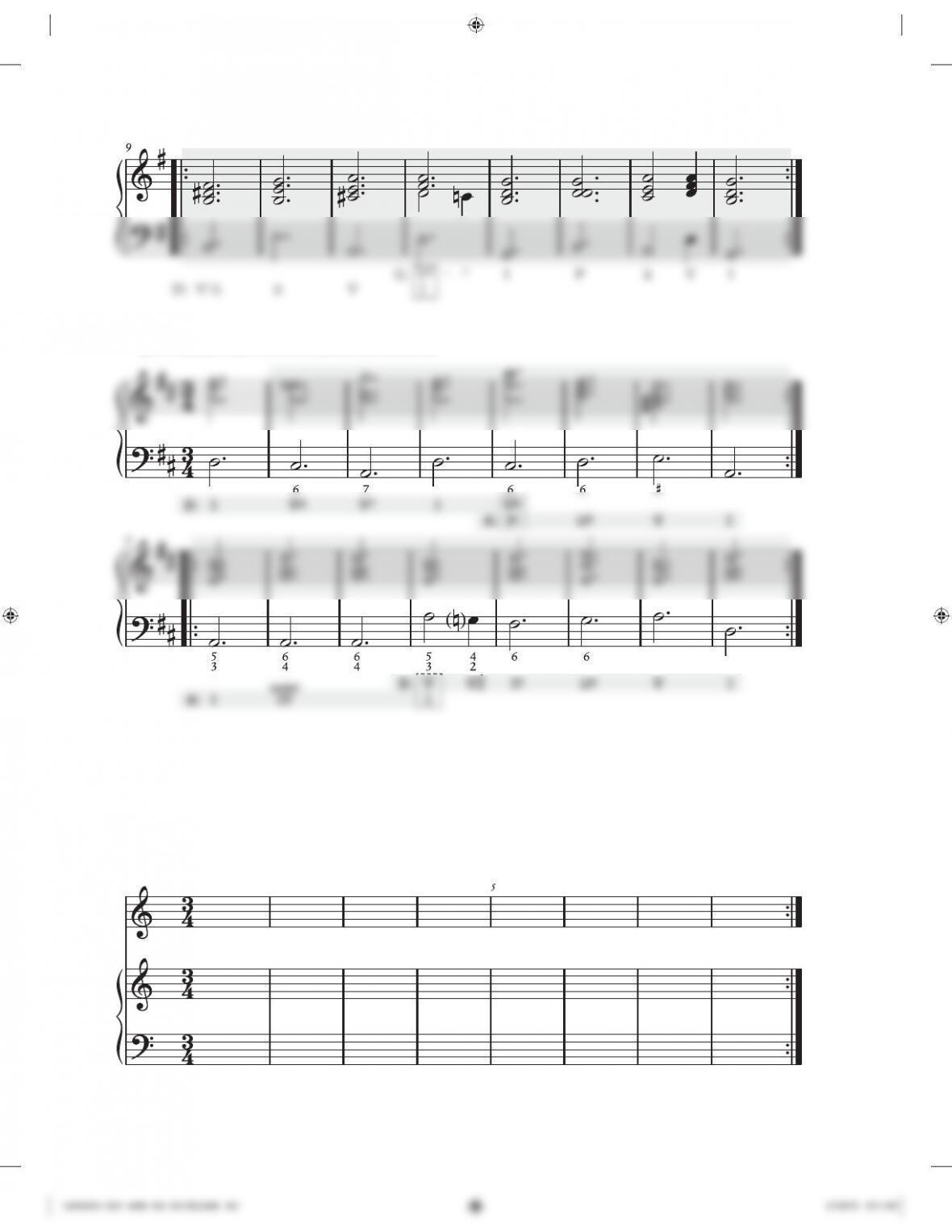
1. Realize the Roman numerals in keyboard format.
354 | CHAPTER 27 | Modulation to the Dominant Key
2. Realize the figured bass in keyboard format. Label the Roman numerals, indicating
pivot chords (with a dotted box) and modulations.
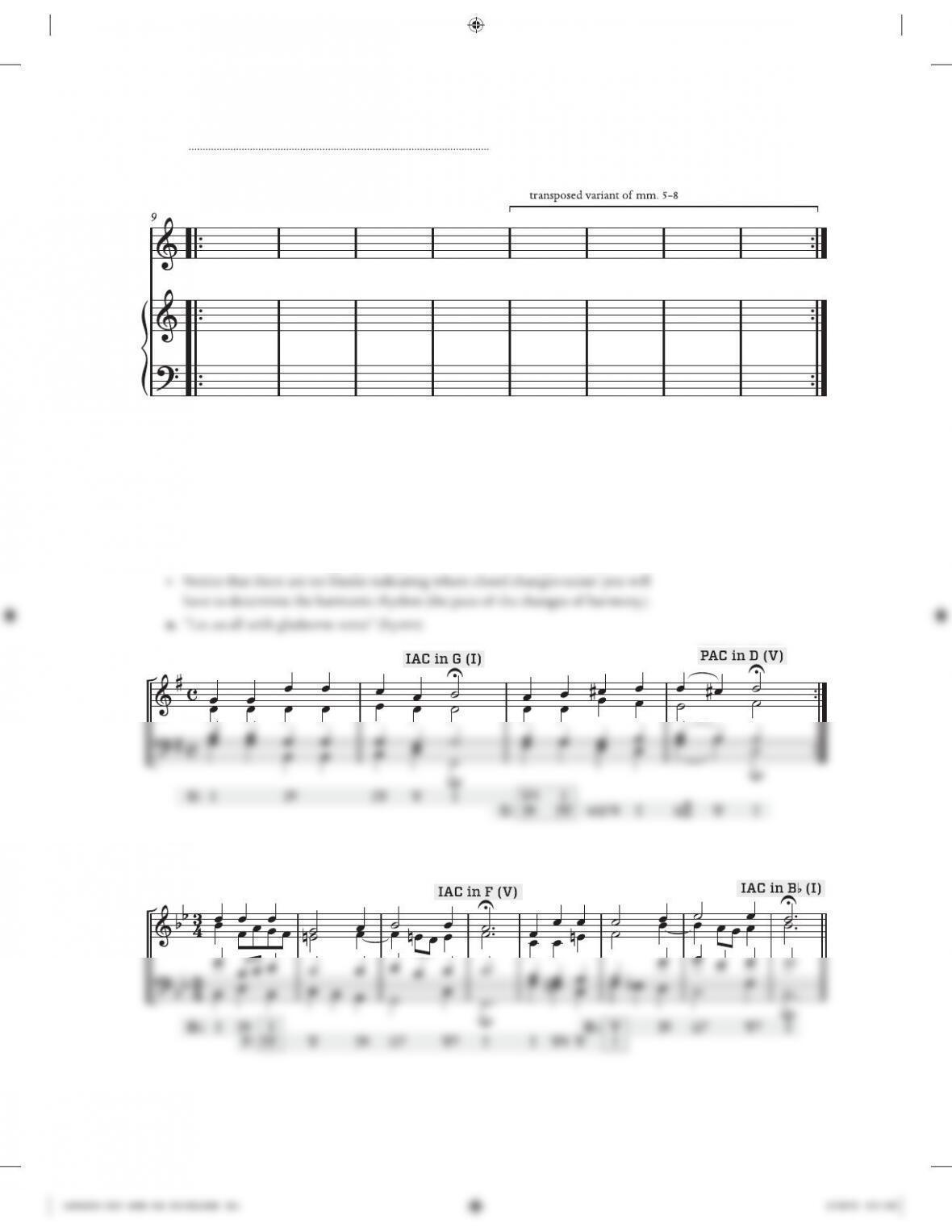
3. Compose a piece for keyboard and another instrument, using the same harmonies
as either (1) or (2) immediately preceding.
• Provide the key signature for all parts.
• Use the same notes in the keyboard part as previously, but use an accompani-
ment pattern, as in earlier chapters.
• As indicated in the score, measures 13–16 should be a transposed variant of
measures 5–8.
G. Analysis | 355
NAME:
G. ANALYSIS
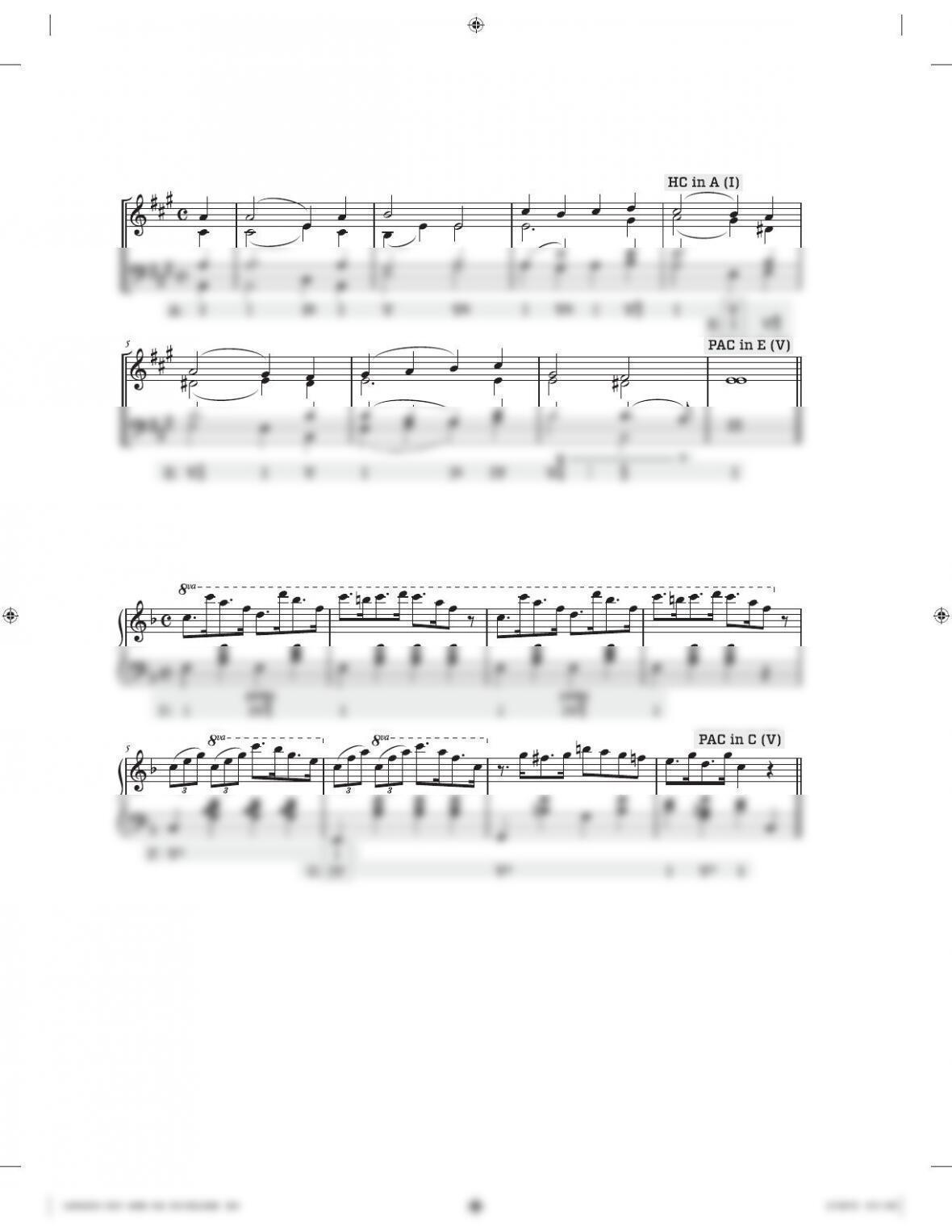
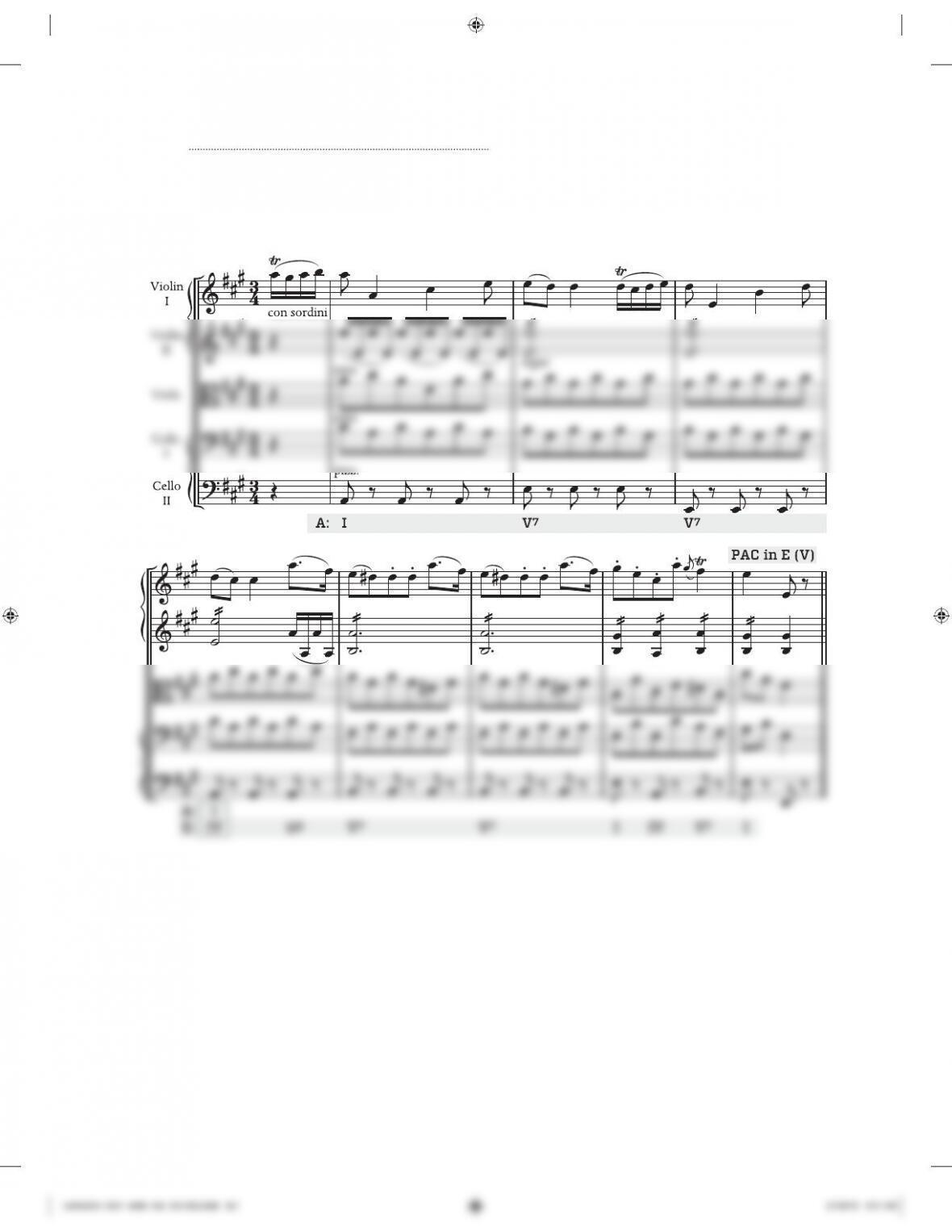
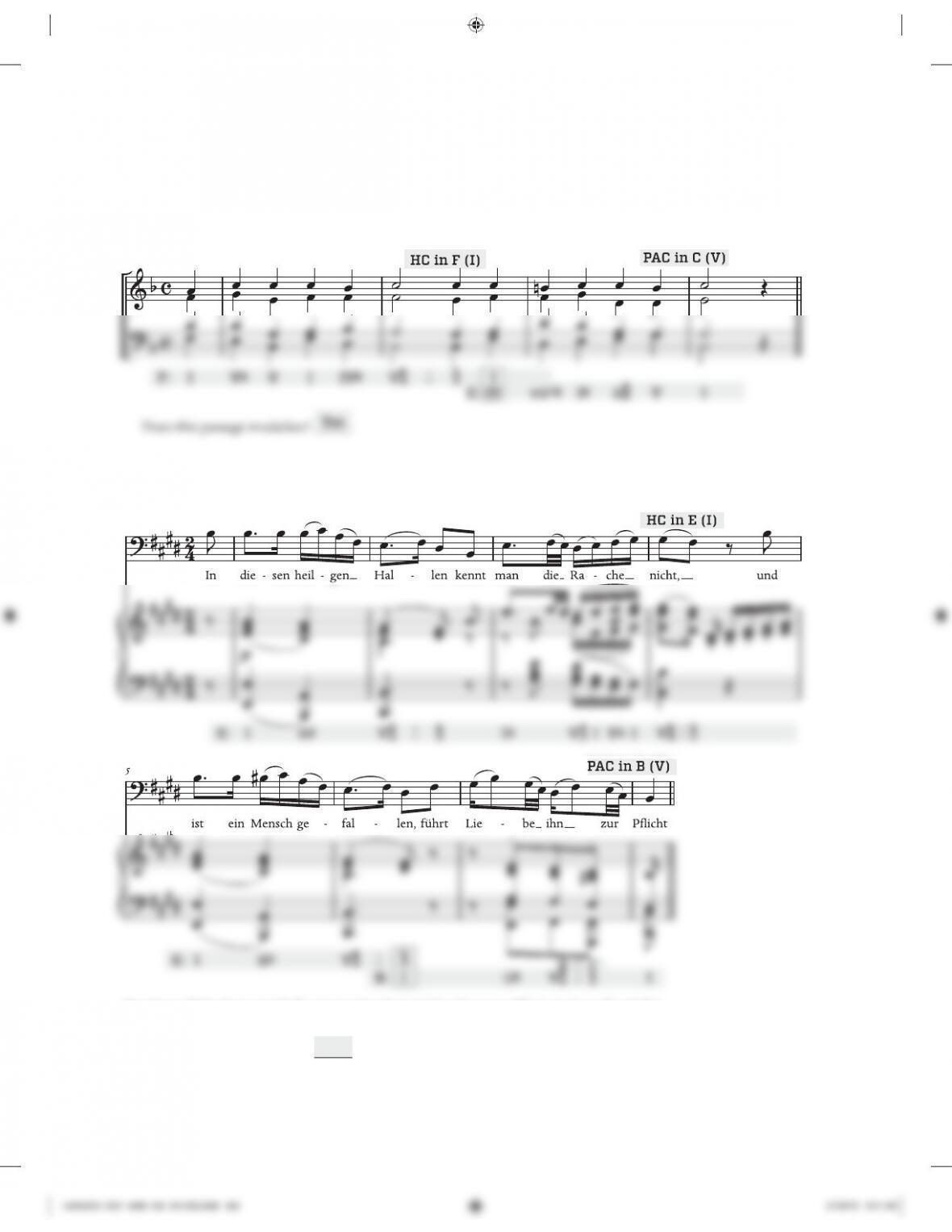
1. Analyze the following examples:
• Label the keys and Roman numerals, making sure to indicate the starting key,
the change(s) of keys, and the pivot chords.
• Draw a dotted box around pivot chords showing their function in both keys.
• Label cadences, indicating key and type (PAC, IAC, HC, Phrygian, plagal).
b. J. S. Bach, Chorale 192
356 | CHAPTER 27 | Modulation to the Dominant Key
c. Samuel Webbe, “Adeste Fidelis”
d. Jacob Sawyer, “Up in the Corner”
Most measures have one or two chords, but label three chords in measure 8.
G. Analysis | 357
NAME:
e. Luigi Boccherini, String Quintet in E, iii
Most measures have one chord, but label two chords in measure 4 and three
chords in measure 7.
4
358 | CHAPTER 27 | Modulation to the Dominant Key
2. Decide whether each of the following examples includes modulations or
tonicizations, and analyze the chords with Roman numerals accordingly. What are
reasons for reading either a modulation or tonicization in each case? (There is at
most one chord per bass note in each of these.)
a. “Freuet euch” (hymn)
b. W. A. Mozart, “In diesem heiligen Hallen” (“Within These Sacred Halls”),
from The Magic Flute
Translation: Within these sacred halls, revenge is banished. And should a person fall into sin, love will guide him
back to his duty.
Does this passage modulate? Yes
NAME:
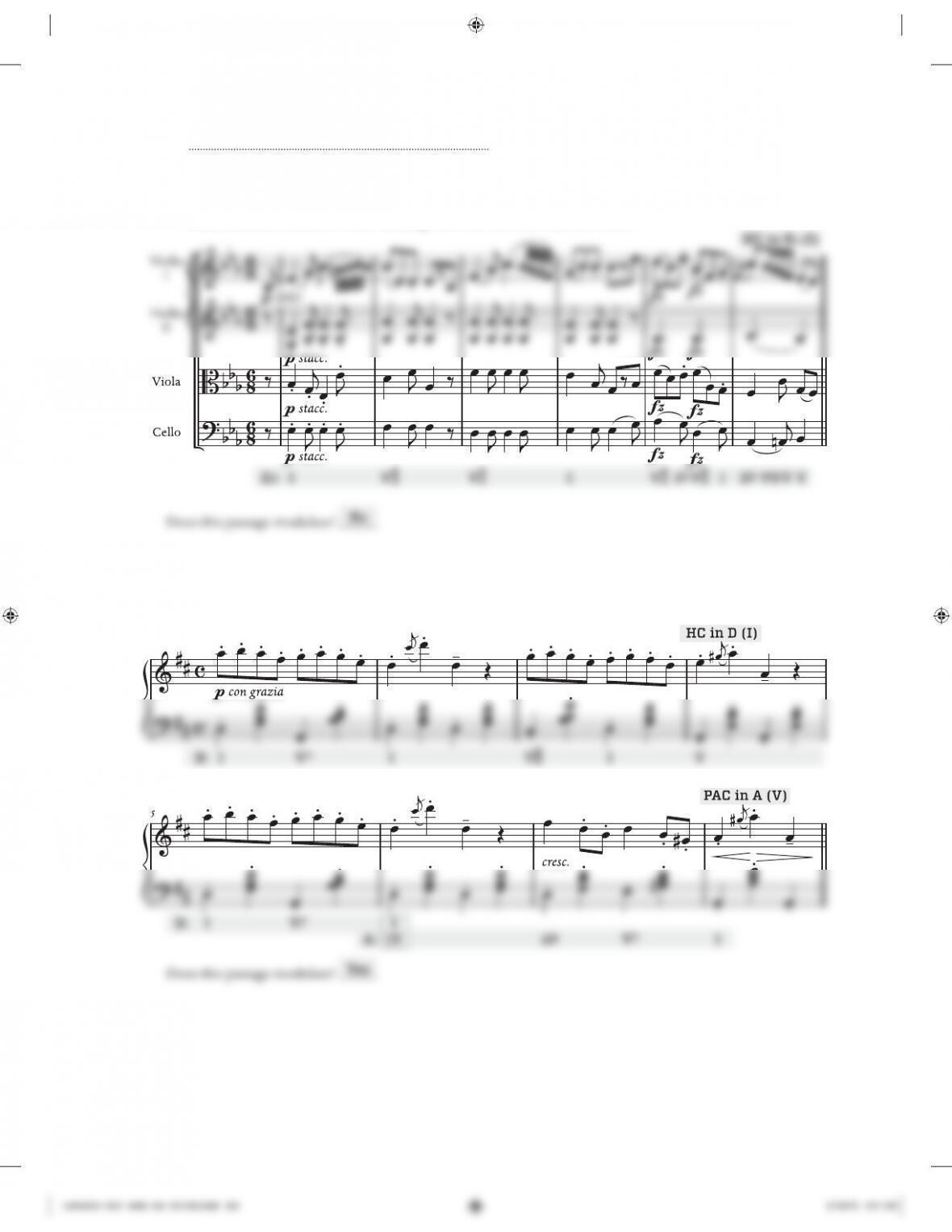
c. Joseph Haydn, String Quartet, Op. 50, No. 1, ii
Which measures include a voice exchange between the cello and first violin?
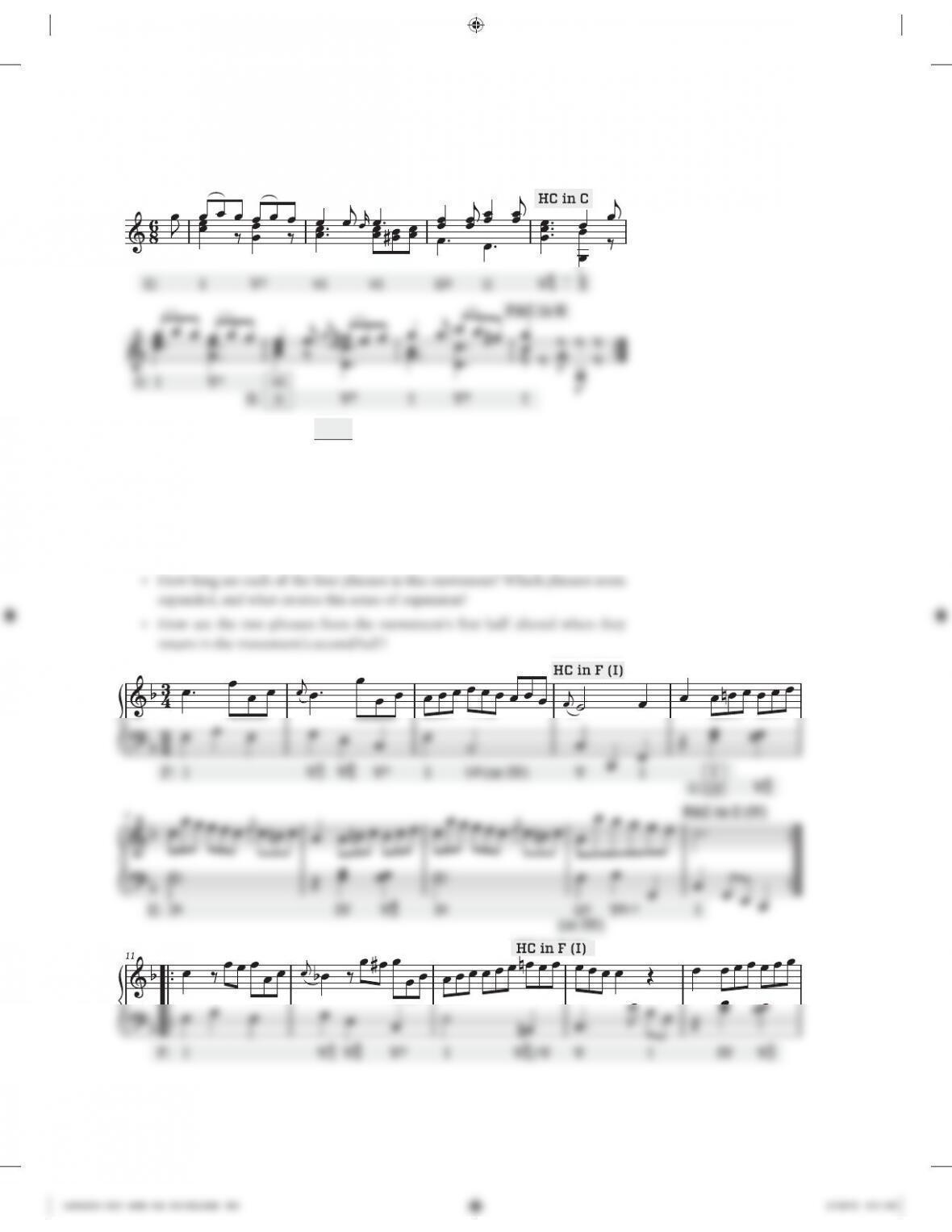
d. FranÇois-Joseph Gossec, Gavotte
Note: There are one or two chords at most in each bar.
e. Fernando Sor, Six Petite Pieces for Guitar, Op. 5, No. 4
Label only one or two chords per measure.
Does this passage modulate? Yes
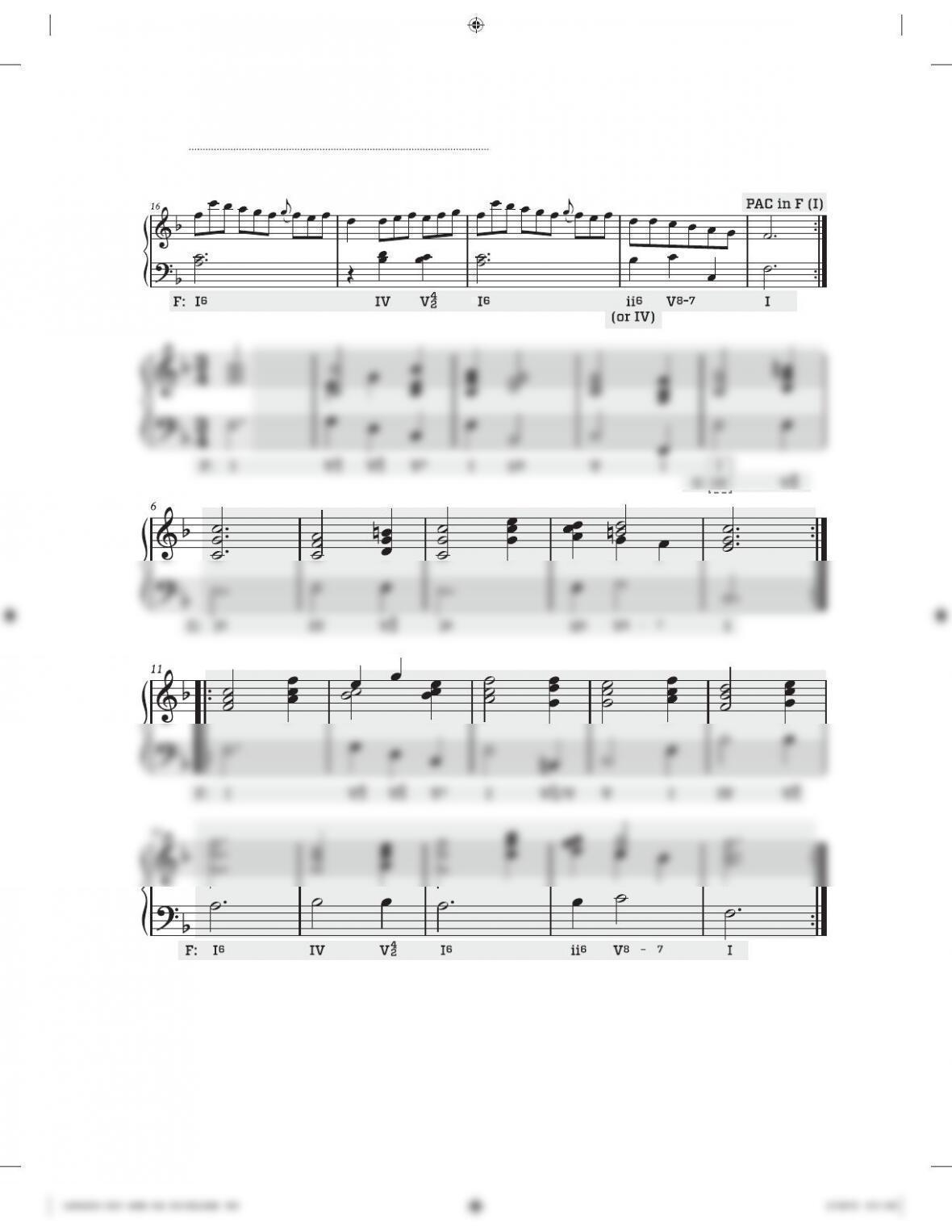
3. Anna Bon, Harpsichord Sonata
• Label the keys and cadences.
• Label the Roman numerals, with one or two chords per measure.
• On the staves below the score, complete a simplified harmonic model of this
movement in keyboard format.
G. Analysis | 361
NAME:
362 | CHAPTER 27 | Modulation to the Dominant Key
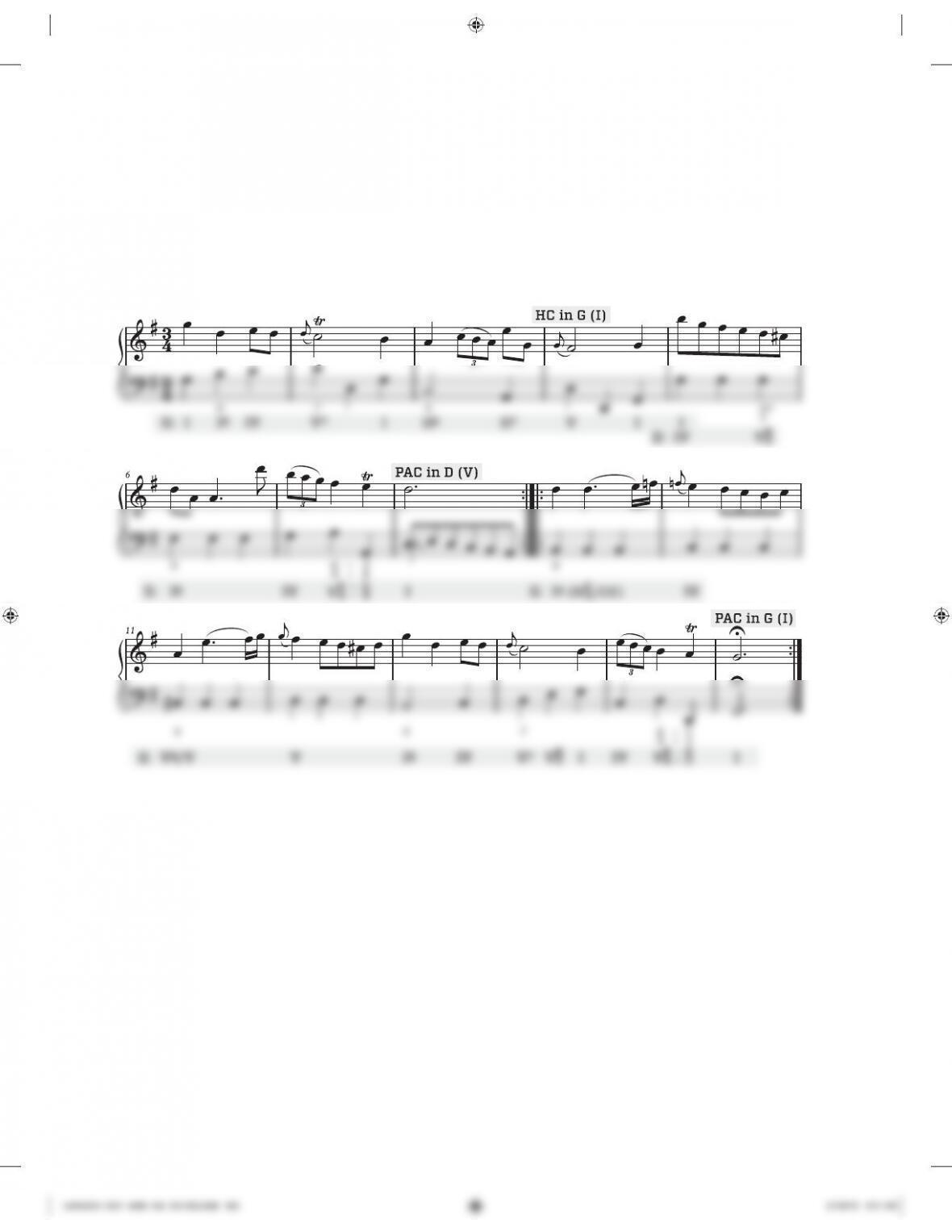
4. Abel, Flute Sonata Op. 6, No. 6, Minuet
• Label the keys, cadences, and Roman numerals.
• What helps create a sense of drive toward toward the cadence at the end of the
movement’s second phrase?
• What features produce an impression of instability at the start of the second
half of the piece (in mm. 9–12)? How do the last four measures promote a return
to stability?