NAME:
B. Spelling Applied Dominants | 325
A. QUESTIONS FOR REVIEW
1. How do you determine what note should be the root of an applied V chord? How
do you figure out what note should be the root of an applied vii.7 or vii.6 chord?
2. What is the quality of the triad (major, minor, or diminished) of an applied V
chord?
3. What is the quality of the seventh chord (diminished, half-diminished, minor,
dominant, major) in an applied V7? In an applied vii.7? In an applied vii7?
4. In an applied dominant, what note functions as a leading tone? What special
voice-leading rules apply to this note?
B. SPELLING APPLIED DOMINANTS
1. Spell the applied V chords:
• Identify the root of the goal chord for the indicated applied chord.
• Then determine the applied chord’s root.
• Finally, notate the applied chord, making sure to use the proper accidentals.
chapter
26 Other Applied Chords
326 | CHAPTER 26 | Other Applied Chords
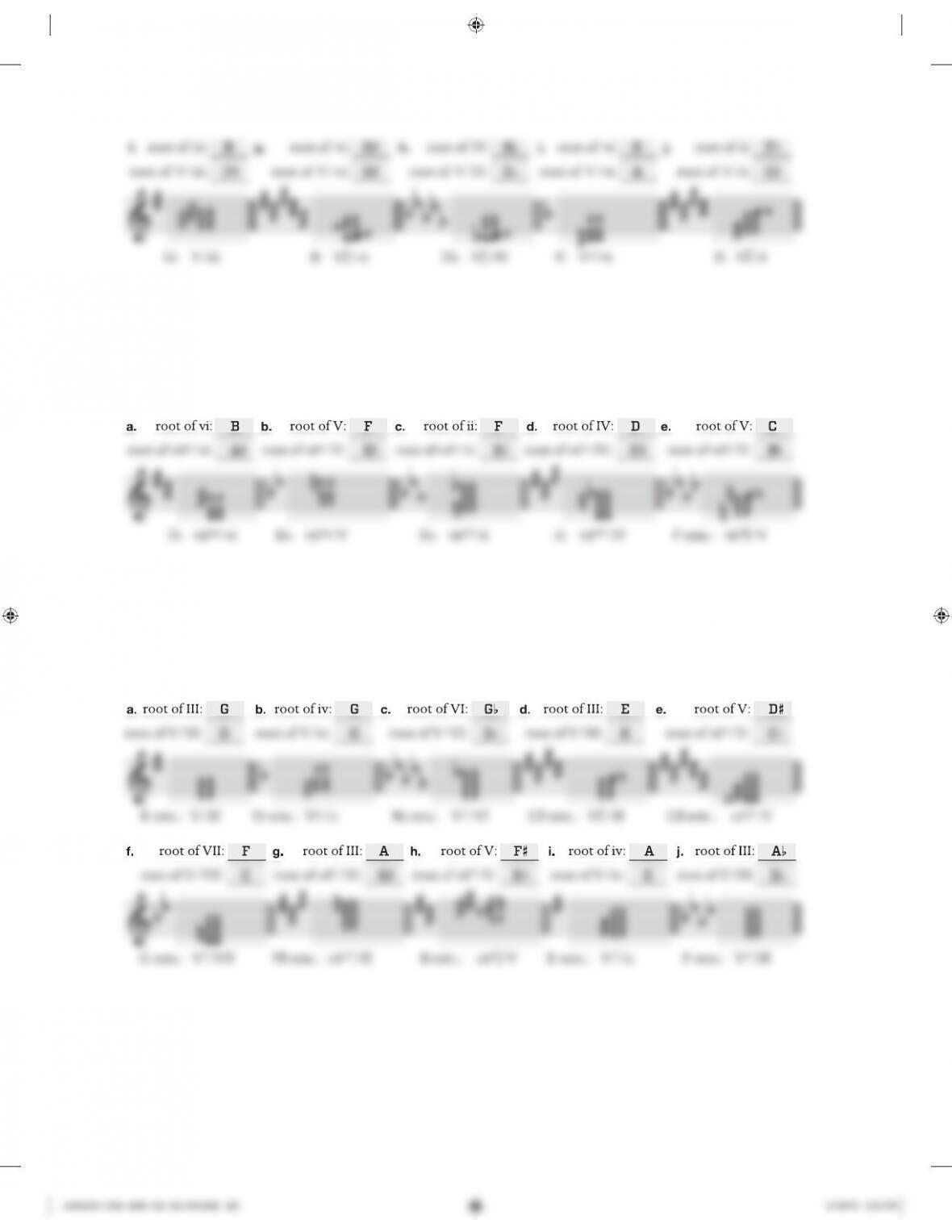
2. Spell the applied vii. chords:
• Identify the root of the goal chord for the indicated applied chord.
• Then determine the applied chord’s root.
• Finally, notate the applied vii.6, vii.7
, or vii7 chord, making sure to use the
proper accidentals.
3. Spell the applied dominant chords:
• Identify the root of the goal chord for the indicated applied chord.
• Then determine the applied chord’s root.
• Finally, notate the applied chord in these minor keys, making sure to use the
proper accidentals.
C. Realizing Roman Numerals | 327
NAME:
C. REALIZING ROMAN NUMERALS
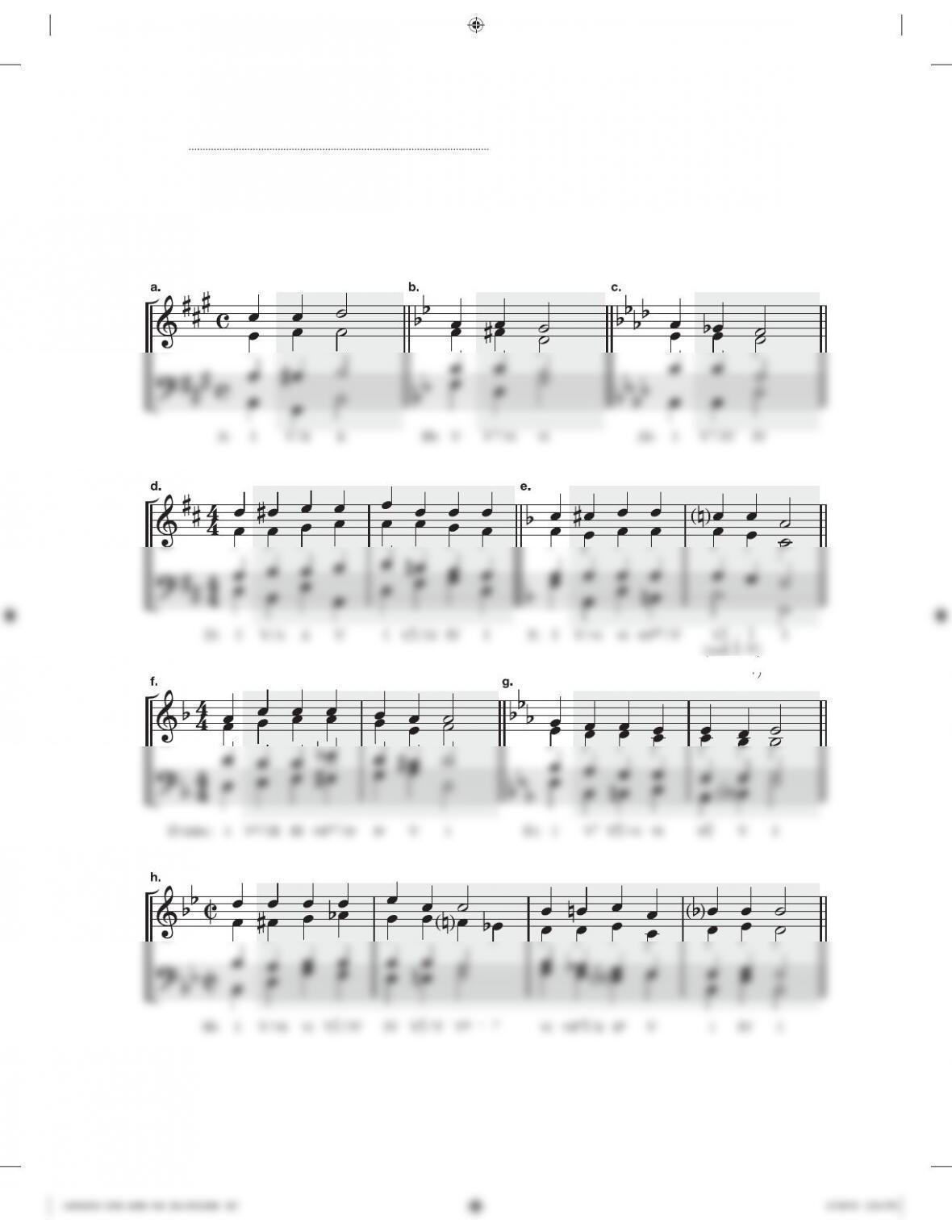
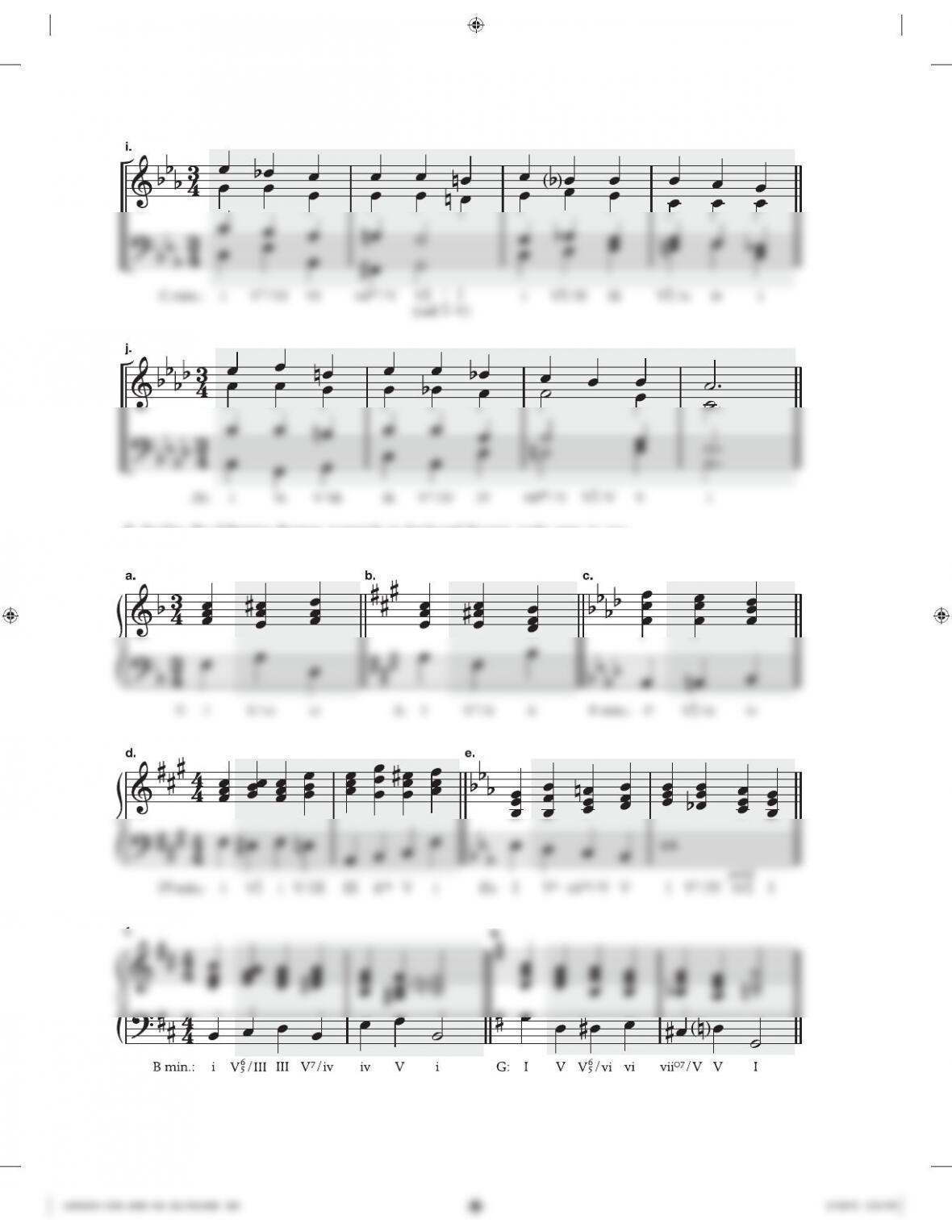
1. Realize the following Roman numerals in SATB format; make sure to use
accidentals where needed.
328 | CHAPTER 26 | Other Applied Chords
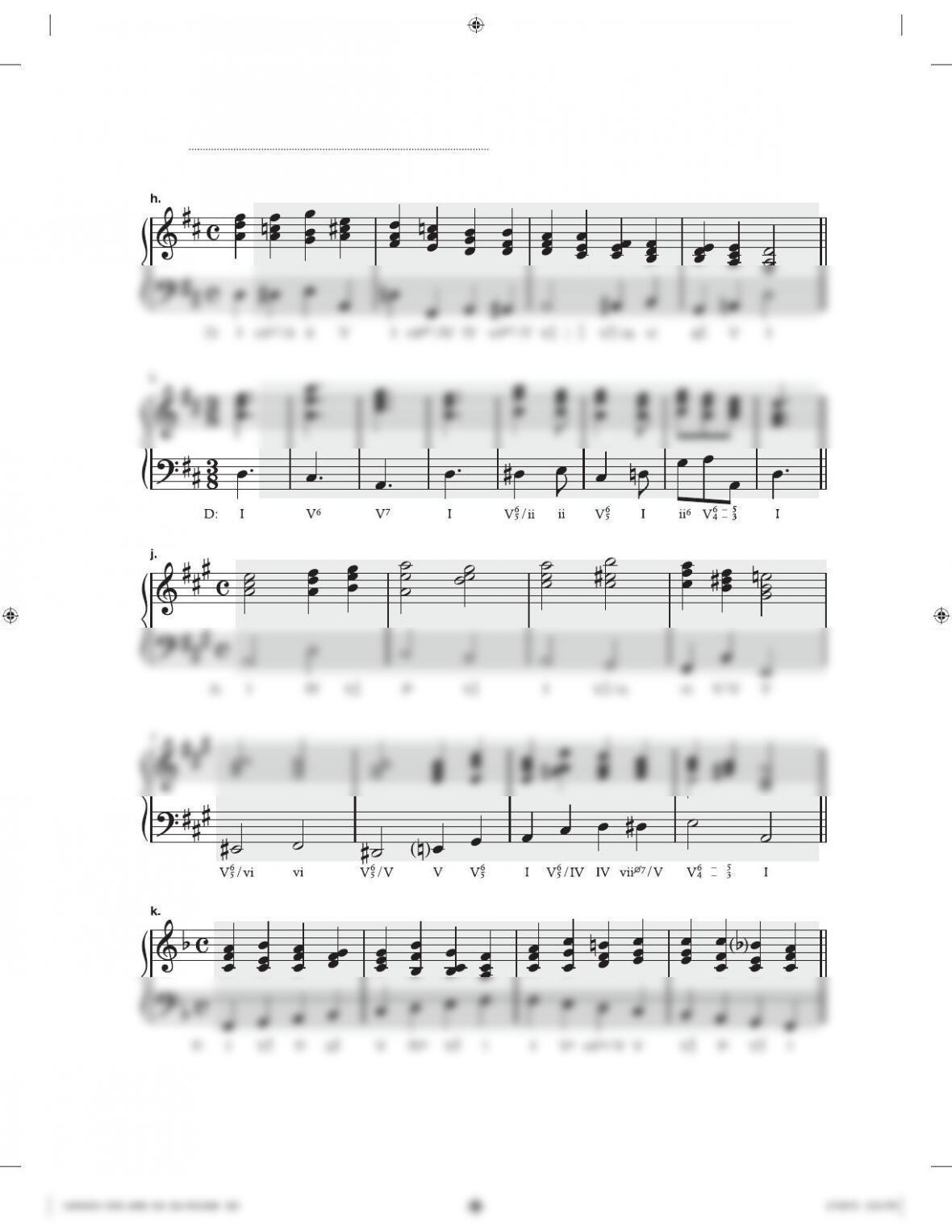
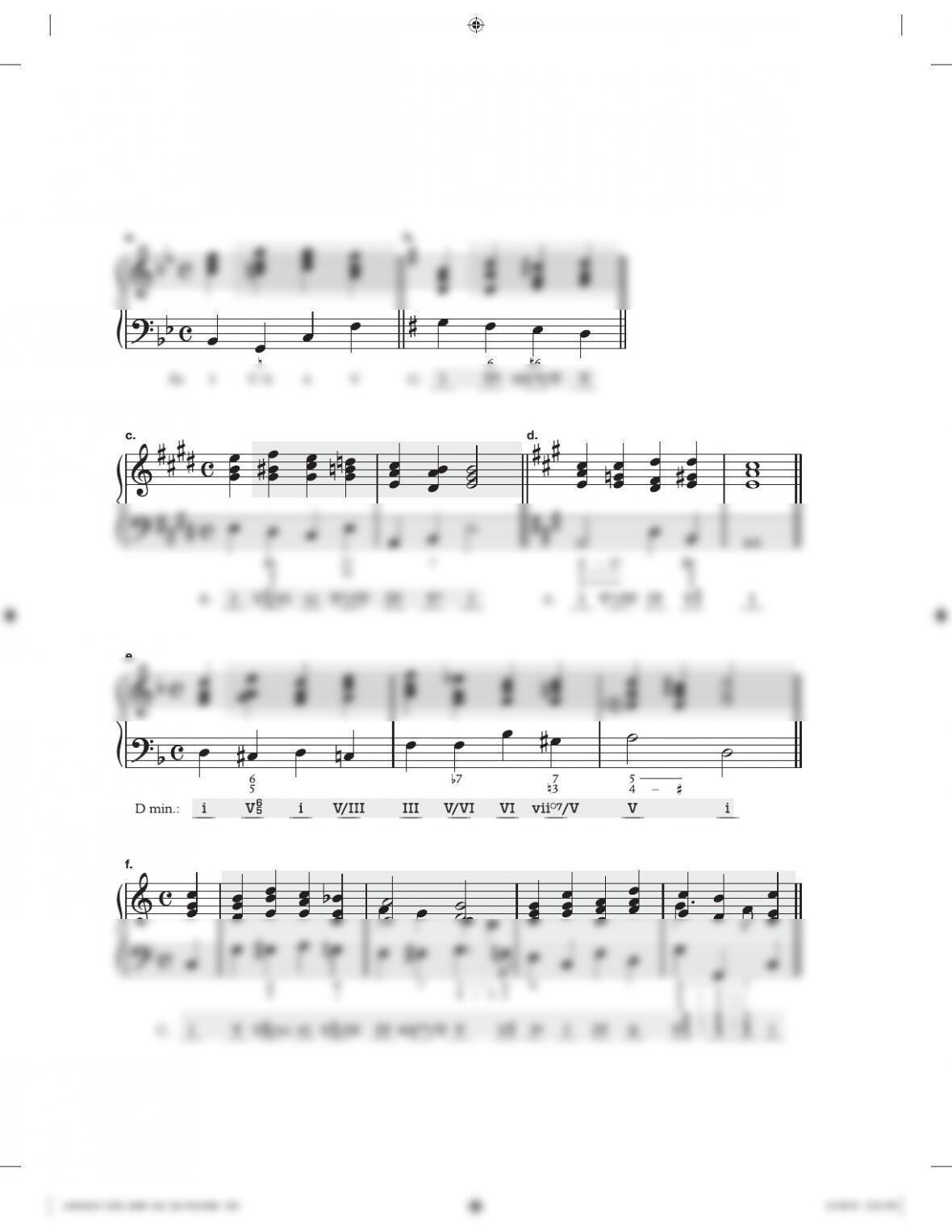
2. Realize the following Roman numerals in keyboard format; make sure to use
accidentals where needed.
C. Realizing Roman Numerals | 329
NAME:
330 | CHAPTER 26 | Other Applied Chords
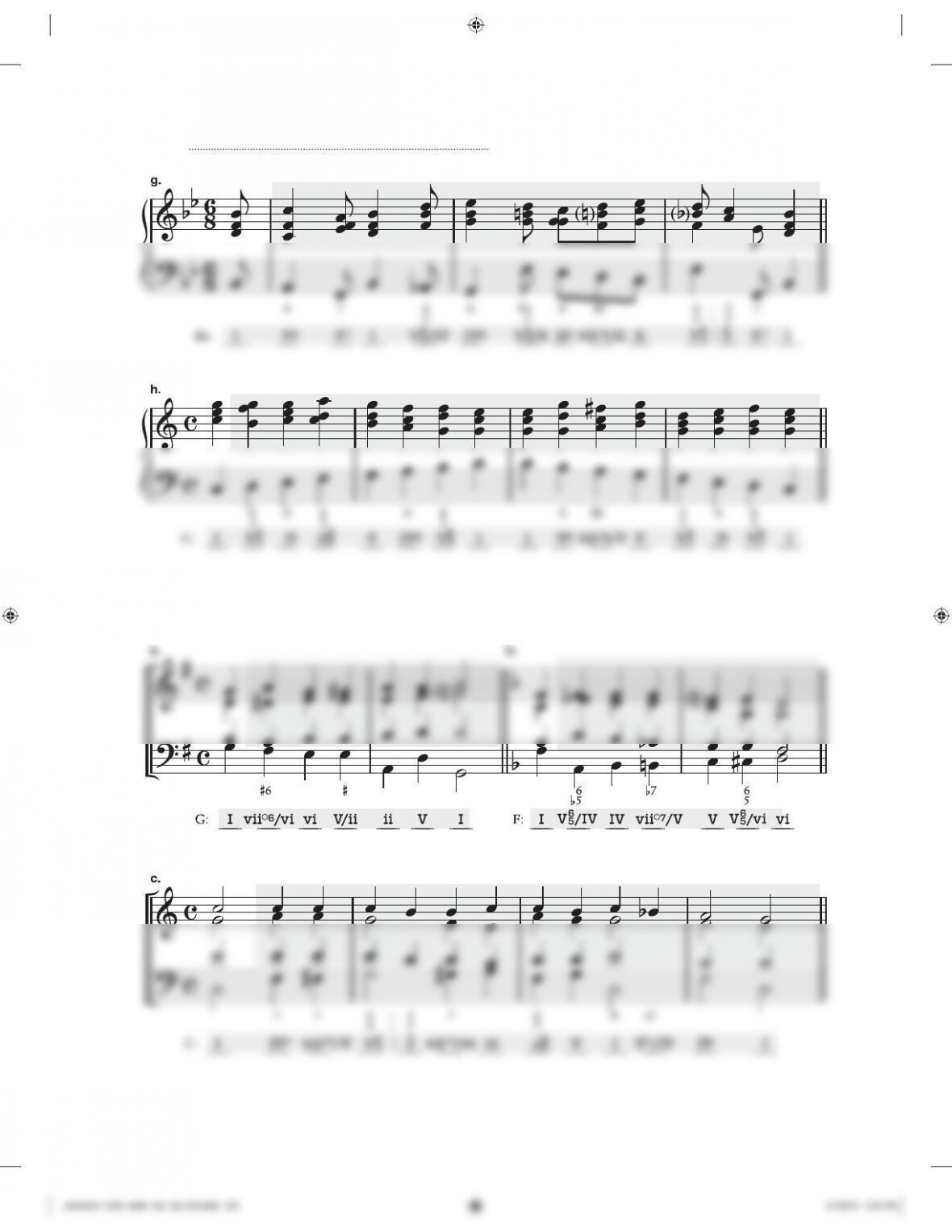
D. REALIZING FIGURED BASS
1. Realize each figured bass in keyboard format. Then label the Roman numerals of
the harmonies; note that there is at least one applied chord in each.
D. Realizing Figured Bass | 331
NAME:
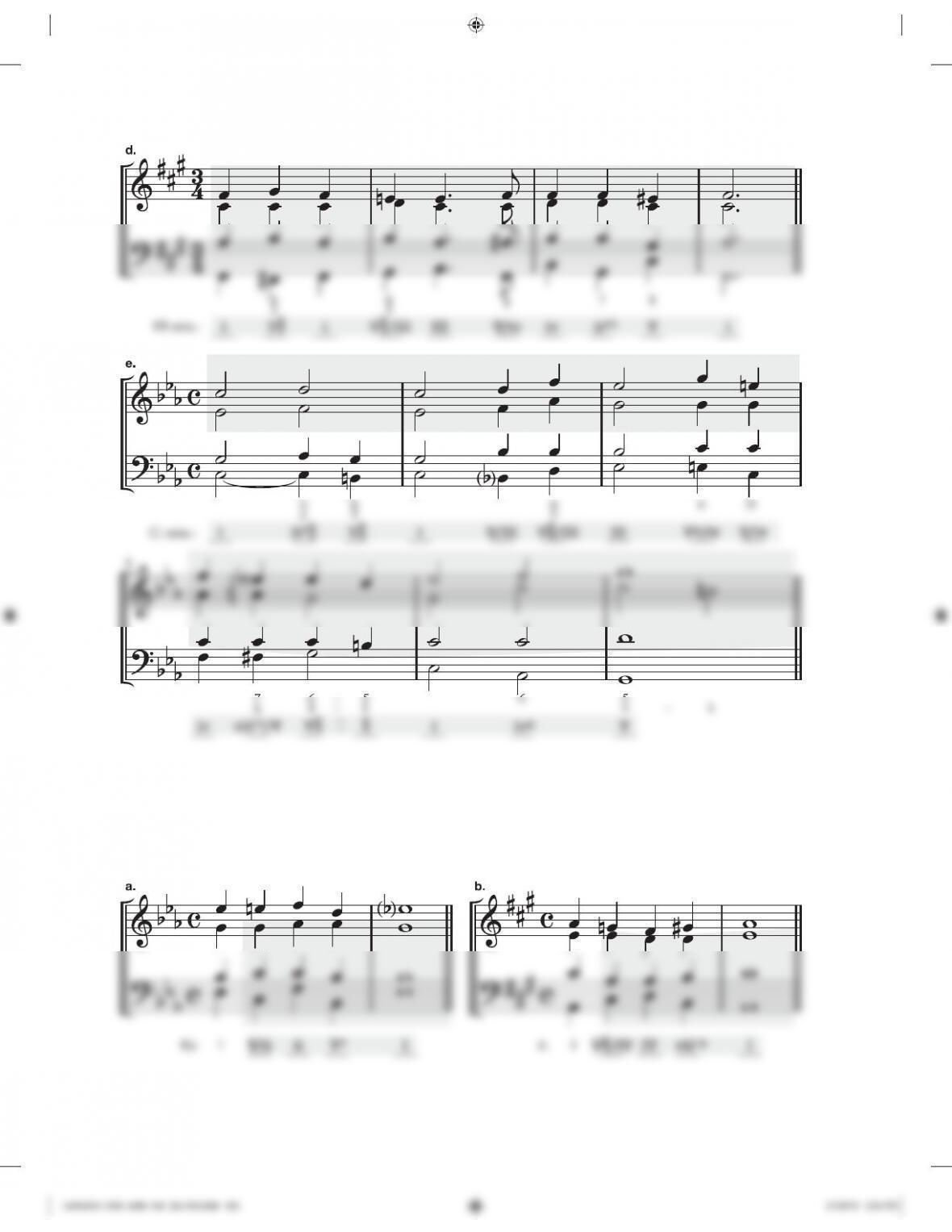
2. Realize each figured bass in SATB format and label the Roman numerals of the
harmonies; note that there is at least one applied chord in each.
332 | CHAPTER 26 | Other Applied Chords
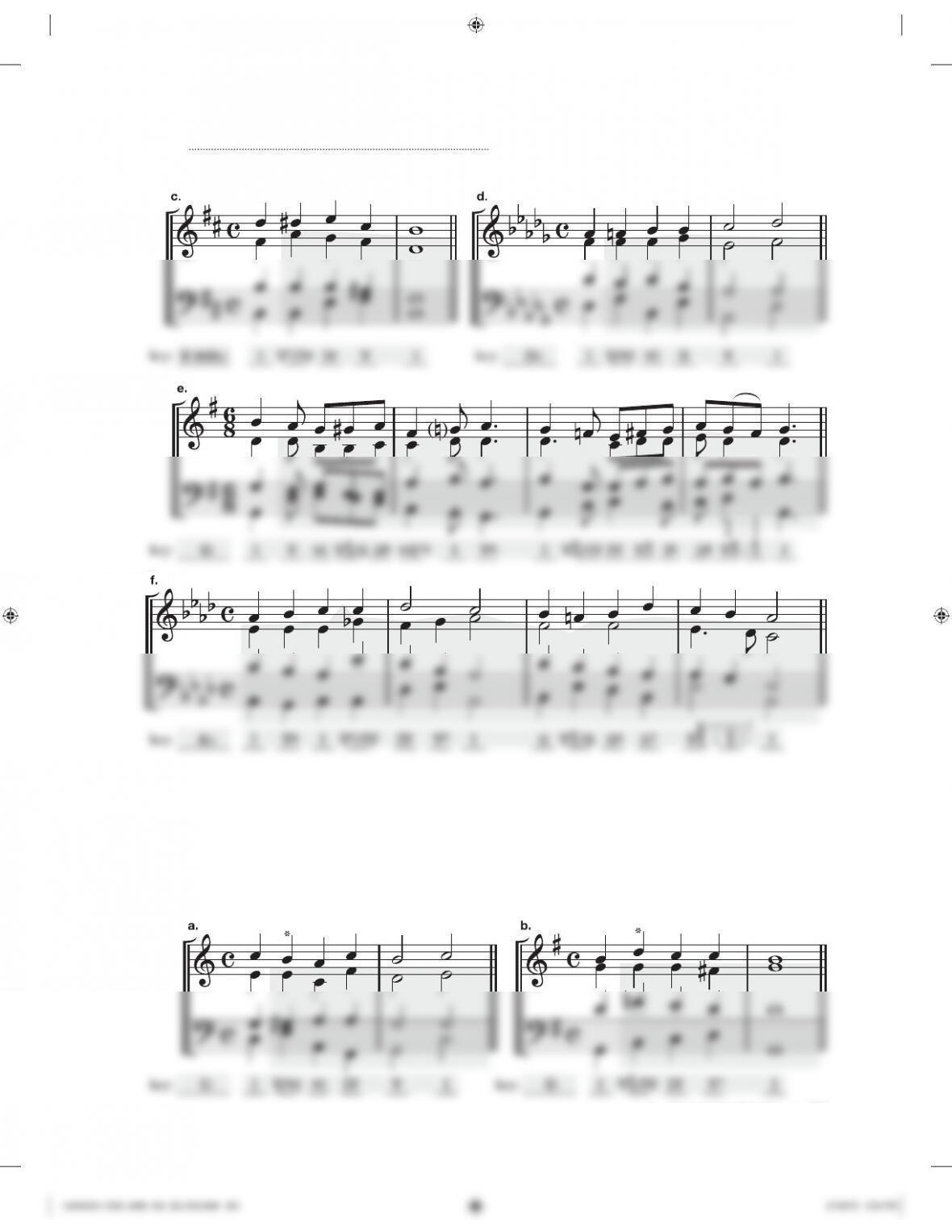
E. HARMONIZING MELODIES
1. Determine the key and harmonize the following melodies by providing a bass line
and Roman numeral, using at least one applied chord in each. Then fill in the inner
voices in SATB format.
E. Harmonizing Melodies | 333
NAME:
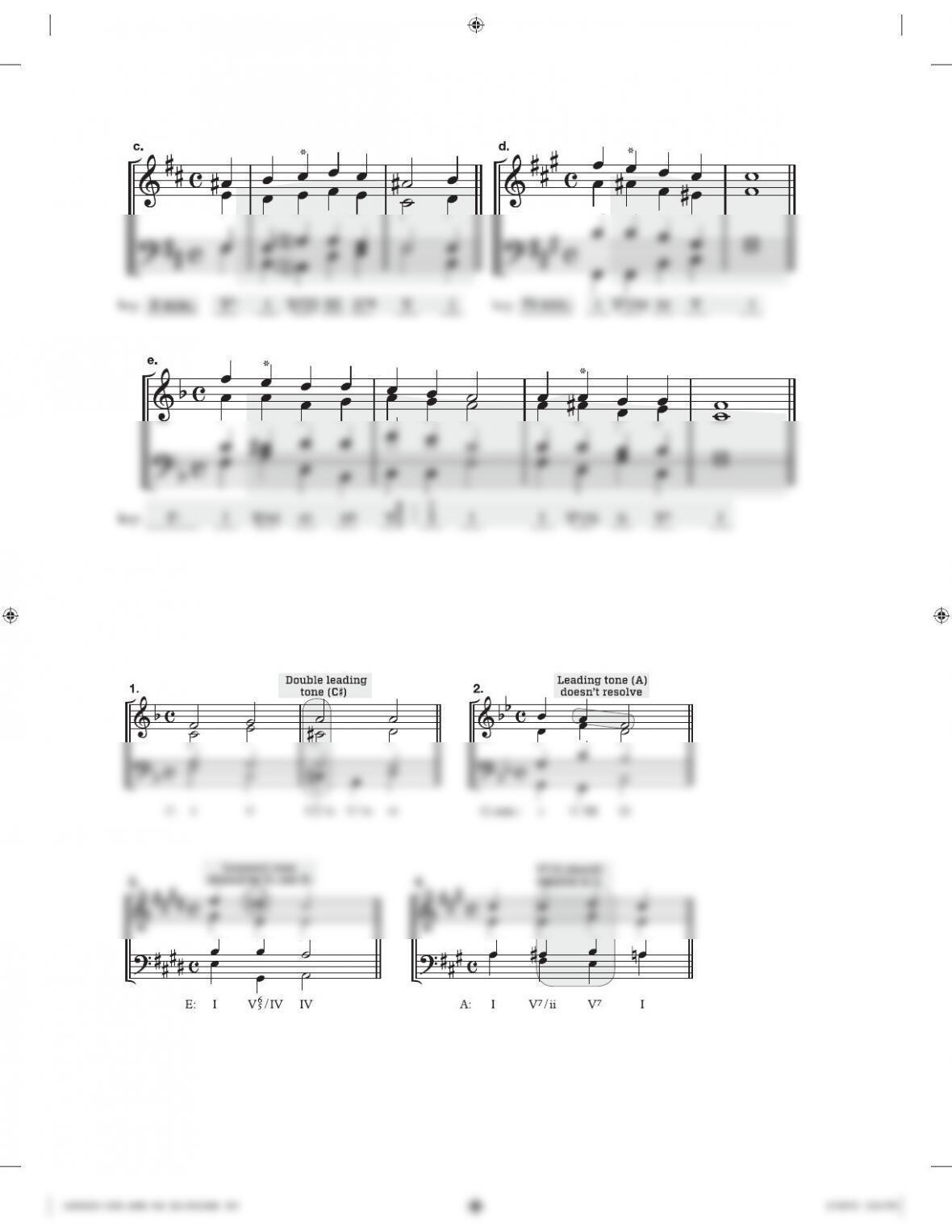
2. Harmonize the following melodies:
• Identify the key and provide a bass line and Roman numerals.
• Use an applied chord to harmonize each note that is marked with an asterisk. In
deciding which applied chords to use, it will be helpful to first think what chord
can be used to harmonize the note that follows the asterisked one (since this
will be the goal chord of the applied chord).
• Then fill in the inner voices in SATB format.
334 | CHAPTER 26 | Other Applied Chords
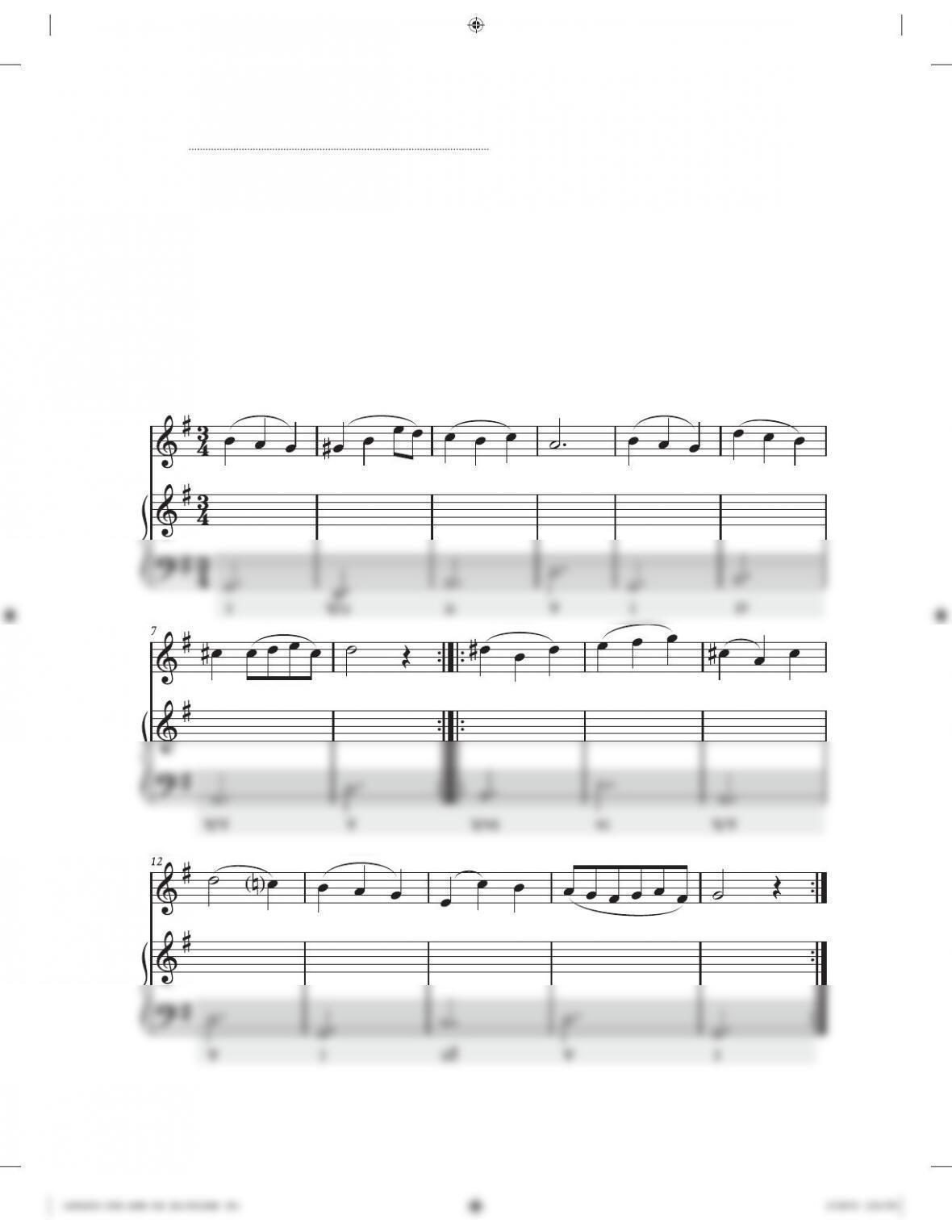
F. IDENTIFYING ERRORS
In the following harmonic progressions, find and circle errors of voice leading or
harmonic progression. Identify the type of error by writing above or below the staff.
G. Composition | 335
NAME:
G. COMPOSITION
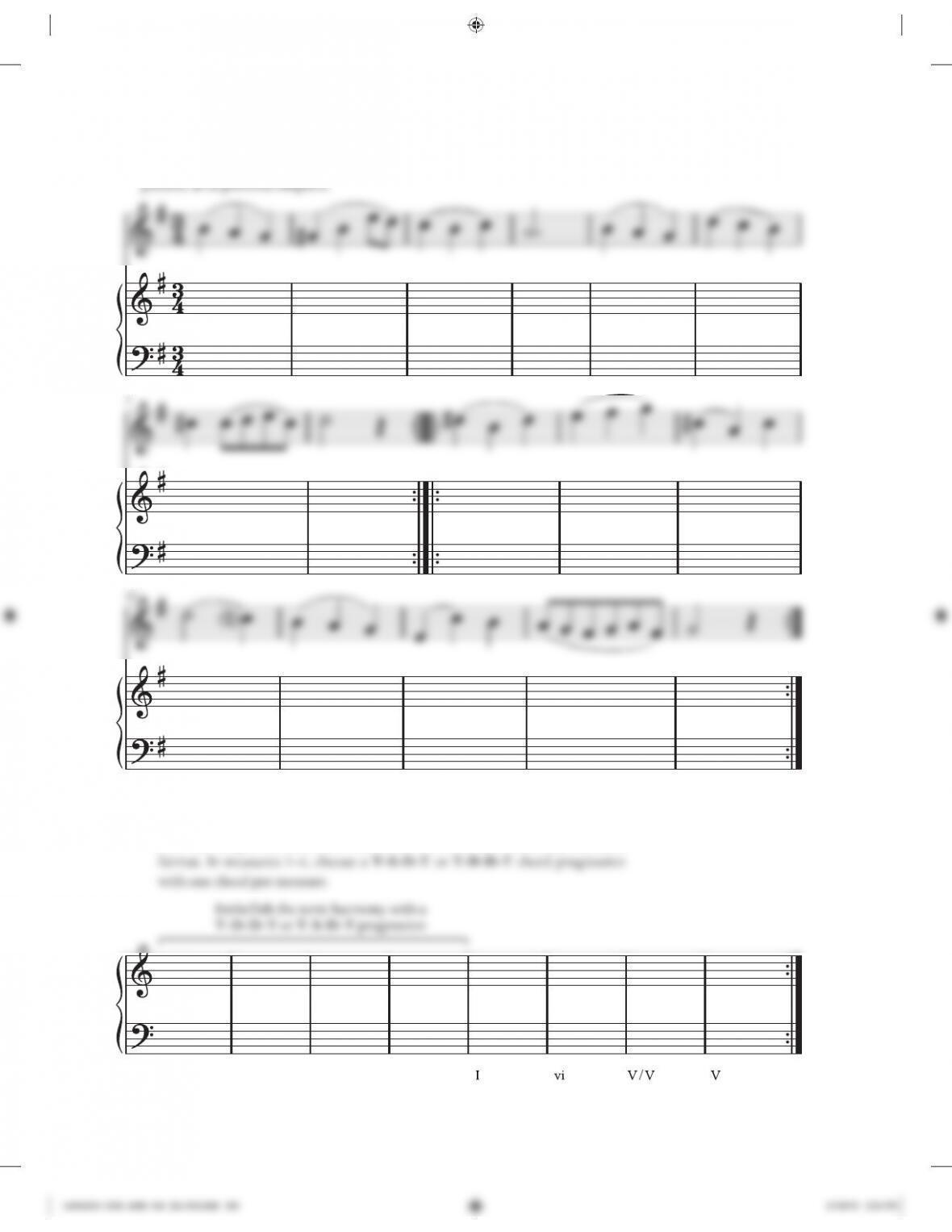
1. Harmonize the following melody, using block chords, with only one chord per
measure.
• Begin by providing a bass line in dotted half notes, then adding Roman numerals.
The bass should not double leading tones or raised notes in the melody, and as
always, there should be no parallel octaves or fifths.
• Use applied dominants where suggested by the melodic line.
• Label the embellishing tones in the melody.
• Fill in the inner voices, maintaining good voice leading.
2. Provide a keyboard accompaniment for the melody in (1), using the same
harmonies and bass line, but with different time values and an accompaniment
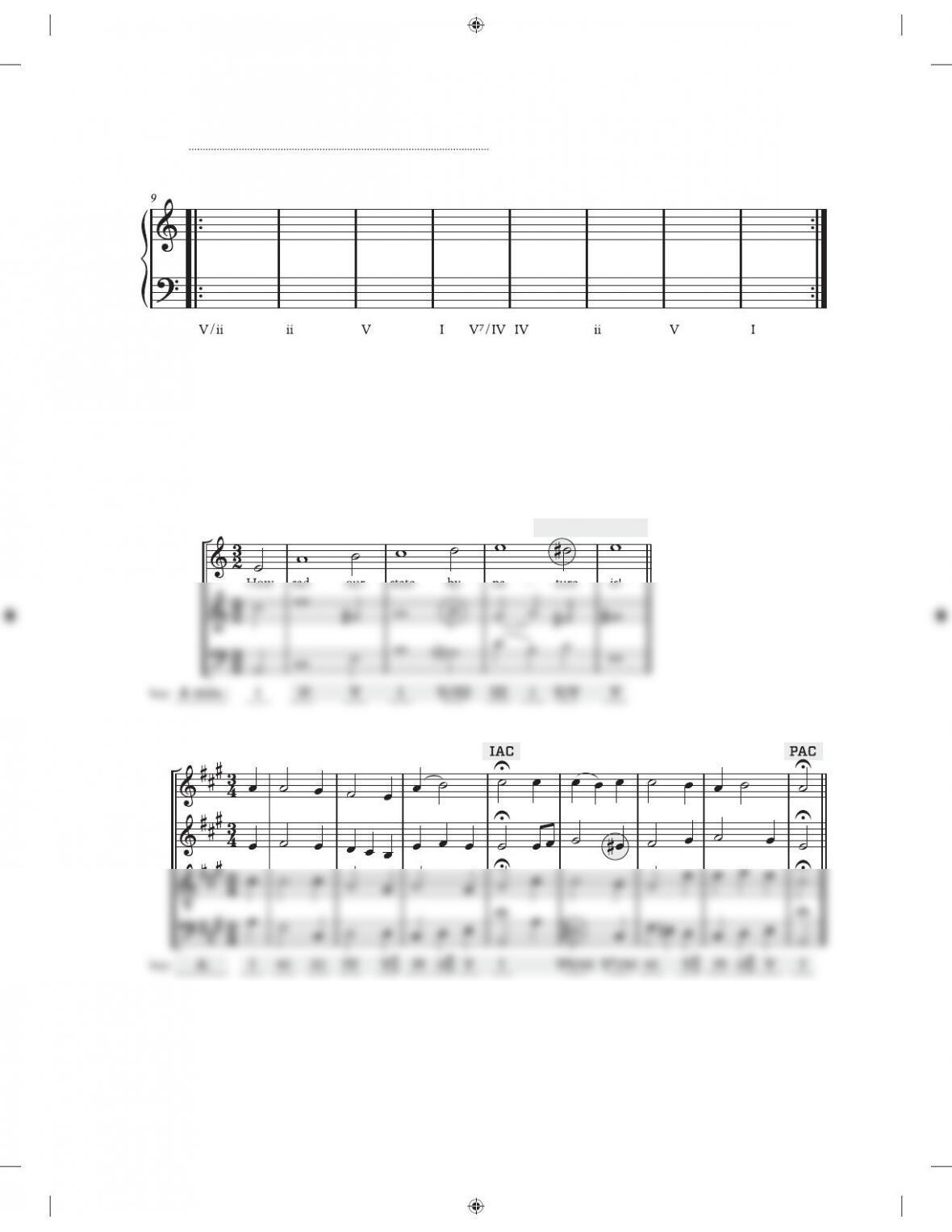
3. Write a short composition in a key and meter of your choice, for keyboard, guitar,
or an ensemble of your choice.
• Start by filling in the harmonic outline below in four-part harmony, keyboard
H. Analysis | 337
NAME:
• Complete your composition, using the harmonic outline above.
H. ANALYSIS
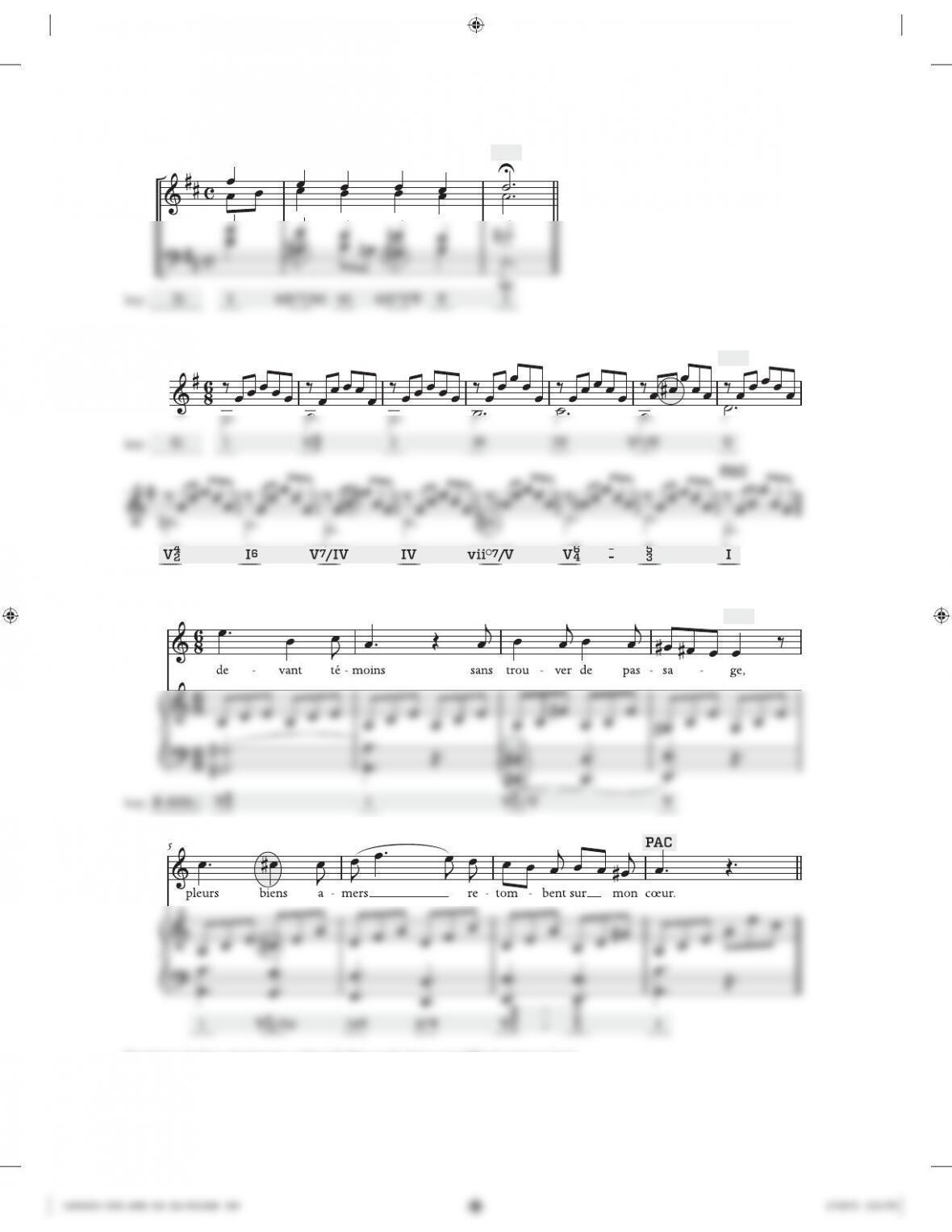
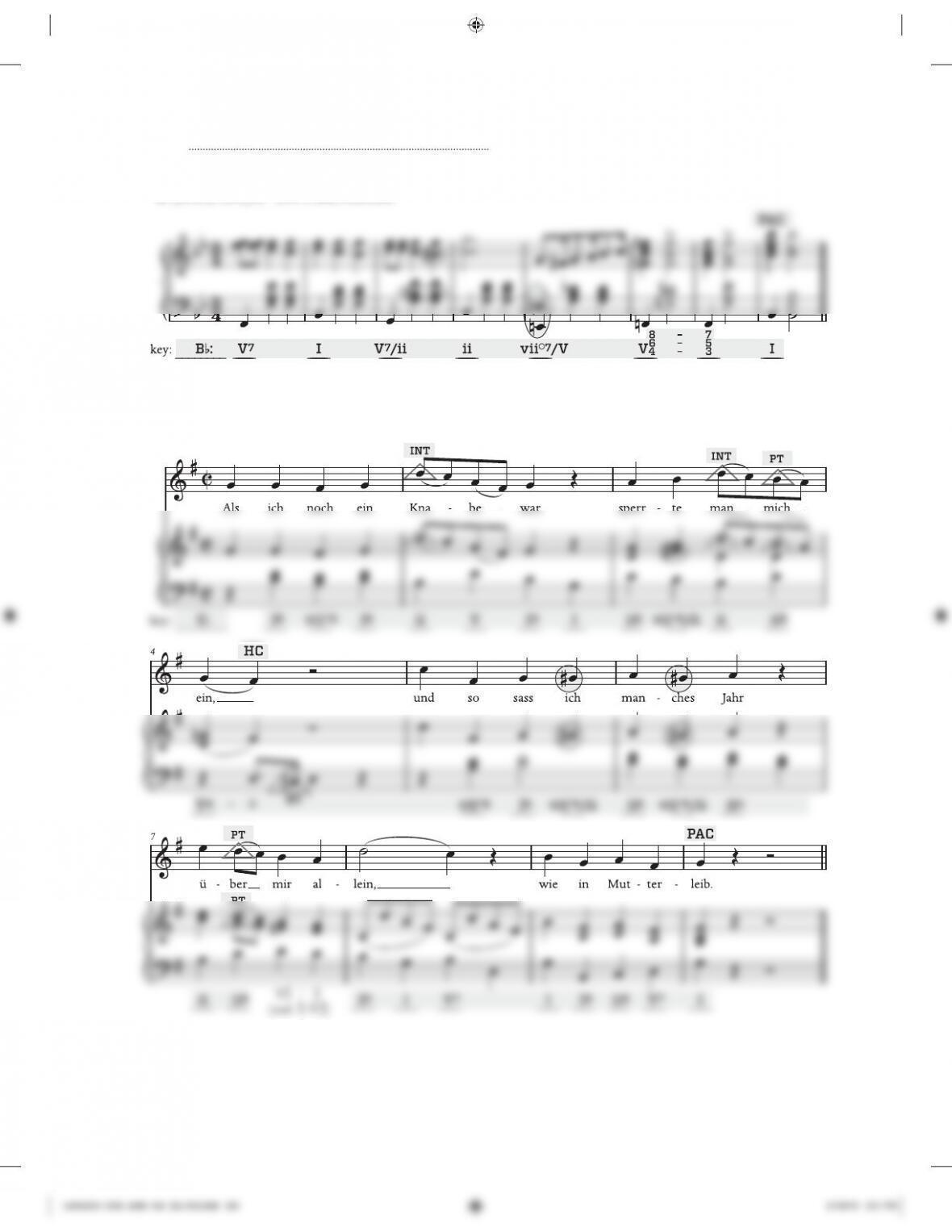
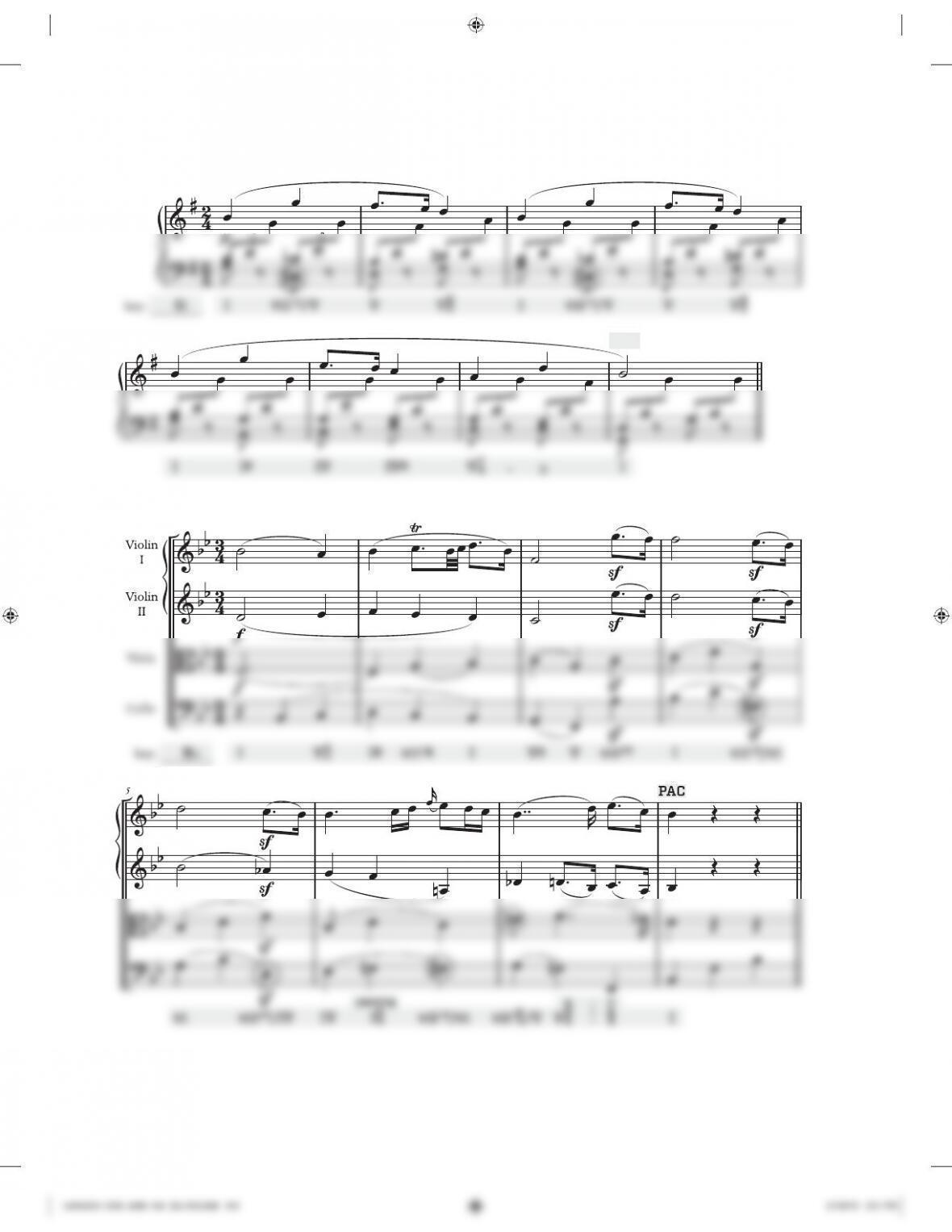
Label the keys and Roman numerals in these excerpts; circle the secondary leading
tone within each applied chord. Then, locate and label the cadences.
1. Harmonia Sacra, “How sad our state by nature is!”
HC (or PAC in E)
2. J. S. Bach, Chorale 7
conharm2_ch26_wkbk_inst_325-342.indd 337 21/08/19 2:36 PM
338 | CHAPTER 26 | Other Applied Chords
3. J. S. Bach, Chorale 24 PAC
4. Mauro Giuliani, Etude for Guitar, Op. 100, No. 2
HC
5. Marie-Charlotte Campet de Saujon, “Les regrets”
HC
Translation: In front of witnesses, without finding a path, bitter tears fall back upon my heart.
H. Analysis | 339
NAME:
6. Jacob J. Sawyer, “Bob-o-link Mazurka”
7. Corona Schröter, “Jugendlied” (“Children’s Song”)
Also label the embellishing tones.
Translation: When I was still a boy, I was locked in. And so I remained for many years alone by myself, as if in
my mother’s womb.
340 | CHAPTER 26 | Other Applied Chords
8. Robert Schumann, “Von fremden Ländern und Menschen” (“Of Foreign Lands
and People”)
IAC
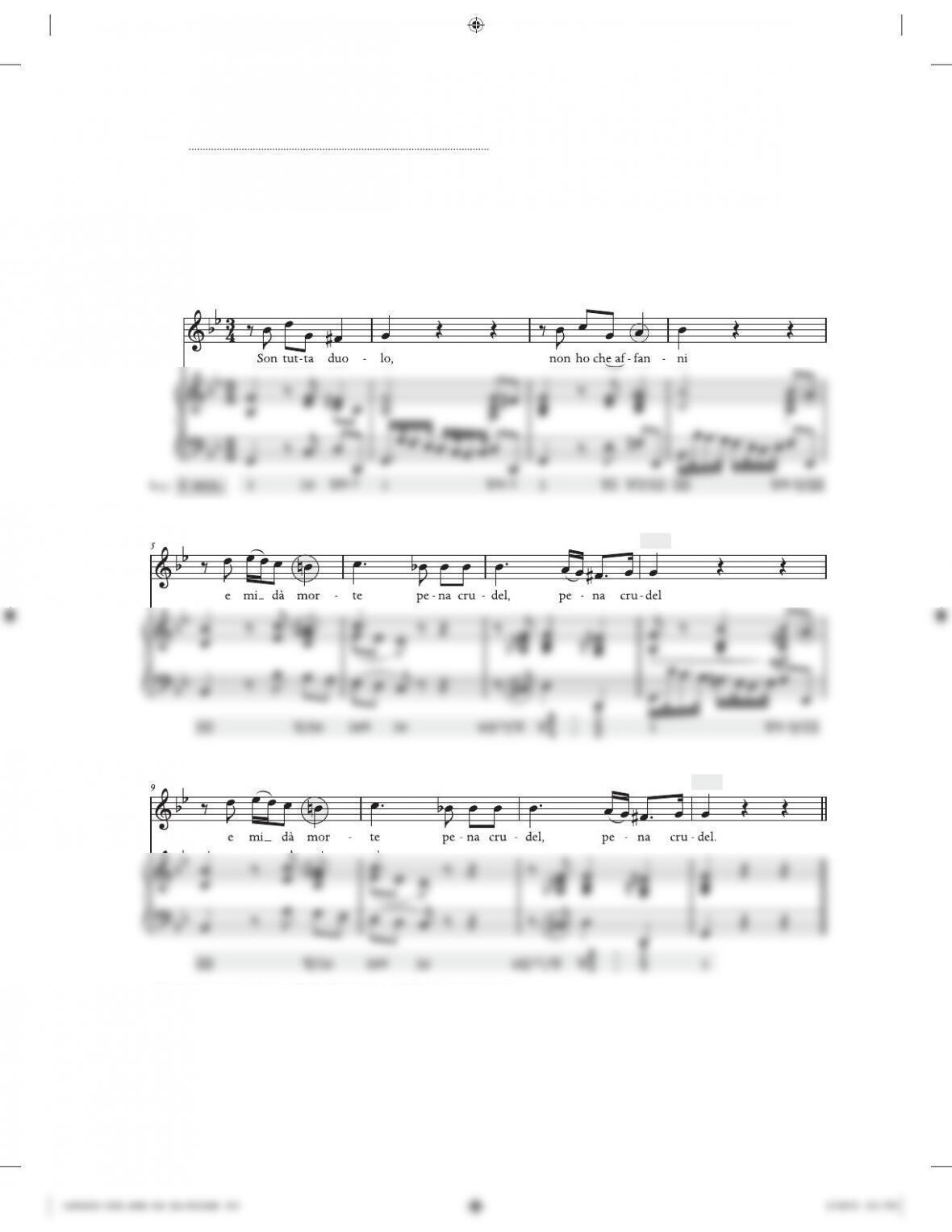
9. W. A. Mozart, String Quartet, K. 458, ii
H. Analysis | 341
NAME:
Compare the above phrase (9) with the one in (8). Which one seems more symmet-
rical and balanced, and which one has more unexpected twists and turns? Describe
some features in each that contribute to this sense.
10. Alessandro Scarlatti, “Son tutta duolo”
PAC
PAC
Translation: I am deeply sad, filled with worries, and dying from cruel pain.
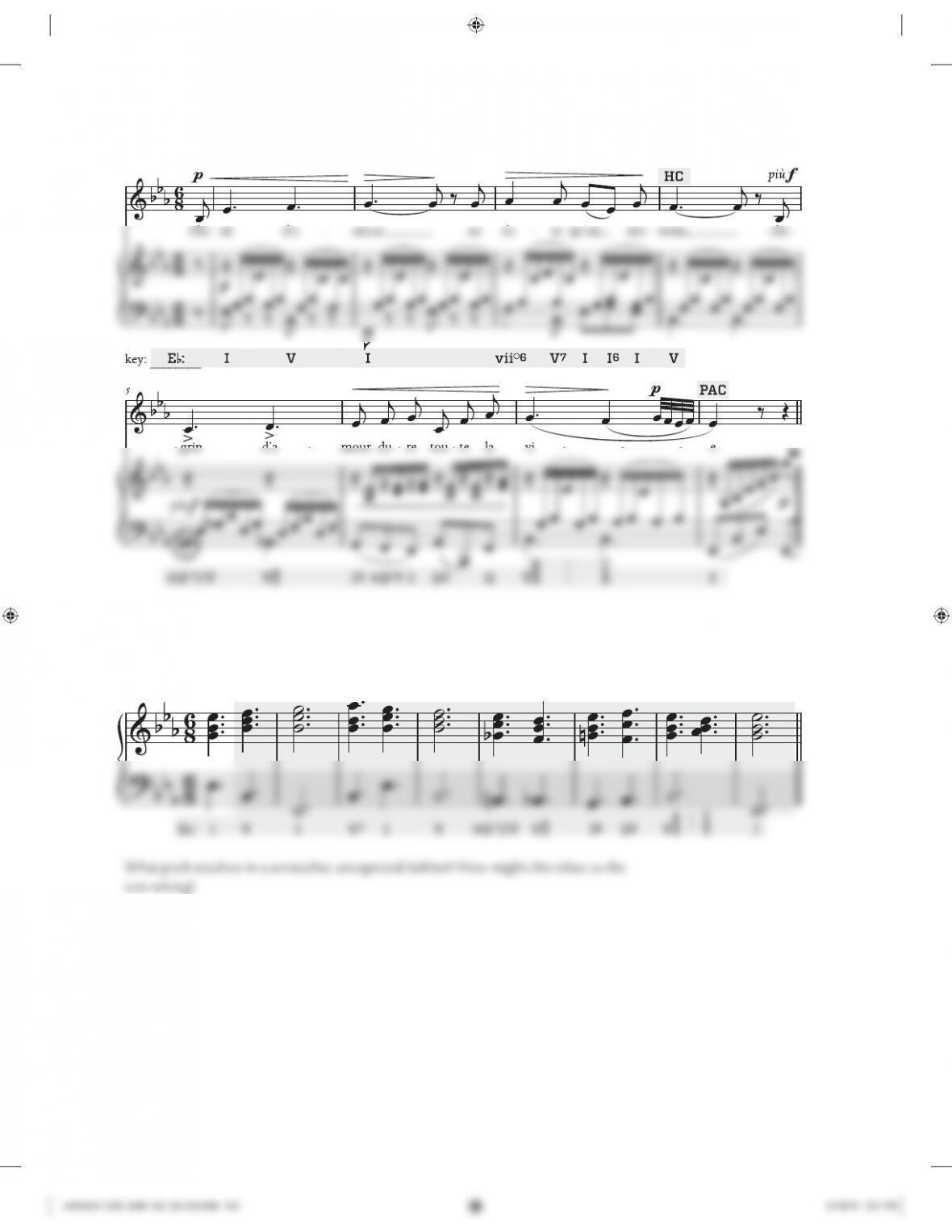
11. Jean-Paul-Égide Martini, “Plaisir d’amour” (“The Pleasure of Love”)
Translation: The pleasures of love last but for a moment, [but] love’s chagrin lasts for a lifetime.
Complete a simplified harmonic model of this passage in four-part harmony, key-
board format, one or two chords per measure.