B. Notating V/V | 311
NAME:
A. QUESTIONS FOR REVIEW
1. What scale degree is the root of V/V?
2. What quality of triad (major, minor, or diminished) is V/V? What quality of
seventh chord (diminished, half-diminished, minor, dominant, major) is V7/V?
3. V/V relates to V as V relates to what chord?
4. In major keys, what chord tone in V/V and V7/V (root, third, or fifth) is raised
with an accidental? What scale degree is this raised tone in the original key? In the
key of the V chord?
B. NOTATING V/V
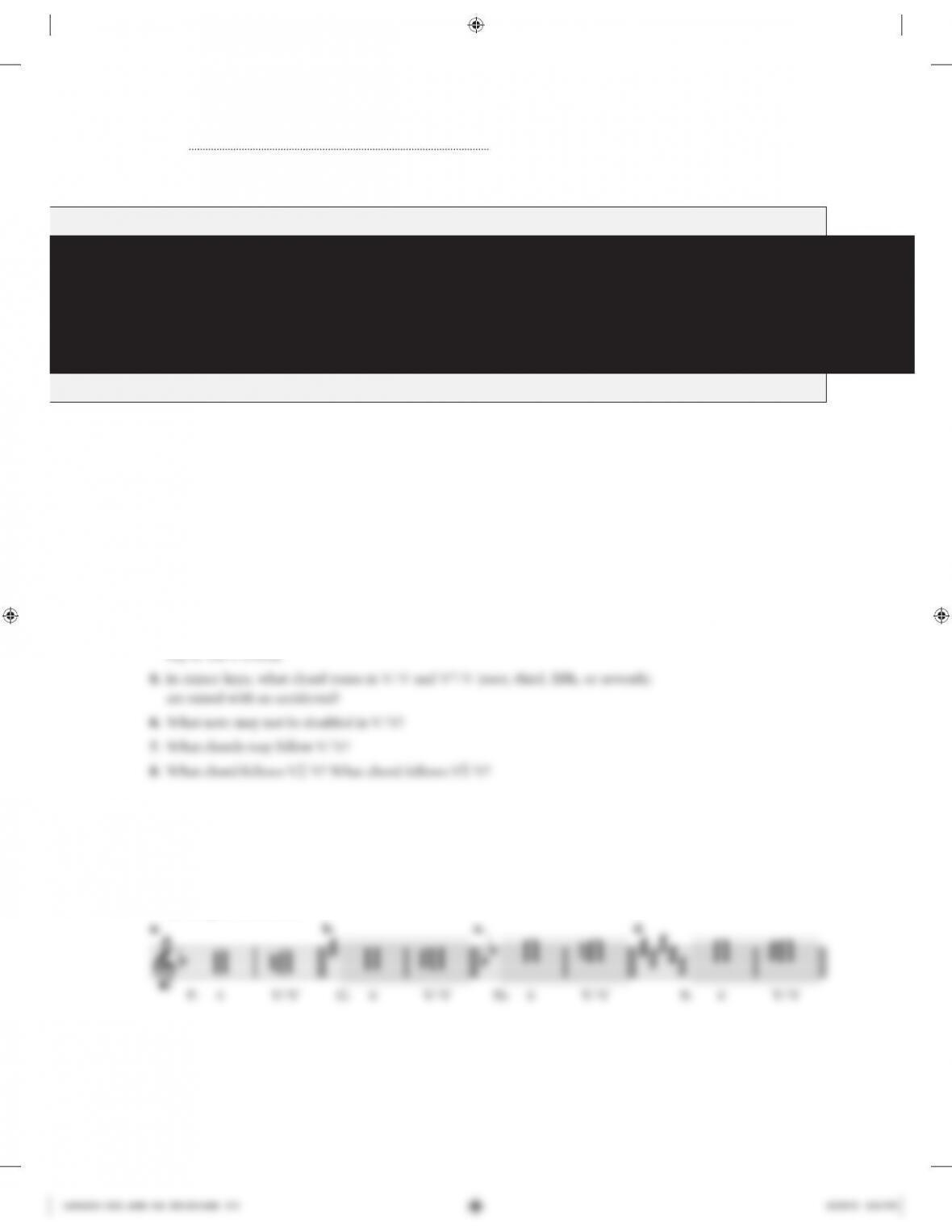
1. In the following major keys, first notate the ii chord, then notate V/V. In each
case, ii and V/V have the same notes except that the third of V/V must be raised
by using an accidental.
chapter
25 Applied Dominants of V
312 | CHAPTER 25 | Applied Dominants of V
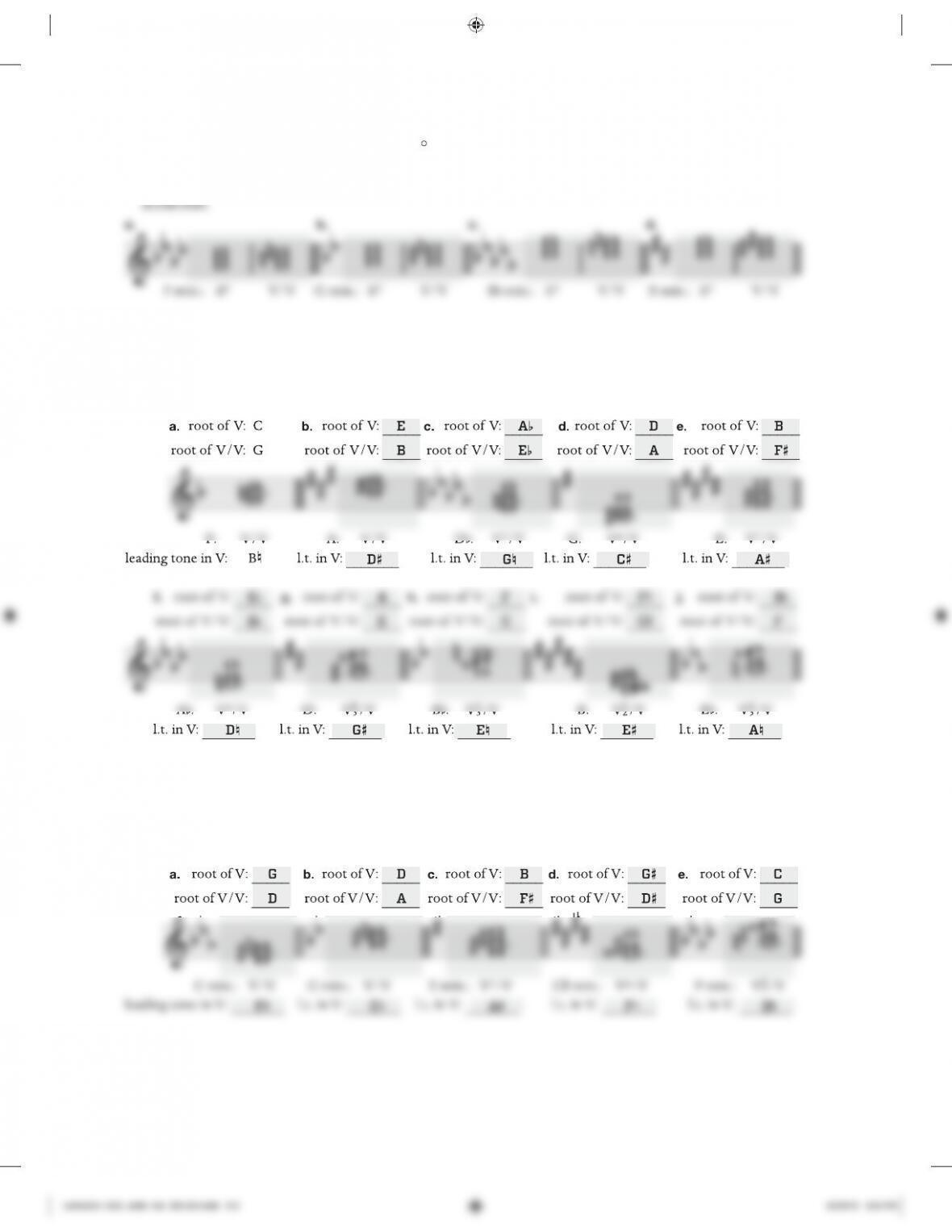
2. In the following minor keys, first notate the ii chord, then notate V/V. In each
case, ii. and V/V have the same notes except that whereas ii. does not use any
accidentals in a minor key, the third and fifth of V/V must be raised by using
3. In each of the following:
• Above the sta, name the root of V and the root of V/V in the indicated major key.
• Then notate the indicated form of V/V, using the appropriate accidentals.
• Finally, name the leading tone in the key of V, and circle the note on the sta.
4. In each of the following:
• Above the sta, name the root of V and the root of V/V in the indicated minor key.
• Then notate the indicated form of V/V, using the appropriate accidentals.
• Finally, name the leading tone in the key of V, and circle the note on the sta.
C. Realizing Roman Numerals | 313
NAME:
C. REALIZING ROMAN NUMERALS
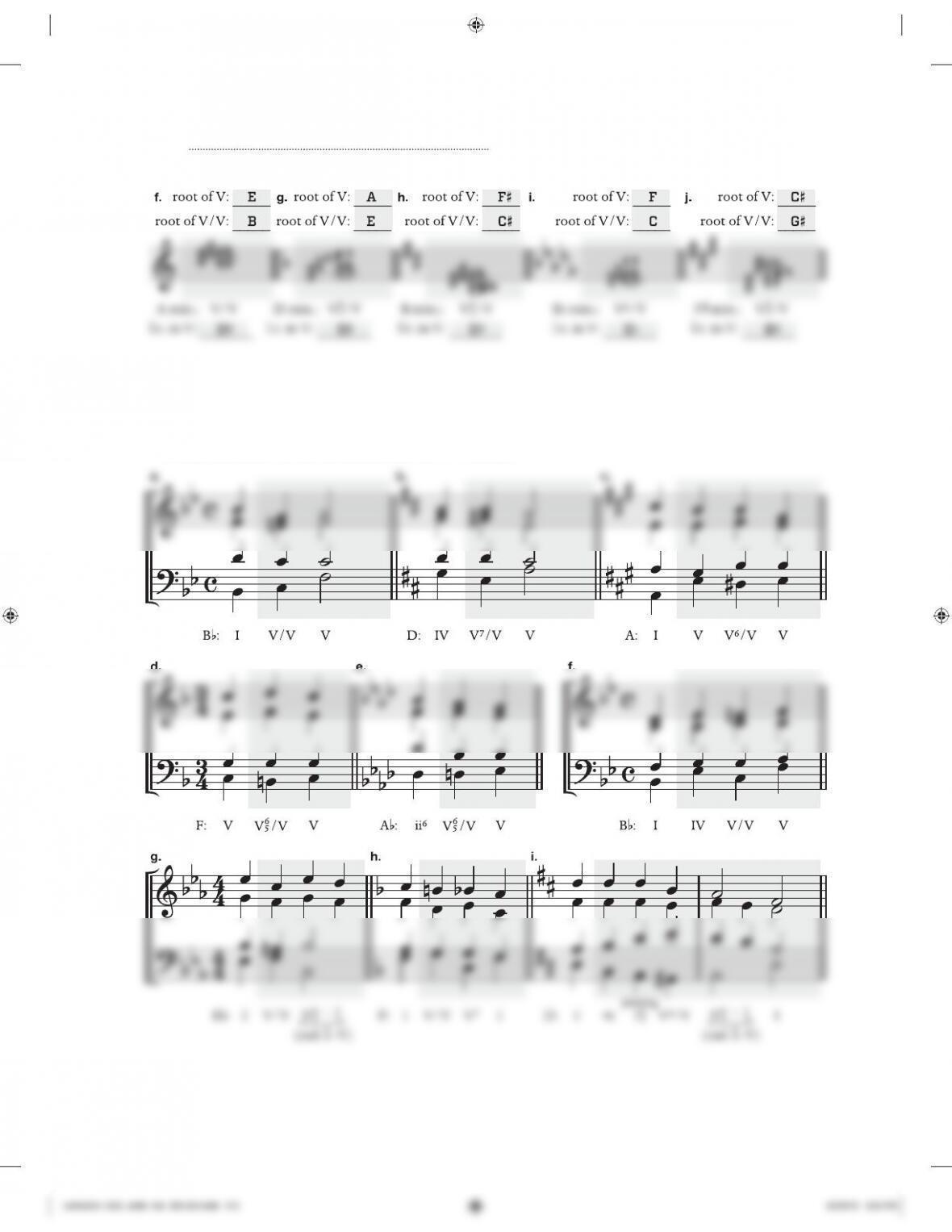
1. Realize the Roman numerals for the following harmonic progressions in SATB
format (remember to use an accidental in the V/V chords).
314 | CHAPTER 25 | Applied Dominants of V
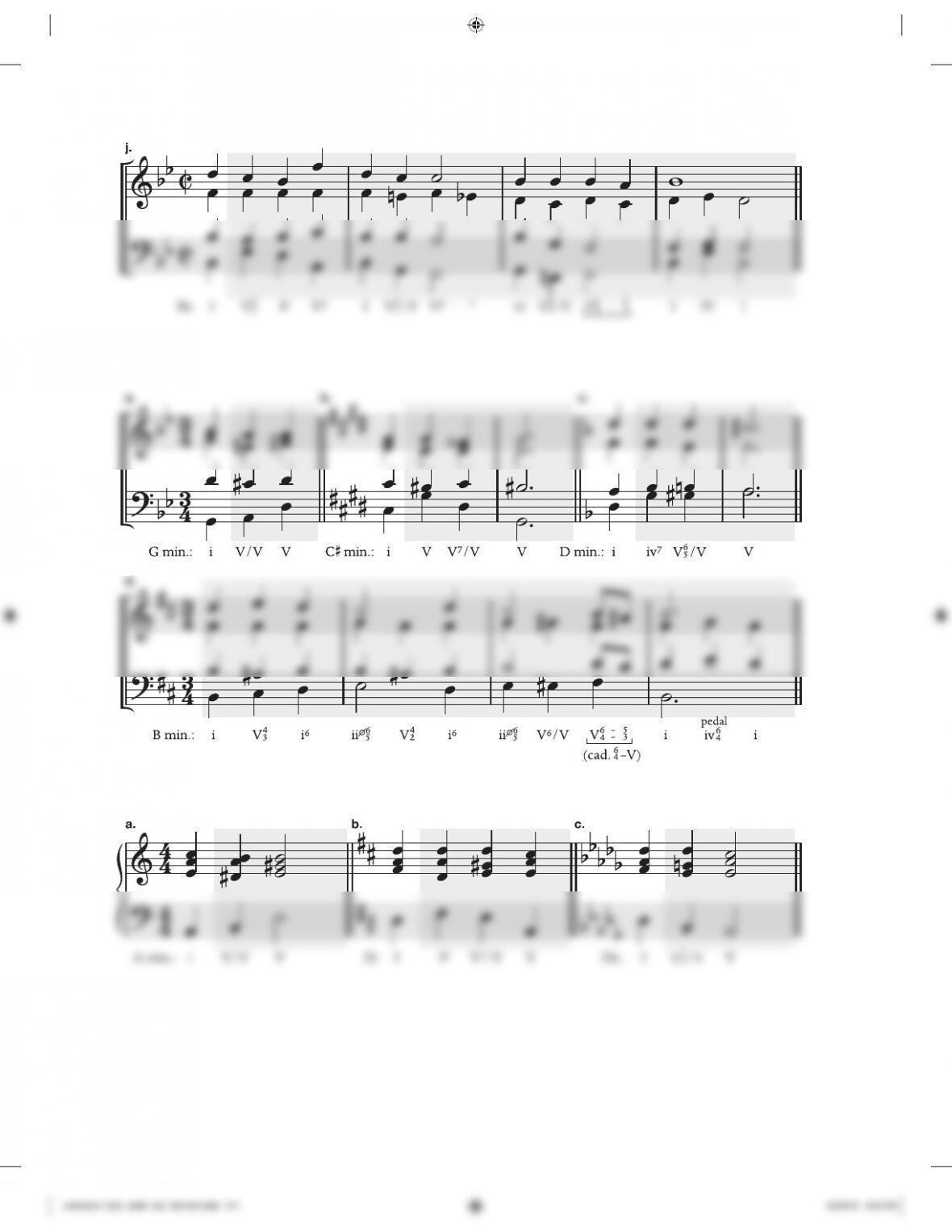
2. Realize the Roman numerals of the following minor-key passages in SATB format.
Remember that minor keys require two accidentals in a V/V chord.
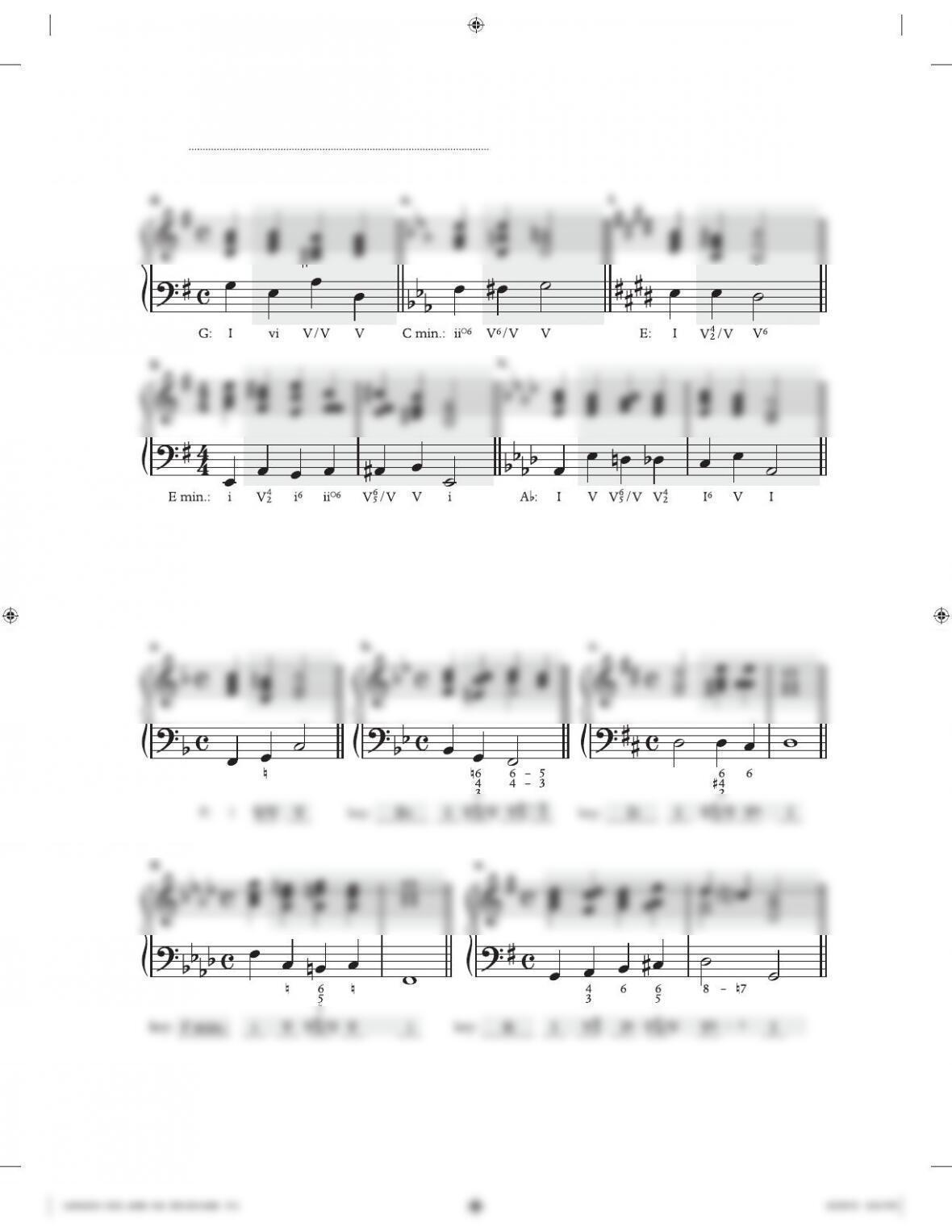
3. Realize the Roman numerals in keyboard format.
D. Realizing Figured Bass | 315
NAME:
D. REALIZING FIGURED BASS
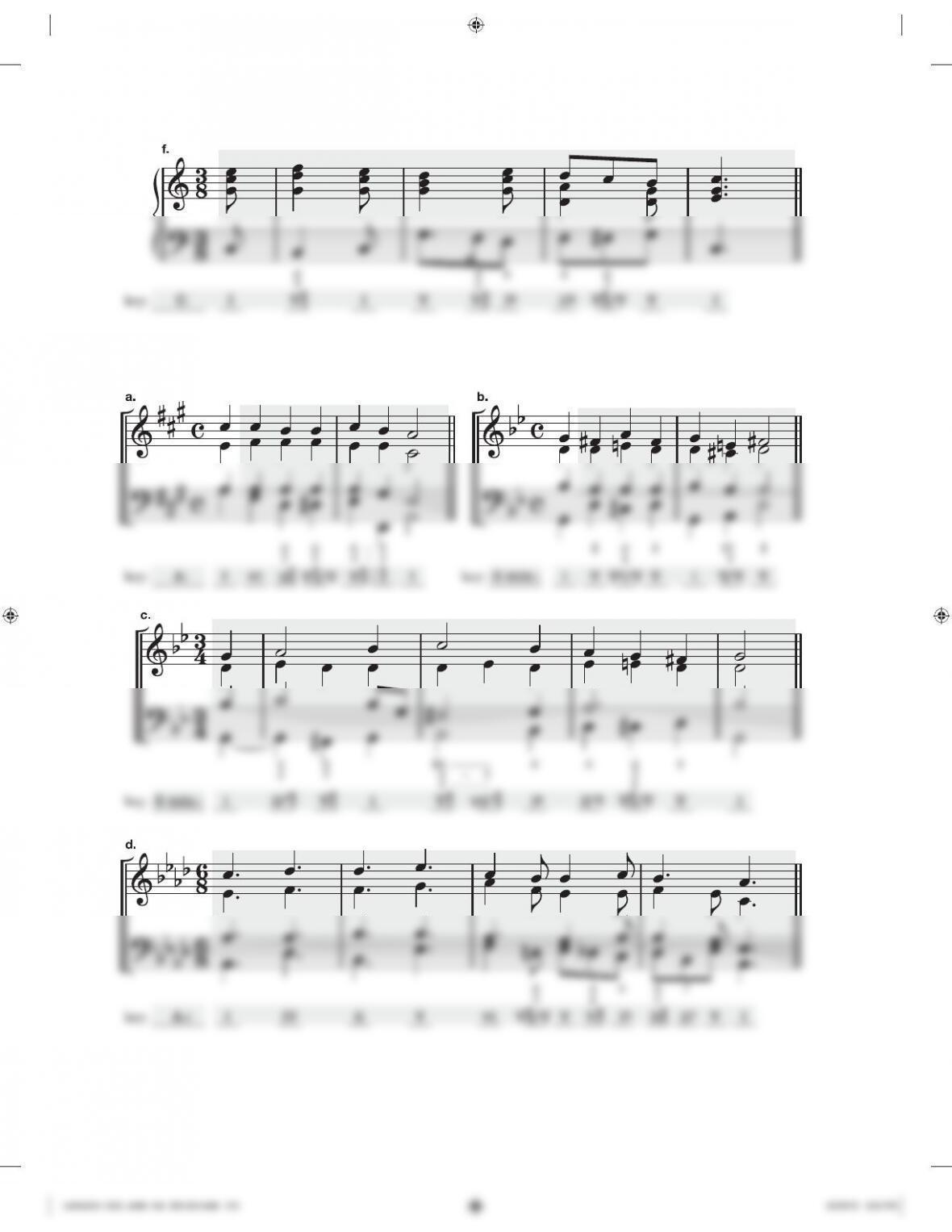
1. Realize each figured bass in keyboard format. Then identify the key and Roman
numerals.
316 | CHAPTER 25 | Applied Dominants of V
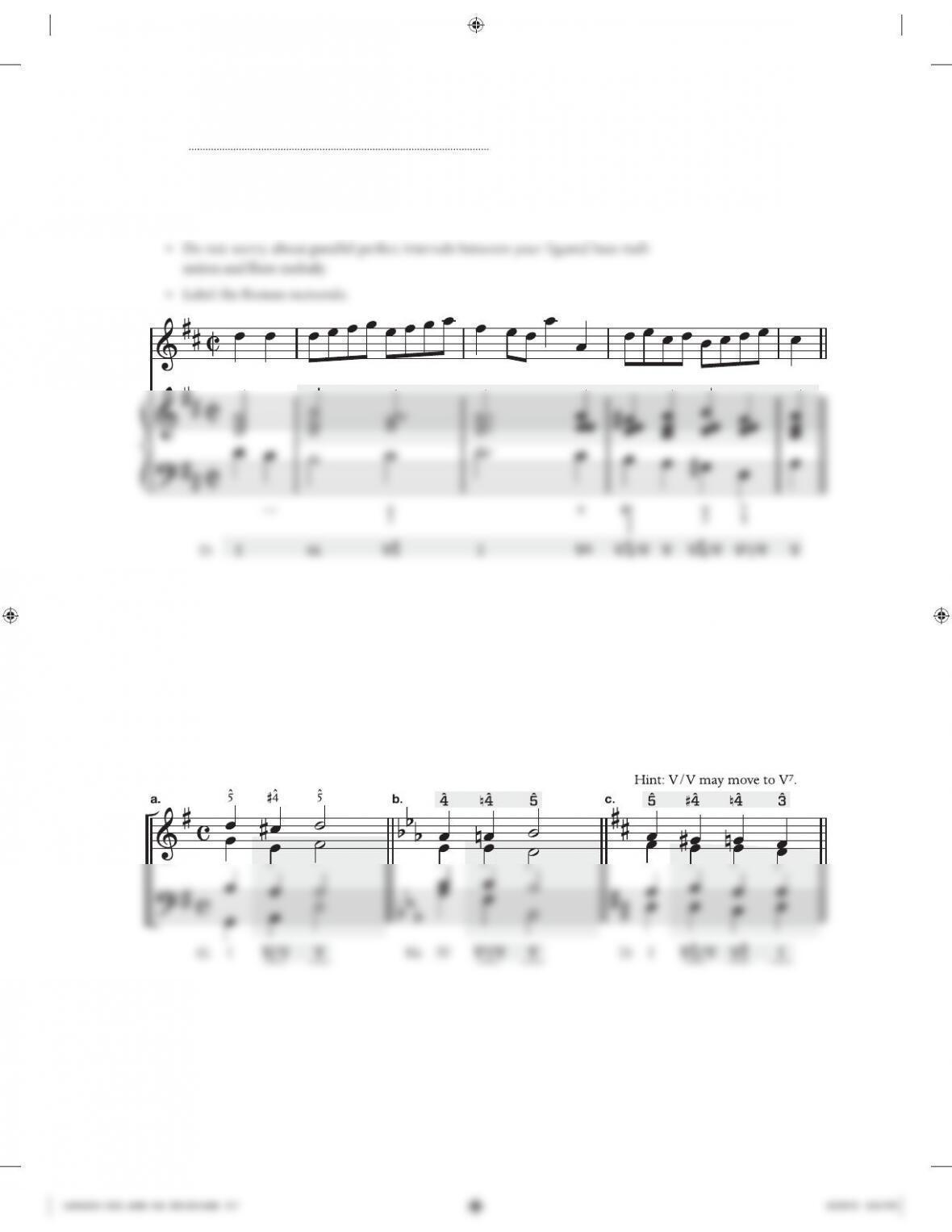
2. Realize each figured bass in SATB format. Then identify the key and Roman
numerals.
E. Harmonizing Melodies | 317
NAME:
3. J. J. Quantz, Sonata I in D, Gavotte, from Sonatas for Flute, Book III
• Provide a figured bass accompaniment.
E. HARMONIZING MELODIES
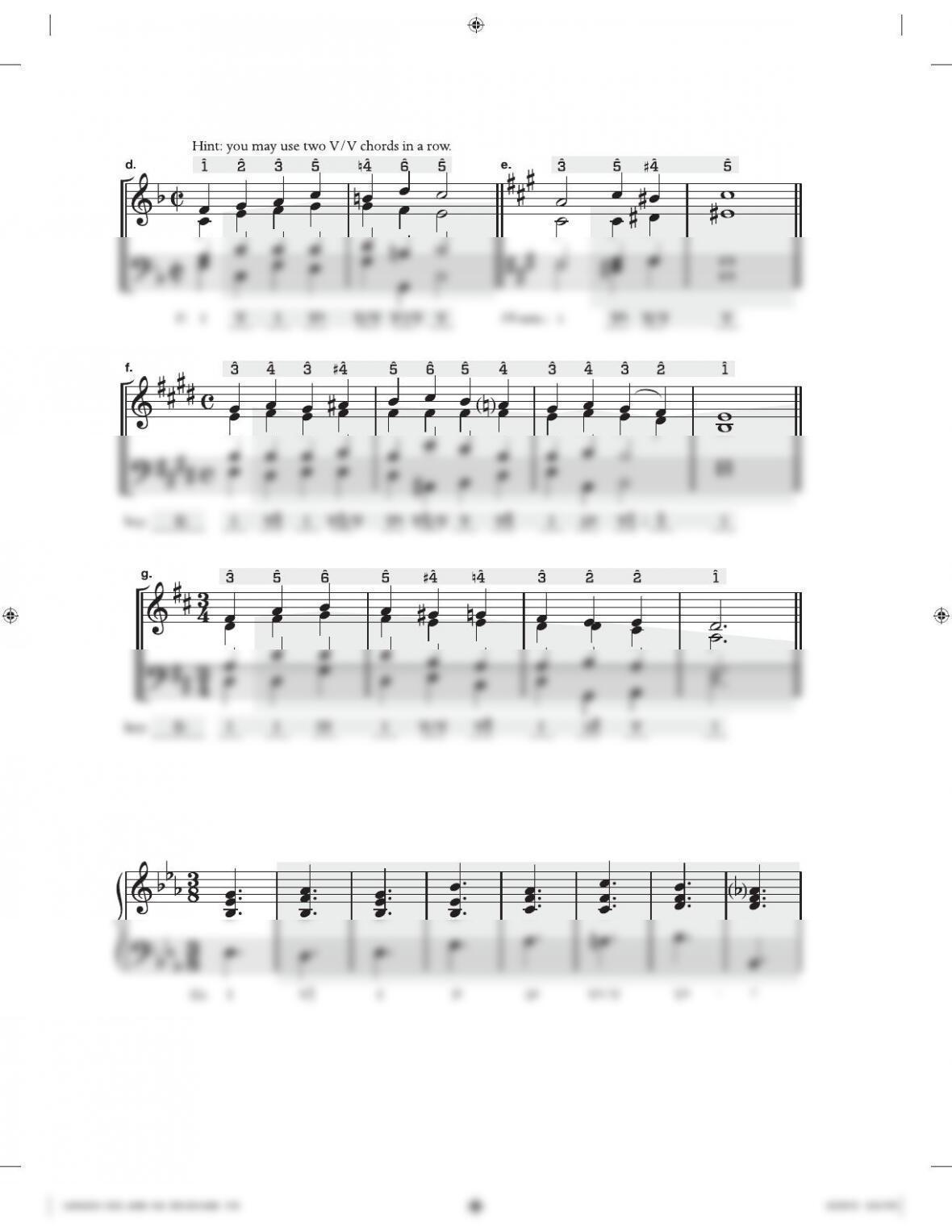
Harmonize each of the following melodies in SATB format.
• First label the scale degrees of the melody.
• Then provide a bass line and Roman numerals for each note of the melody.
• Use an applied dominant to harmonize the raised ˆ
4.
• Finally, fill in the inner voices.
318 | CHAPTER 25 | Applied Dominants of V
F. COMPOSITION
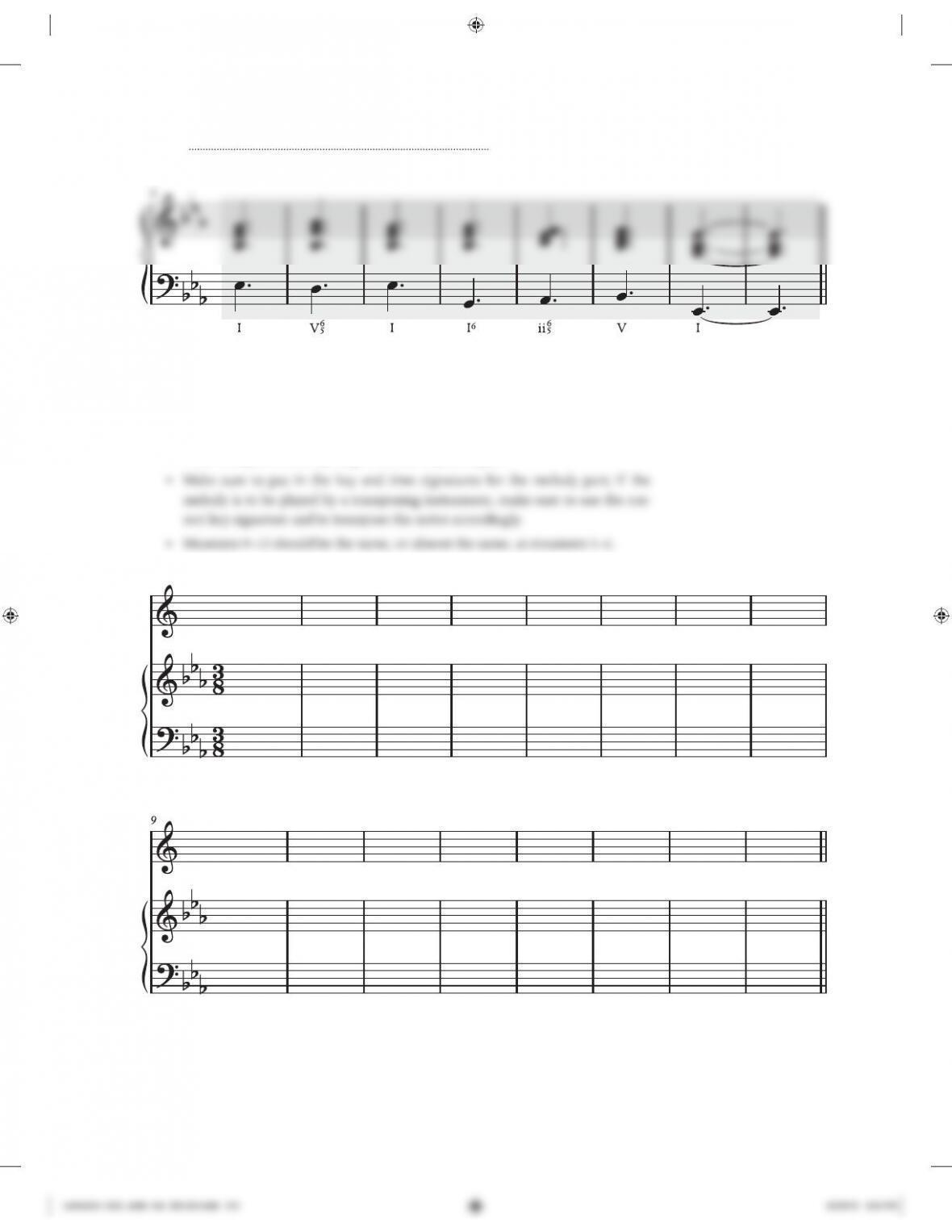
1. Realize the following Roman numerals in keyboard format. Measures 9–12 may
repeat measures 1–4.
NAME:
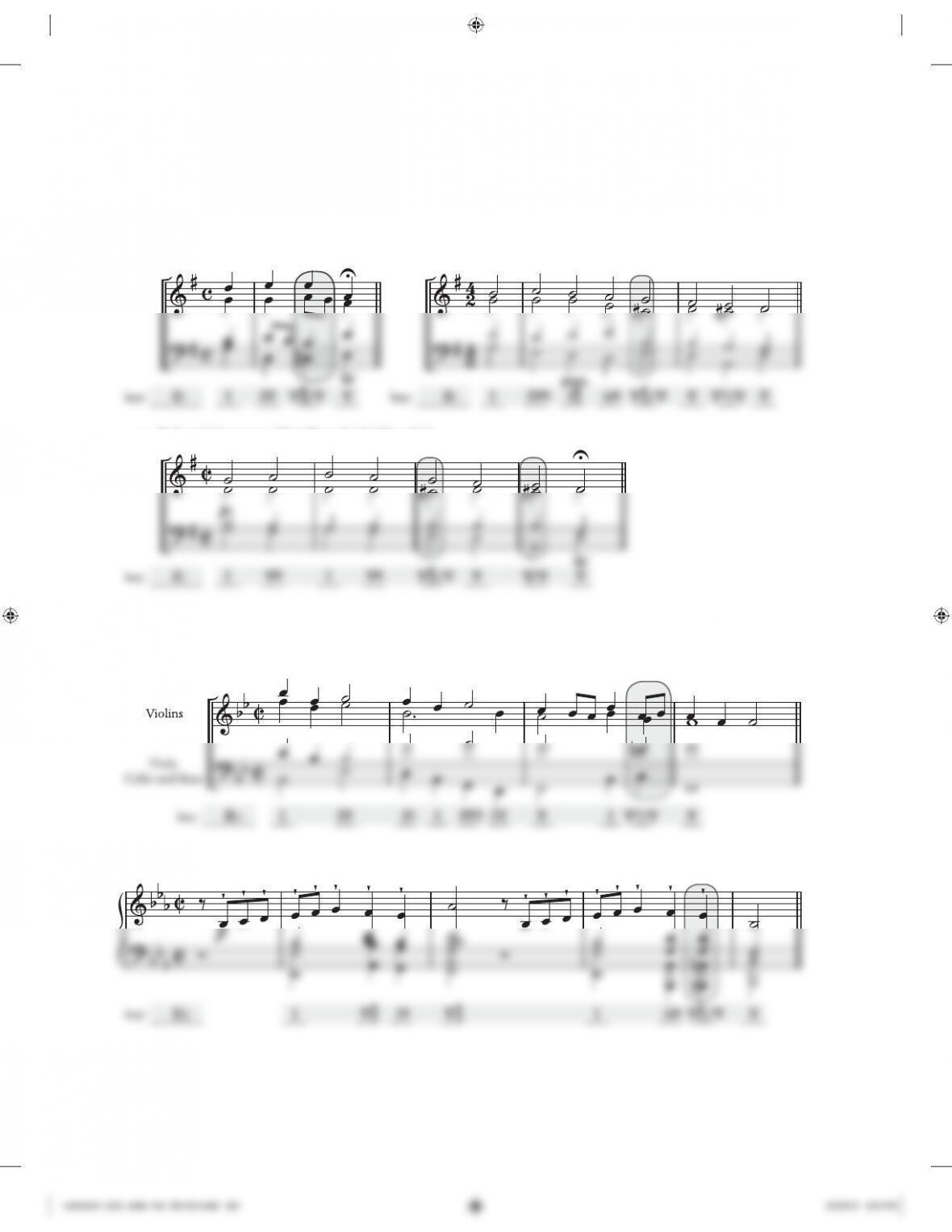
2. Compose a melody and keyboard part based on (1):
• Using the same notes of the harmonization in (1), choose an accompaniment
pattern for the keyboard part such as an oom-pah-pah pattern or arpeggiation
(you can find examples in earlier composition assignments).
• Then compose a melody to go with the keyboard part.
320 | CHAPTER 25 | Applied Dominants of V
G. ANALYSIS
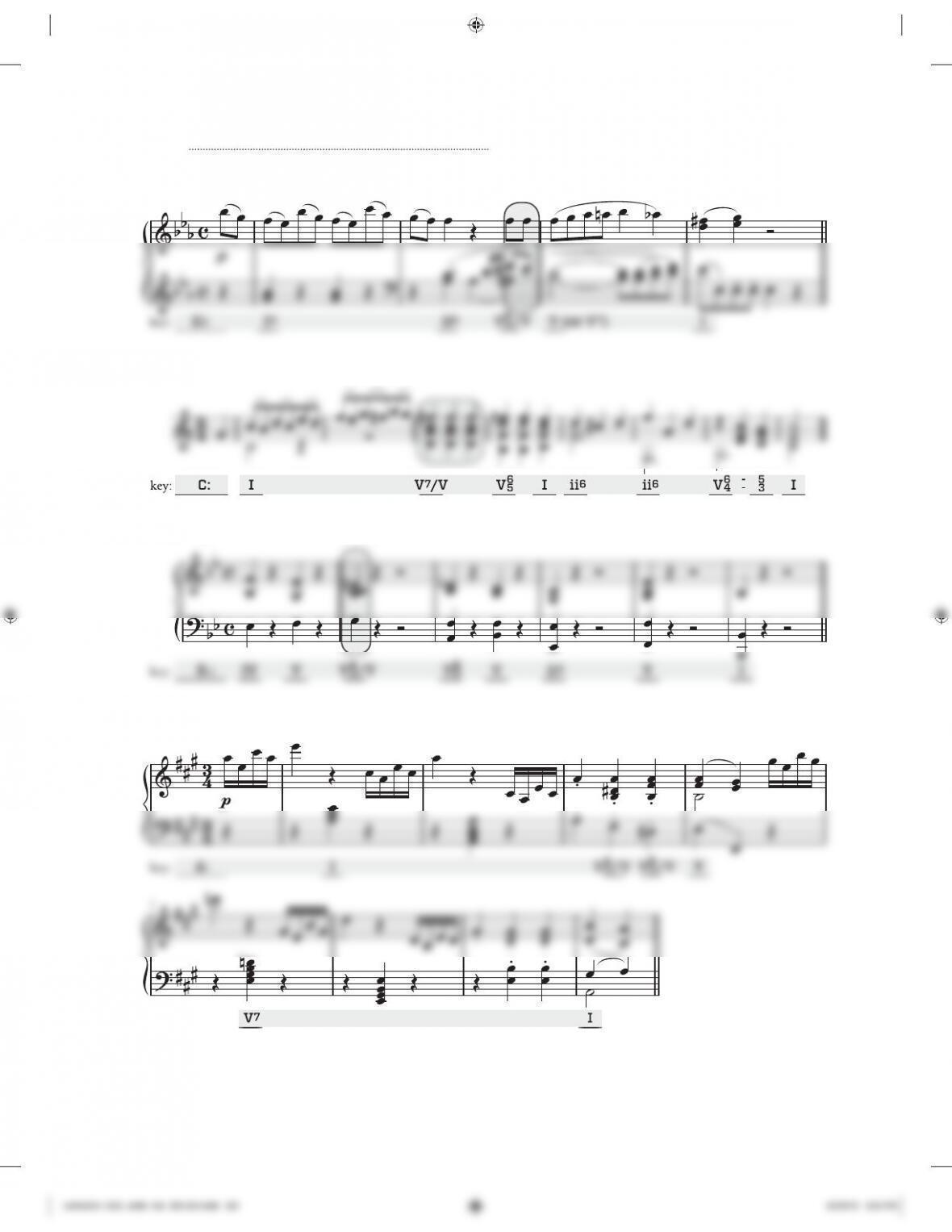
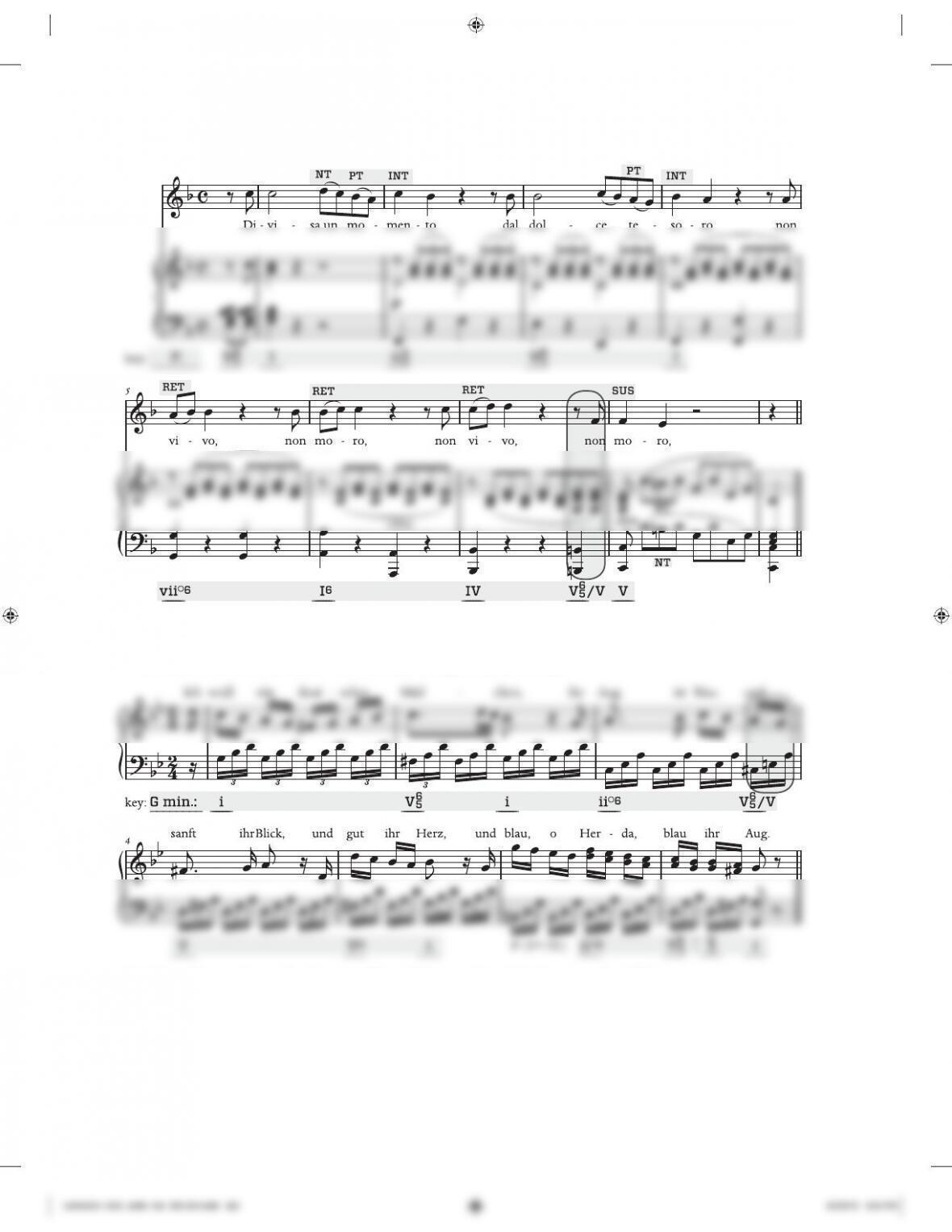
1. Label the keys and Roman numerals in the following excerpts, and circle the
applied chords.
a. J. S. Bach, Chorale 293 b. Fanny Robinson, “St. Monica”
(hymn)
c. Robert Schumann, “Ein Choral” (“A Chorale”)
d. Henry Purcell, “The Sailor’s Dance,” from Dido and Aeneas
Note that there is a somewhat unusual embellishing tone on the last quarter
note of measure 3.
e. Ludwig van Beethoven, Piano Sonata, Op. 10, No. 1, iii
G. Analysis | 321
NAME:
f. W. A. Mozart, Concerto for Horn and Orchestra, K 447, i
g. Fernando Sor, Sonata for Guitar, Op. 22, Trio
h. Luigi Cherubini, Lodoïska, Act I, scene i
i. Ludwig van Beethoven, Sonata for Piano Op. 2, No. 2, iii
322 | CHAPTER 25 | Applied Dominants of V
j. NiccolÒ Piccinni, “Se il ciel mi divide,” from Alessandro nell’Indie
Translation: Separated for a moment from my sweet treasure, I neither live nor die . . .
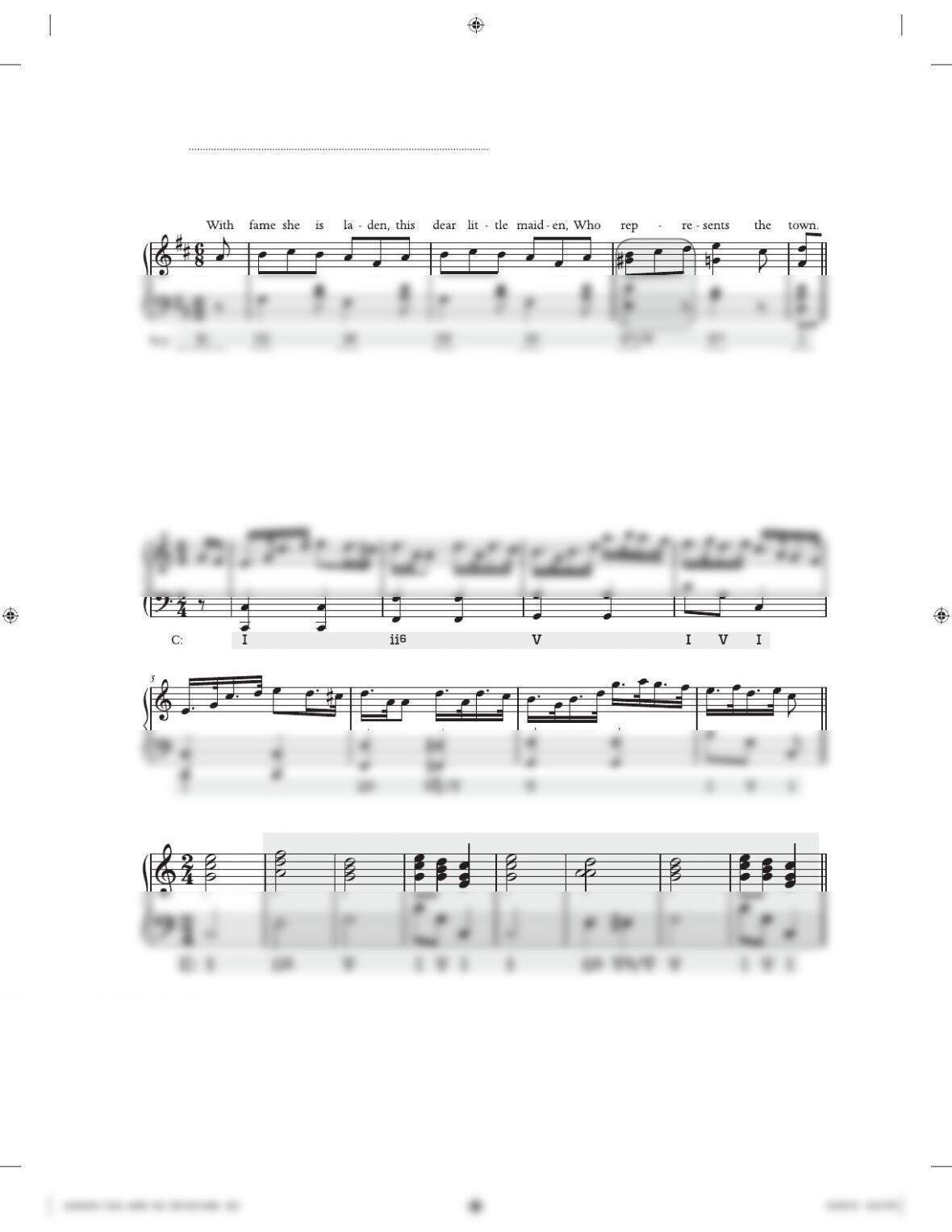
k. Maria Theresia von Paradis, “Vaterlandlied” (Song of My Homeland)
Translation: I know a German lass, her eye is blue and glance is soft, and her heart is good, and blue,
o Herda blue her eye.
G. Analysis | 323
NAME:
l. George M. Cohan, “Josephine”
2. Francis Johnson, “Cotillion”
• Label the Roman numerals with a new chord each time the bass changes.
• On the staves below, complete a simplified harmonic model of the passage in
four-part harmony, keyboard format.
• Compose a piece based on these harmonies, for voice or a melody instrument
accompanied by keyboard, using a meter of your choice.
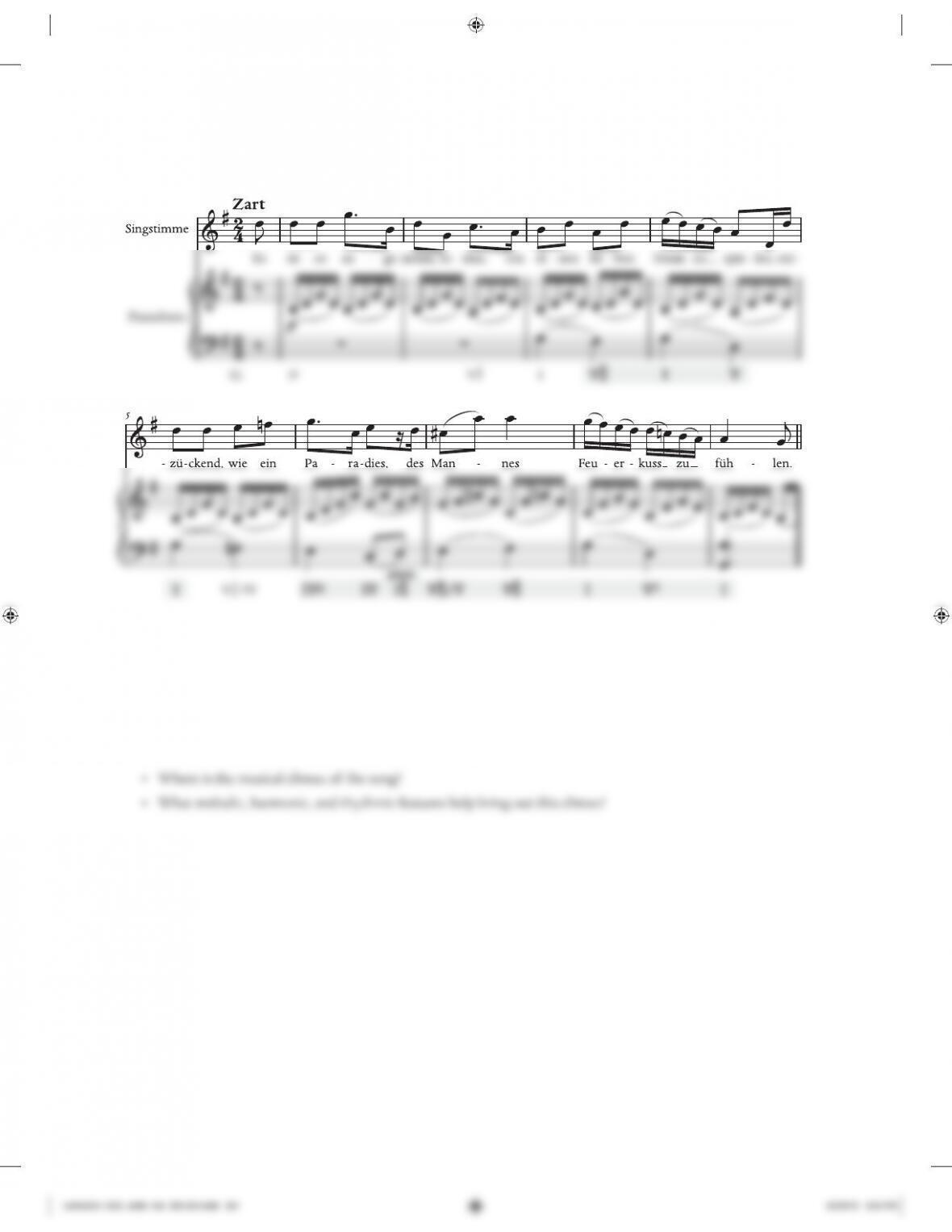
3. Franz Schubert, “Lied,” D. 284
Label the Roman numerals.
Text and Translation:
Es ist so angenehm, so süss, It is so pleasant, so sweet
Um einen lieben Mann zu spielen, To frolic with a man whom you love,
Entzückend, wie ein Paradies, Enchanting as paradise
Des Mannes Feuerkuss zu fühlen. To feel the man’s fiery kisses.
Note how the musical setting interacts with the lines and rhyme scheme of the poem.