B. Realizing Roman Numerals | 297
NAME:
A. QUESTIONS FOR REVIEW
1. What is an embellishing chord?
2. What are some examples of standard functional harmonic progressions that
involve embellishing chords?
3. When can IV6 follow V?
4. When can IV6 follow V6?
B. REALIZING ROMAN NUMERALS
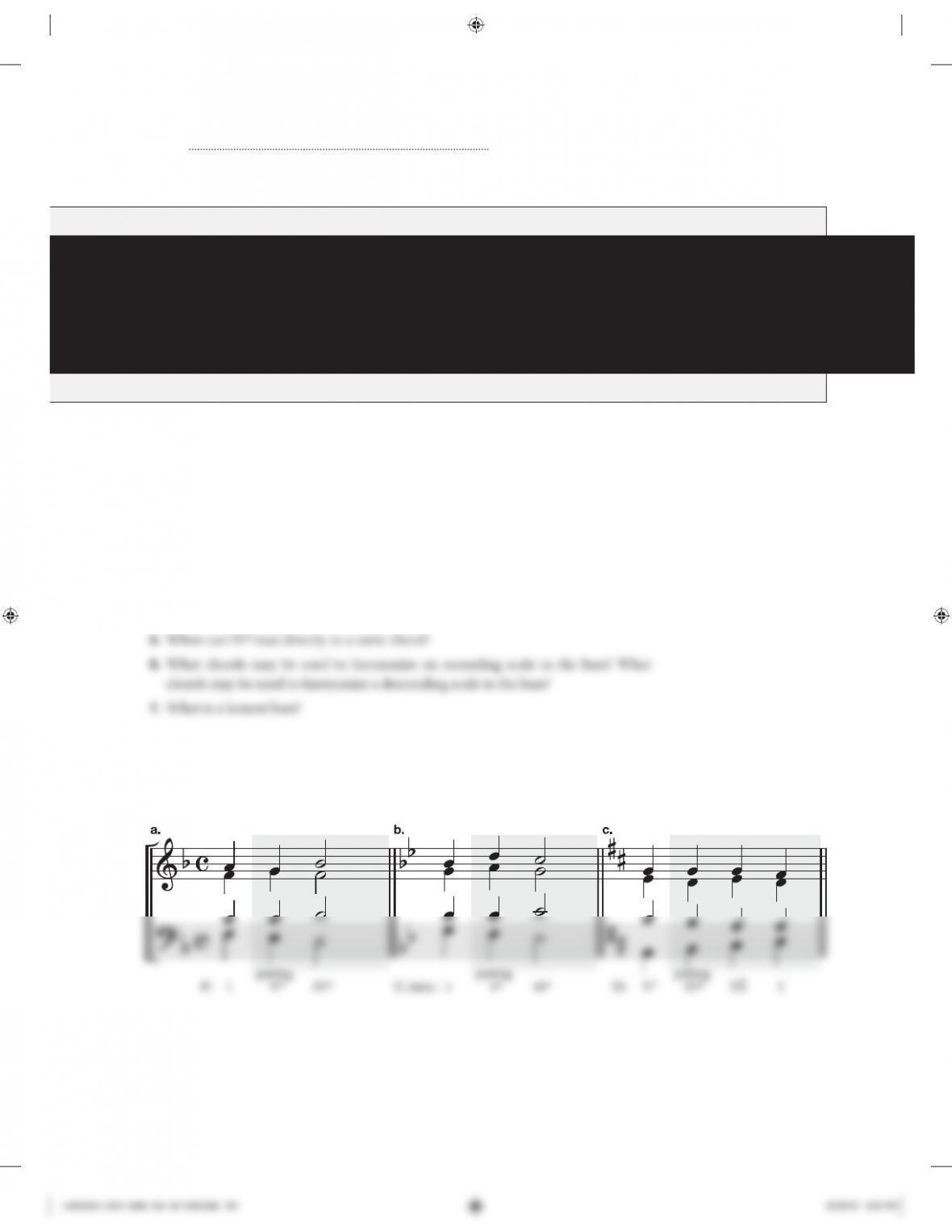
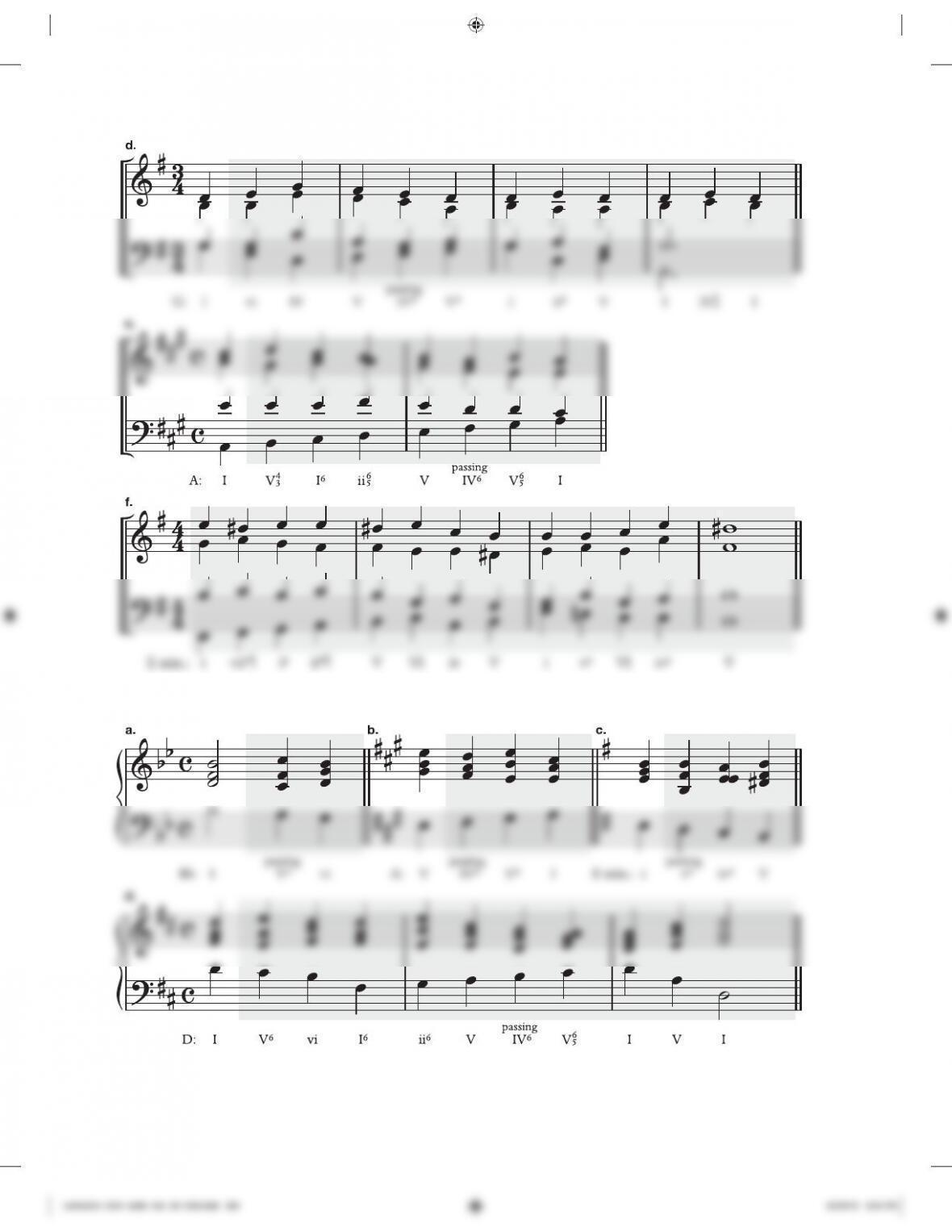
1. Realize the Roman numerals in SATB format.
chapter
24 Other Embellishing Chords
298 | CHAPTER 24 | Other Embellishing Chords
2. Realize the Roman numerals in keyboard format.
C. Realizing Figured Bass | 299
NAME:
C. REALIZING FIGURED BASS
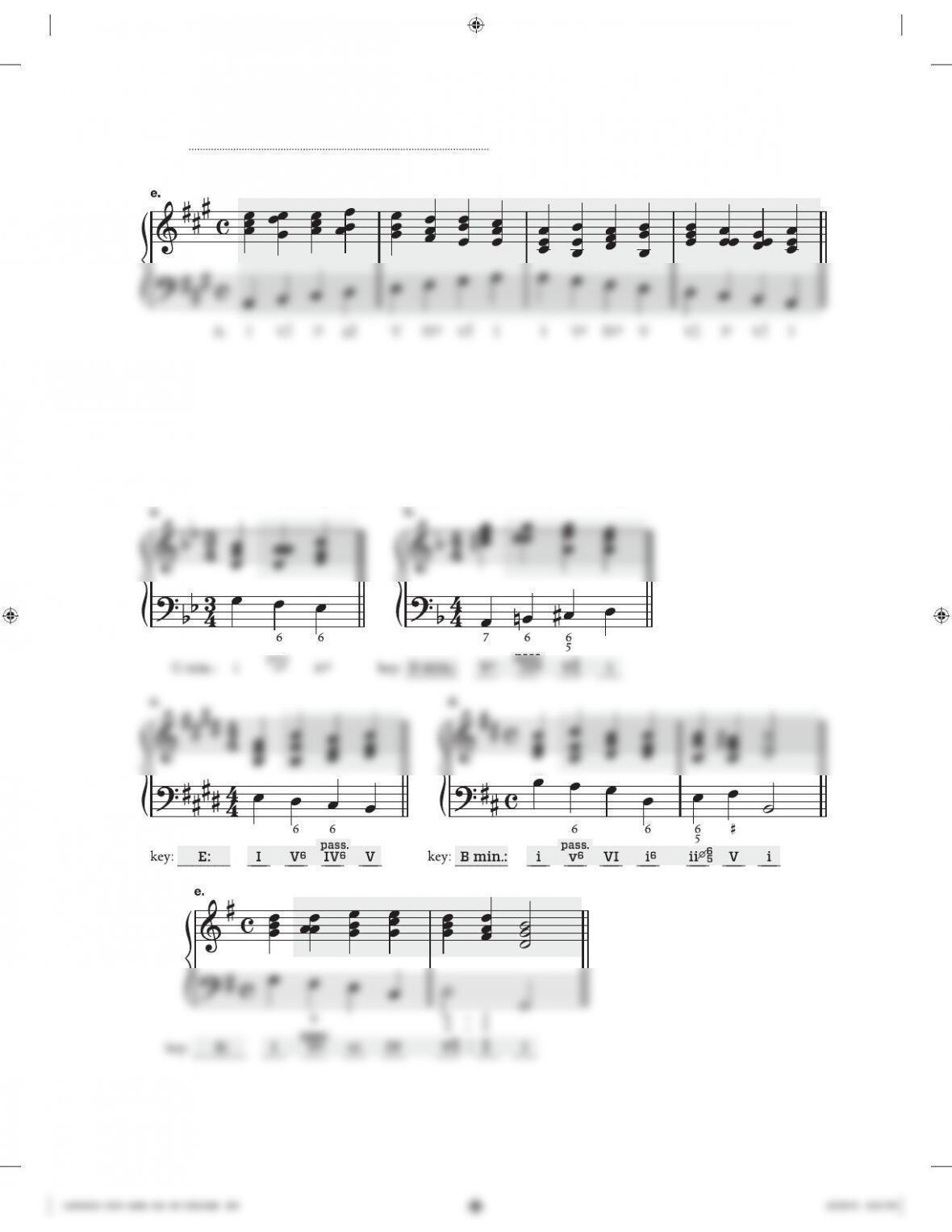
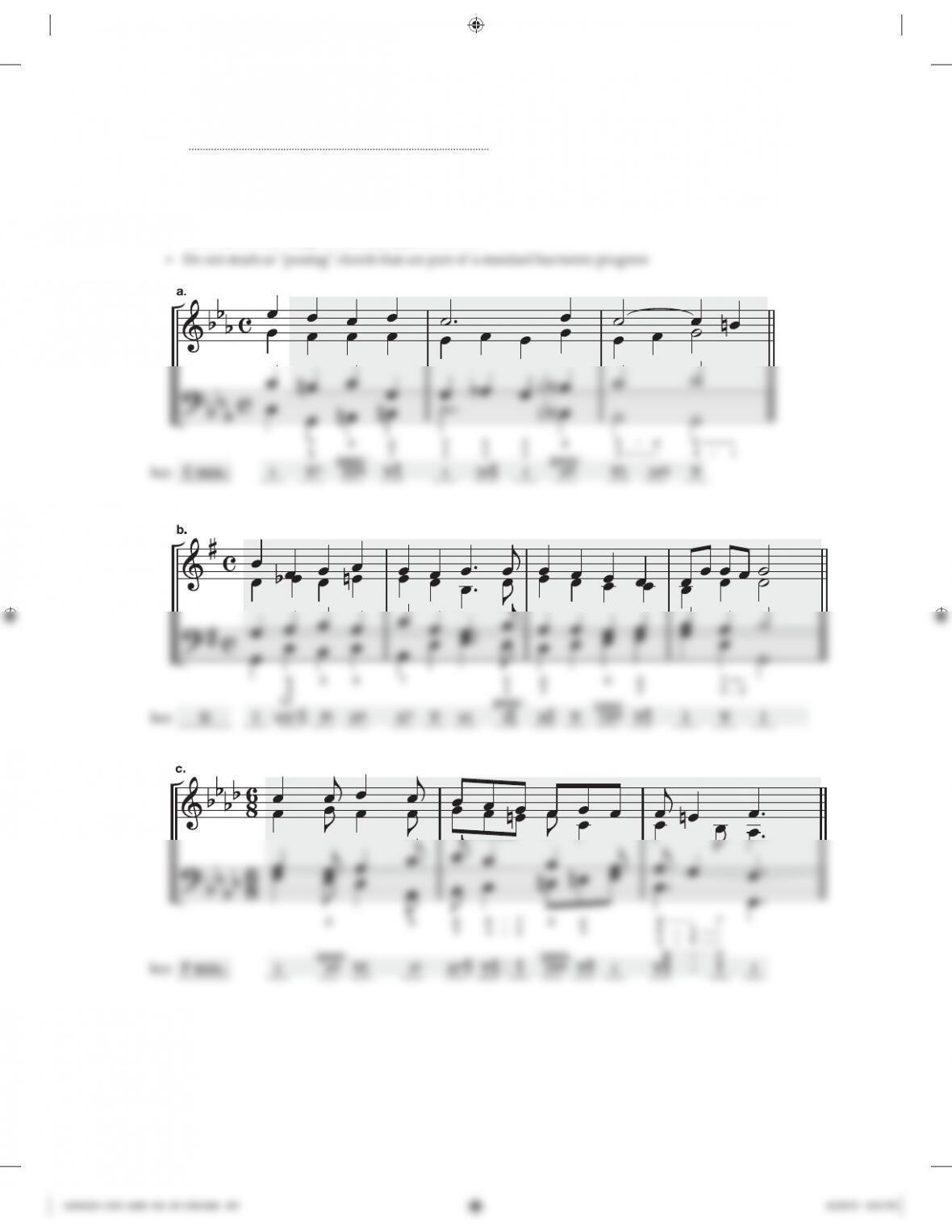
1. Realize each gured bass in keyboard format. Then label the keys and Roman
numerals, and indicate which chords have a primarily passing function (pass.).
• Note that two passing chords may appear in a row.
• Do not mark as “passing” chords that are part of a standard harmonic progress.
300 | CHAPTER 24 | Other Embellishing Chords
NAME:
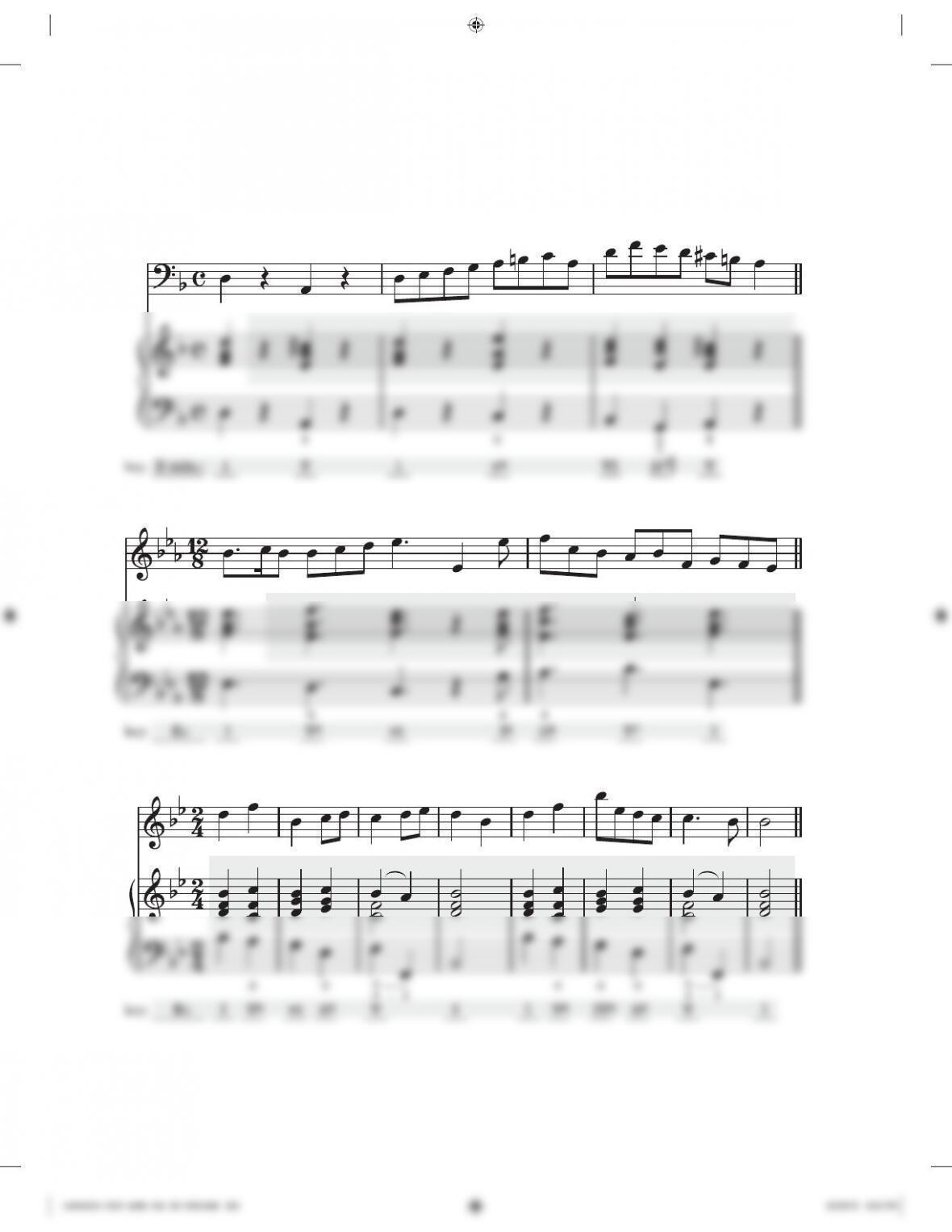
2. Realize each gured bass in SATB format. Then label the keys and Roman
numerals, and indicate which chords have a primarily passing function (pass.).
• Note that two passing chords may appear in a row.
302 | CHAPTER 24 | Other Embellishing Chords
3. Complete a realization in keyboard format of the gured bass accompaniment for
these excerpts and label the Roman numerals. Do not worry about any parallel
perfect intervals that may arise between your gured bass realization and the given
melody.
a. Johann Ernst Galliard, Bassoon (or Cello) Sonata No. 5, ii
b. William Babell, Oboe Sonata, iii
c. Jean Baptiste Loeillet, Flute Sonata, Op. 1, No. 5, ii
NAME:
D. I–IV6–I6 | 303
D. I–IV6–I6
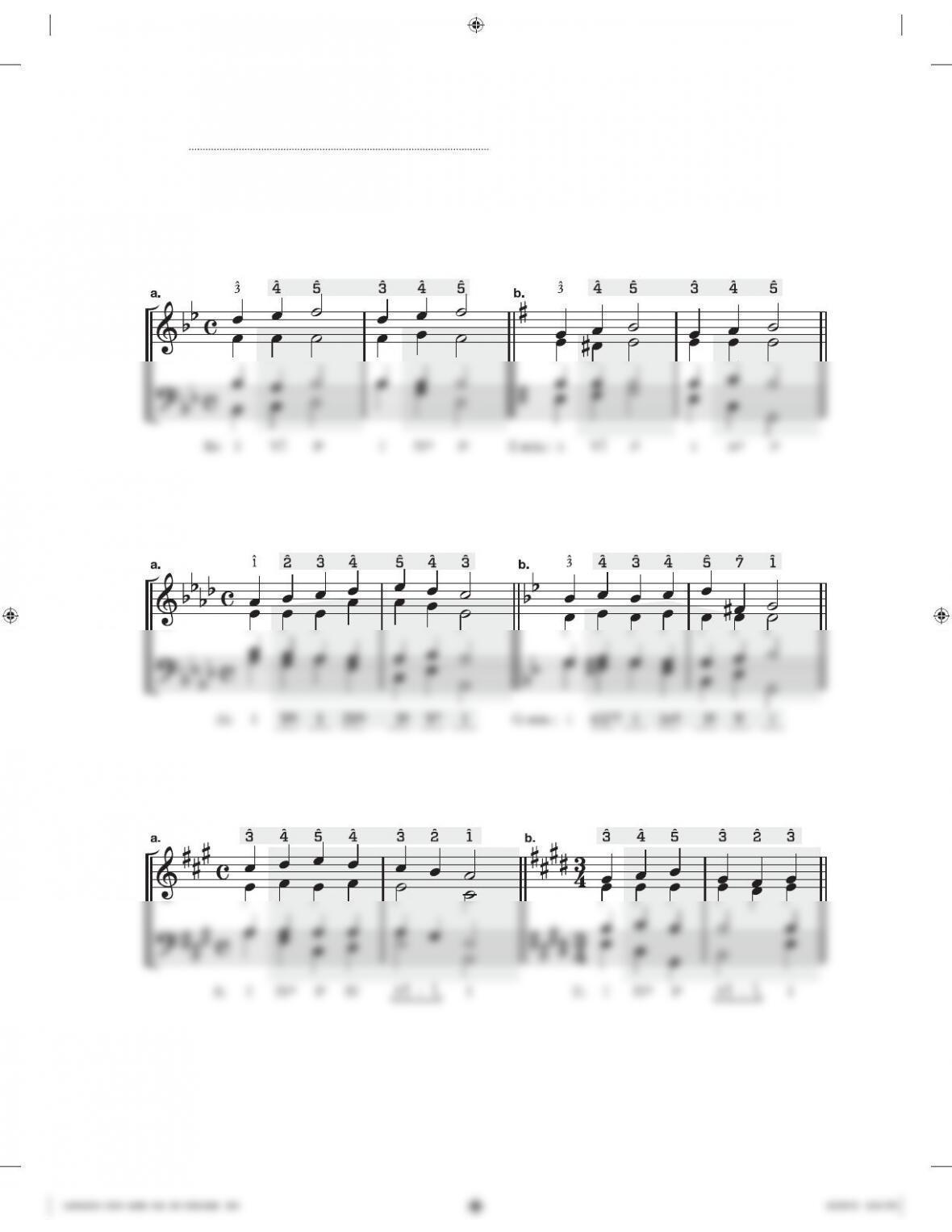
1. Label the scale degrees of these melodic fragments. Then harmonize them in
SATB format using the indicated chords.
2. Label the scale degrees of these melodies. Then harmonize them in SATB format,
using a I–IV6–I6 progression in each. Label the chords with Roman numerals.
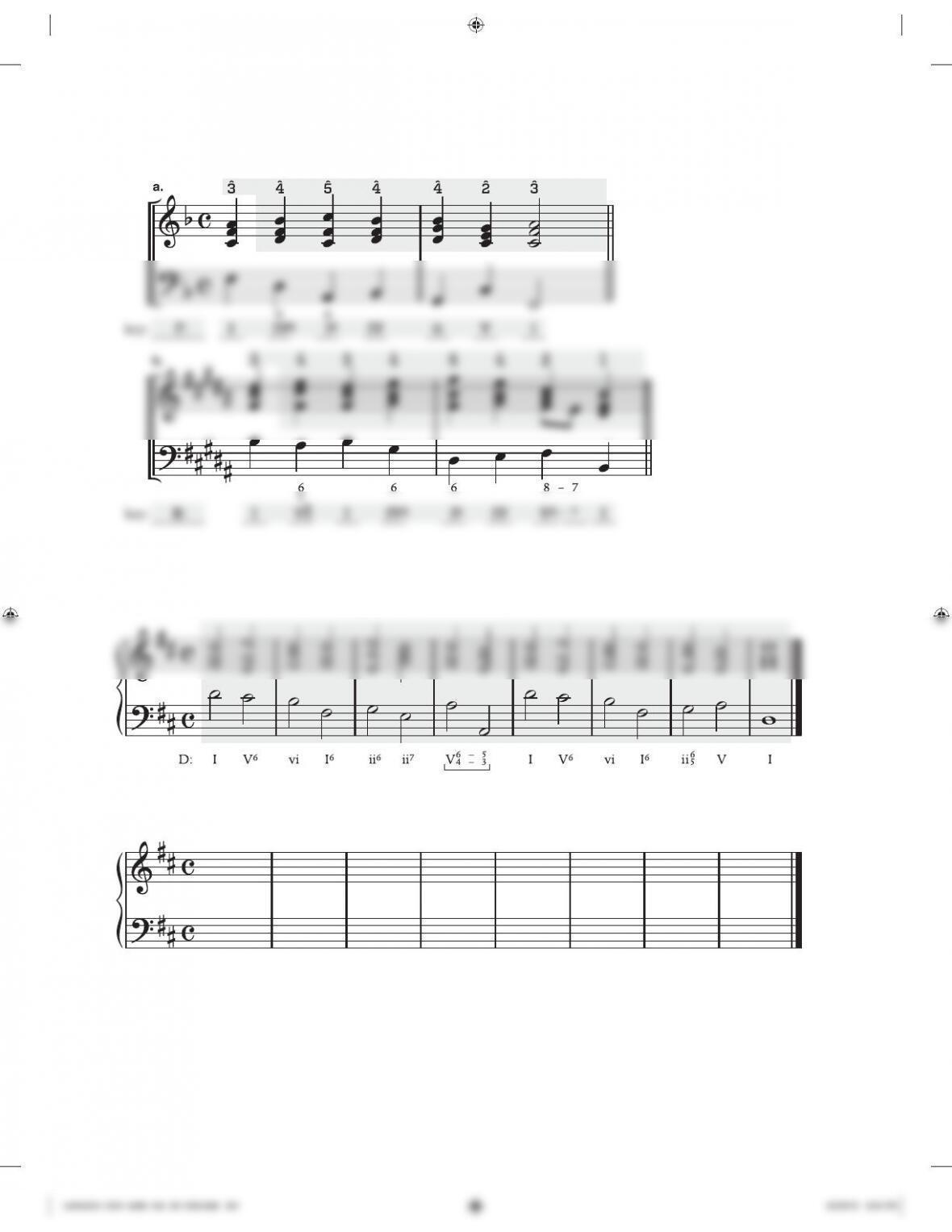
3. Realize the Roman numerals in SATB format. Then label the scale degrees of each
melody.
304 | CHAPTER 24 | Other Embellishing Chords
4. Realize each gured bass in keyboard format. Then label the key, the scale degrees
of the melody, and the Roman numerals.
E. COMPOSITION
1. Realize the Roman numerals in four-part harmony, keyboard format.
2. Using the same harmonies and bass as above, write a duet (for instruments of your
choice) by adding a melody.
F. Analysis | 305
NAME:
F. ANALYSIS
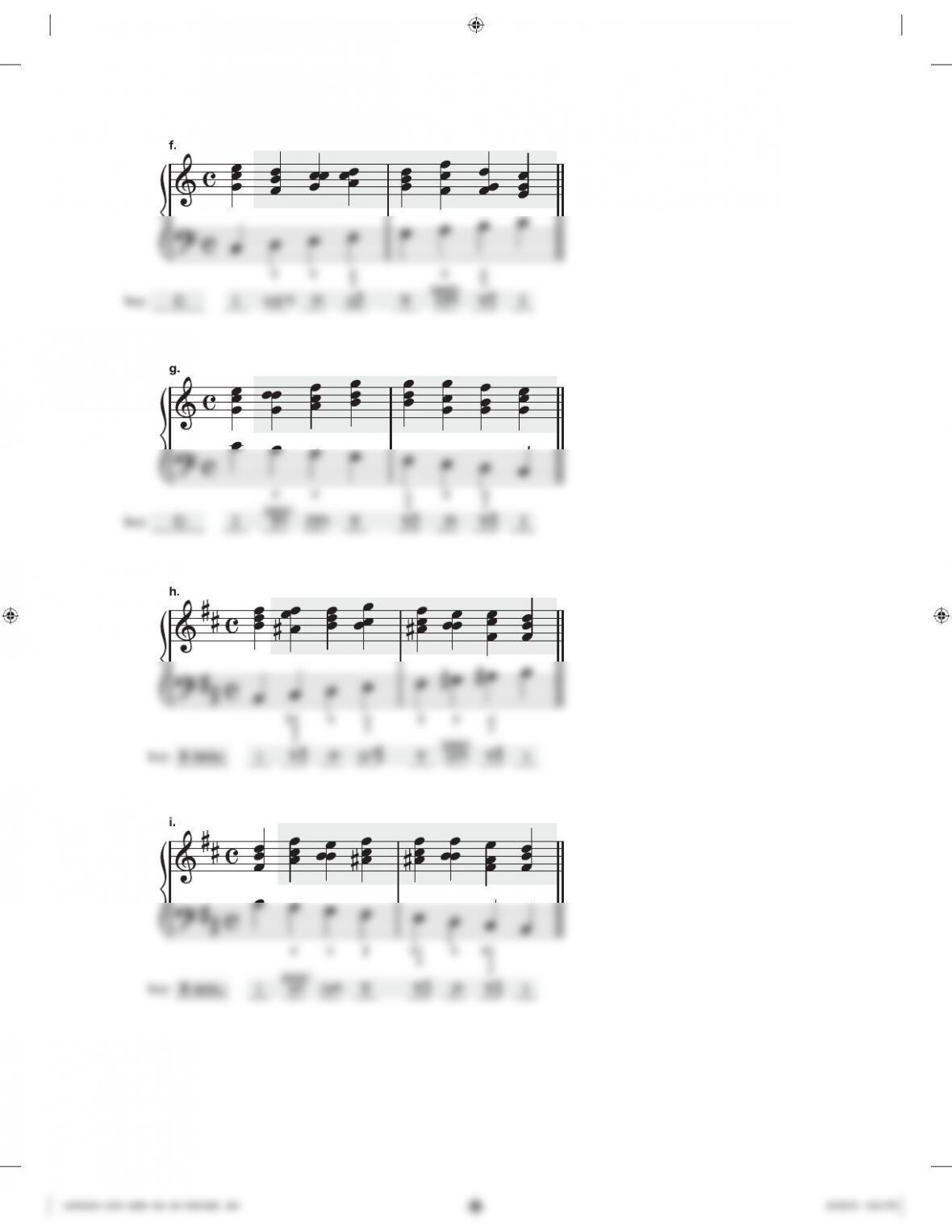
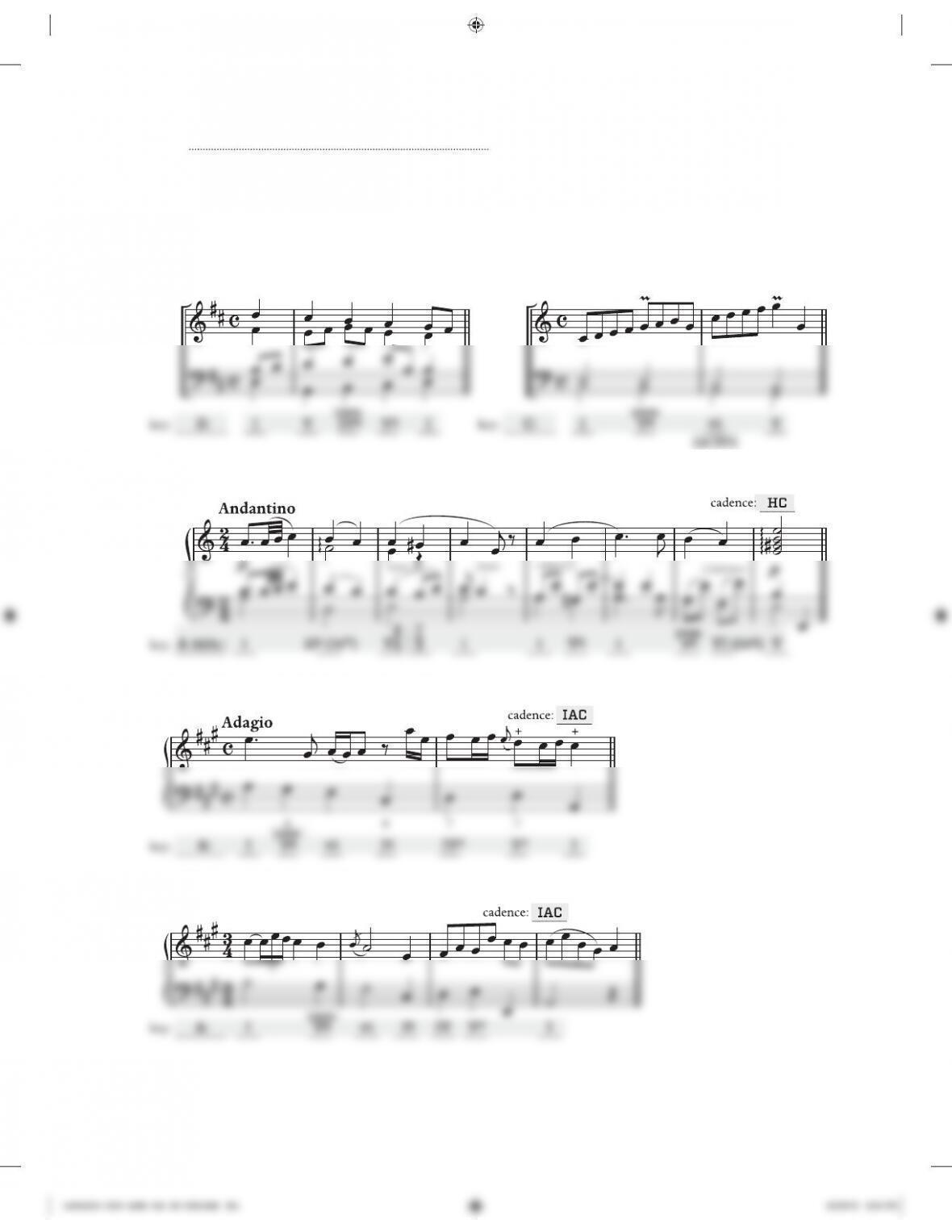
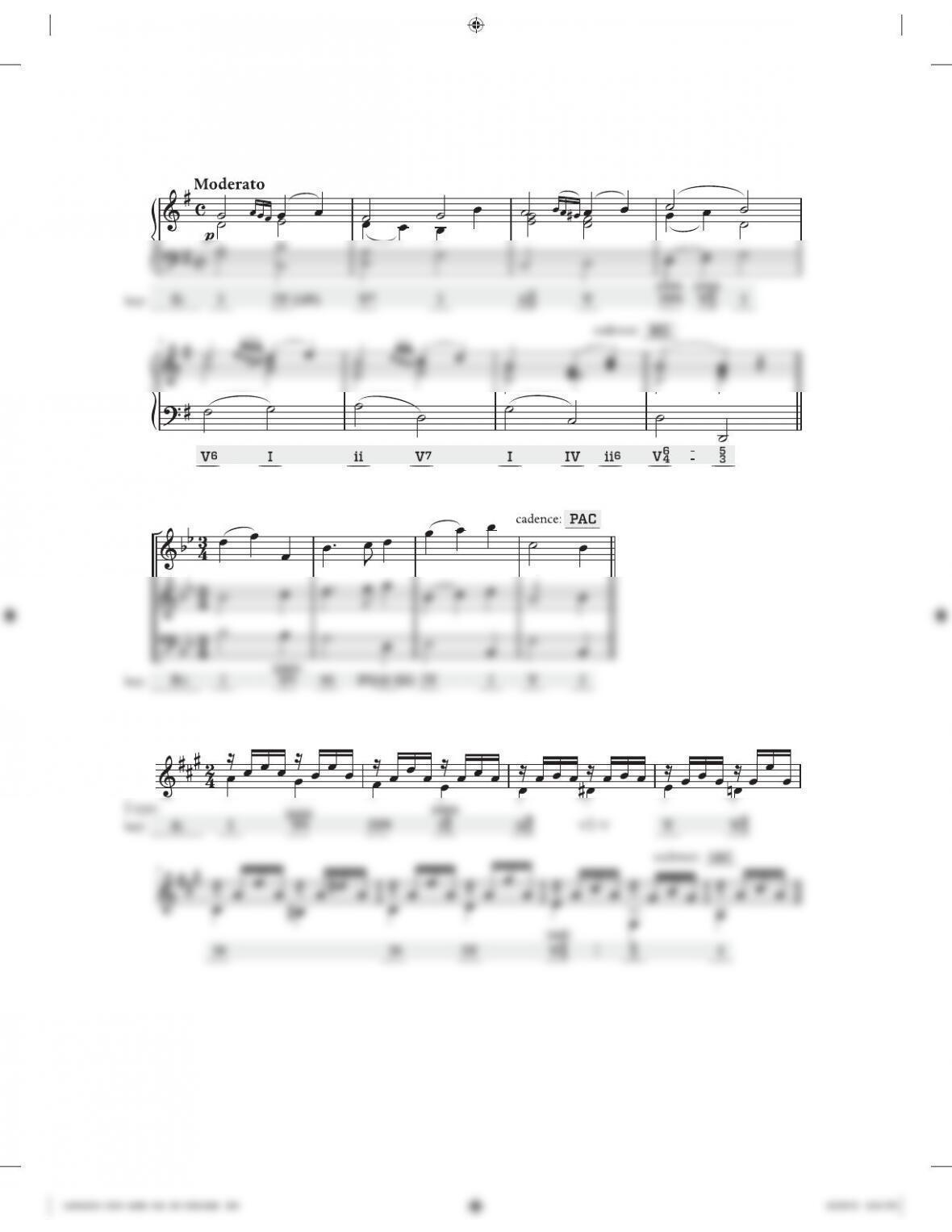
1. Label the key, Roman numerals, and (where indicated) cadences in the following
excerpts; then indicate which chords have a primarily passing (pass.) function.
a. J. S. Bach, Chorale 58 b. J. S. Bach, Applicatio
c. Jean-Philippe Rameau, Gavotte
d. Jean-Marie Leclair, Violin Sonata, Op. 2, No. 4, i
e. Elisabetta de Gambarini, Minuet
306 | CHAPTER 24 | Other Embellishing Chords
f. Christoph Willibald Gluck, Pantomine from Alceste
g. Arcangelo Corelli, Chamber Sonata, Op. 2, No. 5, Sarabanda
h. Mauro Giuliani, Etude for Guitar, Op. 110, No. 15
F. Analysis | 307
NAME:
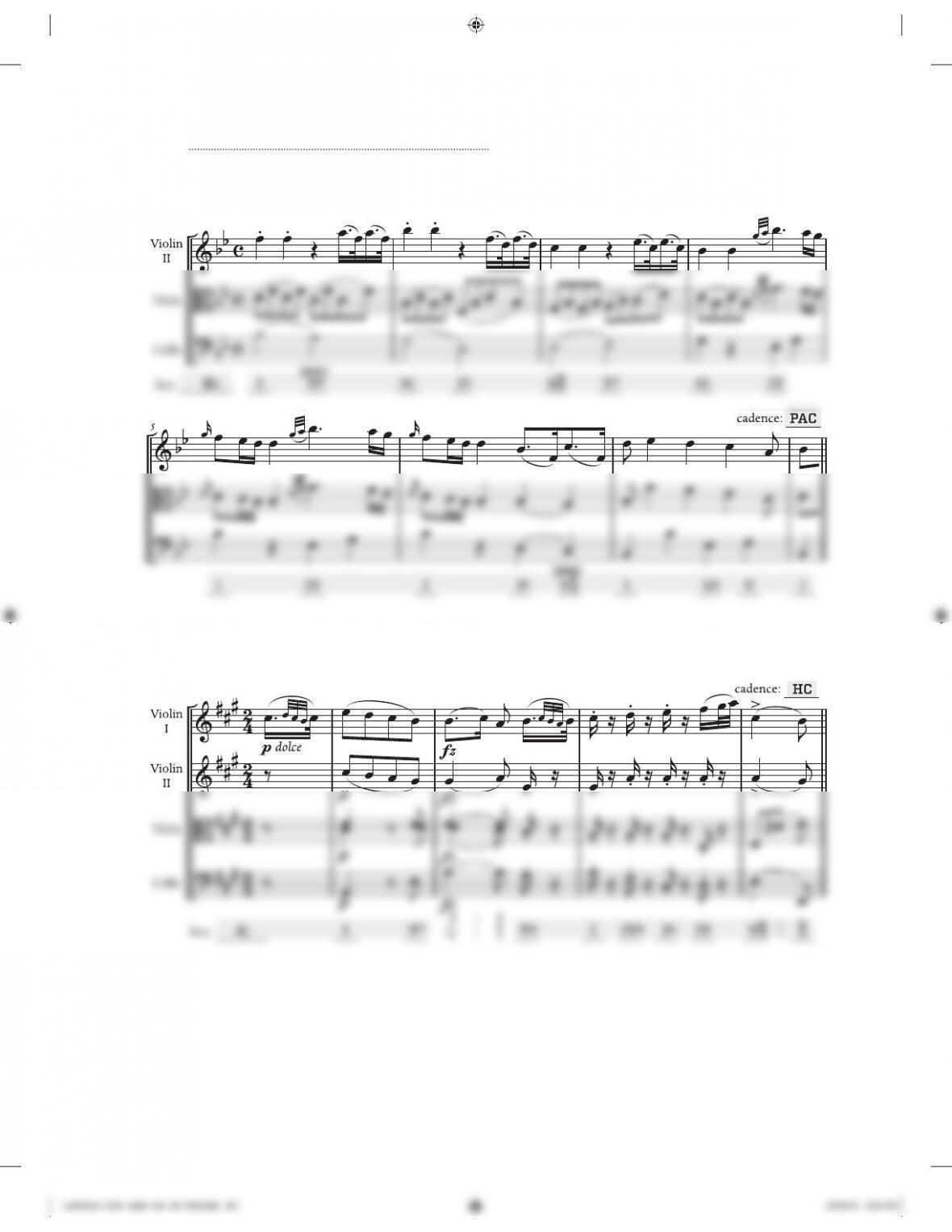
i. W. A. Mozart, String Quartet, K. 159, i
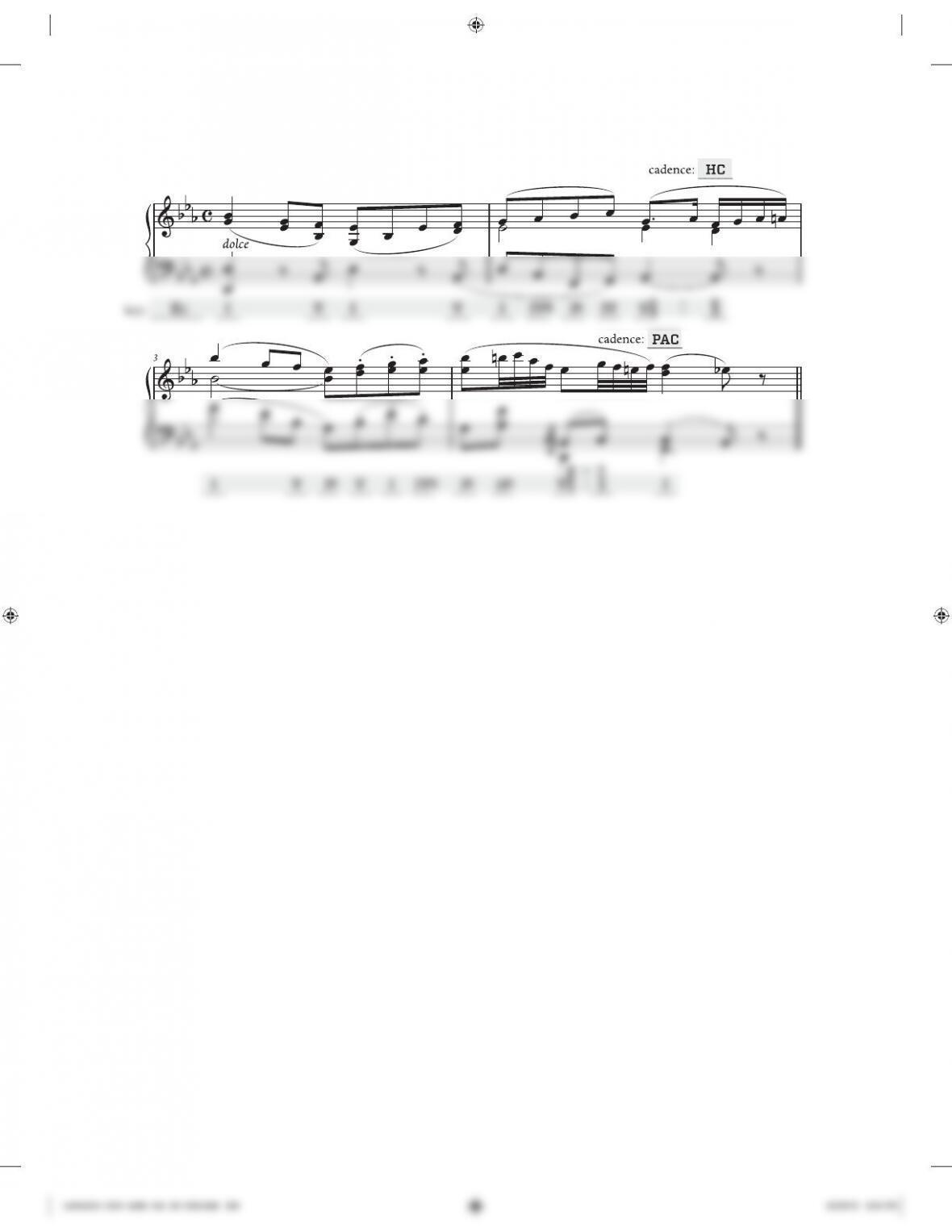
2. Label the Roman numerals and cadences of the following excerpts.
a. Joseph Haydn, String Quartet, Op. 50, No. 4, ii
308 | CHAPTER 24 | Other Embellishing Chords
b. W. A. Mozart, Piano Sonata, K. 570, II
Compare mm. 1–2 with mm. 3–4, In what ways are they similar, and in what
ways are they dierent?