B. Realizing Roman Numerals | 289
NAME:
A. QUESTIONS FOR REVIEW
1. What is a pedal 6
4 chord?
2. What is a passing 6
4 chord?
3. What is an arpeggiated 6
4 chord?
B. REALIZING ROMAN NUMERALS
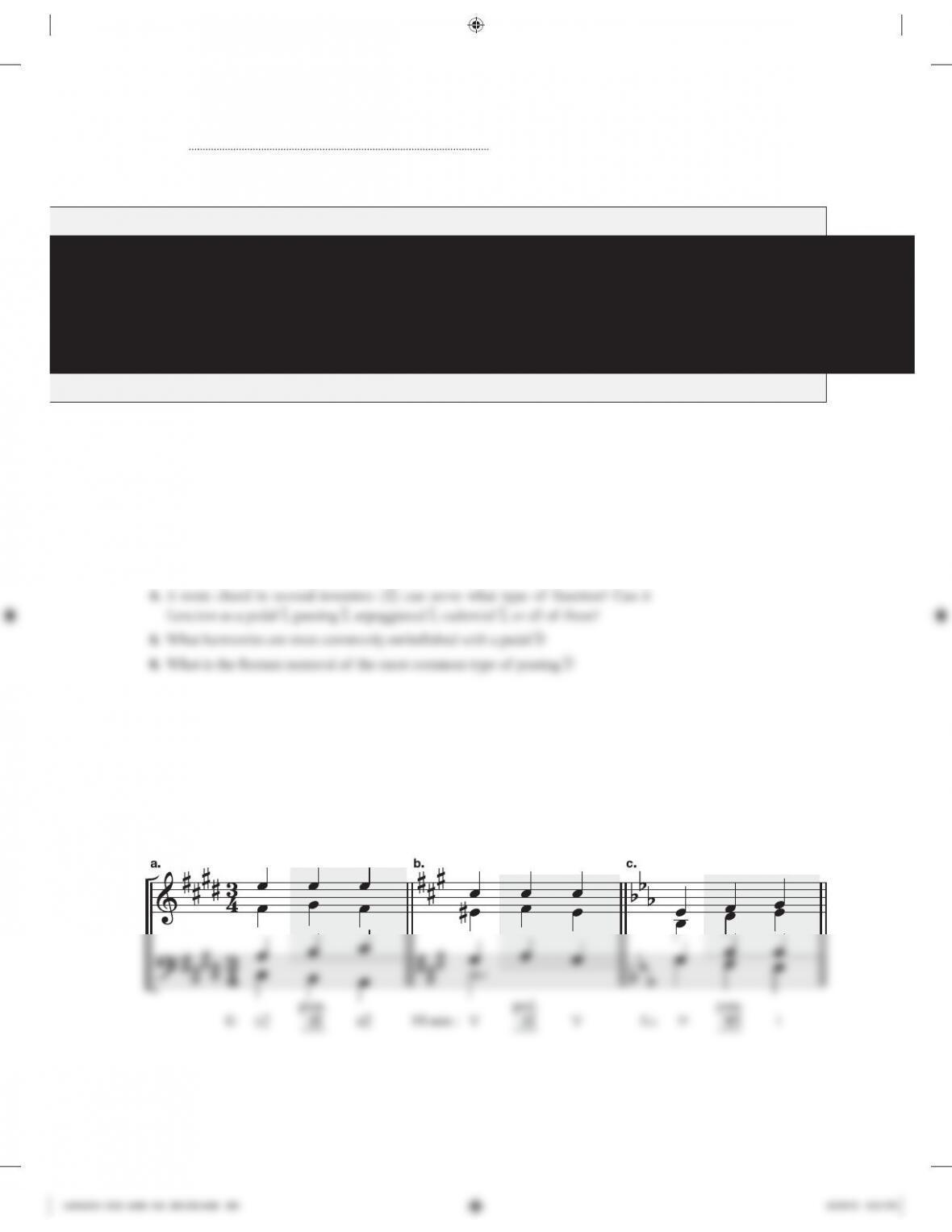
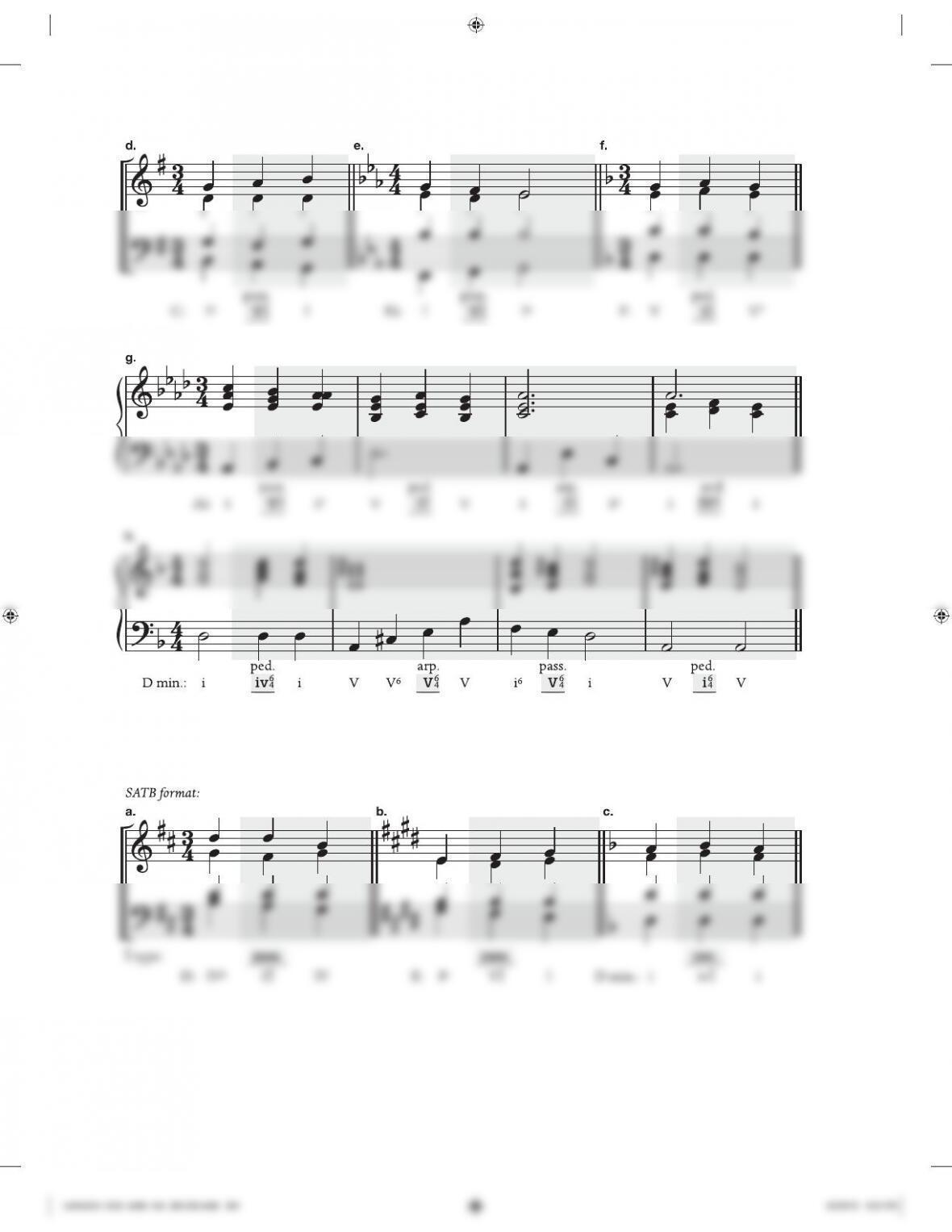
1. In each of the following, the 6
4 chords are identified by their specific function rather
than by their Roman numeral: pass. (passing), ped. (pedal), arp. (arpeggiated), or
cad. (cadential) 6
4. In the blank lines provided, label the Roman numeral of each
6
4 chord. Then realize the Roman numerals.
SATB format:
chapter
23 Other 6
4 Chords
290 | CHAPTER 23 | Other
6
4 Chords
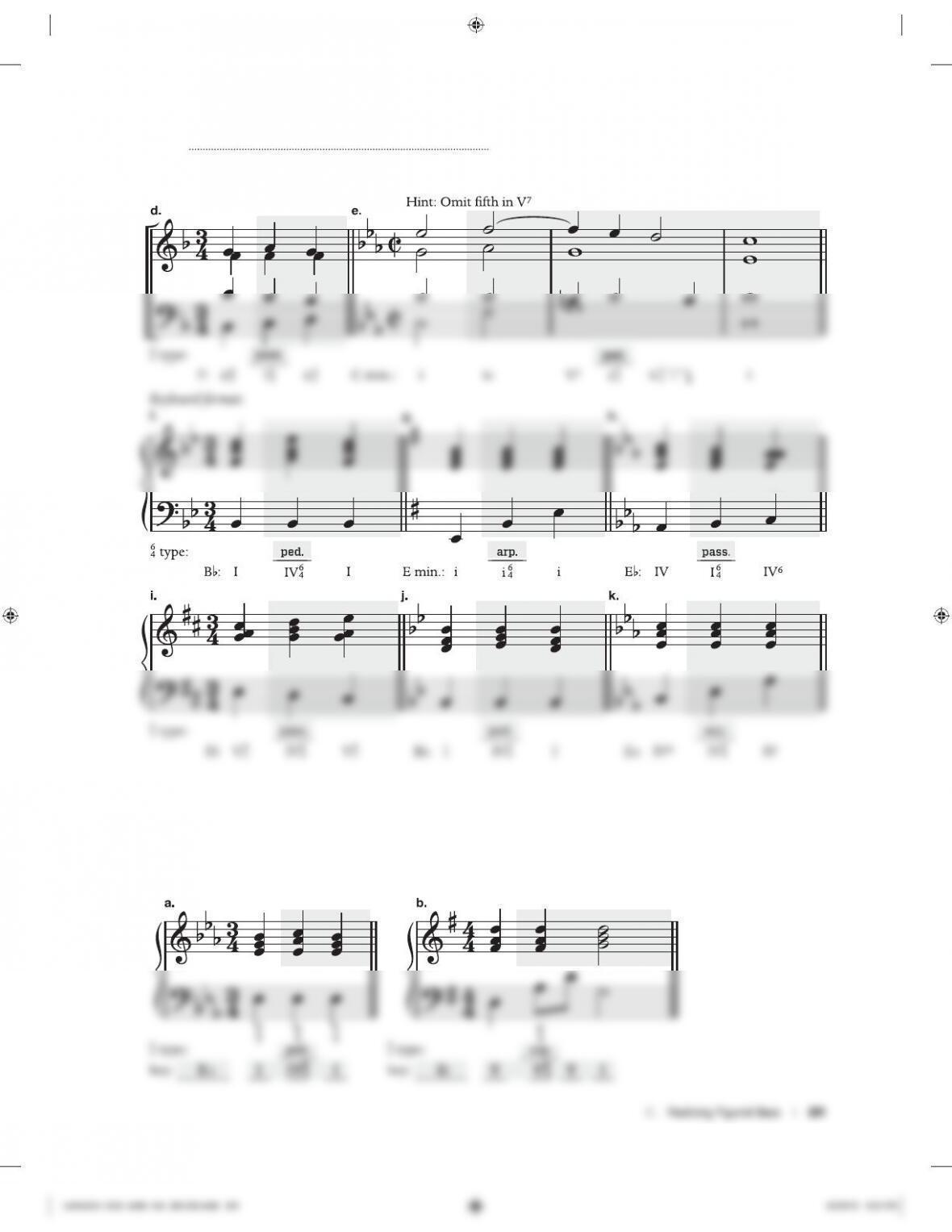
Keyboard format:
2. Realize the Roman numerals. Then in the blanks provided label the 6
4 chords
according to their specific function: pass. (passing), ped. (pedal), arp. (arpeggiated),
or cad. (cadential) 6
4.
NAME:
C. REALIZING FIGURED BASS
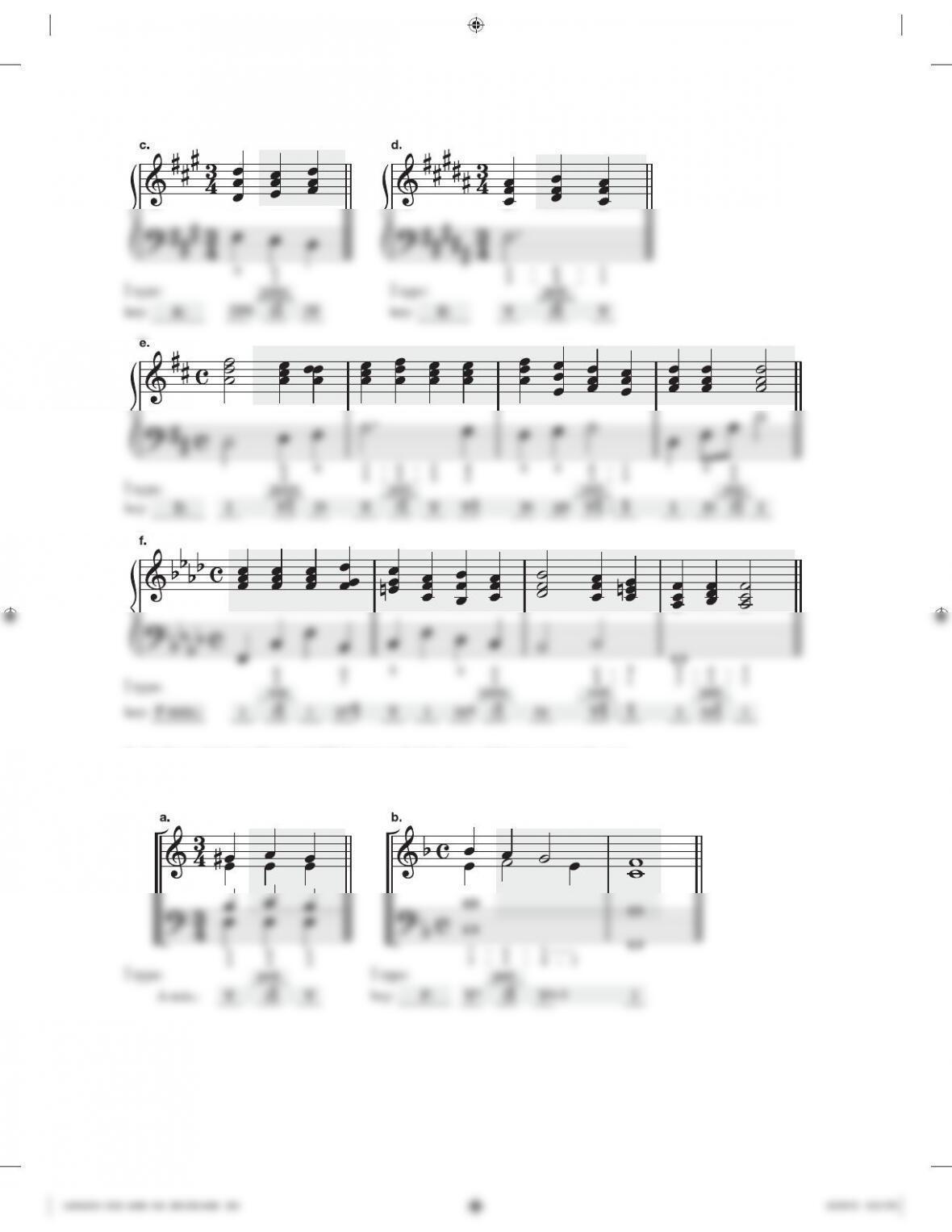
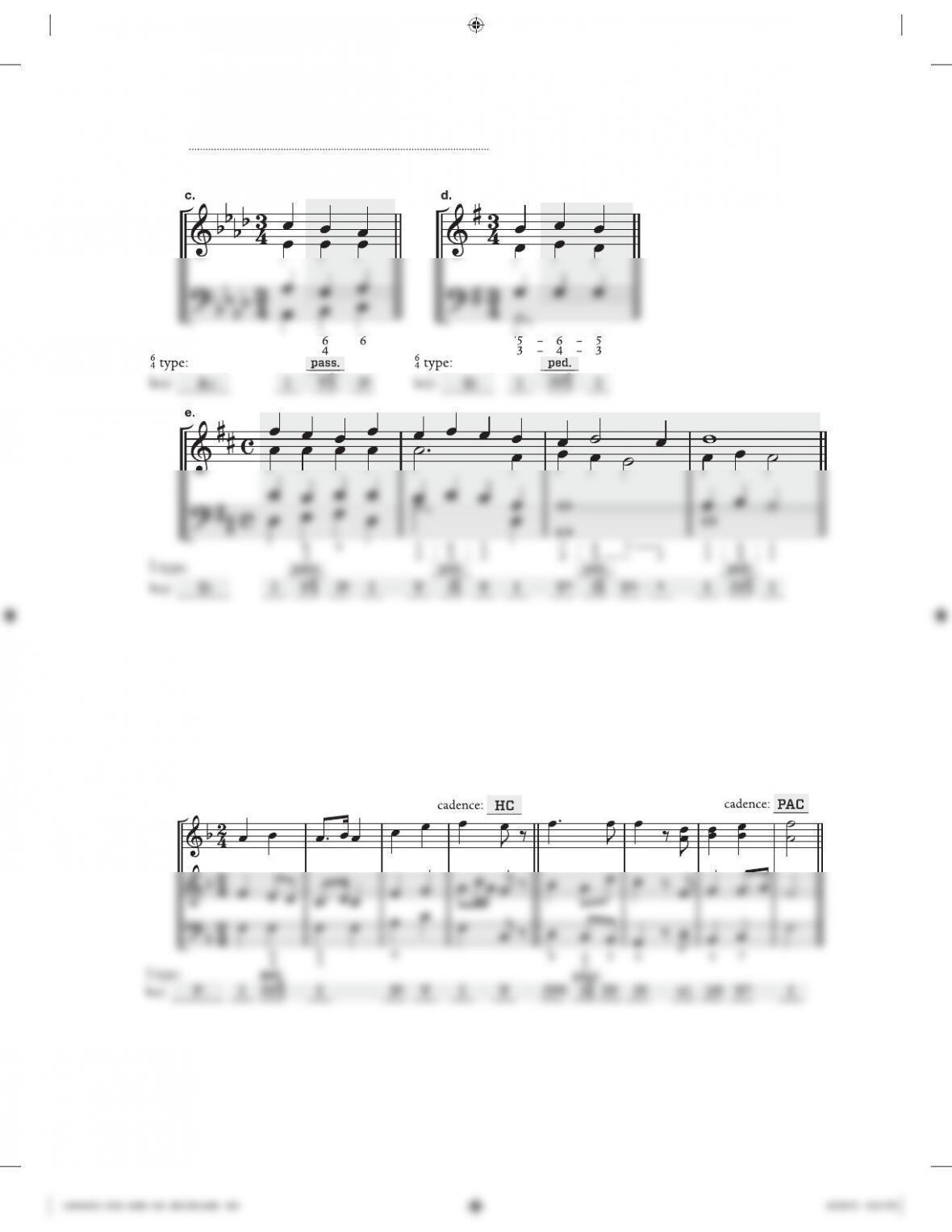
1. Realize each figured bass in keyboard format. Label the key and Roman numerals,
and indicate whether each 6
4 chord is a pass. (passing), ped. (pedal), arp. (arpeggiated),
or cad. (cadential) 6
4.
292 | CHAPTER 23 | Other
6
4 Chords
2. Realize each figured bass in SATB format. Label the key and Roman numerals, and
indicate whether each 6
4 chord is a pass. (passing), ped. (pedal), arp. (arpeggiated),
or cad. (cadential) 6
4.
D. Analysis | 293
NAME:
D. ANALYSIS
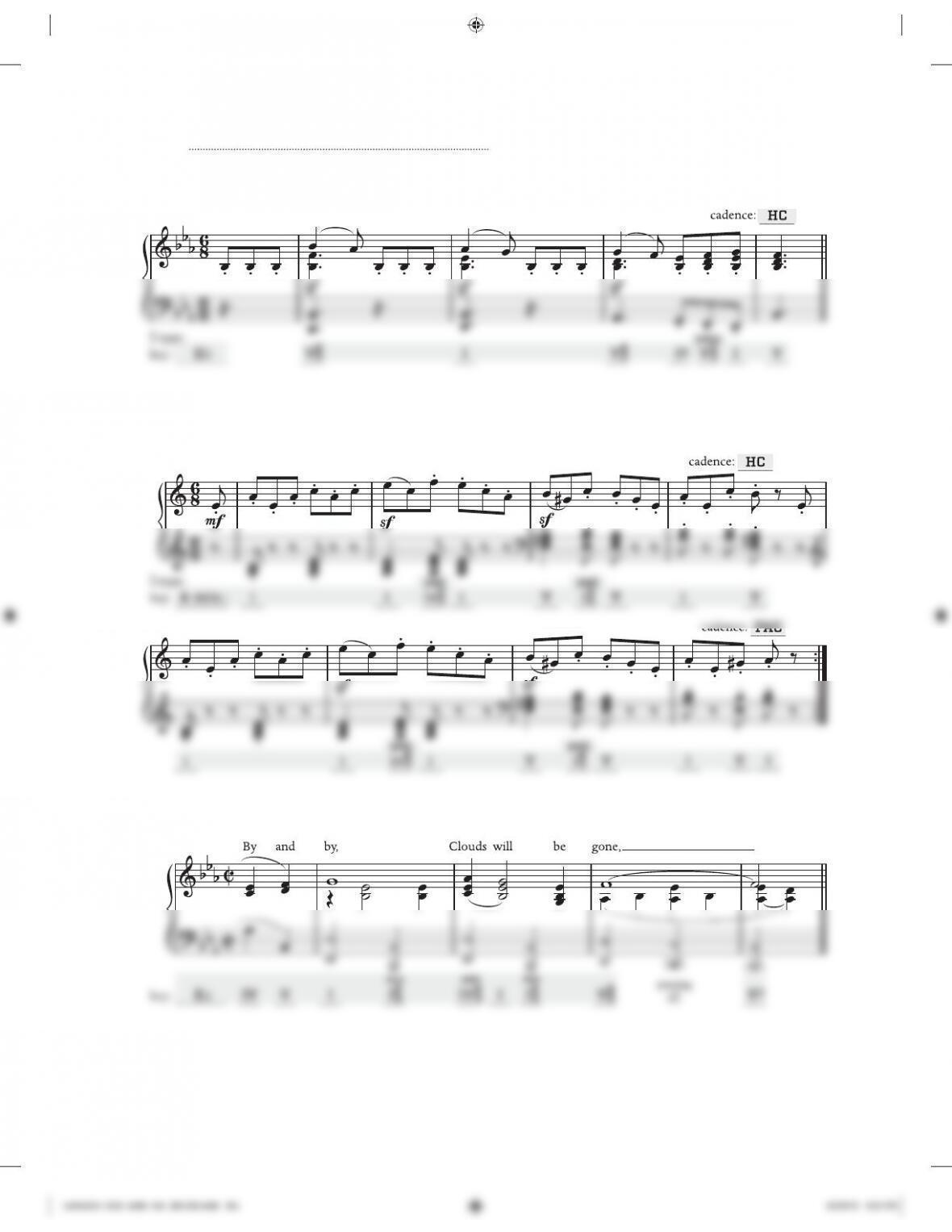
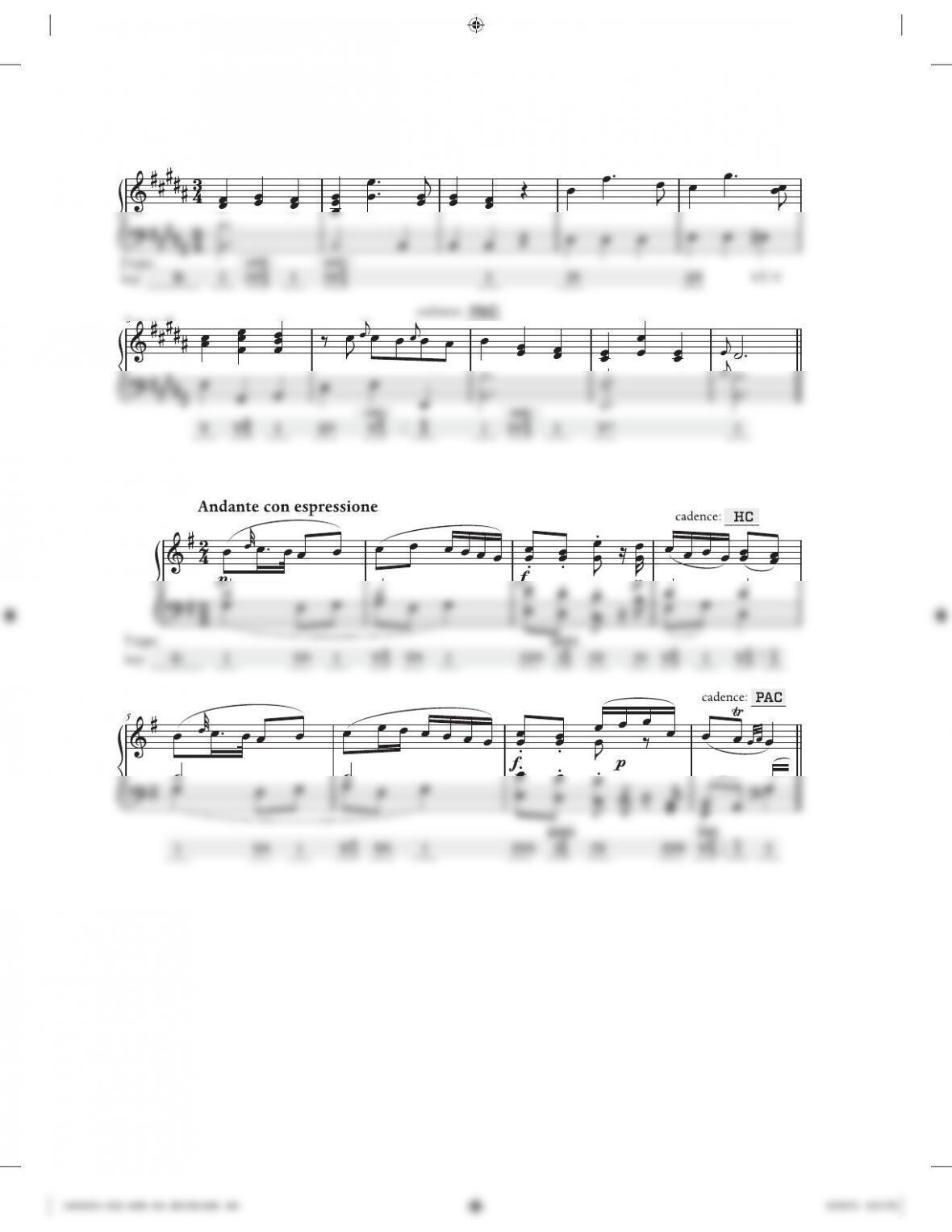
Label the key, Roman numerals, and cadences (where indicated) in the following.
Identify whether each of the 6
4 chords is a pass. (passing), ped. (pedal), arp. (arpeggiated),
or cad. (cadential) 6
4.
1. Giovanni Battista Viotti, Autumn (hymn)
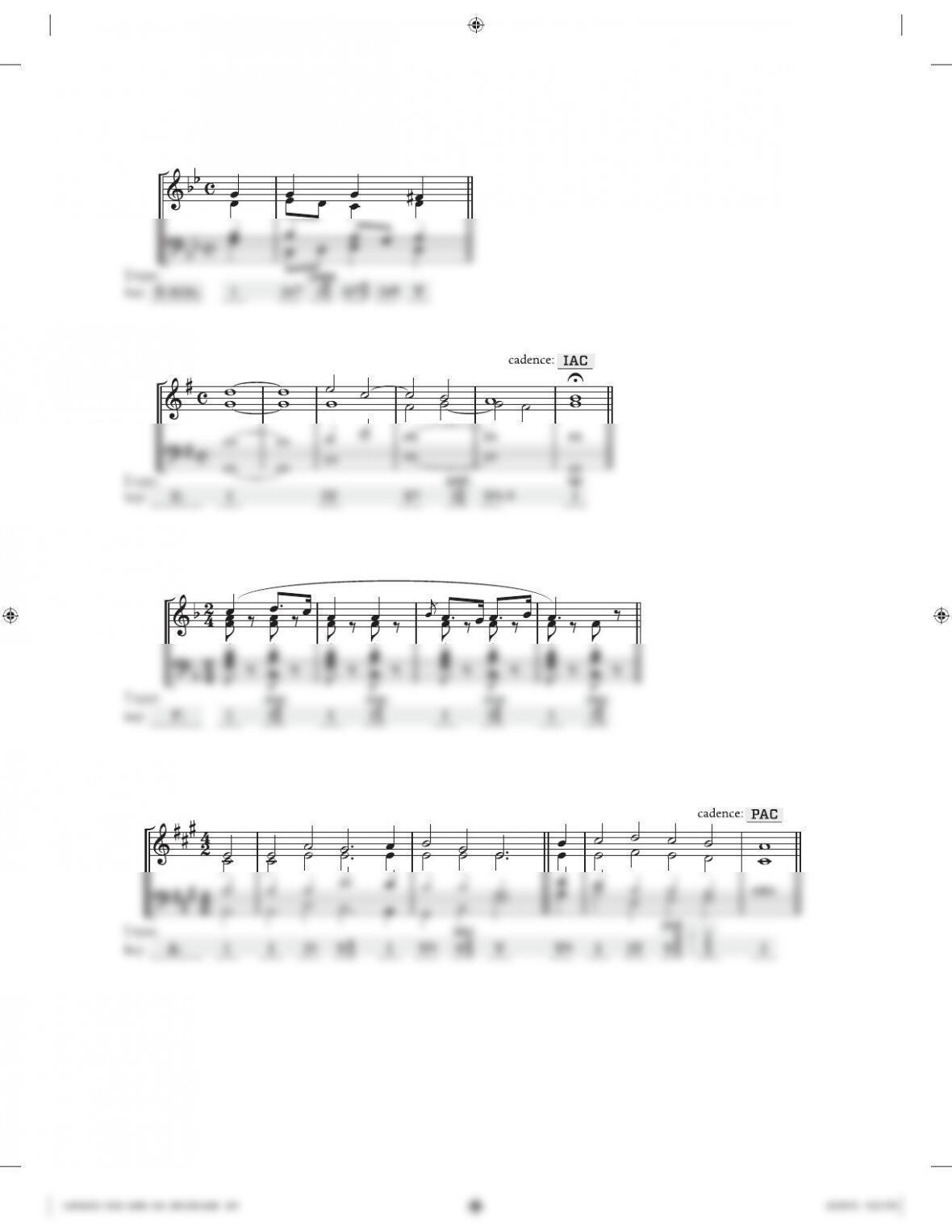
2. J. S. Bach, Chorale 59
3. Claudia Rusca, Sacred Concerto
4. Georges Bizet, Overture to Carmen
D. Analysis | 295
NAME:
6. Ludwig van Beethoven, Bagatelle, Op. 33, No. 1
7. Robert Schumann, “Wilder Reiter” (“Wild Horseman”) from Album for the Young,
Op. 68
8. George Gershwin, “By and By”
296 | CHAPTER 23 | Other
6
4 Chords
9. Anna Bon, Keyboard Sonata, Op. 2, No. 5, ii
10. W. A. Mozart, Piano Sonata, K. 311, ii