B. Melodic Sequences | 273
NAME:
A. QUESTIONS FOR REVIEW
1. What is a sequence?
2. What are some chords and chord successions that are allowed within sequences
but not common within functional progressions? Why are they allowed within
sequences?
3. What are some common types of descending sequences? What are some common
types of ascending sequences?
4. What voice-leading guidelines apply to parallel 6
3 sequences?
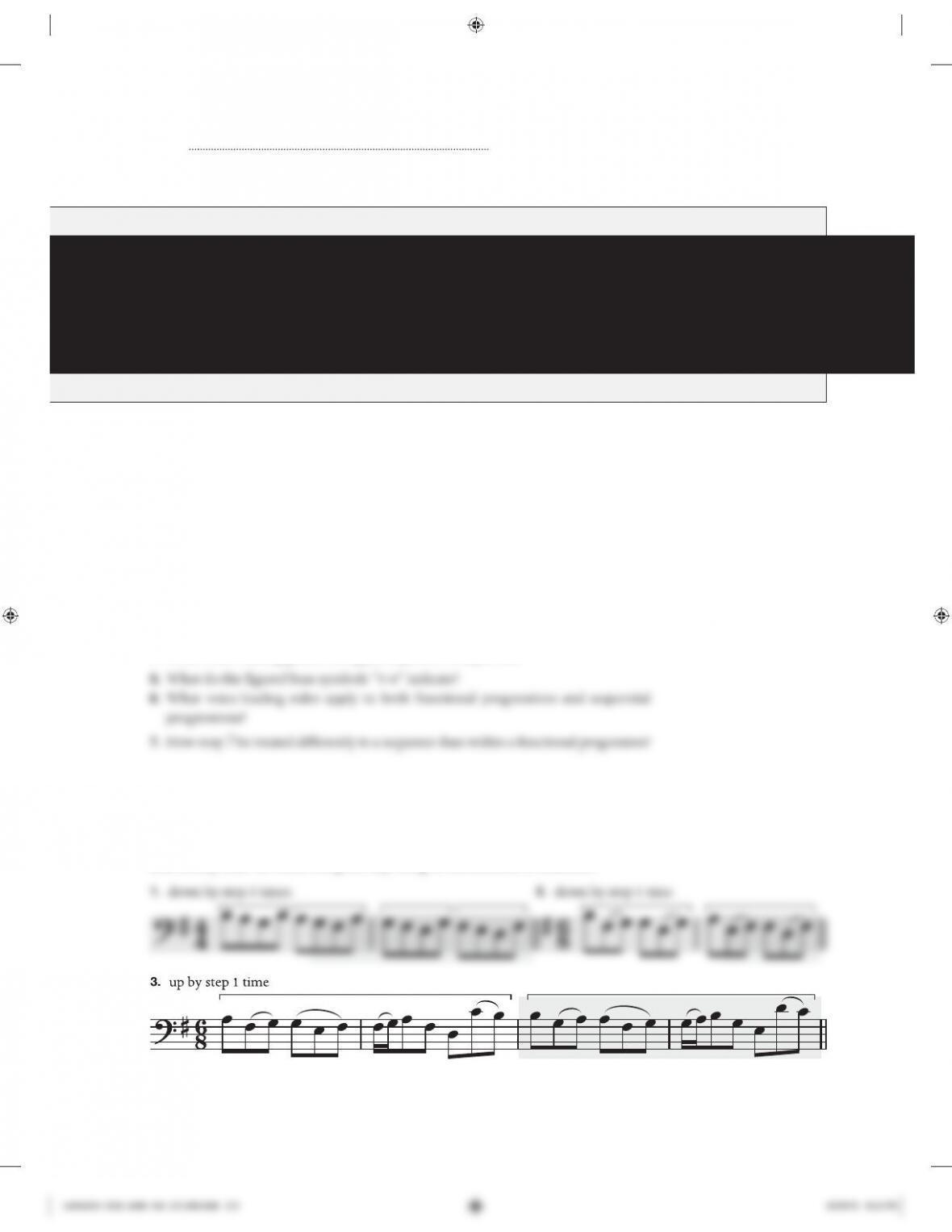
B. MELODIC SEQUENCES
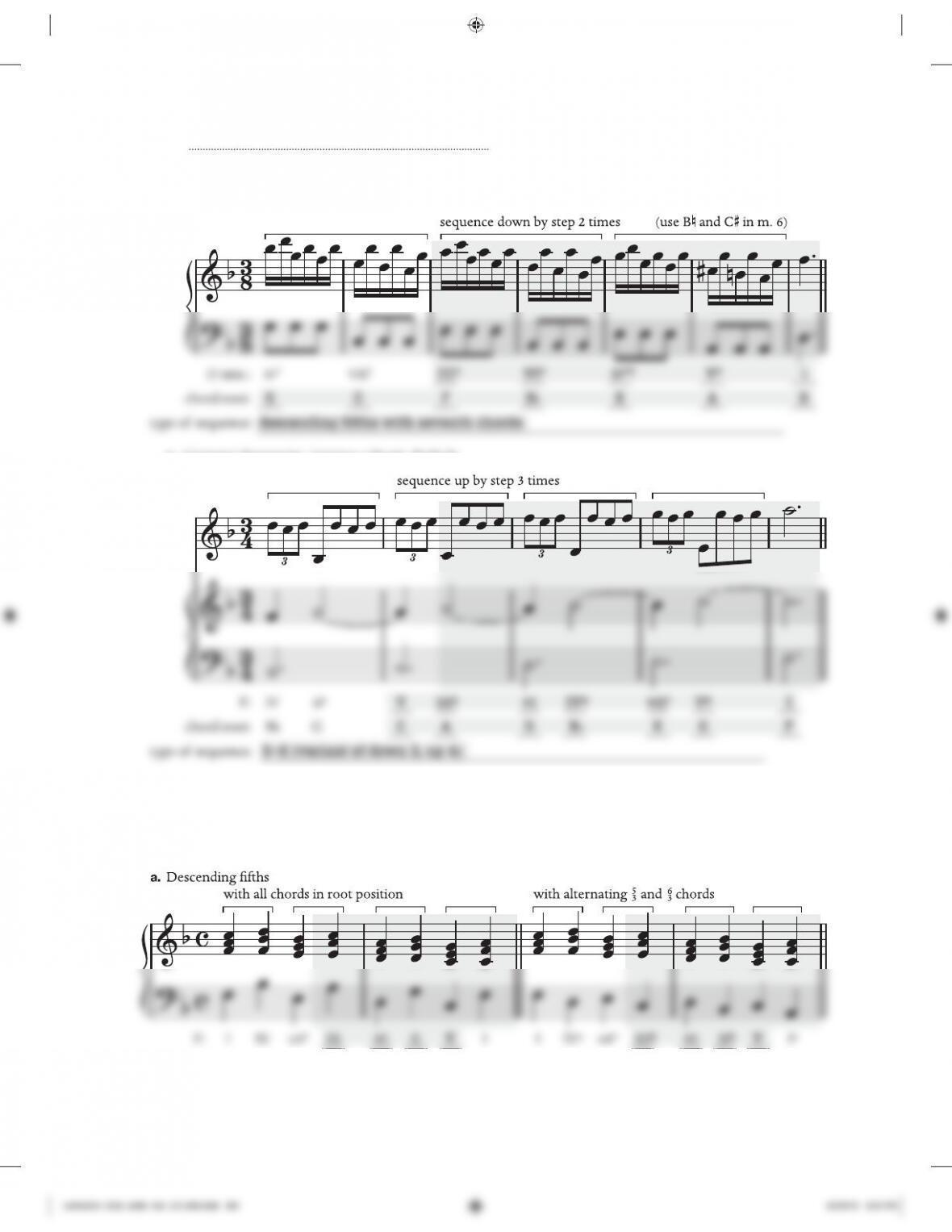
Form melodic sequences by transposing each of the following melodic fragments
diatonically (that is, within the given key, using no accidentals) as indicated.
chapter
22 Sequences
274 |CHAPTER 22 |Sequences
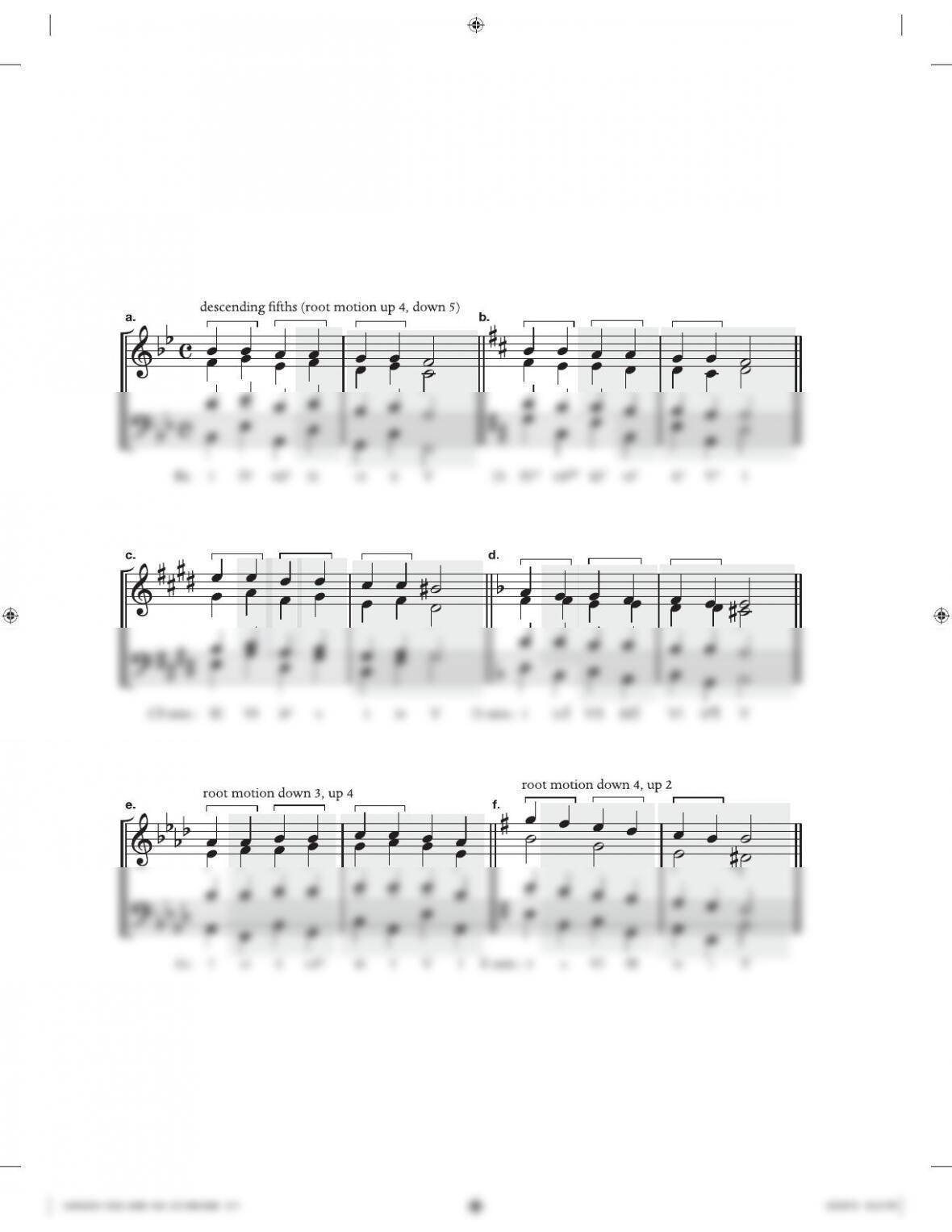
C. REALIZING ROMAN NUMERALS
1. Each of the following excerpts begins with a harmonic sequence in which a brack-
eted pair of chords is repeated sequentially three times. Realize the Roman numer-
als, continuing the sequence by transposing the bracketed progression diatonically
(using only notes within the key and no accidentals).
SATB format:
D. Realizing Figured Bass | 275
NAME:
Keyboard format:
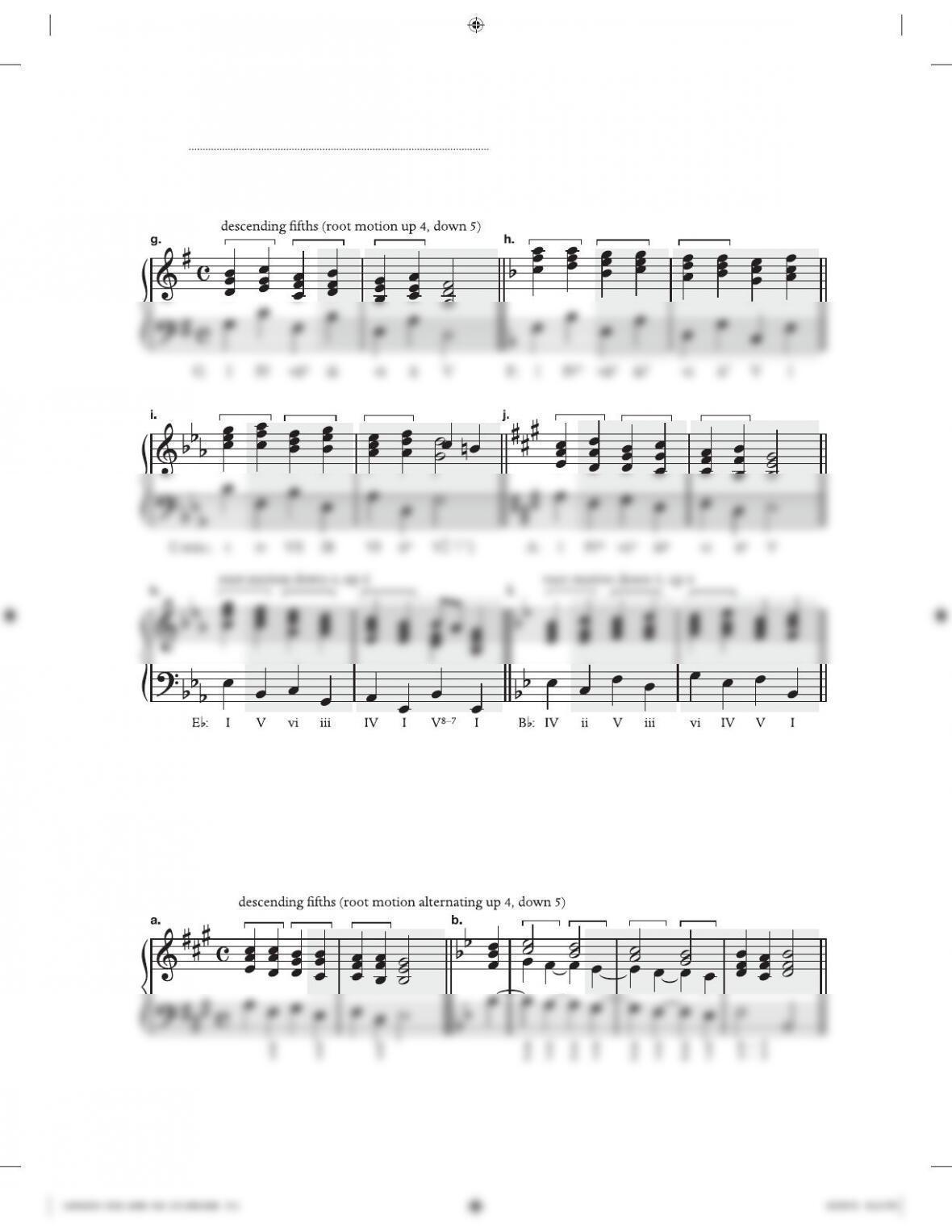
D. REALIZING FIGURED BASS
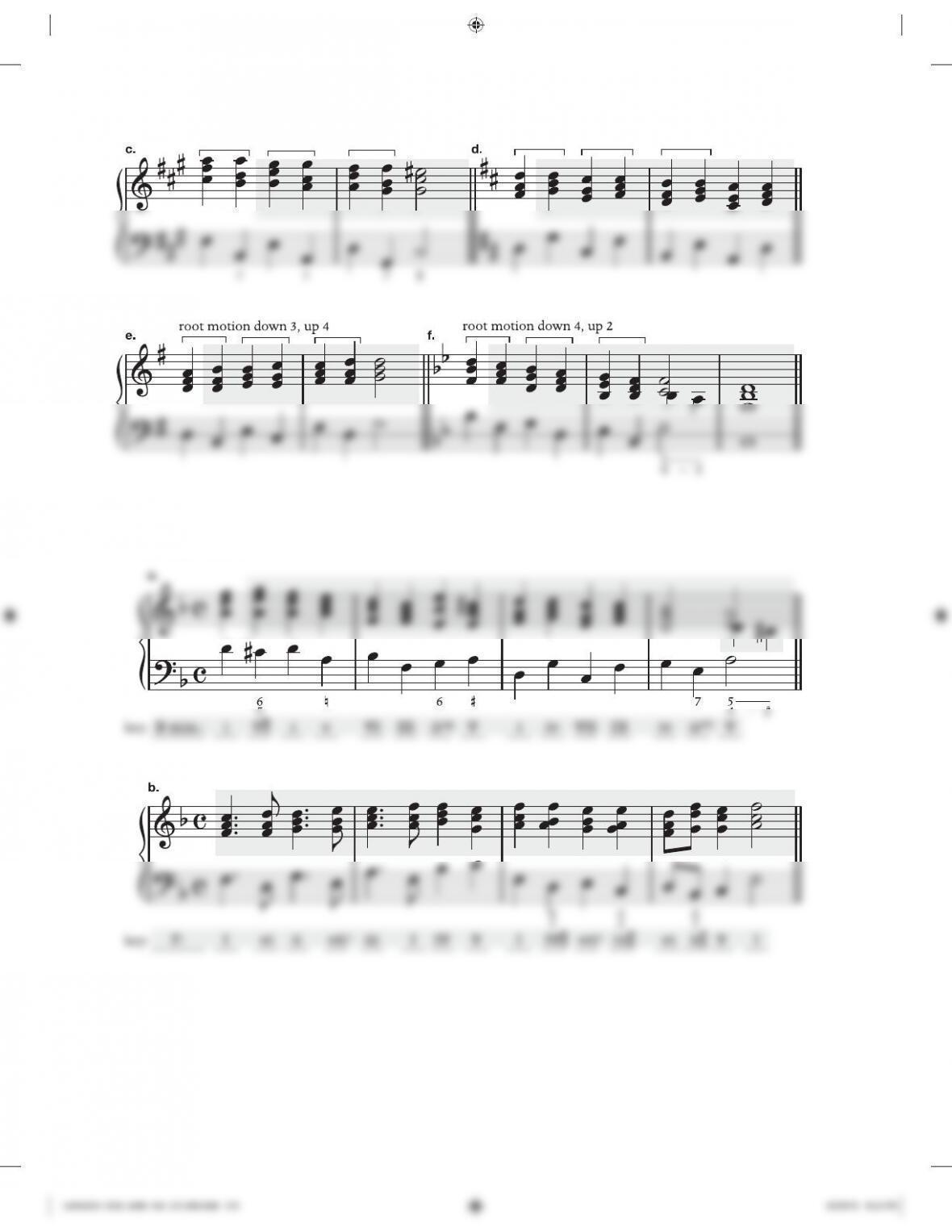
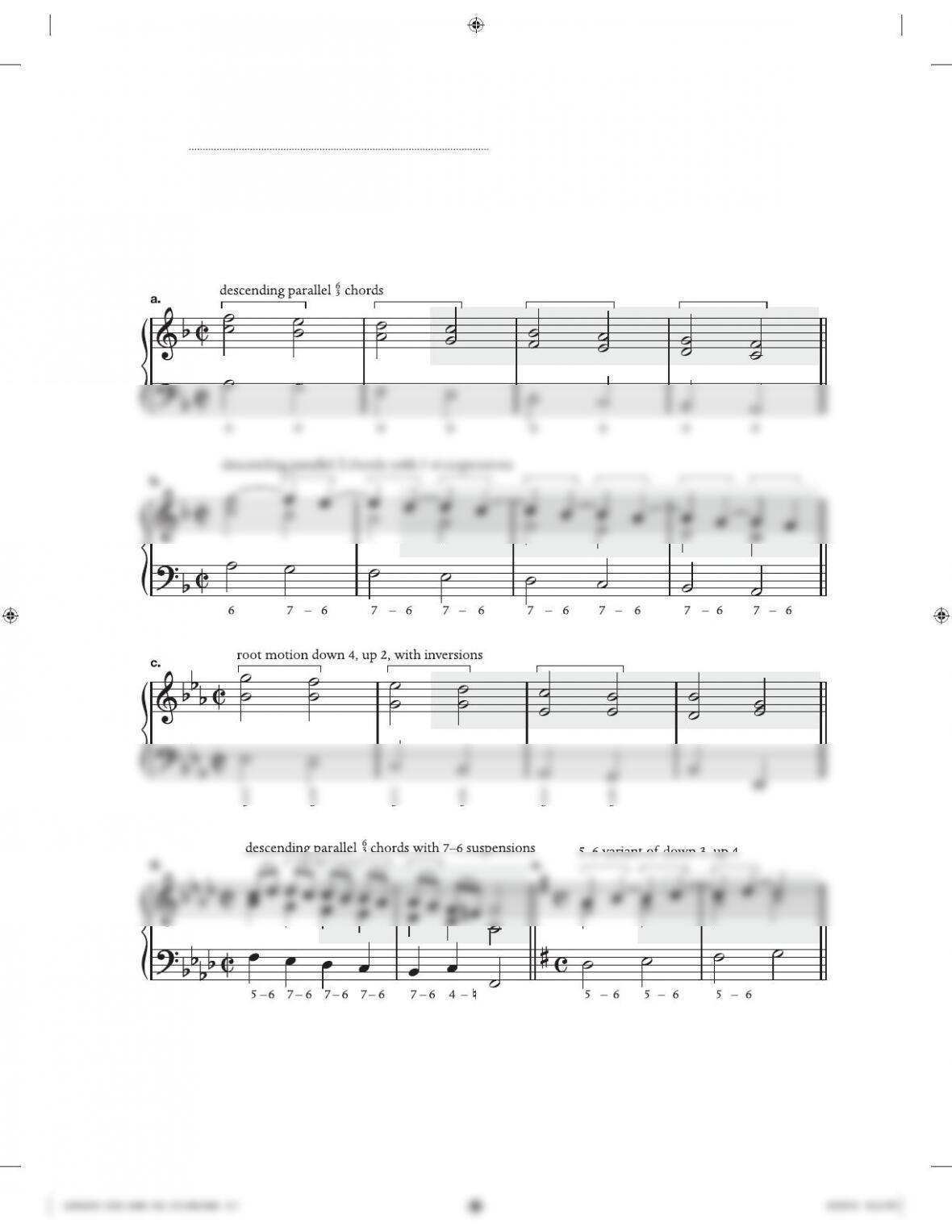
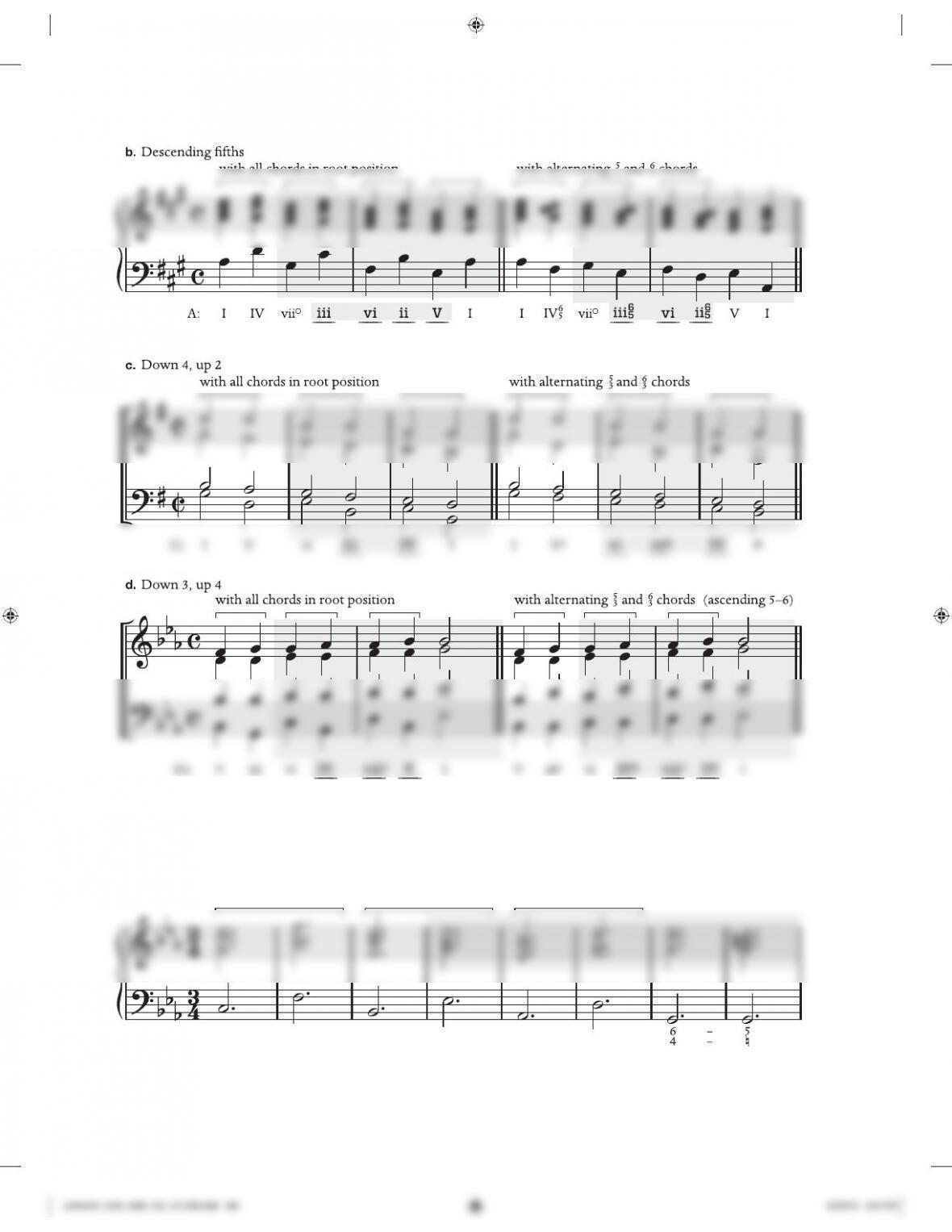
1. Realize each figured bass in four-part harmony, keyboard format, forming
sequences by transposing the bracketed pair of chords diatonically (using only the
notes of the key).
276 | CHAPTER 22 | Sequences
2. Realize the following in four-part harmony, keyboard format. Label the key and
Roman numerals.
D. Realizing Figured Bass | 277
NAME:
3. The following exercises include sequences that typically use only three voices.
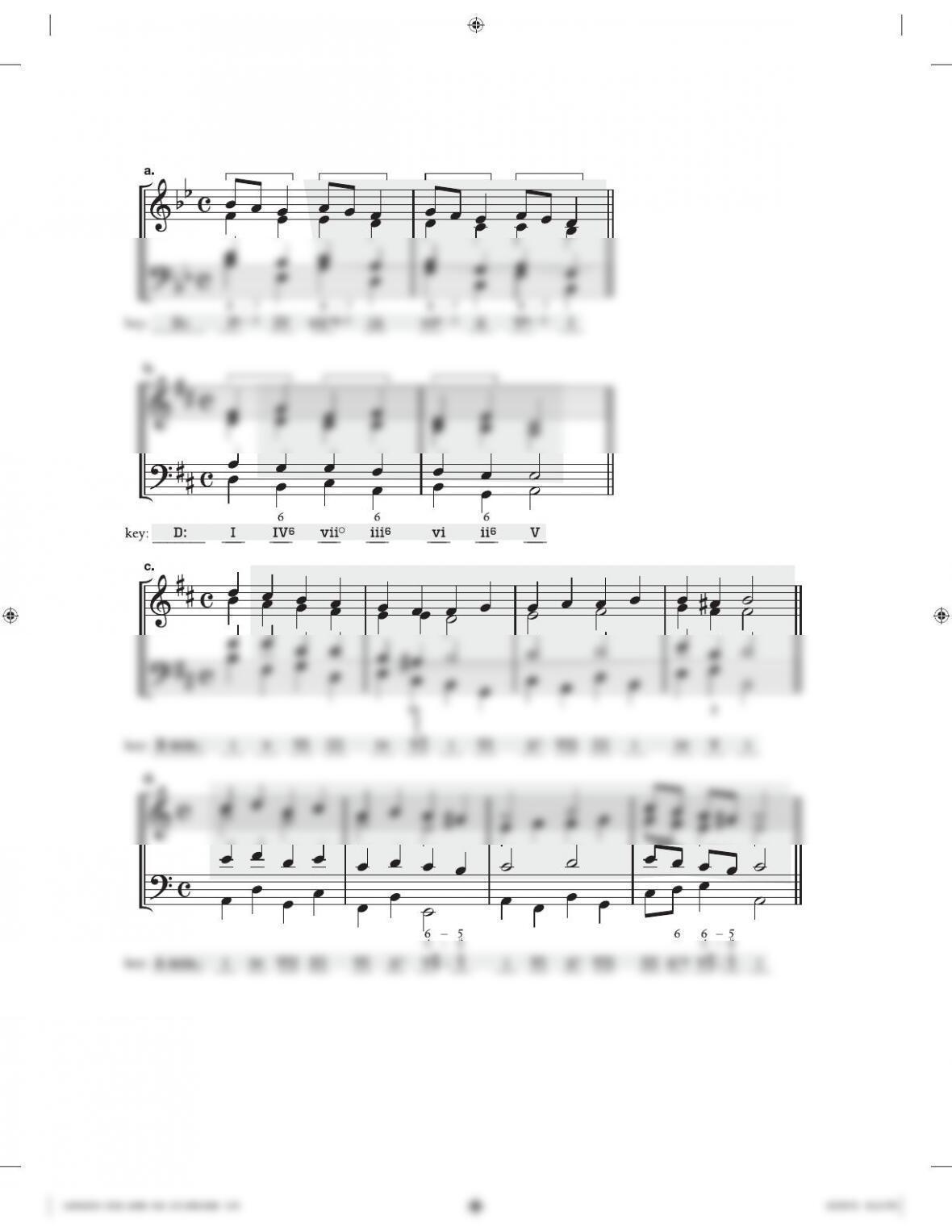
Realize each figured bass using only three voices (one voice in the bass, two in the
treble), forming sequences by transposing the bracketed pair of chords diatoni-
cally (using only the notes of the key).
278 | CHAPTER 22 | Sequences
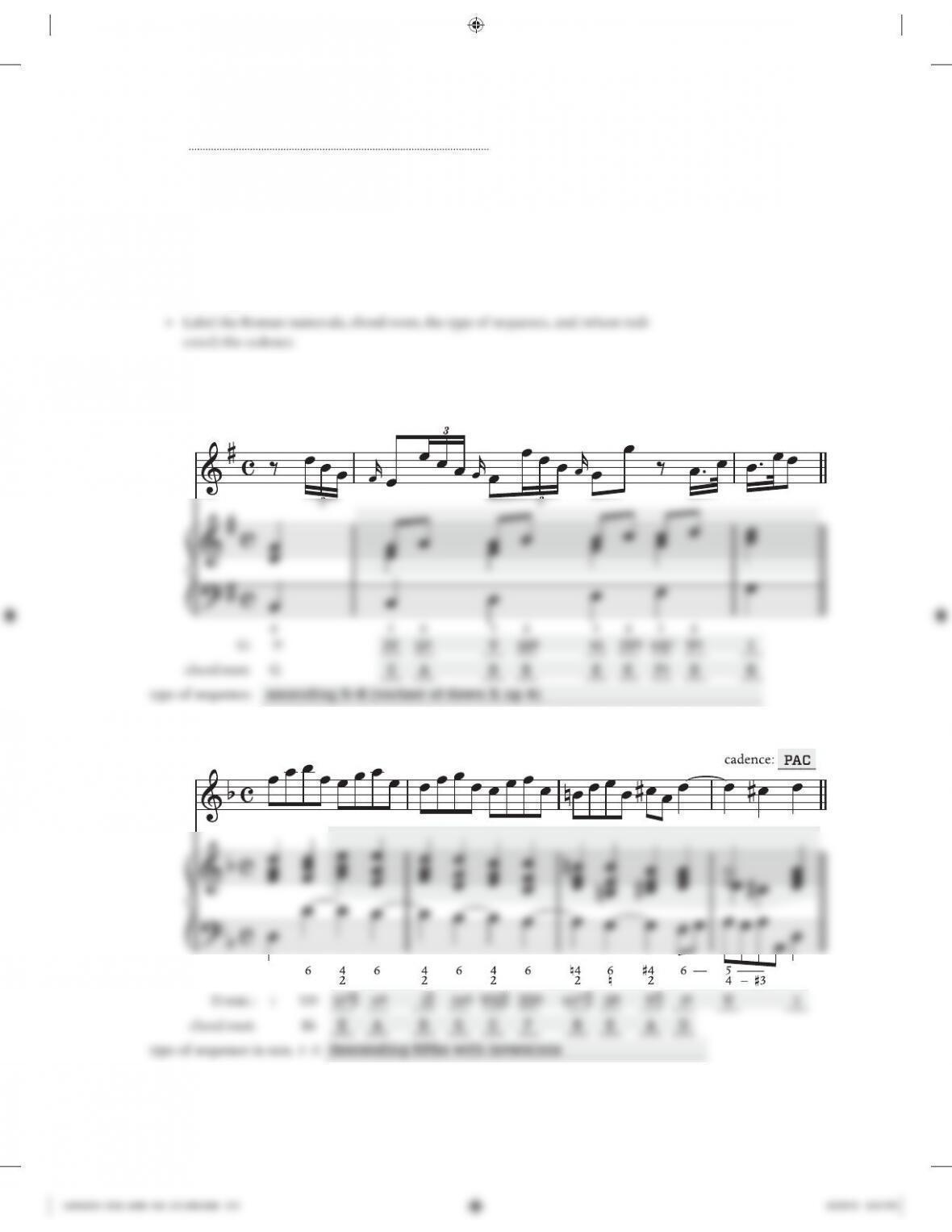
4. Realize the figured basses in SATB format. Label the key and Roman numerals.
E. Sequential Patterns | 279
NAME:
E. SEQUENTIAL PATTERNS
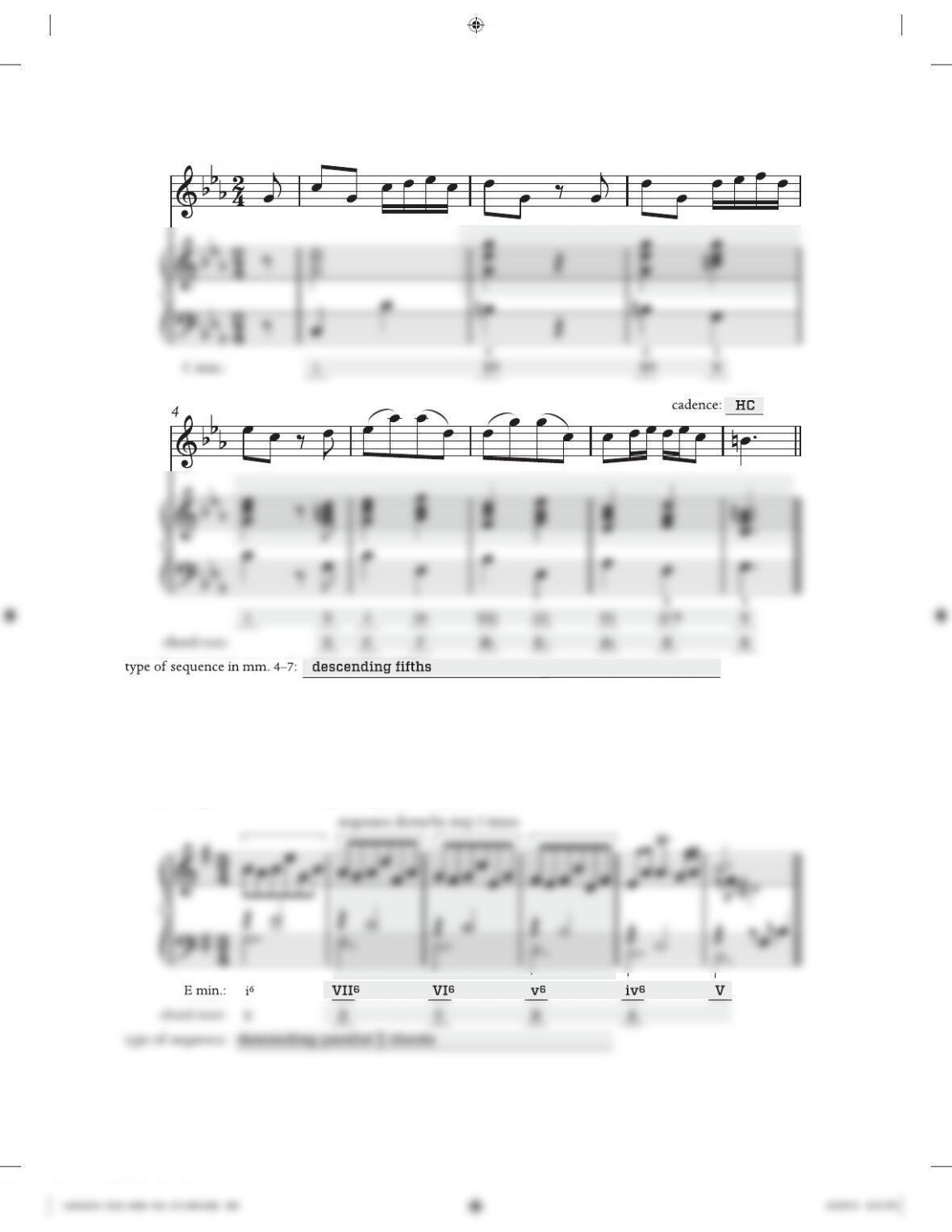
1. Complete the figured bass accompaniments in keyboard format for the following
excerpts from ute sonatas.
• Do not worry about parallel perfect intervals between your accompaniment
and the given melody.
a. Giuseppe Sarti, Flute Sonata No. 3, ii
Use only three voices in the keyboard part—with only two voices in the treble
staff.
b. Jean Baptiste Loeillet, Recorder Sonata Op. 1, No. 8, i
280 | CHAPTER 22 | Sequences
c. G. P. Telemann, Partita No. 3 for Oboe, Violin, or Flute, v
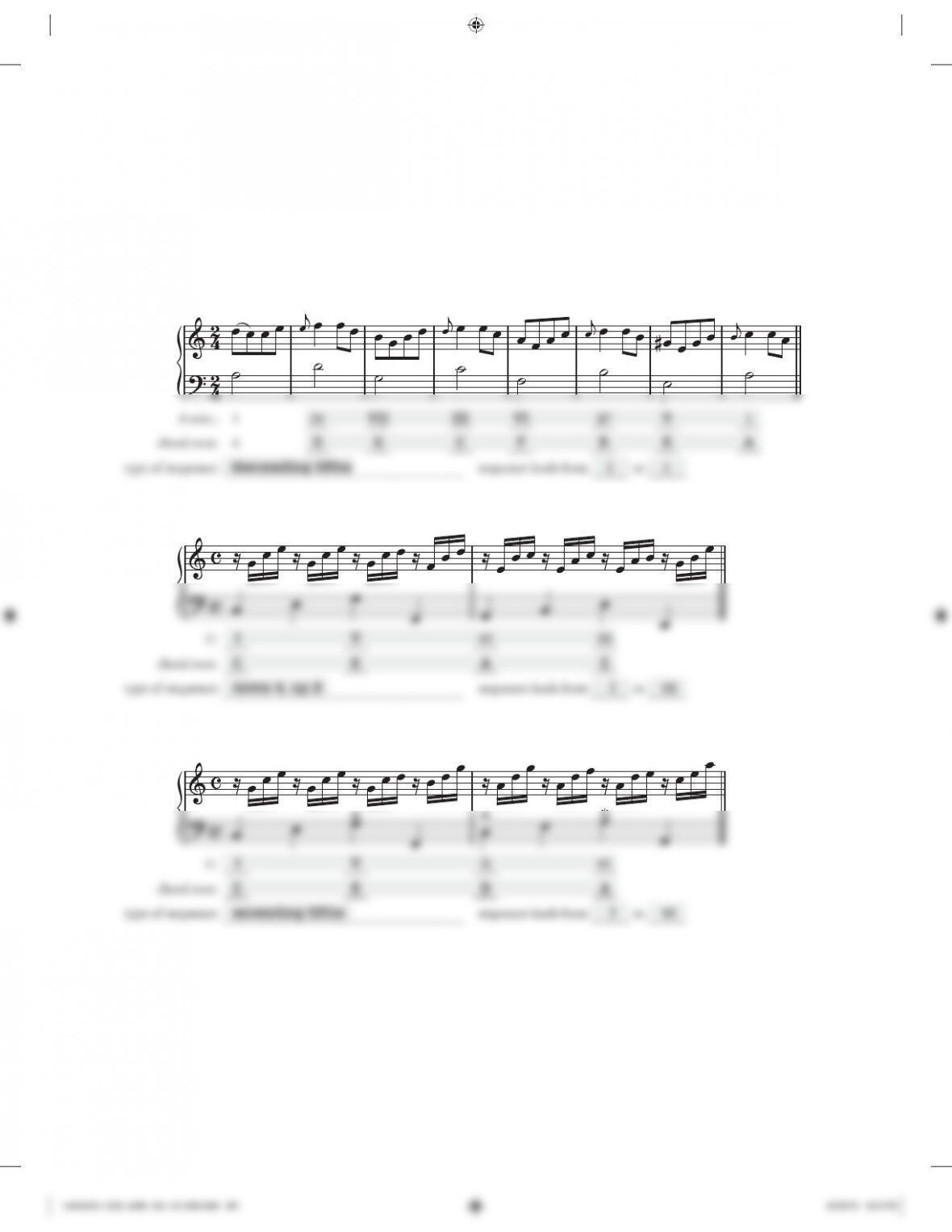
2. Complete the sequences by continuing to transpose the bracketed segment,
according to the instructions above the staff.
• The sequences should be diatonic, using notes within the key.
• Label the Roman numerals, chord roots, and the type of sequence.
a. Jean Baptiste Loeillet, Lessons for Harpsichord or Spinet, Minuet
E. Sequential Patterns | 281
NAME:
b. Anna Bon, Flute Sonata, Op. 1, No. 3, iii
c. Giovanni Bononcini, Cantatae e Duetti, Prelude
3. Continue the following harmonic sequences by transposing the bracketed har-
monic progression diatonically (using no accidentals). Label the Roman numerals
of the chords that appear in the middle of the sequence.
Keyboard format:
282 | CHAPTER 22 | Sequences
SATB format:
F. COMPOSITION
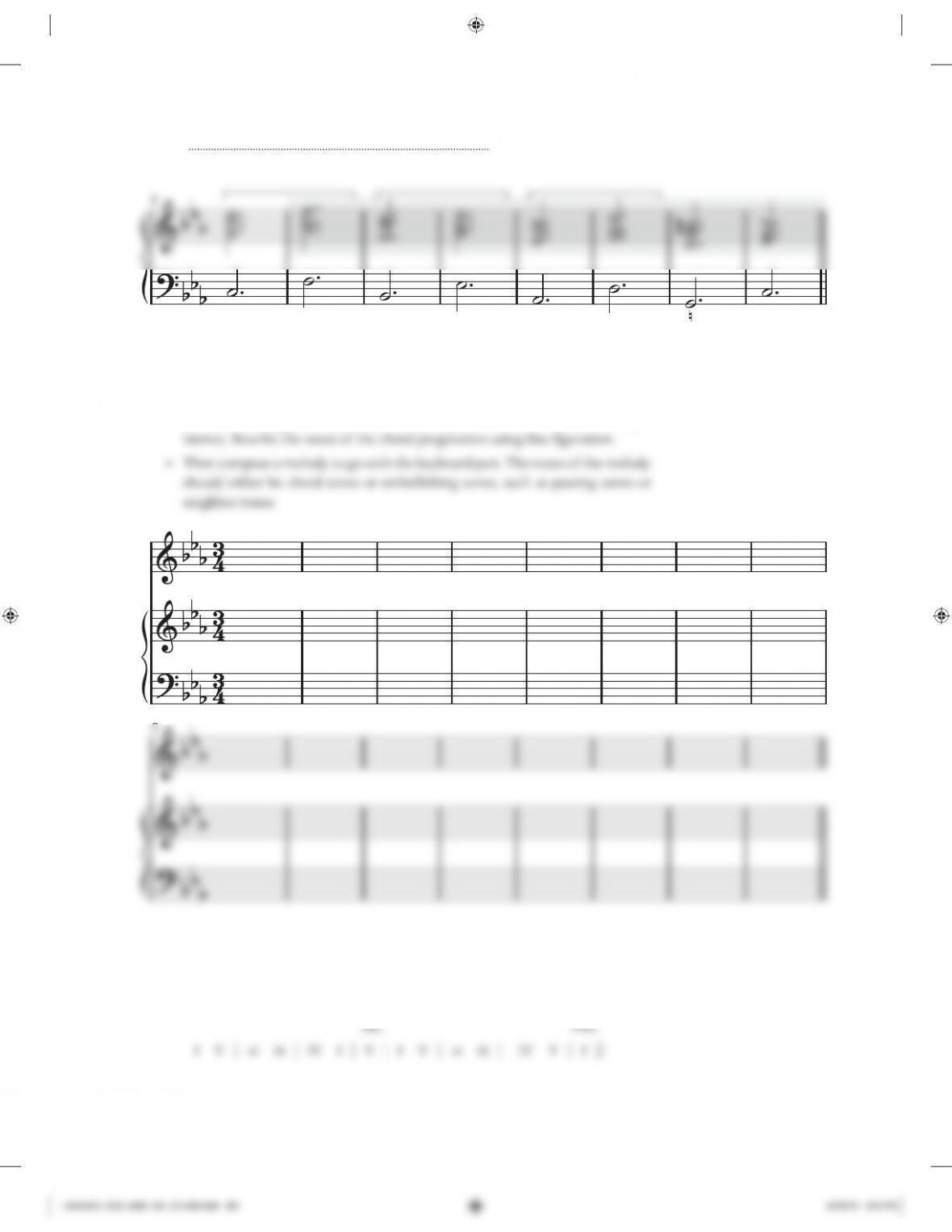
1. Realize this figured bass in keyboard format, creating a sequence by transposing
the bracketed segment down by step on each line.
NAME:
2. Compose a piece for keyboard and another instrument, based on your realization
of (1).
• Choose a figuration pattern for the keyboard part such as an oom-pah-pah
pattern or arpeggiation (you can find examples in earlier composition assign-
3. Compose a short piece for keyboard, guitar, or an ensemble of your choice, fol-
lowing these guidelines:
• Your piece can be in a major key and meter of your choice.
• It should be eight measures long, based on these harmonies:
284 | CHAPTER 22 | Sequences
G. ANALYSIS
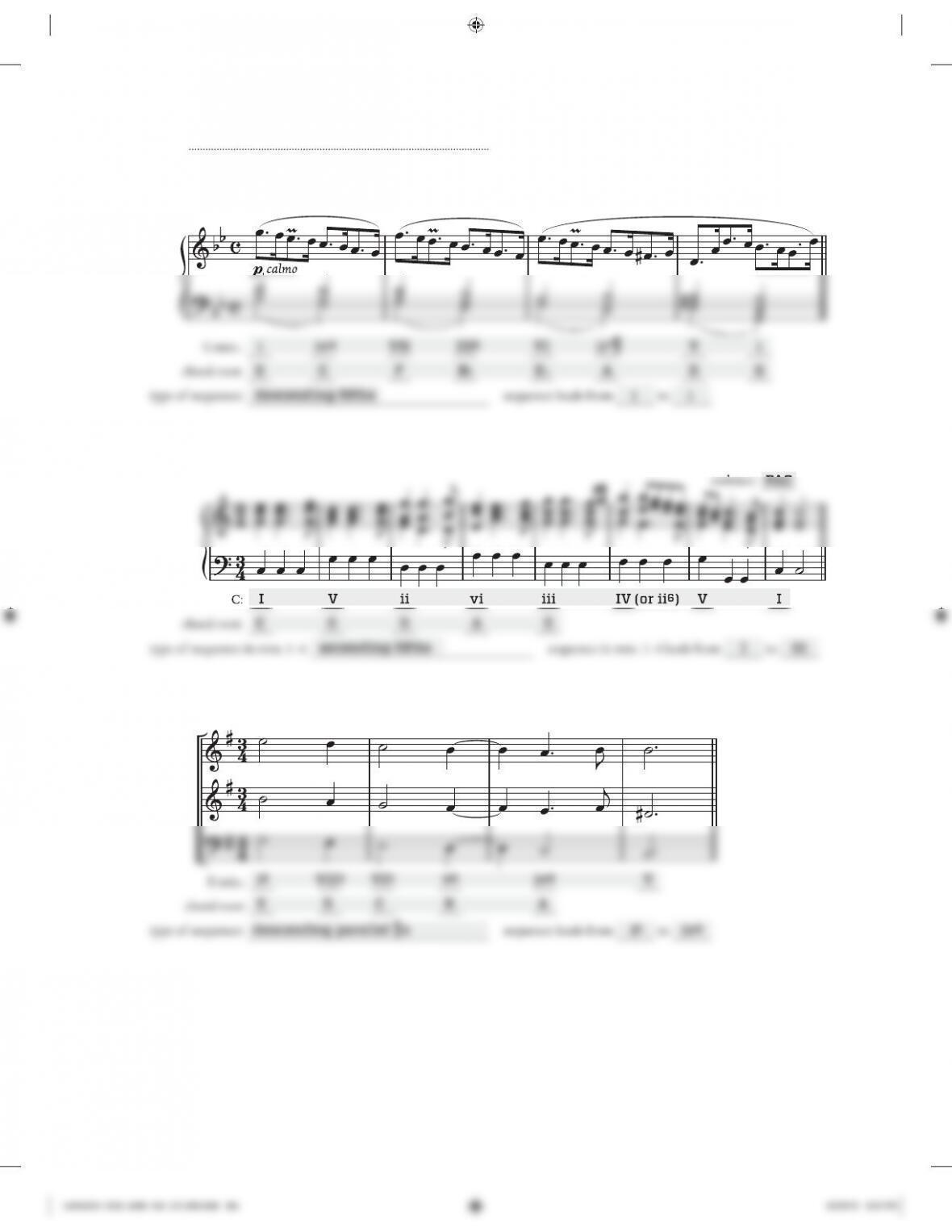
1. On the lines below the staves, label the Roman numerals and roots of the chords,
then identify the type of sequence. Also label the cadence where indicated. Finally,
indicate where the sequence leads to and from by identifying the Roman numerals
of the first and last chords.
a. Anna Bon, Flute Sonata, Op. 1, No. 1, ii
b. J. S. Bach, Little Prelude in C, BWV 924a
c. J. S. Bach, Little Prelude in C, BWV 924
G. Analysis |285
NAME:
d. G. F. Handel, Passacaglia in G Minor, HWV 432
e. Henry Purcell, Fairy Queen
f. Arcangelo Corelli, Trio Sonata (for two violins and continuo), Op. 2, Preludio
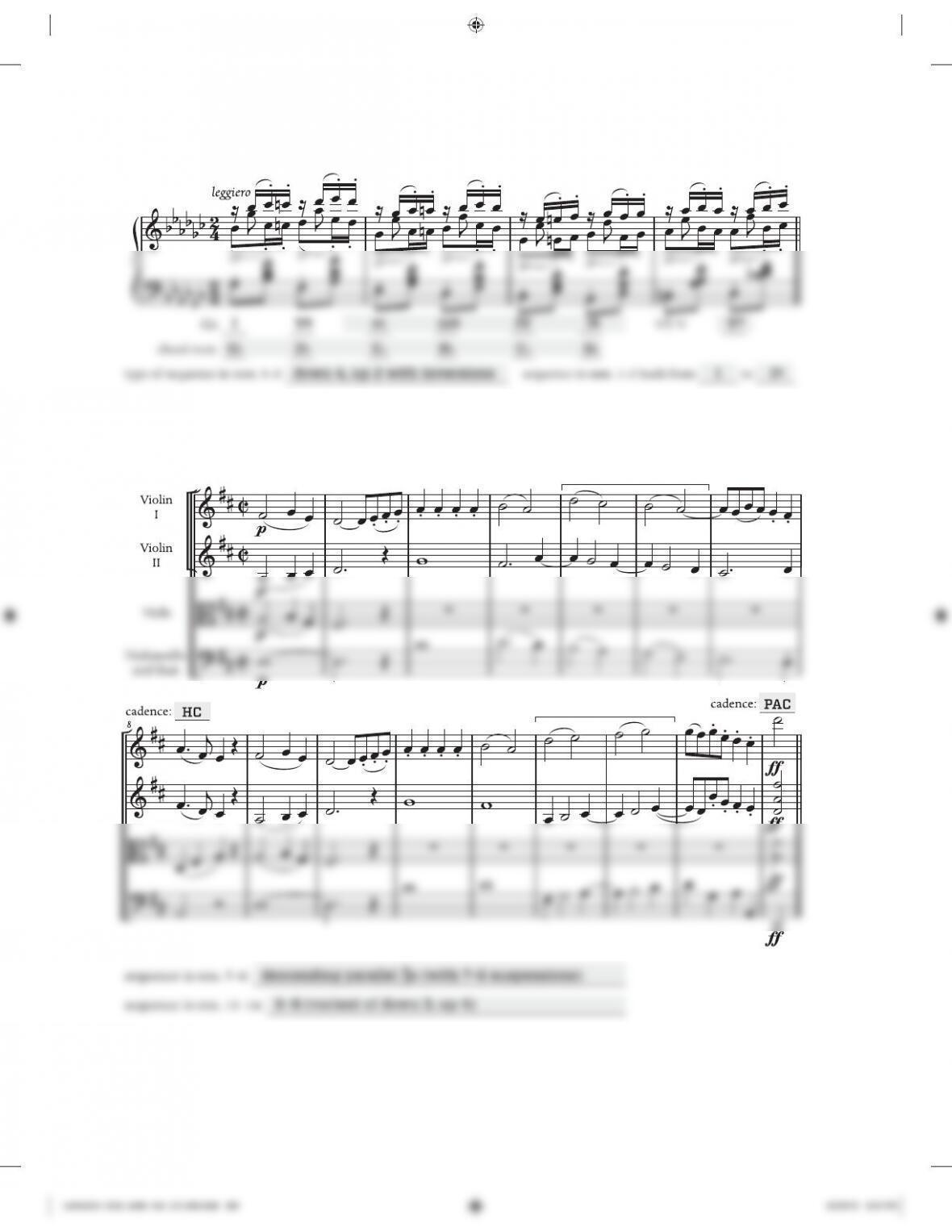
g. Frédéric Chopin, Etude in Gb, Op. 25, No. 9
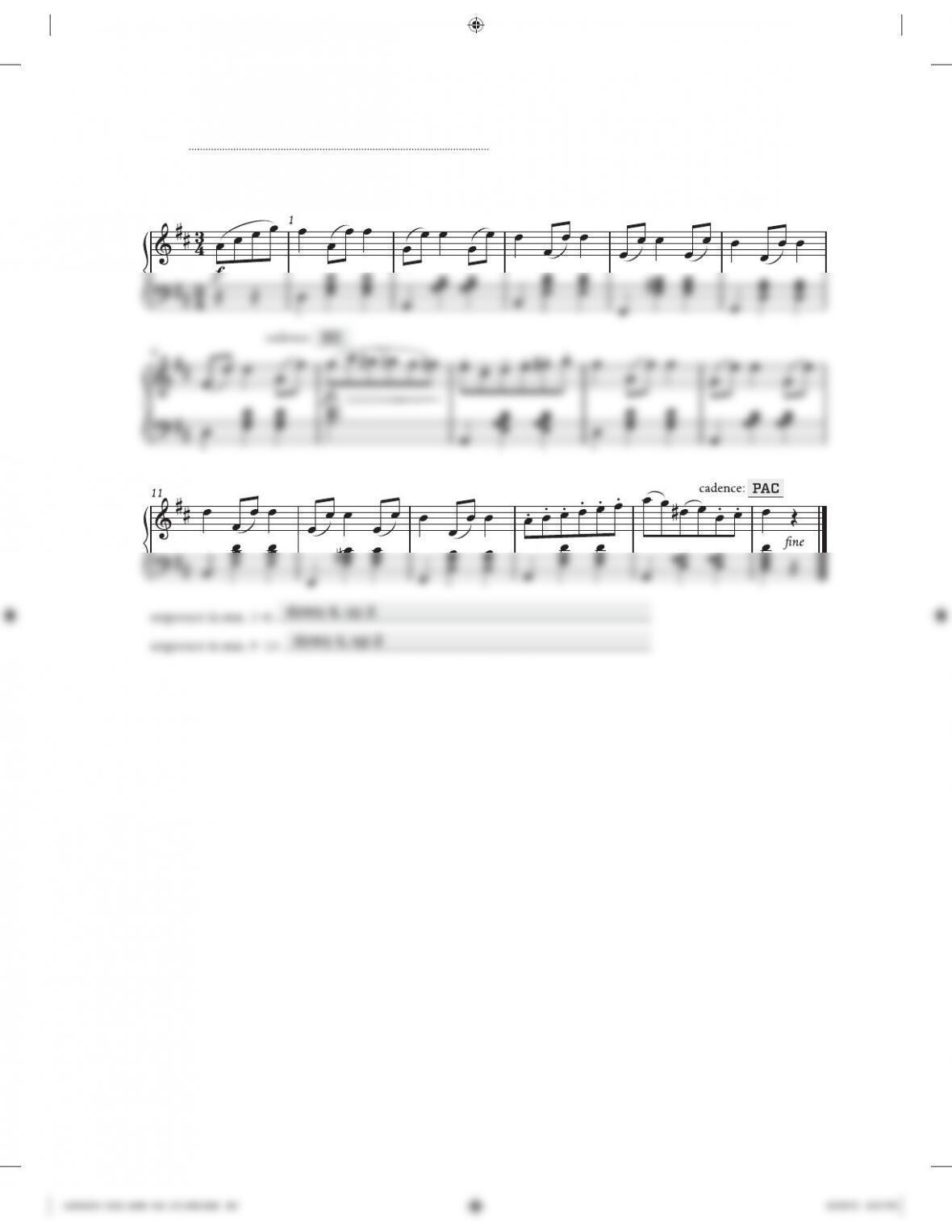
2. Each of the following excerpts includes two sequences; identify them on the brack-
ets provided above each passage. Also, on the score, label the cadences.
a. Joseph Haydn, Symphony No. 104, i
G. Analysis | 287
NAME:
b. Henry Williams, Parisian Waltz No. 3
What produces the special rhythmic effect in mm. 1–6 and 9–13?