B. Realizing Roman Numerals | 269
NAME:
A. QUESTIONS FOR REVIEW
1. What chord is similar to iii? “iii6”? What are the standard uses of iii and “iii6”?
2. How is ˆ
7 treated differently within a iii chord than within a V chord? In minor keys,
how is ˆ
7 within III treated differently than within V?
B. REALIZING ROMAN NUMERALS
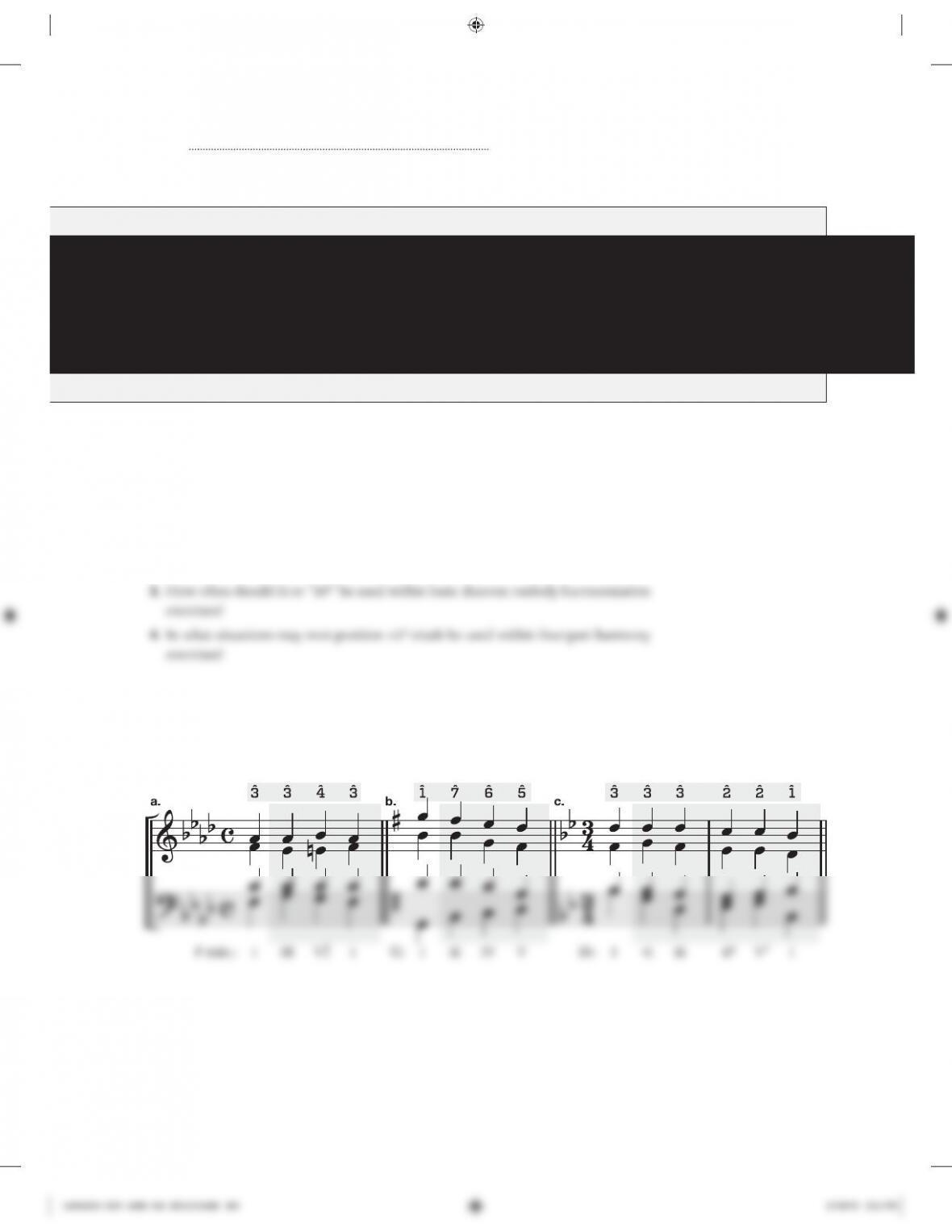
1. Realize the Roman numerals in SATB format; then label the scale degrees of the
top voice.
chapter
21 III and VII
270 | CHAPTER 21 | III and VII
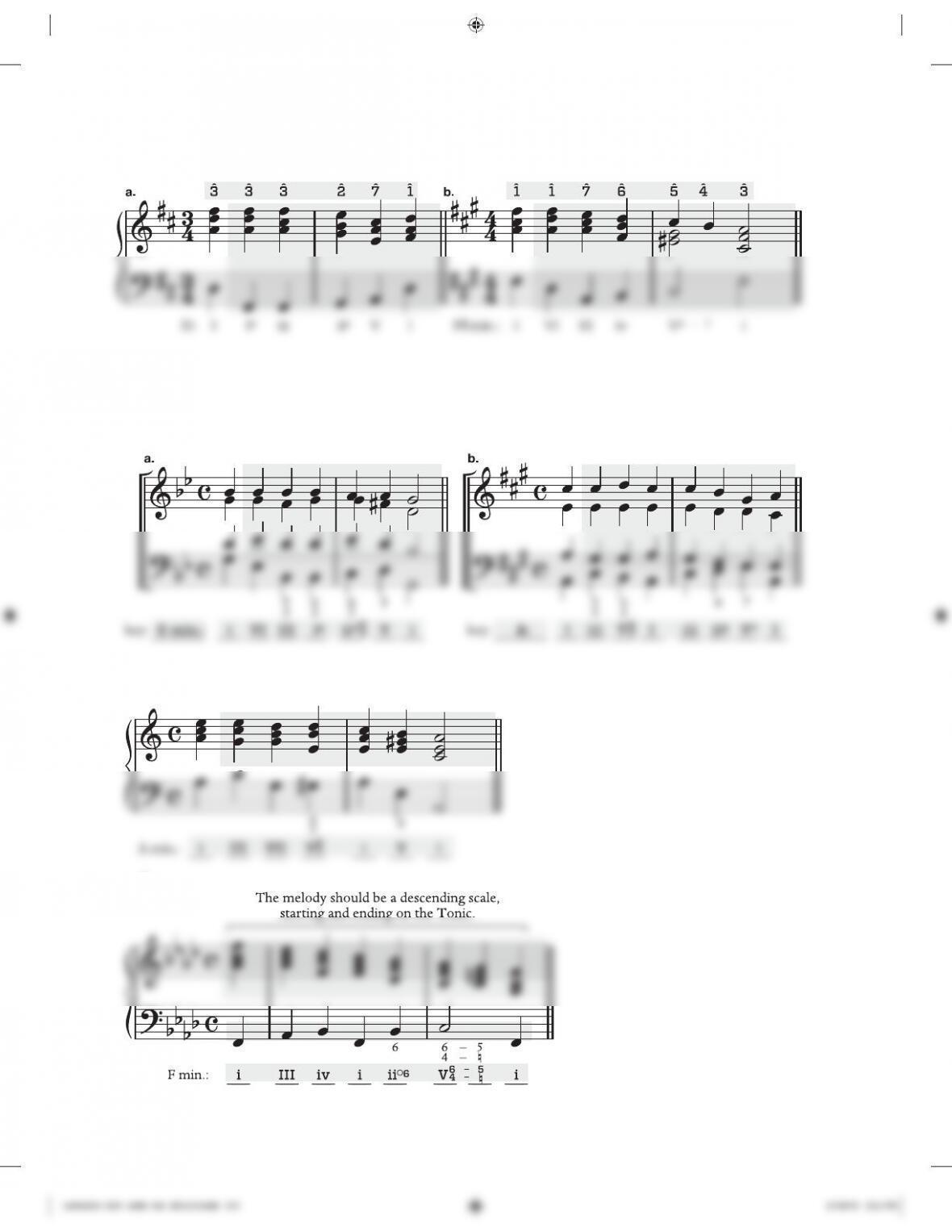
2. Realize the Roman numerals in keyboard format, then label the scale degrees of
the top voice.
C. REALIZING FIGURED BASS
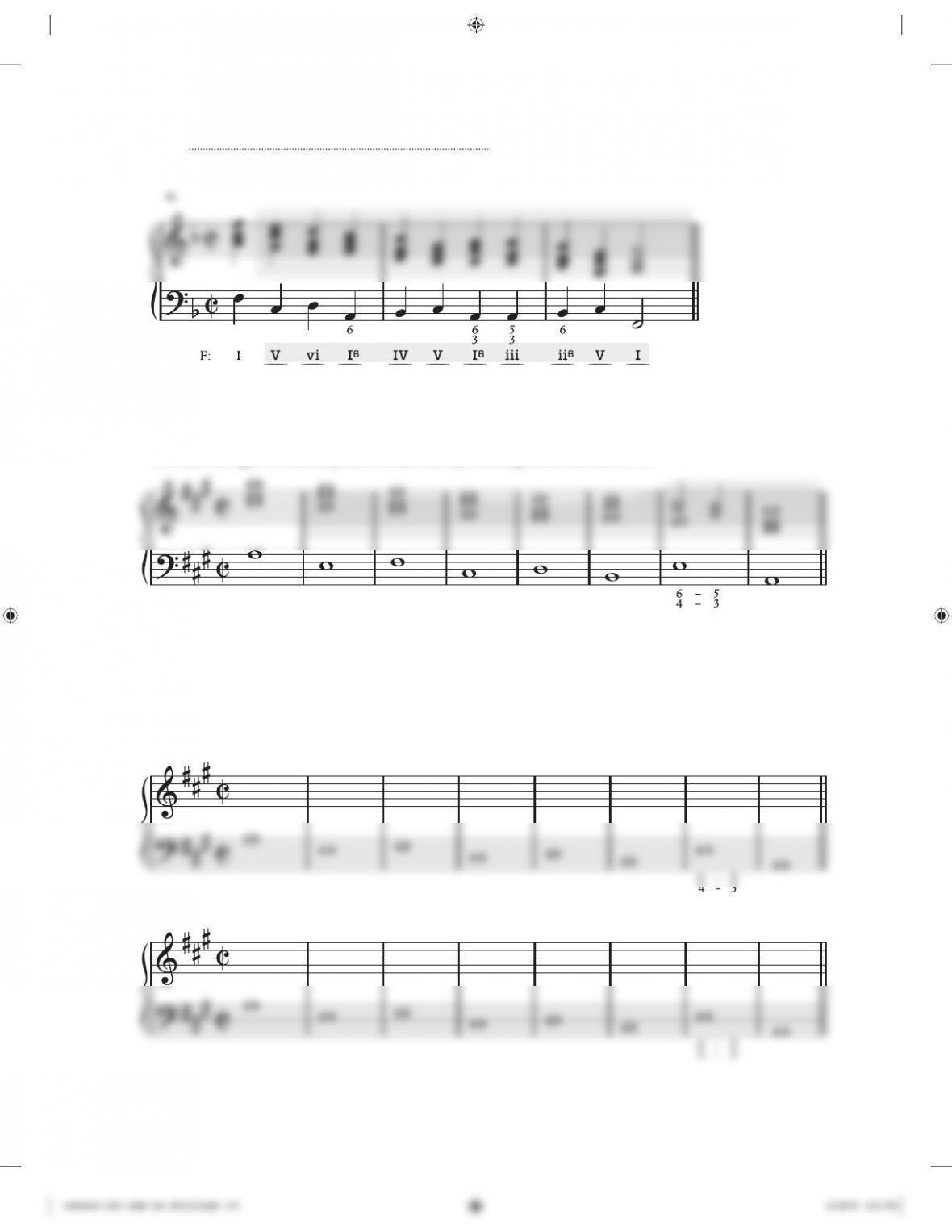
1. Realize each gured bass in SATB format, then identify the key and label the
Roman numerals.
2. Realize each gured bass in keyboard format and label the Roman numerals.
a.
b.
D. Composition | 271
NAME:
D. COMPOSITION
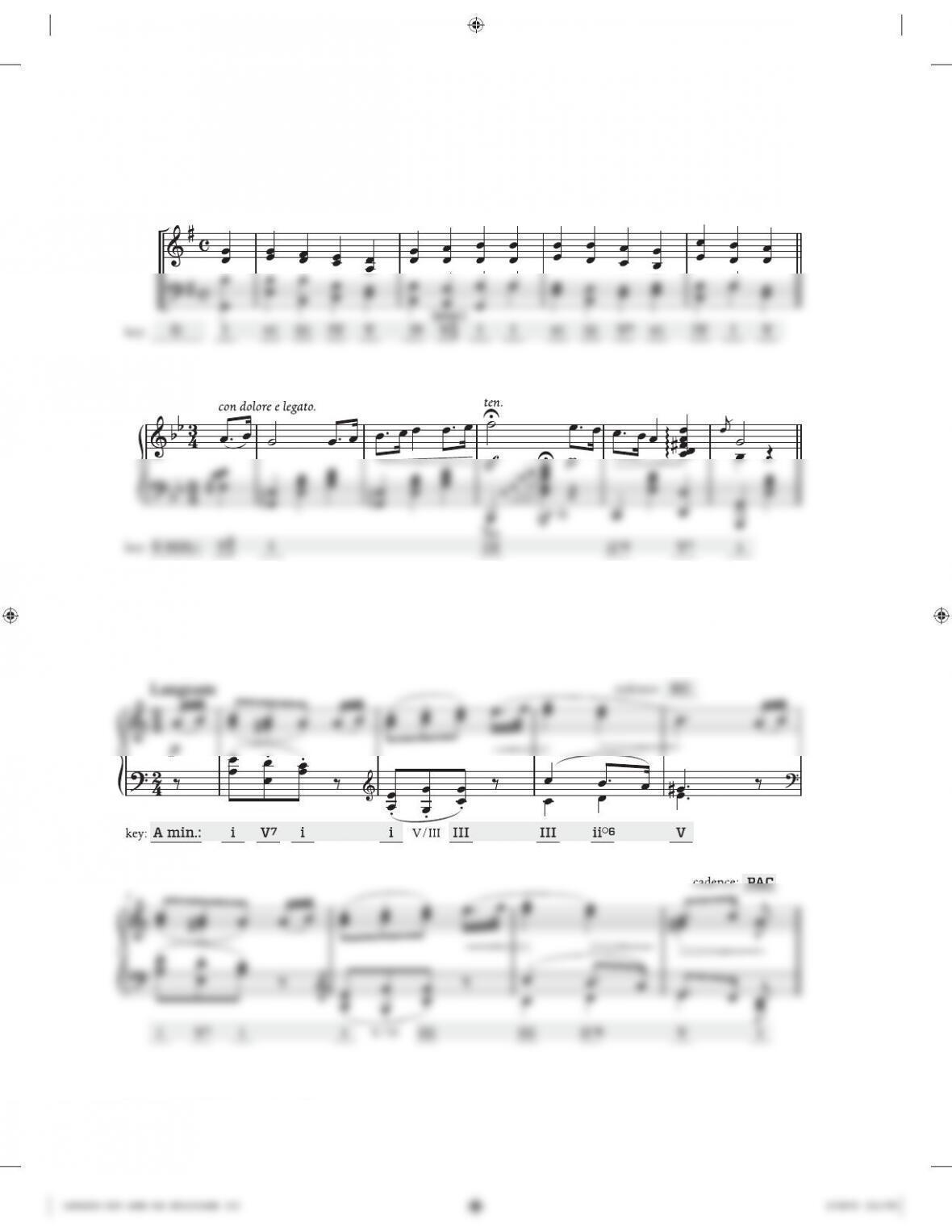
1. Realize the gured bass in keyboard format; the top voice is given for measures 1–6.
2. Compose a melody above this bass line.
• The melody should be based on the harmonies suggested by the gured bass
in (1) above.
• Do not use an octave or a fth on the downbeat of any two consecutive
measures.
• The melody should end on the downbeat of measure 8.
3. Compose a variation of the melody in (2).
272 | CHAPTER 21 | III and VII
E. ANALYSIS
Label the keys and Roman numerals of the following excerpts.
1. “Old Hundredth” (hymn)
2. Clara Schumann, Soirées Musicales, Mazurka, Op. 6, No. 3
3. Robert Schumann, “Armes Waisenkind” (“Poor Orphan Child”), from Album for
the Young, Op. 68, No. 6
Label the harmonies and cadences (two chords have already been labeled). What
features of this passage seem to evoke the imagery suggested by this work’s title,
and why?