A. Questions for Review | 25
NAME:
A. QUESTIONS FOR REVIEW
1. How do you determine the size of an interval?
2. What is a melodic interval? A harmonic interval?
3. What is the difference between simple and compound intervals?
4. Which intervals can be major or minor? Which intervals can be perfect?
5. What is interval inversion? What is the inversion of a second? A third? A fourth? A
fth? A sixth? A seventh?
6. What happens to the quality of perfect intervals when they are inverted? What
chapter
2Intervals
26 | CHAPTER 2 | Intervals
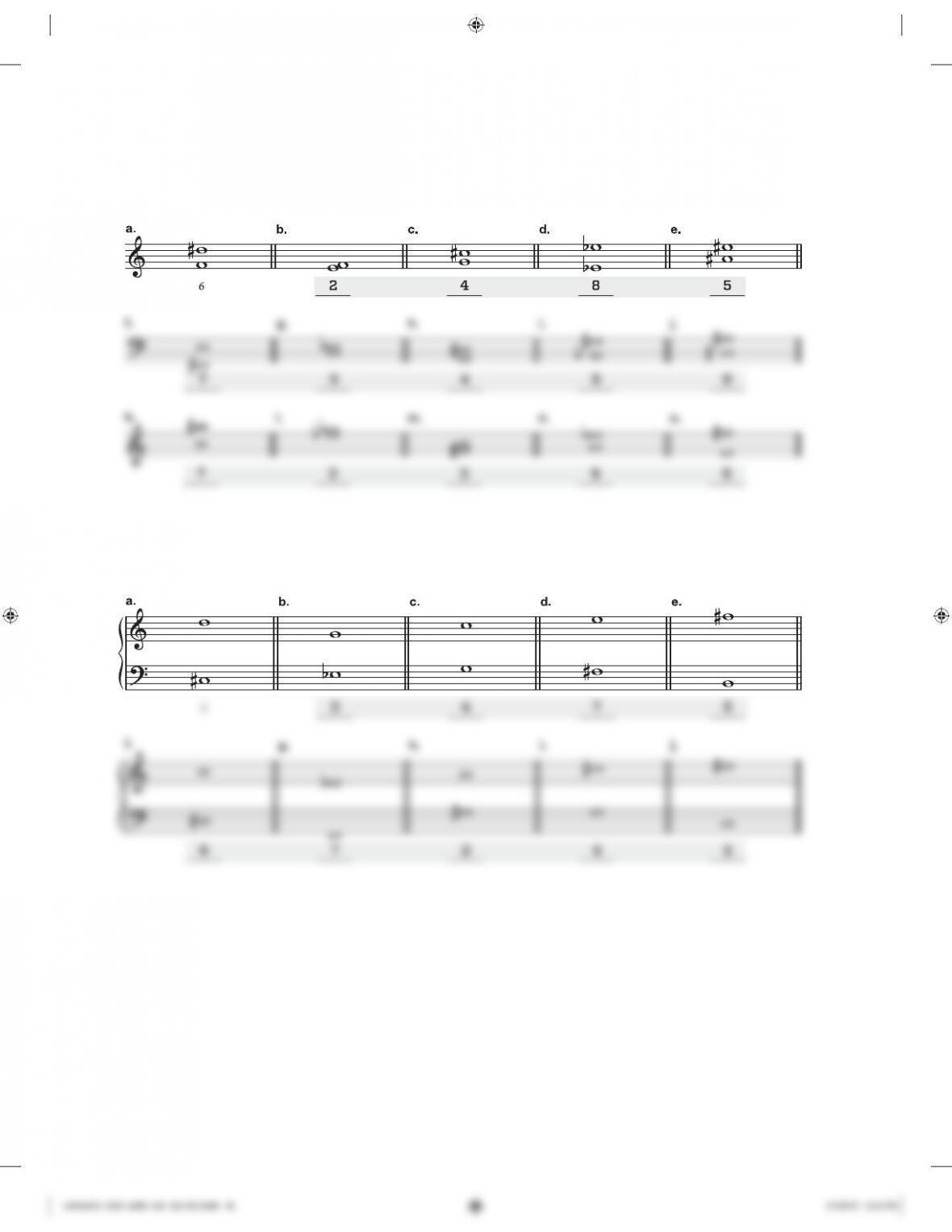
B. IDENTIFYING INTERVAL SIZE
1. Identify the numerical size of each interval (ignore accidentals, which do not affect
interval size).
2. Identifying compound and simple intervals (numerical size only): For each of these
compound intervals, identify the numerical size of the simple interval to which it
is equivalent.
B. Identifying Interval Size | 27
NAME:
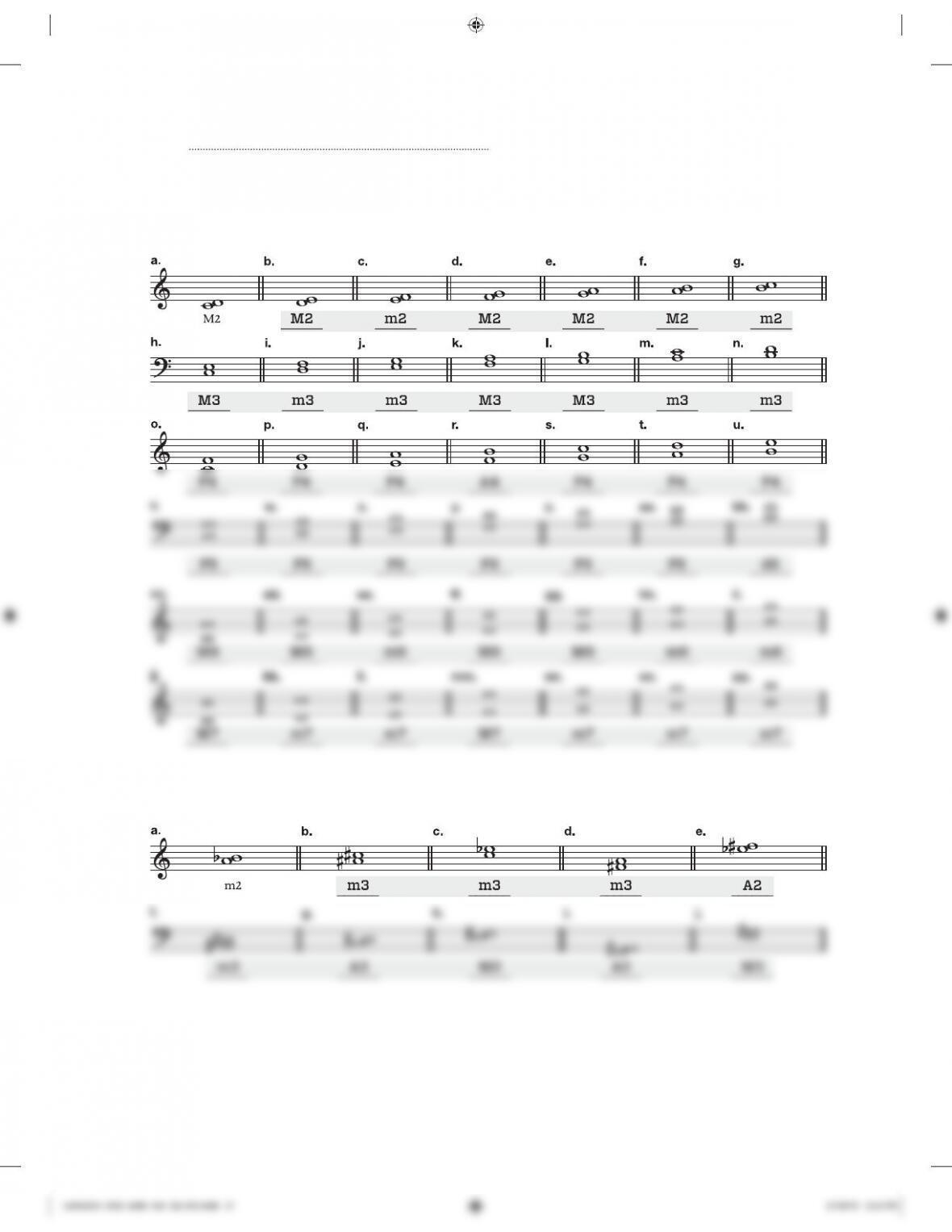
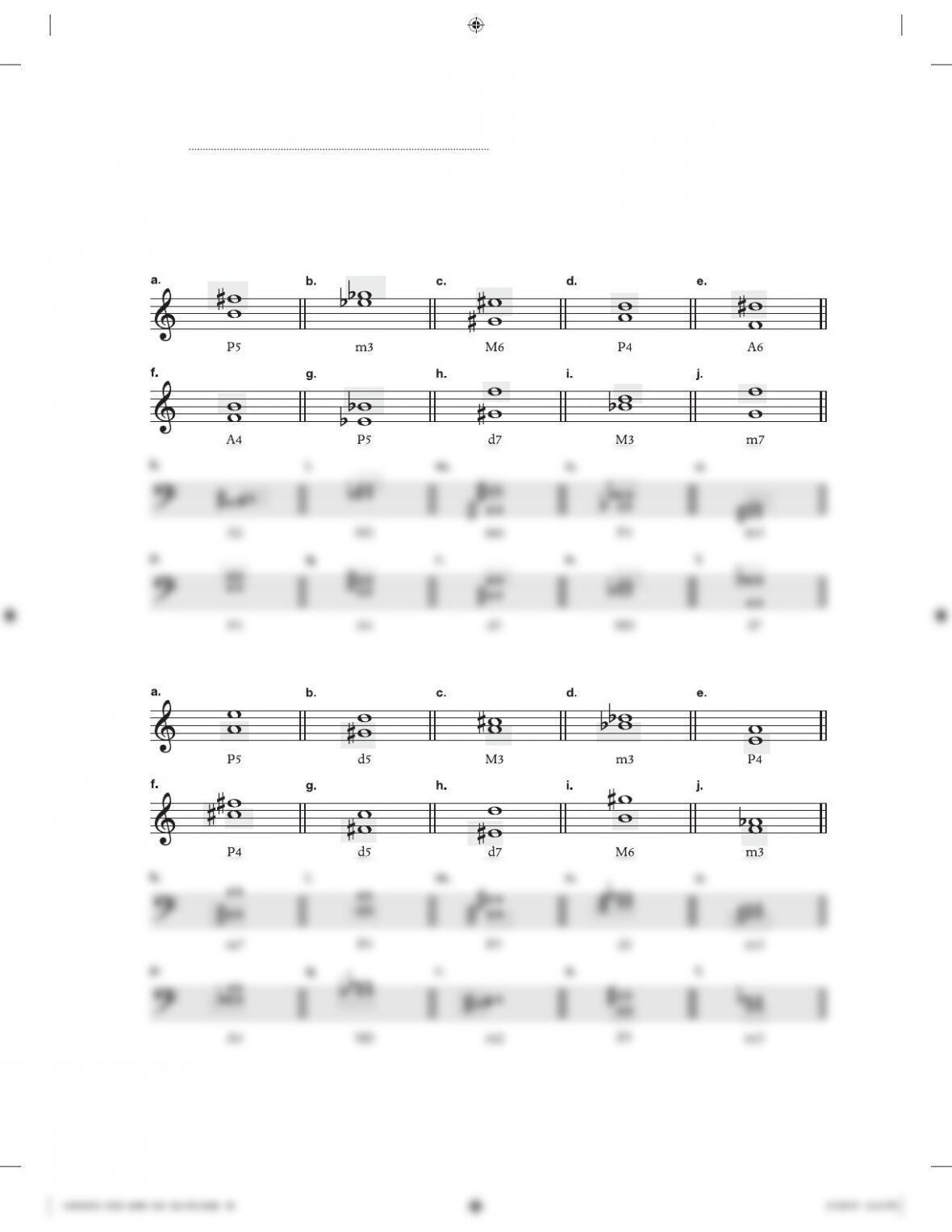
3. Identifying natural intervals: Identify each natural interval with its numerical size
and quality (d = diminished; m = minor; M = major; P = perfect; A = augmented).
4. Identifying seconds and thirds: Identify each interval with its numerical size and
quality (d = diminished; m = minor; M = major; A = augmented).
28 | CHAPTER 2 | Intervals
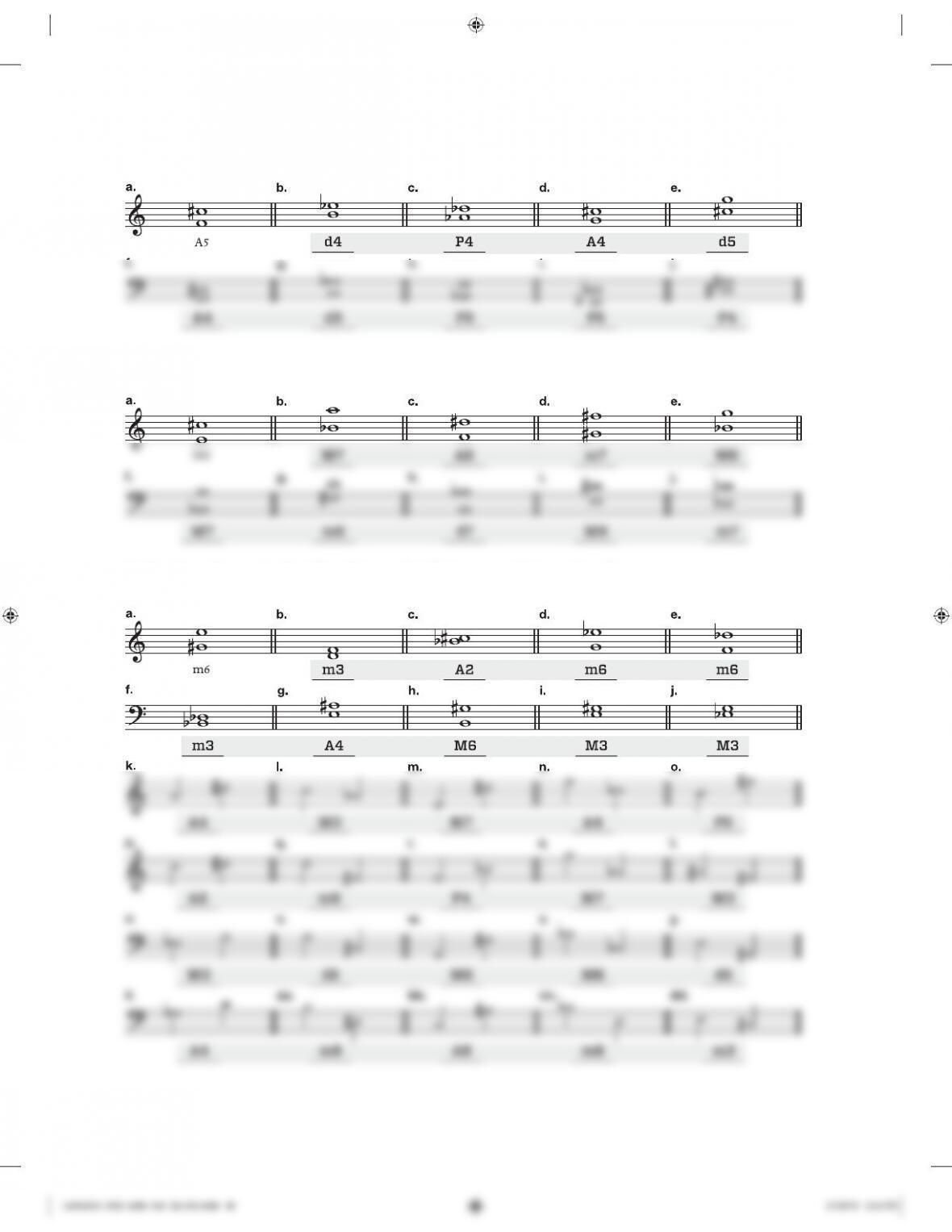
5. Identifying fourths and fffths: Identify each interval with its numerical size and
quality (d = diminished; P = perfect; A = augmented).
6. Identifying sixths and sevenths: Identify each interval with its numerical size and
quality (d = diminished; m = minor; M = major; A = augmented).
7. Identifying all intervals: Identify each interval with its numerical size and quality
(d = diminished; m = minor; M = major; P = perfect; A = augmented).
C. Writing Intervals | 29
NAME:
C. WRITING INTERVALS
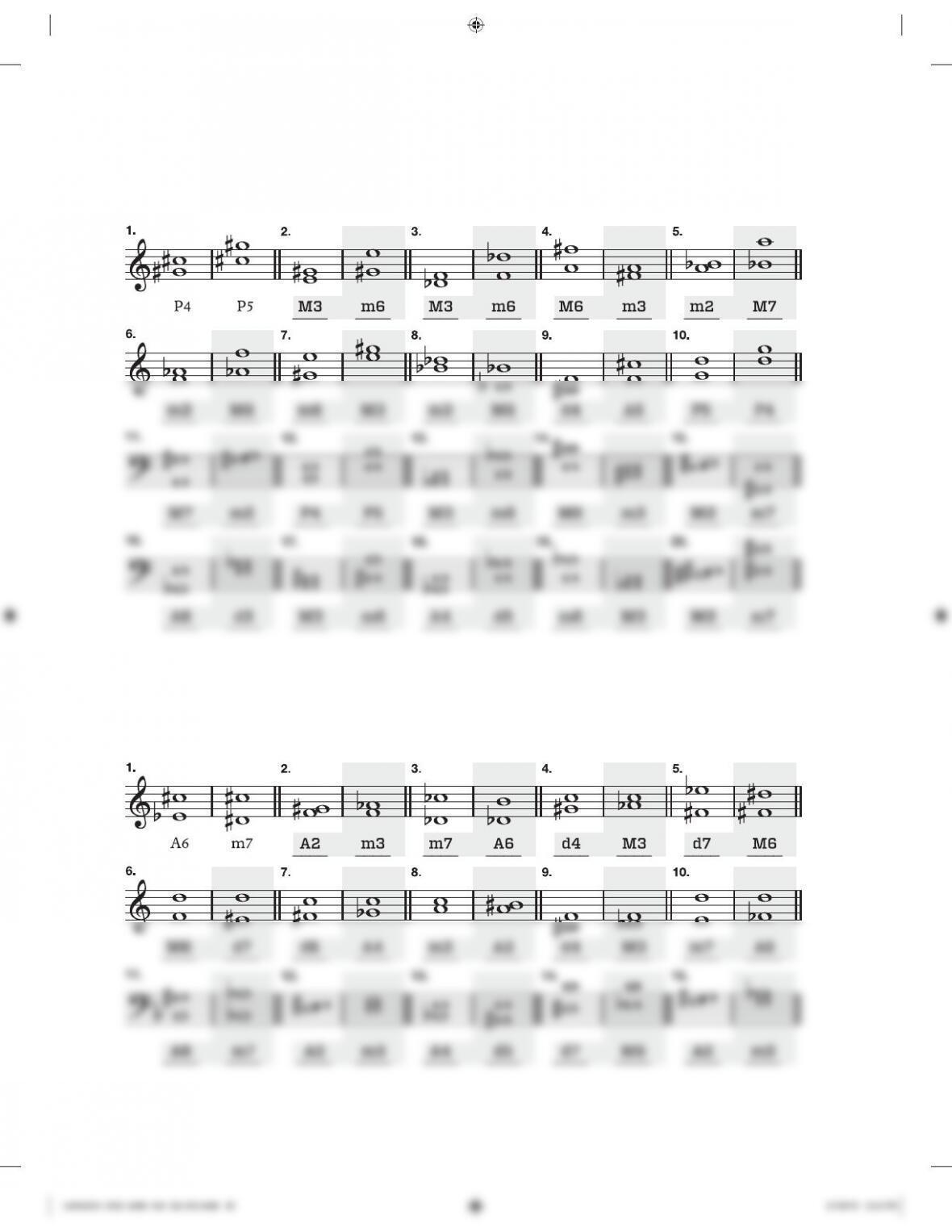
1. Write each interval above the given note.
2. Write each interval below the given note.
30 | CHAPTER 2 | Intervals
D. INVERTING INTERVALS
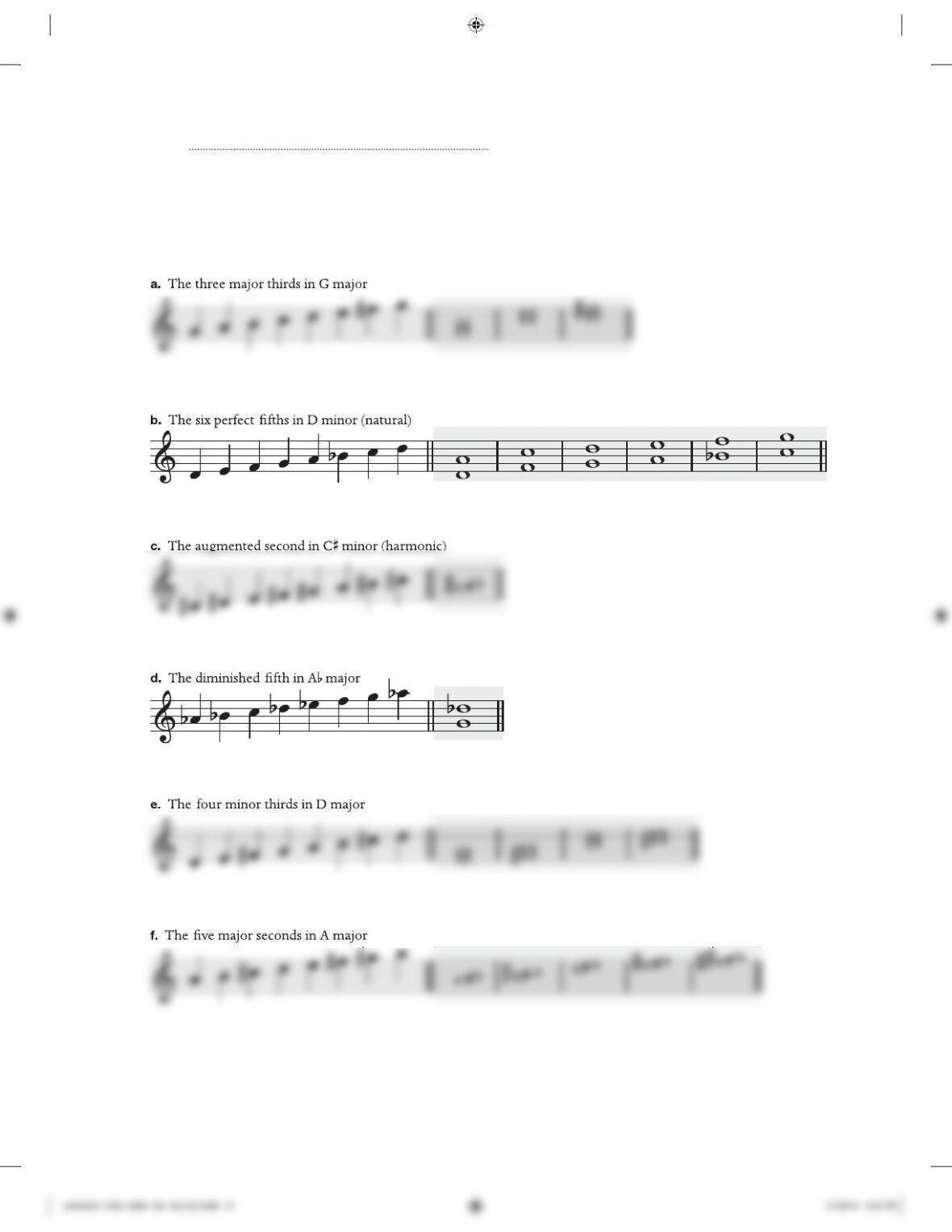
Identify each interval by size and quality, write its inversion, and identify the size and
quality of the inversion.
E. IDENTIFYING ENHARMONIC INTERVALS
For each interval, write one interval that is enharmonically equivalent (there may be
several possibilities), and give the size and quality of both intervals.
F. Identifying Intervals in a Key | 31
NAME:
F. IDENTIFYING INTERVALS IN A KEY
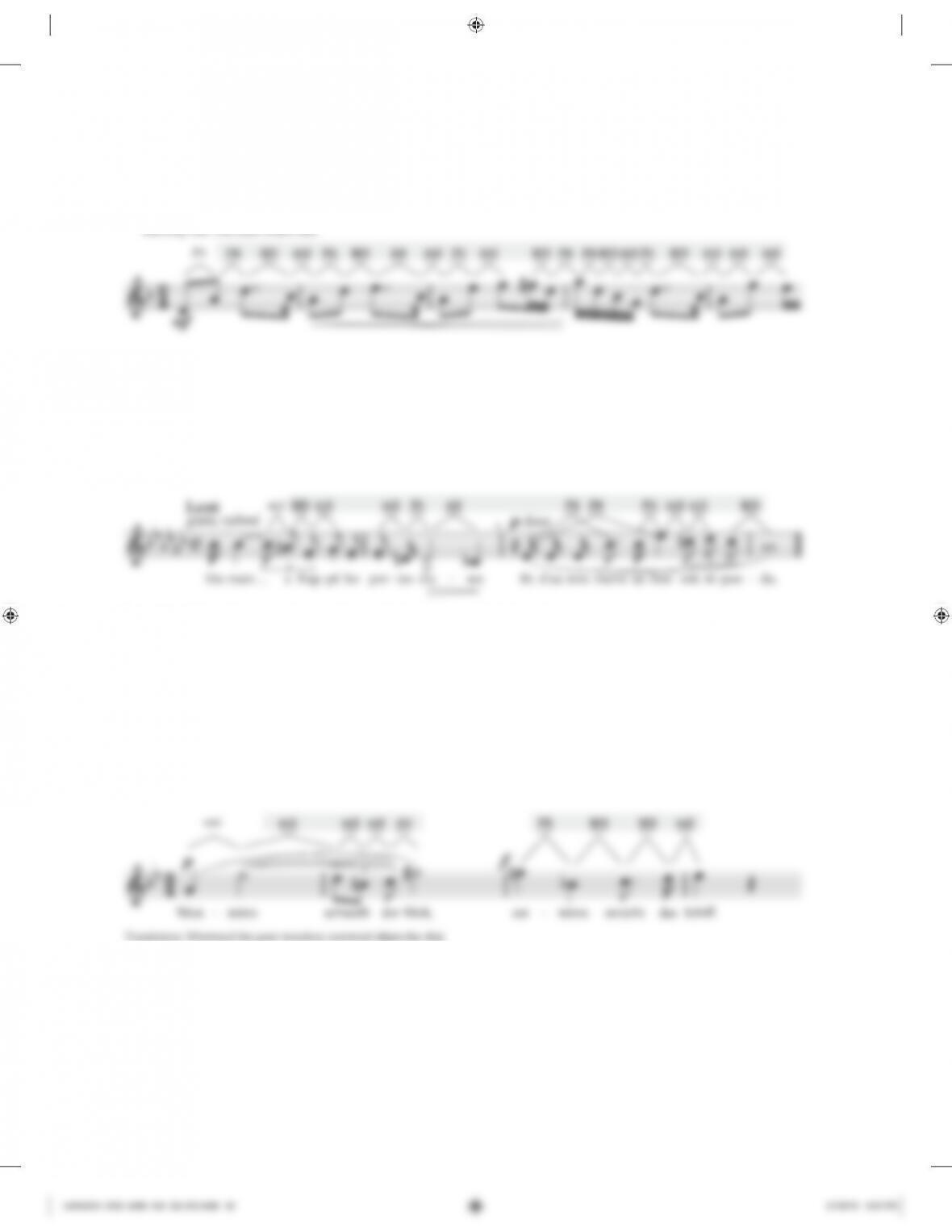
1. Write the intervals (the scales are given for reference).
G. ANALYSIS
1. Mikalojus C
ˇiurlionis, Fughetta in D minor
Identify the melodic intervals.
2. Nadia Boulanger, “J’ai frappé” (“I knocked”)
Identify the melodic intervals. Remember that the key signature is in force through-
out, and that any accidental remains in force through the whole measure.
Translation: My hand knocked at the closed door. And other hands responded from a distance.
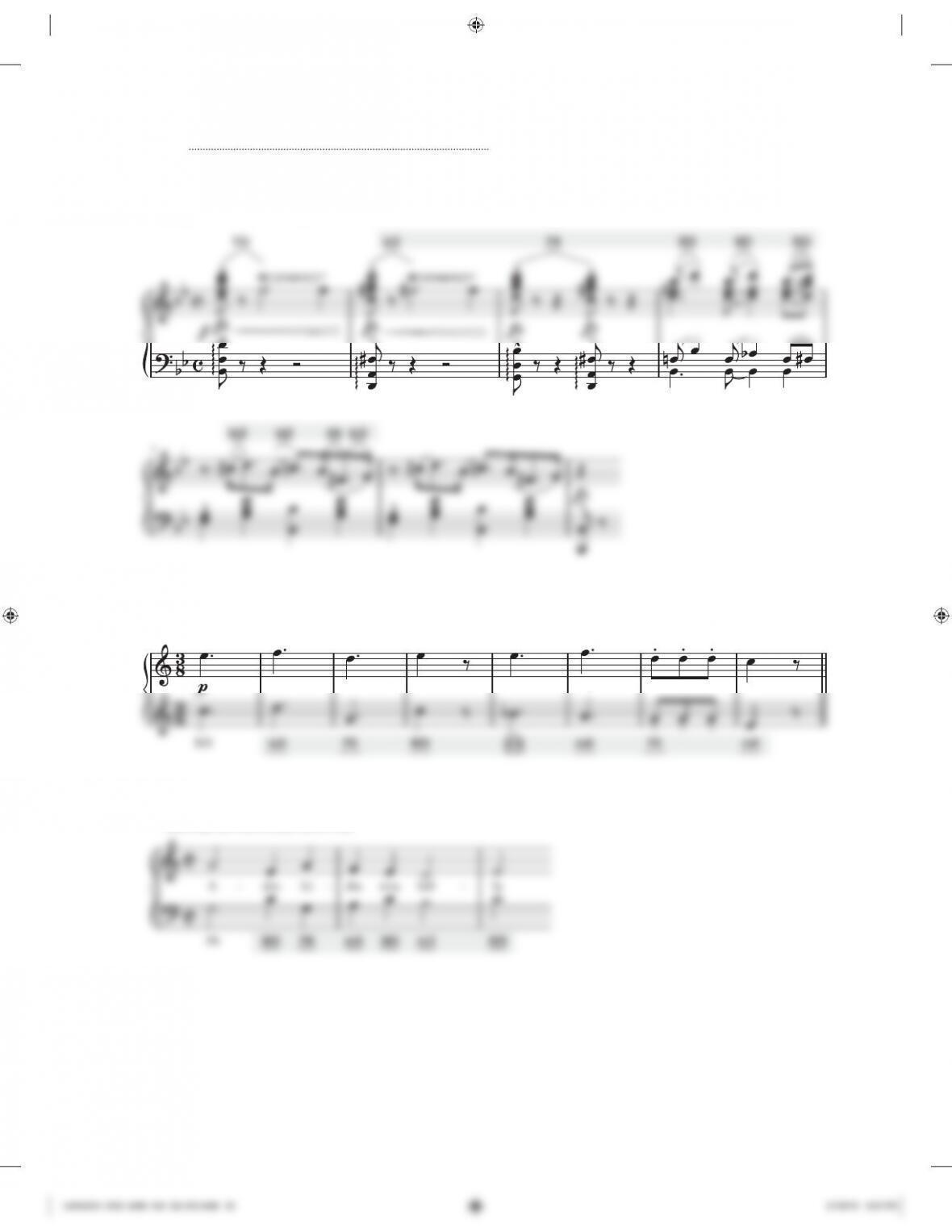
3. Richard Wagner, Tristan und Isolde, Act I
Identify the melodic intervals. Remember that the key signature remains in force
throughout the passage (unless explicitly changed by an accidental) and that acci-
dentals remain in force throughout a measure (unless explicitly canceled).
G. Analysis | 33
NAME:
4. Jelly Roll Morton, “Jelly Roll Blues”
5. Gioachino Rossini, Duet No. 2 for Horns
Identify the harmonic intervals. Circle any dissonant interval.
6. Maddalena Cassulana, “Adio Lidia mia bella”
Identify the harmonic intervals.
Translation: Farewell, Lidia, my love.
34 | CHAPTER 2 | Intervals
7. J. S. Bach, Chorale 80
Identify the harmonic intervals between each pair of adjacent voices and write
them in the table beneath the staff. Circle the dissonant intervals. If a fourth occurs
between the bass and another voice, it is dissonant. Otherwise, it is consonant.
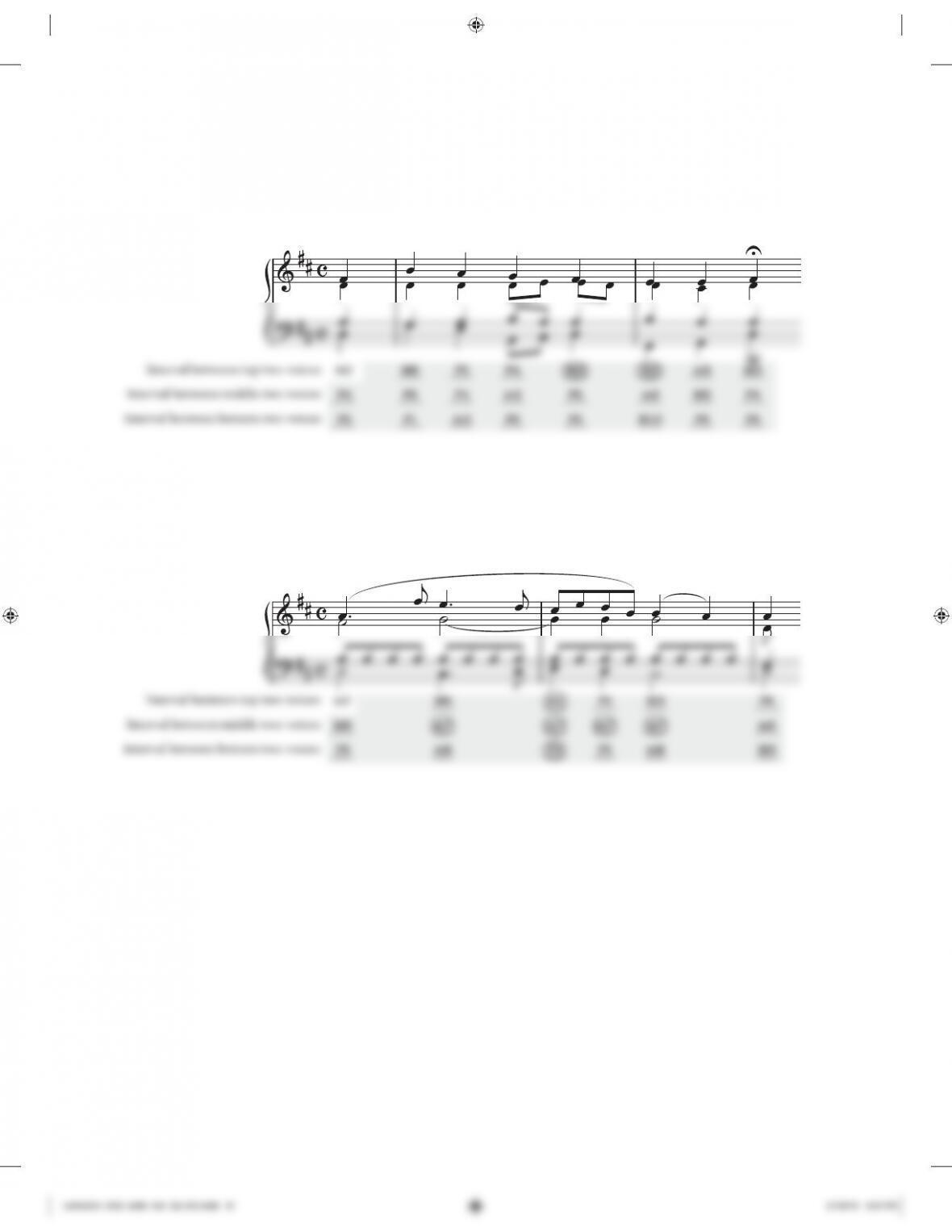
8. Fanny Mendelssohn Hensel, Piano Trio Op. 11
Identify the harmonic intervals between each pair of adjacent voices and write
them in the table beneath the staff. Circle the dissonant intervals. If a fourth occurs
between the bass and another voice, it is dissonant. Otherwise, it is consonant.