B. Realizing Roman Numerals | 241
NAME:
A. QUESTIONS FOR REVIEW
1. What chords typically follow vi?
2. What chords do not typically precede vi?
3. When voice leading between two root-position chords a third apart in four-part
harmony, how do the upper voices usually move?
4. Which is more common: root motion upward by thirds (such as ii–IV–vi–I) or
downward by third (I–vi–IV–ii)?
B. REALIZING ROMAN NUMERALS
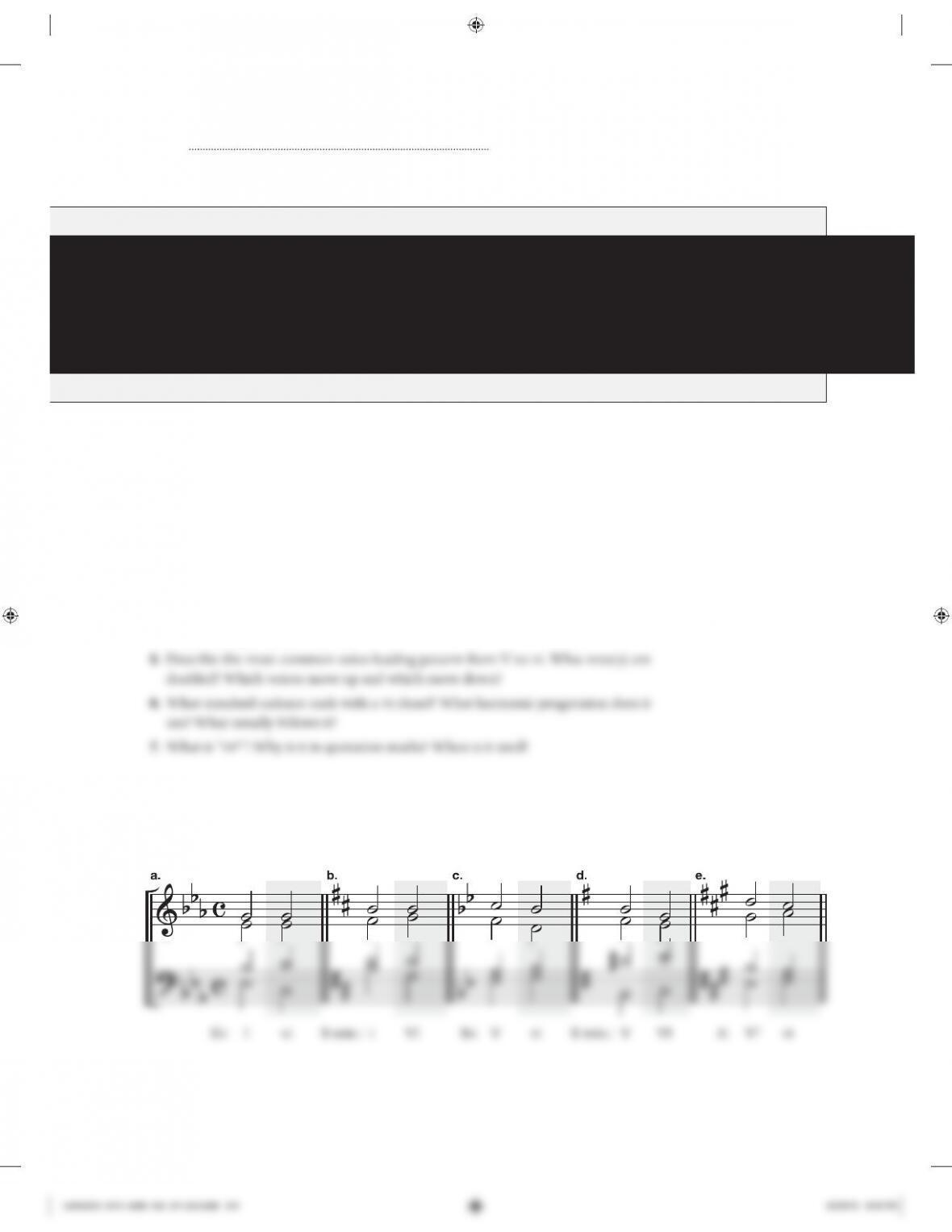
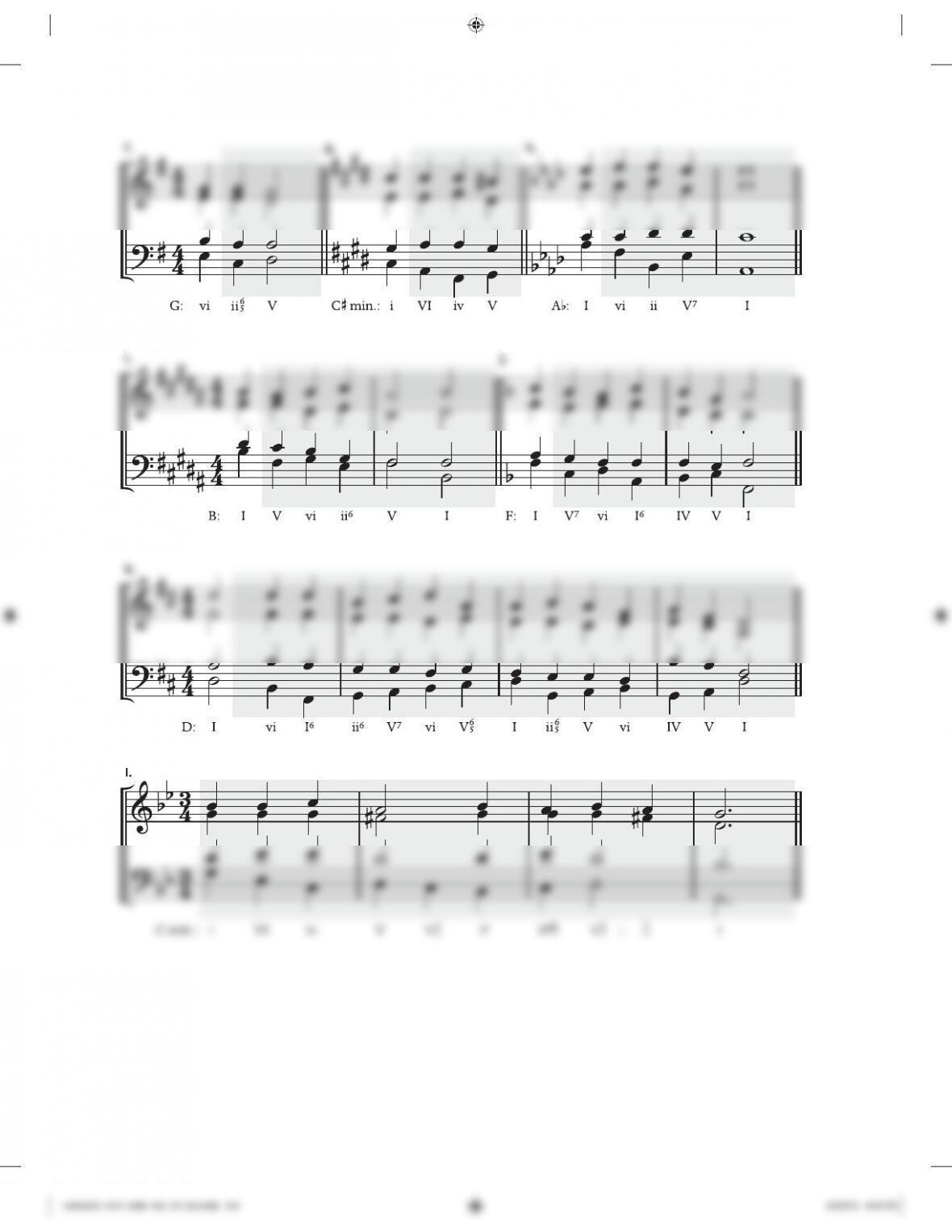
1. Realize the Roman numerals in SATB format.
chapter
19 Multiple Functions: VI
242 | CHAPTER 19 | Multiple Functions: VI
B. Realizing Roman Numerals | 243
NAME:
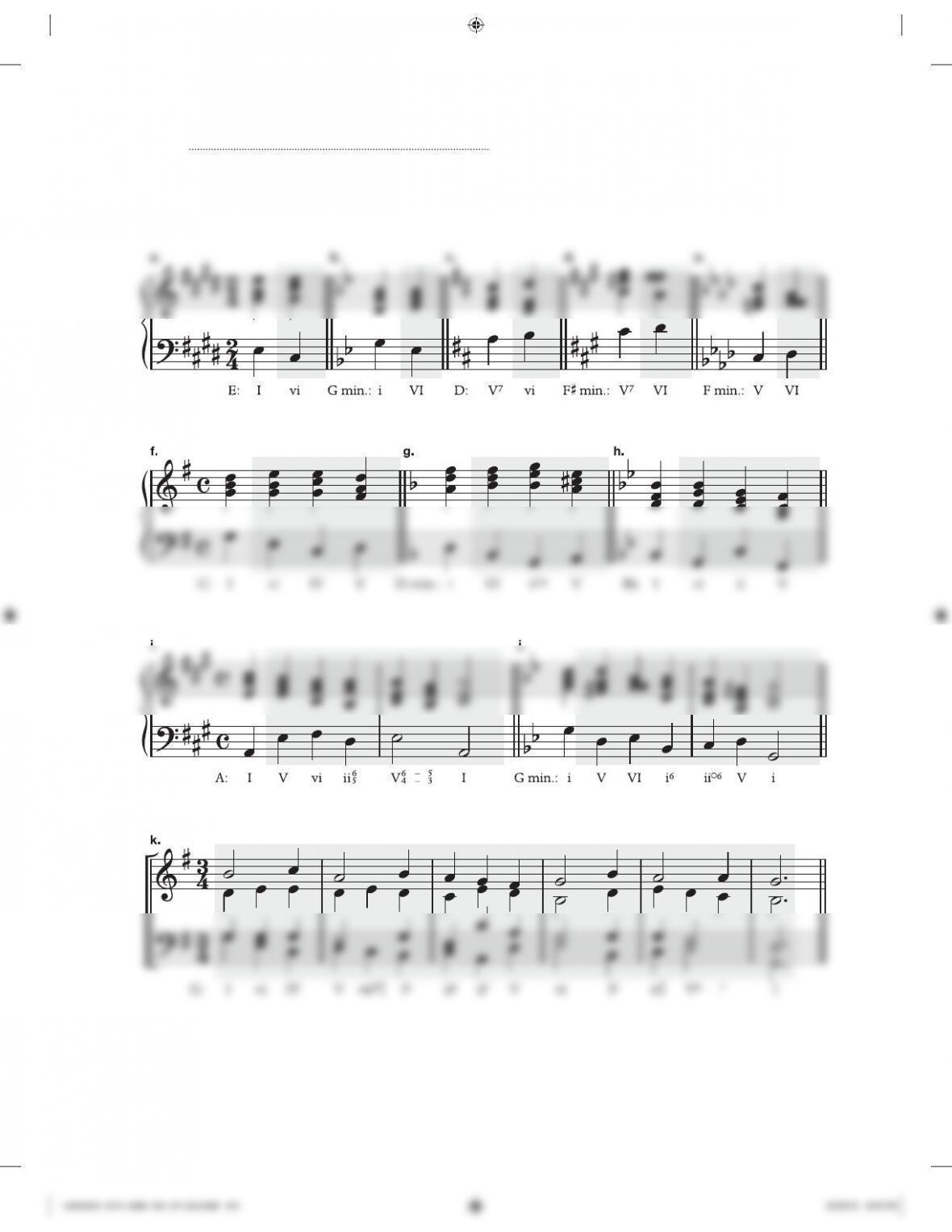
2. Realize the Roman numerals in keyboard format. Note that at times two voices
might double a note in unison, so that only three notes sound.
244 | CHAPTER 19 | Multiple Functions: VI
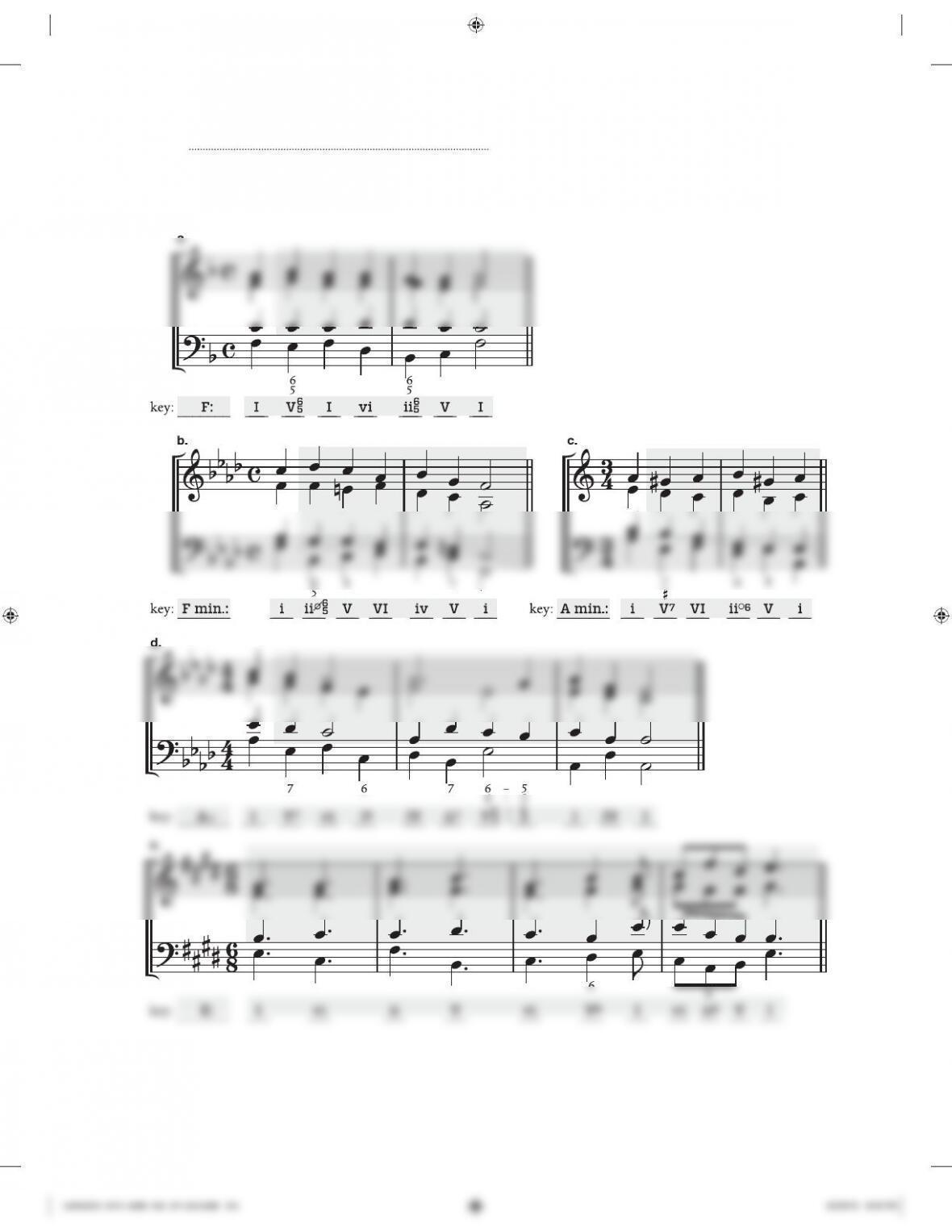
C. REALIZING FIGURED BASS
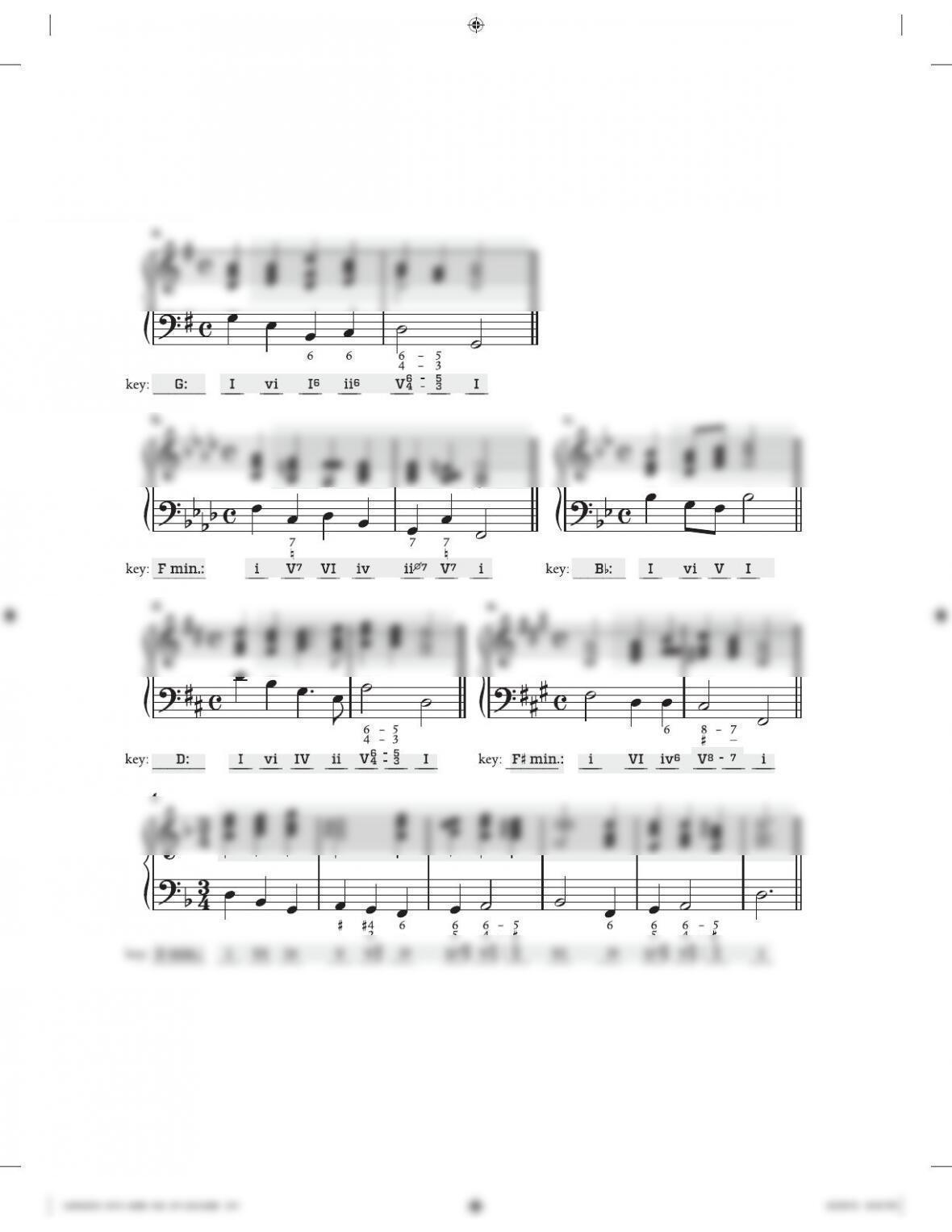
1. Realize the following figured basses in keyboard format. Then label the key and
Roman numerals for each.
C. Realizing Figured Bass | 245
NAME:
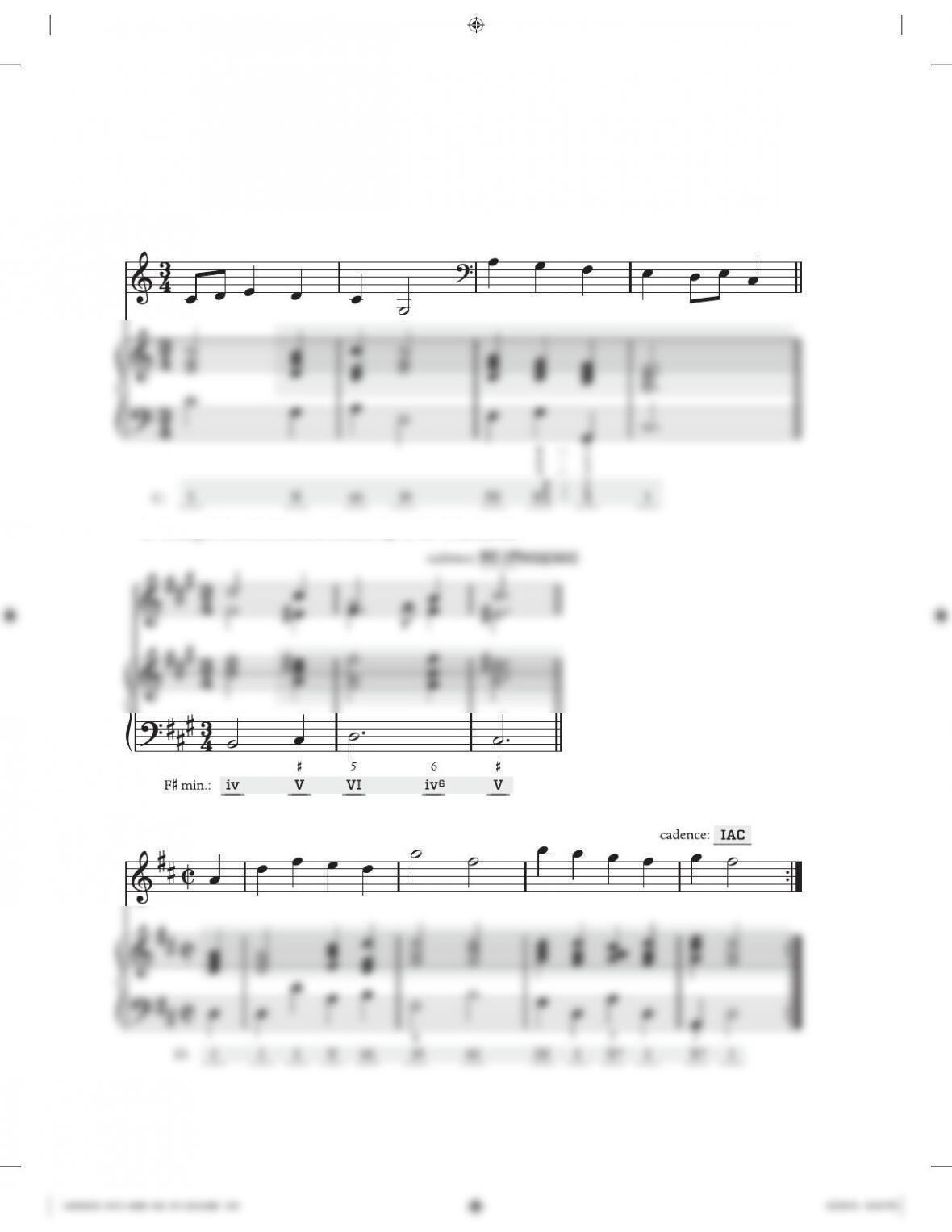
2. Realize the following figured basses in SATB format. Then label the key and
Roman numerals for each.
246 | CHAPTER 19 | Multiple Functions: VI
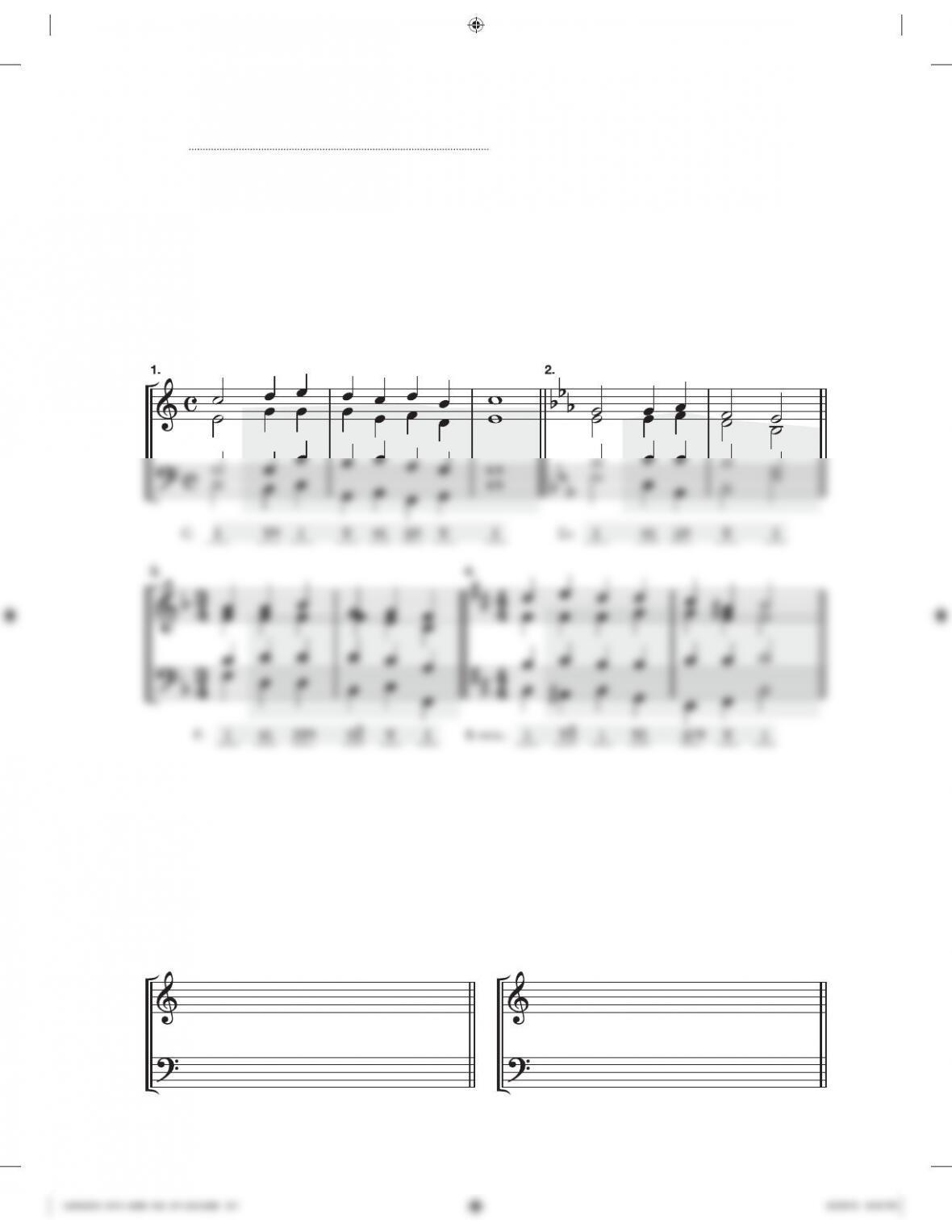
3. Complete the realization of the figured bass accompaniments for each excerpt.
Do not worry about parallel perfect intervals between your figured bass realiza-
tion and the given melody. Label the Roman numerals and, where indicated, the
cadences.
a. J. E. Galliard, Sonata No. 6 for Bassoon (or Cello) and Thorough Bass, iv
b. Arcangelo Corelli, Chamber Sonata, Op. 2, No. 9, Sarabanda
c. G. F. Handel, Water Music, Air (melody and bass only)
E. Composition | 247
NAME:
D. HARMONIZING MELODIES
Harmonize the following melodies:
• Provide a bass line and Roman numerals, using one chord for each note of the
melody.
• End each with a perfect authentic cadence.
• Use one vi or VI chord in the middle of each harmonization.
• Finally, fill in the inner voices in SATB format.
E. COMPOSITION
1. Compose short chord progressions (each at most two measures) in four-part har-
mony, in a meter of your choice, following the given instructions.
• Each progression should begin with a tonic chord and end with an authentic cadence.
• Make sure to write the key signature and time signature. Add a barline if necessary.
SATB format:
a. Progression in D major that begins with I b. Progression in Eb major that begins with
moving though vi to ii6
I moving though vi to ii6
5
c.
Progression in F# sharp minor that d. Progression in A major that includes
begins with i moving though VI to iv V moving to vi
Keyboard format:
e. Progression in B major that begins with f. Progression in D minor that includes
I moving though vi to ii V7 moving to VI
2. Suggest chords that may accompany the following melody.
• Use one chord per measure, except for measures 15, 16, and 17, which may
have two chords. For variety’s sake, do not use the same harmony in the same
inversion for two measures in a row.
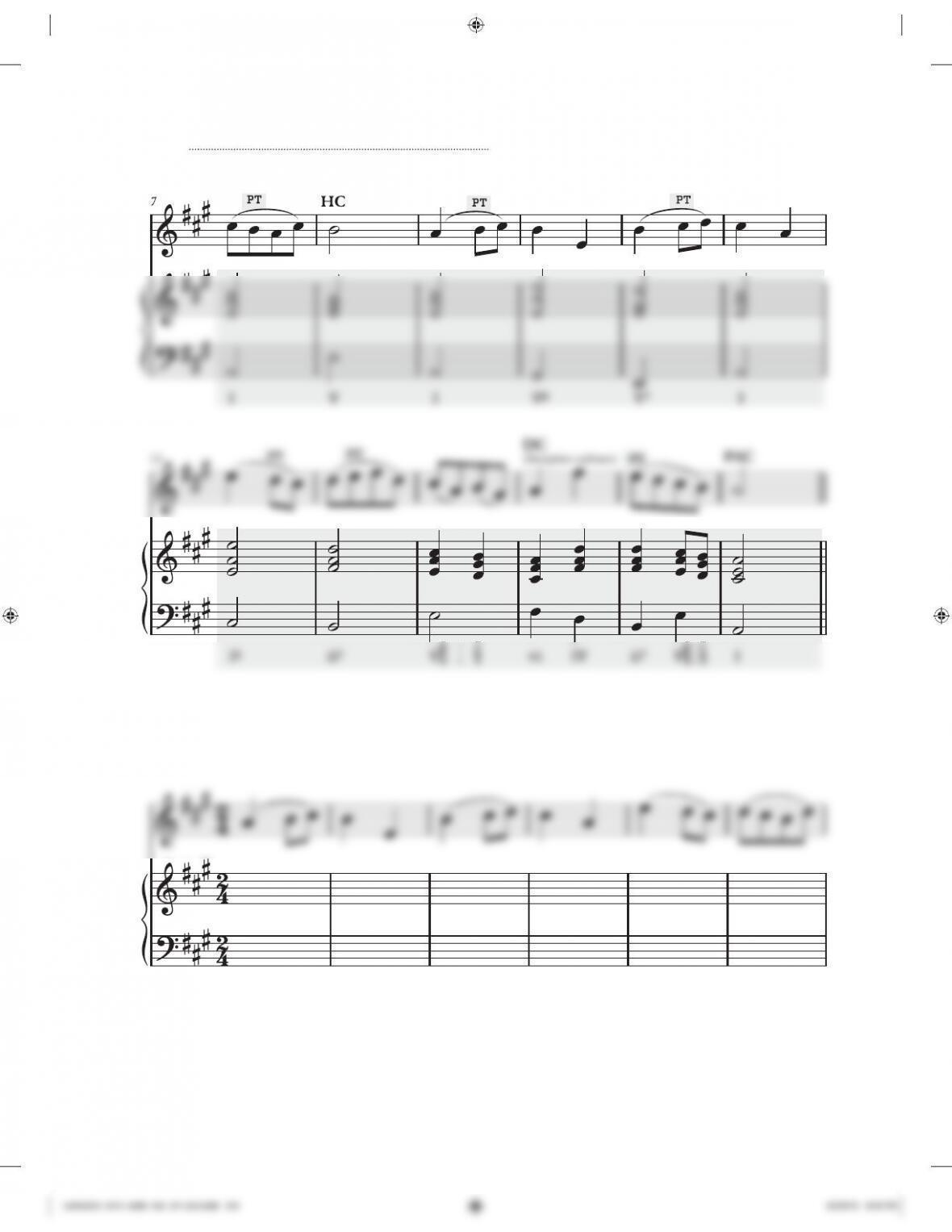
E. Composition | 249
NAME:
3. Construct a piano accompaniment using the same pitches as in (2), but now set
with an accompaniment pattern (such as an arpeggiated texture or an oom-pah
texture).
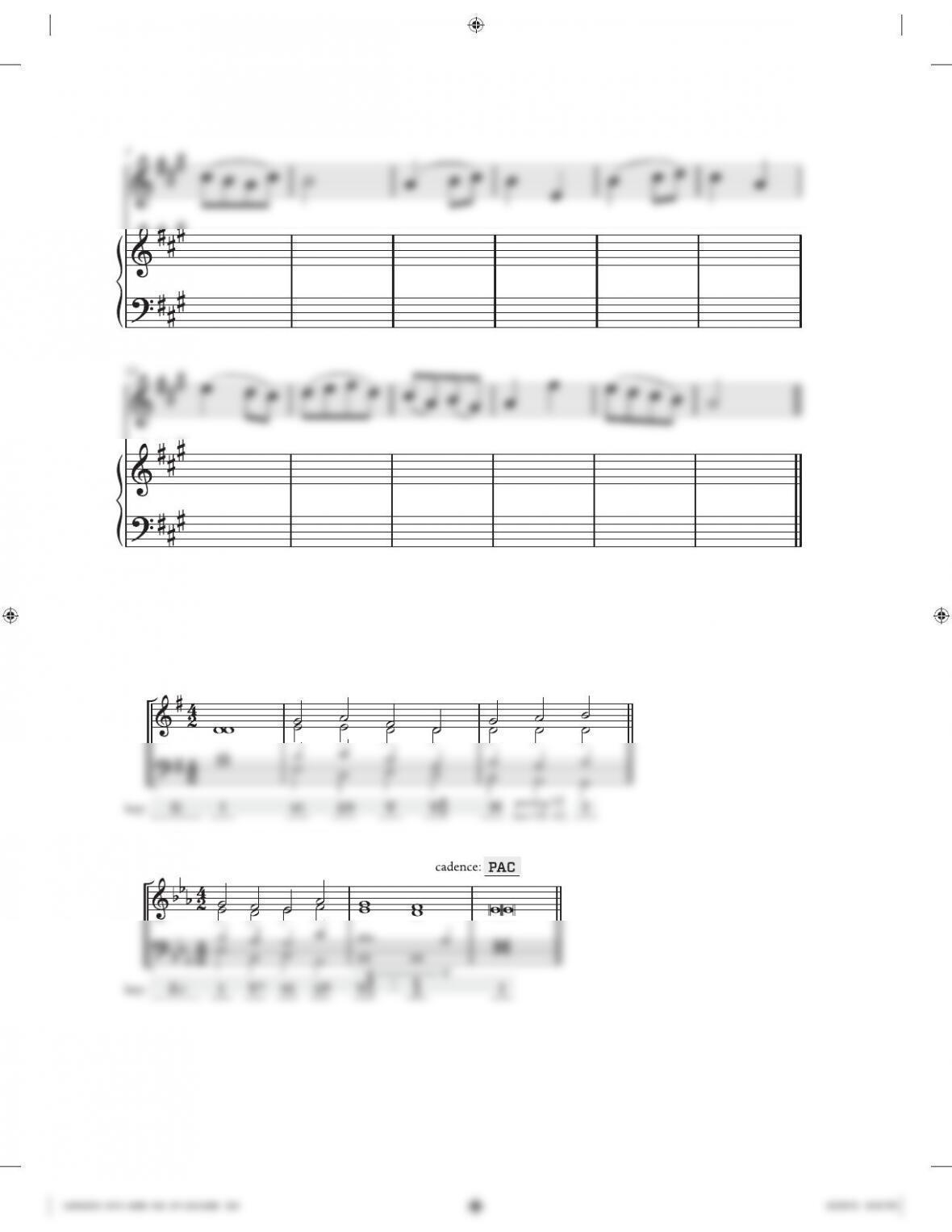
250 | CHAPTER 19 | Multiple Functions: VI
F. ANALYSIS
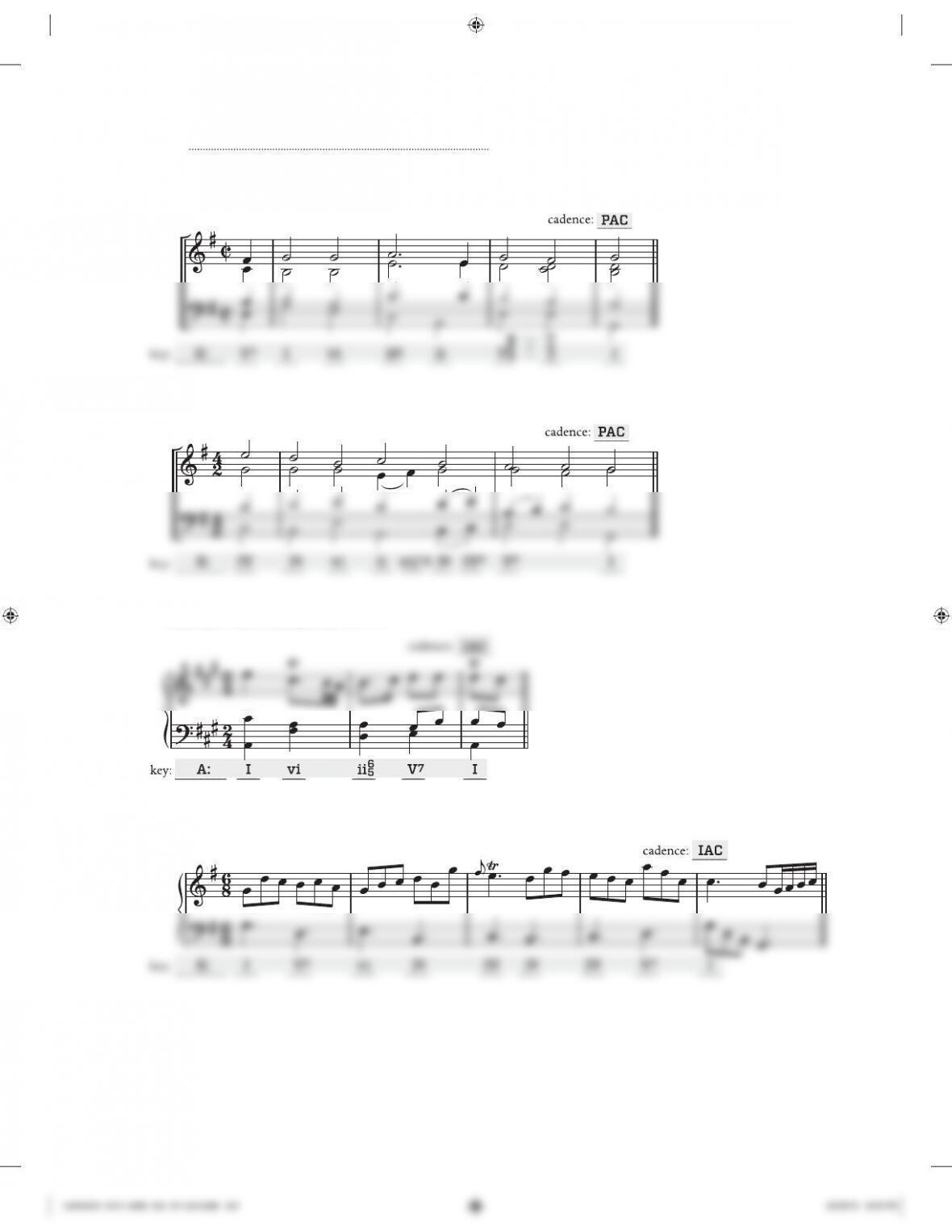
1. Label the key, Roman numerals, and cadences on the blanks provided.
a. Jeremiah Clarke, “Hark the glad sound” (hymn)
b. William Henry Monk, “Abide with me” (hymn)
F. Analysis | 251
NAME:
c. “Medway” (hymn)
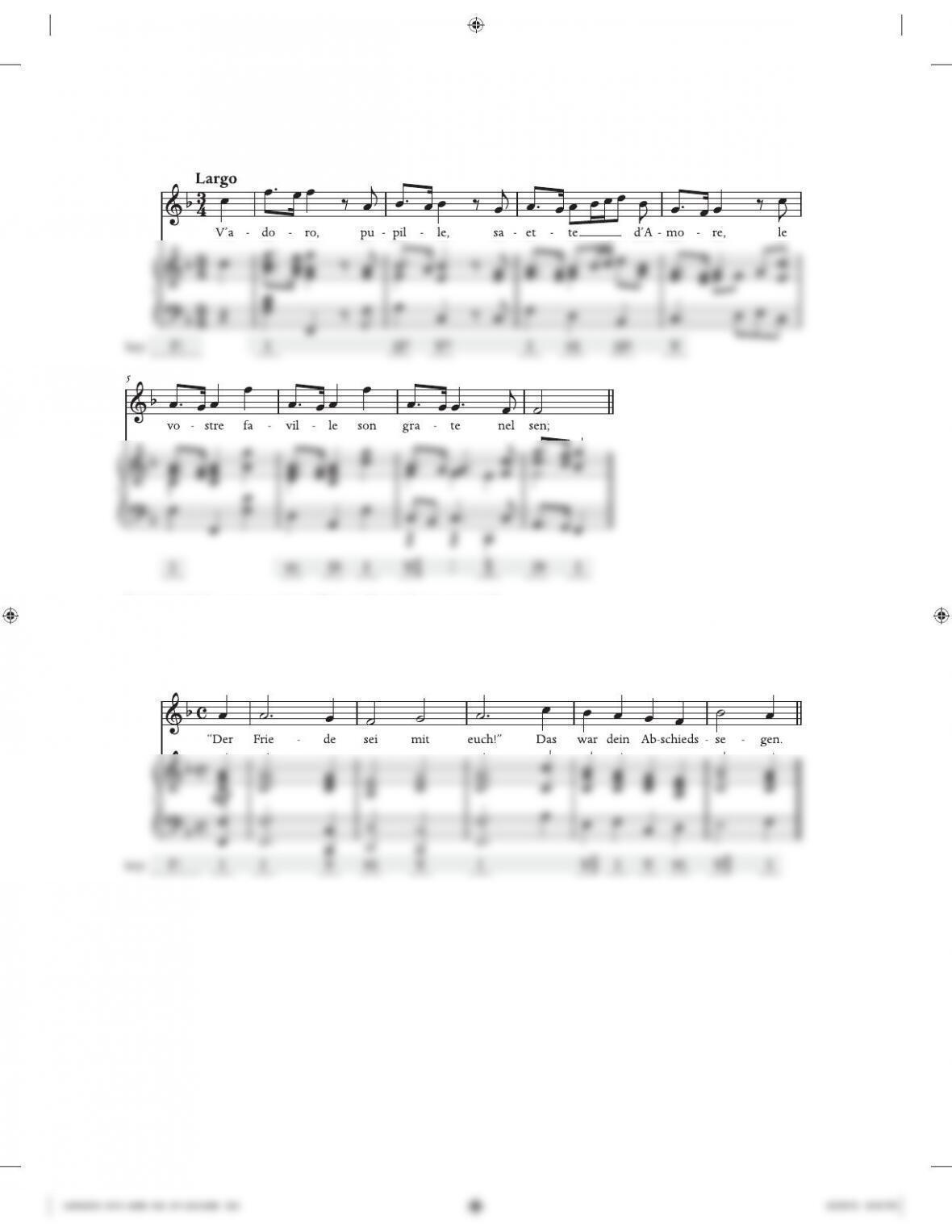
d. Fanny Robinson, “St. Monica” (hymn)
e. Joseph Haydn, Symphony No. 5, i
f. Elisabetta de Gambarini, Canzonetta
252 | CHAPTER 19 | Multiple Functions: VI
g. G. F. Handel, “V’adoro, pupille,” from Giulio Cesare
Translation: I adore you, eyes, arrows of love, my heart welcomes your sparks.
h. Franz Schubert, “Pax vobiscum” (“Peace Be with You”)
Translation: “Peace be with you!” That was your farewell blessing.
F. Analysis | 253
NAME:
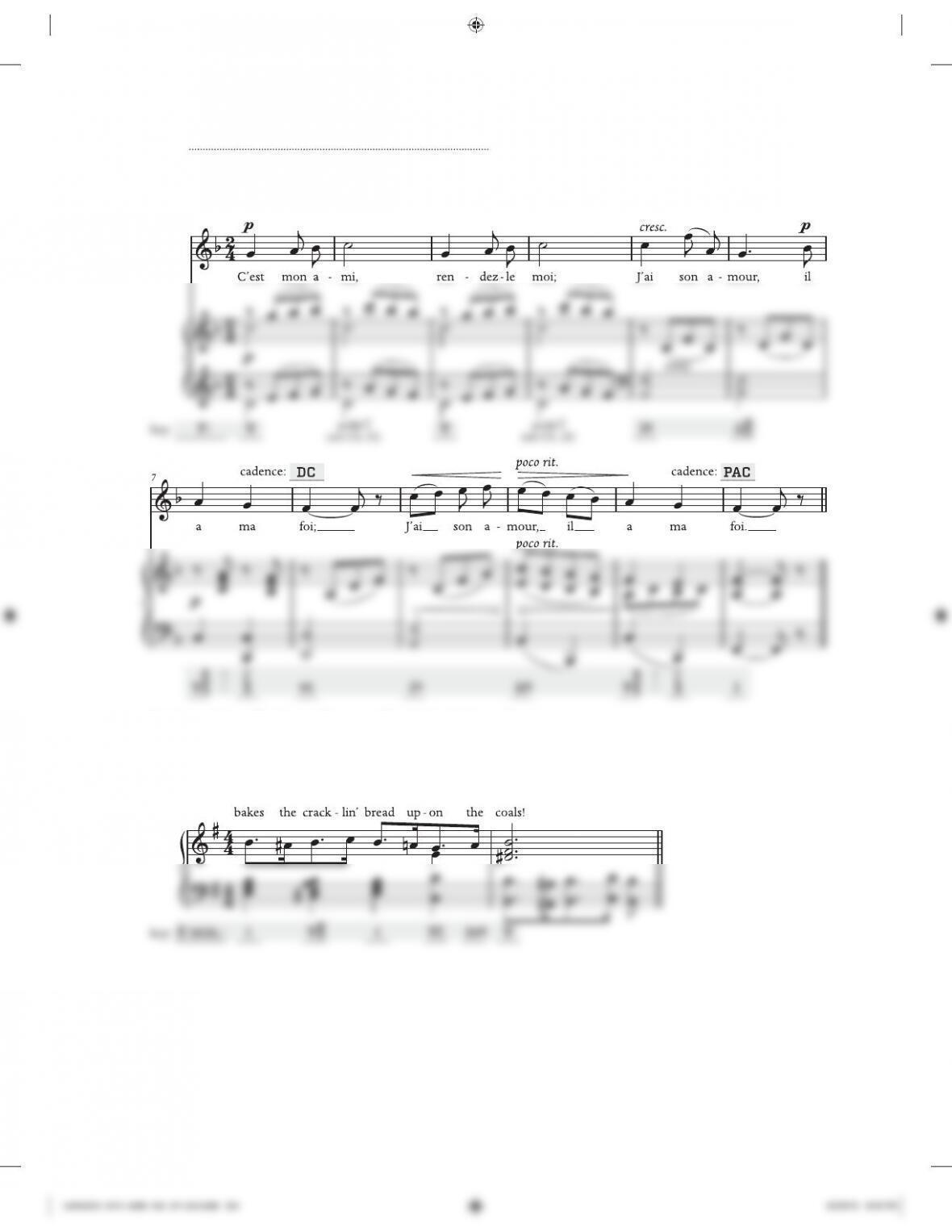
i. Marie Antoinette/Jean-Baptiste Weckerlin, “C’est mon ami” (“He’s My Friend”)
Translation: He’s my friend, return him to me, I have his love, he has my devotion.
j. Bert Williams, “Dora Dean”
254 | CHAPTER 19 | Multiple Functions: VI
2. Analyze the harmonies in the following excerpts, and label them with Roman
numerals. Then locate and label the cadences.
a. W. A. Mozart, Piano Sonata, K. 545, ii
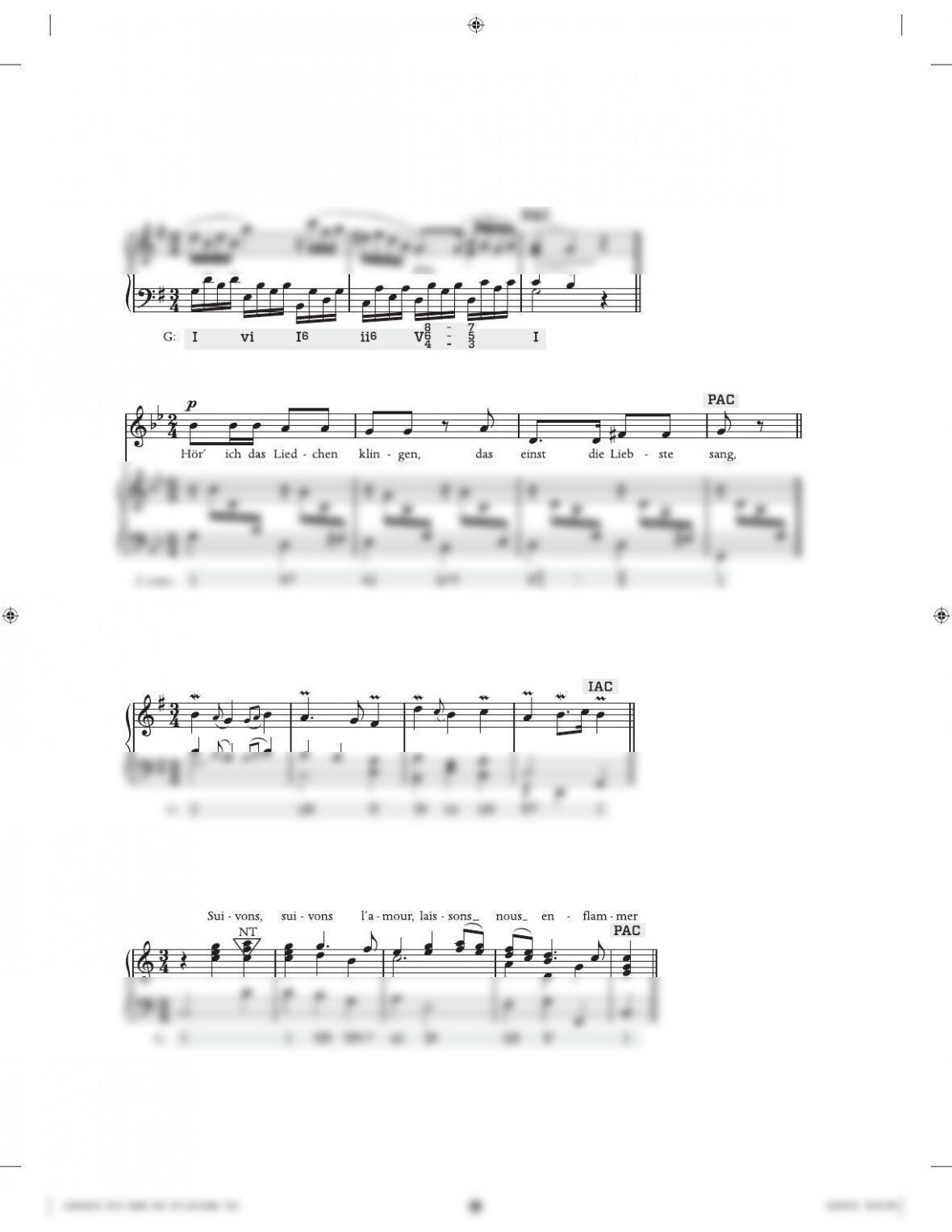
b. Robert Schumann, “Hör ich das Liedchen klingen”
Translation: I hear the song resounding that my beloved once sang.
c. Élisabeth Jacquet de la Guerre, Sarabande, from Pièces de clavecin (with optional
violin accompaniment)
What note is implied in the chord on the first beat of measure 3?
d. Jean-Baptiste Lully, “Suivons l’amour” (“Let Us Follow Love”), from Cadmus et
Hermonie
Translation: Let us follow love, let it ename us.
NAME:
e. Anna Amalia, “Das Veilchen” (“The Violet”)
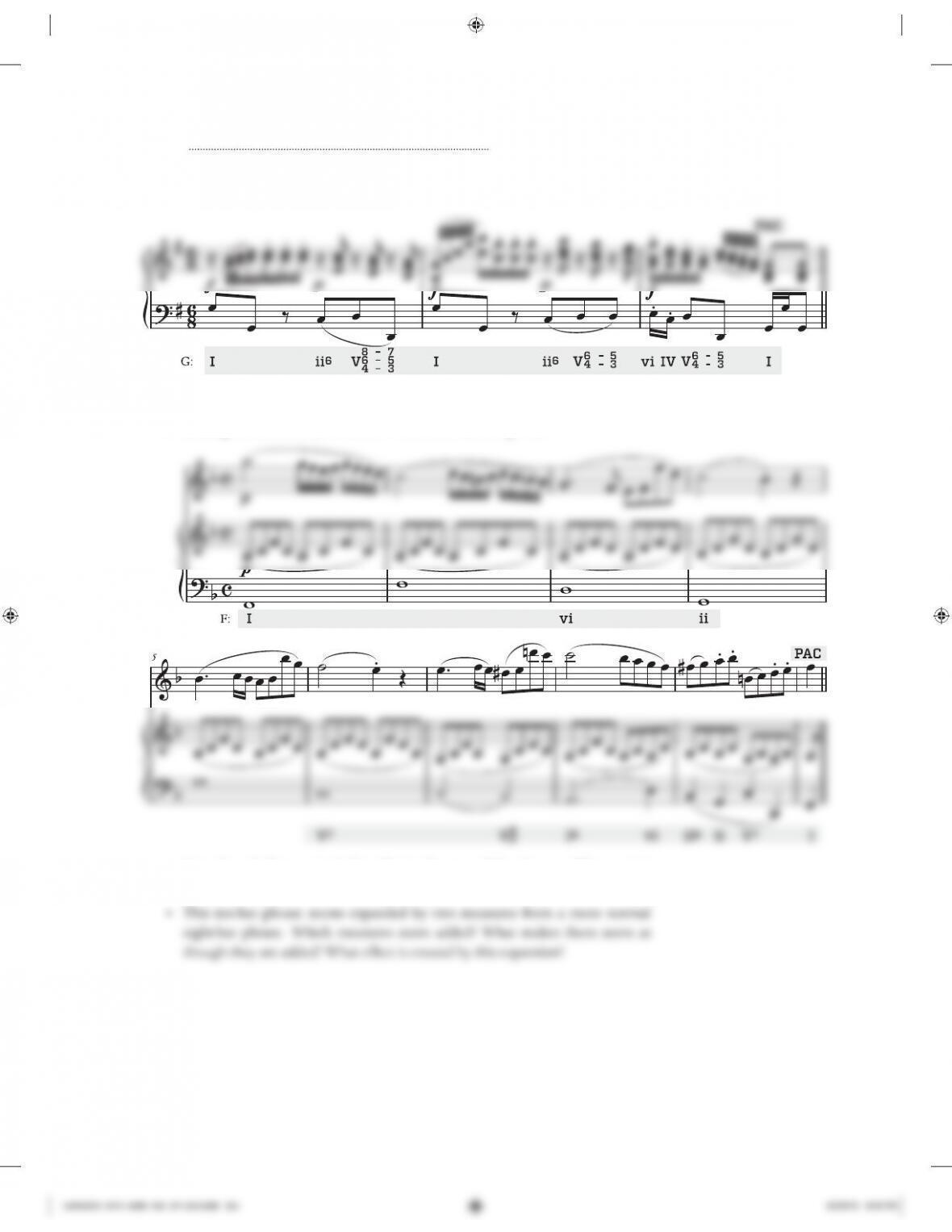
f. Ludwig van Beethoven, Sonata for Violin and Piano, Op. 24, i
• How does the harmonic rhythm (that is, the pace of the changes of harmonies)
evolve throughout the course of the phrase? Does it speed up or slow down? Where?
F. Analysis | 255
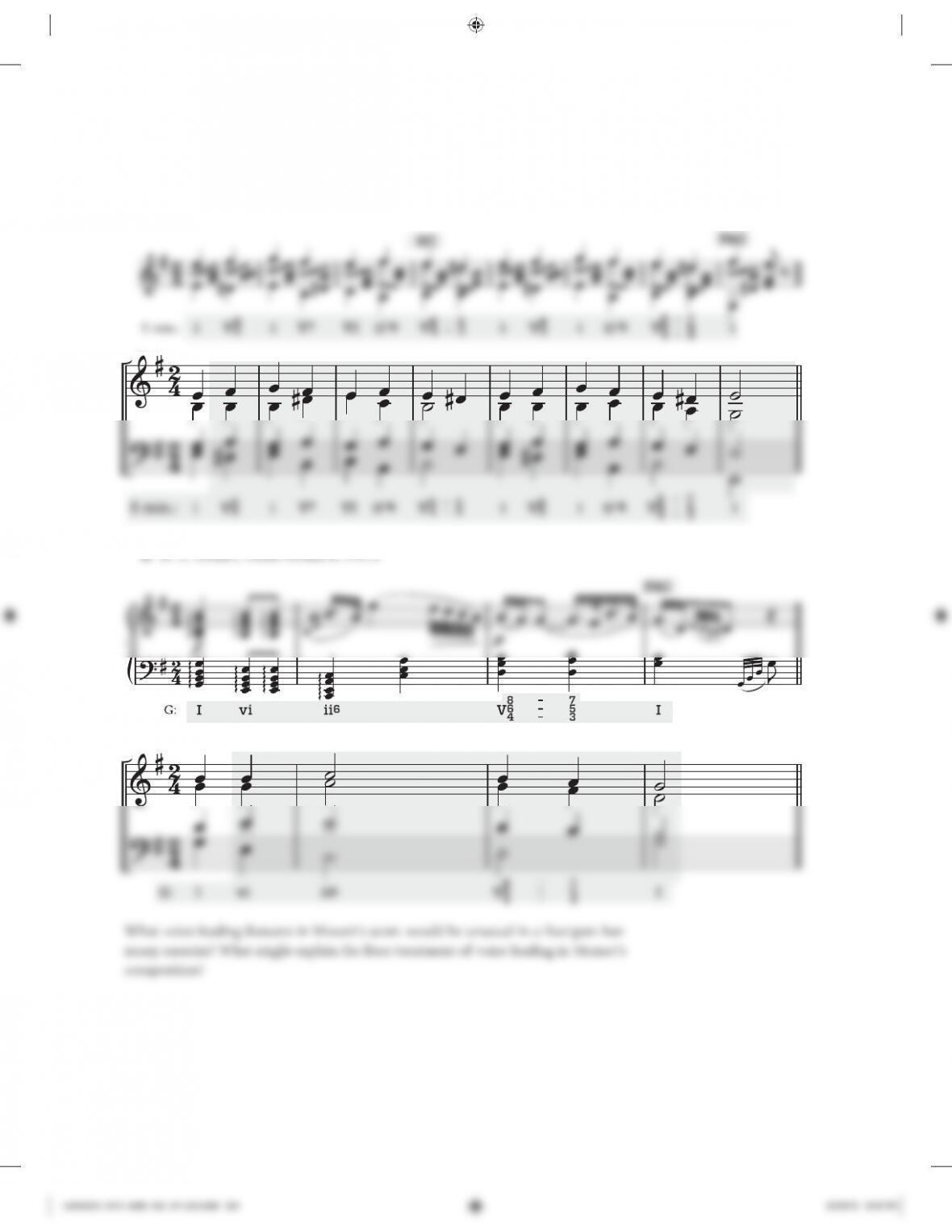
3. Label the Roman numerals and cadences. On the staves below, complete a simpli-
fied harmonic model of each passage in SATB format, using proper voice leading
and smooth motion in the upper voices.
a. Fernando Sor, Exercises facile for guitar, Book II, No. 18
b. W. A. Mozart, Violin Sonata K. 379, ii