B. Spelling Chords | 225
NAME:
A. QUESTIONS FOR REVIEW
1. What is the function of IV6, ii, ii7, and IV7? To what type of chord do they lead?
2. In major keys, what note(s) of IV6 may be doubled? What note(s) of iv6 may be
doubled in minor keys?
3. What is a Phrygian cadence?
4. What tone is usually doubled in a root-position ii?
5. What are some of the voice-leading problems that may arise with ii7 and IV7?
What are some ways to avoid them?
6. What are some progressions between Subdominant chords that occur frequently?
What are some progressions between Subdominant chords to avoid?
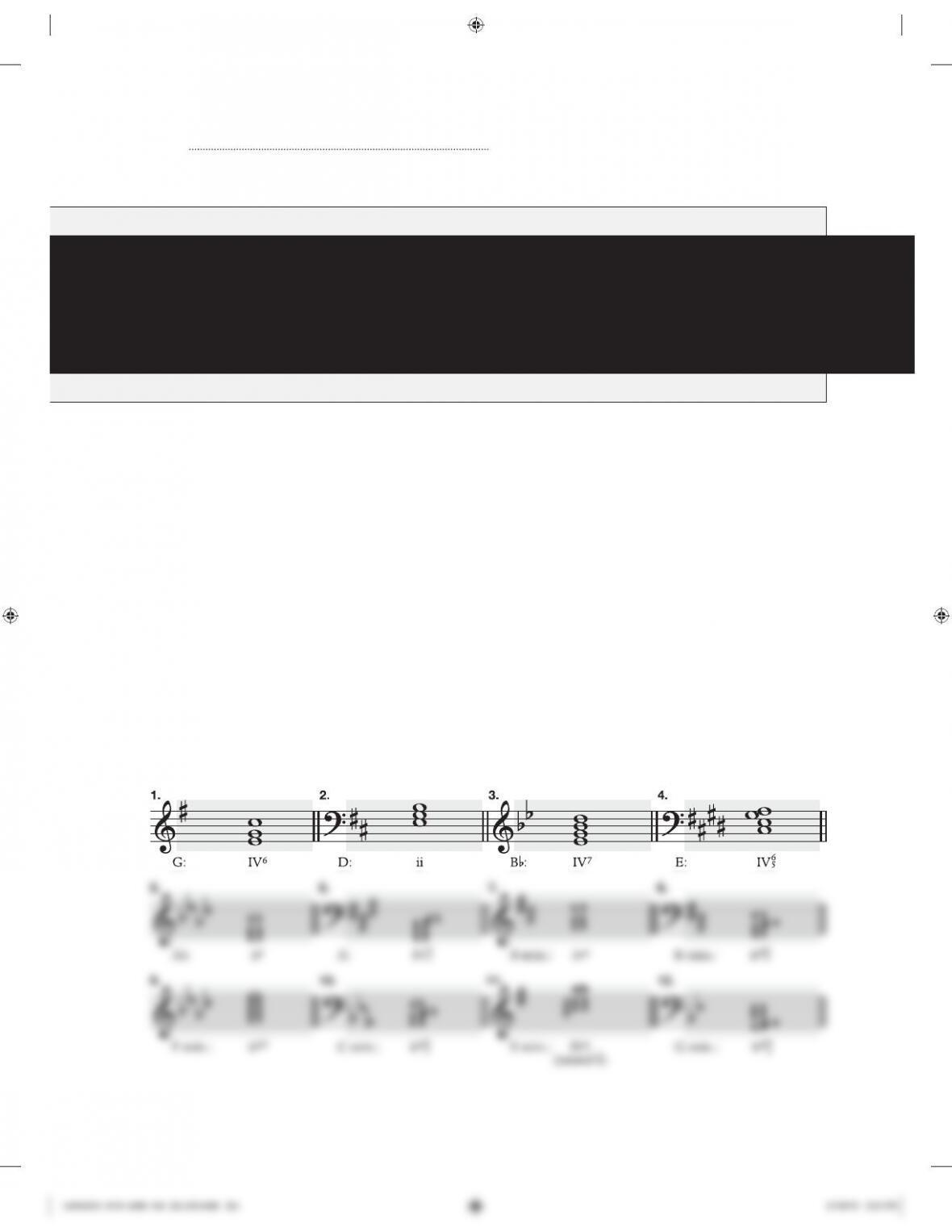
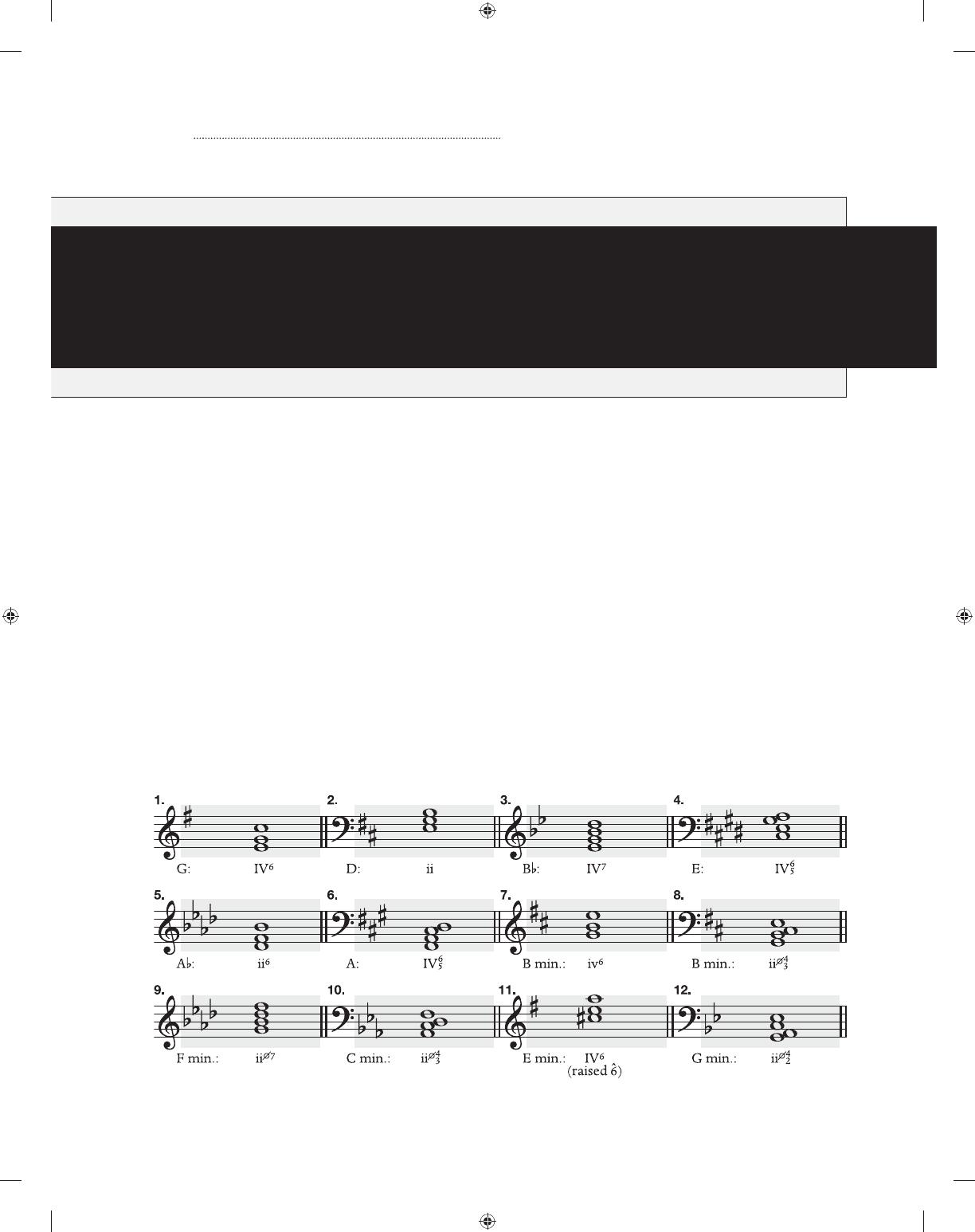
B. SPELLING CHORDS
Write the following key signatures and chords.
chapter
18 Approaching V:
IV6, ii, ii7, and IV7
226 | CHAPTER 18 | Approaching V: IV6, ii, ii7, and IV7
C. REALIZING ROMAN NUMERALS
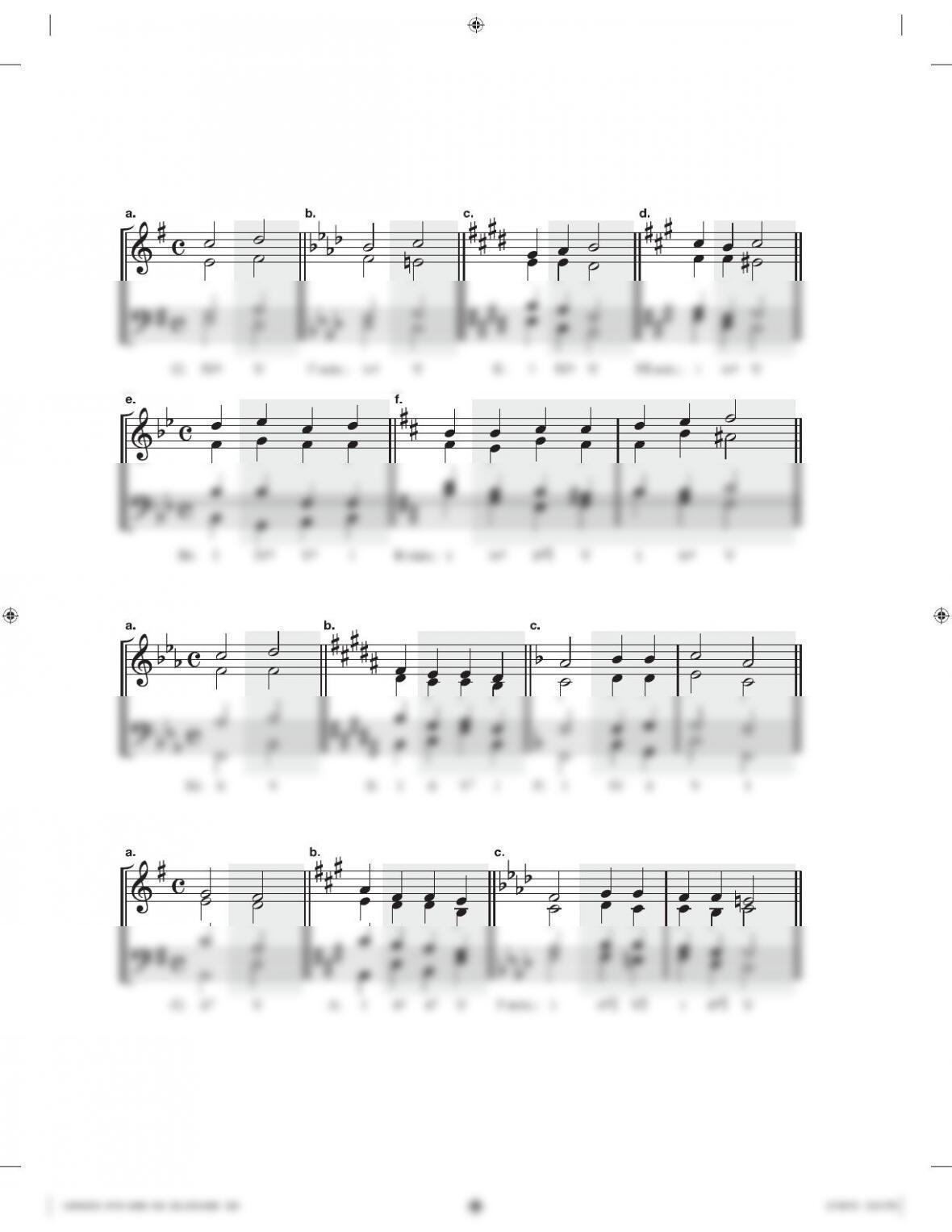
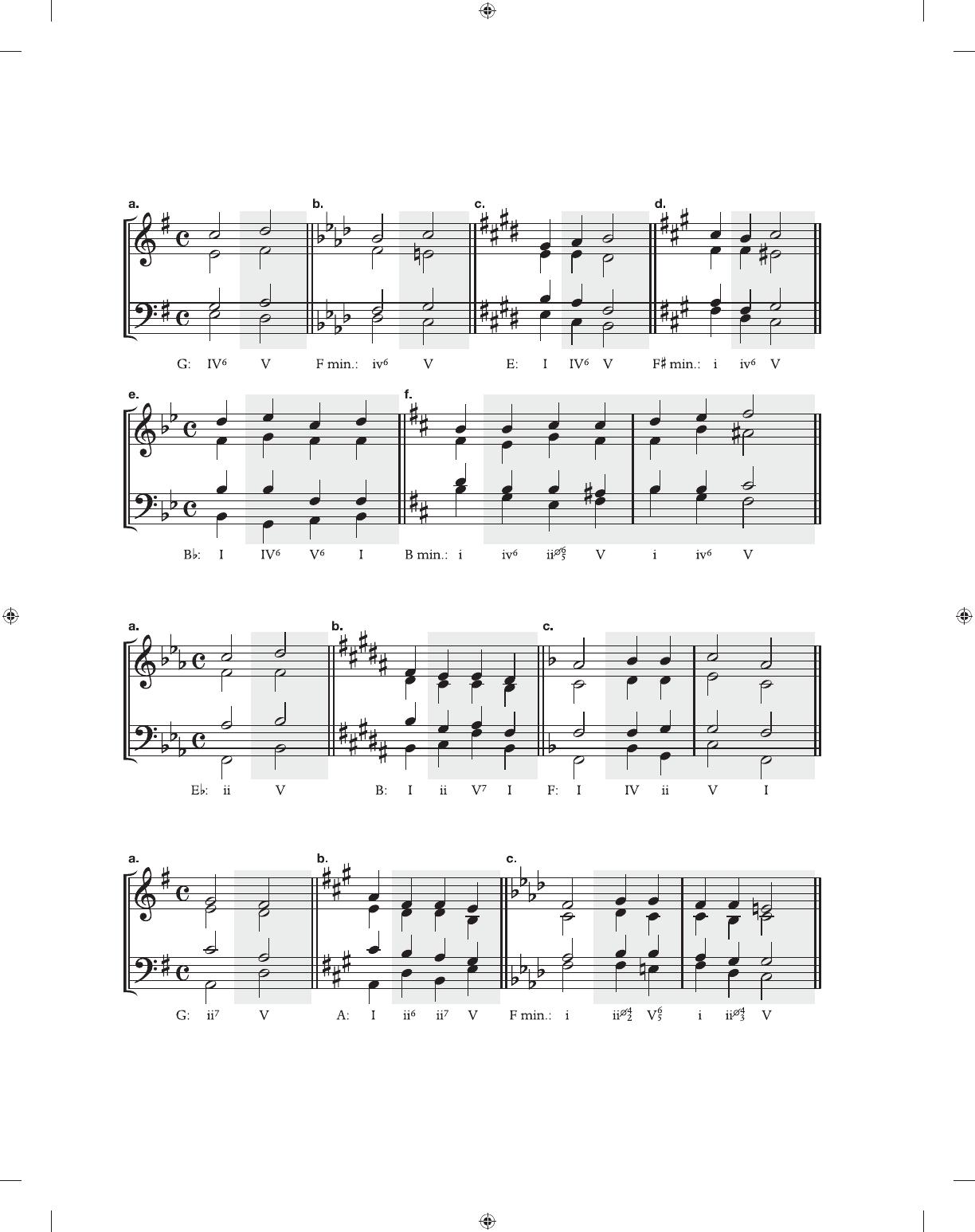
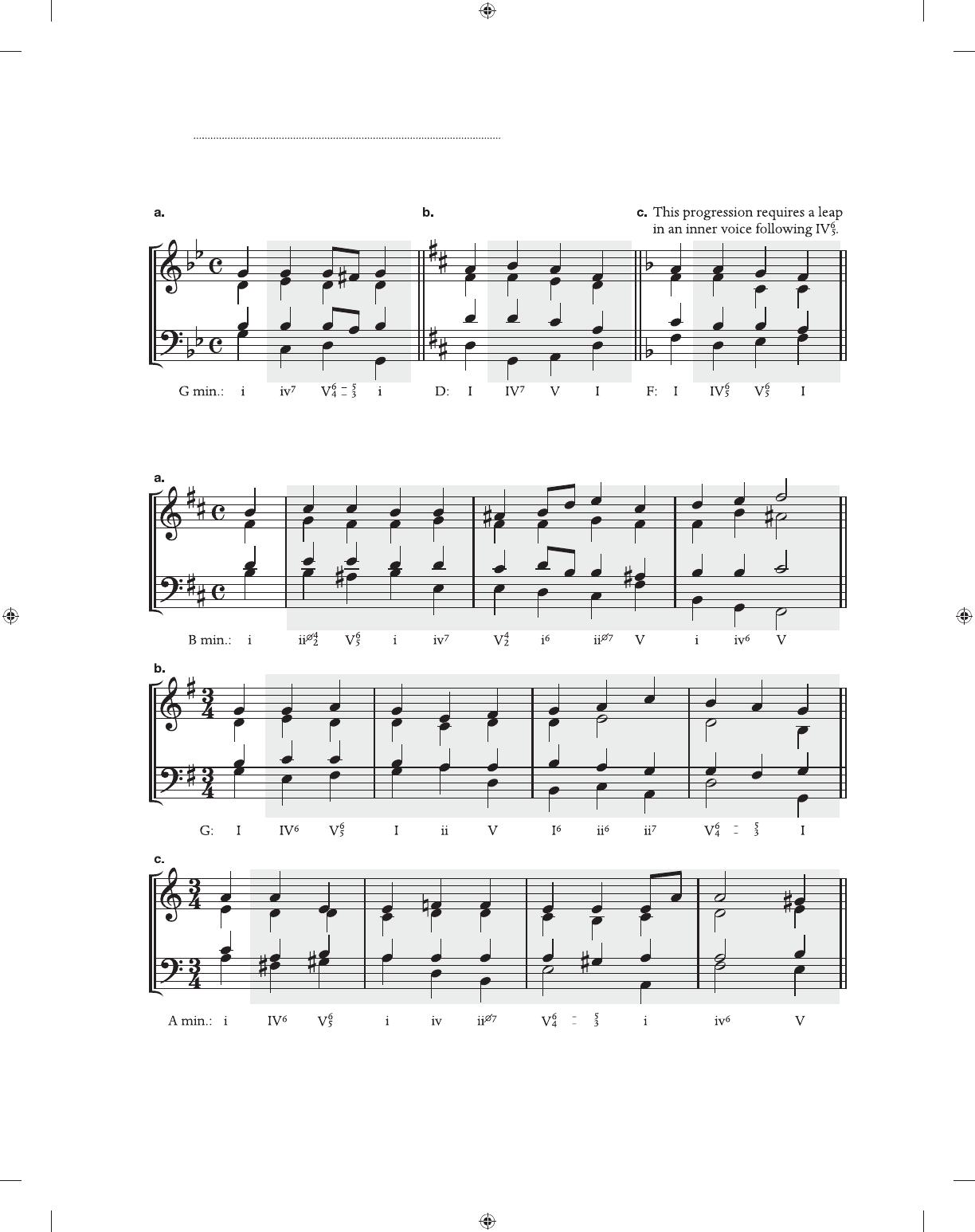
1. Realize the Roman numerals in SATB format, using progressions with IV6.
2. Realize the Roman numerals in SATB format, using progressions with ii5
3.
3. Realize the Roman numerals in SATB format, using progressions with ii7.
C. Realizing Roman Numerals | 227
NAME:
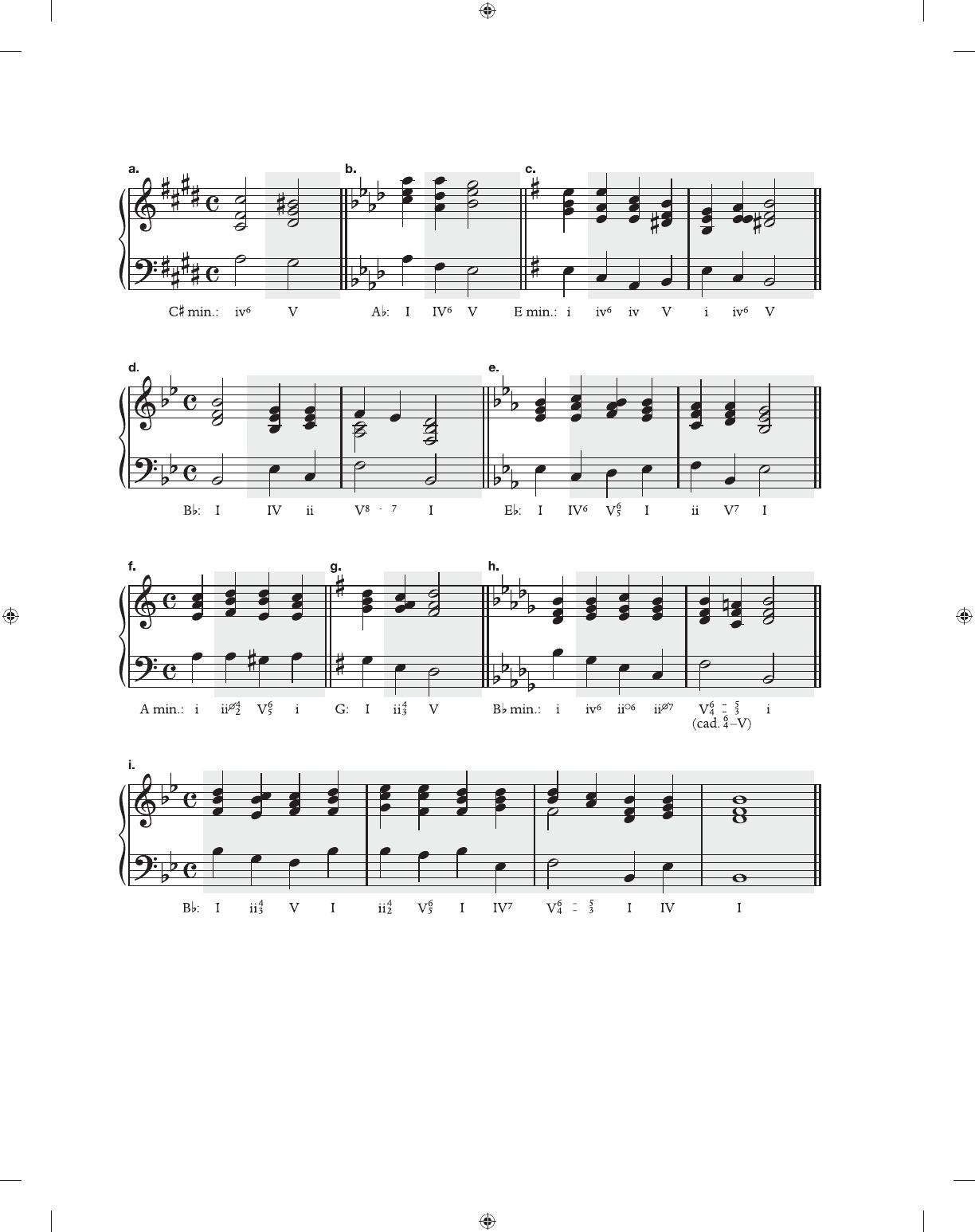
4. Realize the Roman numerals in SATB format, using progressions with IV7.
5. Realize the Roman numerals in SATB format, using progressions with various
Subdominant chords.
228 | CHAPTER 18 | Approaching V: IV6, ii, ii7, and IV7
6. Realize the Roman numerals in keyboard format.
D. Realizing Figured Bass | 229
NAME:
D. REALIZING FIGURED BASS
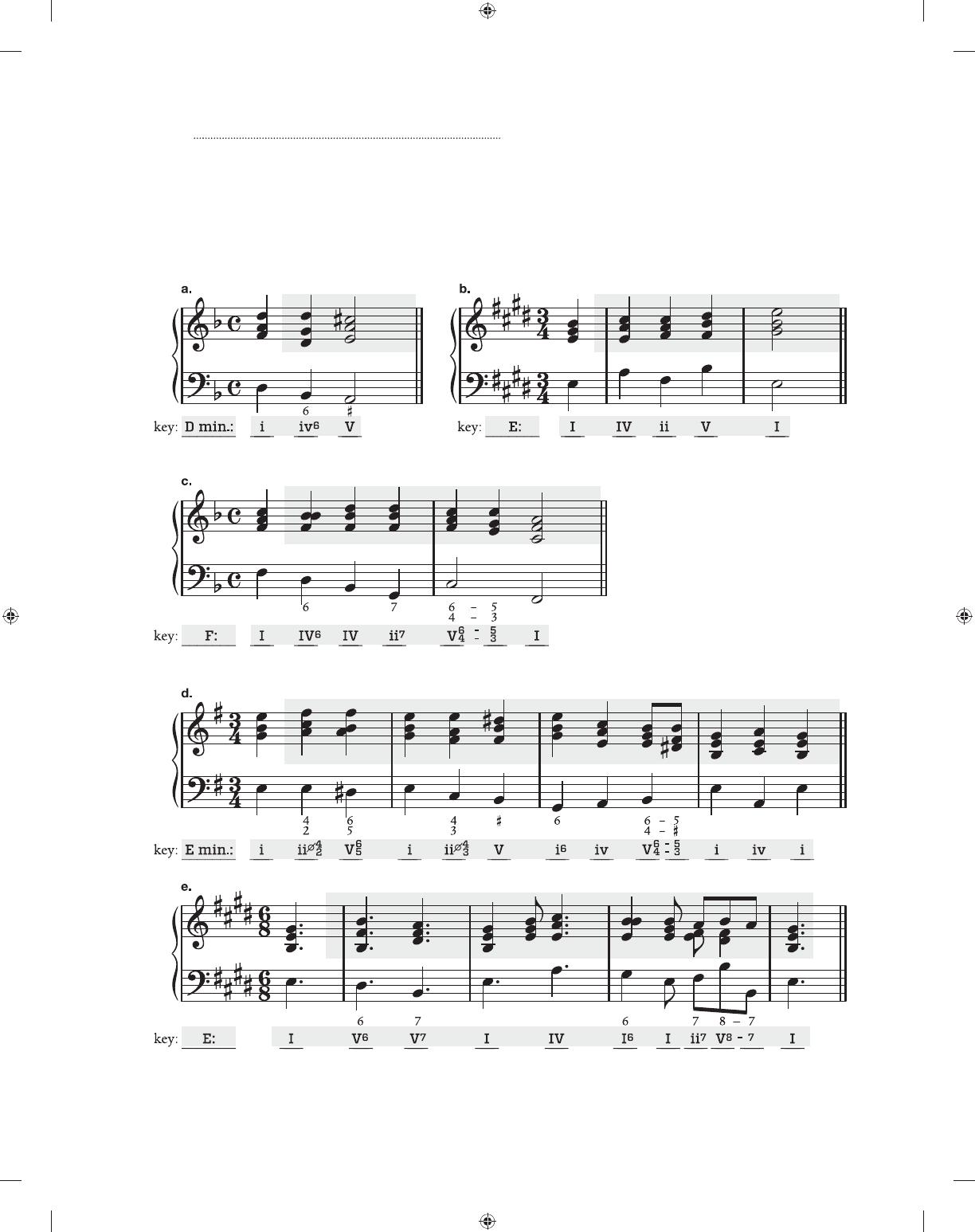
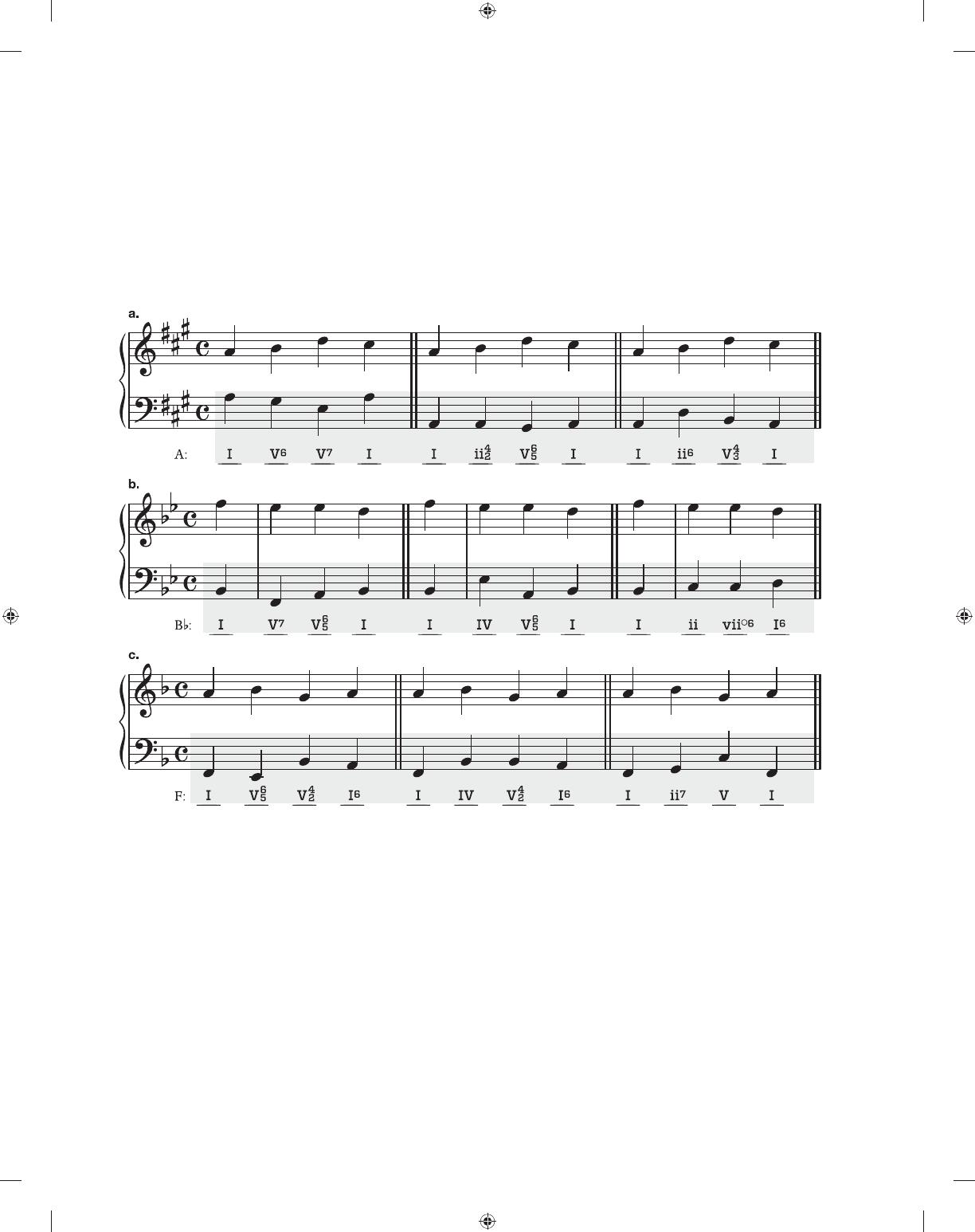
1. Realize each figured bass in keyboard format. Then label the key and Roman
numerals.
230 | CHAPTER 18 | Approaching V: IV6, ii, ii7, and IV7
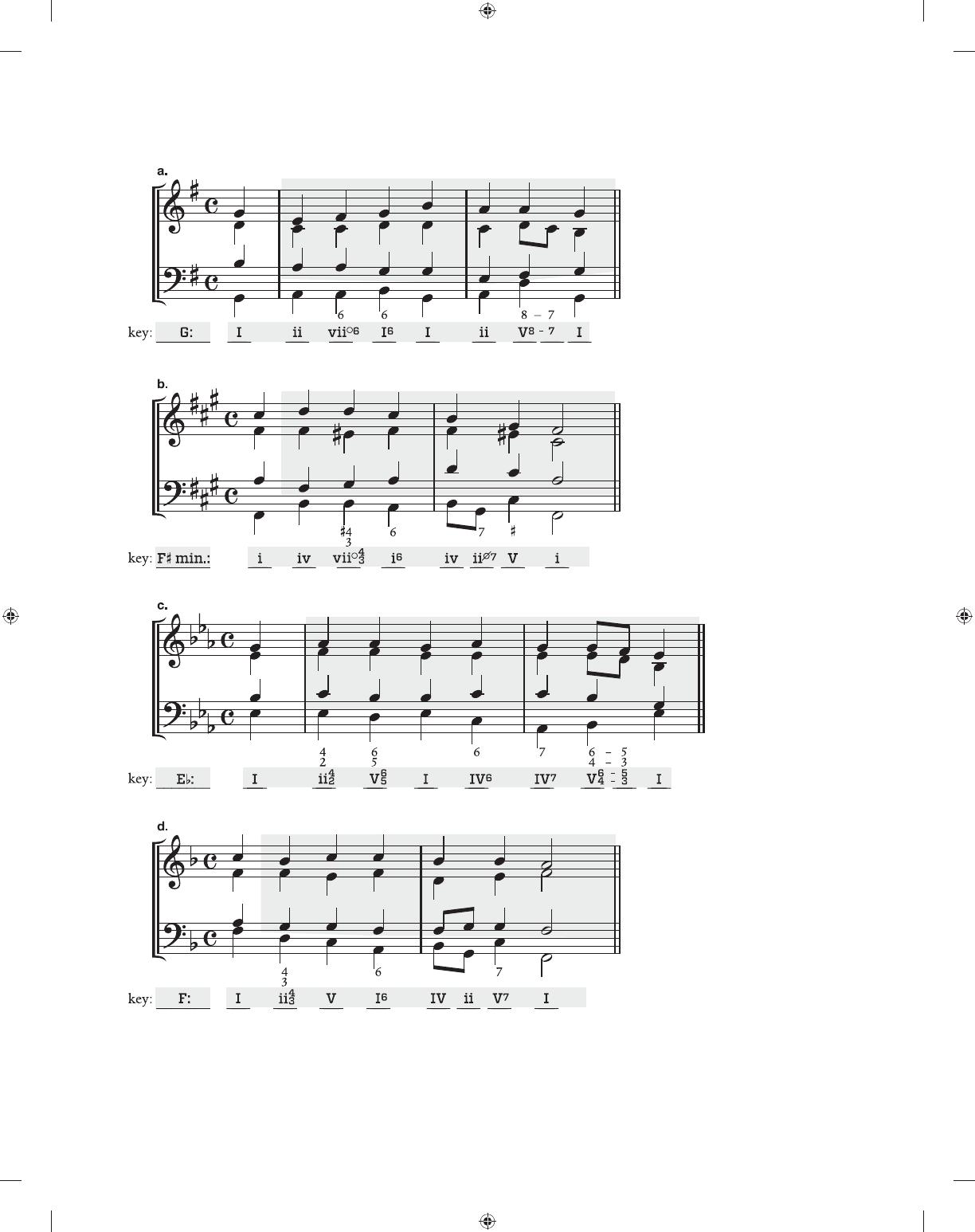
2. Realize each figured bass in SATB format. Then label the key and Roman numerals.
D. Realizing Figured Bass | 231
NAME:
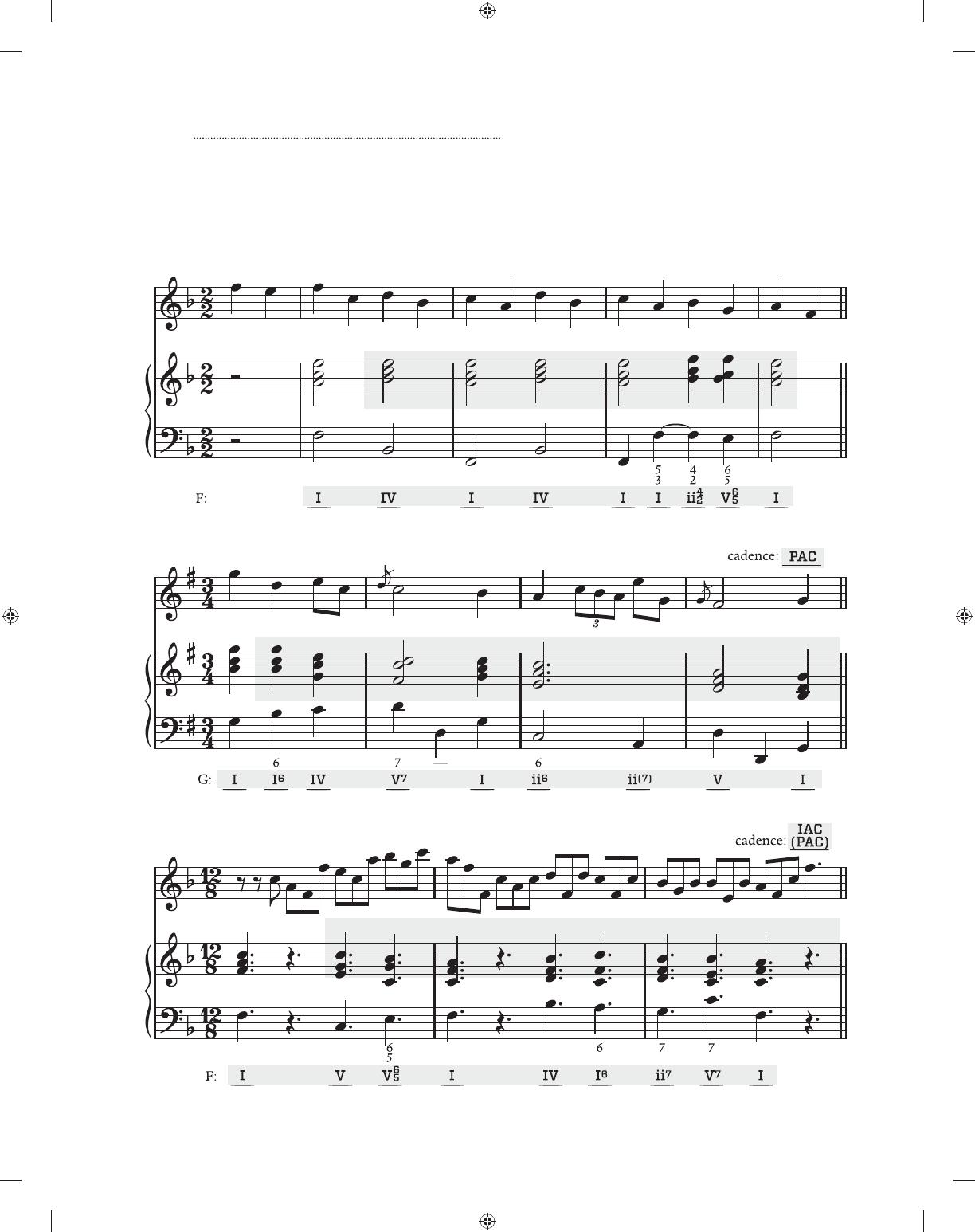
3. Realize the figured bass accompaniment for each excerpt. Do not worry about par-
allel perfect intervals between your figured bass realization and the given melody.
Then label the Roman numerals and cadences.
a. Élisabeth Jacquet de la Guerre, Violin Sonata in F, iii
b. Carl Friedrich Abel, Flute Sonata, Op. 6, No. 6, iii
c. Tomaso Albinoni, Sonata, Op. 4, No. 3, iv
232 | CHAPTER 18 | Approaching V: IV6, ii, ii7, and IV7
E. HARMONIZING MELODIES
1. For each of the melodic fragments below, suggest three different bass lines, along
with Roman numerals, that might be used to harmonize the melody.
• The harmonies for each should form a Tonic–Dominant–Dominant–Tonic
progression or a Tonic–Subdominant–Dominant–Tonic progression.
• Do not fill in the inner voices.
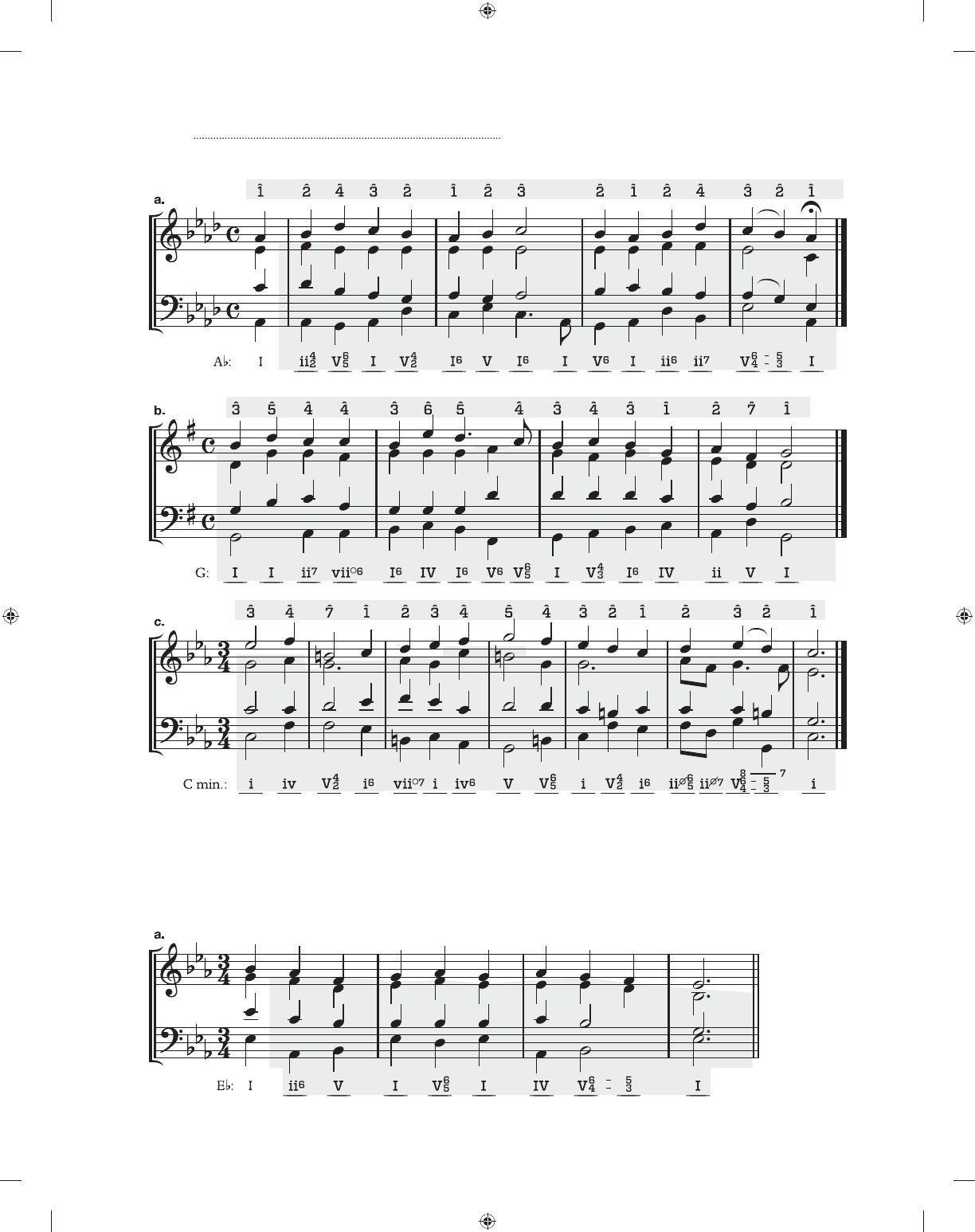
2. Harmonize the melodies. Each note of the melody should be harmonized with a
separate chord.
• First label the scale degrees. Notice any scale-degree patterns that might sug-
gest a standard harmonization.
E. Harmonizing Melodies | 233
NAME:
3. Harmonize the following melodies:
• Write a bass line and Roman numerals.
• Then fill in the inner voices (SATB format).
• Harmonize each note with a different chord, and use only I, V, V7, and their
inversions, along with the most common Subdominant chords—that is, IV (or
iv), ii6, or ii6
5.
234 | CHAPTER 18 | Approaching V: IV6, ii, ii7, and IV7
4. Harmonize the following melodies—the same as seen in (1) above—but this time,
in each use at least one of the following chords: ii5
3, IV6 (or iv6), ii7 (or ii7), or IV7.
F. COMPOSITION
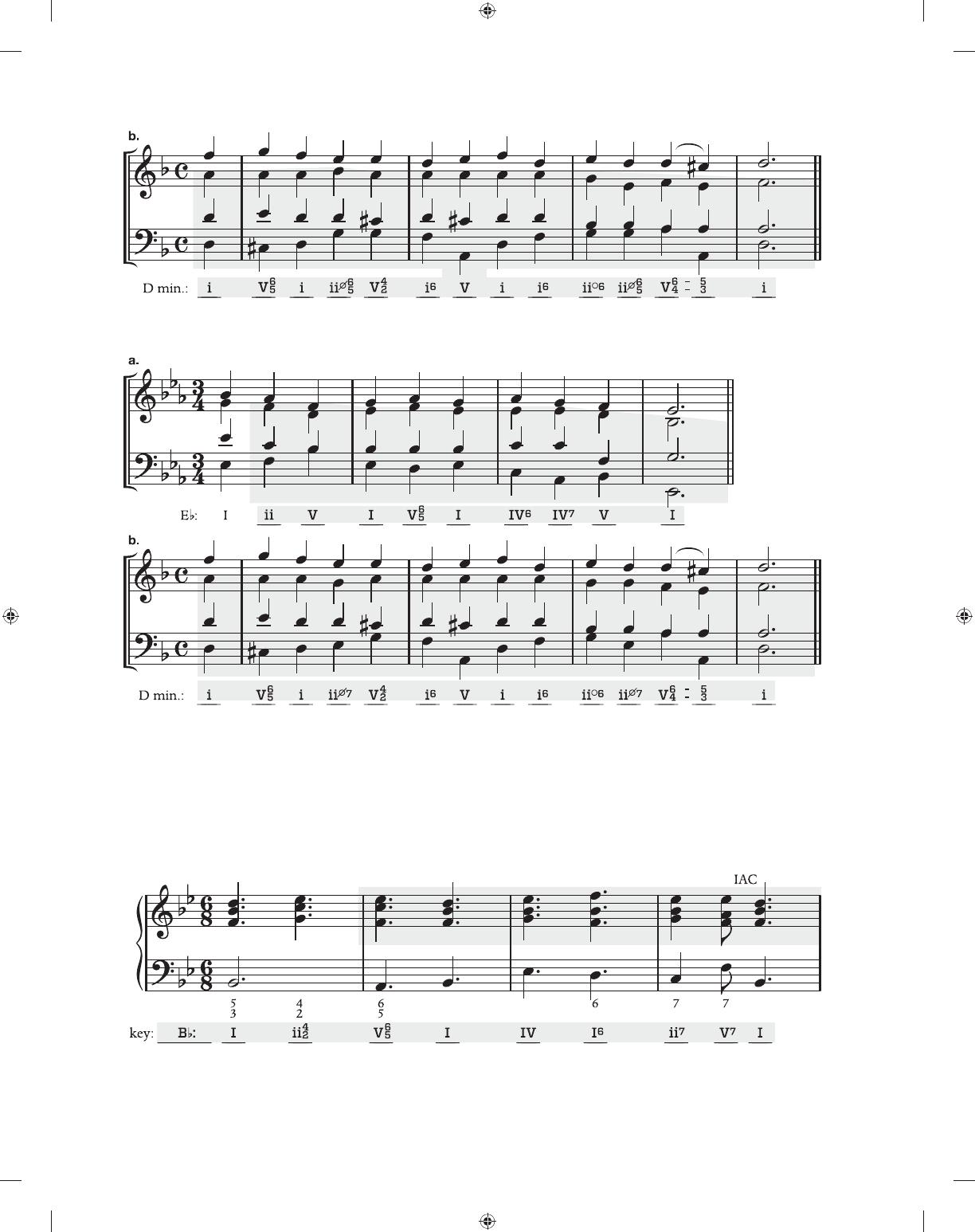
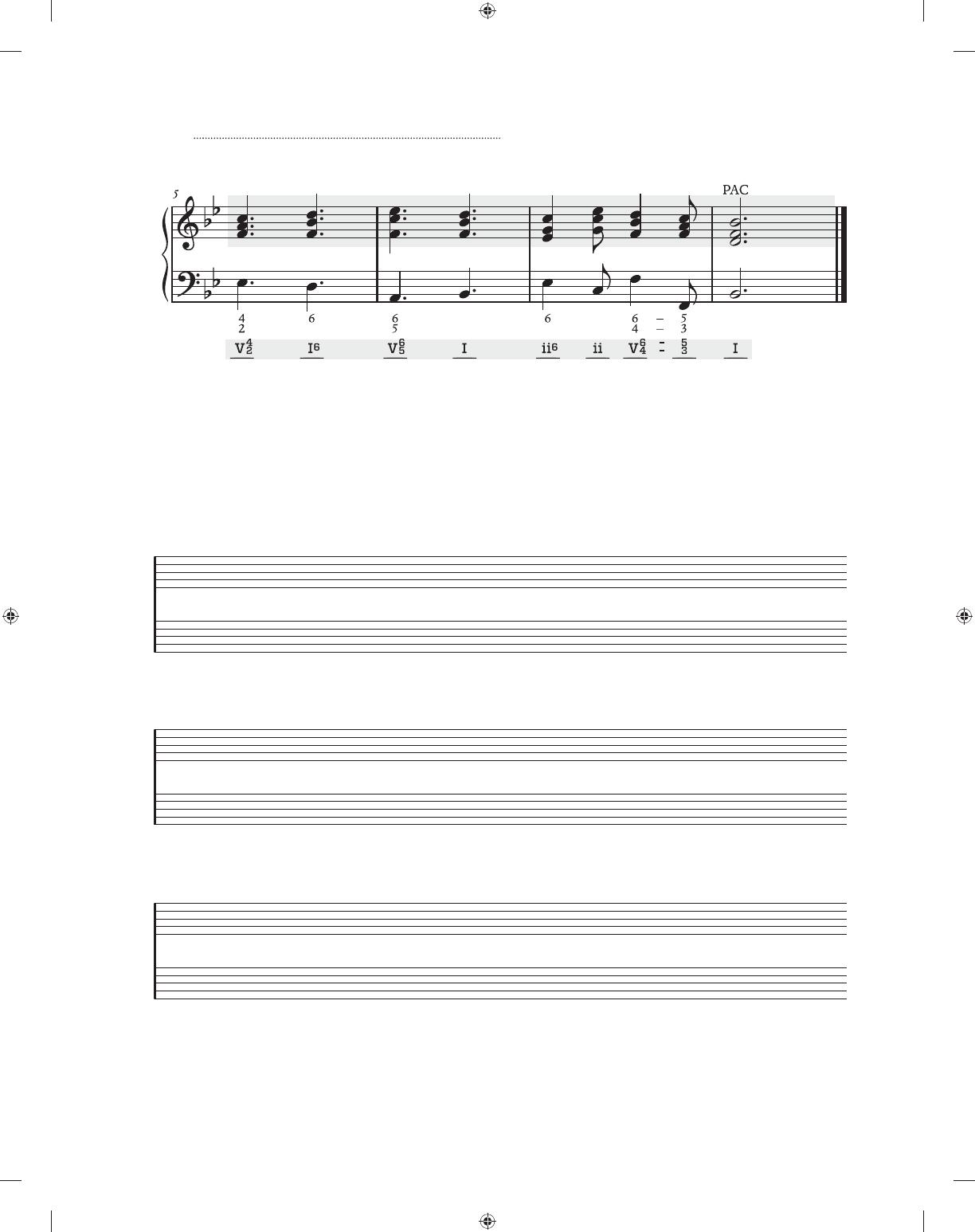
1. Realize the figured bass in keyboard format, then complete a Roman numeral
analysis. The first phrase should end with an IAC (m. 4) and the second with a
PAC(m. 8).
F. COMPOSITION | 235
NAME:
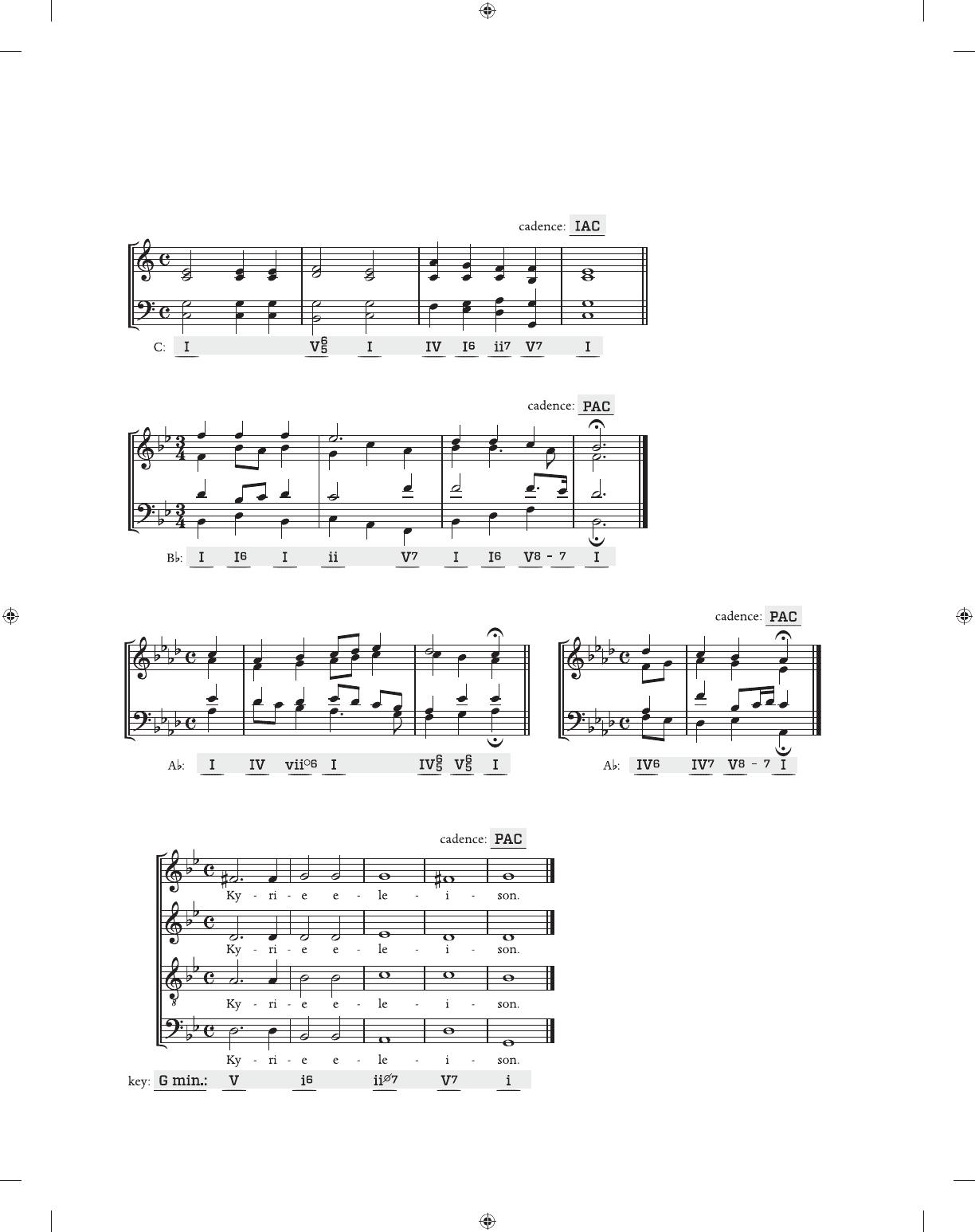
2. Compose a duet for two instruments or for piano, based on the harmonies in (1).
• The bass line of the duet should be the same as above.
• The melody should be based on the harmonies above, decorated by embellish-
ing tones. End the first phrase with an IAC (m. 4) and the second with a PAC
(m. 8).
• Be careful to avoid parallel perfect intervals between the bass and the melody.
236 | CHAPTER 18 | Approaching V: IV6, ii, ii7, and IV7
G. ANALYSIS
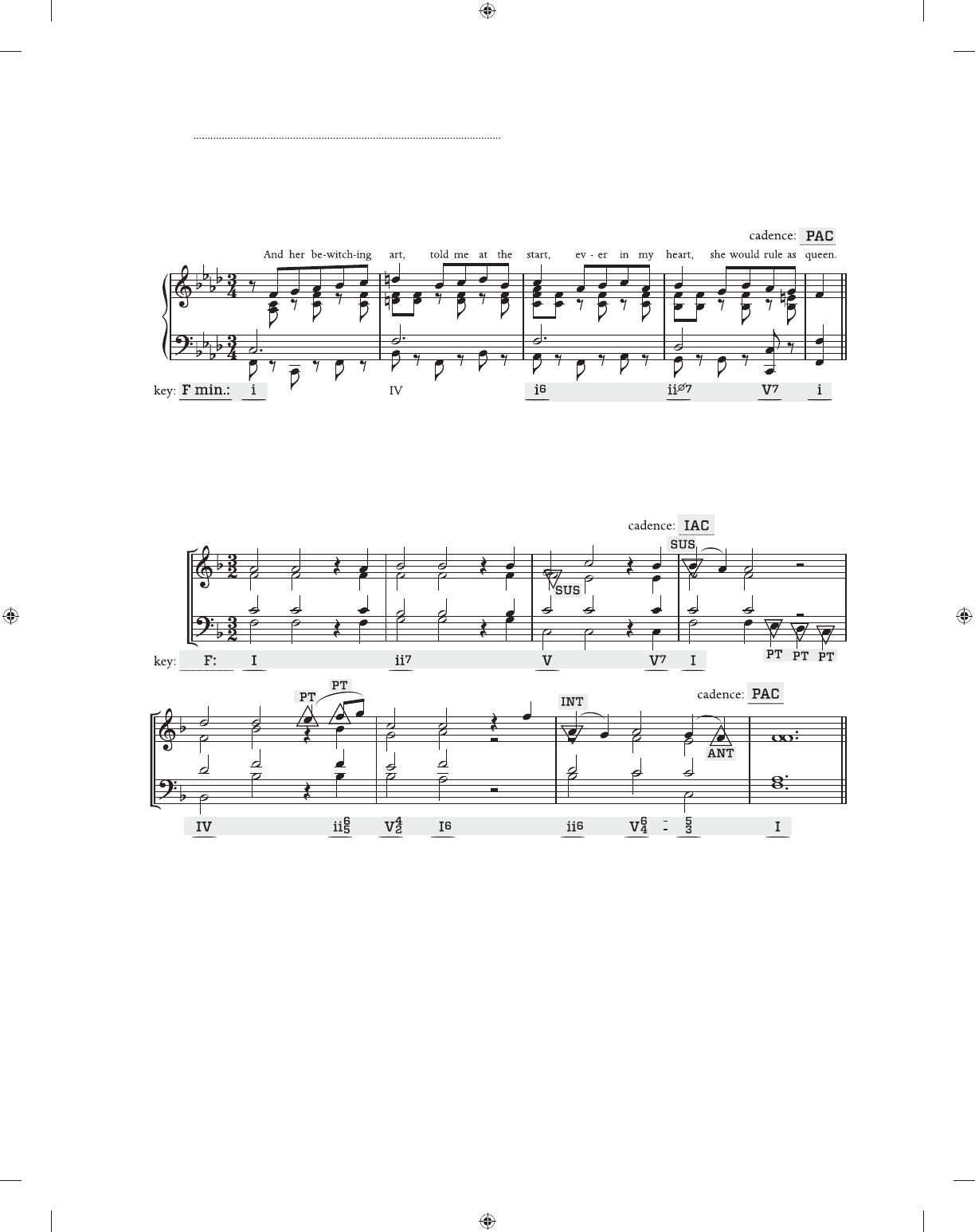
1. Label the key, Roman numerals, and cadences in the blanks provided.
a. Frederick Atkinson, “Morecambe”
b. J. S. Bach, Chorale 192
c. J. S. Bach, Chorale 117
d. J. M. Nunes Garcia, Matinas e encomendação de defuntos
NAME:
G. Analysis | 237
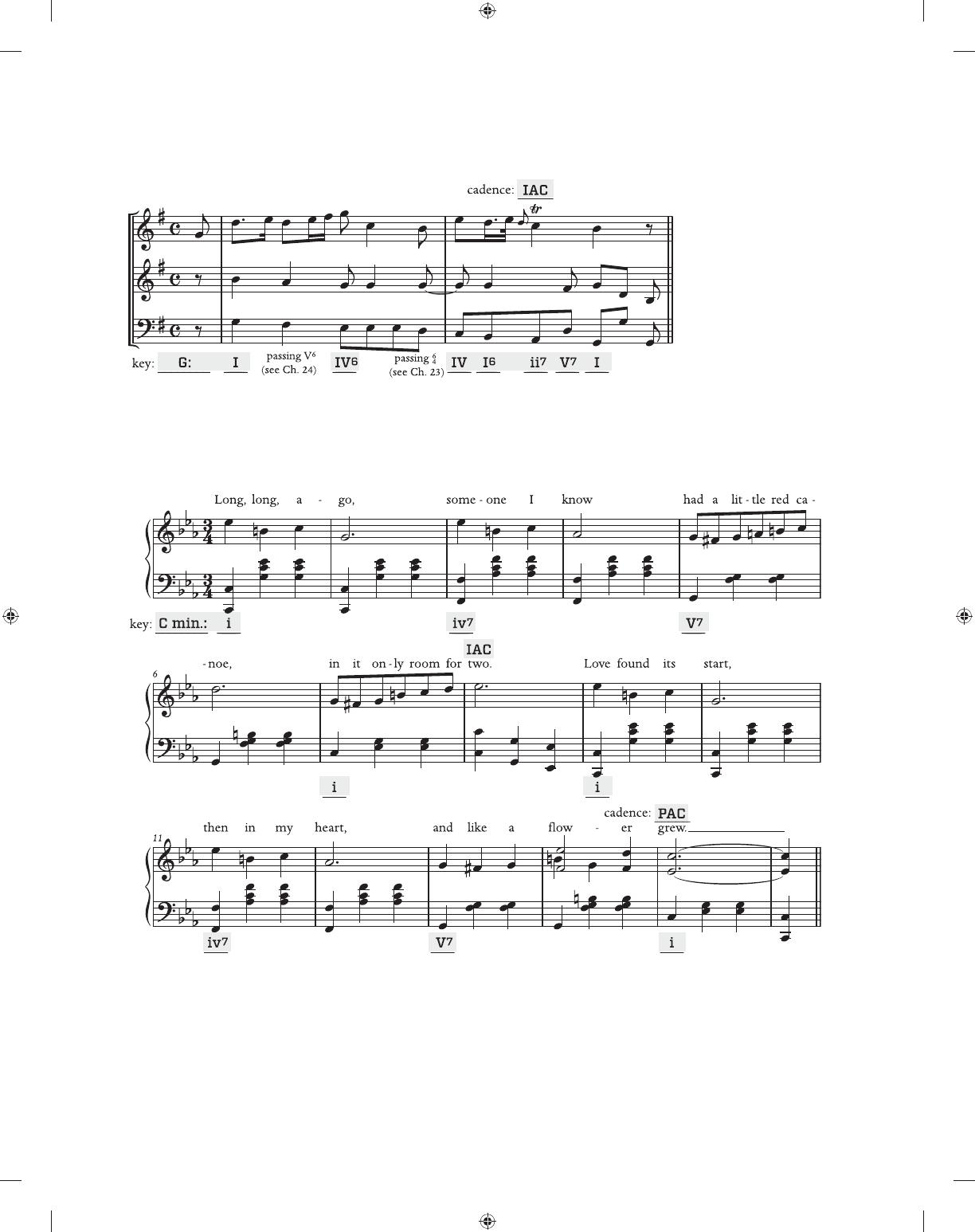
e. George Gershwin, “Argentina”
The chord in measure 2 has already been labeled.
f. G. F. Handel, “Lascia ch’io pianga” (“Let Me Weep”)
Also label the embellishing tones.
• What rhythmic and melodic features make the beginning of the phrase sound
stable?
• What features create a sense of momentum as the music approaches the
cadence?
238 | CHAPTER 18 | Approaching V: IV6, ii, ii7, and IV7
g. Domenico Gallo, Trio Sonata No. 1, i
Two of the chords have already been labeled.
h. Robert “Bobo” King, “Beautiful Ohio”
Locate and label the cadences. (Note: there is at most one chord per measure here.)
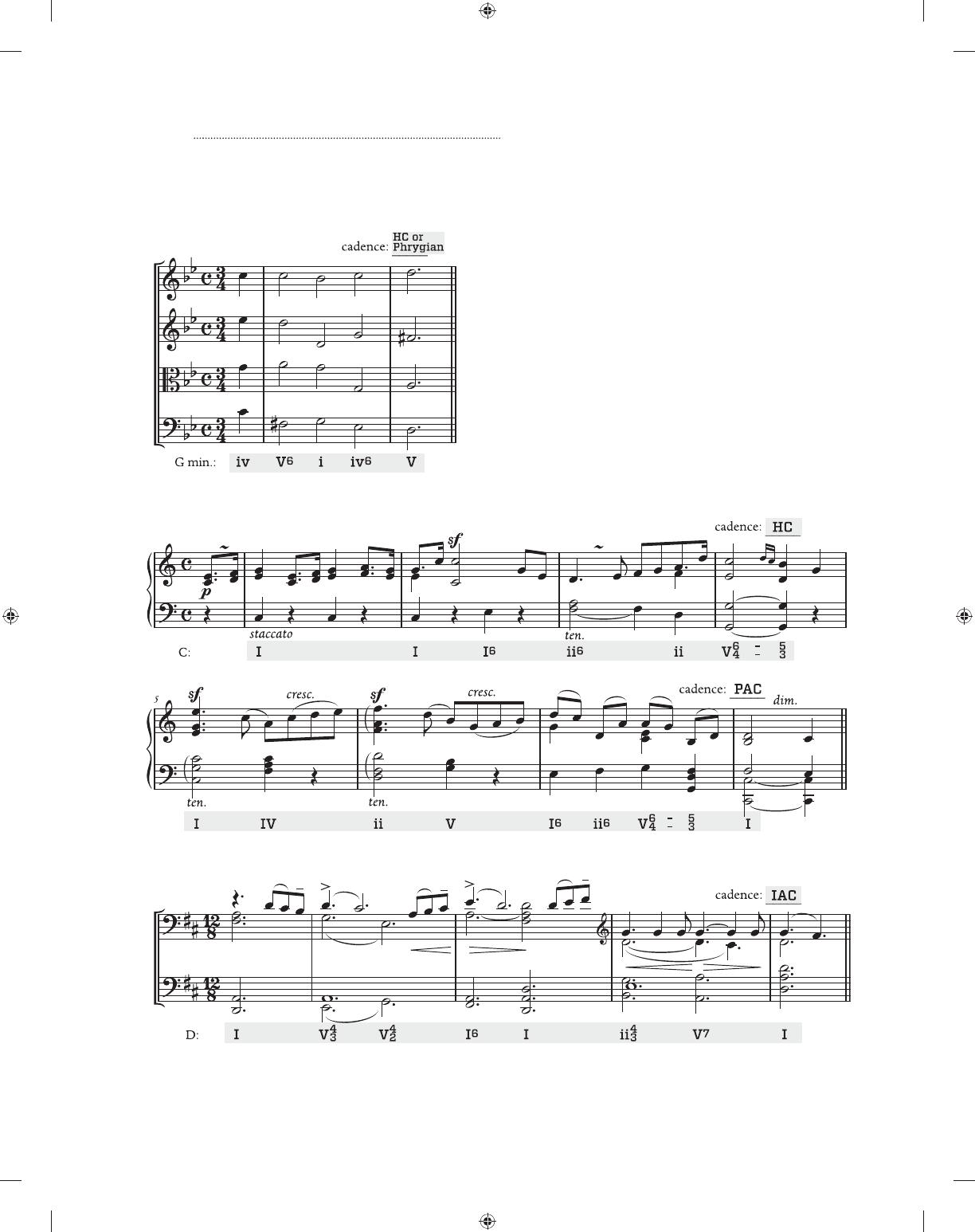
NAME:
2. Label the Roman numerals and cadences in the following excerpts.
a. Arcangelo Corelli, Concerto Op. 6, No. 8 (“Christmas Concerto”)
b. Jane Guest, “Marion”
c. Pyotr Tchaikovsky, Symphony No. 5 in E Minor, ii
G. Analysis | 239
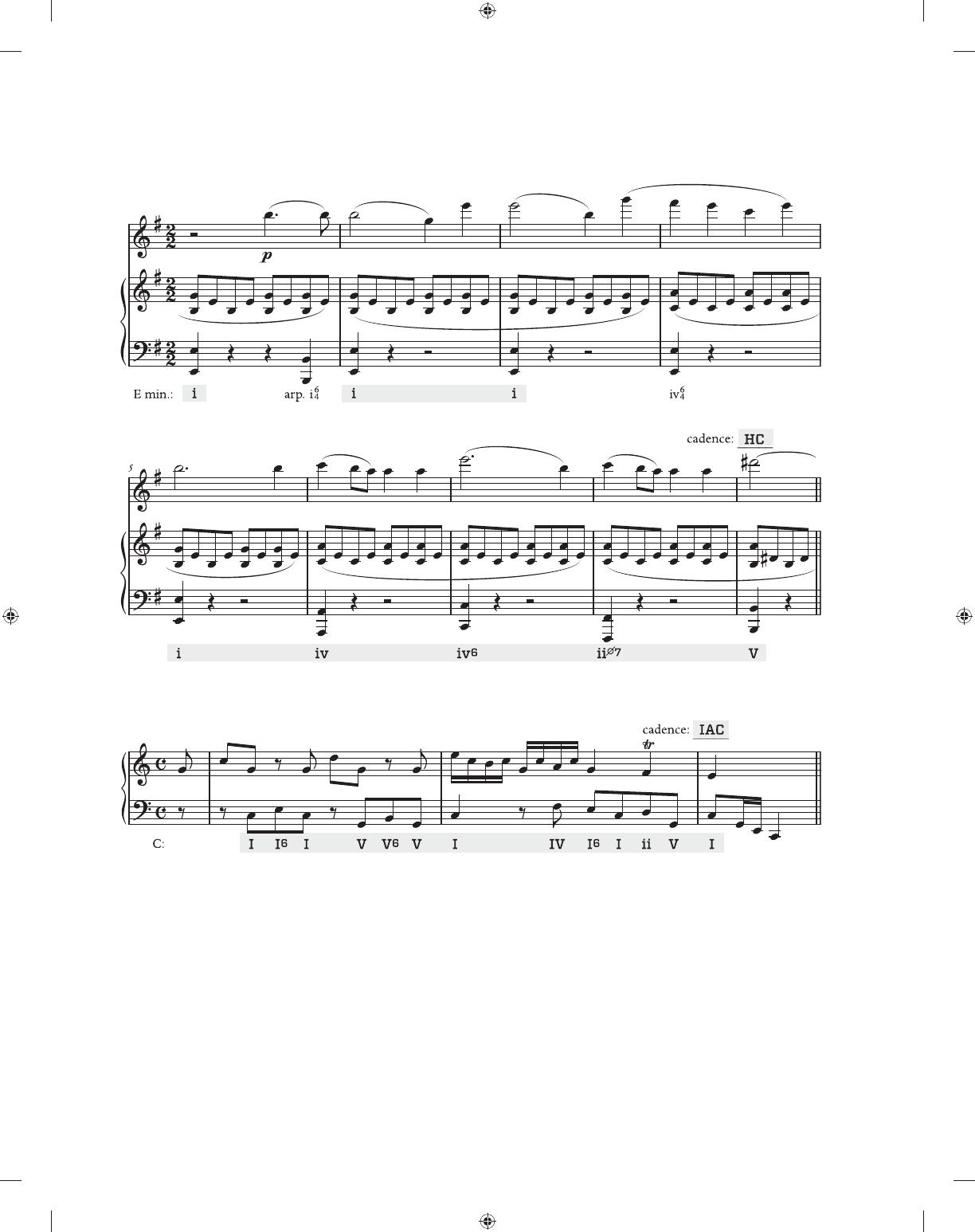
240 | CHAPTER 18 | Approaching V: IV6, ii, ii7, and IV7
d. Felix Mendelssohn, Concerto for Violin in E minor, i
The Roman numerals for two chords have already been provided.
e. Anna Bon, Harpsichord Sonata Op. 2, No. 6, i