B. Spelling Chords | 215
NAME:
A. QUESTIONS FOR REVIEW
1. What is the function of vii.7?
2. What chord tone (root, third, fifth, or seventh) of vii.7 needs an accidental in major
keys? In minor keys?
3. How many notes need to change when moving between vii.7 and V7? Which
note(s)? In what way?
4. What are the tendency tones in vii.7? How do they resolve?
5. What is a potential voice-leading problem when progressing from vii.7 to I? How
can you avoid it?
6. What is similar about vii.7 and vii7? What is dierent?
B. SPELLING CHORDS
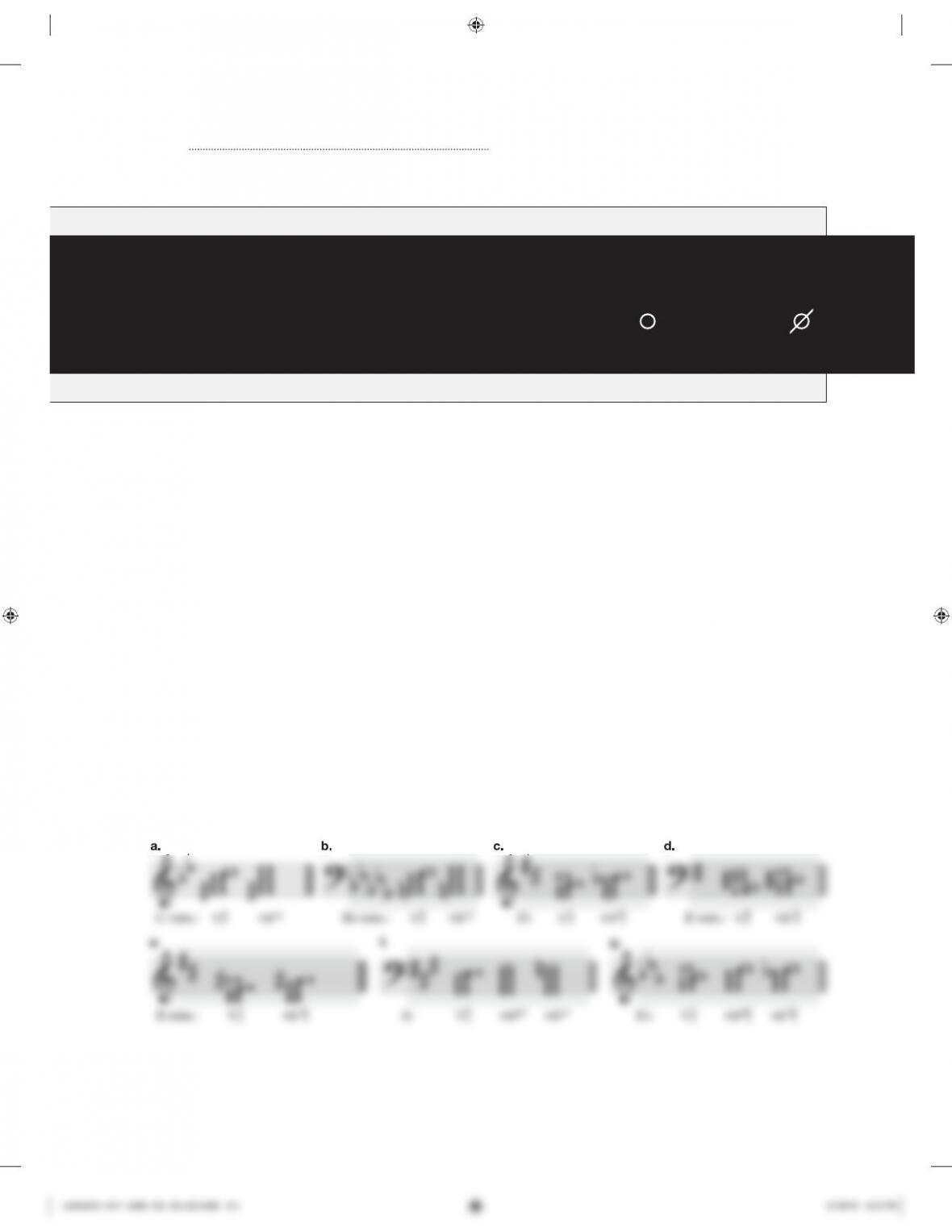
1. Write each of the indicated key signatures; then supply the requested chords. Note
that in each case, the V7 and vii.7 chords share three notes.
chapter
17 The Leading-Tone Seventh
Chord: vii 7 and vii 7
216 | CHAPTER 17 | The Leading-Tone Seventh Chord: vii 7 and vii 7
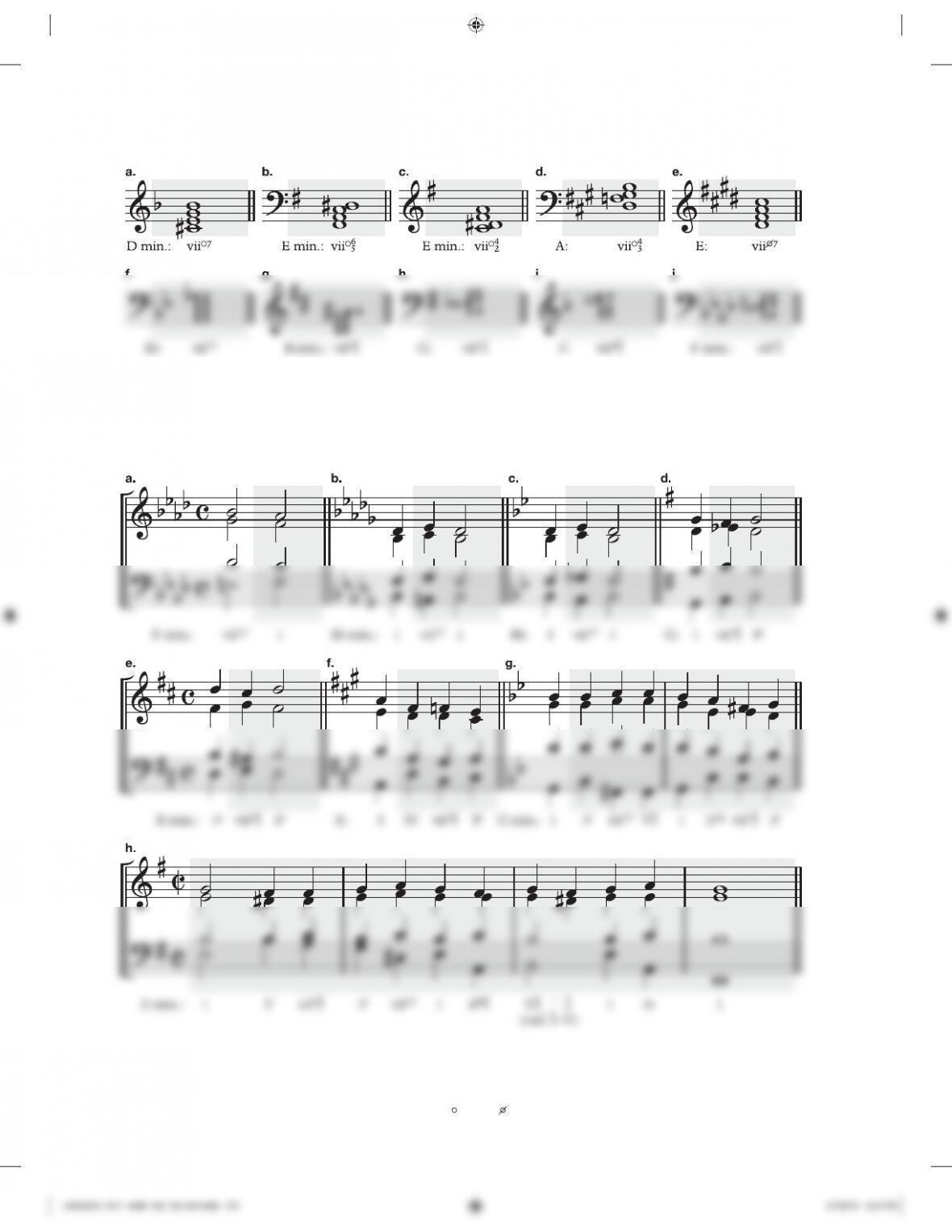
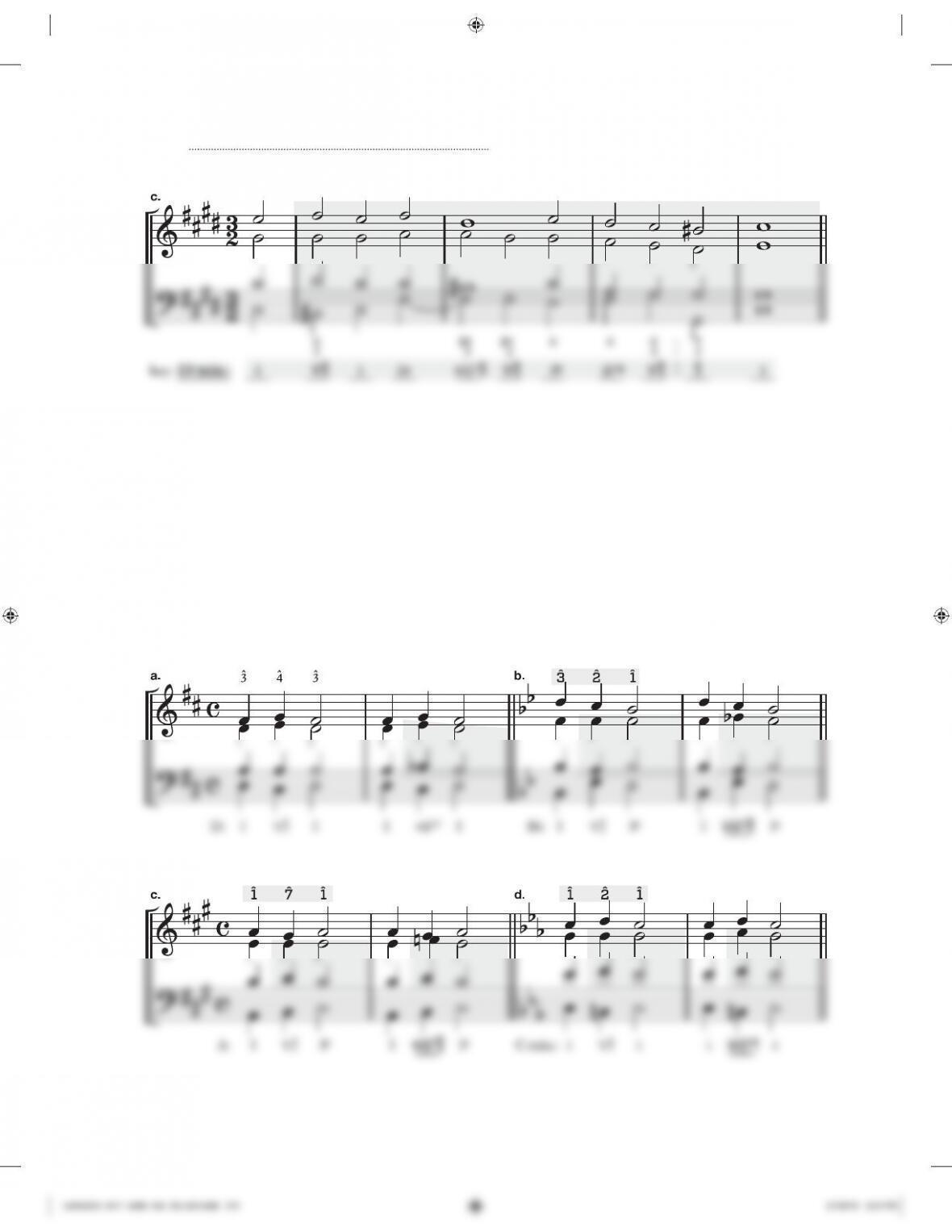
2. Write each of the indicated key signatures; then supply the requested chords.
C. REALIZING ROMAN NUMERALS
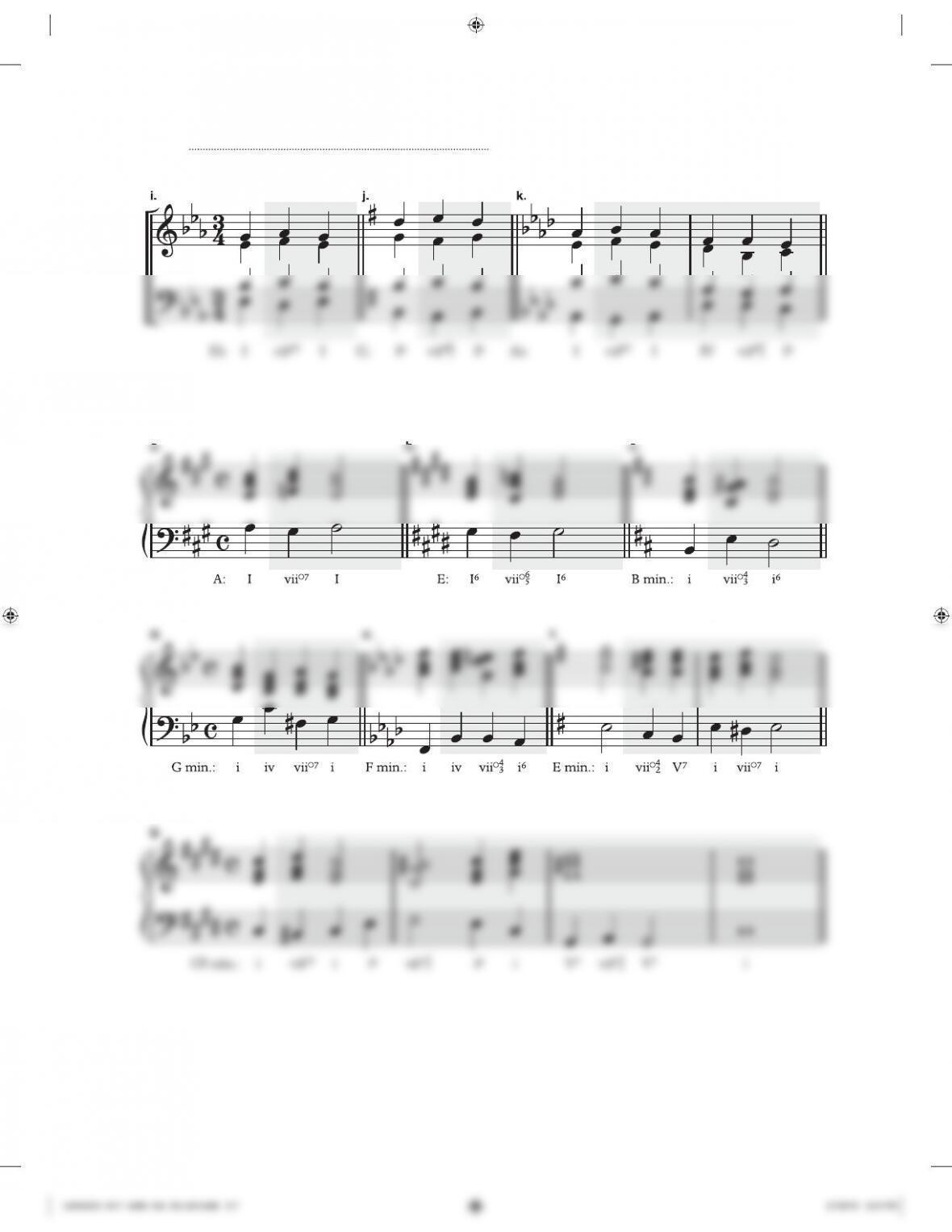
1. Realize the Roman numerals in SATB format.
C. Realizing Roman Numerals | 217
NAME:
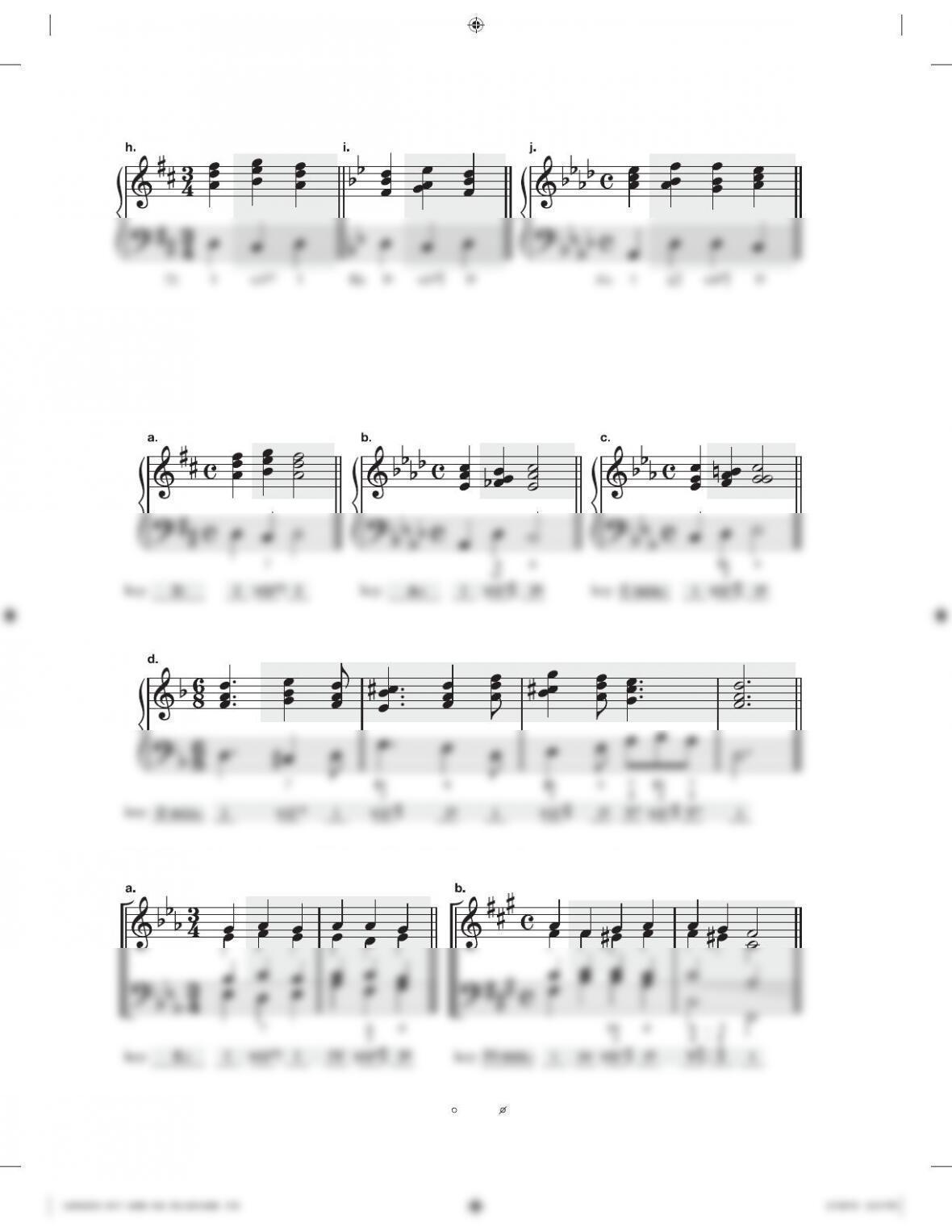
2. Realize the Roman numerals in keyboard format.
218 | CHAPTER 17 | The Leading-Tone Seventh Chord: vii 7 and vii 7
D. REALIZING FIGURED BASS
1. Realize each figured bass in keyboard format. Then label the keys and Roman
numerals.
2. Realize each figured bass in SATB format. Then label the keys and Roman numerals.
E. Harmonizing Melodies | 219
NAME:
E. HARMONIZING MELODIES
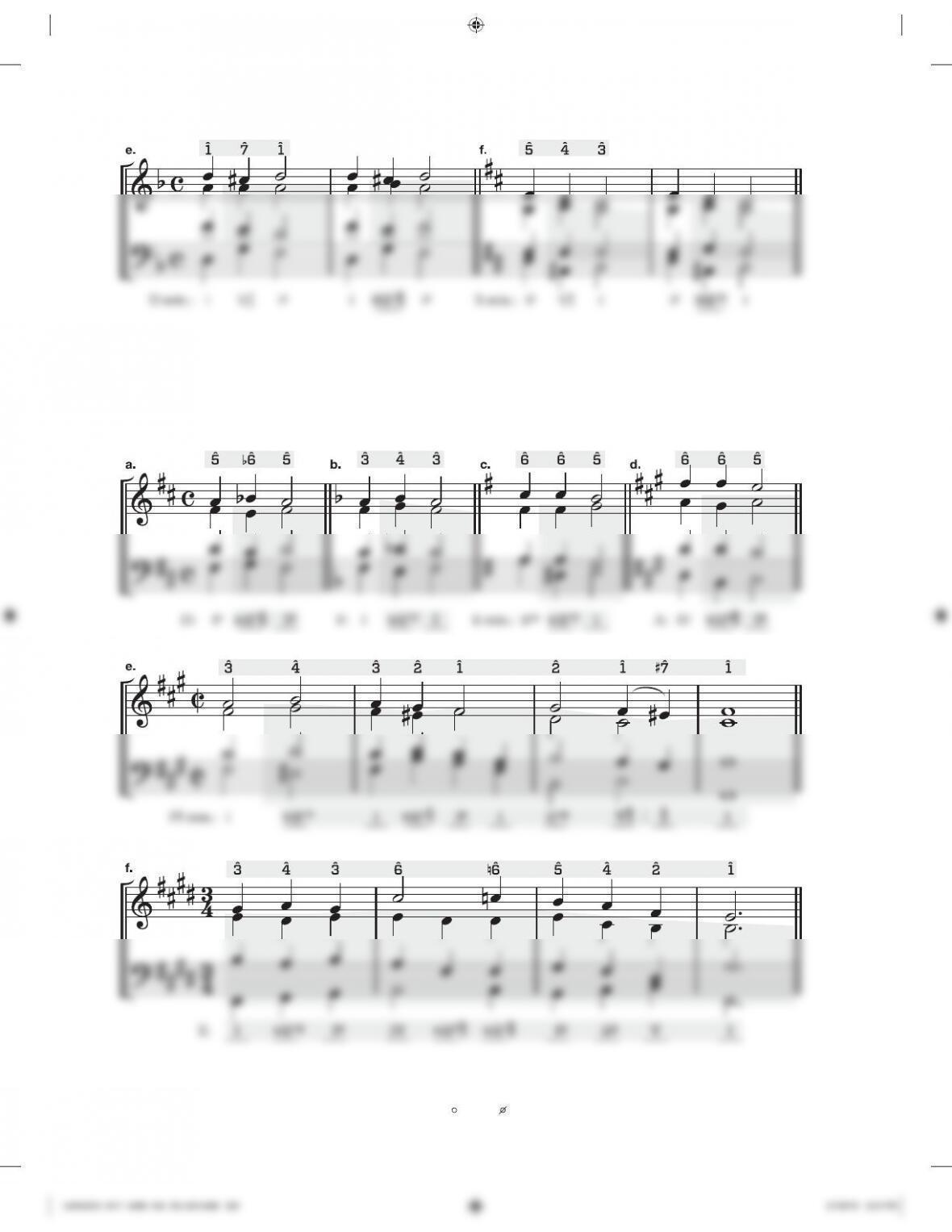
1. Harmonize each of the following short melodies:
• Label the scale degrees of the melody.
• Then, in SATB format, harmonize the melody in two ways: first using the
indicated inversion of V7, then using vii.7 or an inversion of vii.7. Remember to
use the appropriate accidentals.
• On the blank line provided, label the diminished seventh chord with Roman
numeral and figures to indicate its position or inversion.
220 | CHAPTER 17 | The Leading-Tone Seventh Chord: vii 7 and vii 7
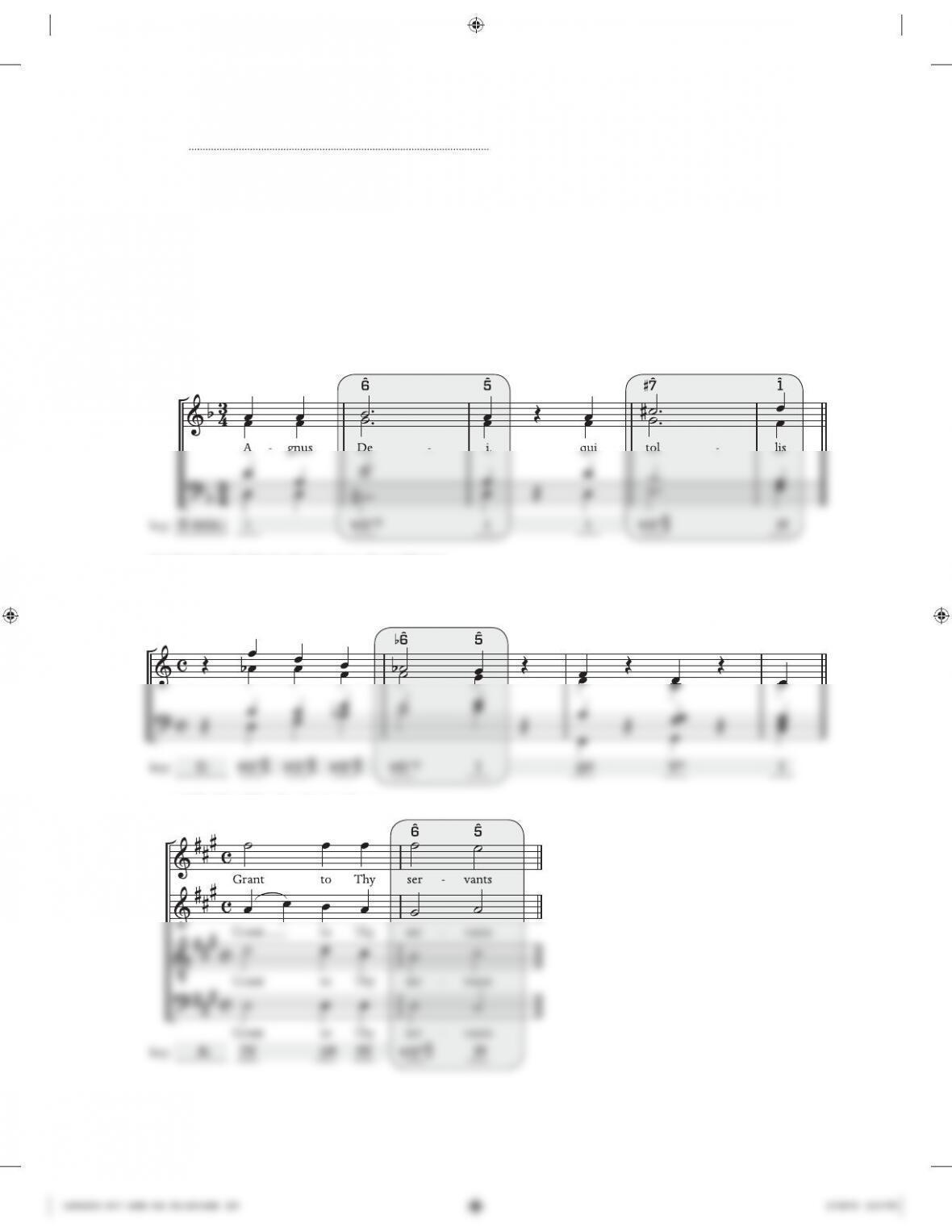
2. Harmonize each of the following melodies:
• Label the scale degrees of the melody.
• Then harmonize each note of the melody in SATB format.
• Use at least one vii.7 or vii7 chord (in root position or inversion) in each.
F. Analysis | 221
NAME:
F. ANALYSIS
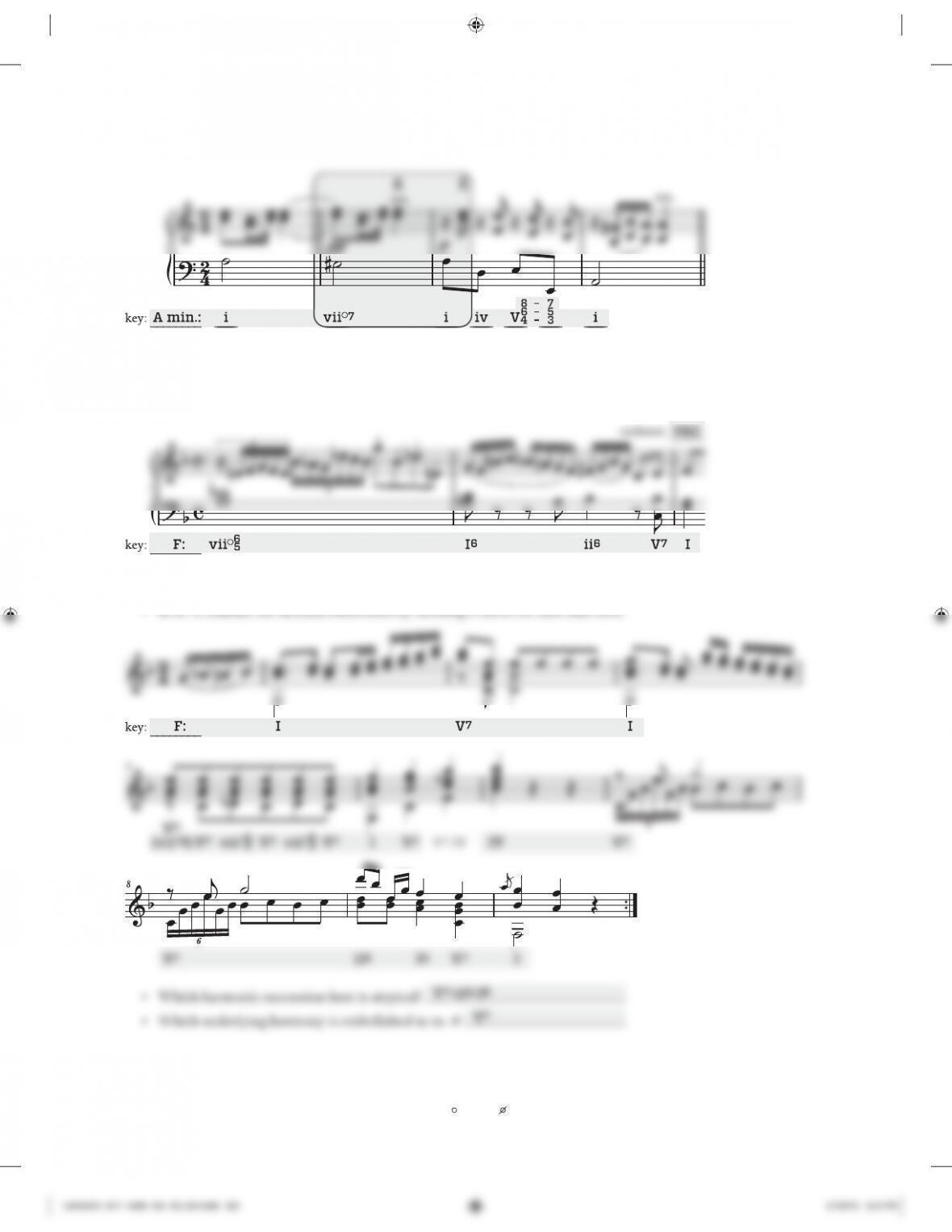
1. Analyze each of the following excerpts:
• Label the key and Roman numerals.
• Circle any instances of vii.7
–
I or vii7
–
I progressions (in root position or inver-
sion), and identify the scale degrees of the melody that are harmonized by these
progressions.
a. W. A. Mozart, Requiem Mass, K. 626, Agnus Dei
Translation: Lamb of God, who takes away [the world’s sins].
b. W. A. Mozart, “Schon weichet dir, Sonne” (Already you depart, sun), from King
Thamos
c. Felix Mendelssohn, Paulus, No. 1
d. C. P. E. Bach, Rondo Wq. 56, iii
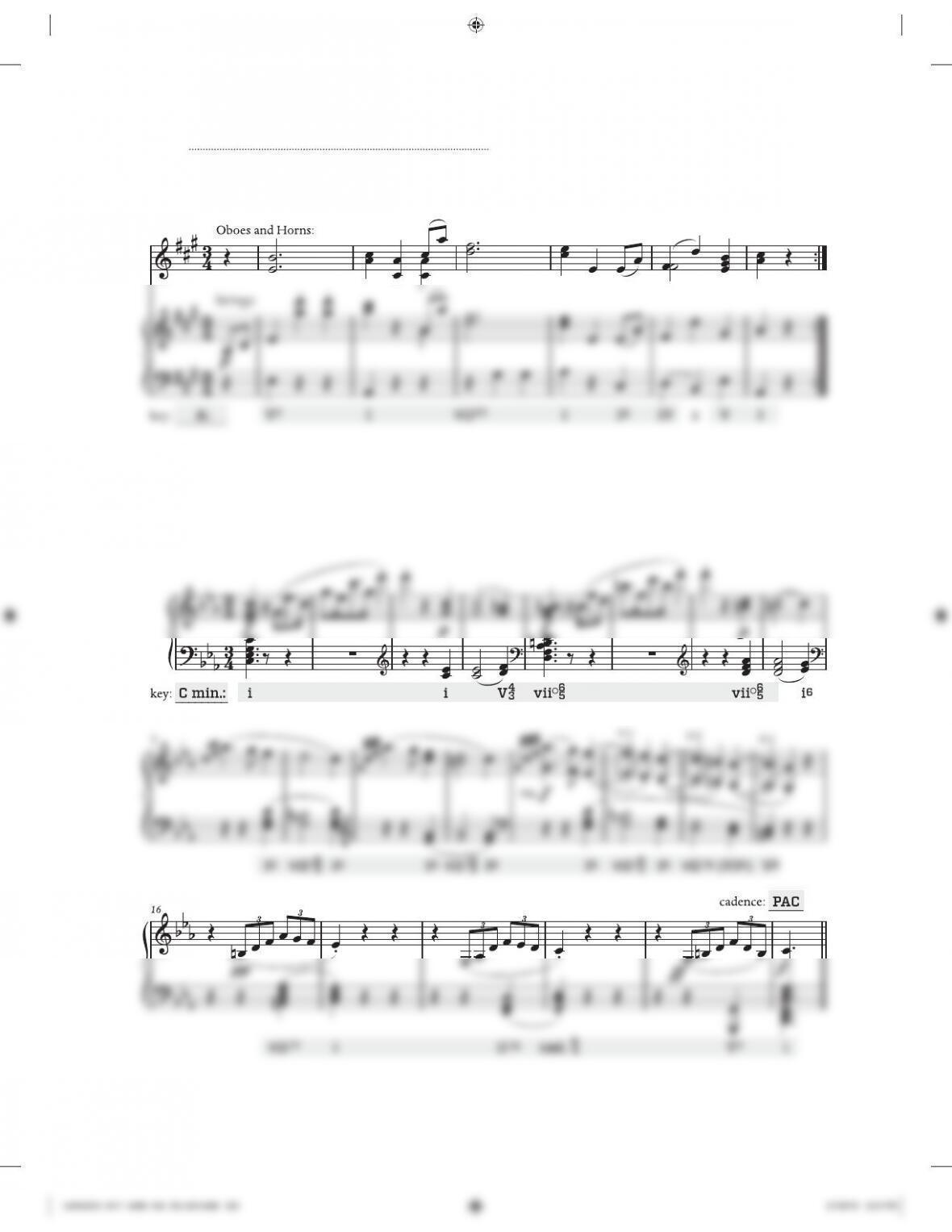
2. Analyze each of the following excerpts by labeling the key and Roman numerals.
Where indicated, identify cadences.
a. Joseph Haydn, Keyboard Sonata in F, Hob. XVI: 29
b. Fernando Sor, Eight Short Pieces for Guitar, Op. 24, No. 4
• In m. 4, indicate the detailed harmonies by labelling a chord for each bass note.
NAME:
c. Joseph Haydn, Symphony No. 64, Trio
d. Ludwig van Beethoven, Piano Sonata, Op. 10, No. 1, i
• In what ways are the rhythm, harmony, and melody of measures 1
–
4 like
measures 5
–
8? In what ways are they dierent?
• What is unusual about the treatment of the cadential 6
4 in this passage?
SUS
224 | CHAPTER 17 | The Leading-Tone Seventh Chord: vii 7 and vii 7
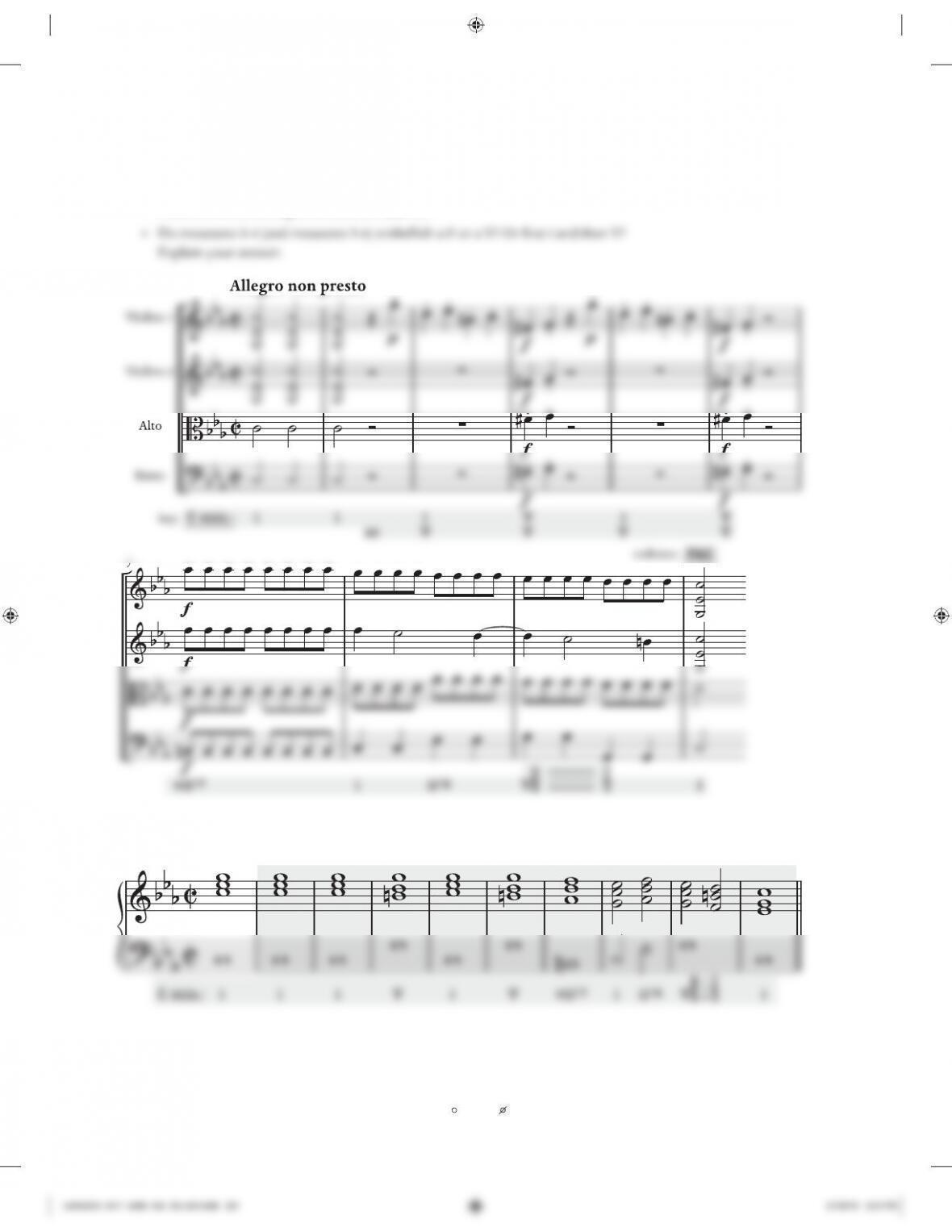
3. François Joseph Gossec, Overture to Toinon et Toinette
• Label the Roman numerals, one chord per measure in mm. 1
–
7 and 10, two
chords in measures 8
–
9 (consider V6
4
–
–
5
3 as two separate chords).
• Label the embellishing tones and the cadence.
On the sta below, complete a simplified harmonic model of this passage based on
your Roman numeral analysis.