B. Realizing Roman Numerals | 205
NAME:
A. QUESTIONS FOR REVIEW
1. What are some common progressions that involve IV moving directly to a tonic
chord?
2. What are some melodic patterns that are harmonized with I
–
IV
–
I?
3. Which is more common: a root-position IV moving to I6, or IV6 moving to root-
position I?
4. What is a plagal cadence? After what other type of cadence does it often appear?
B. REALIZING ROMAN NUMERALS
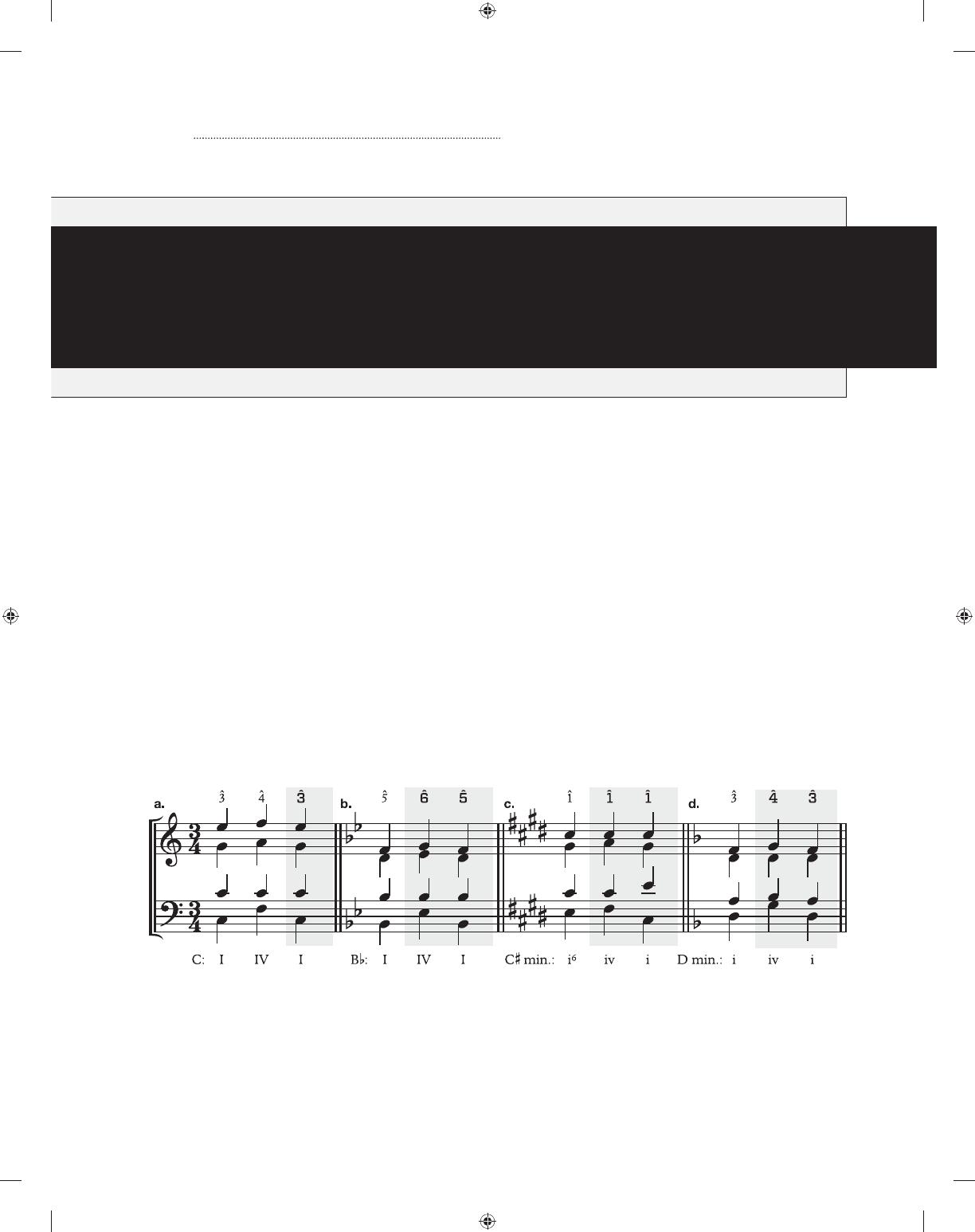
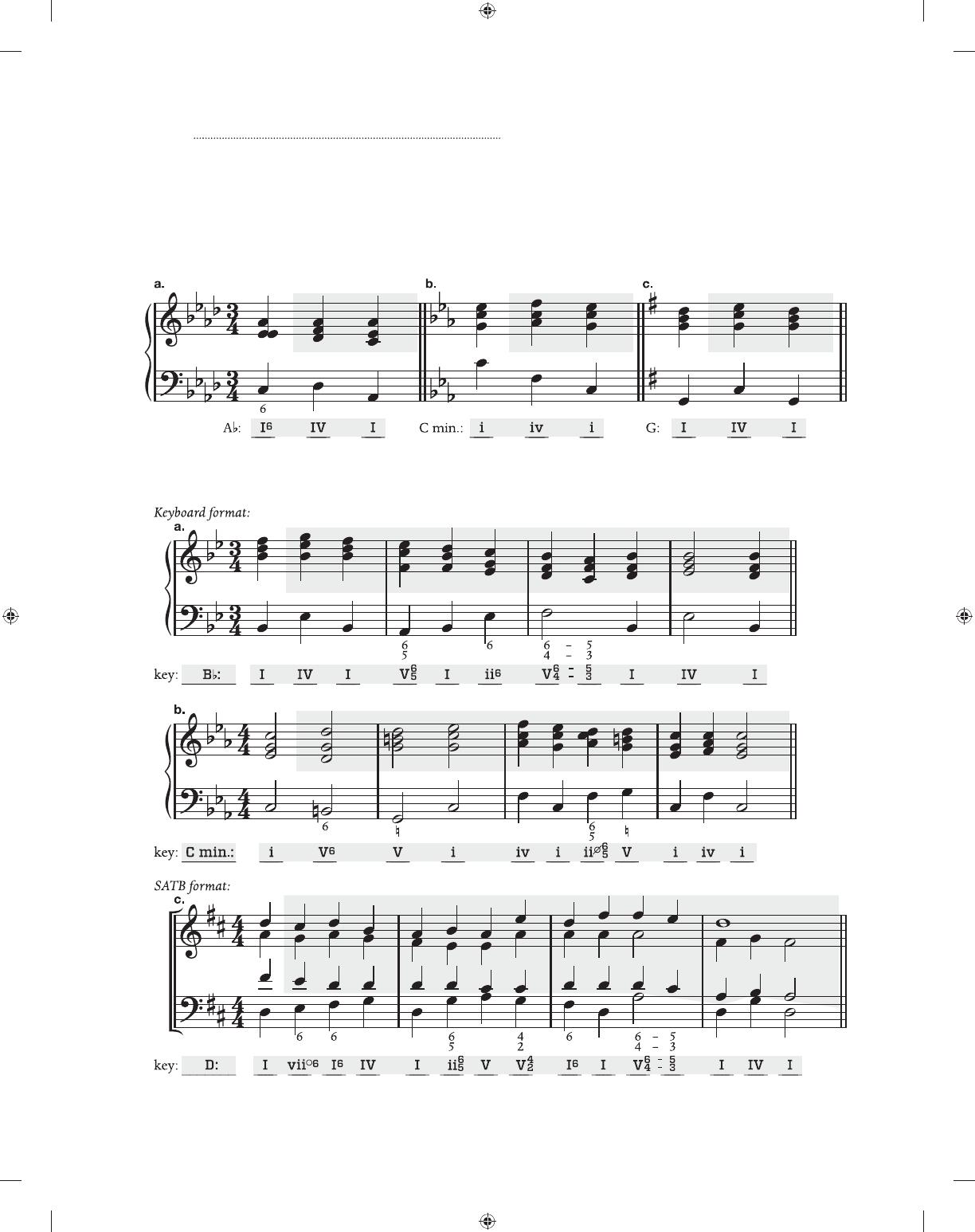
1. Realize each of these short progressions, then label the scale degrees of the melody.
chapter
16 Leading to the Tonic: IV
206 | CHAPTER 16 | Leading to the Tonic: IV
2. Realize the Roman numerals for each progression. For each I
–
IV
–
I progression,
label the scale degrees in the melody.
C. Realizing Figured Bass | 207
NAME:
C. REALIZING FIGURED BASS
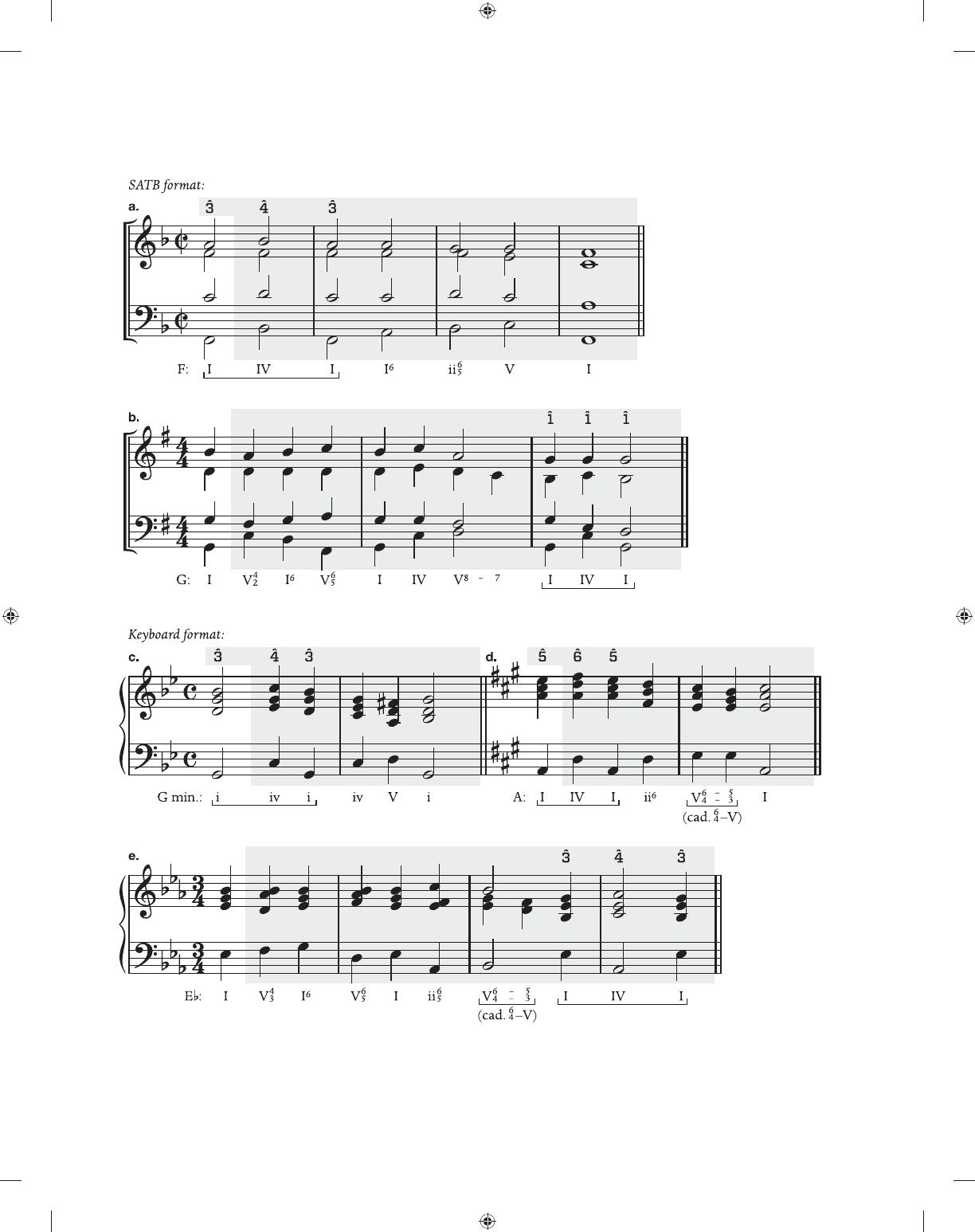
1. Realize each short figured bass in keyboard format. Then label the chords with
Roman numerals in the key indicated.
2. Realize each figured bass. Then determine the key and label the chords with
Roman numerals.
208 | CHAPTER 16 | Leading to the Tonic: IV
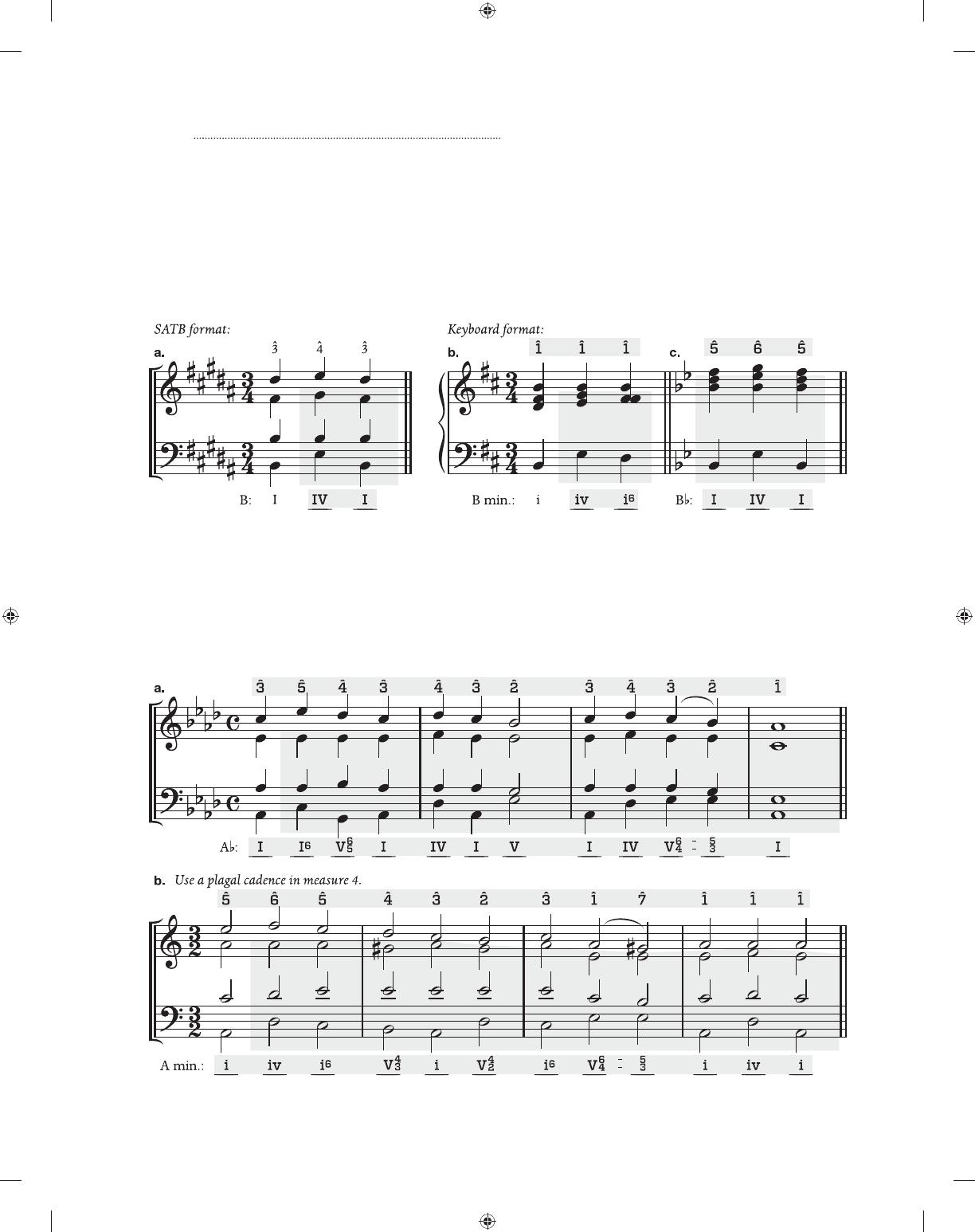
3. Realize the following figured bass accompaniments in keyboard format:
• Complete the upper voices on the middle staff, being careful to avoid voice-
a. Ignatius Sancho, “The Sweetest Bard”
(In some chords you may need to double a note at the unison.)
b. “Ladies Lamentation,” from Calliope Collection
D. Harmonizing Melodies | 209
NAME:
D. HARMONIZING MELODIES
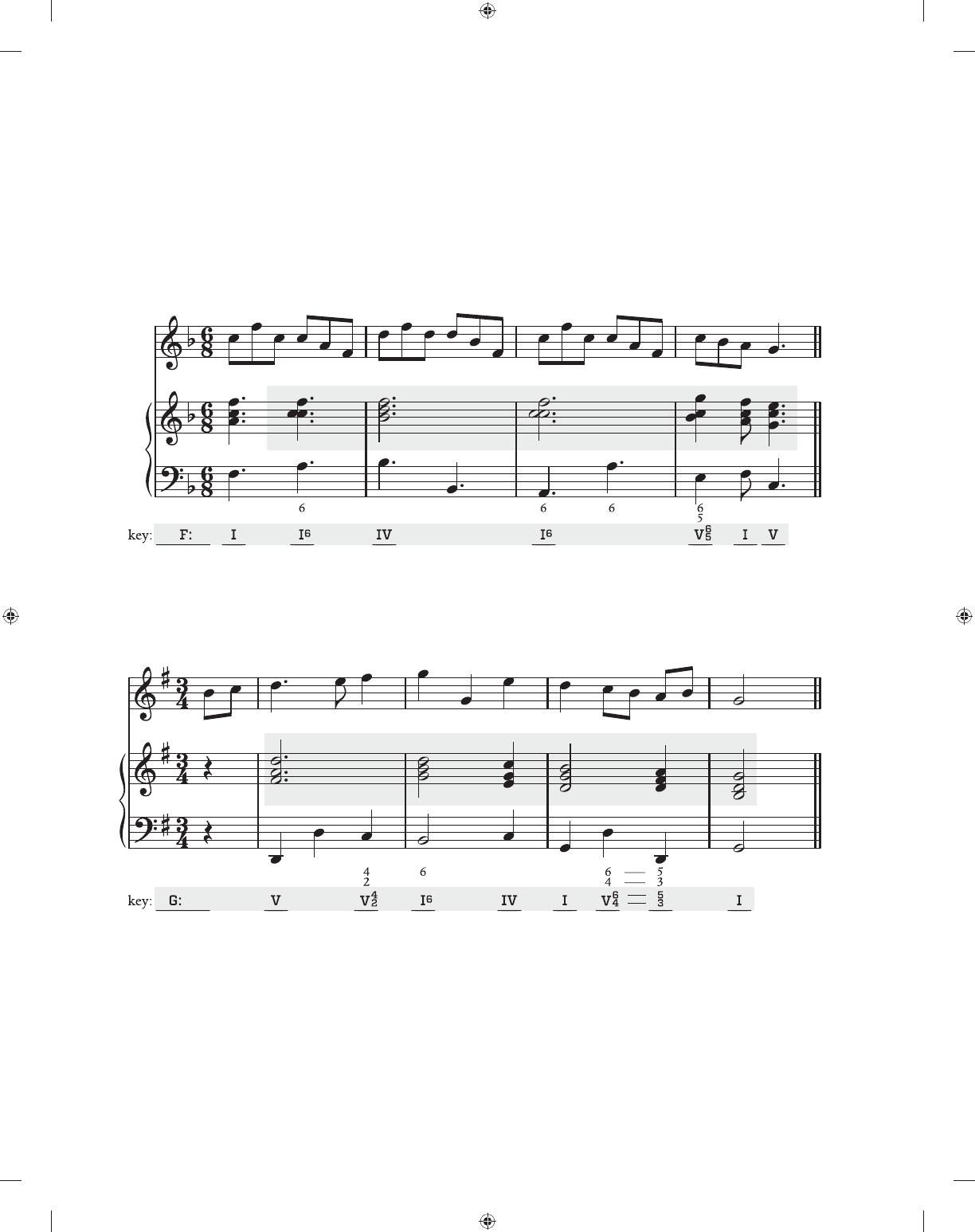
1. Harmonize each short melody below:
• Label the scale degrees.
• Select one chord for each note; supply Roman numerals and a bass line.
• Fill in the inner voices.
2. Harmonize these melodies.
• Label the scale degrees of these melodies.
• Then harmonize each melody by providing a bass line and Roman numerals.
o For each melody, use at least one I
–
IV
–
I progression.
o Avoid using root-position V or V7 in the first two measures.
• Finally, fill in the inner voices, using good voice leading.
210 | CHAPTER 16 | Leading to the Tonic: IV
E. IDENTIFYING VOICE-LEADING ERRORS
Circle and identify the voice-leading errors in the following example.
F. COMPOSITION
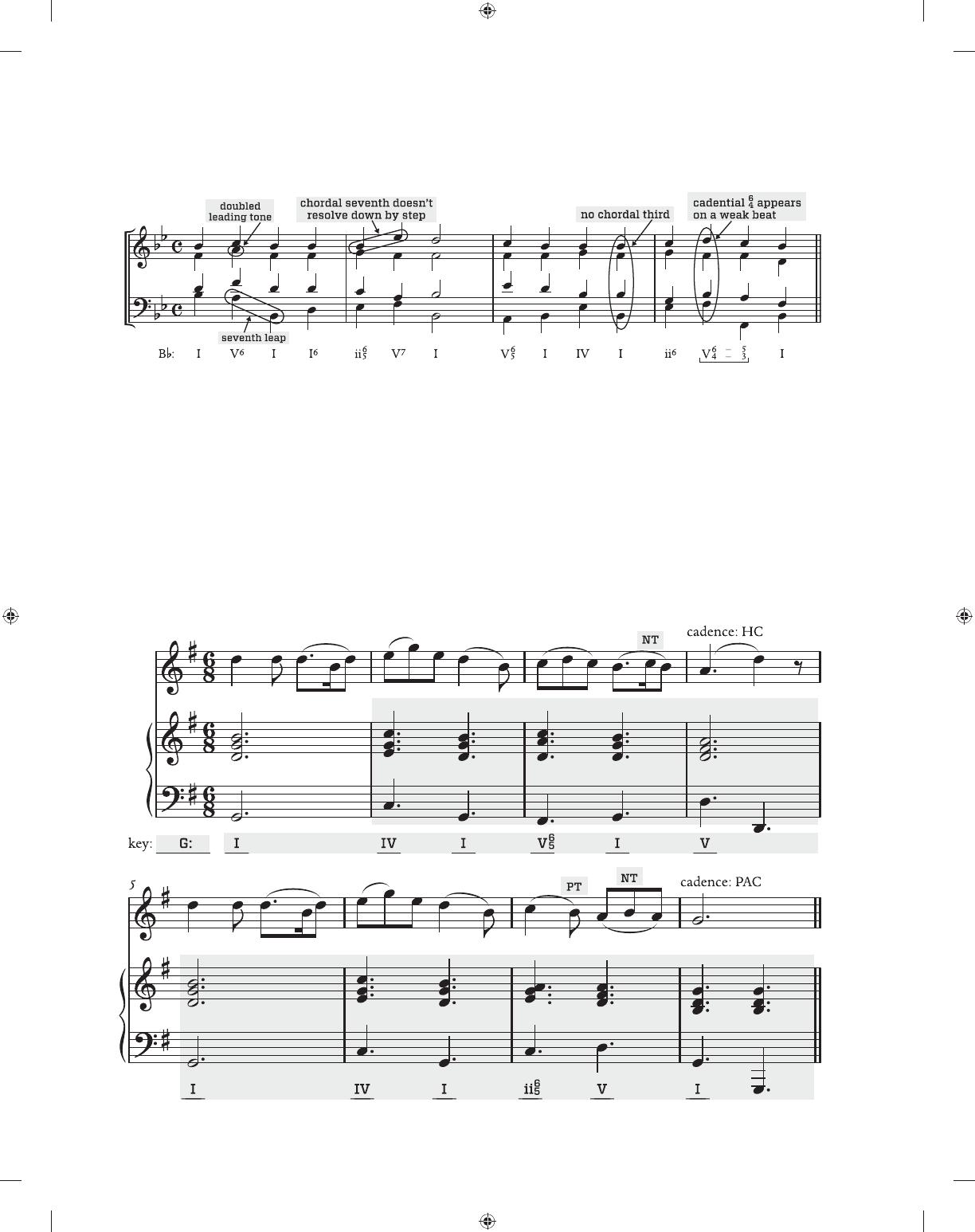
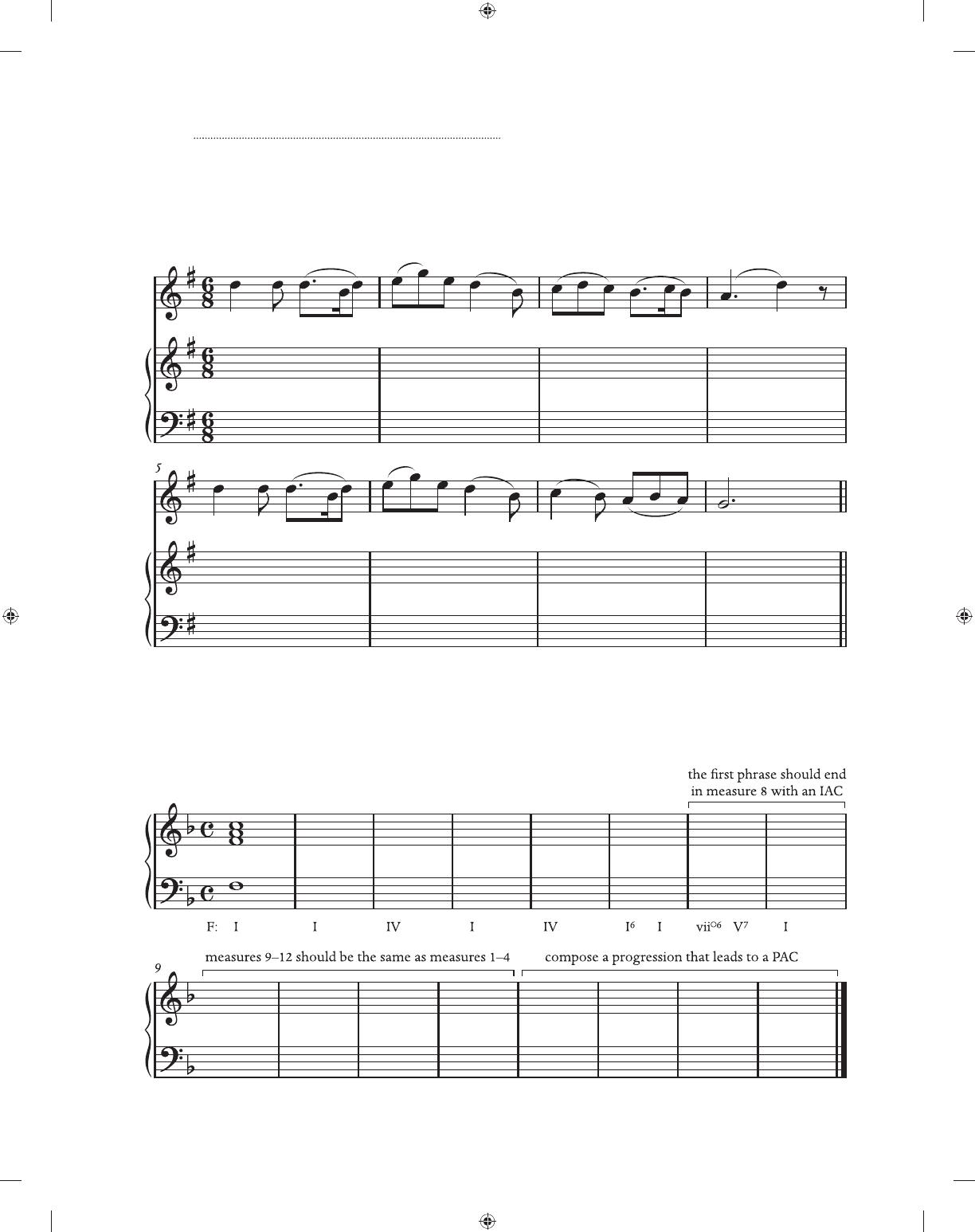
1. Harmonize the melody below, with a half cadence in measure 4 and an authentic
cadence in measure 8:
• Determine the key, then write a bass line. Be sure to check for parallel octaves
and fifths between the bass and the melody. If there is a leading tone or chordal
seventh in the melody, do not double it in the bass.
• Indicate harmonies with Roman numerals, using only one or two chords per
measure. Make sure the chords create the indicated cadences.
• Label the embellishing tones in the melody.
• Complete the inner voices in keyboard format, avoiding voice-leading errors.
F. Composition | 211
NAME:
2. Rewrite the accompaniment that you completed in (1), using an accompaniment
pattern of your choice (such as an oom-pah-pah pattern or arpeggiation; see
previous assignments for examples).
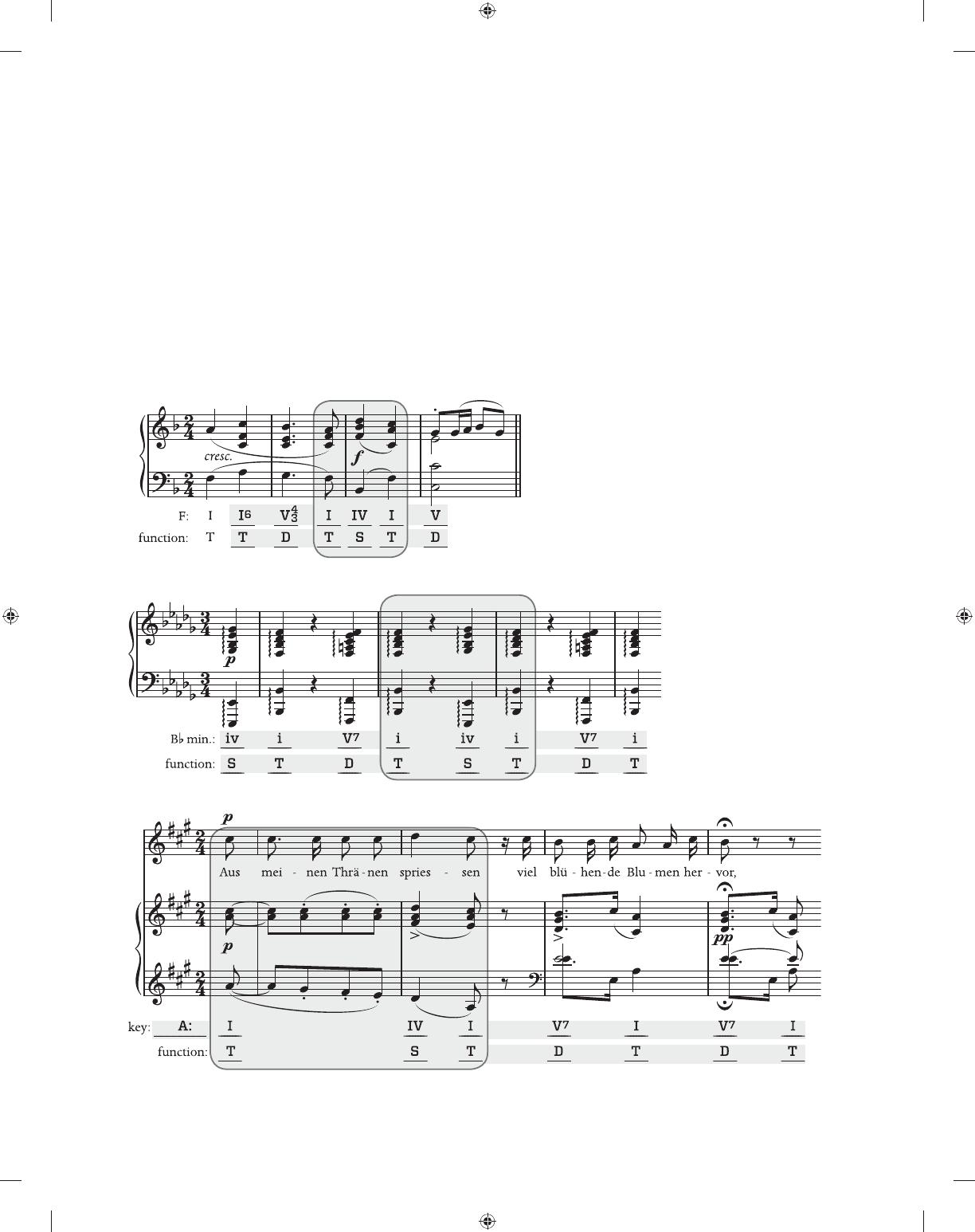
3. Write a harmonic outline that will be the basis of a composition in (4). The key, the
time signature, and Roman numerals for the first eight bars are given.
• Following the indicated structure, complete the Roman numerals and bass line.
• Complete the harmonies in keyboard format, checking for voice-leading errors.
212 | CHAPTER 16 | Leading to the Tonic: IV
4. Using the harmonic outline you created in (3), compose a melody and accompani-
ment for keyboard, guitar, or an ensemble of your choice.
• Keep the key, time signature, chords, and cadences of (3).
• Measures 9
–
12 should be the same as measures 1
–
4.
G. ANALYSIS
Analyze the following excerpts. For each excerpt:
• Label the key and the Roman numerals.
• For each Roman numeral, label its function (T, S, or D).
• Locate and circle the I(6)
–
IV
–
I(6) progressions.
1. Ludwig van Beethoven, Symphony No. 6, i
2. César Franck, Symphony in D Minor, ii (arr. Franck)
3. Robert Schumann, “Aus meinen Thränen spriessen”
Translation: From my tears sprouted many blossoming owers.
G. Analysis | 213
NAME:
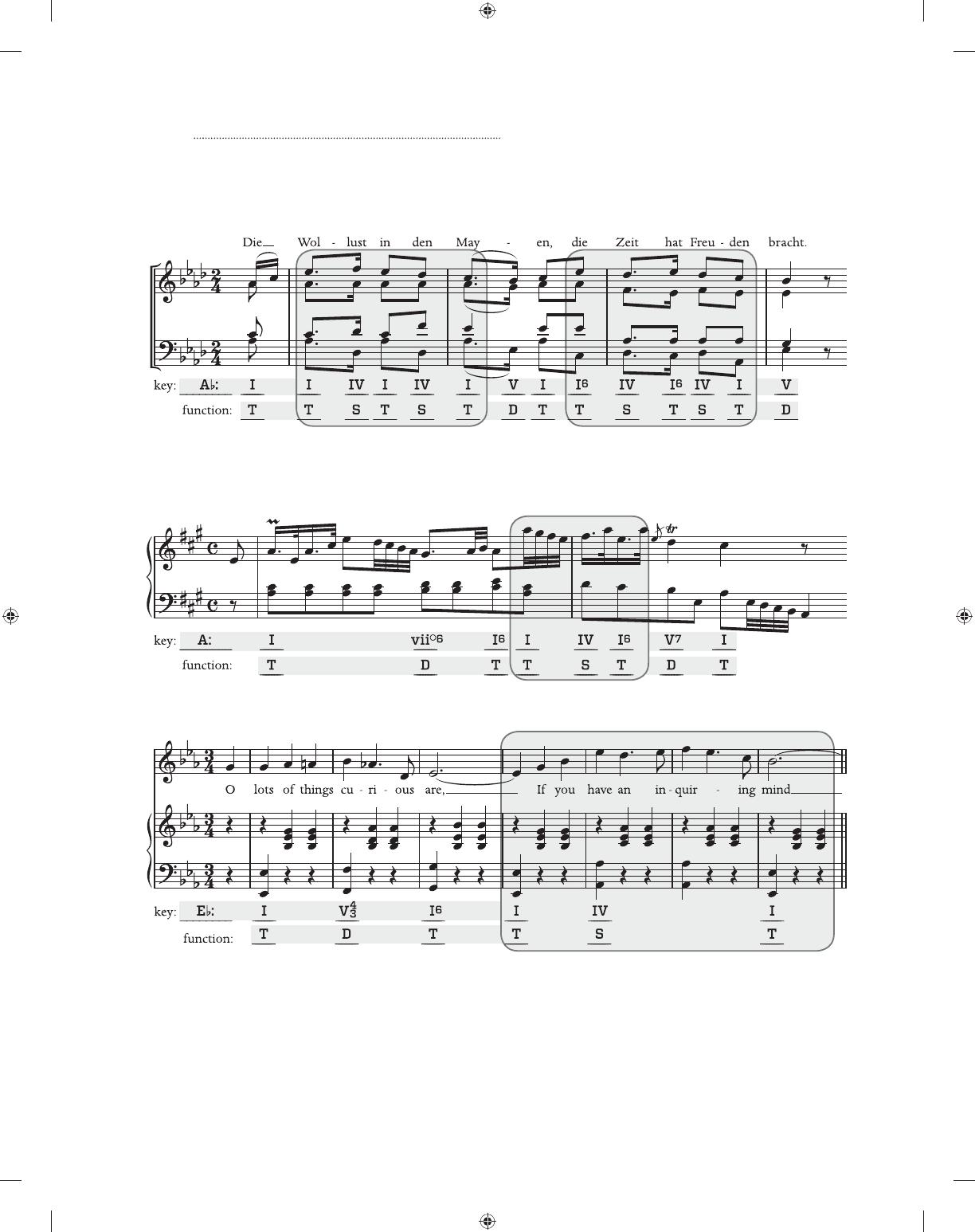
4. Johannes Brahms, “Die Wollust in den Mayen”
Translation: The splendor of spring time, which this time of year brings.
5. Marianna Martines, Keyboard Sonata in A, i
6. Woolson Morse, “Ask the Man in the Moon”
214 | CHAPTER 16 | Leading to the Tonic: IV
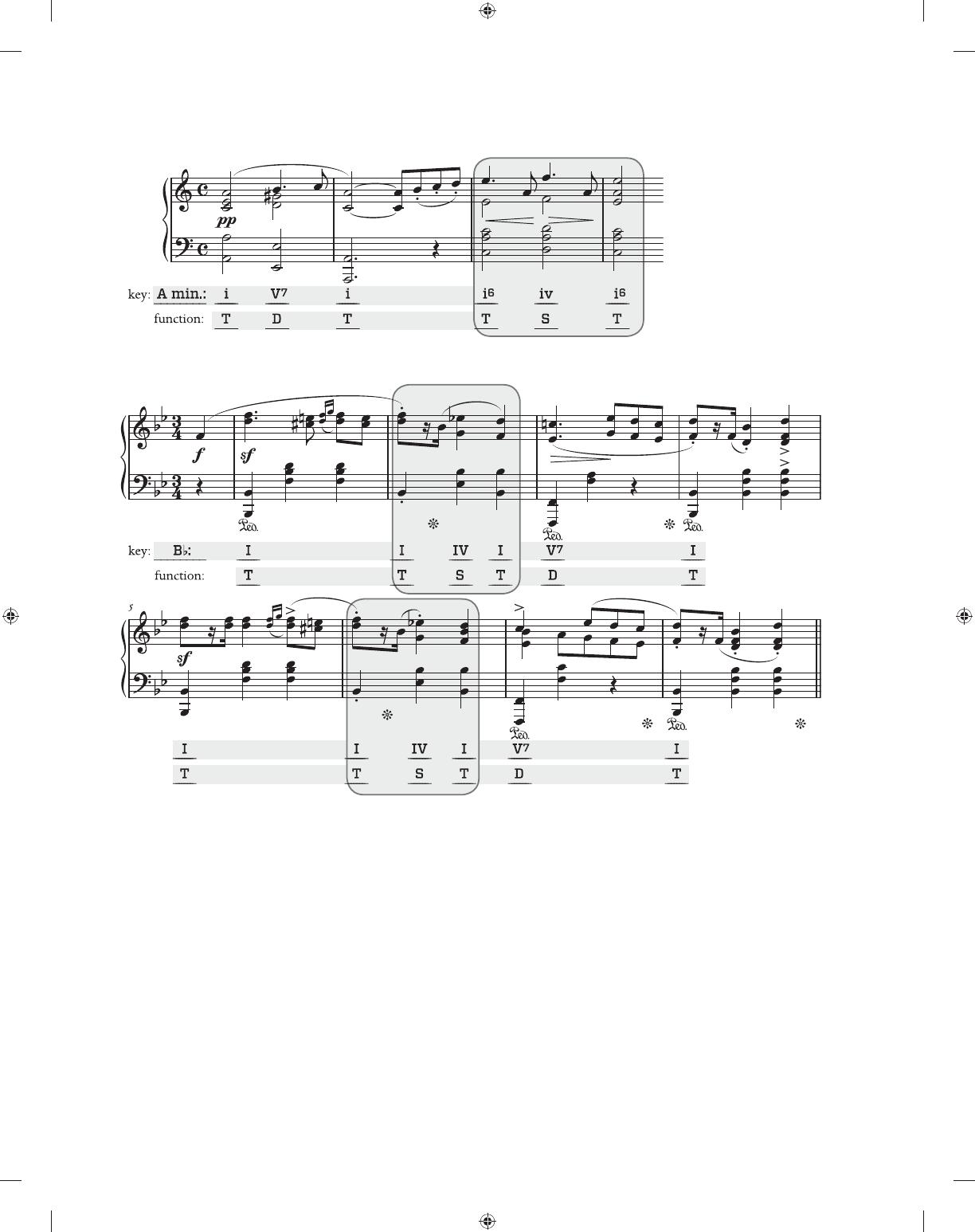
7. Franz Schubert, Sonata in A Minor for Arpeggione and Piano, D. 821
8. Frédéric Chopin, Mazurka Op. 17, No. 1
There are two phrases here. Are they each best understood as ending with a
perfectauthentic cadence, or with an imperfect authentic cadence? Explain the
rationale for your answer, and consider how the interpretation of how these
cadences should be labeled might affect the performance of this passage.