B. Realizing Roman Numerals | 189
NAME:
A. QUESTIONS FOR REVIEW
1. What scale degree is in the bass of a cadential 6
4? What intervals appear above the
bass?
2. What chord(s) should directly follow a cadential 6
4?
3. When a cadential 6
4 moves to V, what happens in the bass?
4. What chord(s) may precede a cadential 6
4? What chord(s) may not precede a
cadential 6
4?
5. What note should be doubled in a cadential 6
4?
6. Rhythmically, where should a cadential 6
4 appear?
7. How is a cadential 6
4
–
V progression labeled with Roman numerals?
8. The notes in a cadential 6
4 are the same as in what other chord?
9. In what part of a phrase may a cadential 6
4 appear?
B. REALIZING ROMAN NUMERALS
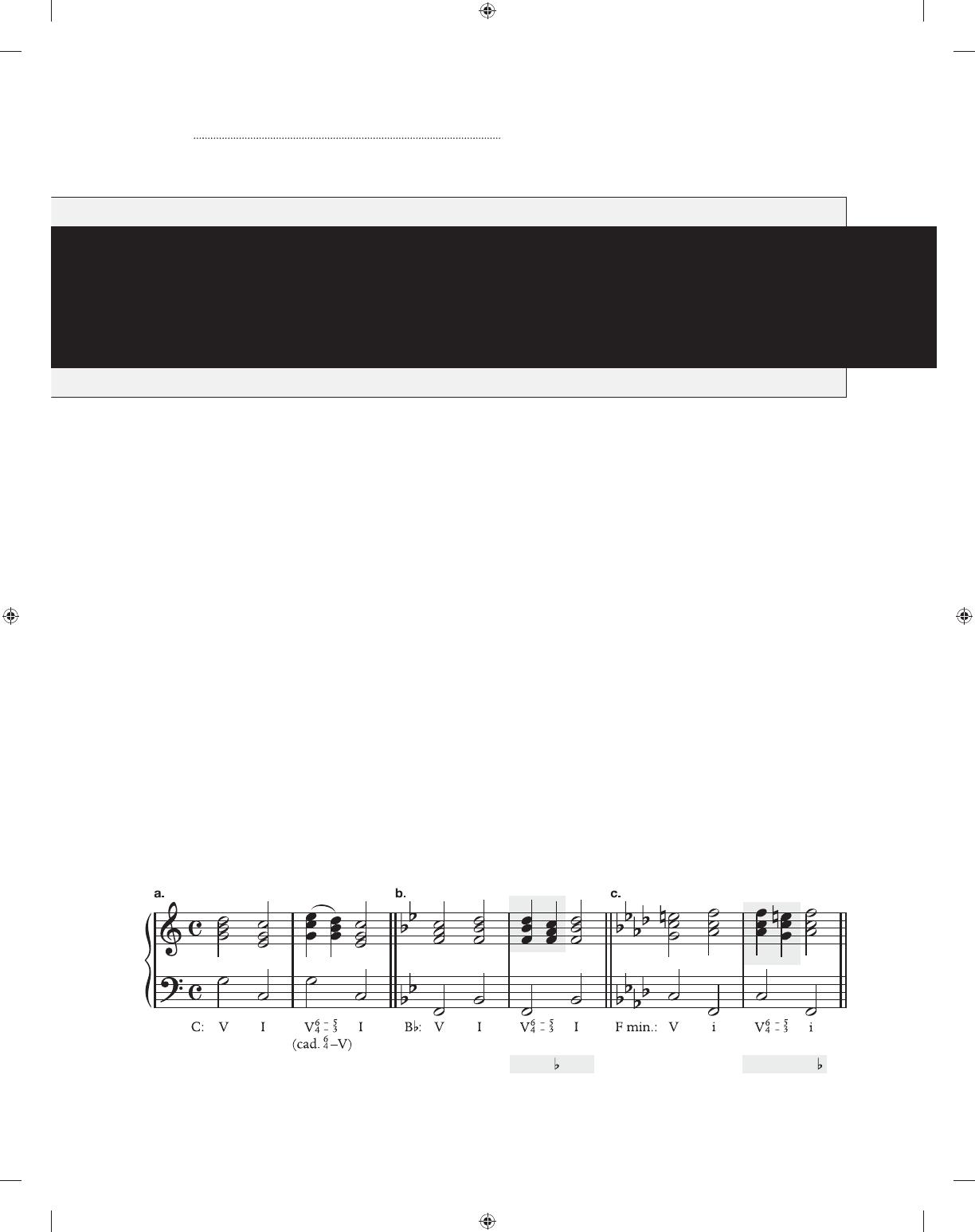
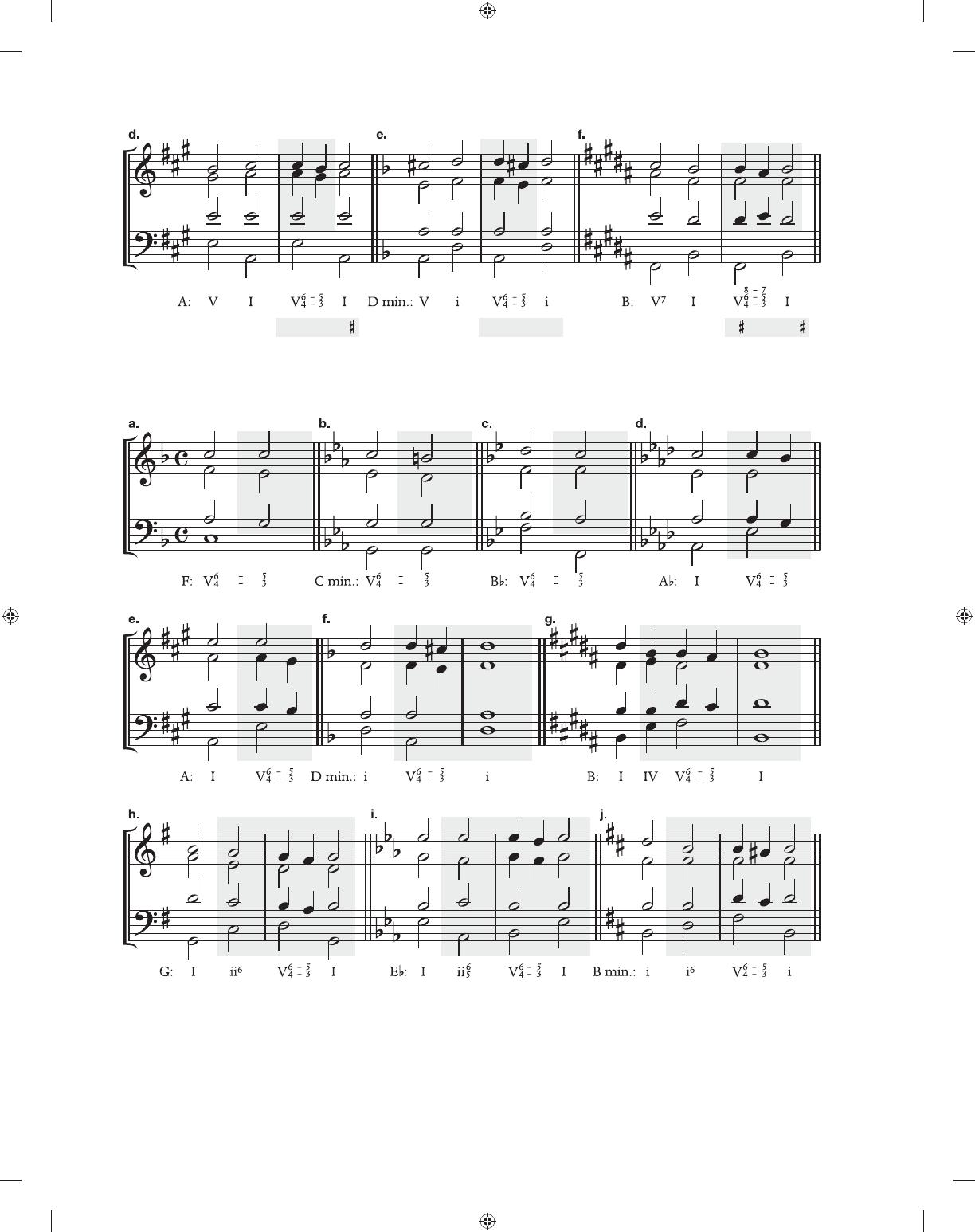
1. For each V
–
I progression given below, spell the cadential 6
4 in the appropriate key.
chapter
15 Embellishing V: Cadential 6
4
190 | CHAPTER 15 | Embellishing V: Cadential
6
4
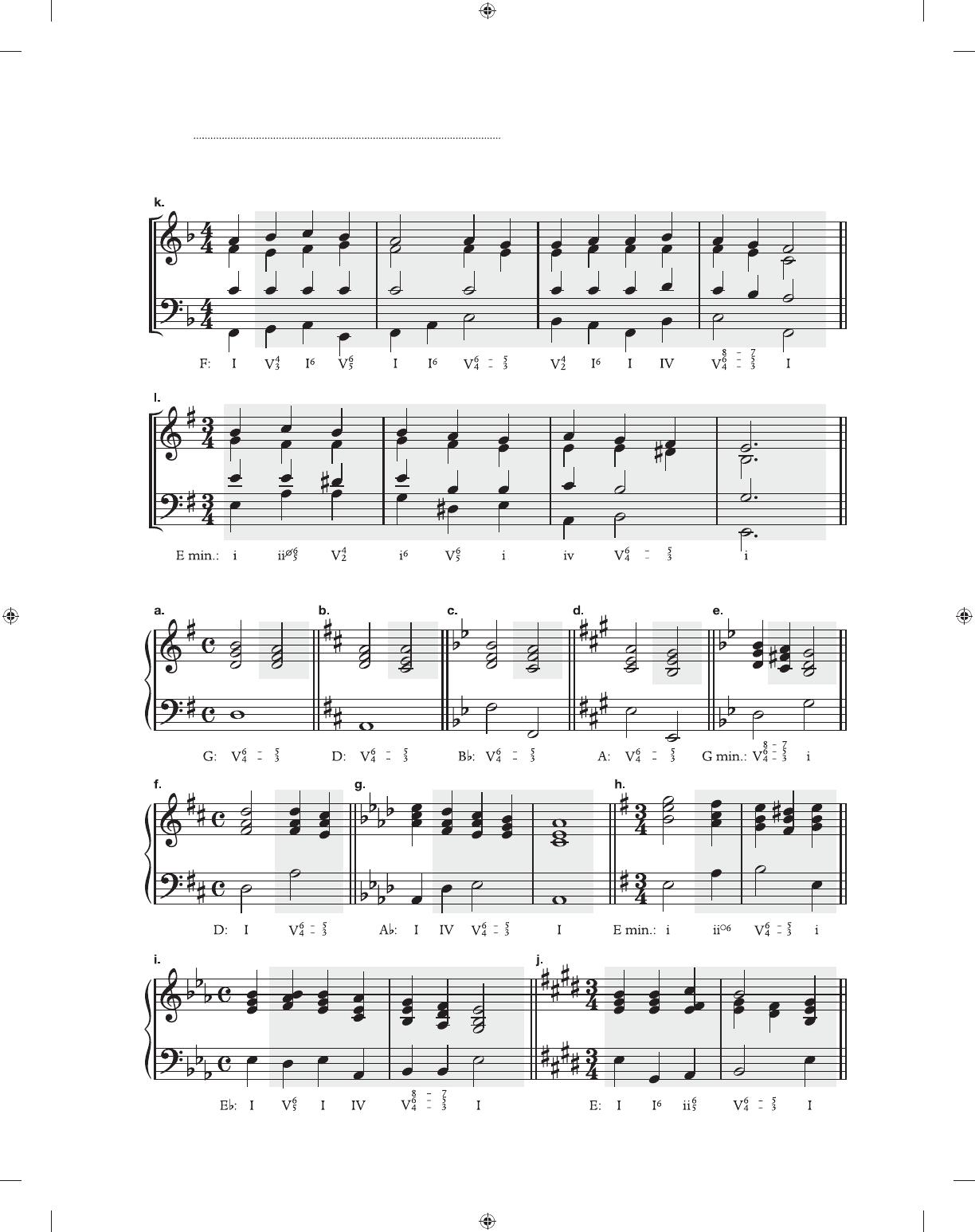
2. Realize the Roman numerals in SATB format.
B. Realizing Roman Numerals | 191
NAME:
3. Realize the Roman numerals in keyboard format.
192 | CHAPTER 15 | Embellishing V: Cadential
6
4
C. REALIZING FIGURED BASS
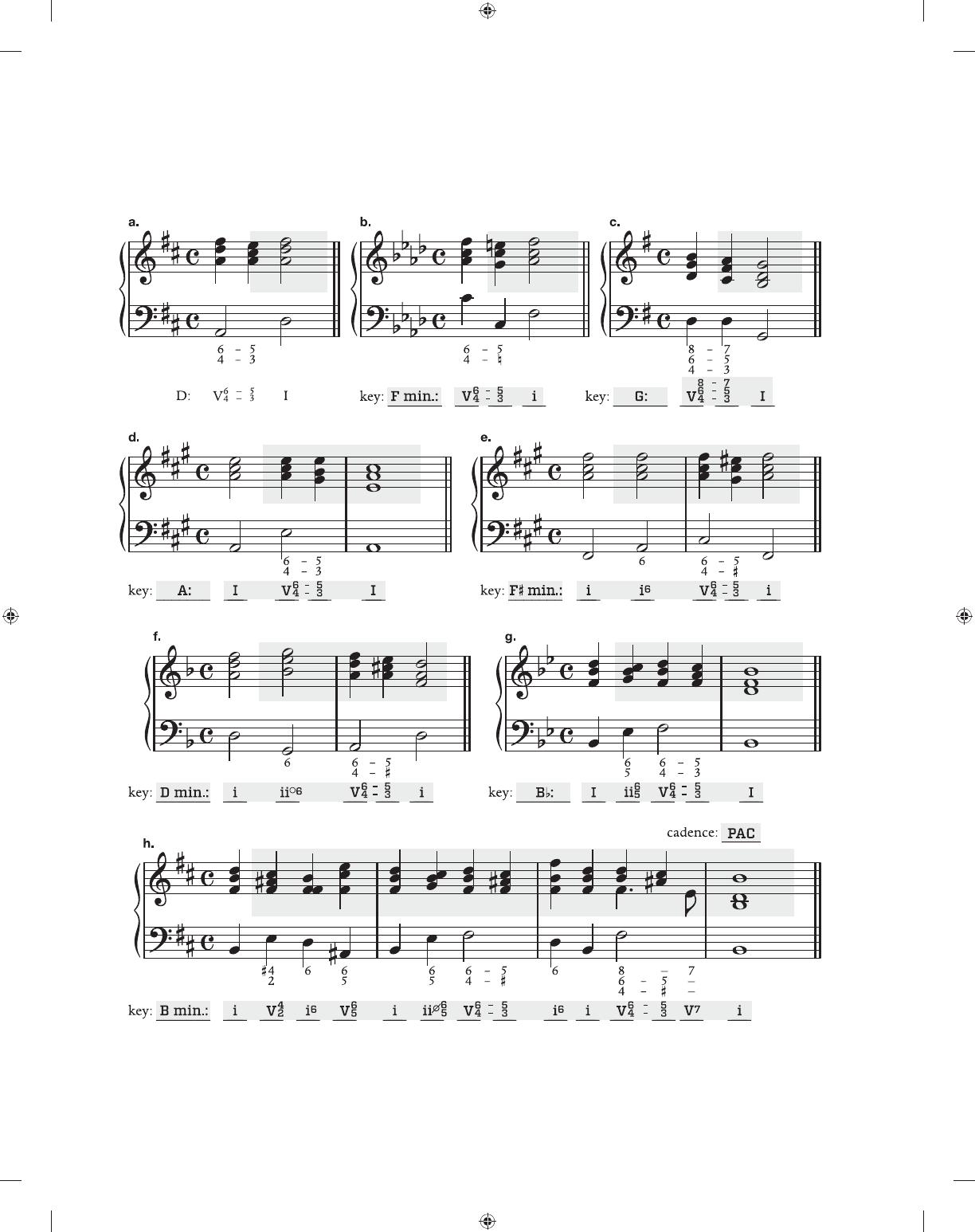
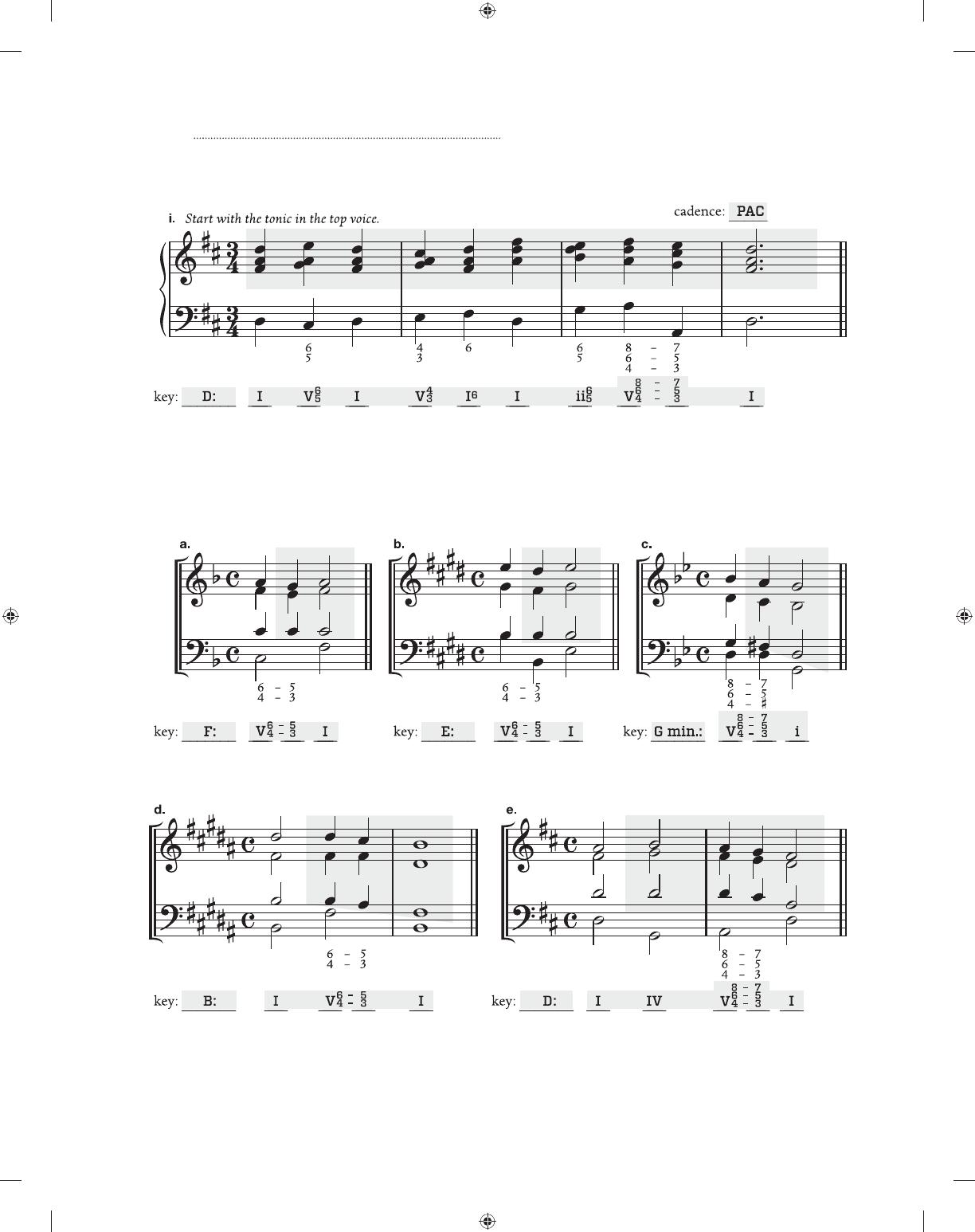
1. Realize each figured bass in keyboard format. Then label the keys and Roman
numerals. Also give the type of cadence (PAC, IAC, HC) where indicated.
C. Realizing Figured Bass | 193
NAME:
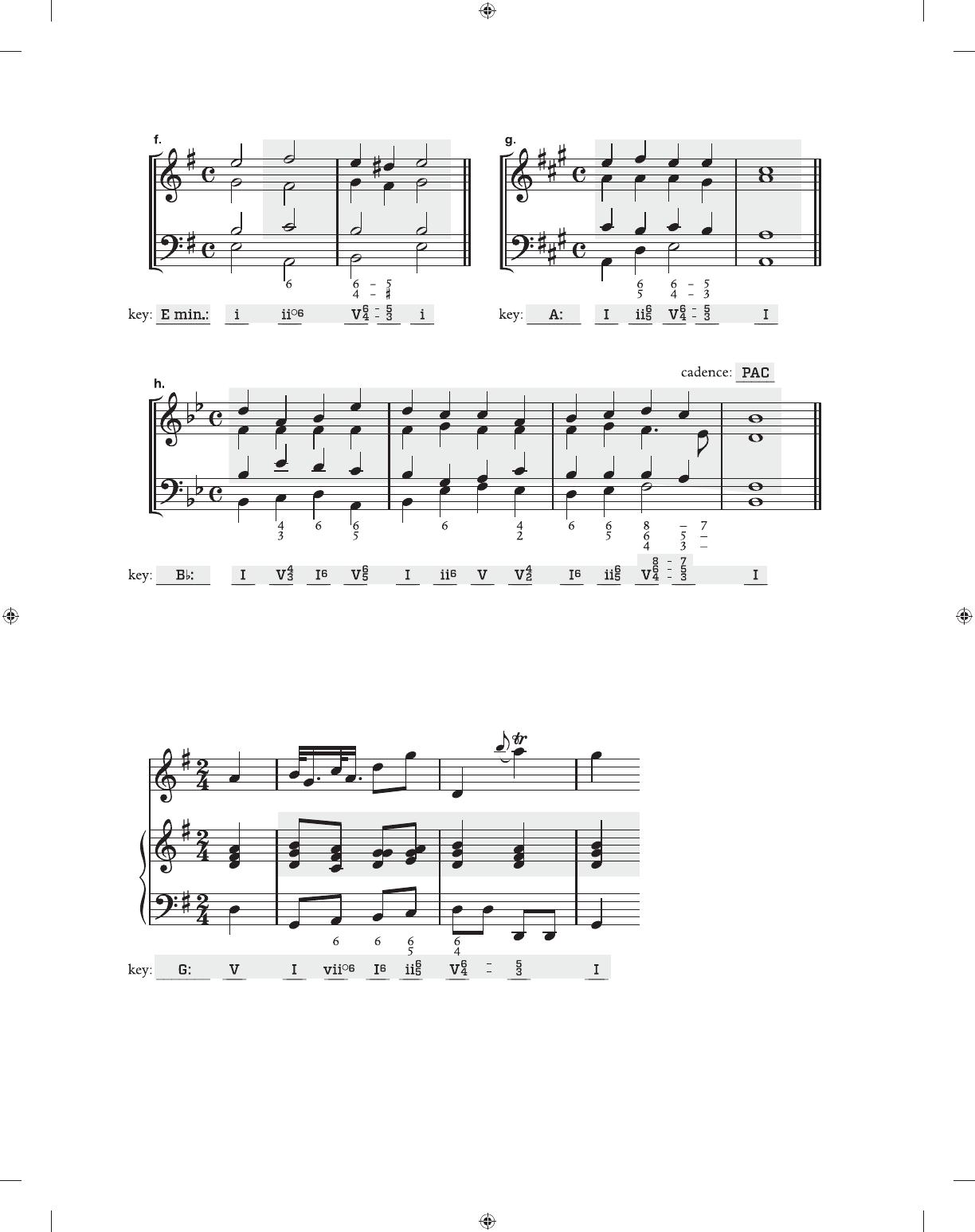
2. Realize each figured bass in SATB format. Then label the keys and Roman numerals.
Also give the type of cadence (PAC, IAC, HC) where indicated.
194 | CHAPTER 15 | Embellishing V: Cadential
6
4
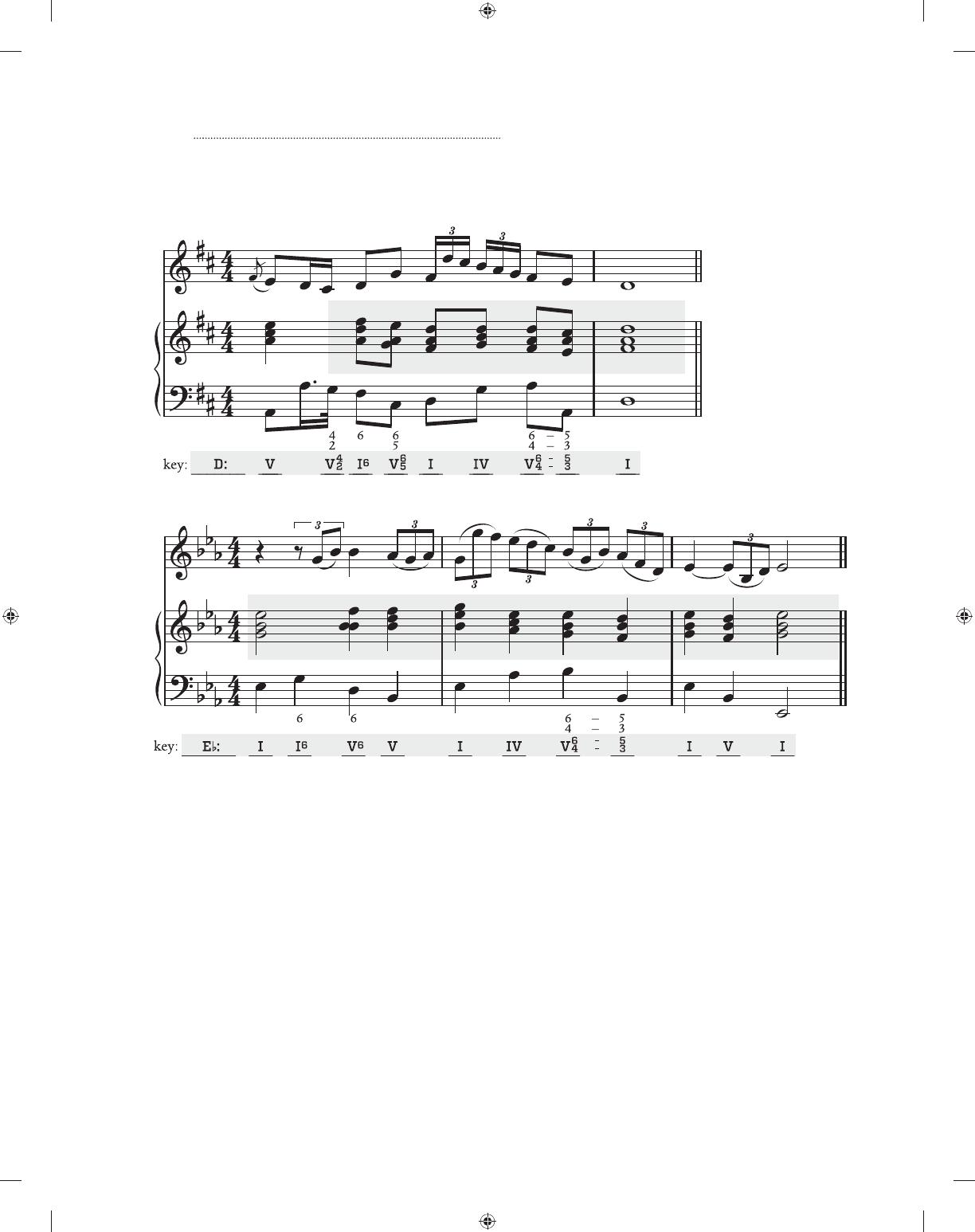
3. Realize the figured bass accompaniments (in keyboard format) for these excerpts;
label the key and Roman numerals. Don’t worry about parallel perfect intervals
between the solo voice and accompaniment.
a. Martin Cannabich, Flute Sonata, Op. 1
D. Harmonizing Melodies | 195
NAME:
b. Václav Vodicˇha, Flute Sonata, Op. 2
c. Elizabeth Turner, “Not Chloris”
D. HARMONIZING MELODIES
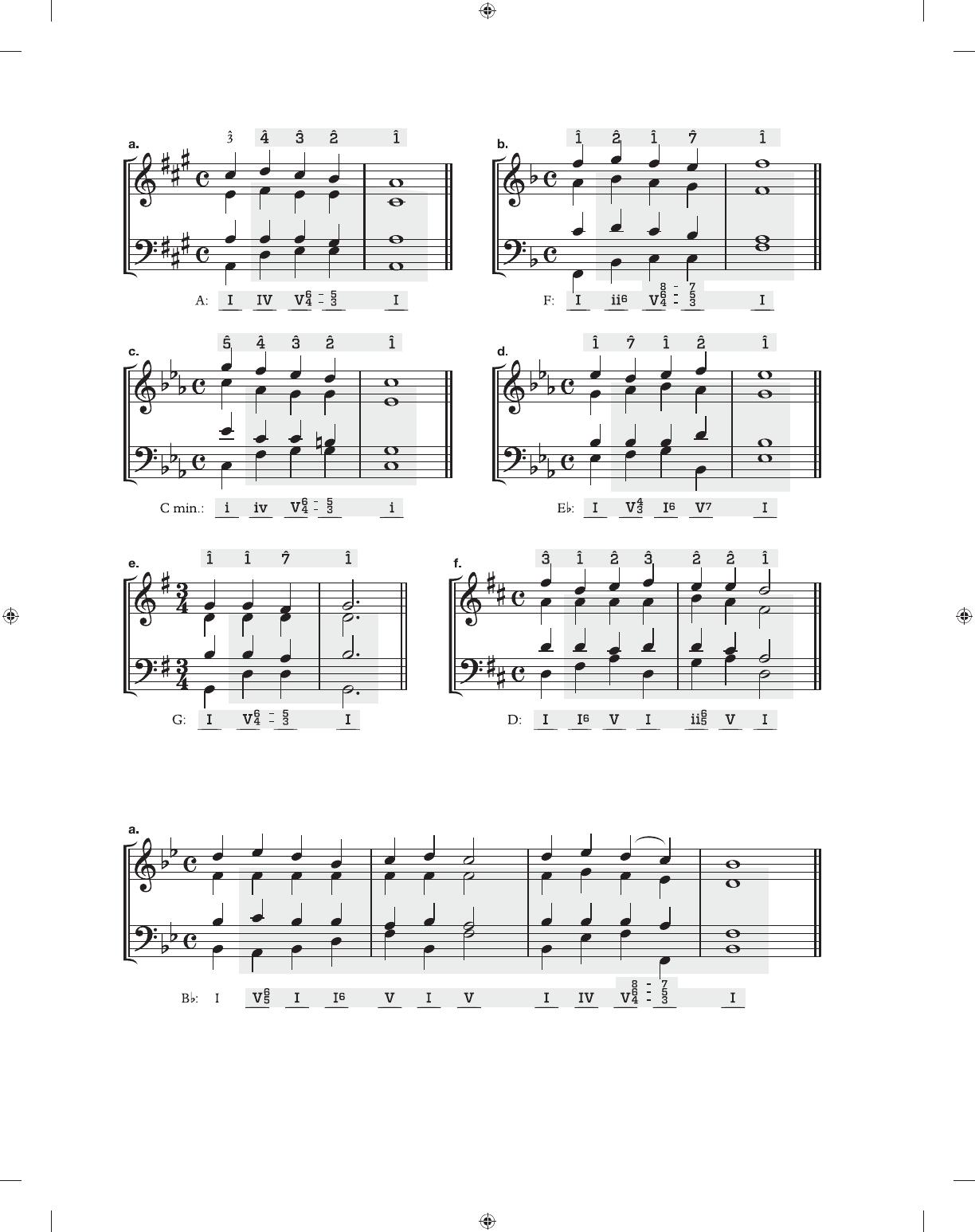
1. Harmonize the following short melodies in SATB format:
• Label the scale degrees of the melody; then complete the bass line and add
Roman numerals, using one chord for each note in the melody.
• Whenever possible, write a cadential 6
4 (not every progression will include a 6
4).
196 | CHAPTER 15 | Embellishing V: Cadential
6
4
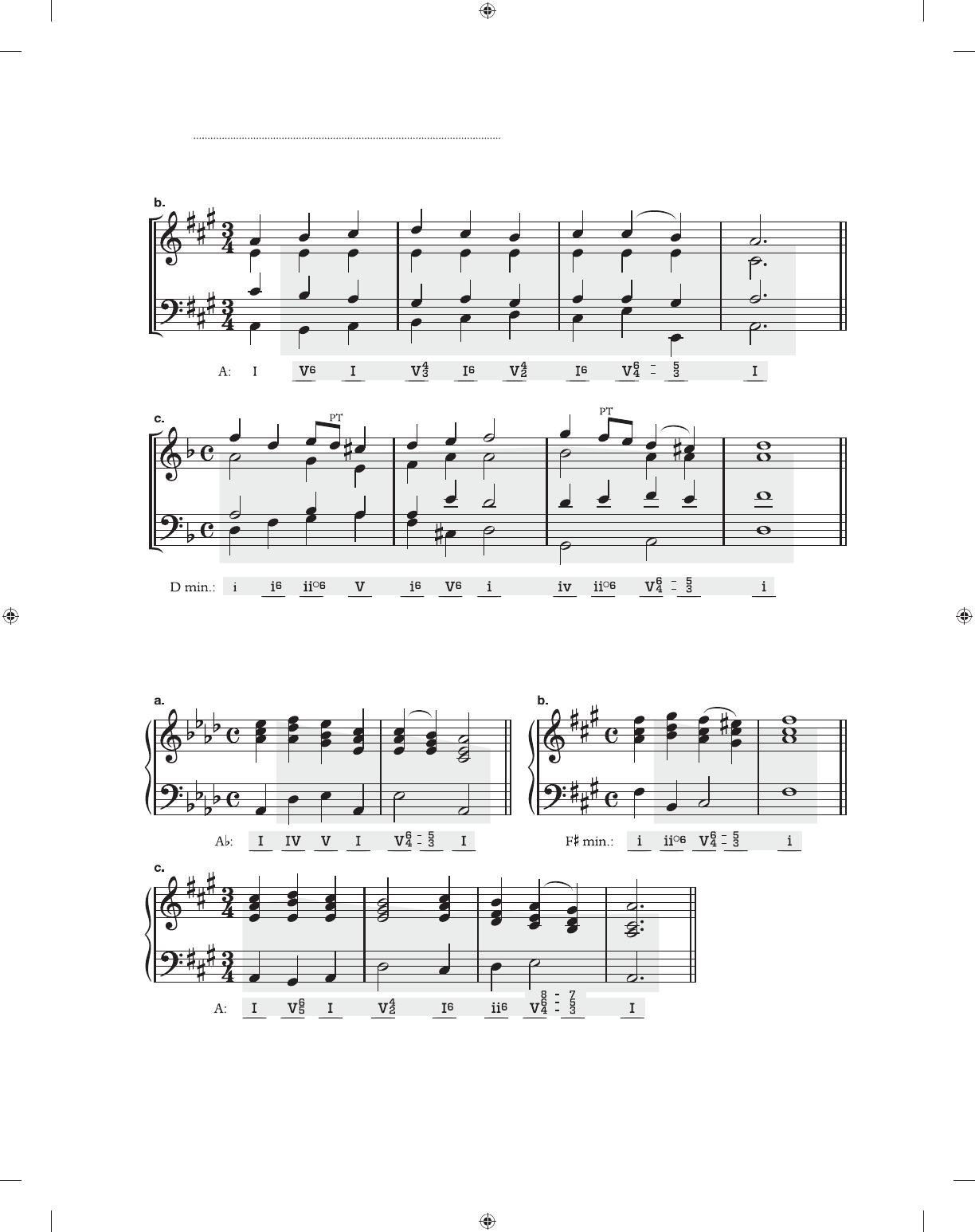
2. Harmonize the following longer melodies in SATB format, and use a cadential
6
4 within each. Each note of the melody (except those labeled as passing tones)
should be harmonized with a chord, and each passage should end with a cadence.
D. Harmonizing Melodies | 197
NAME:
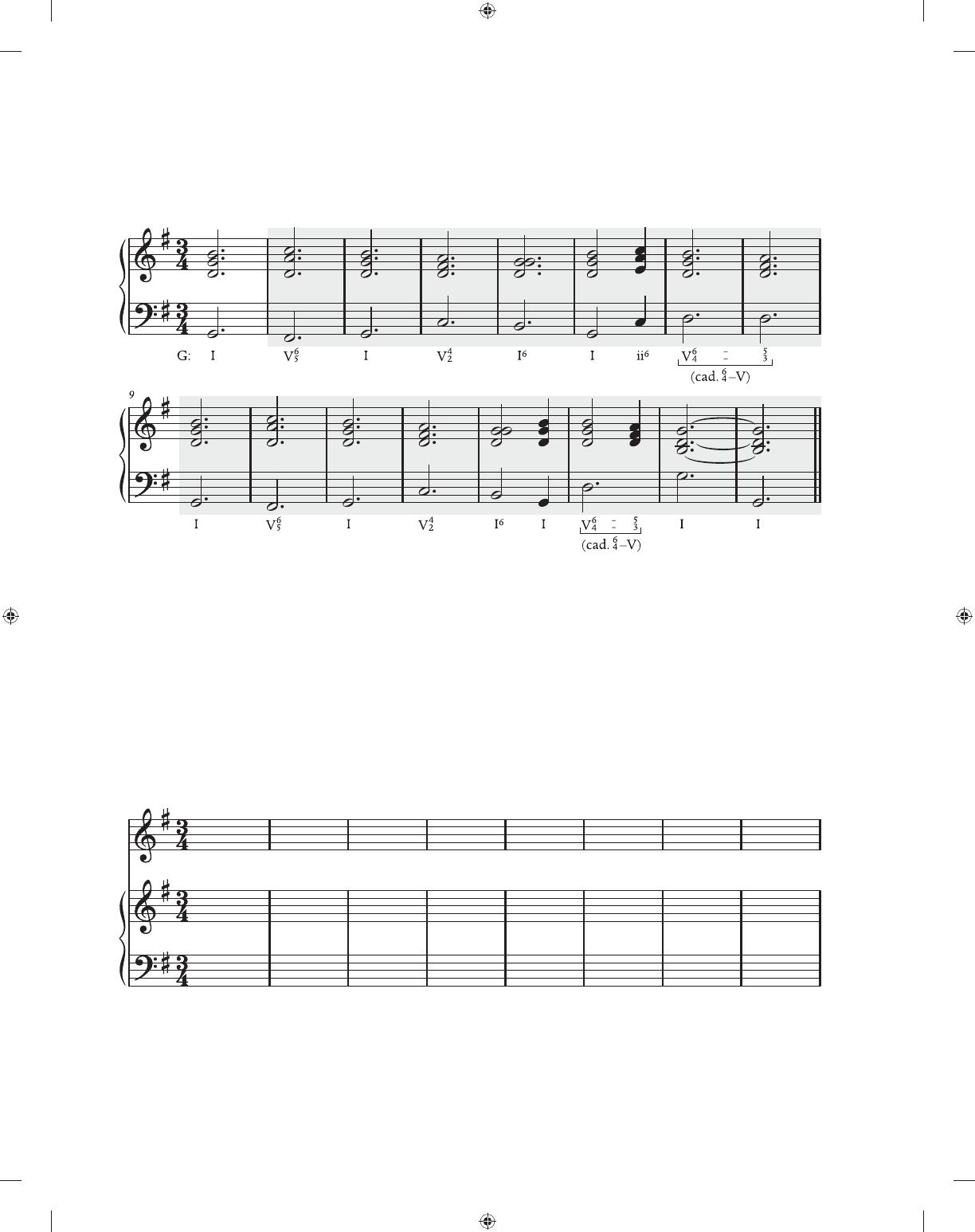
3. Harmonize the following melodies in keyboard format. Harmonize each note of
the melody with a chord, and end with a cadence that includes a cadential 6
4. In
every chord, the given melodic note should be the highest note.
198 | CHAPTER 15 | Embellishing V: Cadential
6
4
E. COMPOSITION
1. Realize these Roman numerals. Where there are two chords in a single measure,
the rhythm should be a half note followed by a quarter note.
2. Compose a piece for keyboard and another instrument, based on your realization
of (1).
• Choose an accompaniment pattern for the keyboard part such as an oom-pah-
pah pattern or arpeggiation (you can find examples in earlier composition
assignments). Rewrite the notes of the chord progression using that pattern.
NAME:
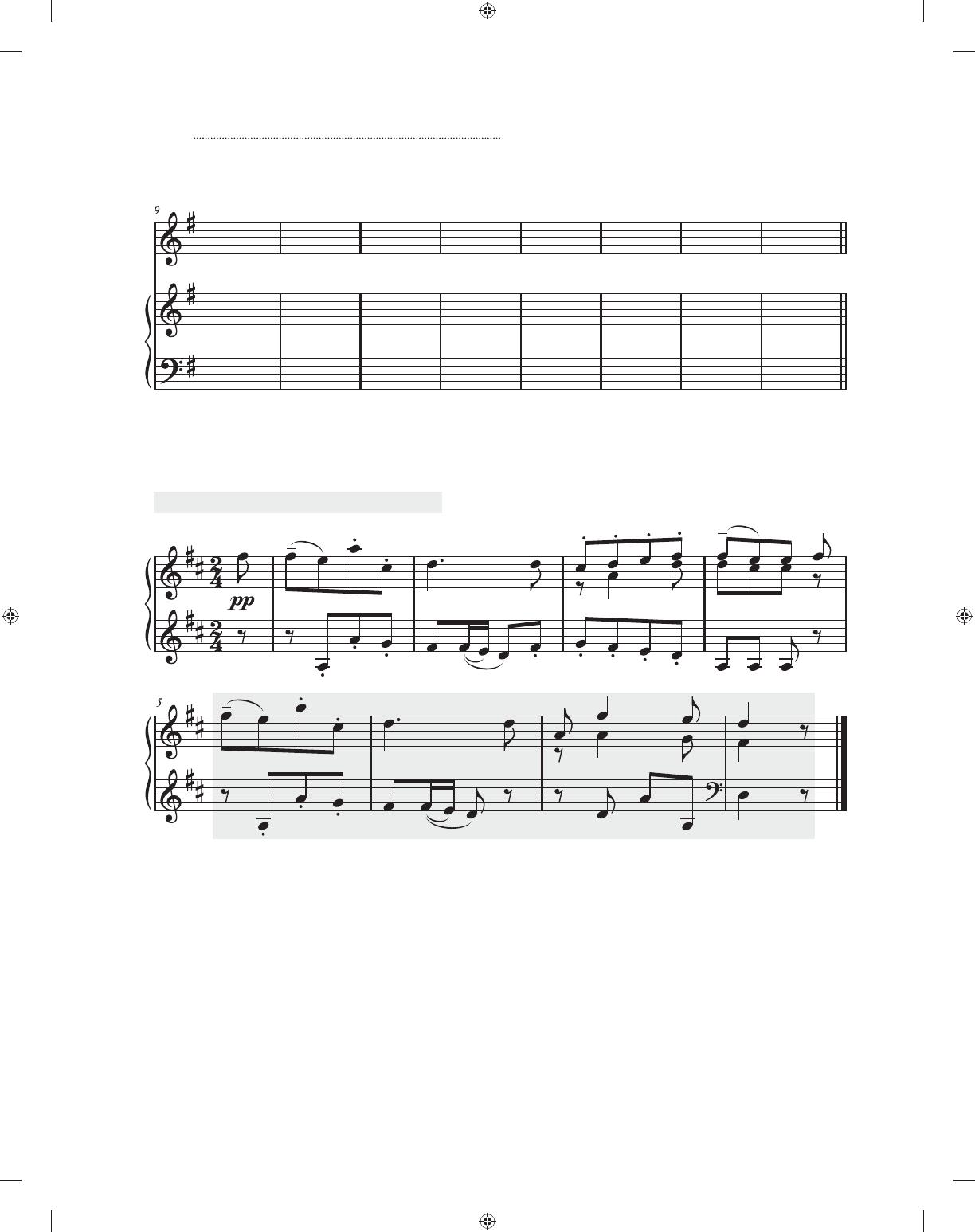
3. Continue this passage (from a composition by Gaetano Brunetti) in a style that is
consistent with the first four measures.
• Measure 5
–
6 should repeat measures 1
–
2.
• Conclude with a PAC in measure 8.
Answers will vary. The answer here is by Brunetti.
4. Compose a passage for keyboard, guitar, or an ensemble of your choice, following
these guidelines:
• The passage should be in C minor, in 4
4.
• The first four measures should embellish the tonic with either
Tonic | Dominant | Dominant | Tonic
or
Tonic | Subdominant | Dominant | Tonic
200 | CHAPTER 15 | Embellishing V: Cadential
6
4
F. ANALYSIS
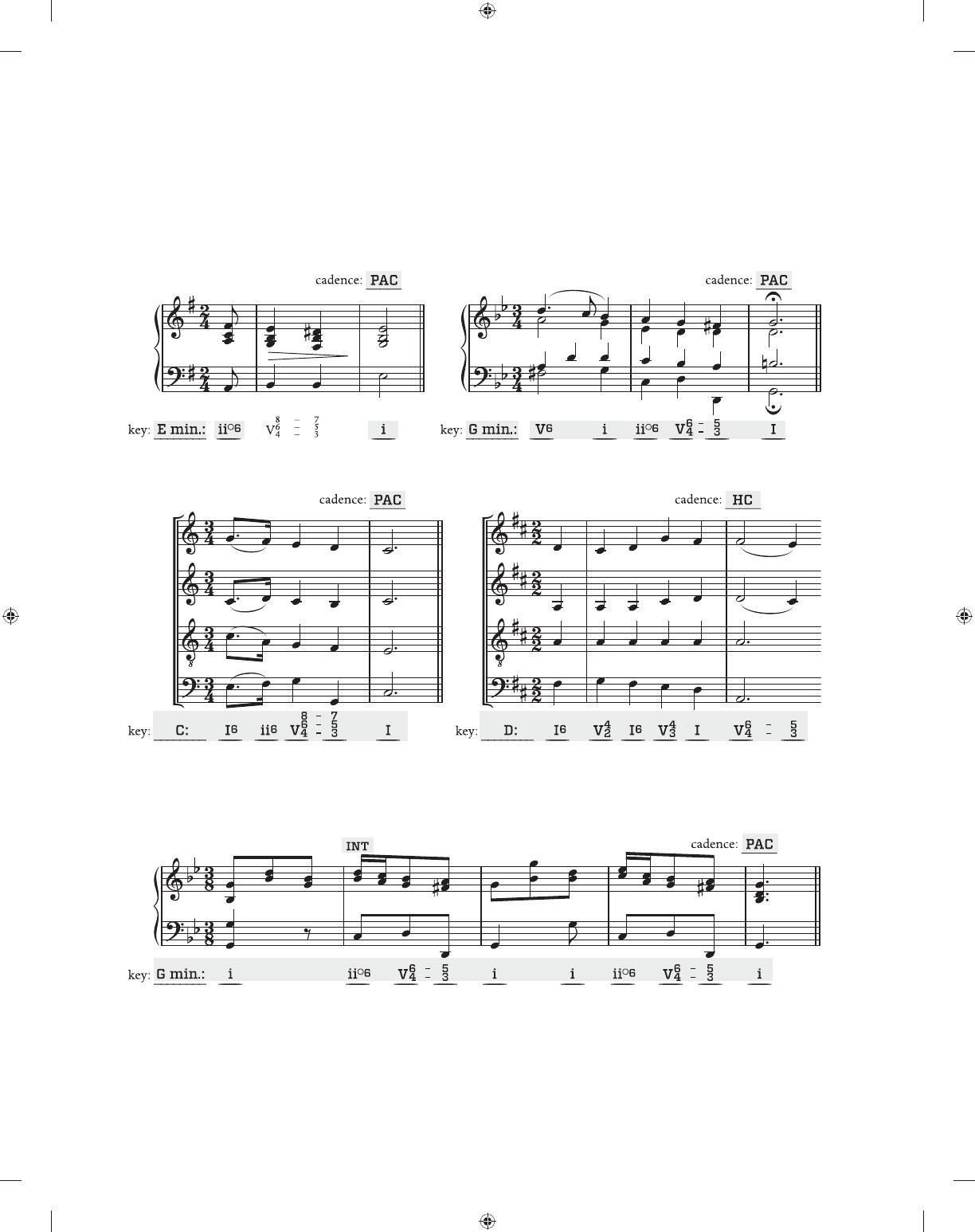
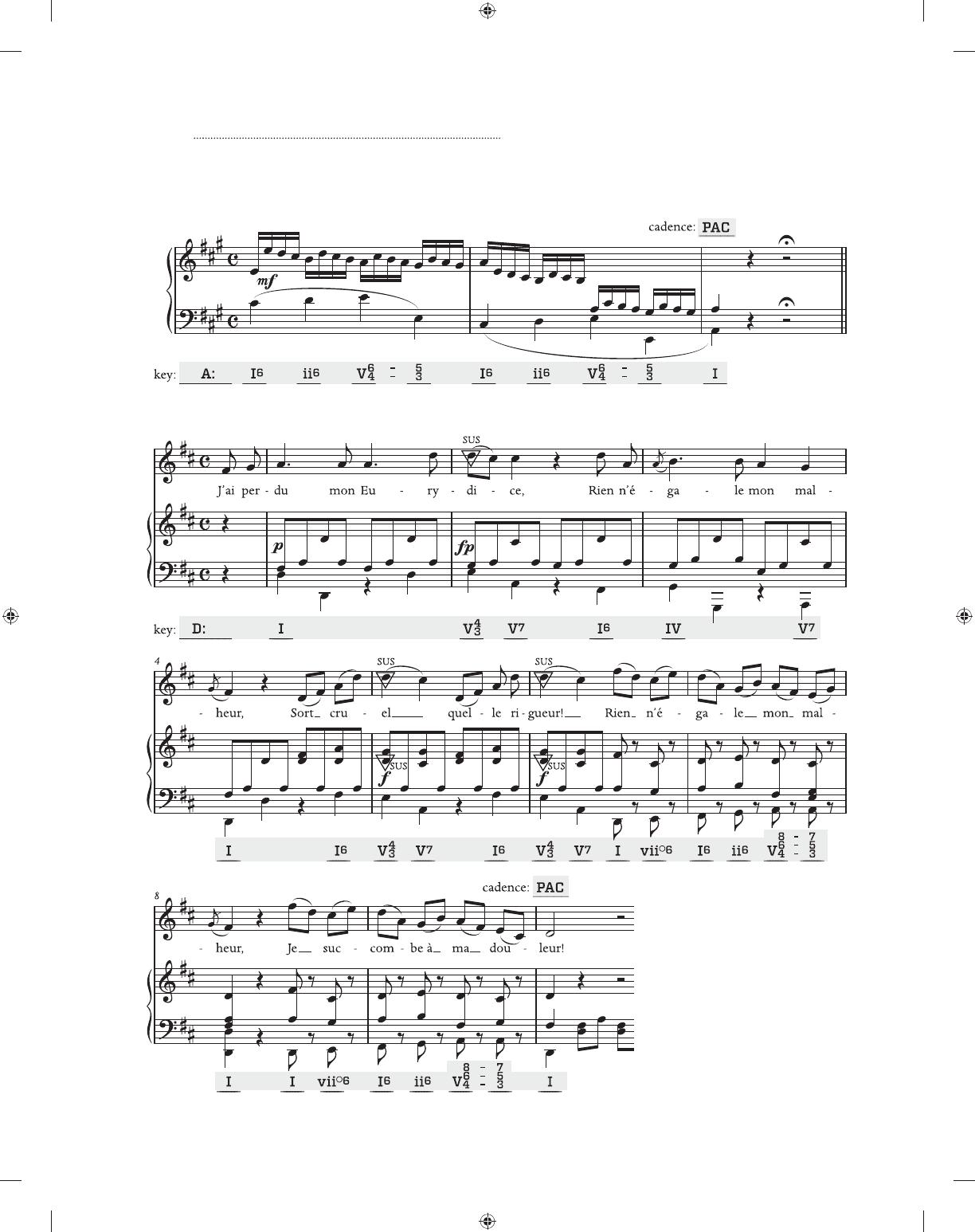
In each of the following excerpts, indicate the key, and label the harmonies with
Roman numerals. Then indicate the type of cadence. Blank lines are provided below
the staff to fill in the label for each chord, with two lines for each V6
4
–
–
5
3 (i.e., cad. 6
4
––
V).
3. Elizabeth Cuthbert, “Howard” 4. Lowell Mason, “Come all whose souls are lighted”
5. Maria Theresia von Paradis, “Sophie an Siegwart”
Label the embellishing tone on the downbeat of m. 2.
F. Analysis | 201
NAME:
6. Domenico Cimarosa, Keyboard Sonata No. 29
7. Christoph Willibald Gluck, “J’ai perdu mon Eurydice” from Orphée et Eurydice
Translation: I have lost my Eurydice, nothing equals my sadness.
202 | CHAPTER 15 | Embellishing V: Cadential
6
4
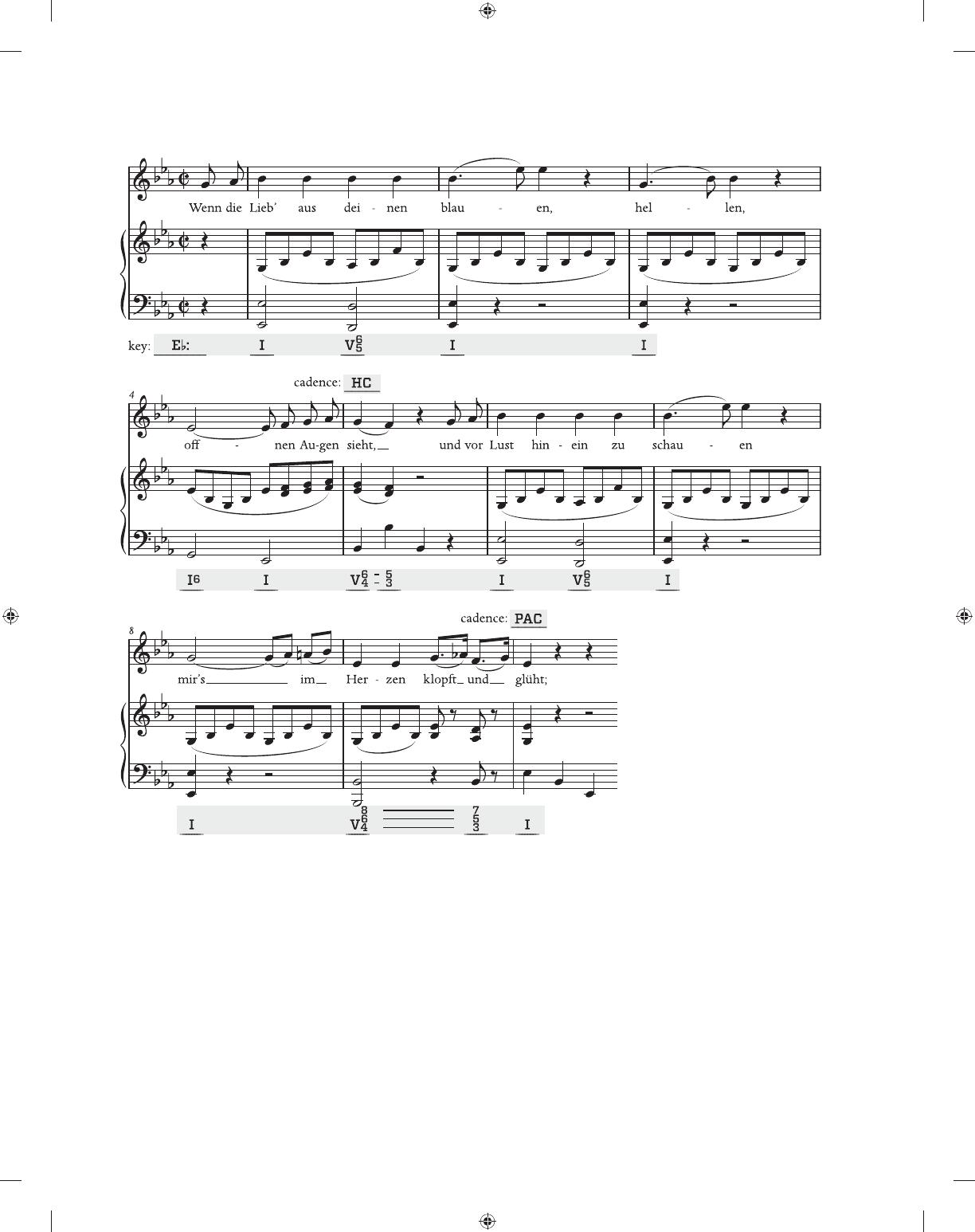
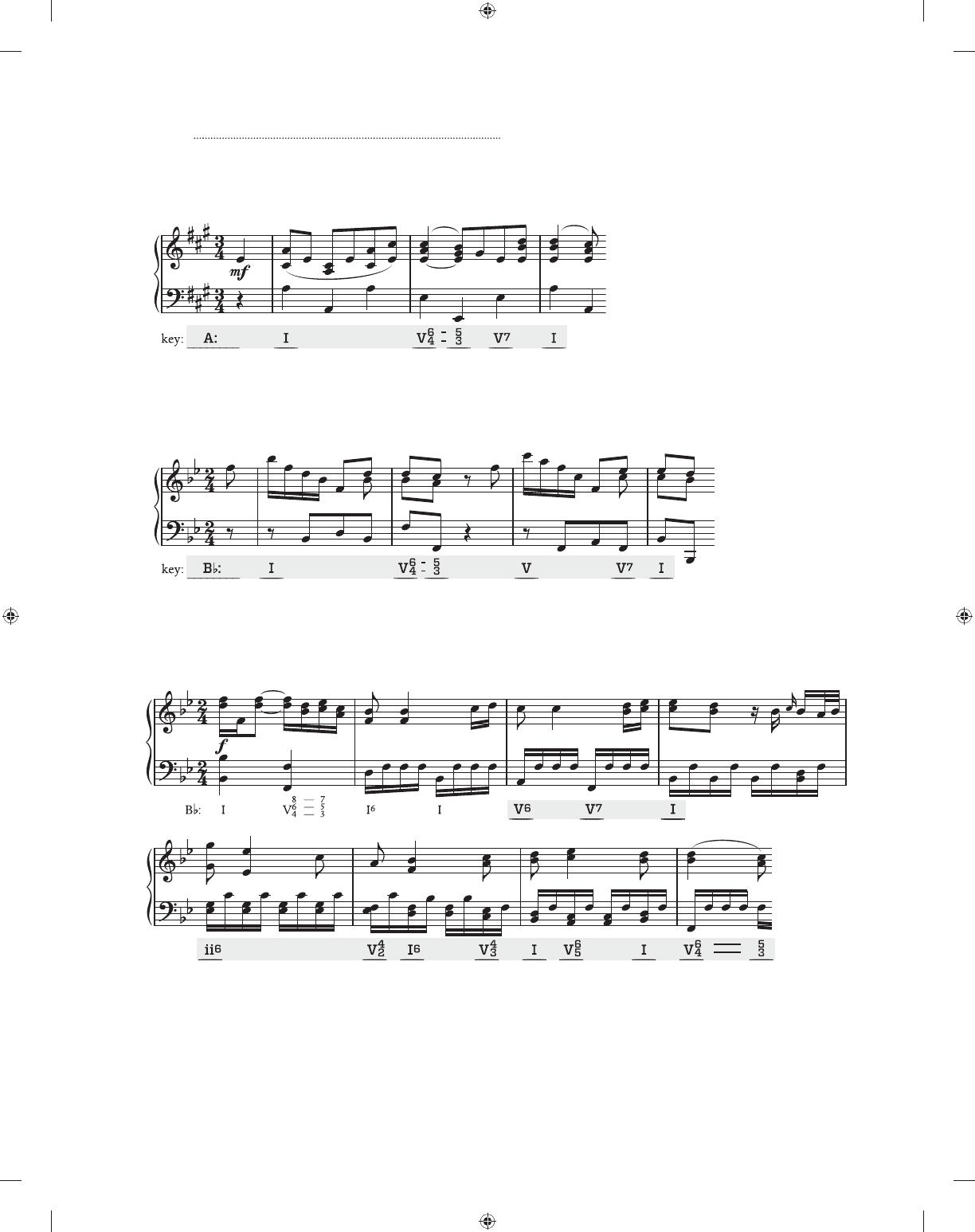
8. W. A. Mozart, “An Chloë”
Translation: When love shines out from your blue, clear, open eyes, and from the joy of looking into them my
heart beats and glows;
How many measures are in each of the two phrases? What features of the music
cause them to extend past four measures?
F. Analysis | 203
NAME:
9. Christoph Willibald Gluck, “Vive aimé des jours” from Alceste
In what way are the harmonies on the first two beats of m. 2 similar to the harmonies
on the first two beats of m. 3?
10. Anna Bon, Harpsichord Sonata, Op. 2, No. 2, iii
11. Antonio Sacchini, Oedipe à Colone, Act I, scene v
The first few chords have been filled in for you.
204 | CHAPTER 15 | Embellishing V: Cadential
6
4
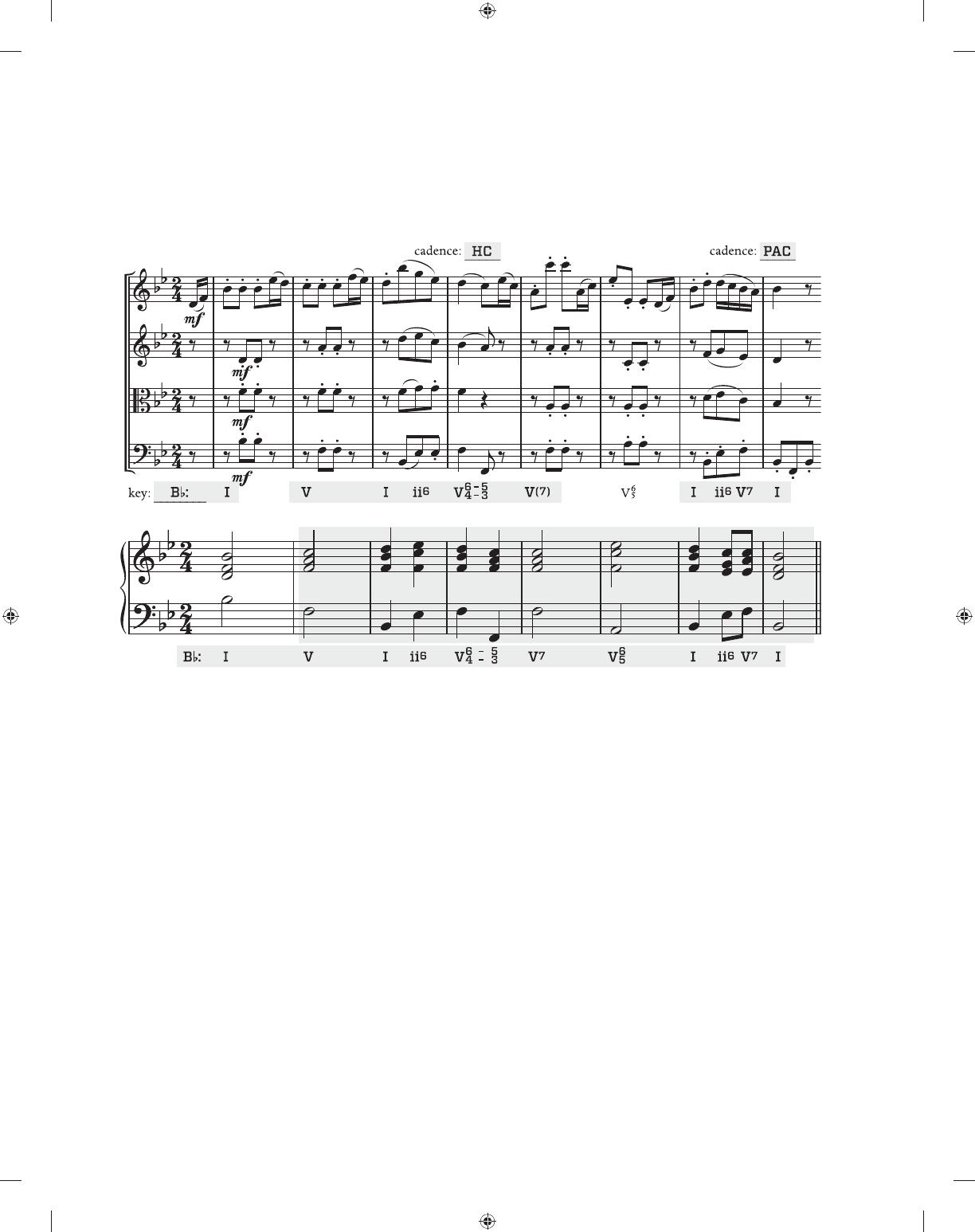
12. Joseph Haydn, String Quartet, Op. 33, No. 4, iv
• Label the key and Roman numerals.
• On the staff below, complete a simplified harmonic model of this passage in
four-part harmony, keyboard format. Use proper, smooth voice leading, and
omit any embellishing tones.
Identify at least three ways in which measures 1
–
4 and 5
–
8 are similar to each other
and three ways in which they are different.