B. Realizing Roman Numerals | 173
NAME:
A. QUESTIONS FOR REVIEW
1. What do IV, ii6, and ii6
5 have in common?
2. In minor keys, what is the quality of the triad whose root is ˆ
4, with the natural
minor form of ˆ
6? With raised ˆ
6? What are the qualities of the triad and seventh
chord whose root is ˆ
2 with the natural minor form of ˆ
6? With raised ˆ
6?
3. What chords may follow IV, ii6, and ii6
5?
4. What chords may not precede IV, ii6, or ii6
5?
5. In four-part harmony, what tone is best to double in a IV chord? In ii6? ii6
5?
B. REALIZING ROMAN NUMERALS
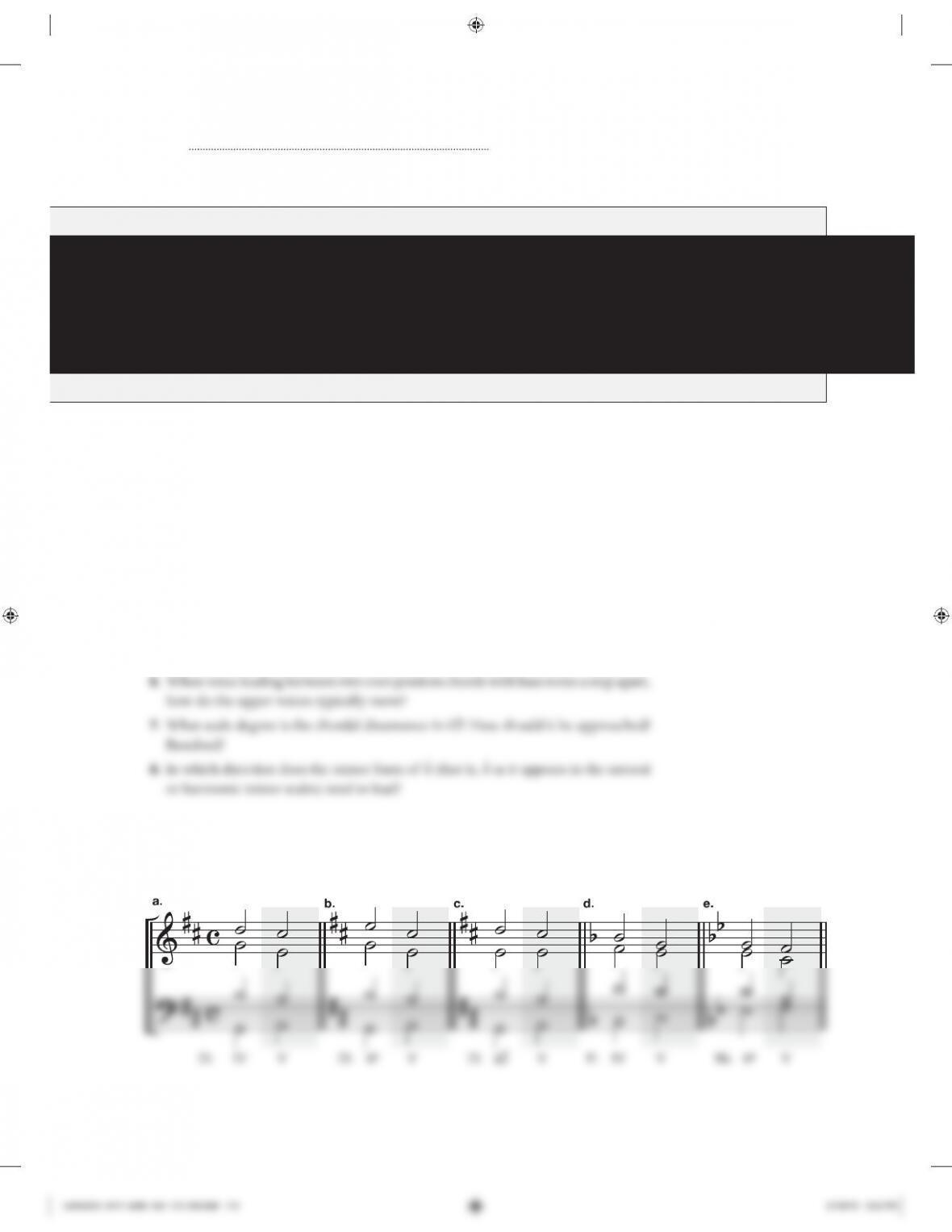
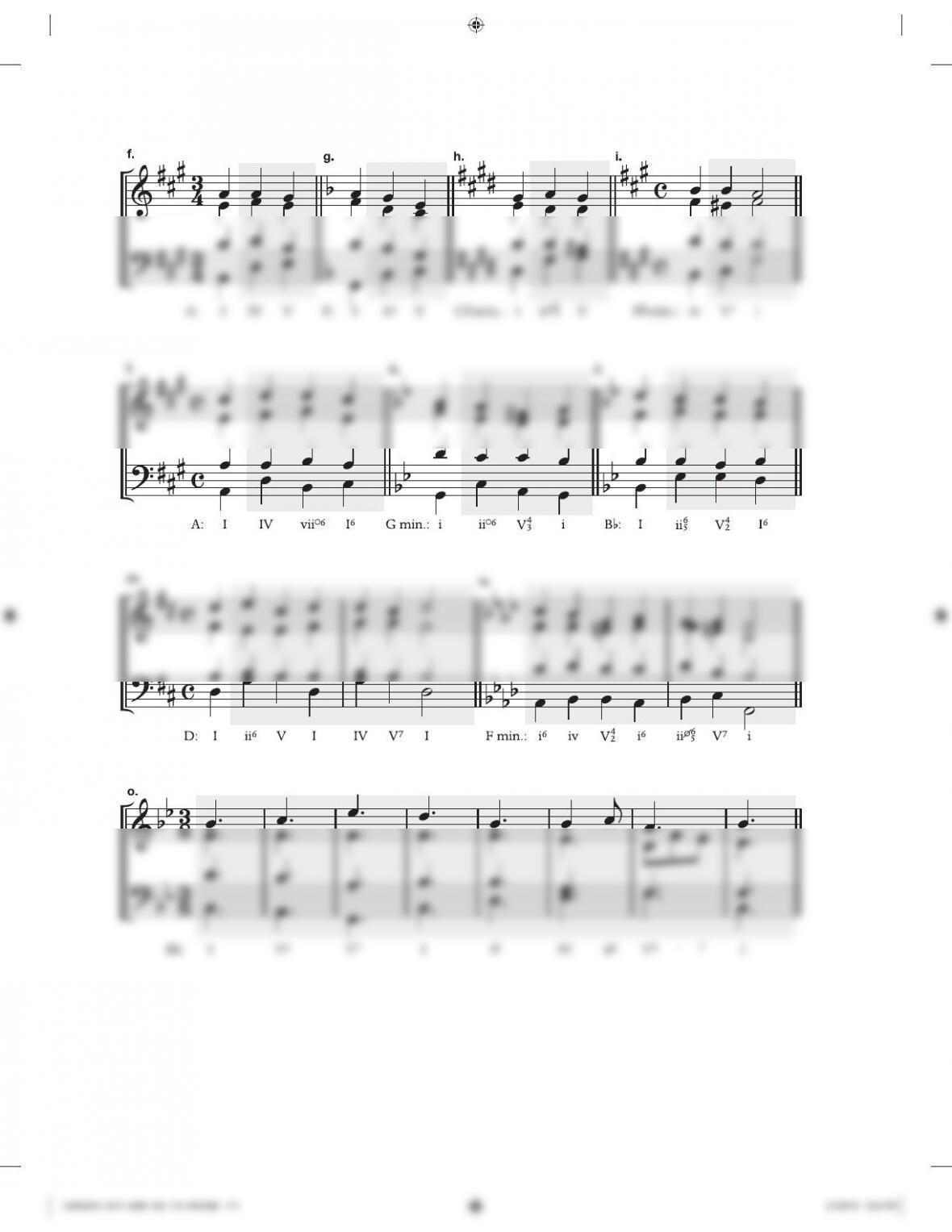
1. Realize the Roman numerals in SATB format.
chapter
14 Approaching the Dominant:
IV, ii6, and ii6
5
174 | CHAPTER 14 | Approaching the Dominant: IV, ii6, and ii6
5
B. Realizing Roman Numerals | 175
NAME:
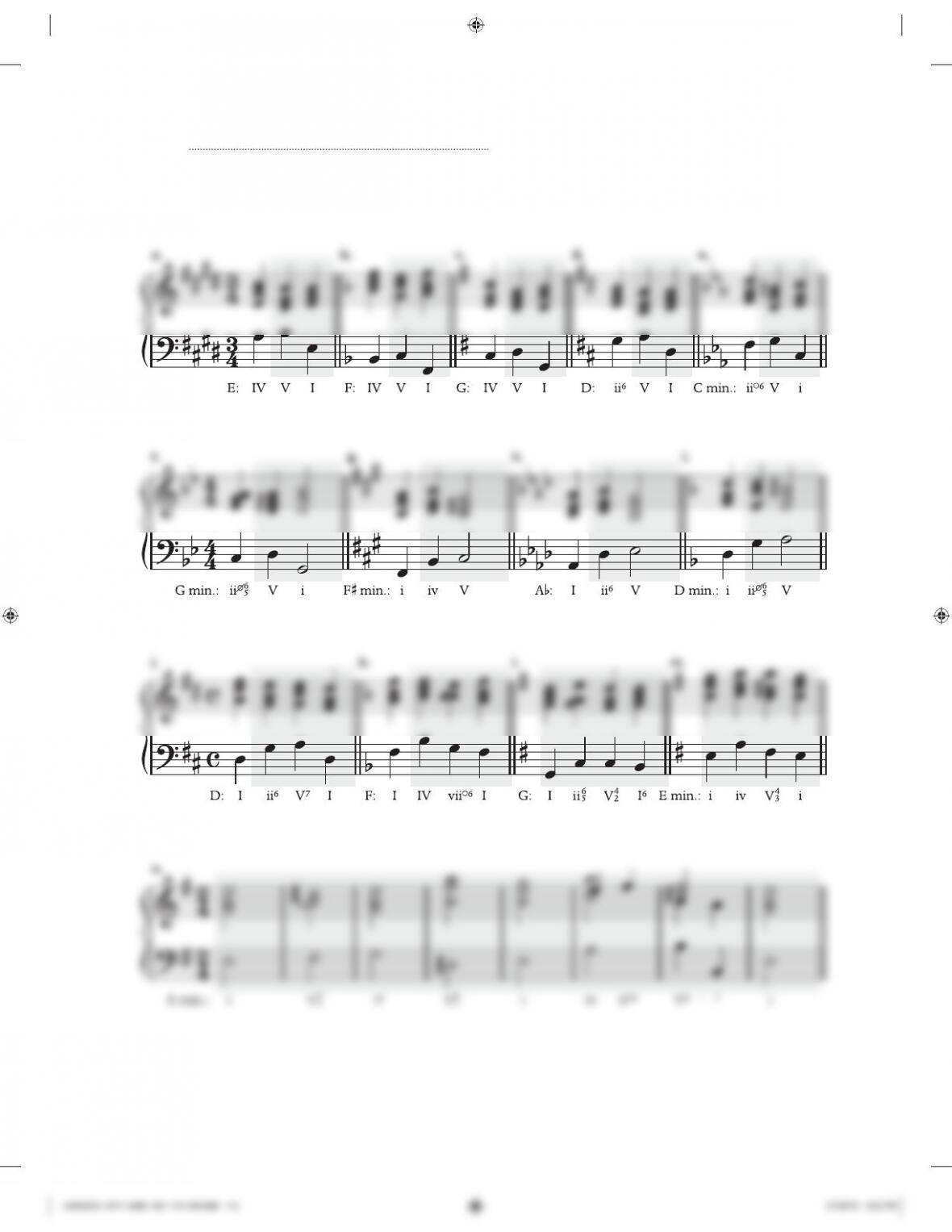
2. Realize the Roman numerals in keyboard format.
176 | CHAPTER 14 | Approaching the Dominant: IV, ii6, and ii6
5
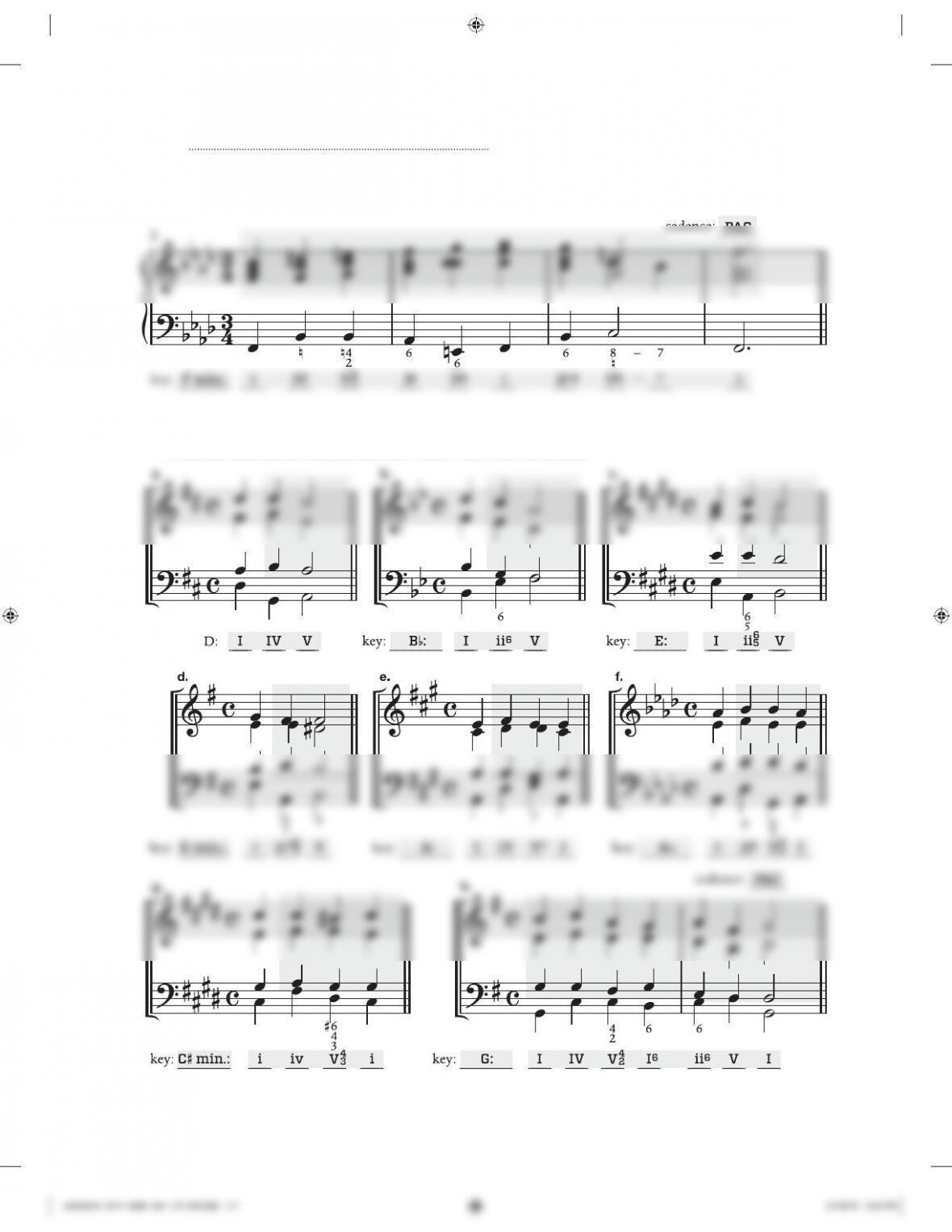
C. REALIZING FIGURED BASS
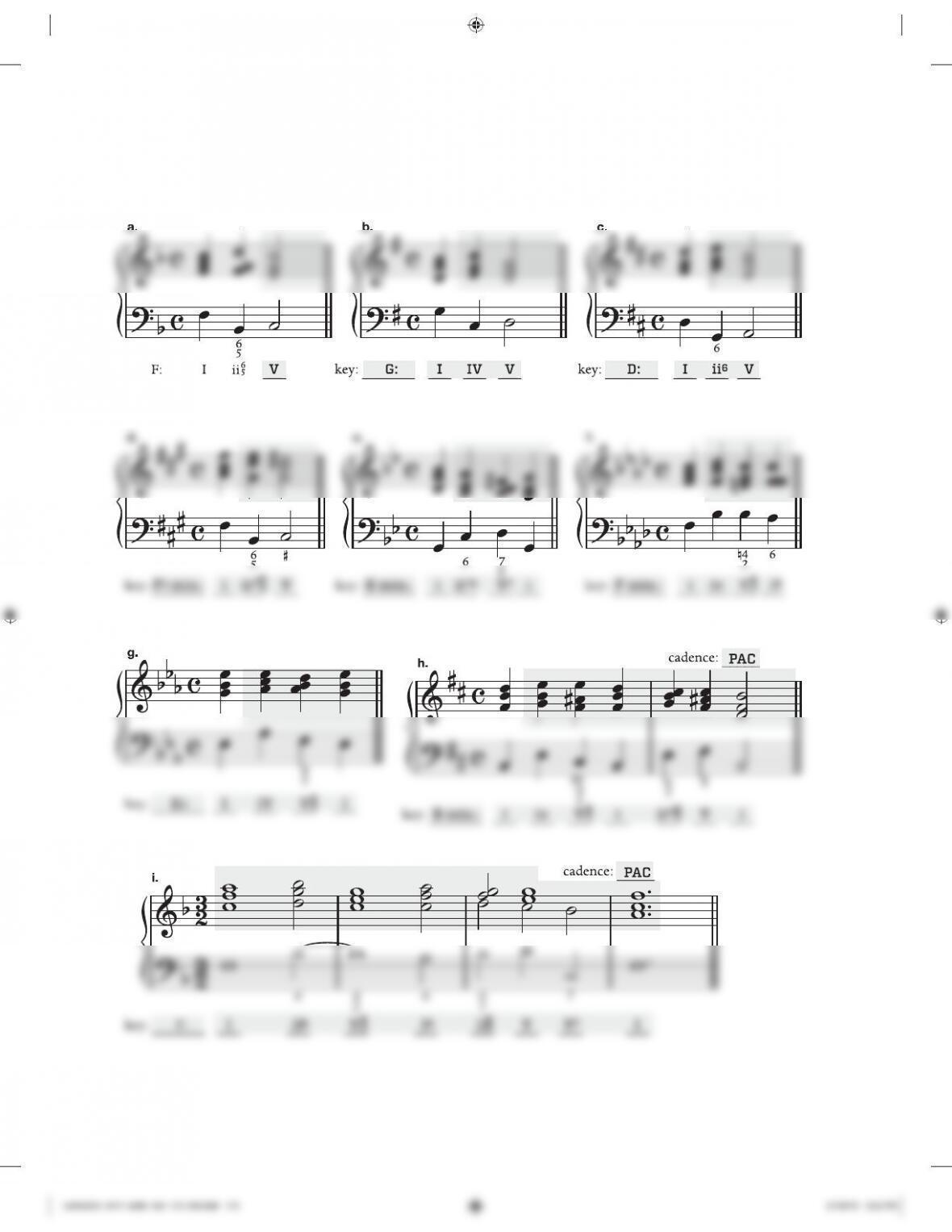
1. Realize each of these short figured basses in keyboard format; label the key and
Roman numerals. Also label the cadences (either IAC or PAC) where indicated.
C. Realizing Figured Bass | 177
NAME:
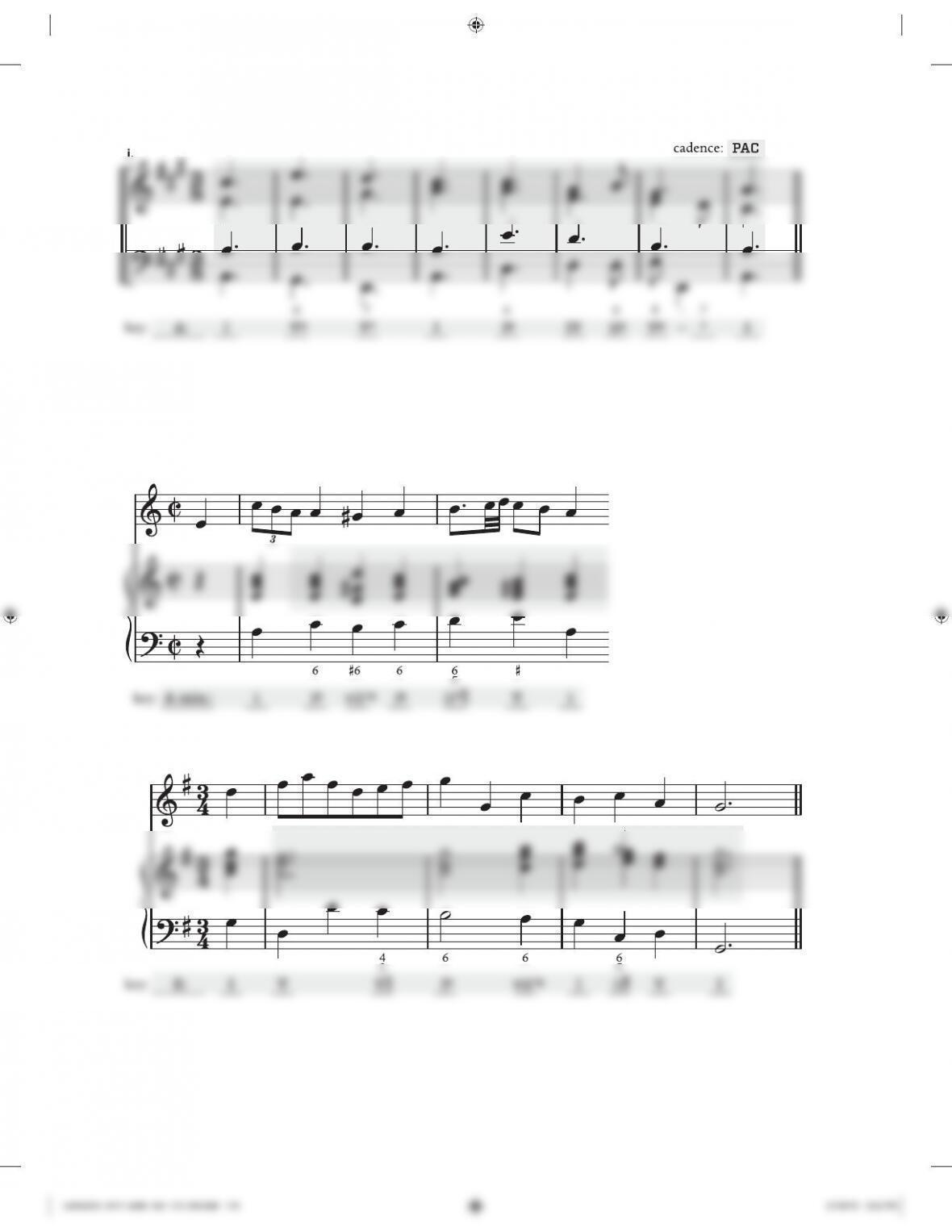
2. Realize each of these short figured basses in SATB format; label the key and Roman
numerals. Also label the cadences (either IAC or PAC) where indicated.
178 | CHAPTER 14 | Approaching the Dominant: IV, ii6, and ii6
5
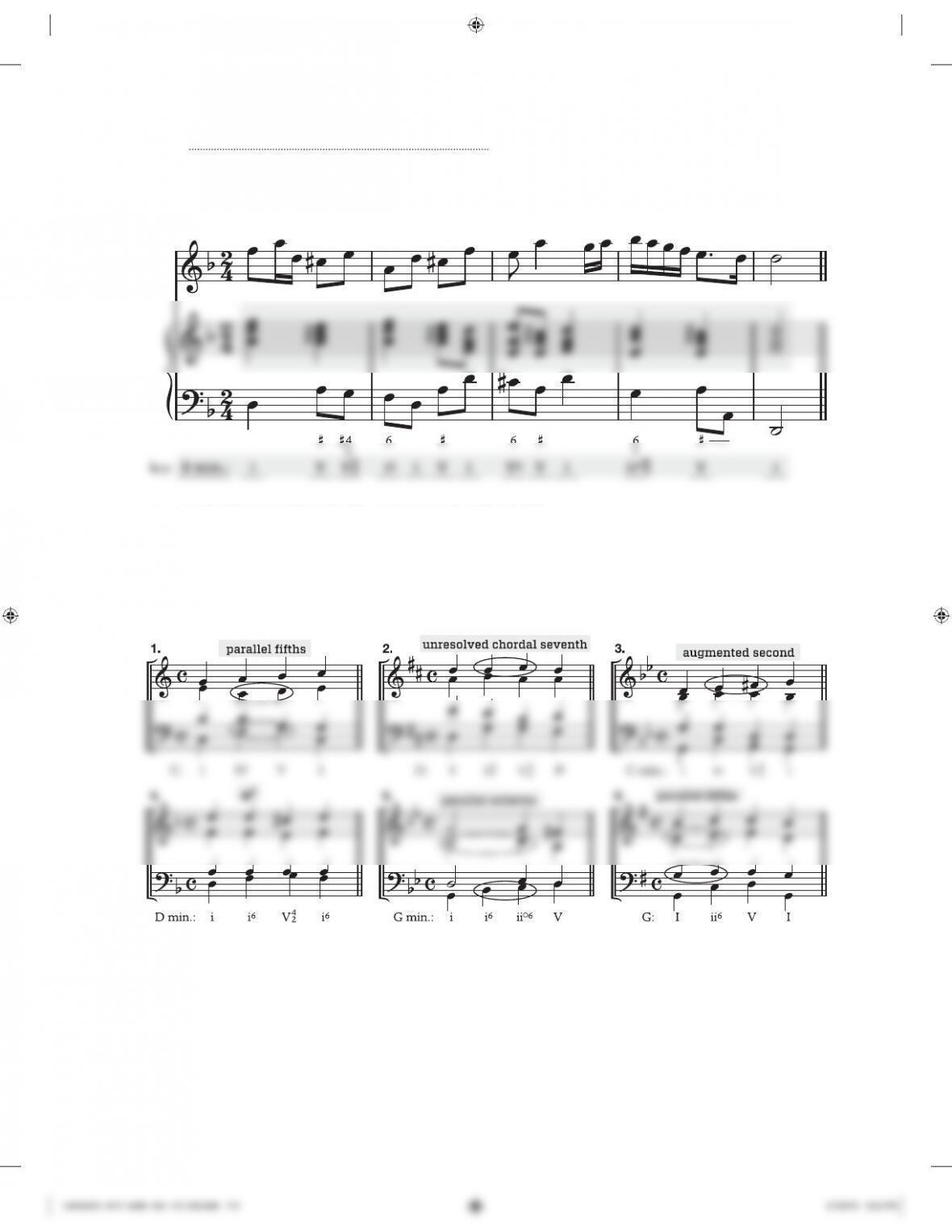
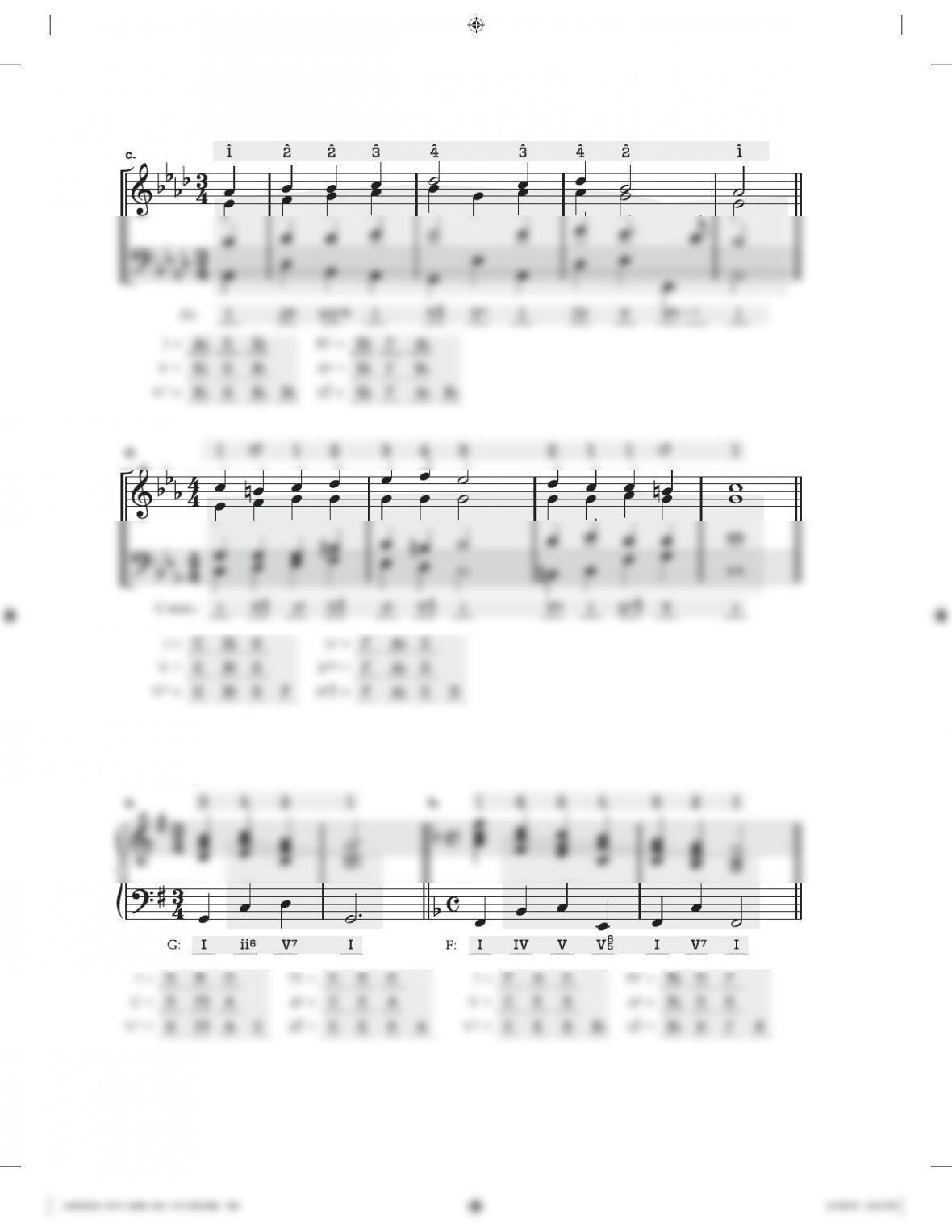
3. Realize the following figured bass accompaniments in keyboard format, and label
the key and Roman numerals. Do not worry about any parallel perfect intervals
that may arise between your figured bass realization and the given melody.
a. Elizabeth Turner, “In Pity, Sophy”
b. From Calliope collection
E. Harmonizing Melodies | 179
NAME:
c. Anne Danican Philidor, Premier livre, for ute and continuo, No. 5
D. IDENTIFYING VOICE-LEADING ERRORS
Most (though not all) of the following have one of these errors: parallel octaves, par-
allel fifths, unresolved chordal seventh; melodic augmented second. Circle the prob-
lematic tones and identify the error. If there is no error, place a check mark above the
example.
E. HARMONIZING MELODIES
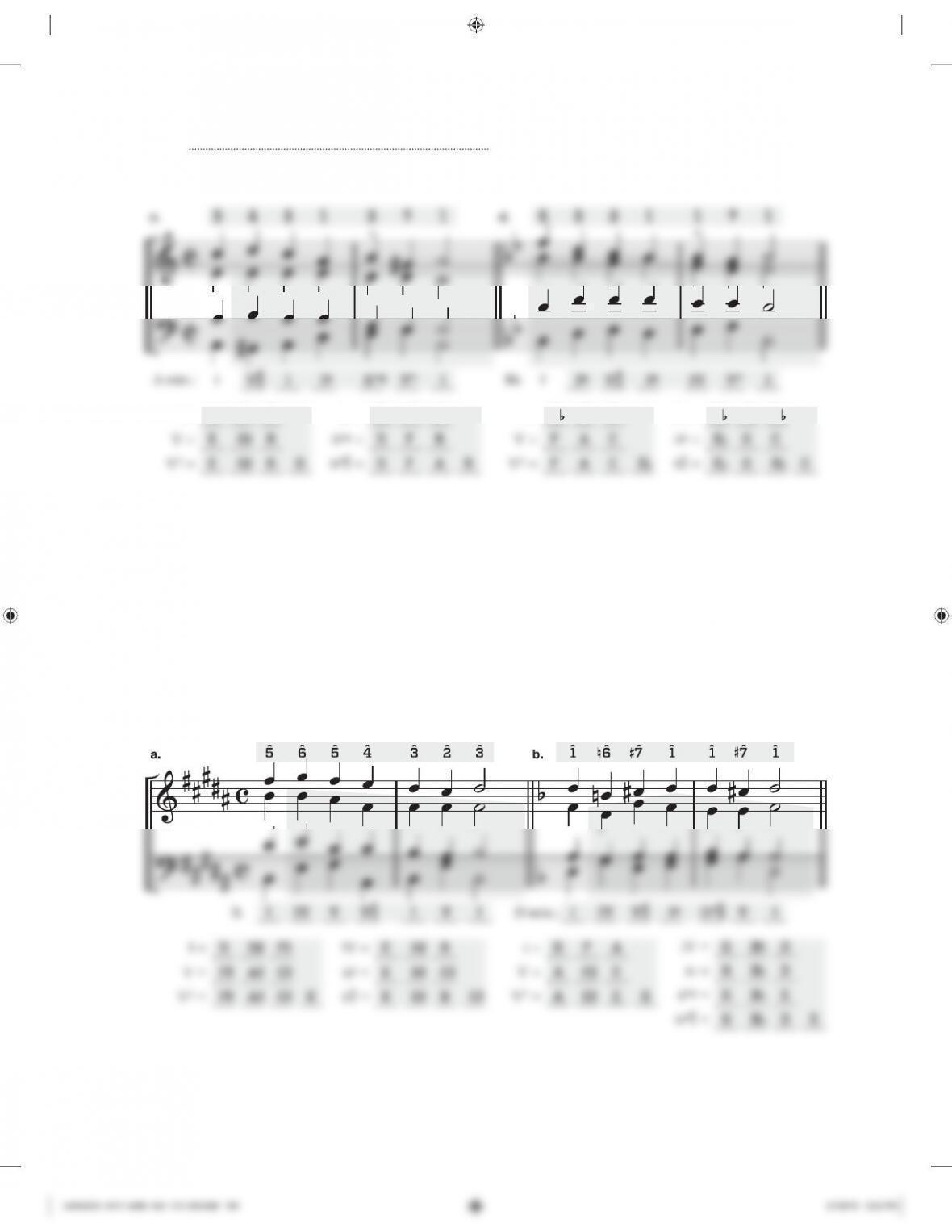
1. In the following harmonic fragments, the bass line and the Roman numerals for
the last two chords are given.
• Label the scale degrees in the melody, and below each excerpt list the note
names in the IV, ii6, and ii6
5 chords in the given key.
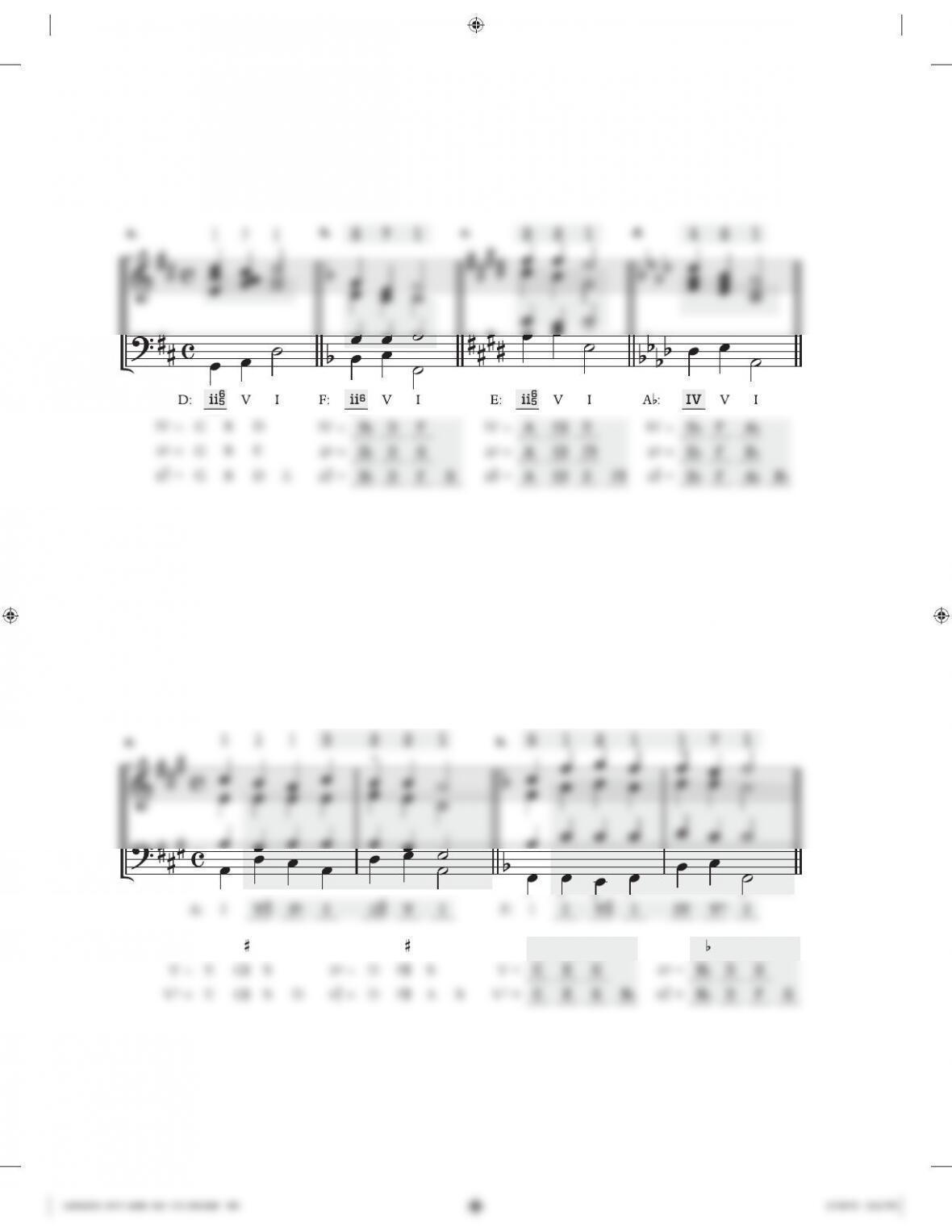
• Then choose a harmony for the first chord of each (either IV, ii6, or ii6
5; note that
sometimes only one of these might fit the given melody).
• Finally, fill in the inner voices in either SATB or keyboard format.
2. Harmonize the following melodies in SATB format.
• Prepare for the harmonization by first identifying the scale degrees of the notes
in the melody and writing the note names of the chords that you may use.
• Then provide a bass and Roman numerals for each note.
• Finally, fill in the inner voices.
• Use either IV, ii6, or ii6
5 for the notes marked by an asterisk
—
but don’t use these
chords anywhere else in the harmonization.
• Elsewhere in the passage, you may use I (or I6), V (or V6), or V7 (in root position
or inversion); somewhere in each, use at least one inverted V7 chord.
IV = D F A
I = A C E
IV = B D F
___ ___ ___
I = F A C
___ ___ ___
NAME:
i = A C E
___ ___ ___
IV = E G B
___ ___ ___
I = B D F
___ ___ ___
iv = D F A
___ ___ ___
3. Harmonize the following melodies in SATB format.
• Prepare for the harmonization by identifying the scale degrees of the notes in
the melody and writing the note names of the chords that you may use.
• Then provide the bass and Roman numeral for each note.
• Finally, fill in the inner voices.
• Use I (or I6), V (or V6), or V7 (in root position or inversion), and
—
at least once
per exercise
—
either IV, ii6, or ii6
5.
• Each passage should end with a cadence, using root-position V (or V7) to
root-position I.
4. Harmonize the following melodies in the manner outlined in the previous exer-
cise, but now use keyboard format. In each chord, the given melody note should
be the highest note.
NAME:
F. COMPOSITION
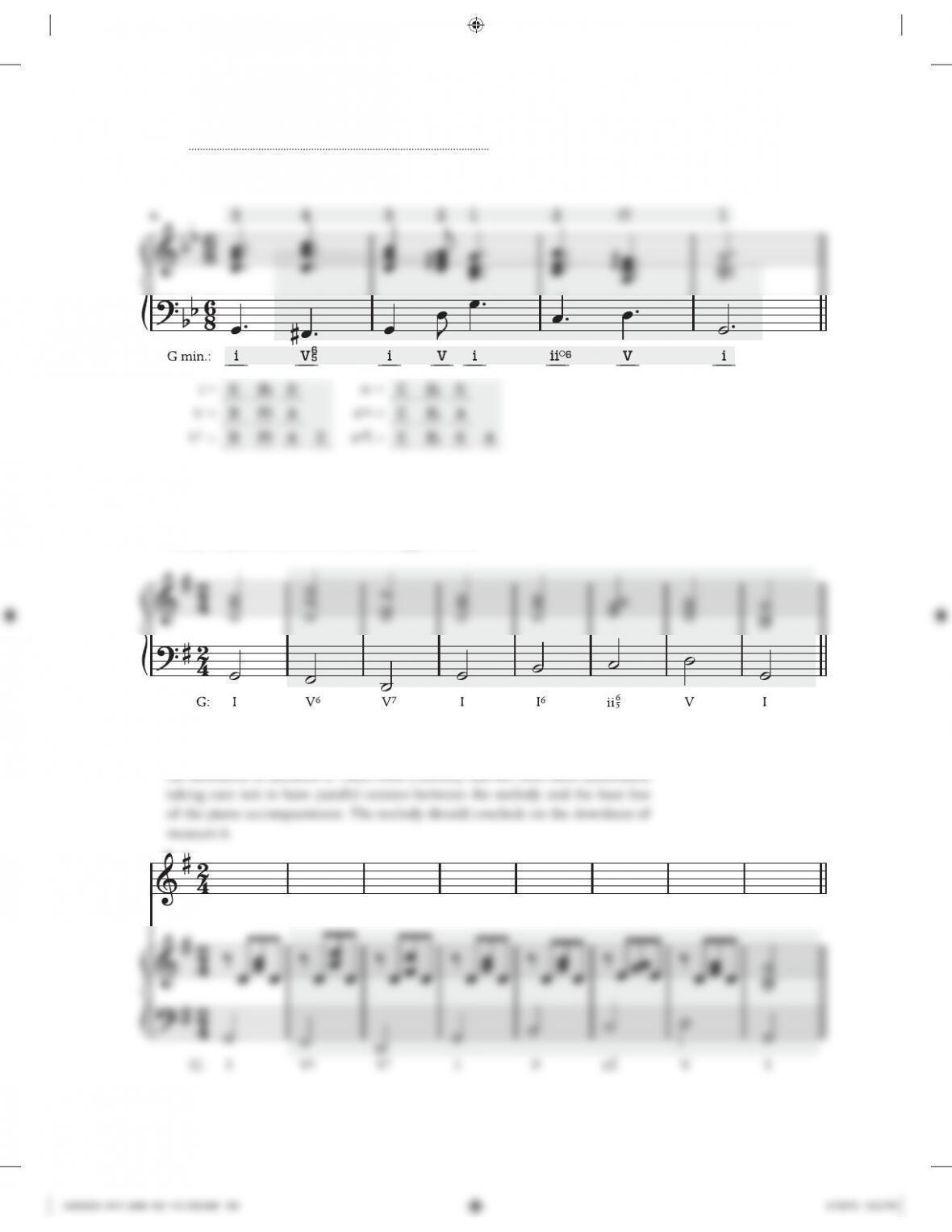
1. Realize these Roman numerals in keyboard format, using good voice leading. Do
not use any unisons between the three upper voices.
2. Construct a piano accompaniment by continuing the accompaniment pattern
shown in measure 1, using the same pitches as in (1); end with a half note I chord on
the downbeat of measure 8. Then write a melody that fits with these harmonies,
184 | CHAPTER 14 | Approaching the Dominant: IV, ii6, and ii6
5
3. Compose a passage for keyboard, guitar, or an ensemble of your choice, following
these guidelines:
• The passage should be in D major, in 4
4.
• The first four measures should embellish the tonic with these harmonies:
G. ANALYSIS
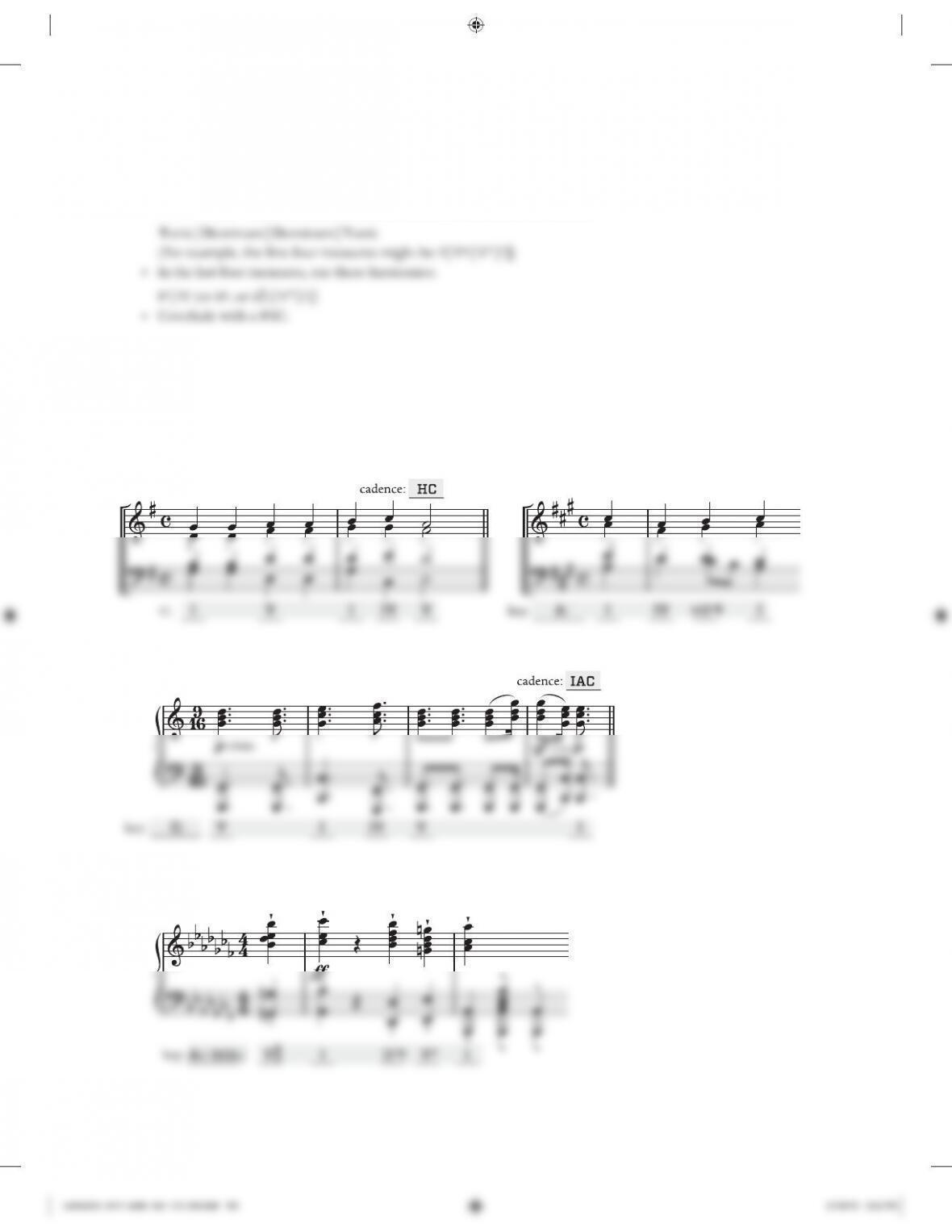
Label the keys and Roman numerals. If the excerpt ends with a cadence, label the
cadence as well (PAC, IAC, or HC).
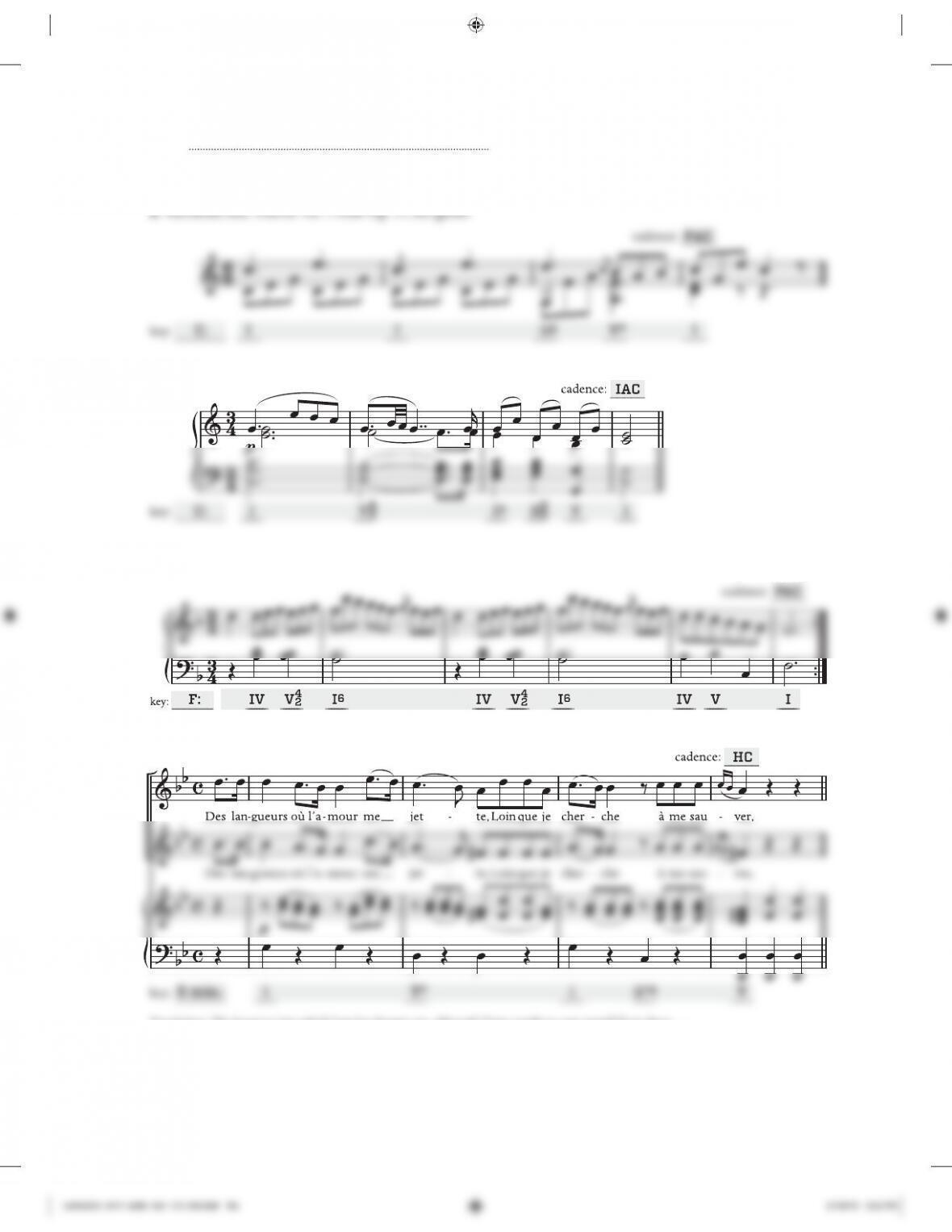
1. Arthur Sullivan, “Ever Faithful” 2. J. S. Bach, Chorale 63
3. Ludwig van Beethoven, Piano Sonata, Op. 111, ii
4. Ludwig van Beethoven, Piano Sonata, Op. 26, iii
G. Analysis | 185
NAME:
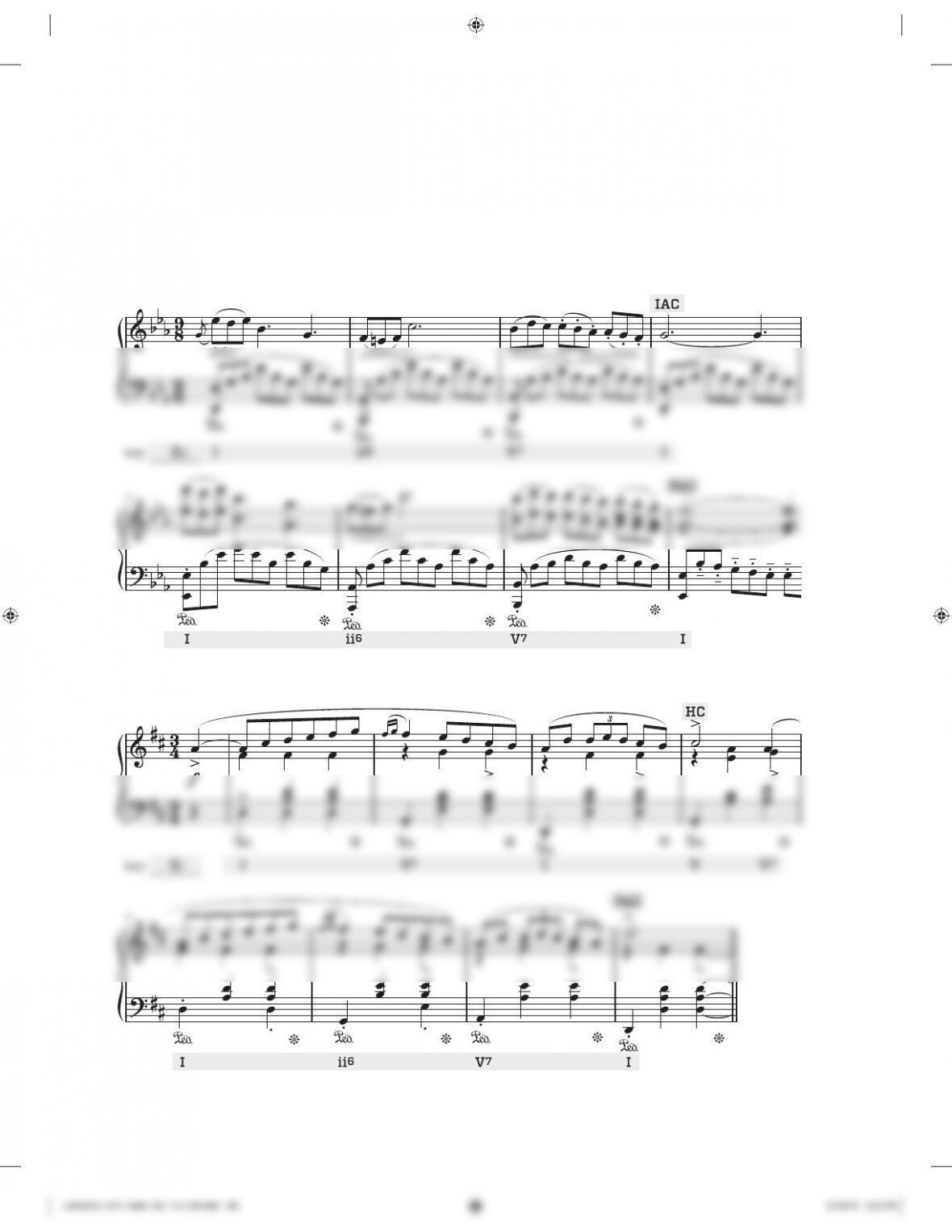
6. Franz Schubert, “Morgengruss” (Morning Greeting)
7. Anna Bon, Harpsichord Sonata Op. 2, No. 3, Minuetto
8. Sophie Gail, “Les Langueurs” (Languors)
Translation: The languors into which love has thrown me, although I have sought to save myself from them . . .
186 | CHAPTER 14 | Approaching the Dominant: IV, ii6, and ii6
5
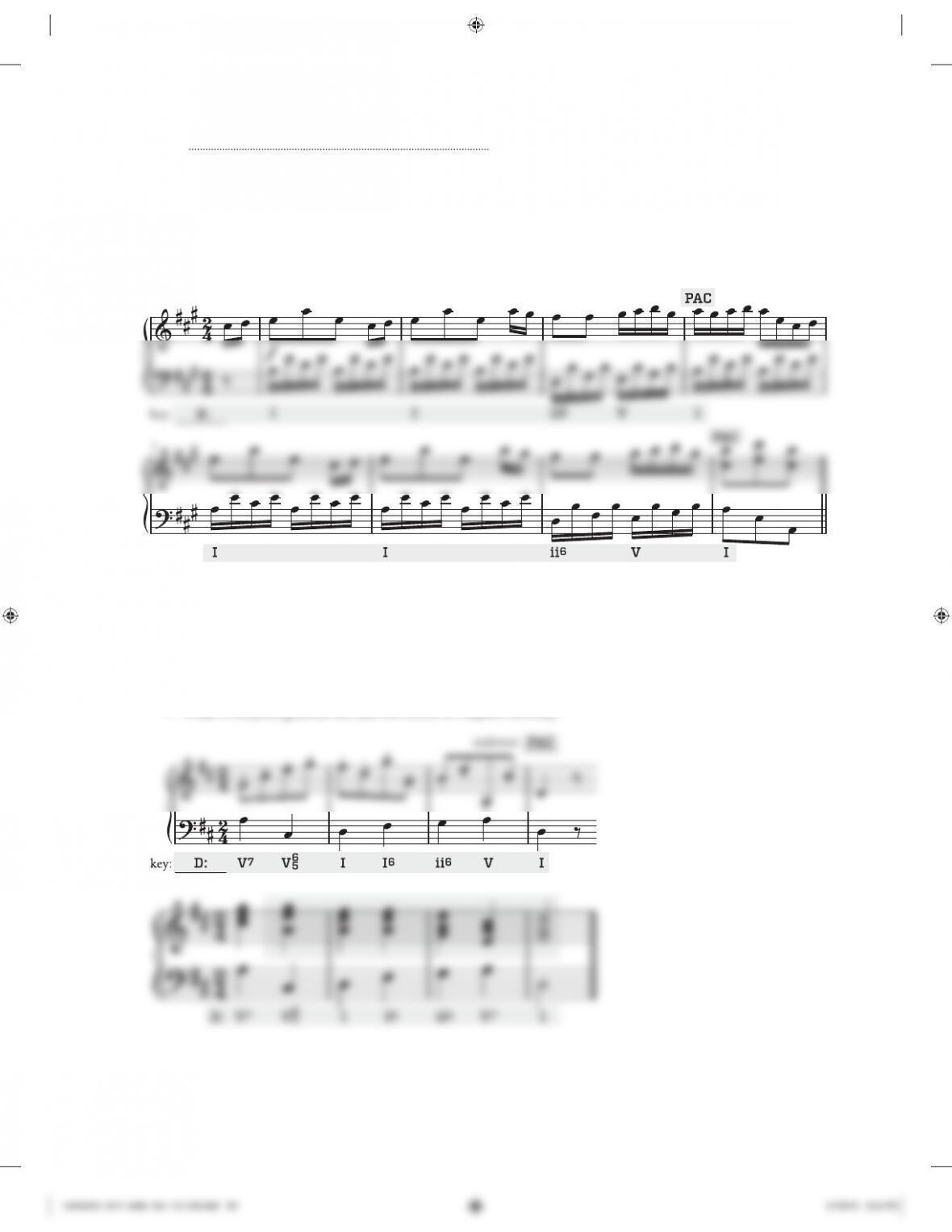
9. The next three excepts each include two phrases.
• Label the key and Roman numerals.
• Locate and label the cadences in each.
• Compare the two phrases in each: in what ways are they similar, and in what
ways are they dierent?
a. Stephen Foster, “Beautiful Dreamer” (arr. Blaumbach)
Label one chord per measure.
b. Frédéric Chopin, Mazurka, Op. 33, No. 2
Label one chord per measure, except in m. 4, where you could label two chords.
G. Analysis | 187
NAME:
c. Francis Johnson, “Augustus”
Label one or two chords per measure.
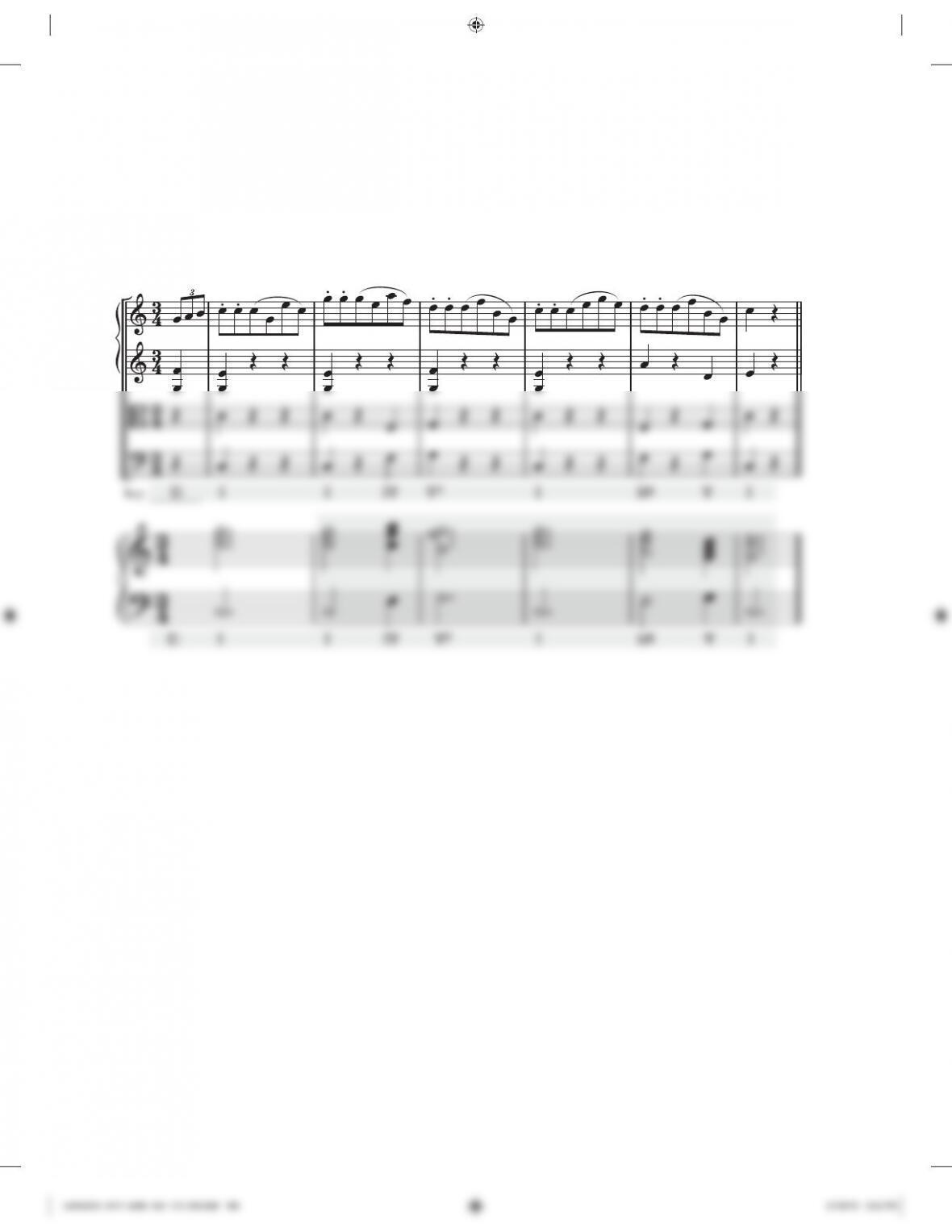
10. Joseph Haydn, Symphony No. 72, iv
• Label the key, cadence, and Roman numerals (one chord per bass note).
• On the sta below, complete a simplified harmonic version of the passage in
four-part harmony, keyboard format, using smooth voice leading.
• What is surprising about the last two notes of Haydn’s melody?
188 | CHAPTER 14 | Approaching the Dominant: IV, ii6, and ii6
5
11. Joseph Haydn, Symphony No. 69, iii
• Complete a Roman numeral analysis beneath the example.
• On the sta below, complete a simplified harmonic model (one or two chords
per measure) of this passage in keyboard format.
• Note that this passage is six measures long. How may it be understood to be an
expansion of a simpler four-measure phrase?
Compose a short piece for a solo instrument accompanied by keyboard, in either
duple or triple meter, based on the harmonies of this passage.