B. Preliminary Exercises | 159
NAME:
A. QUESTIONS FOR REVIEW
1. What note of the V7 chord
—
root, third, fifth, or seventh
—
is in the bass of V4
3?
2. In what ways are V4
3 and vii.6 similar to each other?
7. What chord progressions may be used to harmonize ˆ
1
–
ˆ
2
–
ˆ
3 in the melody?
8. What chord progressions may be used to harmonize ˆ
3
–
ˆ
4
–
ˆ
5?
9. When can a perfect fifth move to a diminished fifth? When can a diminished fifth
move to a perfect fifth?
B. PRELIMINARY EXERCISES
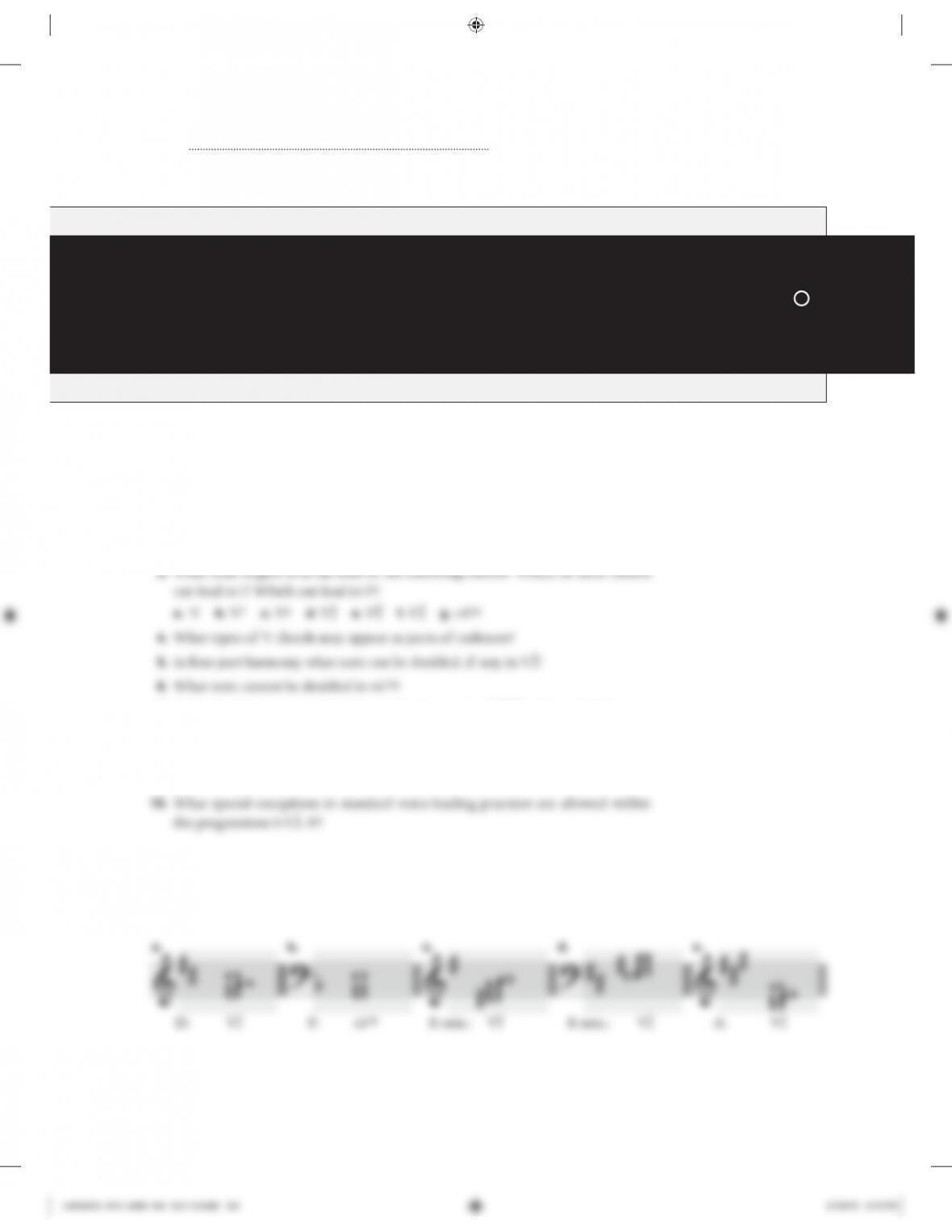
1. Write the indicated key signature and the chords; remember to raise ˆ
7 in minor keys.
chapter
13 V4
3 and vii 6
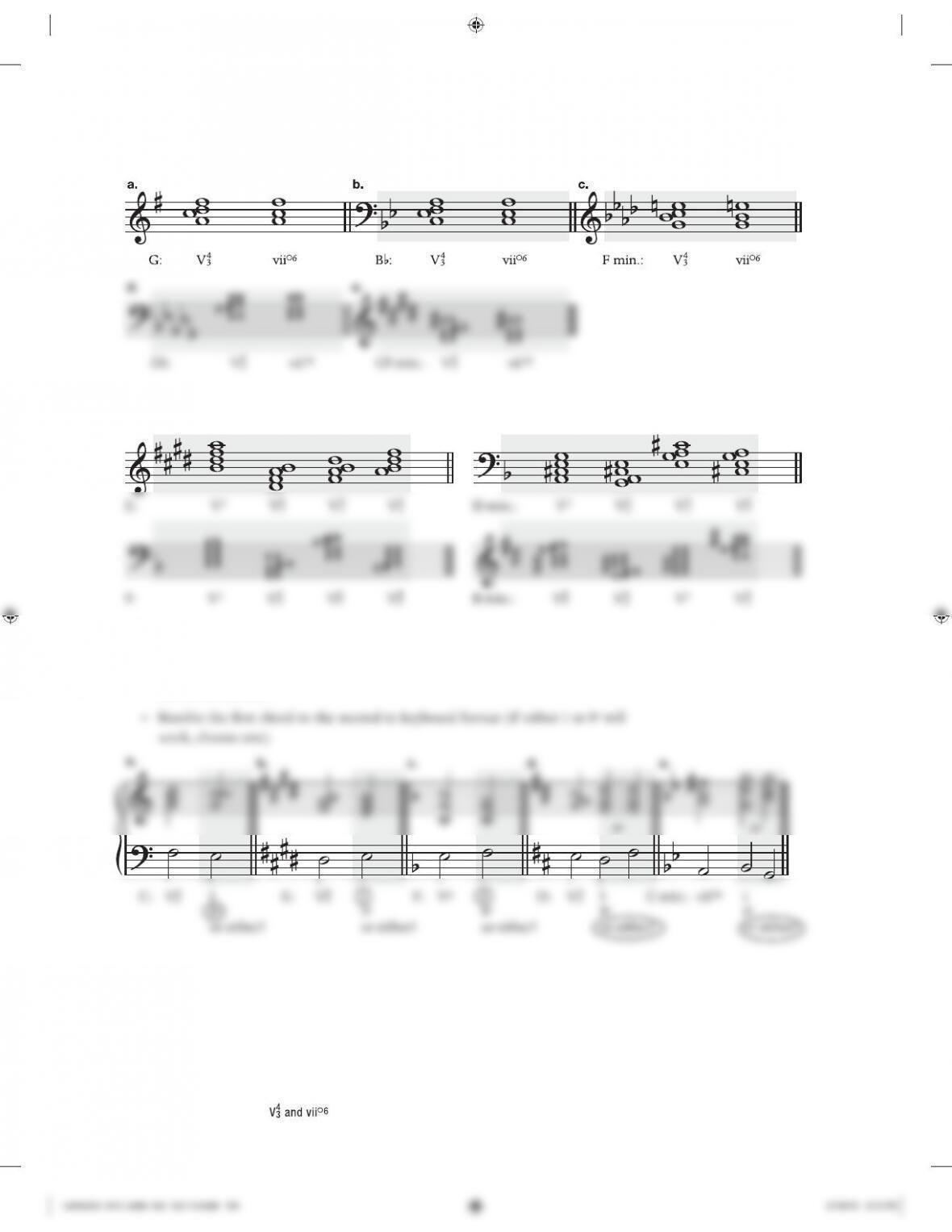
2. For each indicated key, write the key signature and then write V4
3 and vii.6.
3. Write the key signature and then the indicated chords.
4. For each of the two-chord progressions below:
• Indicate whether the first chord could be followed by I, I6, or either, by circling
the correct answer.
C. Realizing Roman Numerals | 161
NAME:
C. REALIZING ROMAN NUMERALS
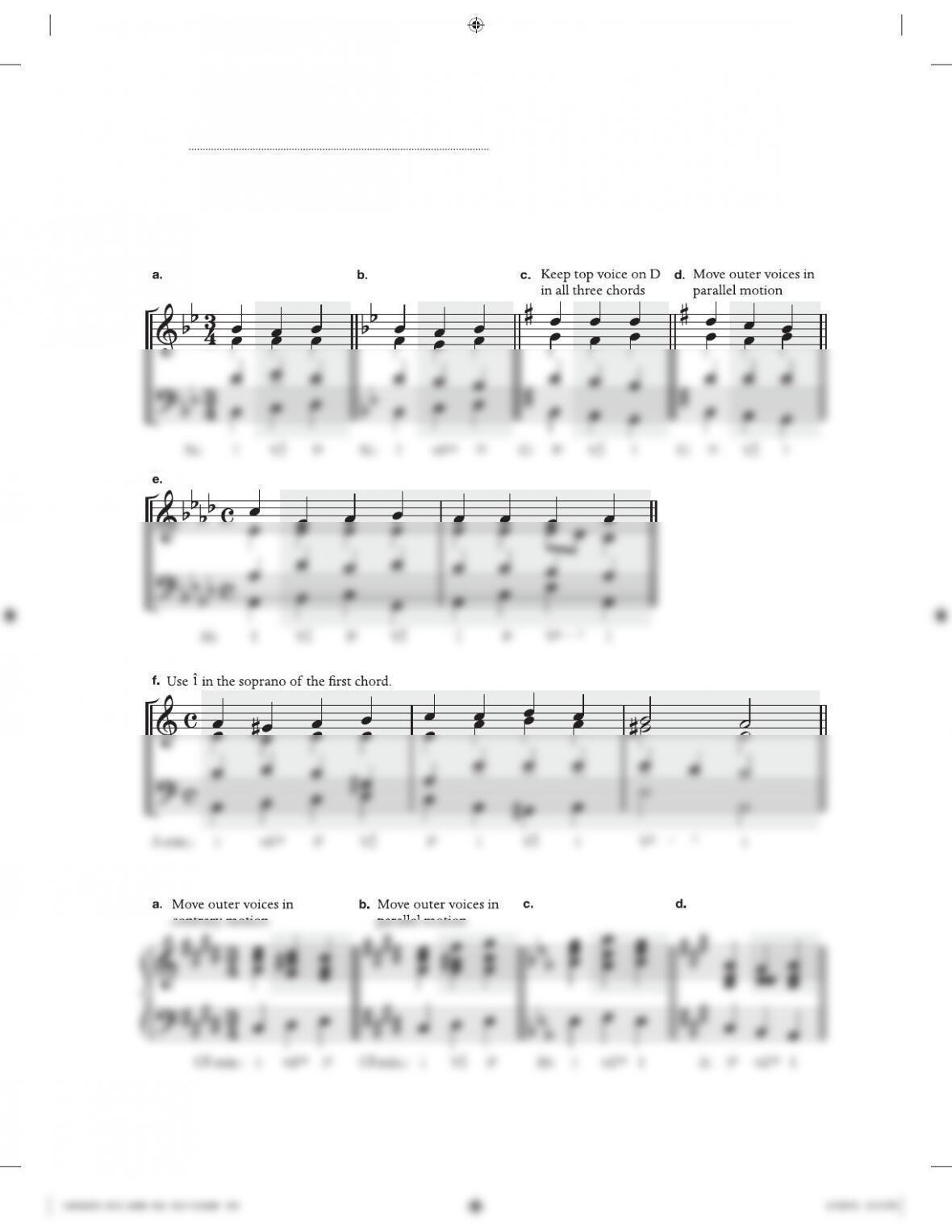
1. Realize each Roman numeral in SATB format.
2. Realize each Roman numeral in keyboard format.
162 | CHAPTER 13 |
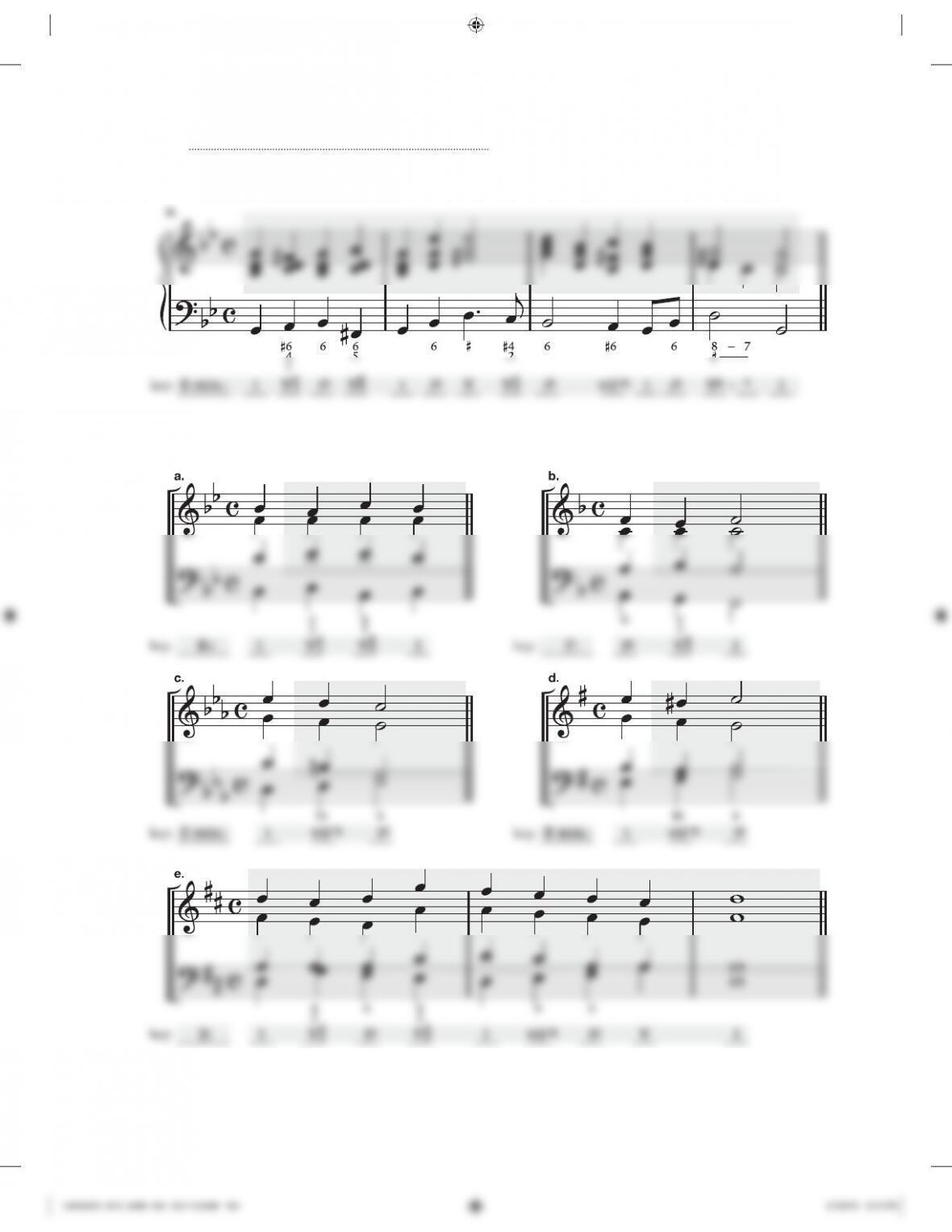
D. REALIZING FIGURED BASS
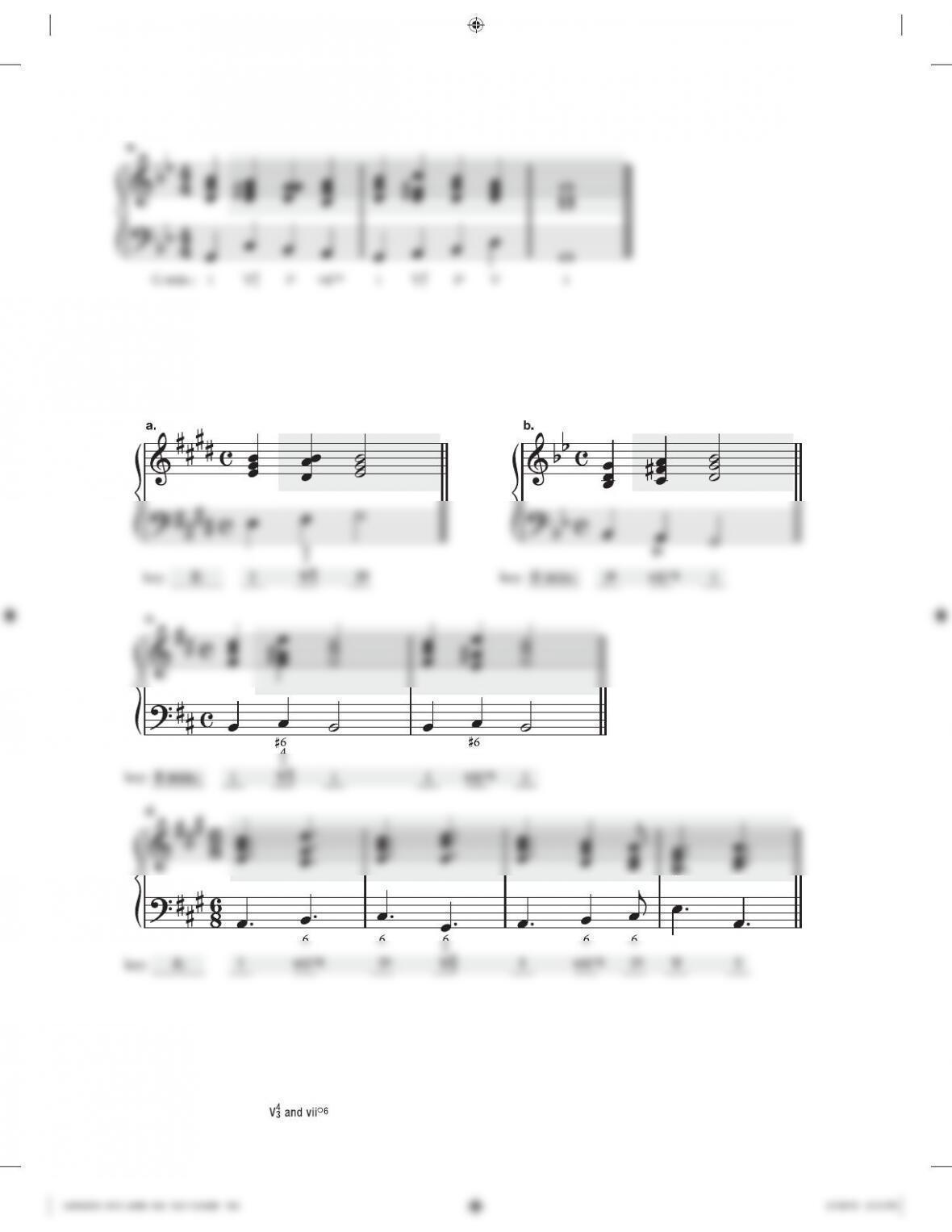
1. Realize each figured bass in keyboard format. Then identify the key of each and
label the Roman numerals.
NAME:
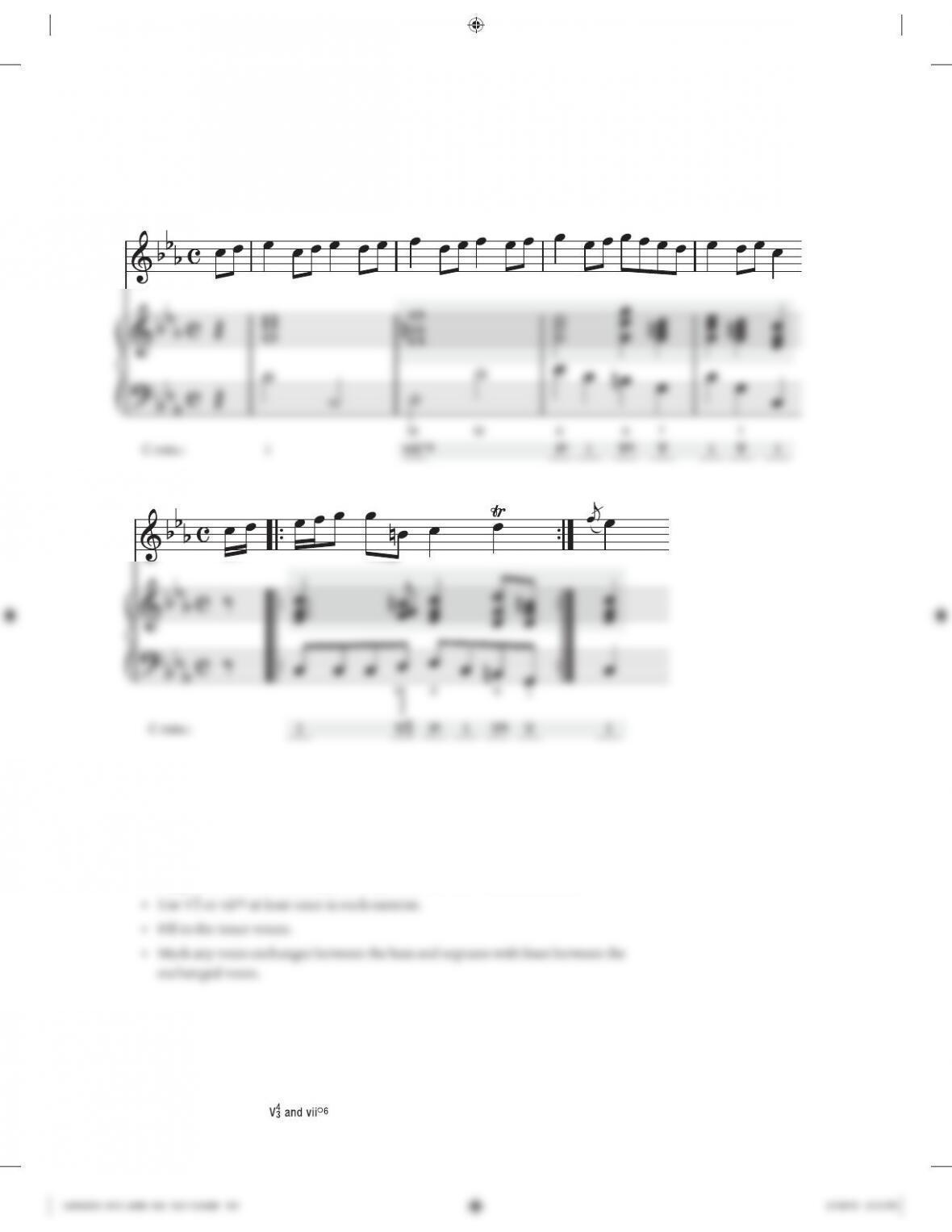
3. Realize the figured bass accompaniment for the following excerpts, and label the
Roman numerals. Do not worry about any parallel perfect intervals that may arise
between your figured bass realization and the given melody.
a. G. P. Telemann, Sonata for Oboe in C minor
b. Frederick the Great, Sonata for Flute in C minor
E. HARMONIZING MELODIES
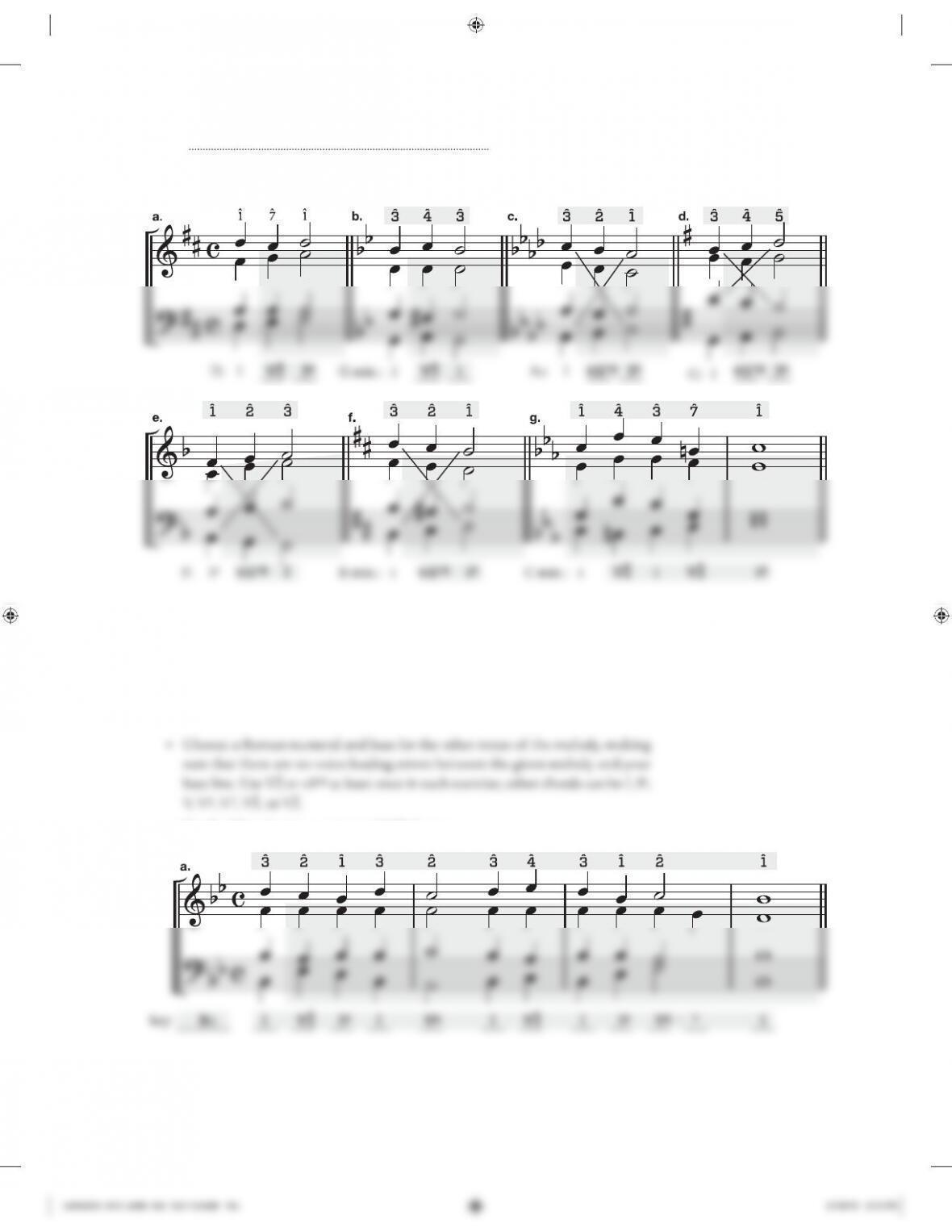
1. Short harmonizations:
• Label the scale degrees of the soprano.
• Suggest a harmonization by providing a bass line and Roman numerals.
E. Harmonizing Melodies | 165
NAME:
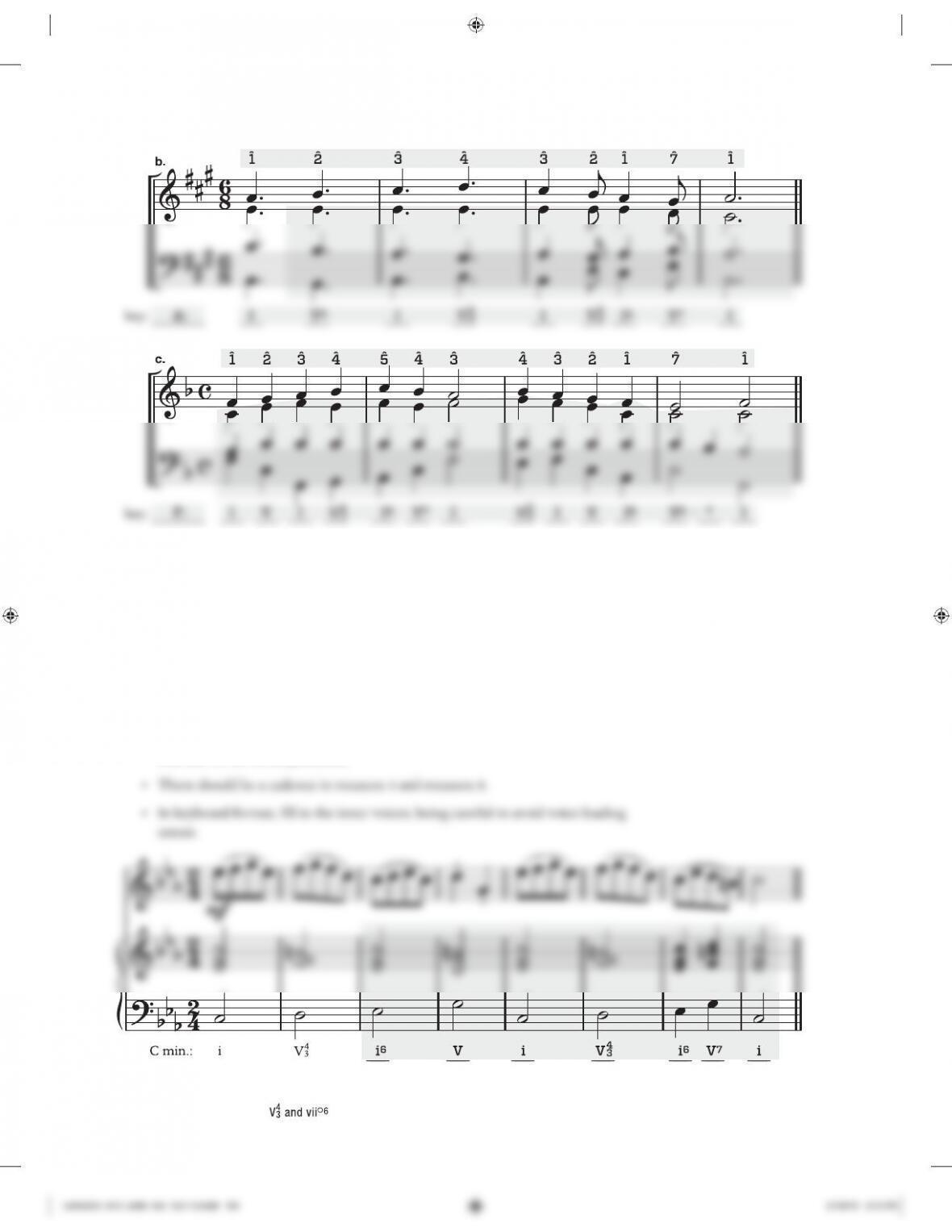
2. Harmonize the following phrases, using a different chord for every note in the
melody.
• First determine the key of each passage and scale degrees of each note of the
melody.
• Then determine the bass and Roman numerals of the cadence.
• Finally, fill in the inner voices in SATB format.
F. COMPOSITION
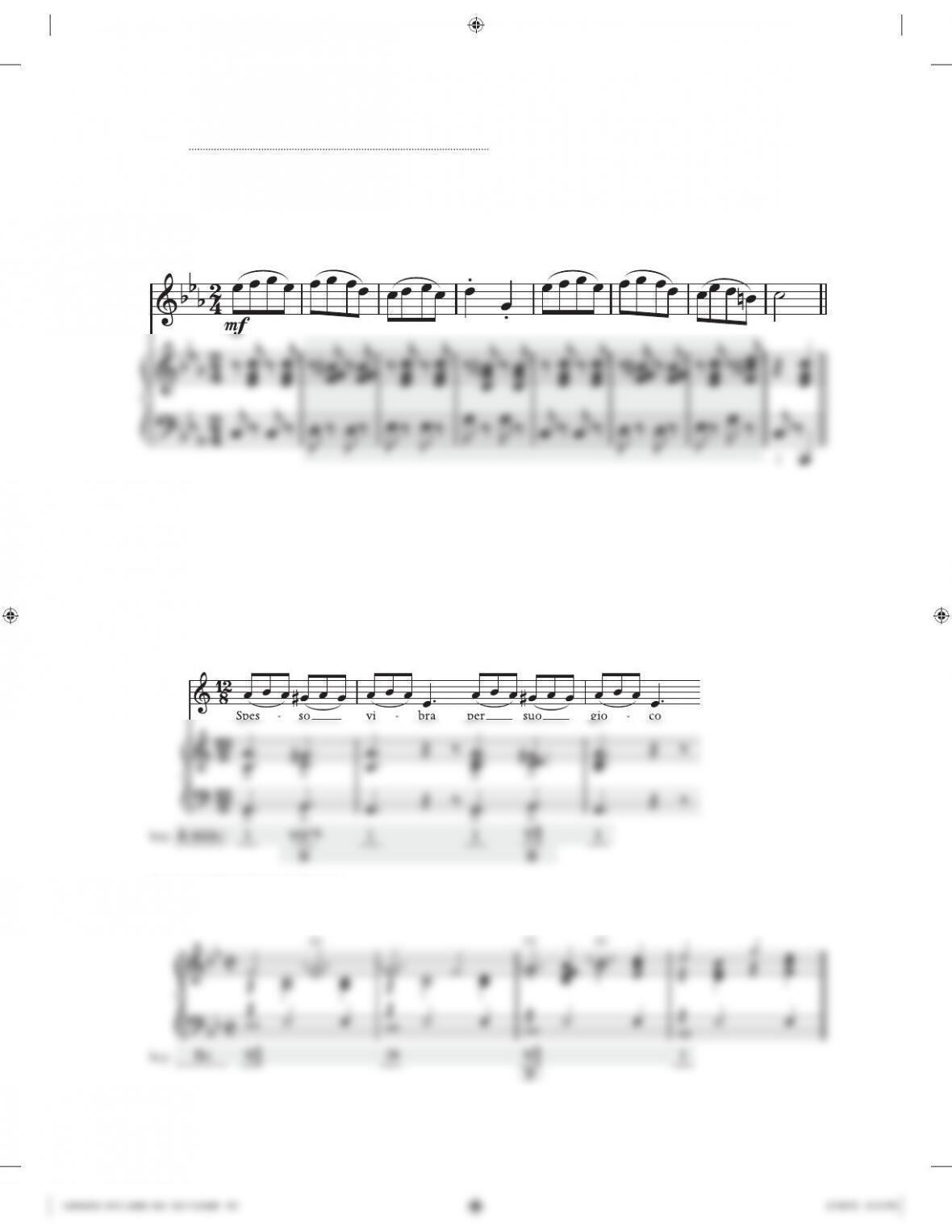
1. Provide a keyboard accompaniment for the following melody:
• Select one chord per measure, except in measure 7, which should use two
chords. Use only the chords discussed thus far, and write Roman numerals and
a bass line.
• There should be no parallel fifths or octaves between the given melody and the
bass line of the accompaniment.
G. Analysis | 167
NAME:
2. Rewrite the accompaniment below continuing the pattern given in the first mea-
sure; use the same pitches as in the harmonization in (1). The final measure has
been given.
G. ANALYSIS
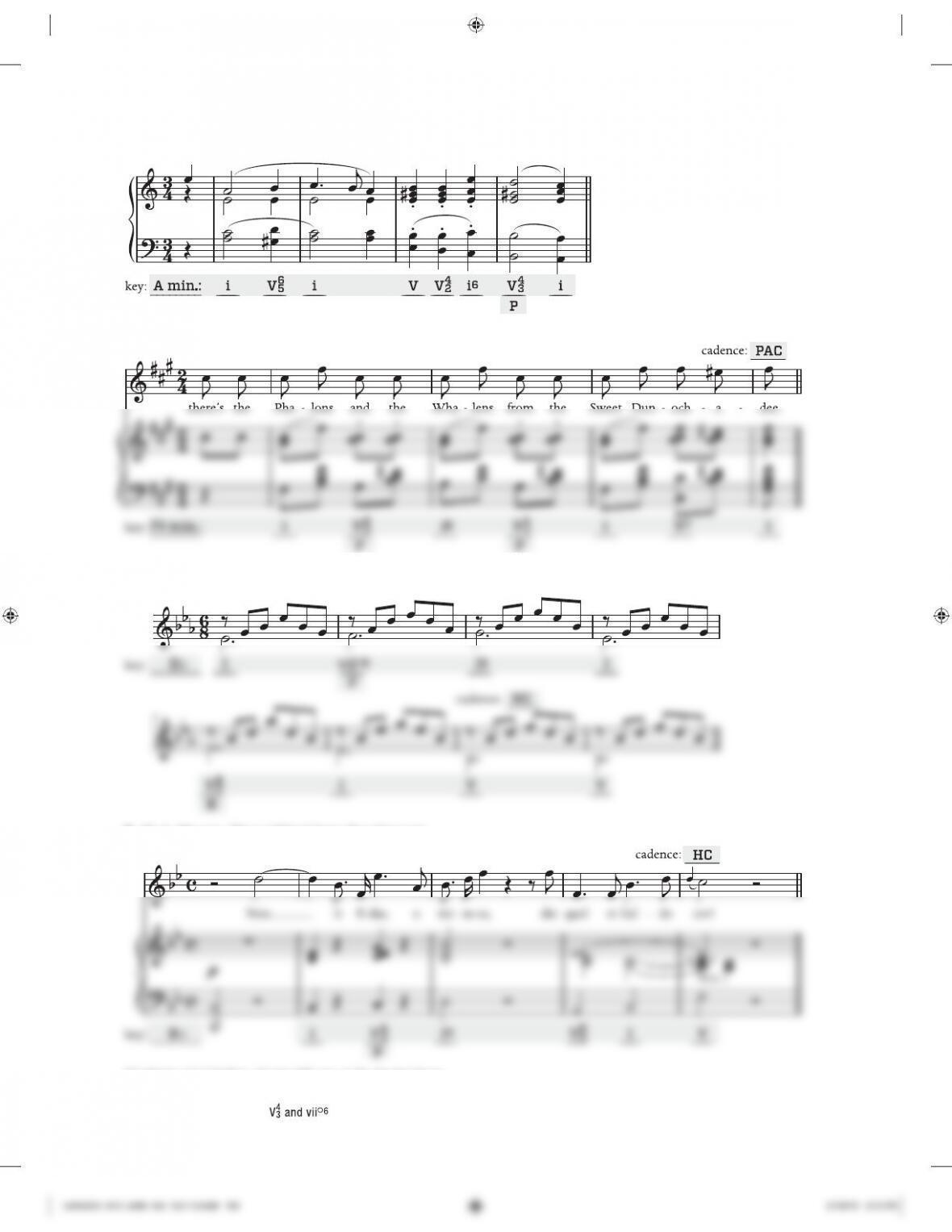
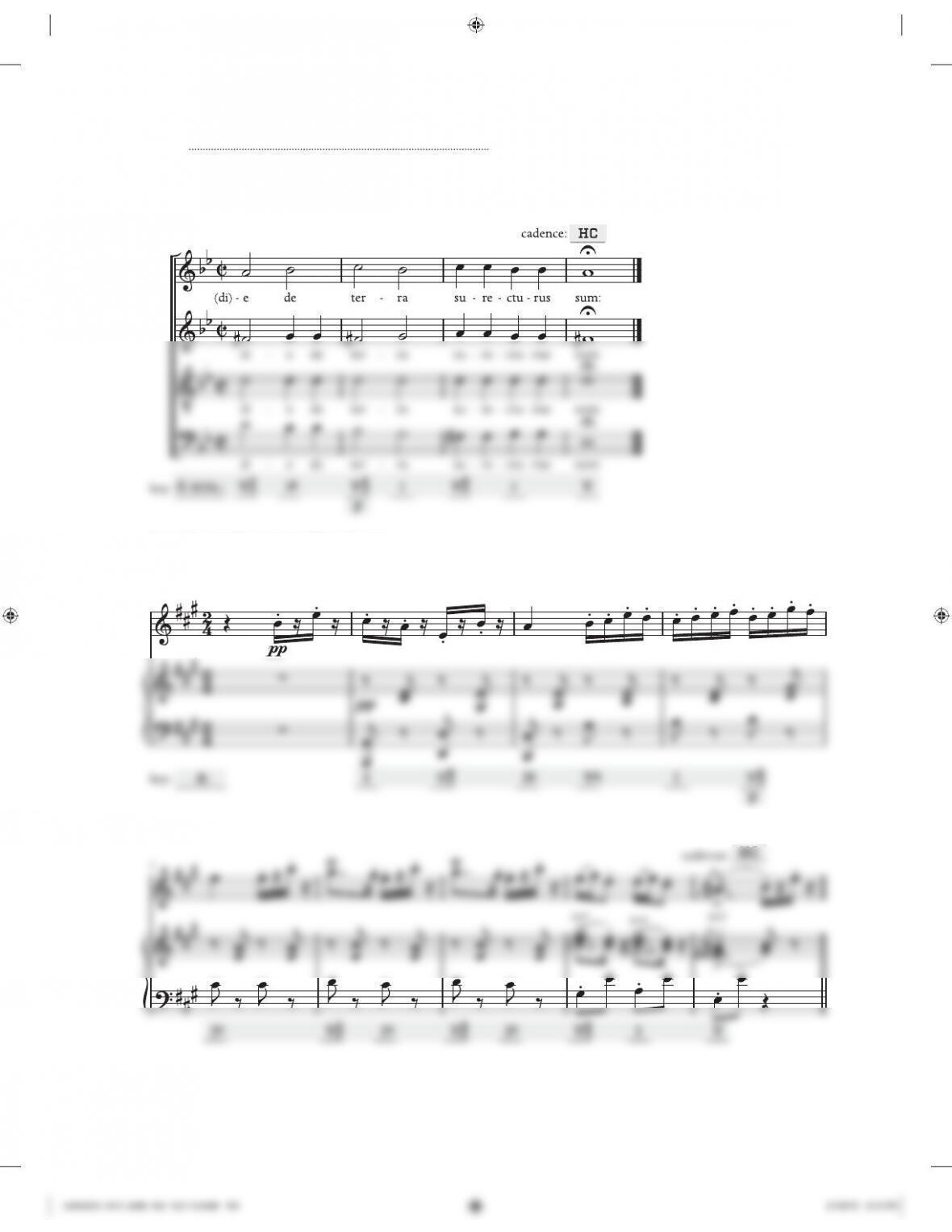
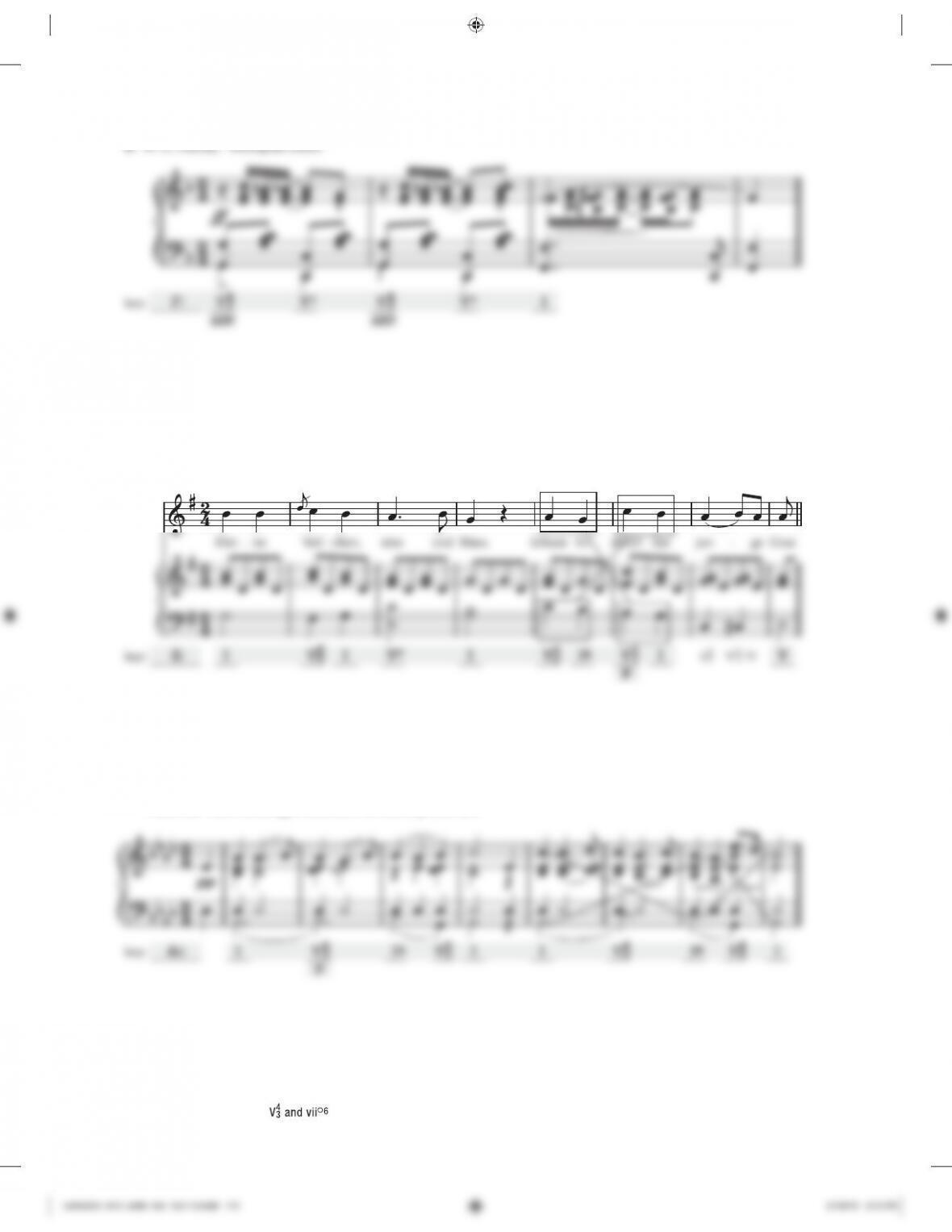
• Label the key and Roman numerals of the following excerpts. Identify cadences
where indicated.
• Beneath each instance of a vii.6 or V4
3, indicate whether the chord involves a
passing motion in the bass (P), a neighbor motion in the bass (N), or arpeggia-
tion to or from the bass of another Dominant chord (ARP).
1. Alessandro Scarlatti, “Spesso vibra per suo gioco”
Translation: Often vibrates for his sport. . .
2. Jerome Kern, “Gloria’s Romance”
168 | CHAPTER 13 |
3. Jean-Baptiste Lully, Minuet from Cadmus et Hermione
4. Dave Braham, “The Babies on Our Block”
5. Mauro Giuliani, Easy Pieces for Guitar, No. 8
6. W. A. Mozart, “Non ti fidar” from Don Giovanni
Translation: Don’t believe, O miserable one, in the cheating heart.
G. Analysis | 169
NAME:
7. J. M. Nunes Garcia, Matinas e encomendação de defuntos, Responsório I
Translation: I shall be resurrected from the earth.
8. Ambroise Thomas, Gavotte, from Mignon
170 | CHAPTER 13 |
9. W. C. Handy, “Memphis Blues”
10. Louise Reichardt, “Die Veilchen” (“The Violet”)
The example includes a voice exchange between the melody and the bass. Mark it
by drawing lines between the two voices that are exchanged.
Translation: Tiny violet, sweet and pale, peeking though the young grass.
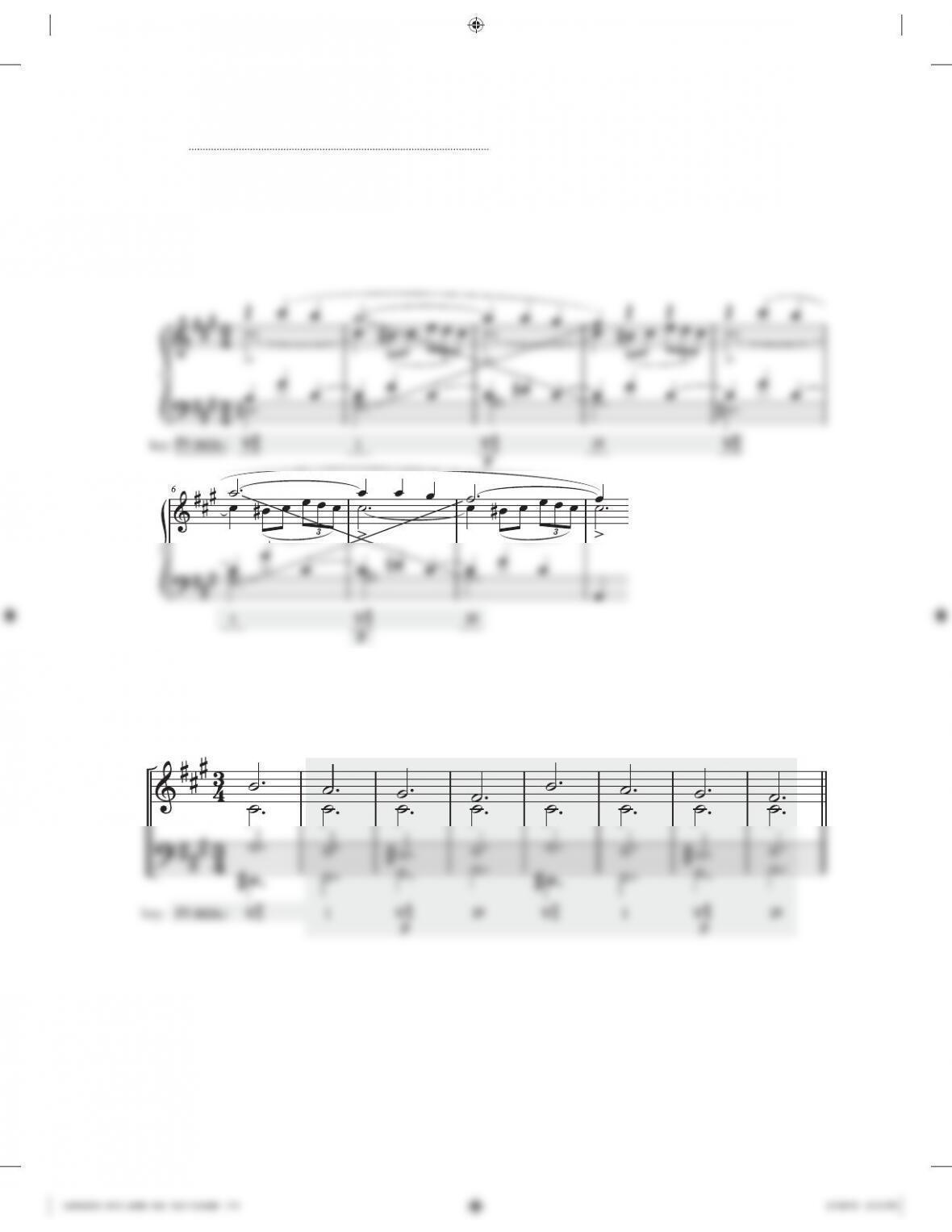
11. Franz Schubert, Impromptu, D. 935, No. 2
Mark the voice exchanges between the melody and bass.
NAME:
12. Frédéric Chopin, Scherzo No. 2, Op. 31
Label the key and one chord per measure. There are voice exchanges between the
bass and one of the upper voices. Located and mark them in the music.
Complete the simplified harmonic model of measures 1
–
8 of this excerpt in four-part
SATB style.
172 | CHAPTER 13 |
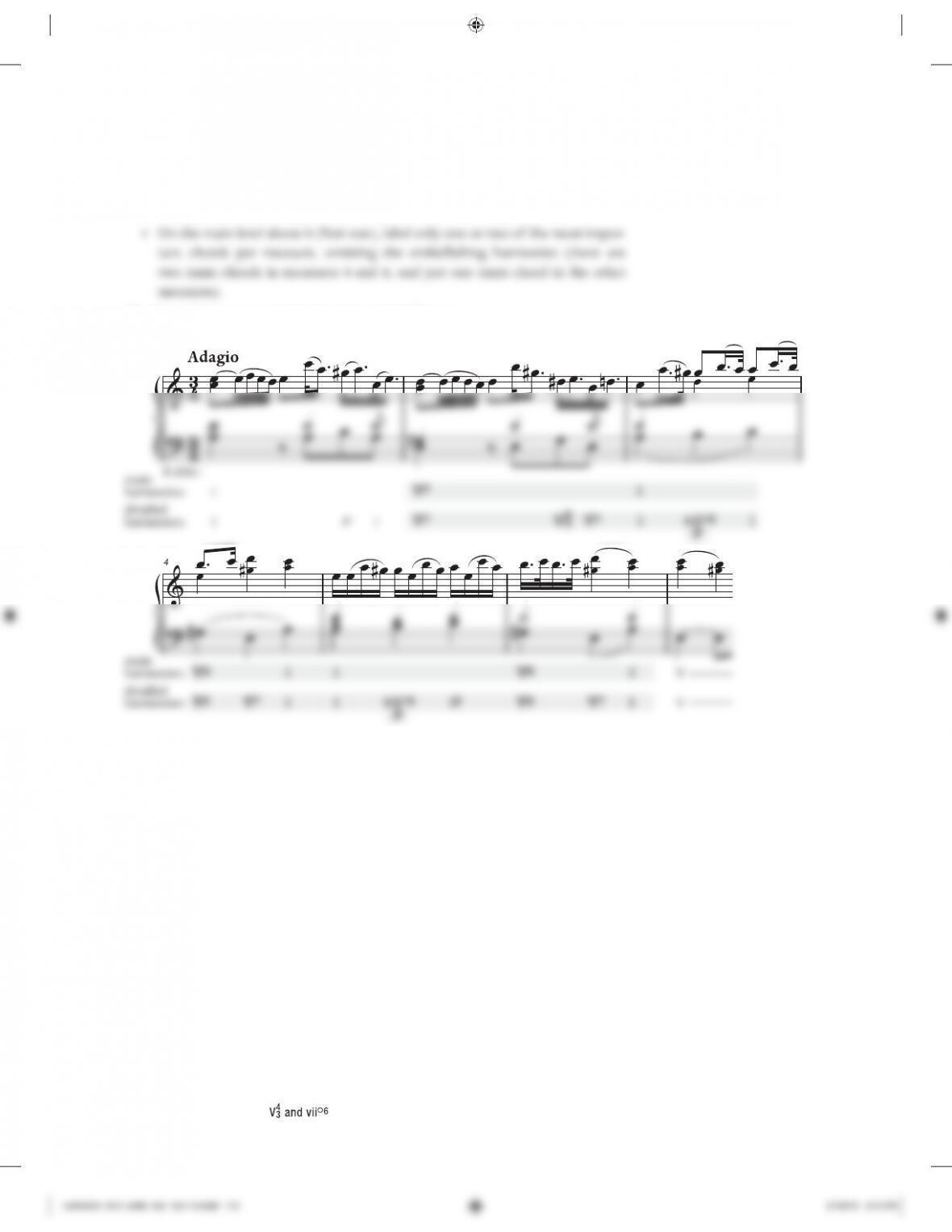
13. Marianna Martines, Keyboard Sonata in A, ii
Provide two levels of Roman numerals for this passage
• In the detailed level (second row), label every chord, labeling three chords per
measure (with the exception of m. 7, which has only a single chord).
The first and last measures have been completed for you.