B. Spelling Chords | 145
NAME:
A. QUESTIONS FOR REVIEW
1. What chord member (root, third, fifth, or seventh) of V7 is in the bass of V6
5? What
scale degree is in the bass of V6
5?
2. What chord member of V7 is in the bass of V4
2? What scale degree is in the bass
of V4
2?
3. What chords may follow V6
5? What chords may precede V6
5?
4. What chords may follow V4
2? What chords may precede V4
2?
B. SPELLING CHORDS
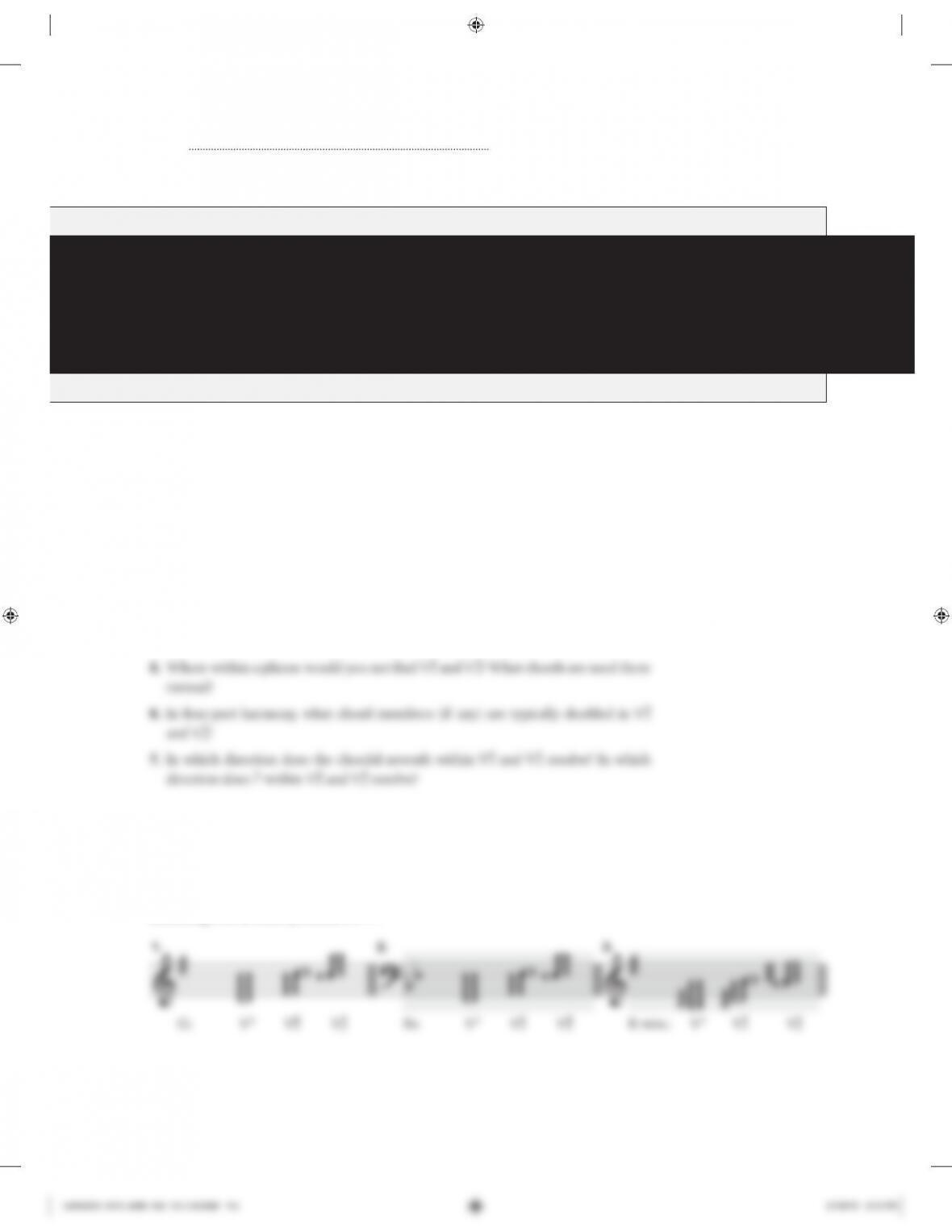
Write the key signatures of the following keys. Then write the notes of V7, V6
5, and
V4
2 in each key. Notice the clef changes. Remember to raise ˆ
7 in the minor keys,
indicating it in all three positions of V7.
chapter
12 V6
5 and V4
2
146 | CHAPTER 12 |
C. REALIZING ROMAN NUMERALS
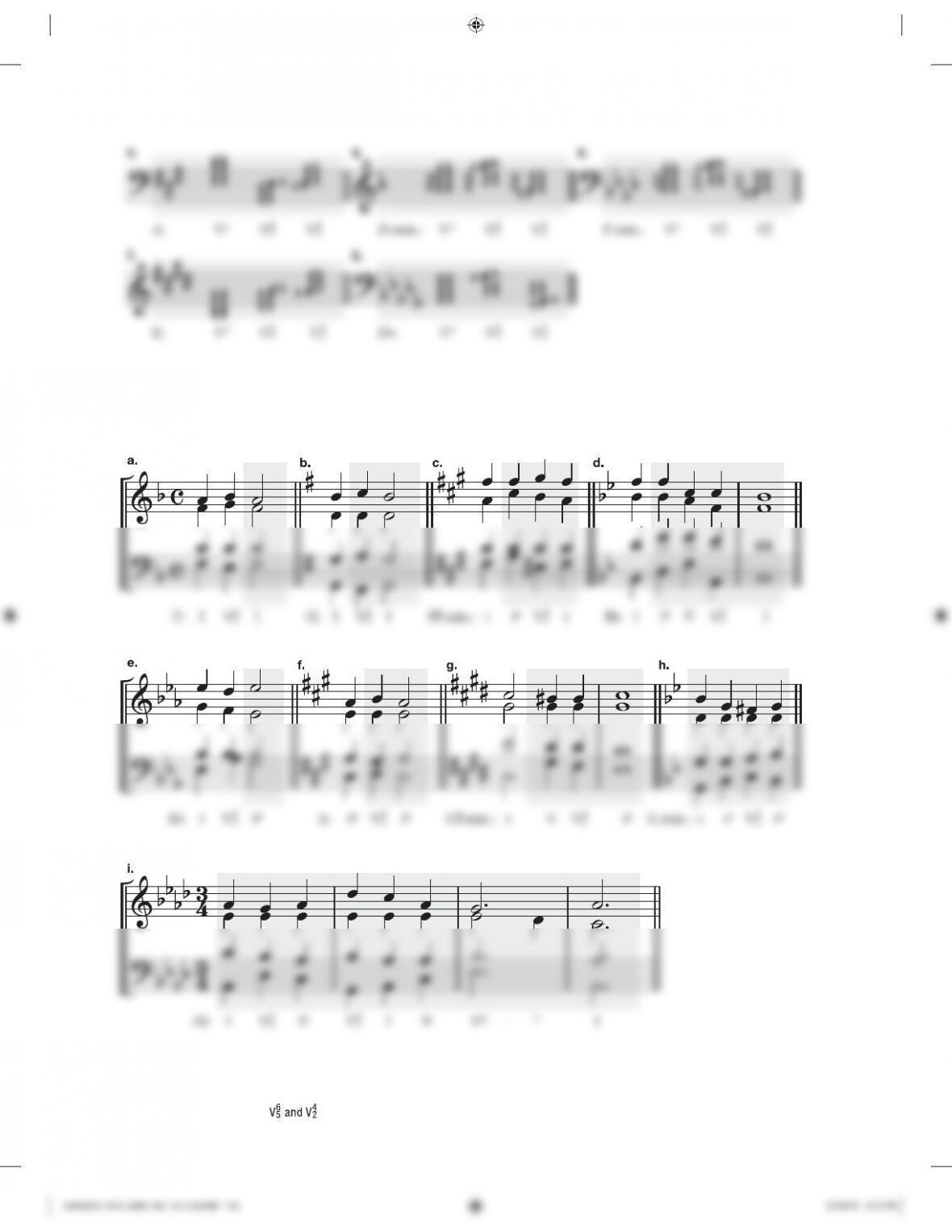
1. Realize these Roman numerals in SATB format.
C. Realizing Roman Numerals | 147
NAME:
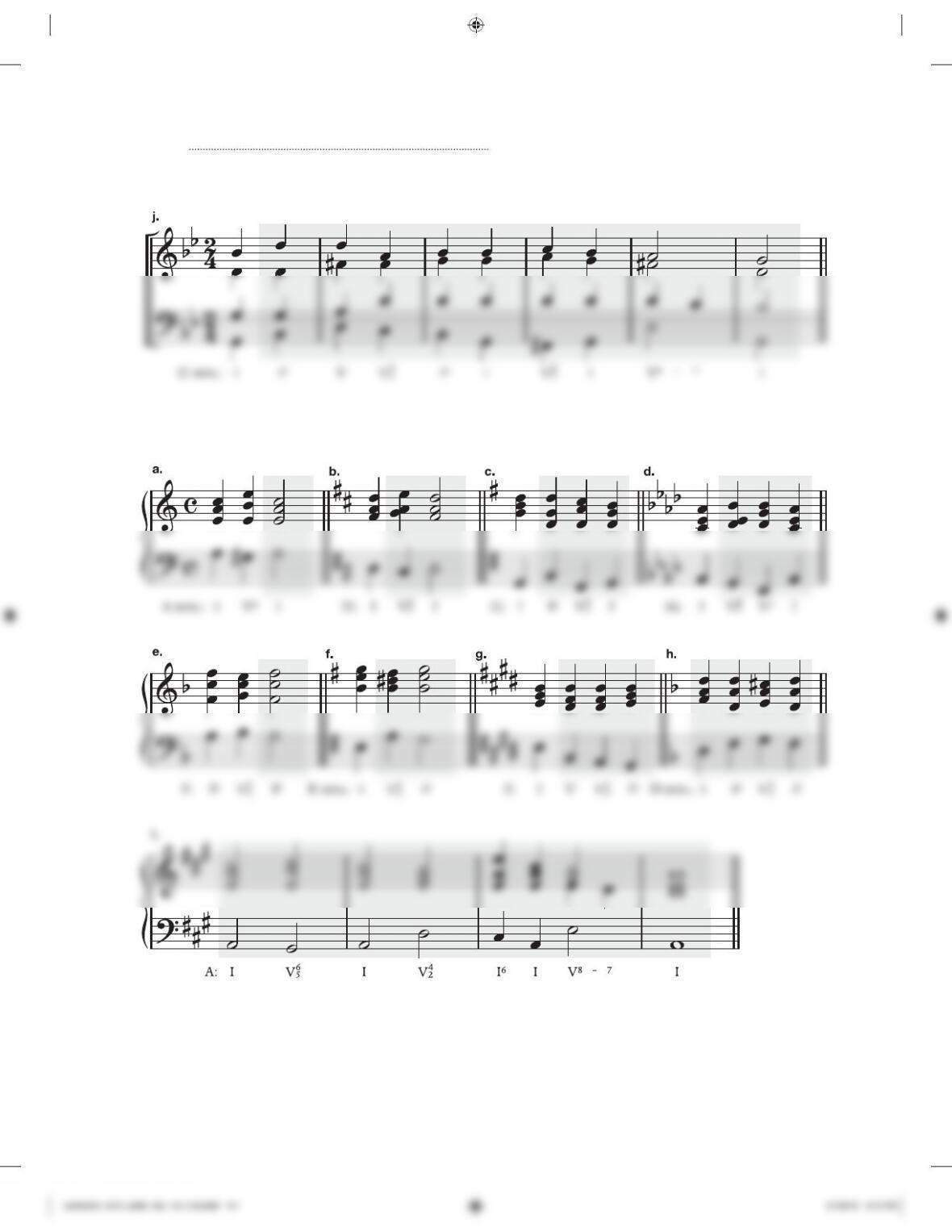
2. Realize these Roman numerals in keyboard format.
148 | CHAPTER 12 |
D. REALIZING FIGURED BASS
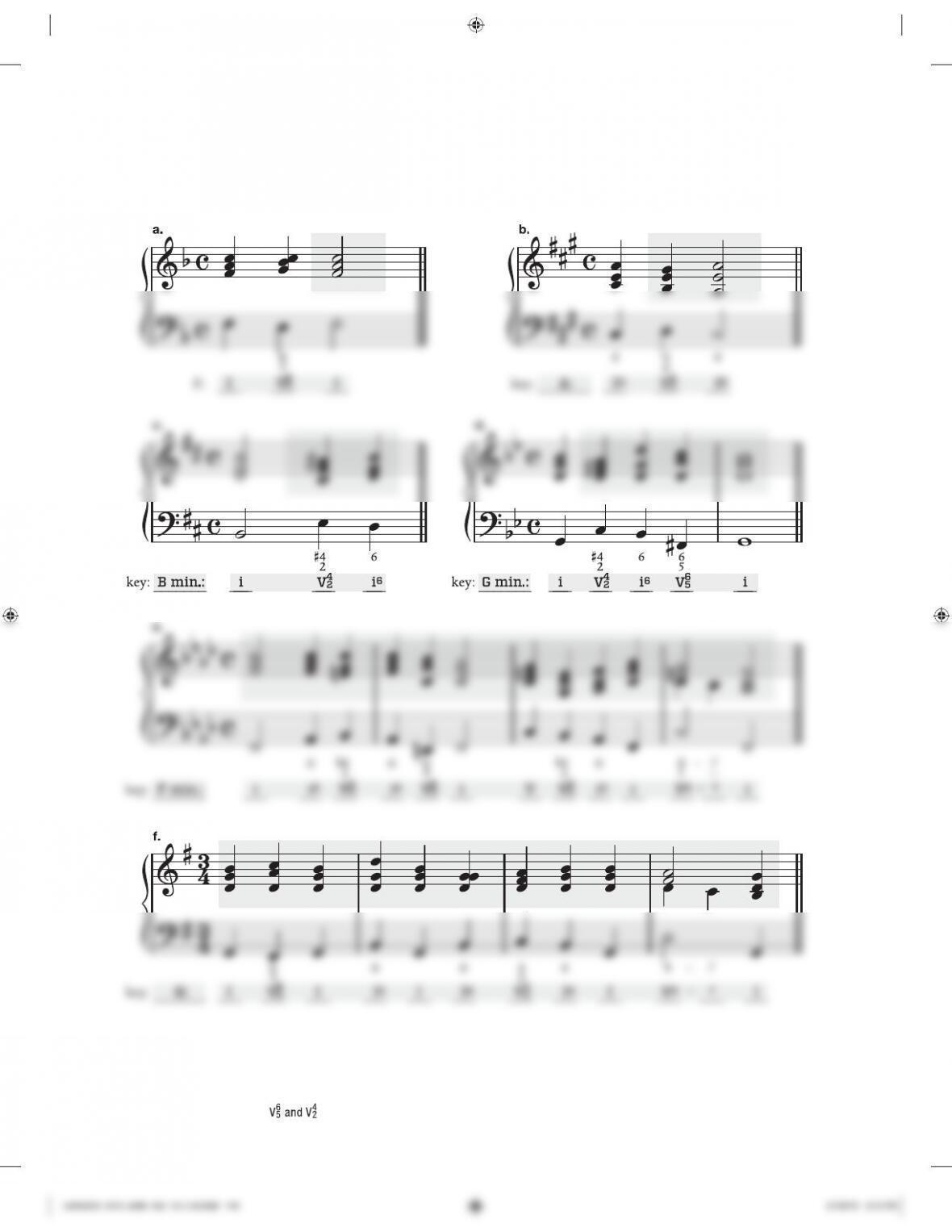
1. Realize each figured bass in keyboard format. Label the key; then label each chord
using Roman numerals.
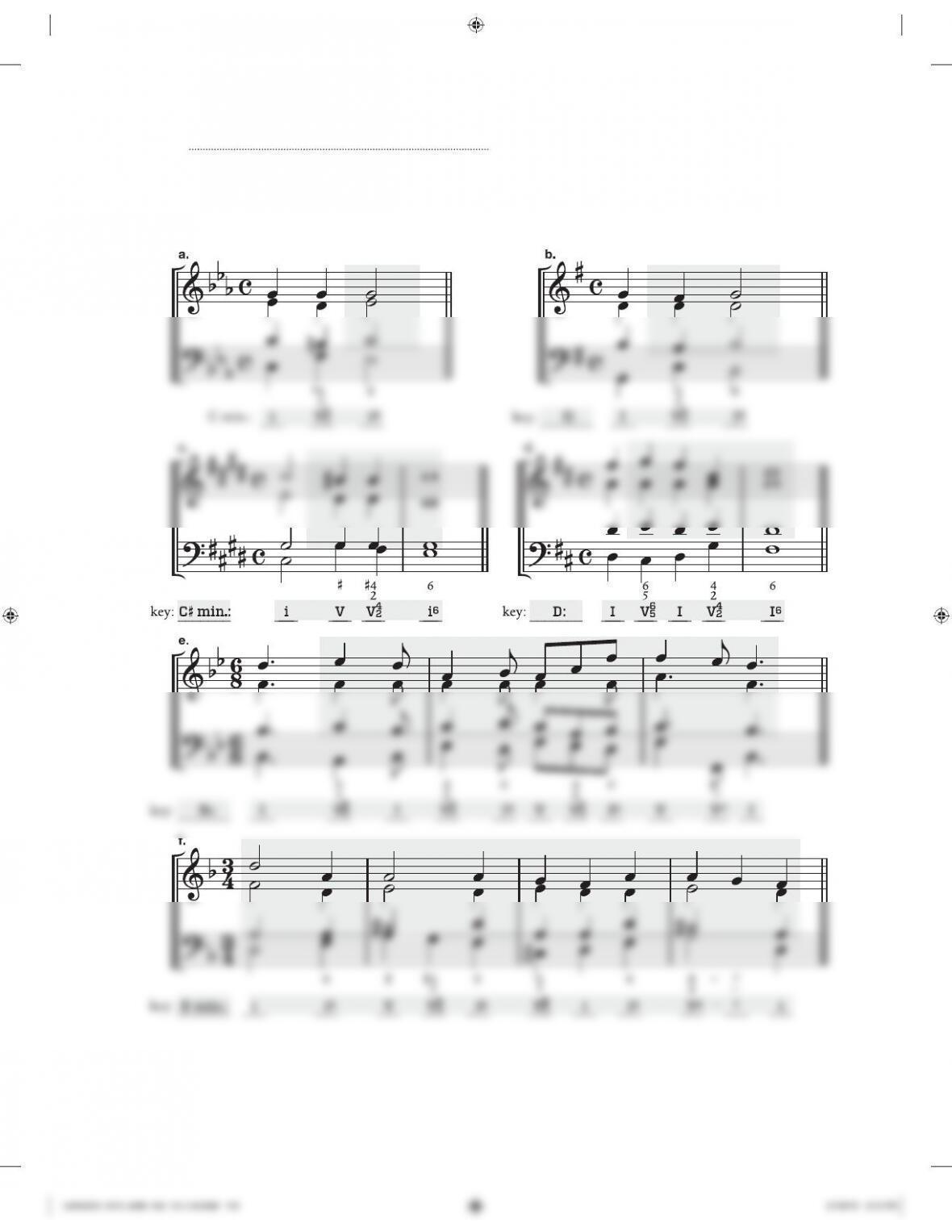
D. Realizing Figured Bass | 149
NAME:
2. Realize each figured bass in SATB format. Then label the key and chords using
Roman numerals.
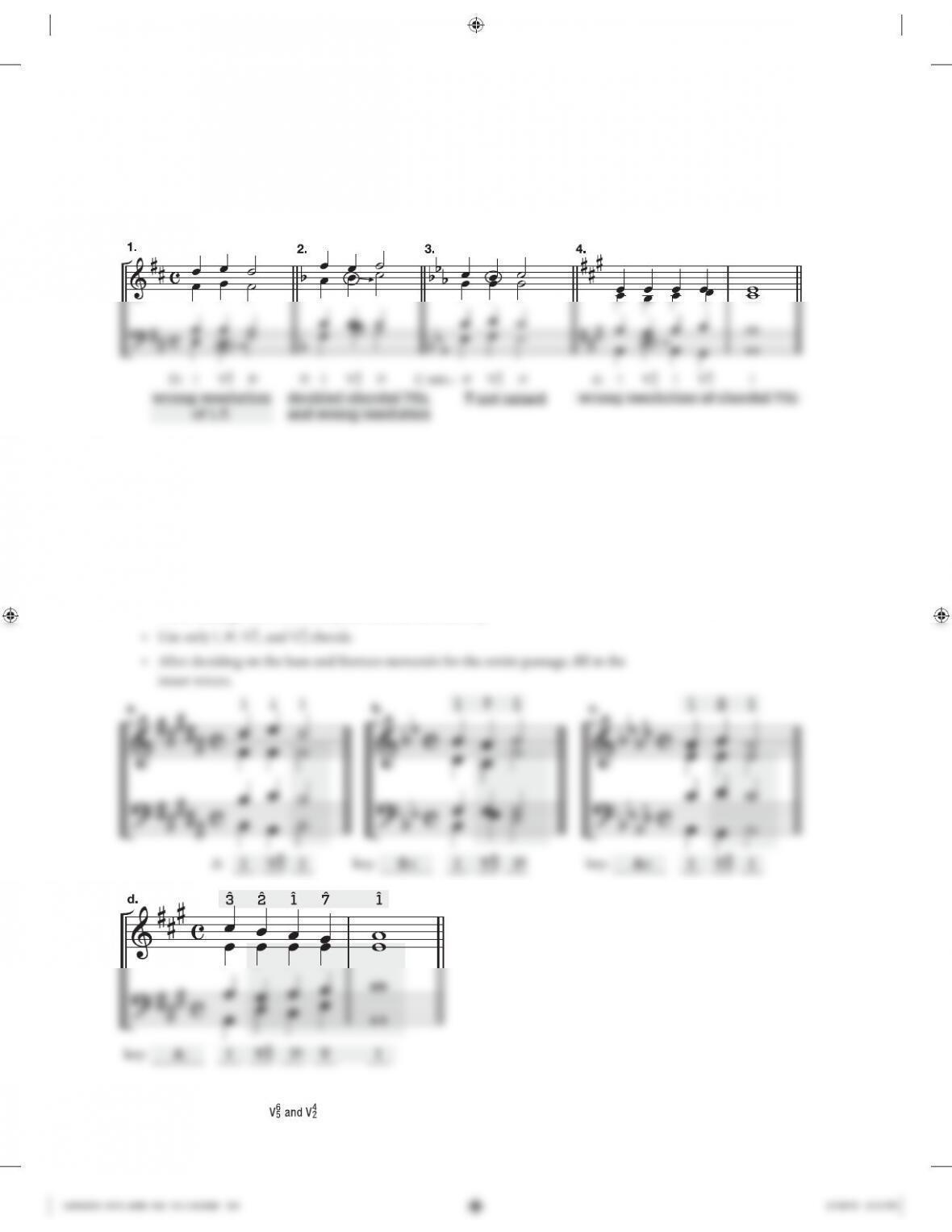
E. IDENTIFYING VOICE-LEADING ERRORS
Progressions (1)
–
(4) each have at least one of the following errors: parallel octaves,
incorrect treatment of the leading tone, or incorrect treatment of the chordal sev-
enth. Circle the problematic tone(s) and identify the error.
F. HARMONIZING MELODIES
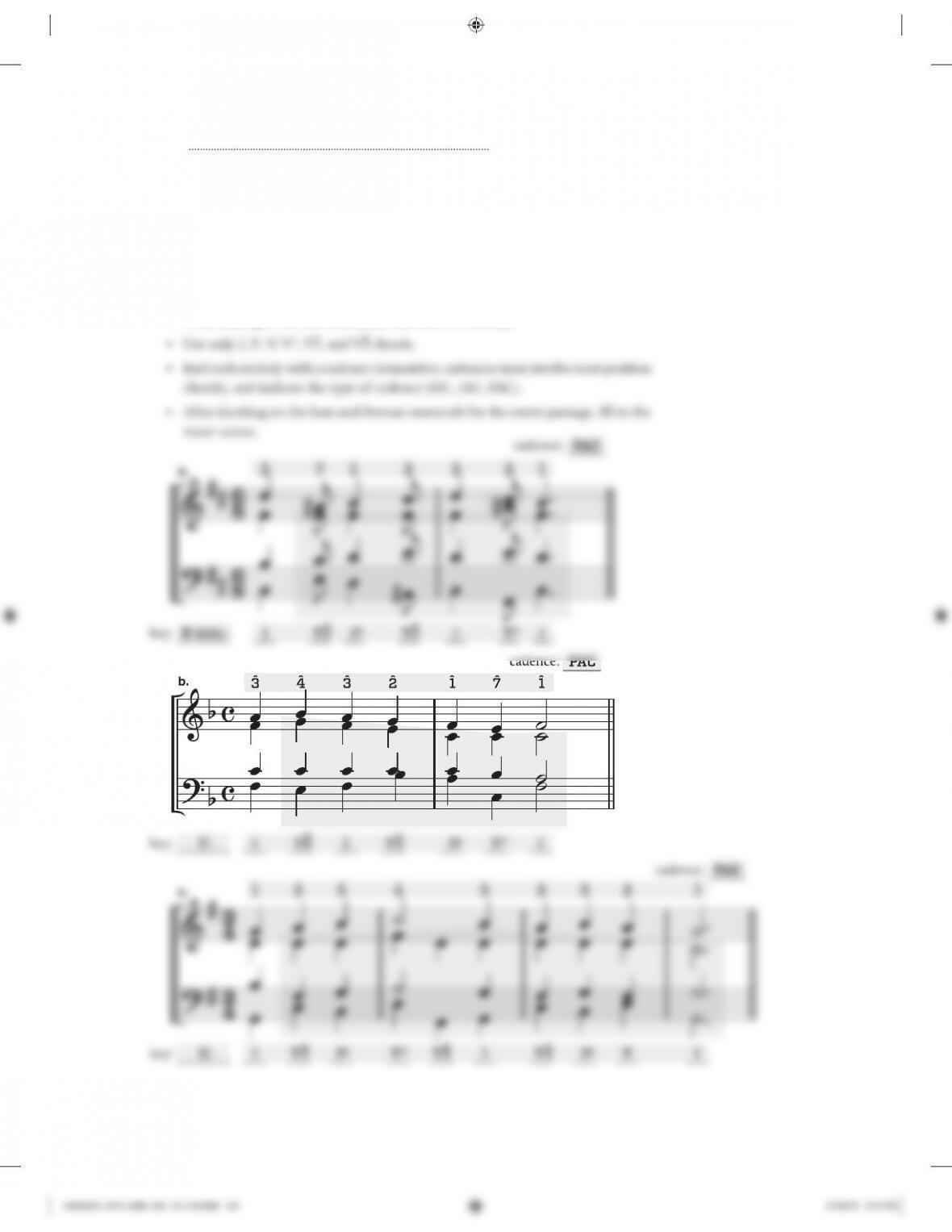
1. Short harmonizations. Harmonize each of the following melodic fragments in
SATB format.
• First indicate the key of the passage and the scale degrees of the notes in the
melody.
• In each passage, write the bass and Roman numerals, checking that there are no
voice-leading errors between your bass and the melody.
NAME:
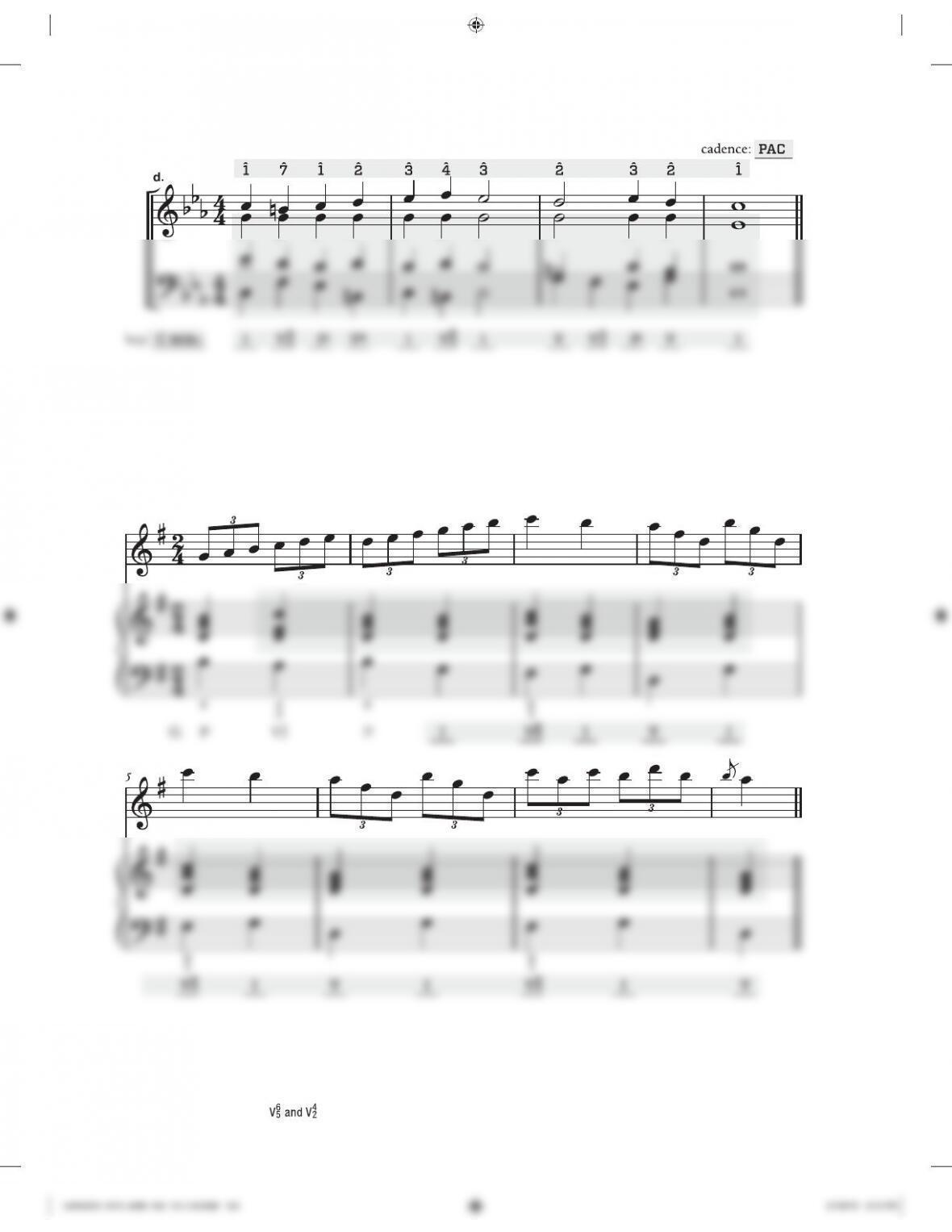
2. Harmonization with cadences. Harmonize each of the following melodies in SATB
format.
• First indicate the key of the passage and the scale degrees of the notes in the
melody.
• In each passage, write the bass and Roman numerals, checking that there are no
voice-leading errors between your bass and the melody.
152 | CHAPTER 12 |
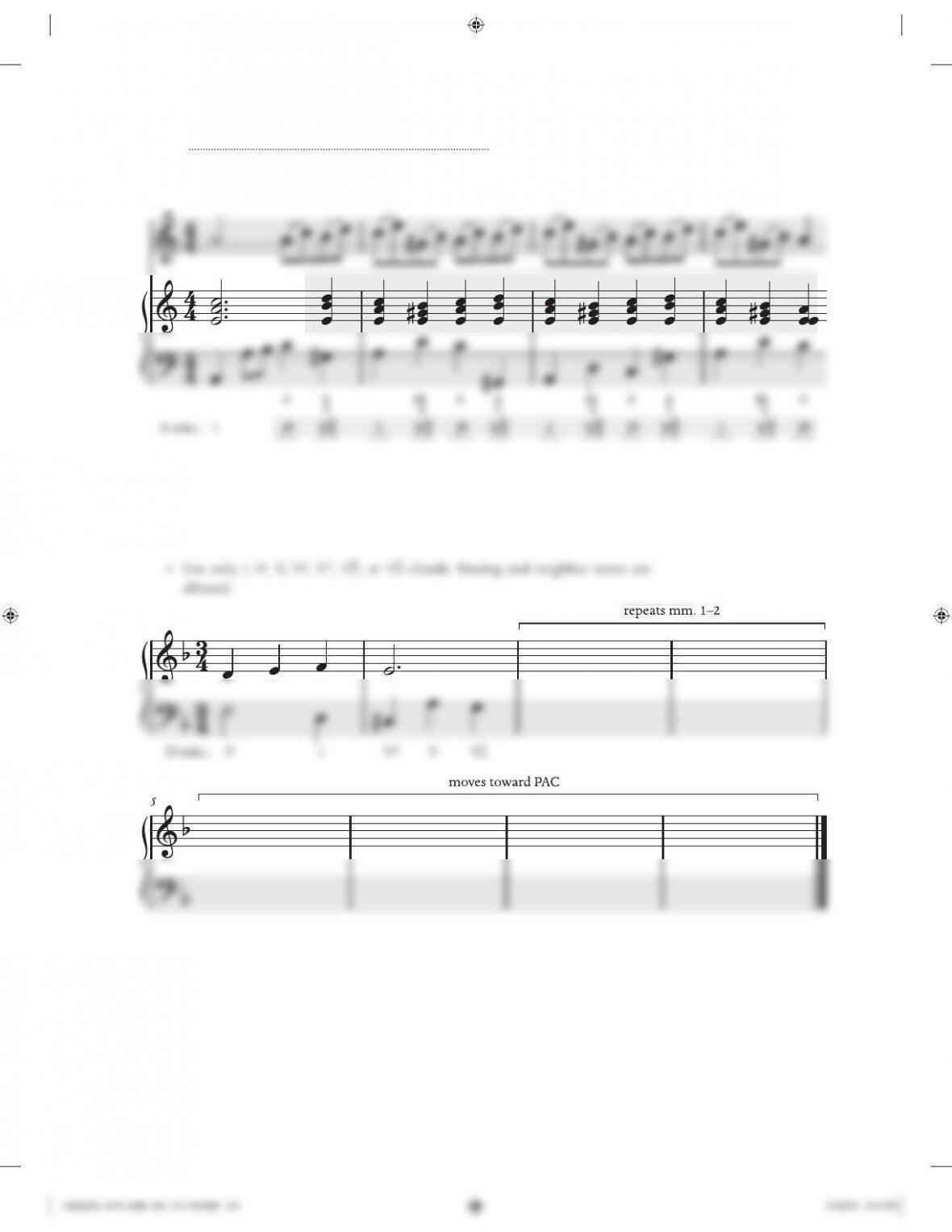
G. FIGURED BASS ACCOMPANIMENT
Complete a realization of the figured bass accompaniment for these excerpts from
ute sonatas. Do not worry about any parallel perfect intervals that may arise between
your figured realization and the given melody.
1. J. J. Quantz, Sonata in G
NAME:
2. Franz Benda, Sonata in A minor
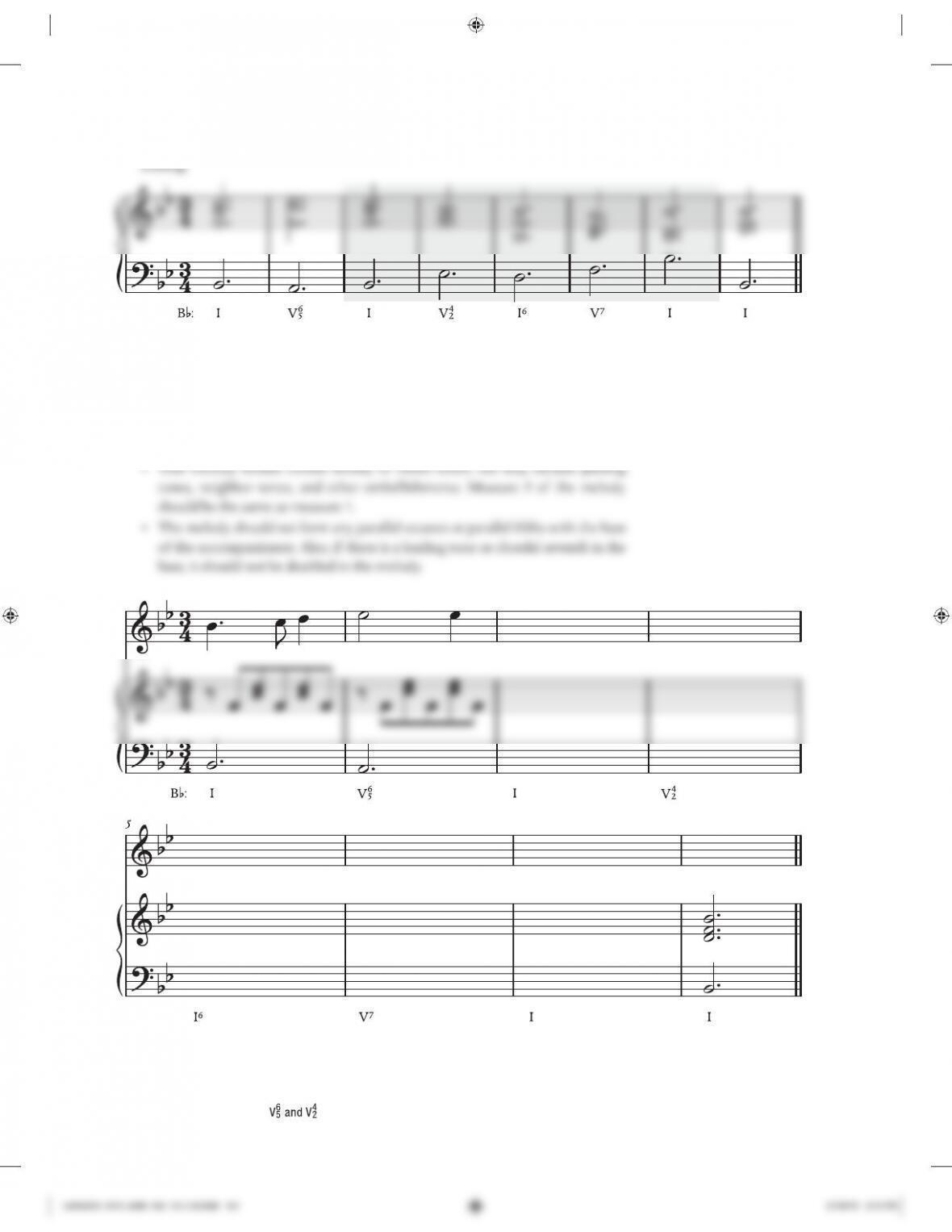
H. COMPOSITION
1. Continue this passage in a style that is consistent with the first two measures.
• End with a PAC in measures 7
–
8.
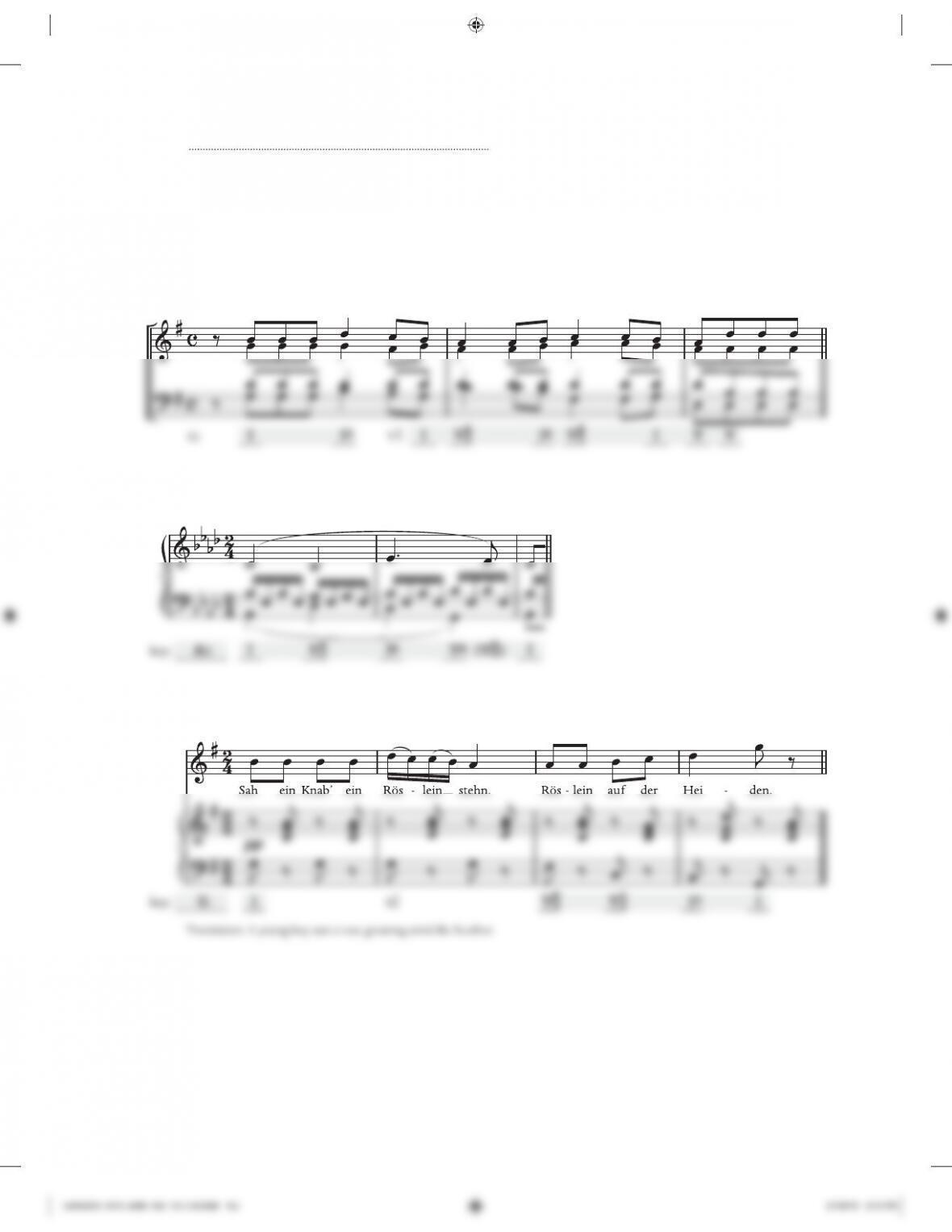
2. Realize the chord progression below in keyboard format, using correct voice
3. Melody and accompaniment
• On the following lower two staves, turn your realization of the preceding chord
progression into a keyboard accompaniment, continuing the pattern given in
measures 1
–
2.
• Then on the top sta, finish the melody to go with the accompaniment, ending
the melody on the tonic on the downbeat of measure 7.
NAME:
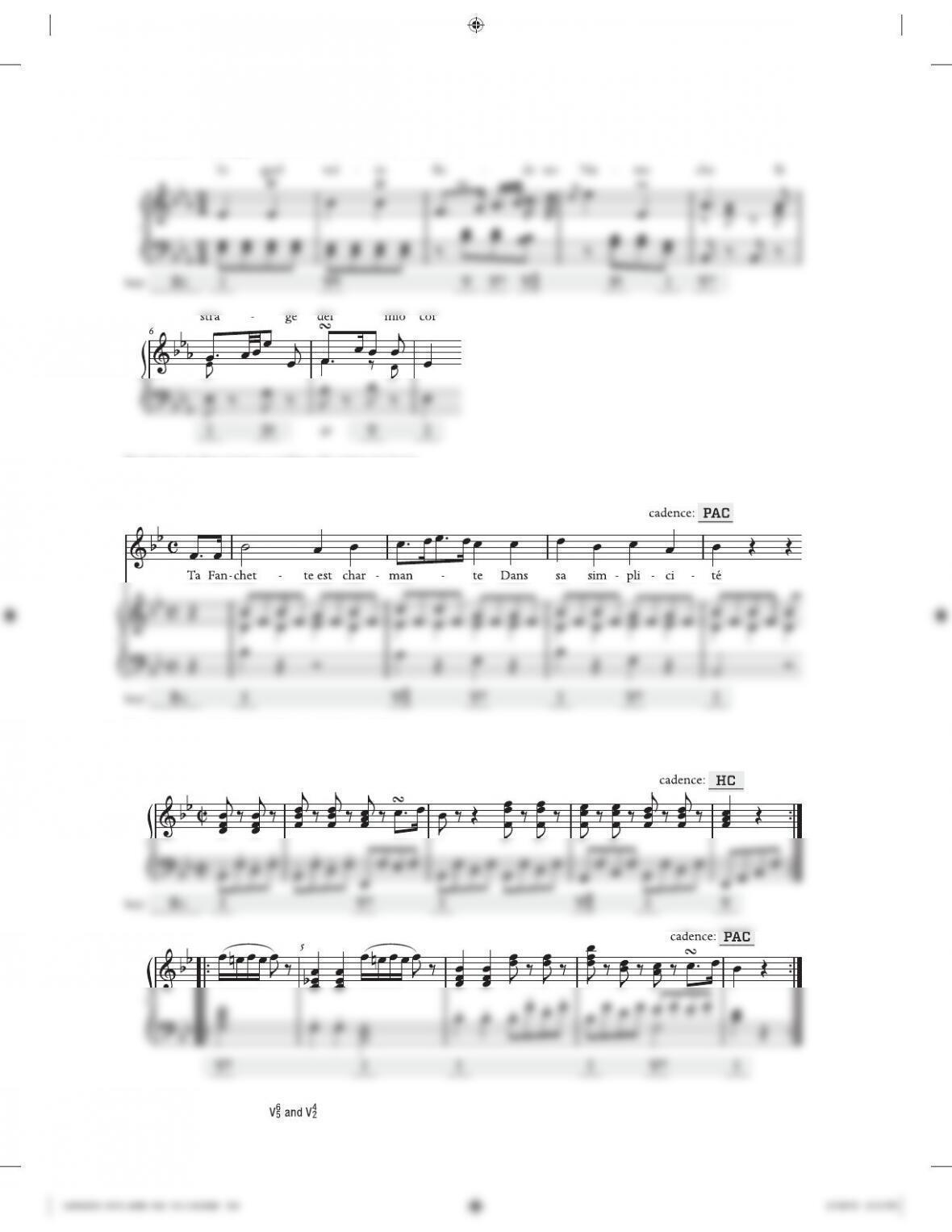
I. ANALYSIS
Label the key and the Roman numerals in each of the following excerpts. Where
indicated, also label the cadence (PAC, IAC, or HC)
1. Dmytro Bortniansky, Concerto No. 35
2. Ludwig van Beethoven, Sonata for Piano, Op. 13 (“Pathétique”), ii
3. Franz Schubert, “Heidenroslein” (“Wild Rose”)
156 | CHAPTER 12 |
4. Baldassare Galuppi, Il mondo alla roversa, Act I, scene vii
Translation: In that visage is a goddess who smites my heart.
5. Sophie Gail, “Ma Fanchette est charmante” from Les deux jaloux
Translation: Your Fanchette is charming in her simplicity.
6. Josephine Auernhammer, Theme and Variations
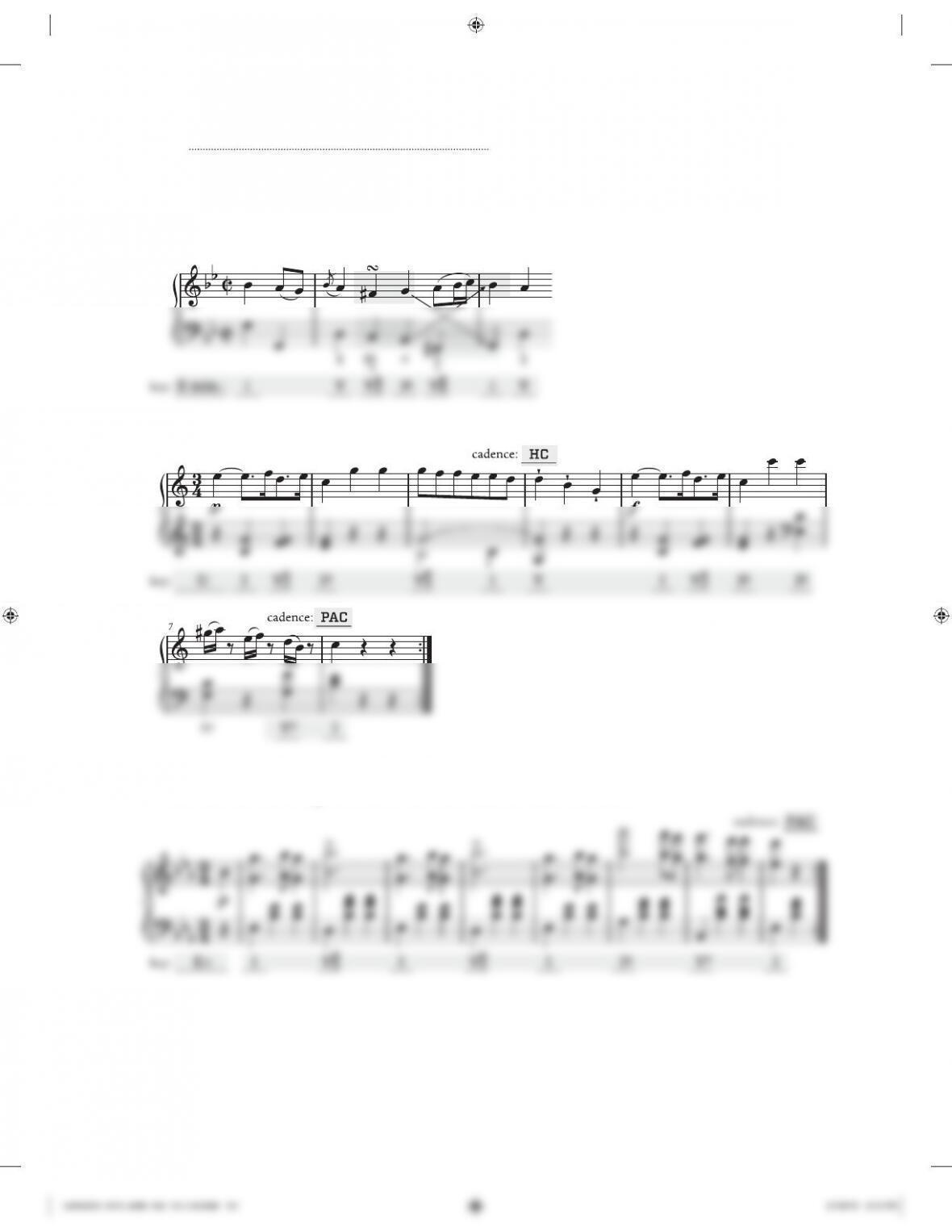
I. Analysis | 157
NAME:
7. Jacques-Martin Hotteterre, First Suite for Flute and Continuo, Gavotte 2
Locate the voice exchange between the bass and the melody.
8. Joseph Haydn, Sonata in C, Hob. XIV:35, iii
9. Franz Schubert, Valses sentimentales, D. 779, No. 21
Each bass note here is implied to last for the entire measure. Label the cadence.
Describe some of the specific features that promote the sense of stability in
measures 1
–
4 and the increased energy in measures 5
–
8.
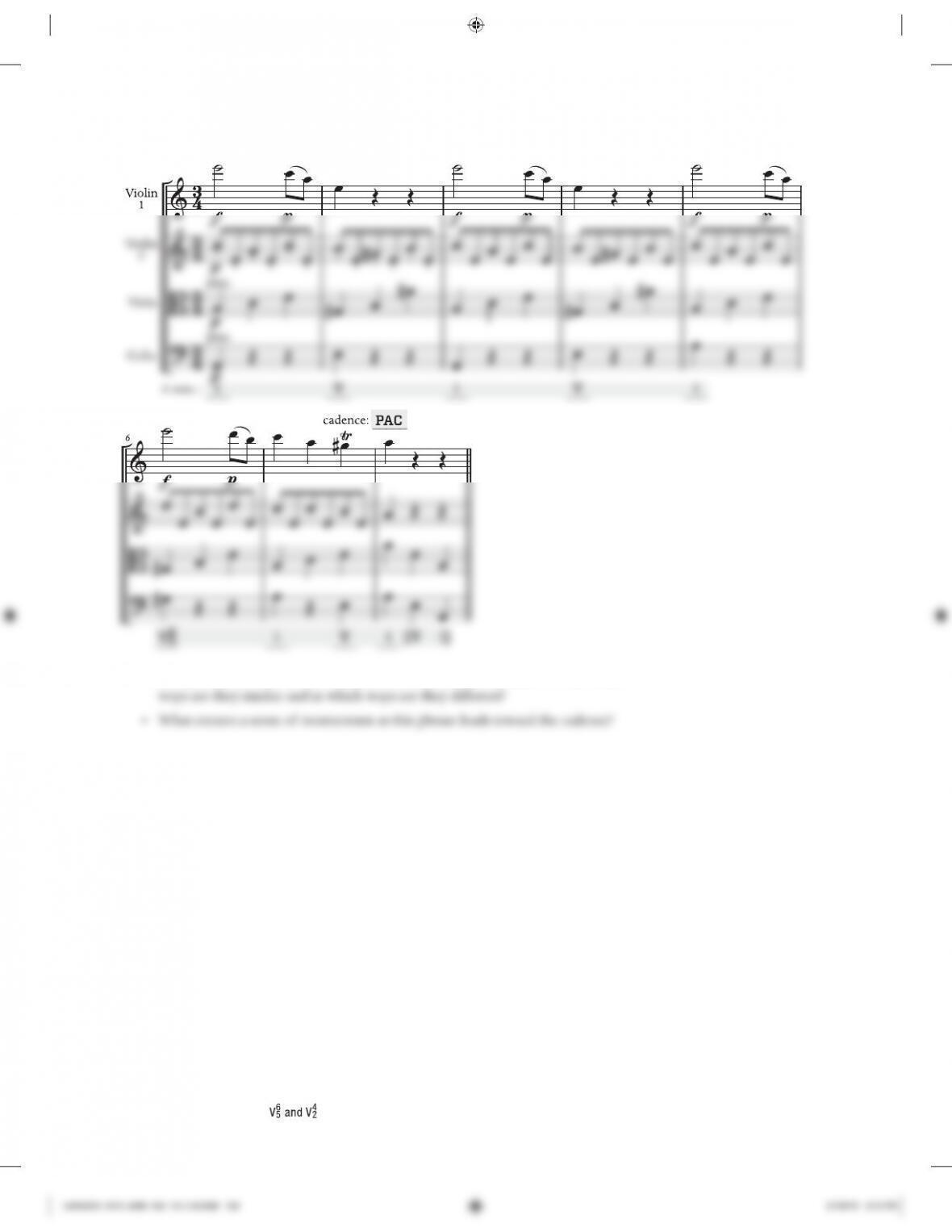
10. Haydn, String Quartet in A, Op. 2, No. 2
• Compare measures 1
–
2 with measures 3
–
4 and with measures 5
–
6. In which