NAME:
B. I
6 | 131
A. QUESTIONS FOR REVIEW
1. Which chords may follow I6? Of the chords discussed so far (I, V, V7, and V6),
which ones typically precede I6? Which chords do not?
2. Of the chords discussed so far, which chords may follow V6? Which chords may
not?
3. Which notes may be doubled in I6? Which notes may be doubled in V6?
4. In what ways is I6 used similarly to root-position I? In what ways are I6 and I used
differently from one another?
5. In what ways is V6 used similarly to root-position V? In what ways are V and V6
used differently from one another?
B. I6
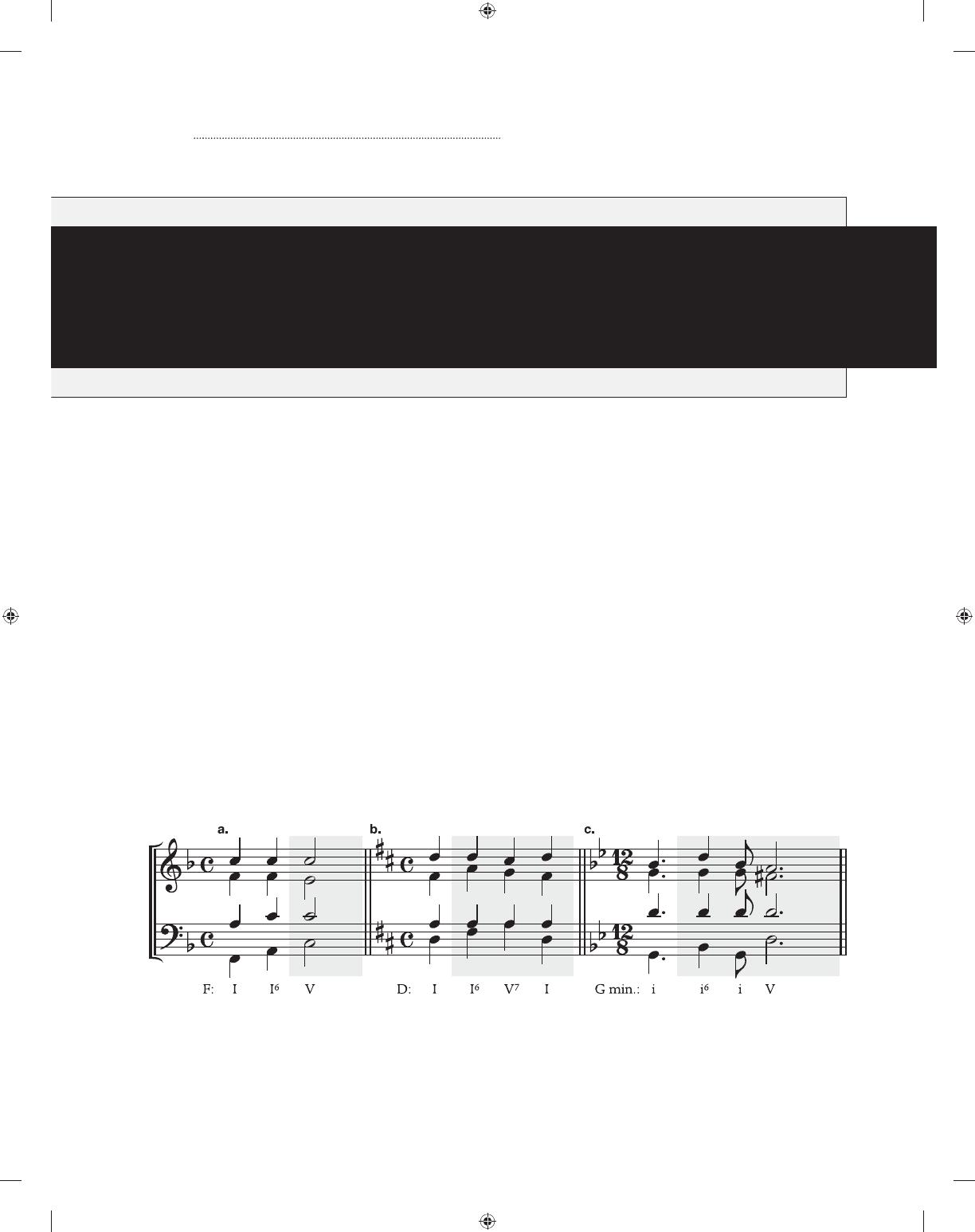
1. Complete each Roman numeral realization in SATB format.
chapter
11 I6 and V6
132 | CHAPTER 11 | I
6 and V6
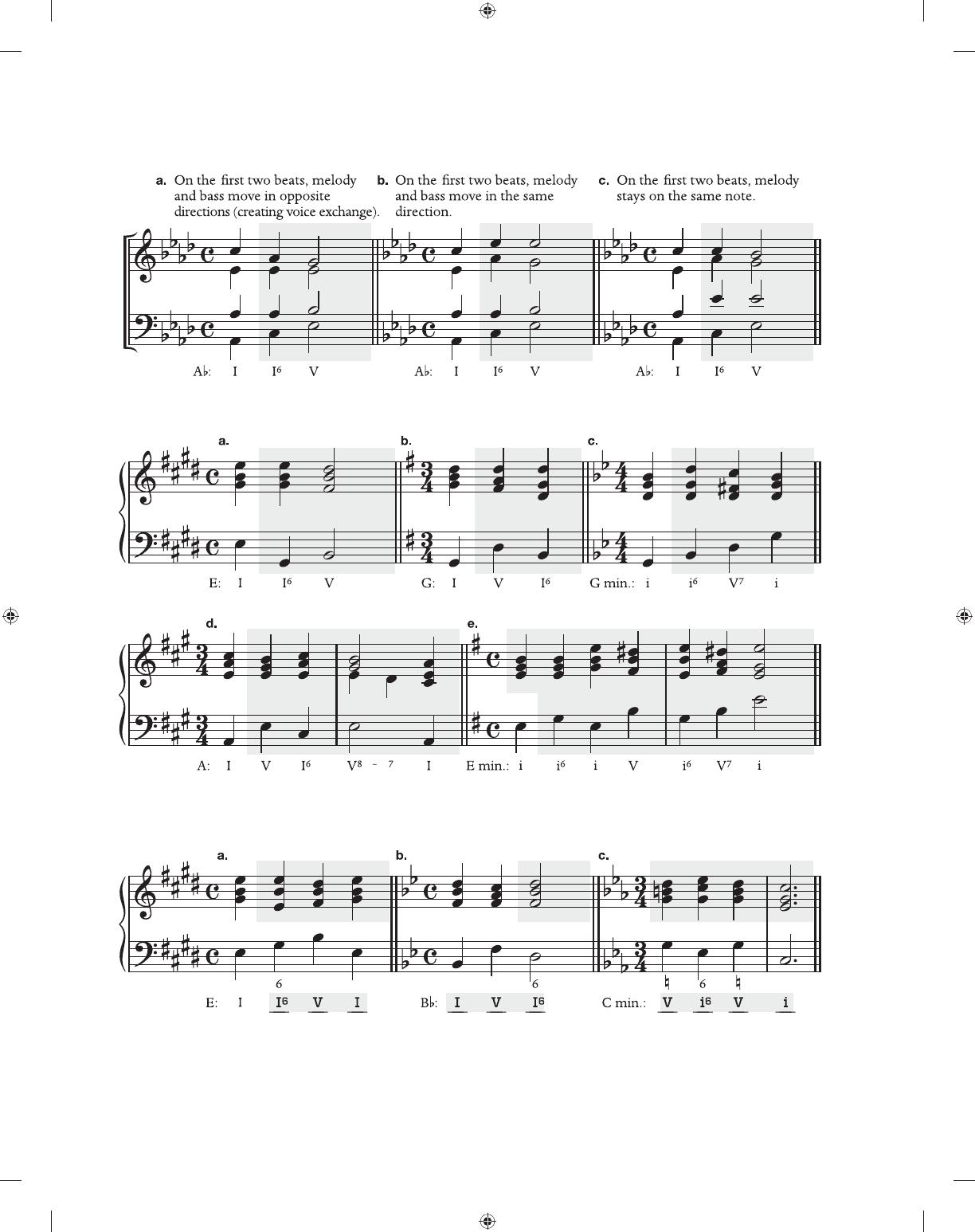
2. Harmonize the progression in (a)
–
(c) using three different melodies, following the
given guidelines.
3. Complete each Roman numeral realization in keyboard format.
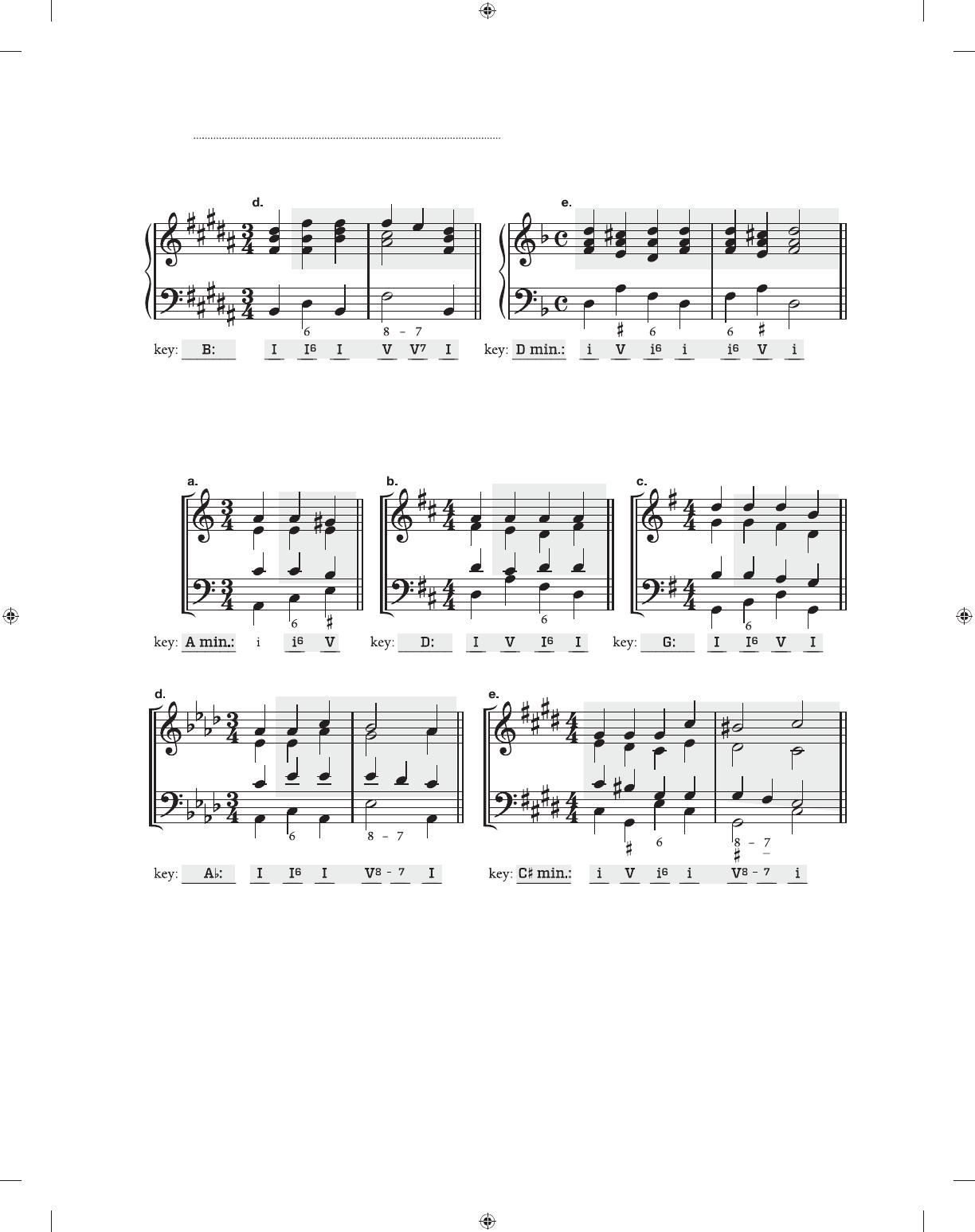
4. Complete each figured bass realization in keyboard format. Label the Roman
numeral of each chord; in (d) and (e) also label the key.
NAME:
B. I
6 | 133
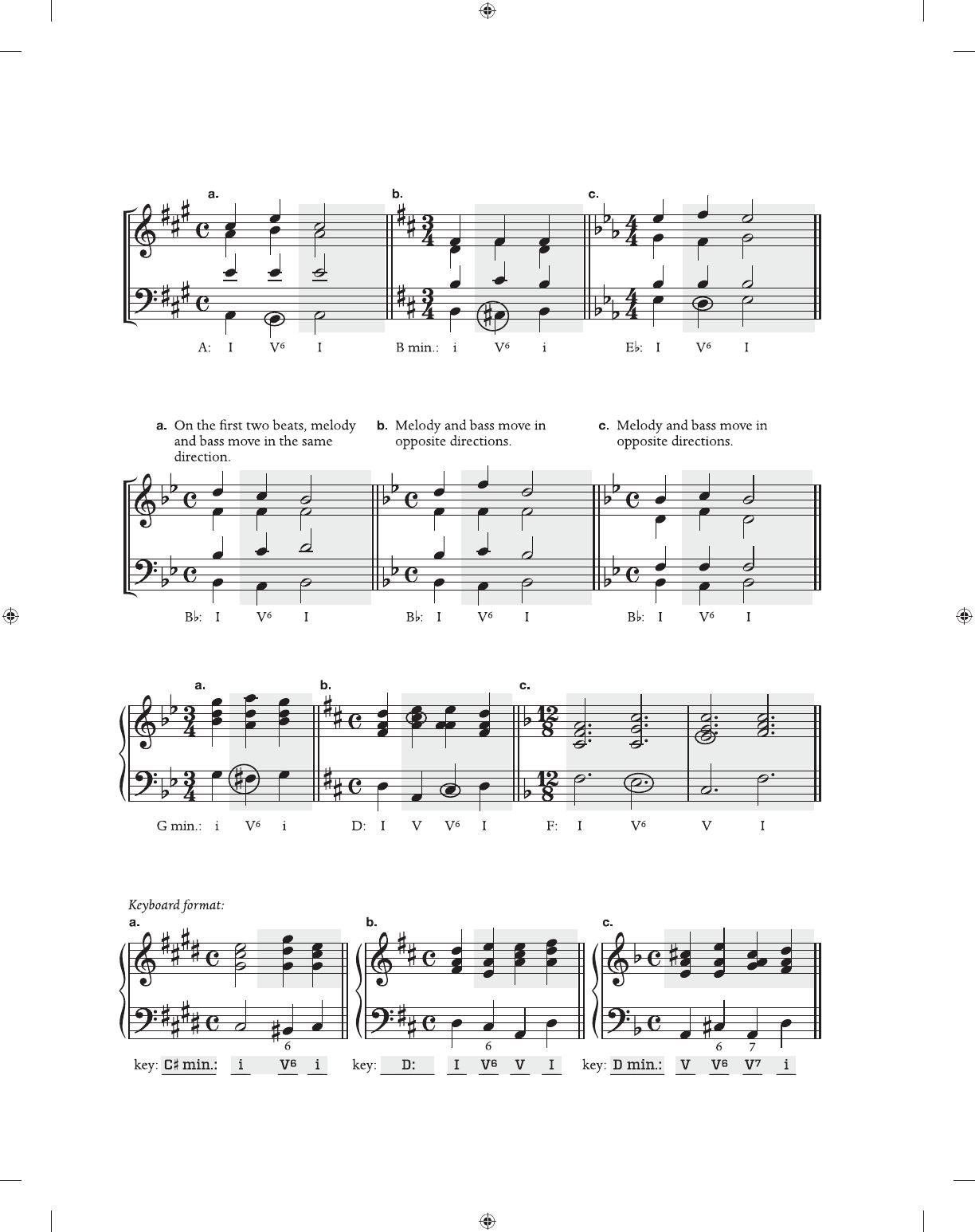
5. Realizing ffgured bass. Complete each figured bass realization in SATB format. Label
the key of each and the Roman numeral of each chord.
134 | CHAPTER 11 | I
6 and V6
C. V6
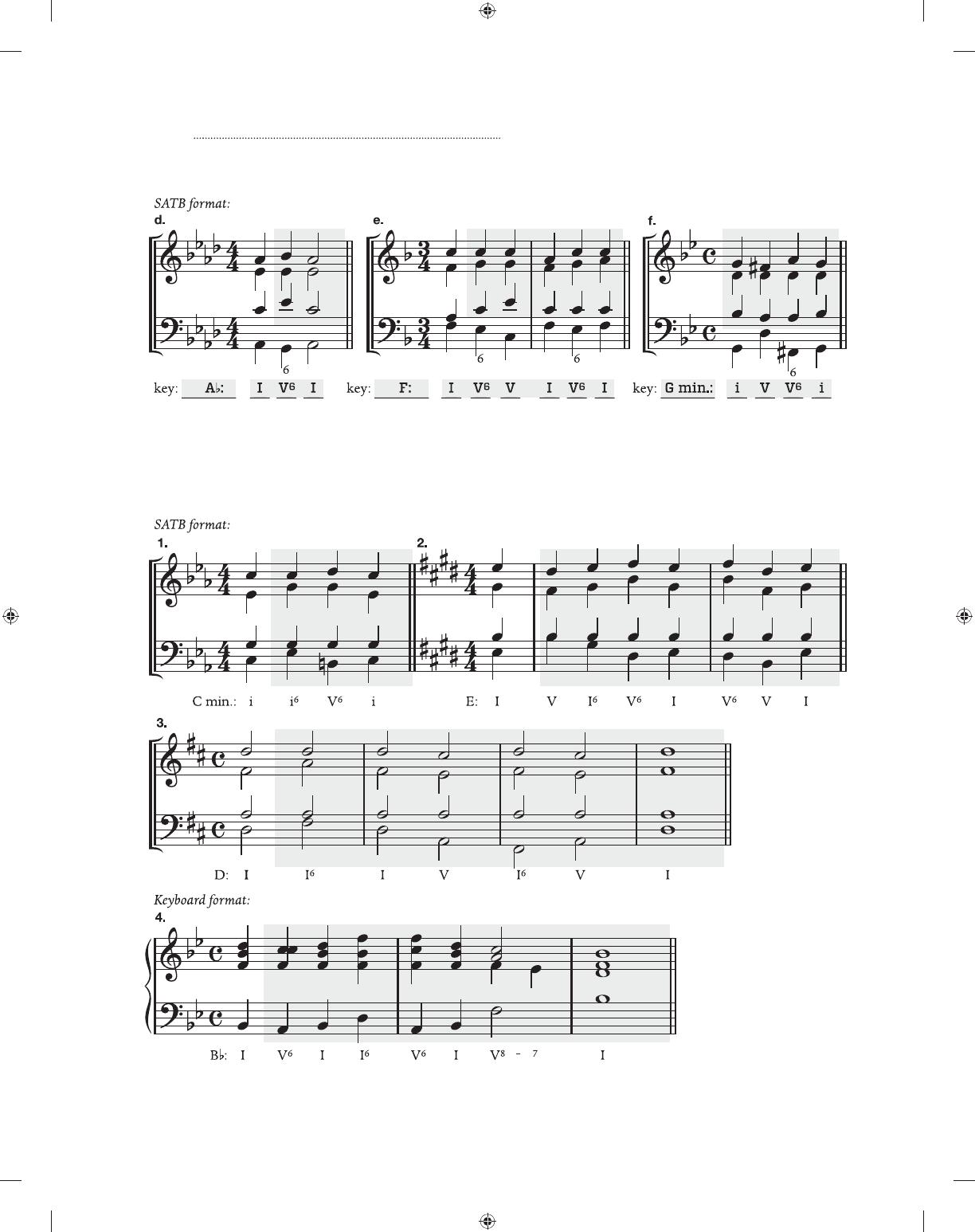
1. Complete each Roman numeral realization in SATB format; circle the leading tones.
2. Harmonize the progression in (a)
–
(c) in SATB format using three different
melodies, following the given guidelines.
3. Complete each Roman numeral realization in keyboard format; circle the leading
tones.
4. Complete each figured bass realization. Then identify the key and label the Roman
numeral of each chord.
D. Realizing Roman Numerals | 135
NAME:
D. REALIZING ROMAN NUMERALS
Complete each Roman numeral realization.
136 | CHAPTER 11 | I
6 and V6
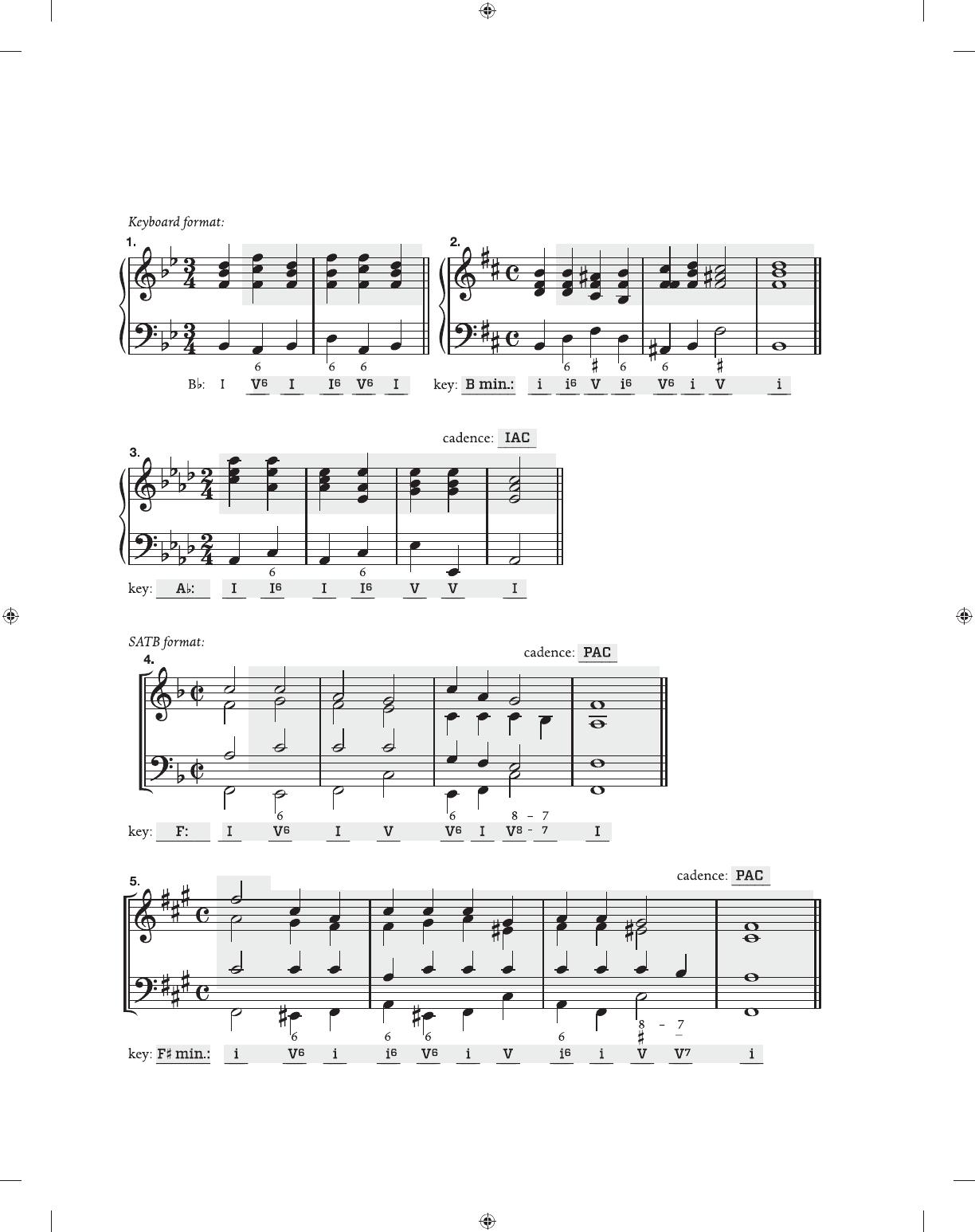
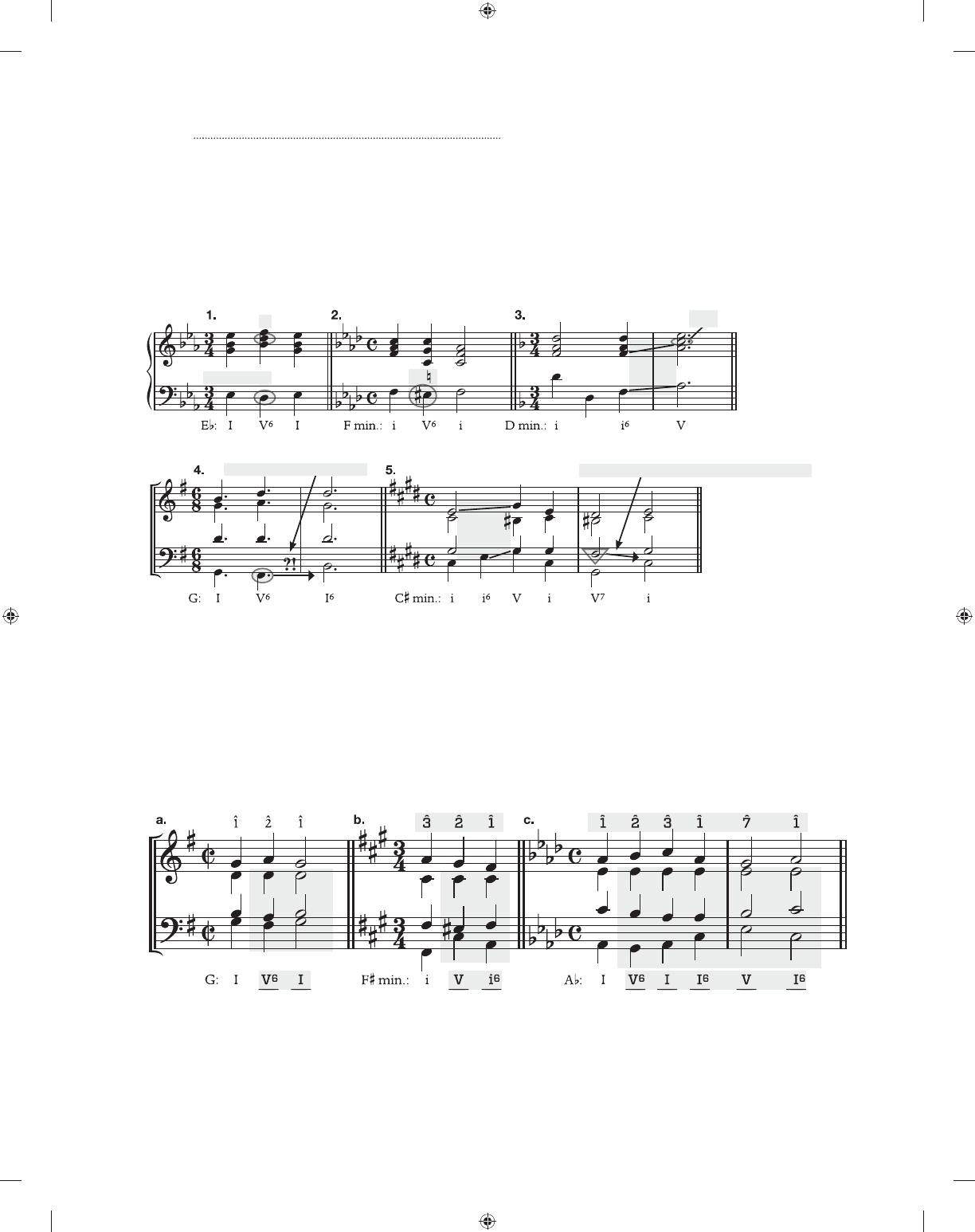
E. REALIZING FIGURED BASS
Realize each figured bass. Then label the key and the Roman numerals; in (3)
–
(5), also
label the cadence at the end.
G. Harmonizing Melodies | 137
NAME:
F. IDENTIFYING VOICE-LEADING ERRORS
Each of the progressions have one or two of the following errors: parallel octaves,
incorrect treatment of the leading tone, or incorrect treatment of the chordal seventh.
Circle the problematic tone(s) and identify the error.
incorrect resolution incorrect chordal 7th resolution
G. HARMONIZING MELODIES
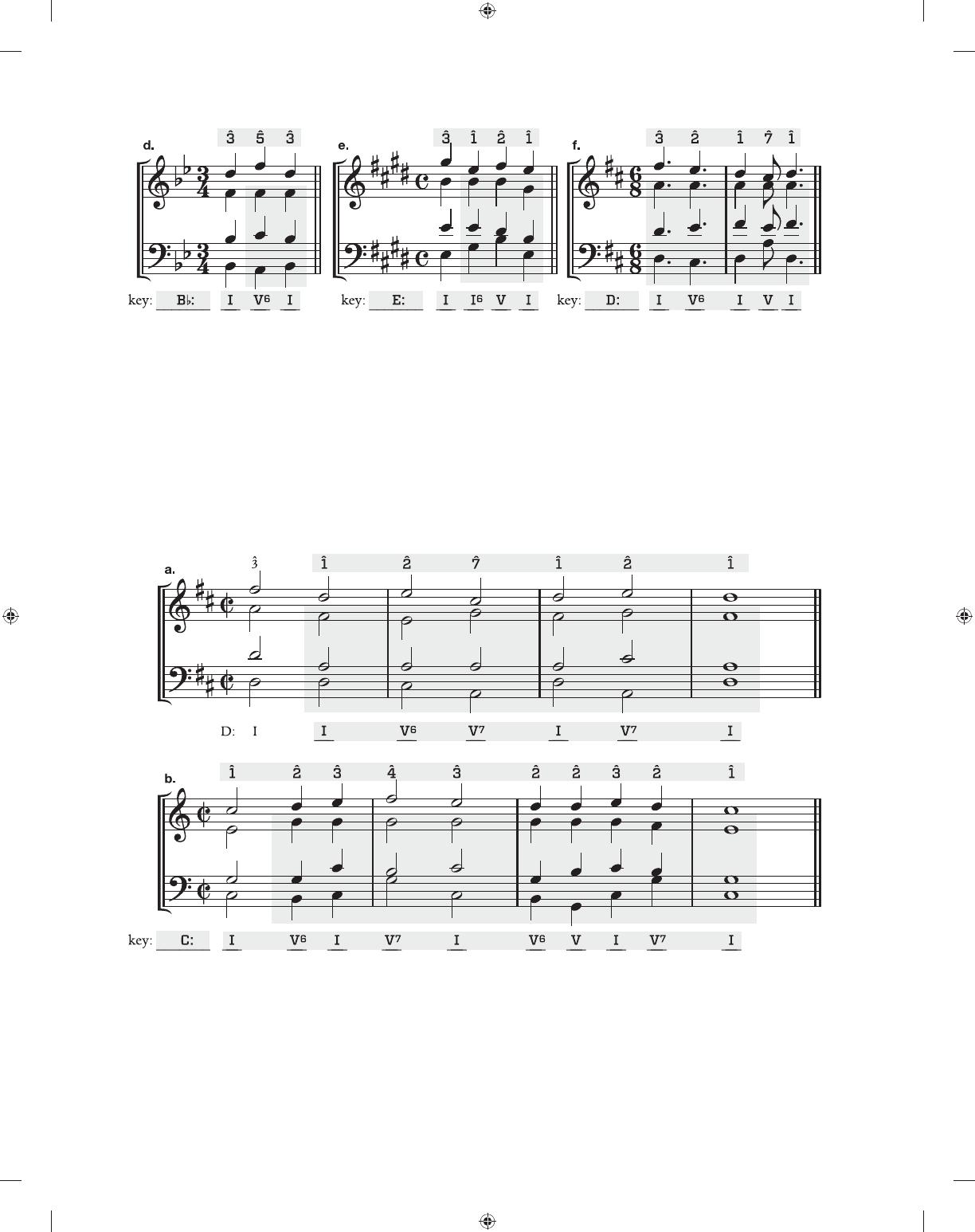
1. Harmonize each melodic fragment in SATB format, using only I, I6, V, V6, and V7.
• Complete the labeling of the keys and scale degrees of the melodies for each of
the following fragments.
• Harmonize the melodic fragments, using at least one I6 or V6 in each.
• Label the chords with Roman numerals.
138 | CHAPTER 11 | I
6 and V6
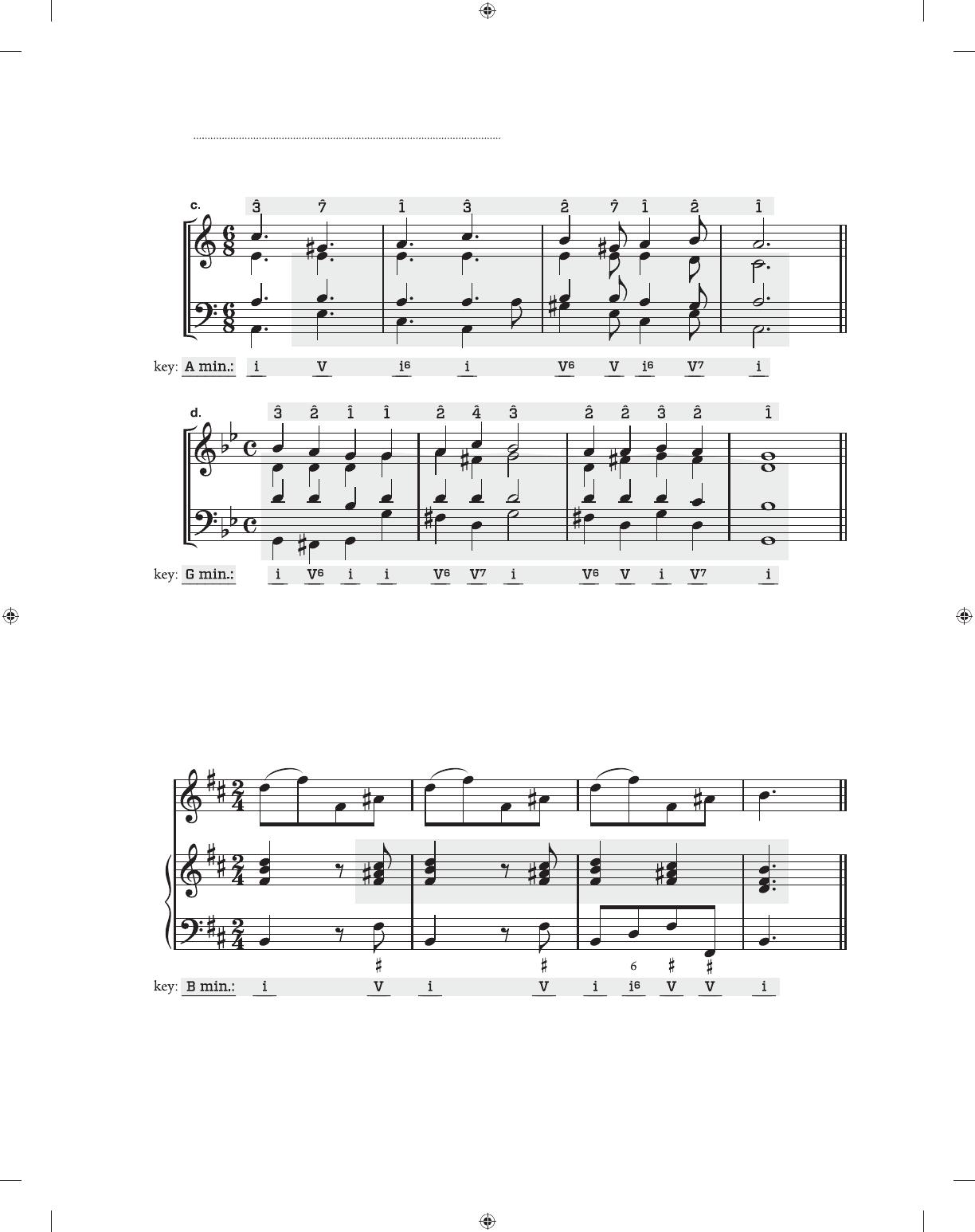
2. Harmonize each of the following melodies in SATB format, using only I, I6, V, V6,
and V7 chords.
• Indicate the key of the passage and the scale degrees of the notes in the melody.
• Suggest Roman numerals and a bass line for the cadence at the end (remember,
the cadence should involve root-position chords).
H. Figured Bass Accompaniments | 139
NAME:
H. FIGURED BASS ACCOMPANIMENTS
Complete a realization of the figured bass accompaniment for these excerpts. Do
not worry about any parallel perfect intervals that may arise between your figured
realization and the given melody.
1. Frederick the Great, Flute Sonata in B minor
140 | CHAPTER 11 | I
6 and V6
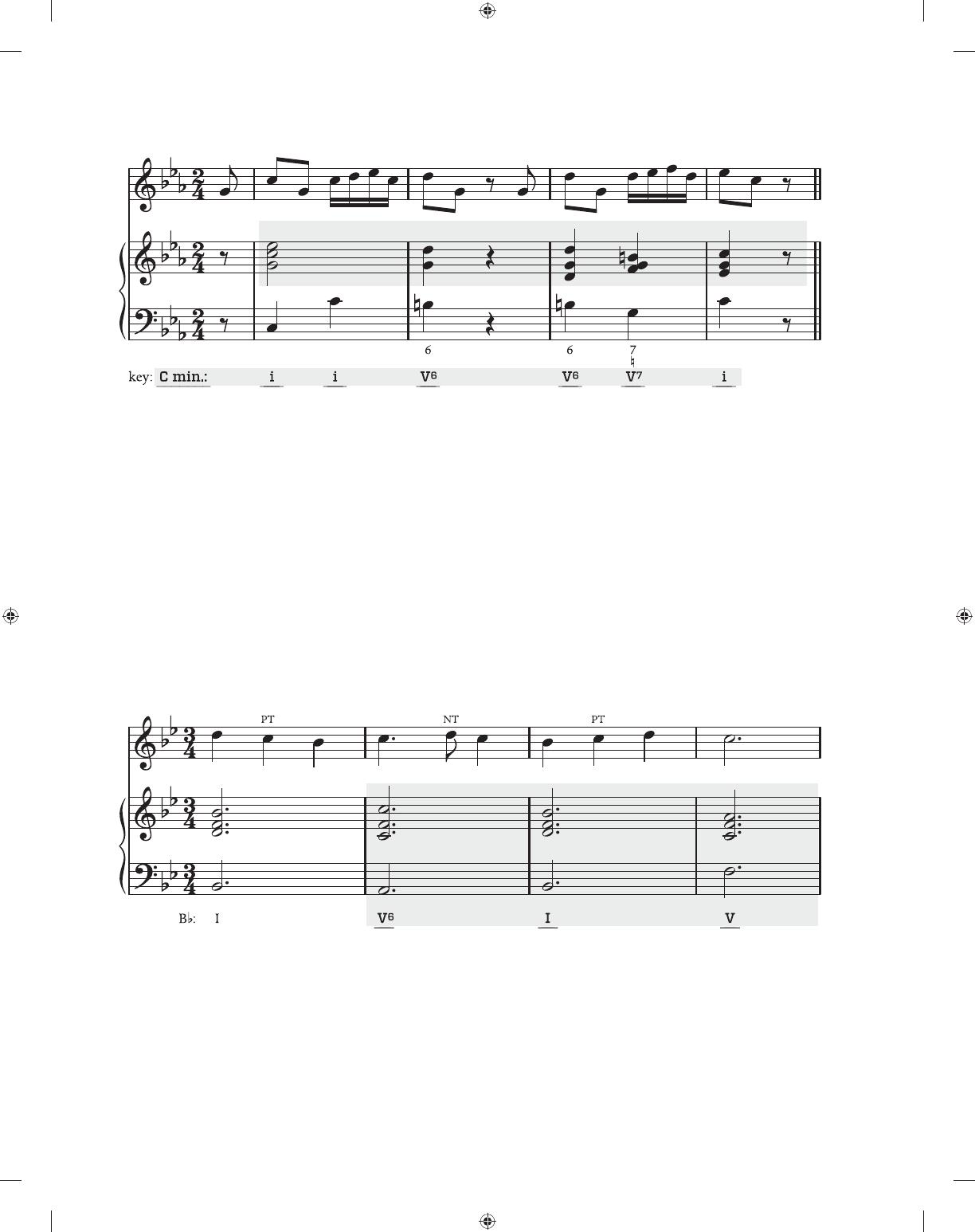
2. G. P. Telemann, Oboe Sonata in C minor
I. COMPOSITION
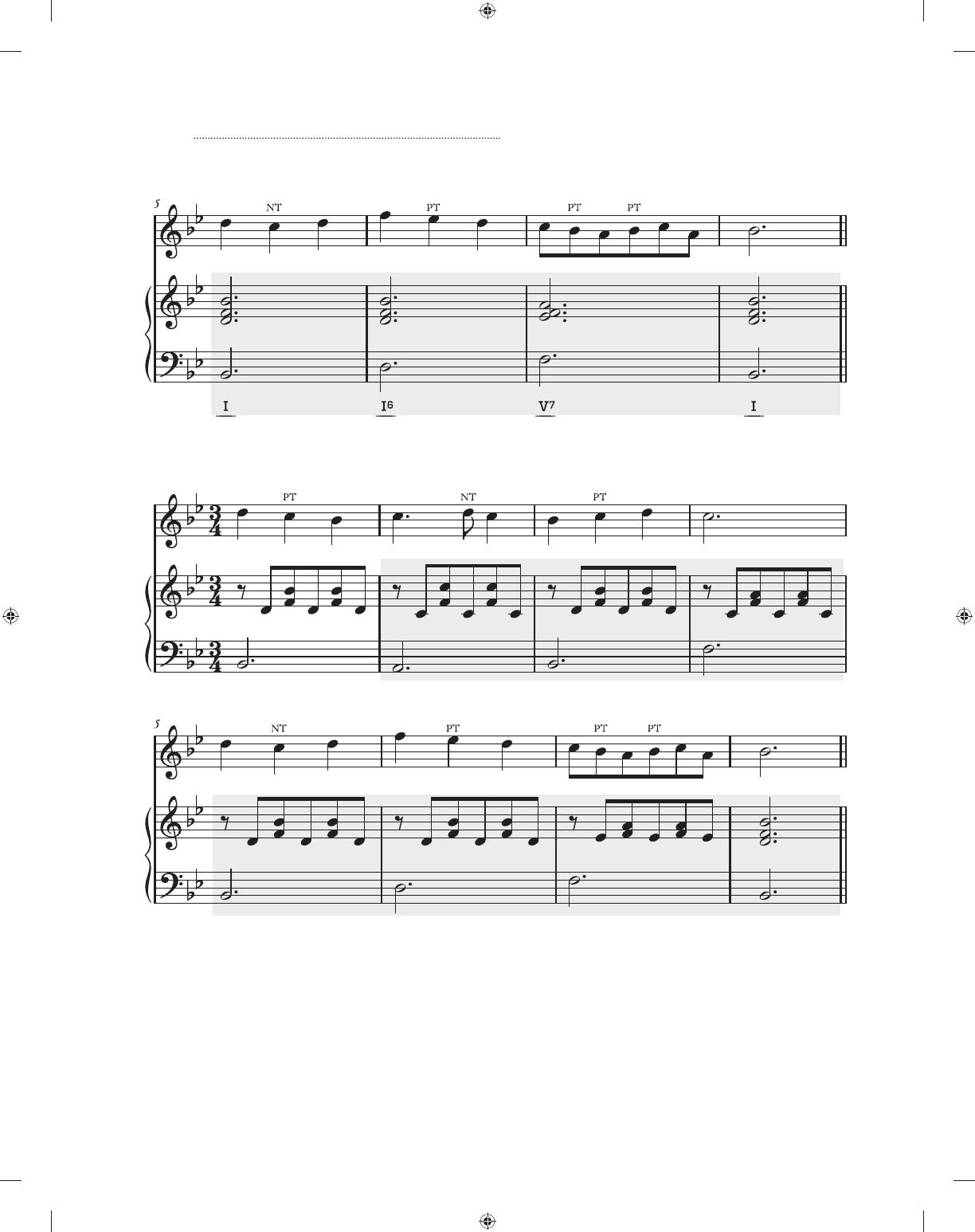
1. In the following melody:
• Select one chord
—
I, V, I6, V6, or V7
—
to harmonize each measure. With the
exception of the notes labeled as passing tones (PT) or neighbor tones (NT),
the notes in the given melody should be notes of the chord you choose for the
measure.
• Write the bass line.
I. Composition | 141
NAME:
2. With the same melody as (1), rewrite the accompaniment continuing the pattern
given in the first measure; use the same pitches used in your harmonization in (1).
142 | CHAPTER 11 | I
6 and V6
J. ANALYSIS
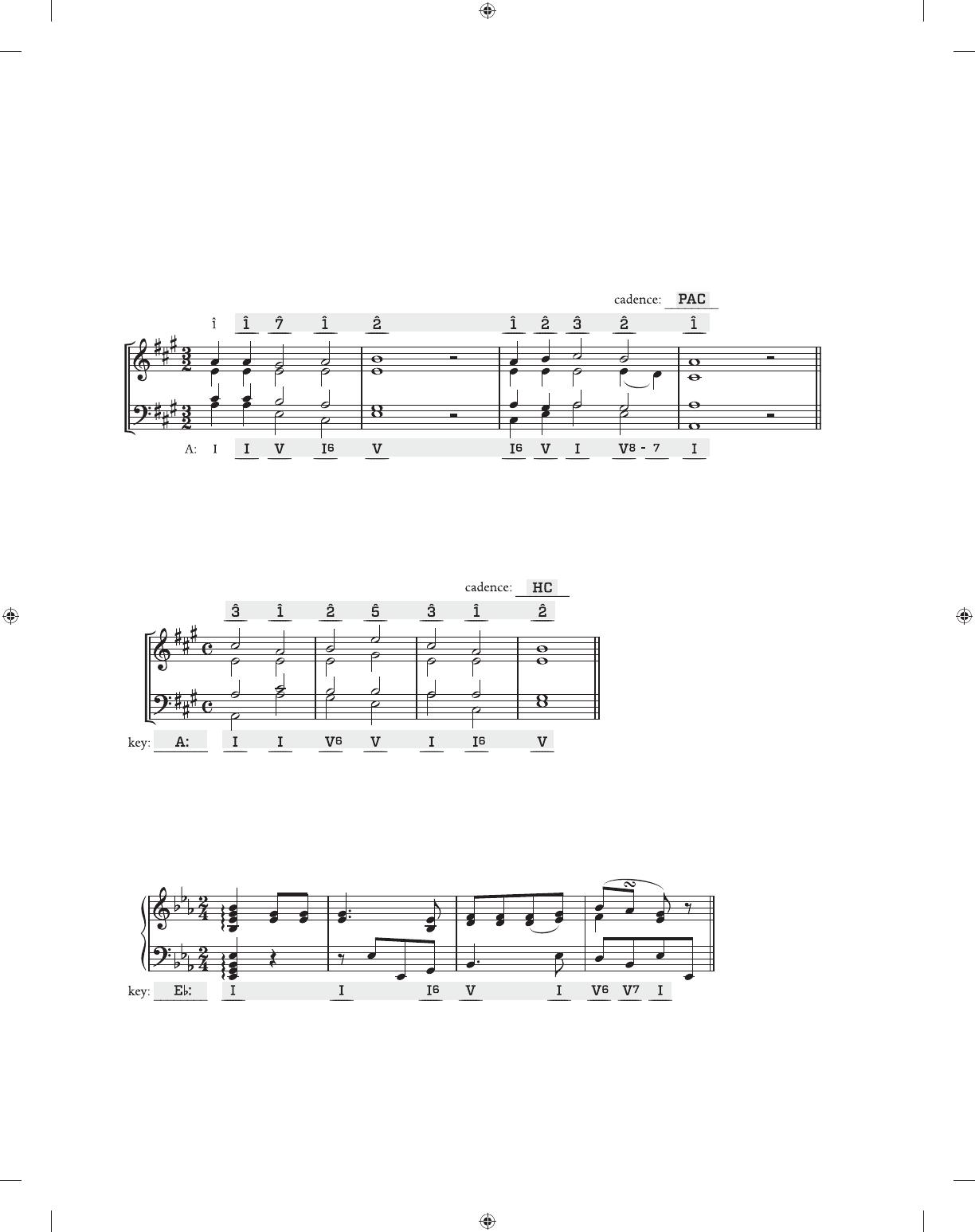
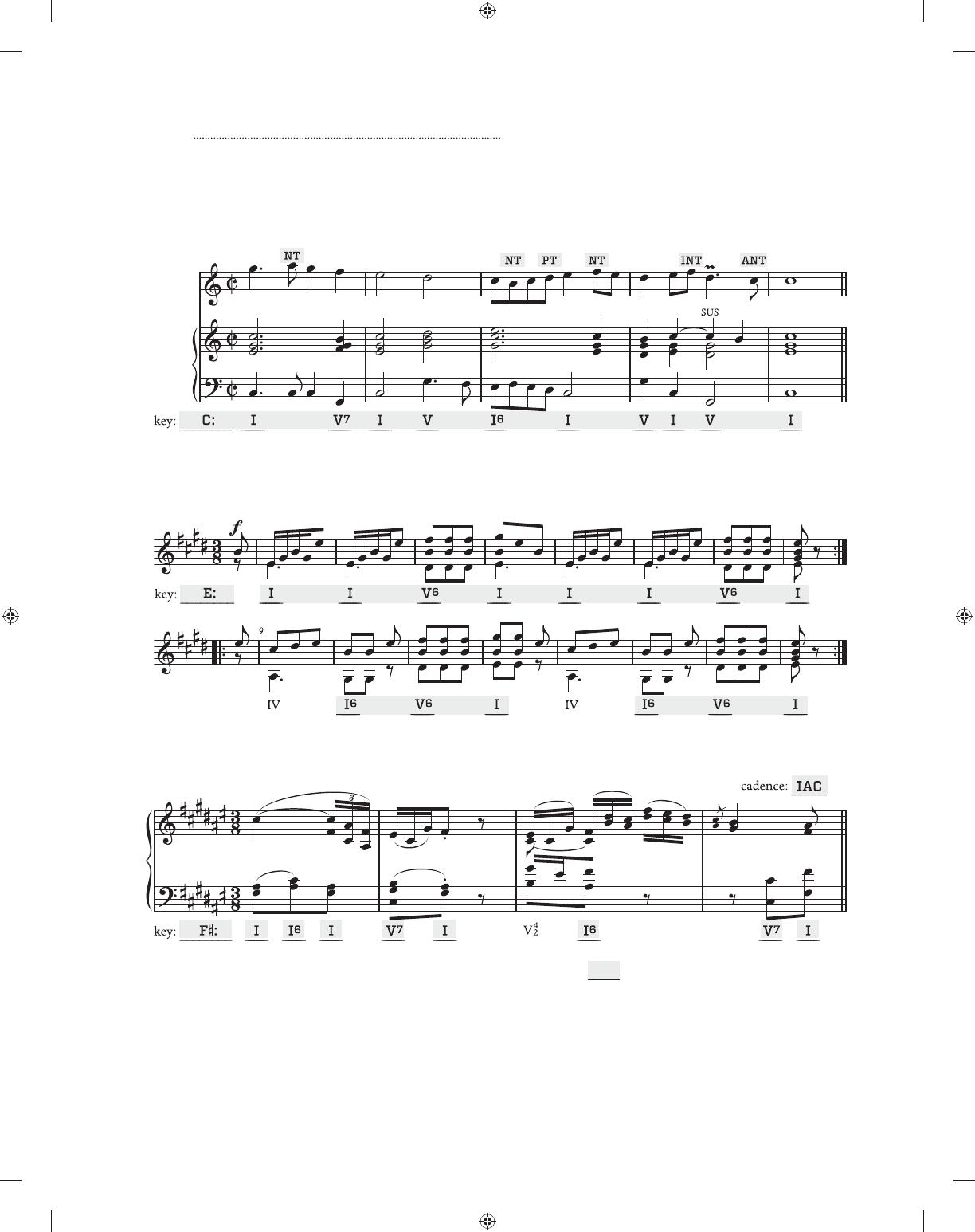
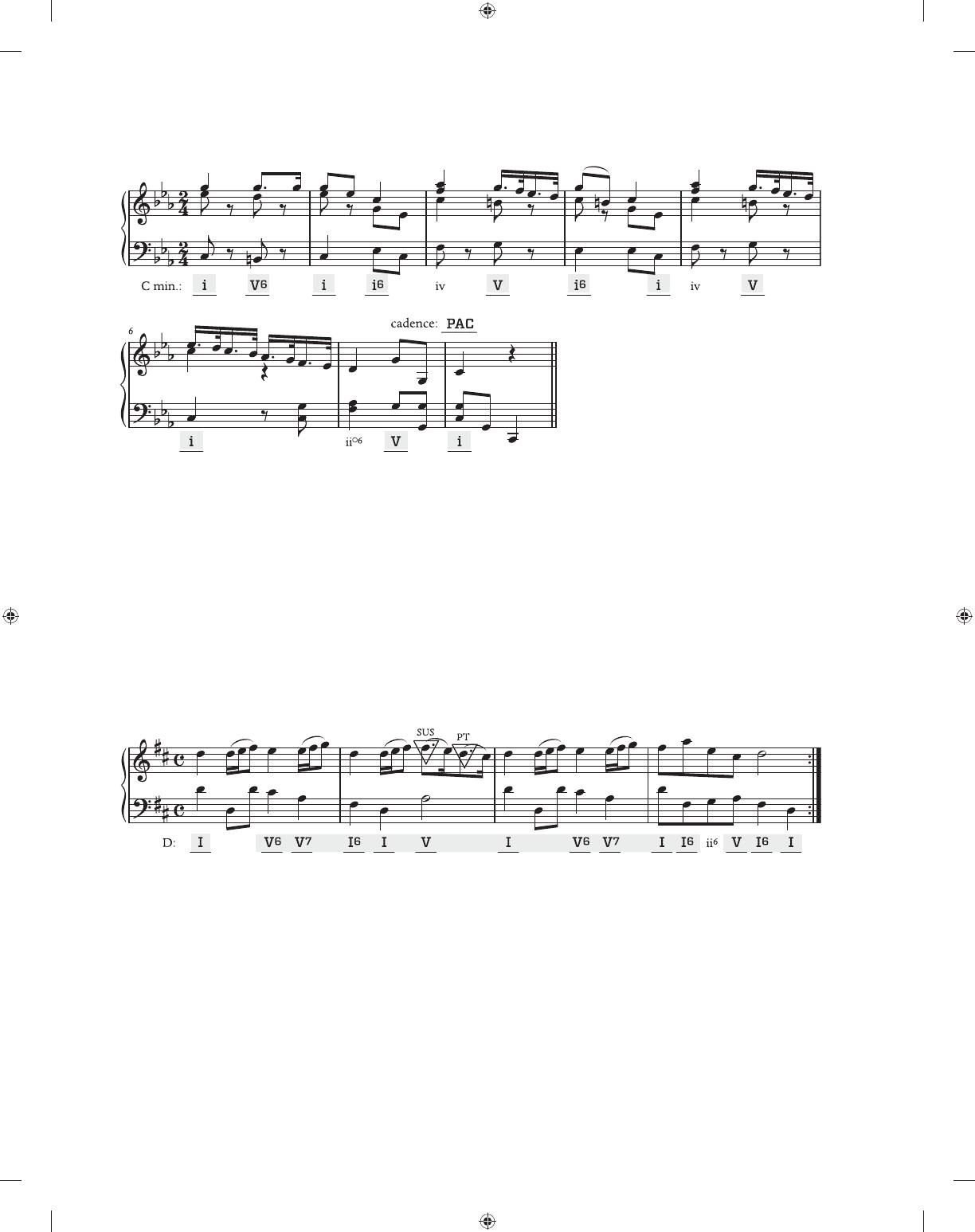
Label the keys and Roman numerals of the following passages. Where indicated,
labelthe cadence.
1. The Chorale Book for England, No. 18
Label the scale degrees of the melody as well.
2. The Chorale Book for England, No. 12
Label the scale degrees of the melody as well.
3. W. A. Mozart, Variations on “Salve tu Domine”
Note: The chordal third is implied in the second chord of measure 4.
J. Analysis | 143
NAME:
4. Jean Baptiste Lully, Overture to Alceste
Label the embellishing tones in the melody.
5. Ferdinando Carulli, Grand Recueil de morceaux progressifs for guitar, Op. 333, No. 12
Two chords have been labeled for you.
6. Joseph Haydn, Symphony No. 45 (“Farewell”), iv
144 | CHAPTER 11 | I
6 and V6
7. Baldassare Galuppi, “Madre natura,” from Il mondo alla roversa
• Which notes of the chord are implied in the second half of measure 7? Which
chord note is implied in measure 8?
• At two points in this phrase the expected arrival of a PAC is averted. Where do
these evaded cadences occur, and how are they brought about?
• What makes the final cadence in measure 7
–
8 sound particularly striking?
8. Ignatius Sancho, “Who’d a Thought It”
The chords are suggested with just two voices. Thus, in every chord, one or two
tones are implied.