B. Writing Major Scales | 13
NAME:
A. QUESTIONS FOR REVIEW
1. What is the order of whole tones and semitones in a major scale? In a natural
minor scale? In a harmonic minor scale? In an ascending melodic minor scale?
2. What are the traditional names for the scale degrees? (Remember that ˆ
7 has two
different names in minor keys, depending on whether or not it is raised from its
natural position.)
3. Which scale degrees are raised in the harmonic minor scale? In the ascending
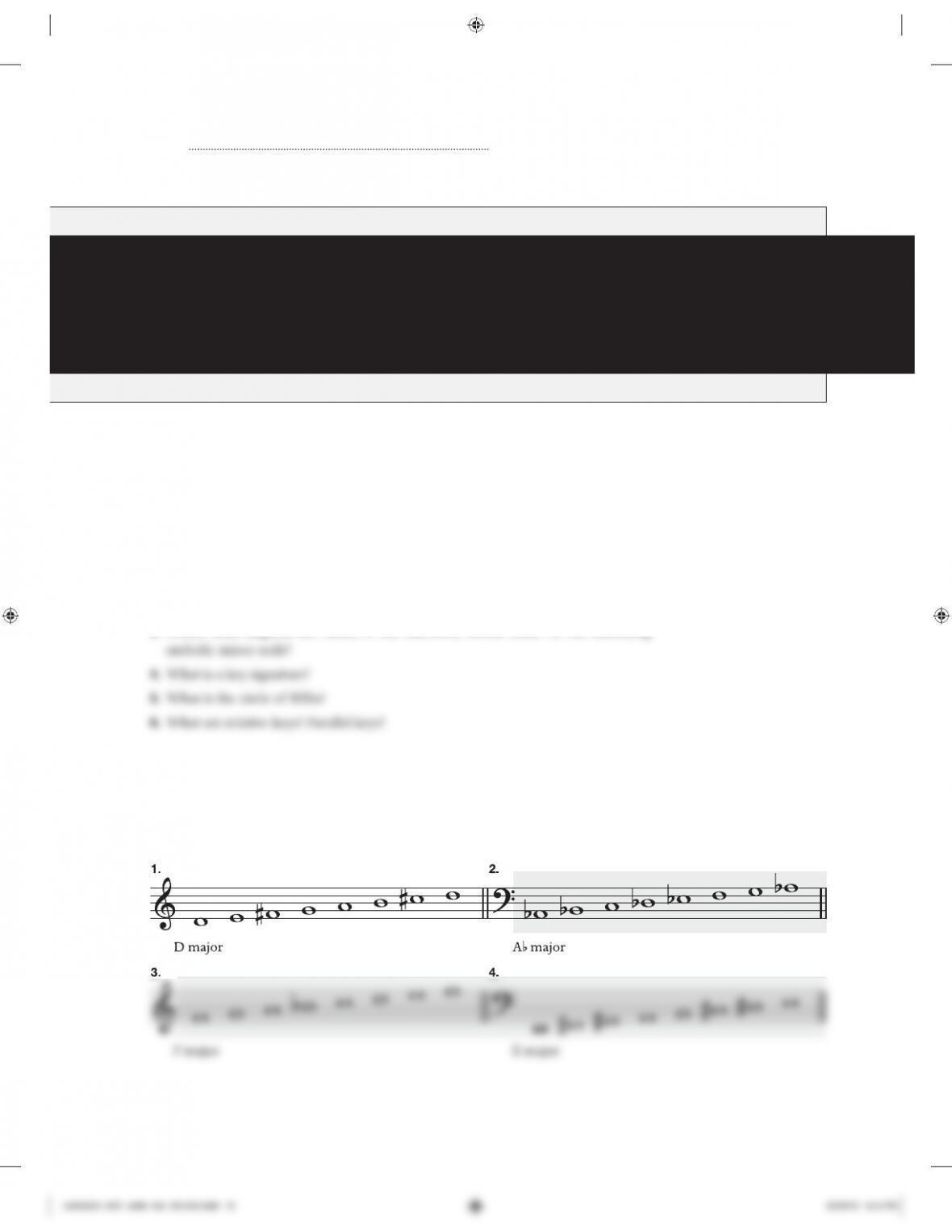
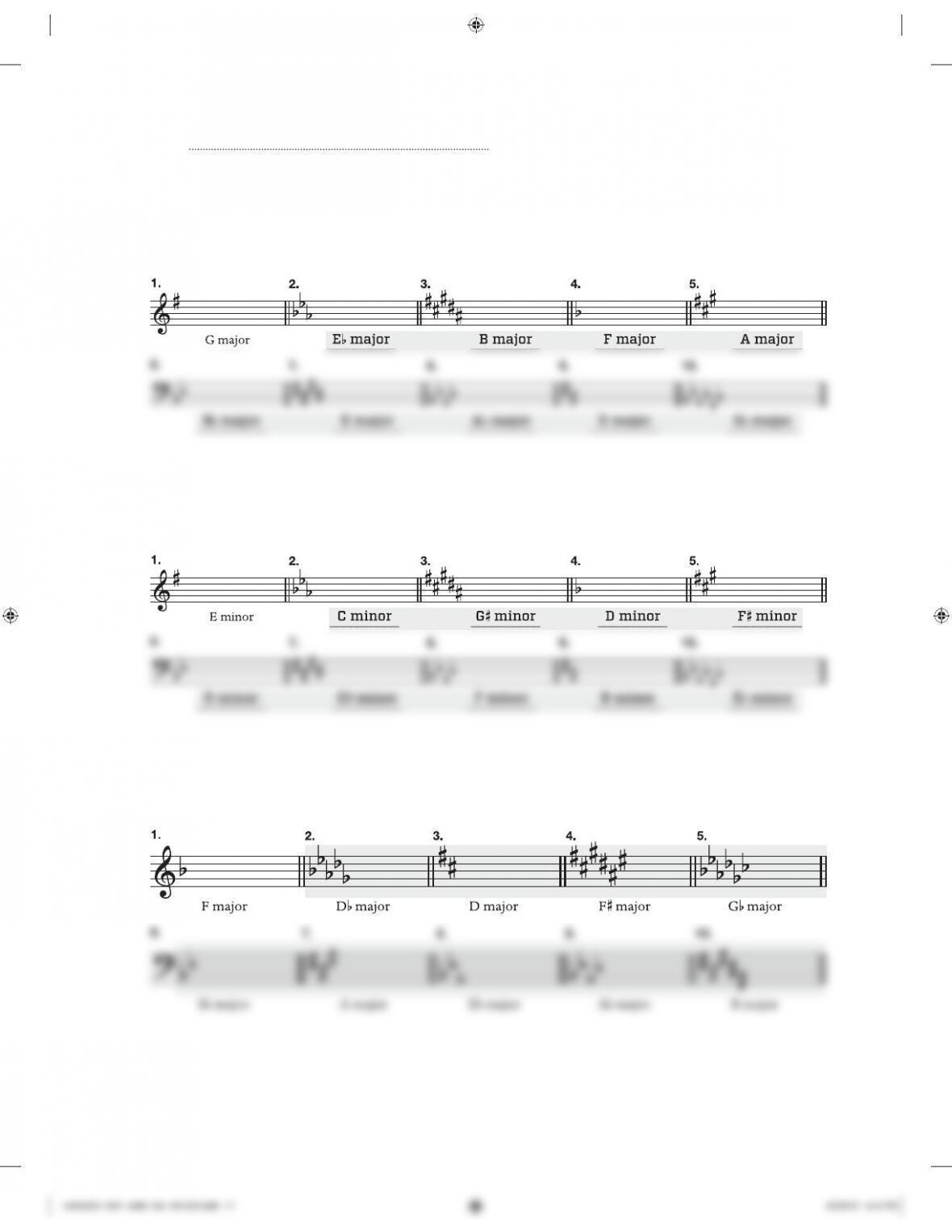
B. WRITING MAJOR SCALES
Write the ascending major scales indicated, using accidentals rather than key
signatures.
chapter
1Scales
14 | CHAPTER 1 | Scales
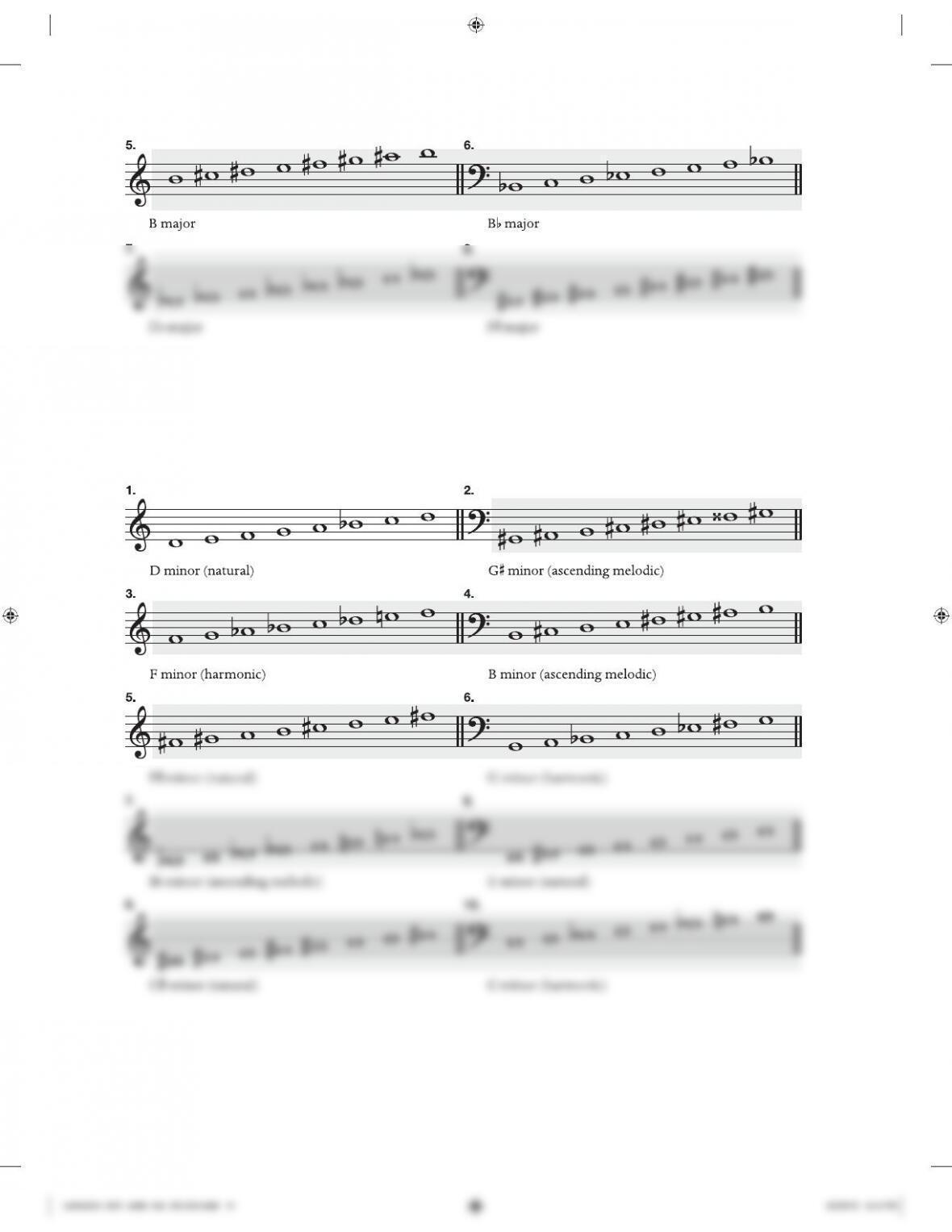
C. WRITING MINOR SCALES
Write the ascending minor scales indicated, using accidentals rather than a key
signature.
NAME:
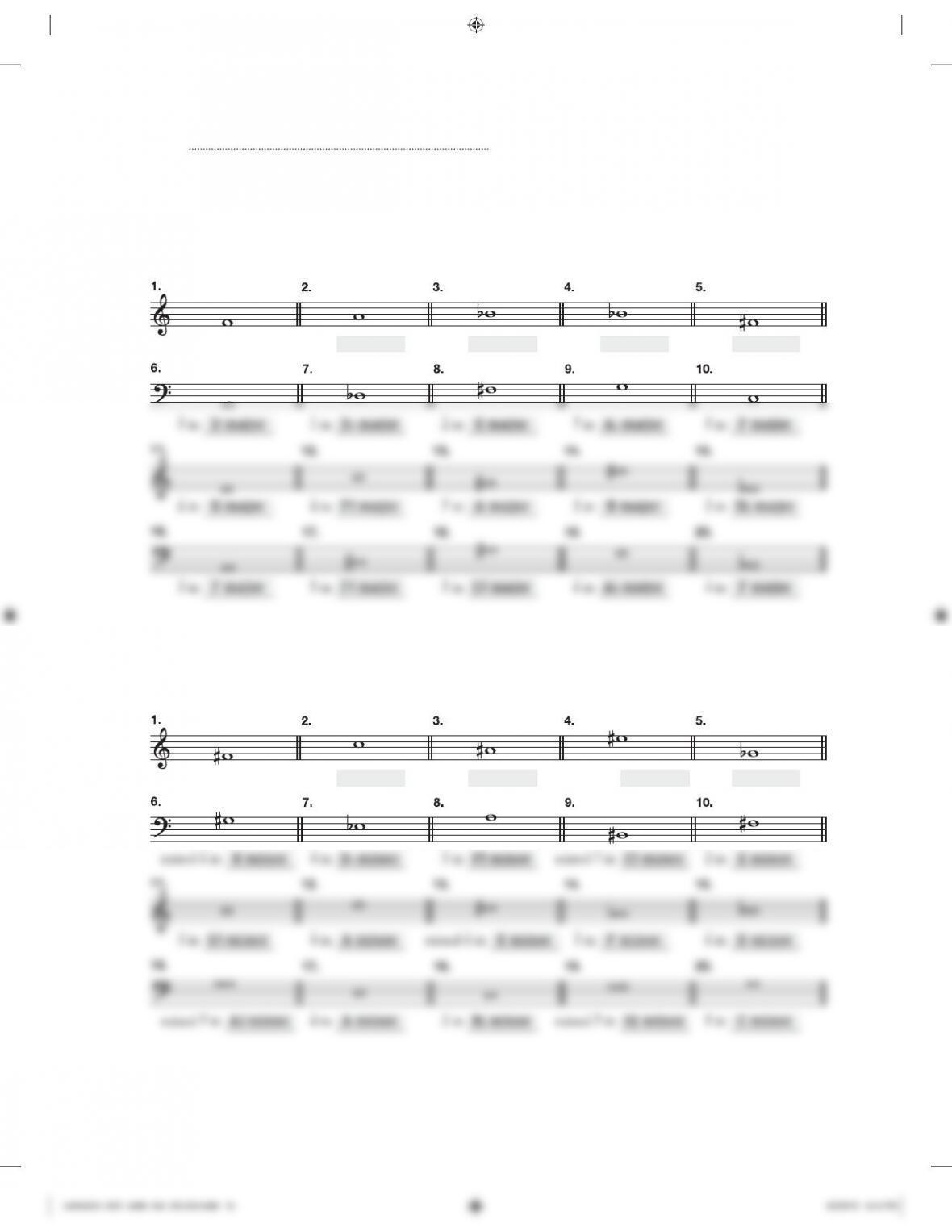
D. IDENTIFYING MAJOR KEYS FROM SCALE DEGREES
Each note below is the indicated scale degree in a major scale. Identify the key.
ˆ
3 in Db major
ˆ
5 in D major
_________ ˆ
2 in Ab major
_________ ˆ
3 in Gb major
_________ ˆ
6 in A major
_________
E. IDENTIFYING MINOR KEYS FROM SCALE DEGREES
Each note below is the indicated scale degree in a minor scale. Identify the key.
raised ˆ
7 in G minor
ˆ
5 in F minor
_________ ˆ
5 in D# minor
_________ ˆ
3 in Eb minor
_________
raised ˆ
7 in F# minor
_________
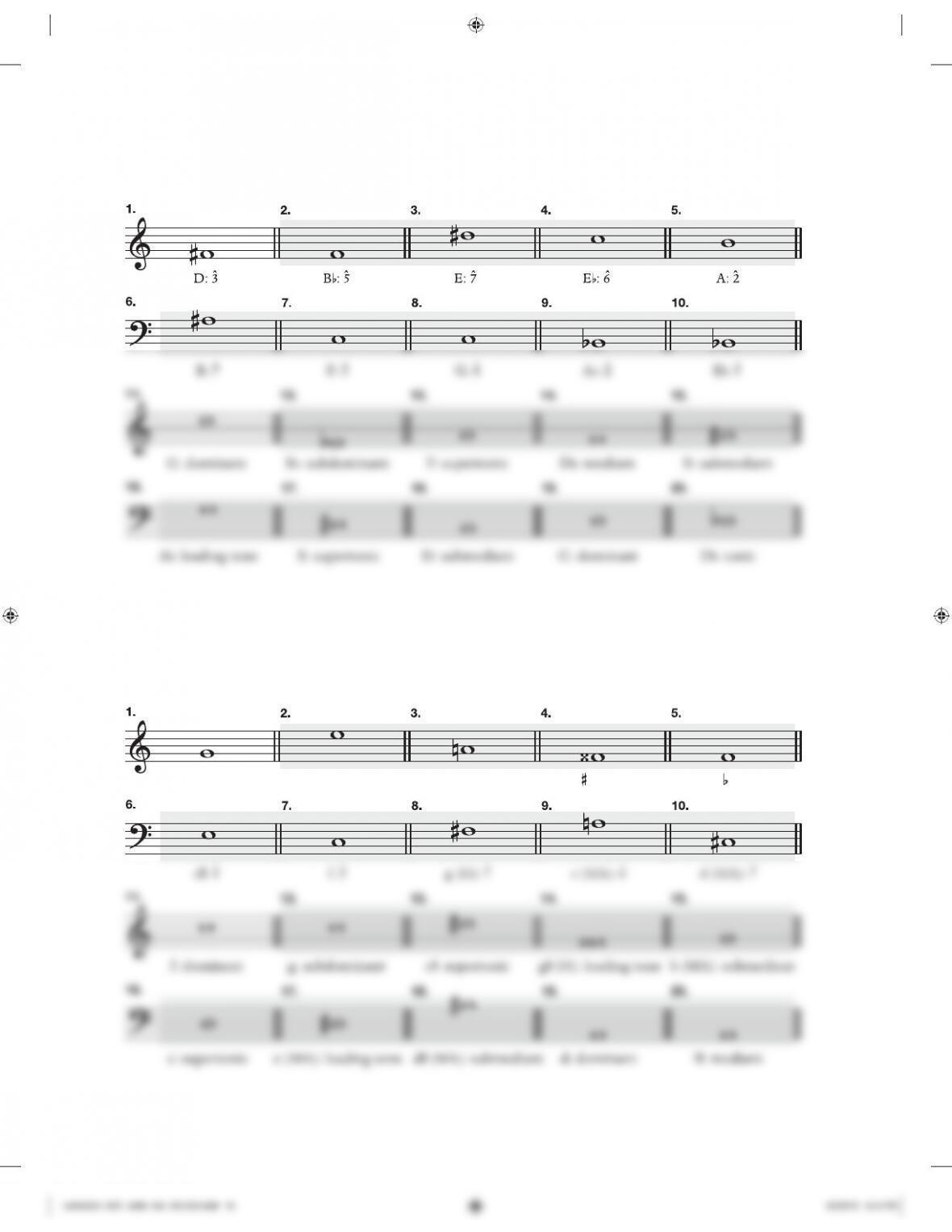
F. WRITING MAJOR SCALE DEGREES
Given the major scale and scale-degree name or number, write the note.
G. WRITING MINOR SCALE DEGREES
Given the minor scale and scale-degree name or number, write the note. Minor scales
are assumed to be in their natural form unless “harmonic minor” (H) or “ascending
melodic minor” (MA) is indicated.
a:
ˆ
7 b:
ˆ
4 c (MA):
ˆ
6 g (H): ˆ
7 b : ˆ
5
J. Writing Major Key Signatures | 17
NAME:
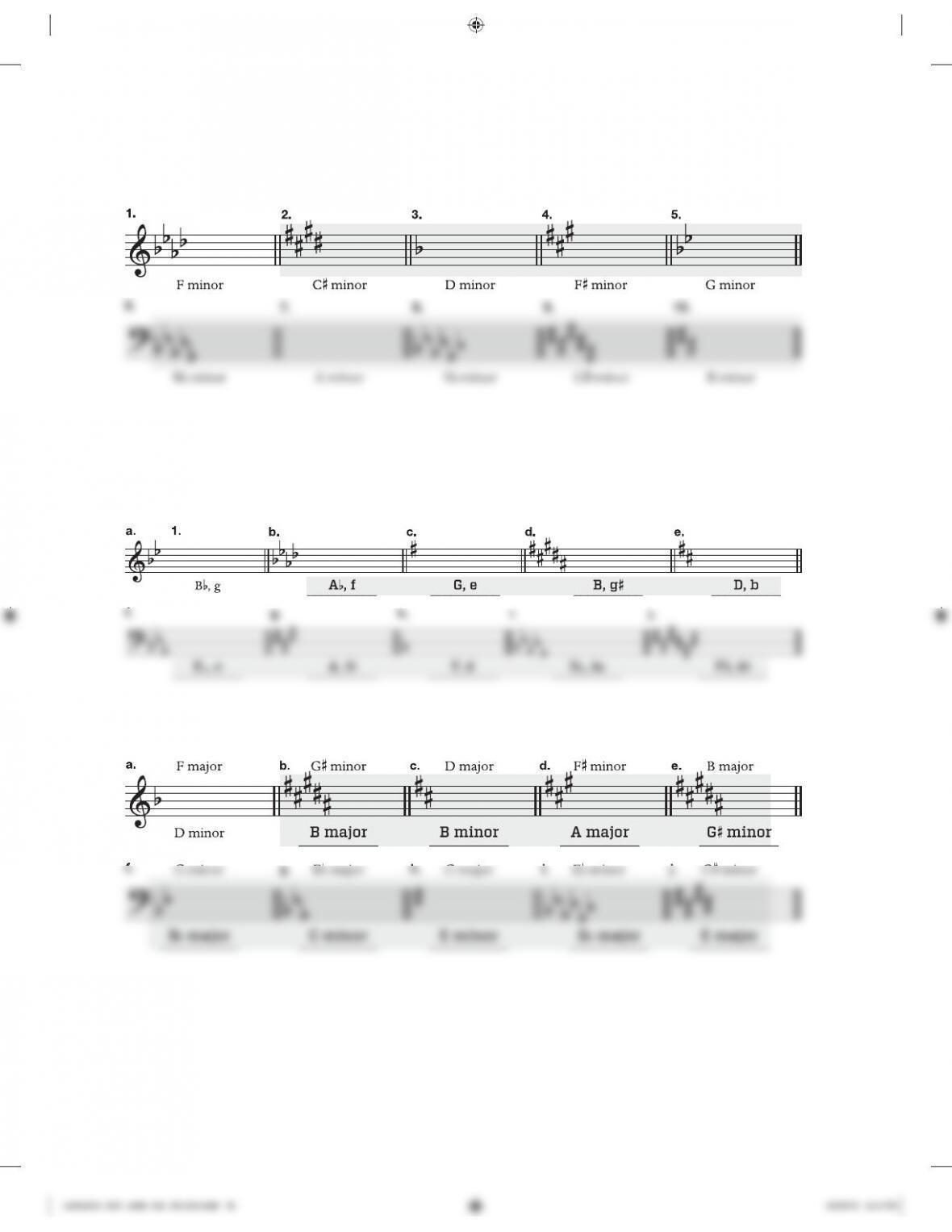
H. IDENTIFYING MAJOR KEY SIGNATURES
Identify the major key represented by each key signature.
I. IDENTIFYING MINOR KEY SIGNATURES
Identify the minor key represented by each key signature.
J. WRITING MAJOR KEY SIGNATURES
Write the key signature for each major key.
18 | CHAPTER 1 | Scales
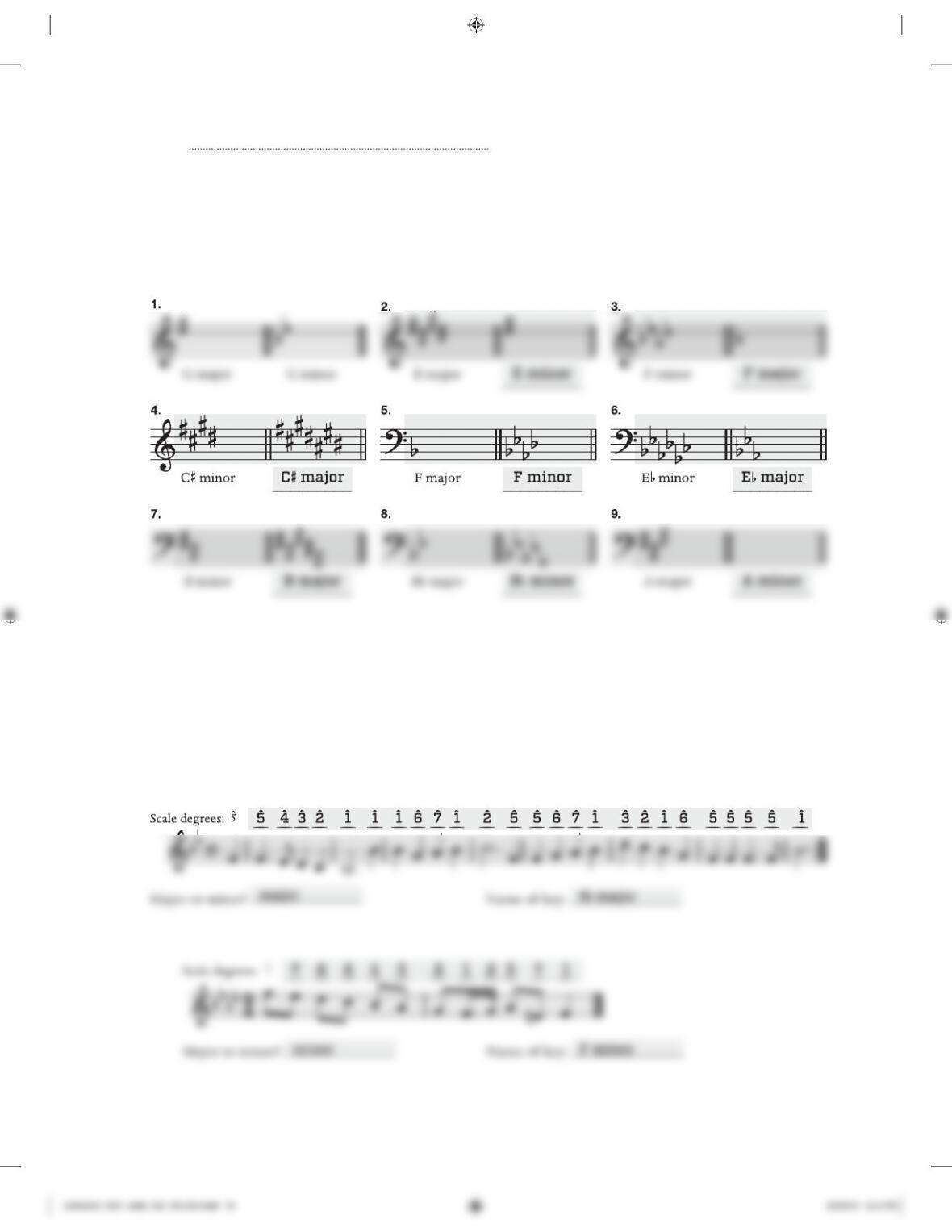
K. WRITING MINOR KEY SIGNATURES
Write the key signature for each minor key.
L. IDENTIFYING RELATIVE KEYS
1. Name the two keys represented by each key signature. Give the major key first,
using an uppercase letter, and then the relative minor, using lowercase.
2. For each key (major or minor), name its relative key (minor or major) and write
the shared key signature.
NAME:
M. PARALLEL KEYS
For each key (major or minor), name its parallel key (minor or major) and write the
key signatures for both keys.
N. ANALYSIS
1. Figure out whether the following melodies are in major or minor keys. (Hint: In
minor keys, you will see ˆ
7 raised by an accidental—either natural or sharp—to
become the leading tone; ˆ
6 may also be raised by an accidental). Then identify the
keys and write the scale degree number of each note.
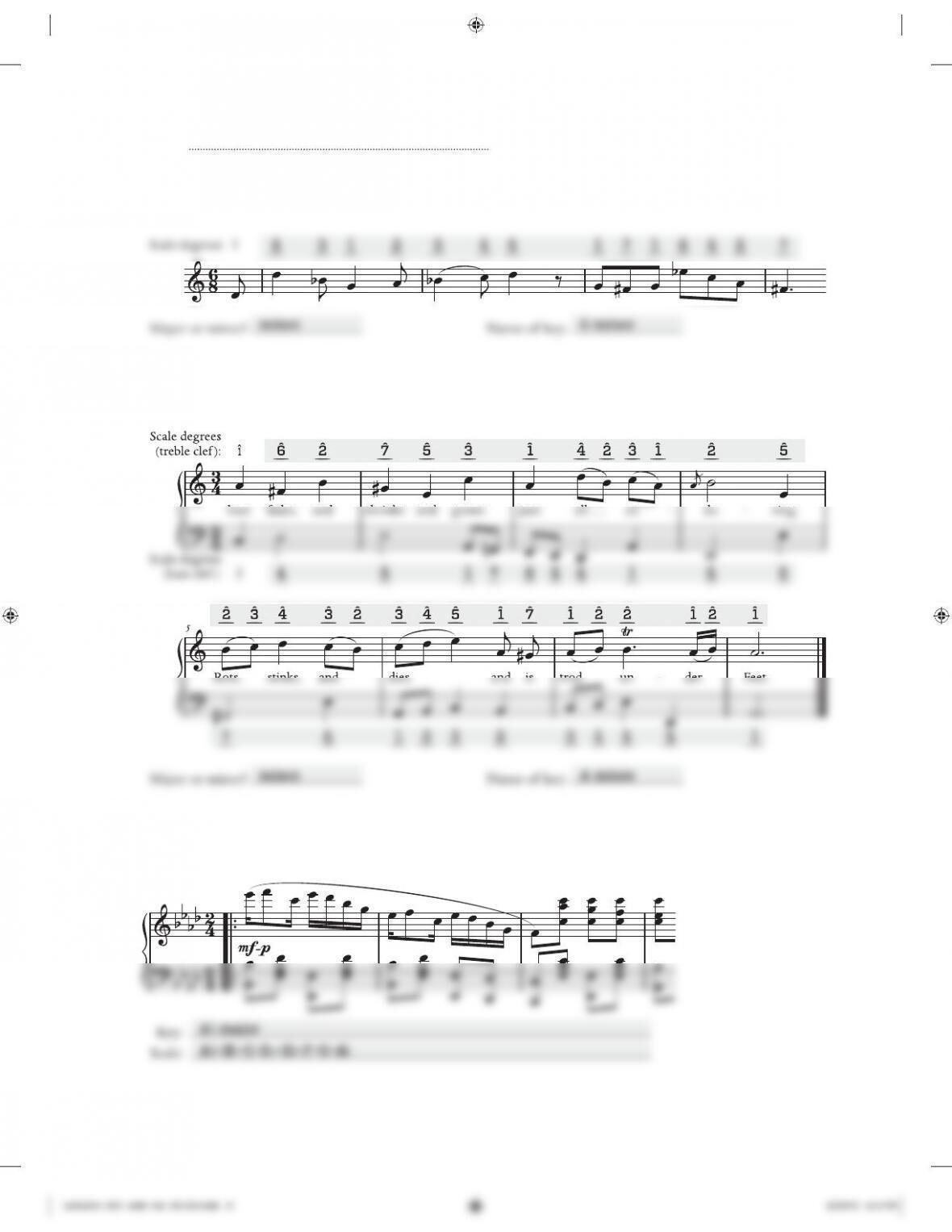
a. Queen Lili’uokalani, “Oh Kou Aloha No”
b. Corona Schröter, “An Laura” (“To Laura”)
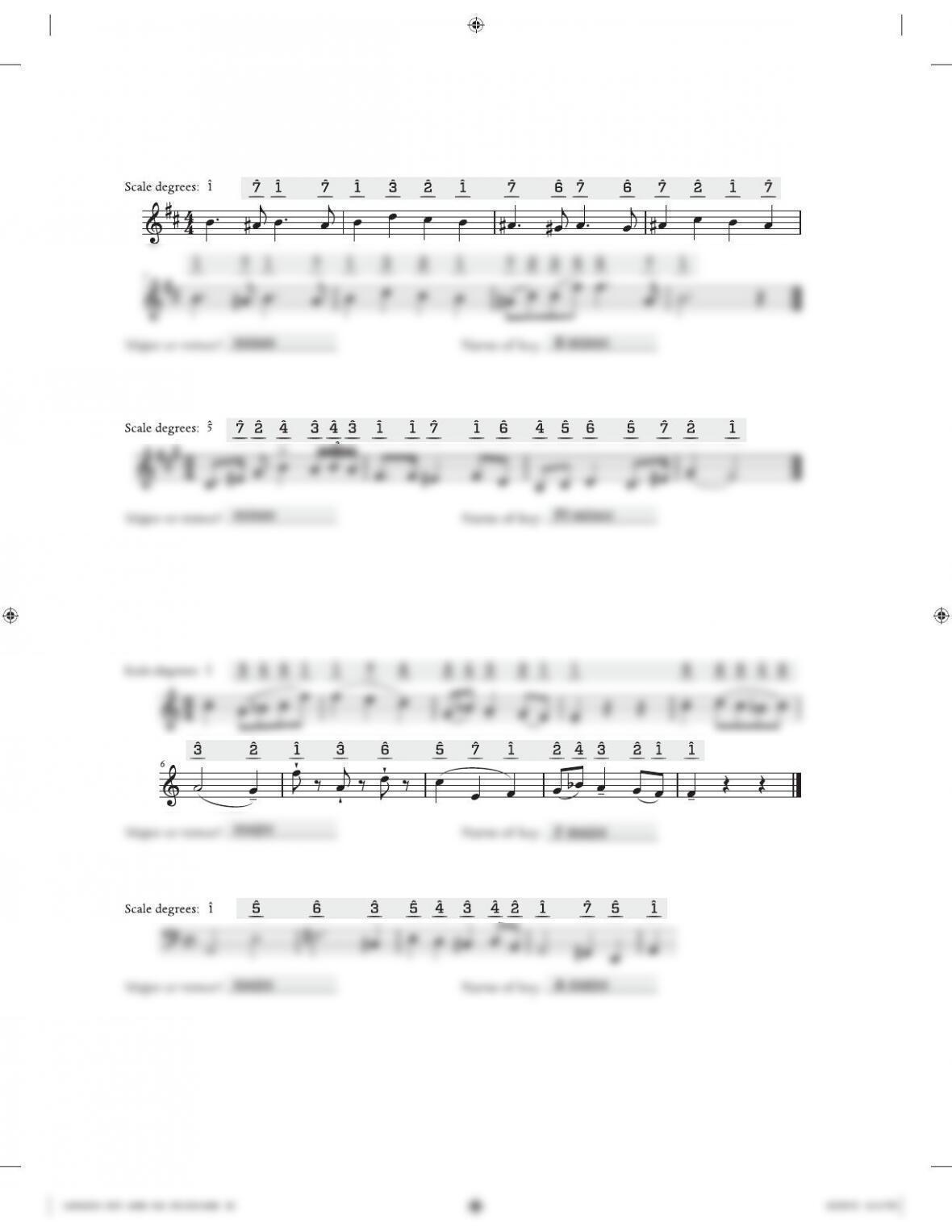
c. Traditional Russian melody
d. Edvard Grieg, “Folkevise,” Lyric Pieces, Op. 12, No. 5
2. The key signatures for the following melodies are not given. For each, figure out
whether the melody is in a major or minor key. Then identify the key and write the
scale degrees numbers of each note.
a. Christoph Willibald Gluck, Orfeo ed Euridice
b. Ludwig van Beethoven, Cello Sonata, Op. 69, i
NAME:
c. Fanny Mendelssohn Hensel, “Schwanenlied”
d. Johann Christoph Pepusch, The Beffar’s Opera
Write scale-degree numbers for the melody above the treble staff and for the
bass below the bassstaff.
3. For each of these passages, identify the key and write out the scale starting and
ending on ˆ
1.
a. James Scott, “Quality (A High-Class Rag)”
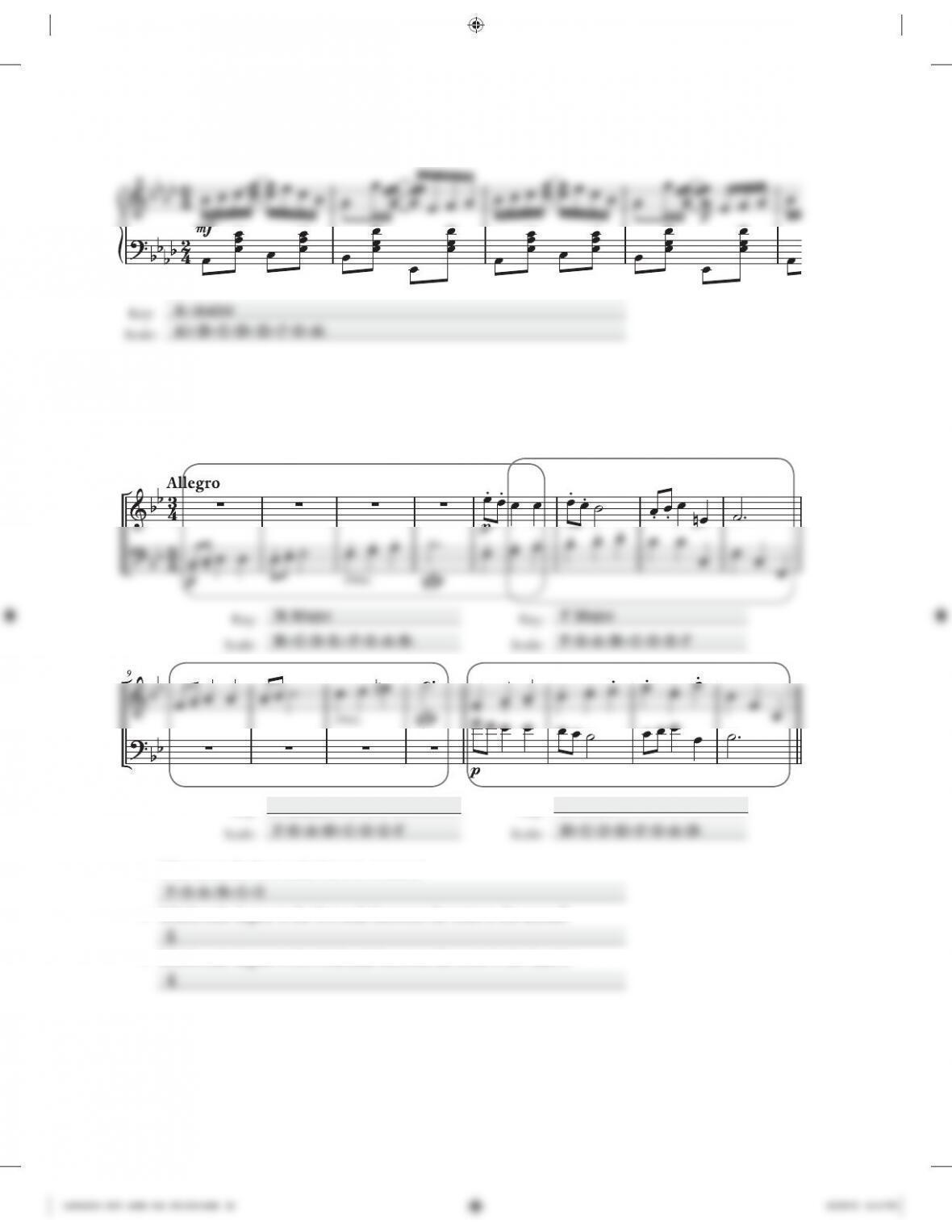
b. James Scott, “Frog Legs Rag”
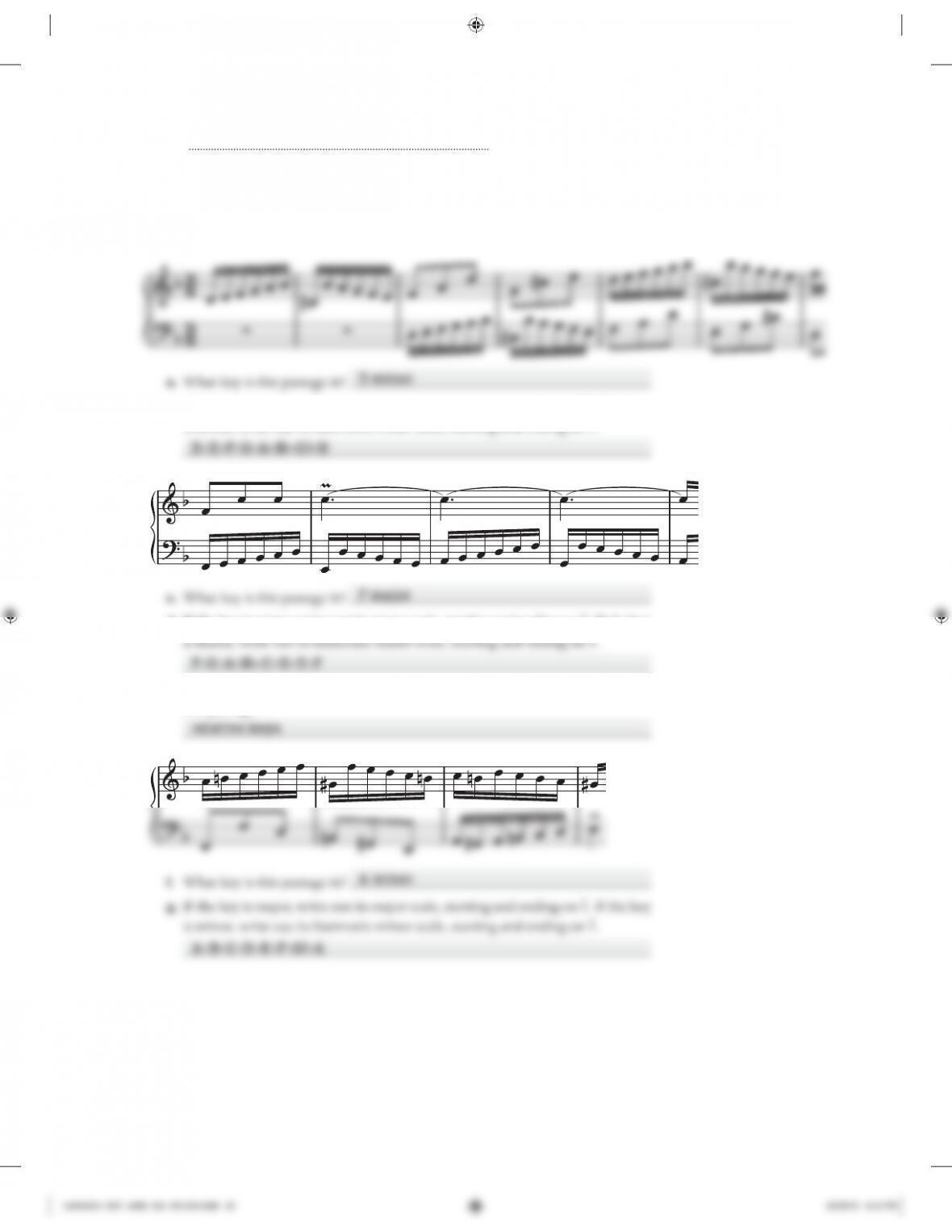
4. Ludwig van Beethoven, Trio for Piano, Violin, and Cello in Bb major, Op. 97
(“Archduke”)
For each boxed passage, name the key, then write out the scale, starting and ending
with ˆ
1.
Key:
F major Key:
Bb Major
• What notes do these scales have in common?
• Which scale degree in the first scale becomes the tonic in the second?
5
^
• Which scale degree in the third scale becomes the tonic in the fourth?
^
NAME:
5. J. S. Bach, Two-Part Invention in D minor
Answer the questions after each excerpt.
b. If the key is major, write out its major scale, starting and ending on ˆ
1. If the key
is minor, write out its harmonic minor scale, starting and ending on ˆ
1.
d. If the key is major, write out its major scale, starting and ending on ˆ
1. If the key
e. What is the relationship between this major scale and the minor scale in the
first passage?
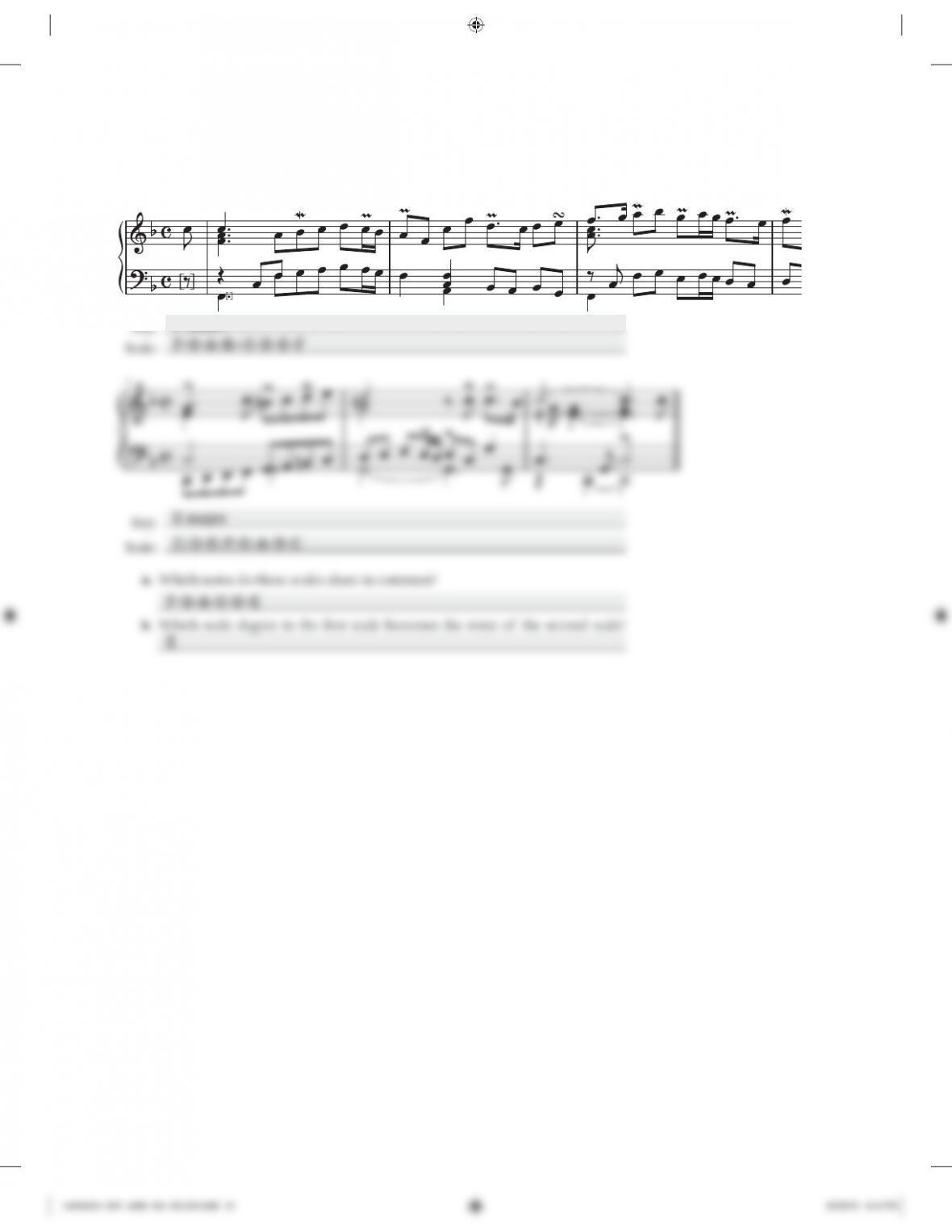
6. Elizabeth Jacquet de la Guerre, Suite in F, Allemande
Identify the key for these two passages and write out the scale starting and ending
on ˆ
1.