B. Identifying Note Names | 3
NAME:
A. QUESTIONS FOR REVIEW
1. What is a clef and what does it tell you? How do you write a treble clef and what
does it indicate? A bass clef ?
2. What is the effect of the sharp sign? The at sign? The natural sign? The double-
sharp sign? The double-at sign?
3. What are the relationships among whole notes, half notes, quarter notes, eighth
notes, and sixteenth notes?
4. What is an augmentation dot? A tie?
5. What is a time signature? How do you interpret the top and bottom numbers of
a time signature?
6. What is simple meter? What is compound meter?
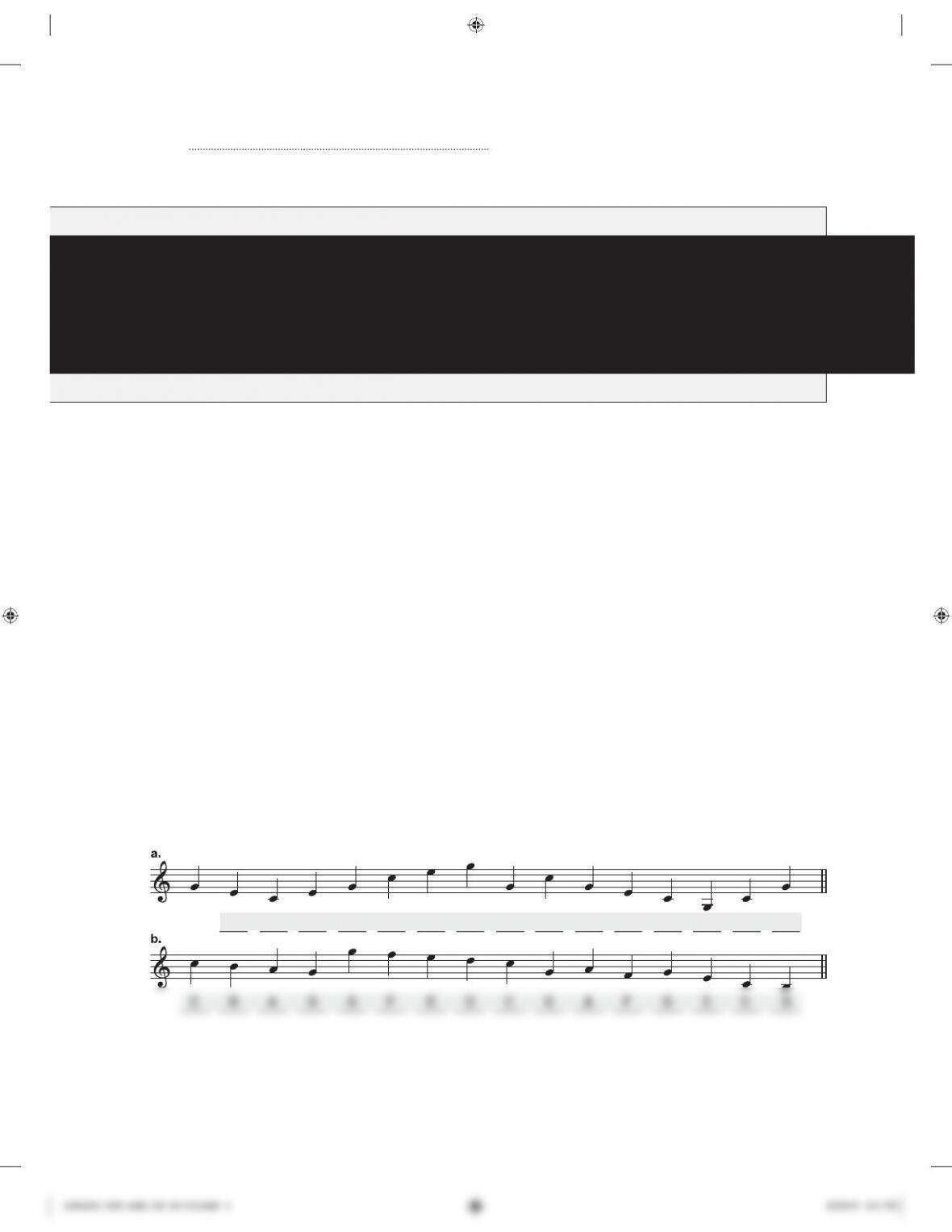
B. IDENTIFYING NOTE NAMES
1. Provide a letter name for each note in treble clef.
G E C E G C E G G C G E C G C G
chapter
0Notation of Pitch and Rhythm
4 | CHAPTER 0 | Notation of Pitch and Rhythm
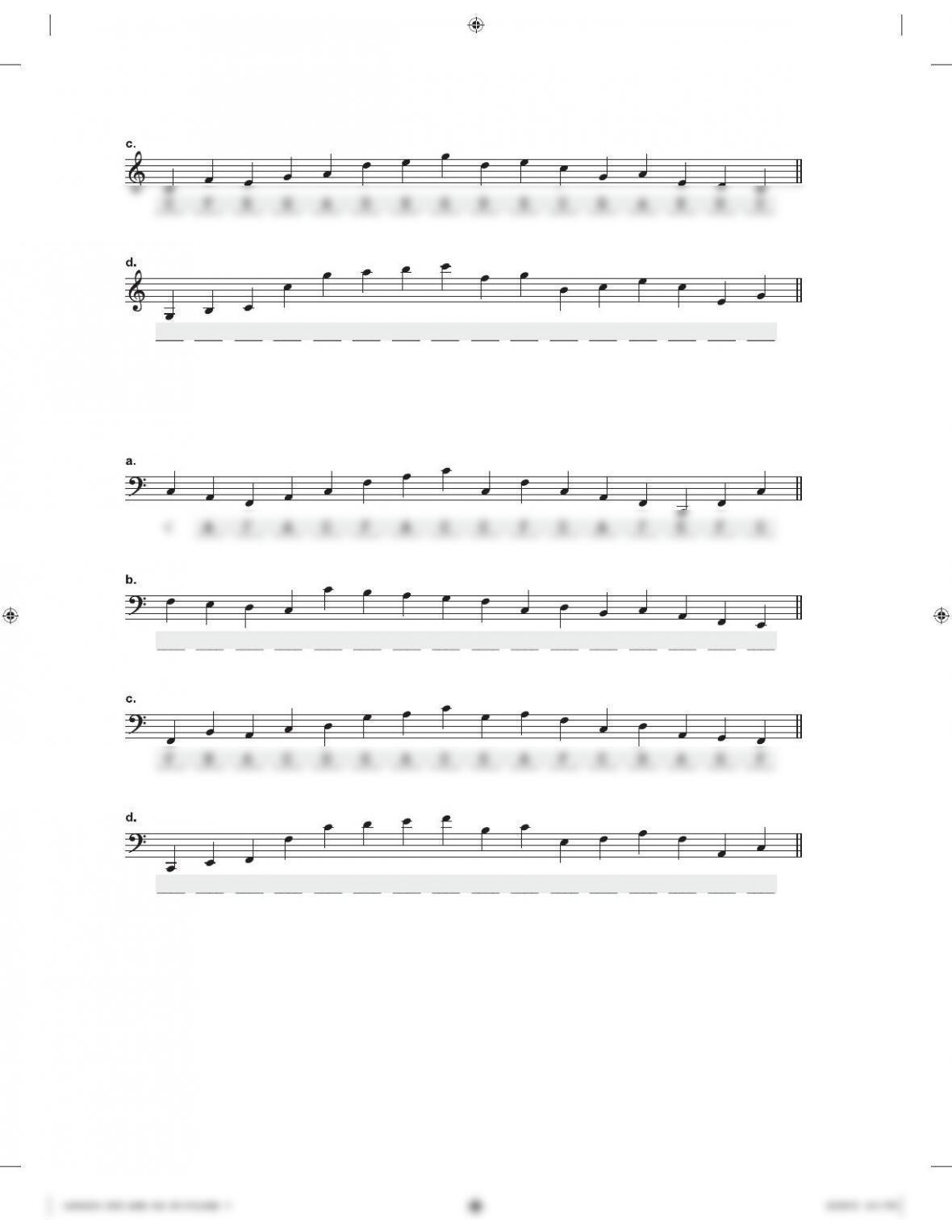
G B C C G A B C F G B C E C E G
2. Provide a letter name for each note in bass clef.
F E D C C B A G F C D B C A F E
C E F F C D E F B C E F G F A C
C. Writing Notes | 5
NAME:
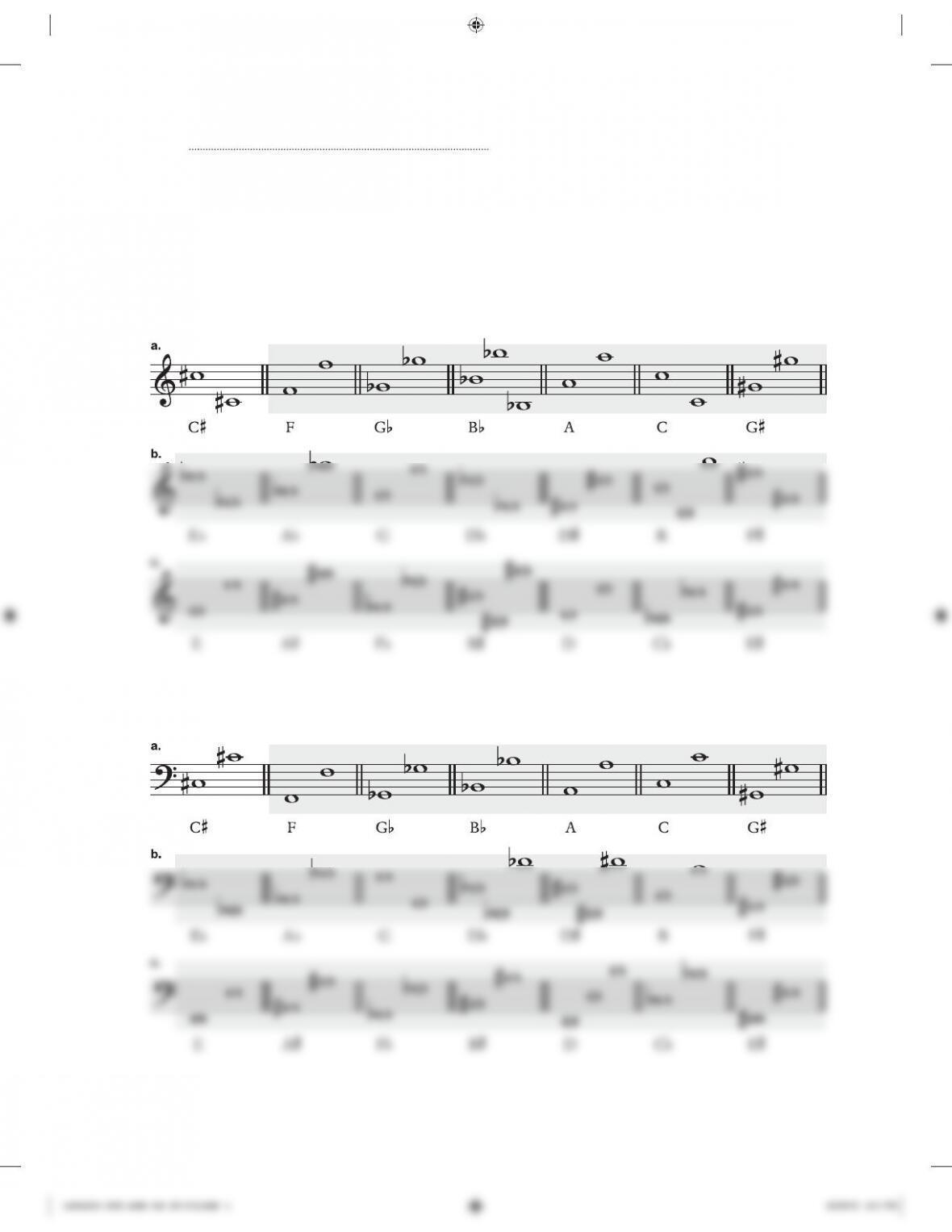
C. WRITING NOTES
Using no more than one ledger line, write as many pitches as you can for each note
name. (There will be two or three correct items for each note name.)
1. Treble clef
2. Bass clef
6 | CHAPTER 0 | Notation of Pitch and Rhythm
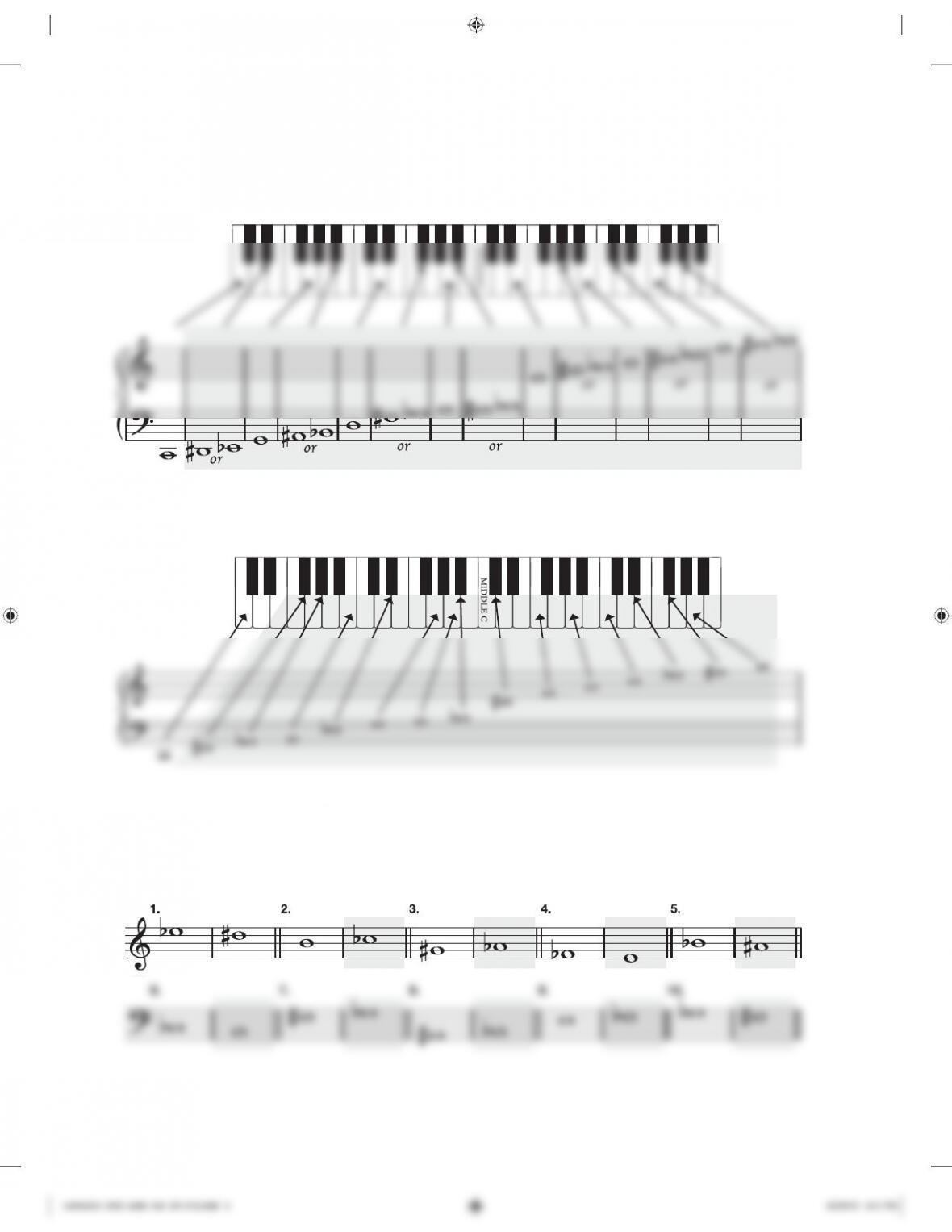
D. PITCH AND KEYBOARD
1. For each indicated key on the keyboard, write the corresponding note on the
grand staff.
2. For each note on the grand staff, draw an arrow to the corresponding key on the
keyboard.
E. ENHARMONIC NOTES
Write a note enharmonically equivalent to each given note using only sharps or ats
(not double sharps or double ats).
G. Writing Time Signatures | 7
NAME:
F. BARLINES
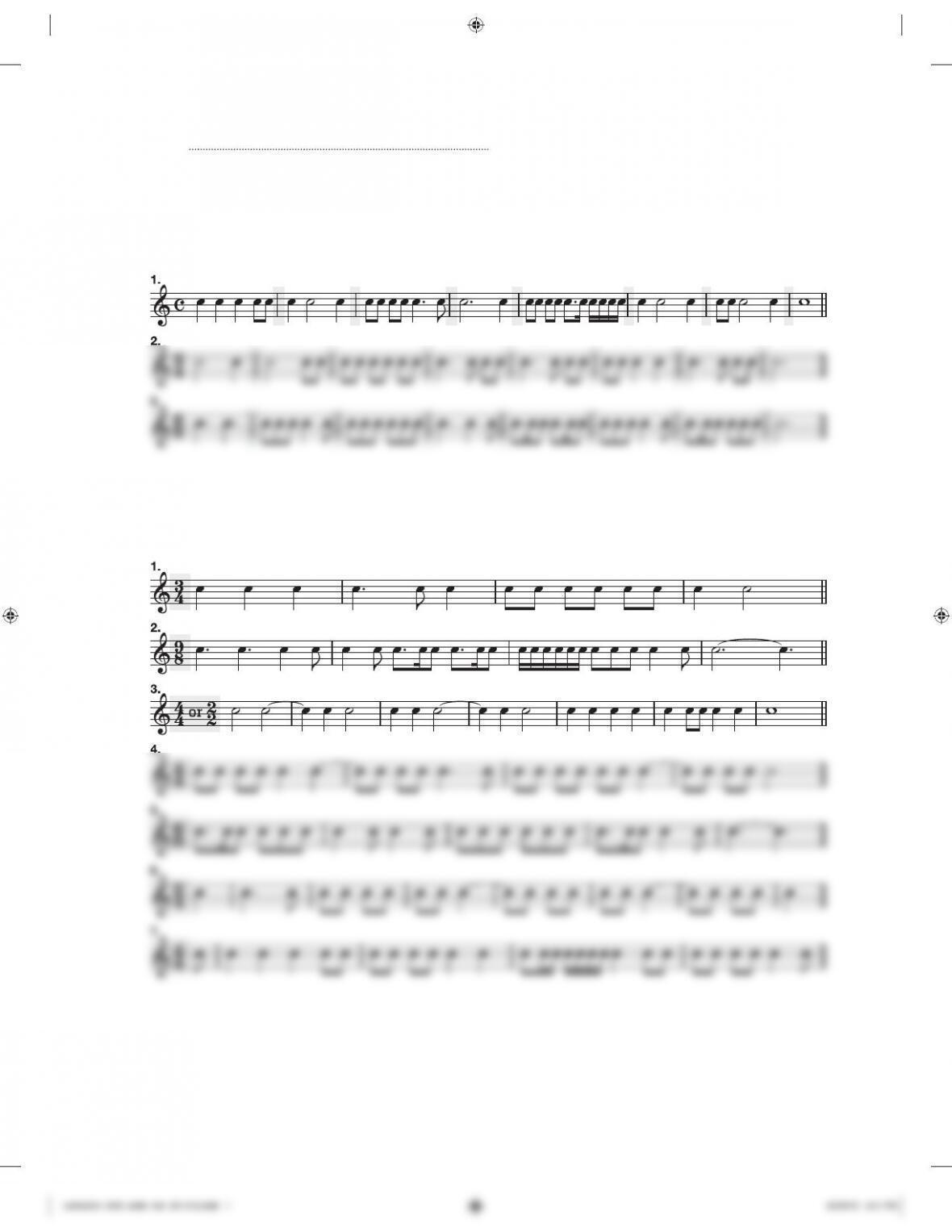
Insert barlines to create complete measures in the indicated meter.
G. WRITING TIME SIGNATURES
For the following rhythms write in the correct time signature.
8 | CHAPTER 0 | Notation of Pitch and Rhythm
H. BEAMS
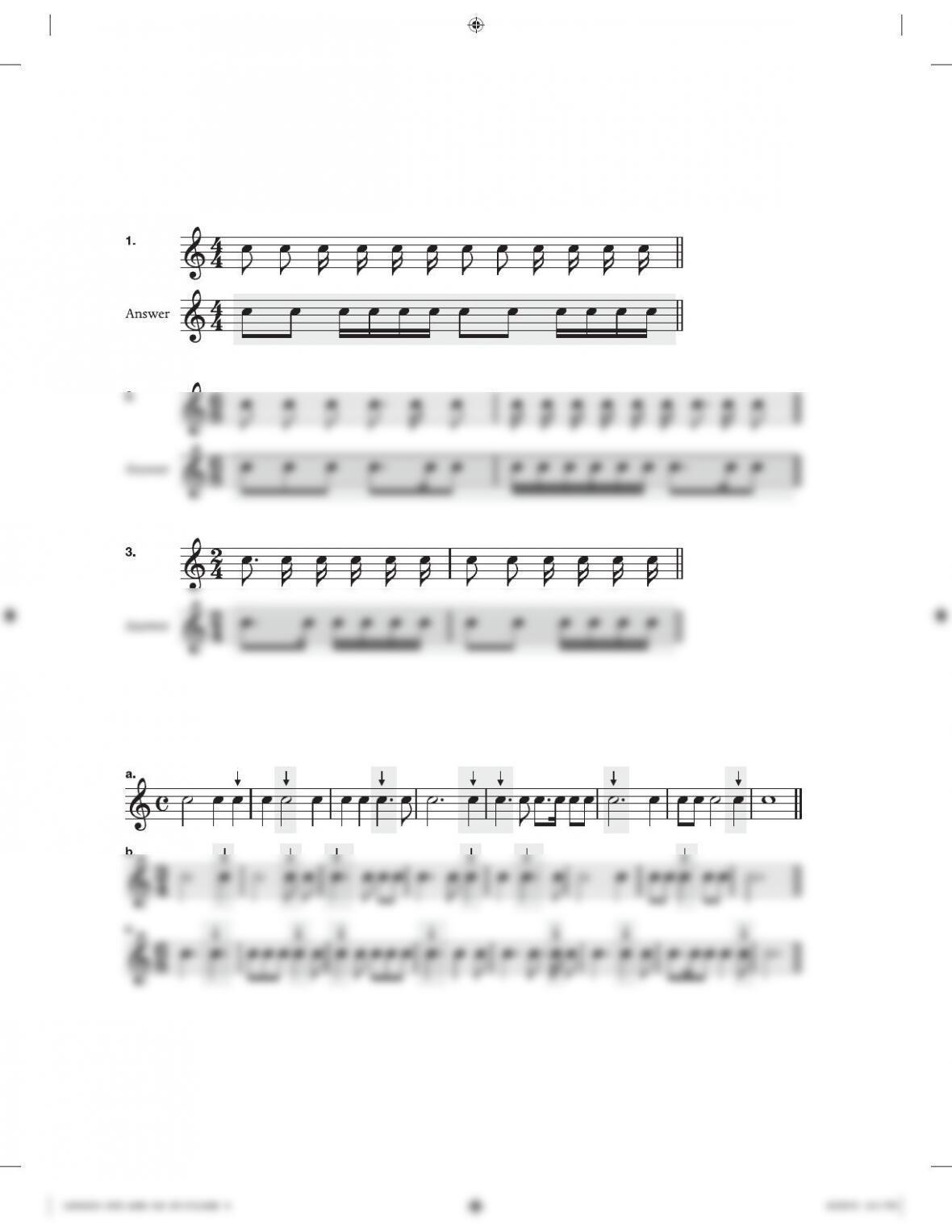
Rewrite these rhythms using beams that span the duration of one beat in the given
time signature.
I. WRITING RHYTHMS
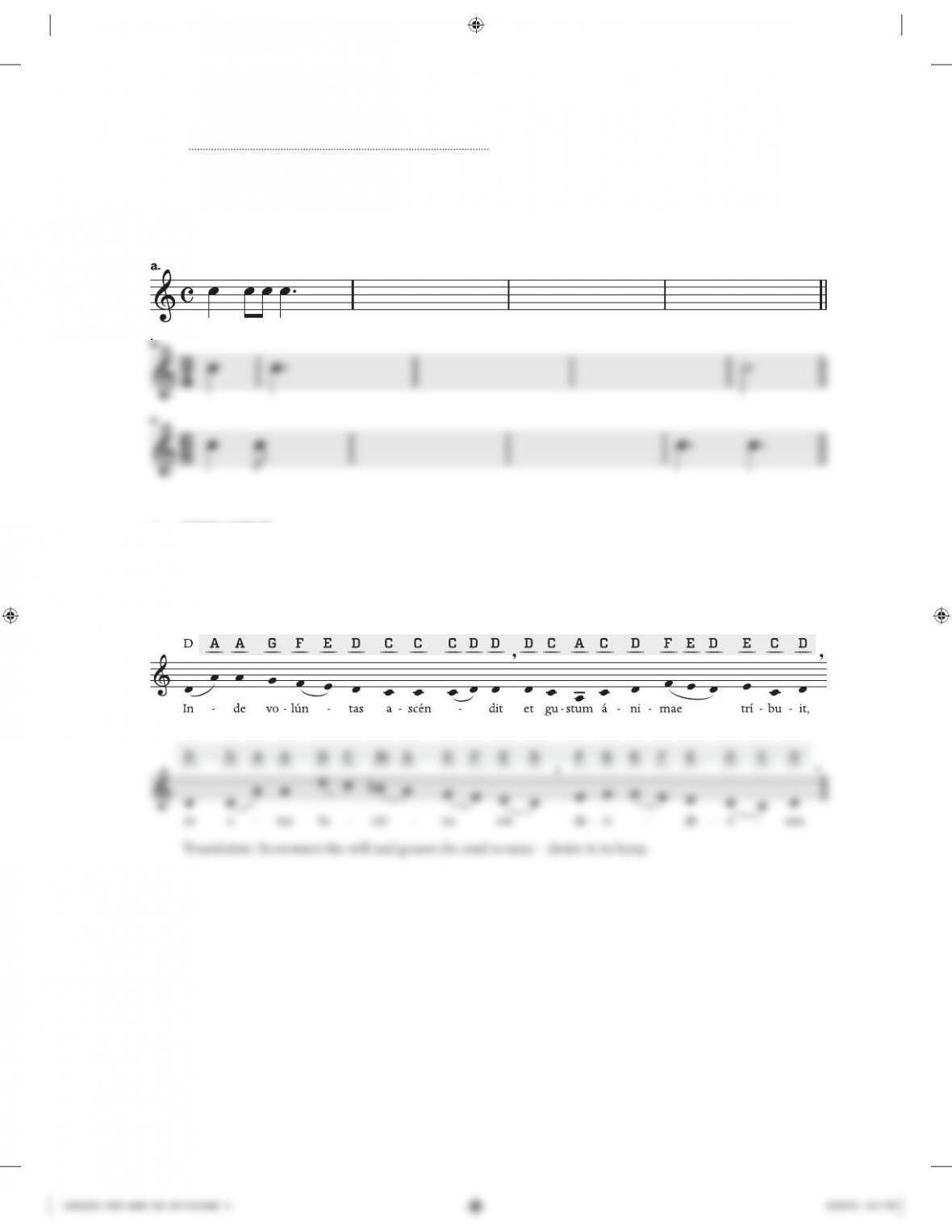
1. Insert one note of the proper duration to ll in each blank indicated with an arrow.
J. Analysis | 9
NAME:
2. Complete each four-measure rhythmic composition, using whatever rhythmic
values you prefer in the meter indicated.
J. ANALYSIS
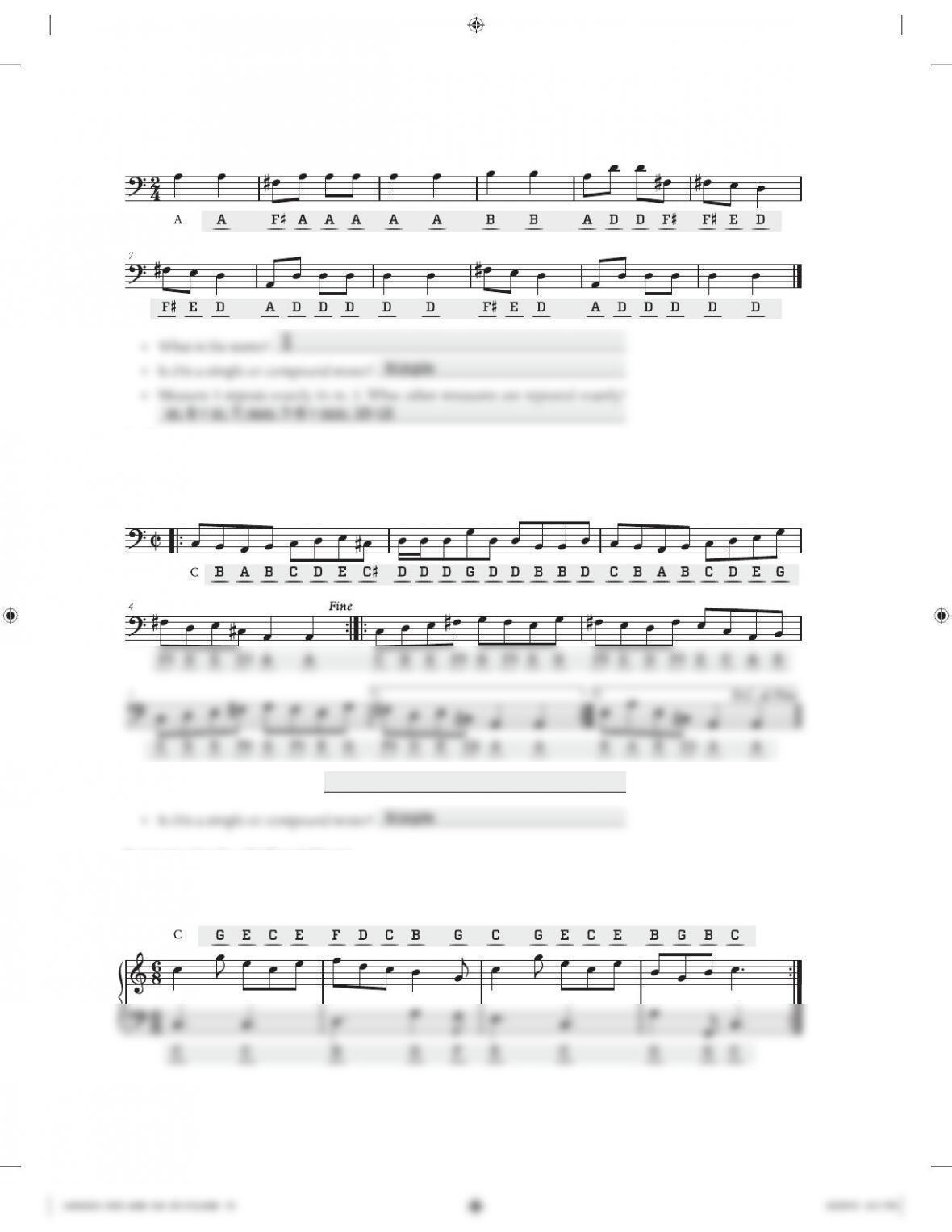
Identify the notes by writing the letter name (with sharp or at sign, if needed)
directly above or below the note.
1. Hildegard von Bingen, “O ignee Spiritus” (“O Fiery Spirit”)
• What are some ways that the melodies of the two lines are similar to each
other, and what are some ways in which they differ?
10 | CHAPTER 0 | Notation of Pitch and Rhythm
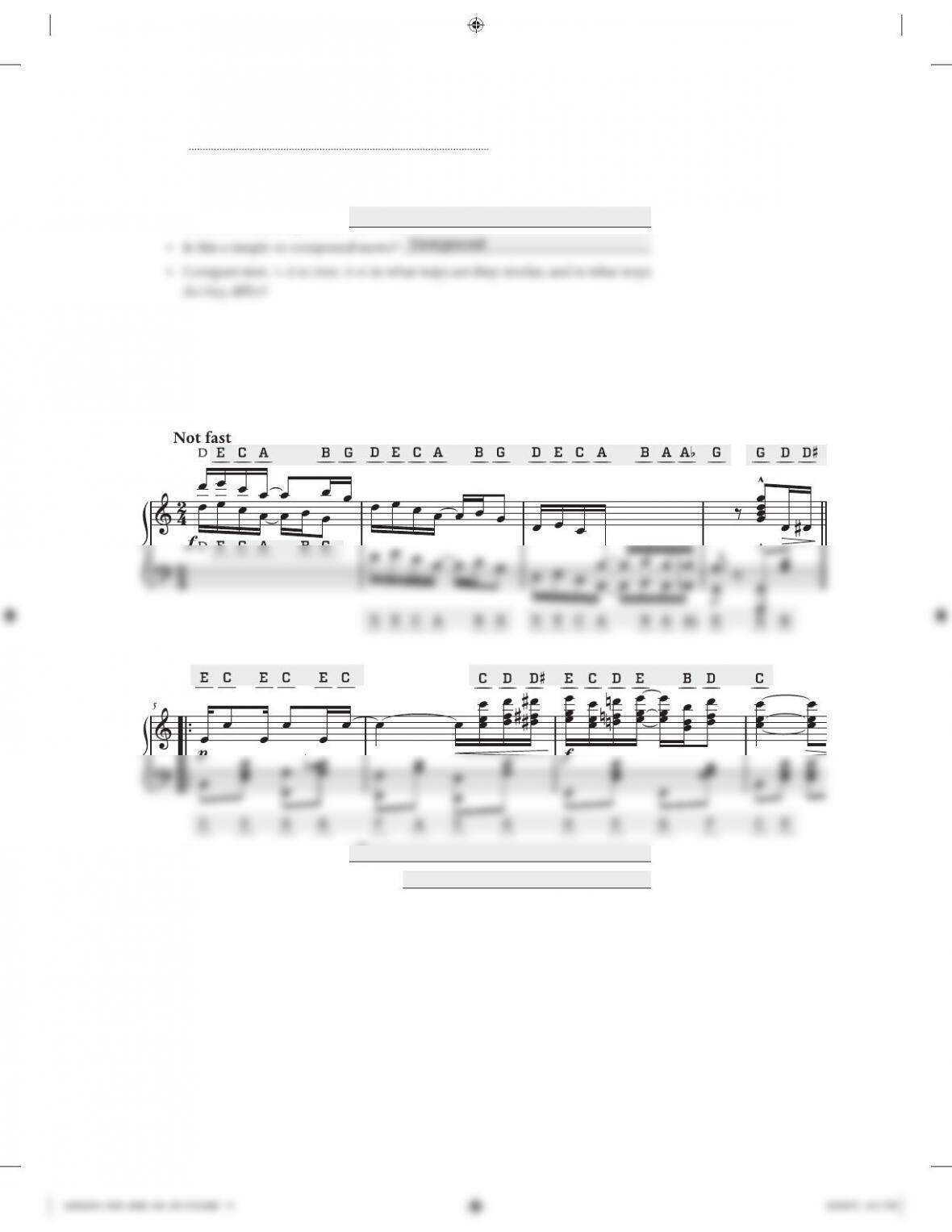
2. Navajo folk song
3. “Rocky Road to Dublin” (Irish reel)
Remember that an accidental (at or sharp) remains in force throughout a measure
unless explicitly canceled by a natural sign, and that the barline cancels any acciden-
tals (i.e., they do not continue in force beyond the barline).
• What is the time signature? C Alla breve = 2
2
4. Ignatius Sancho, “Ruffs and Rhees”
Label the treble clef notes above the grand staff, and the bass clef notes below the
grand staff.
J. Analysis | 11
NAME:
• What is the time signature? 6
8
5. Scott Joplin, “The Entertainer”
Identify the note immediately above or below each blank (ignore the notes in the
middle of the chords). Remember that an accidental (at or sharp) remains in force
throughout a measure unless explicitly canceled by a natural sign, and that the barline
cancels any accidentals (i.e., they do not continue in force beyond the barline).
• What is the time signature? 2
4
• Is this a simple or compound meter? Simple
• There are lots of ties. Where in the measure do they tend to occur? What is
their effect on the sound of the music?
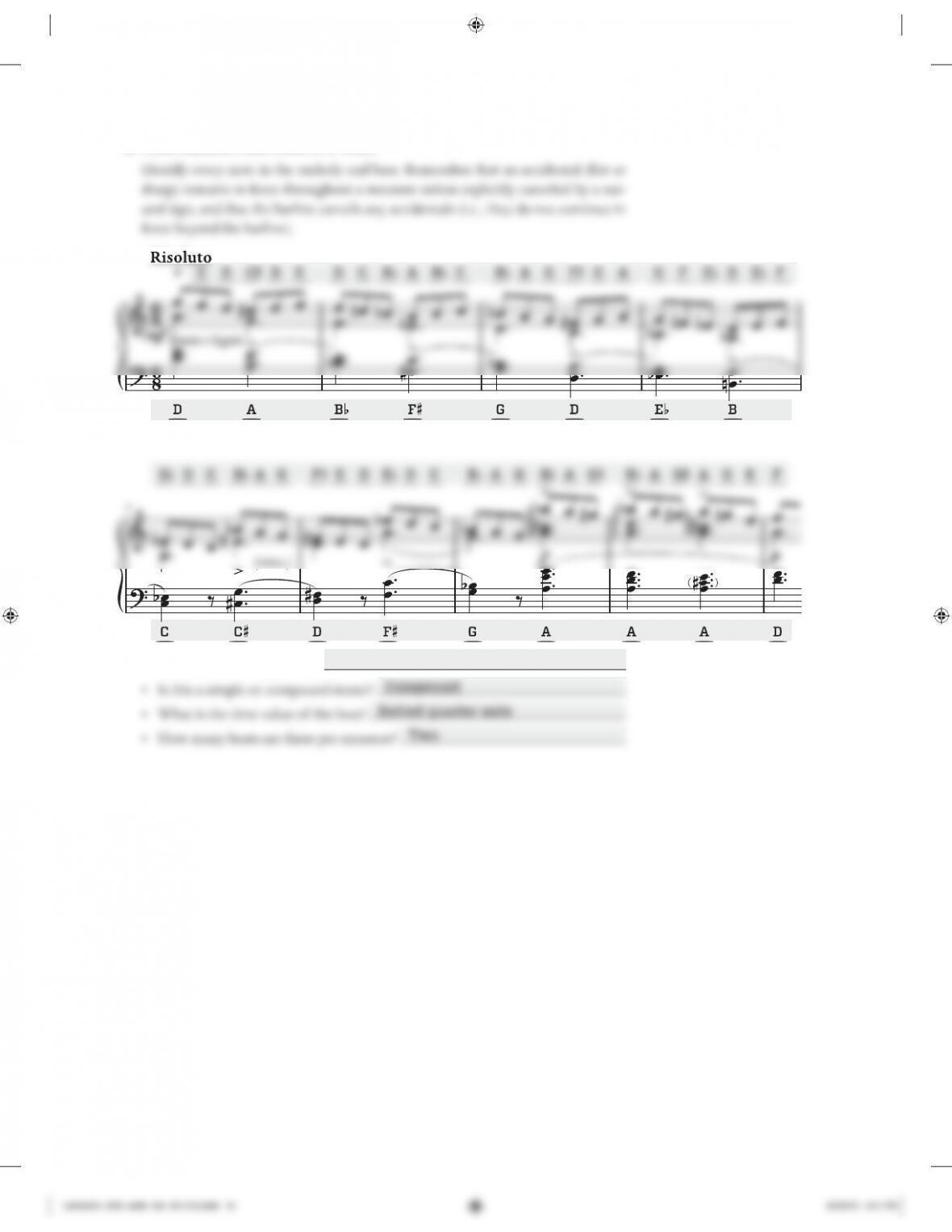
6. Maria Szymanowska, Etude in D Minor
• What is the time signature? 6
8