62
Answers to Odd-Numbered Exercise Items in the Text
PART ONE: SENTENTIAL LOGIC
EXERCISE 1-1:
1. Not an argument, just a description of the speaker’s attitude toward certain sports
and sports in general.
13. If God were all good he would want his creatures to always be happy (premise).
63
EXERCISE 1-2:
1. 1. Zebras are carnivores or giraffes are carnivores.
EXERCISE 1-3:
1. Yes.
13. “Because”, “since”, “for”.
EXERCISE 2-1:
EXERCISE 2-2:
EXERCISE 2-3:
1. D I (D= “The deficit will be reduced soon”; I= “The income tax rate will be
64
EXERCISE 2-4:
EXERCISE 2-5:
EXERCISE 2-6:
1. This is the same as “It is not the case that Art does well in either logic or math,”
so the answer is ~ (LM).
EXERCISE 2 7:
1. N~B
17. S (~ H B)
EXERCISE 2-8:
1. Sheila likes Russell Crowe but not Johnny Depp.
65
EXERCISE 2 9:
1. KNaNb
EXERCISE 2-10:
1. You would not be representing the fact that the sentence is a compound sentence.
EXERCISE 3-1:
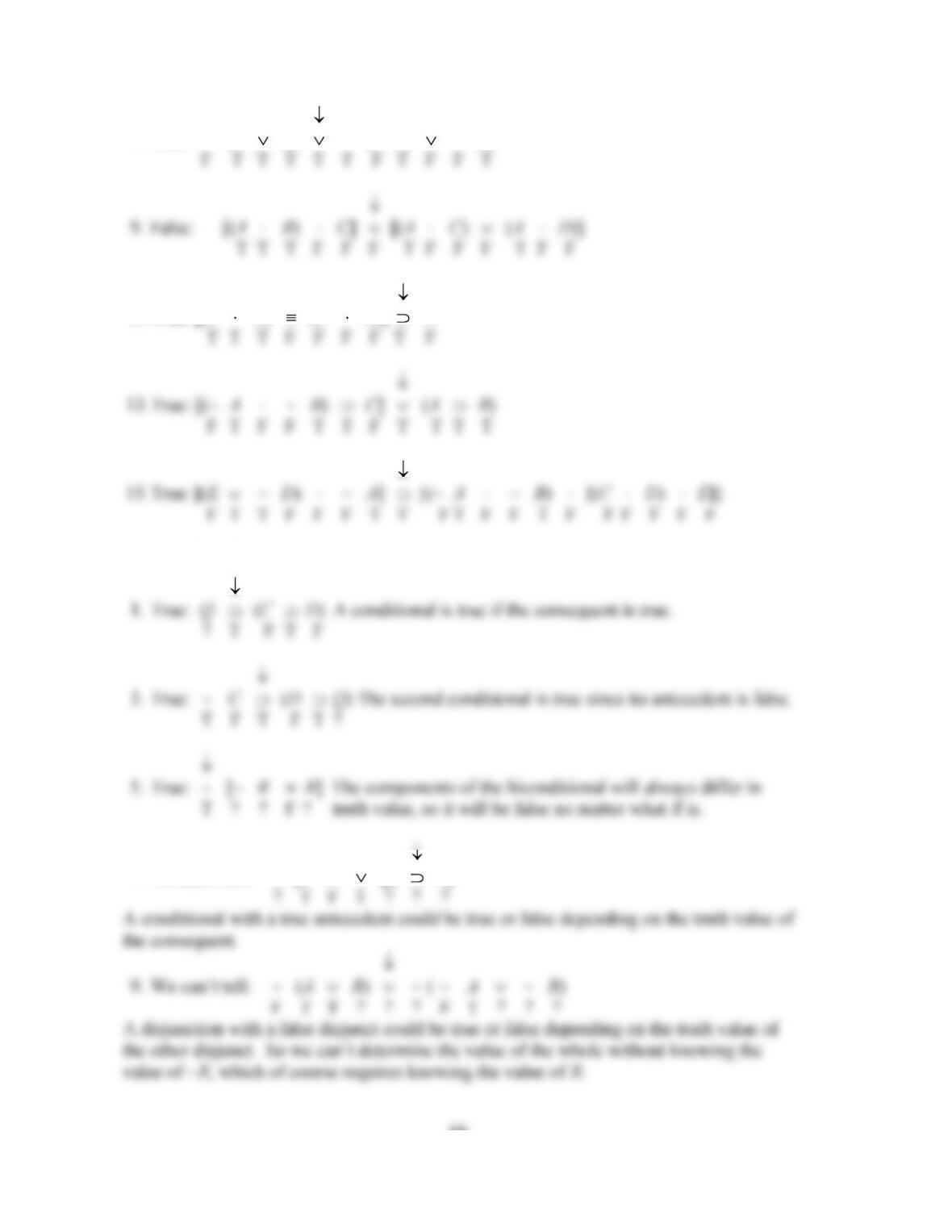
1. False: (A D)E
66
7. True: ~ (A B) ~ (~ A~B)
11.True: [(A B) (C D)] E
EXERCISE 3-2:
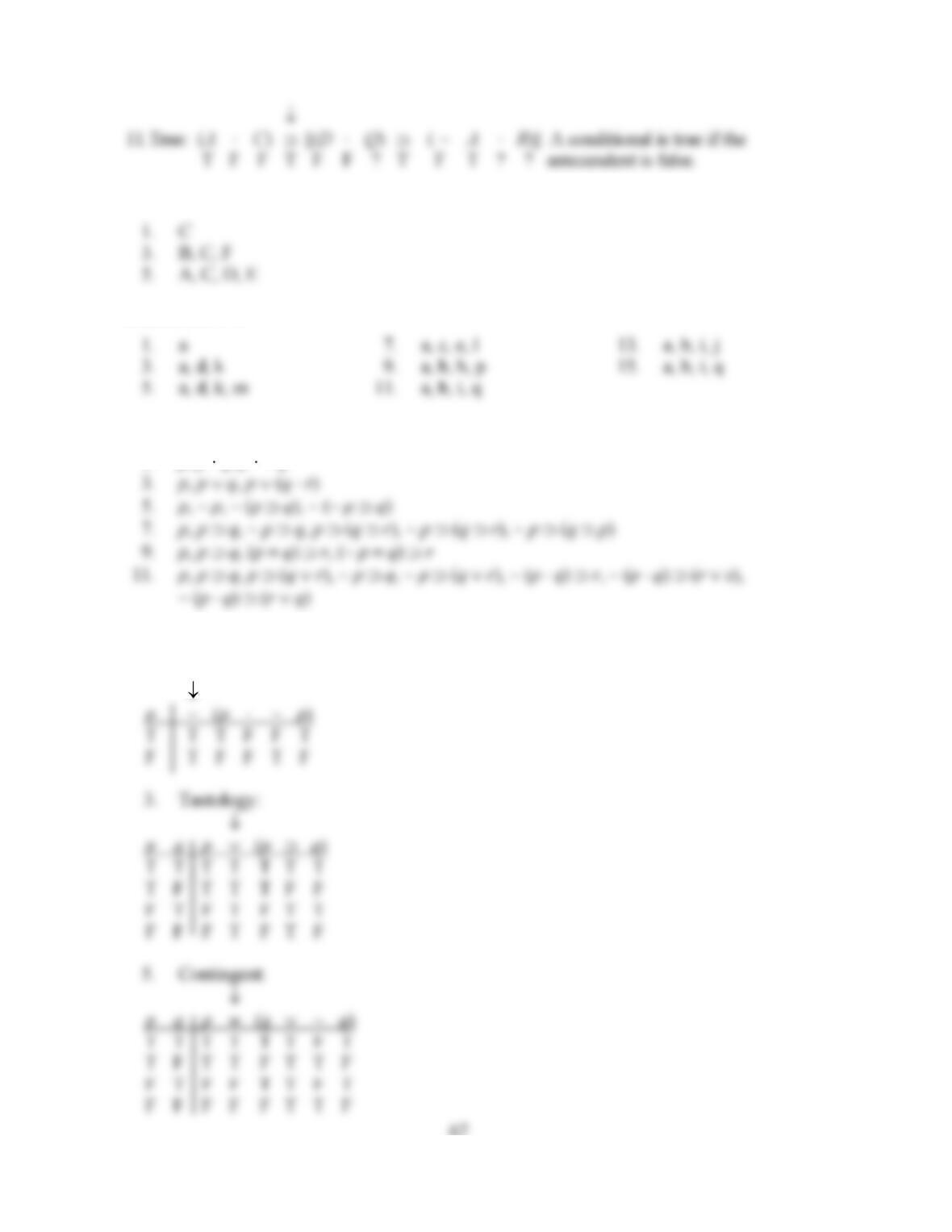
7. We can’t tell: ~ [(~ D Q)R]
67
EXERCISE 3-3:
EXERCISE 3-4:
EXERCISE 3-5:
1. p,pq, p ~q
EXERCISE 3-6:
1. Tautology:
68
9.Contingent:
11. Contingent:
T T T T T T T T T T
p q r (p q (q r)
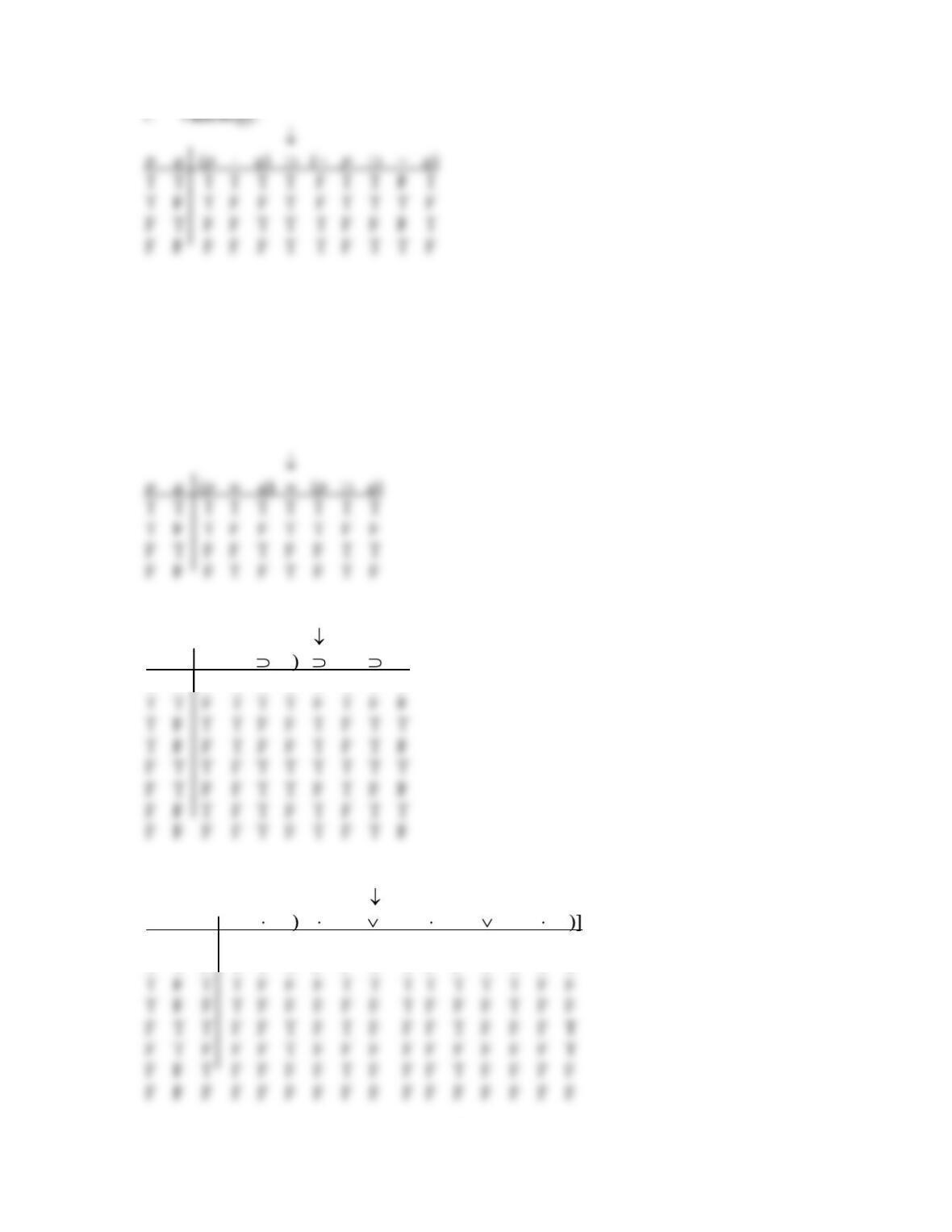
13. Contingent:
T T T T T T T T T T T T T T T T
p q r [(p q r] [(p r) (p q
T T F T T T F F T T F F T T T T
69
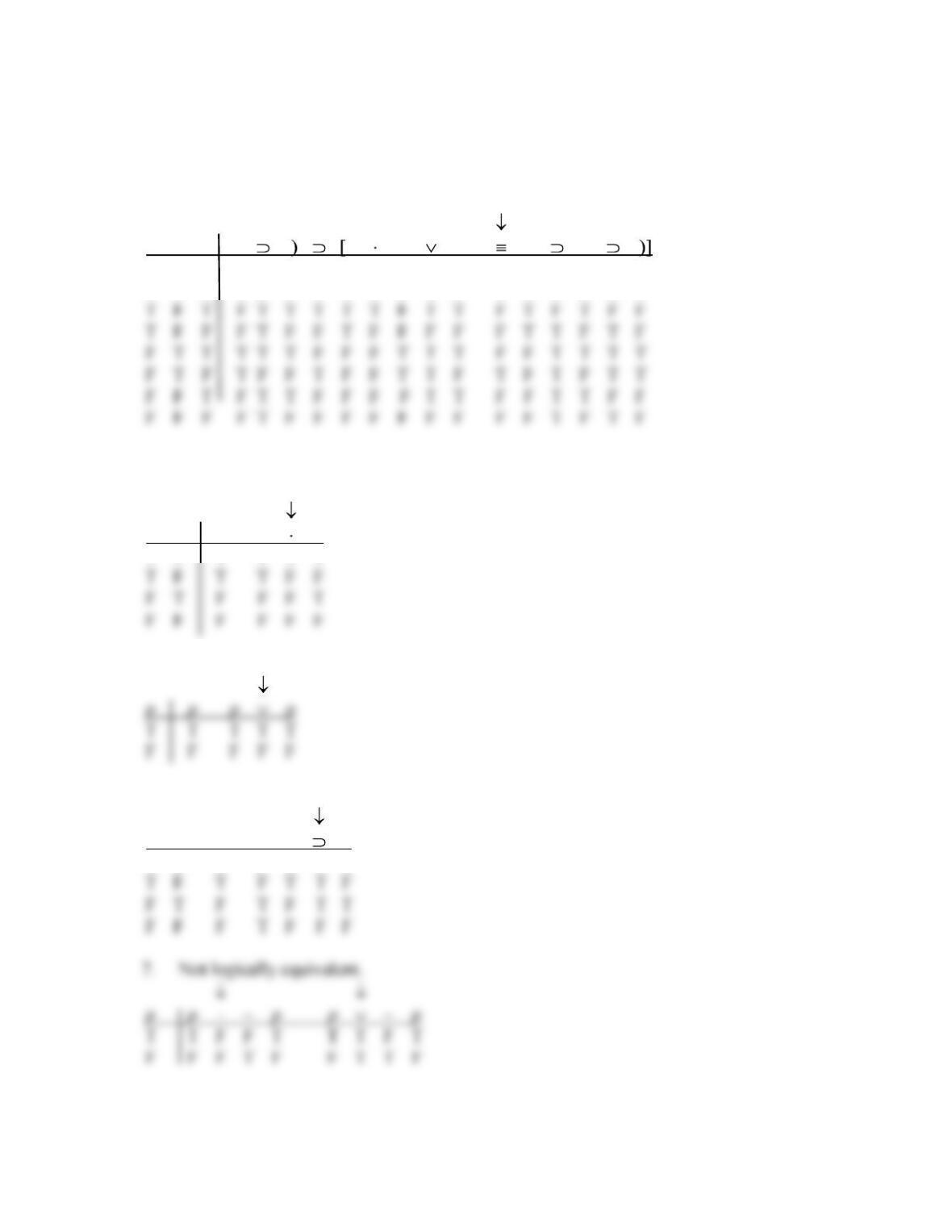
15. Contingent:
T T T T T T T T T T T T T T T T T T
p q r {(q r p (q r)]} [p(r q
T T F T F F T T T T T F T T T F T T
EXERCISE 3-7:
1. Not logically equivalent.
T T T T T T
p q p p q
3. Logically equivalent.
5. Not logically equivalent.
T T T F T T T
p q p ~p q
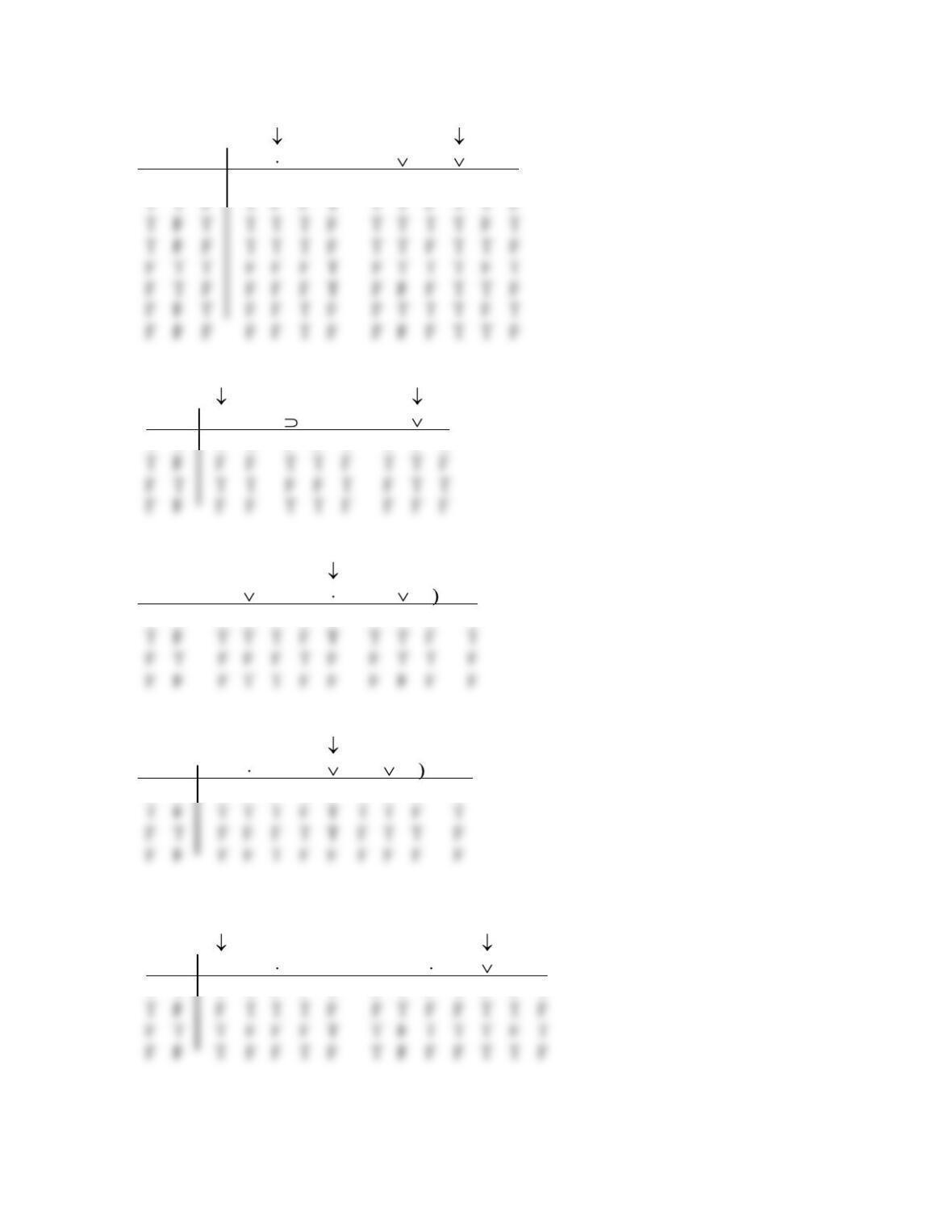
70
9. Not logically equivalent.
T T T T F F T T T T T F T
p q r p ~q(p r) ~ r
11. Not logically equivalent.
T T T T F F T T T T
p q ~ (q~q)p q
13.Logically equivalent.
T T T T F T T T T T T
p q (p~q) (p q p
15. Not logically equivalent.
T T T F F T T T T T T
p q (p~q) (p q p
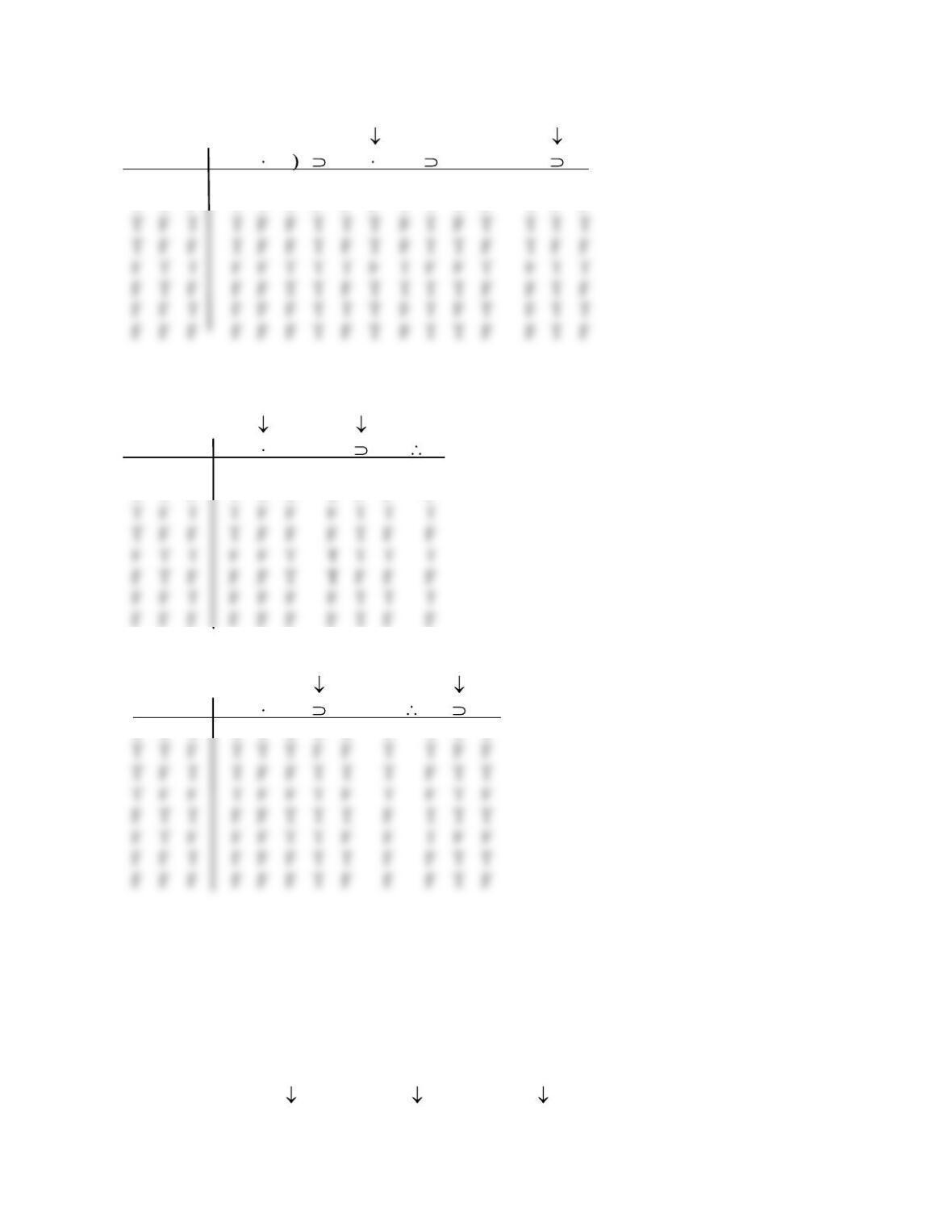
17. Not logically equivalent.
p q ~ (p~q) (~ p q) ~ q
T T T T F F T F T F T F F T
71
19. Not logically equivalent.
T T T T T T T T F T F F T T T T
p q r [(p q r] (q~r)p r
T T F T T T F F F T T T F T F F
EXERCISE 3-8:
1. Valid.
T T T T T T T T T T
p q r p q q r /r
T T F T T T T F F F
3. Valid.
T T T T T T T T T T T T
p q r (p q)r p /q r
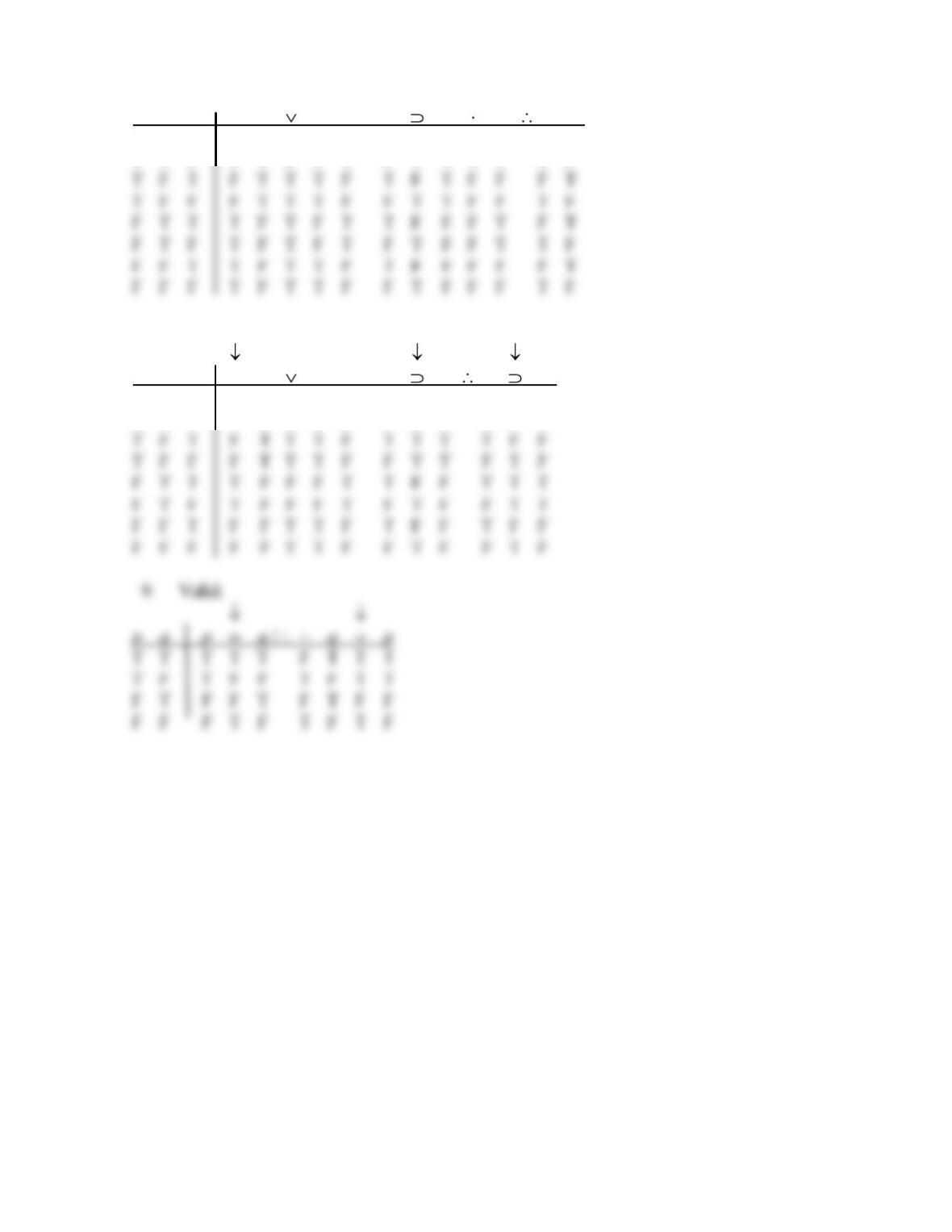
5. Valid.
72
T T T F T F F T T T T T T F T
p q r ~p~q r (p q) / ~ r
T T F F T F F T F T T T T T F
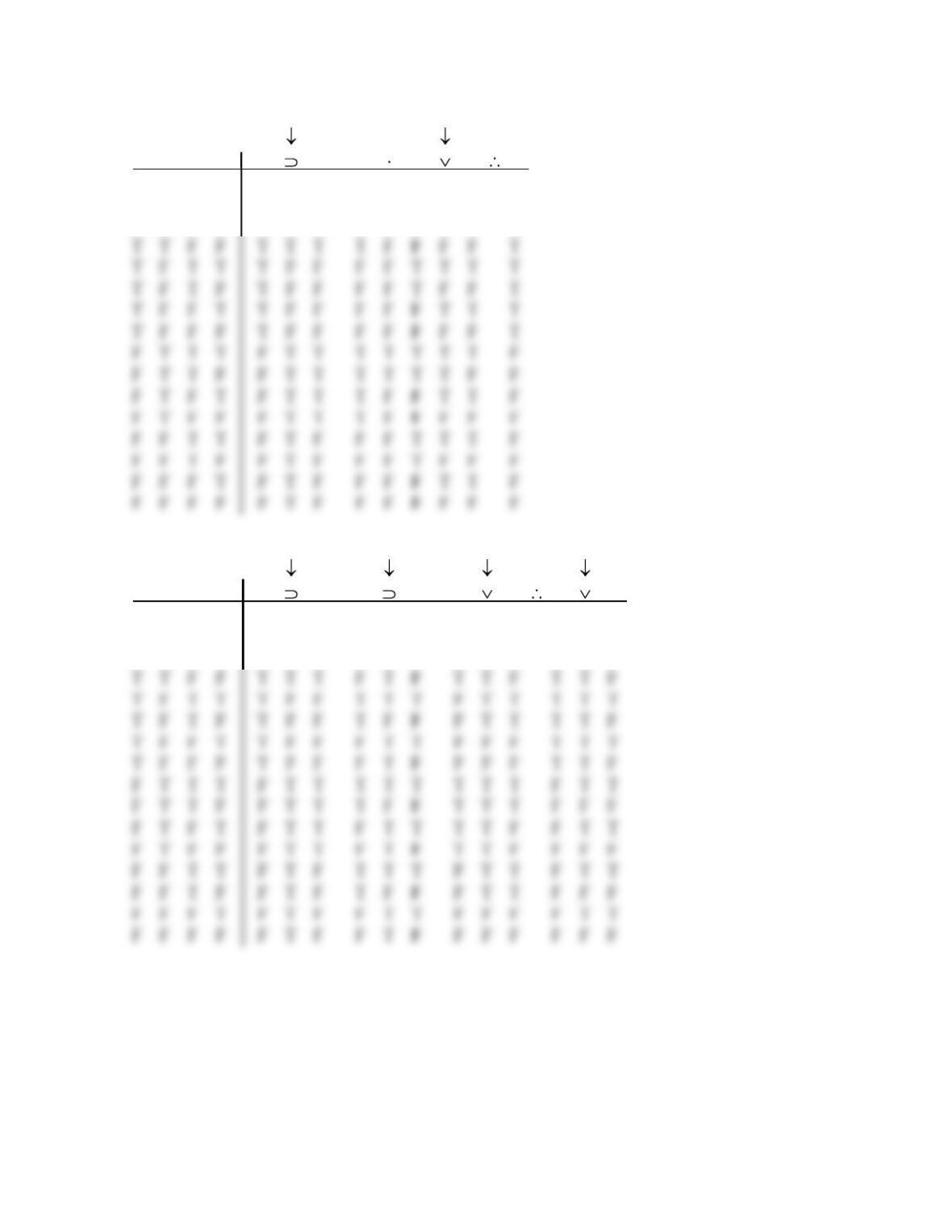
7. Valid.
T T T F T T F T T T T T T T
p q r ~ (p~q)r p /r q
T T F F T T F T F T T F T T
73
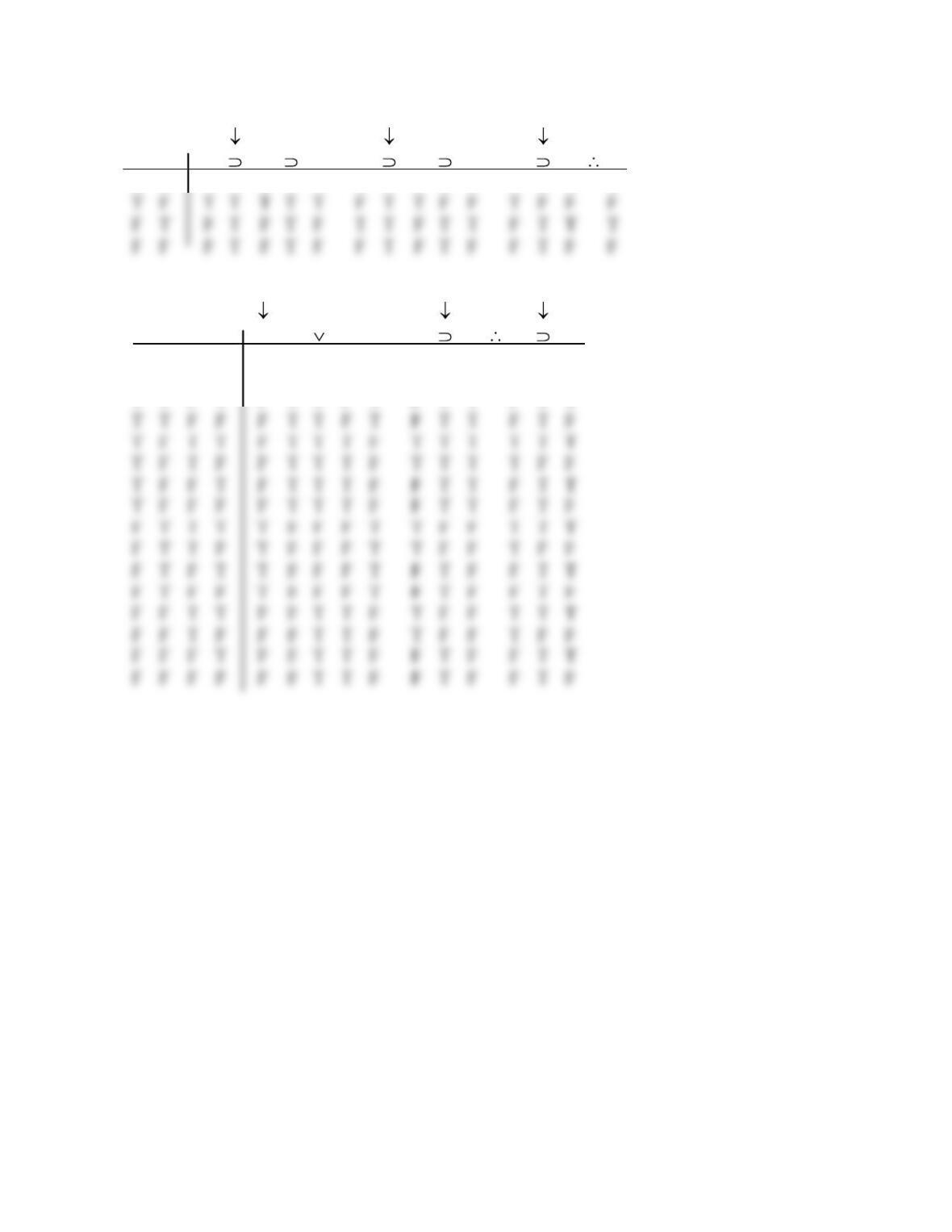
11. Invalid, by lines 9-11,13,15.
T T T T T T T T T T T T T
p q r s p q (q r)s/p
T T T F T T T T T T T F T
T T F T T T T T F F T T T
13. Invalid, by line 12.
T T T T T T T T T T T T T T T T
p q r s p q r s q r /p s
T T T F T T T T F F T T T T T F
T T F T T T T F T T T T F T T T
74
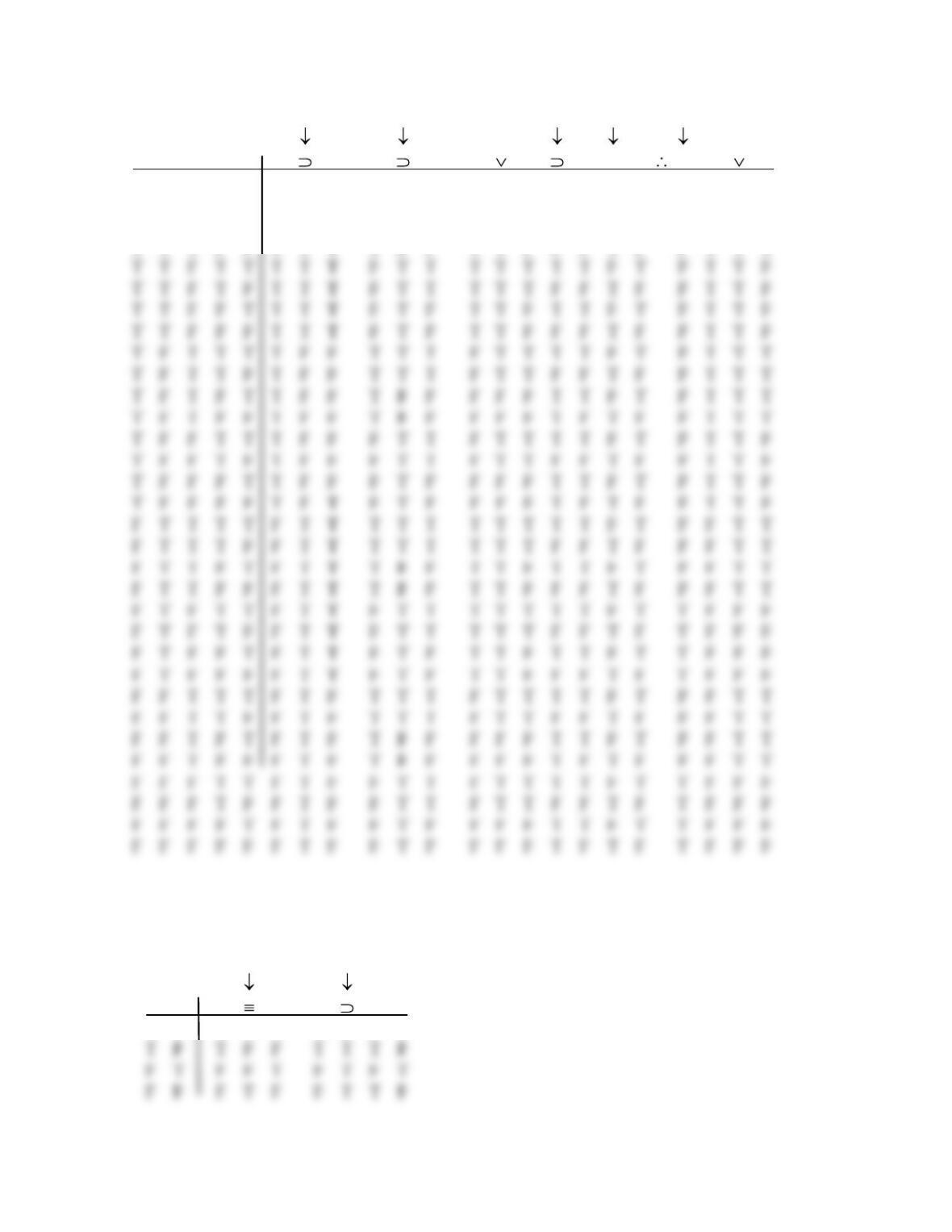
15. Invalid, by line 4.
T T T T T T T T T T T T T T T T
p q p (p p)q(p q)p q /q
17. Valid.
T T T T F T T F T T T T T T T
p q r s ~ (p~q)r p /r s
T T T F F T T F T T T T T F F
T T F T F T T F T F T T F T T
75
19. Valid.
T T T T T T T T T T T T T T T T F T F T T T
p q r s t p q r s (q s)t~t/ ~ (p r)
T T T T F T T T T T T T T T F F T F F T T T
T T T F T T T T T F F T T F T T F T F T T T
T T T F F T T T T F F T T F F F T F F T T T
EXERCISE 3-9:
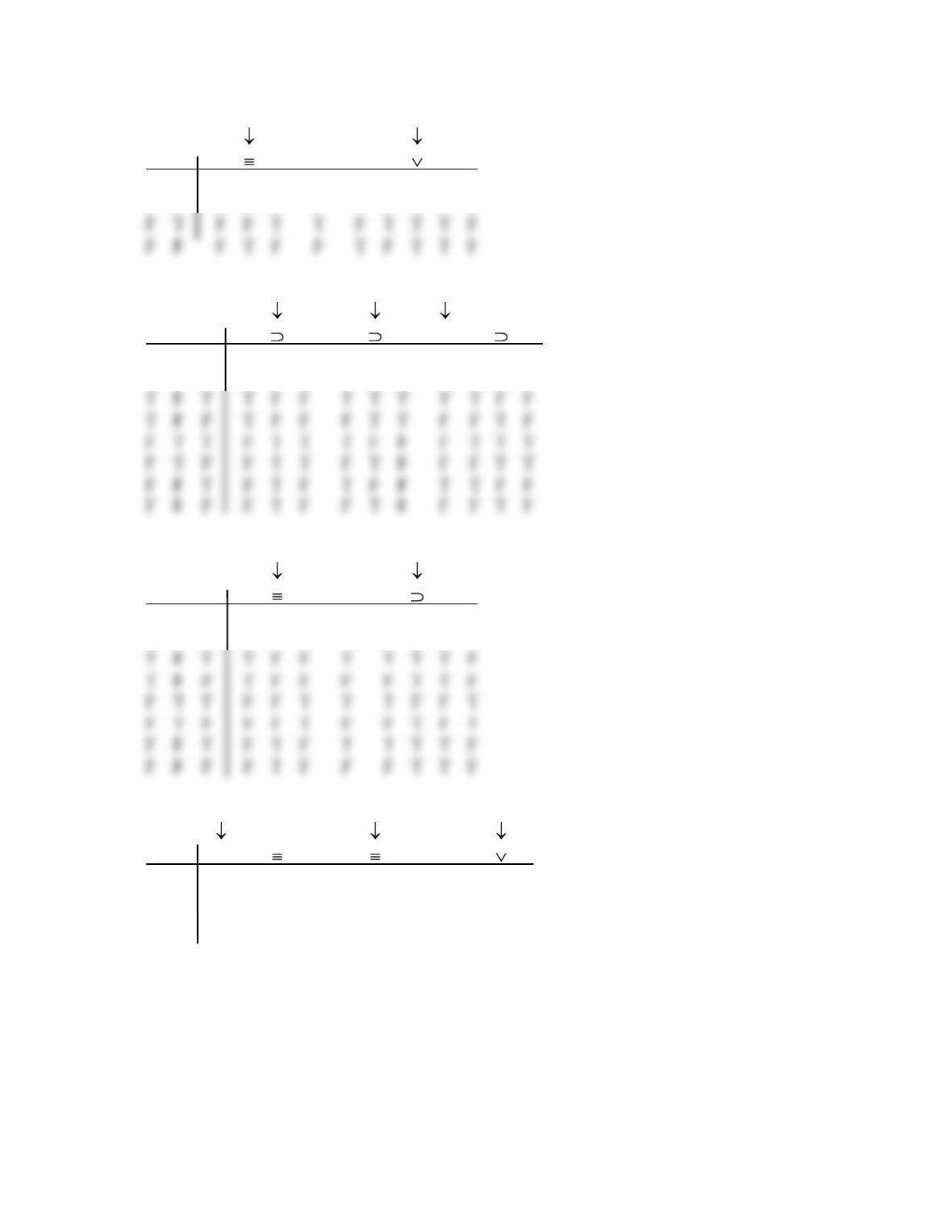
1. Consistent, by line 4.
T T T T T T F F T
p q p q p ~q
76
3. Inconsistent.
T T T T T T F T F F T
p q p q q ~q~p
T F T F F F T F T F T
5. Inconsistent.
T T T T T T T T T F T T T
p q r p q r p ~ (r q)
T T F T T T F T T F F T T
7. Consistent, by line 7.
T T T T T T T T F F T
p q r p q r r ~q
T T F T T T F F T F T
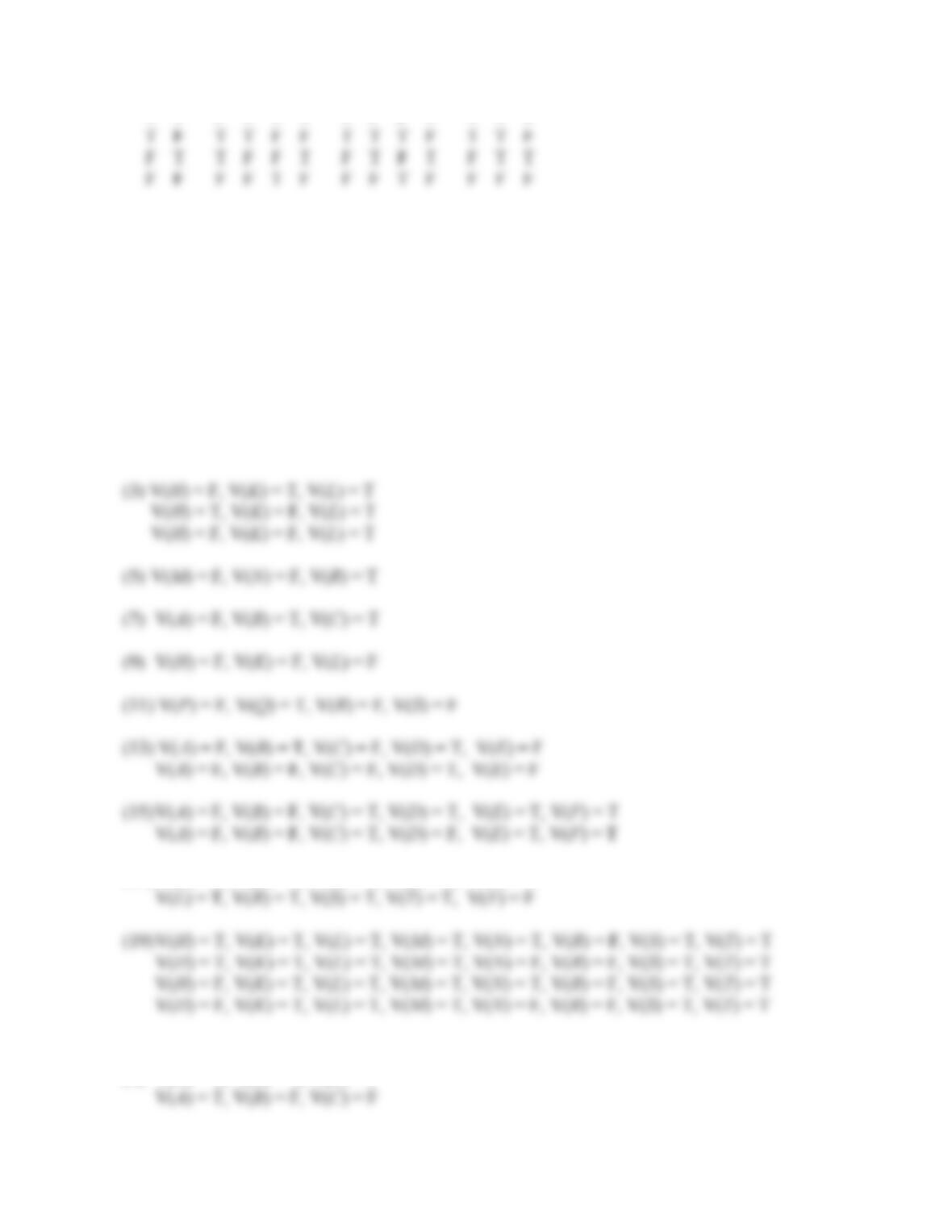
9. Consistent, by lines 2 and 3.
p q ~ (p q)p~q p q
77
T T F T T T T F F T T T T
EXERCISE 3-10:
(1) V(H) = F, V(K) = T
(17) V(L) = T, V(R) = T, V(S) = T, V(T) = T, V(V) = T
EXERCISE 3-11:
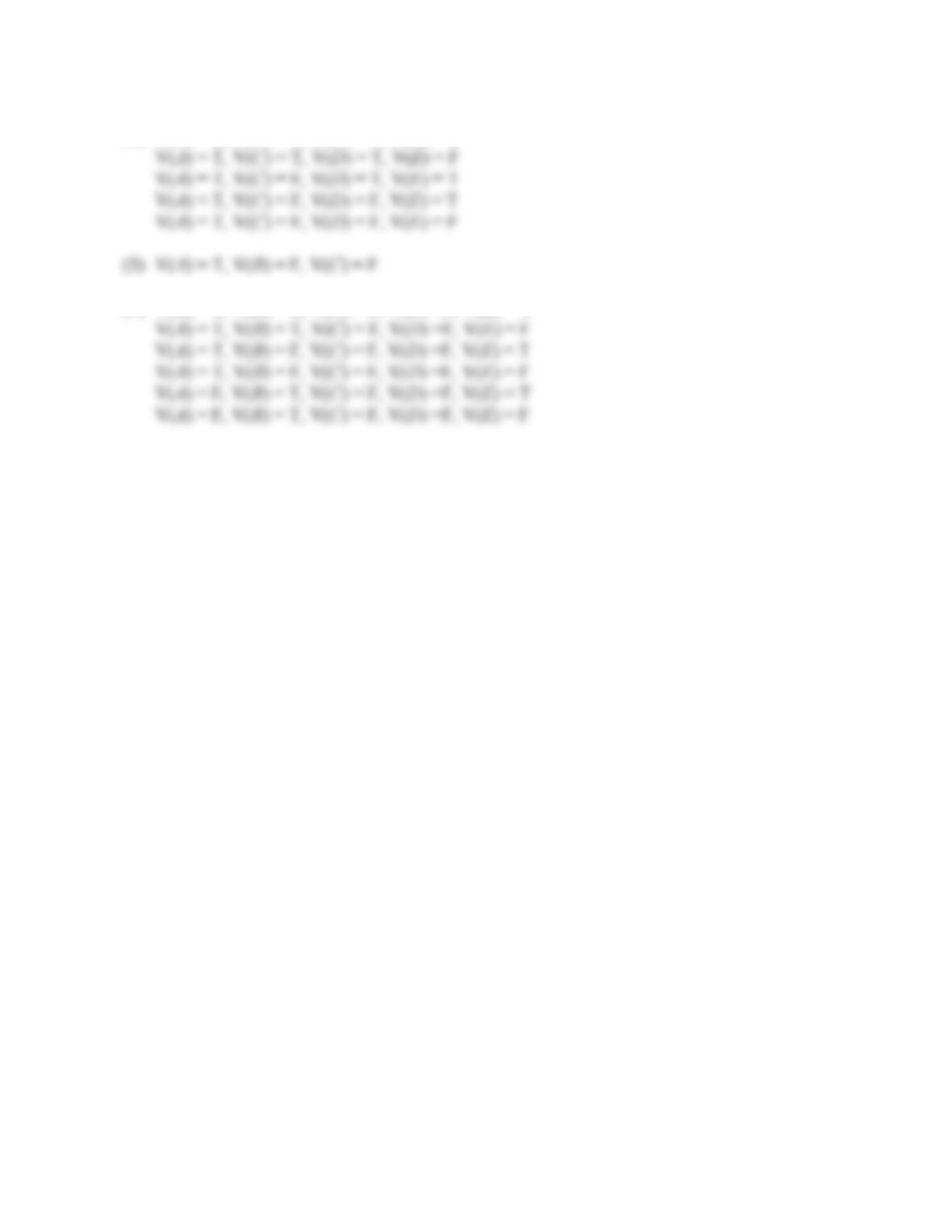
(1) V(A) = T, V(B) = T, V(C) = F
78
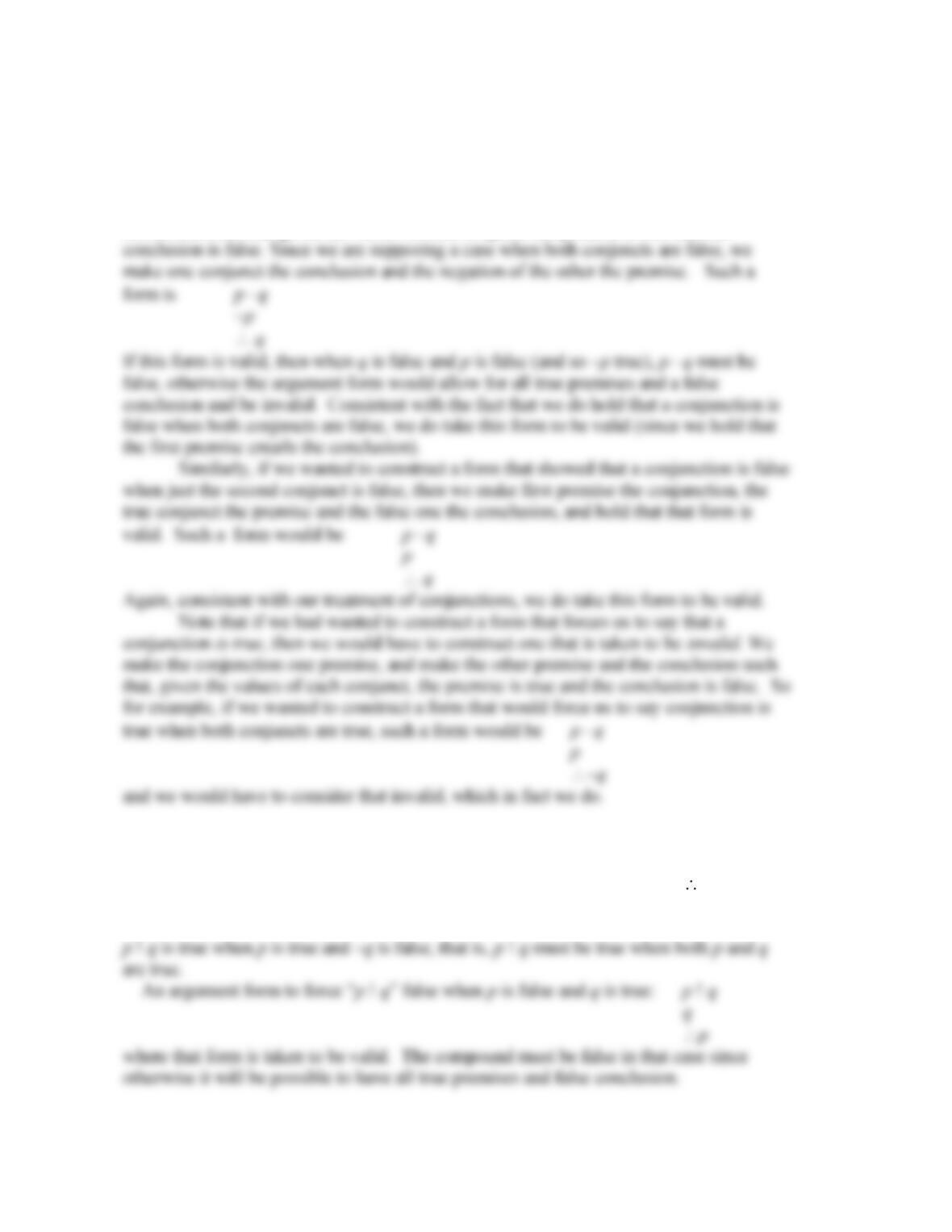
(3) V(A) = T, V(C) = T, V(D) = T, V(E) = T
(7) V(A) = T, V(B) = T, V(C) = F, V(D) =F, V(E) = T
EXERCISE 3-12:
1. If we want to give an argument form that forces us to say that a conjunction is
false given certain values of the conjuncts, then we construct a form that is taken to be
valid. We make the conjunction one premise, and make the other premise and the
conclusion such that given the values of each conjunct the premise is true and the
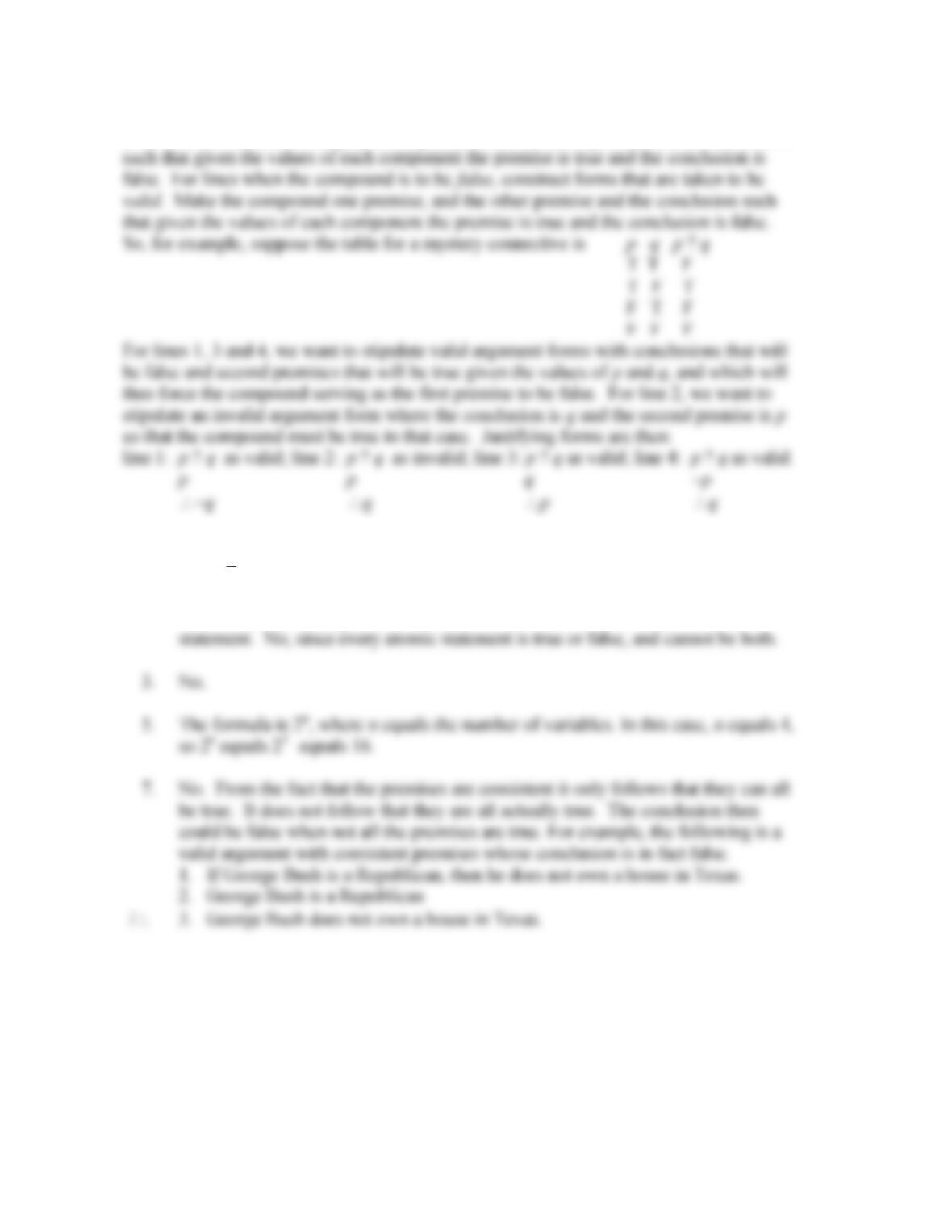
3. An argument form to force “p!q” true when both pand qare true: p!q
p
~q
where that form is invalid. If this form is invalid then it must allow for a case when all
the premises are true and the conclusion false. But such a case will only be possible if
5. Again, for lines when the compound is to be true, construct forms that are taken
to be invalid. Make the compound one premise, and the other premise and the conclusion
EXERCISE 3 13:
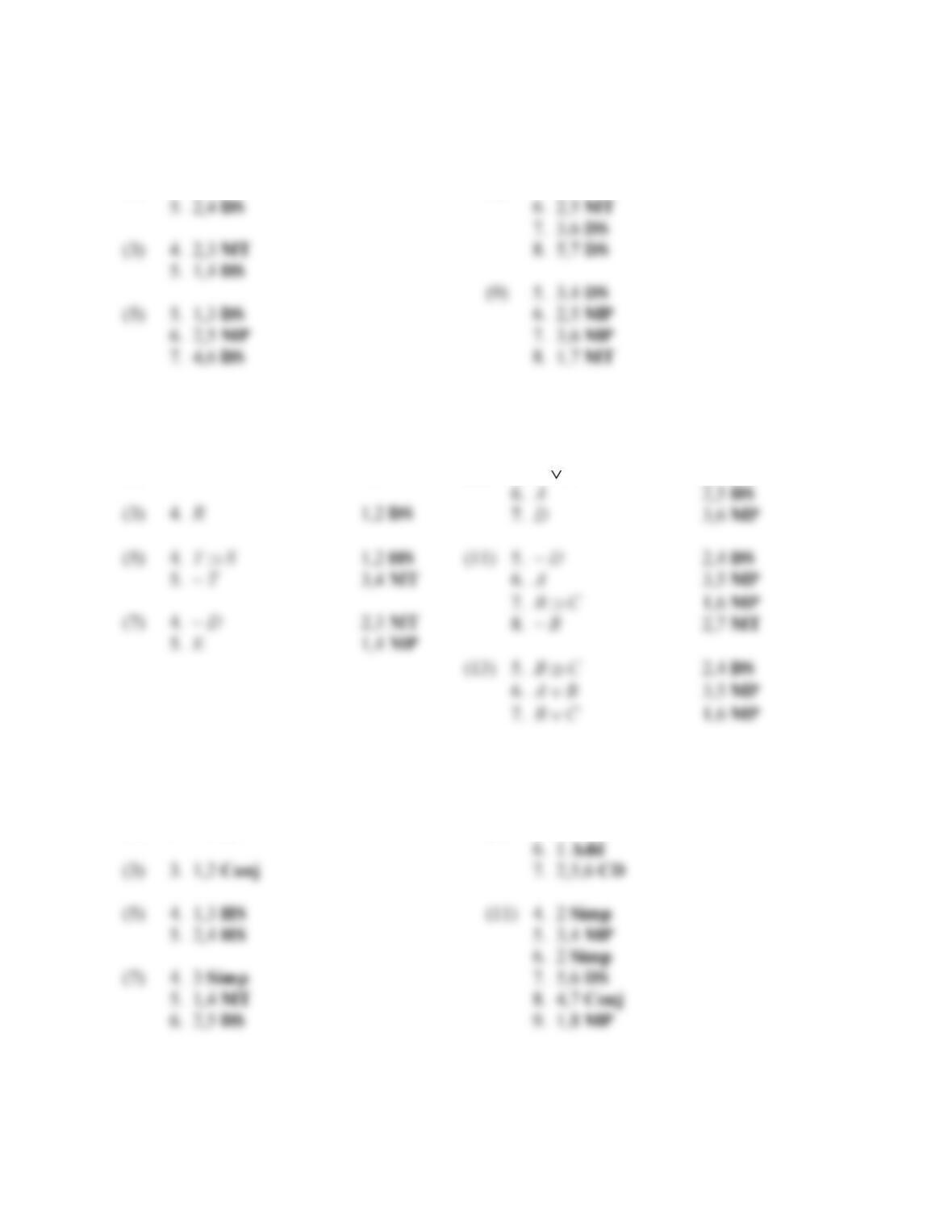
1. A valuation is an assignment of truth values to the atomic constituents of a
EXERCISE 4-1:
(1) 4. 1,3 MT
(7) 5. 1,4 MT
EXERCISE 4-2:
(1) 3. ~ S1,2 MT
(9) 5. AB1,4 MP
EXERCISE 4-3:
(1) 2. 1 Add
(9) 5. 3,4 HS