3000
Solutions Manual
Chapter 3
7th Edition.
Feedback Control of
Dynamic Systems
.
.
Gene F. Franklin
.
J. David Powell
.
Abbas Emami-Naeini
.
.
.
Chapter 3
Dynamic Response
Problems and Solutions for Section 3.1: Review
of Laplace Transforms
1. Show that, in a partial-fraction expansion, complex conjugate poles have
coefficients that are also complex conjugates. (The result of this relation-
ship is that whenever complex conjugate pairs of poles are present, only
one of the coefficients needs to be computed.)
Solution:
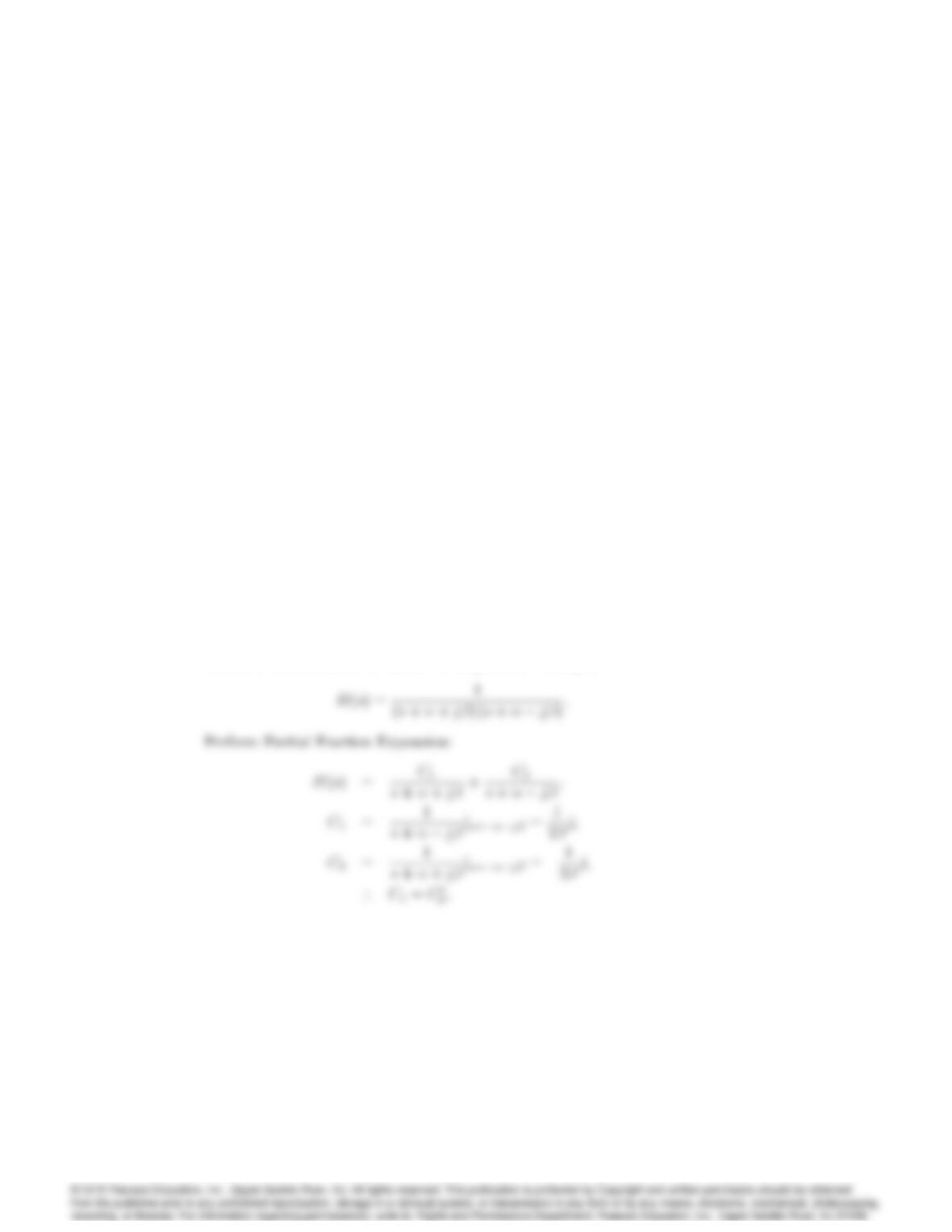
Consider the second-order system with poles at j,
2. Find the Laplace transform of the following time functions:
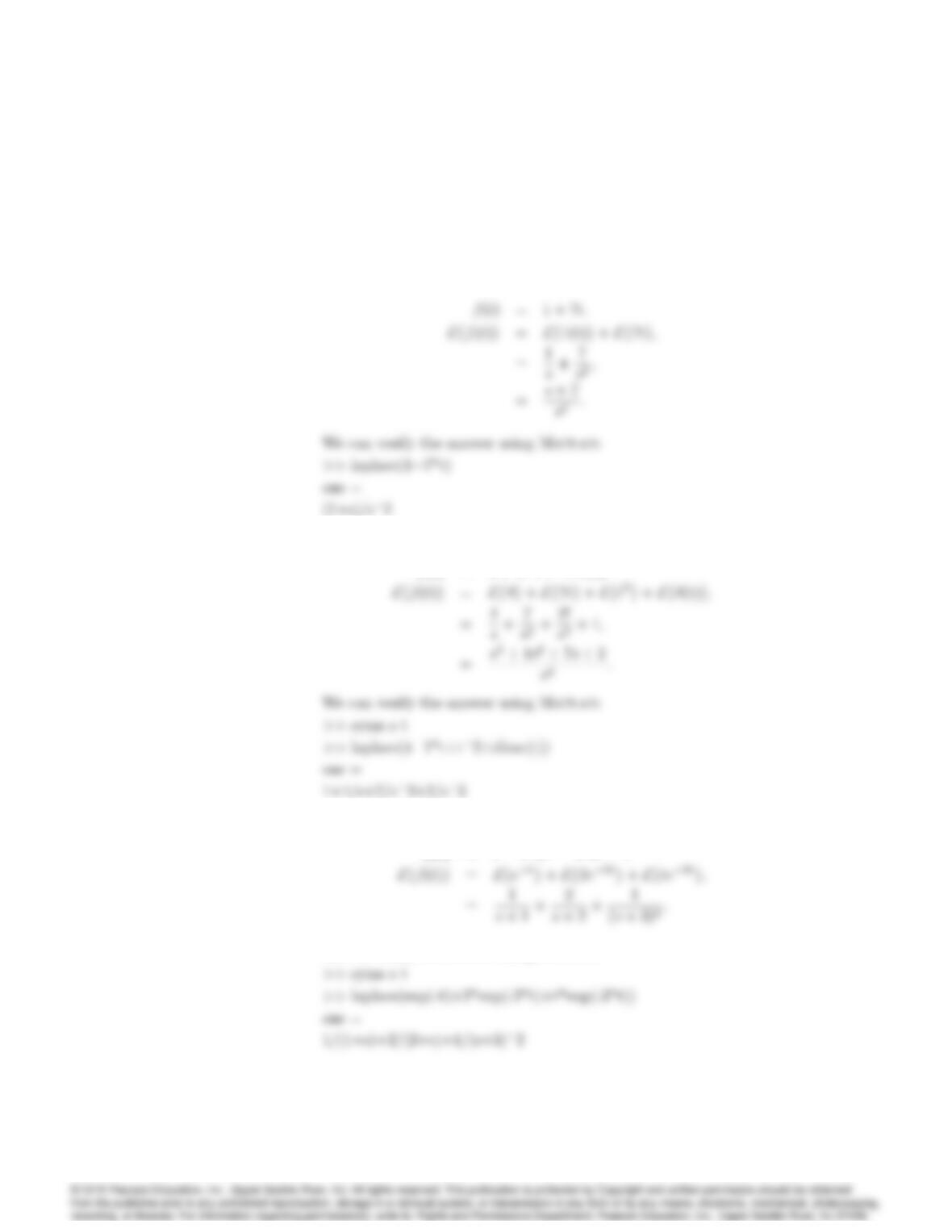
(a) f(t) = 1 + 7t
(b) f(t) = 4 + 7t+t2+(t), where (t)is the unit impulse function
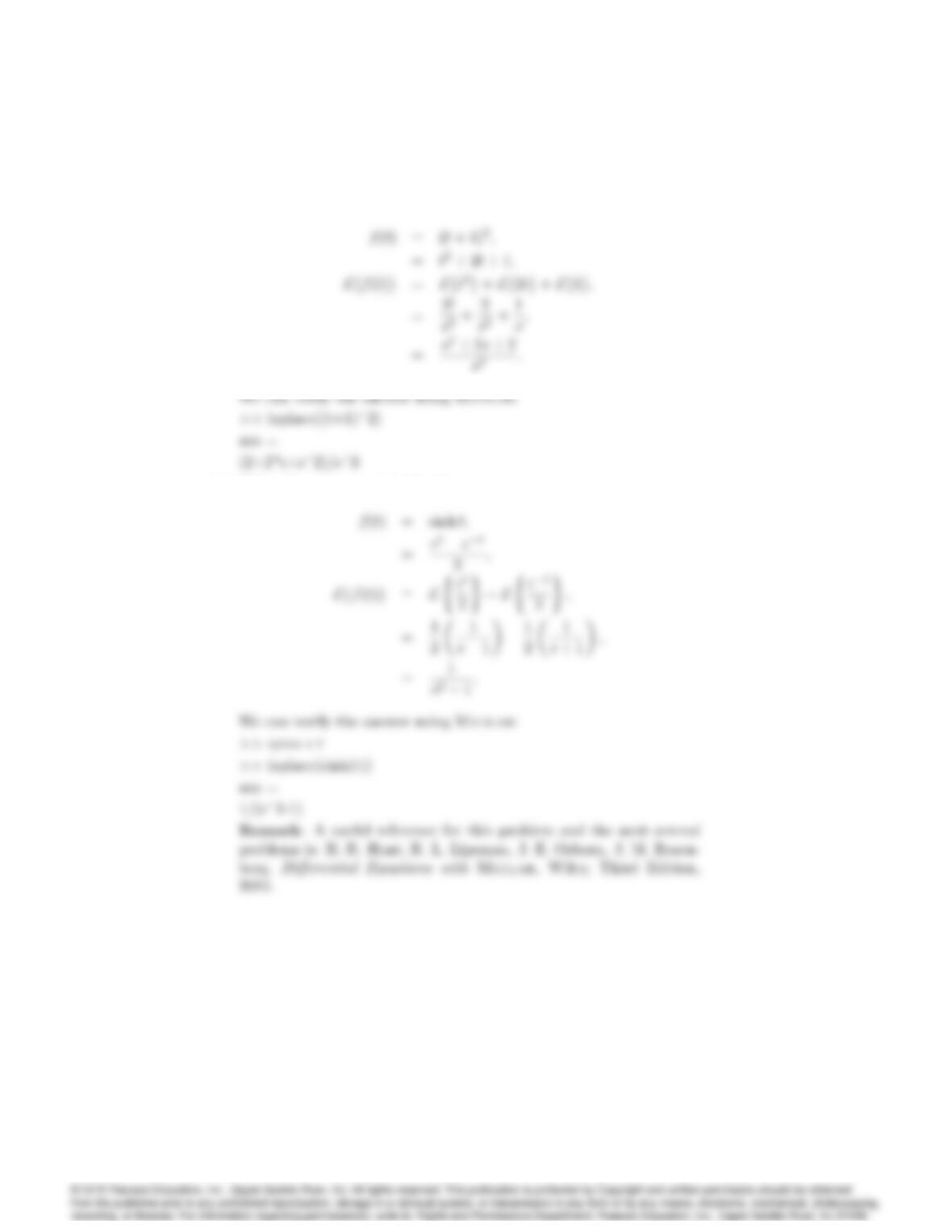
(c) f(t) = et+ 2e2t+te3t
(d) f(t) = (t+ 1)2
3001
3002 CHAPTER 3. DYNAMIC RESPONSE
(e) f(t) = sinh t
Solution:
(a)
(b)
f(t) = 4 + 7t+t2+(t);
(c)
f(t) = et+ 2e2t+te3t;
We can verify the answer using Matlab:
3003
(d)
(e) Using the trigonometric identity,
3. Find the Laplace transform of the following time functions:
(a) f(t) = 4 cos 6t
(b) f(t) = sin 3t+ 2 cos 3t+etsin 3t
(c) f(t) = t2+e2tsin 3t
Solution:
3004 CHAPTER 3. DYNAMIC RESPONSE
(a)
(b)
f(t) = sin 3t+ 2 cos 3t+etsin 3t
(c)
f(t) = t2+e2tsin 3t;
4. Find the Laplace transform of the following time functions:
(a) f(t) = tsin t
(b) f(t) = tcos 3t
3005
(c) f(t) = tet+ 2tcos t
(d) f(t) = tsin 3t2tcos t
(e) f(t) = 1(t) + 2tcos 2t
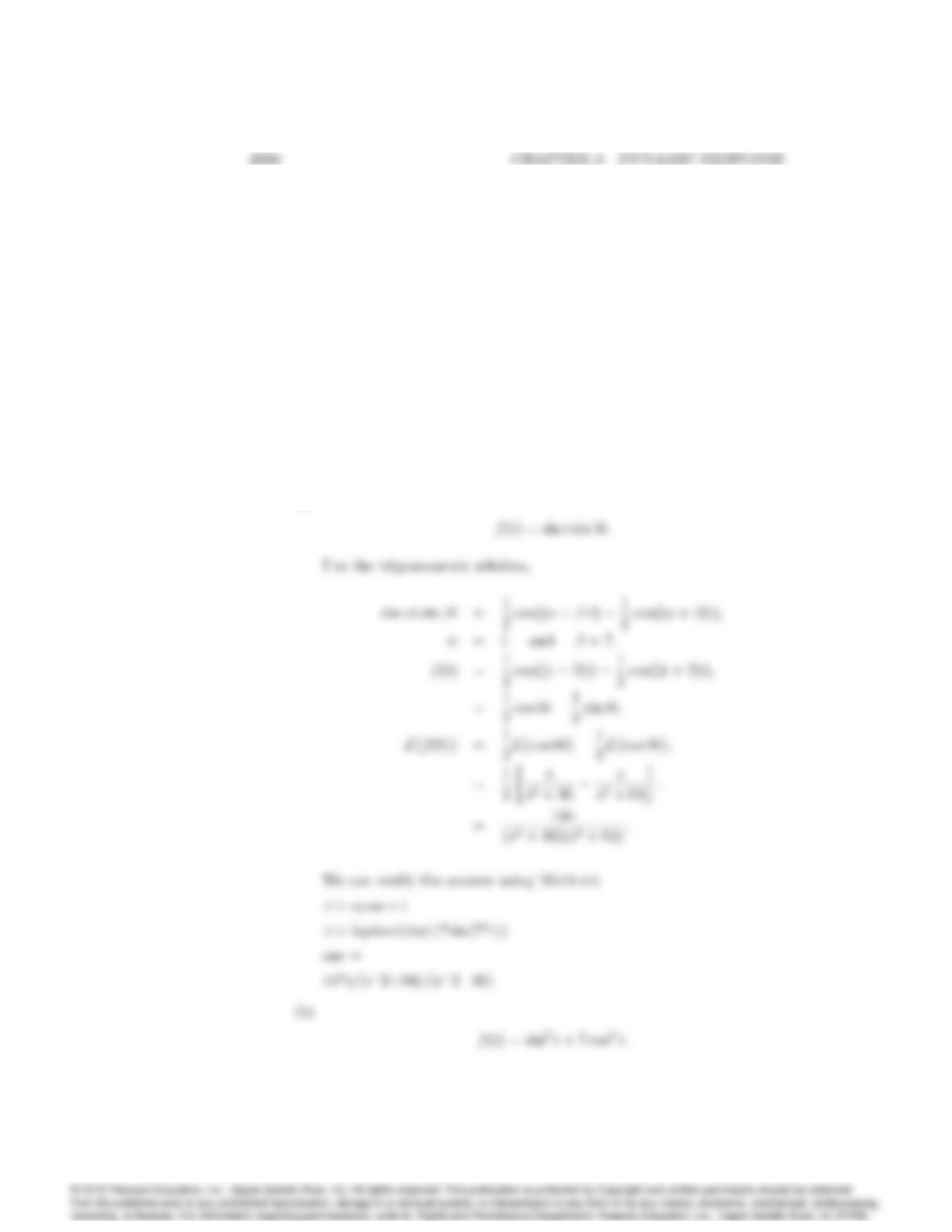
Solution:
(a)
(b)
f(t) = tcos 3t
3006 CHAPTER 3. DYNAMIC RESPONSE
(c)
(d)
3007
(e)
5. Find the Laplace transform of the following time functions (* denotes
convolution):
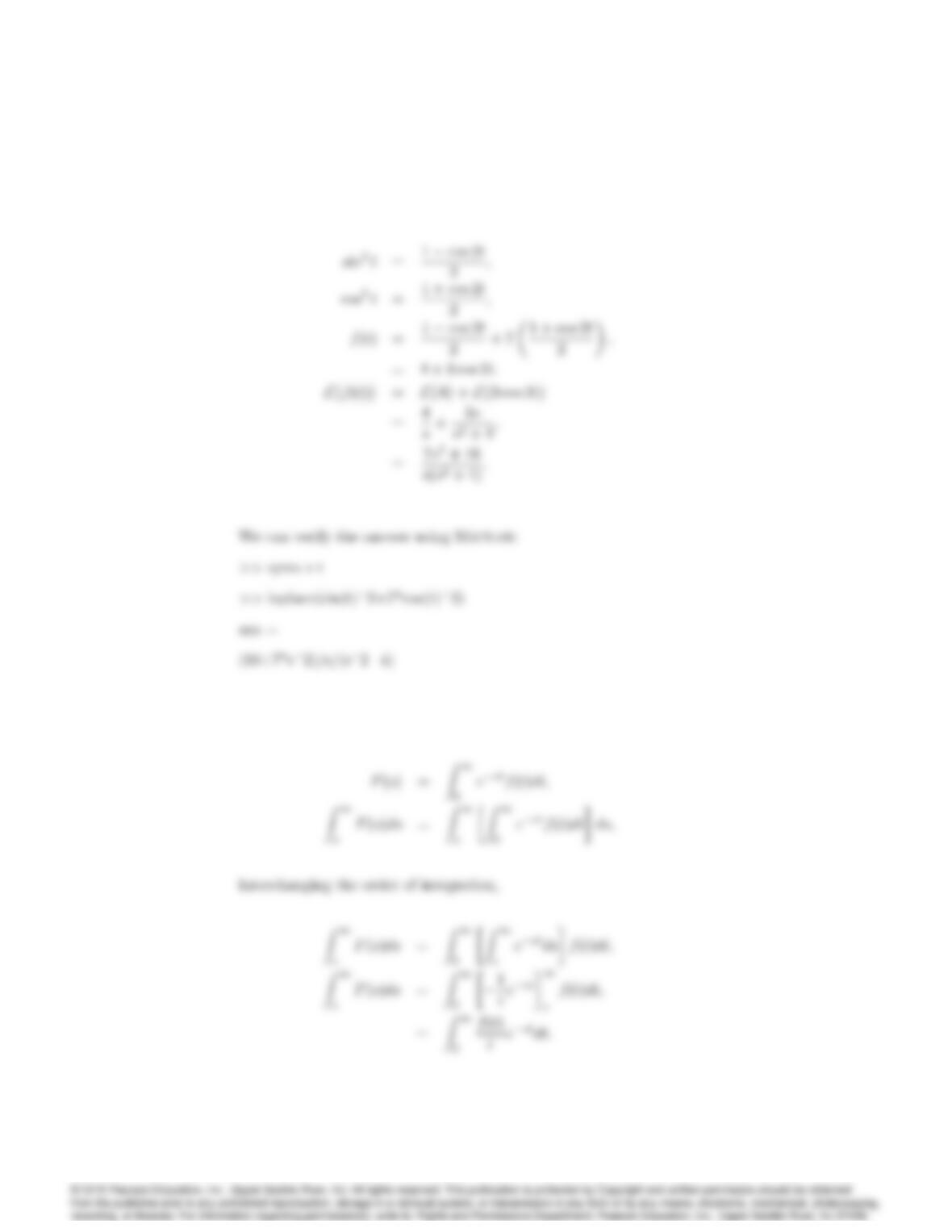
(a) f(t) = sin tsin 7t
(b) f(t) = sin2t+ 7 cos2t
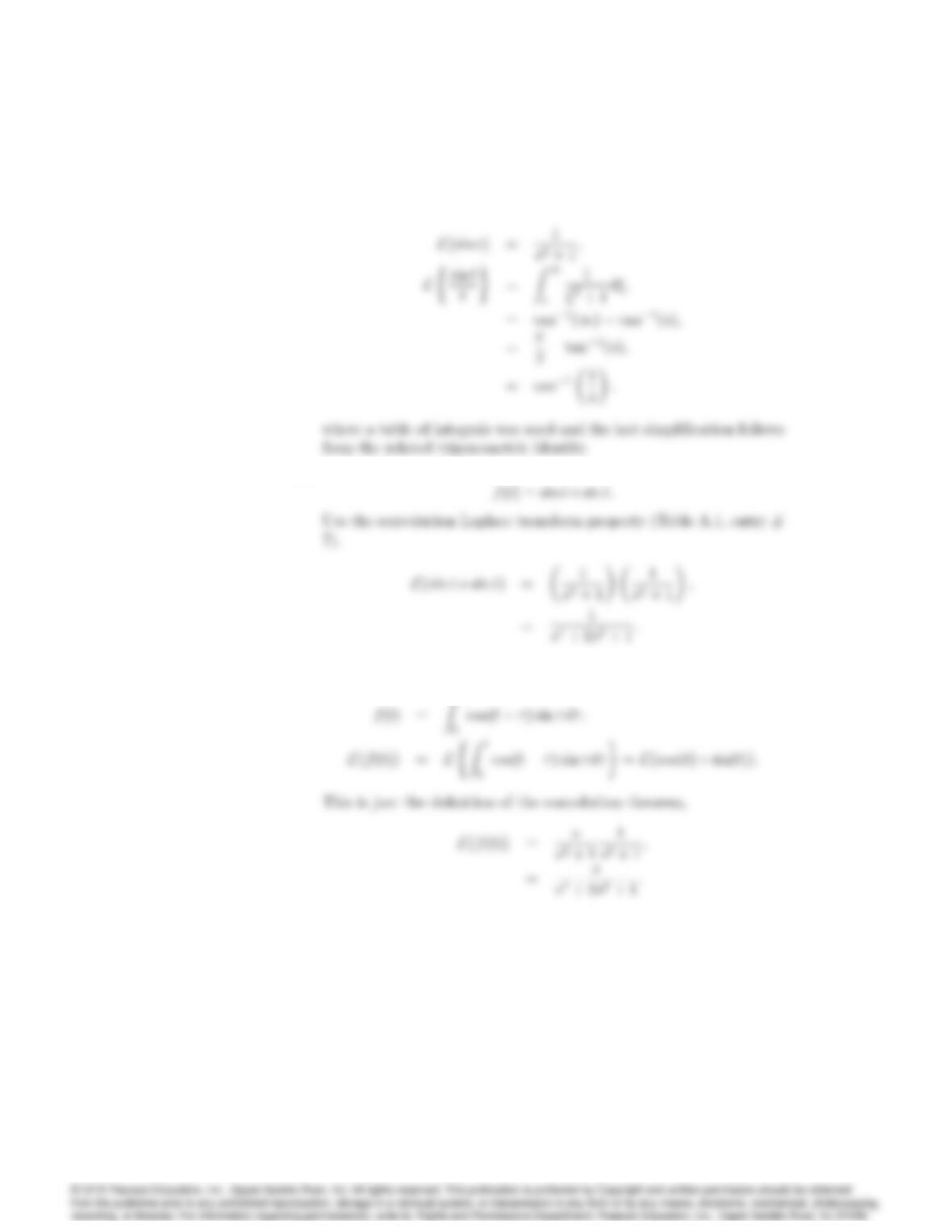
(c) f(t) = (sin t)=t
(d) f(t) = sin tsin t
(e) f(t) = Rt
0cos(t) sin d
Solution:
(a)
3009
Use the trigonometric formulas,
(c) We first show the result that division by time is equivalent to inte-
gration in the frequency domain. This can be done as follows,
3010 CHAPTER 3. DYNAMIC RESPONSE
Using this result then,
(d)
(e)
6. Given that the Laplace transform of f(t) is F(s), find the Laplace transform
of the following:
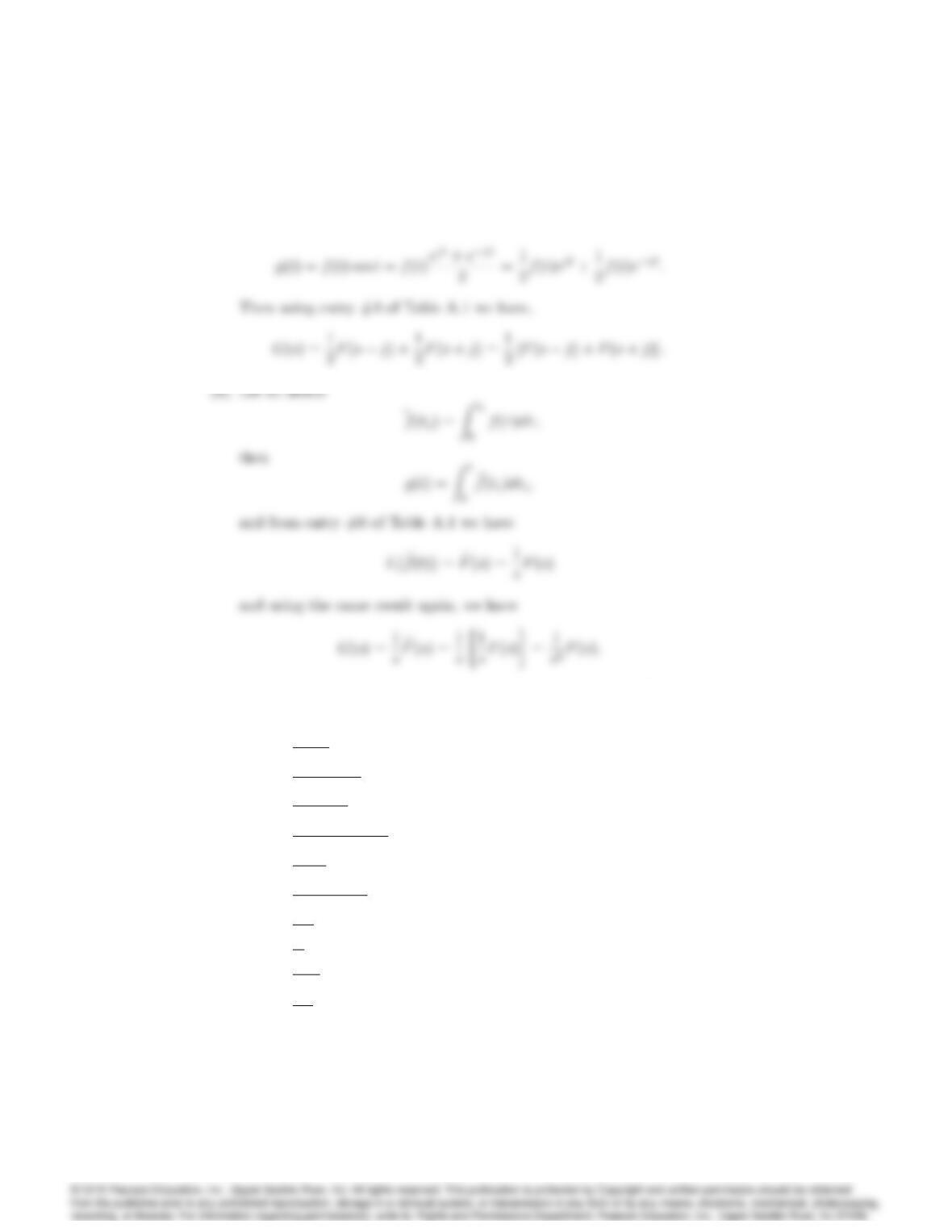
(a) g(t) = f(t) cos t
(b) g(t) = Rt
0Rt1
0f()ddt1
Solution:
3011
(a) First write cos tin terms of the related Euler identity (Appendix WA,
Eq. 33),
7. Find the time function corresponding to each of the following Laplace
transforms using partial fraction expansions:
(a) F(s) = 1
s(s+1)
(b) F(s) = 5
s(s+1)(s+5)
(c) F(s) = 3s+2
s2+2s+10
(d) F(s) = 3s2+6s+6
(s+1)(s2+6s+10)
(e) F(s) = 1
s2+16
(f) F(s) = 2(s+3)
(s+1)(s2+16)
(g) F(s) = s+1
s2
(h) F(s) = 1
s6
(i) F(s) = 4
s4+4
(j) F(s) = es
s2
Solution:
3012 CHAPTER 3. DYNAMIC RESPONSE
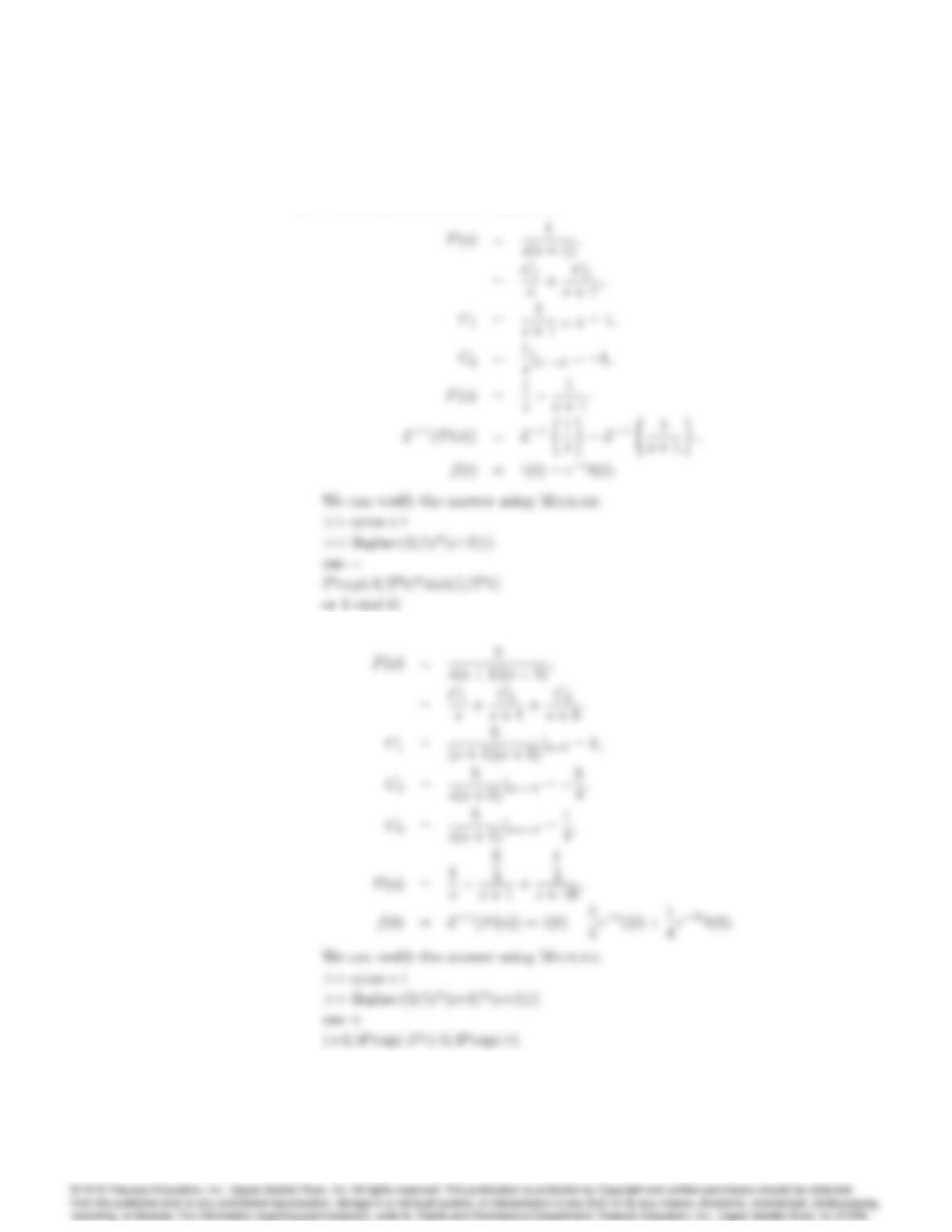
(a) Perform partial fraction expansion,
(b) Perform partial fraction expansion,
3013
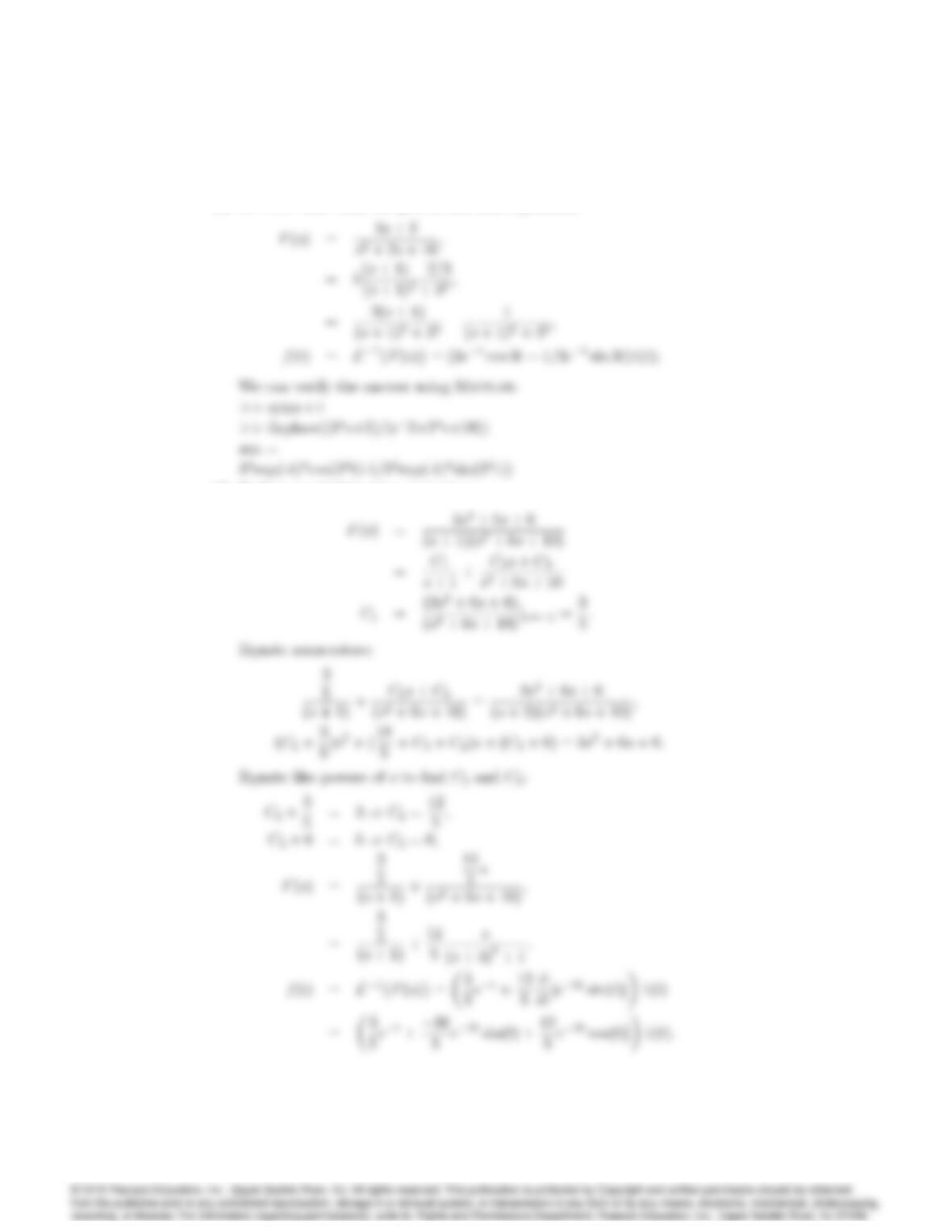
(c) Re-write and carry out partial fraction expansion,
(d) Perform partial fraction expansion,
3014 CHAPTER 3. DYNAMIC RESPONSE
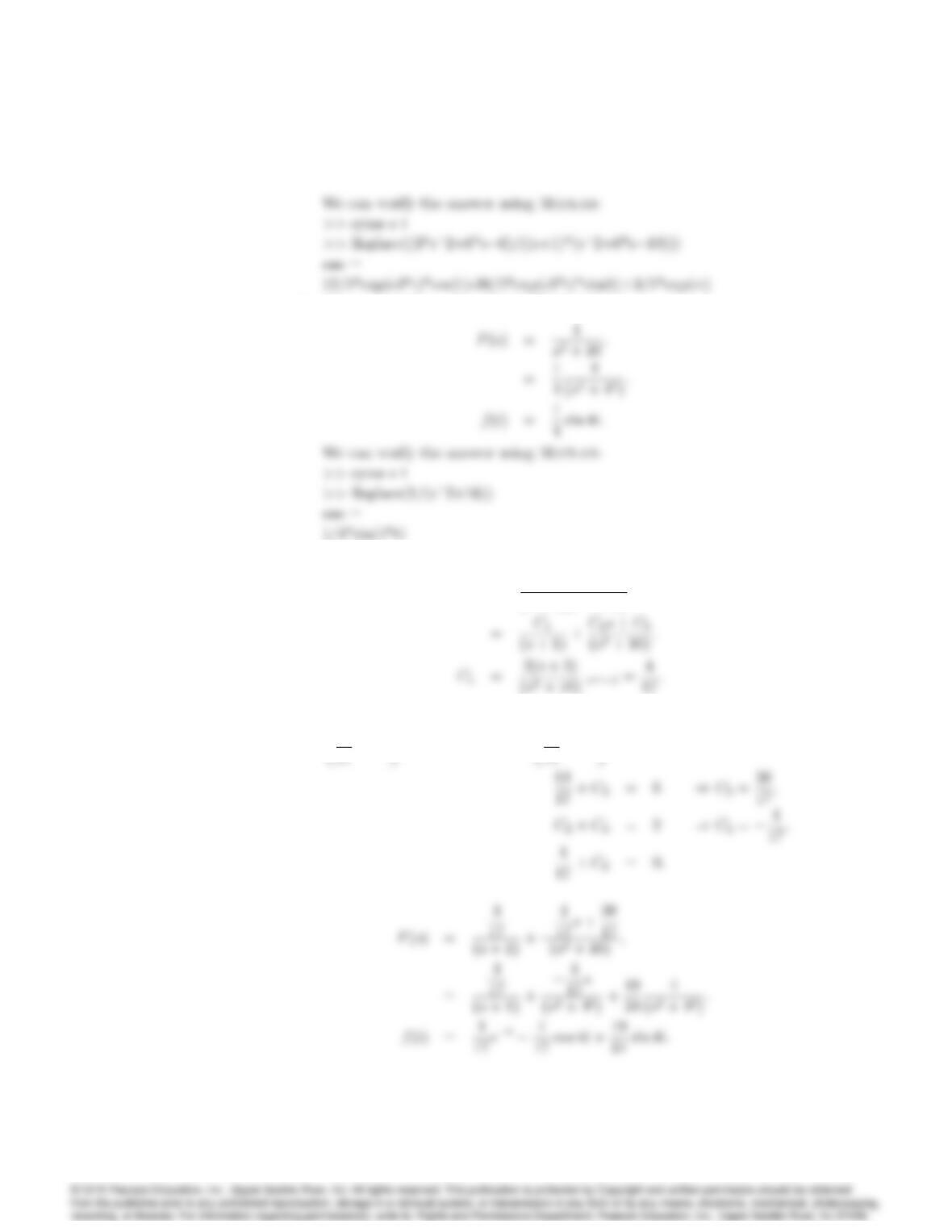
(e) Re-write and use entry #17 of Table A.2,
(f)
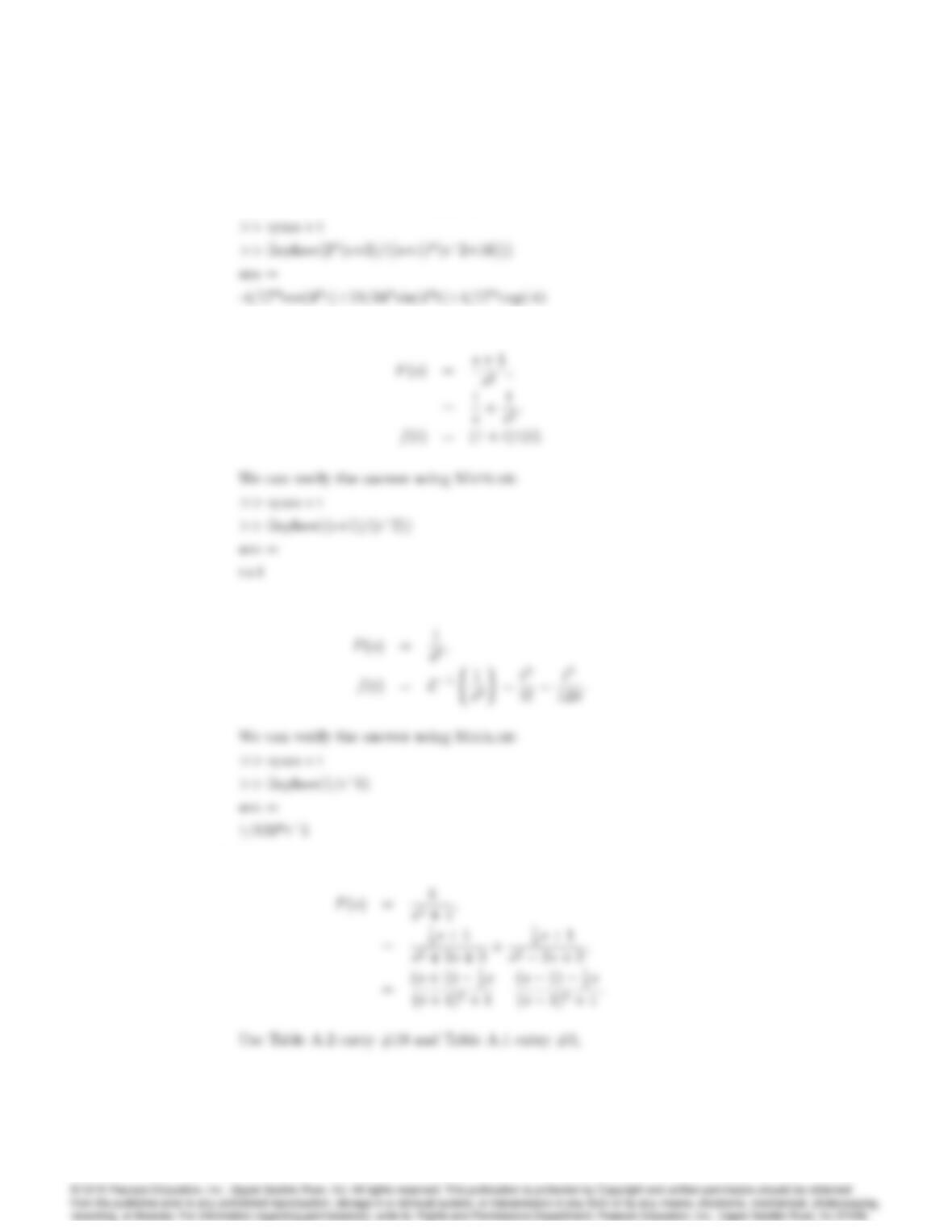
F(s) = 2(s+ 3)
(s+ 1)(s2+ 16):
Equate numerators and like powers of sterms:
4
3015
We can verify the answer using Matlab:
(g) Perform partial fraction expansion,
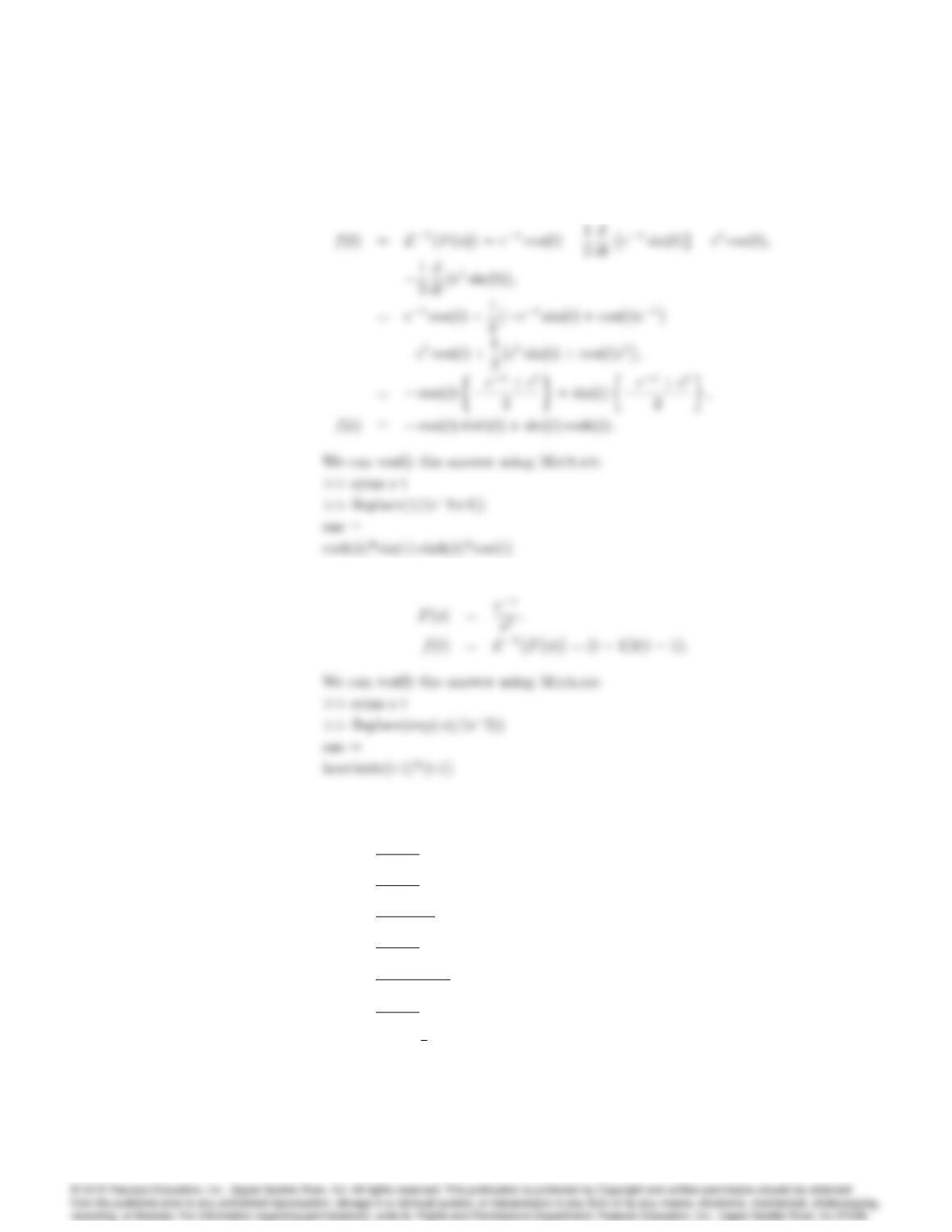
(h) Use entry #6 of Table A.2,
(i) Re-write as,
3016 CHAPTER 3. DYNAMIC RESPONSE
(j) Using entry #2 of Table A.1,
8. Find the time function corresponding to each of the following Laplace
transforms:
(a) F(s) = 1
s(s+1)2
(b) F(s) = s2+s+1
s31
(c) F(s) = 2(s2+s+1)
s(s+1)2
(d) F(s) = s3+s+2
s44
(e) F(s) = 2(s+2)(s+5)2
(s+1)(s2+4)2
(f) F(s) = (s21)
(s2+1)2
(g) F(s) = tan1(1
s)
3017
Solution:
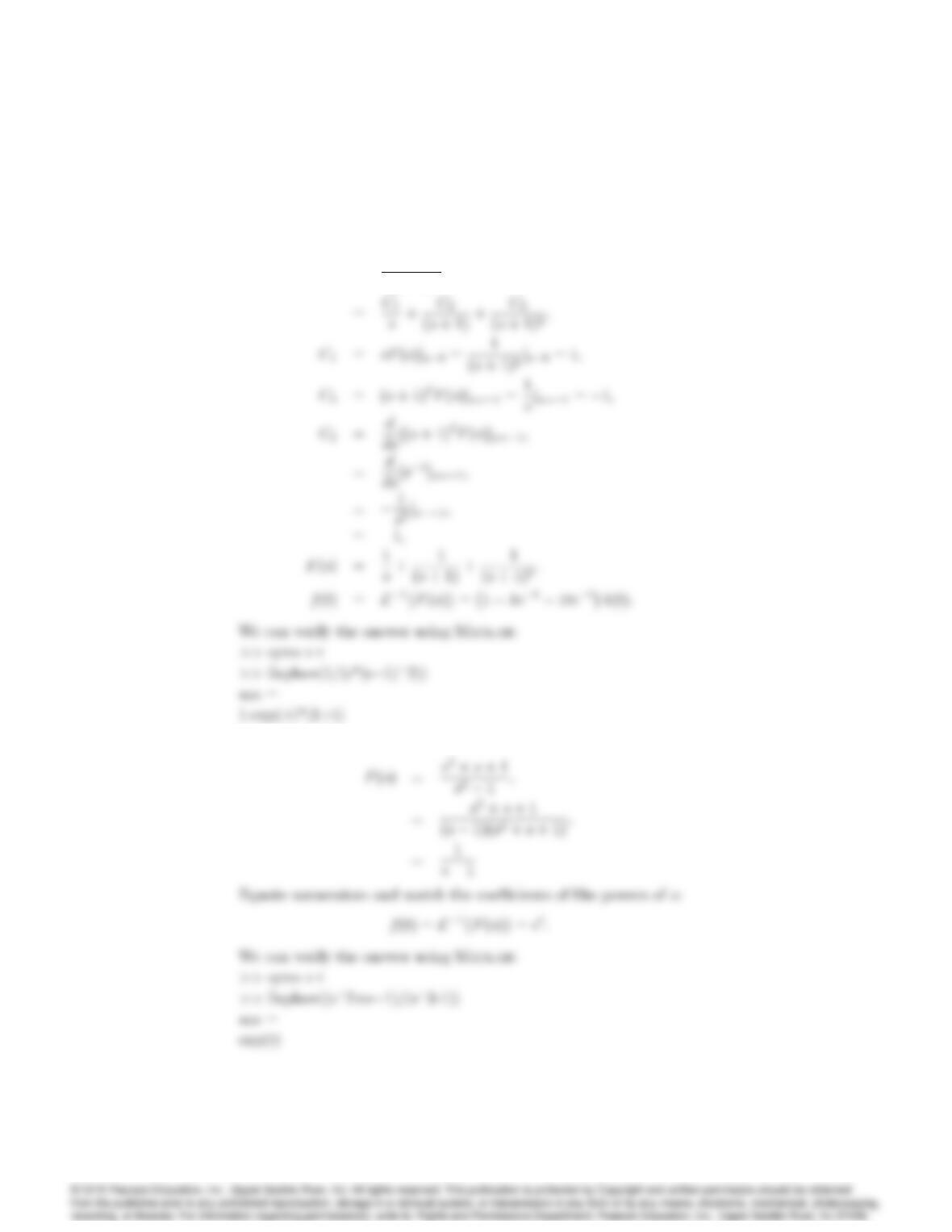
(a) Perform partial fraction expansion,
F(s) = 1
s(s+ 1)2;
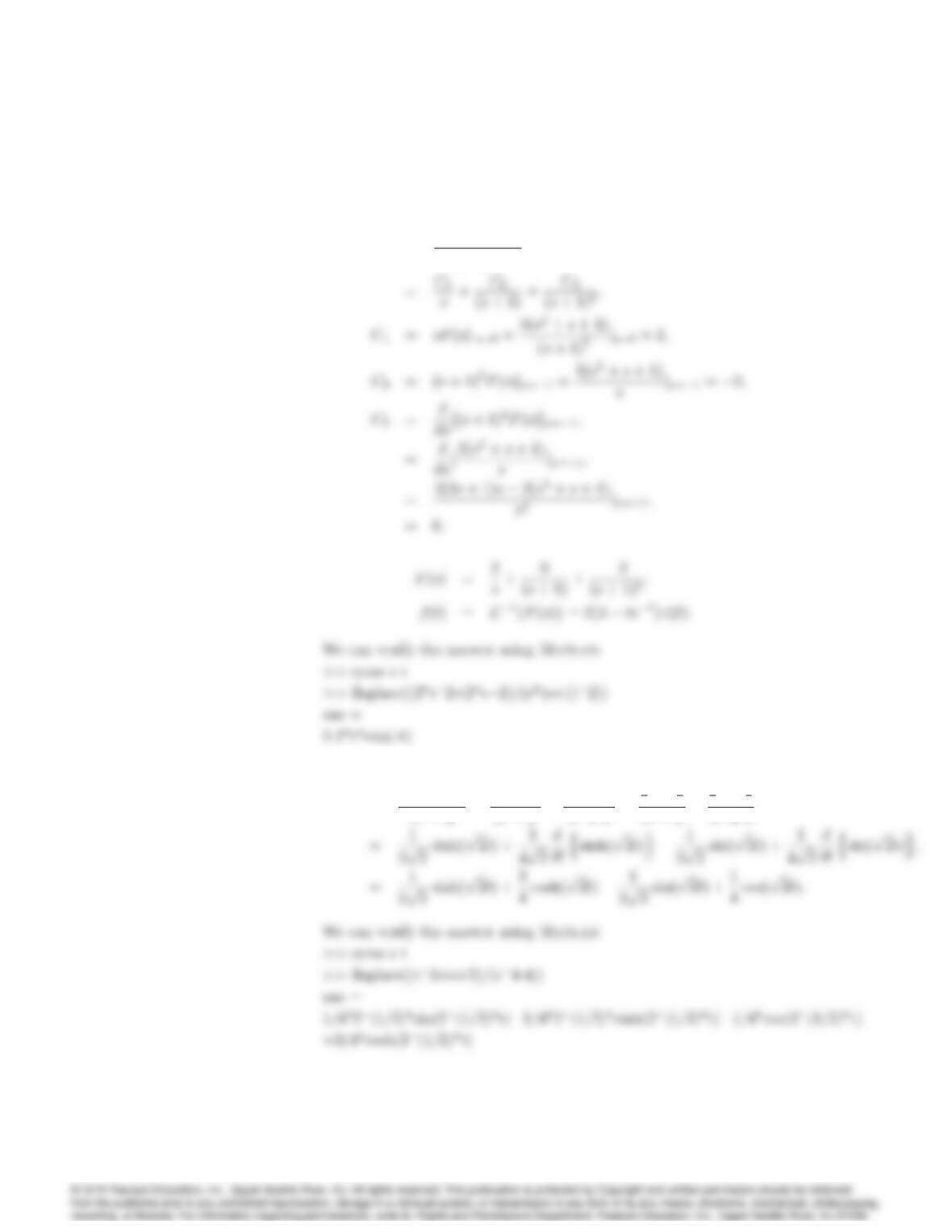
(b) Perform partial fraction expansion,
3018 CHAPTER 3. DYNAMIC RESPONSE
(c) Carry out partial fraction expansion,
F(s) = 2(s2+s+ 1)
s(s+ 1)2;
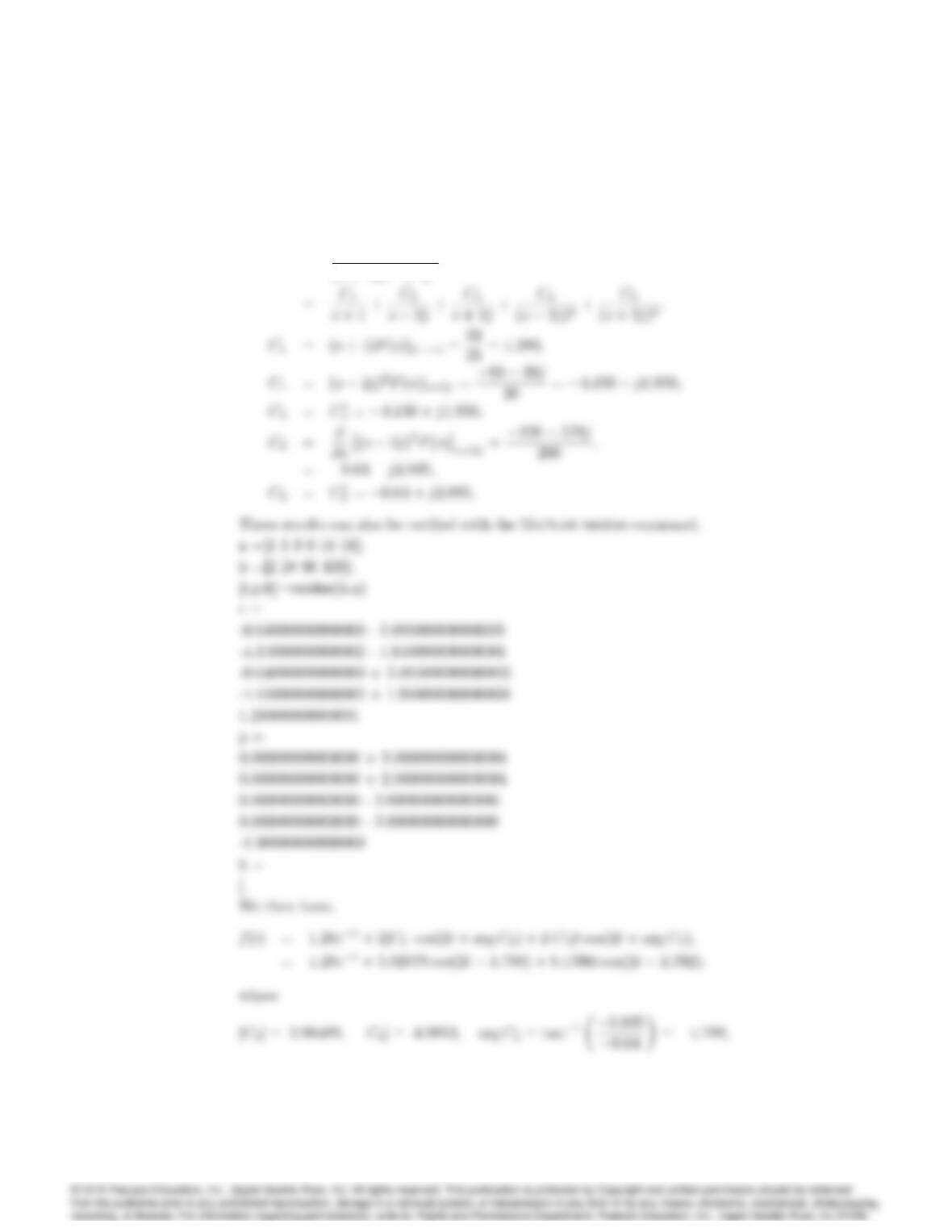
(d) Carry out partial fraction expansion,
F(s) = s3+s+ 2
3
4s+1
2
1
4s1
2
3019
(e) Expand in partial fraction expansion and compute the residues using
the results from Appendix A,
F(s) = 2(s+ 2)(s+ 5)2
(s+ 1)(s2+ 4)2;